September arrived in mood and spirit on the first day of the month. Cool nights and shortening days have made their impact. The pumpkins suddenly exposed and glowing orange under withering foliage, which just days before had August vigour. Rosehips reddened in the hedgerows, arching out under their own weight and marking where I have introduced the Eglantines.
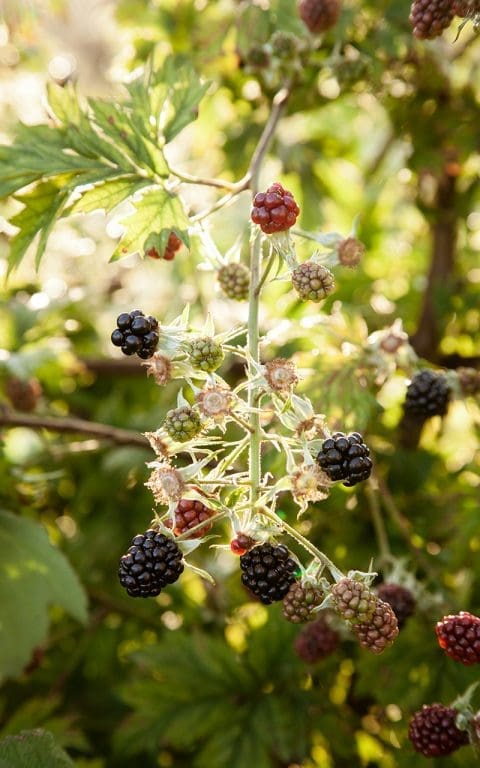
We have been readying ourselves for a return to Greece to chase last heat. The best of the blackberries, the last of the raspberries and the un-ripened tomatoes have been shoehorned into the freezer and the beans that have not been eaten have been left on the vines so we can collect the seed upon our return.
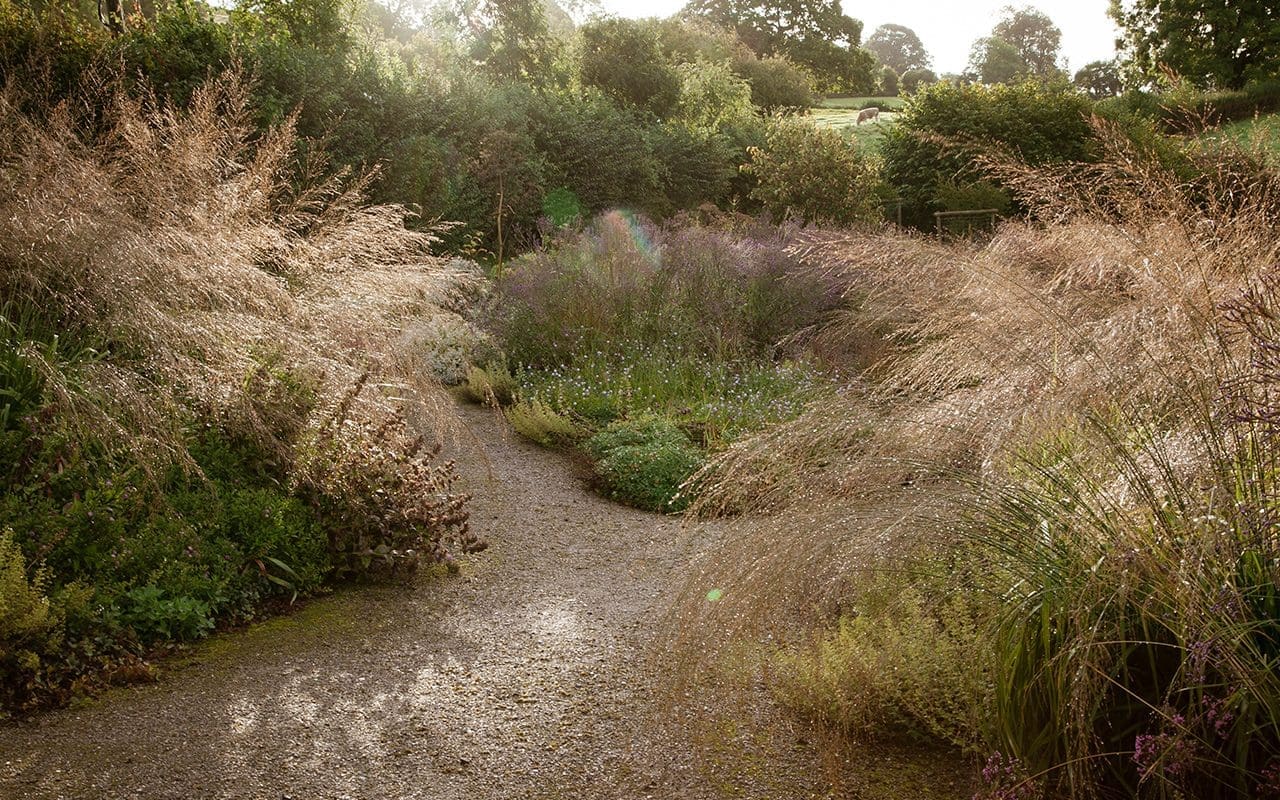
It is a good time to leave the garden, now that the season has tipped the balance. Laid back and relaxed by September, the seed heads are already setting the tone. Chamerion angustifolium ‘Album’ run up like sparklers and now extinguished but for their silvery seed. On the bright, dry days the breeze is full of it and always makes me thankful that the white form of the Rosebay Willow Herb is sterile. The tails on the Pennisetum, which have harvested the light in the centre of the garden for weeks, are losing their seed. The pulse is gone now, and suddenly, from the Persicarias, where just a fortnight ago they were blazing and humming with bees. These last few days has seen them tapering and on the wane.
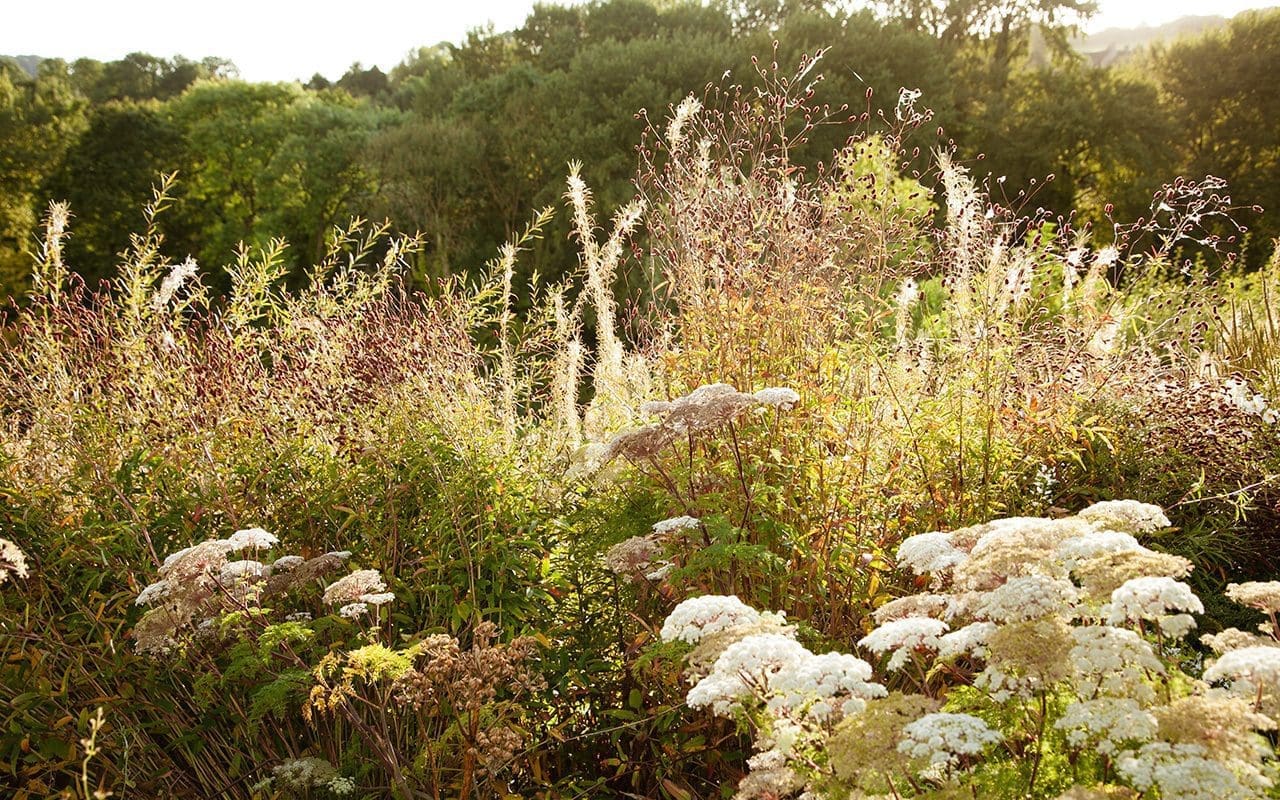
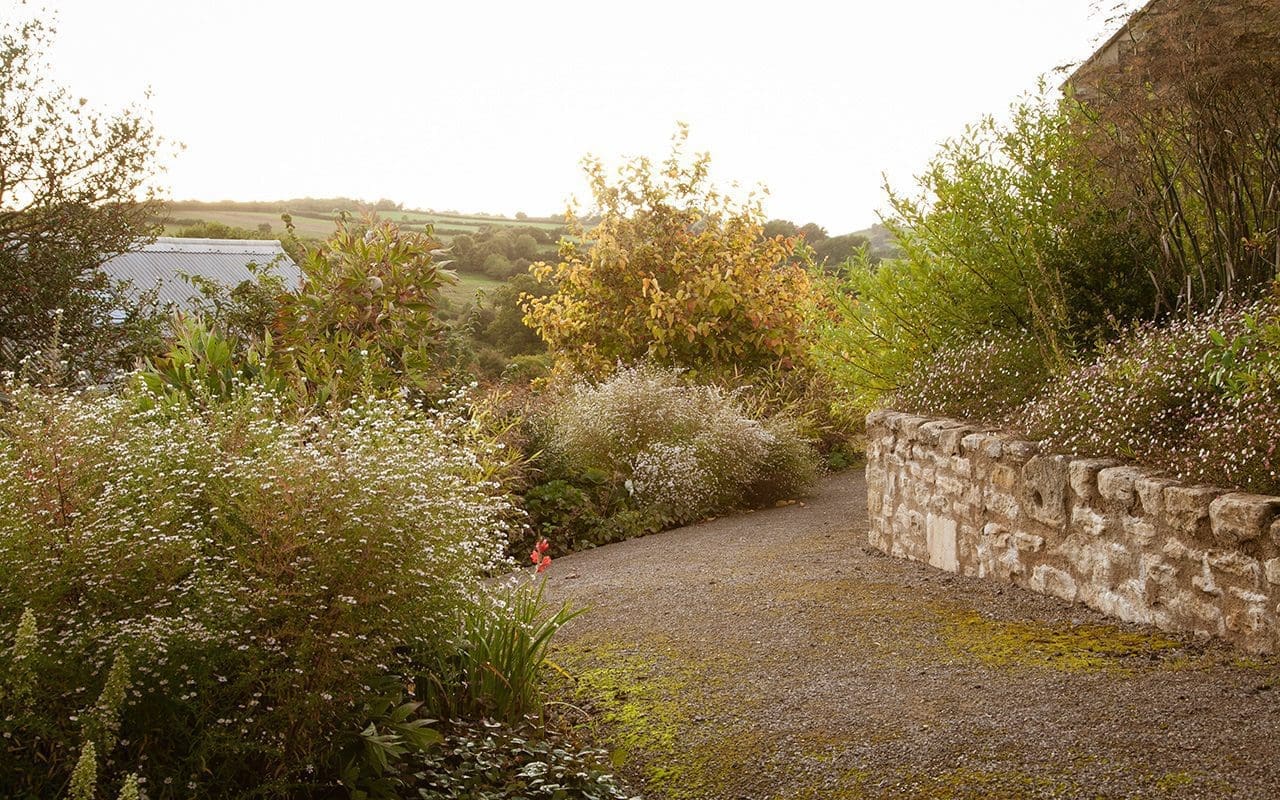
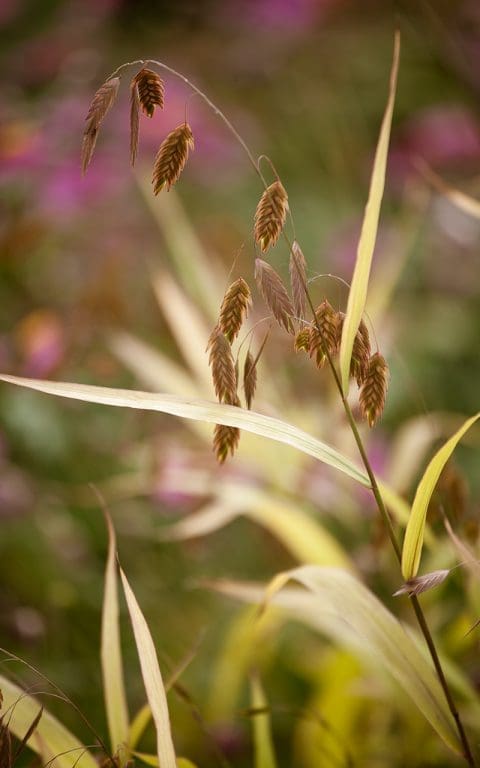
As if by clockwork, and sending us off in the knowledge that we will miss the best of them, the Colchicum speciosum ‘Album’ broke ground last weekend. We are bound to miss something in the next fortnight, but it was good to find their pristine goblets amongst the Asters. Pushed clean out of the bare earth as the air begun to cool and rain opened up their window, the freshness of flower and then the lustre of their winter foliage forge quite a counterpoint to the pulling back of autumn. It has taken a while to find them a place that they like, but here in openings amongst the Chasmanthium and pushing through a mat of Viola riviniana ‘Purpurea’, they are covered for during their period of summer dormancy.
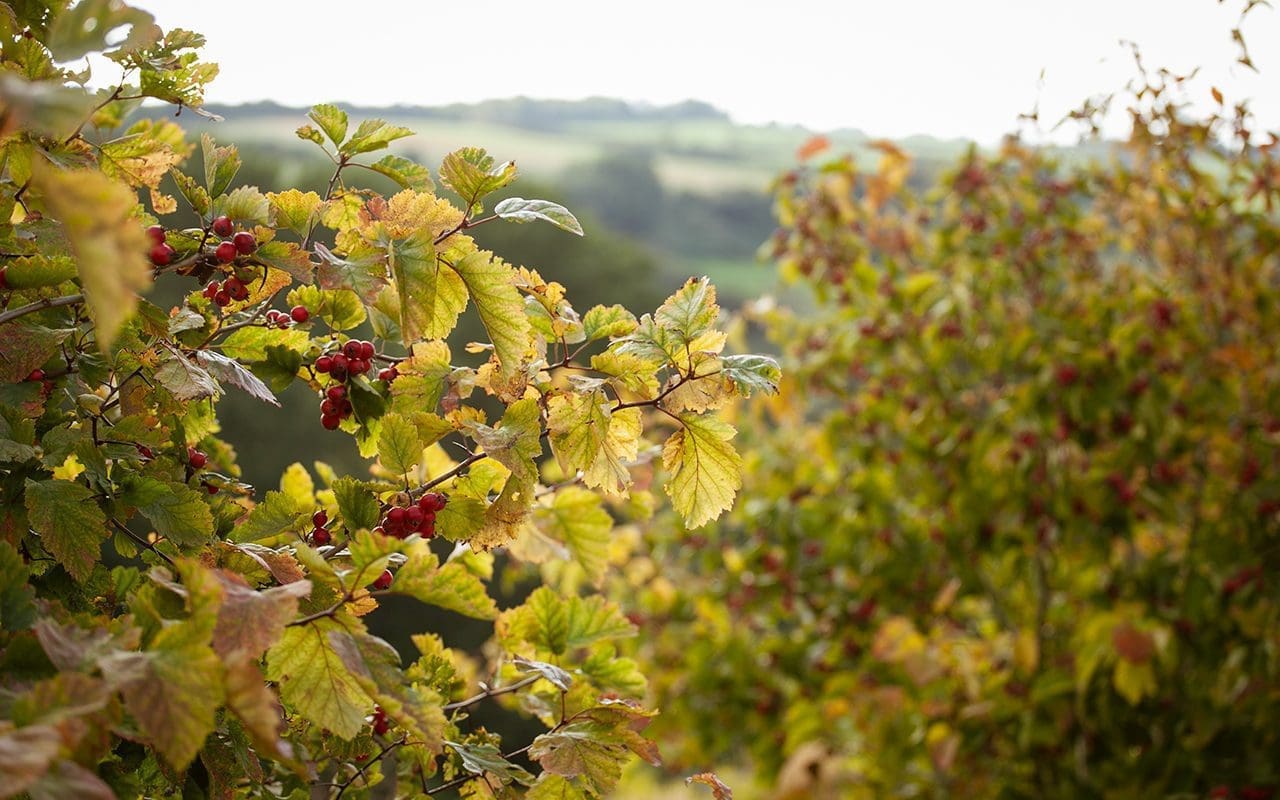
It is hard to stop using the term Aster for the recently renamed Eurybia and Symphyotrichon. The re-naming of the tribe has none of the magic or the reference to starriness and the Asters add exactly that as they begin to make their autumnal presence. The Colchicum sit amongst Symphyotrichum ericoides ‘Pink Cloud’. I have it above the tool shed where it billows over the path beside the Crataegus coccinea. It is a delicate plant, fine in all its parts and mid-season as Asters go. The Anemone hupehensis ‘Splendens’ with its offset, asymmetrical petals has been out for August already and make a fine bedfellow for the Aster and the Colchicums. I have jumped the mix into the garden beyond to make a celebratory entrance. It is good to ensure that summer is not missed for the anticipation and then reward of the autumn performers.
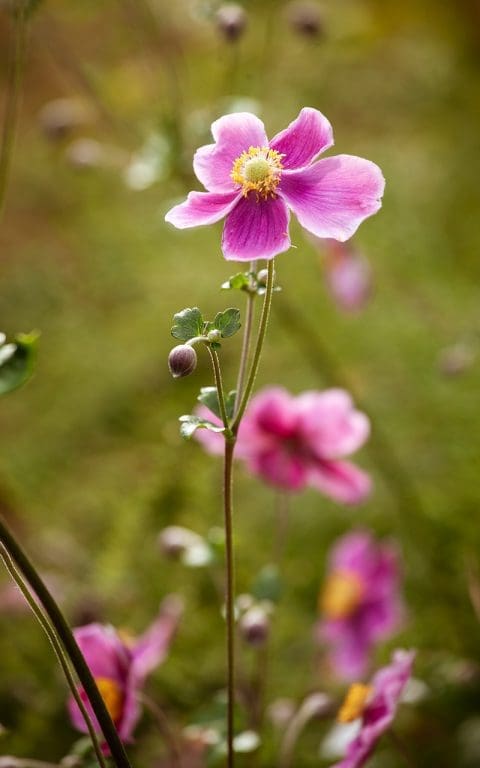
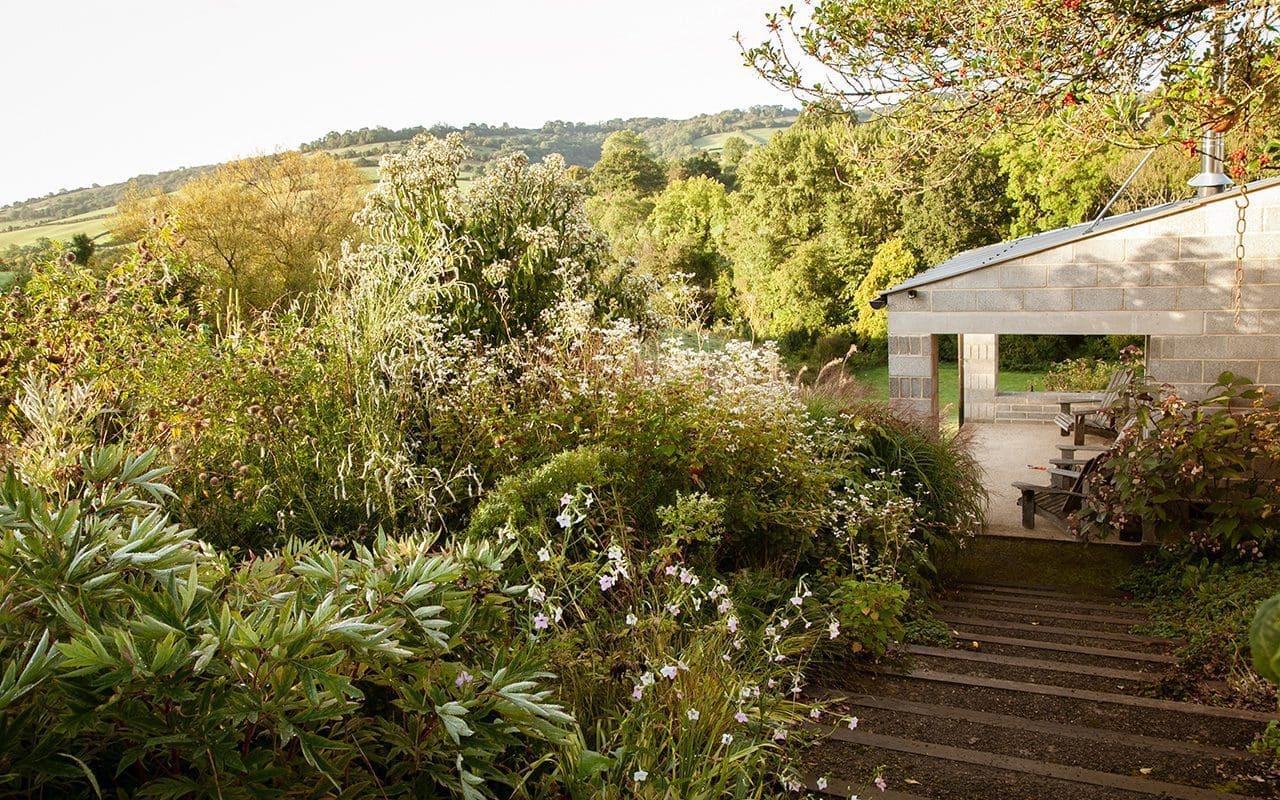
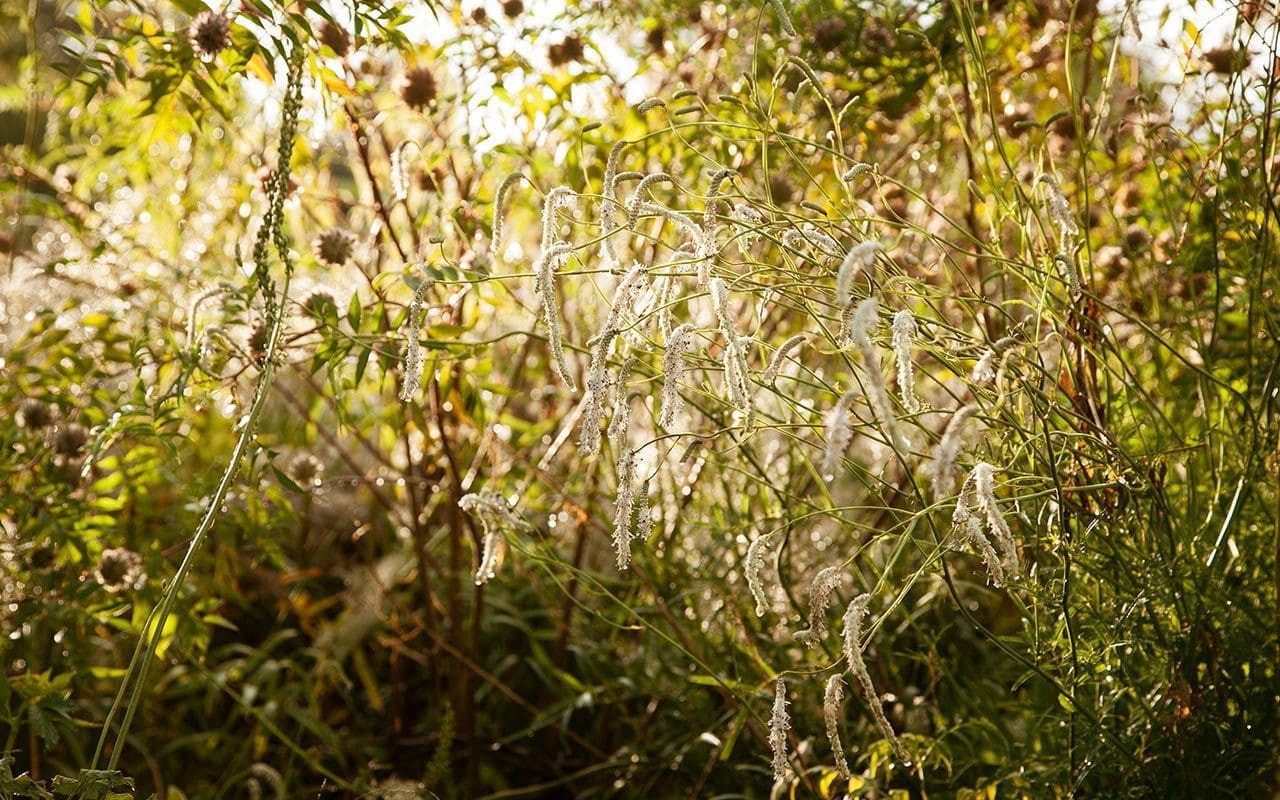
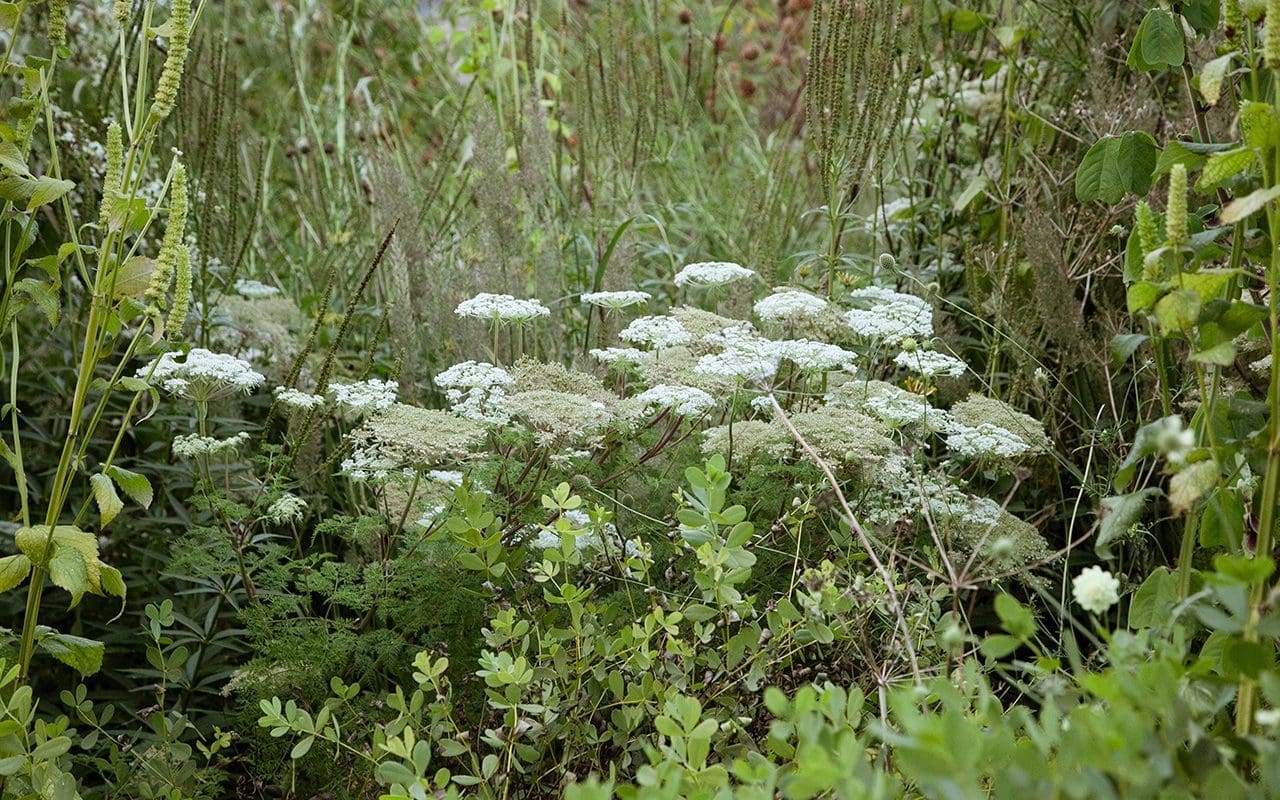
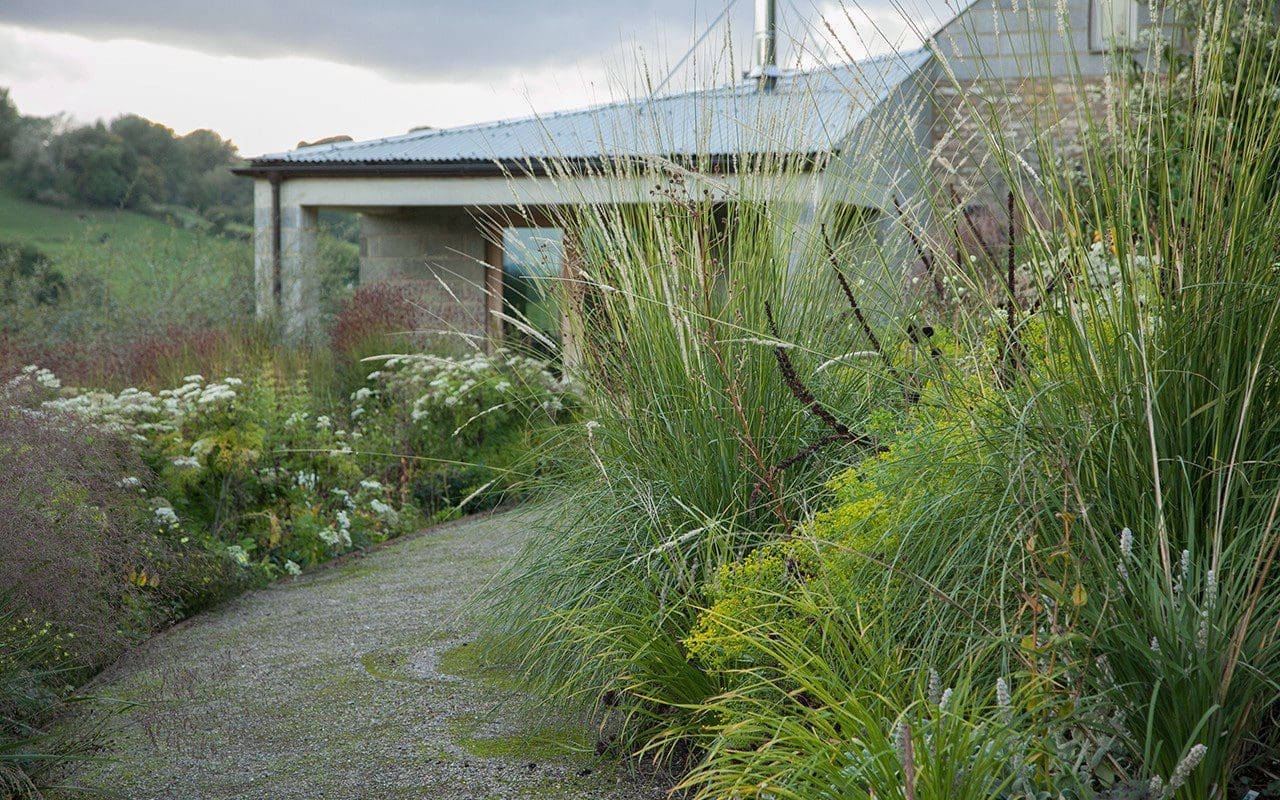
The third season in the garden has settled the planting and there is a richness that comes once the mingling is complete in the autumn. The Heptacodium micanoides that will eventually shadow the steps down to the studio is in full and perfumed flower. This small Chinese tree does not really have a down time. Pale bark in winter keeps you from missing foliage when it is in its deciduous state and sickle-shaped leaves provide a good hearty green whilst the flowers gather for autumn. For now, because it will be bound to change once this shrub grows to become a small tree, I have given it a number of pale companions. Sanguisorba ‘Korean Snow’ towering to nearly three metres and Selinium wallichianum to score the horizontal in late umbels. It is good to have found a sheltered spot for the perennial buckwheat which smashed and shattered when it was just a few metres away, but has found its spot in the lea of the building and is seeding about to add further informality.
When we return things will be different. The smoky cloud of Molinia caerulea subsp. arundinacea ‘Transparent’ will have lost its thundery tones and will be turning biscuity. For now they provide a moody suspension for the bolt of bright Vernonia that push strong and stout amongst them. The Molinia are planted in a group where the paths intersect, Being amongst them is immersive and have made a talking point for friends and family who have also been drawn to their stillness or the breeze made visible.
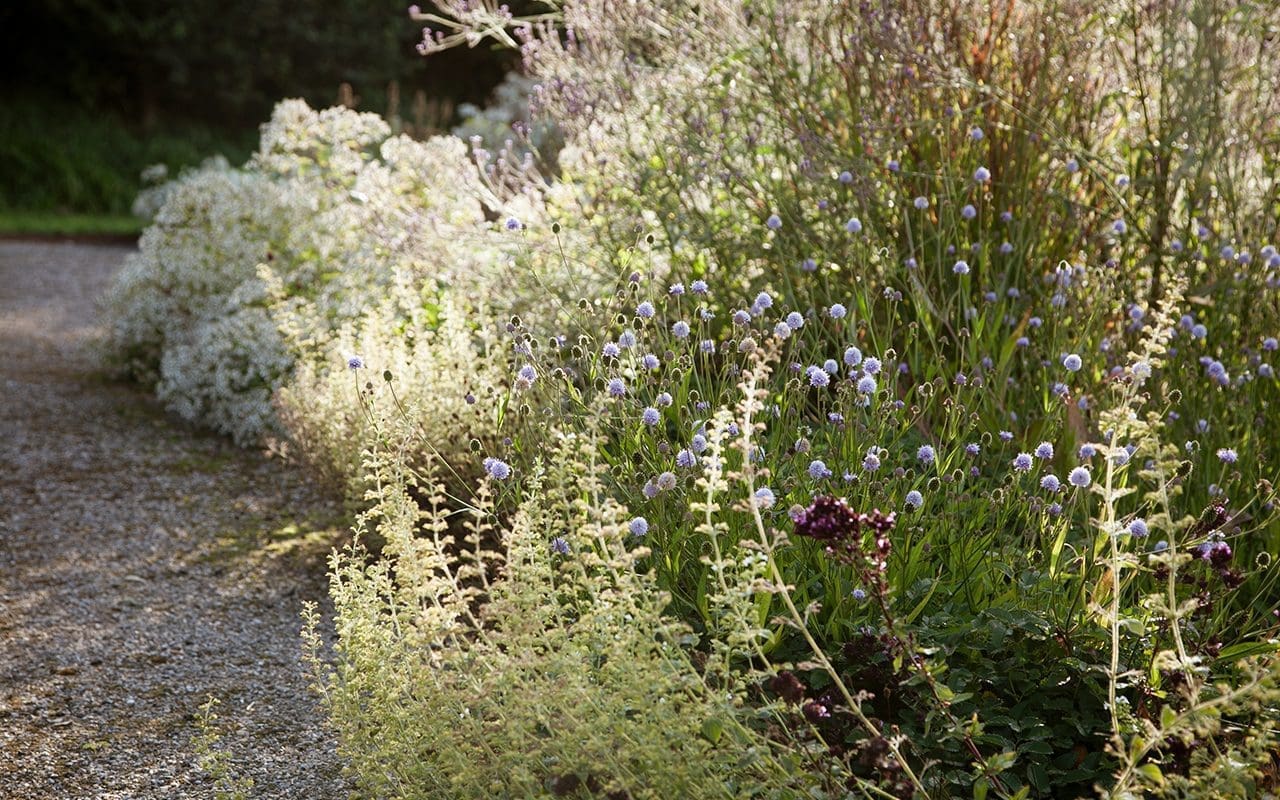
Taking it all in before leaving, we have had to look carefully and commit this moment to memory. Drinking in the palest blue of the aptly named Succisella inflexa ‘Frosted Pearls’, for it will be gone when we return, it feels as if the garden is almost at its best for being relaxed and for no longer striving. Teetering before falling, flashing the last colour before dimming and giving still as it ripens and readies for a penultimate chapter.
Words: Dan Pearson | Photographs: Huw Morgan
Published 29 September 2019
We have been inundated. A vegetable garden with courgettes running to marrows and tripods of beans hanging heavy and outwitting our best made plans to stagger the crop with three weeks between sowings. The beetroots have ballooned to the size of cricket balls and the chard is straining over the path as if to say “eat me”. Wet weather and warmth in August has put a surge of aromatic growth on the basil and, now that September is cooling, there is pesto to be made if we are to reap the benefits.
Harvesting in August could easily take two days a week and the same again in preparing the pickings for pickling, jam, bottling and freezing. These are good times and in the past we would have pulled together and made an event of it to make light of the workload. Next year we plan to do exactly this at the time of critical mass and set up an industrious production line with friends who are good at picking and friends who are good at preserving. A weekend or two spread over the month will help to manage the glut and people will go home with something to mark their efforts and a memory of the times of plenty for the winter.
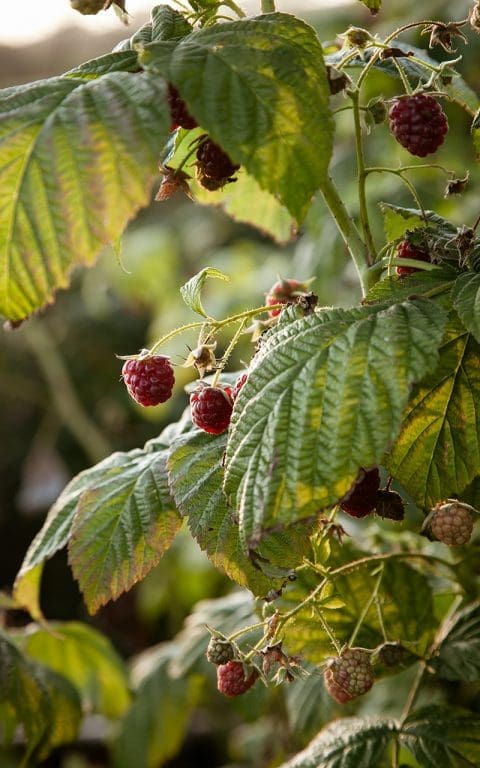
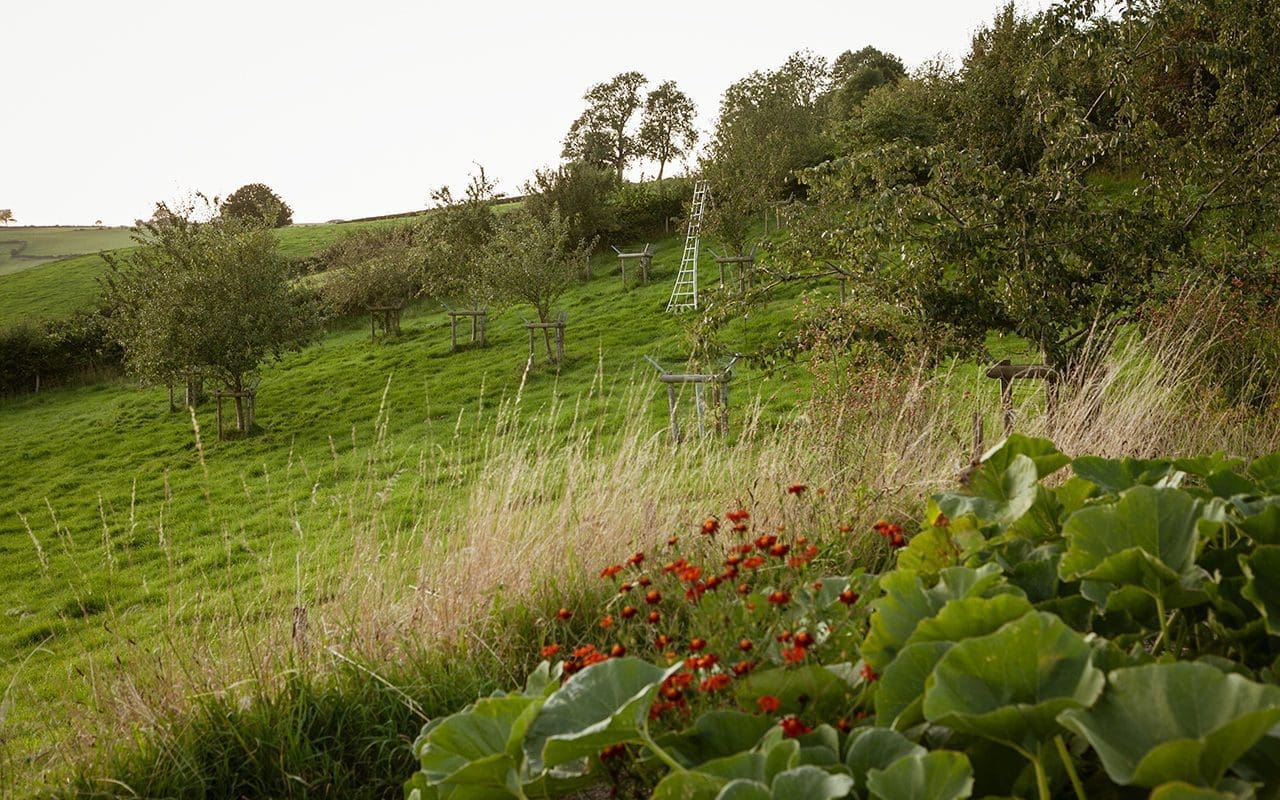
Beyond the kitchen garden (and the distraction of beckoning autumn raspberries) and through the gates to the slopes that lie beyond, is the orchard. Planting these trees was my first move after arriving here and they are now in their eighth summer and weighed down with fruit. The apples are yet to come, but the plums have been demanding to keep up with and we find it impossible not to be bothered by the inevitable waste. Yes, of course the excess never goes to waste, the evidence of rodent nibbling and flurries of birds that rise from the windfalls beneath the trees are proof. Working from the ladder up amongst the branches and you find the wasps also gorging and beating you to it if you are not fast enough. The plums ripen over the course of a week, each tree at a slightly different time and with some overlapping.
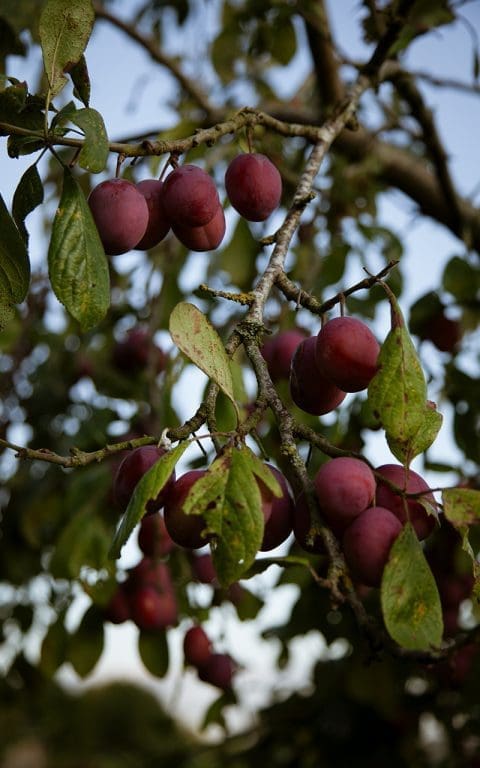
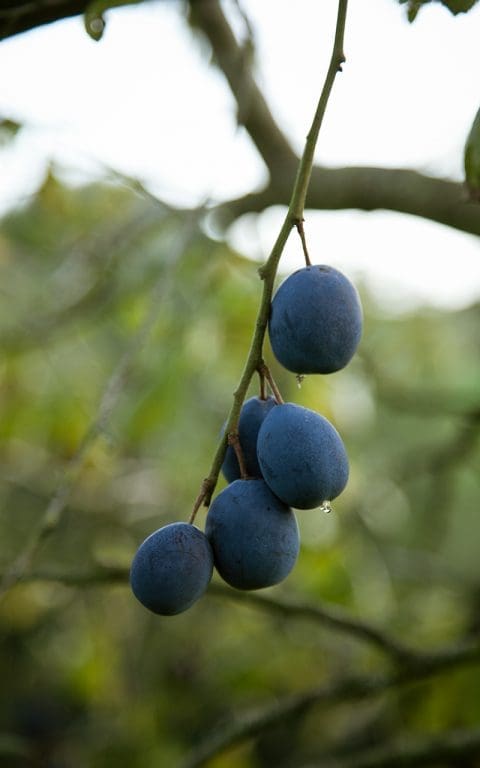
The gages came first this year and I can say now that I would be happy having nothing but gages. We have four in the plum orchard. This year ‘Bryanston Gage’, ‘Cambridge Gage’ and ‘Early Transparent’ were all productive. They are all superior to the other plums for being aromatic and naturally sweet but ‘Bryanston Gage’ is perhaps the most delicious. As good as apricots and, with the sun in the fruit, warm in your mouth. Morning and evening are the best times to pick. You will be ahead of the wasps when the fruit is still cool with dew, but just before sundown is also a good moment for the fruits are sun warmed and the wasps are early to bed.
I am beginning to doubt whether it was a good idea to have planted pears in the orchard. There are five trees and I can see they will make a good-looking contribution, but the fruits of pears are notorious for dropping just before they ripen and then bruising by the time they are ready to eat. In the kitchen garden we have five cordons grown against the south-facing wall that backdrops the garden and, in terms of convenience, they have proven themselves. The espaliers make picking easy and, as the pears tend to come all at once or over the course of a week, the amount of fruit you have is manageable compared to the orchard trees.
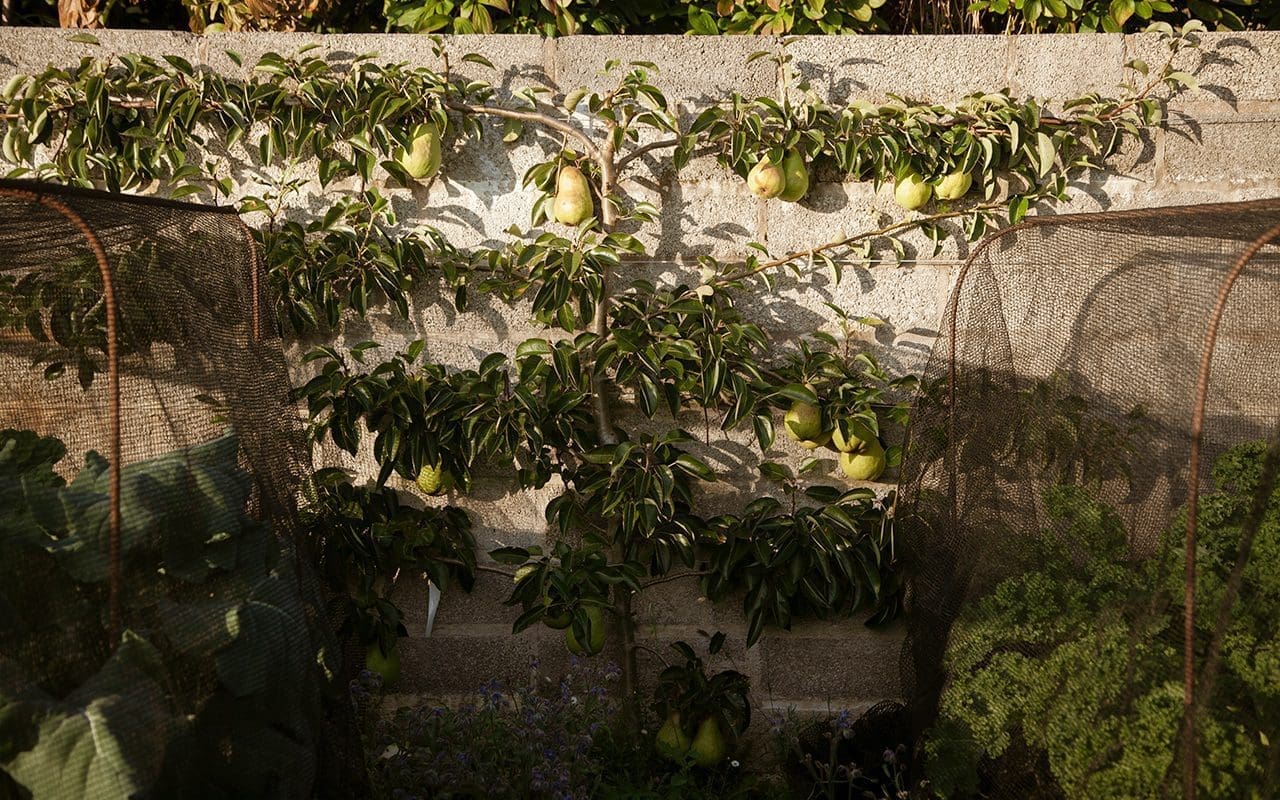
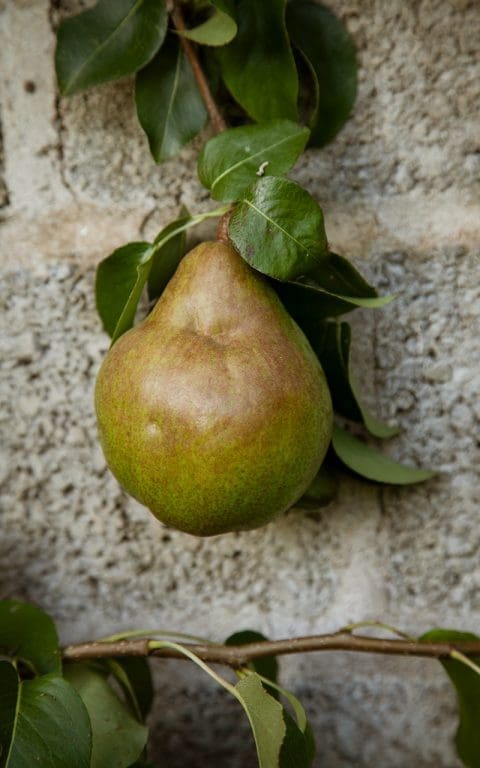
We have five varieties that stagger the cropping over the course of six weeks or so to keep us in pears for the autumn. ‘Beth’ is our first to drop, although we have just eaten the last. I now grow a soft bed of Erigeron under each cordon to act as a cushion for the fruit but, once they start to fall, you need to get out there daily if the mice – and possibly larger rodents – are not to get there first. Although I like the crunch of a nearly ripe pear, two to three days on a shelf sees ‘Beth’ colour to a soft yellow and the fruit ripen to sweet and melting perfection.
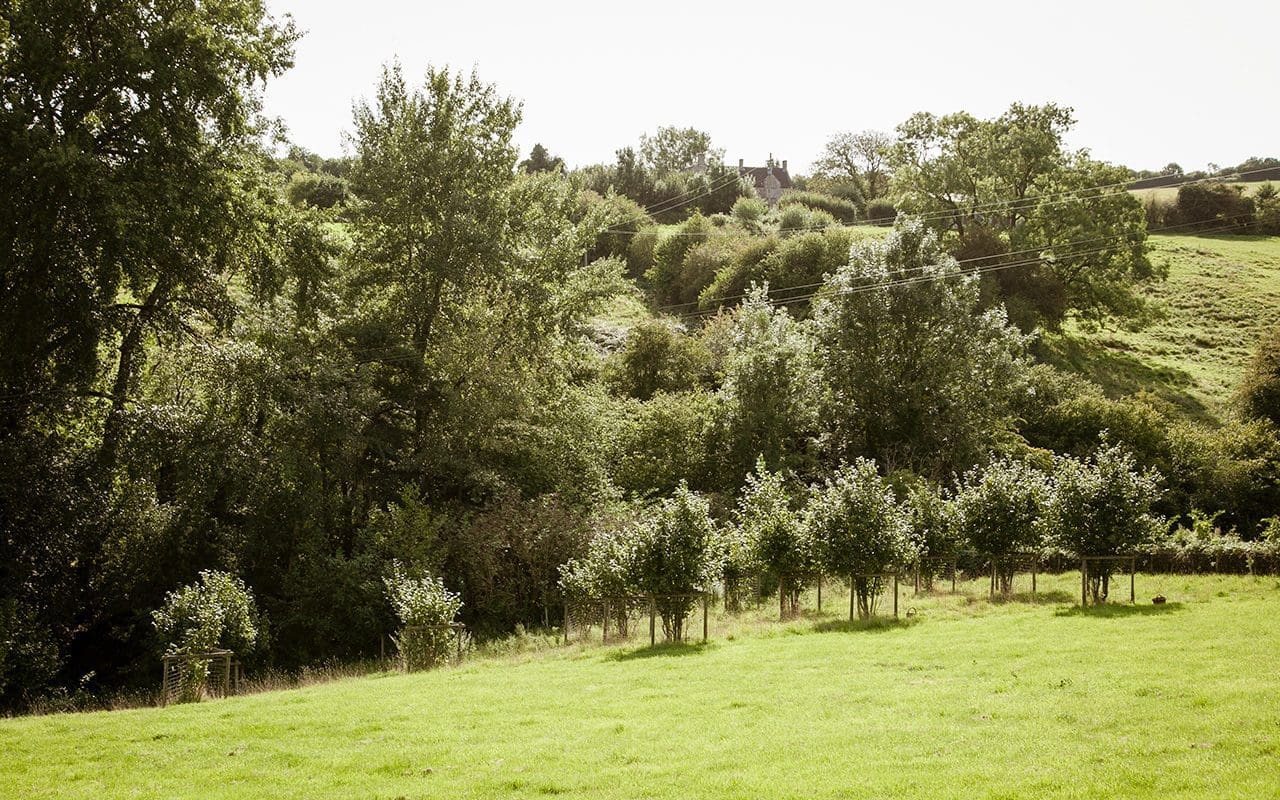
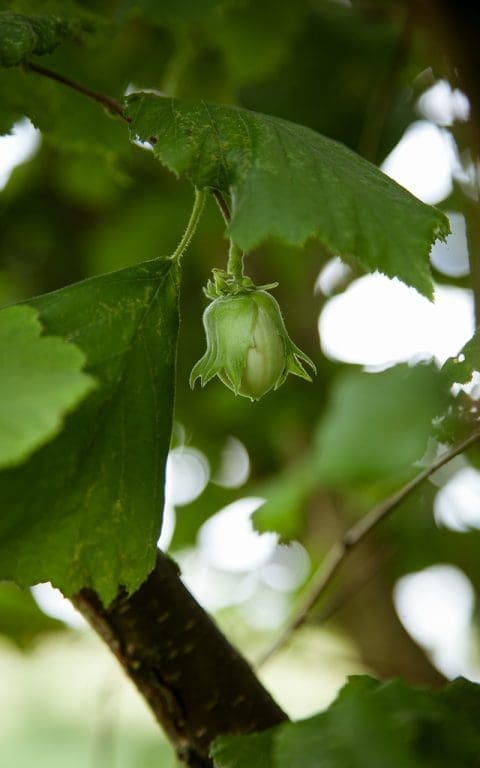
Down by the stream we have seven varieties of cobs and filberts; ‘Webb’s Prize’, ‘Gunslebert’, ‘Kentish Cob’, ‘Cosford Cob’, ‘White Filbert’, ‘Pearson’s Prolific’ and ‘Butler’. The trees are in their seventh year and cropping heavily now. This year we have beaten the squirrels who discovered them a couple of years after they started fruiting. St. Philibert of Jumièges, after whom filberts are named, has a feast day on August 20th and from about that time you have to be vigilant. We have learned to pick them early if we are not to lose the entire crop whilst we’re not looking. We put them in a single layer in perforated plant trays to allow plenty of air to circulate and ripen them up in the open barn out of reach of the mice. Sharing what you must leave behind due to the sheer volume of the harvest is one thing, but sharing your hard earned fruits is quite another.
Words: Dan Pearson | Photographs: Huw Morgan
Published 7 September 2019
Marked in the trees on our westerly horizon, the sun came to its furthest reach exactly a fortnight ago. Long-awaited rains wet the ground deeply in the run up to midsummer’s eve and with it came the surge of exponential growth. A tangible feeling of opportunity and leaning into the light. Eglantines foamed pink where I’ve woven them into the hedgerows and the garden reared up, the layers suddenly asserting themselves and deepening.
The garden that wraps us close becomes increasingly important as the meadows dim and go to seed. Next week will see the start of the first being cut for hay and, as the fields simplify, we draw back from our meanders to count our first orchids and to check upon the spread of this year’s yellow rattle. It is then, as we pass into summer, that the garden becomes more complex, and deliberately so. First, waves of colour to hold your attention and then the layering of detail, which is planned to run from now through into late autumn.
This is the first year that the garden is revealing what I have been planning for. Settled by four years of growth up by the barns, we can see the volumes emerging now. Baptisia the size of armchairs asserting themselves handsomely amongst the self-seeders around them. Bupleurum falcatum that has run riot in the gravel and Eryngium giganteum now showing that it has a hold and will be here to stay. The Crambe cordifolia have their roots down too and have shown it in clouds of flower that you have to crane your neck and look up into. This feeling of the planting being settled is good.
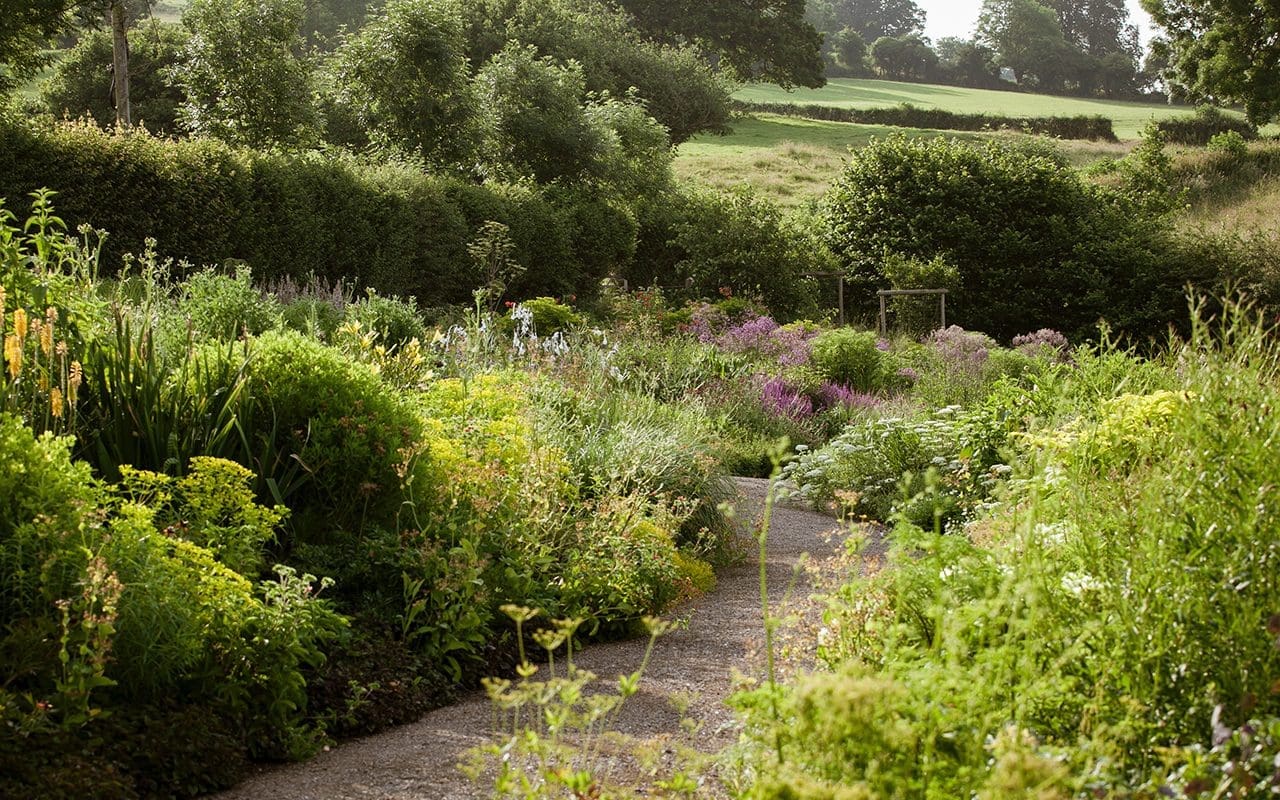
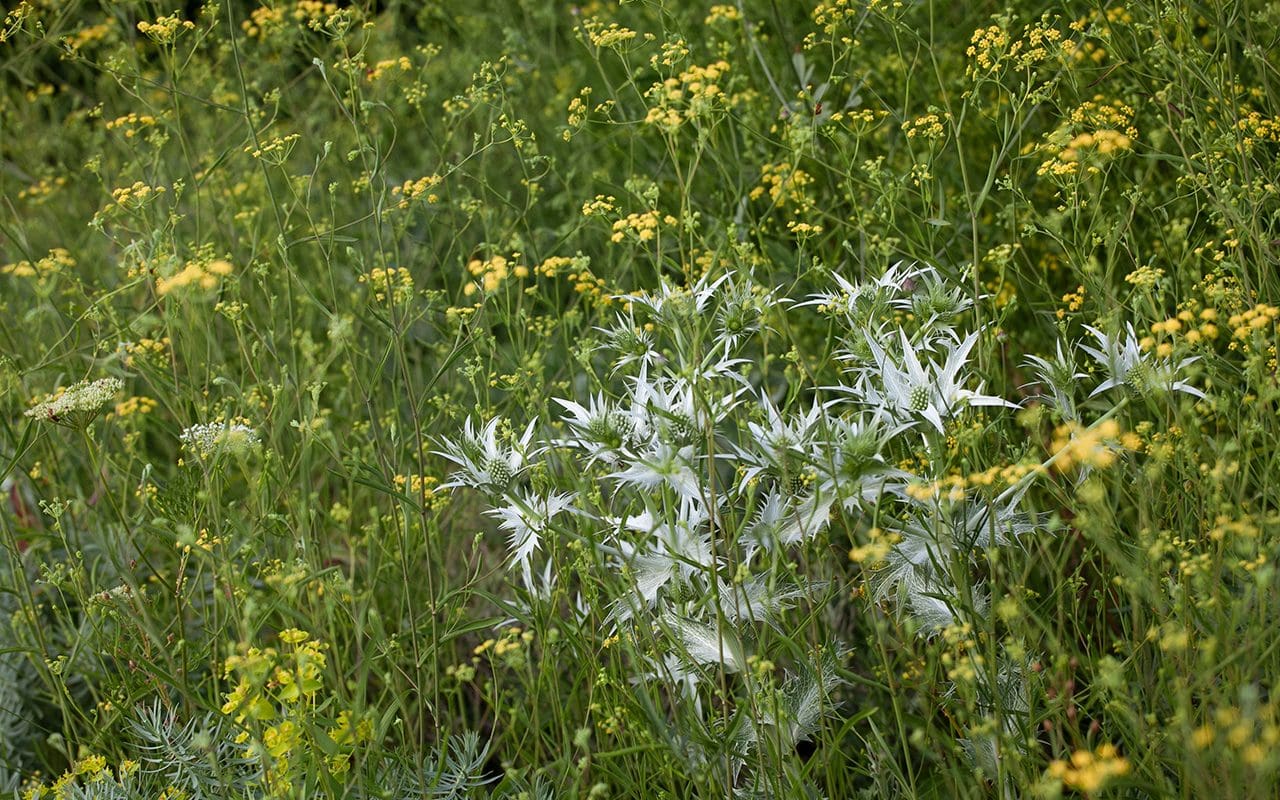
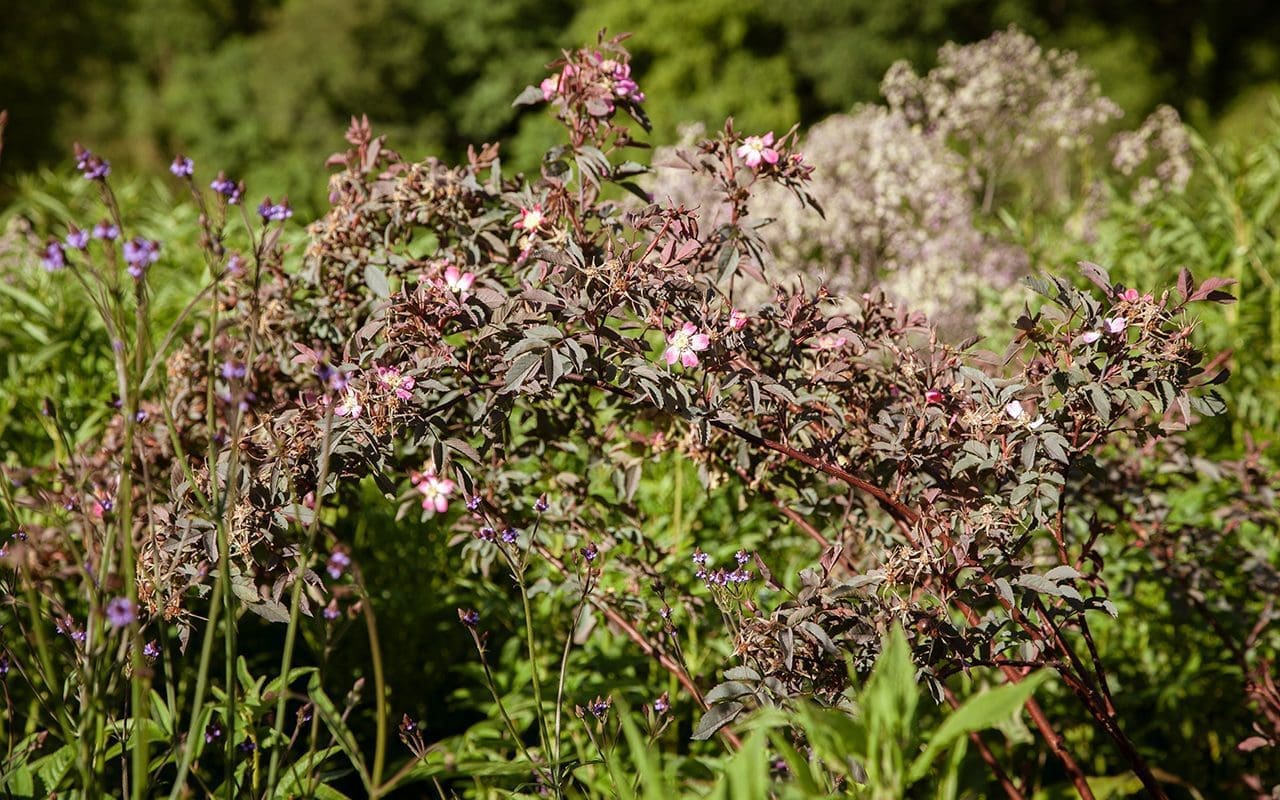
It will be another couple of years before the woody material in the garden starts to have a presence, but you can see the arch in the Rosa glauca now and start to imagine how these forms will provide an anchor point for the perennials around them and a more significant foil with their glaucous-pink foliage. This is the third summer in the outer ripple of the main garden and the second for the inner beds that were planted the October before last, but already the planting is mingled and presenting some long-awaited couplings.
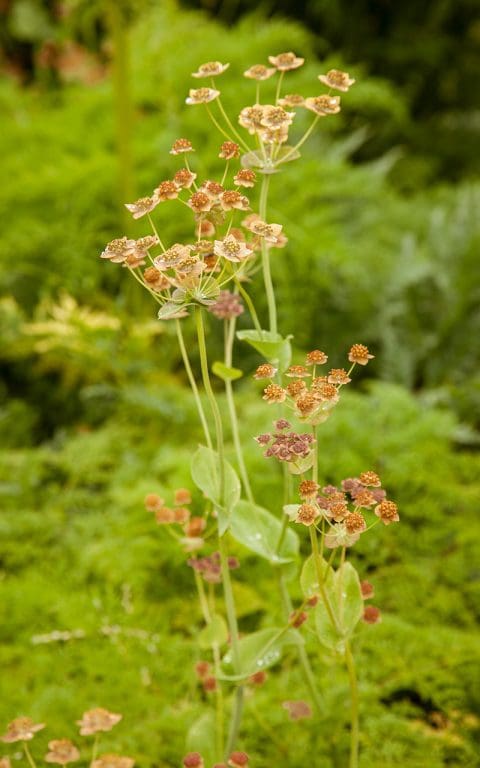
With the ground now covered and the gaps of last summer already forgotten, I can start to see how the plants are interacting. The community works well where there is a balance and the plants sit happy in each other’s company. Close to the path I have woven a ribbon of Bupleurum longifolium ‘Bronze Beauty’ to provide the way through with a layer of consistency. This delicate umbellifer pairs well with so many things for having a complexity of colours in its flowers – brown, sepia rust, saffron, lime green – and air in the plant too, so it that hovers. Out here on our hot, open slopes, the plants are failing where they are most exposed to a baking and tell me where they prefer to be by seeding into the cooler pockets. This is the best of educations and the best way for the garden to feel lived-in and truly naturalistic.
Trifolium repens ‘Quadrifolium Atropurpureum’ also lines the paths at the beginning of the garden where the colour is deliberately strongest and brightest. I have grown this dusky, four-leaved clover since I was a teenager and have never tired of its darkness and the welcome foil it provides. Here on our hearty soil it grows lush, the colour browner and less dark at a glance. Grow it harder and the leaves are smaller and deepest mahogany, the growth less full. Here I am surprised it has not eclipsed the basal rosettes of the Dianthus cruentus that I’ve marched through it, but they seem happy so far. A native of Greece, the brilliant pinpricks of crimson are held tightly together on wiry drumsticks and, although you almost loose the structure of the plant against the clover, the suspension of colour is dramatic and a feisty pairing with the Salvia ‘Jezebel’ with which is is also combined (image below).
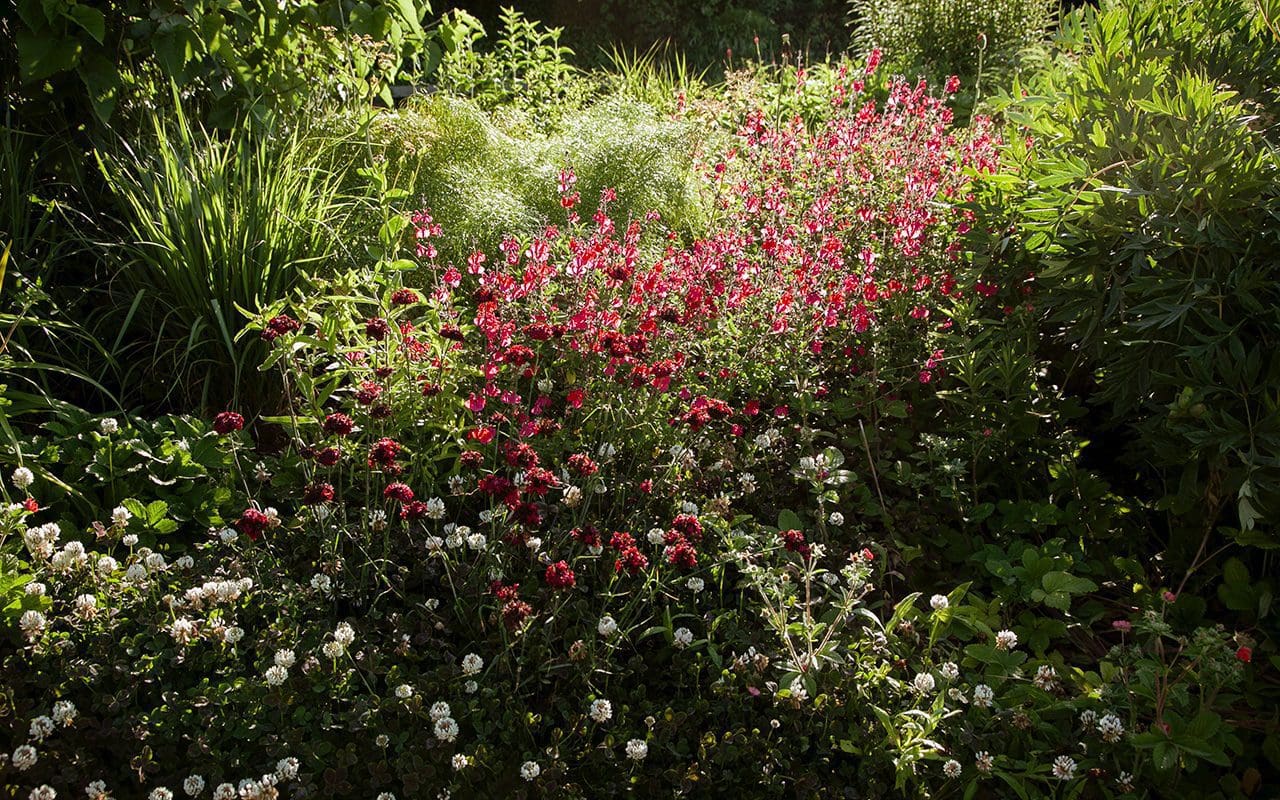
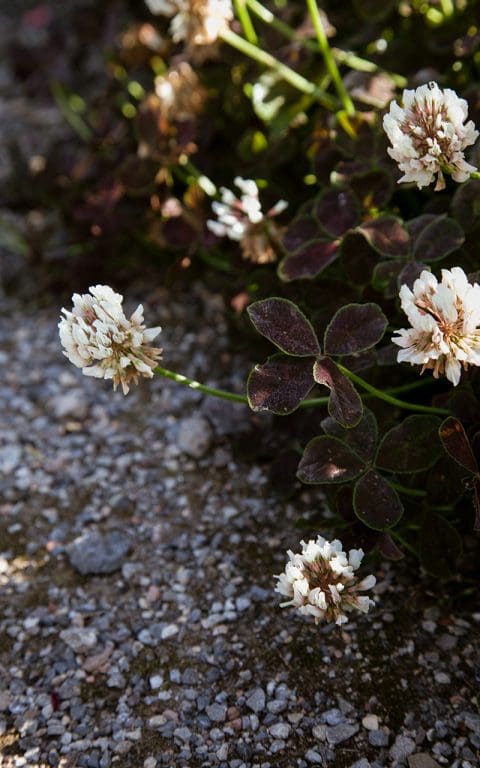
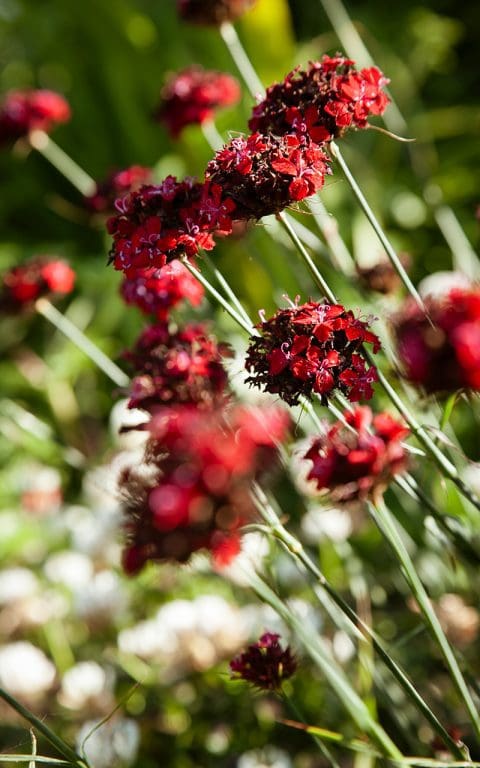
It will be interesting to see if the dianthus is able to seed amongst the lush growth of the clover. Thinking about its rubbly home in Greece I doubt it, so have planned ahead with a newly raised batch of easy-to-germinate seedlings. They take their first year gathering strength in a rosette of foliage and come to flower in their second year. Given a brightly lit aspect I expect them to be reasonably long lived. My original plants – now being lost to eryngium seedlings down by the barn – are in their fifth summer and showing no signs of tiring where they still have the room to breathe. A commodity that is rapidly becoming less available to all but the strongest and wiliest.
Words: Dan Pearson | Photographs: Huw Morgan
Published 6 July 2019
It has been the most wonderful spring. Cool and nicely drawn out and kind to the irises for being dry during their magnificent three week flurry.
The garden is coming into its third summer in the greater part and its second in the remainder. Time enough for perennial planting to mesh and to have settled into serious growth as opposed to establishment. The roots are down and with it there has been a tidal surge that has been expressed most graphically in the Ferula communis. Fergus Garrett gave me two pots of seedlings four years ago. The straight F. communis and its more slender variant, F. communis ssp. glauca. They were potted on into long-toms to encourage a good deep root and kept in the frame for a winter before being planted out as yearlings.
Two growing seasons putting their roots down saw their filigree mound of foliage ballooning over the winter. They are usefully winter-green, providing a counterpoint to most of the world being in dormancy and, being on the front foot, by spring they were the trigger that let us know that the sap was rising. You could feel the energy mustering at ground level. A clenched fist at first when you parted the foliage to see what was coming, but soon a racing limb which soared skyward before branching and flowering against blue like an acid yellow firework. They have been quite the proclamation. One of optimism and joy and a garden that is finally coming together.
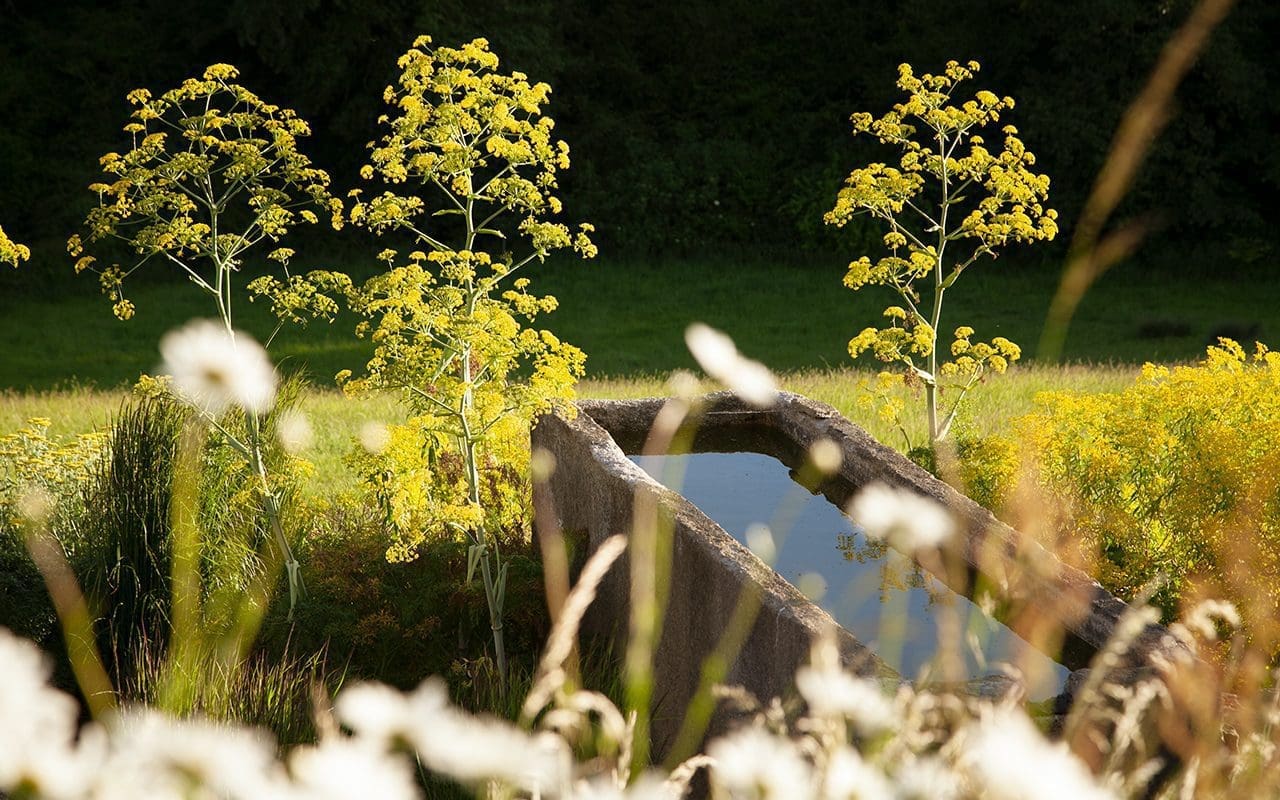
Ferula communis ssp. glauca
In the perennial garden where the outer planting is now coming into its third growing season, I can see how things are playing out. The giants in the mix, in this case Sanguisorba ‘Cangshan Cranberry’ and Thalictrum ‘Elin’, have already muscled out anything that does not have the stamina for competition. I moved the asters that were showing me they didn’t like it out to the edges and replaced the gaps with shade-loving Cimicifuga rubifolia ‘Blickfang’, which were sent from Hessenhof Nursery in Holland. I like responding when a planting tells you it needs change and the thought of using the tall growing plants in our exposed, brightly lit site to shelter those that naturally prefer the cool ground. We could probably not have got away with this in the first year without the cover to prevent the cimicifuga from burning.
The iris here in the perennial garden are selected for their spearing foliage and refined form of flower. Iris fulva, the copper iris, is shown to best effect amongst bright Zizia aurea, and Iris orientalis from Turkey towering architecturally above their companions whilst the planting around them is still low. Early spears are one of the aspects I enjoy most in the early garden and Iris sibirica ‘Papillon’ have been as strong and definite as you could ever wish a plant to be. In colour they have taken over neatly from the camassia,which were introduced this year. I like to wait a year or so before introducing bulbs so that I know where change might occur and can be sure they have the space to establish unhindered. I’ve learned though that camassia that are prone to seeding do not make good bedfellows in open ground, for they are profligate. Camassia leitchlinii ssp. suksdorfii ‘Electra’ is reputedly sterile and finishes just as the iris come into flower. Self-seeders have proven to be problematic on our rich ground so, when I am in doubt, I deadhead and leave a sample to see how seeding plays out.
This is exactly how I will manage the Allium atropurpureum, which are now worked into the planting in the middle of the garden. We planted fifty bulbs last autumn in the gaps between the Digitalis ferruginea. They have been wonderful for enlivening this area early in the season with the promise of leaf and bud and now height amongst the acid green euphorbia.
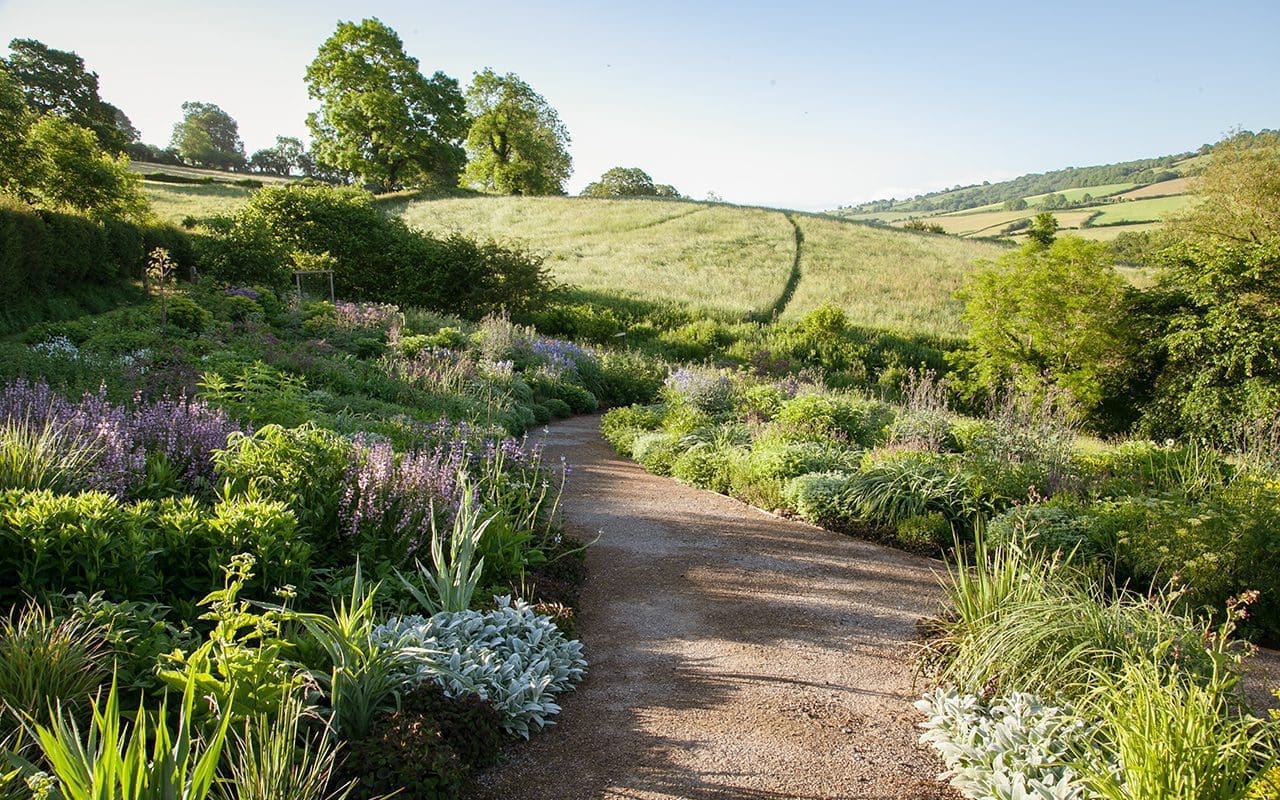
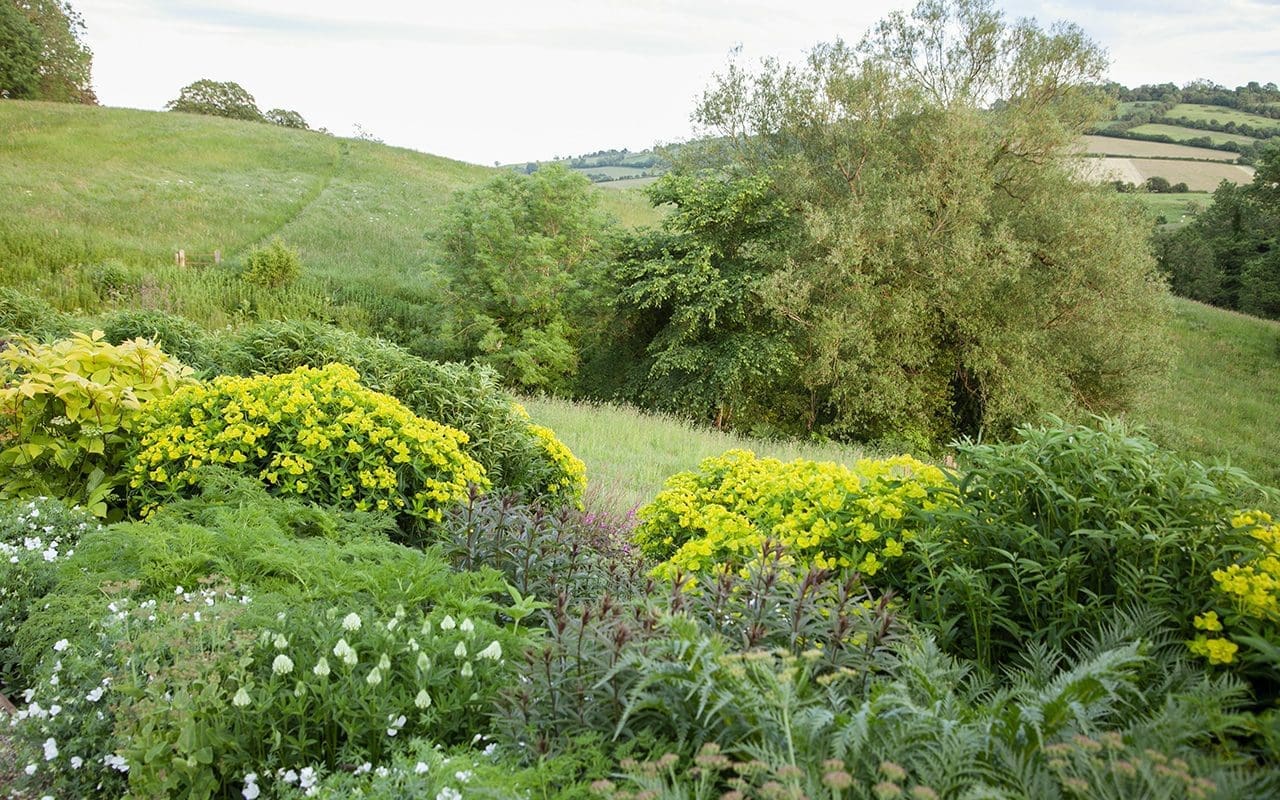
With summer firmly here but fresh still in its infancy, it is the moment of the euphorbias and they are mounding luminously throughout the planting. Standing back and looking down on the garden from The Tump, they remind me of my first sighting of the giant fennels in the Golan Heights when I was studying at the Jerusalem Botanical Gardens in the mid-eighties. It was forbidden territory, the minefields floriferous for being completely inaccessible. As far as you could see there was a march of giant fennel with euphorbia and searing red anemone at their feet. Perhaps this memory was etched into my mind when I planned for spring and early summer here, for I find myself looking on and seeing the similarities. Euphorbia cornigera with its dark red stems high up in the garden, E. wallichiii with its weight and volume to the lower slopes where the ground lies damper and in the high, dry centre the Euphorbia x ceratocarpa nestle the black alliums. Scarlet Papaver ‘Beauty of Livermere’ dot and brighten.
As I look out of the window to the first proper rain we have had in quite some time, I can see the plants exhaling. The greens are brighter – if that were possible – the garden plumper already and readying to push again. There is promise and it is amplified.
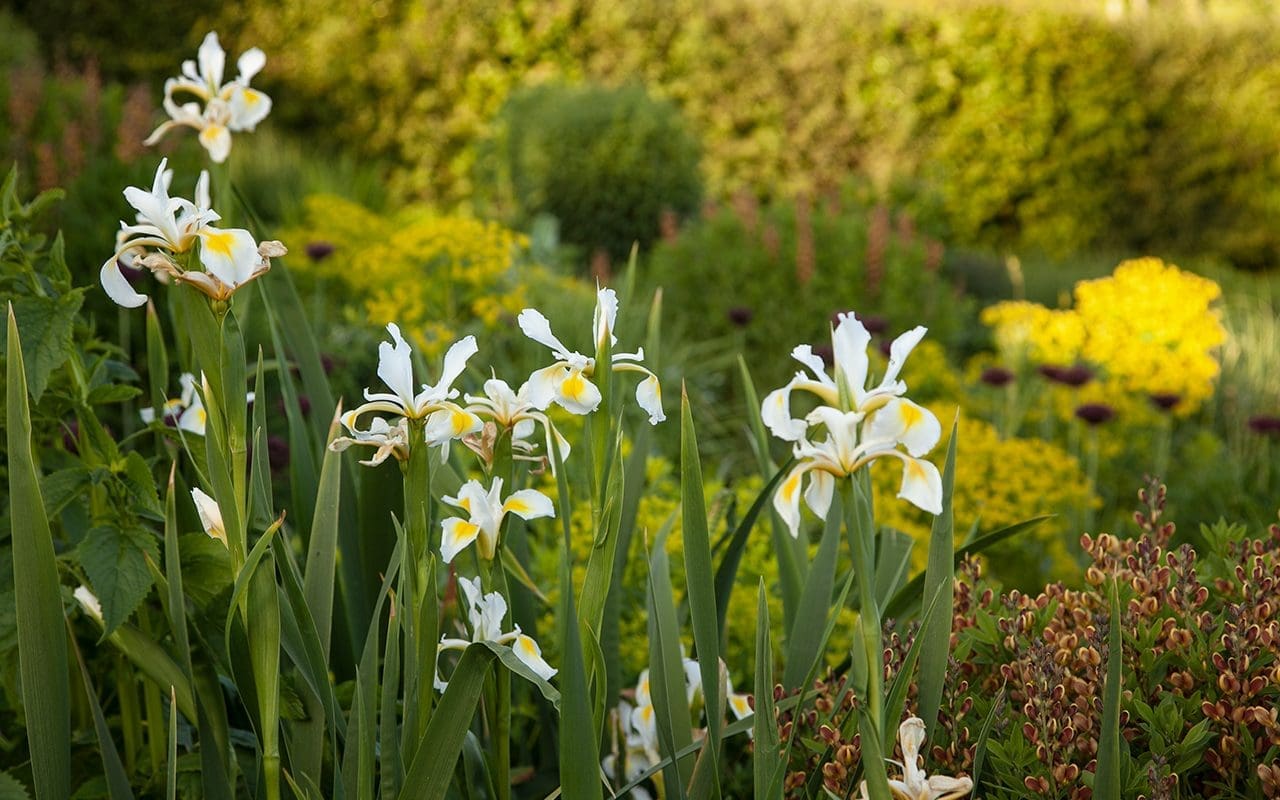
Iris orientalis
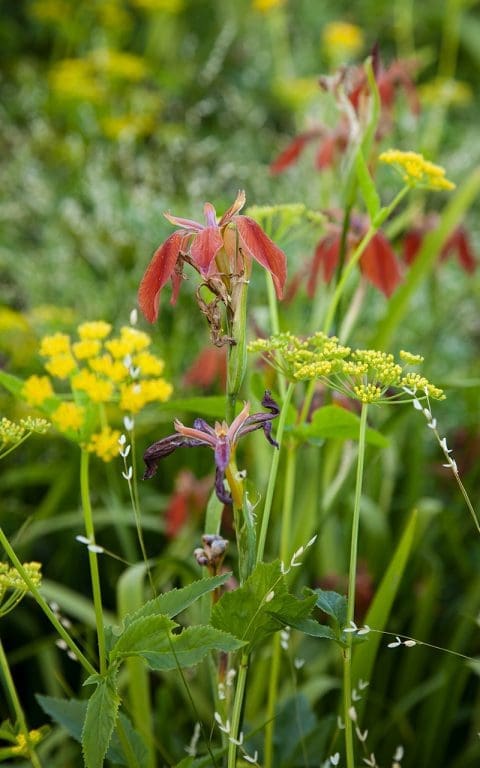 Iris fulva and Zizia aurea
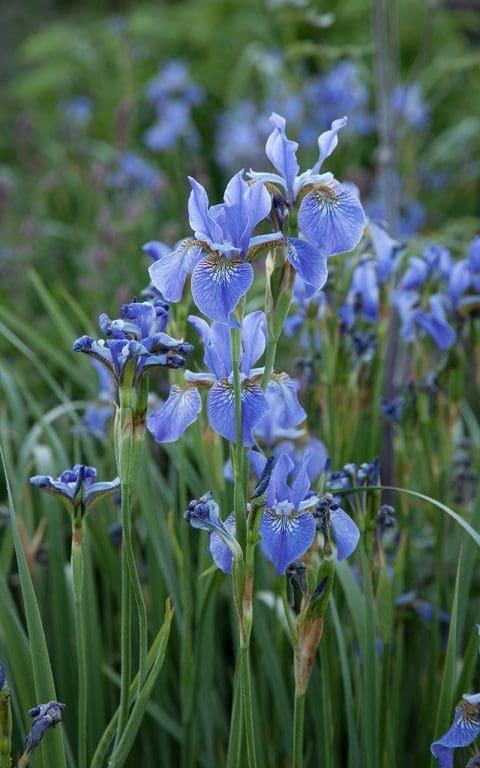 Iris sibirica ‘Papillon’
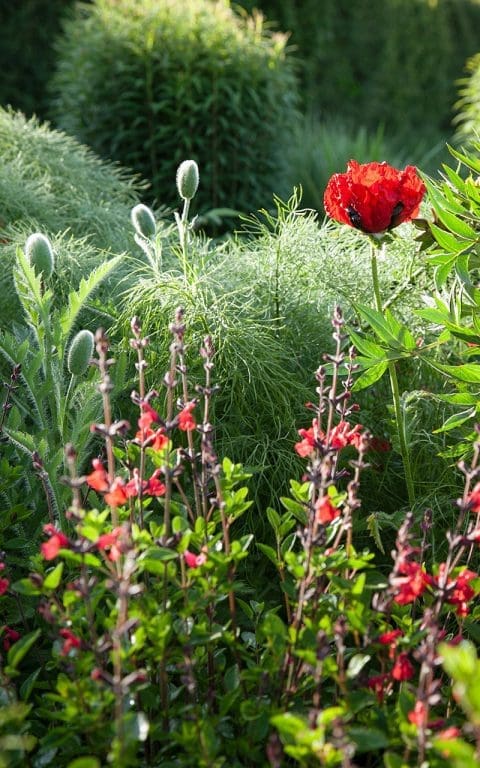 Papaver orientalis ‘Beauty of Livermere’ and Salvia ‘Jezebel’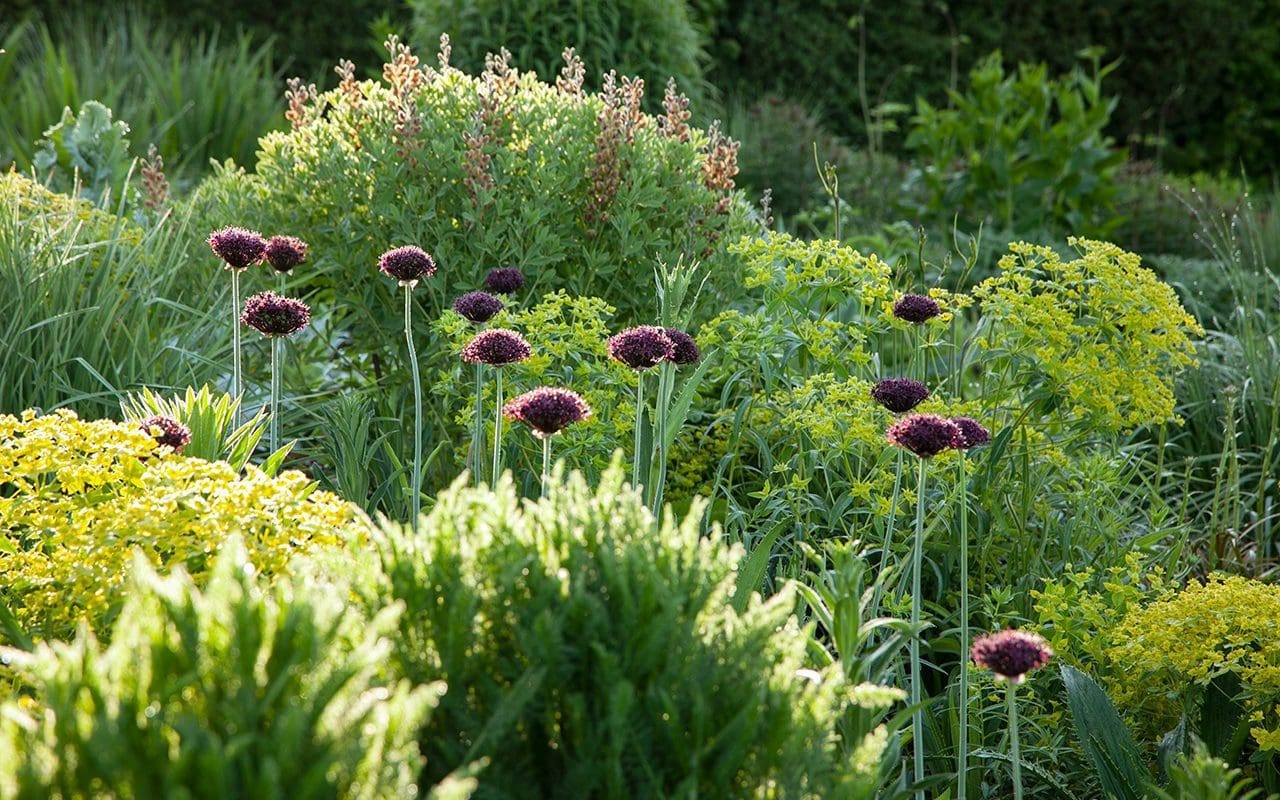
Allium atropurpureum with Euphorbia x ceratocarpa
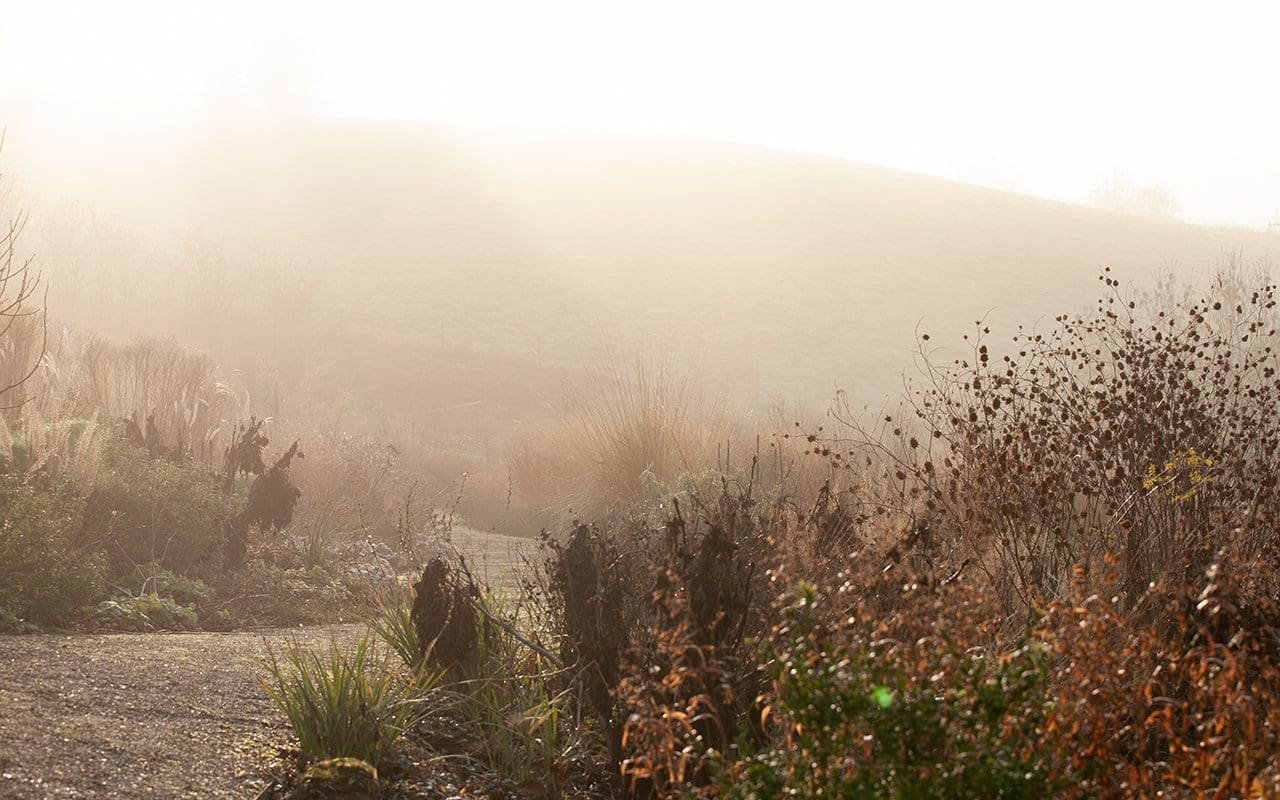
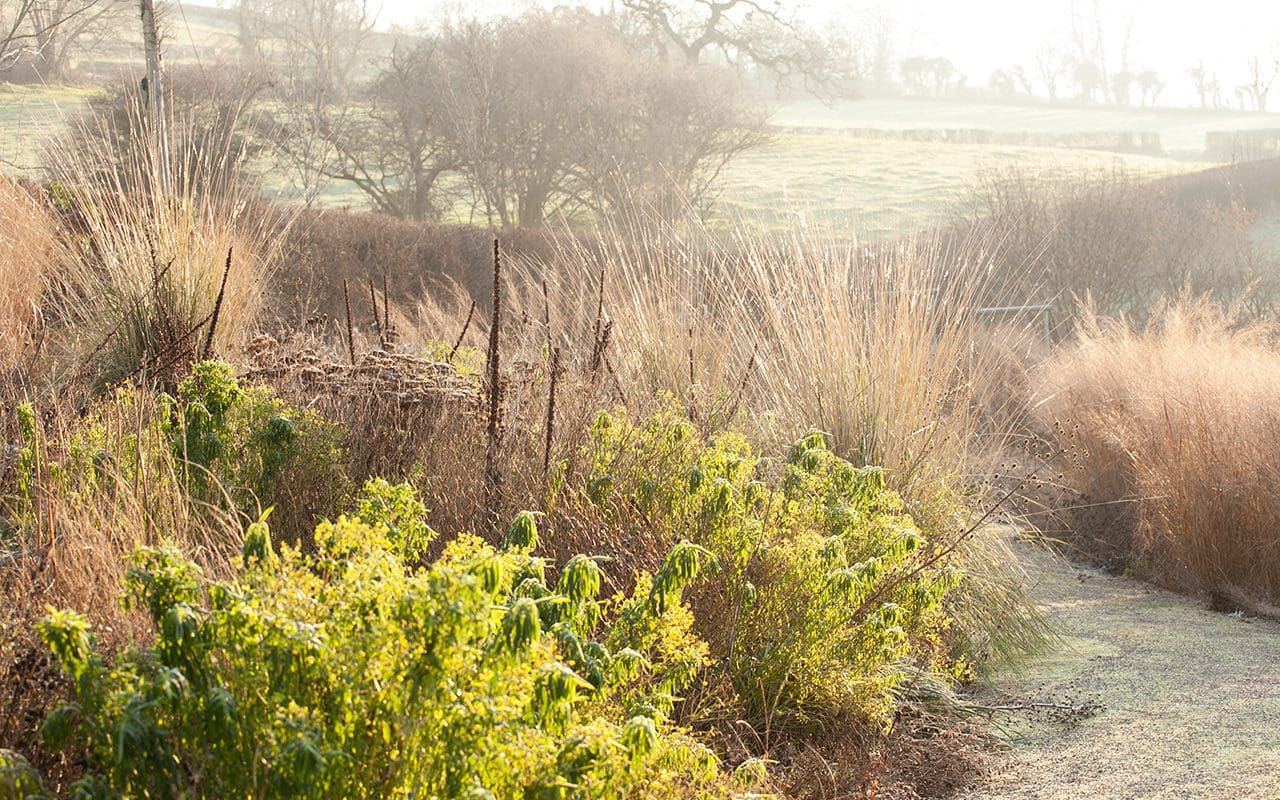
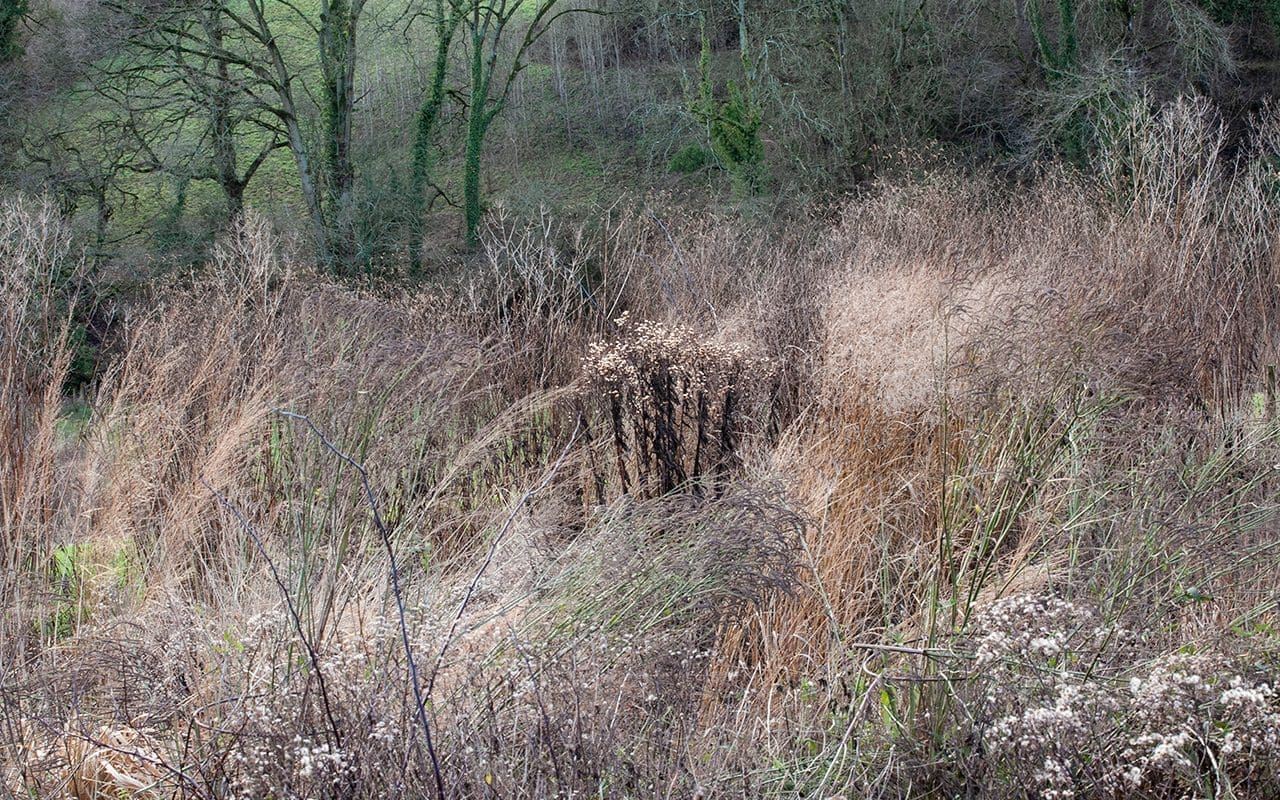
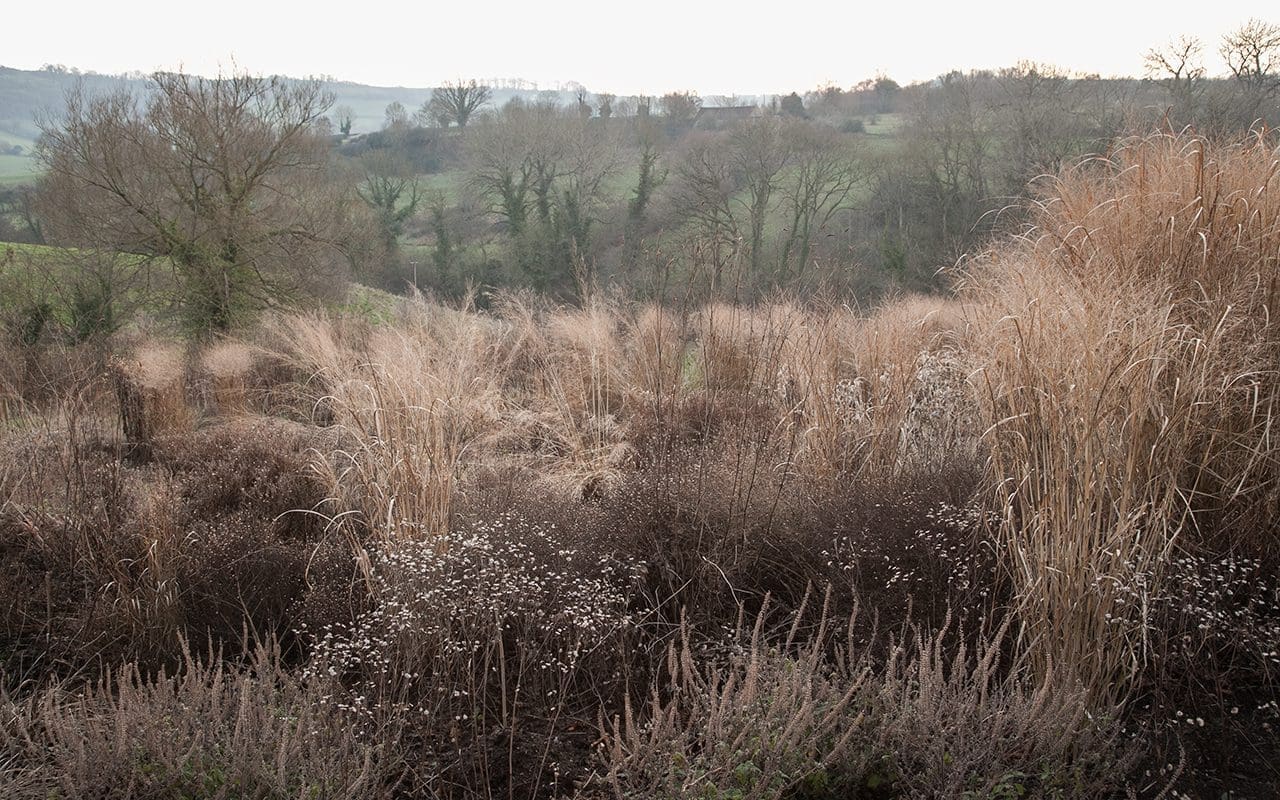
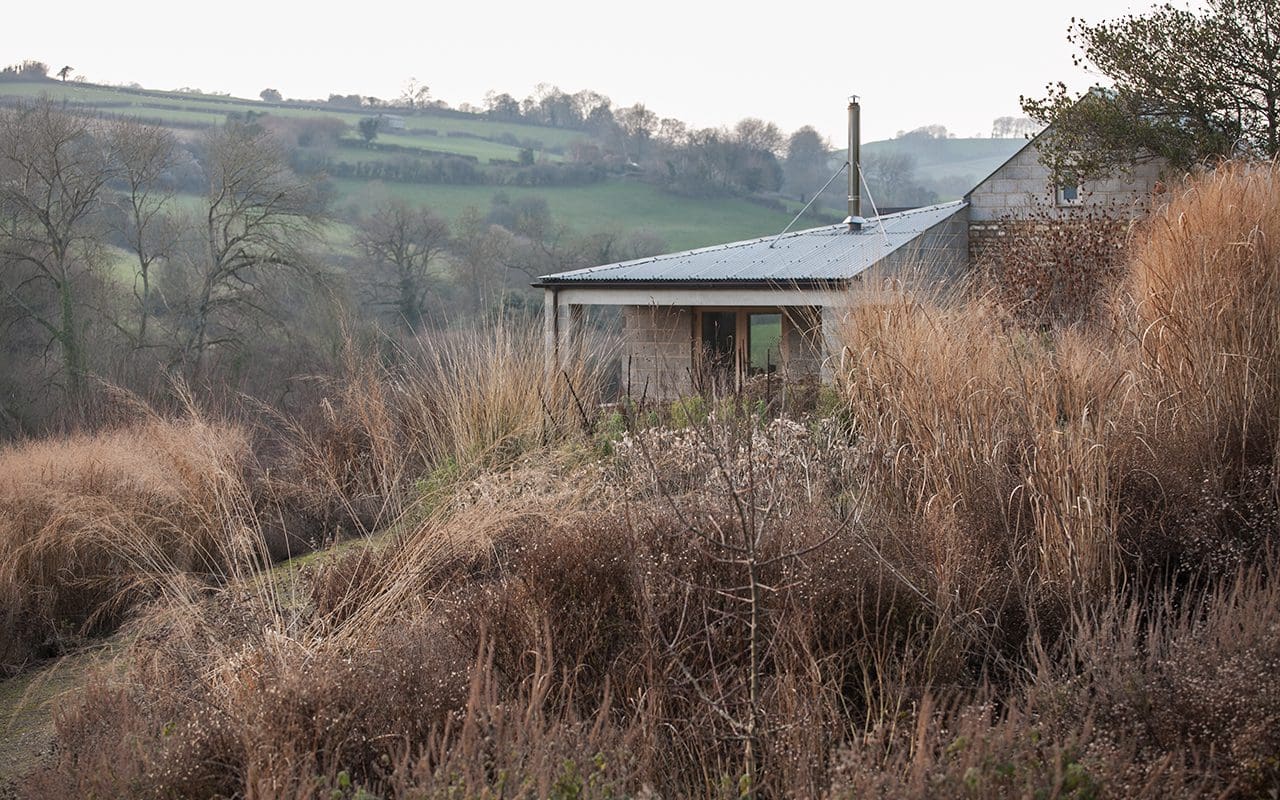
Winter is a time to look. Where the sky had its limits when we looked up and out from the garden in London, here on our hillside we see as far as the eye can in every direction. This makes an enormous difference, for grey skies are rarely simply just that. They are layered and nuanced and seldom dull. The garden is the same and far from monochrome once you allow your eye to register new colour and form in the skeletons.
We leave the garden alone now so that we can take in this apparent stasis and appreciate a different, more attentive way of seeing. The first observation is that the garden is full of birds, some at ground level foraging for fallen seeds and others flitting from limb to limb rummaging through seed cases and searching for the insects that also harbour there. Stripped back, but far from lacking, the greens and colours of the growing season are replaced by something arguably just as beautiful. Blacks and inky brown-purples, cinnamon, sepia and silvery whites. The charcoal end of the spectrum darkening on a wet day, the pale tones warming and, in dry weather, the contrasts between light and dark opening out so that you register form and structure as you might with black and white film.
With time slowed down and the room to look, you see how important it is to understand your plants in their winter incarnation. A garden cut back and put away in the name of tidiness will never allow you to witness the low light caught, arrested and sometimes incandescent in spent seed heads and desiccated grasses. On a bright day the shadows of what came before provide another focus, sharply tuning your eye to the way your plants are constructed and to the movement in their wintry limbs. Though this pause in growth may find us pining for life again, the garden is far from static as the winter continues to weather what is still standing.
This is just the first chapter and it won’t be until the beginning of February, the mid-way point between the winter solstice and the spring equinox, that we begin to see a loosening of its grip. The Pagan celebration of Imbolc around the first and second of next month marks this first day of spring and, true enough, you can usually feel a shift through the garden and what is happening in the hedgerows. Snowdrops moving towards their zenith and, at the base of the perennials that are still standing, a new sturdiness in now visible rosettes.
This year I am writing a long overdue book about the Tokachi Millennium Forest in Hokkaido. This means that I will be writing for Dig Delve fortnightly so that I can do both. However, in the weeks when I can’t write a full article Huw and I will still be making a weekly contribution. A visual and verbal haiku of sorts with a photograph and some words that will try to capture a thought, observation or moment here in the garden in the week it is published. We will be aiming to pin down moments of close observation and focussed attention. In so doing we hope to dig deeper into why the garden and our surrounding landscape help ground us and keep things in the moment.
Words: Dan Pearson / Photographs: Huw Morgan Published 5 January 2019
A chill wind is pushing the weather through the valley, tossing the garden and tearing the colour from the trees. This late autumn feeling is distinct for being burned clear into our memory of arriving here exactly eight years ago. We sat on the banks below the house wrapped in blankets on the same chairs that, just the day before, were out on the deck in Peckham, where we had willingly left a well-loved garden behind. The feeling of the new and the excitement of a prospect is still very clear to me and the anniversary has given us cause to ponder all that has happened since. The unloved land, grazed to the bone and up to the very foundations of the buildings, is now softened by growth. We look up the slopes into a little wood – our first planting project that winter, where an empty field gave way to a broken hedge – and down onto a new orchard where the trees are fruiting and casting their own proper shade. It is time marked very tangibly in growth.
Our thoughts that first weekend had not yet formed this place, but today it is better and more giving than I could ever have imagined. The reward comes from both the continuity and the luxury of being able to build something for yourself and be witness to its evolution. Every month we have been here has revealed something new, but the garden has amplified our connection with the land and the seasons. It is just a year since we completed the planting of the garden proper, but it is safe to say that every week has been provided for and, on this last full day of British summertime, the garden is still a place we can be where the season doesn’t quite have the upper hand.
This last push of flower before the frost takes hold is important, for soon all will be gone. Though I do not miss it then, for flower soon starts to feel out of place amongst the skeletons. Some of these late performers, the asters for instance, have been biding their time as they have built up their resources, and the place they have occupied until now is a necessary one that I have learned to see as a foundation for autumn rather than space wasted for earlier performers. The backdrop they provide in foliage to earlier-flowering perennials has offered stability and constancy. The filigree foliage of the October-blooming Aster turbinellus, for instance, is as delicate as netting and the flower equally beautiful and finely-rayed. Rising to almost a metre in height, but leaning as it comes to flower, it remains one of my favourites for its bright, clean colour and its thoroughly reliable, clump-forming habit.
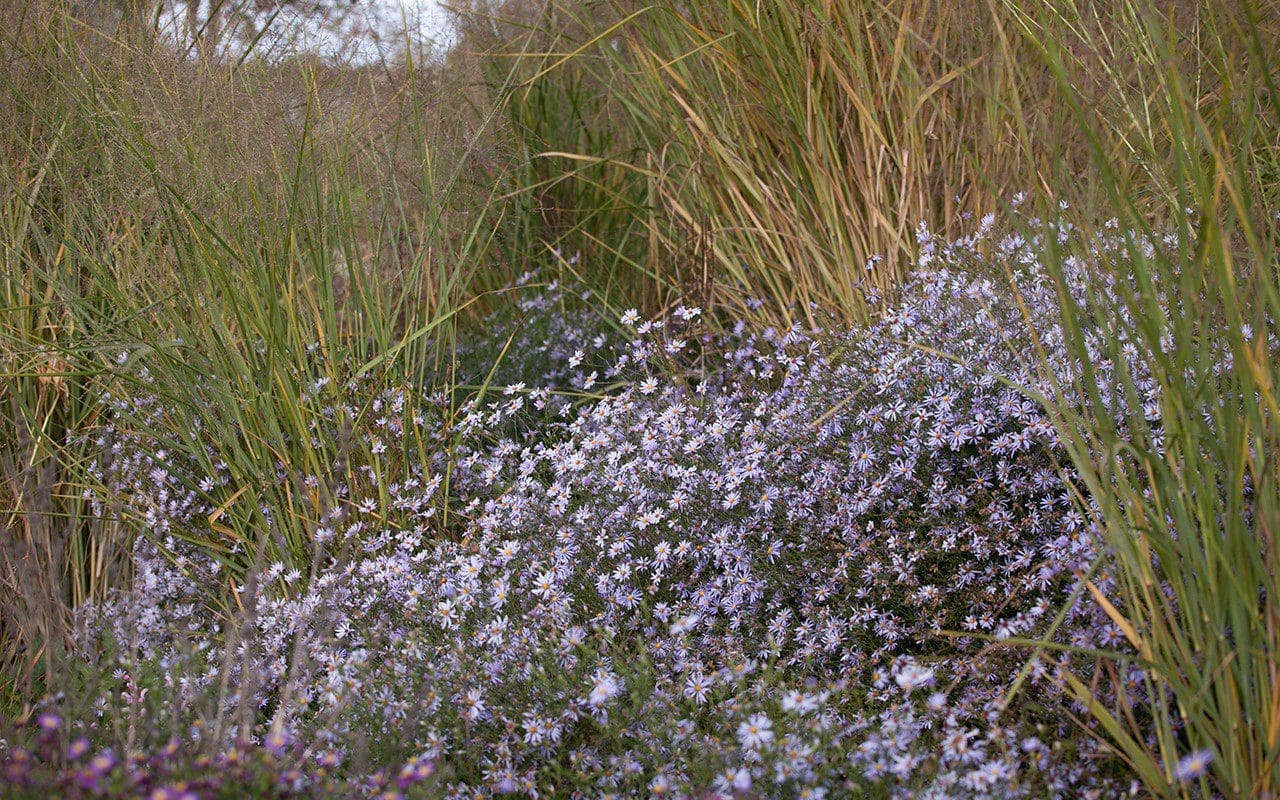 Aster turbinellus growing through Panicum virgatum ‘Cloud Nine’
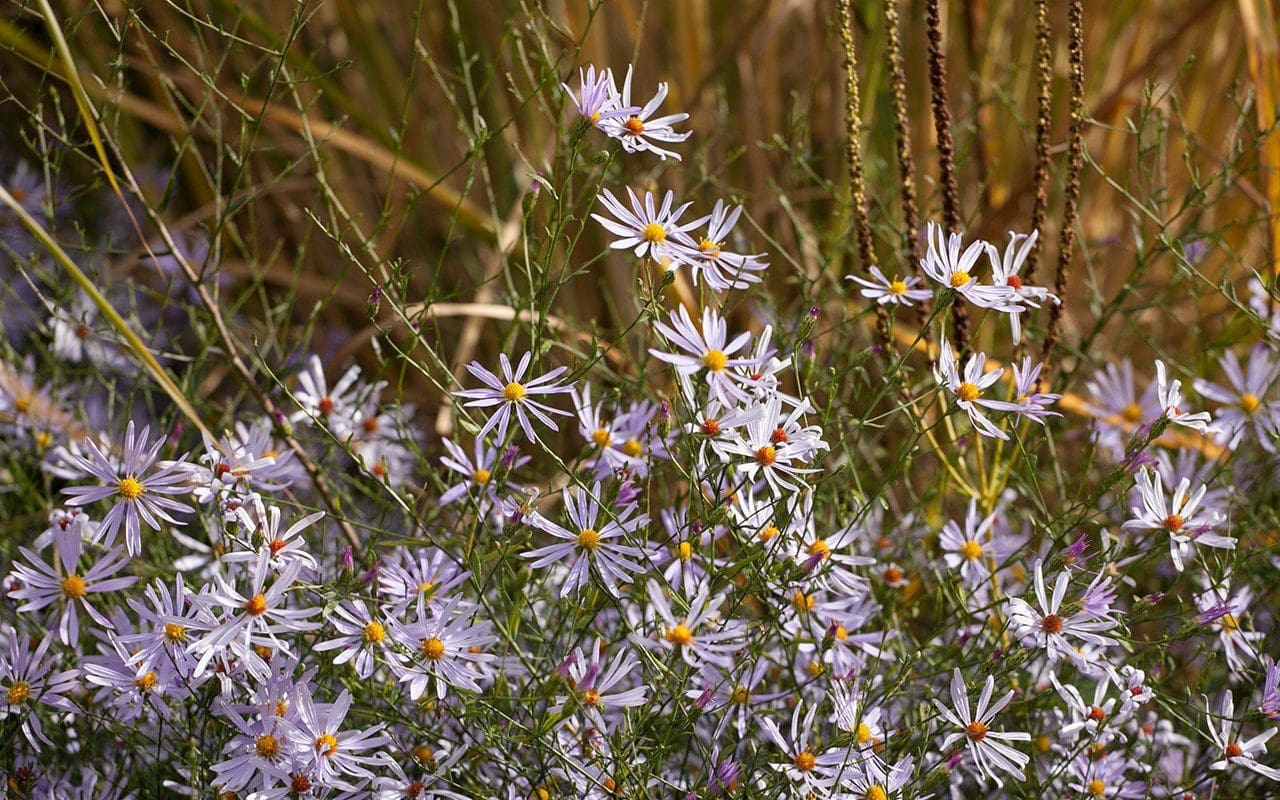 Aster turbinellus
I am not sure yet whether I can say the same for Aster ‘Ezo Murasaki’, which is bulking up steadily. Asters that stay put in a planting are important, but so far I have forgiven this Japanese native its lust for life. It has licorice-dark stems and serrated foliage which you might at first think belonged to a chrysanthemum and that colours with red tints as the temperature falls. It comes into flower in late September at about 60cm, and is at its zenith now. The flowers are single, with bright, violet centres, darkening towards the tips and ageing to royal purple, giving the mass of flower a variance in depth. They also have a bright gold eye which prevents them from feeling sombre. I have them paired with the muted tones of Teucrium hircanicum ‘Paradise Delight’ in an undercurrent beneath Molinia caerulea ssp. arundinacea ‘Transparent’. We will see in time if they creep too readily. Three years of growing them has shown me that they need to be watched, but not worried over like some asters.
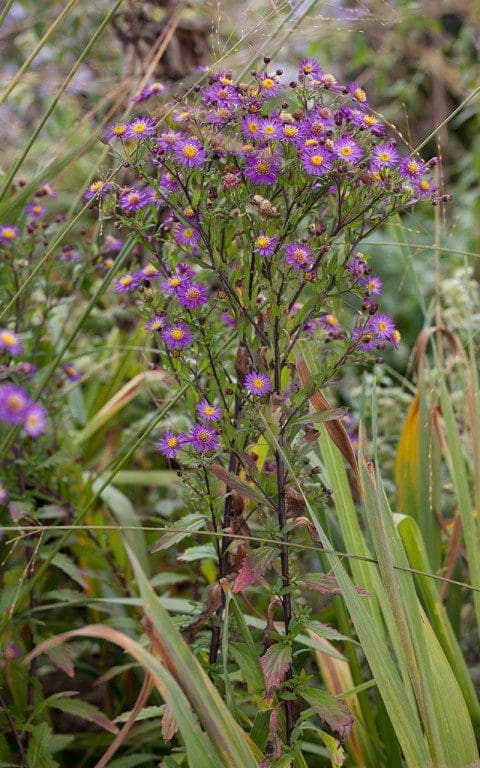
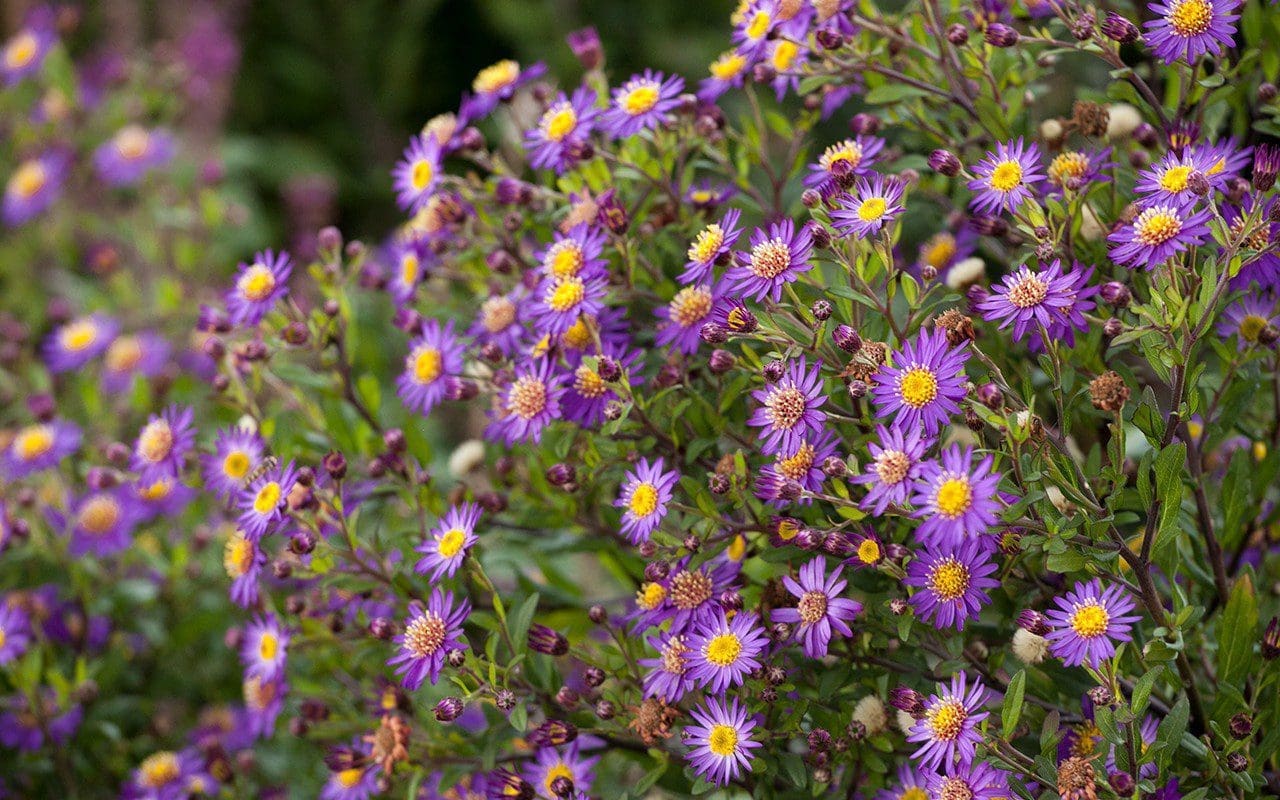 Aster trifoliatus subsp. ageratoides ‘Ezo Murasaki’
Close by, and doing better than I had imagined on our open slopes because our soil is retentive, is Tricyrtis formosana ‘Dark Beauty’. I have them grouped under a young crab apple, which will provide them the dappling they need and look better for in time. ‘Dark Beauty’ is a named form that retains the spotting that gives them their common name, the Toad Lily, and I prefer these to the plain selections without spots. However, it isn’t as dark as I had imagined and I’m on the look-out for a deeper-coloured selection having seen and remembered them from my time at The Edinburgh Botanic Garden. If they can be bettered, I will replace them. That said, for the past six weeks they have been a delight and will continue until they are felled by frost.
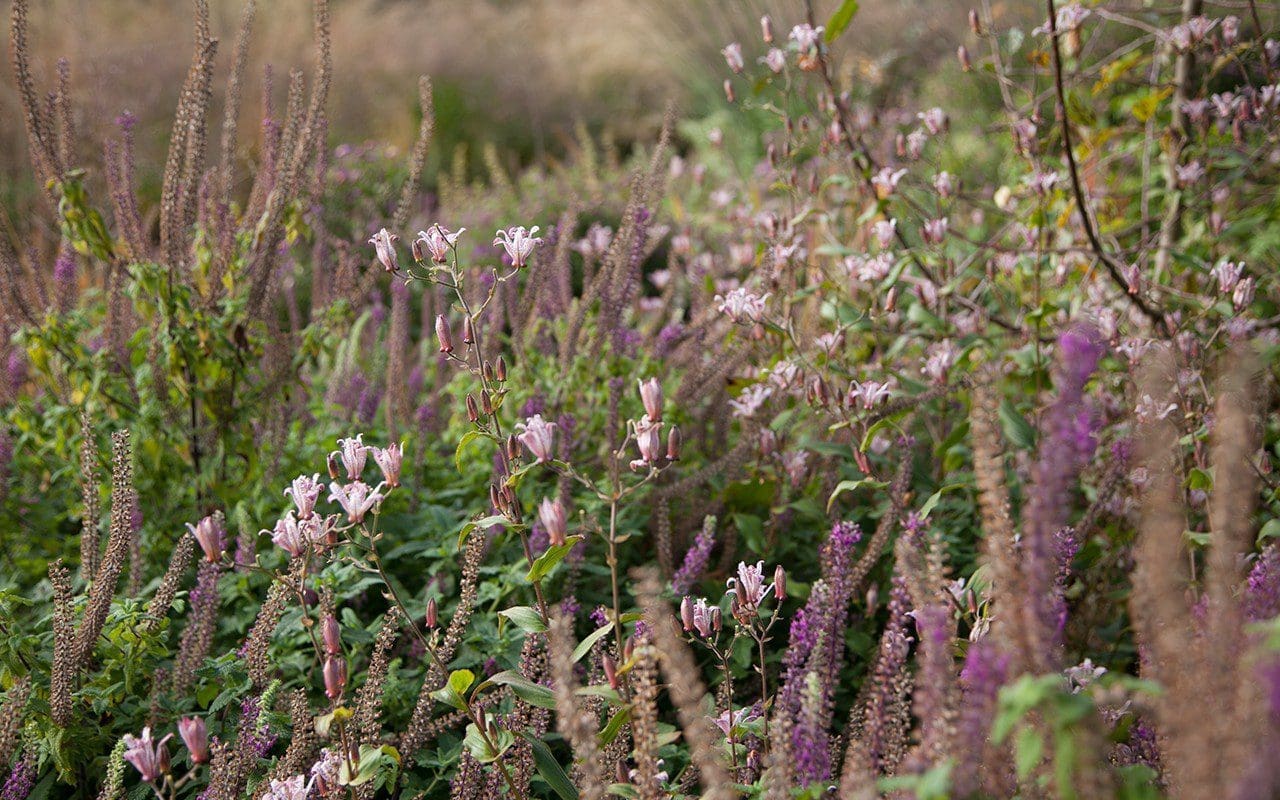 Tricyrtis formosana ‘Dark Beauty’ and Teucrium hircanicum ‘Paradise Delight’
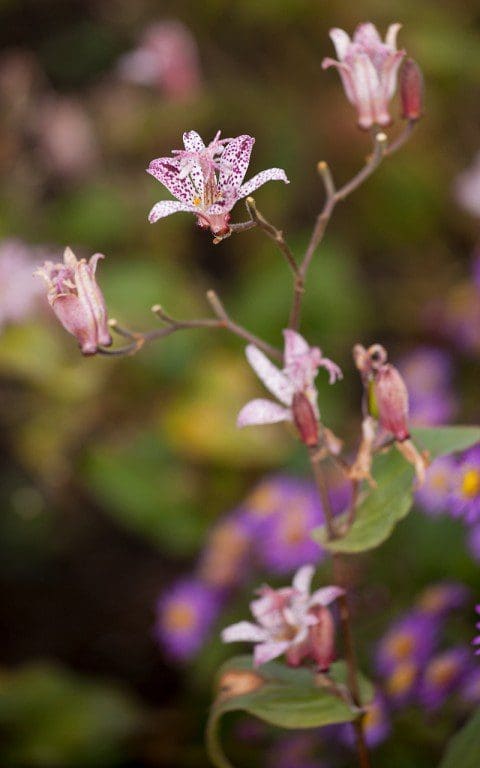 Tricyrtis formosana ‘Dark Beauty’
Also worth the wait if you can find it a place where the foliage doesn’t burn, are the actaea. A tribe of late-flowering perennials that occur both in Japan and North America, they prefer moisture or retentive soil and cool for their foliage. Where I have used them in the parterre at Lowther Castle, they thrive in the open with the wetter climate of Cumbria, whereas down here in the south, they prefer some shade. Although they are a long-standing favourite, they have often frustrated me in my own gardens over the years. They hated me in Peckham, where my ground was too dry and their leaves burned to a crisp. The dark, ferny foliage earlier in the season is half their appeal and in Actaea ‘Queen of Sheba’ (main image), the greater part of why they are worth the effort. If you can find them a place where they are happy, they never deviate from elegance, rising up tall and taking up no more space than they need in their ascent. ‘Queen of Sheba’ is distinct from the usual vertical line of most actaea, in that its flowers arc in beautifully drawn lines. Dark buds open from the bottom upward to form a wand of light-catching, highly-perfumed plumage that last until the dark nights are with us for sure and the flowers finally fade away.
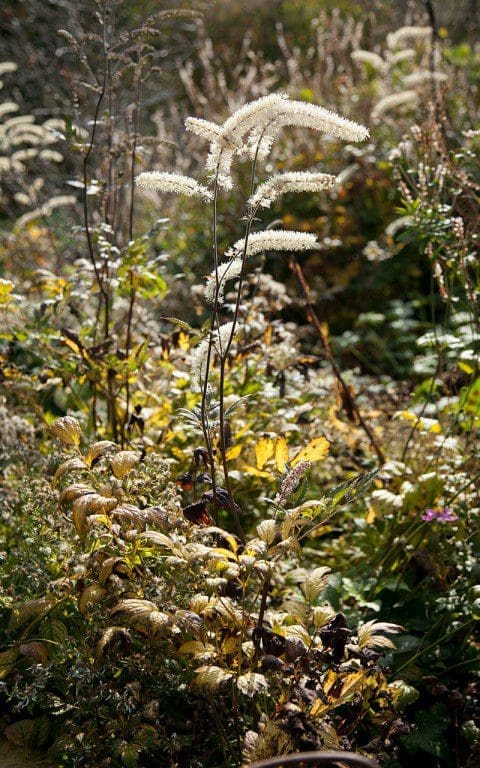 Actaea ‘Queen of Sheba’
Words: Dan Pearson / Photographs: Huw Morgan
Published 27 October 2018
We have just returned from Greece and a browned and dusty landscape that had not seen water since April. We arrived back to a season changed. Fields deep and lush with grass, hedges flashing autumn colour, dimmed as they reached into a shroud of drizzle. Our distinctive line of beech at the end of the valley all but hidden by cloud and windfalls shadowing the slopes beneath the apple trees in the orchard where, just a fortnight before, the branches had been weighted. It took a day to retune the eye, but here I sit not a week later with the sun streaming in over my desk and the studio doors wide open to the garden. It is the stillest, most perfect day of autumn and the garden has weathered well. Aged too by the window of time we have been away, but certainly not lesser now that we are in step again with the season.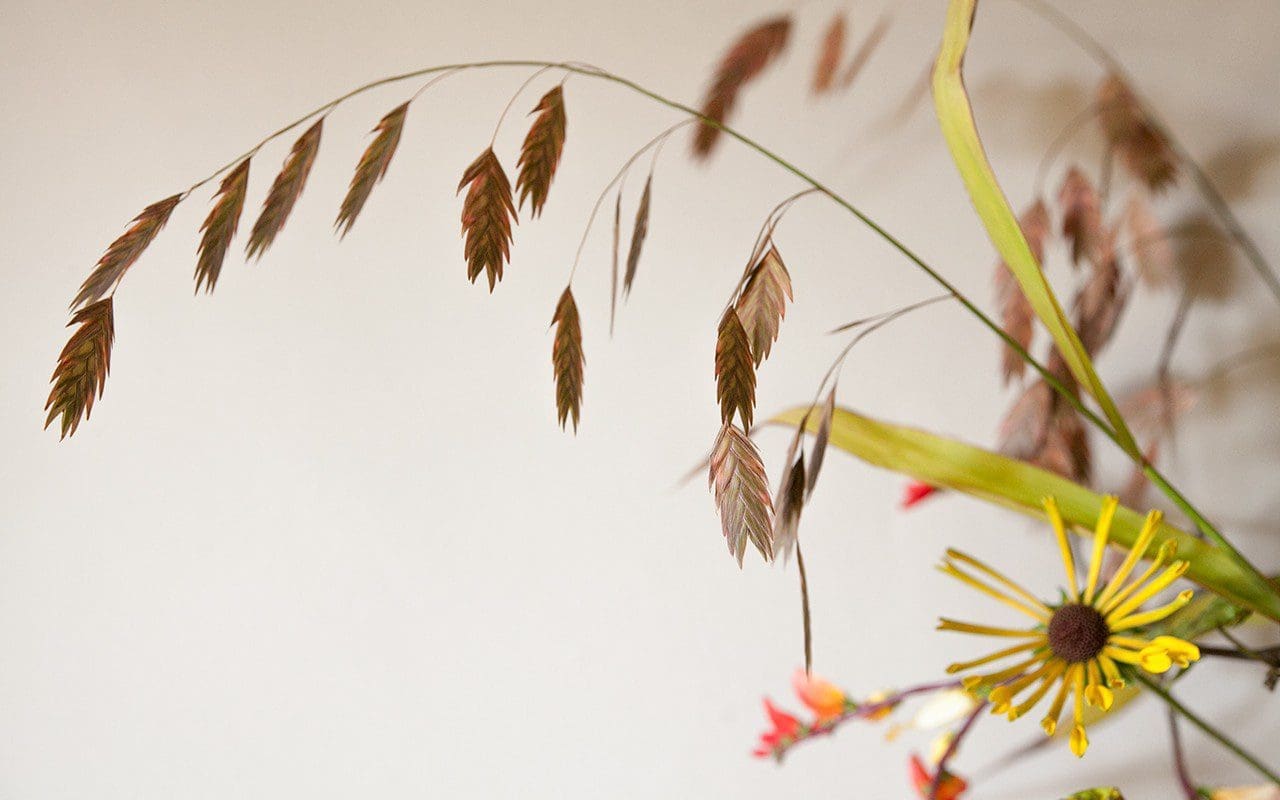 Chasmanthium latifolium
As a way back into the garden this morning we have picked a posy to mark a feeling of this change. The Chasmanthium latifolium are probably at their best, coppery-bronze and hovering above their still lime-green leaves. The perfectly flat flowers appear to have been pressed in a book. Like metallic paillettes they shimmer and bob in the slightest of breezes. I must admit to not having understood the requirements of this plant until recently and, though it is adaptable to a little shade and sun, it likes some shelter to flourish. Where I have used it in China in the searing heat of a Shanghai summer it has done superbly, spilling in a fountain of flower held well above the strappy foliage. It must like the humidity there. In the UK I have found it does best with some protection from the wind. My best plants here are on the leeward side of hawthorns, those in the same planting to the windward side have all but failed. It is a grass that is worth the time and effort to make its acquaintance.
Though the seedheads which mark the life that come before them now outweigh the flower in the garden, we have plenty to ground a posy. Scarcity makes late flower that much more precious and I like to make sure that we have smatterings amongst the late-season grasses. Brick-red schizostylis, flashes of late, navy salvia and clouds of powder blue asters pull your eye through the gauziness. The last push of Indian summer heat has yielded a late crop of dahlia, which have yet to be tickled by cold. I have three species here in the garden specifically for this moment. All singles and delicate in their demeanour. The white form of Dahlia merckii and the brightly mauve D. australis have shown their cold-hardiness and remain in the ground over winter with a mulch, but the Dahlia coccinea var. palmeri in this posy is new to me.
Chasmanthium latifolium
As a way back into the garden this morning we have picked a posy to mark a feeling of this change. The Chasmanthium latifolium are probably at their best, coppery-bronze and hovering above their still lime-green leaves. The perfectly flat flowers appear to have been pressed in a book. Like metallic paillettes they shimmer and bob in the slightest of breezes. I must admit to not having understood the requirements of this plant until recently and, though it is adaptable to a little shade and sun, it likes some shelter to flourish. Where I have used it in China in the searing heat of a Shanghai summer it has done superbly, spilling in a fountain of flower held well above the strappy foliage. It must like the humidity there. In the UK I have found it does best with some protection from the wind. My best plants here are on the leeward side of hawthorns, those in the same planting to the windward side have all but failed. It is a grass that is worth the time and effort to make its acquaintance.
Though the seedheads which mark the life that come before them now outweigh the flower in the garden, we have plenty to ground a posy. Scarcity makes late flower that much more precious and I like to make sure that we have smatterings amongst the late-season grasses. Brick-red schizostylis, flashes of late, navy salvia and clouds of powder blue asters pull your eye through the gauziness. The last push of Indian summer heat has yielded a late crop of dahlia, which have yet to be tickled by cold. I have three species here in the garden specifically for this moment. All singles and delicate in their demeanour. The white form of Dahlia merckii and the brightly mauve D. australis have shown their cold-hardiness and remain in the ground over winter with a mulch, but the Dahlia coccinea var. palmeri in this posy is new to me.
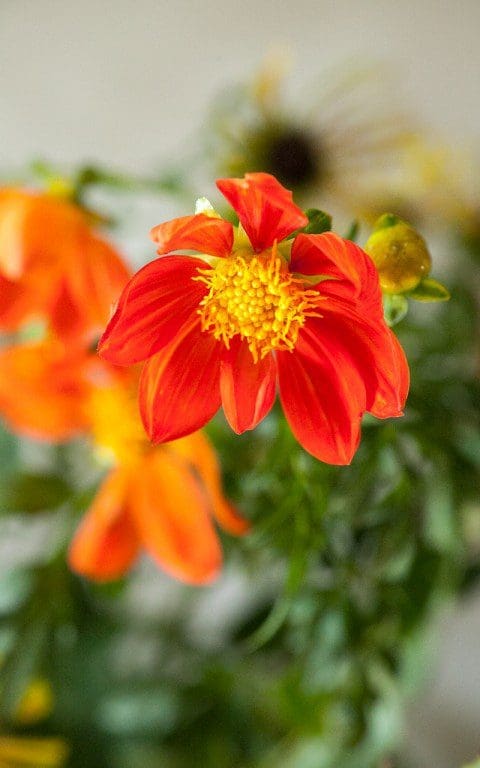 Dahlia coccinea var. palmeri
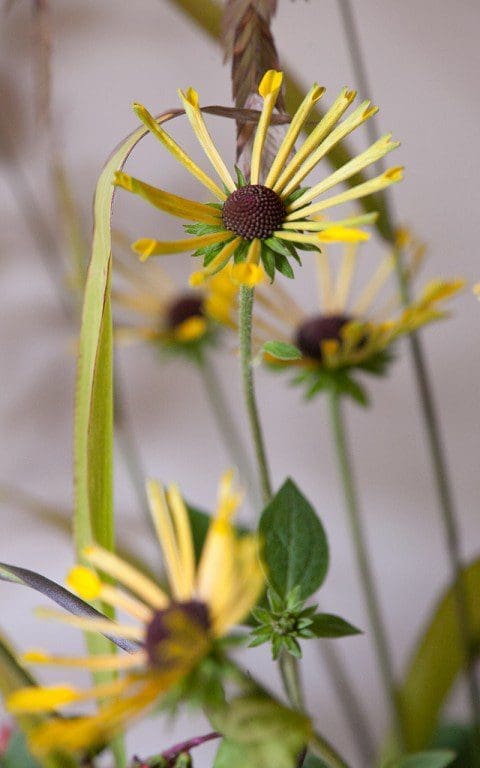 Rudbeckia subtomentosa ‘Little Henry’
I hope it is hardy enough to stay in the ground here. As soon as frost blackens the foliage, each plant will be mulched with a mound of compost to protect the tubers from frost. Distinctive for its feathered, ferny foliage and reaching, wiry limbs, this first year has shown my plants attaining about a metre, two thirds of their promise once they are established. This is not a showy plant, the flowers sparse and delicately suspended, but the colour is a punchy and rich tangerine orange, the boss of stamens egg-yolk yellow. We have it here with Rudbeckia subtomentosa ‘Little Henry’, which is also how it is teamed in the garden. ‘Little Henry’ is a shorter form of R. s. ‘Henry Eilers’ and, at about 60 to 90cm, better for being self-supporting. Usually I shy away from short forms, the elegance of the parent often being lost in horticultural selection, but ‘Little Henry’ is a keeper. They have been in flower now since the end of August and will only be dimmed by frost. Where you have to give yourself over to a Black-eyed-Susan and their flare of artificial sunlight, the rolled petals of ‘Little Henry’ are matt and a sophisticated shade of straw yellow, revealing just a flash of gold as the quills splay flat at the ends.
Rudbeckia subtomentosa ‘Little Henry’
I hope it is hardy enough to stay in the ground here. As soon as frost blackens the foliage, each plant will be mulched with a mound of compost to protect the tubers from frost. Distinctive for its feathered, ferny foliage and reaching, wiry limbs, this first year has shown my plants attaining about a metre, two thirds of their promise once they are established. This is not a showy plant, the flowers sparse and delicately suspended, but the colour is a punchy and rich tangerine orange, the boss of stamens egg-yolk yellow. We have it here with Rudbeckia subtomentosa ‘Little Henry’, which is also how it is teamed in the garden. ‘Little Henry’ is a shorter form of R. s. ‘Henry Eilers’ and, at about 60 to 90cm, better for being self-supporting. Usually I shy away from short forms, the elegance of the parent often being lost in horticultural selection, but ‘Little Henry’ is a keeper. They have been in flower now since the end of August and will only be dimmed by frost. Where you have to give yourself over to a Black-eyed-Susan and their flare of artificial sunlight, the rolled petals of ‘Little Henry’ are matt and a sophisticated shade of straw yellow, revealing just a flash of gold as the quills splay flat at the ends.
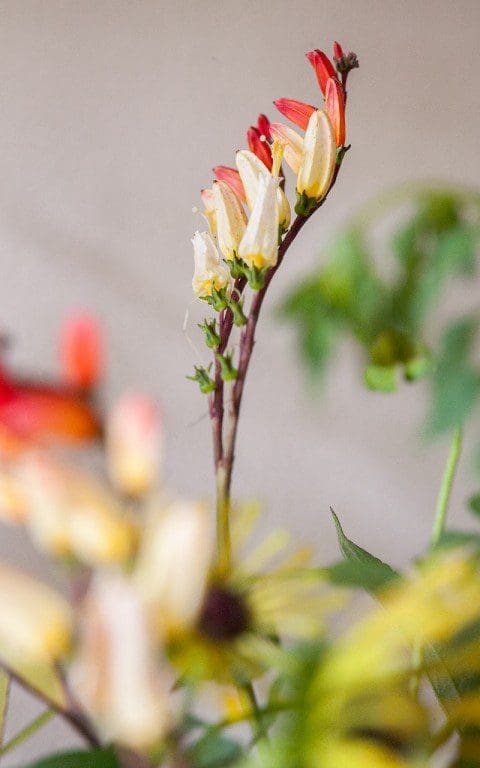 Ipomoea lobata
We have waited a long time this year for the Ipomoea lobata as it sprawled, then mounded and all but eclipsed the sunflowers. We always had a pot of this exotic-looking climber in our Peckham garden, but I have not grown it here yet and have been surprised by the amount of foliage it has produced at the expense of flower. Nasturtiums do this too in rich soil and, if I am to have earlier flower in the future, I will have to seek out an area of poorer ground. That will not suit the sunflowers, but I will find it a suitable partner that it can climb through. It is very easy from seed. Sown in late April in the cold frame and planted out after risk of frost, this is a reliable annual, or at least I thought so until I presented it with my hearty soil. Though late to start flowering this year, it also keeps going till the first frosts, its lick and flame of flower well-suited to the seasonal flare.
Ipomoea lobata
We have waited a long time this year for the Ipomoea lobata as it sprawled, then mounded and all but eclipsed the sunflowers. We always had a pot of this exotic-looking climber in our Peckham garden, but I have not grown it here yet and have been surprised by the amount of foliage it has produced at the expense of flower. Nasturtiums do this too in rich soil and, if I am to have earlier flower in the future, I will have to seek out an area of poorer ground. That will not suit the sunflowers, but I will find it a suitable partner that it can climb through. It is very easy from seed. Sown in late April in the cold frame and planted out after risk of frost, this is a reliable annual, or at least I thought so until I presented it with my hearty soil. Though late to start flowering this year, it also keeps going till the first frosts, its lick and flame of flower well-suited to the seasonal flare.
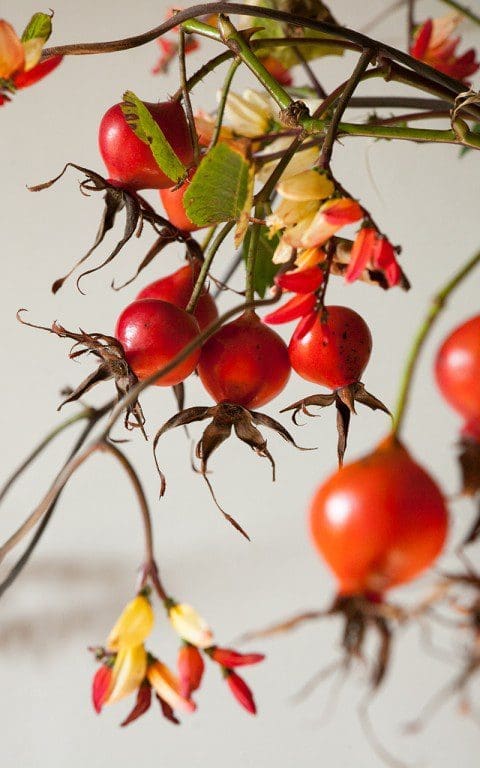 Rosa ‘Scharlachglut’
Roses that flower once and then hip beautifully are worth their brevity and we have included R. ‘Scharlachglut’ here, a single rose that I wrote about in flower earlier this year. The hips are much larger than a dog rose, but retain their elegance due to the length of the calyces, which put a Rococo twist on these pumpkin-orange orbs. Despite its ornamental quality when flowering, it is a plant that I am happy to use on the periphery of the garden and one that, in its second incarnation, I can be sure of seeing the season out.
Words: Dan Pearson / Photographs: Huw Morgan
Published 20 October 2018
Rosa ‘Scharlachglut’
Roses that flower once and then hip beautifully are worth their brevity and we have included R. ‘Scharlachglut’ here, a single rose that I wrote about in flower earlier this year. The hips are much larger than a dog rose, but retain their elegance due to the length of the calyces, which put a Rococo twist on these pumpkin-orange orbs. Despite its ornamental quality when flowering, it is a plant that I am happy to use on the periphery of the garden and one that, in its second incarnation, I can be sure of seeing the season out.
Words: Dan Pearson / Photographs: Huw Morgan
Published 20 October 2018 We are on holiday for two weeks and so leave you with some recent images of the garden to keep you going until we return.
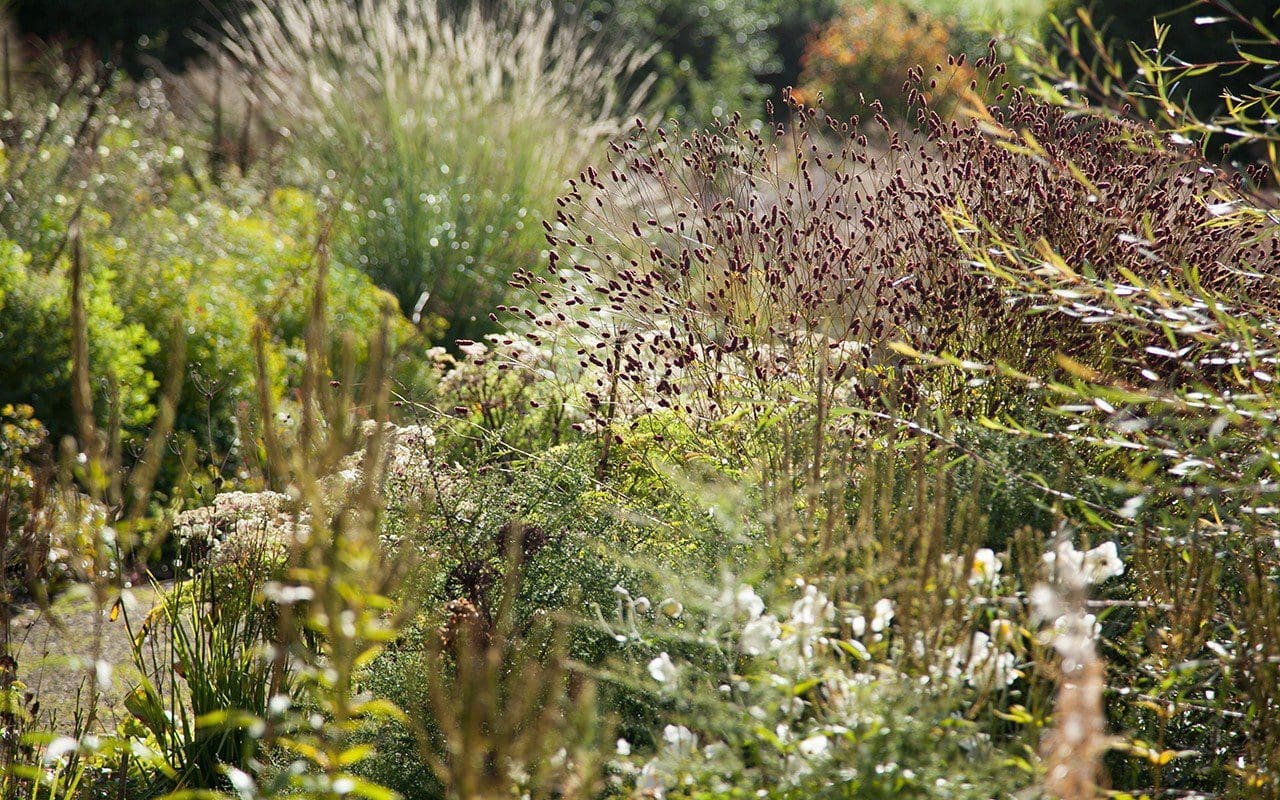 Selinum wallichianum, Sanguisorba ‘Red Thunder’, Salix purpurea ‘Nancy Saunders’ and Anemone x hybrida ‘Honorine Jobert’
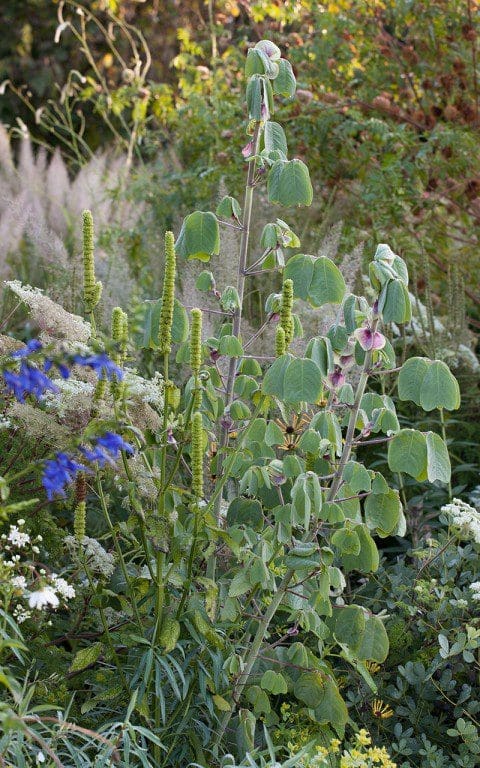 Amicia zygomera and Agastache nepetoides
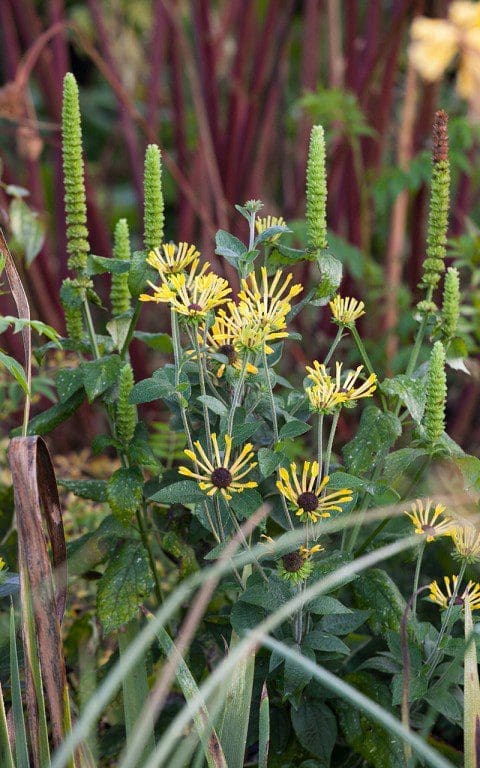
Rudbeckia subtomentosa ‘Little Henry’ and Agastache nepetoides
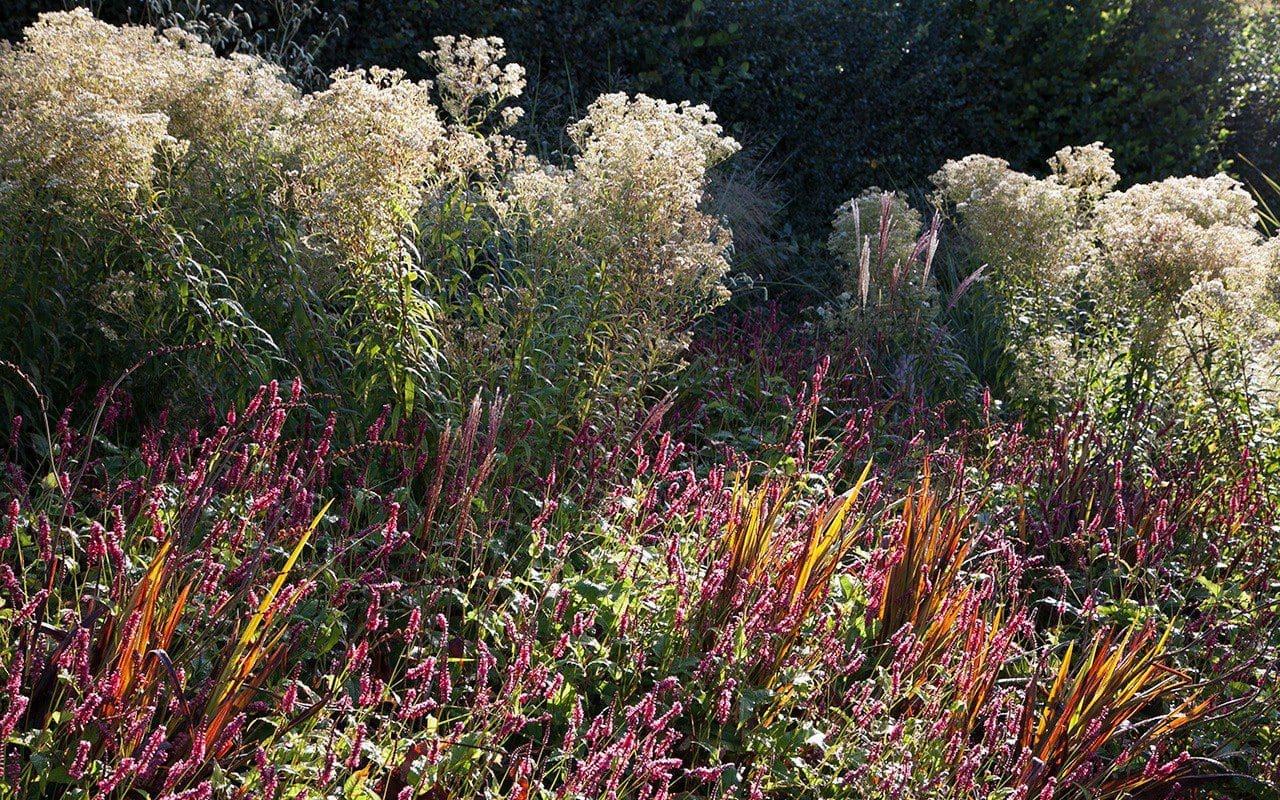 Aster umbellatus, Persicaria amplexicaule ‘Blackfield’, Salvia ‘Jezebel’ and foliage of Crocosmia ‘Hellfire’
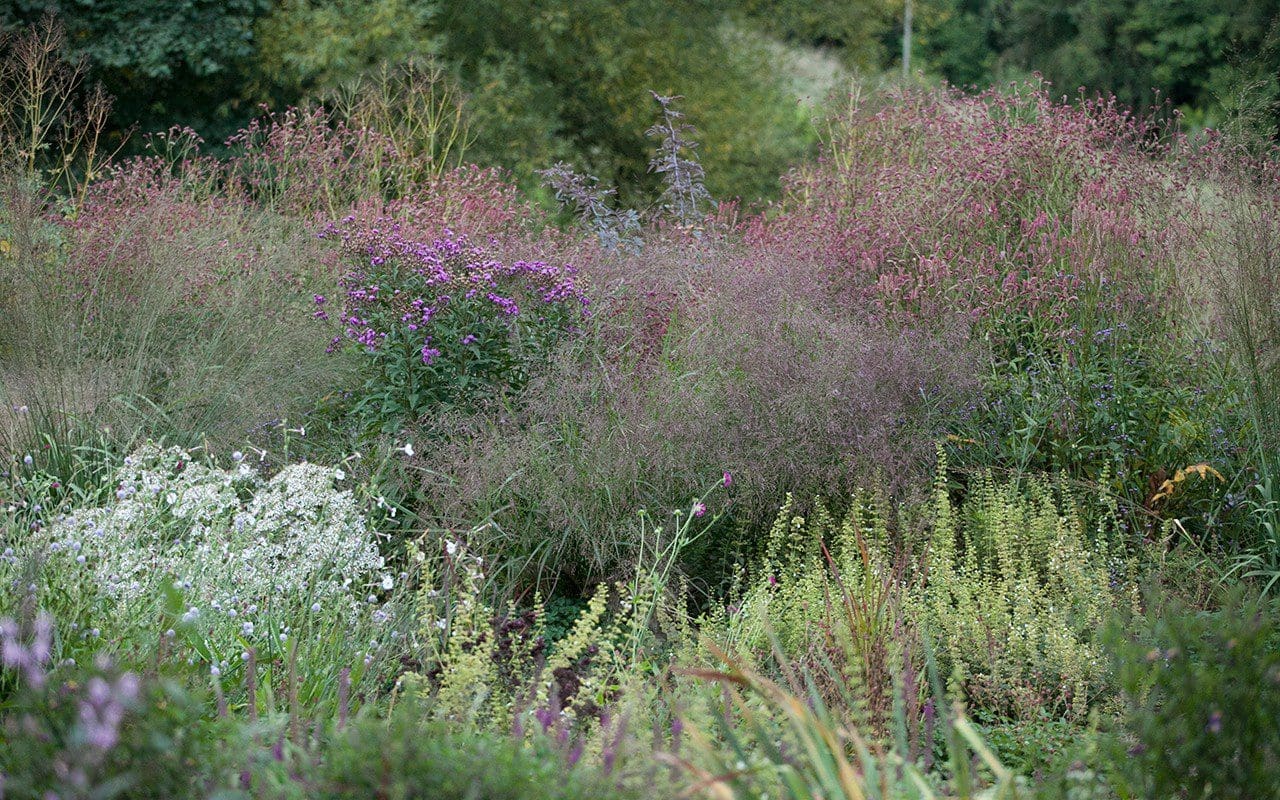
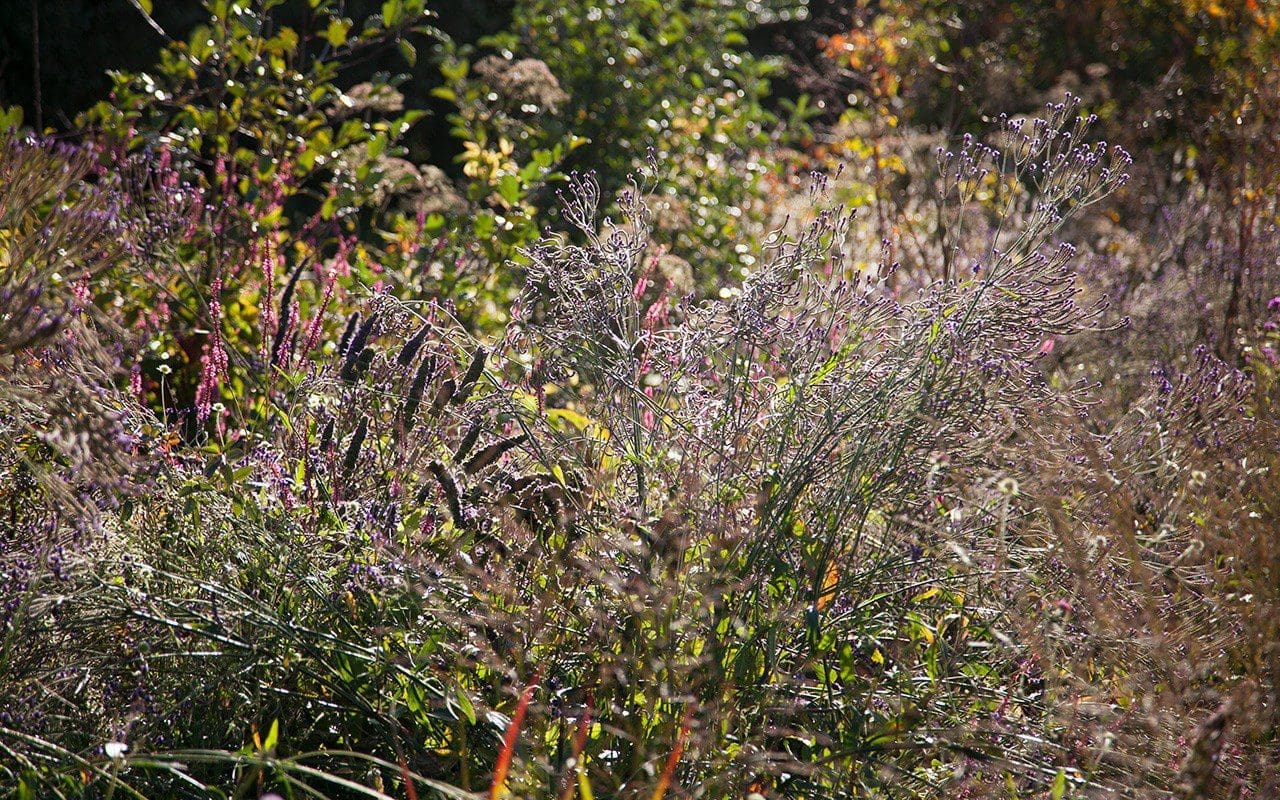 Agastache ‘Blackadder’, Verbena macdougallii ‘Lavender Spires’ and Persicaria amplexicaule ‘September Spires’
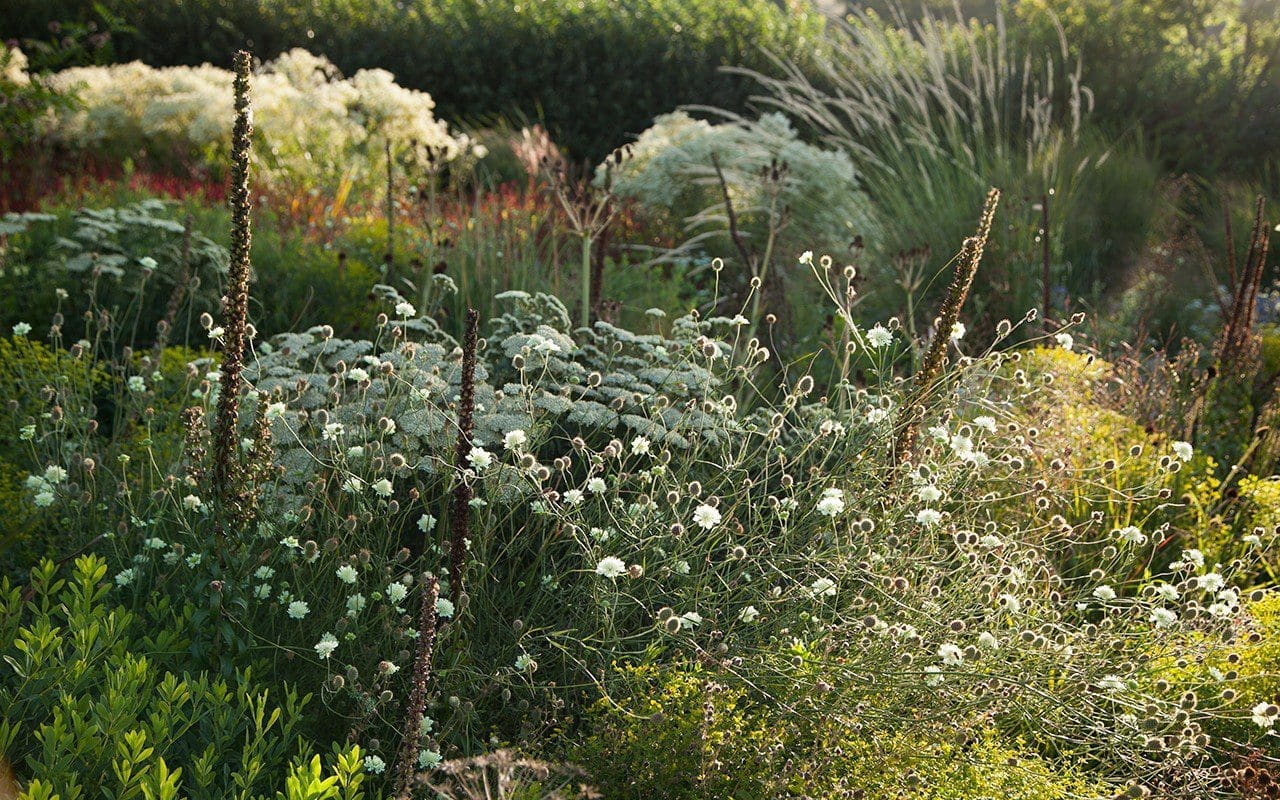 Digitalis ferruginea, Achillea ‘Mondpagode’ and Scabiosa columbaria ssp. ochroleuca
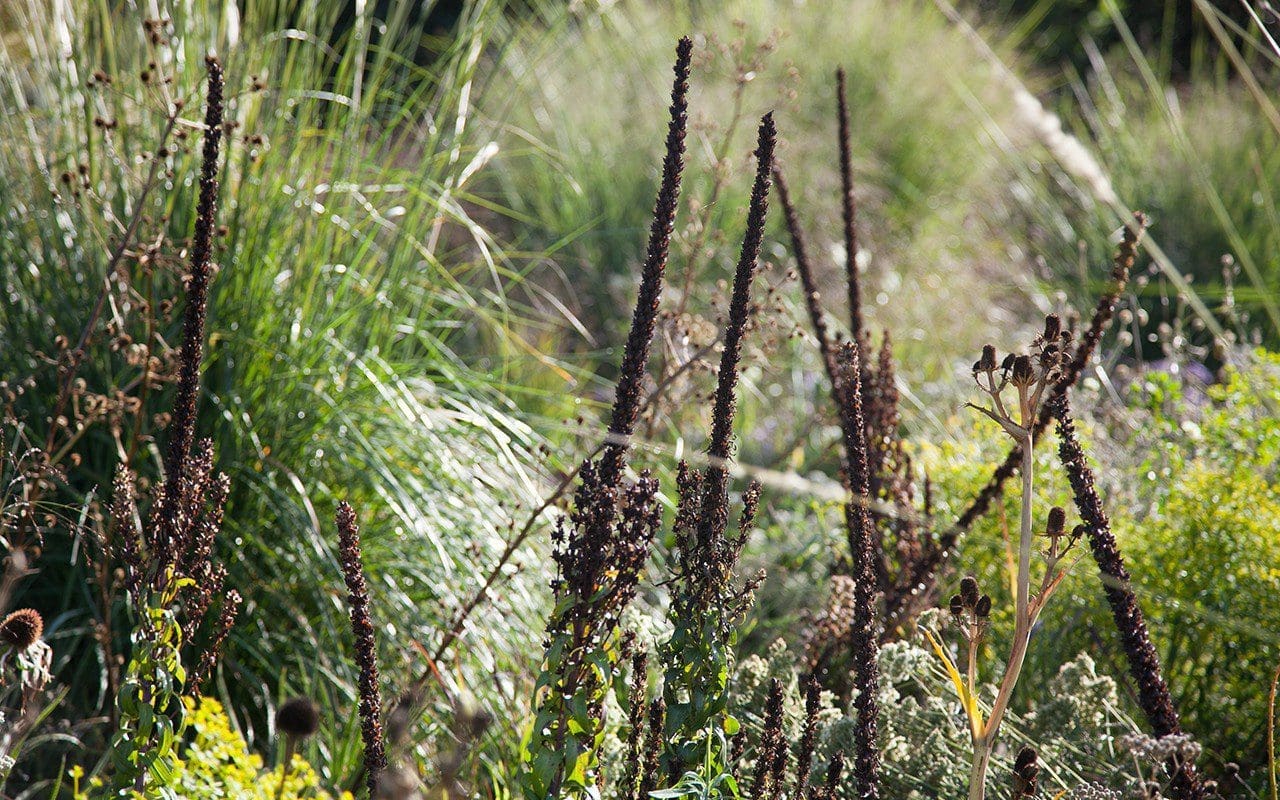
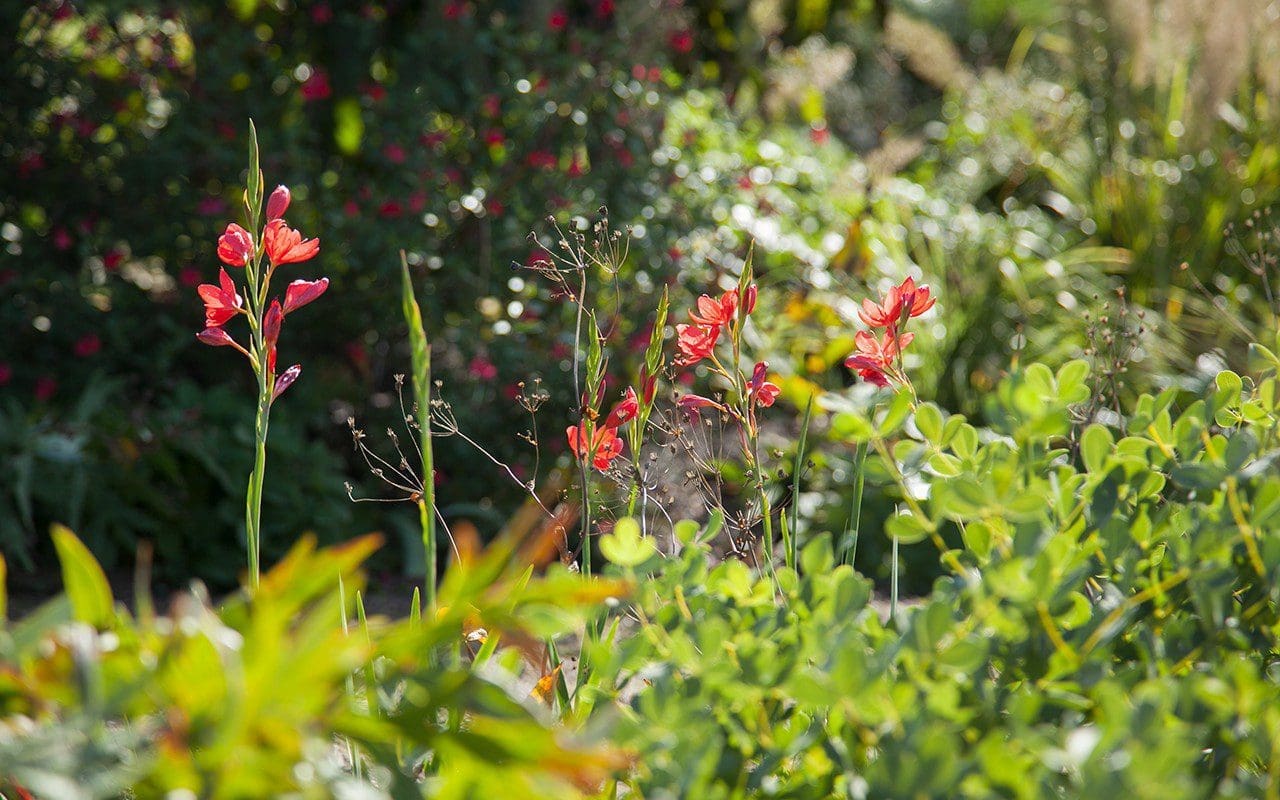 Hesperantha coccinea ‘Major’
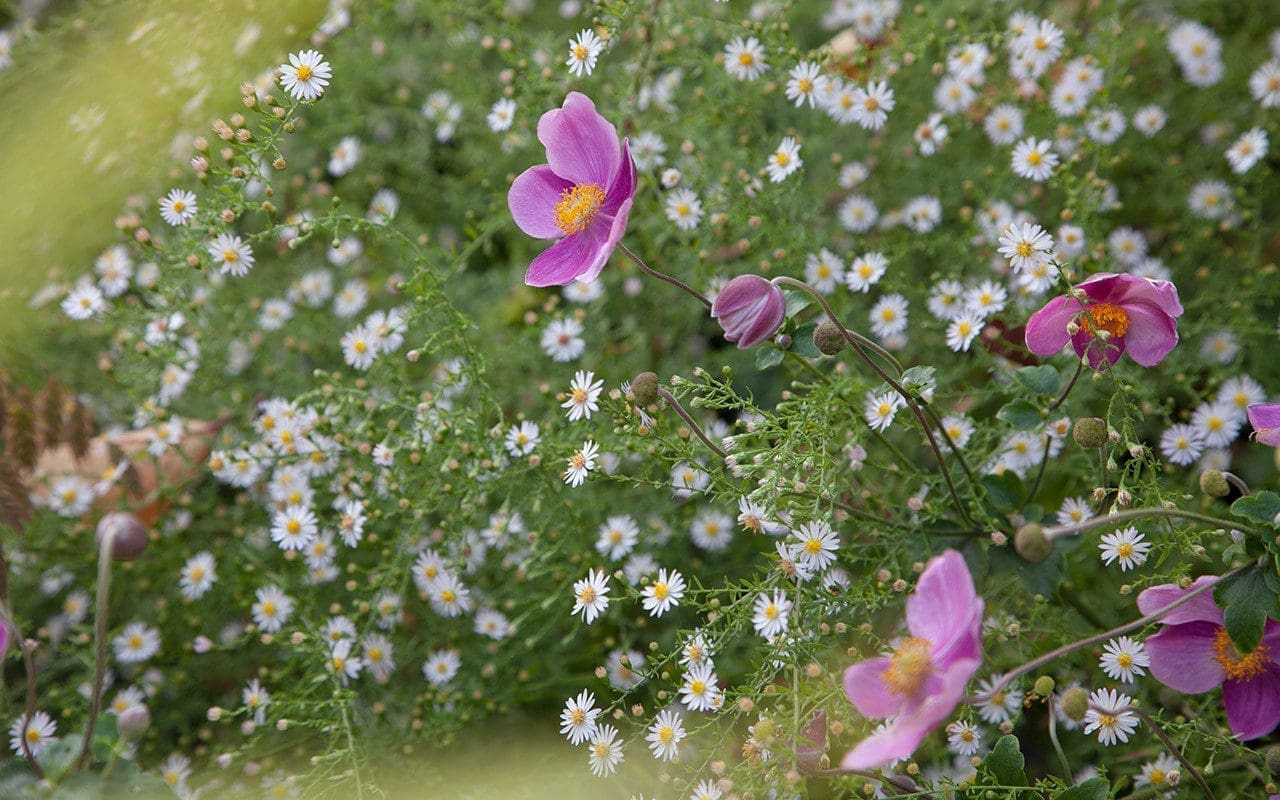 Anemone hupehensis var. japonica ‘Splendens’ and Aster ericoides ‘Pink Cloud’
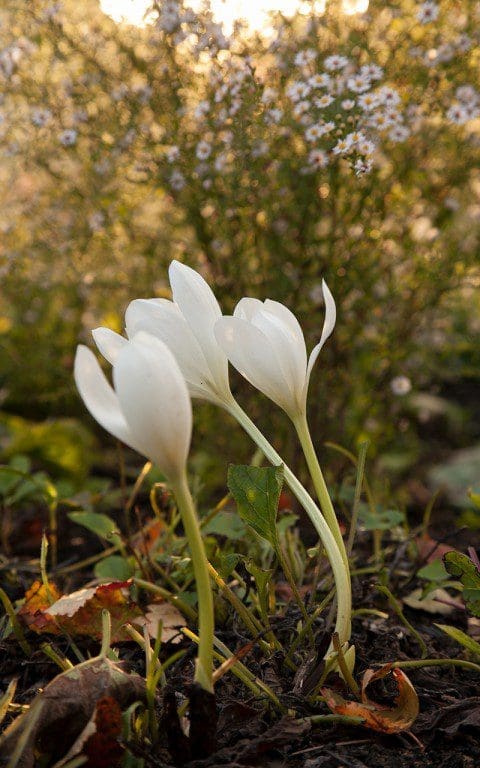 Colchicum speciosum ‘Album’
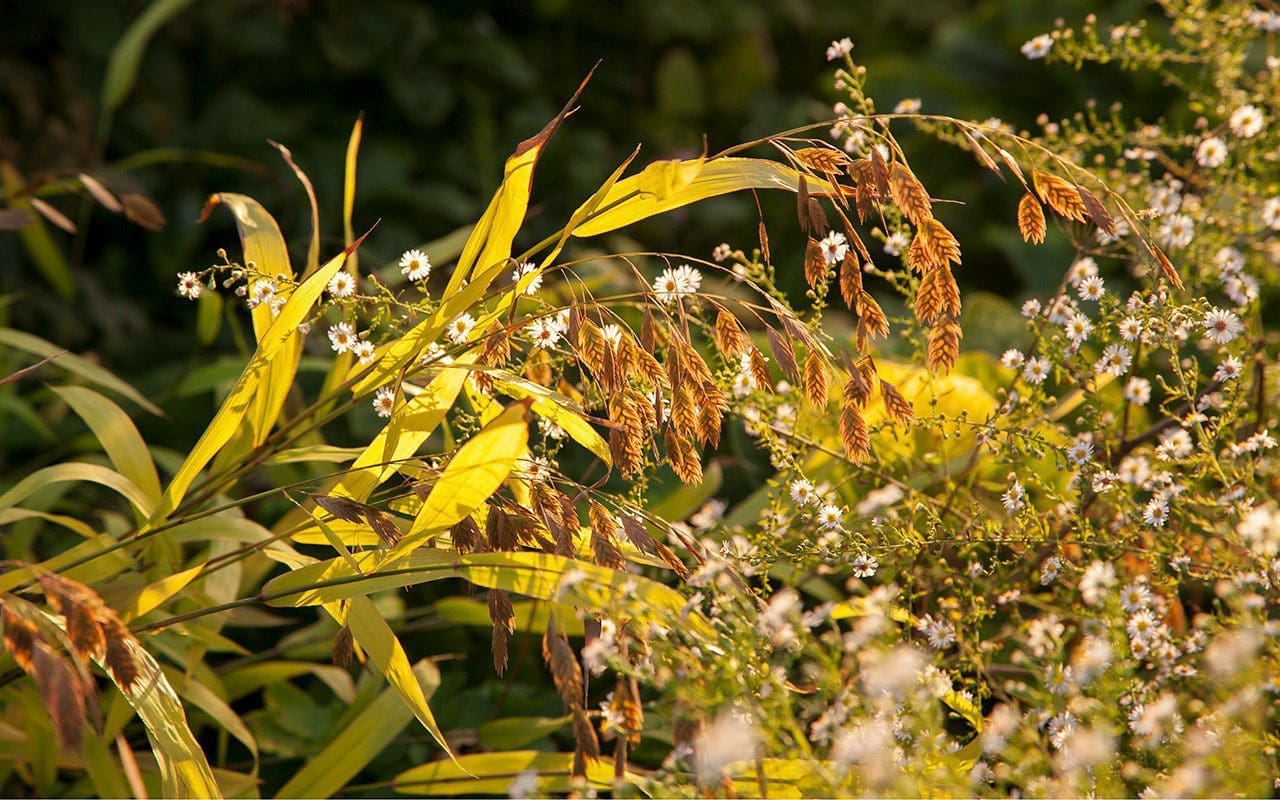 Chasmanthium latifolium and Aster ericoides ‘Pink Cloud’
Photographs: Huw Morgan
Published 6 October 2018
Today’s posy draws upon some of the fine detail in our fully blown August garden. A garden arguably never more voluminous and drawn together now with a growing season behind it. Look up and out and your eye can travel, for the grasses and the sanguisorba are asserting their gauziness. The first of the asters are beginning to colour, in wide-reaching washes that I’ve made deliberately generous. At this time of bulk and volume, however, it is also important to be able to look in and find the detail in something intense, finely drawn and requiring close examination.
Most of the flowers in the garden here are deliberately small, so that they feel part of the place and cohesive with the scale of the surrounding meadows. Some, like the sanguisorba, appear en masse and register together to create a wash or a veil through which you can suspend an intensity of contrasting colour or screen another mood that appears beyond it. The Bupleurum falcatum, which has now seeded freely in the gravel garden, does just this in the posy to enliven the mood with it’s fine, acidic umbels. At another scale, the Fagopyrum dibotrys does the same in the borders, towering tall and creamy. This perennial buckwheat is prone to wind damage, snapping rather than flexing, but I have found it a sought-after niche close to the buildings to help to narrow the feeling alongside the steps. The scale of its flowers, and their airy distribution, is why it retains a feeling of lightness.
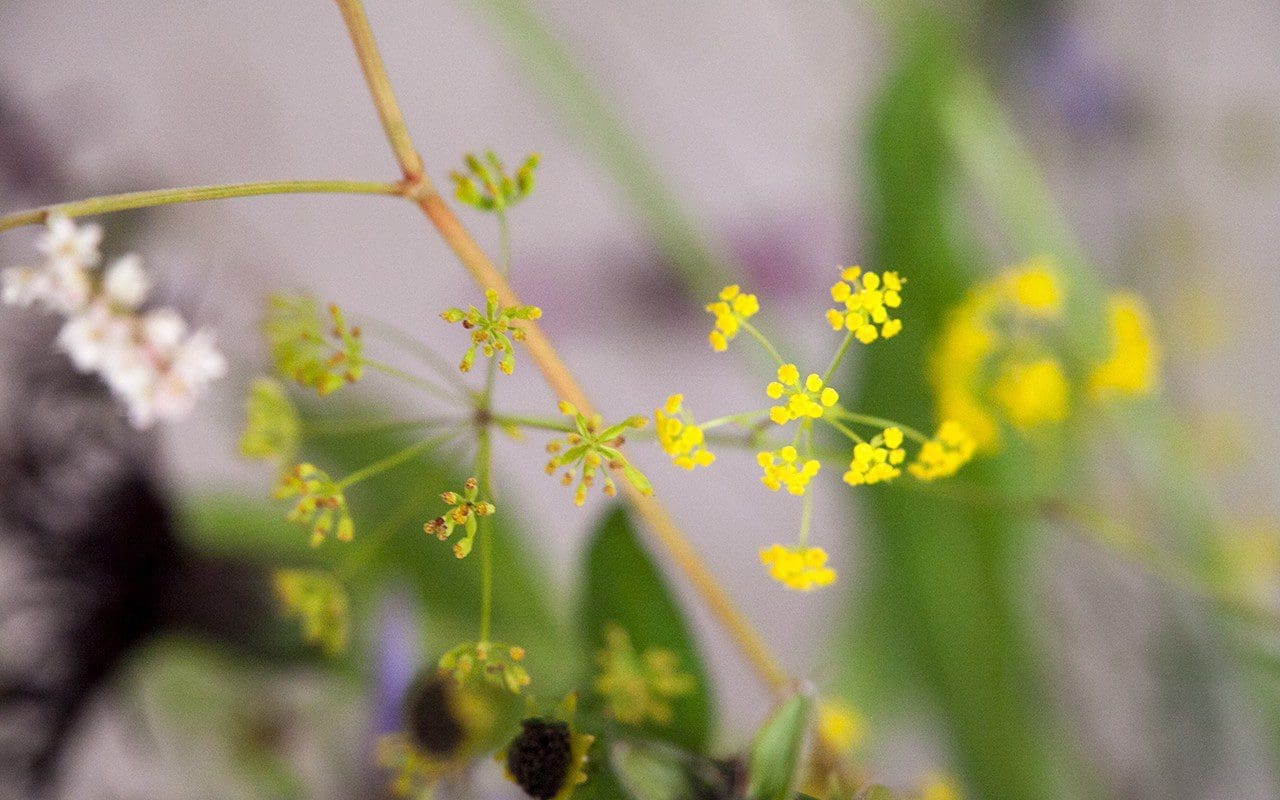 Bupleurum falcatum
 Fagopyrum dibotrys
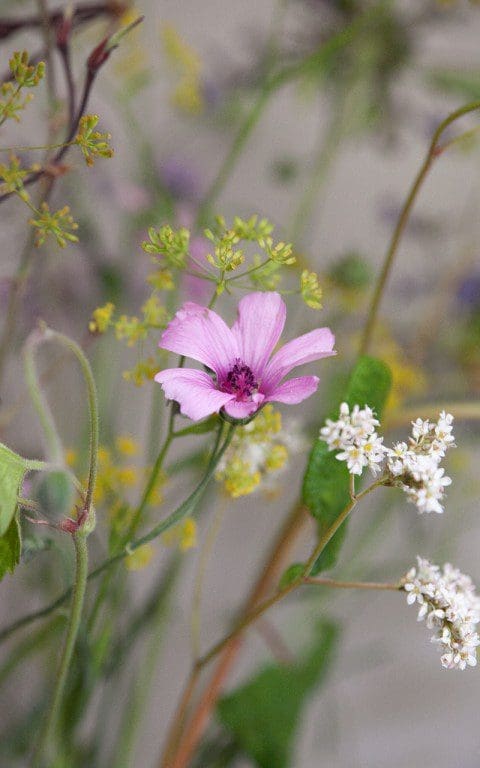 Althaea cannabina
Some plants are more interesting for having to find, but their subtlety requires careful placement. The Clematis stans was initially planted down by the barns whilst I was seeing what it was going to do here, but it has been good to have it closer for the detail in the flower is up to regular inspection. This herbaceous clematis is rangy when growing in a little shade but here, out on the blustery slopes, it makes a compact mound of a metre or so across. Prune it hard to a tight framework in February and it rewards you quickly with bright, expectant leaf buds and then foliage that is elegantly cut and not dissimilar to Clematis heracleifolia. In high summer, when the light levels change, it begins to produce clusters of powder-blue flower buds which taper and colour as they move toward flower. Reflexing just the tiniest amount to form a bell like a hyacinth, they have a delicate perfume, which is lost if you bury the plant too deeply in a bed.
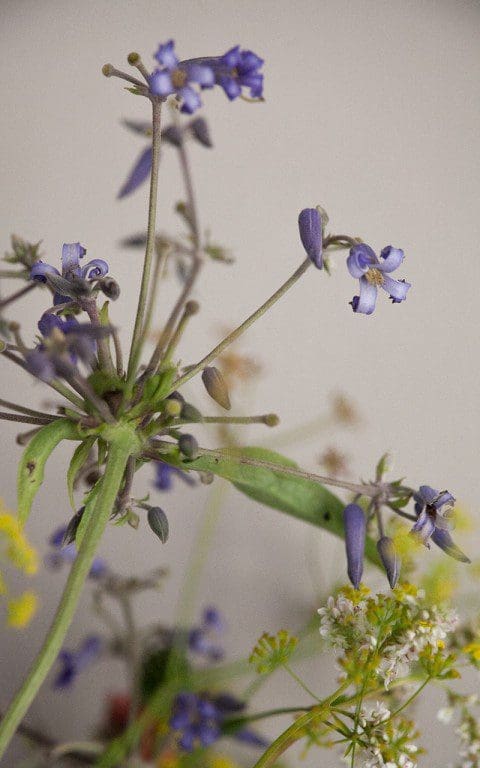 Clematis stans
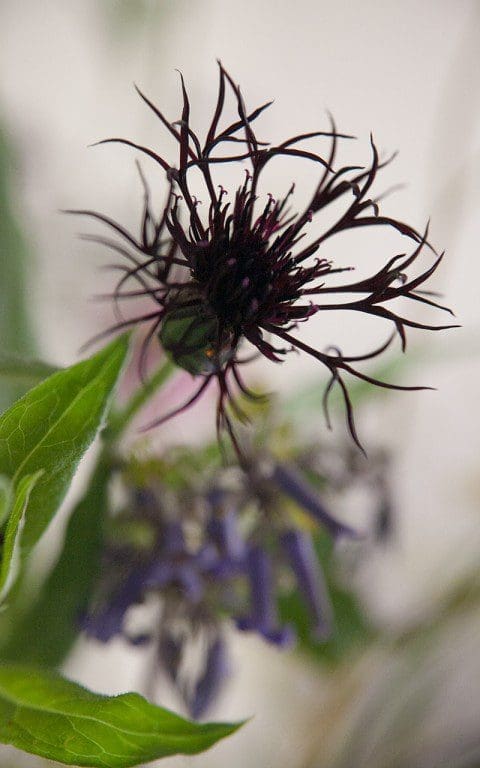 Centaurea montana ‘Black Sprite’
 Potentilla ‘Gibson’s Scarlet’
Earlier, in the heat, I was beginning to debate whether I’d take out the Centaurea montana ‘Black Sprite’, for it appeared to hate the brilliance of this summer and the exposure. Already a plant of some modesty, the relief of rain has them with flushed new growth to prove me wrong and it is a delight to come upon it, for it has to be found. The dark, filamentous flowers are as dark as blackcurrants, but combined with silvery Lambs Ears (Stachys byzantina), they are thrown into relief. The hunt is furthered by merging the groups with four-leaved black clover (Trifolium repens ‘Purpurascens Quadrifolium’) and Potentilla ‘Gibson’s Scarlet’. The clover is actually brown, and the potentilla punches colour strongly, but in tiny pinpricks that flash and then disappear as they open and close during the day. Walk the path in the morning and they will be blinking bright, but walk it again in the evening and they are closed, clocked-out for the day.
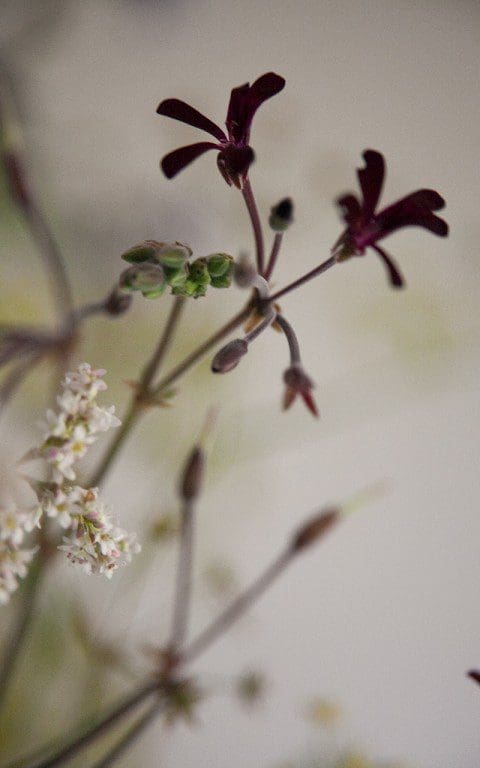 Pelargonium sidoides
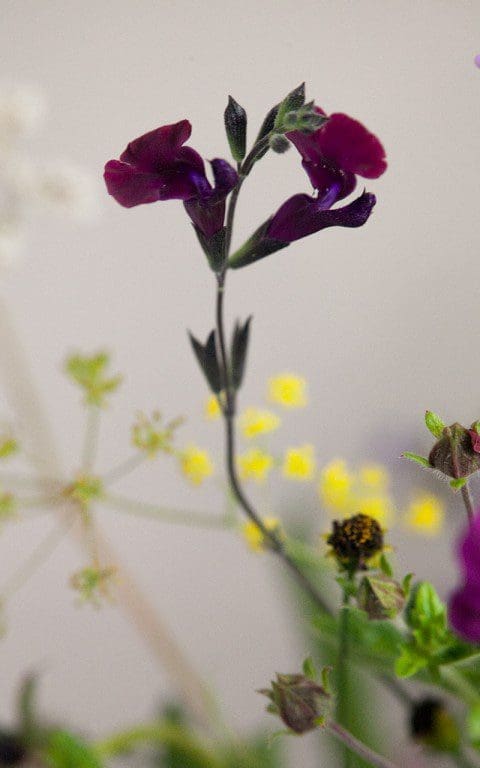 Salvia ‘Nachtvlinder’
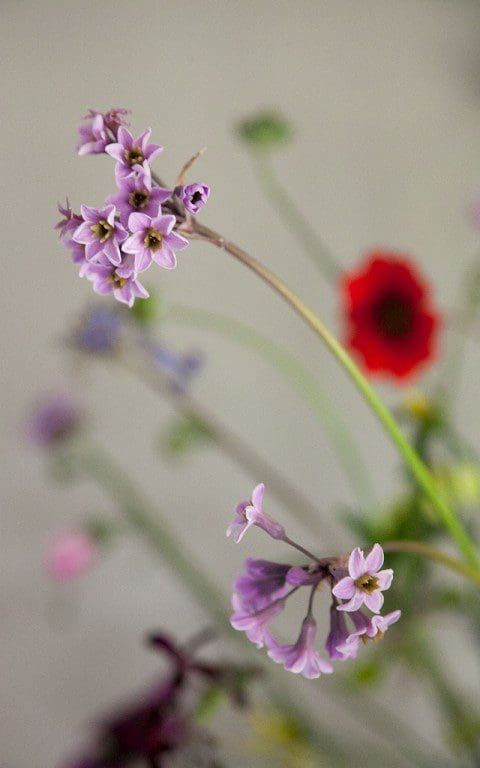 Tulbaghia ‘Moshoeshoe’
Over time, and now that the garden has grown and is demanding my attention, I’ve limited the number of pots up around the house. The Pelargonium sidoides are an exception and these are my original plants from what must now be twenty years ago. They have proved their worth despite their subtlety, but I help in having them close by the front door. They are grouped with pots of Tulbaghia ‘Moshoeshoe’. Early in the season and before they start their relay of flower, you might at first think that a potful of tulbaghia were chives, for the majority have a lingering garlicky perfume. The confusion of flower and savoury association is not always digestible, but this selection from Paul Barney at Edulis is an exception. The leaves do not smell and the perfume of the flower is delicate and sweet, particularly at night. They continue to push out flower from June until the frost, when I move the pot to the frame and deny it water for the winter and they survived last winter to prove their resistance when kept on the dry side.
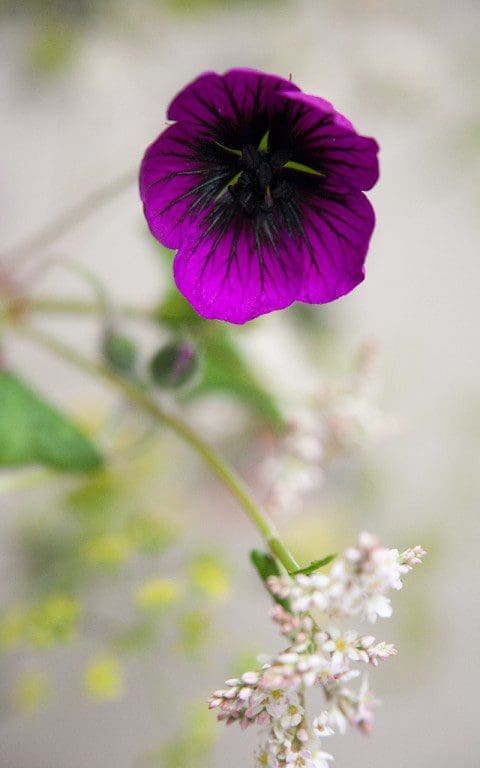 Geranium ‘Sandrine’
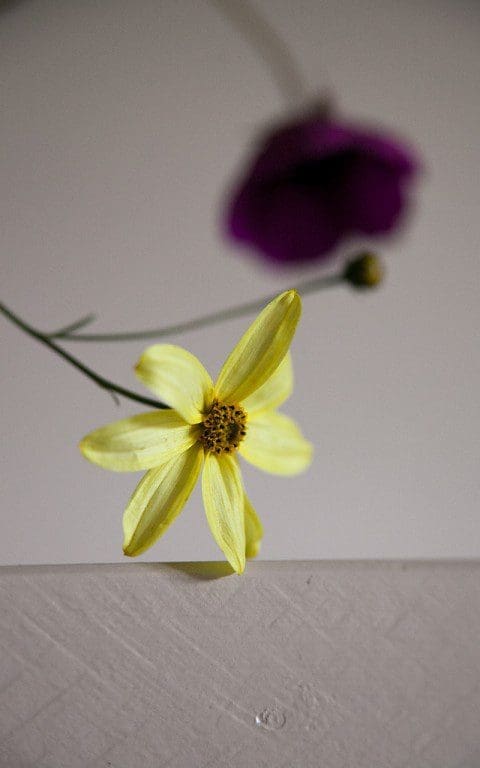 Coreopsis verticillata ‘Moonbeam’
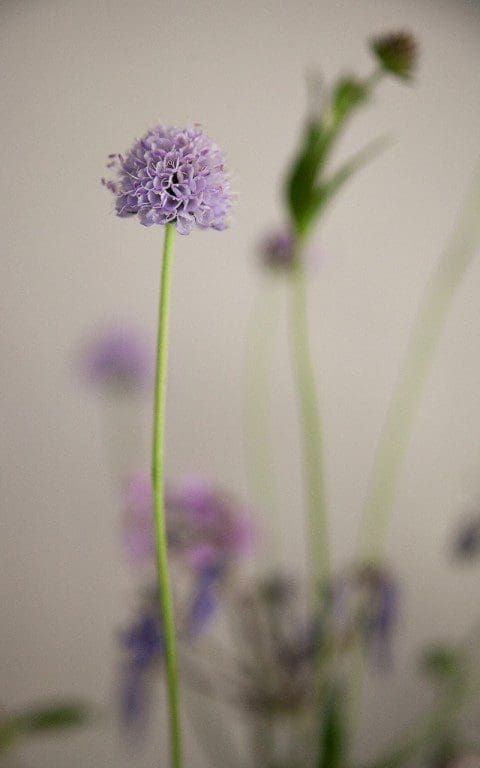 Succisella inflexa
There are several new additions to the garden this year on which I am keeping a close watch and reserving my judgement, but Geranium ‘Sandrine’ looks promising. It is a little larger flowered than G. ‘Anne Folkard’, but it has a similar rangy habit and bright green foliage and will find its way amongst other plants, so far without dominating. The flowers, which with many perennial geraniums are bang and bust, do not come all at once, but stagger themselves throughout the summer. This makes them more precious and they pulse with their darkly-veined centres. Succisella inflexa, a Balkan perennial, is entirely new to me, but this looks good for being so late in the season. Finely elongated foliage scales the stems, but stops to leave the thimbles of pale lilac flower hovering at knee height. It has a similar presence to Devil’s-bit Scabious, which is flowering now too in this window between summer and autumn. We will see if it comes back with good behaviour next year, but for now I am watching closely.
Words: Dan Pearson / Photographs: Huw Morgan
Published 18 August 2018
In the eight years we have been here, the landscape has never bleached to this degree. In the most part our West Country moisture has kept the fields green, but the heat and month or more without rain has had its influence. A blond horizon backdrops the garden where the Tump hasn’t re-grown after the hay cut, and the high fields around us throw a September light which, at the beginning of August, has been disorientating.
Past summers have only required me to water once or twice during the season, but this year the new planting has needed it more often and I have worked the beds with a fortnightly drench to encourage the roots down by soaking each pass deeply. The watering has done nothing for the fissures which have opened up in the beds. Some are wide enough to put your hand down to the wrist and have got me thinking that, if I had the time, this would be a perfect way of working a summer injection of humus deep into the ground, if I could feed it into the cracks. It would plug the gaps that sometimes run straight through root balls and help to protect roots which must be feeling the drought more directly for this exposure. Deep in the beds, where the planting is already closed over, they worry me less, but in the new planting where the local microclimate provided by companionship is not quite there, I am seeing the damage.
Those plants that are adapted to a hot, dry summer have shown their roots in simply not flinching and the thistles have been notable. Miss Willmott’s Ghost, the biennial Eryngium giganteum, is luminous in the truest sense of the word. Firing starry outbursts amongst the Bupleurum falcatum the growth is platinum white in bright light. This is only the second or third generation of self-sown seedlings and, so far, the volunteers have not become a problem in the gravel garden. I have had them take over in thin ground, where they have seized a window amongst perennials that have not taken to the conditions as heartily, so we will yet see if they are going to make a takeover in the gravel by the barns. If they do, it will be where the seedlings find their way into the crowns of perennials that are slow off the mark in the spring. Like a wedge splitting a boulder, they can, and do, have their influence in their pioneering nature.
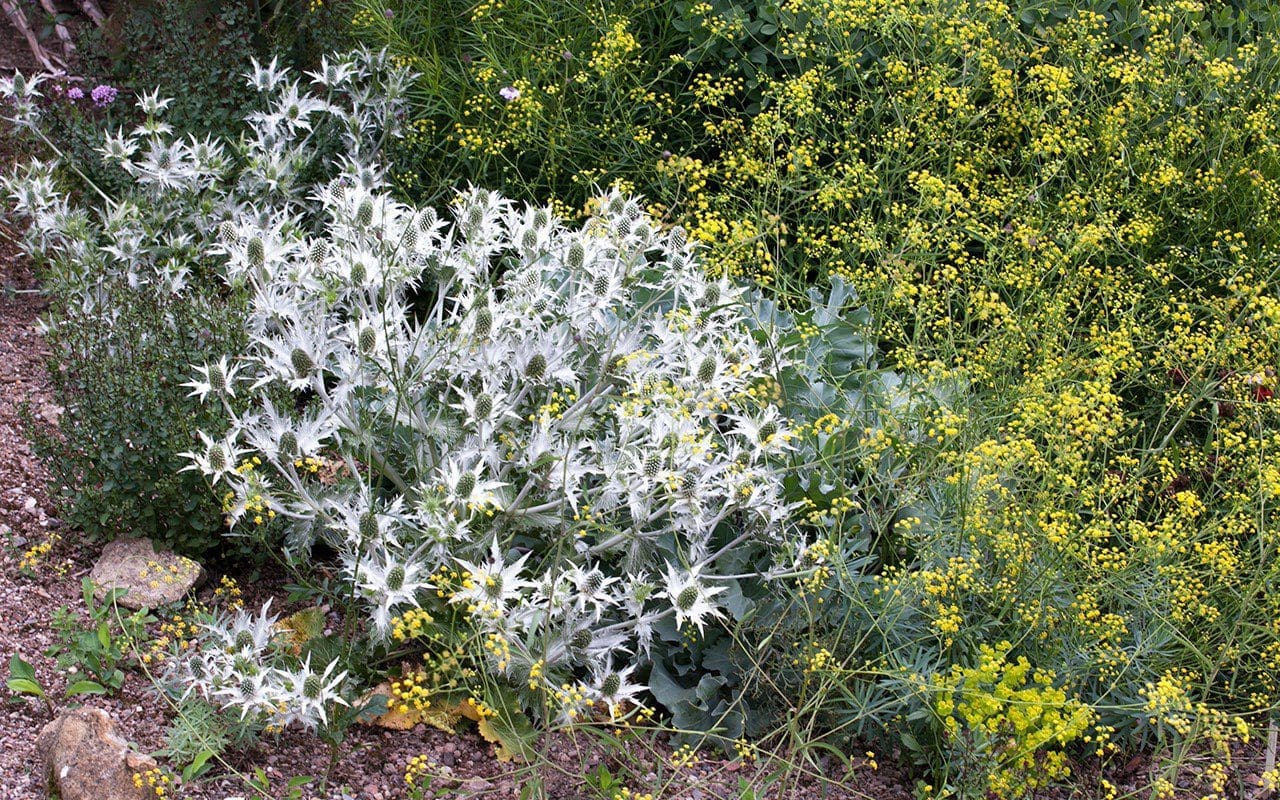 Eryngium giganteum, Bupleurum falcatum and Crambe maritima
Look closely and the thistles are magnets for wildlife. The hum of the bees on the eryngium is audible long before you see them, and the butterflies are now working the platforms of nectar that are obviously suspended high in the artichokes. We have a variety from Paul Barney of Edulis Nursery called ‘Bere’ and those that escaped the harvest – within a week they are suddenly too tough to eat – are now in flower. Though this year they must be a foot shorter for the drought, they still rise above the trough behind them and draw the eye through the gauziness of the herb garden. They have had no water for they are adapted mediterraneans and follow the rainfall with leaves that flush in the autumn and spring.
Right now, the neon-violet buzz of flower has taken all their energy and we have cleared the lower limbs of old leaves to enjoy this moment and not be distracted by tattered yellowing growth that is obviously no longer necessary. Cynara cardunculus (Scolymus Group) (main image) is spectacular in every way, each plant needing a good square metre to reach up and out. When the flowers dim and I start to see September regrowth at the base I will fell the lot to put the energy into new leaf, rather than it going into seed production, so that we have them during the winter. A mild one will see a mound of new foliage sail through unscathed. A silvery architecture in the bare kitchen garden.
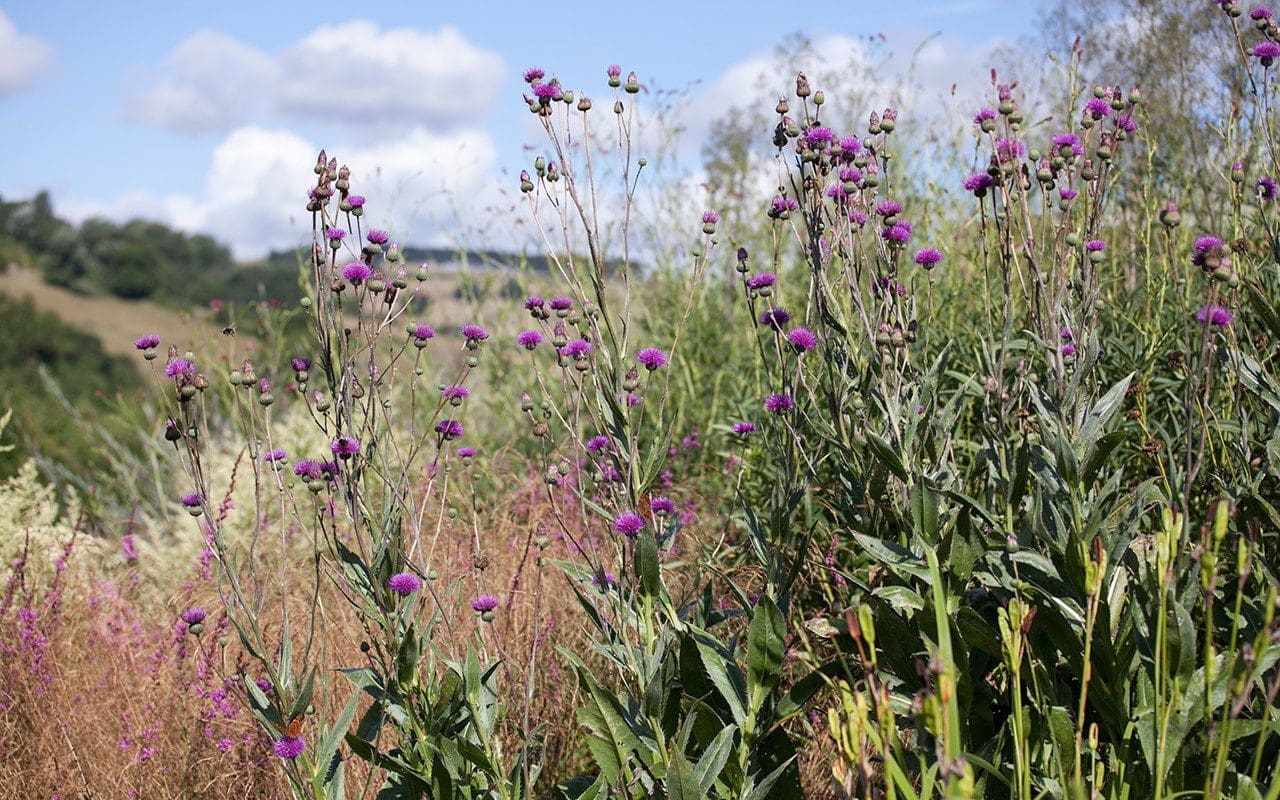
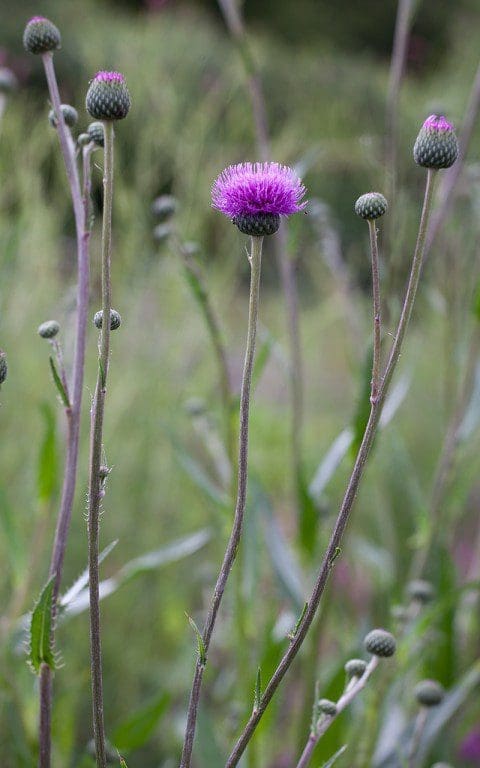
Though I could write at length about the other thistles that I have invited into the garden, the notable one that rises head and shoulders above the rest is Cirsium canum. Stand beside it and this Russian native will dwarf you, literally, the bright violet-pink flowers teetering on tall stalks just out of reach. I suspect, if I had not watered the perennial garden, that the foliage would have burned more than it has, for it is fabulously lush in the first half of the summer. Like a giant awakening, the energy in its new growth is audible in foliage that is shiny and squeaky with life when you corral it into hoops in May to prevent it from toppling. I do not know, if one was to grow it on ground that was less retentive, whether it would be lesser in every way and need less staking. I also don’t know yet if it will be a seeder. Derry Watkins of Special Plants says her plants haven’t seeded. Yet. Just in case, I cut them to the base last year after flowering having been stung previously by Cirsium tuberosum when I was looking for a thistle that would do the same job. I think I will do the same this year if they won’t leave too much of a hole in the garden around them.
 Cirsium canum
 Cirsium canum
 Cirsium tuberosum
 Cirsium tuberosum
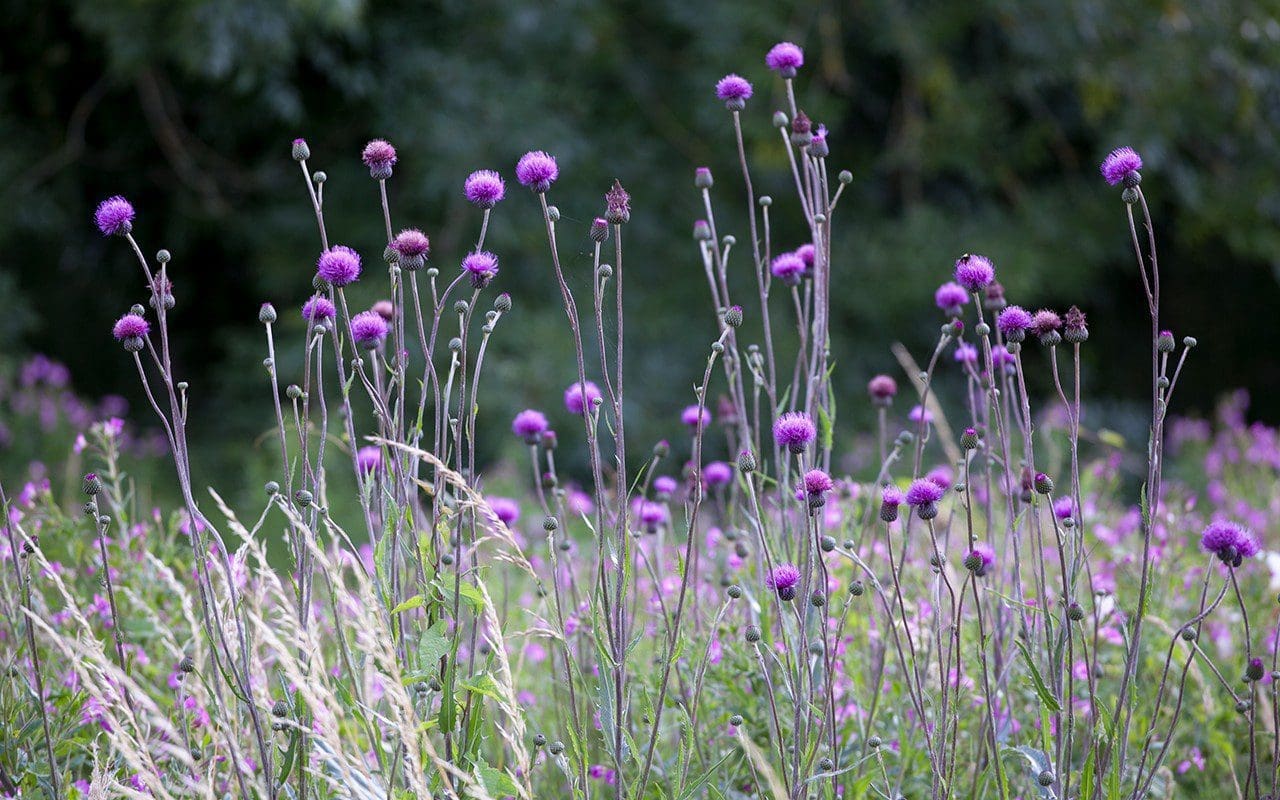
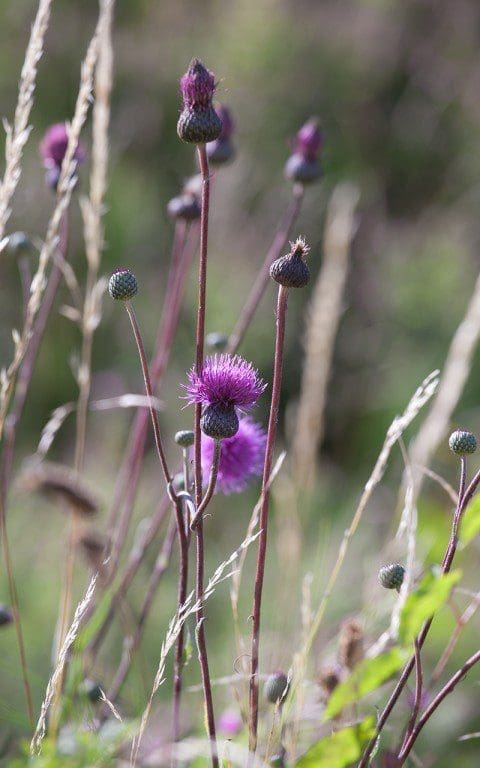
Though Cirsium tuberosum is similar in appearance, being more glaucous and less glossy, this Witshire native is, in my opinion, not a plant to be trusted in a garden. Given open ground and a window of opportuntity, it proved itself to be a monster in my stock beds. The wind-blown seed parachuted some distance and, though the seedlings were easy and graphically visible in their lust for life, the unseen few soon wedged their way into the crowns of perennials to send down taproots that were all but impossible to remove and top growth that rejoiced in being alive. When I was preparing the new garden, I jumped my stock plants of them into the rough grass that lines the ditch and here the competition has seen them in check and in balance. Stepping through meadowsweet and willow herb they look good in appropriate company and your eye can travel from the Russians in the garden to the natives in the ditch and be happy, so far, in the knowledge that each has found its place.
Words: Dan Pearson / Photographs: Huw Morgan
Published 4 August 2018
We are sorry but the page you are looking for does not exist. You could return to the homepage
