ALREADY A PAID SUBSCRIBER? SIGN IN
ALREADY A PAID SUBSCRIBER? SIGN IN
ALREADY A PAID SUBSCRIBER? SIGN IN
ALREADY A PAID SUBSCRIBER? SIGN IN
ALREADY A PAID SUBSCRIBER? SIGN IN
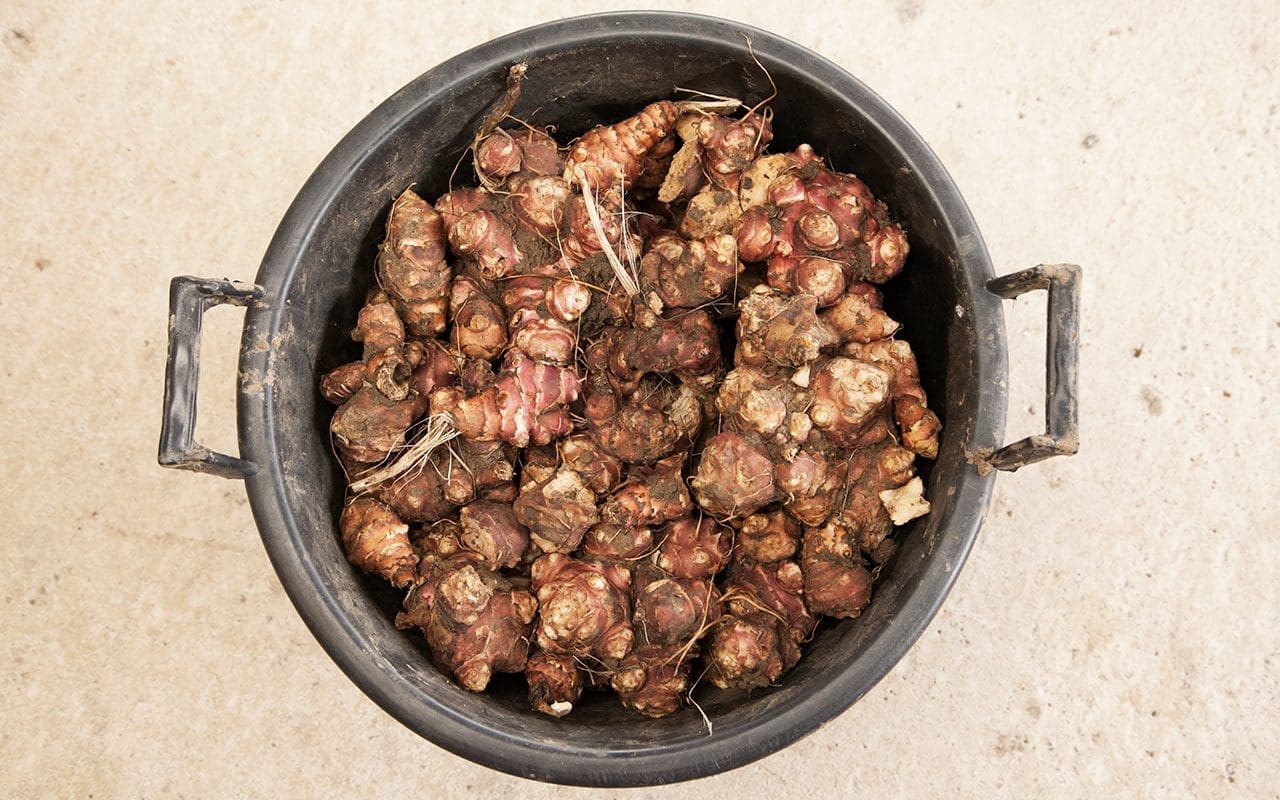
Last year was the first time that we have grown Jerusalem artichokes here. Not from a lack of desire, but a lack of space. That may sound crazy when our vegetable garden is larger than many peoples’ gardens, but Jerusalem artichokes are voracious plants and you must have enough space to give over to them if they are not to become problematic.
Growing to three metres tall and two metres across they should be placed on the north side of the garden so as not to shade out other crops. On the other hand they can be useful if you have vegetables that need shading or protecting from wind like some brassicas (broccoli, Brussels’ sprouts, kale), salad leaves and oriental greens. We fenced a new productive compound around the polytunneI last winter, so in the spring I ordered five tubers from Otter Farm. Planted 60cm apart and 15cm deep in April by August they had overreached their 4 metre by 1 metre bed and, on our rich soil, have produced a crop of almost 20 kilos in one season.
Not from Jerusalem at all, but a native of North America, Helianthus tuberosus is, as its Latin name indicates, a type of sunflower, a perennial variety which means it should be planted where you intend to keep it, as it will return year after year. Prone to spreading they should be planted where you can get at them easily to curb their invasive tendencies. For the same reason, when harvesting it is important to try to dig up all of the tubers, as a single one left in the ground will cause your colony to proliferate the following year. I have kept five tubers back this year to replant in the same position. Like potatoes Jerusalem artichokes can be a good first crop to plant in previously uncultivated or heavy ground as the growth of the tubers and their subsequent harvesting break up the soil. However, you must remove all trace of them if you plan to grow other crops in their place afterwards.
Ready to harvest from late October onwards Jerusalem artichokes do not store well once lifted and so are best left in the ground and harvested as required. Incredibly hardy they will tolerate winter temperatures down to -30°C. If you have to dig them all up they are best stored in a cool, dark place such as an outhouse, cellar or shed, although they will keep, well-washed and well-dried, in the salad drawer of the fridge for a week or so.
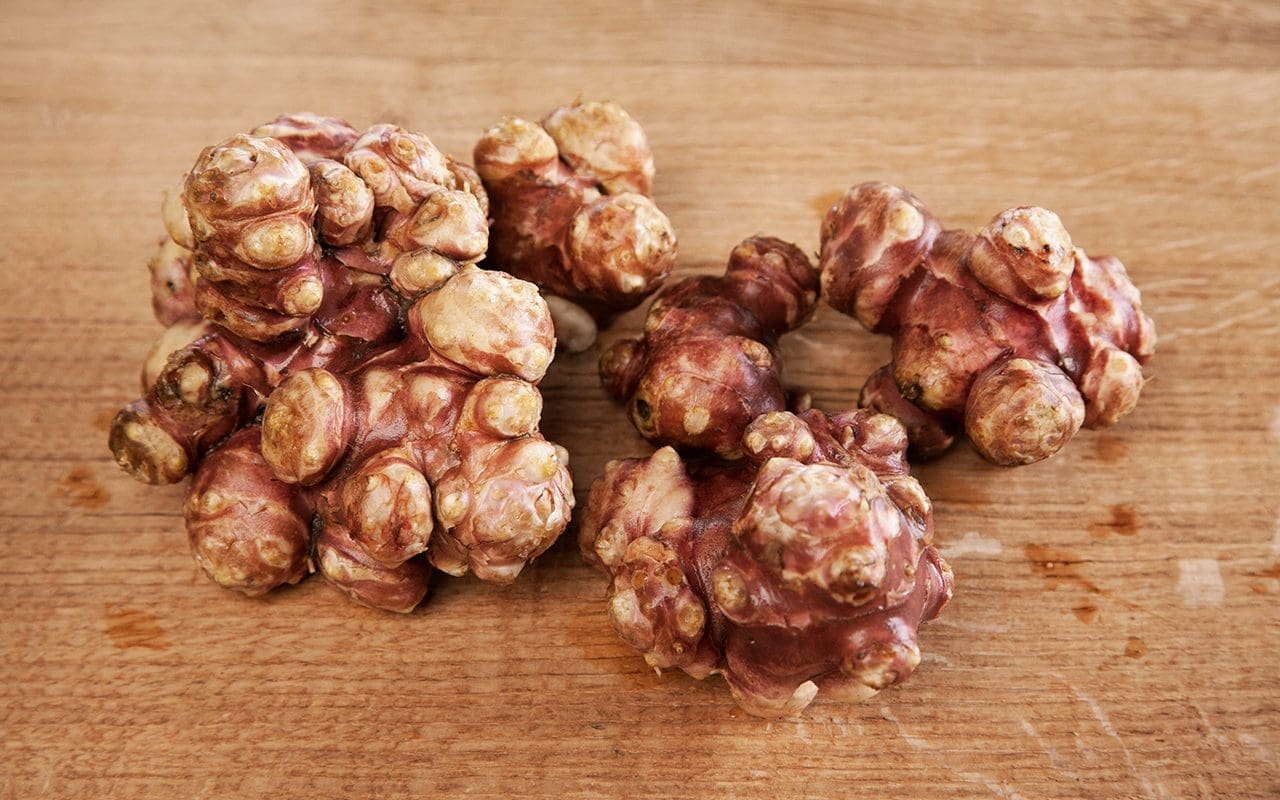
The fleshy, edible tubers are quite unlike any other vegetable in texture or taste. Although starchy like potatoes, they have a sweet, nutty flavour when cooked which is just about comparable to artichoke hearts, but also distinctly its own thing. Unlike potatoes they can be eaten raw, when their texture is reminiscent of water chestnuts. Thinly sliced with a sharp citrus dressing they make an unusual, crisp winter salad.
Their reputation for causing flatulence precedes them and is what often prevents people from growing or eating them. Caused by the inulin they contain, a starch which is difficult to digest, it is not a problem for everyone and it would seem, from personal experience, that the more often you eat them the less of a problem this is.
Their somewhat delicate, earthy flavour is also distinctive and although typically combined with woodsy flavours like bay, sage, thyme and nutmeg, it can hold its own with much stronger flavours and works unexpectedly well with punchy Mediterranean ingredients; tomatoes, red onions, black olives, capers and anchovies.
This recipe is for a rich, velvety and warming soup for a frosty day. Add more liquid if you prefer a thinner soup. Cooked with half the amount of water the resulting purée is a good accompaniment to game birds, chicken and firm white fish. Substitute the artichokes with celeriac or good floury potatoes if the prospect of a windy evening puts you off.
1kg Jerusalem artichokes
40g dried porcini mushrooms
1 small onion
A spring of thyme, to yield about 1 tsp of leaves
50g butter
4 tbsp rapeseed oil
150ml full cream milk
About 1 litre of water
Serves 4
Set the oven to 200°C.
Soak the dried mushrooms in 200ml hot water.
Heat 25g of butter in a large pan over a medium heat. Finely chop the onion and cook for a few minutes until soft and translucent, stirring from time to time.
Remove the porcini from their water. Squeeze the liquid out of them back into the bowl and retain. Coarsely chop two thirds of them and add to the onions with the thyme. Cook together for a few minutes more, stirring occasionally.
Scrub the artichokes extremely well and remove the fibrous hair roots. Trim off any black patches. Reserve one tuber of approximately 100g and cut the remainder into walnut-sized pieces. Put into a roasting pan in a single layer. Drizzle with olive oil and roast in the oven, turning occasionally, for about 30 minutes until softened and caramelised. Add them to the pot with the onions and mushrooms.
Make the mushroom soaking water up to 1 litre with fresh water and add to the pot. Bring to a gentle simmer and cook with the lid on for about 20 minutes until the artichokes are soft.
Blend the mixture until smooth. Add the milk and season with salt and pepper. Return to a very low heat to keep hot.
Melt the remaining butter in a small pan over a medium heat. Coarsely chop the remaining porcini and stew in the butter for a few minutes until soft and glossy. Remove from the pan and reserve.
Add the rapeseed oil to the a pan and raise the heat. Using a very sharp knife or mandolin slice the reserved artichoke very thinly. When the oil is smoking fry the artichoke slices in batches until brown. Drain on kitchen paper where they will crisp up.
Ladle the soup into warm bowls and place a few artichoke crisps and stewed mushrooms on top. Serve piping hot.
Recipe & photographs: Huw Morgan
Published 29 January 2022
In early July I sit down and think of winter. With my boxes of vegetable seed and Joy Larkcom on the table before me this is when I start to plan what to sow from the end of the month and into August and September. Although it takes some discipline at midsummer to cast my mind into a dark, cold future these are the crops that are starting to provide for us now, so it is time well spent, ensuring that we are not simply dependent on a diet of roots and brassicas through the cold months.
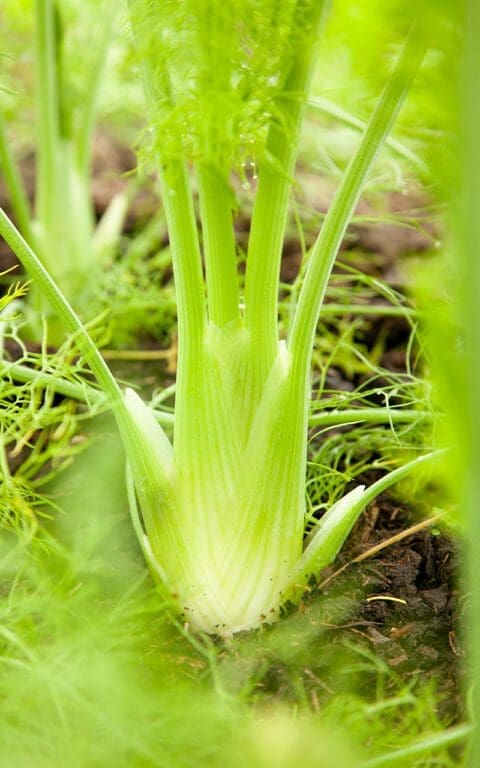
Fennel – also known as bulb or Florence fennel, to differentiate it from the soft herb – is one of my favourite of these midsummer sowings. Despite having a reputation for being tricky, for us it has so far proven to be easy to germinate, trouble-free to grow on, easy to transplant and productive. In early August I sowed 24 modules with two seeds to each to allow for failures. Once germinated I removed the weakest seedling from each module.
Like all umbellifers fennel produces long tap roots, so I use root trainer modules of the sort you might use for sweet peas or broad beans. These ensure that the roots have space to grow down and don’t become tangled and congested, which prevents them from growing away when they are transplanted. Ideally fennel prefers to be sown in situ, but these summer sowings are destined for the polytunnel, and in August we are in the middle of prime tomato production, so the modules were put into the cold frame to germinate and grown on for about a month before being planted out in mid-September.
Fennel is a Mediterranean marsh plant, which needs rich soil and constant moisture to do well. Cold and drought will cause it to bolt in record time, sending up a tough flower spike which quickly makes the whole plant stringy and inedible in a matter of days. Even with very regular watering I have found it impossible to grow the huge, swollen white bulbs you see at the greengrocer or supermarket, but the flavour is good – some would say better – from the smaller ones. You often see these sold as ‘baby fennel’. I have read that lining the trenches you plant the fennel in with perforated plastic sheet retains more moisture and replicates the marsh-like conditions they favour and so I plan to try this method next year to see if it produces larger plants.
On the same day that I sowed the fennel I also made sowings of a new crop for us, ‘Black Spanish Round’ radishes. These were sown direct in the Kitchen Garden, in two rows 30cm apart with plants thinned to 15cm apart after germination. We have very bad flea beetle here which eat the emerging seedlings of all the brassicas we grow, but particularly turnips, swedes, Japanese mustard greens and radishes so all of these are covered with a layer of horticultural fleece or micromesh to protect them until the seedlings can grow away fast enough to leave the ravages of the beetles behind. A regular, careful check beneath the fleece is also needed to keep an eye on the ground slugs which can decimate a young crop. At this end of the season, you rapidly run out of re-sowing time if the first sowing is lost.
The radishes are now the size of tennis balls and have a rough dark skin, unlike the red-blushed breakfast radishes we are more familiar with. Beneath the skin the flesh is pure white, crisp and with the familiar radish pepperiness. They can be eaten raw when young or cooked in any recipe that calls for turnips, to which they bear a strong resemblance in flavour. Hardy up to -10°C they can be left in the ground all winter, but you will avoid slug damage or the predations of mice and voles if you lift them around now and store them somewhere cool and dark.
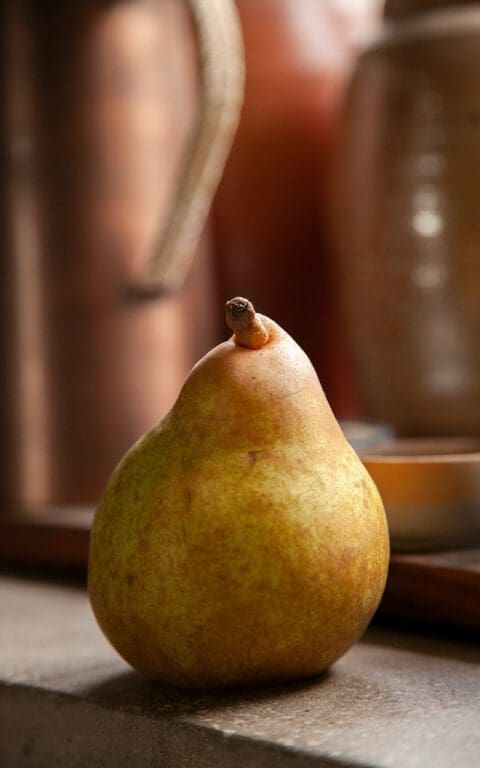
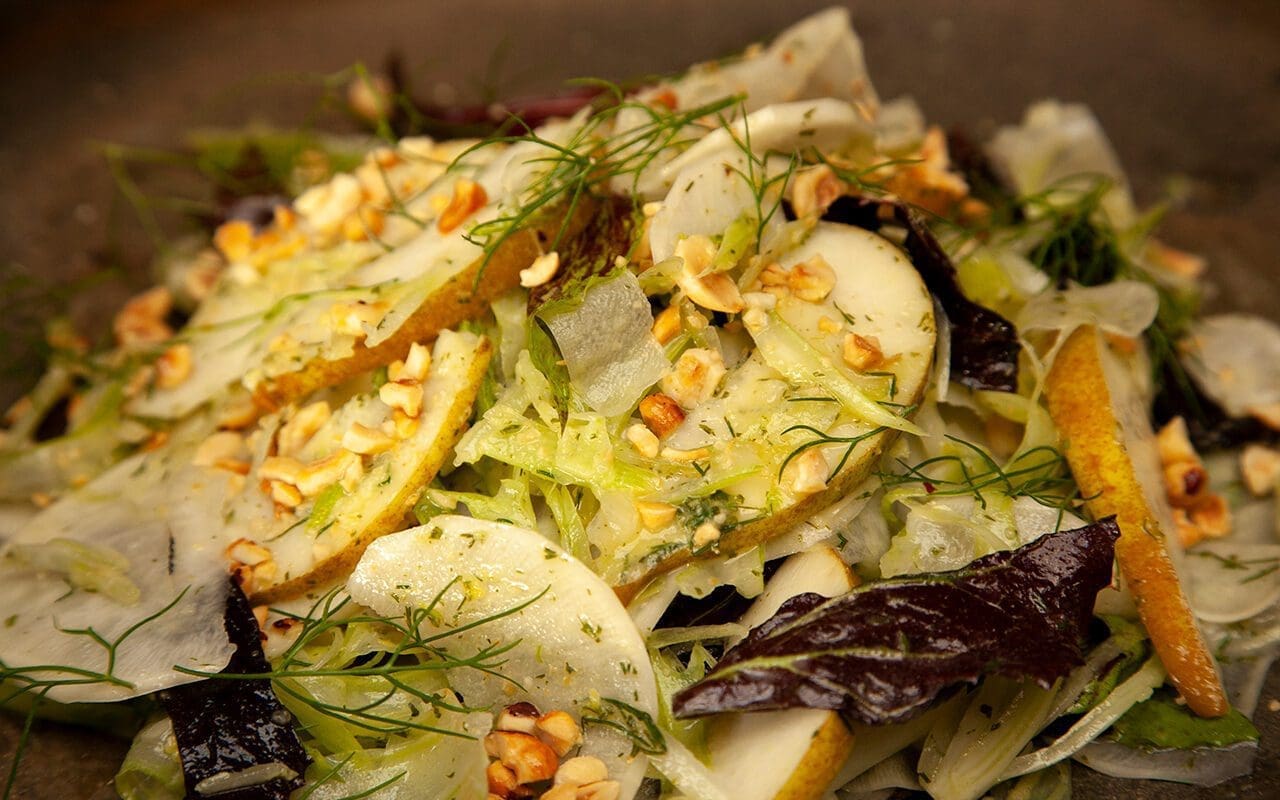
A fine, chilled sharply dressed fennel salad is one of the most uplifting of dishes for the winter table. The mild aniseed flavour and succulent crispness are invigorating and refreshing. While they are still young and tender enough I thought that these new radishes would pair well with the fennel and slices of succulent ‘Doyenné du Comice’ pear, harvested last month and which we are bringing into the house one at a time to ripen on the window sill.
Both the fennel and radish should be as finely sliced as possible using a mandolin or a very sharp knife. It is essential to put them both into iced water as this crisps them up and causes the radish to curl, which adds to the attractiveness of the plate.
If you are not able to get black radish then a small turnip will be a better substitute than breakfast radishes, which in any case are hard to come by at this time of year and too small to have the right kind of textural impact here. Alternatively, and perhaps easier to find, are the long Japanese radishes known as mooli.
This is a good companion to rich meat dishes, oily fish or a cheeseboard.

200g fennel
200g black radish, turnip or mooli
1 large, perfectly ripe pear
6 leaves of red or variegated chicory. e.g. Palla Rossa or Castelfranco
40g hazelnuts
1 lemon, juiced
Dressing
1 lemon, juice and zest
1 tbsp crème fraiche or Greek yogurt
1 tsp Dijon mustard
1 tsp honey or maple syrup
3 tbsp hazelnut oil
3 tbsp rapeseed oil
A small bunch of mint, leaves removed
A small handful of fennel fronds, removed from the stalks
Sea salt
Serves 4
Set the oven to 180°C. Put the hazelnuts into a baking dish in the oven and allow to toast for 10 minutes, checking regularly to prevent burning. Alternatively heat a small frying pan and toast the nuts until fragrant and lightly scorched. Allow to cool, rub off the skins and crush coarsely in a mortar.
Put all of the dressing ingredients, except the herbs, into a bowl and whisk to combine. Chop the mint and fennel very finely and add to the dressing.
Fill a large bowl with cold water and either add ice cubes or put into the freezer for 20 minutes to thoroughly chill.
Peel the radish and slice as thinly as possible using a mandolin or very sharp knife. Put the slices into the iced water. Do the same with the fennel.
In a medium sized bowl put the juice of the first lemon and a cup of cold water.
Carefully cut the pear into quarters, core and cut each quarter lengthwise into 6 slices. Immediately put the slices into the lemon water as you go to prevent browning.
Tear the radicchio into pieces.
Drain the radish and fennel. Put into a salad spinner or clean tea towel to get as dry as possible. Return to the bowl with the torn radicchio. Pour over about two thirds of the dressing and mix with together your hands to combine and coat everything.
Remove the pears from the lemon water and dry on a clean tea towel. Add to the salad and very carefully combine so as not to break the pear pieces.
Using your hands, carefully arrange the salad on the serving plate. Pour over the remainder of the dressing. Scatter a few reserved fennel fronds. Toss over the hazelnuts and serve.
Recipe and photographs | Huw Morgan
Published 13 November 2021
When I returned to London in 1988 after four years at Manchester University, my first job was as a Wardrobe Assistant for the English National Opera at The Coliseum. I was responsible for half of the male chorus, laundering, pressing, mending and preparing their costumes for every performance, during which I and the team of other Wardrobe Assistants were on standby for intervals, quick changes and emergencies. Hours were irregular with late nights and early starts when there were matinees and, with a 4 day on, 3 day off shift, weekends were not always at the weekend. This meant that I was frequently in the West End at meal times and in the company of others, so very quickly I was introduced to, or discovered for myself, a number of eateries that were dependable, affordable and had an edge of West End dirty glamour to seduce this city returnee.
Many of these were institutions, but although some of them are still there, many are now sadly gone due to development. Gaby’s Deli on Charing Cross Road, famed for falafel and kofta, the New World Dim Sum restaurant on Gerrard Place (only recently closed), where it was easy to get seriously stuffed on the trolleys that kept passing with delicious new dishes. Pollo Bar, with its greasy vinyl booths upstairs and smoky beatnik vibe in the basement, where huge bowls of pasta and endless carafes of red wine were cheap as chips, and Jimmy’s Greek restaurant on Frith Street, where the clattery basement and copious retsina was conducive to increasingly raucous evenings. If you wanted something more traditional there was New Piccadilly, the classic greasy spoon or The Stockpot, where tomato soup, Shepherd’s Pie and apple crumble and custard were the order of the day.
Another much-loved restaurant, although far from Soho, was Daquise, the Polish in South Kensington, which was my habitual destination after a visit to the V & A. The smell of the restaurant was very particular, a combination of boiled cabbage and meat overlaid with home-baked cakes that instantly transported you to eastern Europe. Favourites were the cheese and onion dumplings, boiled beef or schnitzel followed by their superlative cheesecake. However, no matter what else I ordered I would always order borscht.
This borscht was the first I had ever eaten and it became the benchmark by which I have measured all others. Clear, rich, jewel-bright stock, with enough vegetables to fill you up, but leaving just enough room for a plate of cheese pancakes with apple. Since then I have made any number of ‘borschts’, many of which I am sure would infuriate purists, but nothing comforts on a chill winter’s day like beetroot soup. I came up with the version below as I had a hunch that the comparable earthy flavours of beetroot and wild mushrooms would work well together. When researching this piece, however, it came as no surprise, although some little disappointment, to find that the Polish had had this bright idea a long, long time ago. In particular an age-old borscht traditionally served on Christmas Eve is a clear beetroot broth with wild mushroom pierogi floating in it. Now on my list to try.
Here at Hillside we grow up to four crops of beetroot in a season, starting with an early sowing as soon as the weather warms in April and resowing every month or so. The last sowing is made in early August and these are the ones we leave in the ground to overwinter. One day, when we have a frost-free root store, we will lift them before the frosts in November and cover them in just damp sand. Until then, the roots take their chances with the weather and the slugs, but most make it to the table.
This year we have grown our standard favoured varieties. The flattened, dark ‘Egitto Migliorata’ which we tend to harvest young, the saffron ‘Burpees Golden’ and the long-rooted ‘Cylindra’, which is favoured in eastern Europe for pickling, as the long roots create many identical slices rather than the fewer central slices from a spherical root. Their upright shape means you get more plants to a row and, although they can reach up to 500g in weight, they remain sweet and not woody. It stands very well for us in the ground over winter.

Serves 6
2 medium onions, coarsely chopped
2 sticks celery, coarsely chopped
1 large carrot, diced
500g beetroot, peeled and coarsely grated
30g dried porcini or other wild mushrooms
1 large bay leaf
3 allspice berries
8 juniper berries
1.7 litres water or vegetable stock
2 tablespoons sunflower or rapeseed oil
Apple cider vinegar
Salt
Finely ground black pepper
Soured cream or sauerkraut
Bring 750ml of the water or stock to the boil in a pan. Remove from the heat, add the dried mushrooms and cover. Leave to stand while you prepare the vegetables.
Heat the oil in a large thick-bottomed pan. Add the onion, celery and carrot and fry, stirring frequently, until the vegetables start to brown and caramelise.
Finely crush the juniper and allspice in a mortar and add to the vegetables. Continue to cook over a low heat for a minute or two until fragrant.
Drain the soaked mushrooms and retain the soaking water. You should have around 700ml. Make up the total amount of liquid required with water or stock. Coarsely chop the mushrooms, add to the pan of vegetables and cook for another minute or two. Add the grated beetroot.
Pour the mushroom stock into the pan through a sieve. Bring to the boil and then reduce the heat and simmer with the lid on for 45 minutes until all the vegetables are soft and the flavours have combined.
Season with salt, pepper and brighten the flavour with vinegar to taste. I like my borscht to be well seasoned.
Ladle the soup into warm bowls. Spoon on some soured cream or sauerkraut. The golden turmeric sauerkraut from Bath Culture House I have used makes a nice contrast to the rich, ruby soup.
Recipe & Photographs | Huw Morgan
Published 25 January 2020
We are sorry but the page you are looking for does not exist. You could return to the homepage