ALREADY A PAID SUBSCRIBER? SIGN IN
ALREADY A PAID SUBSCRIBER? SIGN IN
ALREADY A PAID SUBSCRIBER? SIGN IN
When the pandemic took hold last year we decided very quickly that we would no longer split our time between here and running the studio in London. The enforced remote working proved that what we’d thought not possible was possible and the grip of the city quickly lost its hold. This was something we’d been planning for, but the enforced decision presented another layer of engagement. To be here daily has been profoundly different and we have gone deeper in the process of living our lives here more fully.
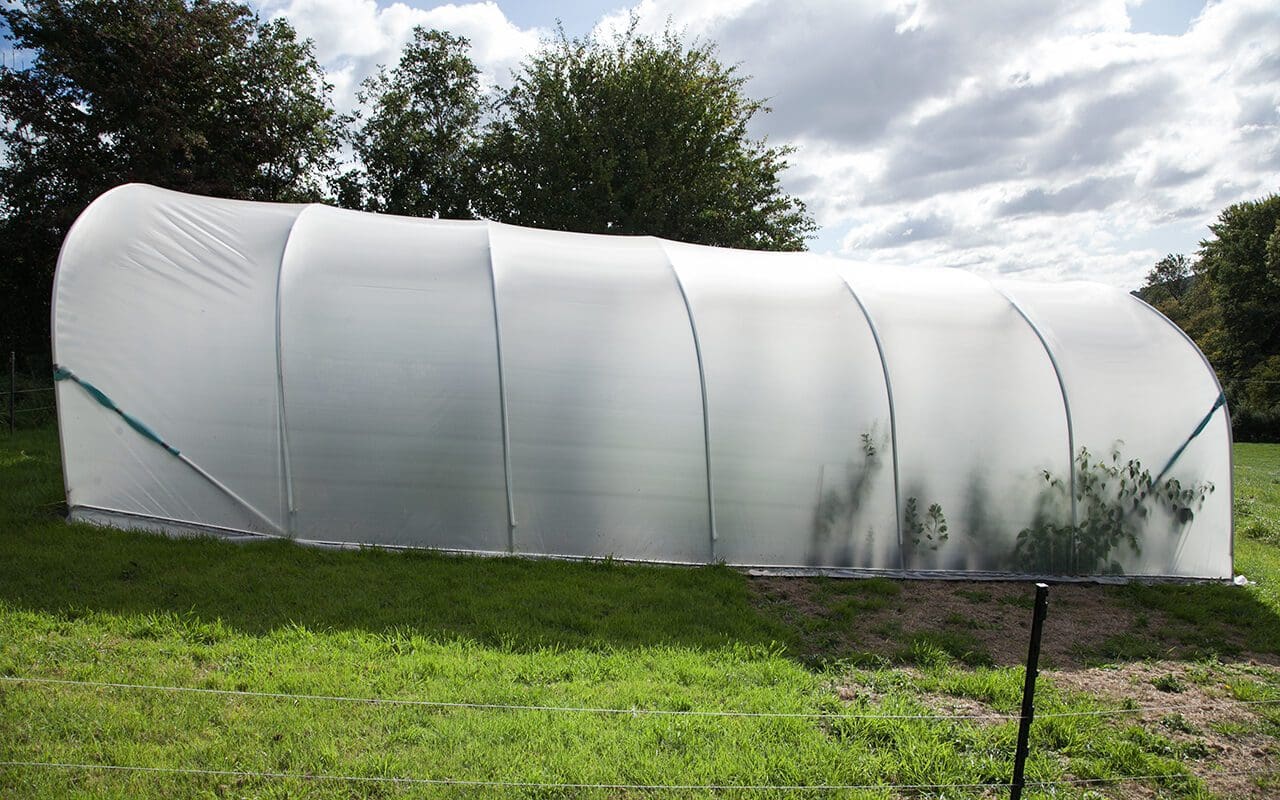
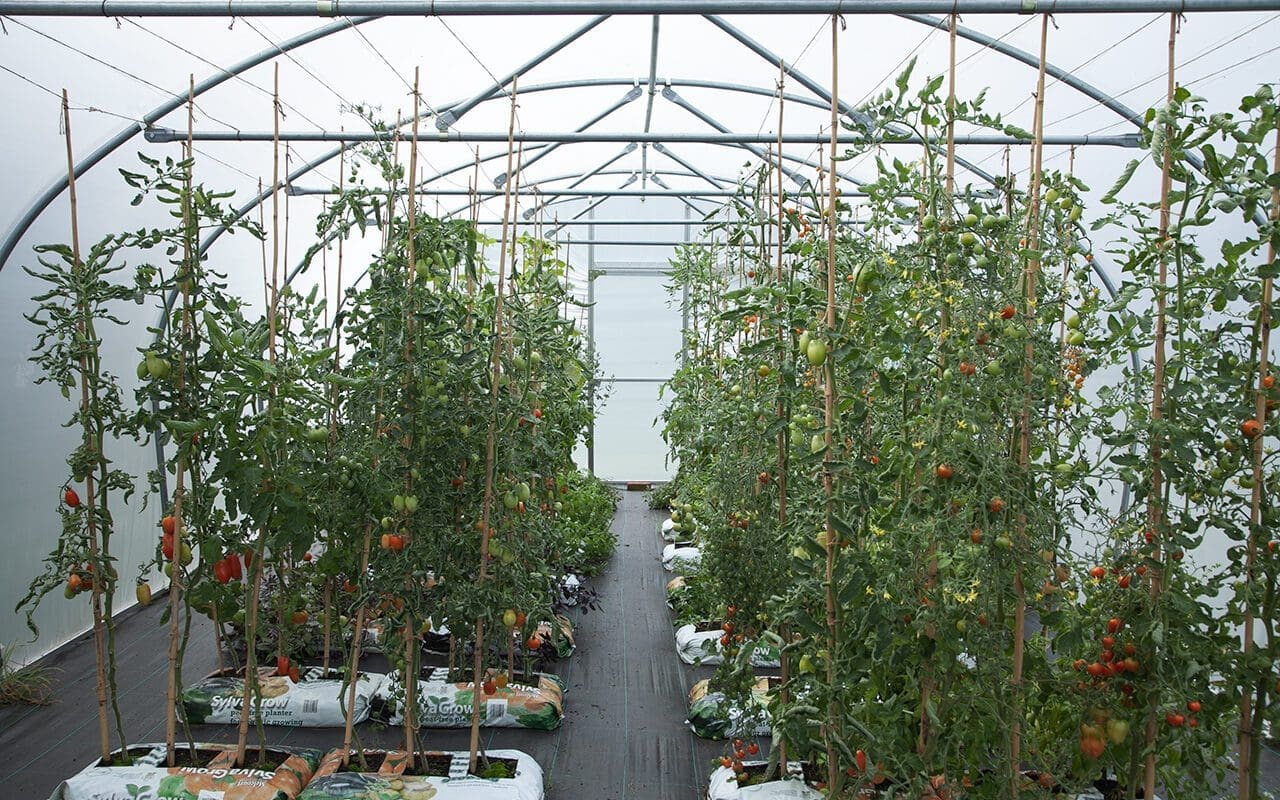
The polytunnel was a direct response to being able to tend the place daily and to get more out of the land by extending the growing season. Arriving late, because the steel for the frames was being used to make hospital beds at the beginning of the lockdown, it eventually arrived at the end of May. It was erected for the beginning of June, running down our steep slope in a north / south orientation as it should be, the sun hitting either side equally as it arcs over the course of the day from east to west.
The tomatoes by that point were straining in the cold frames so we planted them up in growbags as there wasn’t time to make in-ground beds. It was late to plant them out, a good six weeks, but they made up for lost time in the glorious summer. At the end of the season we inherited a second cultivation pause whilst we constructed the beds so that we could grow our plants in the ground. Our hearty soil was not so long ago market garden and it seemed entirely wrong to be using growbags.
The Mypex mulch which we’d laid directly over the pasture to keep the ground in the polytunnel clean in the first season had done its job. The soil was now ‘clean’, the rough turf having been starved of light so, once the beds were constructed, we mulched again with compost and put down the first winter crops in early November. We felt the knock-on delays, one bumping into another and the winter crops sat there without light and didn’t move again until spring.
We have both been part of this learning curve, but the polytunnel is very much Huw’s domain and he has claimed the daily running and tending because he is the man behind the vegetable growing. This year we have learned once again. The beds have been so much easier to water than in containers and, in general, the plants have been able to delve deep into good soil and be less reliant upon us. By spring we were back on track and the tomato plants were planted out in mid-May whilst they still had energy in them and hadn’t outgrown their pots.
We got the spacing between rows correct at 60cm, but fear we have been greedy in putting four and not three plants to a row in the beds, so that they are only 45cm apart. The plants have shaded each other and made tending less easy and now, at the end of the season, we have finally got the tomato blight that we were surprised hadn’t hit sooner with the prolonged cool, wet summer. That said the crops to date have been good and the cold season has not had the same impact it would have done had we not made the commitment to this protected growing environment.
Huw’s selection of tomatoes is working towards a perfect balance of varieties that each offer something different, so I will hand over to him now to run you through this year’s choices.
Dan Pearson
///
I got my tomato seed order in early last year in mid-September. The reasons were twofold. Firstly, I wanted to place the order while the shortcomings of last year’s varieties were fresh in my mind and secondly, I did not want to risk the varieties I wanted being already sold out due to last year’s extraordinary demand for vegetable seed.
Almost all of this year’s varieties came from The Real Seed Company, whose seed and growing advice I have come to trust over the years. It is a small, ethically run company and, contrary to what you might expect, they give guidance on seed collecting for oneself very freely.
I always like to grow a good variety of different kinds of tomato, both for their appearance on the plate and the range of things you can do with them. This year’s selection includes a number of culinary types or those that can be eaten raw and cooked, some with striped skins or unusual colours and ranging from tiny cherry tomatoes to huge, ribbed beefsteaks. I was also interested to try a number of Eastern European varieties, which start cropping faster, are not as susceptible to cold and some of which are reputed to still produce fruit at Christmas under cover.
Although our harvests this year have been respectable we lost our second trusses during the extreme heat at the end of July when, even with all the doors open, the temperature in the polytunnel reached 42° Centigrade. With the blight that has just arrived in the last 36 hours on the back of last week’s damp, cold weather it now looks as though that may be our lot for this year. I have just arrived back from a couple of days in London but, first thing tomorrow morning, I will be heading down to the polytunnel for a thorough inspection before starting the necessary but slightly disheartening business of removing the lot. However, the silver lining is that I can get a late sowing of French beans in the ground before we go on holiday for a couple of weeks.
Huw Morgan
This year’s selection listed as seen from left to right in the main image. For scale, the largest tomato (the beefsteak Feo de Rio Gordo) is 11cm in diameter and 8cm high.
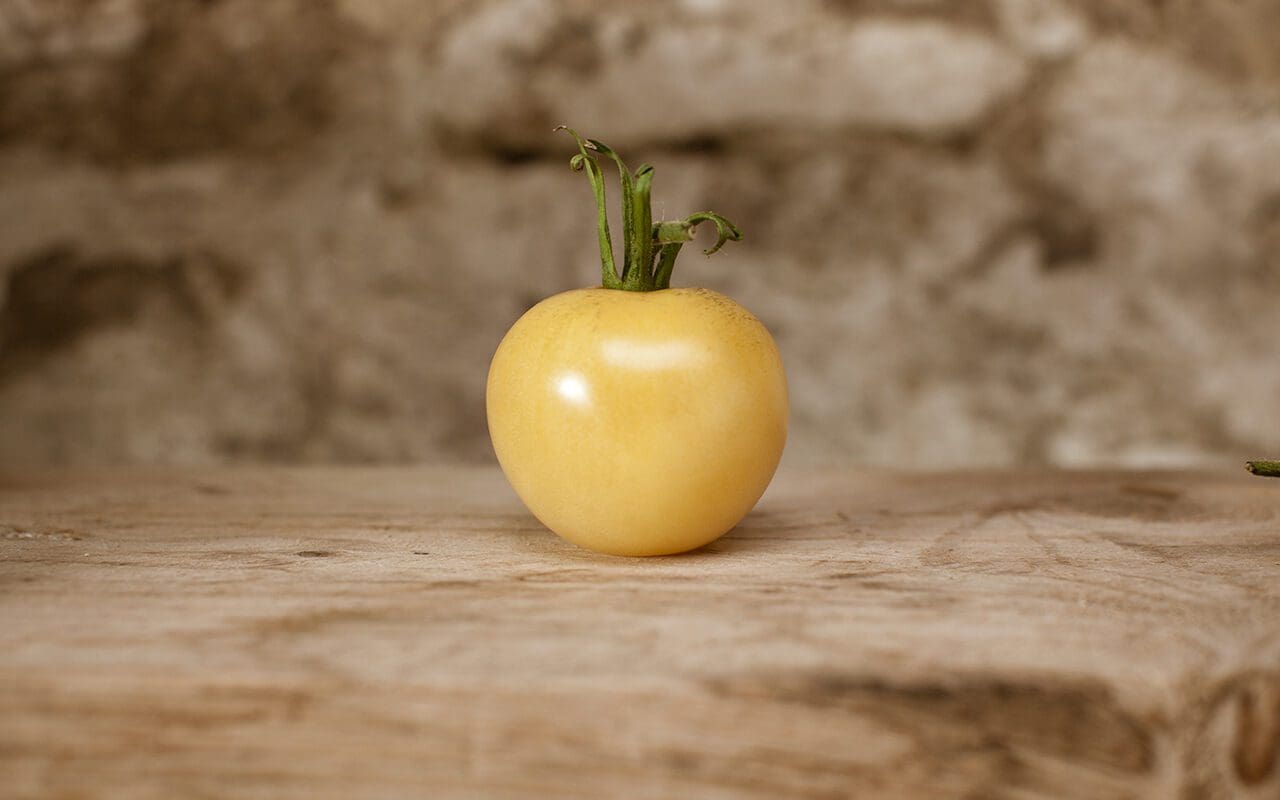
An unusual pale yellow variety from the Ukraine, which produces fruit in a variety of sizes up to medium beefsteak. It can look insipid on the plant, but makes a very elegant sliced tomato salad, particularly with purple leaved basil. The flesh is juicy and fresh tasting with a hint of lemon. Reputed to fruit until December with protection.
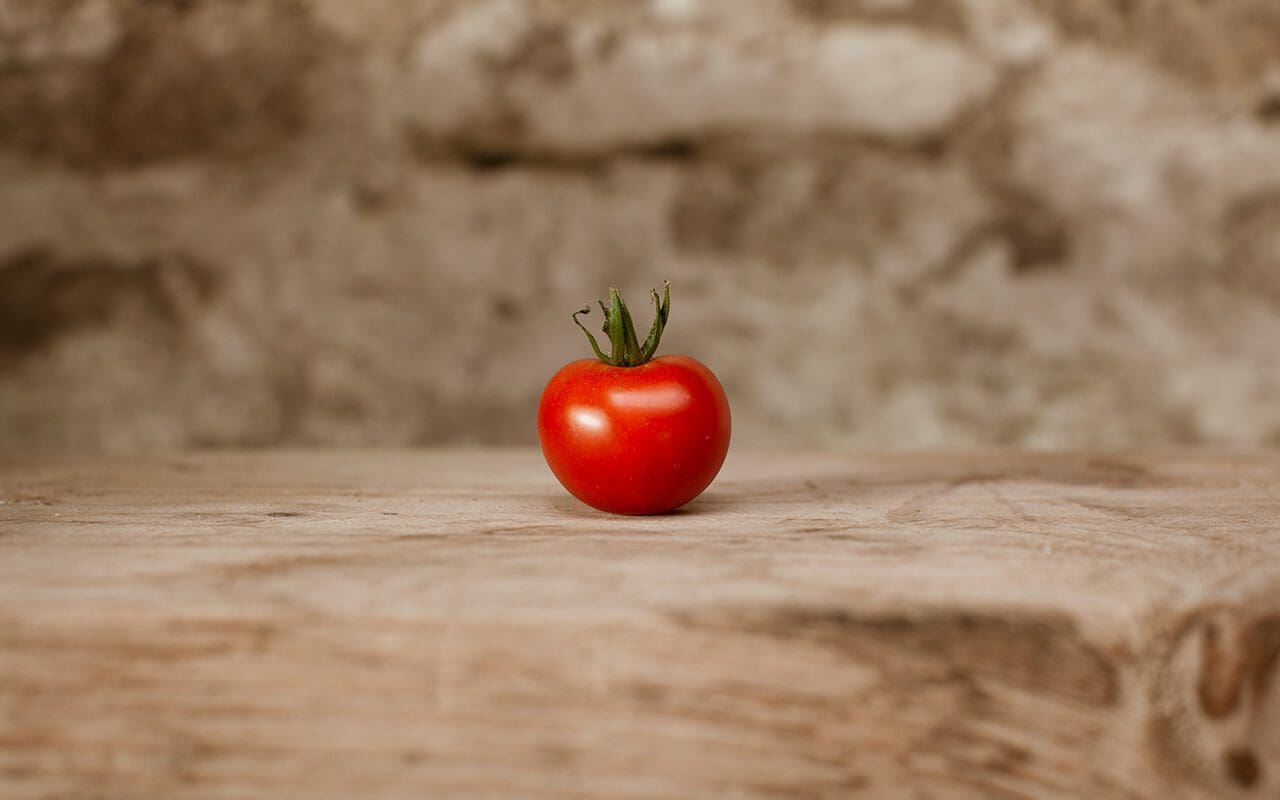
This old favourite is well named. Reliable, heavy crops of delicious, sweet red cherry tomatoes.
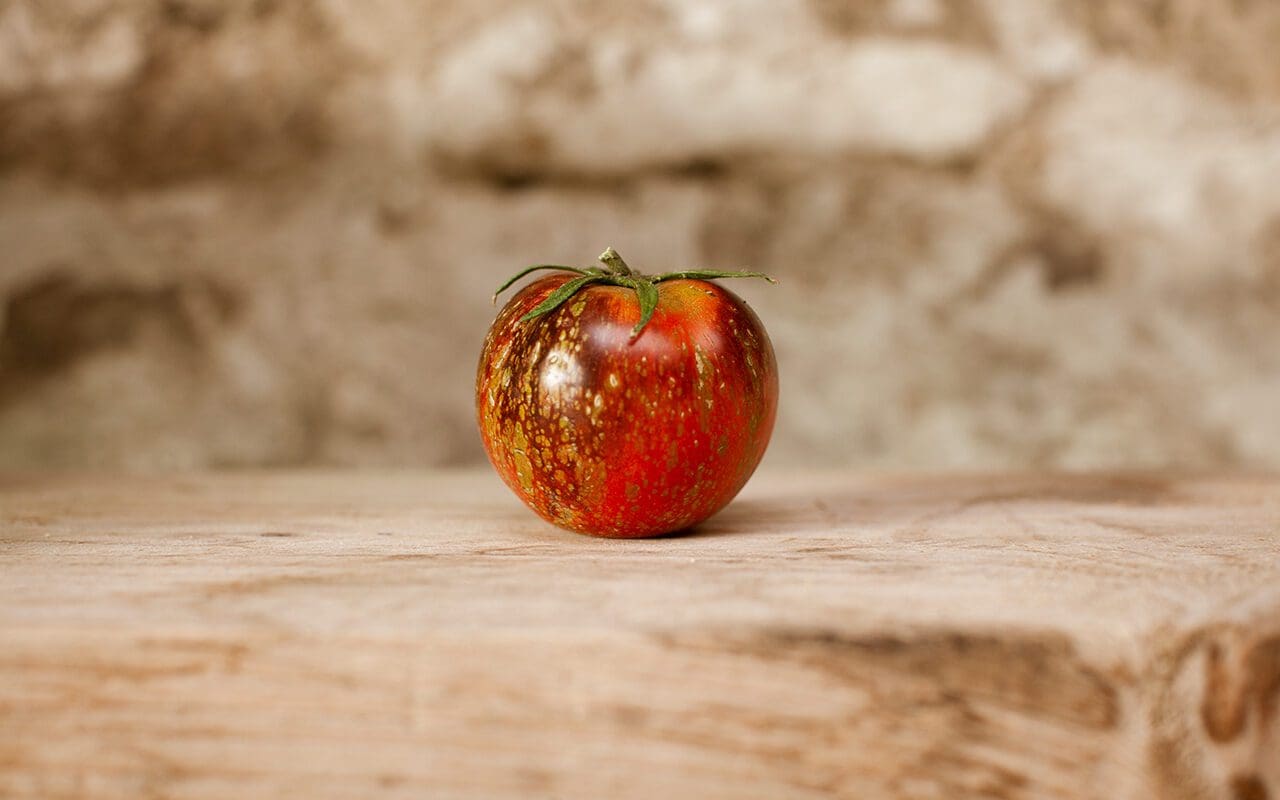
Perhaps the most beautiful tomato you can grow. It starts off green with deep purple streaks, ripening to red blushed dark brown with metallic golden splashes. Unfortunately, however, it is watery and flavourless, although the Real Seed Company recognise this and are working on developing its flavour.
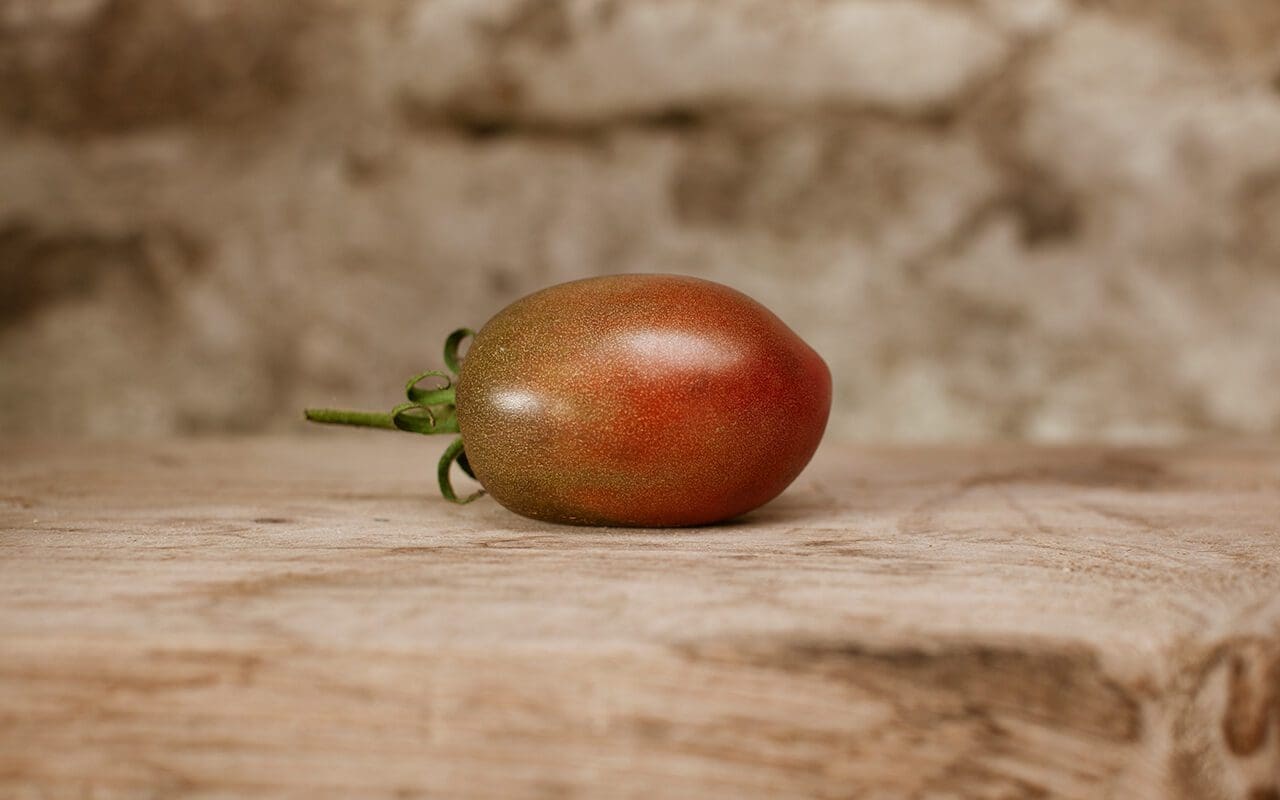
Not purple, but a dark, bruised plum tomato with brown shoulders. One of the earliest to get away and to crop, with an elegant habit and lacinated foliage. Very heavy cropper for us and, due to its provenance, reputed to have a long season. With Black Russian and Amish Paste, this has been the basis of all of the passata I have made this year.
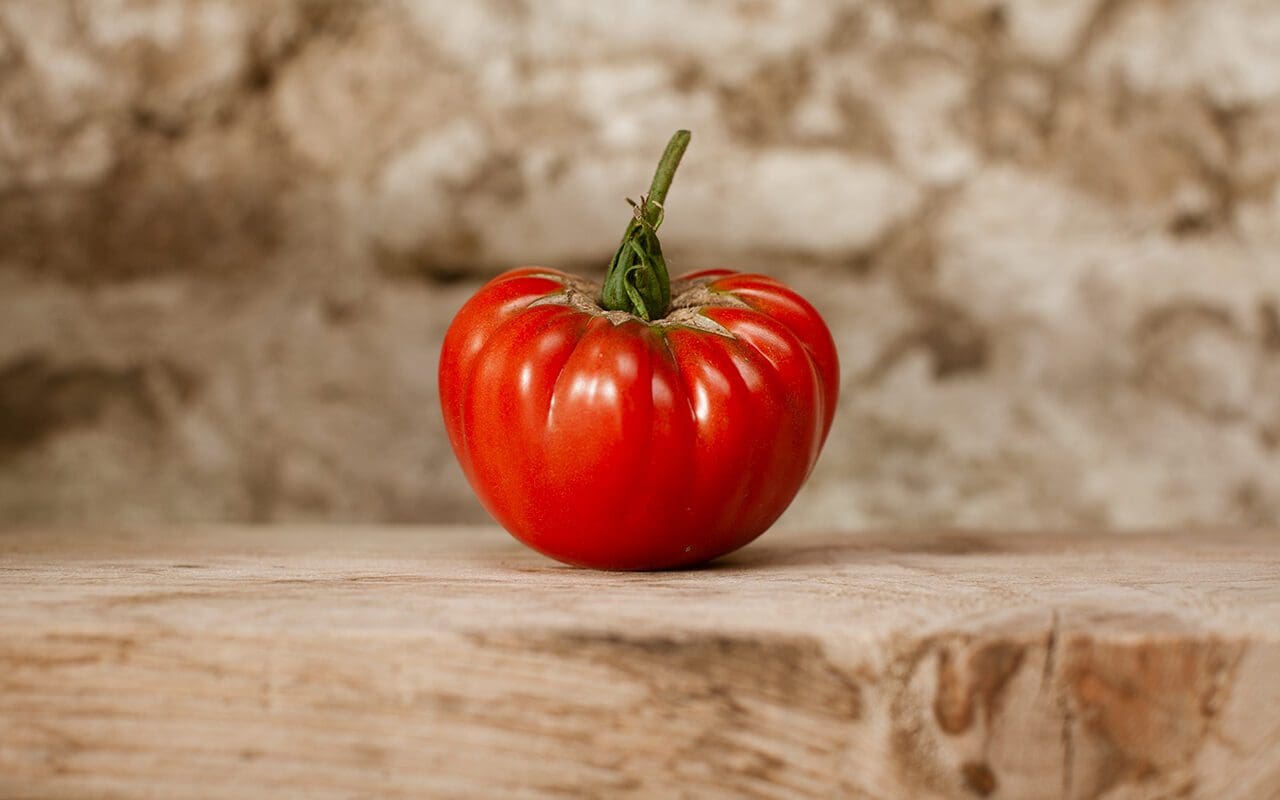
A monster beef tomato from Spain which has produced a steady stream of fruits weighing in at 400-500g each. Surprisingly early given its size and provenance. Delicious thickly sliced with olive oil and shallots.
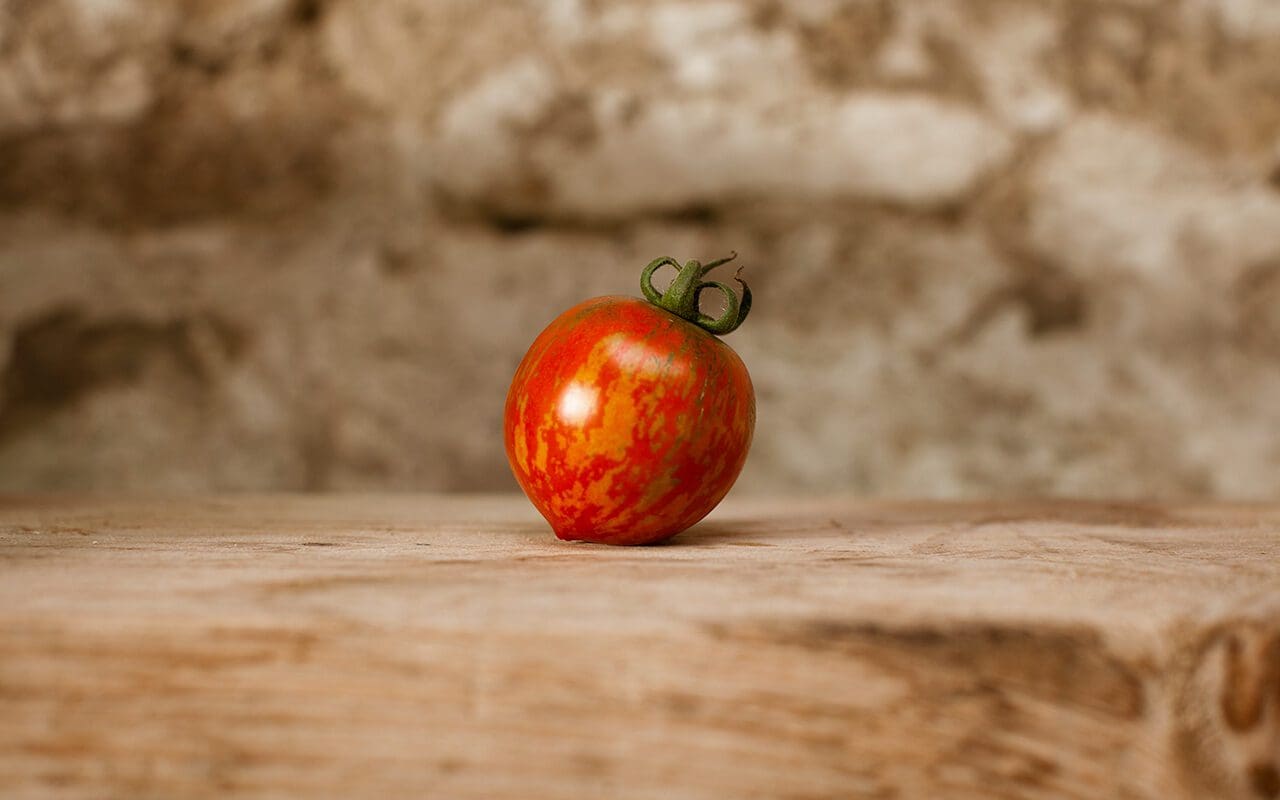
A sport of Green Zebra with beautiful gold and green splashed skin and really good flavour. Produces a variety of sizes on each truss from cherry to golf ball to tennis ball. Will be growing again.
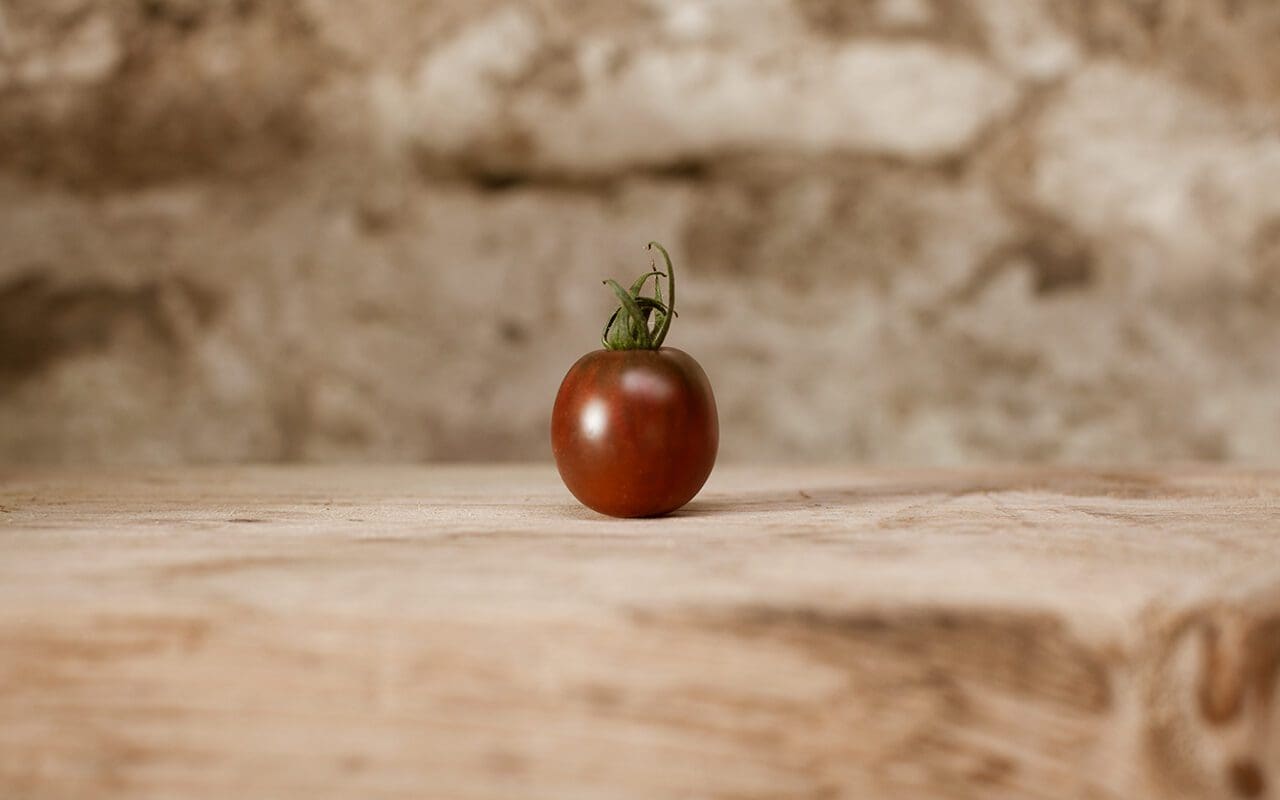
Last year’s discovery and a new confirmed favourite. One of the heaviest croppers of all with some trusses having forty or more fruits. Delicious spicy scent and flavour.
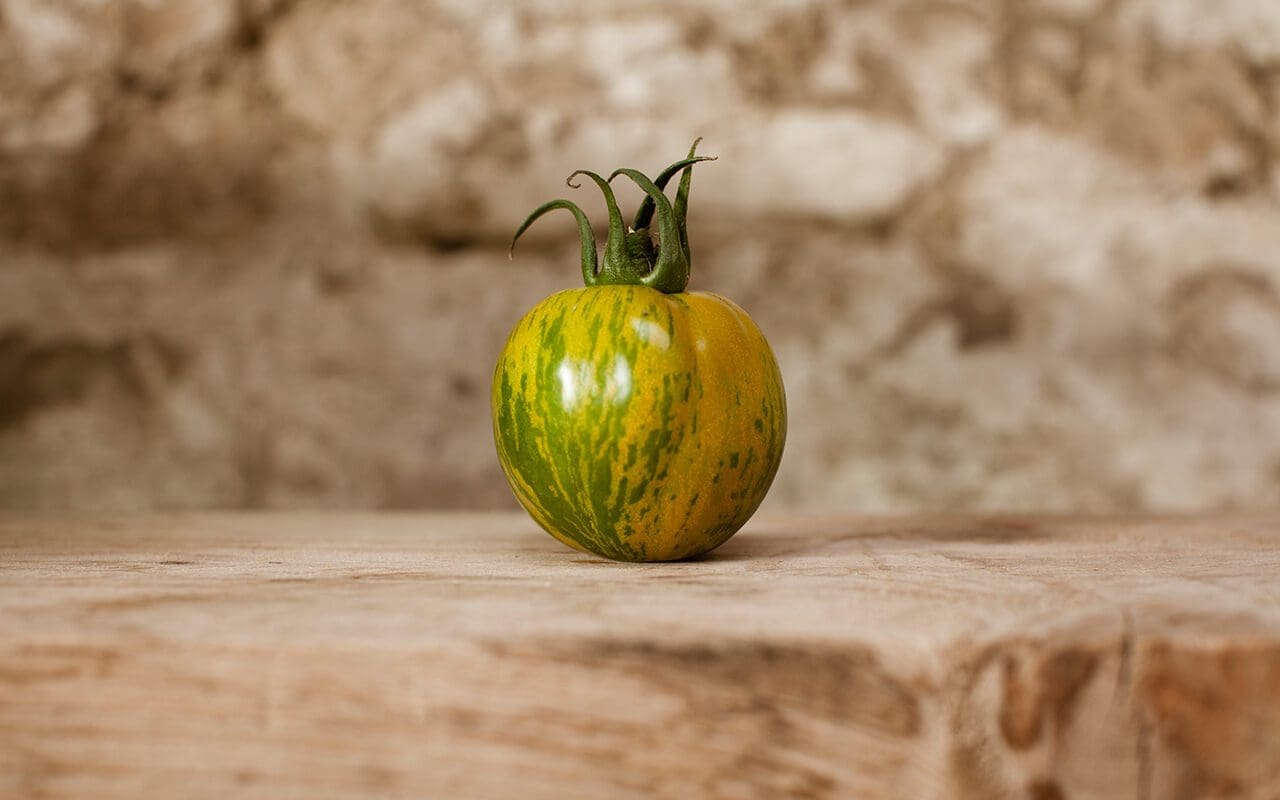
This year’s revelation. Large green striped fruits, which ripen very slowly to amber. They retain their firmness on the vine and have been the best keepers, even out of the fridge. The succulent flesh is pale green, which makes a lovely contrast with red tomatoes on the plate and, contrary to expectation, is exceptionally well flavoured. Our new favourite.
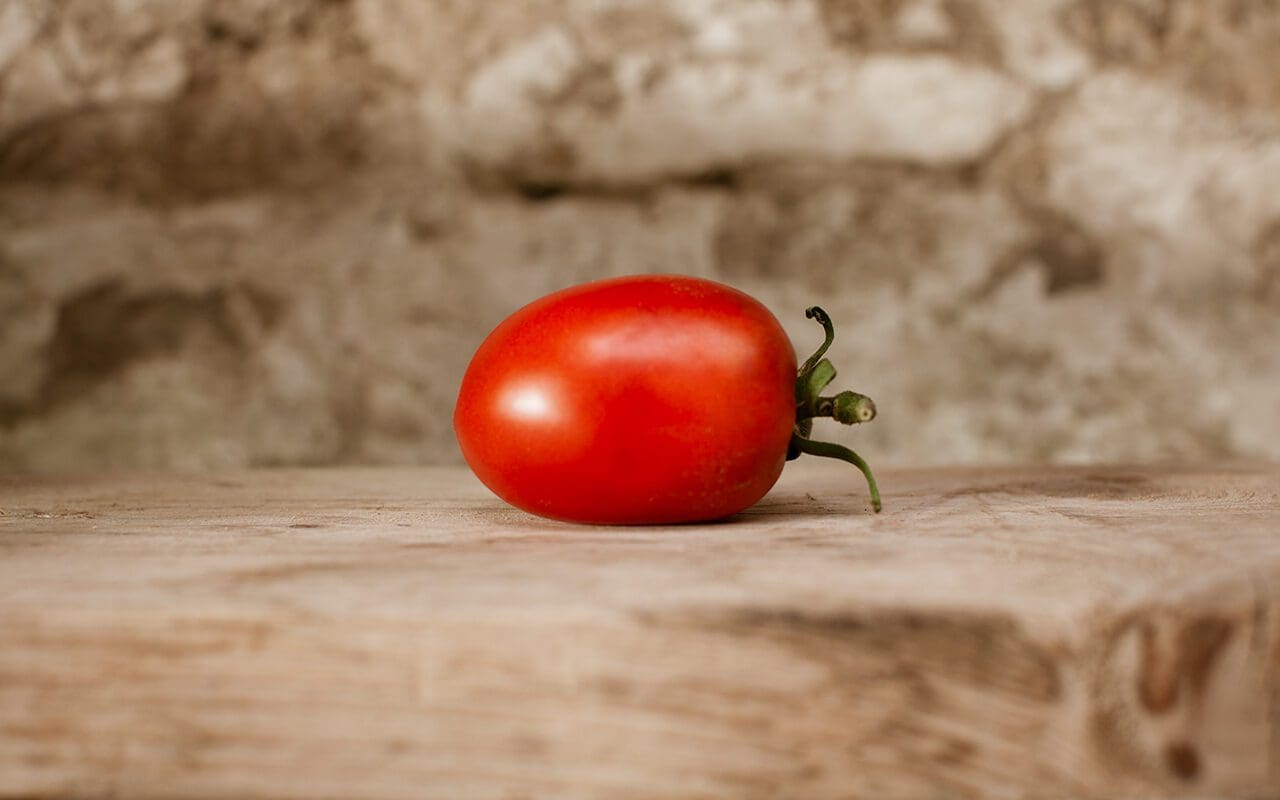
An heirloom American variety which produces very large, firm plum tomatoes (the one illustrated is of smaller than average size) with a low water content. Perfect for roasting and grilling, bottling or making into pasta or puree. Not as productive for us as Purple Ukraine.
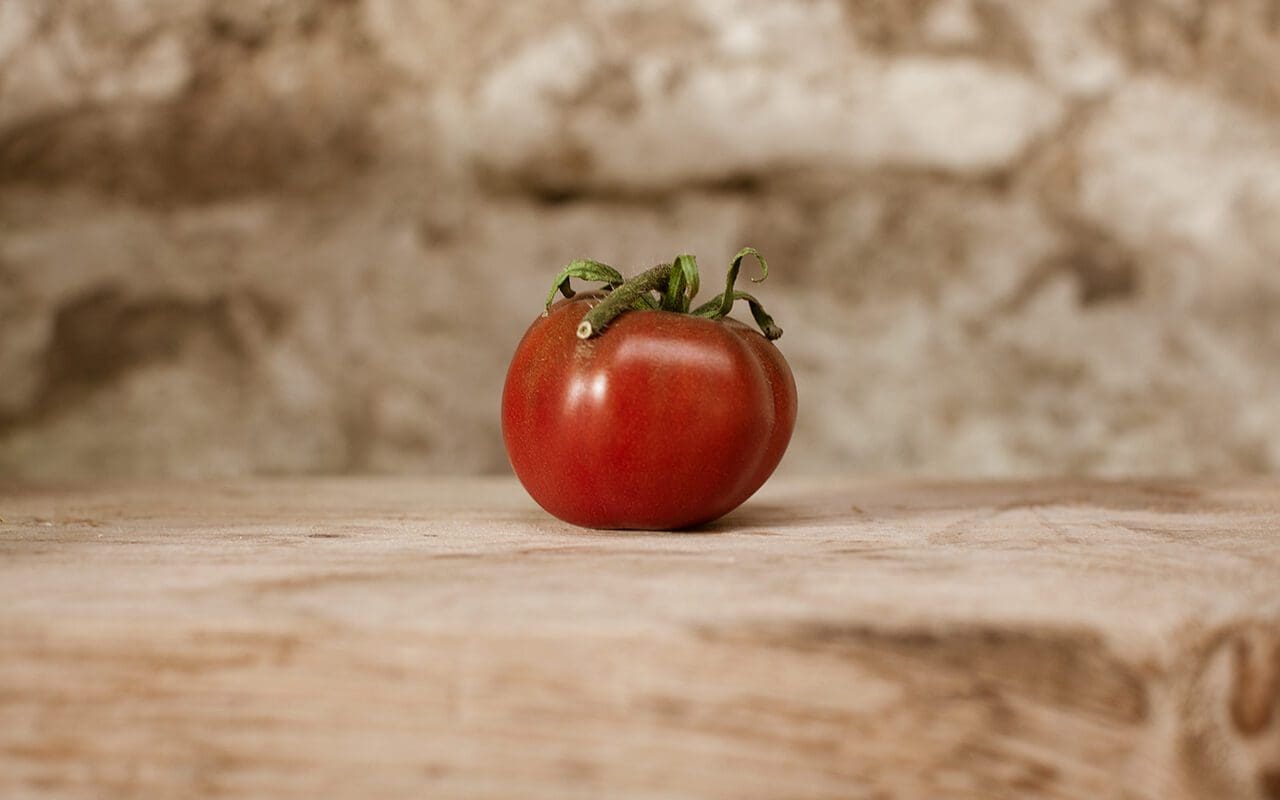
Another tomato that isn’t really black, but a dark mahogany red. The fruit in the image is small for the variety, which typically produces medium beefsteaks of excellent texture and flavour. Equally good raw and cooked.
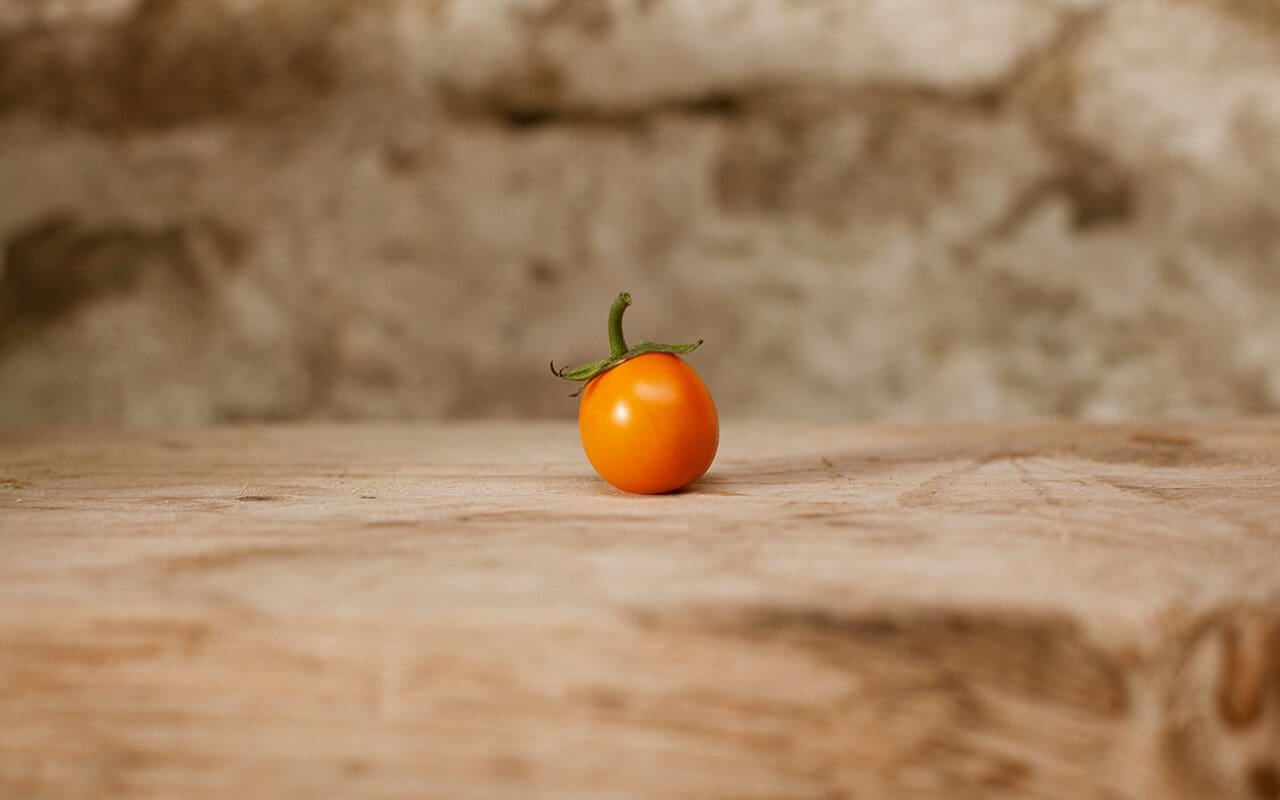
We have always grown this and always will. Totally reliable and heavy cropping. The very sweetest tomato of them all and the one that mostly gets eaten either in the polytunnel or between meals.
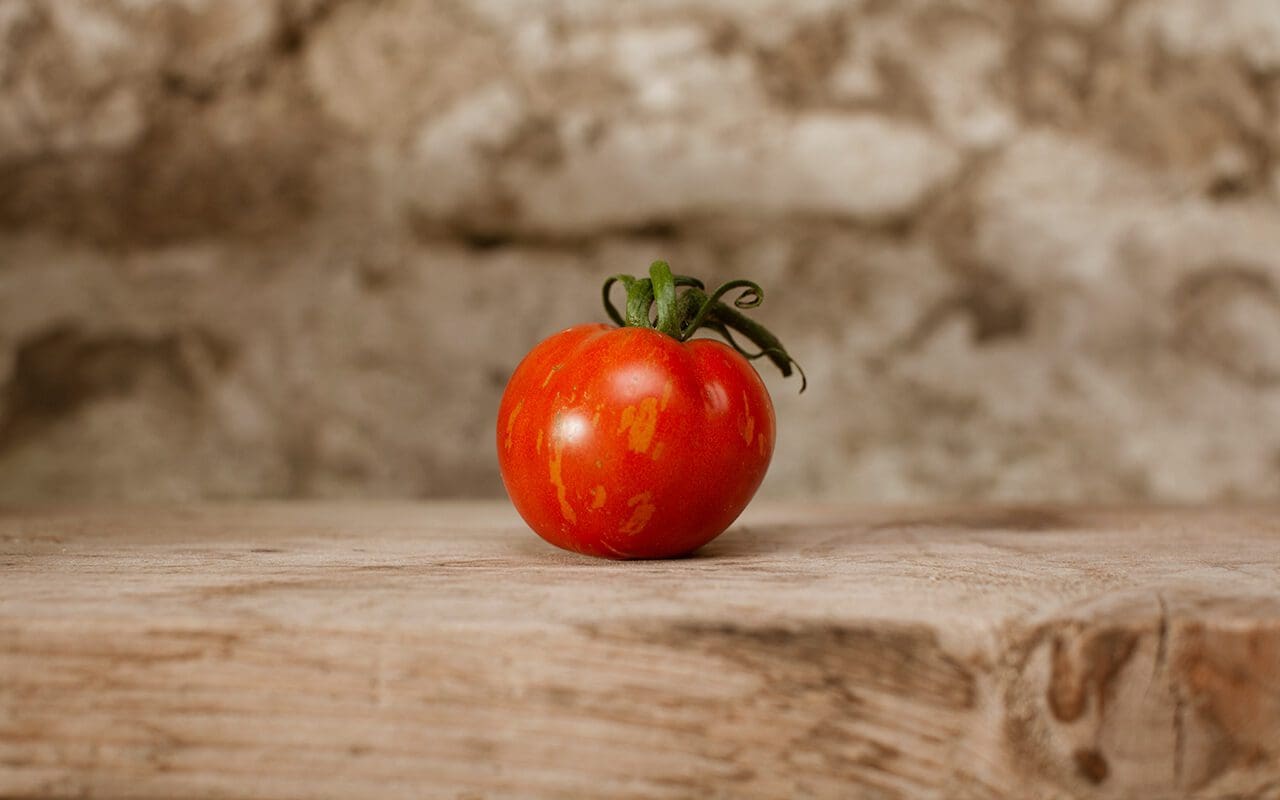
A variety I grew last year, with lightly striped skin and adequate but not distinctive flavour. Surpassed this year in all departments by Red Zebra. Sorry, but it’s goodbye.
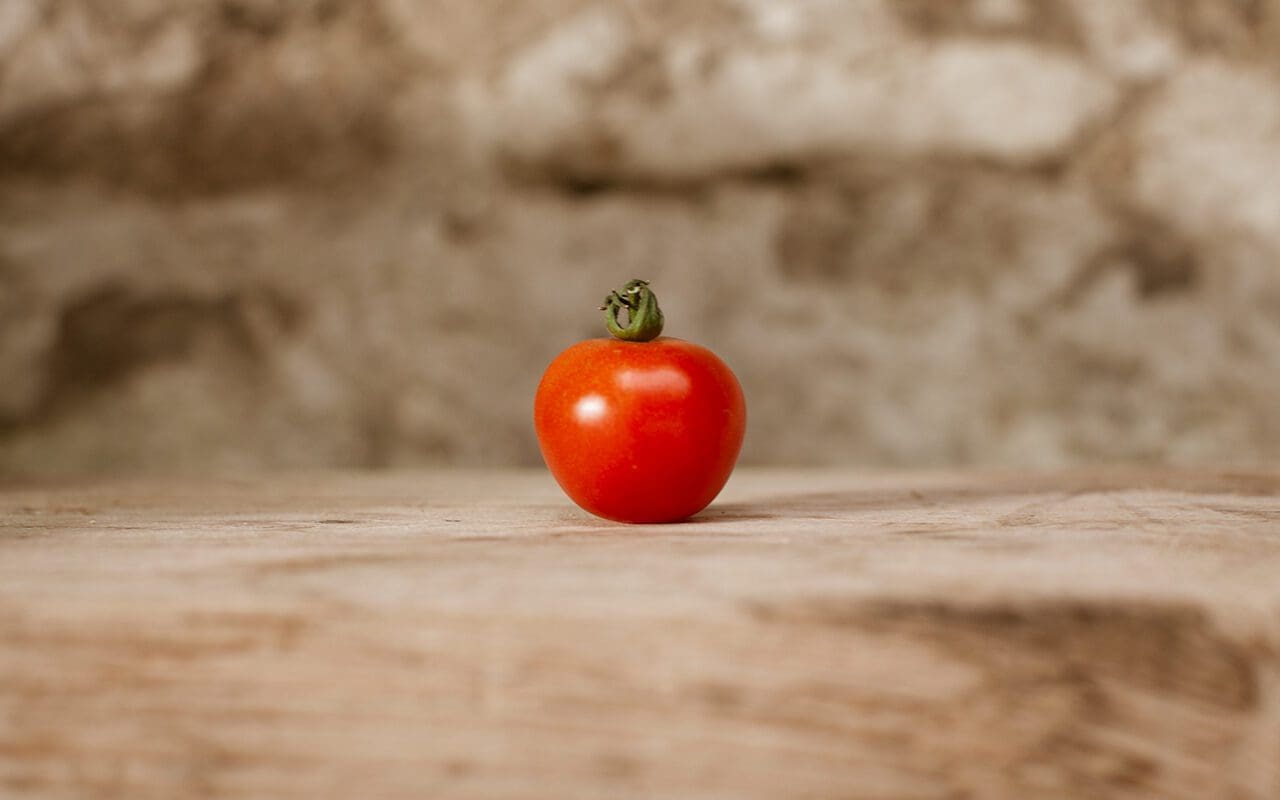
A slightly larger, squarer version of Gardener’s Delight. Firmer and with a thicker skin, so better for packed lunches and picnics. Gardener’s Delight is a much heavier cropper though, so if you are only going to grow one red cherry that would be our choice.
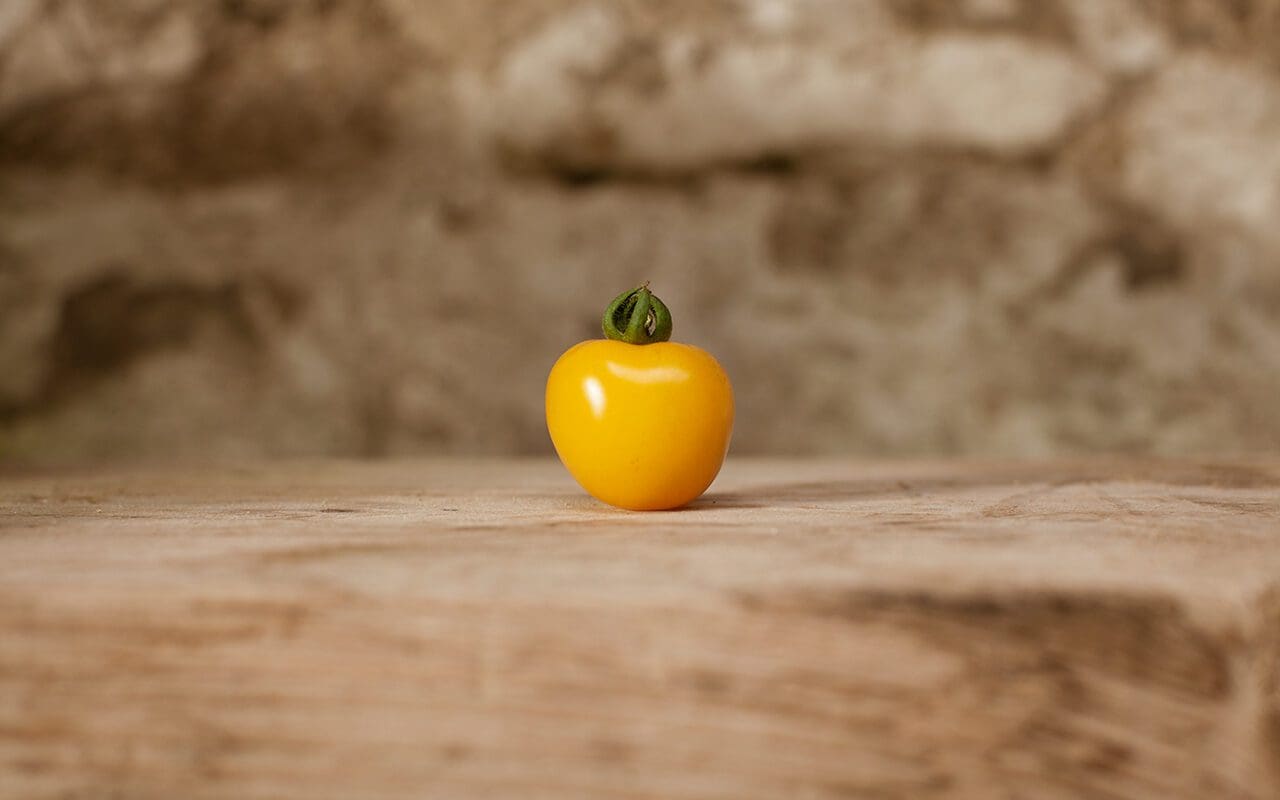
A firm, shiny, bright yellow cherry tomato from Siberia with good flavour. Contrary to the Real Seed Company’s write up, this has been one of our lightest croppers. Will try it again next year.
Words: Dan Pearson & Huw Morgan | Photographs: Huw Morgan
Published 4 September 2021
It was exactly a year ago, in the first week of lockdown, that we committed to buying a polytunnel. That same week I placed a very late seed order primarily for tomatoes, but some chillis, aubergines and cucumbers came too and we started them off indoors at the end of March. This late start was further compounded by the delayed arrival of the polytunnel itself, so that the seedlings intended for it had to be held back by hardening them off in a makeshift structure of seed trays and pieces of glass, since the cold frames were full. Although they got a little leggy and had to be watched carefully to ensure their 9cm pots did not dry out, they escaped the very late frost we had on May 12th and were finally planted into their grow bags in the first week of June.
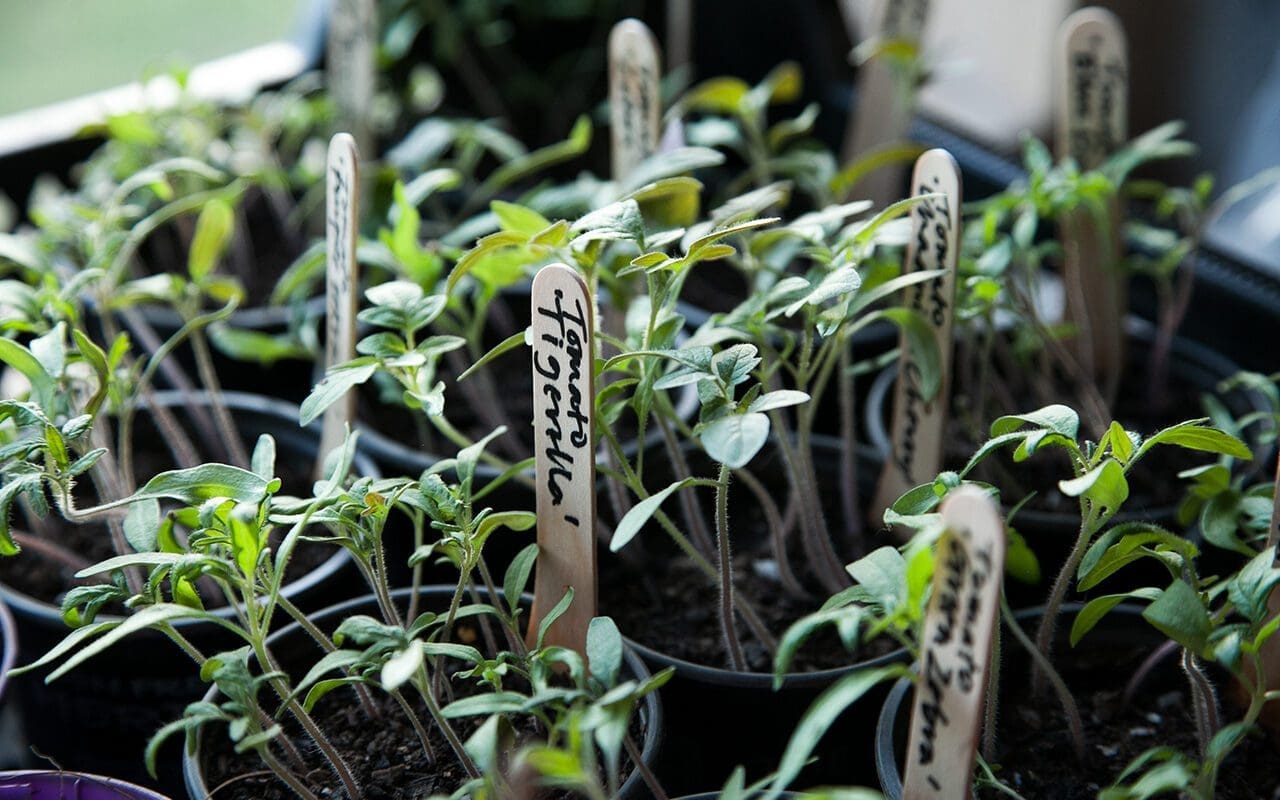
This year I sowed the tender veg a full month earlier in late February, starting them off on the airing rack above the kitchen range before moving them to a warm windowsill as soon as they started to germinate. We are always keen to try new varieties and this year, alongside our old favourites ‘Gardener’s Delight’ and ‘Sungold’, I made a selection from Real Seeds based on productivity and hardiness, and also a range from very earlies to lates to see if we can stretch the season and push the tomato harvest into early winter. ‘Amish Paste’ is a heavy-cropping, extra-large preserving tomato, which I am trying instead of ‘San Marzano’, ‘Feo di Rio Gordo’, a deeply ribbed Spanish beefsteak variety that is reputedly very early for its size, while two Ukrainian varieties, ‘Purple Ukraine’ and the peach-fleshed ‘Lotos’, have late seasons, the latter with a reputation as one of the latest-cropping tomatoes, with fruit still pickable in late December.
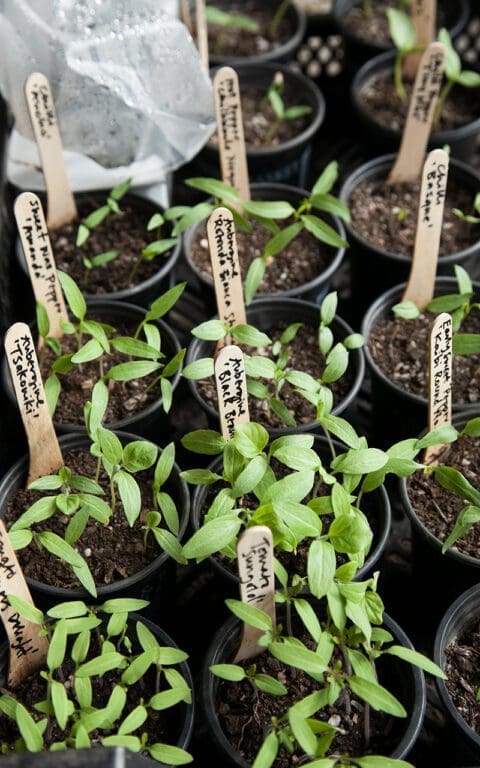
Last year’s aubergines suffered from not being planted out soon enough and failed in the frames so, determined to have a crop this year, we have three varieties on trial; ‘Black Beauty’, which has a reputation as the most reliable cropper in the UK climate, which it seemed to prove by being the first and most profligate to germinate and with the largest, heartiest seedlings. Germination of the other two varieties – ‘Tsakoniki’, a Greek heirloom variety and ‘Rotonda Bianca Sfumata di Rosa’, both from Thomas Etty – was a little patchier, but we have enough seedlings to have three plants of each and still have some left to give away to friends and neighbours.
As well as new chillis ‘Basque’ and ‘Chilhuacle Negro’ I have succeeded in germinating the seed of some tiny superheat red chilli bought at Kos market two summers ago and I’m trying sweet peppers for the first time (‘Kaibi Round No. 2’ and ‘Amanda Sweet Wax Pepper’, also from Real Seeds) as well as two varieties of melon (‘Petit Gris de Rennes’ and ‘Charentais’), which I’m hoping will get enough light and heat to provide us with something truly exotic in the fruit department this year. All of the above were sown in the last week of February and they are all, bar the melons, ready to be pricked out into larger pots this weekend.
The delay in planting out last year had a continuing knock-on effect, and the last of the tomatoes were harvested in late October so that we could remove the grow bags (which were were last year’s quick fix) to build four raised beds. These allowed us to build up the level and enrich the soil of the unimproved pasture on which the polytunnel is sited with well rotted manure. We intend to practice no dig with these beds and so the retaining edge will help to keep things tidy.
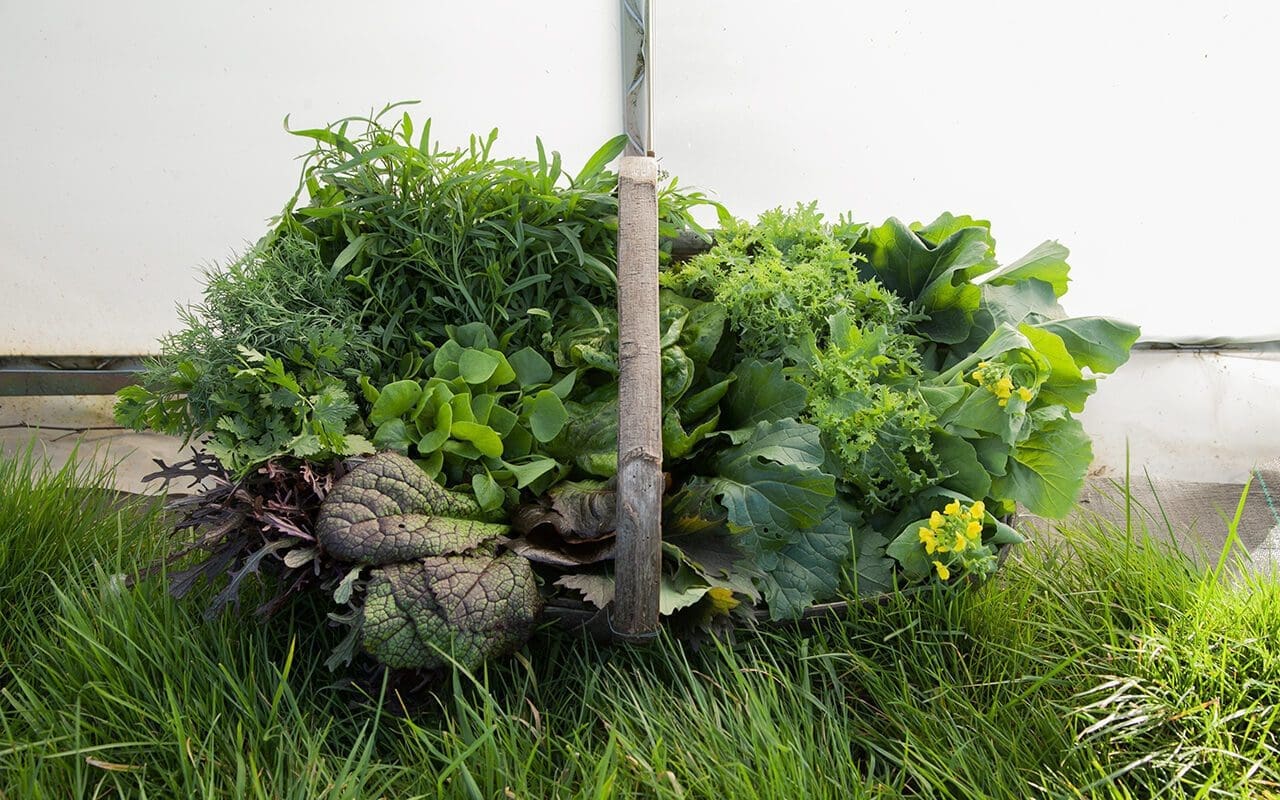
Although I had sown a variety of oriental greens, winter salads, chard, kale and soft herbs from the beginning of September and into October and November it soon became apparent that this was also too late since, by the time the raised beds were finished in early November, the days had shortened to the point that none of the seedlings would make no further growth before the end of the year. These plug plants sat rather reproachfully in the cold polytunnel until late January, when I finally planted them out as the days slowly started to lengthen. However, they have now been providing us with salad and greens for two weeks or more and have more parsley, coriander and dill than we know what to do with.
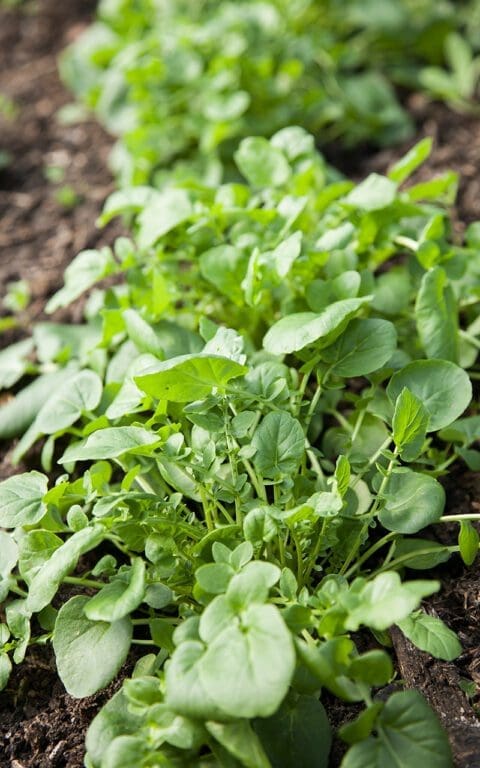
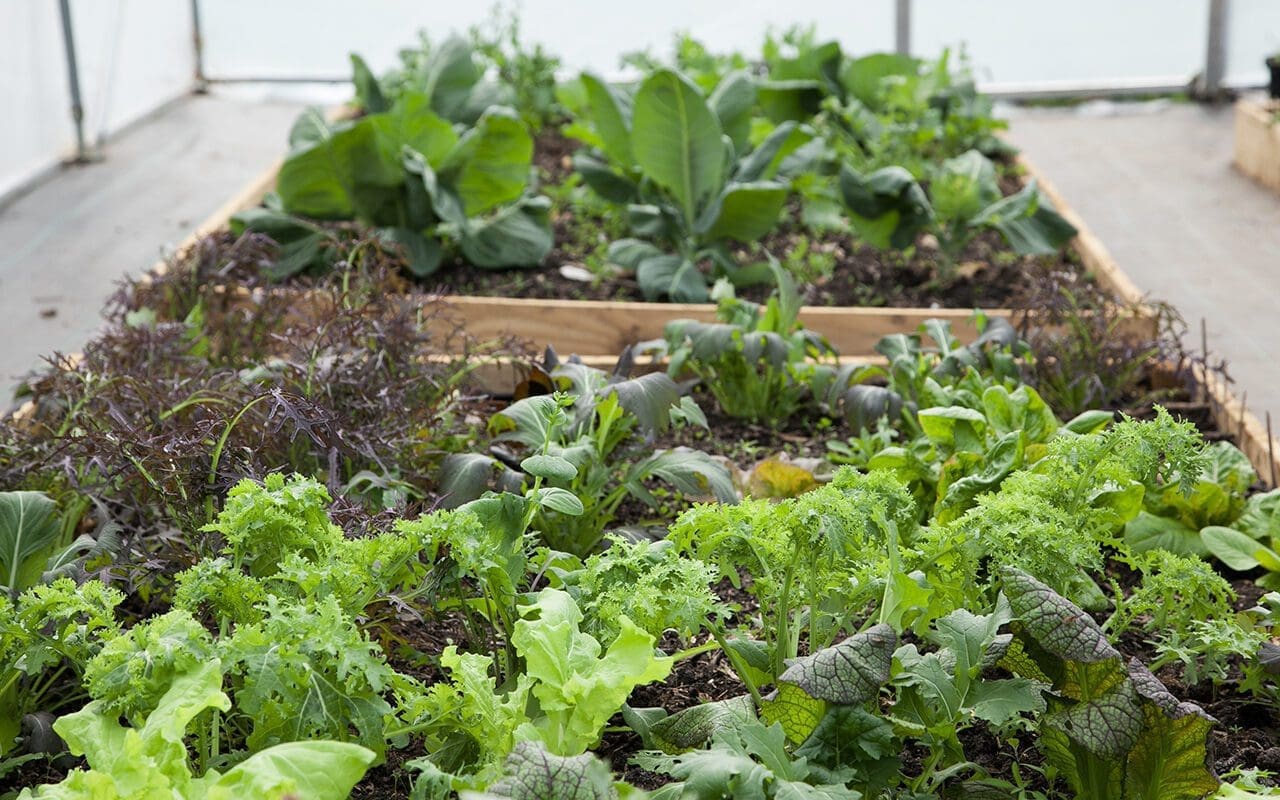
Despite the late start what has become immediately apparent is that, with well-timed sowing and transplanting, the polytunnel will allow us to close the ‘hungry gap’ of late winter and early spring. In addition to salad and oriental greens there has been a seamless handover from the waning kale and turnip greens in the kitchen garden to those that were sown in plugs in late November and have now taken up the baton. With this knowledge I am now planning two late summer sowings of winter greens and salads, turnips and beets for late July and late August to take us through the season. I started my first salad, beetroot and kohl rabi sowings off in the tunnel this year and they have responded well to the warmth and even light, but we are also planning to build a hotbed in the polytunnel this winter so that we can get even further ahead with early sowings and keep our most tender seedlings warm at night.
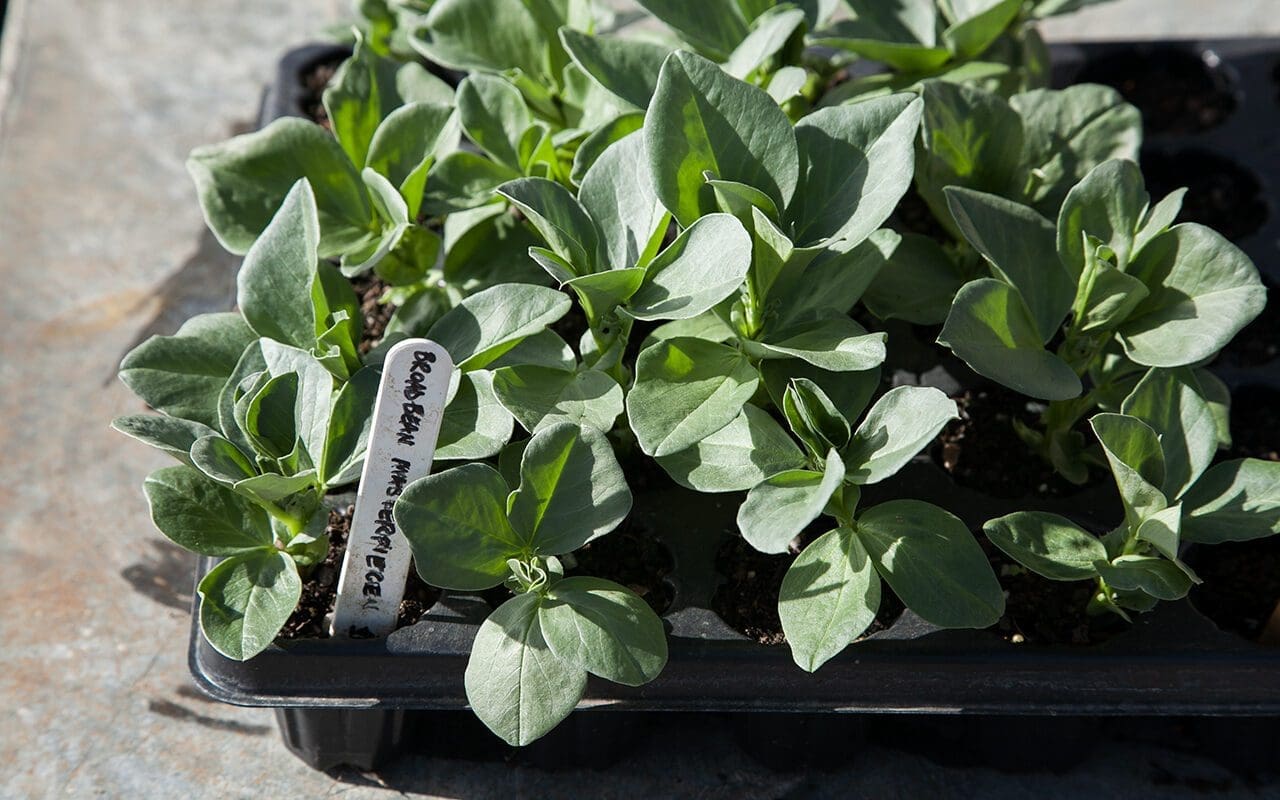
Alongside planning for future winter crops this is now the time to get moving outside. The broad beans that I sowed in modules in early March in the polytunnel have been hardened off for a couple of days this week, ready to be planted outside. And it is potato and onion weekend. The potatoes have been chitting in egg trays in the tool shed for the past three weeks or so and will be going into newly dug ground that we have enclosed around the polytunnel. This will free up more space in the kitchen garden to get a better successional rotation going, as well as allowing us to extend the range of vegetables we can grow, like Jerusalem artichokes which are very space hungry and freezer harvest crops like the ‘Cupidon’ beans of which we can eat any amount.
And I will also be pricking out the tomatoes, which is where this all started. Holding them carefully by their first cotyledons I will extricate their roots from one another, acutely aware of the time, energy and care that has got them this far. I will move slowly and carefully so that none are wasted. I will lower them into the soil of their own pots, give them a drink and then leave them to get on with it until it is their time to take the stage again.
Words & photographs: Huw Morgan
Published 27 March 2021
With the vegetable garden either too frosty or wet to work I finally got round to sorting out my boxes of vegetable seed this week, with a view to being as organised as possible for the coming season. Yesterday was the last day of the fourth annual Seed Week, an initiative started in 2017 by The Gaia Foundation, which is intended to encourage British gardeners and growers to buy seed from local, organic and small scale producers. The aim, to establish seed sovereignty in the UK and Ireland by increasing the number and diversity of locally produced crops, since these are culturally adapted to local growing conditions and so are more resilient than seed produced on an industrial scale available from the larger suppliers. The majority of commercially available seed are also F1 hybrids, which are sterile and so require you to buy new seed year on year as opposed to saving your own open pollinated seed.
I must admit to having always bought our vegetable seed to date, albeit from smaller, independent producers including The Real Seed Company, Tamar Organics and Brown Envelope Seeds. However, last year the pandemic caused a rush on seed from new, locked down gardeners and the smaller suppliers quickly found themselves unable to keep up with demand. If you have tried ordering seed yourself in the past couple of weeks you will have found that, once again, the smaller producers (those mentioned above included) have had to pause sales on their websites due to overwhelming demand. Add to this the new import regulations imposed following Brexit, and we suddenly find ourselves in a position where European-raised onion sets, seed potatoes and seed are either not getting through customs or suppliers have decided it is too much hassle to bother shipping here. This makes it more important than ever to relearn the old ways of seed-saving so that we can become more self-sufficient.
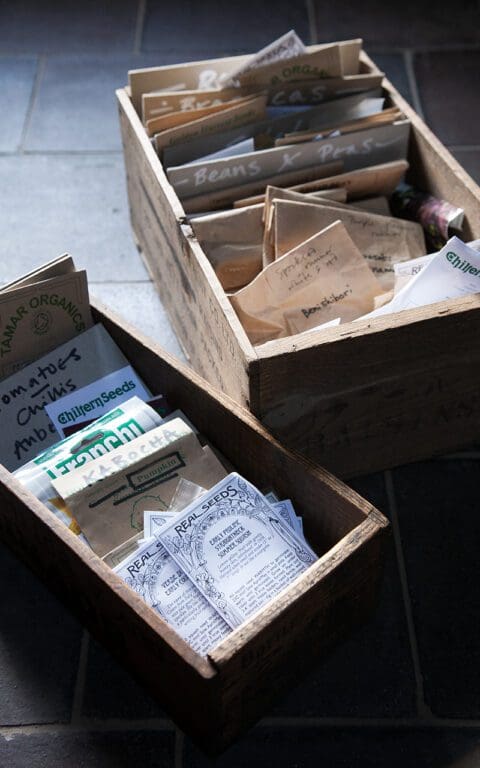
Many of our neighbours found themselves in the same position last March and so we created a local gardeners’ Whatsapp group to let each other know what surplus seeds we had and, once the growing season had started, when we had excess plants to share. We discovered that there were a number of young inexperienced gardeners locally who were keen to try growing their own, and it felt good to be able to give them a head start with our well-grown plants which might otherwise have ended up on the compost heap. As the season progressed messages pinged back and forth across the valley and when we were out walking we would spot little trays of seedlings and plug plants left by gates wrapped in damp newspaper, waiting to be collected to go into somebody’s vegetable patch. The cabbages, kales, tomatoes and beans we couldn’t gift to neighbours were left by our front gate with a ‘Please Help Yourself’ sign, and would be gone by evening. There was something very connective about this, despite the distance we all had to keep and the clandestine nature of the exchanges. A way of binding our little community together at a time when we were all reeling from the isolation of our first lockdown.
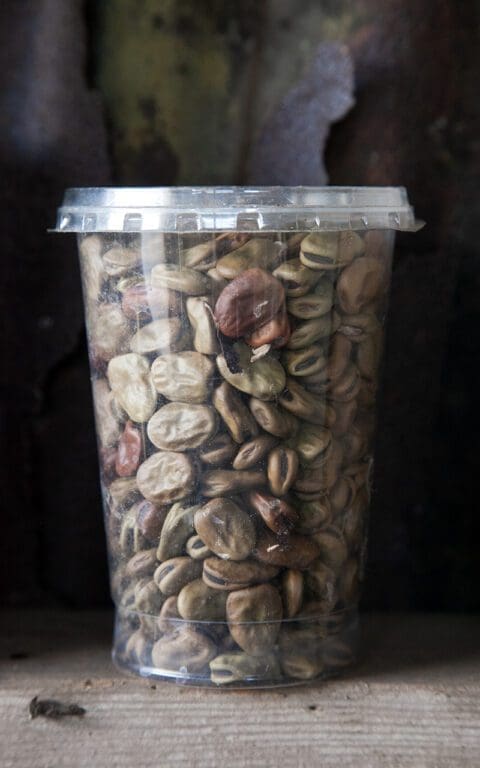
For the first time last summer, and with an eye on the likelihood of continuing supply problems, I started to collect seed from our own crops. As a novice I began primarily with the herbs, which don’t cross pollinate, and so now have my own seed of parsley, coriander, dill and chervil for this year’s sowings. There is also a pot of mixed broad bean seeds saved from the oldest pods before they were thrown on the compost heap, and which I will be sowing in a few weeks. Although they may have cross pollinated, since we always grow a couple of varieties, this is not necessarily a problem if you are just growing for yourself, although any plants that don’t come up looking strong and healthy should be discarded. I am planning on getting seed of our own beetroot this year (which is a little more involved as they will cross pollinate with other varieties and chard, so the flowering stalks must be isolated) and lettuces, which tend not to cross and so are easier to manage.
Last spring we had a very dark-leaved lettuce come up in the main garden from seed that had made its way from the compost heap. This looked to be ‘Really Red Deer Tongue’, which we had grown the previous year. Dan thought the foliage was such a good colour with the Salvia patens that it was allowed to flower, and we are now waiting to see if a rash of dark seedlings appears when the weather warms. Some will be kept in place and others transplanted to the kitchen garden when big enough. I am also keen to try keeping our own pumpkin seed this year, which will involve isolating individual flowers and hand pollinating them before sealing them with string to prevent insect pollination.
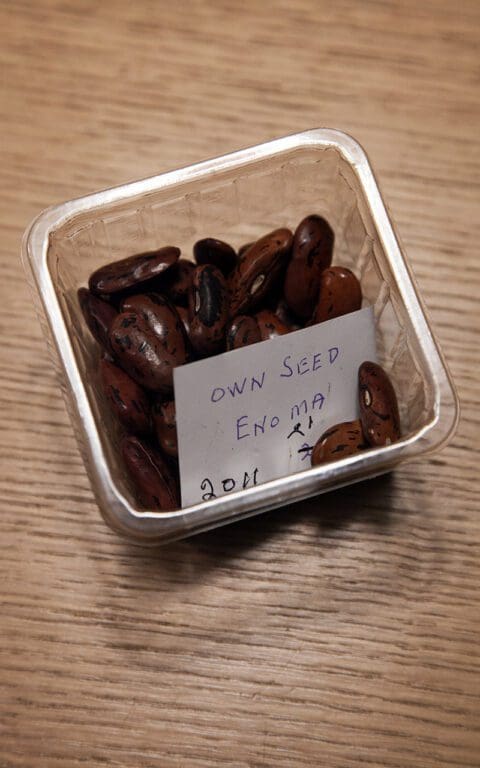
When sorting through my seed boxes a few weeks ago I turned up a small container of seed of the runner bean ‘Enorma’ collected by my great aunt Megan in 2011. Megan had been a Land Girl during the Second World War and was the most impressive kitchen gardener I have ever known. The long and steep, upwardly-sloping garden behind her house in Swansea was entirely given over to vegetables and fruit. She was completely self-sufficient in what she needed. Whenever you paid her a visit the house would be deserted and she would be in the garden come rain or shine, unless, of course, it was Sunday.
The last time I saw her at home – just a year before she became too frail, at the age of 96, to remain there – I walked up the three sets of precipitous, narrow brick steps to the garden to find her. I couldn’t see her anywhere so, in a momentary panic and picturing a senior accident, called out her name. There was a sudden movement at the periphery of my vision and Megan stood bolt upright, having been doubled over the trench she had just dug and into which she was carefully placing cabbage plants. “Just a sec!’ she shouted in her mercurial, high-pitched voice that was always on the brink of a giggle, and finished planting the row. She walked towards me, brushing the soil off her hands onto the brown checked housecoat she wore to garden in. “Well.’ she said. ‘What a lovely surprise! Do you want some tomatoes?’ Although she couldn’t stand to eat them, Megan had a greenhouse full of them, because she thought they looked so beautiful and she enjoyed giving them away to neighbours and friends. Needless to say she was green-fingered and I think a big part of the pleasure for her was knowing that she could grow them so well. She picked me a brown paper bag full and, as we left the greenhouse, I complemented her on her towering runner beans. ‘Oh, you can have some seed of those. ‘Enoma’,’ she said, missing out the ‘r’ and went to rummage in the shed for a moment.
This year, almost eight years after Megan died at the age of 98, I intend to plant her home-collected seed. A way of connecting me to the Welsh family that has gradually dwindled over the years and, perhaps, some of Megan’s skill and stamina will rub off on me along the way. Saving and sharing creates these connections between family, friends and strangers. It feels like nothing is quite as important as that right now.

The Real Seed Company give very clear advice on seed saving in two booklets available to download for free from their website here.
Words & photographs: Huw Morgan
Published 23 January 2021
One of the benefits of working from home in Somerset this year is the time we have gained to harvest. Previously, there has always been a disheartening moment in late summer when it becomes apparent that there simply aren’t enough hours to get everything in the kitchen garden gathered, processed and stored away for winter. In the past, to dispel the phantom of wastage, we have managed this in a number of ways. Firstly, by inviting friends down for harvesting and preserving weekends – which has clearly not been possible this year – giving away the surplus to neighbours or leaving it out for passers-by or, finally, satisfying ourselves with the knowledge that what we can’t eat will be gladly seized upon by birds, rodents, insects and gastropods.
Though we blanched and froze enough French beans, broad beans and cauliflower to provide for us through the winter, it quickly became apparent that our harvest of soft and stone fruit would soon fill both freezers. Knowing that when everything else started to come on stream the question of what to do with it all would present itself, I prepared myself by reading Piers Warren’s How to Store Your Garden Produce and its American equivalent, Keeping the Harvest by Nancy Chioffi and Gretchen Mead. Both books give detailed instructions on how to freeze, salt, dry, bottle, ferment, pickle and preserve any fruit or vegetable you care to name.
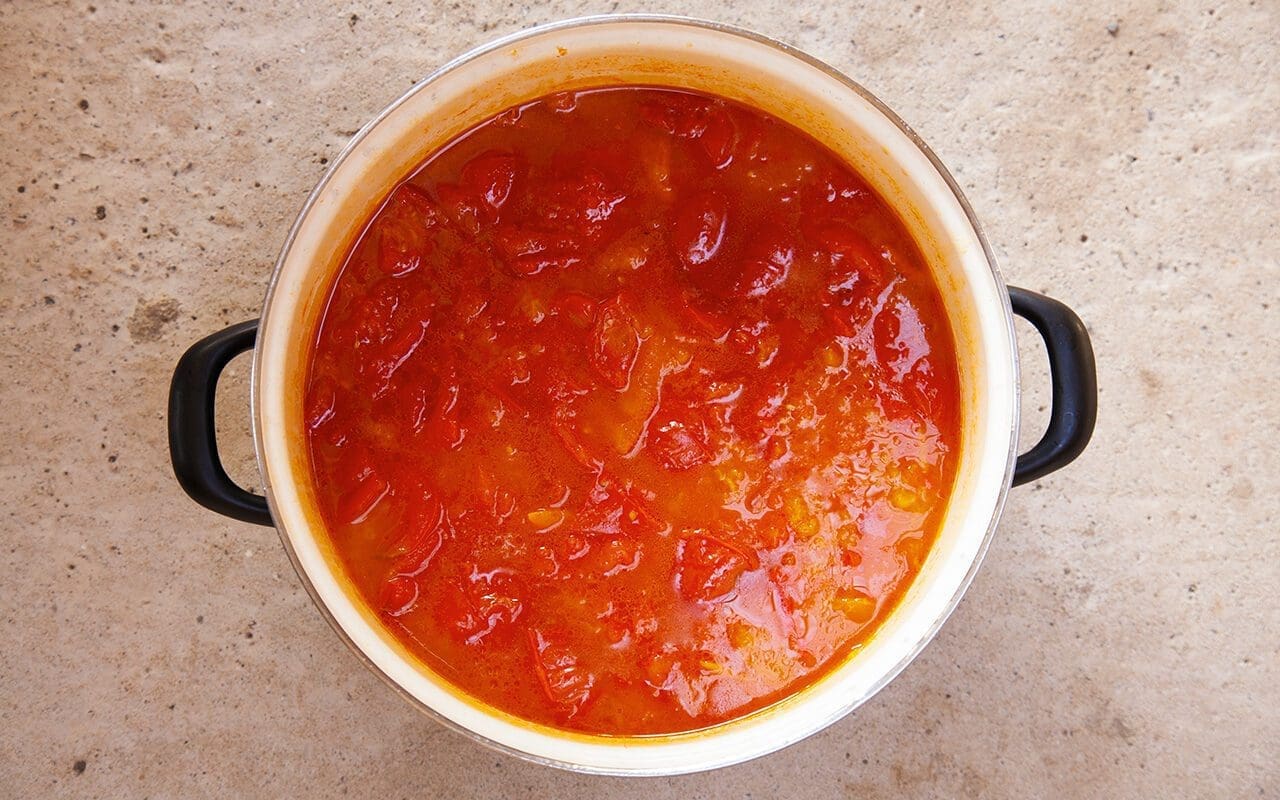
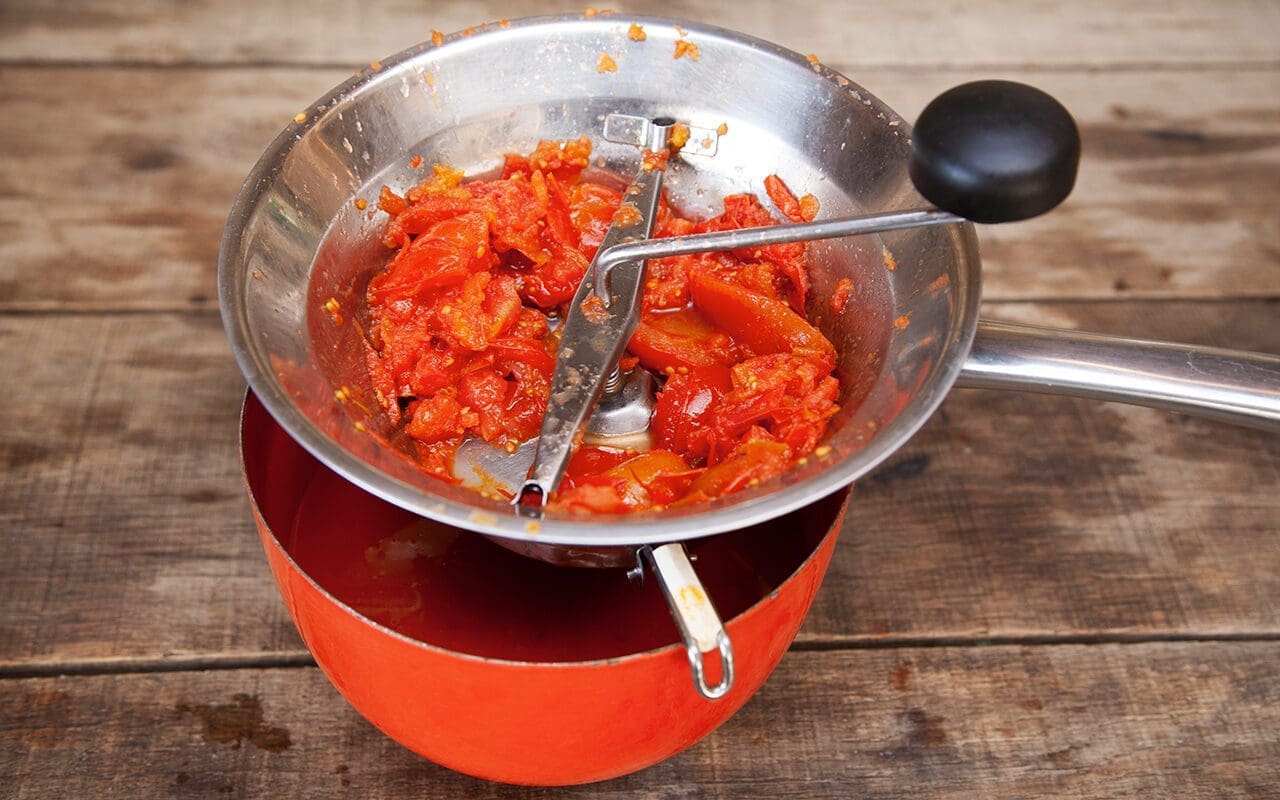
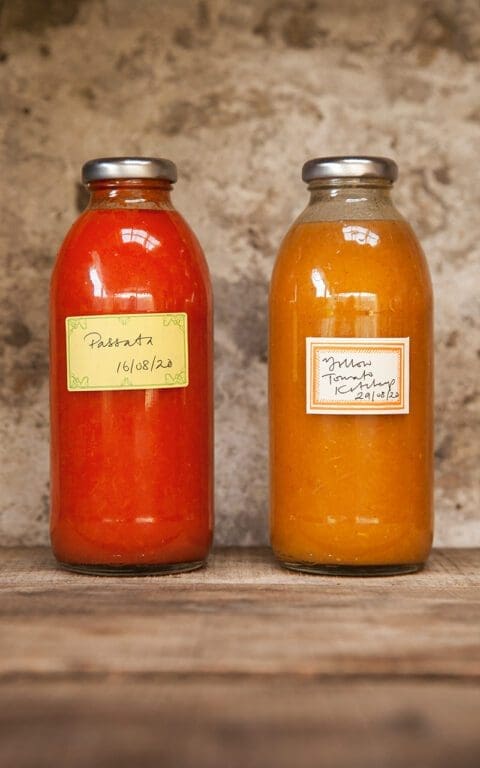
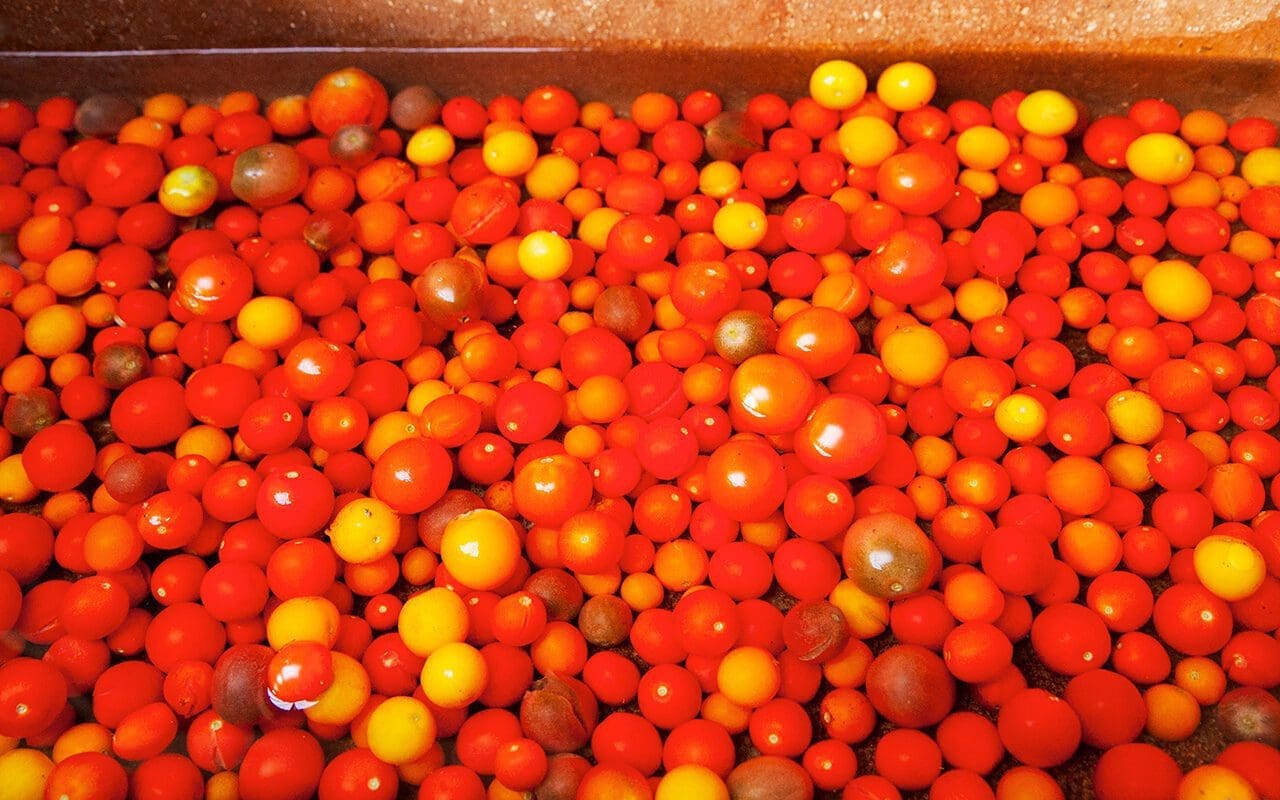
My primary concern was for the tomatoes, of which we had a lot and of which I was determined to ensure not a single one was wasted. The idea of having our own supply of tinned tomatoes and passata – some of the few things I still buy from a grocer or supermarket – led to a frenzy of bottling in August, and the pantry shelves soon groaned with jars of whole and chopped plum tomatoes and bottles of passata. In Italy what I produced would strictly be called tomato sauce, as I learned that true passata is actually raw, with whole tomatoes being put through a passa pomodoro (tomato mill) that separates the skin and seeds from the pulp. The raw pulp is then put into sterilised bottles, the only cooking being from the time spent in the sterilising water bath required to preserve them.
I cooked the tomatoes and simmered them until there was no excess water content before passing through a mouli-légumes and then bottling with a dash of salt and citric acid to aid preservation. A late summer glut of cherry tomatoes resulted in a further 5 kilos of bottled, whole tomatoes, as well as several litres of yellow tomato ketchup, made using an adapted recipe from Kylee Newton’s The Modern Preserver.
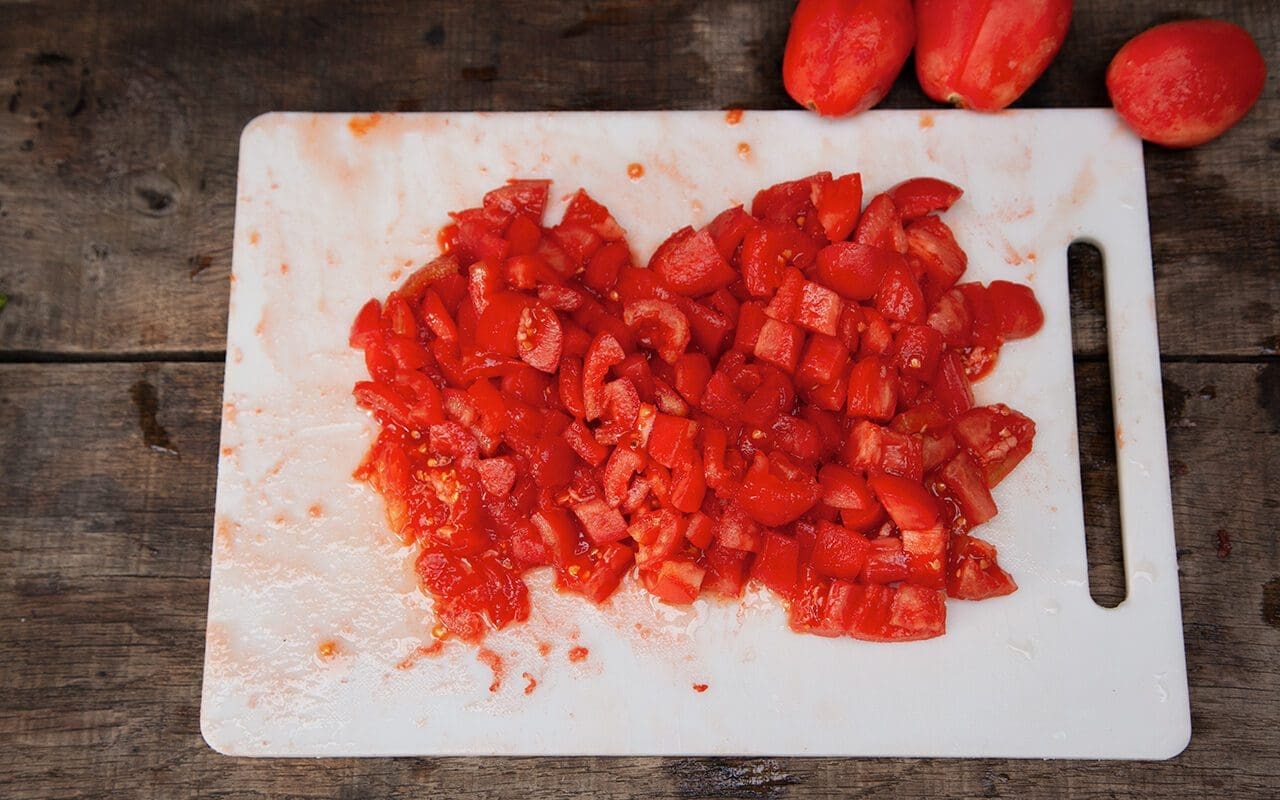
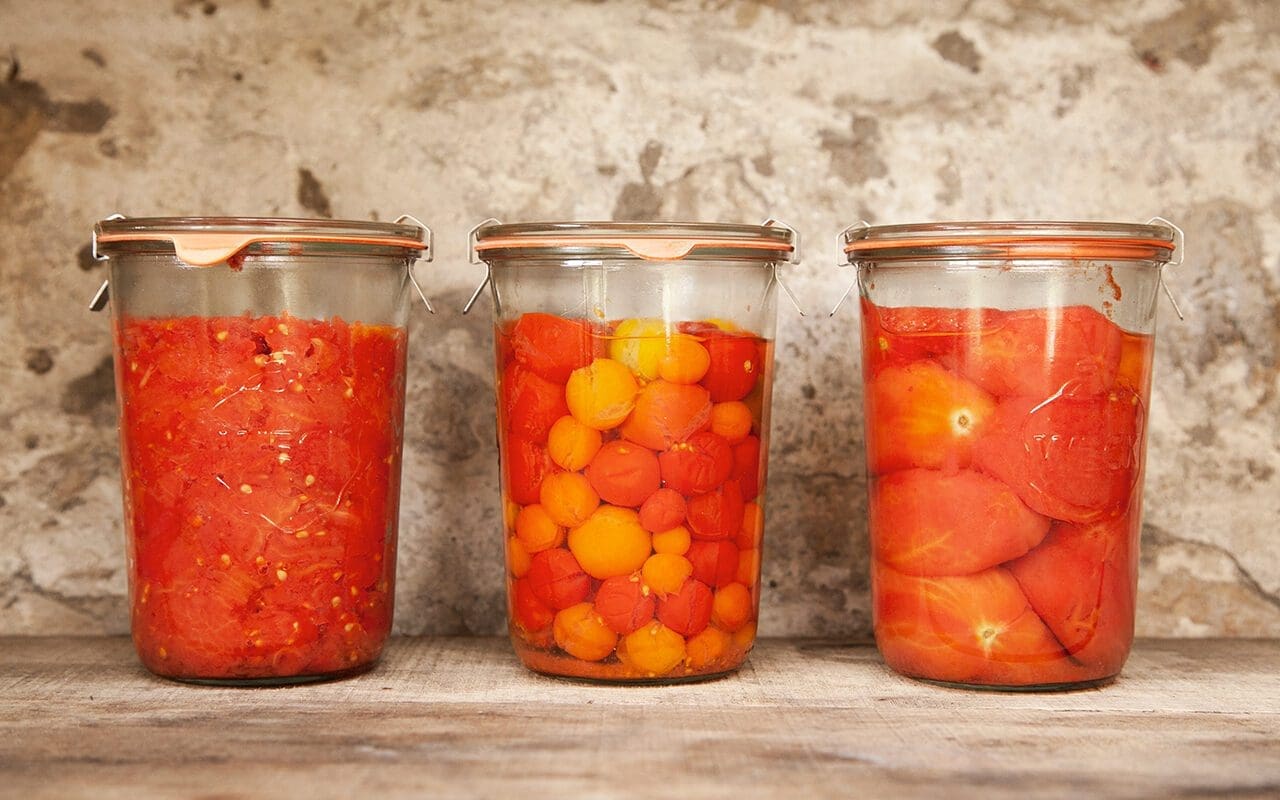
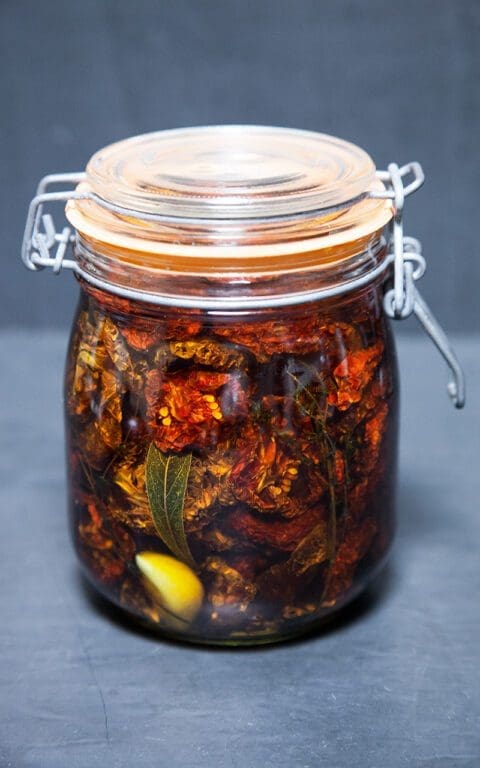
In anticipation of this year’s bumper harvests, in May I had decided to invest in a dehydrator. When I could see that space in the pantry was soon going to run short it came into its own. For several weeks in late August and September it saw an almost permanent relay of pears, plums, blackcurrants and raspberries, but mostly many kilos of tomatoes. The benefit of drying, of course, is that the resulting produce takes up less space. It is also much lighter to store and concentrates the flavour, so a little goes much further when you come to cook with them. Most of the dried tomatoes are stored in an airtight bucket with a lid, but I have also preserved some under oil with bay, thyme and garlic cloves, to eat as savoury snacks or used to enrich other dishes.
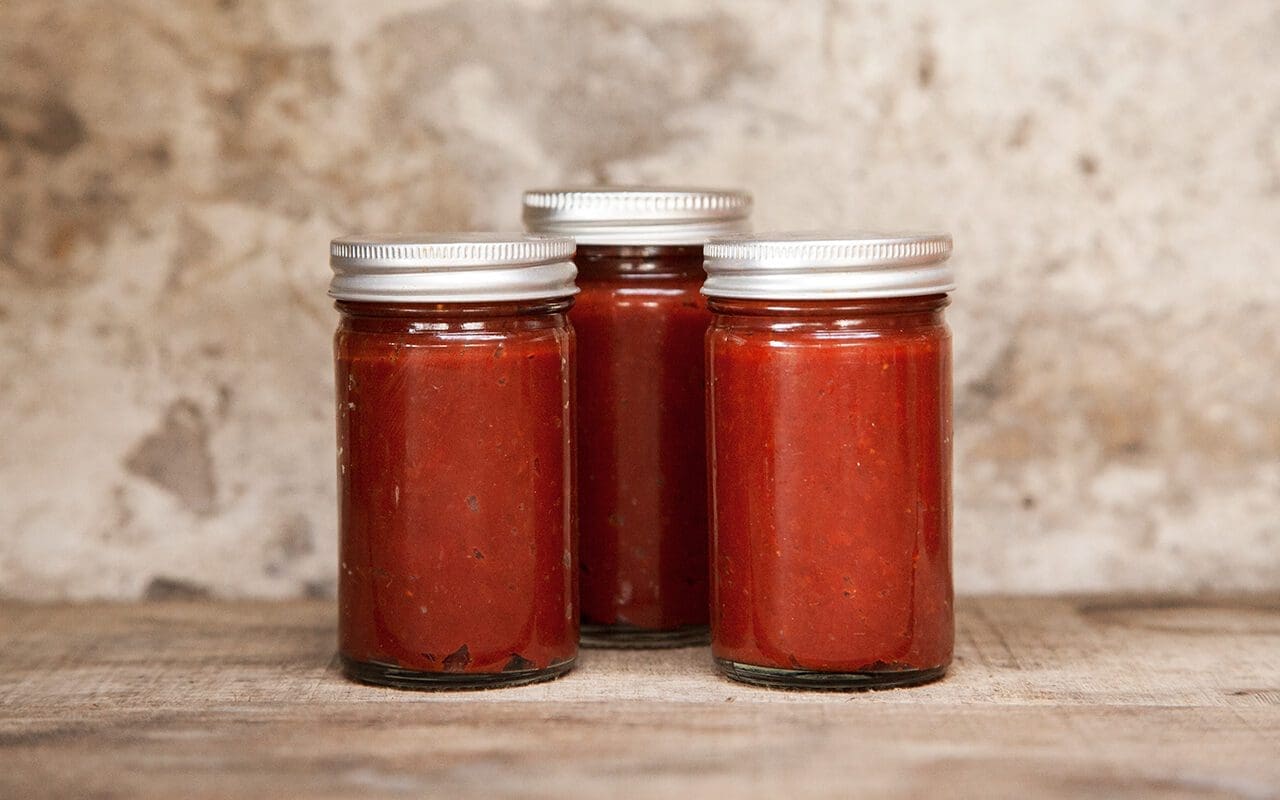
The last of the tomato preserves came about more from necessity than design. I was completely out of shelf space in the pantry and yet there were still kilos coming up from the polytunnel. So, having gone through the same initial process as for the ‘passata’, the resulting sauce was reduced over a low heat until thick enough to spread out on greaseproof paper and put into the dehydrator. By the end of the next day I had enough small jars of tomato concentrate to see me through a winter of casseroles, soups and sauces.
It was just last weekend that we harvested the very last of the tomatoes from which we made about 5 litres of tomato soup. Given heat by the addition of some chilis also grown under cover this year, it warmed us through a whole week of sunny but chilly outdoor lunches. The thing that really makes me glow, though, is the prospect of opening a jar of my own plum tomatoes in January or February and bringing a memory of summer’s richness to the depth of winter.
Words & photographs: Huw Morgan
Published 14 November 2020
As I mentioned recently, one of our greatest challenges in the garden this year has been the new polytunnel. Having long discussed getting one, the prospect of being locked down in Somerset for the best part of the growing season meant that we were finally able to commit to the daily tending and watering requirements that weekending here meant we could never manage. Although the idea of this additional responsibility caused Dan’s mum, who was staying with us, some sleepless nights, the reality has been, in most ways, much easier than anticipated.
Our motivation for getting one was primarily to realise the unfulfilled desire to be more self-sufficient. We grow almost all of our own hardy fruit and vegetables, resorting to the greengrocers only for those things either grown under glass or imported. Although the novelty of being able to grow a whole range of tender fruit and vegetables was exciting, at the time we decided to go ahead there was a lockdown run on vegetable seeds, which meant that we weren’t able to source the everything we wanted to try. So we settled for what effectively became a trial of tomatoes. Having only grown very reliable outdoor varieties of tomato here previously, there has been much to learn and Dig Delve provides us with a means to record that learning for our future reference, as much as to share it with you.
Our first lesson was to discover that late March was very late to be sowing tomatoes under cover. We started the pots of seeds off on the airing rack above the range in the kitchen, where they were quick to germinate, before being moved to the cold frames.We were then lucky to have such good, warm weather in April, that the seedlings grew away strongly. However, because steel supplies were being diverted to make emergency hospital beds, every week the delivery date for the polytunnel would get pushed back by another fortnight. Very quickly the plants went from being just perfect to plant out to needing to be slowed down by moving them out of the frames.
Eventually, the polytunnel went up over a couple of days at the end of May and the tomatoes immediately went straight into grow bags. Having realised that there was not time to prepare and cultivate the section of pasture where the polytunnel was to be sited, we settled for organic grow bags and put down a membrane to suppress grass and weed growth. Next month we will take up the membrane and install a board edging to make two, low raised beds for cultivation over the winter and for the future. We have seen the effects of the late sowing and delayed planting out all through the growing season, with some varieties being slow to get going, and some just not cropping as heavily as we feel they ought to have done.
The next challenge, and one related directly to growing the plants in bags, was getting the watering regime right. When the plants are small their uptake of water is less predictable than when they are more mature and daily watering (twice daily in hot weather) is needed. This difficulty in judging when and how much to water in the early stages led to a combination of both under and over watering, which stressed the plants when they were around 90cm tall and just as they were starting to set their second trusses, which almost all aborted. None of them suffered from blossom end rot, though, which is also caused by erratic watering and so, with the benefit of hindsight, it became clear that things had also been exacerbated by the fact that I didn’t start with the potassium seaweed feed nearly soon enough. I now know that feeding should start as soon as the first truss has set and continue weekly through the whole growing season. The lateness in feeding also affected the ripening of some varieties, most notably the larger plum and beef tomatoes, which developed ‘greenback’, where the shoulders of the fruit fail to ripen, which is also caused by a lack of potash. Not all tomatoes are prone to this, however.
Although we had a heavy harvest of the first trusses in late July and early August, this meant that there was a significant gap in production during August, aggravated by the cold and cloudy weather that typified that month. It has only been since temperatures started to rise in early September that the ripening has started again. With some continued sun and the doors to the polytunnel kept closed night and day now, I am pretty confident that we will still have a good amount of ripe tomatoes to freeze and preserve for the winter.
Apart from those hurdles, the general maintenance of the plants has been very straightforward. The only puzzle was how to manage the plum tomato ‘Roma’, which I treated like all the other varieties, which indeterminate type. These are the cordon varieties that keep growing upwards and require pinching out and tying onto a support. Noting that it wasn’t responding as the others I did some Googling and discovered that it is a determinate or bush-forming variety, which should be allowed to grow freely. This may be what has been responsible for the very light crops with this variety.
We have had no pests to speak of and, when it did look as though there may be a risk of aphid proliferation, I quickly saw a polytunnel ecosystem establish itself with the arrival of ladybirds and hoverflies and, when the slugs arrived, I soon found that I was disturbing a frog and a toad while watering, as they sheltered in the damp protection of the grow bags.
Apart from the watering and feeding, all that has been required is a weekly session pinching out side shoots, tying the vines onto their canes, removing any yellowing foliage and giving the floor a sweep. In fact the thing that has taken the most time has been the harvesting, preparing and preserving of the fruits when the gluts, few as they have been so far, have come. As the autumn weather starts to turn from Indian summer heat to chill, I forsee only one more busy weekend of peeling, chopping and bottling ahead of me. That has been another learning experience which I will write more about another time.
Due to the seed shortage the varieties we were able to get hold of in March were limited to the most widely grown and popular, some of which, like ‘Gardener’s Delight’ I remember my grandfather growing, and which, with ‘Sungold’, Dan and I have been growing since our days in Peckham. They are popular because they are easy, hardy and productive, and also delicious. Others, such as the beef tomato, ‘Marmande’, Dan has grown for clients, while others were new to us and were chosen to have a range of colours and sizes to choose from. On our list for next year are ‘Costoluto Fiorentino’, ‘Purple Ukraine’ and hardy Russian variety ‘Moskvich’.
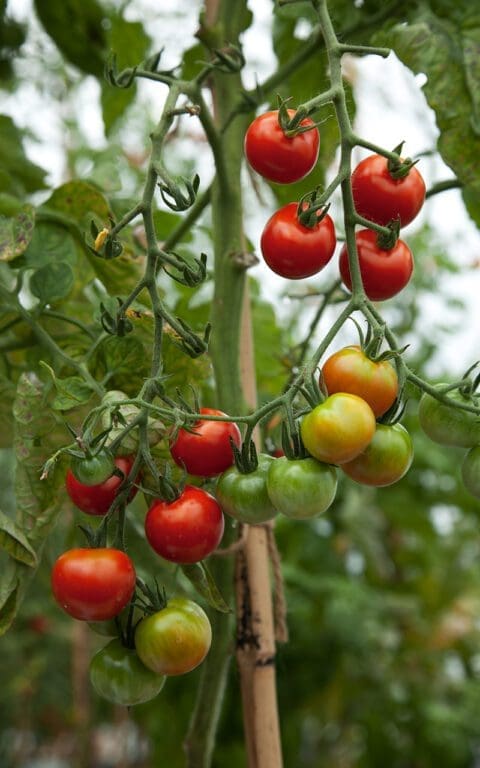
Gardener’s Delight
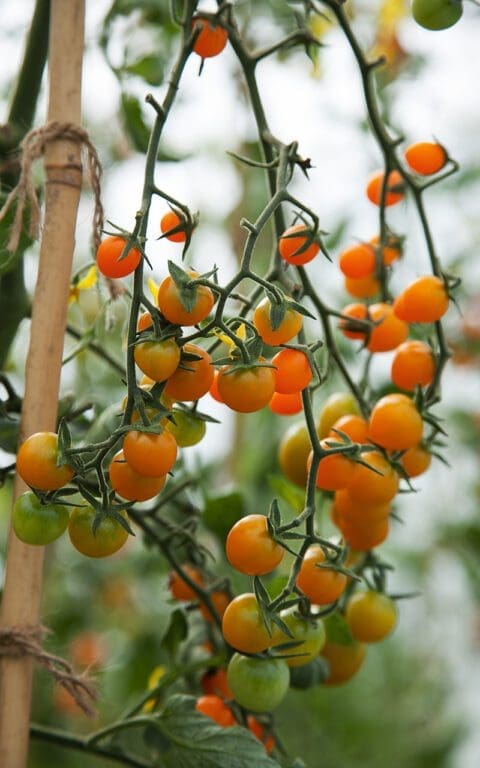
Sungold
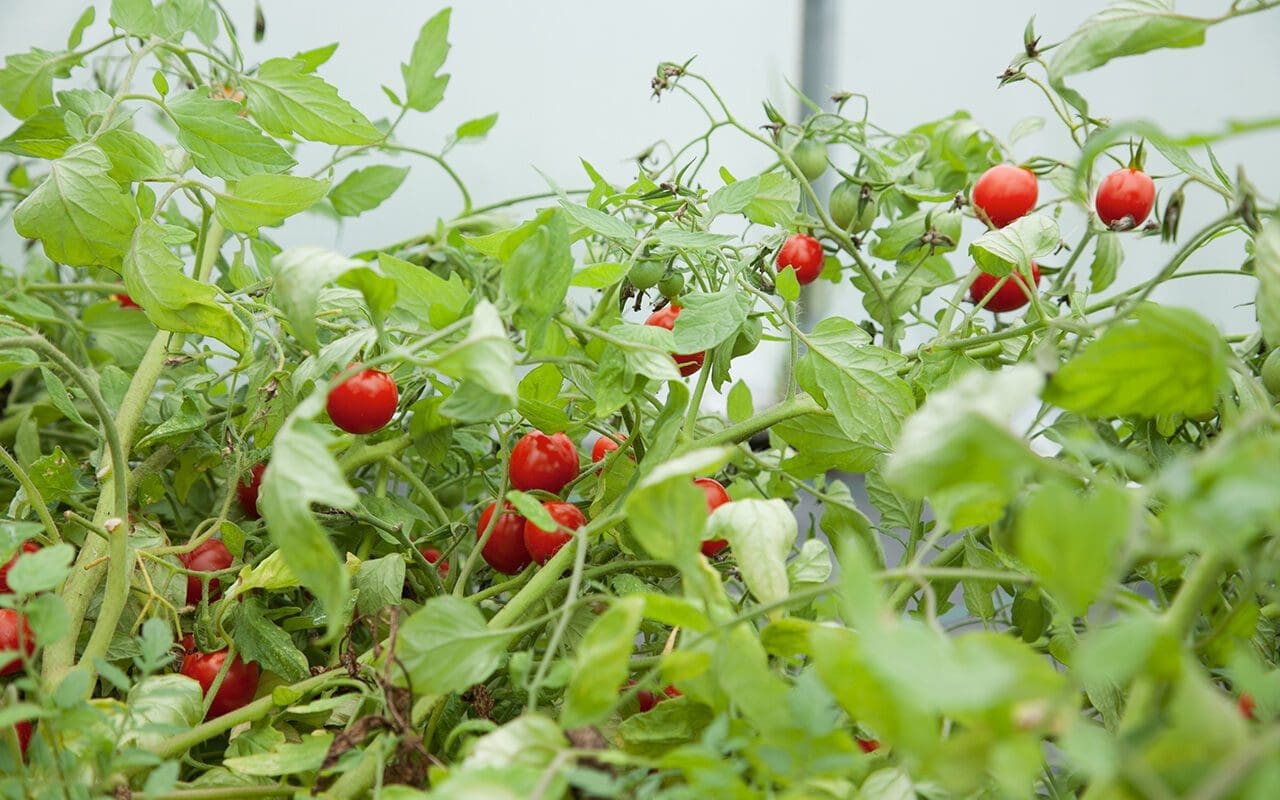
Tumbling Tom Red
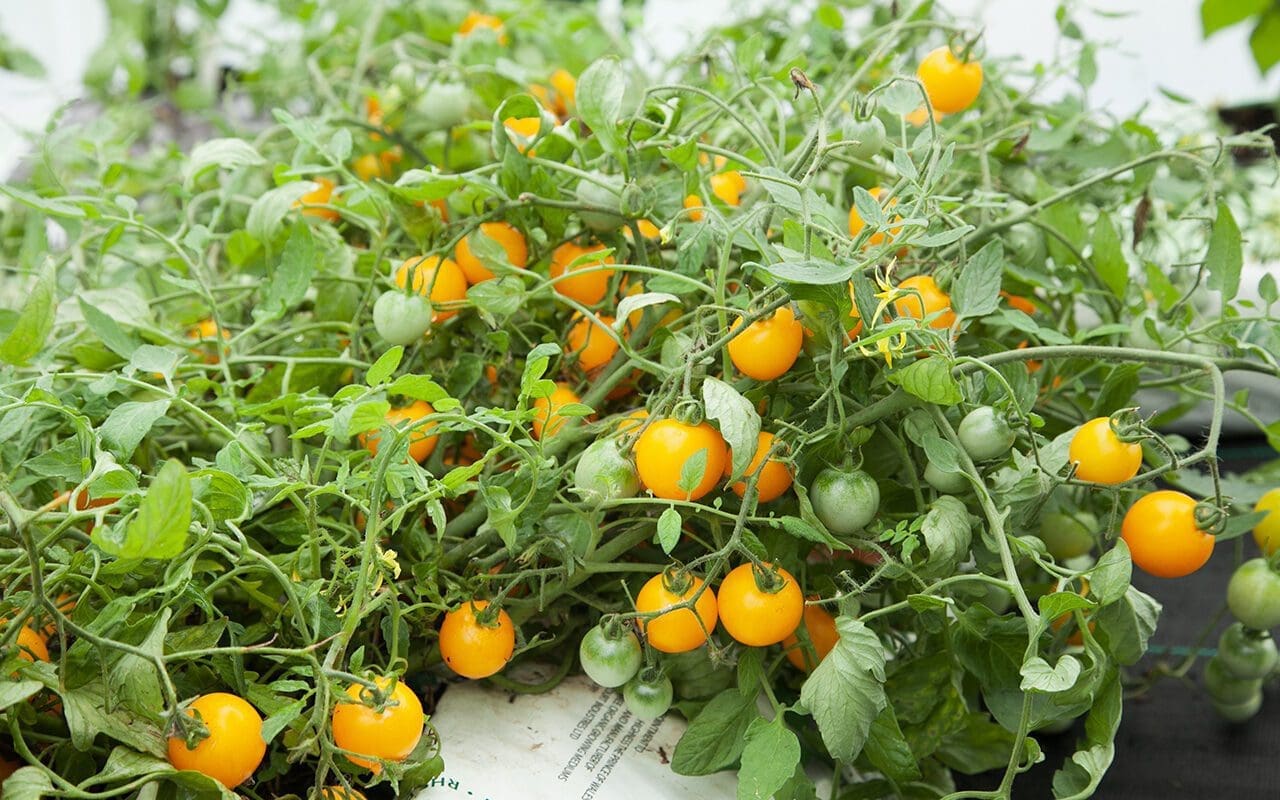
Tumbling Tom Yellow
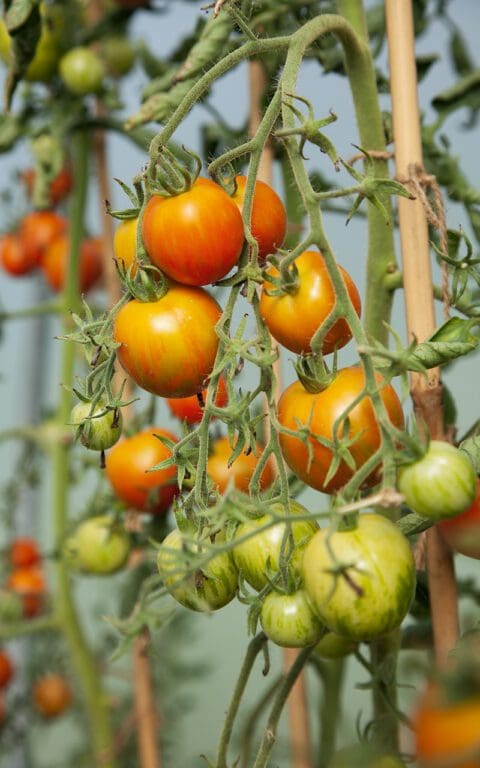
Tigerella
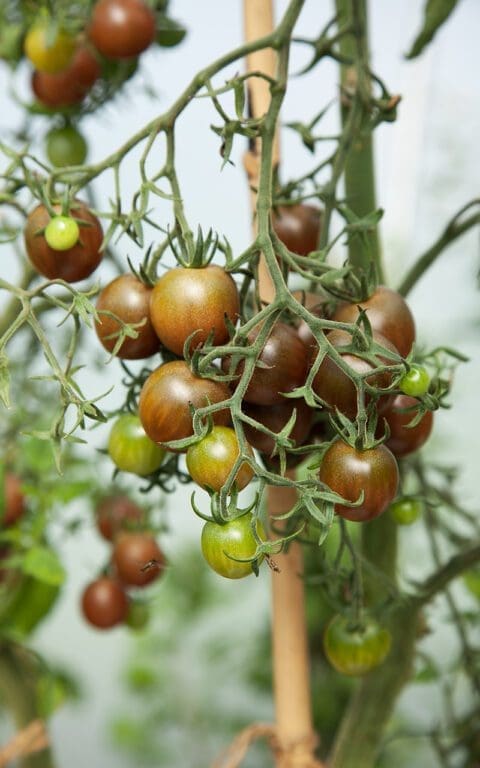
Black Opal
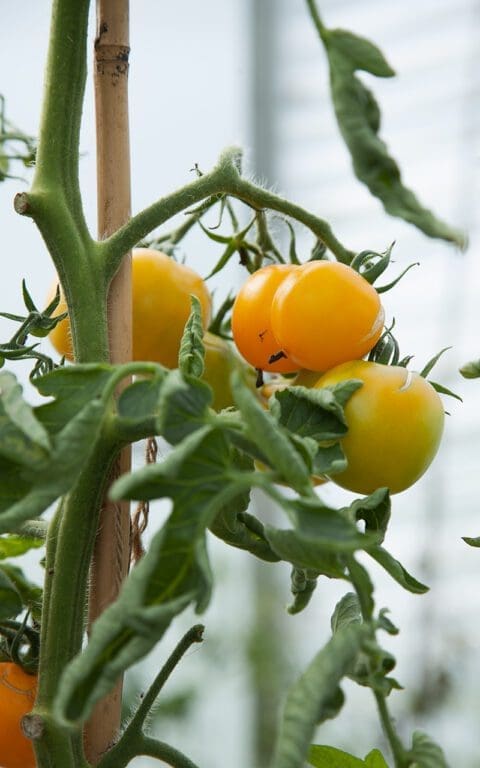
Golden Sunrise
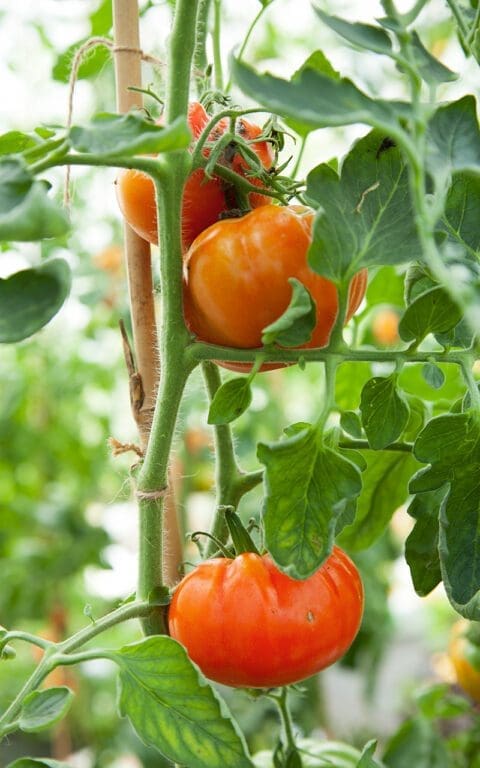
Marmande
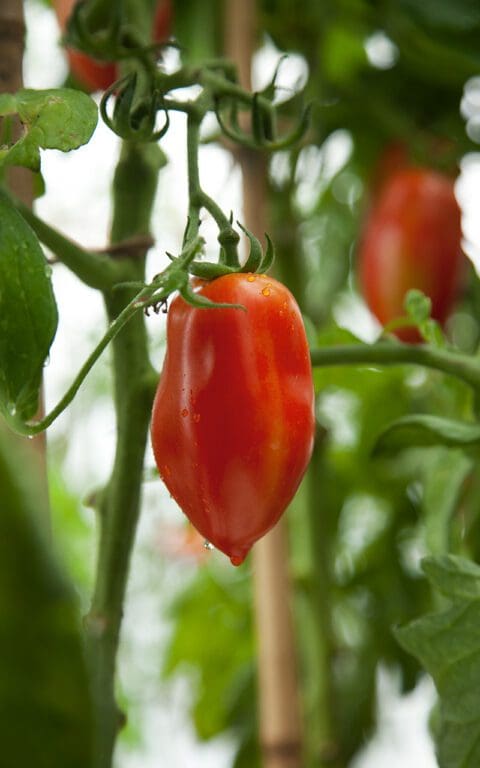
San Marzano
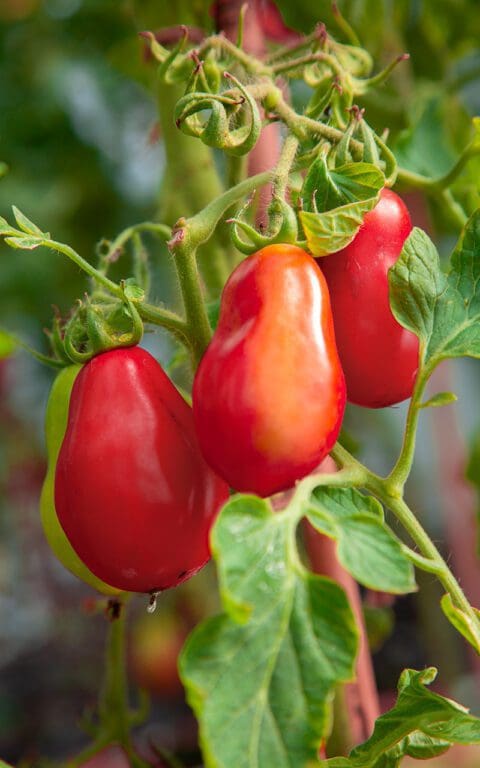
Roma
Words and photographs: Huw Morgan
Published 26 September 2020
We always grow too many pumpkins. Such has been the luxury of having the space to do so. They have found themselves in a different position every year to give them the opportunity to reach. In the first summer they were in the virgin ground where we had turned field over to garden and the flush of weeds that had been disturbed by the change were kept in check by their coverage. The next year they were out in front of the house, each plant perched on a barrowload of muck on the banks. But it was too exposed there, we had a wet summer and learned their limits, for they made not much more than leaf. The disappointment of not having them in storage lasted the whole winter. Consequently, as the best way to learn is by your mistakes, I have taken their needs more seriously.
Six summers’ worth of trial, error and experimentation have taught us the good producers, the best keepers and those that under-produce in relation to their enormous appetite for space. A Californian friend and gardener, who grows the giant pumpkins you only find in the country where everything is bigger, was amazed that I was giving my plants so little room to grow. His pumpkin patch is the size of my whole garden, so he was not surprised that I hadn’t done better in terms of size and yield. A big plant with a rangy nature can easily take over a plot of nine or more square metres to provide the optimum ratio of leaf to fruit and, now that I have started planting up the garden, space for pumpkins is becoming more limited. So next year’s selection is due an edit. The giants will be separated from those that are happy with less space and the neater, more economical growers will have a bed to themselves in the kitchen garden with plenty of muck and sunshine. The big growers will be given the top of this year’s compost heap so that they can enjoy a romp and tumble over the edges unencumbered.
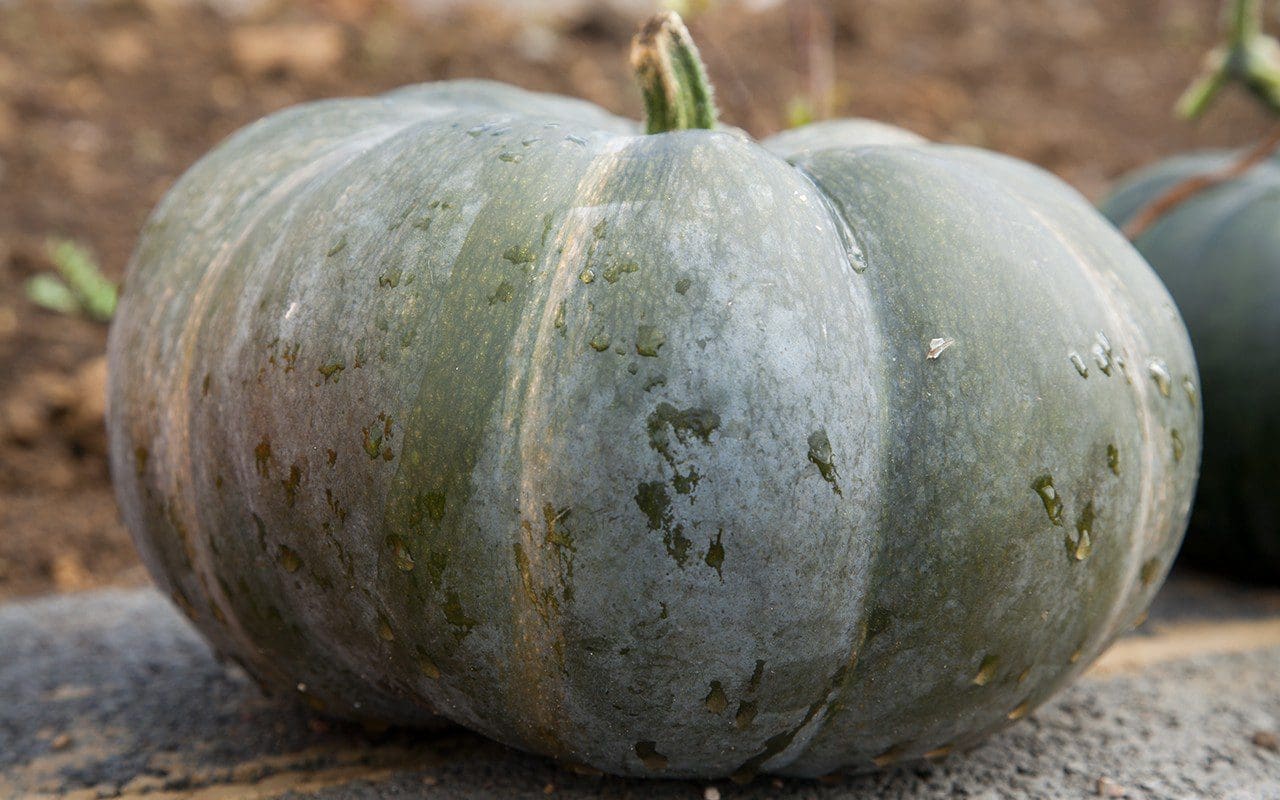 ‘Musquée de Provence’
Of the big growers that produce more leaf than fruit, we will not be growing ‘Musquée de Provence’ again, after three years of trying. The deep-green, lobed fruit, though handsome, are supposed to ripen to a rich tan colour, but even on our south-facing slopes we just don’t have enough sun to do so. Consequently, the skin doesn’t cure fully and they have been poor keepers. Our average of one fruit per plant is also not worth the investment of space. Although a single pumpkin can easily feed twelve, there are only so many times you require a pumpkin that large.
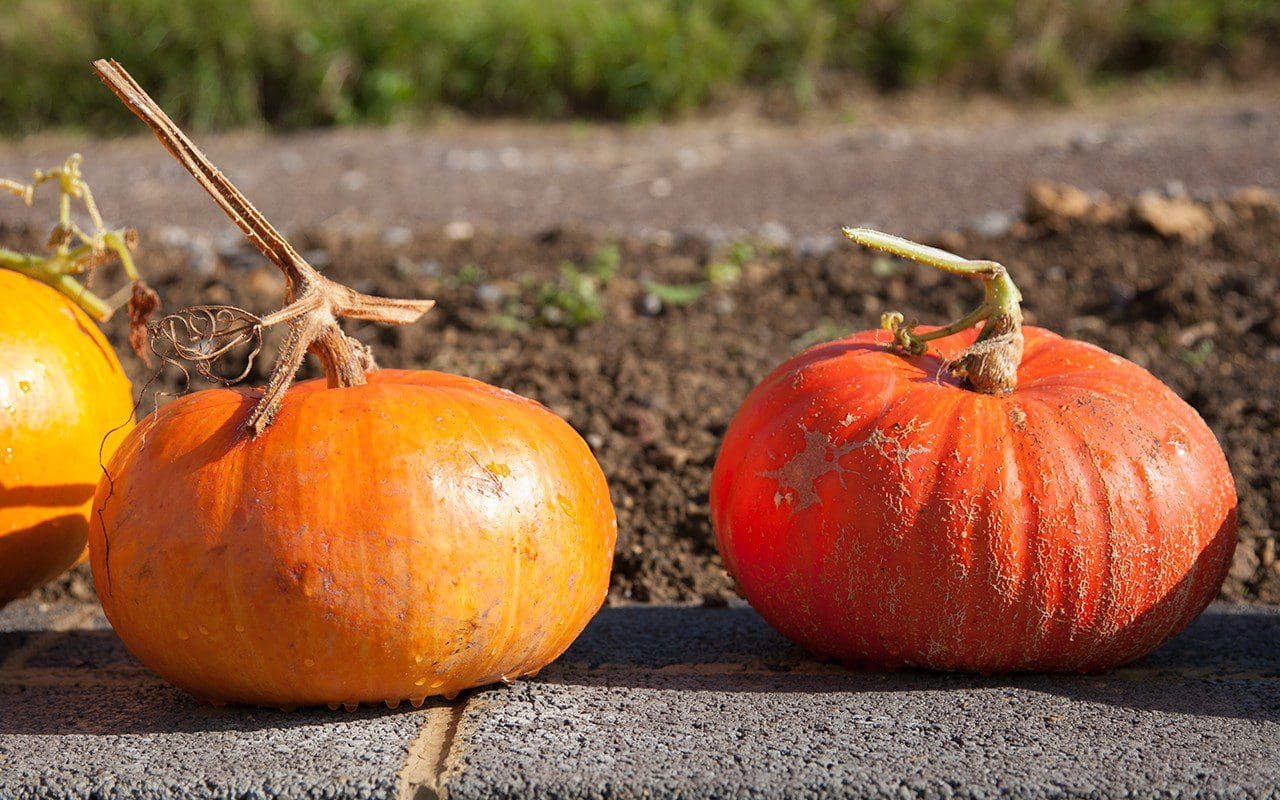 ‘Rouge Vif d’Étampes’
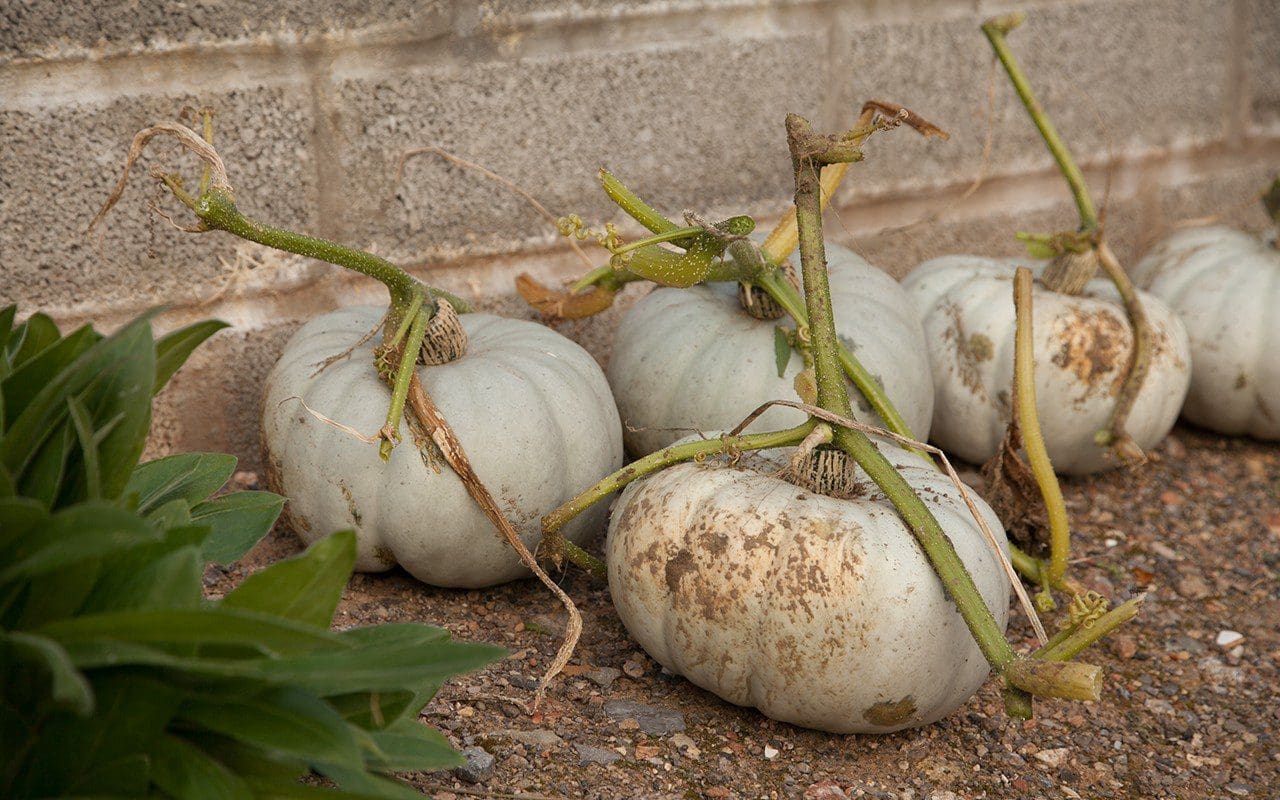 ‘Crown Prince’
We have had a similar experience this year with ‘Rouge Vif d’Étampes’, another French variety with large fruits of a strong red-orange. It also appears to need more heat to crop heavily and ripen fully. These two have been the first to be eaten, as we try and keep pace with the rot. All pumpkins and squash like heat and good living and our cool, damp climate sorts out those that are clearly missing the Americas. In contrast, ‘Crown Prince’ has been more adaptable here and one of the best croppers for a plant that needs space. It is also an excellent keeper. The saffron flesh is firm and sweet while the thick, grey-green skin means that they can keep into March in a cool, frost-free shed.
The varieties with dry, firm flesh are better for storing than the wetter ones, which I presume is due to their higher sugar content. We also prefer them for eating. Of the smaller growing varieties we have found the Japanese pumpkins to be the most consistent, with the highest yield for their economical growth and the most delicious flesh. They produce fruit of a moderate size, which is far more convenient to eat than opening up a Cinderella-sized pumpkin that feeds a horde and then sits on the side, the remainder unused, making you feel guilty.
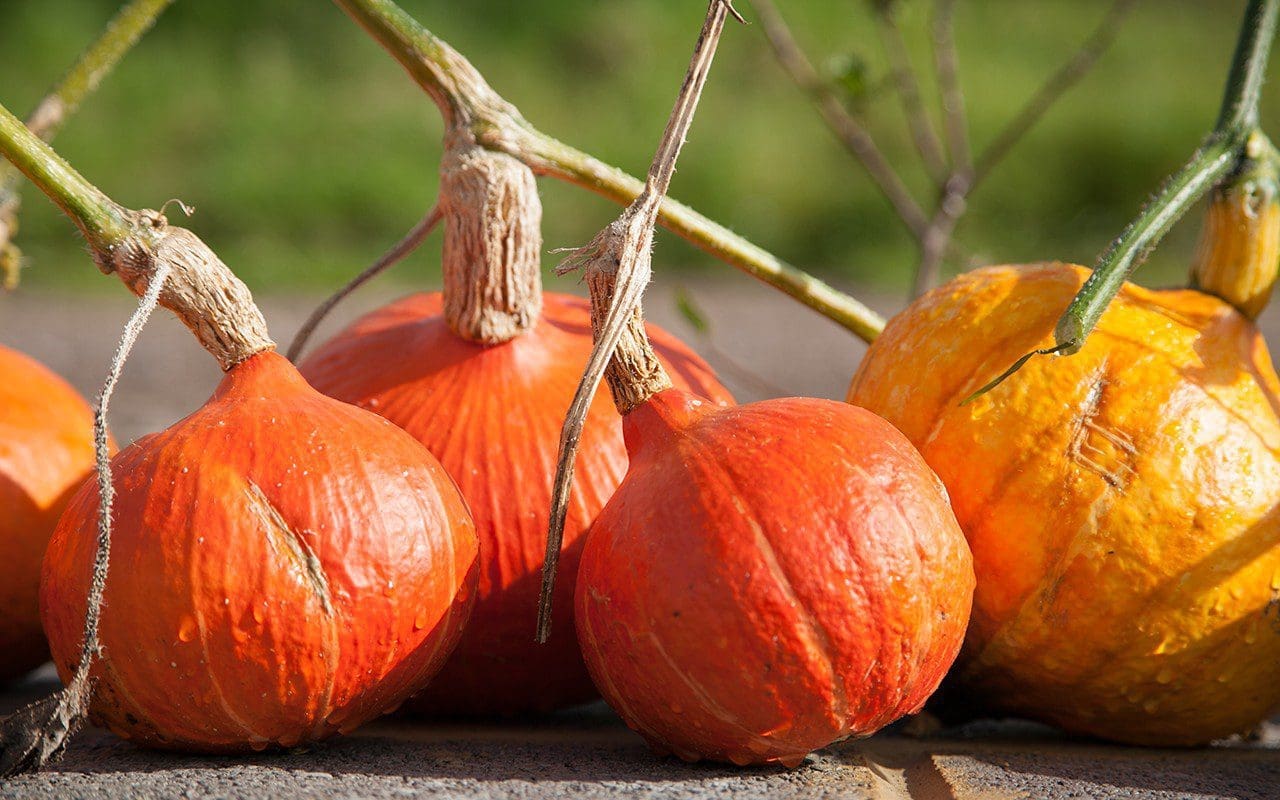 ‘Uchiki Kuri’
Of the Japanese varieties ‘Uchiki Kuri’, or the red onion squash, is the one you see most often in Japan and the one I will eat on an autumn visit to Hokkaido where it is grown extensively. It is a moderate grower, with smallish foliage and an even and reliable yield, with each plant producing 8 or more 1-2kg pumpkins. The deep orange teardrop-shaped fruit are small enough to provide for one family meal and, with a good balance of flesh to seed, there is little waste. Kuri means chestnut in Japanese, and the flavour and texture of this and the other kuri varieties explains why. They are excellent baked, with a rich, floury texture that also makes superlative mash and soup with plenty of body.
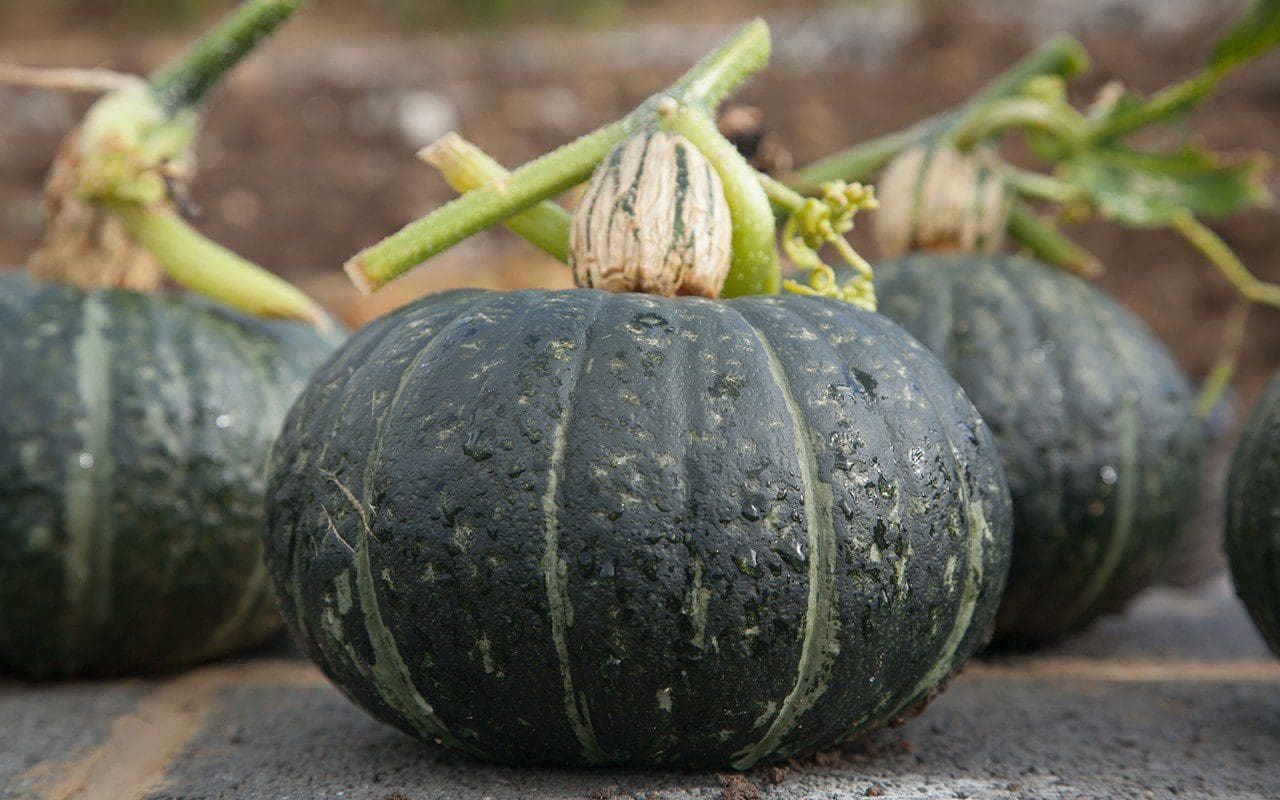 ‘Cha-cha’
Kabocha is the Japanese word for pumpkin, derived from the corruption of the Portugese name for them, Cambodia abóbora, since they were brought to Japan from Cambodia by the Portugese in the 16th century. This year we grew ‘Cha-cha’, which closely resembles ‘Blue Kuri’, a Japanese kabocha variety we have previously had success with. It has also proven to be very good. Slightly larger than ‘Uchiki Kuri’ the flesh is also dry, rich and sweet, and the thin skin is edible when roasted.
 ‘Black Futsu’
‘Black Futsu’, another Japanese variety with sweet, nutty flesh, is of a similar size. The fruits are heavily ribbed and dark, black-green when picked, quickly developing a heavy grey bloom, beneath which they ripen to a tawny orange. Though beautiful to look at, the ribbing does mean they are more work to cut and peel, but it is a small hardship in terms of yield and substance.
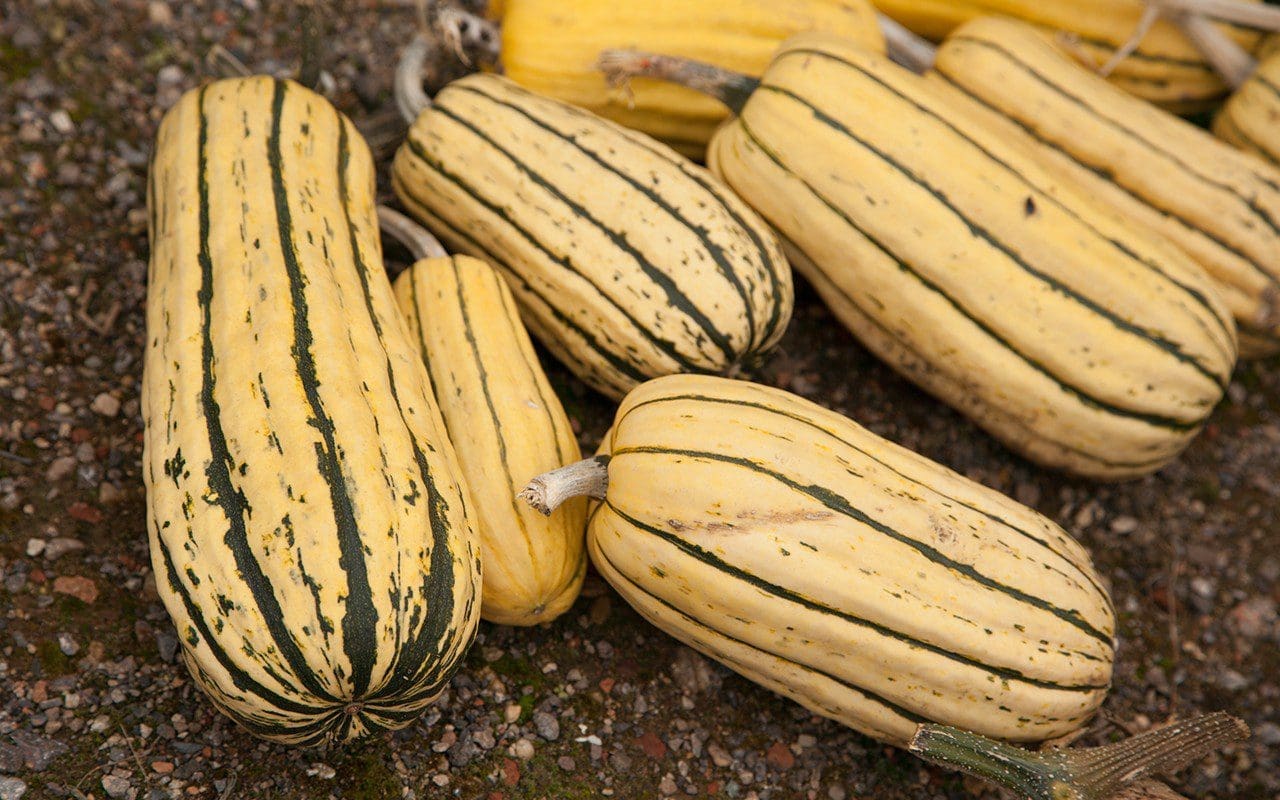 ‘Delicata’
Another heavy cropper, although not such a good keeper, is ‘Delicata’, also known as the sweet potato squash due to it’s mild, sweet flesh which is moister than the varieties described above. Although kept and eaten as a winter squash ‘Delicata’ is of the summer squash species with a very thin skin (hence its name) and so has a propensity to soften quickly in storage. However, it needs no peeling as the skin is edible, so it has its uses in the earlier part of the season. The beauty of this very decorative variety is its high yield of long, cylindrical fruits (perfect for stuffing) in a range of manageable sizes, some the perfect size for one, which makes it a very practical choice.
Although in the past I have let the first frost strip the summer foliage before harvesting, it is best to remove it by hand in September when the plants have done their growing and there is a little heat left in the sun to do a final ripening. It is best to pick the fruits before they get frosted or they don’t keep well, and care must be taken not to damage the hard, waxy skin which keeps them airtight through the winter. The stalks should be left intact for the same reason, as any wound quickly leads to rot.
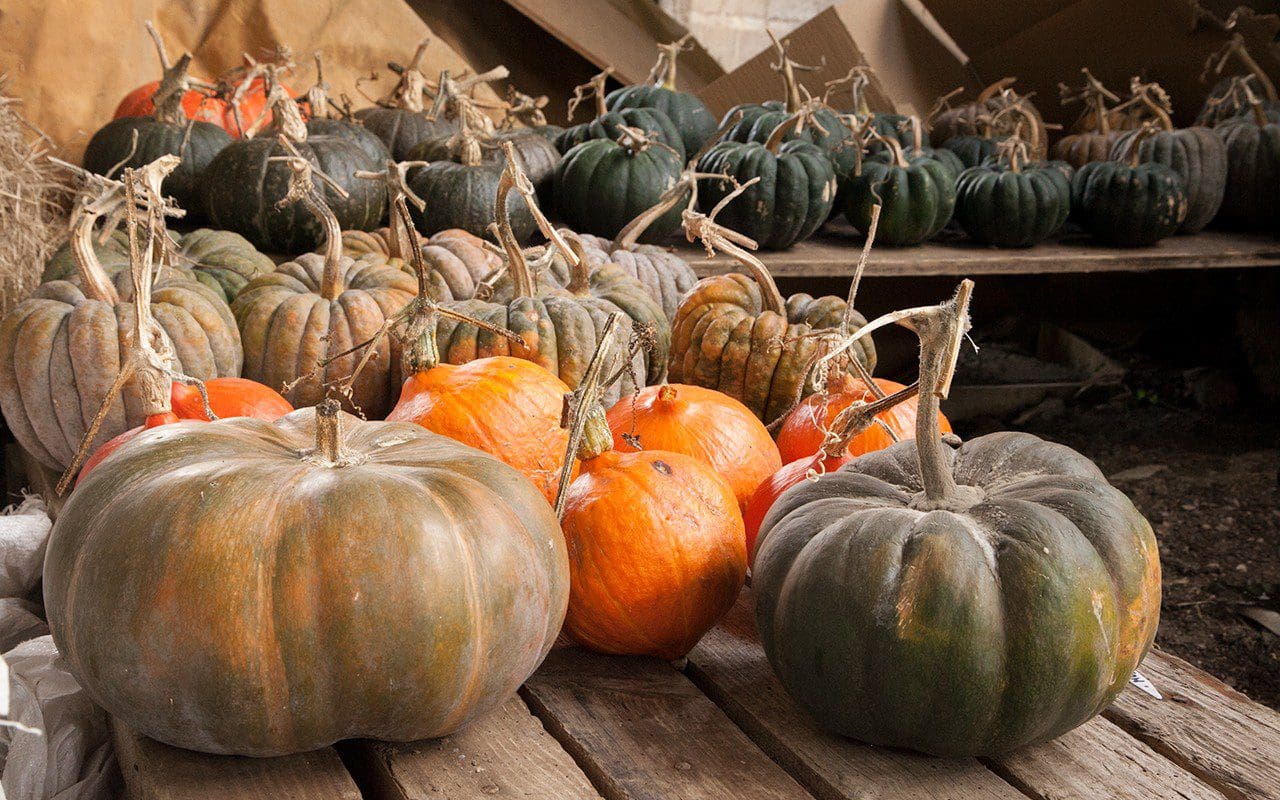
Left in a warm, sunny place for a couple of weeks after picking the carbohydrates in the flesh turn to sugar and the skin hardens. The colour also changes, but this continues to develop in storage. When ripe they should be stored in a shed or outhouse on wire racks or a bed of straw to allow air to circulate beneath them. For now, I have them on old palettes in an airy barn, but when it gets colder they will be put into perforated plastic plant trays and moved to the frost-free tool shed.
We are gradually making our way through this year’s crop with roast, mash, soup and finally preserves, before the rot sets in. It nearly always does and, although the decay has its own beauty, I’d rather not waste a summer of effort. Both ours and the pumpkins’.

Words: Dan Pearson / Photographs: Huw Morgan
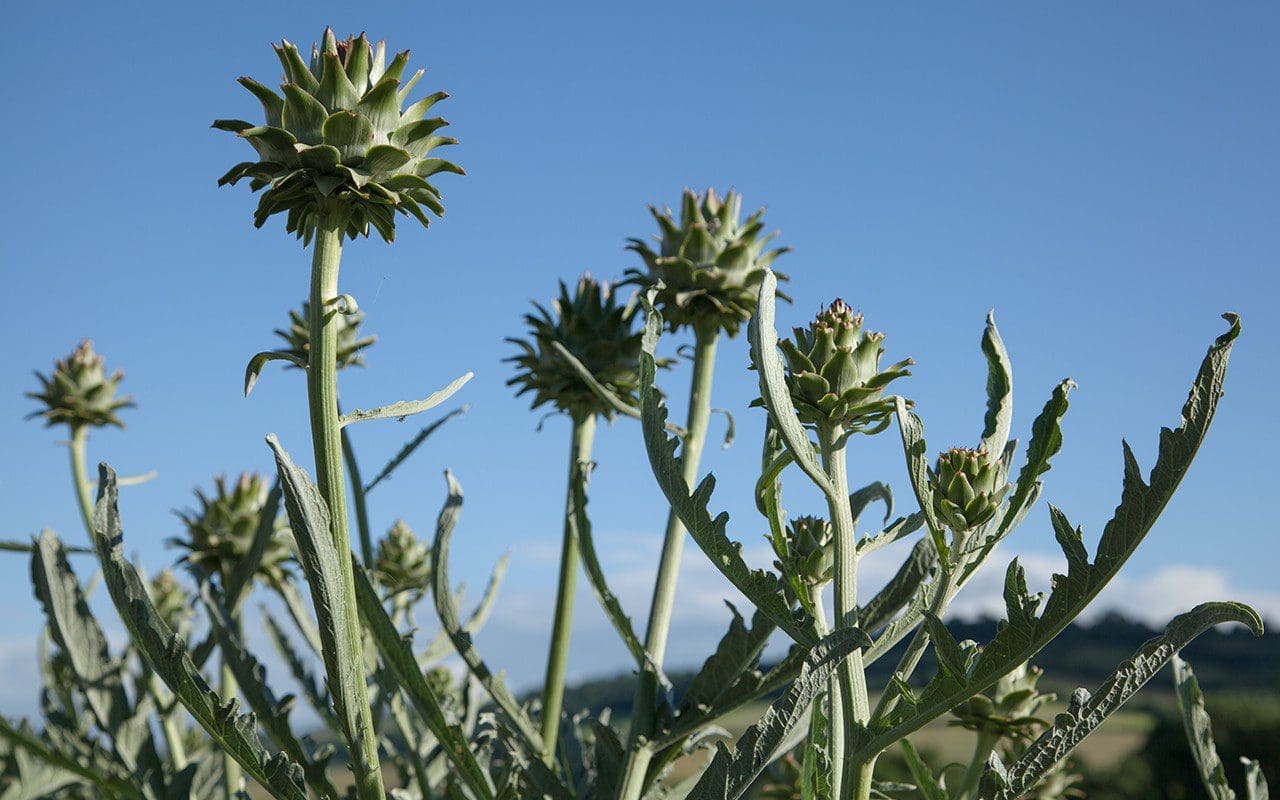
The globe artichokes (Cynara cardunculus Scolymus Group) were some of the first plants to go into the new kitchen garden. They are a luxury vegetable, taking far more space than they provide reward for and shading their neighbours if, indeed, there is room left in their shadow. Nevertheless, I gave them a bed to themselves, in prime position and against the radiated heat of the newly built wall.
They have grown in spectacular fashion – which is the greater part of the reason for having them – doubling and trebling their bulk in the course of the first summer and continuing onward to take all the space which was offered them. Cold weather in combination with winter wet is their nemesis but, since they were planted, both winters have been mild and they have only had a brief down time in the darkest months when they retreat to a core cluster of leaves.

Their aluminium foliage is wonderful in its ascendancy and as good as acanthus in its architecture. As soon as the weather warms in March it reaches from the clump, each leaf larger and more dramatic than the last, scrolling and bulking steadily until you see that, some time in May, the parent foliage has gathered enough energy for the flower spikes. These push proud of the forest of leaves, but it is whilst the heads are small that you need to curtail their reach and harvest the artichokes.
We grow a variety called ‘Bere’, which Paul Barney of Edulis Nursery offers, and is the selection his father found growing in the walled garden there in the 1950’s. It is spinier than some of the named varieties, but Paul says it is the best tasting of them all. Indeed, it is a wonderful plant if you pick the heads whilst they are still young and before they are fully armoured. The best and meatiest parts are still soft when the leaf spines are forming, but leave them to harden and fulfil their thistly leanings and you end up with an impossibly fibrous mouthful.
 Cynara cardunculus Scolymus Group ‘Bere’
I plan to split my clumps in the spring, when growth is on the move and the crowns are manageable. Being mediterranean, they start life as soon as there is warmth and moisture in combination but, being sensitive to the cold, you have better chances in spring than if you move them at end of the season. It is a two-man job to lift the clumps and then prise a division, with root, from the clump. The divisions or ‘starts’ will be planted in the new herb garden, where they will provide ornamental architectural structure amongst the herbs.
I have six plants now, far too many of the same variety, so the plan is to thin the ‘Bere’ to three and equal it with the same number of purple-tinged ‘Romanesco’ to make up the half dozen. ‘Romanesco’ is an altogether friendlier plant without spines, and the scales that form the thistle head are soft and can easily be harvested and prepared without the need for gloves.
Each plant will be spaced a metre apart and inter-planted with stands of bronze fennel, which will cover for the artichokes’ collapse, which happens in high summer once all their energy has gone into flower production. At this point, once the old leaves start to fail revealing bare ankles, it is best to cut the lot to the ground and let the foliage regenerate. It will be back for the autumn, whilst the fennel covers during the recovery period.
In Italy the cardoon is also prized in the early spring for its edible leaves. The midribs, which look like celery, are stripped of the leaves and fibres, and then blanched and buttered, or baked in a gratin. You need rhubarb amounts of room for such a short season vegetable, but if you do have a spare corner in sunshine they are sure to provide you with drama at the very least.
I first grew the ornamental cardoon (Cynara cardunculus) as a border plant at Home Farm. Innocent looking divisions arrived from Beth Chatto, as beautifully wrapped in damp newspaper as they are described in her catalogue. They were planted in an ambitious group of three on a sunny slope and took their position, rearing up in a mound of metallic foliage. Tapering in August to a magnificent pinnacle of branching flower, the plants reach about three metres in height, and need staking if they are not to topple once the flowers break colour. Look up and you see bees staggering about drunk on the fist-wide pools of neon violet filaments.
The butterflies love them too, but the giant needs to be felled if it is not to leave you with a gaping hole once the collapse starts to happen. At Home Farm I planted it within a corral of late summer perennials, spaced at a sensible distance so that they can swallow the hole whilst it regenerates. Asters and rudbeckia will do the job, but you have to give the cardoon space in spring as it is an early season riser.
 Cynara cardunculus ‘Dwarf Form’ with Centranthus lecoqii
Fergus Garret pointed me to a dwarf form that they have in the garden at Great Dixter and I grow it here against the barn. I am not usually a fan of plants selected for dwarfism, but this cardoon makes for a better-behaved plant. It is distilled in all it’s parts, and more evil to the touch, the undersides of every leaf defended with an armoury of needle-sharp spines. Its foliage is as beautiful, possibly more finely divided, and certainly more compact. It tops out at about a metre and so avoids the need for staking. In the border where I grow it with Centranthus lecoqii and Romneya coulteri it has taken it’s territory, but the repercussions are altogether more manageable, and I still feel I have the drama I am looking for.
 Cynara cardunculus ‘Dwarf Form’
Words: Dan Pearson / Photographs: Huw Morgan
We are sorry but the page you are looking for does not exist. You could return to the homepage