Grasses were always going to be an important part of the garden. They make the link to the meadows and fray the boundary, so it is hard to tell where garden begins and ends. On our windy hillside, they also help in capturing this element, each one describing it in a slightly different way. The Pennisetum macrourum have been our weather-vanes since they claimed the centre of the garden in August. Moving like seaweed in a rock pool on a gentle day, they have tossed and turned when the wind has been up. The panicum, in contrast, have moved as one so that the whole garden appears to sway or shudder with the weather.
Though the pennisetum took centre stage and needed the space to rise head and shoulders above their companions, they are complemented by a matrix of grasses that run throughout the planting and help pull it together from midsummer onwards. Choosing which grasses would be right for the feeling here was an important exercise and the grass trial in the stock beds helped reveal their differences. At one end of the spectrum, and most ornamental in their feeling, were the miscanthus.
Clumping strongly and registering as definitely as a shrub in terms of volume, I knew I wanted a few for their sultry first flowers and then the silvering, late-season plumage. It soon became clear that they would need to be used judiciously, for their exotic presence was at odds with the link I wanted to make to the landscape here. At the other the end of the spectrum were the deschampsia and the melica, native grasses which we have here in the damp, open glades in the woodland. We have used selections of both and they have helped ground things, to tie down the garden plants which emerge amongst them.
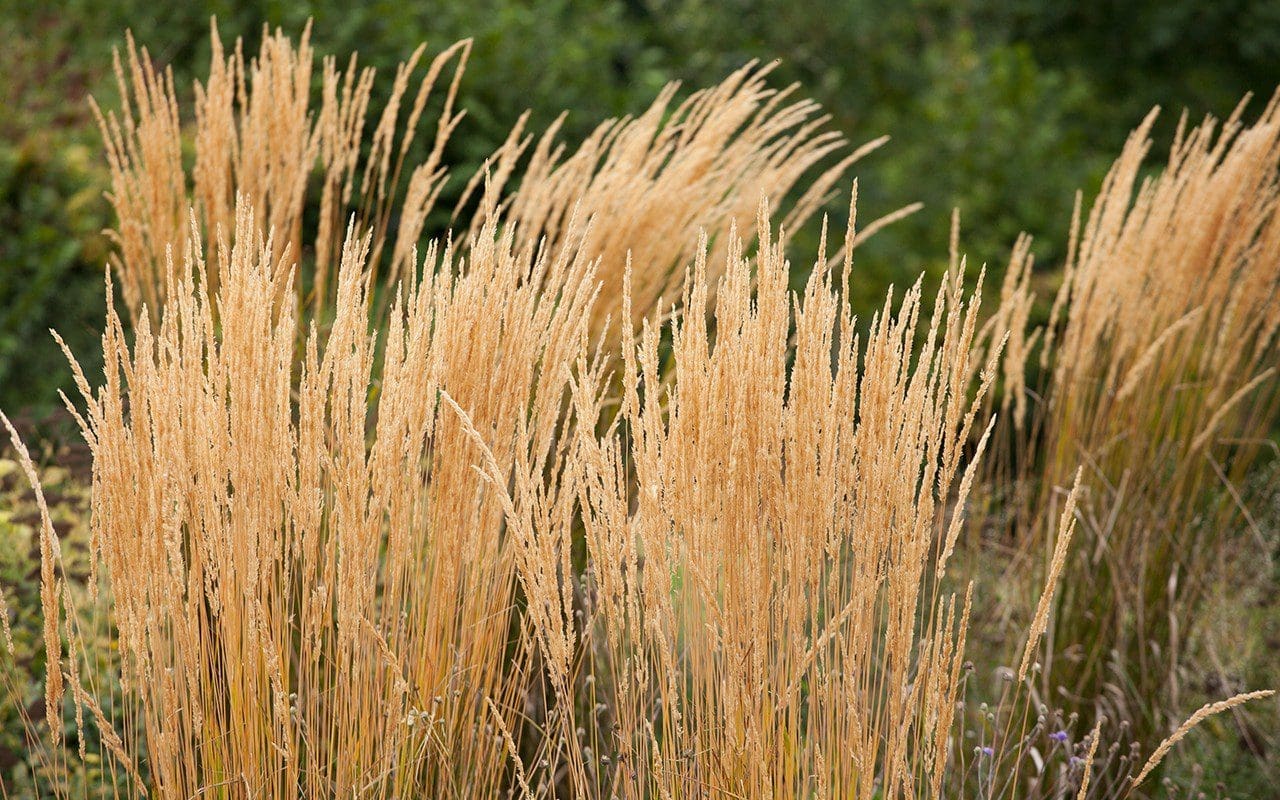 Calamagrostis x acutiflora ‘Karl Foerster’
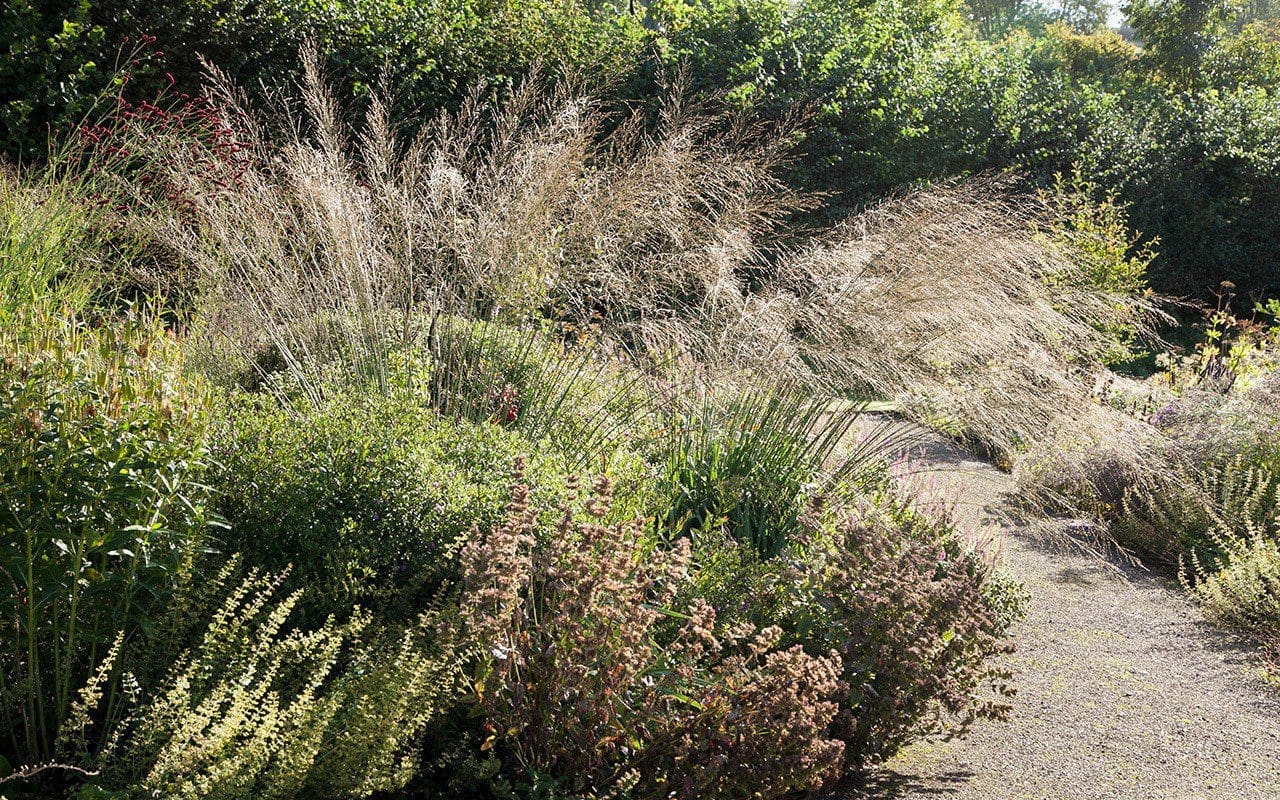 Molinia arundinacea ssp. caerulea ‘Transparent’
Falling between to two ends of the shifting scale, we experimented with a range of genus to find the grasses that would provide the gauziness I wanted between the flowering perennials. As it is easy to have too many materials competing when choosing your building blocks for hard landscaping, so it is all too easy to have too many grasses together. Though subtle, each have their own function and I knew I couldn’t allow more than three to register together in any one place. Tall, arching Molinia caerulea ssp. arundinacea ‘Transparent’ that is tall enough to walk through and yet not be overwhelmed by would be the key plant at the intersection of paths. The fierce uprights of Calamagrostis x acutiflora ‘Karl Foerster’, scoring thunderous verticals early in the season and then bleaching to longstanding parchment yellow, would need to be given its own place too in the milking barn yard. I needed something subtler and less defined as their complement in the main garden.
Our free-draining ground and sunny, open position has proved to be perfect for cultivars of Panicum virgatum or the Switch Grass of American grass prairies. We tried several and soon found that, as late season grasses, they need room around their crowns early in the season if they are not to be overwhelmed. Late to come to life, often just showing green when the deschampsia are already flushed and shimmering with new growth, it is easy to overlook their importance from midsummer onwards. I knew from growing them before that they like to be kept lean and are prone to being less self-supporting if grown too ‘soft’ or without enough light, but here they have proven to be perfect. Bolting from reliably clump-forming rosettes, each plant will stay in its place and can be relied upon to ascend into its own space before filling out with a clouding inflorescence.
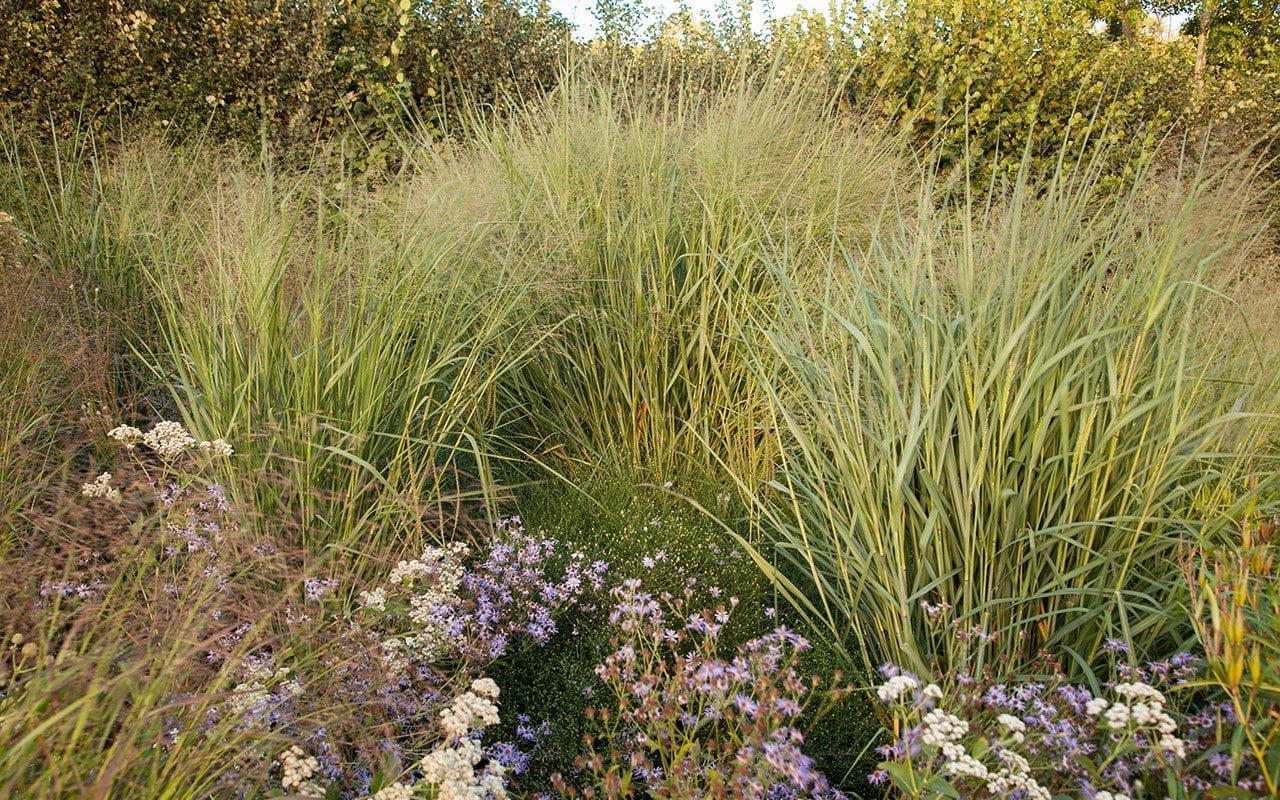 Panicum virgatum ‘Cloud Nine’. The original stock plant is in the centre.
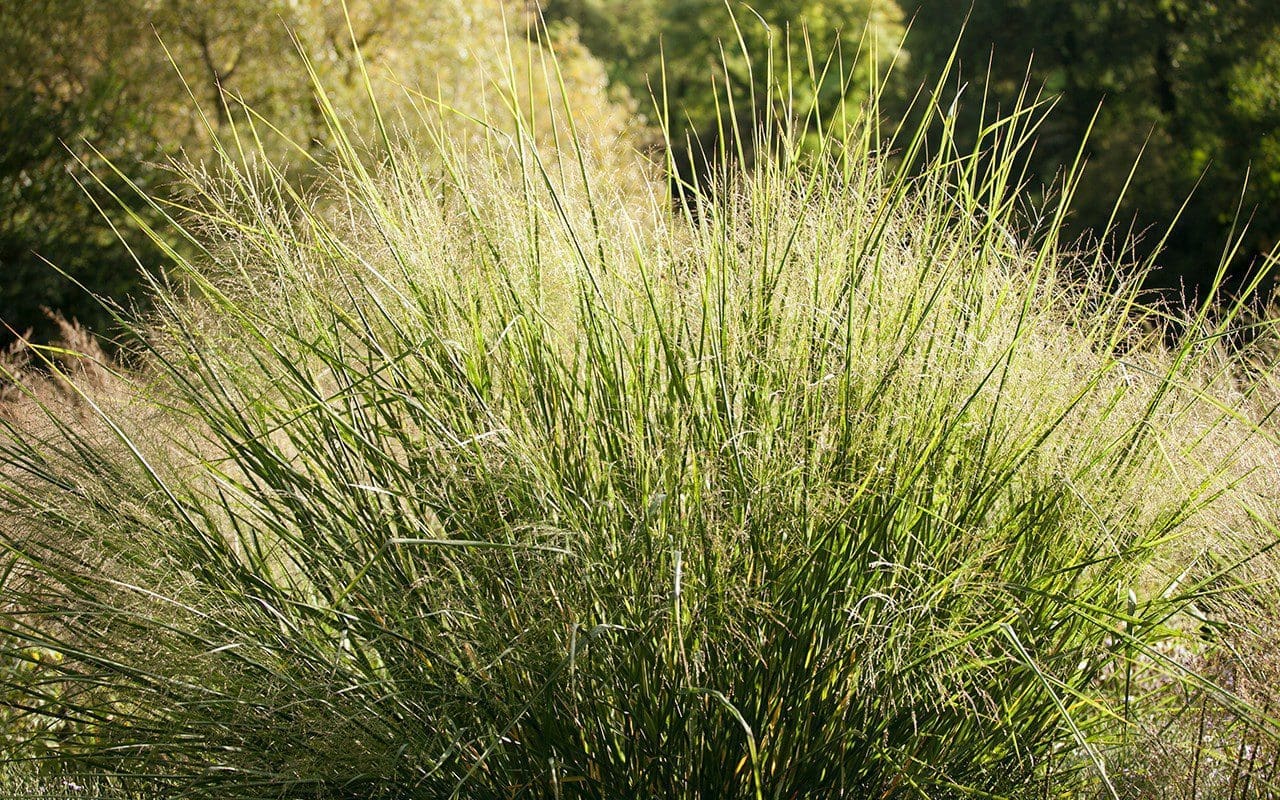 Panicum virgatum ‘Cloud Nine’
I tried several and, with the luxury of having the space to do so, some proved better than others. The largest and most dramatic is surely ‘Cloud Nine’. My eldest plant, the original, remains in the position of the old stock bed and the garden and younger companions were planted to ground it. This was, in part, due to it already being in the right place, for I needed a strong presence here where I’d decided not to have shrubs and they have helped with their height to frame the grass path that runs between them and the hedge along the lane. By the time the stock beds were dismantled we were pleased not to have to move it, because the clump is now hefty, and a two man job to lift and move it.
I first saw this selection in Piet Oudolf’s stock beds several years ago, where it stood head and shoulders above his lofty frame. Scaled up in all its parts from most other selections, the silvery-grey leaf blades are wider than most panicum and very definite in their presence. Standing at chest height in August before showing any sign of flower, it is the strongest of the tribe. Now, in early autumn, its pale panicles of flower have filled it out further, broadening the earlier bolt of foliage. If it was a firework in a firework display of panicum, it would surely be the last, the scene-stealer that has you gasping audibly. I like it too for the way it pales as it dies and it stands reliably through winter to arrest low light and make a skeletal garden flare that is paler in dry weather and cinnamon when wet.
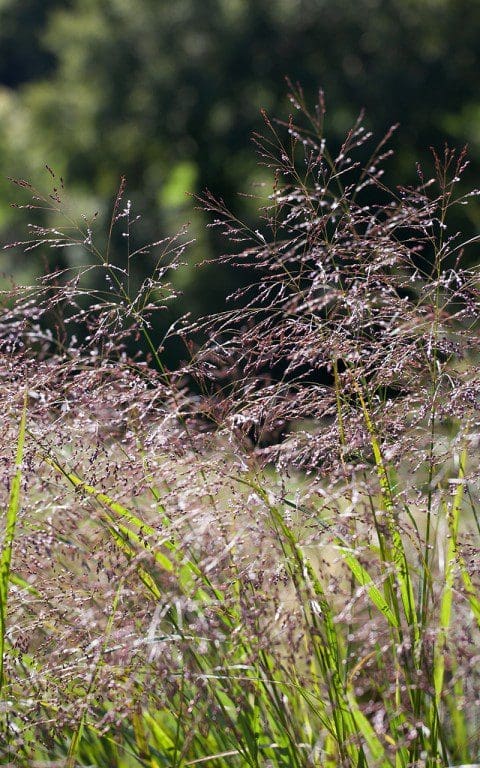 Panicum virgatum ‘Rehbraun’
I have three other panicum in the garden, which are entirely different in their scale and presence. Though it has proven to be larger than anticipated in our hearty ground and will need moving about in the spring to get the planting just right, I am pleased to have selected ‘Rehbraun’. Calm, green foliage rises to about a metre before starting to colour burgundy in late summer. The base of redness is then eclipsed by a mist of mahogany flower, which when planted in groups, moves as one in the breeze. I have it as a dark backdrop to creamy Ageratina altissima ‘Braunlaub’ (main image) and Sanguisorba ‘Cangshan Cranberry’, which are wonderful as pinpricks of brightness held in its suspension. It is easily 1.2 metres tall here and, weighed down by rain, it can splay, and I have found that several are too close to the path, but I like it and will find them a place deeper within the borders.
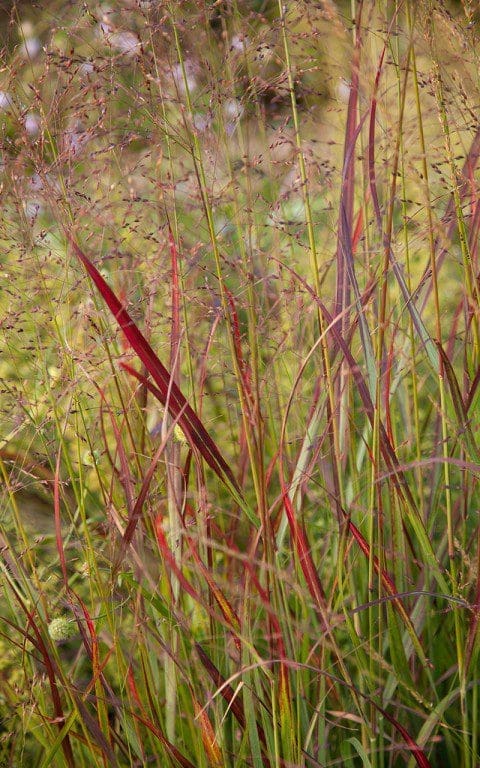 Panicum virgatum ‘Heiliger Hain’
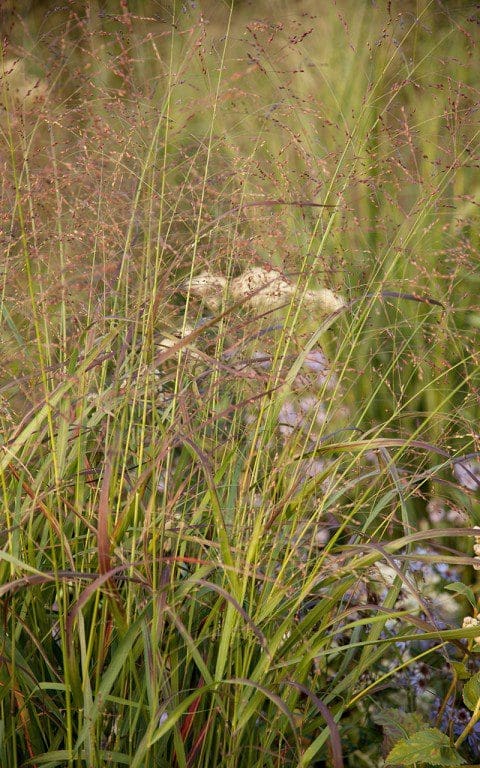 Panicum virgatum ‘Shenandoah’
Though it has not done as well for me here – it may well be that it is a selection from a drier part of the States – ‘Heiliger Hain’ has been beautiful. Silvery and fine, the leaf tips colour red early in summer and are strongly blood red by this point in the season. It is small, no more than 80cm tall when in flower, and so I have given it room to rise above Calamintha sylvatica ‘Menthe’ and the delicate Succissella inflexa. Similar in character, though better and stronger, is ‘Shenandoah’ which I have drawn through most of the upper part of the garden. Blue-grey in appearance as it rises up in the first half of summer, it begins to colour in late August, bronze-red becoming copper-orange as it moves into autumn. Neil Lucas of Knoll Gardens says it has the best autumn colour of all panicum. It also stands well in winter to cover for neighbours that have less stamina. Where in the right place, with plenty of light and no competition at the base whilst it is awakening, it is proving to be brilliant and will be the segue from the summer garden, slowly making its presence felt above an undercurrent of asters to finally eclipse everything in a last November burn.
Words: Dan Pearson / Photographs: Huw Morgan
Published 29 September 2018
As September light casts its autumnal influence, the hips have lit up the hedges. Though it would be easier to get on the land to cut the hedges whilst it is still dry, we choose to wait until February in order to preserve their bounty. The birds work the heavy trusses of elder first, then move onto the wild privet before starting on the rosehips. Their fruits are still taut and shiny and it will be a while yet before they start to wrinkle and soften to something more palatable. If you are quick enough to get there before the birds, this is the perfect time to harvest them, the hips coming away easily to sticky your hands and stain fingertips scarlet.
Although I planted a couple of dozen eglantine whips (Rosa rubiginosa) to gap up the hedges when we arrived, I raised a batch of seedlings from the first hips they bore. An autumn sowing spawned more seedlings than I could deal with after the winter chill they need to break dormancy. I potted up a hundred seedlings and grew them on for a summer so that, a year after sowing, they were ready for planting out. Two years in pots (with potting on) would have made them stronger and probably more resilient to the fierce competition of being out in the wild, but the seedlings that did make it through are now doing handsomely.
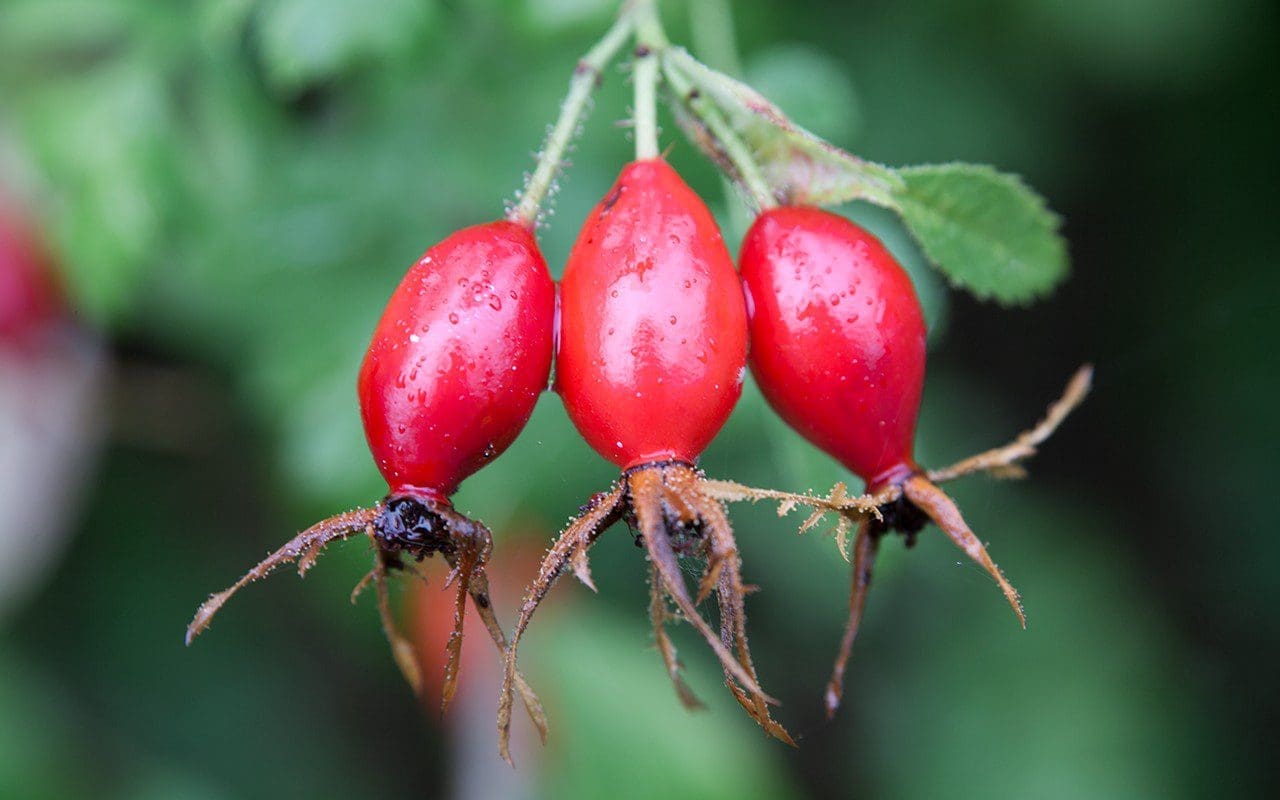 Rosa rubiginosa
The eglantine seedlings were planted widely, so that their perfumed foliage accompanies us on the walks we make over the land. They appear close to the gates and the stiles in the hedges, so that their apple-y perfume catches you unexpectedly and where they break free into the meadows. Six years after sowing, the best plants are now as tall as I am and weighted with fruit. Where we have deer down in the hollow above the brook, they have been left completely alone where other plants have been grazed, so I have also started to use them around the garden and as perfumed hedges in the hope that their scented foliage acts as a deterrent. Deer love roses as a rule, but dislike perfumed foliage, so the eglantines may be prove to be as useful as they are beautiful.
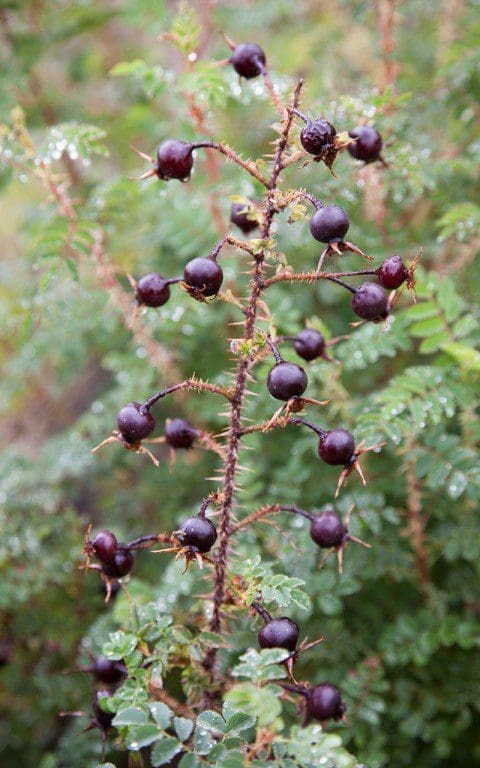 Rosa spinossisima
We have several forms of Rosa spinosissima now throughout the garden, but my favourite are the plants I raised from those I found in the sand dunes of Oxwich Bay on the Gower Peninsula. Growing to not much more than a foot, which is small for a Scots briar, the plants were growing sparsely and in pure sand amongst bloody cranesbill and sea holly. Their flowers had long gone, as it was late summer, but the round fruits were black and shiny. I gathered a couple and the resulting seedlings were set out two years ago now in an exposed position on our rubbly drive. Though the plants are heartier, growing to twenty four inches to date in our easier growing conditions, I am pleased to see they have retained their diminutive presence. We will see over time if they form thickets to the exclusion of the violets and crocus I’ve paired them with, as the briar is prone to move and colonise ground by runners. The creamy cupped flowers run up the vertical stems in early May, but the inky hips have been good since mid-summer and are only just this week starting to wrinkle and lose their gloss.
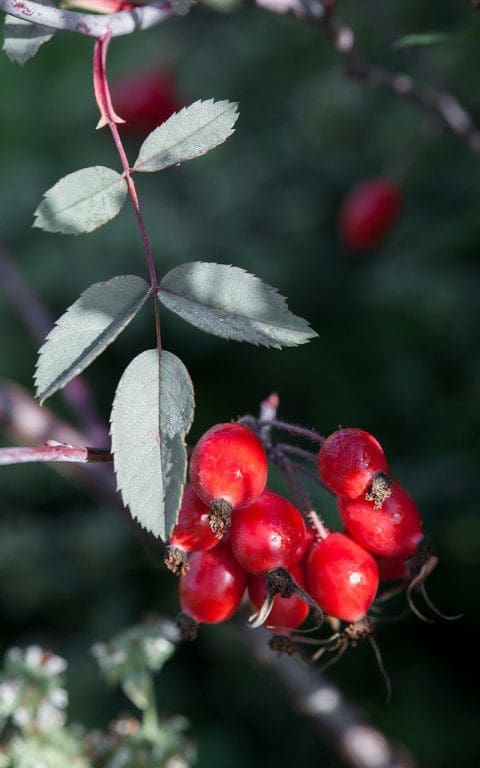 Rosa glauca
Though young and not yet expressing their stature in the garden, the Rosa glauca (main image) are sporting their first hips this year. The single flowers, which are small but always delightful, come on the previous year’s wood, so I will be making sure to always have some old wood for fruit. This is a foliage rose first and foremost and some books recommend coppicing every two to three years to encourage the best smoky-grey leaves, which are a perfect foil to the hips. I prefer to prune a third of the eldest limbs to the base at the end of winter to retain wood that will flower and fruit the following year. Ripening early for rosehips, they are bright and luminous, aging from scarlet to mahogany, and are some of the first to be stripped by the birds.
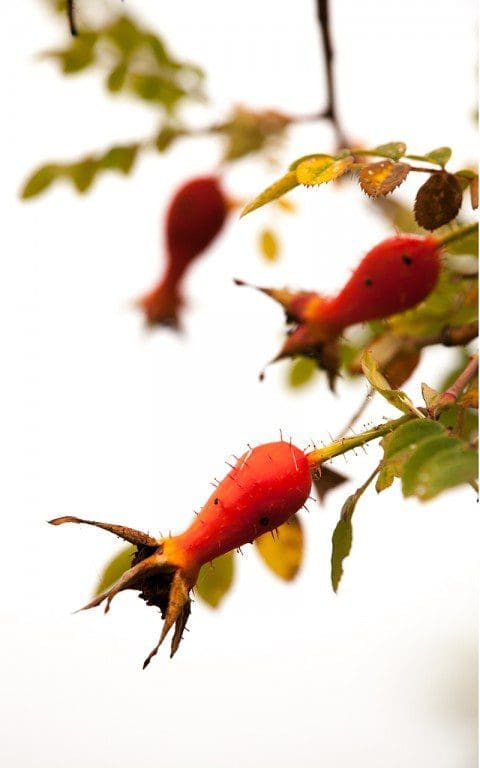 Rosa moyesii
The young Rosa moyesii on the banks behind the house are also showing good hips for the first time this year. These scarlet dog-roses are good amongst the cow parsley and meadow grasses that spill from the hedgerows in June, but their flagon-shaped hips are arguably their best asset, making this rose easily identifiable when fruiting. With arching growth and fine apple-green foliage, I will let the shrubs run to full height, which may well be ten foot or so if they decide that they like the position I have given them. They have room here on the banks and this is the best way to appreciate them, from every angle and with the yellowing autumn sun in their limbs.
Words: Dan Pearson / Photographs: Huw Morgan
Published 15 September 2018
In the eight years we have been here, the landscape has never bleached to this degree. In the most part our West Country moisture has kept the fields green, but the heat and month or more without rain has had its influence. A blond horizon backdrops the garden where the Tump hasn’t re-grown after the hay cut, and the high fields around us throw a September light which, at the beginning of August, has been disorientating.
Past summers have only required me to water once or twice during the season, but this year the new planting has needed it more often and I have worked the beds with a fortnightly drench to encourage the roots down by soaking each pass deeply. The watering has done nothing for the fissures which have opened up in the beds. Some are wide enough to put your hand down to the wrist and have got me thinking that, if I had the time, this would be a perfect way of working a summer injection of humus deep into the ground, if I could feed it into the cracks. It would plug the gaps that sometimes run straight through root balls and help to protect roots which must be feeling the drought more directly for this exposure. Deep in the beds, where the planting is already closed over, they worry me less, but in the new planting where the local microclimate provided by companionship is not quite there, I am seeing the damage.
Those plants that are adapted to a hot, dry summer have shown their roots in simply not flinching and the thistles have been notable. Miss Willmott’s Ghost, the biennial Eryngium giganteum, is luminous in the truest sense of the word. Firing starry outbursts amongst the Bupleurum falcatum the growth is platinum white in bright light. This is only the second or third generation of self-sown seedlings and, so far, the volunteers have not become a problem in the gravel garden. I have had them take over in thin ground, where they have seized a window amongst perennials that have not taken to the conditions as heartily, so we will yet see if they are going to make a takeover in the gravel by the barns. If they do, it will be where the seedlings find their way into the crowns of perennials that are slow off the mark in the spring. Like a wedge splitting a boulder, they can, and do, have their influence in their pioneering nature.
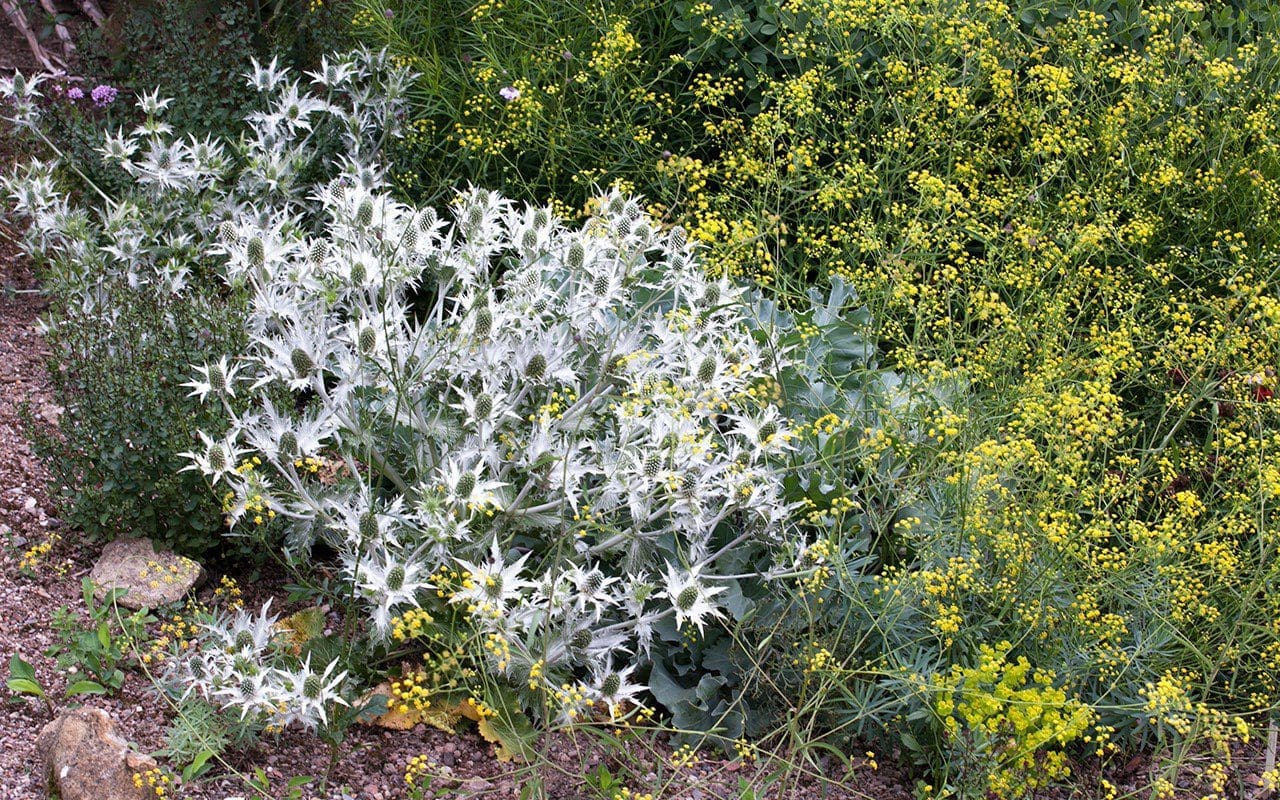 Eryngium giganteum, Bupleurum falcatum and Crambe maritima
Look closely and the thistles are magnets for wildlife. The hum of the bees on the eryngium is audible long before you see them, and the butterflies are now working the platforms of nectar that are obviously suspended high in the artichokes. We have a variety from Paul Barney of Edulis Nursery called ‘Bere’ and those that escaped the harvest – within a week they are suddenly too tough to eat – are now in flower. Though this year they must be a foot shorter for the drought, they still rise above the trough behind them and draw the eye through the gauziness of the herb garden. They have had no water for they are adapted mediterraneans and follow the rainfall with leaves that flush in the autumn and spring.
Right now, the neon-violet buzz of flower has taken all their energy and we have cleared the lower limbs of old leaves to enjoy this moment and not be distracted by tattered yellowing growth that is obviously no longer necessary. Cynara cardunculus (Scolymus Group) (main image) is spectacular in every way, each plant needing a good square metre to reach up and out. When the flowers dim and I start to see September regrowth at the base I will fell the lot to put the energy into new leaf, rather than it going into seed production, so that we have them during the winter. A mild one will see a mound of new foliage sail through unscathed. A silvery architecture in the bare kitchen garden.
Though I could write at length about the other thistles that I have invited into the garden, the notable one that rises head and shoulders above the rest is Cirsium canum. Stand beside it and this Russian native will dwarf you, literally, the bright violet-pink flowers teetering on tall stalks just out of reach. I suspect, if I had not watered the perennial garden, that the foliage would have burned more than it has, for it is fabulously lush in the first half of the summer. Like a giant awakening, the energy in its new growth is audible in foliage that is shiny and squeaky with life when you corral it into hoops in May to prevent it from toppling. I do not know, if one was to grow it on ground that was less retentive, whether it would be lesser in every way and need less staking. I also don’t know yet if it will be a seeder. Derry Watkins of Special Plants says her plants haven’t seeded. Yet. Just in case, I cut them to the base last year after flowering having been stung previously by Cirsium tuberosum when I was looking for a thistle that would do the same job. I think I will do the same this year if they won’t leave too much of a hole in the garden around them.
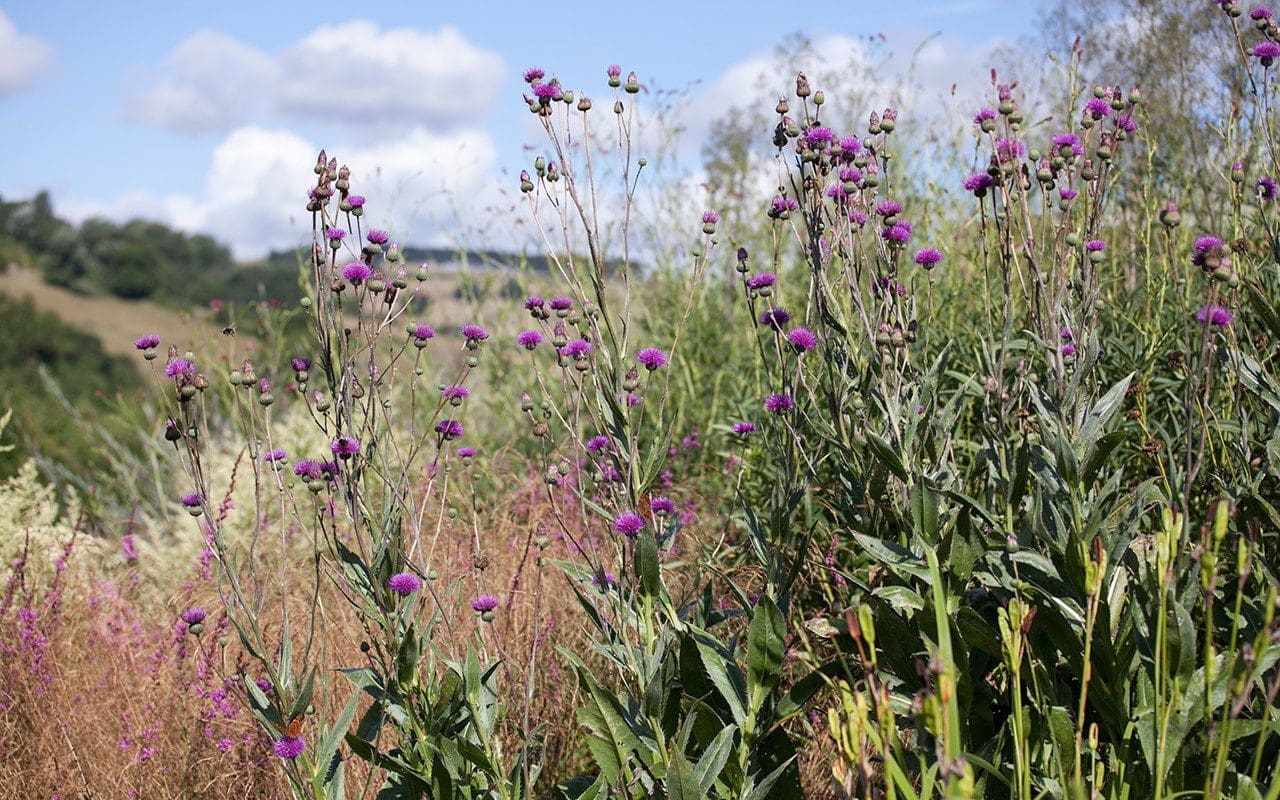 Cirsium canum
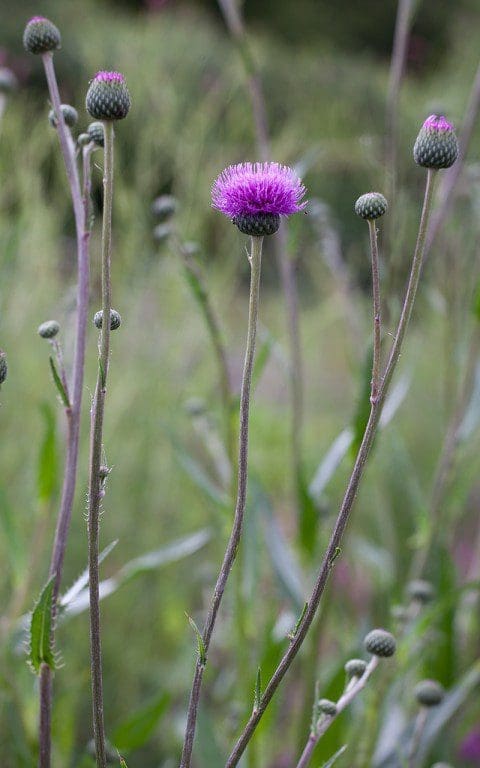 Cirsium canum
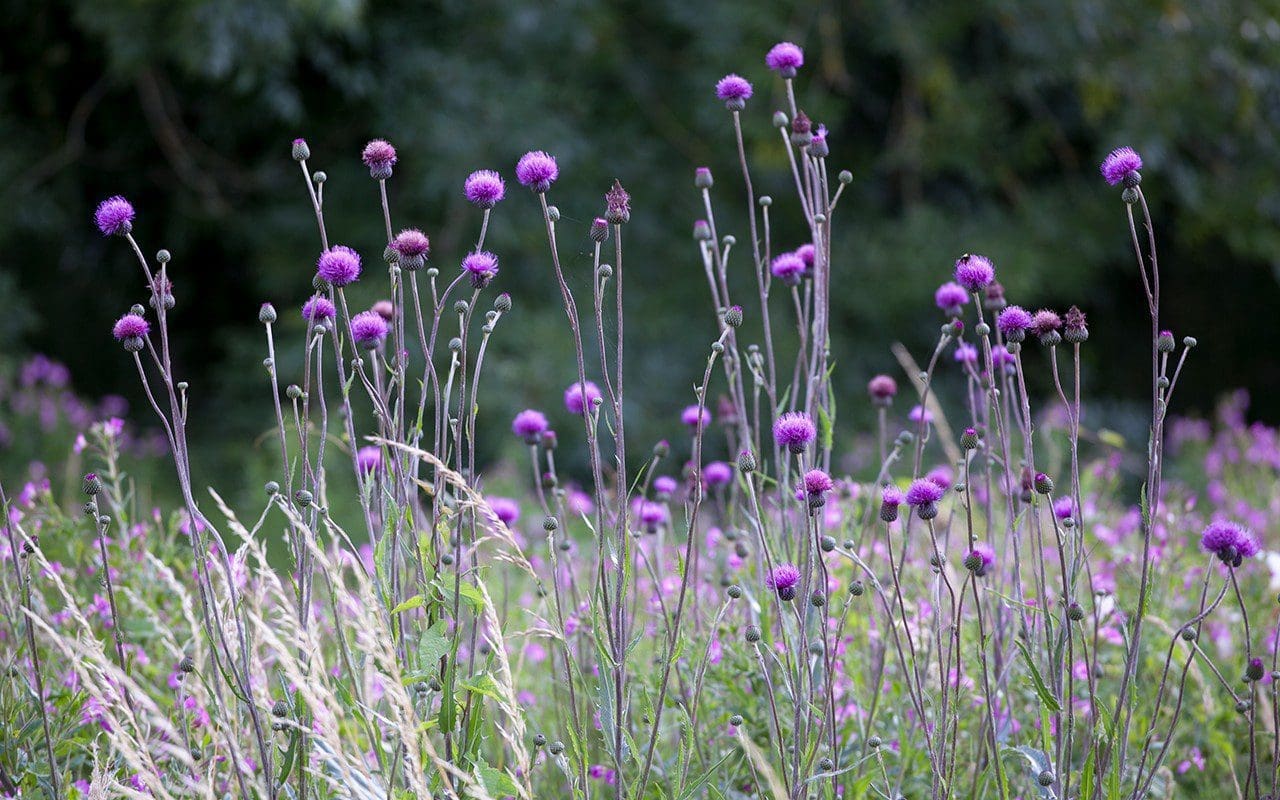 Cirsium tuberosum
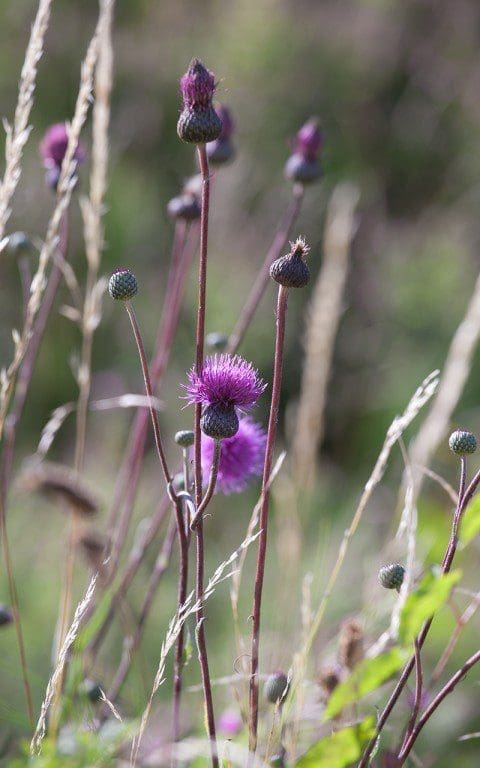 Cirsium tuberosum
Though Cirsium tuberosum is similar in appearance, being more glaucous and less glossy, this Witshire native is, in my opinion, not a plant to be trusted in a garden. Given open ground and a window of opportuntity, it proved itself to be a monster in my stock beds. The wind-blown seed parachuted some distance and, though the seedlings were easy and graphically visible in their lust for life, the unseen few soon wedged their way into the crowns of perennials to send down taproots that were all but impossible to remove and top growth that rejoiced in being alive. When I was preparing the new garden, I jumped my stock plants of them into the rough grass that lines the ditch and here the competition has seen them in check and in balance. Stepping through meadowsweet and willow herb they look good in appropriate company and your eye can travel from the Russians in the garden to the natives in the ditch and be happy, so far, in the knowledge that each has found its place.
Words: Dan Pearson / Photographs: Huw Morgan
Published 4 August 2018
The Thalictrum ‘Elin’ are as spectacular as they ever will be, topped out at what must be almost ten feet in height and clouding a myriad of tiny flower. They are in their second year now and have been good from the day they broke their winter dormancy. Last year they sent up just a couple of spires each but, with roots deep and a year behind them, they have powered a forest of lustrous growth. First, an early mound of feathery foliage of a glaucous, thunderous grey flushed with purple and bronze which, by the end of April, had reached its full expansion and was ready to charge the ascent of muscular vertical stems soaring towards the solstice. Slowing once they had reached their full height, the panicles broadened as the lateral limbs filled out with a million buds. The ascent was every bit as remarkable as the cloud of smoky violet flower. Arguably more so for the dramatic build and anticipation.
‘Elin’ march through the planting in the lower part of the garden to provide punctuation, and I am depending upon them now to stay standing. Last year, when their limbs were heavy with flower, a rain-laden wind toppled them like ninepins, so I staked them with a waist-height hoops in early May to prevent a repeat performance. In our deep, hearty soil with plenty of sunshine and no early competition around their crowns, there has been nothing to hold them back, so I have grown them hard and so far denied them extra water. I am hoping this will mean that they grow more strongly and that their companion sanguisorbas help them to stay true.
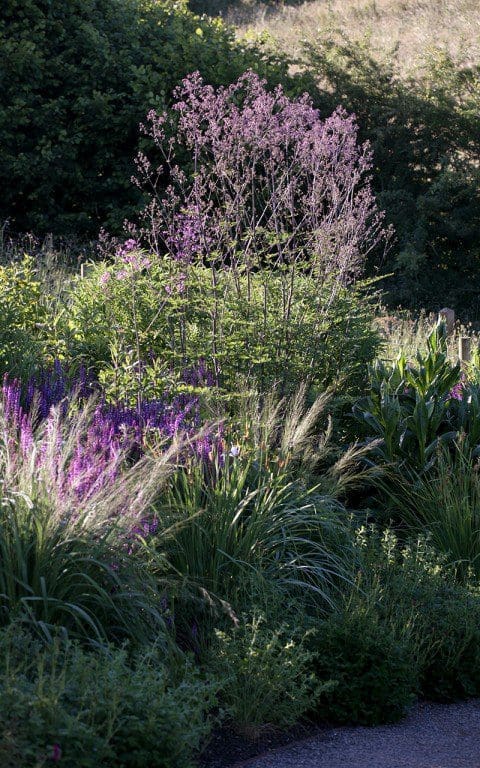
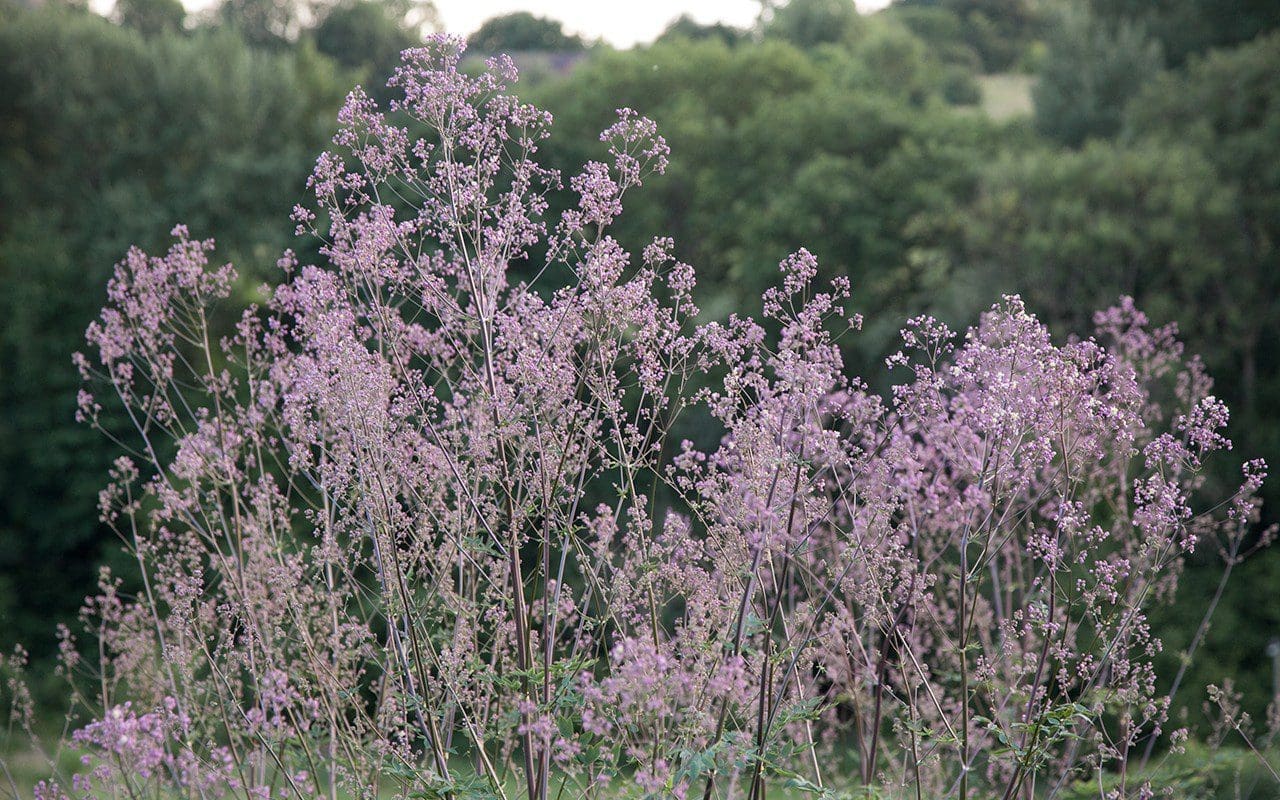 Thalictrum ‘Elin’
I have grown Thalictrum aquilegifolium for years, where it is reliable in both sun or shade. A basal clump of foliage – well named for its similarity to columbine – is an early presence in the spring garden and the flowers are sent up early, ahead of most other perennials, so that there is a clear storey between them and their foliage. The wiry stems support clusters of stamen-heavy flowers which, when they are out, resemble exotic plumage. In the true species, the flowers are an easy mauve, but ‘Black Stockings’ (main image with Salvia nemorosa ‘Amethyst’ and Iris sibirica ‘Papillon’) punches the colour up, with dark-stained stems and buds the colour of unripe grapes that open into flowers that register strong violet-pink. I have the white form too, which is strangely rare in cultivation, but not impossible to get. My plants came from the Beth Chatto Nursery, but I will be saving seed, which is viable if sown fresh, and I’m hoping will come true as they are quite some distance in the garden from their cousins. Seedlings that aren’t true white will easily be spotted for they have the purple stain, when the white form is pale, apple green. I plan to have plenty to play with and want to see if they will take in some open ground under the crack willow, where I let the Galium odoratum loose after it misbehaved and took too well to the garden.
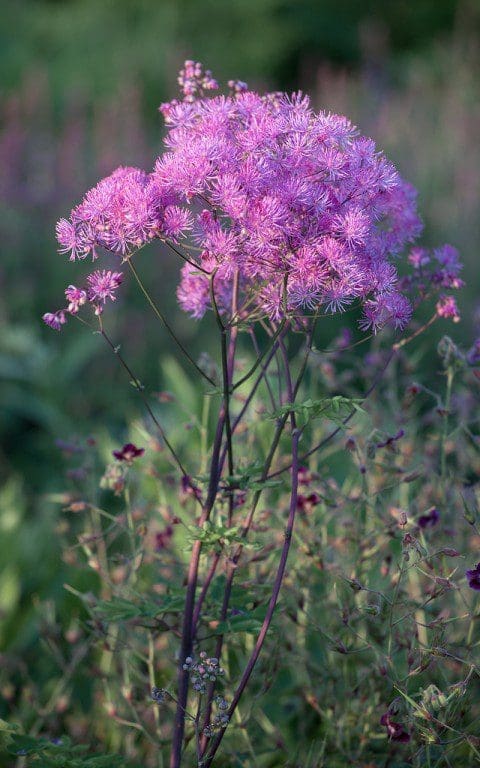 Thalictrum ‘Black Stockings’
Until ‘Elin’ appeared on the scene relatively recently, Thalictrum rochebruneanum was the tallest and most dramatic of the tribe. I saw it first at Sissinghurst, where it towered with Cynara in the purple border. As a teenager I lusted after its rangy limbs, impossibly fine it seemed, and the suspense in the delicate flowers. It languished on our thin acidic ground in my parents’ garden, growing to half the height. I tried it again in the Peckham garden, but it hated the way our soil dried as the water table dropped in summer. However, I have grown it well in California where, with a little extra water and shade from the sun, it seeds freely to spring up spontaneously as ‘volunteer’ seedlings. I hope that it will do the same for me here. So far in year two, it has done well, certainly not as well as ‘Elin’ but, with three or four flowering stems per plant, which have enjoyed the light at the base where they have been planted amongst later-to-emerge persicaria.
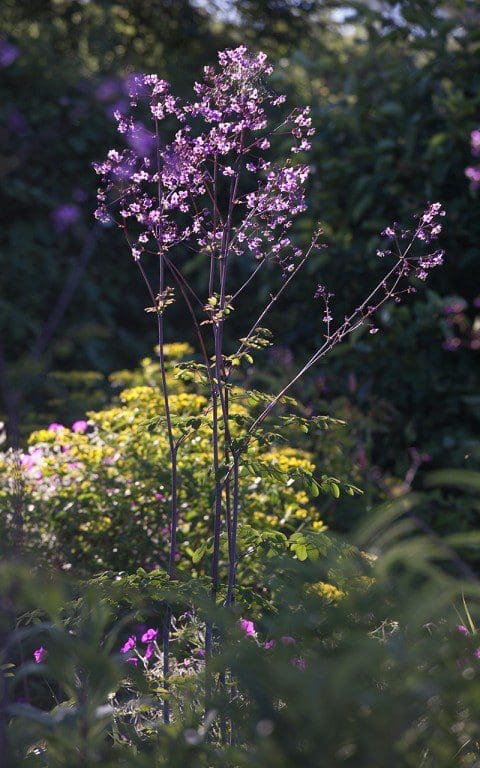
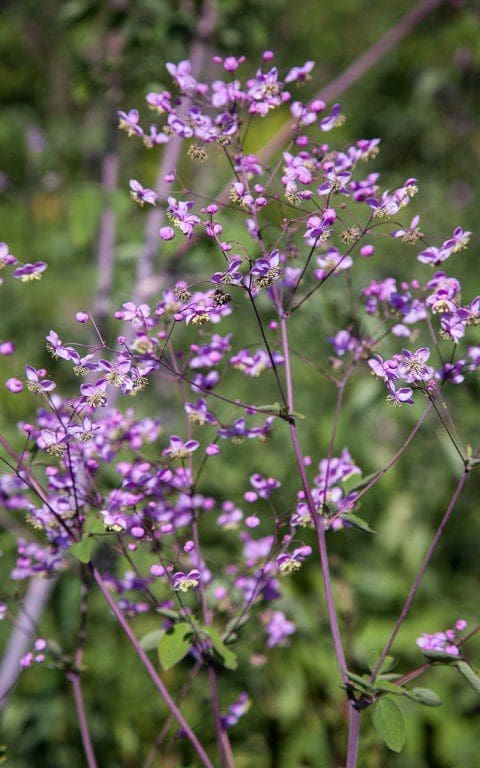 Thalictrum rochebruneanum
Hailing from Japan, where they find a niche amongst other perennials that like a cool, retentive soil, they must be a spectacular sight to come upon. Where ‘Elin’ is all about quantity, the flowers forming a Milky Way when they come together, every flower of Thalictrum rochebruneanum is a jewel. Richly coloured like gemstones, held sparsely so that your eye is drawn to the individual, inviting you to spend some time to take in the space and the colour contrast of the inner parts of the flower. A cup of violet petals holds the gold provided by the pollen and projection of anther within.
Never getting everything completely as I want it to be, I see now that I need to bring a plant or two up closer to the path, so that I can take in the detail and enjoy looking up, for you have to, your neck craned. Being early days in this garden, I can only hope for a volunteer or two to take to this ground and let me know that I have finally found them a place they really want to be.
Words: Dan Pearson / Photographs: Huw Morgan
Published 30 June 2018
It is that time again, a relay of one spectacle running into the next. In the hedgerows the hawthorns burst and spilled in Hockneyesque flurries, dimming only for a moment before being replaced by guelder rose and now the first of the elder with its creamy tiers piled high. In the garden, where we are working towards a similar principle of massed succession, the Rosa ‘Cooperi’ has helped us to connect to these whites in the landscape and jump the boundaries, so that your eye can travel a distance. First close up and then out, to leap from hedgerow to hillside.
I first saw Rosa ‘Cooperi’ about twenty years ago when I was judging the open gardens of Islington. It was love at first sight and I asked for and came away with a cutting, which rooted readily and took over the wall at the end of the garden in Peckham. It grew there vigorously and now I smart to think what the current owners must be dealing with, because this is a rose that needs headroom. A cutting was dutifully brought to Hillside where I released it onto the old barns (main image) and, seven years later, it is showing not a sign of slowing. Its limbs, reaching continually out and away from the last year’s extension growth, can easily make three to four metres in a season, though it is said to reach no more than ten. As the best flowering wood is the previous year’s, it makes sense to let it advance without curbing it too vigorously, and so it clouds and softens the building’s outline.
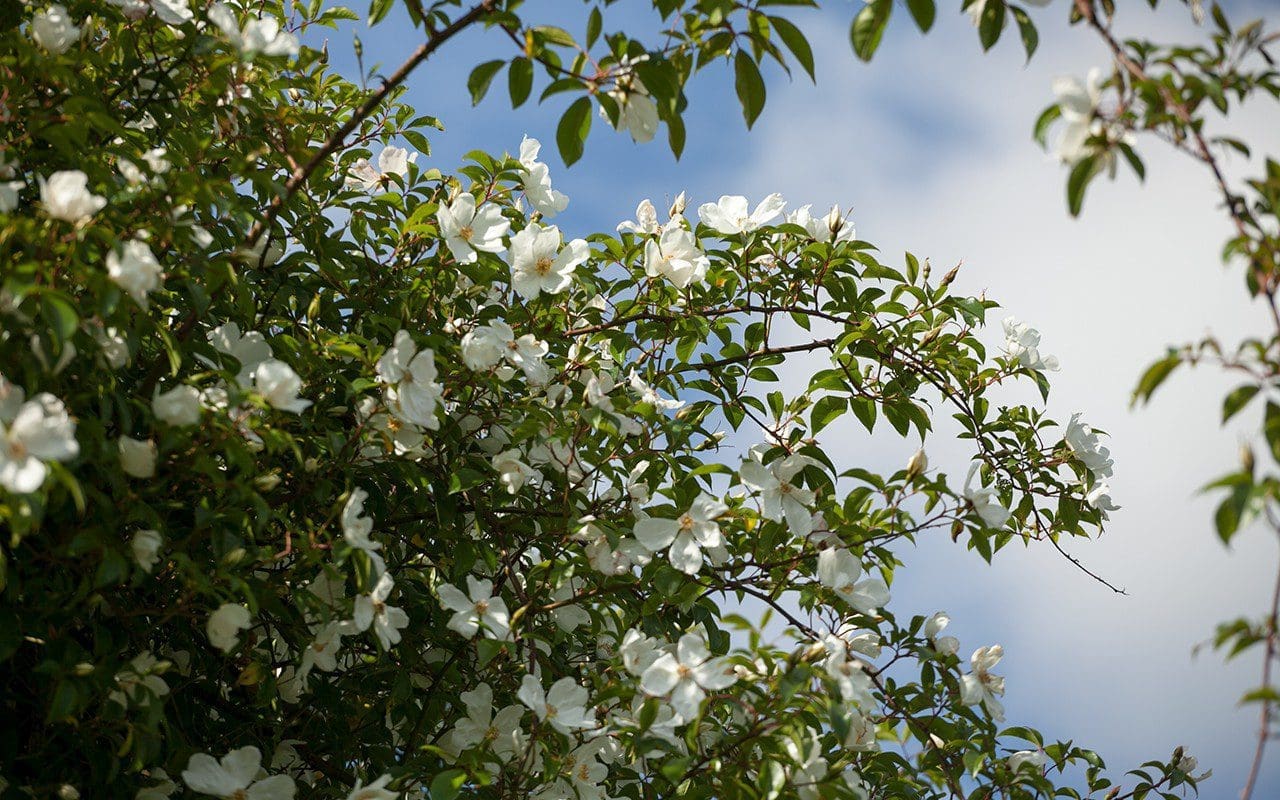
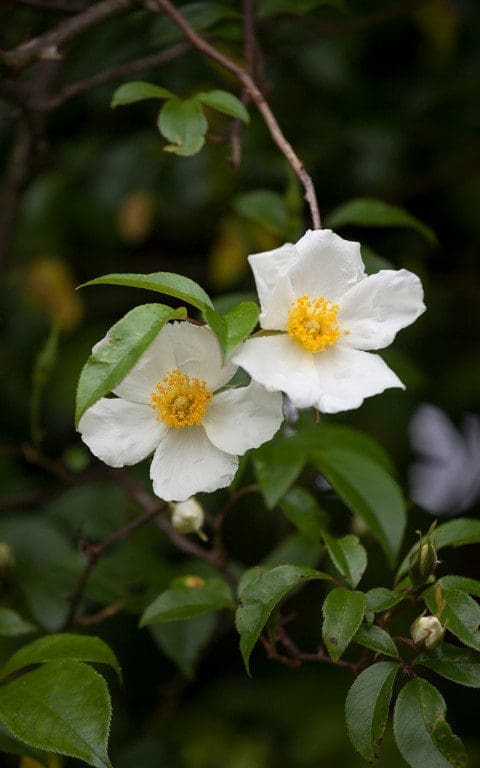 Rosa ‘Cooperi’ – Cooper’s Burmese rose
I keep it from overwhelming the barn – for it has made its way inside as well as out – by cutting back the excess of viciously thorned limbs in winter. You have to tie down your hat, or it will be whipped from your head, and wear tough clothing, never a jumper, which will be laddered and have you snared in moments. Wrangling aside, the dark, glossy foliage is the perfect foil for a succession of simple, ivory flowers that this year smattered in the last week of May and were at their zenith last weekend when these photographs were taken.
In form they are as pure as dog roses, but twice the size, becoming speckled pink if they get rained upon and as they age. The display lasts three weeks reliably, a month if you are lucky, but I never complain about this brevity. In fact, there are two glossy cuttings waiting in my holding area for somewhere to release them into grass. I’d like to see how ‘Cooper’s Burmese’ would take to not having anywhere to climb. I have a hunch it might mound and then stop its advance with nowhere to go, so in long grass on a bank I could simply edit its longest limbs from a sensible distance with long-armed pruners.
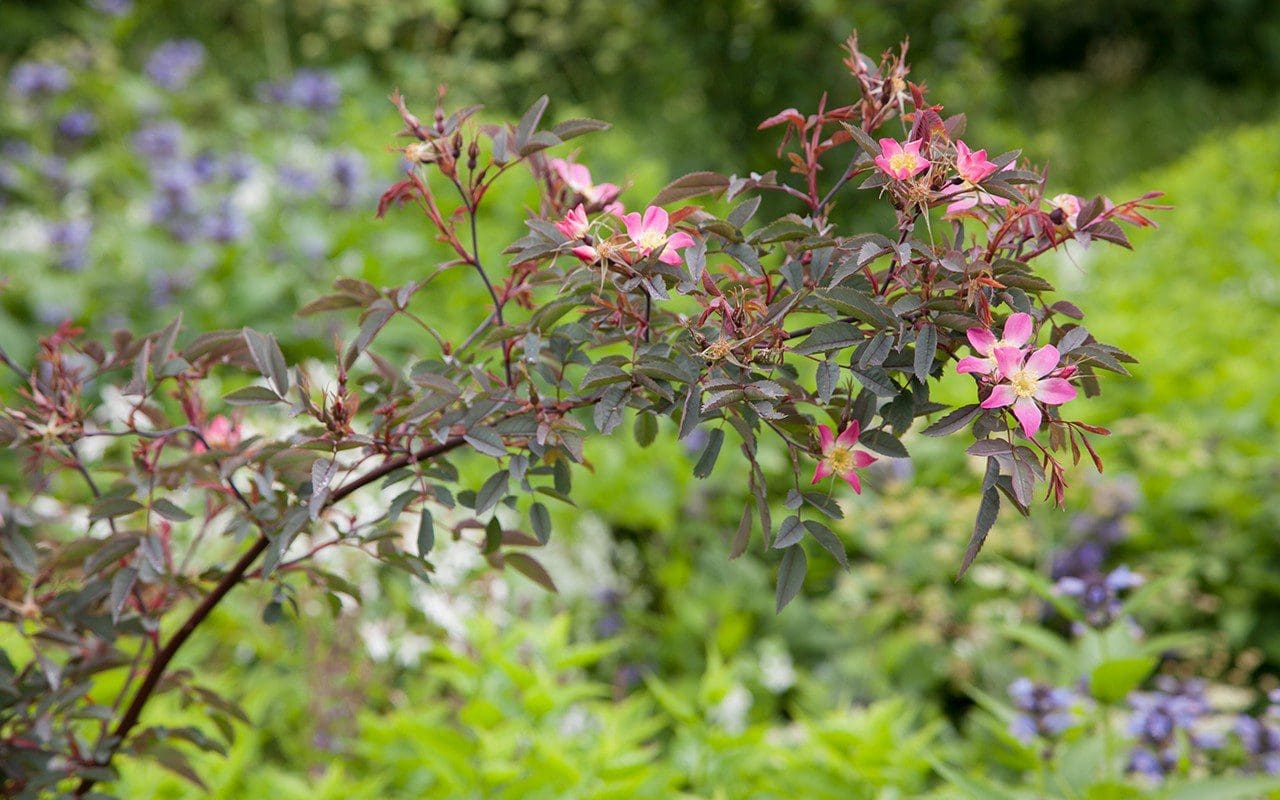
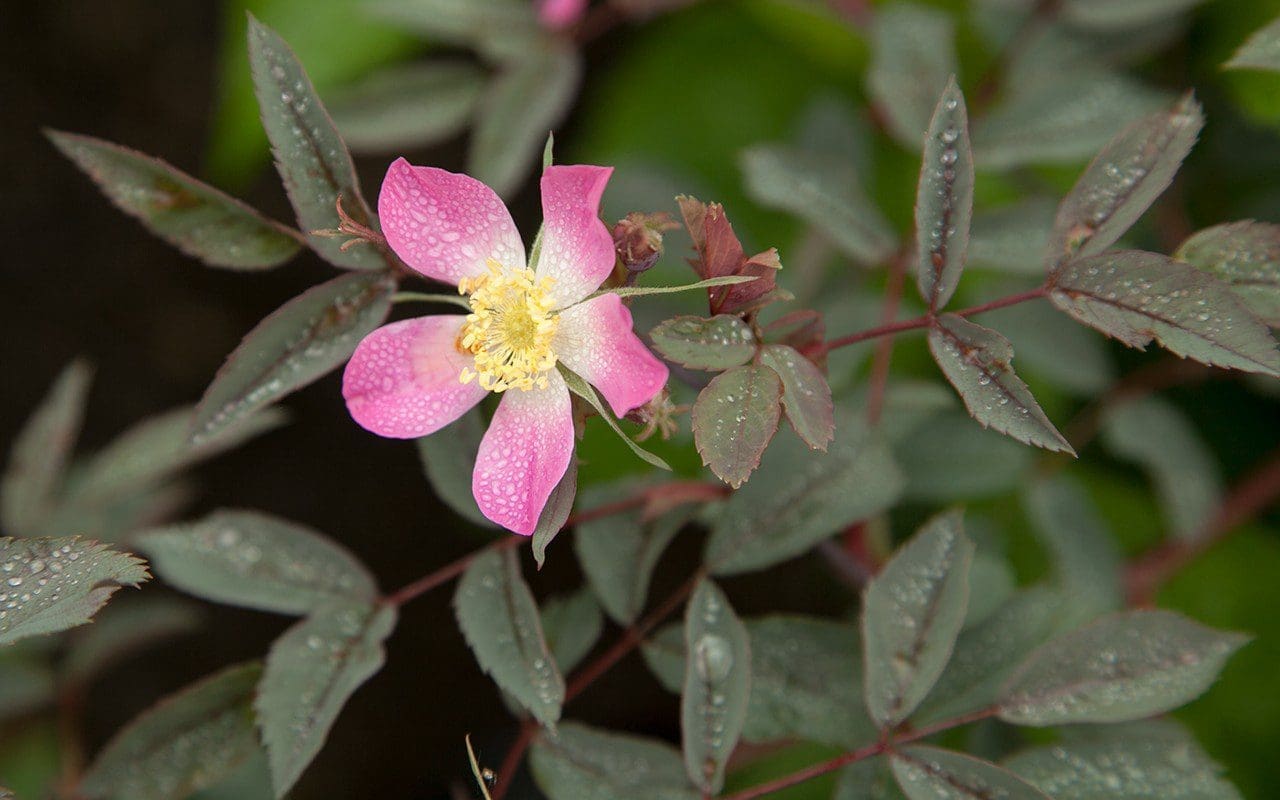 Rosa glauca
We have removed all the double David Austin roses from the garden and made a cutting area where they sit in sensible rows with dahlias and cutting peonies. Their opulence is wonderful in a vase, but not where I want things to feel on the wild side. Instead, Rosa glauca has made its way into the perennial planting, Its young coppery foliage ages to a completely matt grey-green as June gives way to full summer and it makes a delectable background, arching elegantly and scattering tiny, perfectly formed, pink dog roses along its limbs, which become mahogany-dark hips in autumn. I love it and am pleased to have it back after not having the room when gardening in London. If left untouched it will form a loose bumound of six foot in all directions. However, it can be coppiced hard every third or fourth year for the benefit of new, strongly coloured foliage, although you will have to wait a year before it starts to flower again.
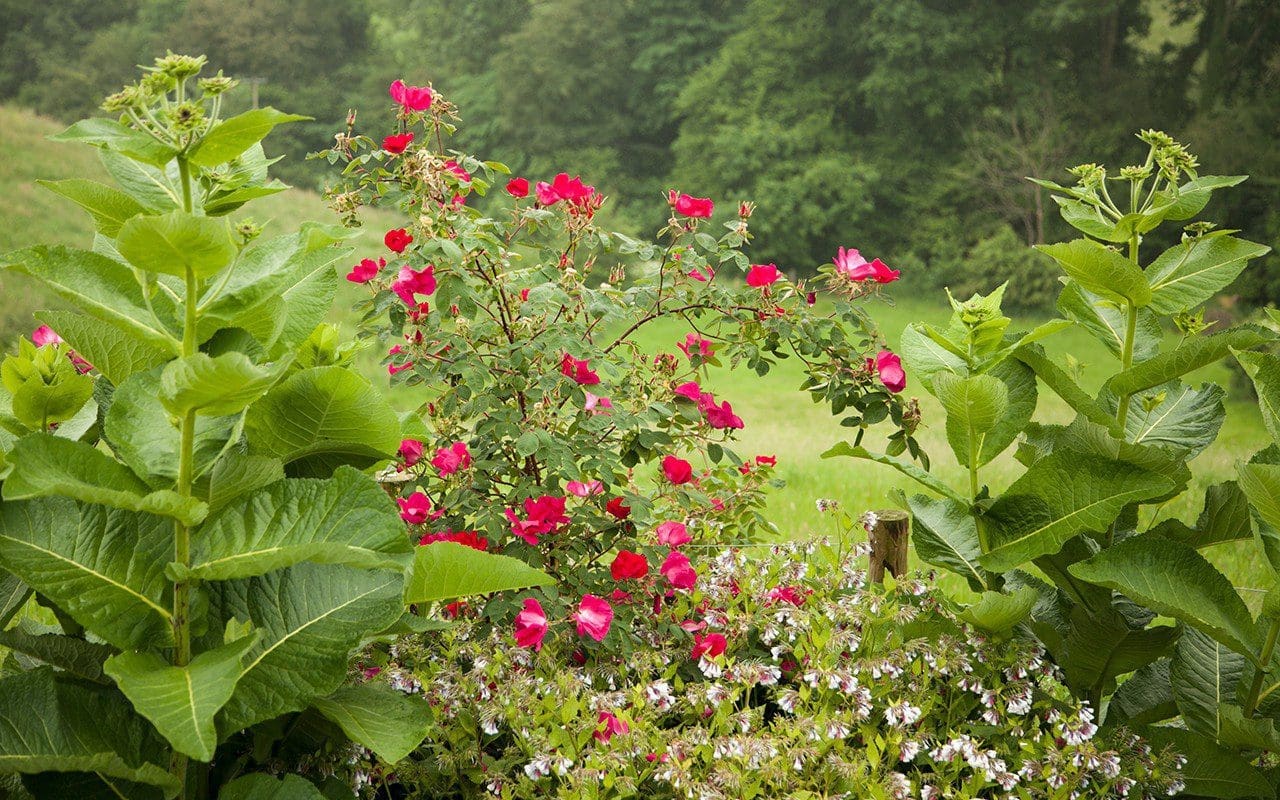
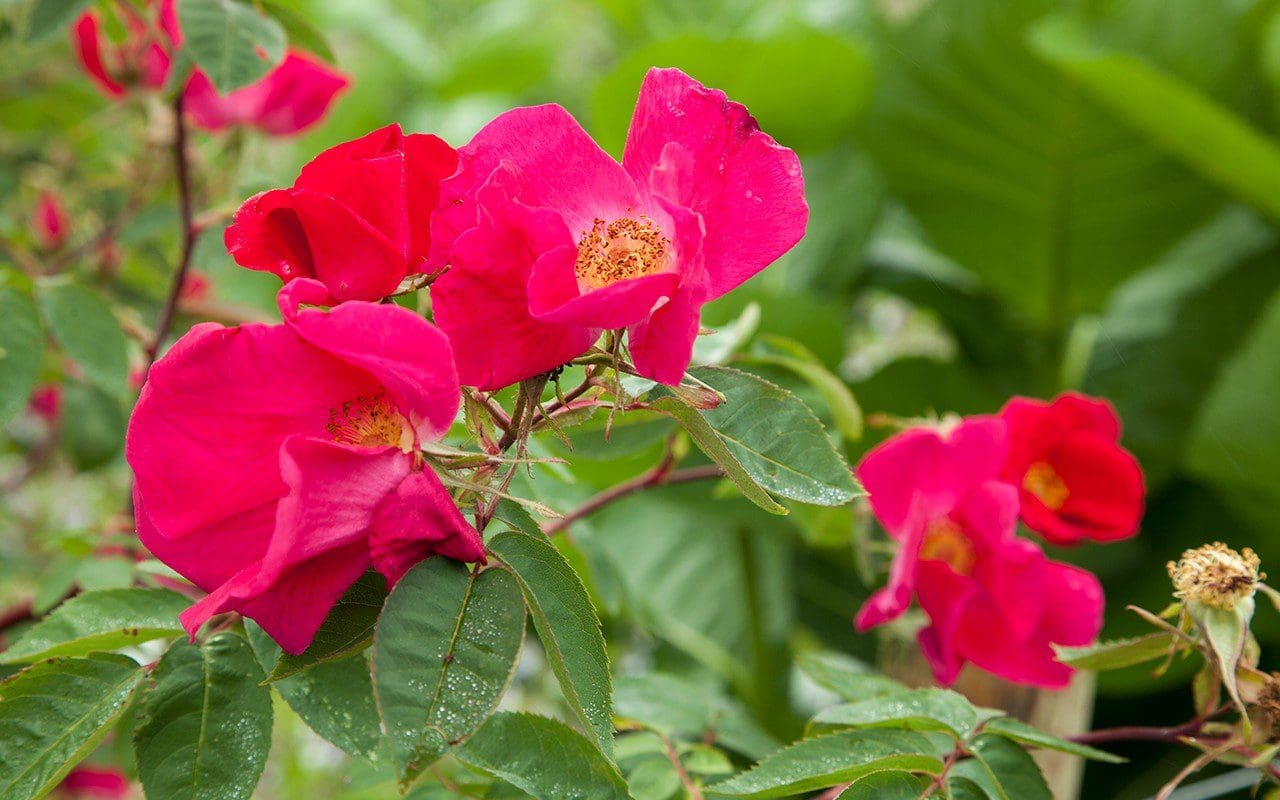 Rosa ‘Scharlachglut’
The last time I grew Rosa ‘Scharlachglut’ was at Home Farm, where it spilled through the gold-flowered oat grass, Stipa gigantea, in the Barn Garden. Cultivated roses and grasses make curious bedfellows in the borders, but the singles sit well with informality. The colour in the enclosed space of the Barn Garden was deliberately provocative and you could feel the race of your pulse when the reds and pinks came together. ‘Scharlachglut’ means ‘Scarlet Blaze’ (it is sometimes sold as ‘Scarlet Fire’) and, true to its name, it flames fiercely against the green in the landscape here, but I am delighted to see it unapologetically announcing summer.
Though once blooming – as are its companions above – its brevity is remarkable. Scarlet, perfectly shaped buds open bright vermilion and age to a hot, cerise pink so that a range of colour appears along the length of arching limbs. As the flowers age they also increase in size and, although perfume is not its greatest strength, no matter, its presence is astonishing. Though I currently have it growing through comfrey and inula for later, as the planting matures I will add cow parsley so that the scarlet is suspended in cooling white. The timing is at the point of crossover where the lace of the anthriscus is dimming. When the cow parsley is over they will both be gone.
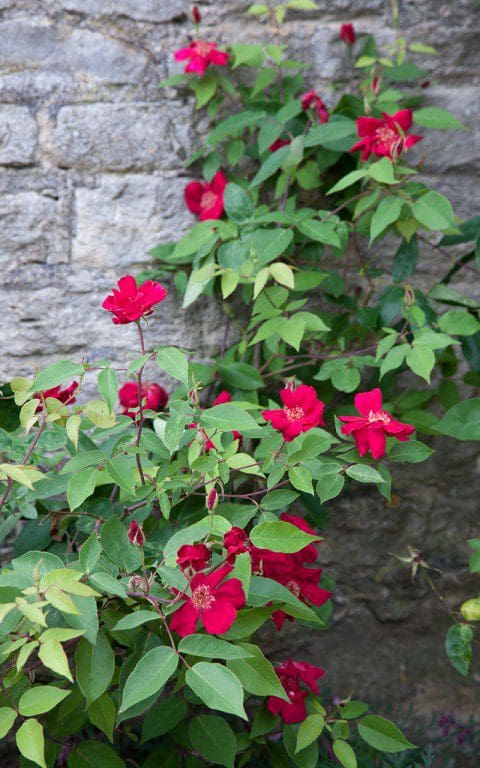
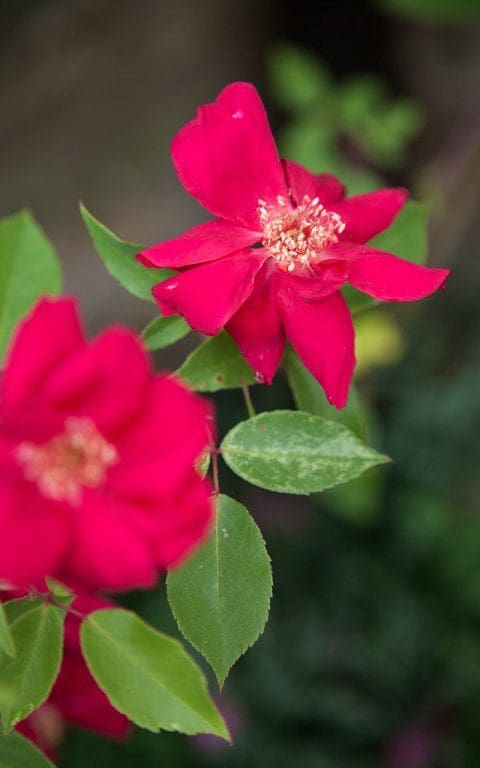 Rosa x odorata ‘Bengal Crimson’
Up by the house, and the only recurrent rose in this collection, is Rosa x odorata ‘Bengal Crimson’. Once again, this is a cutting from the garden in Peckham, where my original plant will be presenting less of a problem to its owners. Rosie Atkins gave me the mother plant when she was the curator at The Chelsea Physic Garden. It grows there in several places, spilling informally from the borders, for it is almost impossible to prune. The growth is soft and thornless, the limbs reaching whichever way they choose to go, but forming something lovely despite the lax behaviour. Being slightly tender, it loves London living and will easily grow to two metres or more in each direction against a wall, or taller with support in a sheltered position.
It hated life here initially and my young cutting burned and frazzled where it was exposed in its windy holding position. I have now found it a sheltered corner in the lea of the house where it looks like it ought to. Soft and choice, with pale, apple-green foliage and flowers that refuse to conform to order. Opening from perfect buds of crimson intensity, the single flowers rarely open completely, but fold and roll informally, fading so that they too have variance when they come together. As they do, one after another without pausing, until winter curtails the willingness to throw out more growth. That said, it is often in flower at Christmas, although by then the flowers are chilled to a softer pink. With a plant that is always so giving, it is important to repay it with the care of deadheading by taking the spent sprays back to fresh new growth. In doing so, you can give it just the amount of attention it needs to keep the plant looking good and, after a brief pause, it will respond with more flower. A simple exchange, and an opportunity to spend some time up close with this beauty.
Words: Dan Pearson / Photographs: Huw Morgan
Published 9 June 2018
A year ago now, and with the prospect of planting up the final part of the garden in the autumn, I wanted to add some variety to the range of plants that was available from my favourite nurseries. So, I set about sowing some additions from seed, to feel that I’d grown them from the very beginning and to understand them fully. Bupleurum perfoliatum and Aquilegia longissima were needed in quantity to weave into the new planting and to jump around, as if self-sown. It was also good to revisit plants that have become hard to obtain, such as Aconitum vulparia, a creamy wolfbane from Russia which I’d grown as a teenager and had a hankering for again.
The success stories of the plants I knew and understood were reassuring. Those that I didn’t, vexing but fascinating nevertheless. It is a mistake to throw out a pot of seed that hasn’t germinated within a year, because it may simply be waiting for its moment. The Viola odorata ‘Sulphurea’ needed the freeze of a winter to break dormancy and I learned by chance that Agastache nepetoides needs light to germinate, and so should be surface sown. My usual top dressing of horticultural grit, used to prevent moss and as a slug repellent, was washed from the sides of a pot by a leaky rose, opening up a window of opportunity, the seed germinating there and there only to burn this fact into my memory. Some seed may have been too old by the time it was sown, with very poor germination on the Anemone rivularis, but the small numbers mean that the plants that made it are that much more precious. Although the value of seed-raised plants increases when you have tended them from their vulnerable beginnings, it is also good to feel that you can be generous, because some plants are just so easy.
Having grown the biennial Lunaria annua ‘Chedglow’ the year before, the first plants had all flowered and seeded so an interim generation was needed to set up a continuity. The large, flat seed threw out fat cotyledons in a matter of days and the distinctive purple-tinged foliage was already there in the first true leaves. Where the perennial Anemone rivularis took their time to build up strength for the life ahead of them and had to be watched because they were so slow, the pioneering nature of the Lunaria means that you have to keep up to make the most of the growing season. The seedlings were potted on into 9cm pots as soon as the first true leaf was properly formed, handling the seedlings only by their cotyledons and never their vulnerable stems. With the new opportunity of their own space, they worked up a rosette last summer that was hearty enough to plant in the autumn and bolt the early spring of flower a year after sowing.
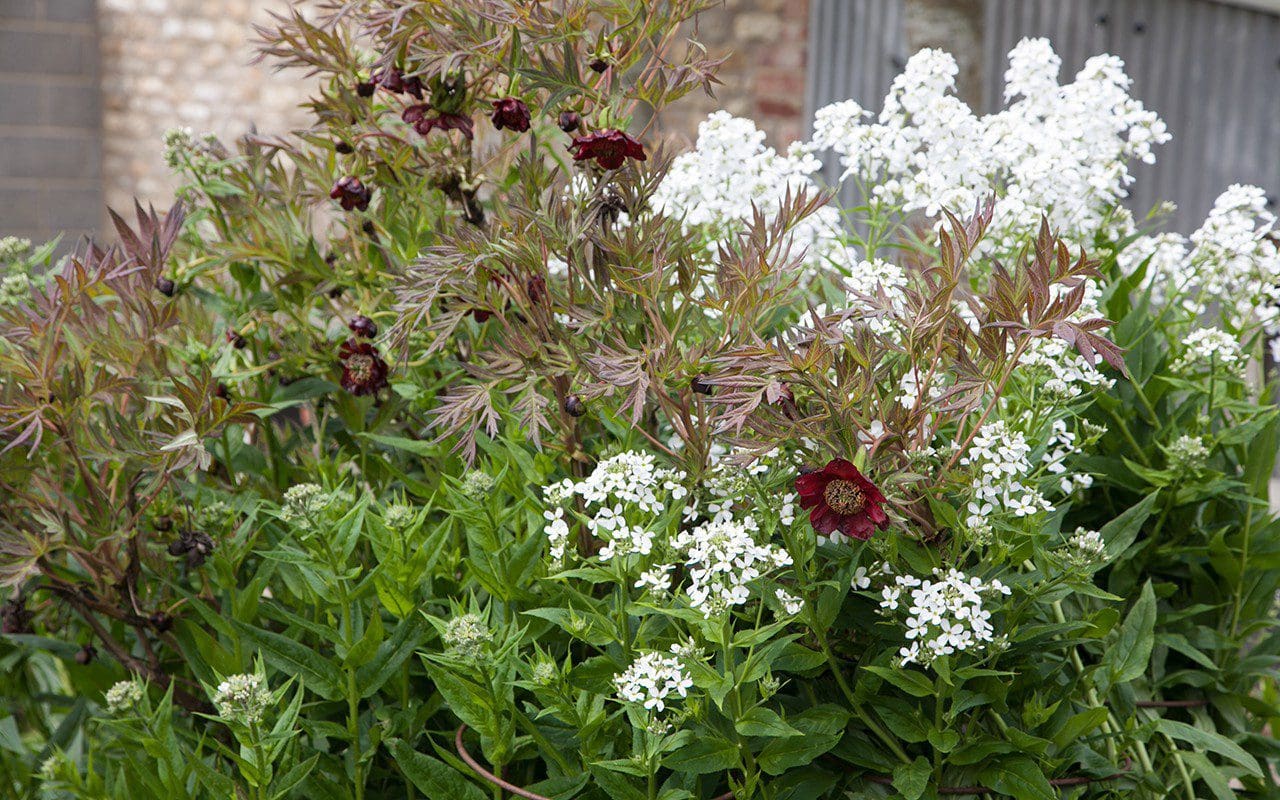 Hesperis matronalis var. albiflora with Paeonia delavayi
Of the short-lived perennials I’ve used to provide for me early on in the life of the establishing garden, the Hesperis matronalis var. albiflora have been good to revisit. The white sweet rocket was a plant of my childhood garden, where it had sprung from the clearances of brambles like a phoenix from the ashes. Rising up fast with the cow parsley and easily as tall, its early flower bridges late spring and early summer. I have not had room to grow it for a while, because its ephemeral nature this early in the season can easily smother neighbours, to leave a summer gap when you cut it back to the rosette once it’s done. Let it seed and you will find a rash of youngsters, for it is also a pioneer that sees seedlings bulking up over summer in readiness to conquer new ground the following spring. This eagerness can easily be tapped, and it is good to leave a couple of limbs to go to seed as the plants are only good for two or three years before they exhaust themselves.
Sweet Rocket are adaptable to both an open position or to dappled shade, but the advantage of a cool position is that they grow less vigorously and take less ground. Mine were interspersed randomly in the planting to perfume the steps that descend to the studio and their distinctive, sweet scent is held in the stiller air caught behind the building. Bulking up fast once they were released from their pots, they have provided me with a rush of new life that has outstripped but complemented their slower growing neighbours. Seed-raised plants are more often variable and this is one of the joys of growing your own. Of the twenty or so plants, I must have almost as many different variants.
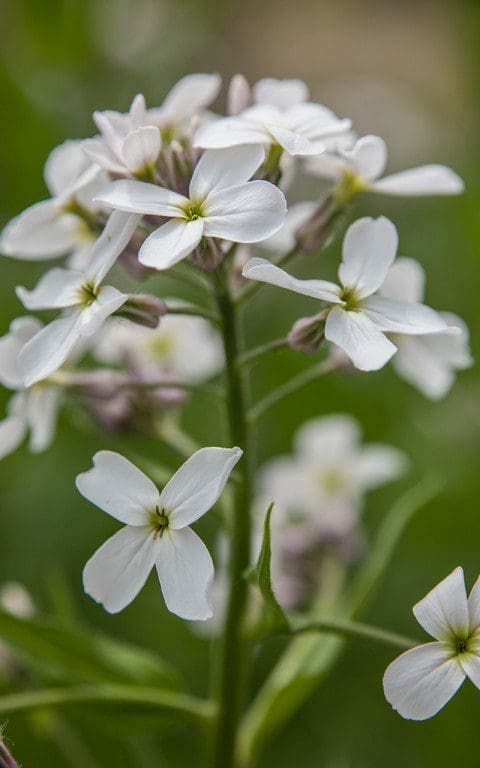
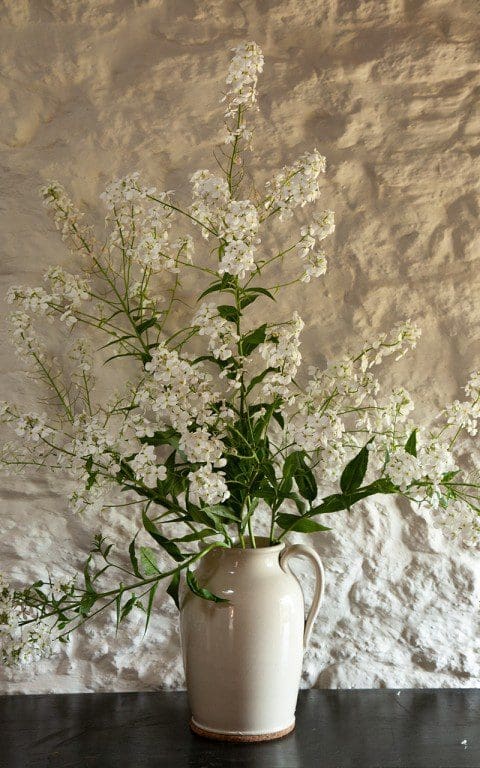
There is a blowsy head girl, brighter and showier than its neighbours and probably the one you would choose as a complement to a Chelsea rose garden, although she leans and topples under her own weight of flower. There is a perfectly behaved plant nearby. Just as white, but smaller and quieter and perfectly happy to stand upright without staking. This is probably the one that you would propagate from spring cuttings if you wanted something showy and reliable. My favourites have a wilder feel though; a grey-pink cast to some and more open flower panicles to others that provides the space I am so keen on and a lightness in the planting that feels less dominant. Head Girl has been used for cutting and will come out when I cut the plants down to prevent it from seeding and allow my slower-growing perennials around them the room they need to fill out later in the summer. Though the Actaea, the Zizia and the peonies are destined to provide a more certain future, the fast sweet rocket will always be just that.
Words: Dan Pearson / Photos: Huw Morgan
Published 26 May 2018
It is epimedium time again. Something that I always look forward to and am never disappointed by. I discovered my first buried under a bramble thicket in my childhood garden. I can see it now, a survivor of a garden that had been overwhelmed almost fifty years earlier. It was spring and we were clearing the remains of an old border and the soft, marbled foliage was at its most magical April moment. At that point I had never seen anything like it before, the delicate heart-shaped leaves, copper-toned and marbled red with veining. Hovering amongst them and emerging from fine, down-dusted buds were pale flowers. Aptly nicknamed Fairy Wings, they hovered under the tangle of thorns as if they had been waiting all that time to cast their spell on the ten year old me.
The plant in question was Epimedium x versicolor ‘Sulphureum’, which I use regularly now where something refined, but trustworthy is needed. They thrive in the inhospitable places created by the influence of deciduous trees and shrubs and are perfect for a cool, north facing position. The evergreen foliage forms a low mound of overlapping shields, amounting to no more than a foot in height and reliably creeping slowly sideways. Winter sees the foliage turn from dark green to bronze before it finally gives in as the new growth pushes through. Part the winter foliage at the beginning of March and you see the embryonic new growth already formed. At this point last year’s leaves can be sheared to the ground in established clumps to see the best of the new growth that soon comes to replace the old.
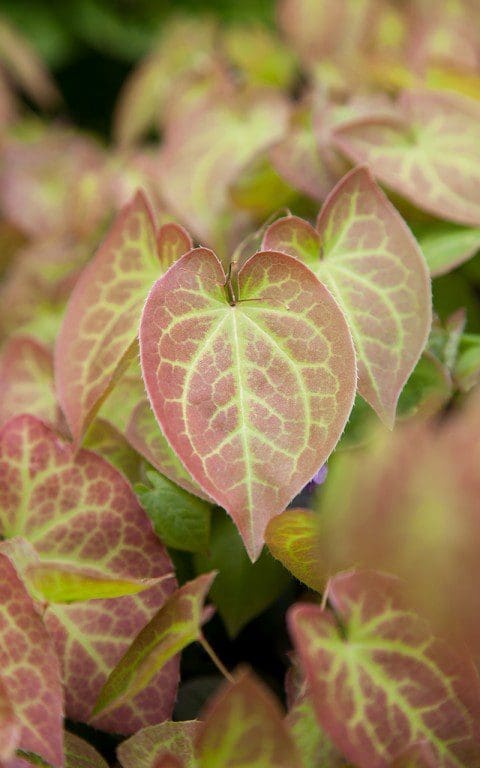 Epimedium x versicolor ‘Sulphureum’ foliage
There are a number of good European epimediums and all those available make adaptable and foolproof groundcovers. The gold-flowered E. x perralchicum ‘Frohnleiten’, with its glossy foliage, is almost indestructible and the small-flowered E. pubigerum is a worthy plant too, with tiny creamy sprays of flower which I regularly include in planting plans. However, about fifteen years or so ago I started to discover the Chinese species, which had slowly been becoming available and since then I’ve been spoiled for good and forever.
The Chinese epimediums are more demanding than their easy European cousins. It would be foolhardy to think you could tuck them under the philadelphus and forget about them until their yearly cutback. They quickly let you know if the atmosphere is too dry, with shrivelling edges to their finely-formed leaves and they fail to put on growth if you don’t emulate the deep leaf-mouldy woodlands to which they are accustomed. I have tried, and then regretted, cutting their foliage back in March, and had to endure two years of sulking in return. But, for their exceptional beauty, they are worth the effort and, once you have cracked what they like and where they like to be, not quite as particular as you might think.
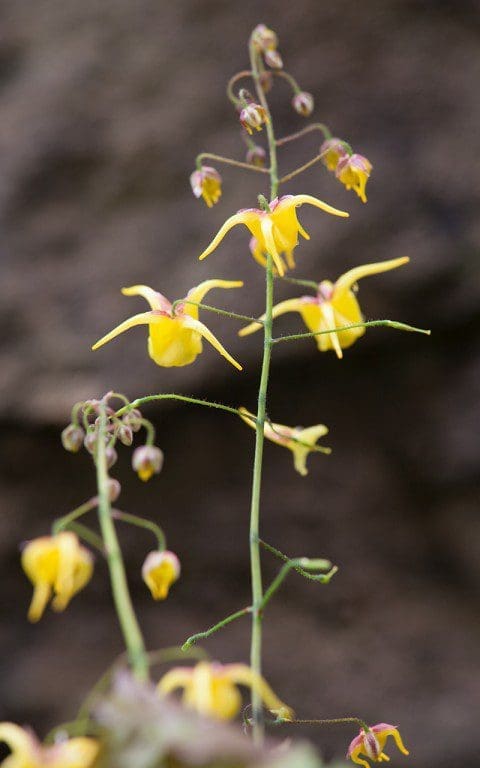 Epimedium davidii
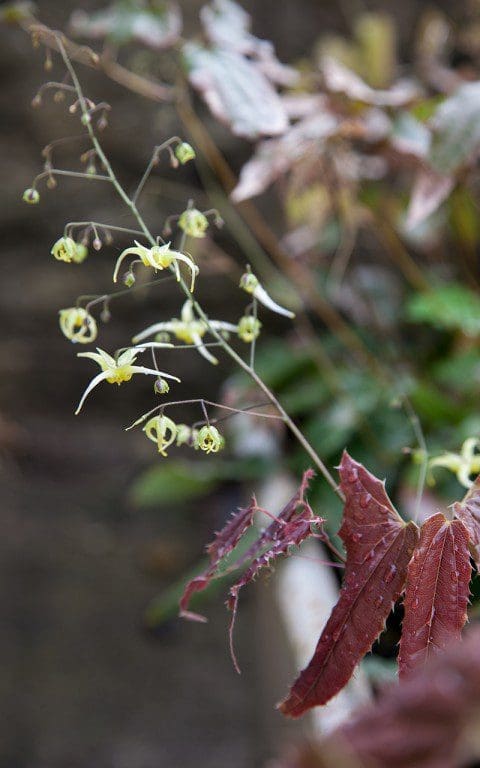 Epimedium ‘Spine-Tingler’
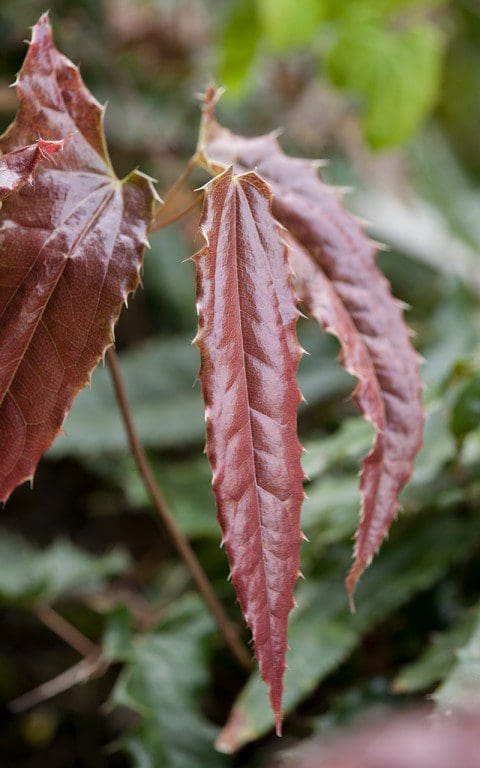 Epimedium ‘Spine-Tingler’ foliage
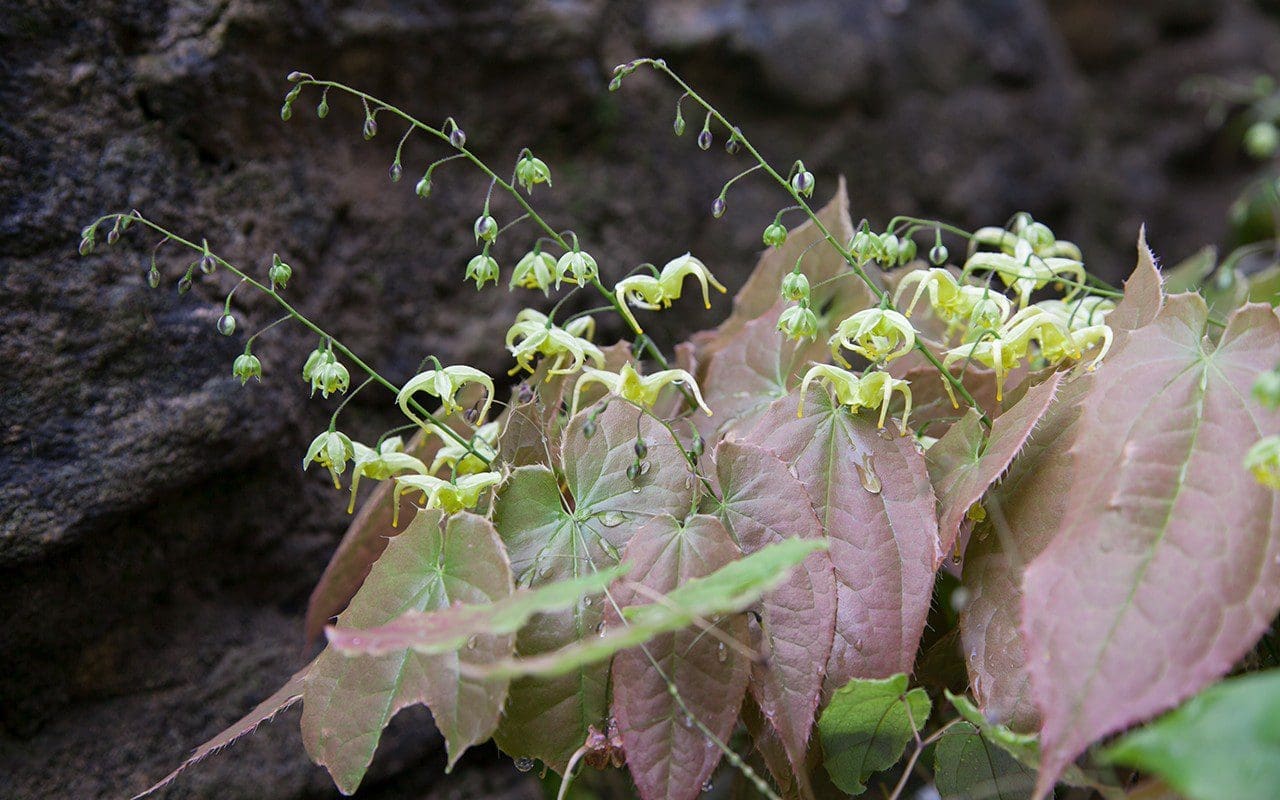 Epimedium franchetti ‘Brimstone Butterfly’
My little obsession started in the sheltered microclimate of the garden in Peckham. I grew them mostly in pots, which were kept in the still and shadow at the garden’s end. In April, after carefully picking over the damaged leaves, they were brought up to the house for us to marvel at their metamorphosis. The emerging leaves, flecked and chequered with bronze, ruby and purple, and the wiry stems pushing through in a reptilian reach, to throw a constellation of flower above them. Each of the species had something particular that set it apart from the others. The jagged foliage of E. fargesii looks almost aggressive, though it is not to the touch, whilst the darkly flecked foliage of E. myrianthum is like river washed pebbles in its roundedness.
I soon found that I had seedlings, which have proven to be highly variable. Specialist nurseries that have been hook-line-and-sinkered, have long lists of named varieties which reflects their willingness to cross. Though I am more selective now about how many seedlings I keep, I do have a particularly good one that looks like it has E. wushanense ‘Caramel’ in its genes, and possibly E. mebranaceum, with sprays well over two feet long, widely-spaced flowers an inch across and dramatically red-speckled foliage.
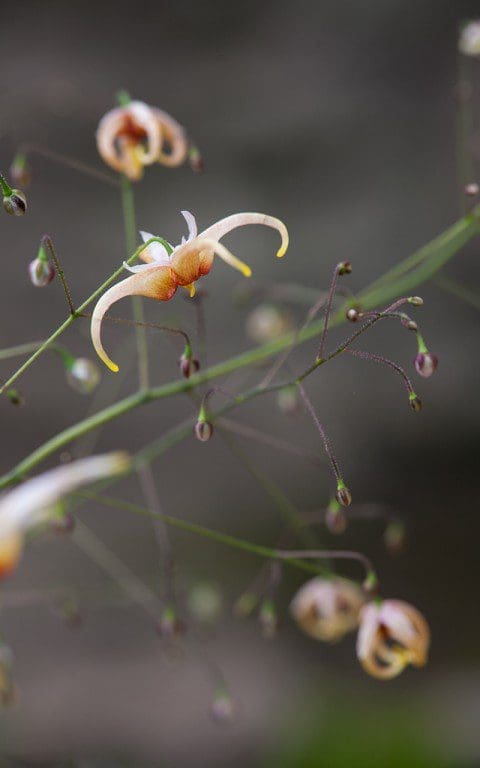 Peckham seedling
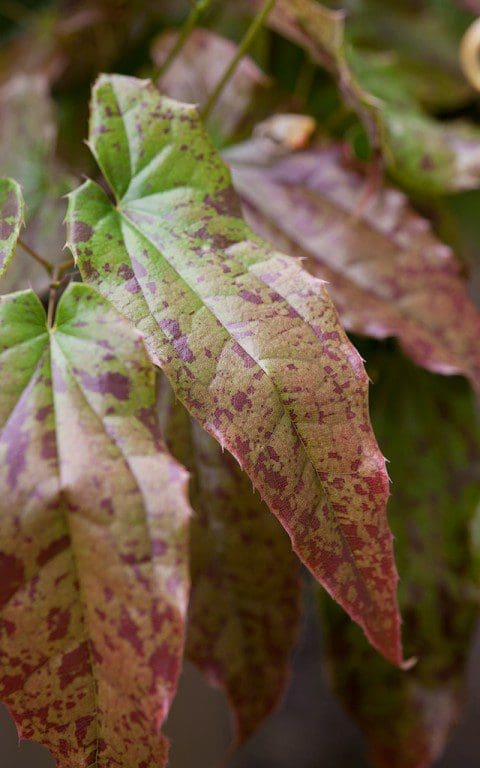 Peckham seedling foliage
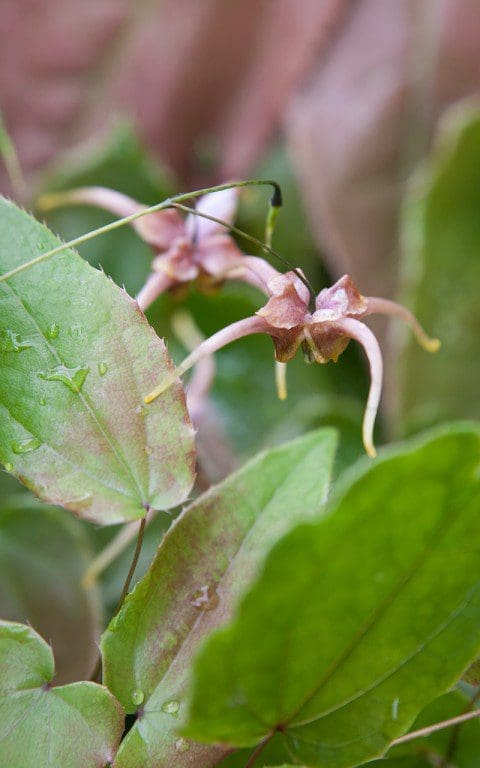 Epimedium ‘Stormcloud’
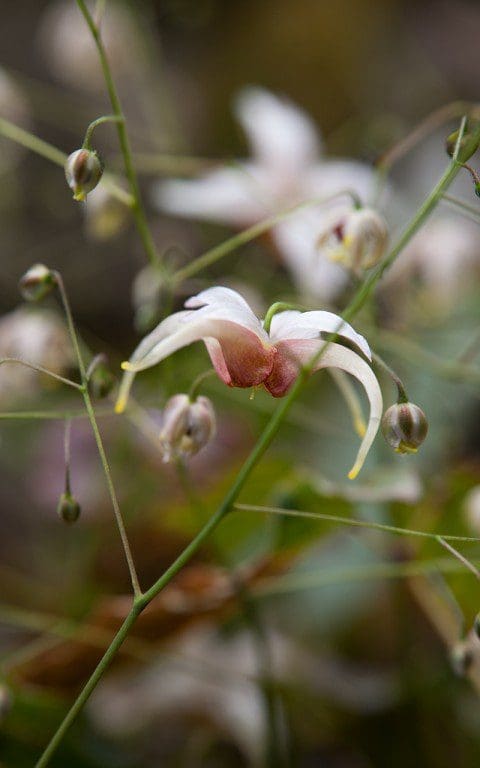 Epimedium ‘King Prawn’
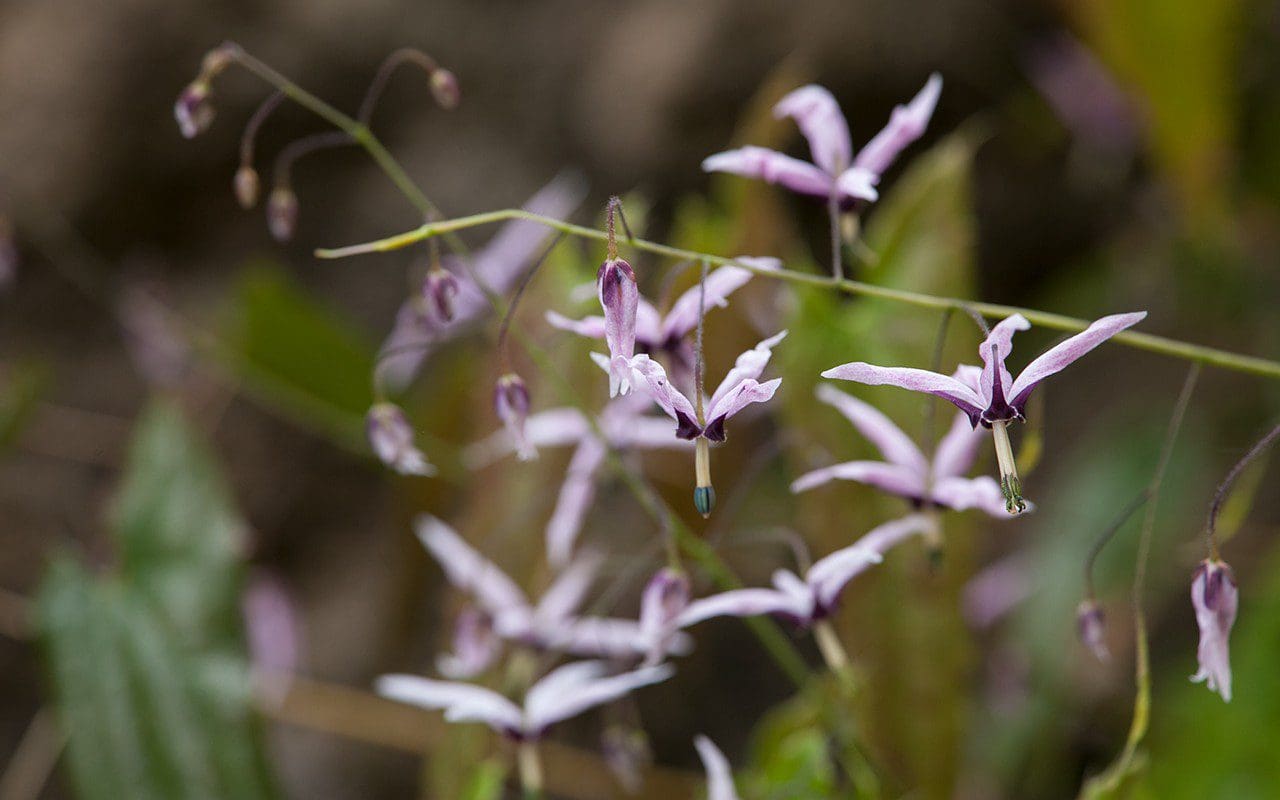 Epimedium fargesii ‘Pink Constellation’
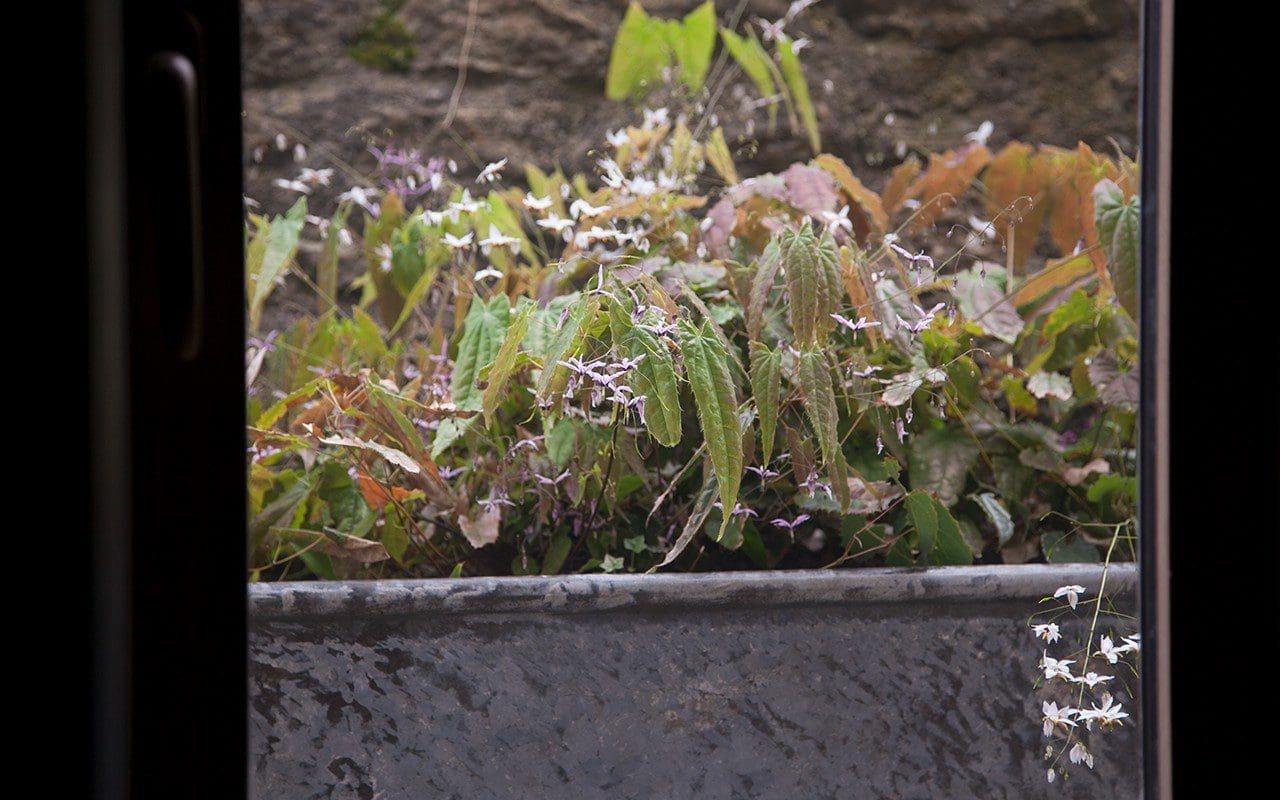
My conundrum – and my saving grace, for I would have fifty not two dozen by now if I had the conditions – is that I have just one sliver of suitable shelter here on our bright, windy hillside. The recess behind the house in the north shade is just wide enough for three zinc cattle troughs, which have been backfilled with a friable mix of good soil and compost. A wicked March wind from the north east will be their undoing if they have already started into growth, but they have done well for me now that they are out of pots and have reliable moisture at the root. We have three windows that look onto them from the ground floor and they are the stars of these little theatres for six to eight weeks in the spring.
As time goes on, I have found that some are better doers than others and that all the time nurserypeople are selecting improvements. Experience has shown that the straight species E. wushanense struggles here, while it did much better in the increased warmth of London. I have moved it back to be in the shade of the Katsura in the studio garden. However, the named offspring, E. w. ‘Caramel’ does splendidly and must have some more cold-tolerant tolerant blood in it from something hardier. E. fargesii ‘Pink Constellation’ has now been eclipsed in my opinion by a form called ‘Heavenly Purple’, which was bred by Karen Junker’s son, Torsten, and which I was lucky enough to get hold of before she stopped selling them. I shall be swapping them over in the troughs when I am sure I can part with the former. E. franchetii ‘Brimstone Butterfly’, with its flamingo-pink emerging foliage is excellent. Very strong and curiously showy, I like E. ‘King Prawn’. A hybrid raised by Julian Sutton of Desirable Plants, it is said to be a cross between E. latisepalum and a form of E. wushanense collected by Mikinori Ogisu, the famous Japanese plant collector with exquisite taste. Any of his discoveries have the letters Og and a number in their name and are well worth seeking out.
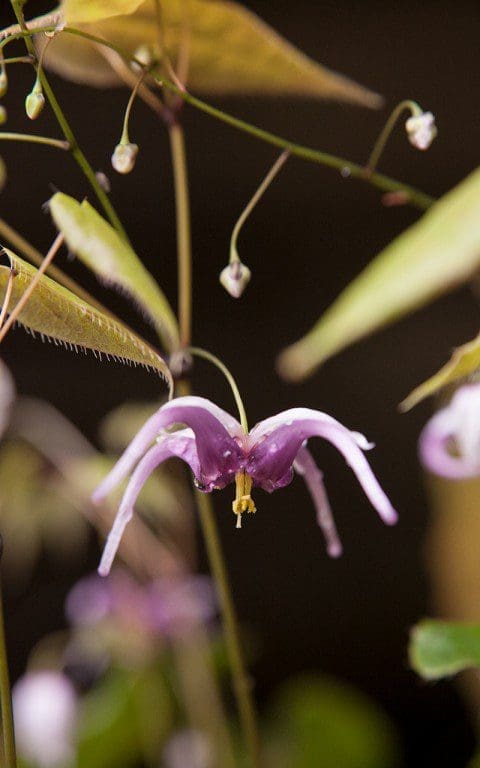 Epimedium acuminatum
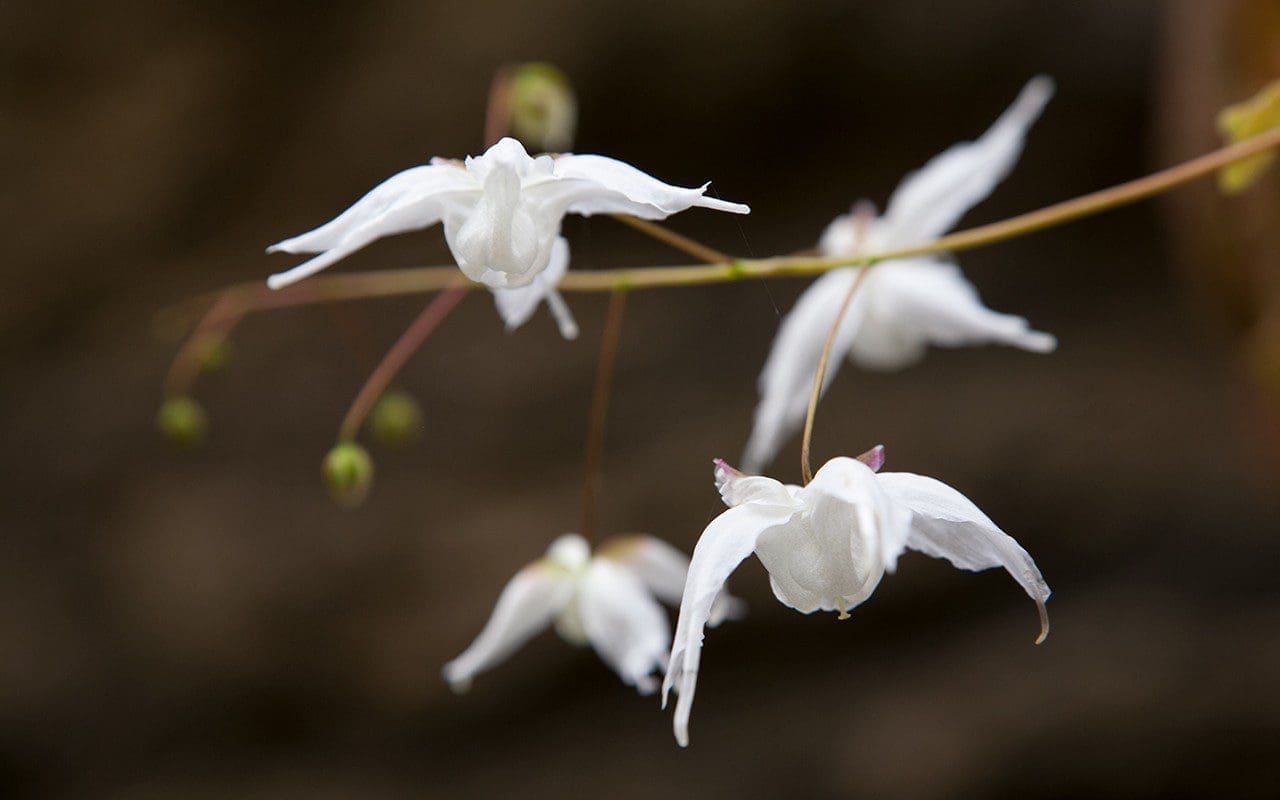 Epimedium ‘Egret’
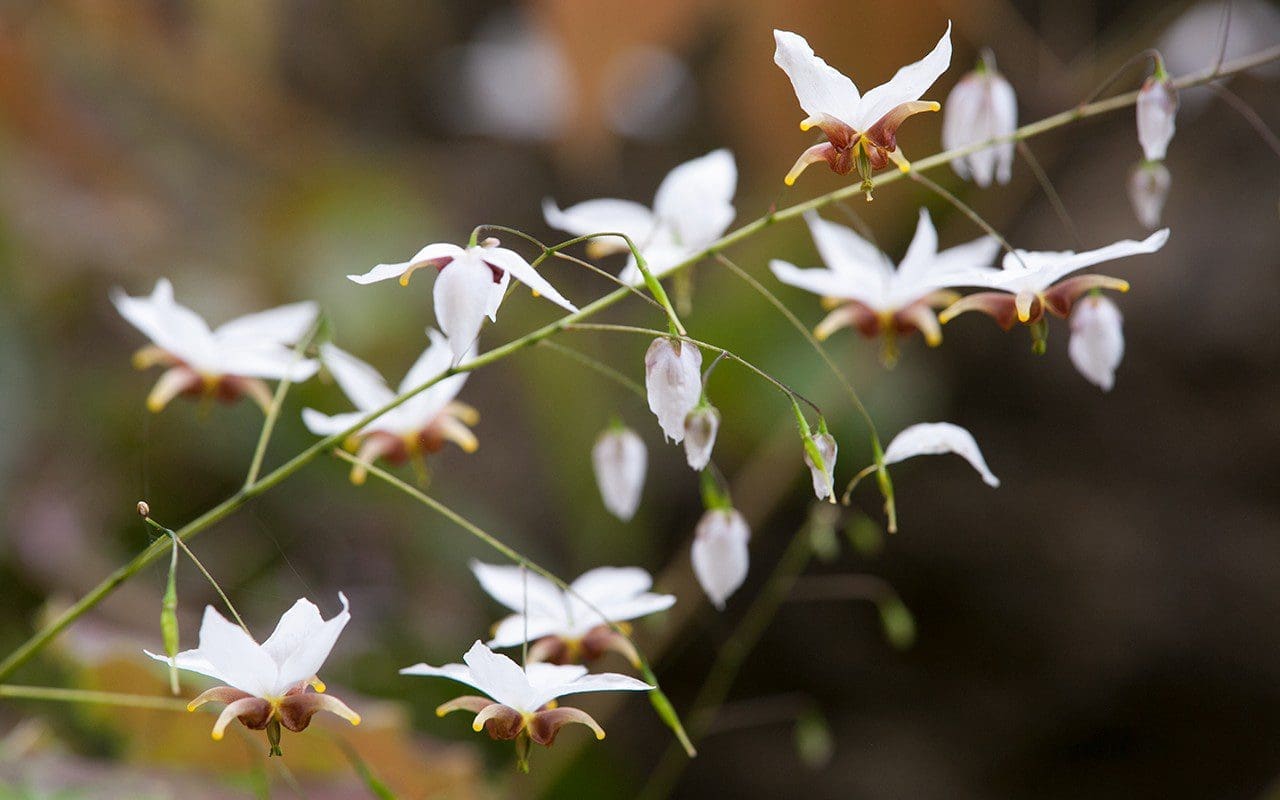 Epimedium ‘Amanogawa’
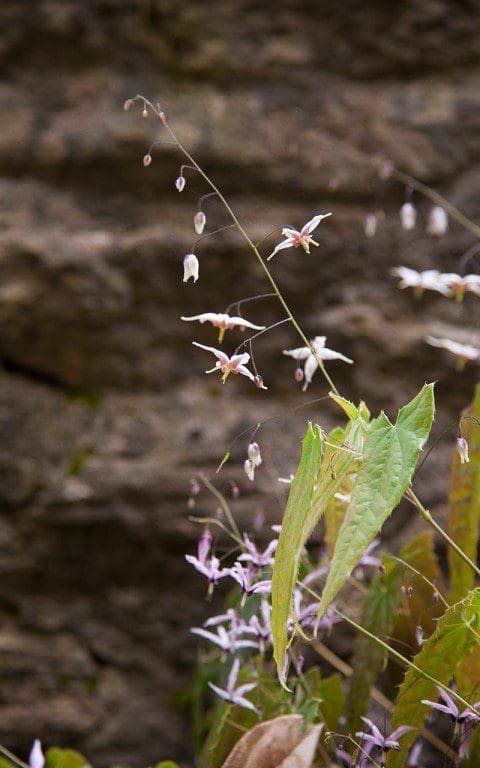 Hillside white seedling
Once you get a number together their promiscuity will find tiny seedlings taking hold in cracks that are to their liking. This year I have two Somerset seedlings in flower for the first time, which I am judging to be worth bringing on – a dusky pink fargesii cross (main image), and a pale, elegant tall grower which looks to have fargesii and ‘Amanagowa’ in it. Right now I have my eye on one that has found a niche in the back wall where there is little else for it but moss and moisture. I am hopeful, of course, that this one will be special too. The excitement is in the wait.
Words: Dan Pearson / Photographs: Huw Morgan
Published 5 May 2018
It has rained every day but one over the last fortnight. Not just a passing shower, but the whole day, like the ones you remember confining you to the house during the school holidays. The ground is wet, as saturated as it can be, and the stream has been rushing driftwood into dams, scouring the banks and rumbling stones into new places.
I have ventured carefully onto the beds just twice whilst we have been here over the Easter period to pull bittercress and winter-growing speedwells. They have seized the no-go zone and have made growth despite the cold. Hardy celandines have flushed the hedgerows with leaf, but they have not been showing their lacquered petals because the sun has stayed behind cloud. Elsewhere, there is half as much growth as this time last year and I find myself yearning for the chance to fill a jug with spring things, for the excitement of the new.
With the winter refusing to loosen its grip, the pickings have been slim, but this is compounded by the fact that this is a new garden. The tardy spring is a also a clear reminder that when you start from scratch, a garden is a commitment to waiting and though I know it will ease as soon as the weather warms, right now I am feeling the hunger.
I have started a list of early to bloom flowers that I’d like to see more of next year. The garden could take more pulmonarias in several places and in quantity for that early colour, and so that I can lace them with early bulbs. Right now, this is a garden without bulbs, because I like to feel settled for at least a year before introducing a layer that can complicate change if you need to make it early on. We have bulbs in the meadow banks that are slowly establishing, but their absence amongst the new life of the garden is stark. I want to see erythroniums where there will be a little shade, Ipheion where the sun can spring open their flowers and early Corydalis to make their way through the groundcovers as they mesh together.
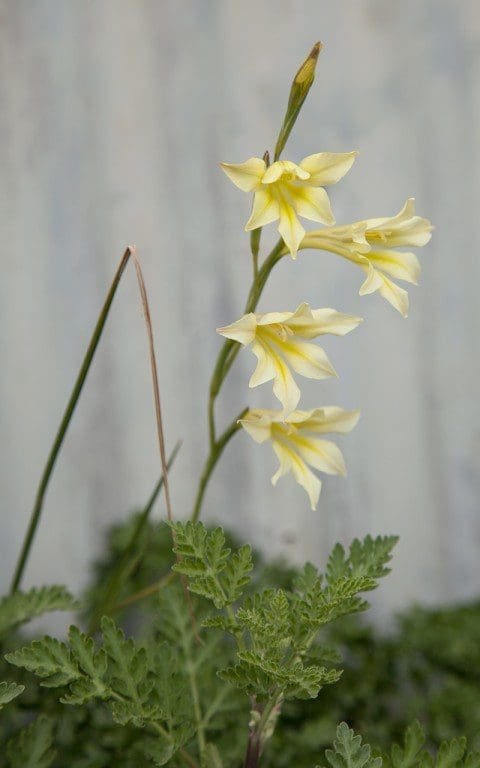 Gladiolus tristis
Up by the house and alongside the barn where we are a couple of years ahead and have already started to introduce the bulb layer, I have planted Crocus speciosus, Nerine bowdenii and Amaryllis belladonna for the autumn, but right now and rising above them all at the other end of winter is Gladiolus tristis. This willowy South African is a week or so later this year, but miraculous enough in its emerging form to stave off my hunger. Awakening from summer dormancy in the autumn, their needle like leaves push through the receding growth of their neighbours to stand tall already through the dark months. Reading will tell you that they need a sheltered spot and yes, I have seen this winter green foliage damaged in a frost pocket, but they have stood unscathed by this year’s winter on our exposed slopes. Literature will also tell you that the Marsh Afrikaner is to be found in wetland areas and on banks above streams in high grassland in the wild, but here free-draining ground and full sun provide their favoured position.
The flowers, which unfold themselves like bony fingers from their slender glove of foliage, are delicately balanced on almost invisible stems. Their necks tilt upward to suspend the flowers as they develop and there is room between each, flushing later in April first green then a luminous primrose to cream as they age. Standing at almost three feet by this point the hooded blooms will catch the slightest breeze to sway, tall and elegantly. At Great Dixter, where I first saw it in the Sunk Garden, I imagine its night perfume would be caught on still air held by the surrounding buildings. Here on our breezy slopes, we have it by the path so that you can dip your nose to the flowers at twilight.
Staking the rangy limbs is necessary if they strain and topple for light, so I like to grow it hard in a bright, airy place to keep strength in the limbs. Staking it once it is grown is almost impossible, however, as its foliage is every bit as delicate as the reeds it resembles and will bend irreparably once it falters. A network of hazel twigs, inserted if you can remember in the autumn, will allow it to grow into position and not to distract from its finely drawn outline. One that in every move of its early awakening will help in staving off the hunger pains brought on by a reluctant spring.
Words: Dan Pearson / Photographs: Huw Morgan
Published 7 April 2018
Although the snow from last weekend has all but gone, the drifts that stubbornly mark the lee of the hedges on the coldest slopes are a reminder that winter’s grip is still apparent. The primroses, however, have a schedule to keep and have responded with gentle defiance. The first flowers were out just days after the first thaw to light the dark bases of the hedgerows, and now they are set to make this first official week of spring their own.
Since arriving here, we have done our best to increase their domain. Although they stud the cool, steep banks of the lanes, they were all but absent on the land where the cattle had grazed them out. Save for the wet bank above the ditch where they were protected from the animals by a tangle of bramble. We noted that they appeared in this inaccessible crease with ragged robin, angelica and meadowsweet. Four years ago we fenced the ditch along its length to separate the grazing to either side and since then have done nothing more than strim the previous season’s growth in early January to keep the brambles at bay.
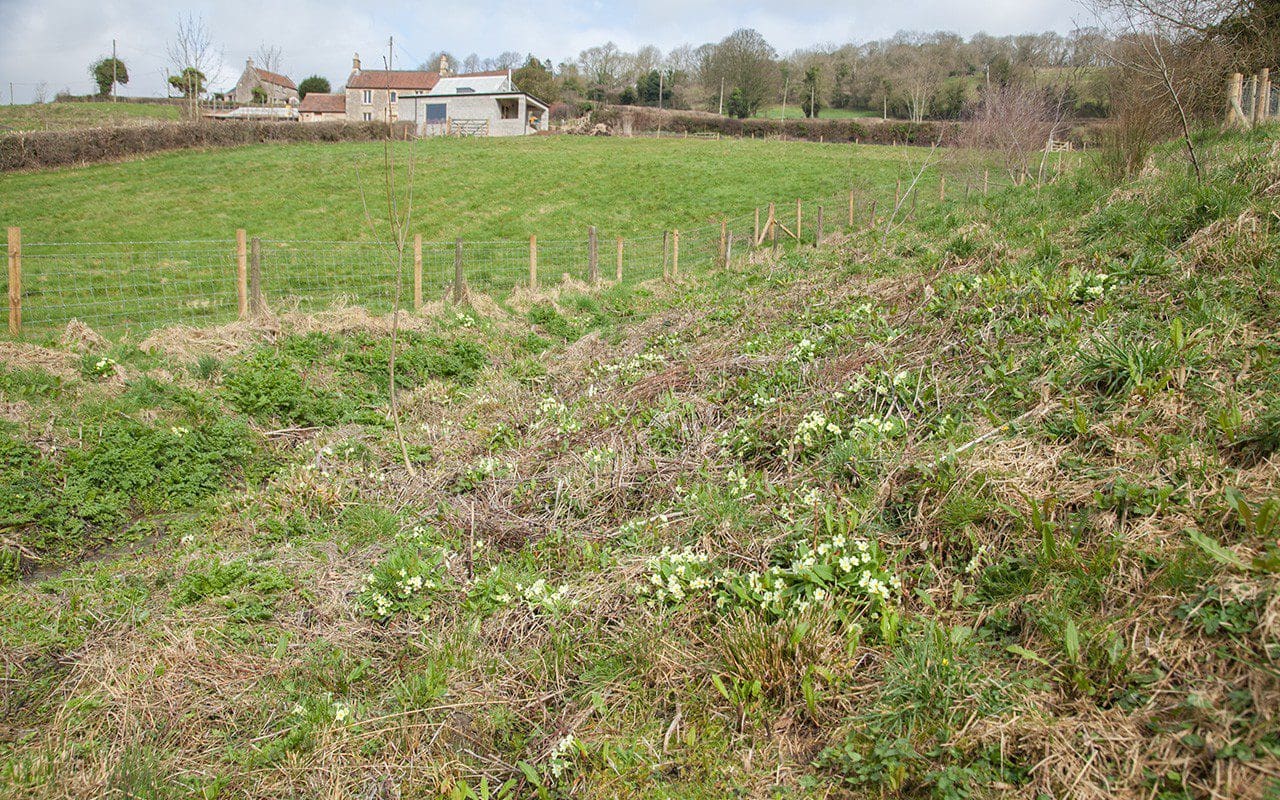
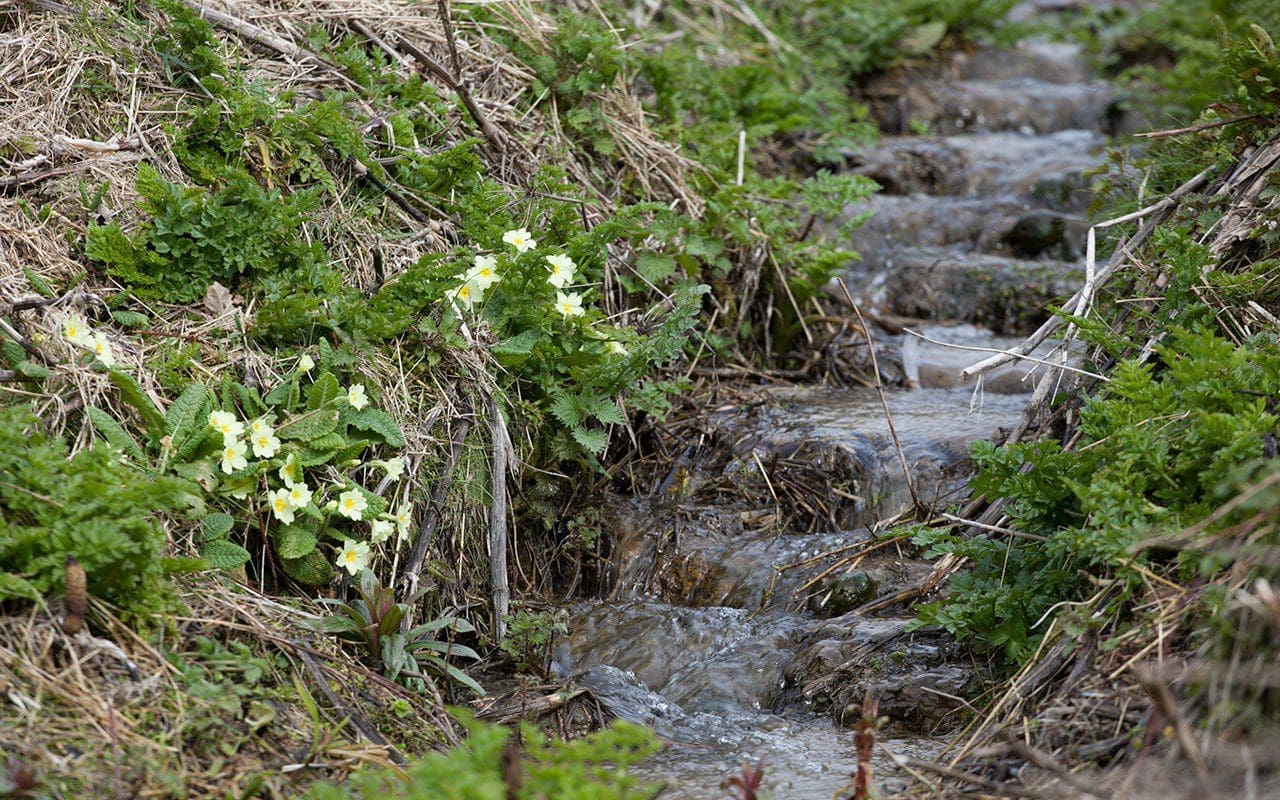
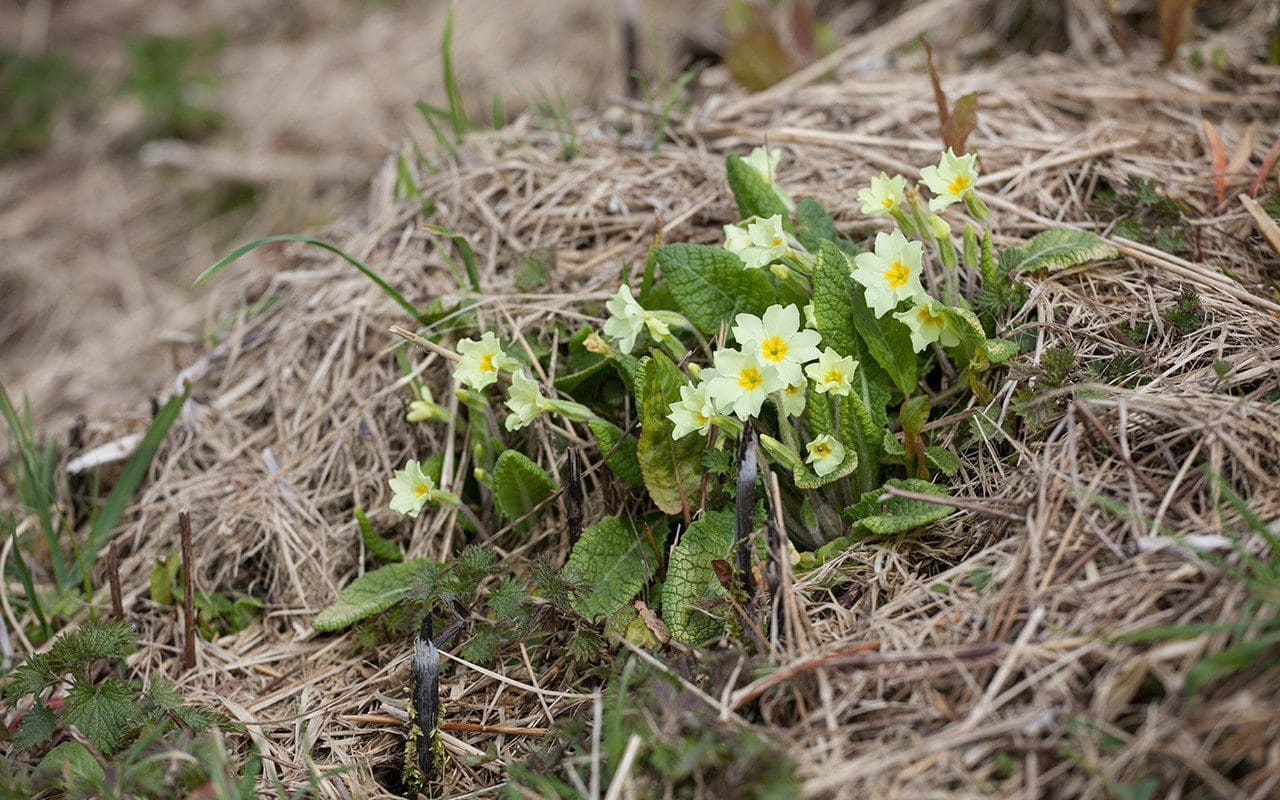 Primroses (Primula vulgaris) colonise the banks above the ditch
The new regime has seen a slow but gentle shift in favour of increased diversity. Though the brambles had protected them in the shade beneath their thorny cages, now that they have been given headroom the primroses have flourished. Their early start sees them coming to life ahead of their neighbours and, by the time they are plunged once more into the shade of summer growth, they have had the advantage. Four years on we can see them increasing. The mother colonies now strong, hearty and big enough to divide and distinct scatterings of younger plants that have taken in fits and starts where the conditions suit them.
Each year, as soon as we see the flowers going over, we have made a point of dividing a number of the strongest plants. It is easy to tease them from their grip in the moist ground with a fork. However, I always put back a division in exactly the same place, figuring they have thrived in this spot and that it is a good one. A hearty clump will yield ten divisions with ease, and we replant them immediately where it feels like they might take. Though they like the summer shade, the best colonies are where they get the early sunshine, so we have followed their lead and found them homes with similar conditions.
The divisions taken from the heavy wet ground of the ditch have been hugely adaptable. The first, now six years old and planted beneath a high, dry, south-facing hedgerow behind the house, have flourished with the summer shade of the hedge and cover of vegetation once the heat gets in the sun. It is my ambition to stud all the hedgerows where we have now fenced them and they have protection from the sheep. Last year’s divisions, fifty plants worked into the base of the hedge above the garden, have all come back despite a dry spring. Their luminosity, pale and bright in the shadows, will be a good opening chorus in the new garden. The tubular flowers can only be pollinated by insects with a long proboscis, so they make good forage for the first bumblebees, moths and butterflies.
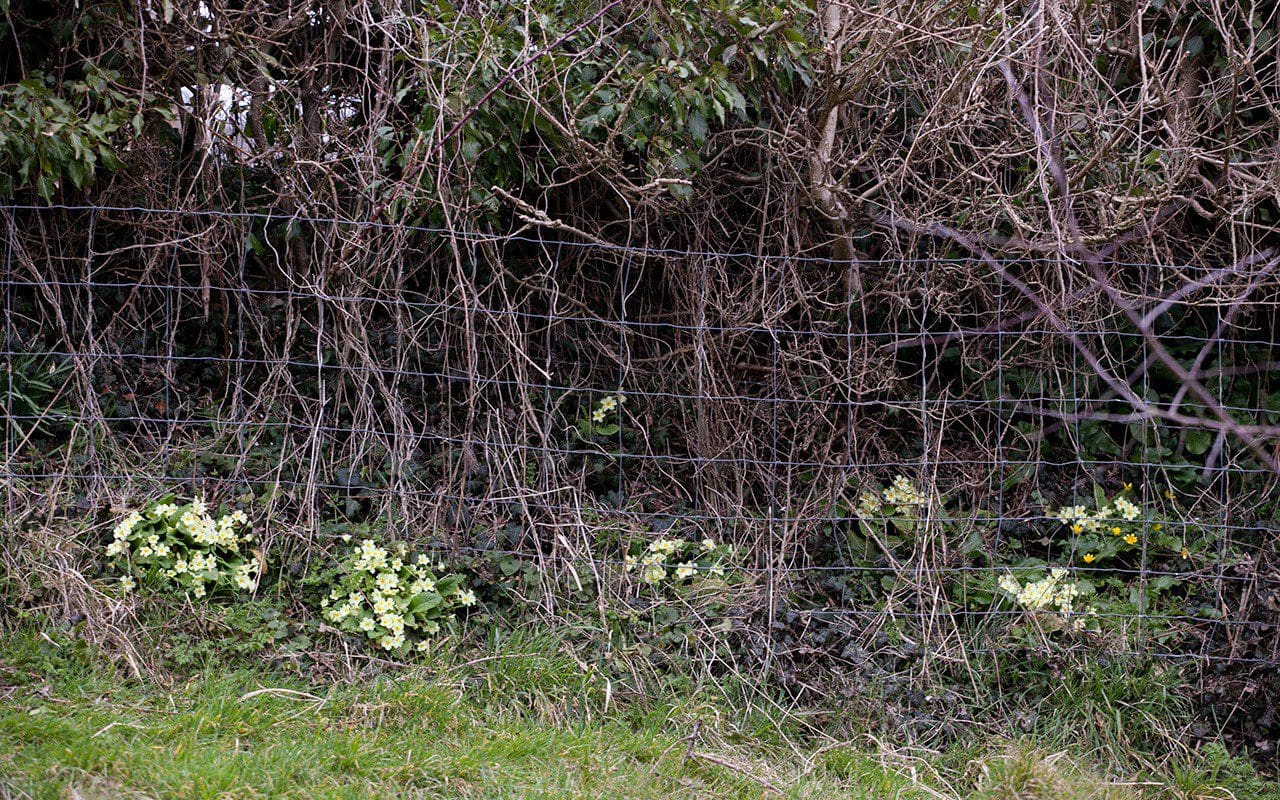
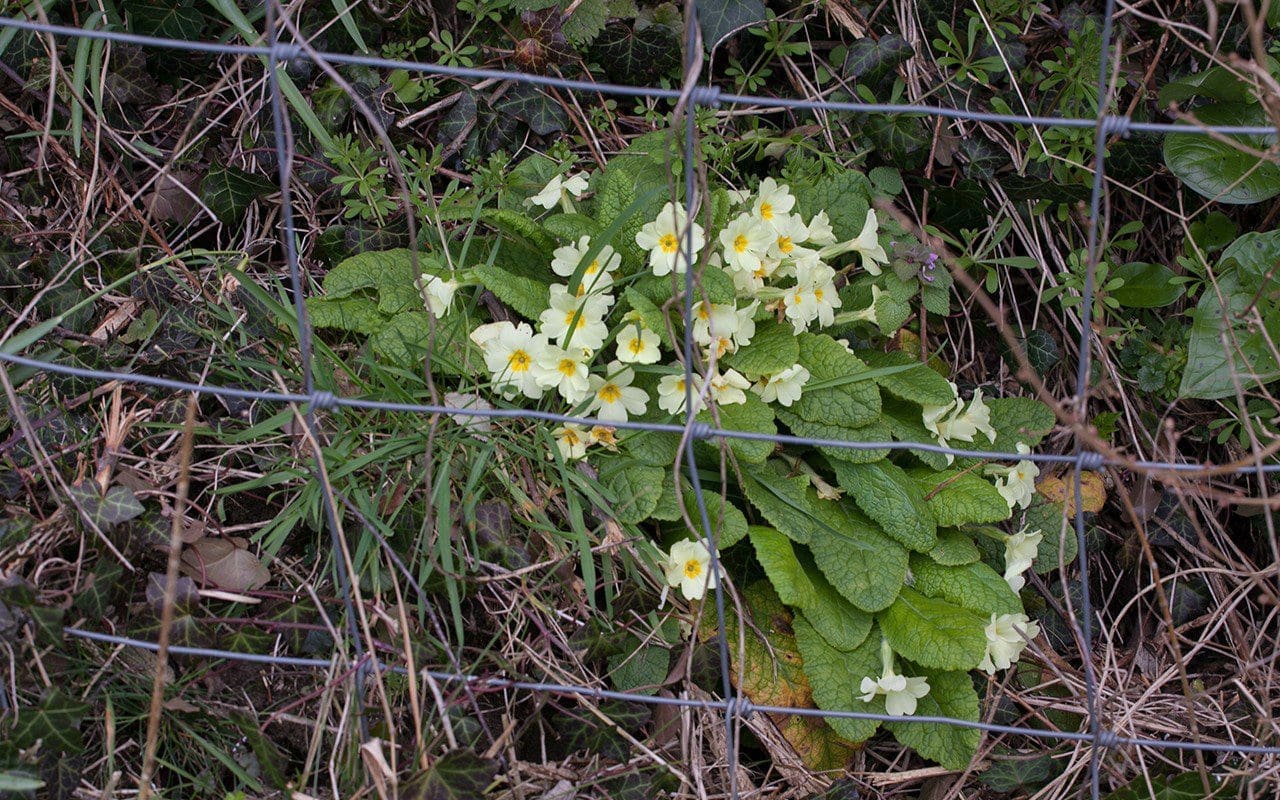 The six year old divisions at the base of the south-facing hedge behind the house
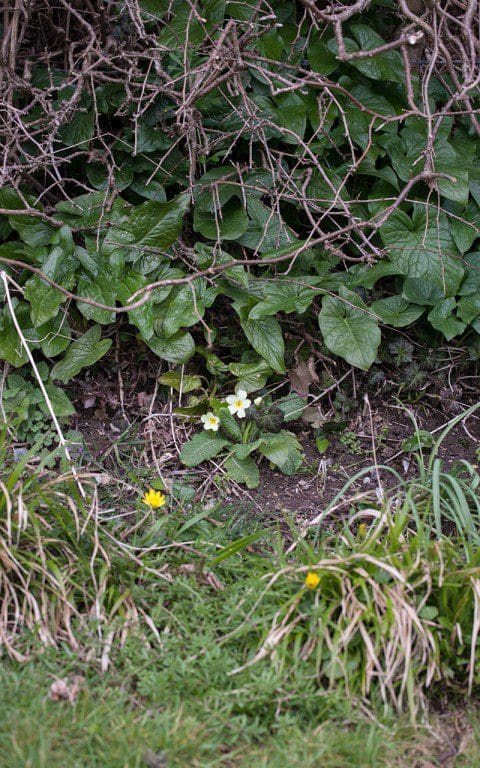 A one year old division at the base of the hedge above the garden
By the time the seed ripens in early summer, the primroses are usually buried beneath cow parsley and nettles, so harvesting is all too easily overlooked. However, last year I remembered and made a point of rootling amongst their leaves to find the ripened pods which are typically drawn back to the earth before dispersing. The seed, which is the size of a pinhead and easily managed, was sown immediately into cells of 50:50 loam and sharp grit to ensure good drainage. The trays were put in a shady corner in the nursery area up by the barns and the seedlings were up and germinating within a matter of weeks. As soon as the puckered first leaves gave away their identity, I remembered that it was a pod of primrose seed that had been my first sowing as a child. Though I cannot have been more than five, I can see the seedlings now, in a pool of dirt at the bottom of a yoghurt pot. The excitement and the immediate recognition that, yes, these were definitely primroses, was just as exciting last summer as it was then.
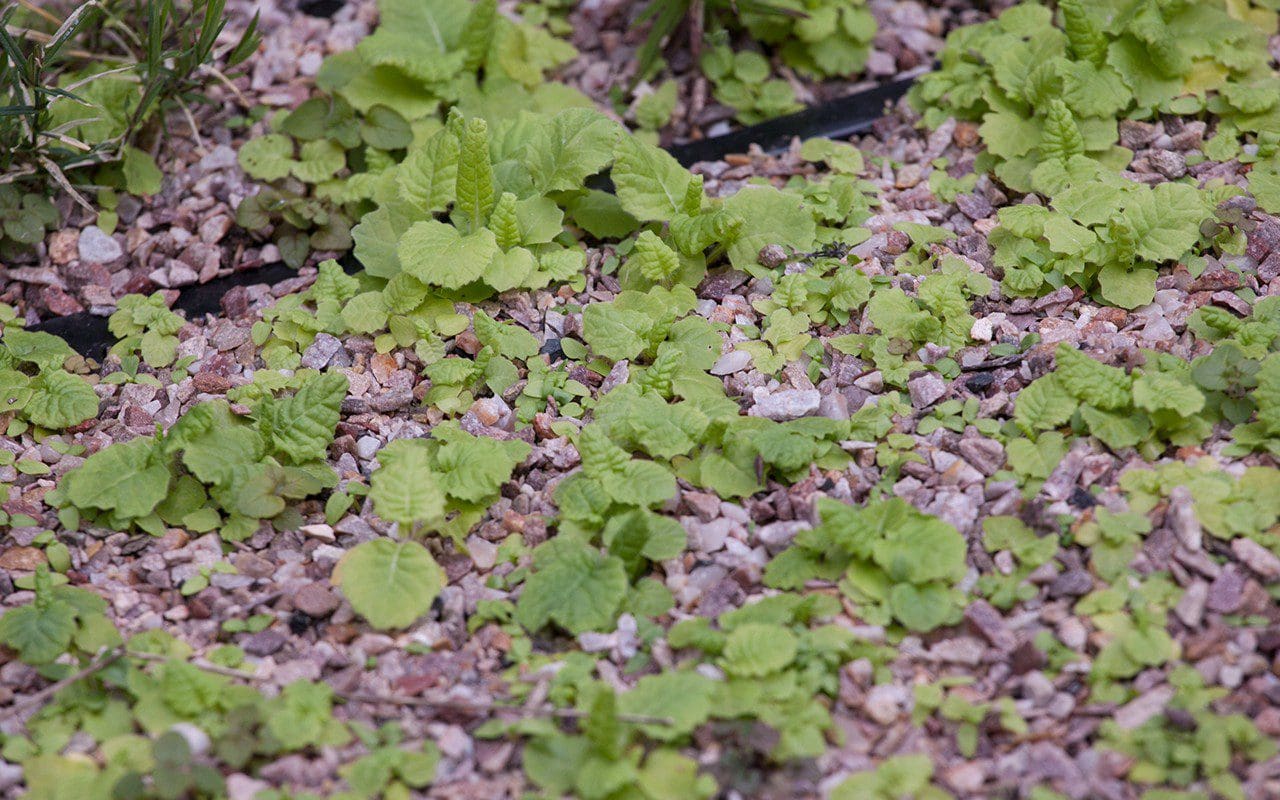 Primrose seedlings
The young plants will be grown on this summer and planted out this coming autumn with the promise of winter rain to help in their establishment. I will make a point of starting a cycle of sowings so that, every year until I feel they are doing it for themselves, we are introducing them to the places they like to call their own. The sunny slopes under the hawthorns in the blossom wood and the steep banks at the back of the house where it is easy to put your nose into their rosettes and breathe in their delicate perfume. I will plant them with violets and through the snowdrops and Tenby daffodils, sure in the knowledge that, whatever the weather, they will loosen the grip of winter.
Words: Dan Pearson / Photographs: Huw Morgan
Published 24 March 2018
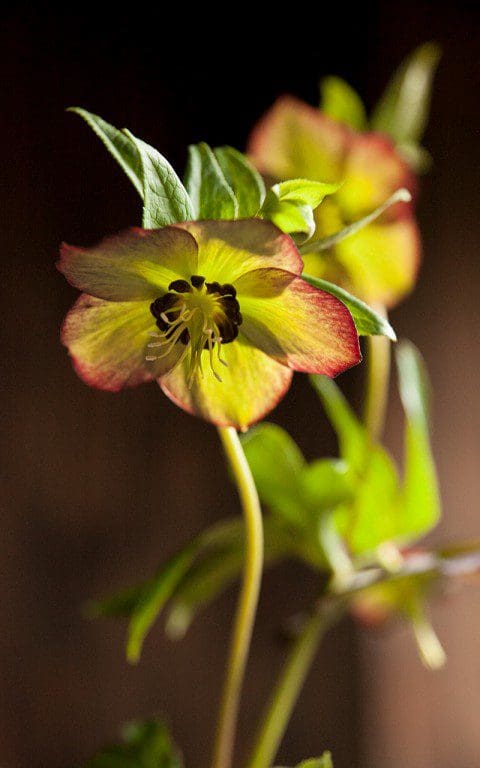
The Lenten Rose was one of my first infatuations as a child, rising like a phoenix from the leaf mould when little else was braving winter. We had discovered a solitary plant in a wooded clearing of our derelict garden and, though it was nothing special by today’s standards, it had survived the forty years of neglect that had finally overwhelmed the previous owner. I remember the excitement, the elegant outline of the hooded flower and lifting the plum and green reverse to reveal the boss of sheltered stamens.
In the years since, the excitement of their reappearance each February has never dimmed. In fact I depend upon them as their energy gathers and pushes against the last of the winter. Close observation over time has allowed me the opportunity of getting to know them better; the places they like to be, their surprising resilience and longevity and where to use them so that they offer you their very best. I have also developed a keen eye, winkling out the ones that have been superseded in terms of colour and form, so that I am only growing my absolute favourites.
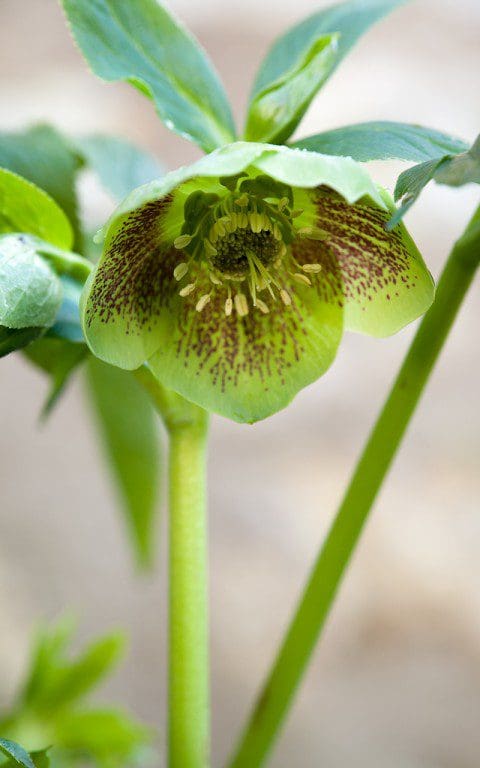 Helleborus x hybridus Single Green Spotted
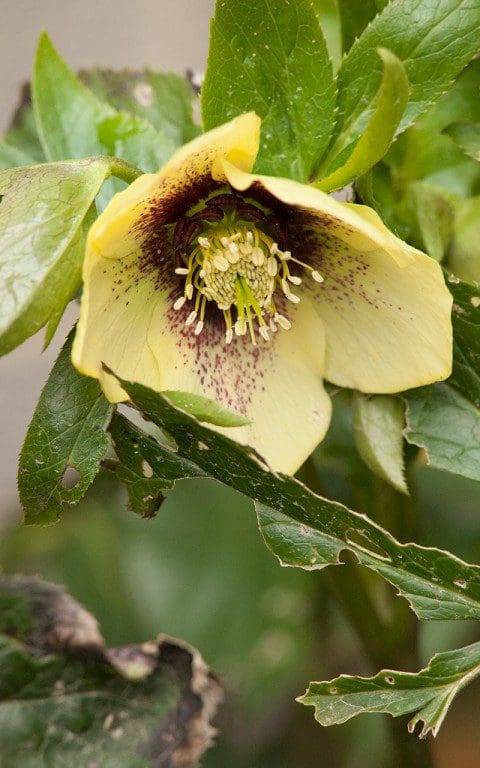 Helleborus x hybridus Single Yellow Spotted Dark Nectaries
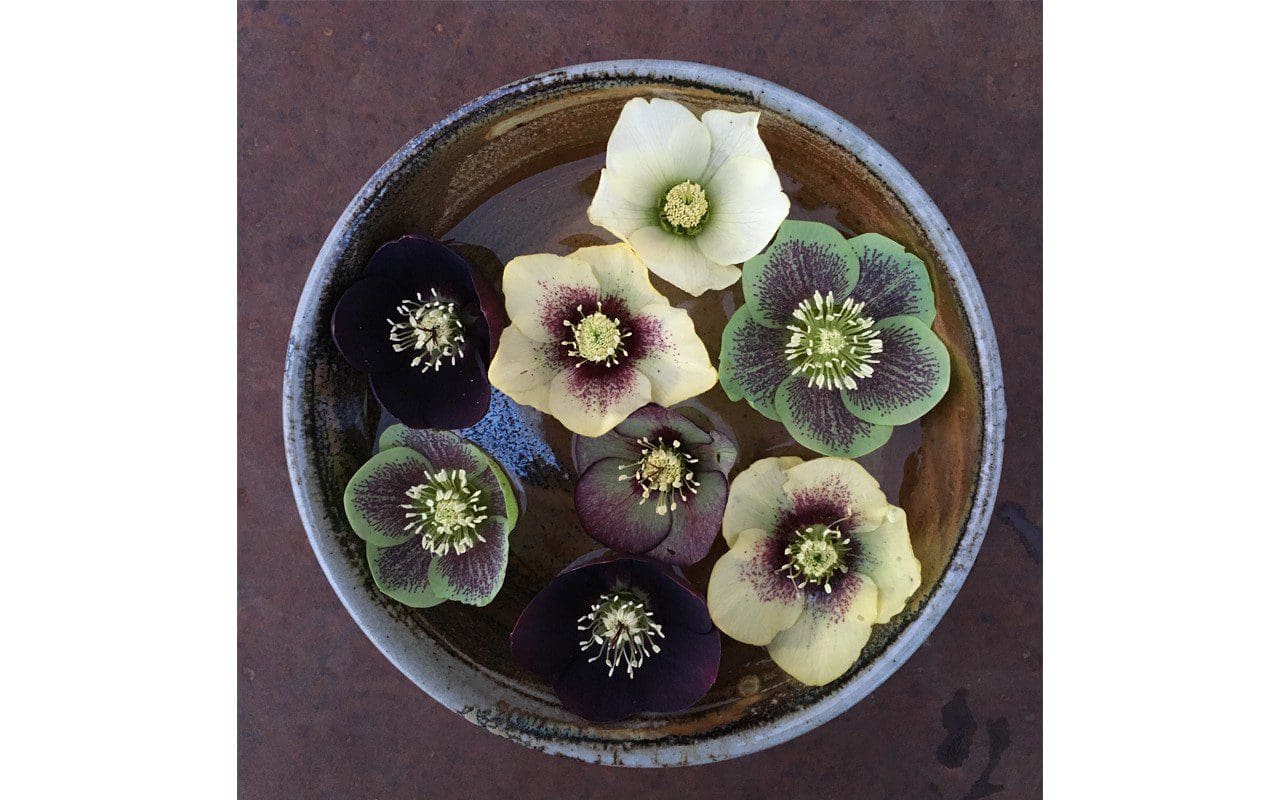
I soon learned that it was important to hand select seed-raised Helleborus x hybridus since the variability is immense once they start to cross. Seedlings take about three to four years to flower if you are up for the gamble. The colours range from the darkest of slate-greys and plum purples through mauve and then on into a complexity of reds some of which err towards the pink end of the spectrum and others into apricot or the blush of ripe peaches. The yellows, perhaps the most prized due to their rarity, are a relatively recent development. The best hold a strong primrose for the duration of flower, whilst others fade to lime-green. The whites vary too, some clean, some limey, whilst others are infused palest pink. These base colours are sometimes overlaid with delicate veining or picotee edges of a darker tone, whilst the reverse may differ from the interior with a dusting of bloom or staining that gives away nothing of the world within. This is the stuff of obsession once you bend and cup a flower between your fingers to reveal a flash of another colour, a myriad spots or ink-dark nectaries.
An ark of hellebores came here with us from the Peckham garden. Planted on our south-facing slopes in the shade of a trial bed of shrubby willows, I expected them to struggle, but with summer shade they have loved the rich, deep ground and took some moving when they were relocated to their final positions the autumn before last. Moving Lenten Roses is easy if you do it in autumn, ahead of their period of main root activity. This is also the time to split your plants if you want to propagate a particular form, so that by the time they are pushing flowers they will have already found their feet.
The plants I brought with me were old favourites I have collected along the way. A purple as deep as damsons (main image), a slate-grey with bloom to the reverse and a particularly lovely green that has a freckling of burgundy spots within. I grew them all together in Peckham, the green lifting the darkness of the plum and a smattering of snowdrops to light them still further. I also have a fresh, clean white from Home Farm with green veins, and a creamy white picotee rimmed with deep red-violet and veined within. I parted with the dull reds and soft pinks once I’d visited Ashwood Nurseries and encountered the next level.
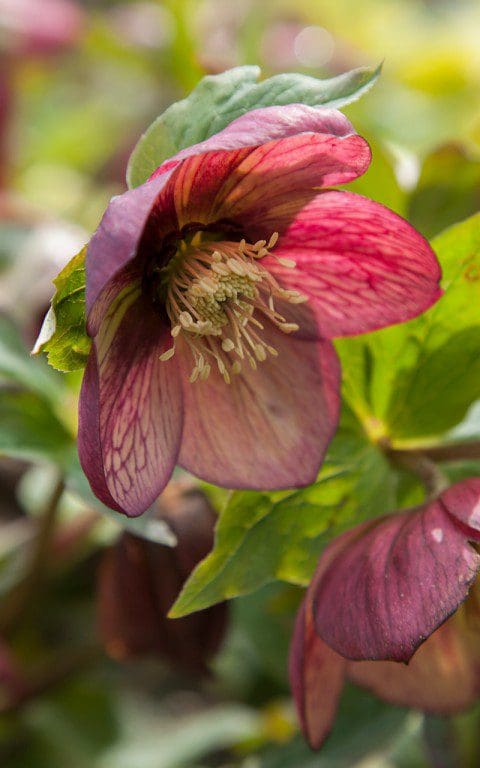 Helleborus x hybridus (Ashwood Evolution Group) Neon Shades
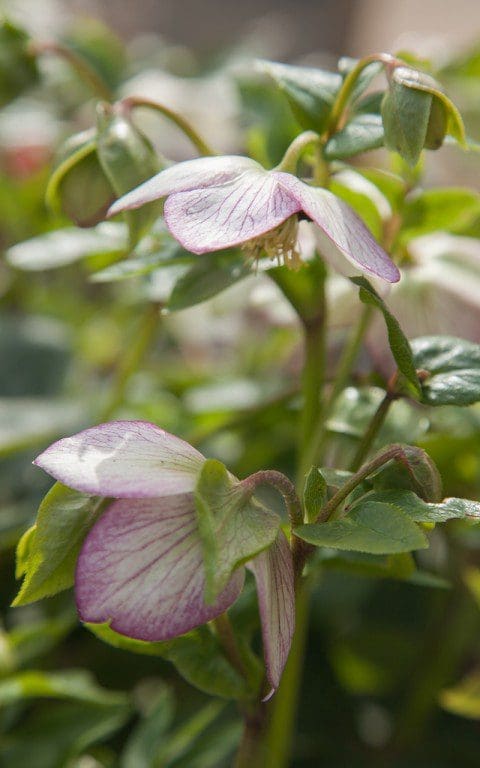 Helleborus x hybridus White Picotee Dark Nectaries
It was February, we had just had our offer accepted on Hillside, and the combination of winter weariness and the prospect of new ground inspired the journey to Ashwood. The nursery is famed for its hellebore selection programme and, within minutes of arriving, it was clear that these plants were far superior. The picotees were more finely drawn, pure whites overlaid with the merest lip of sugar pink, and there were pink and apricot picotees of even greater complexity. After several hours careful deliberation I came away with a number of yellows, selected for their dark plum nectaries, and some clean whites with the same interior stain. In the years since, I have added to the collection with green picotees, yellow spotteds and a number selected specifically for their veining.
As I do not have the luxury of shade, their favoured habitat, I have been winkling my collection in under shrubs or alongside tall, summer perennials that will throw them into cool when their foliage needs protection. Our slopes, however, are ideal for close observation and being able to look up into their blooms is a definite benefit. I have them grouped according to colour, the yellows and the whites alone and the greens and the darkest forms together. Under the medlar I have a collection of deep reds and warm-toned picotees to avoid the collection feeling too much like a sweet box and to allow me the opportunity of stumbling across something different as I move about the garden. Though I am not a fan of the doubles – they feel too cottagey here and too fussy in general – I do have one that is slate-grey which makes the flower very graphic and reminds me of a Louis Poulsen lamp. It has a place of its own under the wintersweet, where I can visit with a different mind-set.
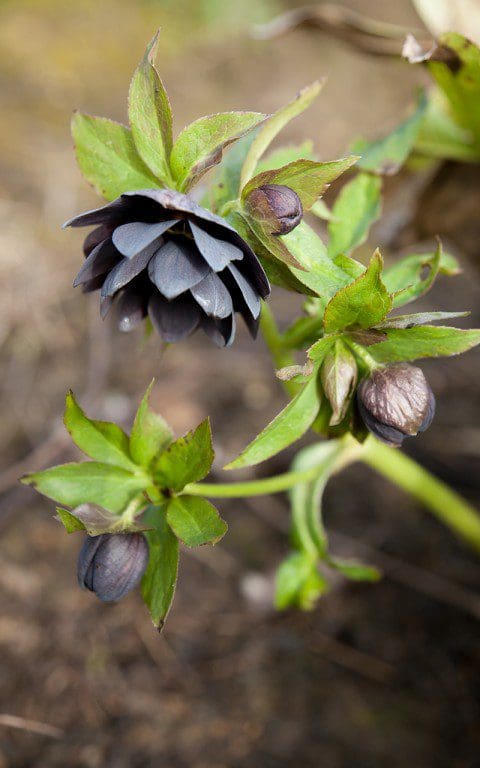 Helleborus x hybridus Double Black
 Helleborus x hybridus Single Green Picotee Shades Dark Nectaries
The Lenten Roses are sometimes affected by a blackening on the foliage caused by hellebore leaf spot, which can be debilitating if it gets a hold. Best advice is to remove the foliage in the early winter and burn any affected leaves before the flower stems appear in January. I prefer to let plants settle in for a year or two before removing any foliage, but stripping them back does allow you to see the flower against a clean backdrop. Mulching after the leaves are removed also helps keep the plants moist, but basal rot can be a problem in damp years, so I prefer not to mulch right around the growth to keep the base airy.
For the first time this year, we have been plagued by mice which have stripped the buds of the earliest flowers and robbed me of this year’s respite from the last of the winter. The discovery left me fuming, but there are just enough to pick and float in water. The Lenten rose is not a good cut flower, but the stems are less prone to the flagging if you steep them for thirty seconds in boiling water. We prefer to float the flowers like boats in a shallow dish of water where you can savour their interiors and appreciate the gift they provide in these last few weeks of the season.
Words: Dan Pearson / Photographs: Huw Morgan
Published 10 February 2018
We are sorry but the page you are looking for does not exist. You could return to the homepage