At the bottom of our hill, where the stream runs along our boundary, everything changes. The stillness there is a constant, even on the days when we descend the slopes to escape being buffeted on the higher ground. Although it now stands tall, the wood that runs our neighbour’s boundary is not so old. Glad, who lives just behind us remembers being able to see the slopes on the other side when she was a girl, eighty or so years ago but you can see signs of ancient woodland in spring mapped in colonies of wood anemone, bluebell and, in one place, herb Paris in the places where it must have stood for longer.
It is interesting to imagine the push and pull that must have happened over the decades with the management of the wood and the open ground respectively. When we moved here ten years ago this very weekend, the land that runs down to meet the stream had been grazed hard and the ankle twisting ruts that the cattle had made in the clay ran up to a twist of barbed wire that hugged the stream edge. The battle the farmer had made with the wood to keep it back was traced in bluntly severed limbs and an ongoing tussle with the brambles that were leaping from the wood across the water. We made the removal of the wire and the encroaching brambles our first winter job, so that we could see the lie of the land and the path the stream had cut in the valley.
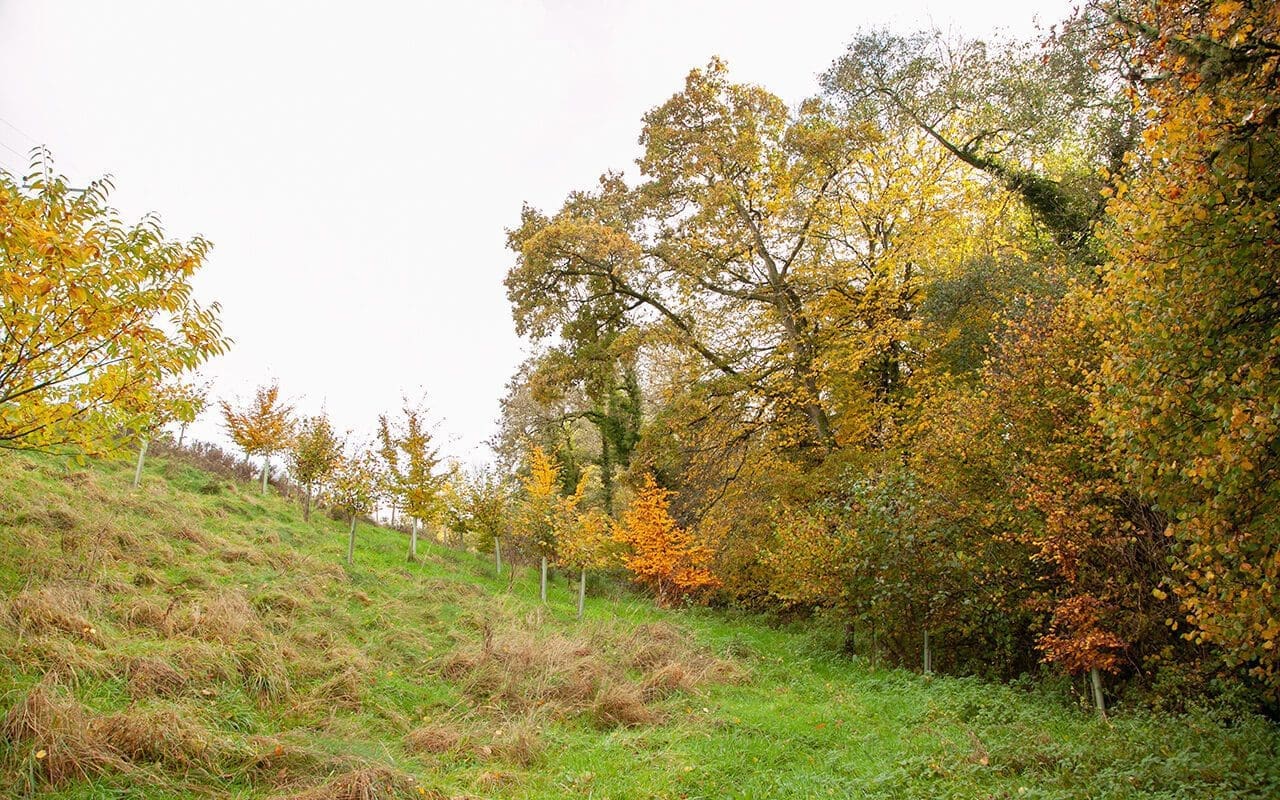
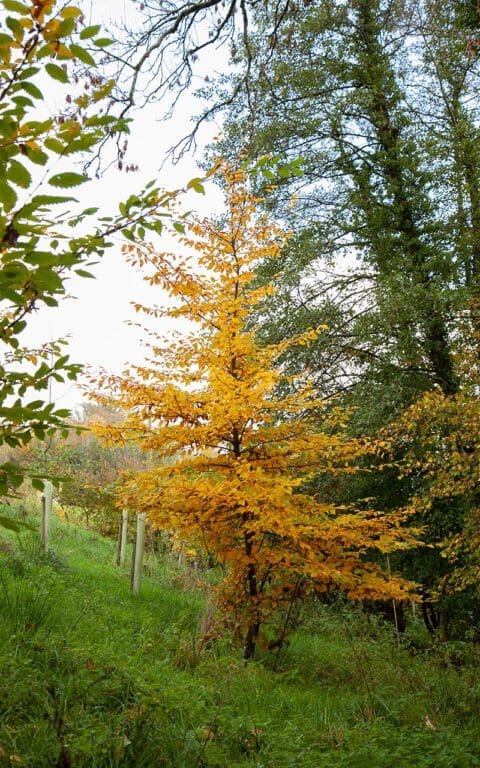
The following summer I fenced off the lower slopes of the Tump, tracing the line where the farmer dared go no further down the slope to cut the hay. The plan was to bring the wood back over the stream to our side in a swathe of trees for coppicing on an eight to ten year rotation for firewood. The young saplings were planted over four winters. Hazel made the foundation and the majority, whilst small leaved lime, sweet chestnut and hornbeam were added to ascend above the hazel for shade. Managed on a slower cycle of twenty years, the tall trees in the mix will make fencing poles and wood for the burner. The first hazel should be ready when I am about sixty and the larger subjects should be mature enough for their first cycle of copping when we are pushing seventy. A good incentive to stay nimble, but in the meantime a joy in the coming together of this new environment.
Seven or so years in and we are beginning to see the changes. The tussocky sedges that told us this was heavy, wet ground are slowly being shaded out, the advance of the wild garlic has begun stepping out from the small groups on the stream banks and the roosts and runs of the animals that live here are already in evidence.
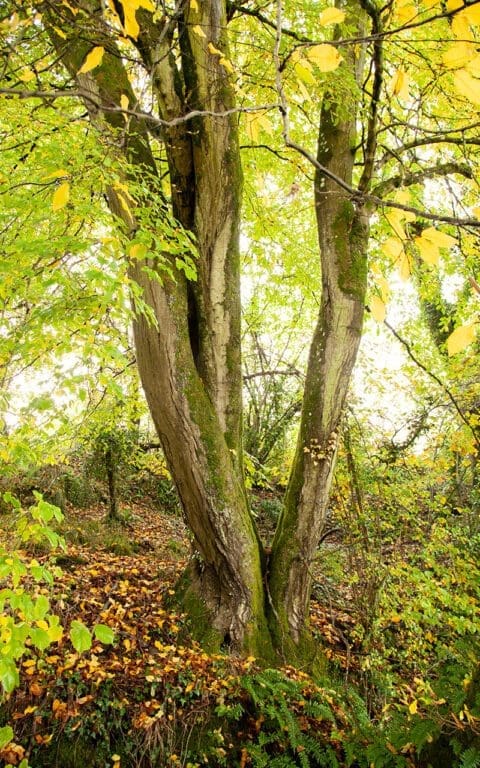
I took time to look at the established wood to see which trees did best immediately beside the stream because without tree roots to hold the banks, we were vulnerable to erosion on our side. It is only where we have occasional alder that their thickly matted roots hold the stream banks sufficiently to bind them. The alder, however, are not shade tolerant and as streamside trees they would ultimately not be ideal in the coppice. The shade tolerant hazel do not have a root system that holds the stream banks, but looking at my neighbours mature hornbeam, it was clear that they were both good in shadow and also in holding the banks. Where they sit by the stream it moves around them and in the spring you can see the influence where the garlic laps up to their root plate to leave mossy circle free.
The fibrous roots of hornbeam (Carpinus betulus) can be hungry in a garden and you can see that alongside a hedge where company grows less easily, but for the streamside they are ideal. So this is where the majority have been planted and they have shown their tolerance of the thick heavy clay here too, throwing sturdy growth and showing that they have taken to their position.
I was brought up with the ancient hornbeam coppice that grow on the downland where I spent my childhood. Some of the old stands were hundreds of years old, the timber the fuel for smelting iron and making charcoal. Known locally as ‘bluntsaw’, for the wood is one of our hardest and consequently hottest burning, hornbeam has also been used for making yokes for oxen and clock parts for its strength and ability to withstand wear.
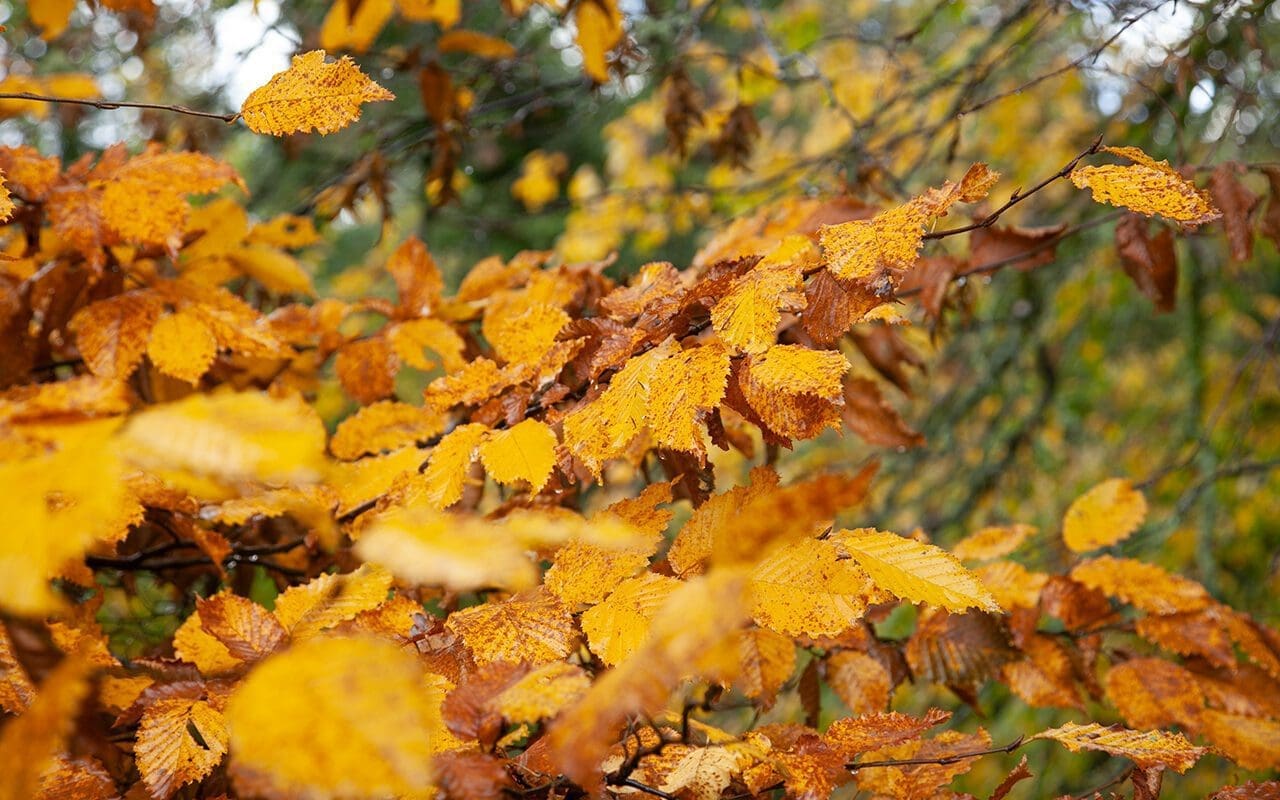
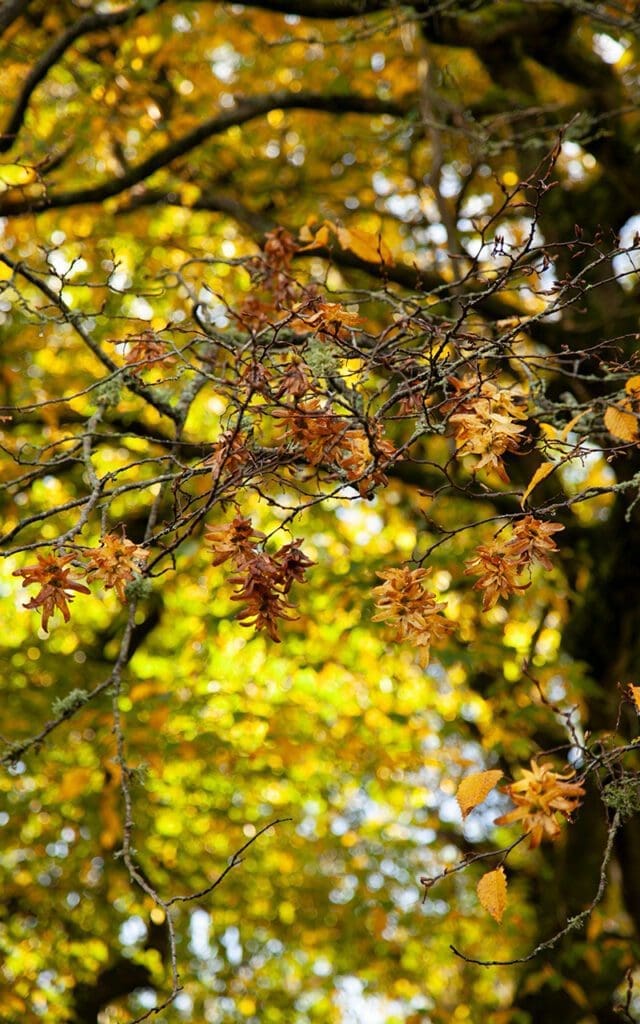
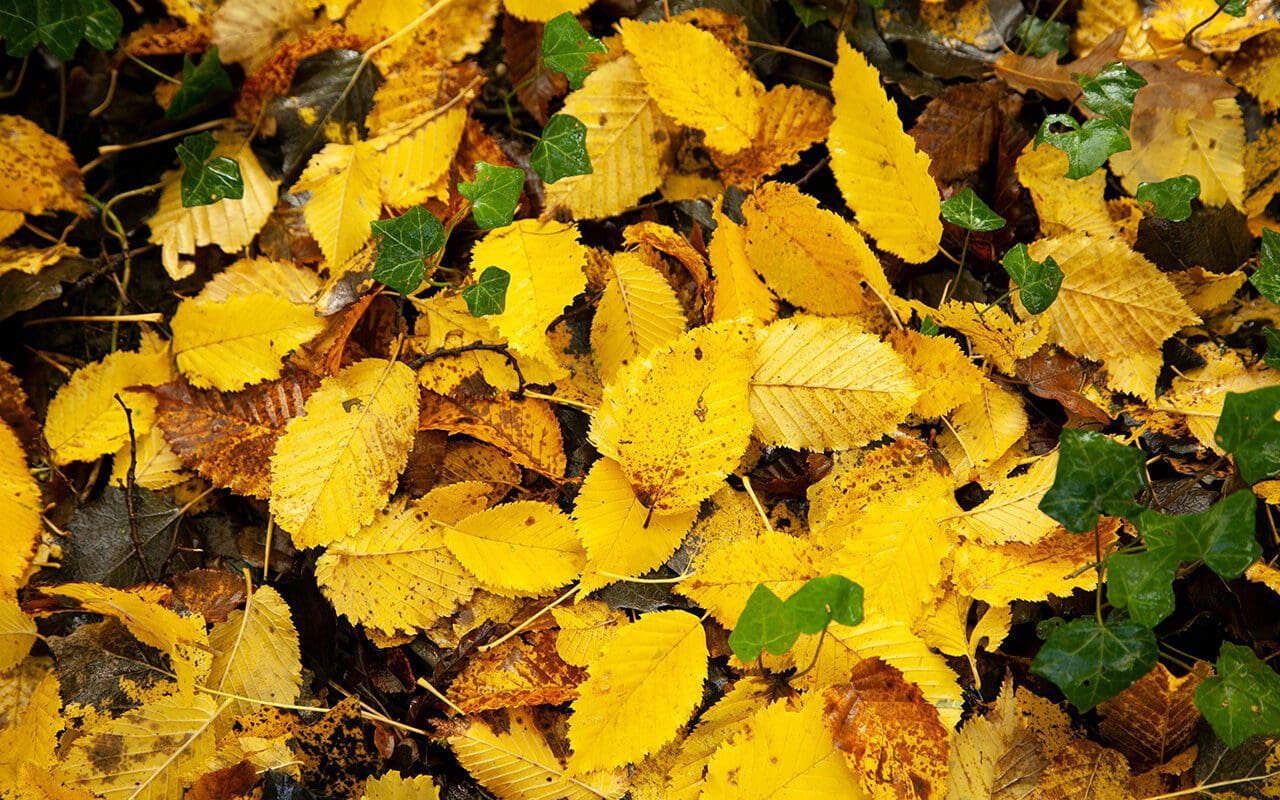
Currently, in this last couple of weeks of autumn, the hornbeams are flaring yellow so that you can see exactly where they are in the wood. As young trees in winter and cut to retain juvenile growth as hedging material, hornbeam retain their foliage. Russet brown and rustling nicely in wind, they provide fine protection for winter birds. Holding onto their seed late, they are hung with the papery bracts for some time yet before the windborne seed is liberated or eaten by the birds before it has a chance to spiral down. As hornbeam mature their trunks develop a smooth and undulating musculature which makes a coppiced tree all the better for winter interest in the wood. Spring is heralded in pretty catkins that festoon the branches with countless creamy verticals. April foliage is the brightest of greens and in summer the pleated leaves are host to a wide range of moths that use them as their food source.
Though in summer the canopy casts a dense shade, the elderly branches reach widely and elegantly and hold their own and very particular place in the wood. A hornbeam can live to three hundred years or longer if it is coppiced. They wear their age well so it is good when we see such progress to ponder the lives of our youngsters. Happy here it seems and making the place their own.
Words: Dan Pearson | Photographs: Huw Morgan
Published 31 October 2020
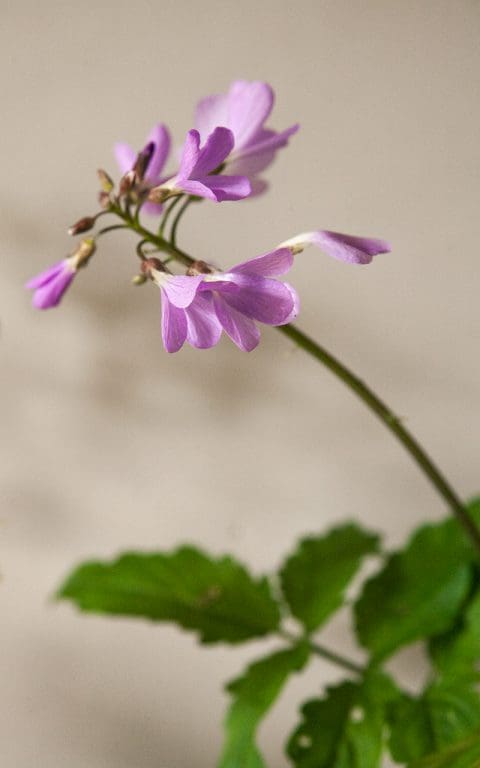
Finally, it seems, it is officially spring and we hope to move on from dodging the storms at last. Sailing through unscathed since they first showed colour in early January, the Cardamine quinquefolia is a plant that I would like much more of. It has taken a while to establish, but now it has the shade cover it likes, it is moving amongst the hellebores and the lavender-blue Iris lazica. An early woodland ephemeral, this cardamine has come and gone by the time the trees leaf up in May. It is a plant that takes all your attention for being so willing when most other things are dormant and it is good company for going into dormancy when they come to life. For this reason, it is worth making a note of where you need more of it and then moving it as soon as it breaks ground in January if you are not to miss the moment. It has fine surface roots like wood anemone, so I find it best to lift a square sod once the clumps are large enough to divide with a border spade.
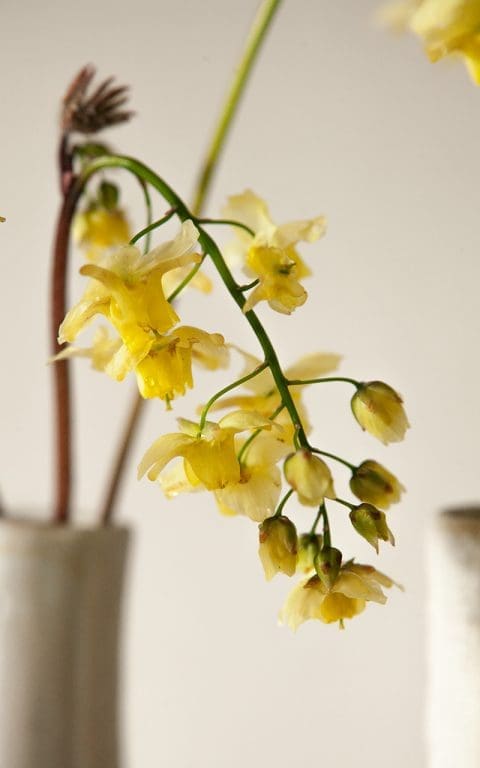
This is the first year I have cut back the Epimedium sulphureum, shearing the foliage as soon as I saw flower buds in the crowns in mid-January. ‘Best practice’ dictates this is the most effective way to appreciate the coppery, new growth and emerging flowers, but leaving this easy epimedium for the past few winters has created a wonderful micro-climate whilst I’ve been establishing the hellebores. I have them pooled in its pillowy foliage so that their leaves are protected from the easterlies, but the flowers can rise above them.
Shearing last year’s growth in January felt bold, but the delicate flowers are now dancing in the breeze and quite capable of dealing with a storm. They are as delicate as fairies, despite being tough enough to deal with those difficult places between shrubs and beneath trees. It holds the slope behind the tool shed where there is shadow, but it is just as happy in open ground as long as it retains moisture. This would not be the case at all for its Asian relatives, but this reliable European epimedium is made for easy gardening.
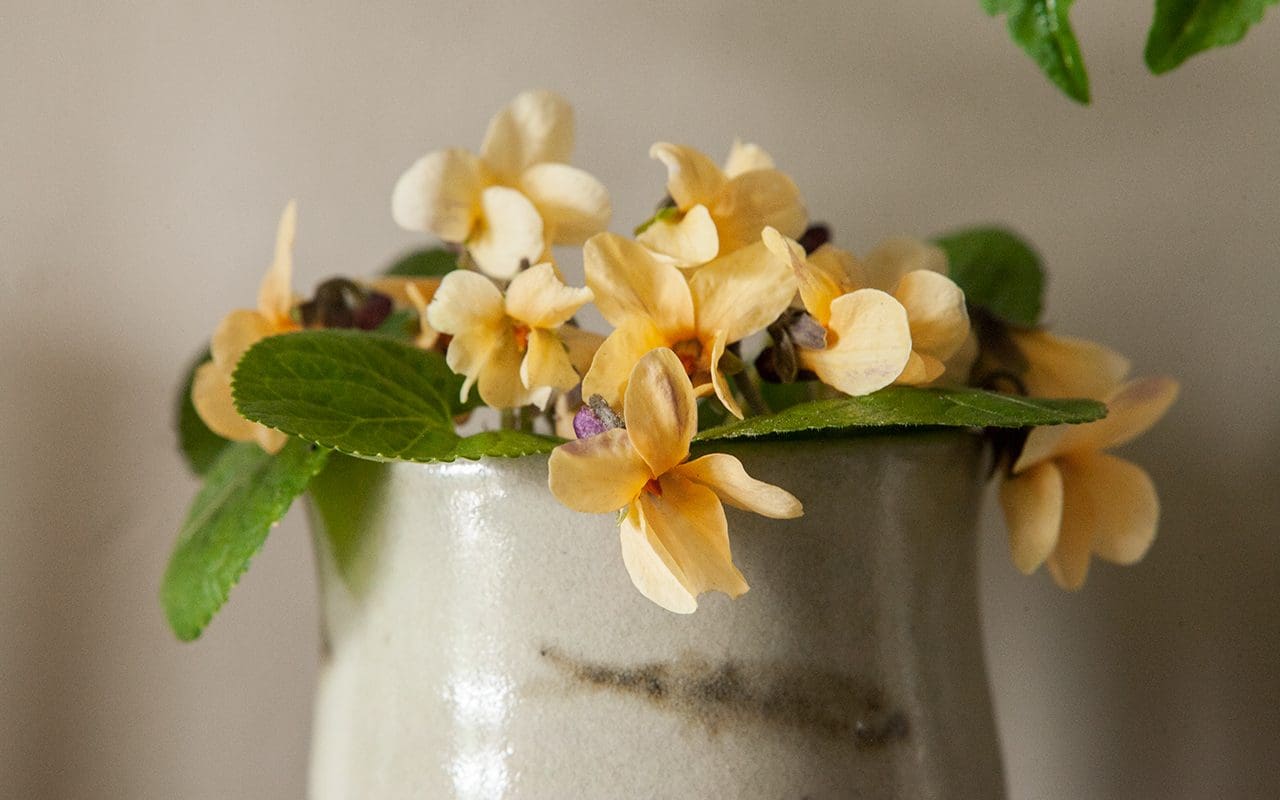
Out of necessity I have been experimenting with planting woodlanders in sunshine on our exposed hillside. As long as they have the canopy of later-to-emerge perennials, the primroses actively seem to prefer spring sun. The same can be said of spring violets, which I am planting wherever there seems to be a suitable niche close to the paths. I first saw the unusual, soft apricot Viola odorata ‘Sulphurea’ a few years ago in the nuttery at Sissinghust, when I was visiting Troy Scott-Smith. He promised me a division but, as is the way, spring happened and the business surrounding it meant that it was autumn before Troy re-visited the spot to follow through on the offer. By then the violets seemed to have moved on so, smitten, I ordered seed from Chiltern Seeds and sowed it ahead of winter. Being another mild year and without the chill they need to germinate, they took two years to appear and then another one to flower, but now here they are. The wait seems suddenly nothing and I’m delighted to have them for myself. Though not as strongly perfumed as their purple cousins, I’ve also used them along path edges, combined with this creamy epimedium, so that not an inch of ground goes without cover.
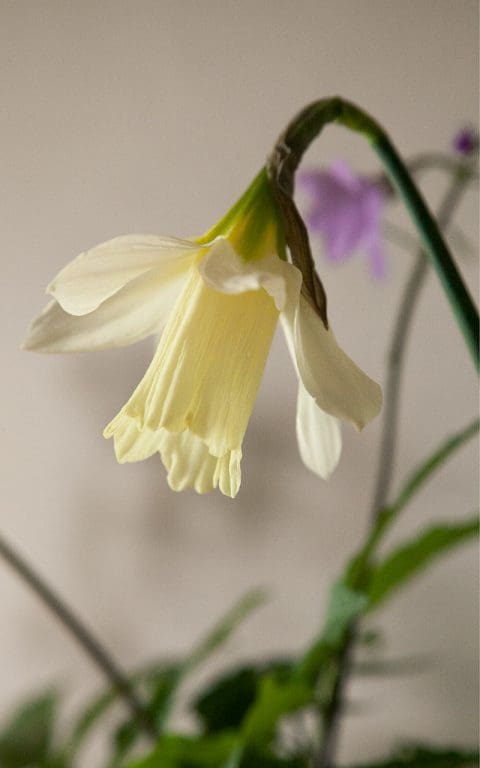
I never fail to be delighted by Narcissus moschatus, which is possibly my favourite of all for its poise and delicacy. Closely related to our native N. pseudonarcissus, but only occurring naturally in the Pyrenees, it has taken a while to build up a nice colony, for the bulbs are hard to find. I have it growing under a five year old sweet chestnut that was planted in memory of my Dad. Opening a pale yet sharp buttercream yellow, they soon fade to ivory white. Heads tilted downward (they are also known as the swan-necked narcissus) the flowers have an air of modesty and melancholy.
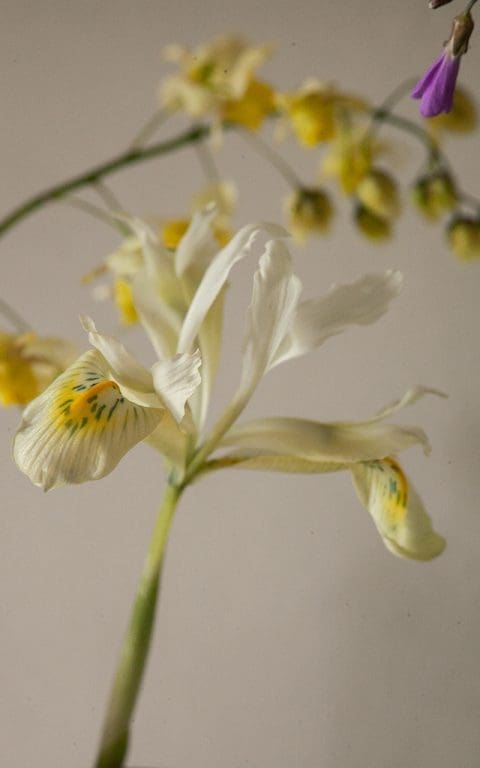
Though some plants are good to revisit every year (and in the case of the narcissus, I am never disappointed) it is the first time that we have grown Iris ‘Katharine’s Gold’. It is always nice to discover a potential new favourite, and is one of the reasons we trial some new varieties of bulbs every year. This is the last of this year’s reticulate iris to appear, a good three to four weeks later than the first ones that came in late January. Reputedly a sport of I. ‘Katharine Hodgkin’, we prefer it as it is taller and stands more elegantly with more air between the standards and falls. Pale yellow suits this moment too. One we hope can now be depended upon to get brighter.
Words: Dan Pearson | Flowers & Photographs: Huw Morgan
Published 7 March 2020
Not long after moving here, Jane, our friend and neighbour, took us for a walk into the woods in a nearby valley to see the green hellebore. We pulled off the lane and set off on foot along a well-worn way up into the trees. The north-facing slope had an inherent chill that set it apart from our south-facing slopes and the tree trunks and every stationary object were marked with a sheath of emerald moss.
The track made its way up steeply into ancient coppice. Land too steep to farm and questionably accessible even for sheep. Fallen trunks from a previous age and splays of untended hazels marked the decades that the land had been left to go wild. At least wild in the way that nowhere is truly wild on our little island of managed land. I knew the woods, for we had been here before in summer to look at the fields of orchids that colonise the open grassland above, where the hill flattens out into fenced paddocks. The woods are not extensive, but large enough to have their own environment in this steep fold in the land.
Somewhere near the top of the hill, with the light from the field above us just visible through the tangle of limbs, we set off sideways onto the slopes. The angle was steep enough not to have to bend too far to steady yourself with your hands, but consequently required a firm foothold when inching along the contour. Deep into the trees we came upon our goal. Nestled in under the roots of ancient coppiced hazel and up and out with the very first catkins, the Helleborus viridis.
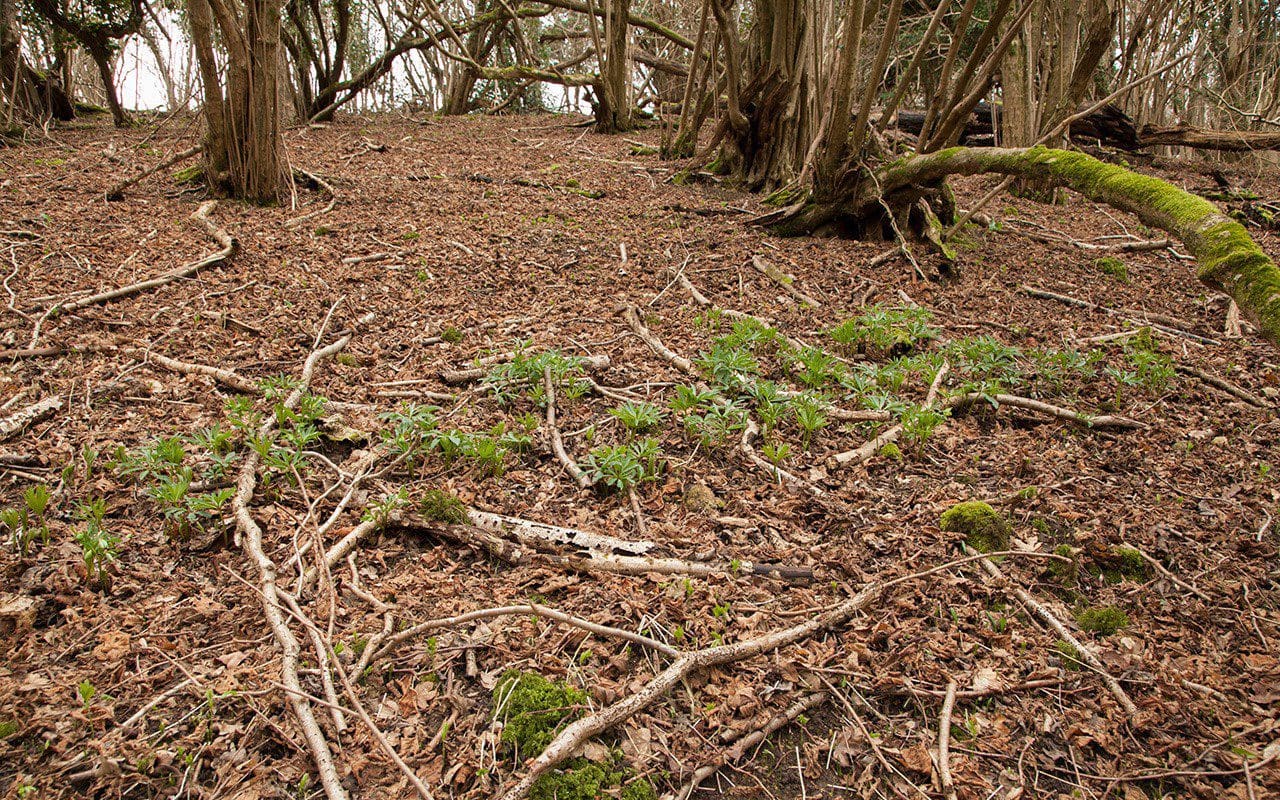
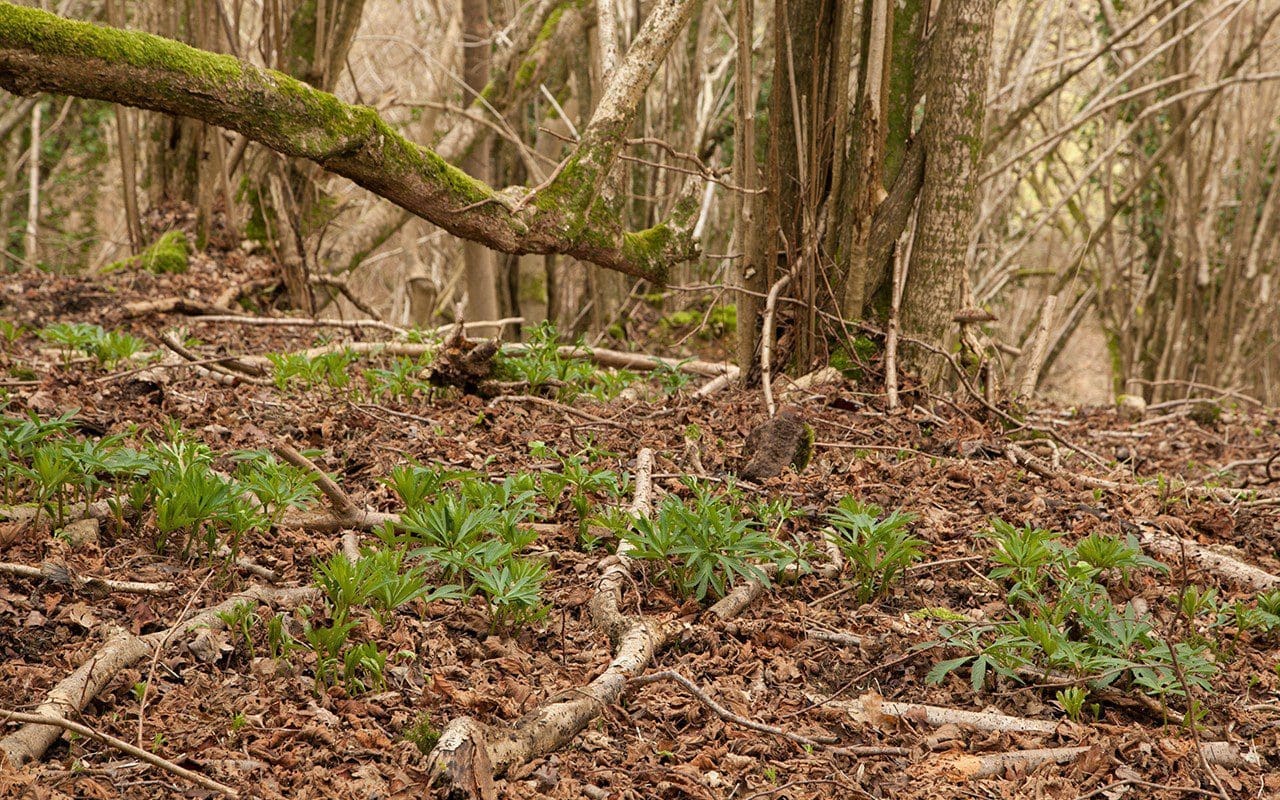 A wild colony of green hellebore in the local woods
To find a plant growing in the wild where it has found it’s niche is to truly understand its habits and requirements. Dry descriptions of habitats and associations in books instantly give way to a greater knowledge, for you never forget when you see a plant looking right in its place. In the cool of the north-facing slope and shaded not only by the deciduous canopy above, but also by the bole of the hazel and its influence, the hellebore was at home. With no competition to speak of, protected by damp leaf mould and with its roots firmly holding in the limestone of the hill, it was king of its place. New foliage, soft and emerald green, splayed fingers of early life. The nodding flowers, concealing the stamens, held free of the ground foliage on arching stems. Viridis, meaning green, is the colour of all its parts; a welcome one at the end of a long winter and a sure sign that the season is ebbing.
Several weeks later I returned in search of seed. The woods were flushed with first leaf which darkened the slopes. Nettles, already fringing the woodland edge where the light penetrated alongside the path, were ready to sting. But deep where the hellebores were growing, they were still in glorious isolation with little more than a few celandine and wood anemone for company. The flowers were transformed, the lanterns replaced by a rosette of bladders which were just turning from green to brown. I cupped my hand underneath and tapped. A slick trickle of ebony seed settled into the crease of my palm.
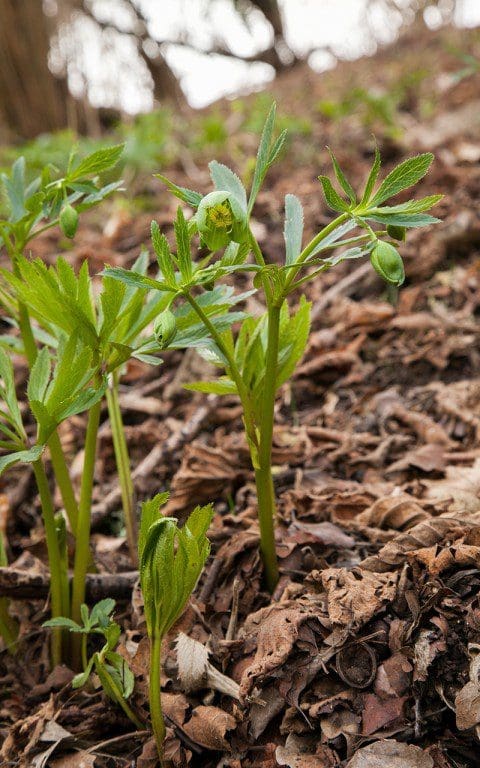 Green hellebore – Helleborus viridis ssp. occidentalis
The seed of plants in the family Ranunculaceae is famously short-lived so I sowed it on the same day it was harvested, covered with grit and put in a shady place out of harm’s way. Three seasons later, the following March, it germinated with some success. I kept it in the shade on the north side of the house to throw its first leaves without disturbance. A year later I had seedlings that were ready to pot up and a year after that, to plant out. Jane took a number of the seedlings to start a colony on the north-facing wooded slopes that run up from our shared boundary, the stream. I planted the banks on our side, where the tree canopy provides the shelter, summer shade and leaf litter they need to do well. This year they are flowering for the first time in earnest and, with luck, will set seed and start spreading.
Though they were once used for their purgative qualities (as a folk remedy for worms and the topical treatment of warts), Gilbert White pointed to the fact that it is toxic in all its parts. ‘Where it killed not the patient, it would certainly kill the worms; but the worst of it is, it will sometimes kill both.’ With this in mind, I have kept it away from the sheep and have noted that, even down by the stream where the deer have their run, it remains completely untouched despite its lush, early growth.
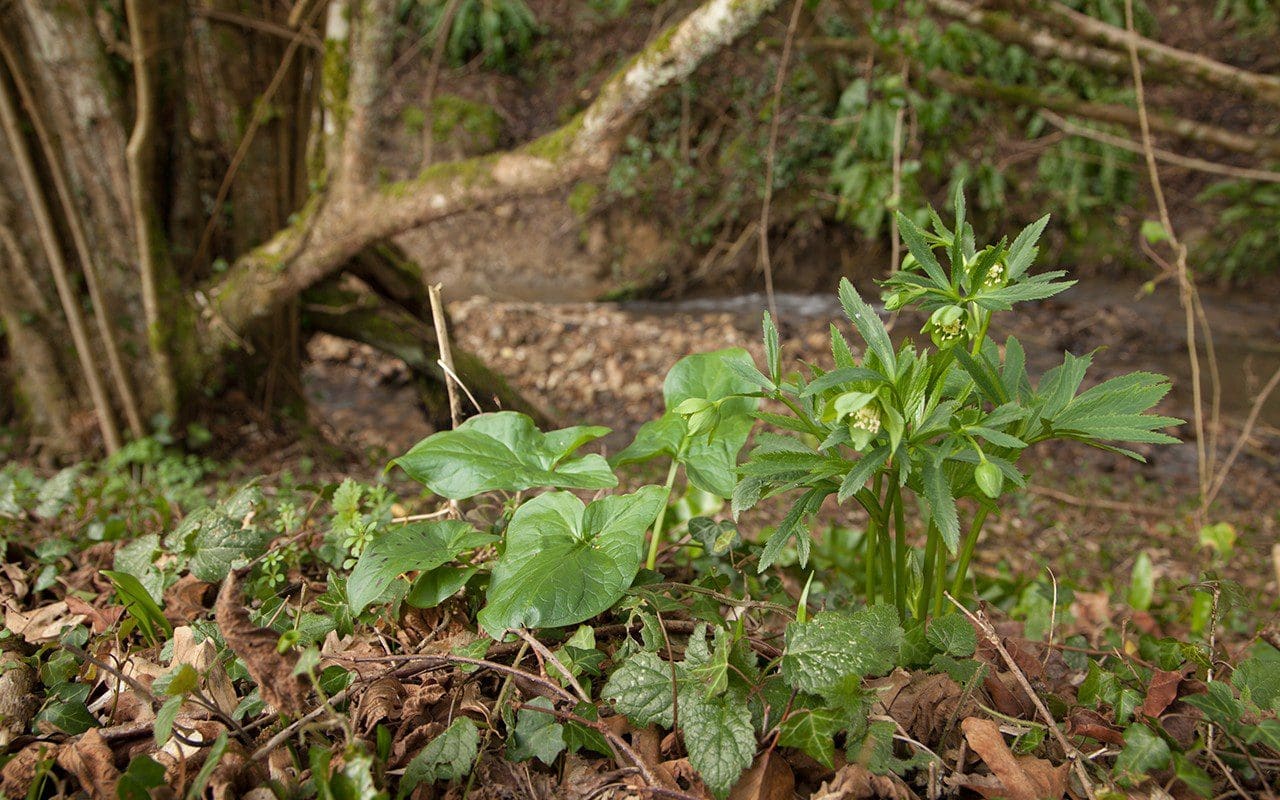 One of the young seed grown green hellebores down by the stream
Though rare in limestone woods in southern England, it is more common in parts of mainland Europe*. Cedric Morris found them in the Picos de Europa growing with a dark form of Erythronium dens-canis; a companion planting it would be hard to emulate here, because of the rush of growth that happens after snowmelt when everything comes at the same time. Its demure nature does not make it a match for the Lenten roses I have here in the garden, which feel rather opulent in comparison. However, I like it very much for its earliness, for its modest break with winter and particularly for the fact that it is native. Where my plants are establishing themselves amongst the newly emerging Arum italicum and an occasional primrose I find great excitement in the thought that spring is now unstoppable.
Words: Dan Pearson / Photographs: Huw Morgan
We are sorry but the page you are looking for does not exist. You could return to the homepage