ALREADY A PAID SUBSCRIBER? SIGN IN
I first encountered Bupleurum longifolium ‘Bronze Beauty’ around twenty years ago at Stoneacre in Kent. At the time our recently made friends Richard Nott and Graham Fraser were the National Trust’s tenants and, as its custodians, they had woven a thoughtful new layer into the garden that played to their interest in colour. They had recently exchanged their lives running Workers For Freedom, their successful fashion label, for a new life in the country. Richard was studying painting and Graham, the history of both the garden and the house, which was restored in the 1920’s by Aymer Vallance, the Arts & Crafts architect and biographer of William Morris.
Together they took to the garden, moving easily from one creative discipline to the next, enjoying the fact that the worlds were easily interchangeable. It was precious time that we spent there and, with weekends away from our south London lives, in the idyllic setting of this place it felt like there was time to talk. We workshopped the planting and in the easy world of this garden the conversations moved effortlessly back and forth to cover all manner of territories. With life experience that we were yet to have, our new friends provided good council and helped build confidence about doing what was right for us and being sure of our direction.
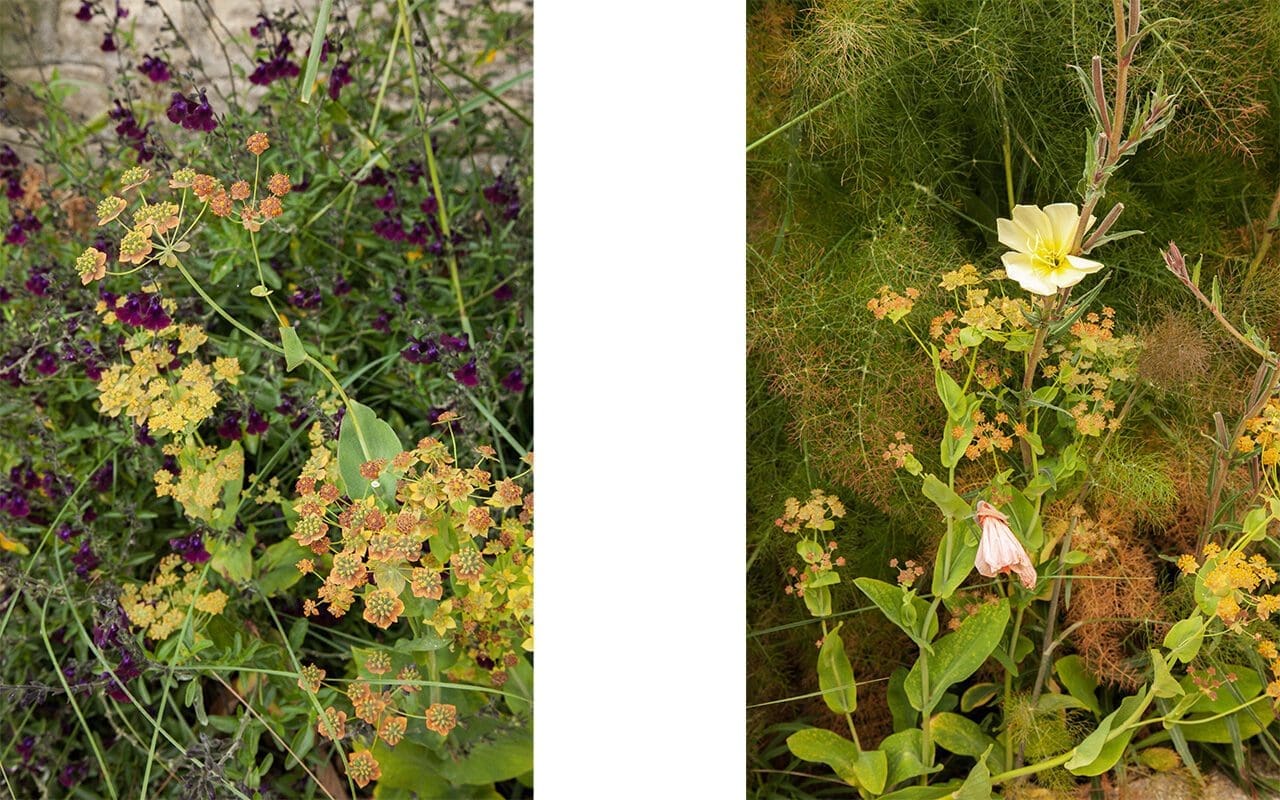
Stoneacre is a garden of rooms that give way one from the other as you walk around the half-timbered hall house. A straight stone path sloped gently to the front door and they had dug up the lawn to either side and planted a pair of gauzy, golden borders that rose in early June to shoulder height with the shimmer of giant oat grass (Stipa gigantea). As you walked the path the detail in the planting revealed itself. Hemerocallis ‘Corky’, a delicate daylily with a dark reverse to the petal, provided the base note of gold. There was saffron Crocosmia × crocosmiiflora ‘George Davison’ and later Rudbeckia fulgida var. sullivantii ‘Goldsturm’, but there was a secret ingredient that provided the planting with a burnish. The bupleurum hovered amongst it all as a mutable undercurrent, a presence that was hard to detect at first until you had tuned your eye, but once you had it, it was the thing that drew you in and held you.
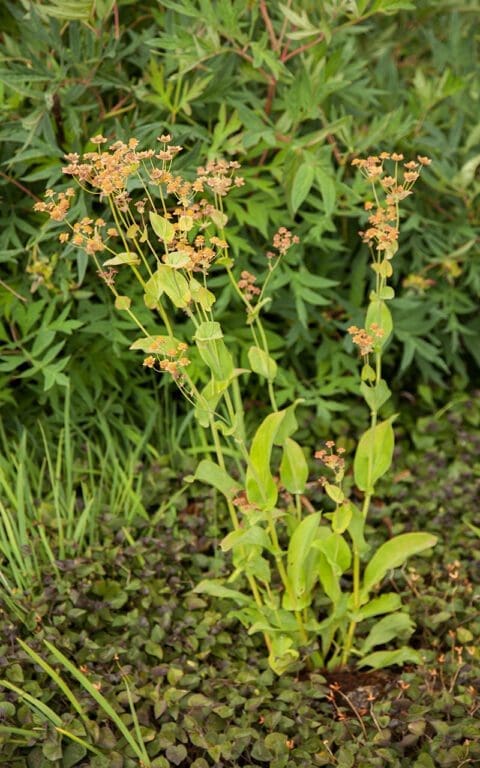
A clutch of seedlings found their way back to the garden in Peckham where they seeded about obligingly. Never moving further than the cast from a bent stem in high summer, but finding their niche wherever they like the territory, the tiny seedlings are easily distinguished in spring. Brilliant lime green cotyledons, two narrow slashes, appear early in the season. They arrive in a rash where they find open ground and soon form a bright first leaf the shape of a paddle. Where there is light and not too much competition they spend their first year hunkering to form a neat rosette. In the second year they throw the first flowering growth, sending up slender stems in early summer with a dusty bloom that softens their presence. By the middle of May the first umbels are filled out and standing tall and free of foliage. Finely spoked they throw just enough florets skywards, each with a neatly cut ruff and an inner button of stamens.
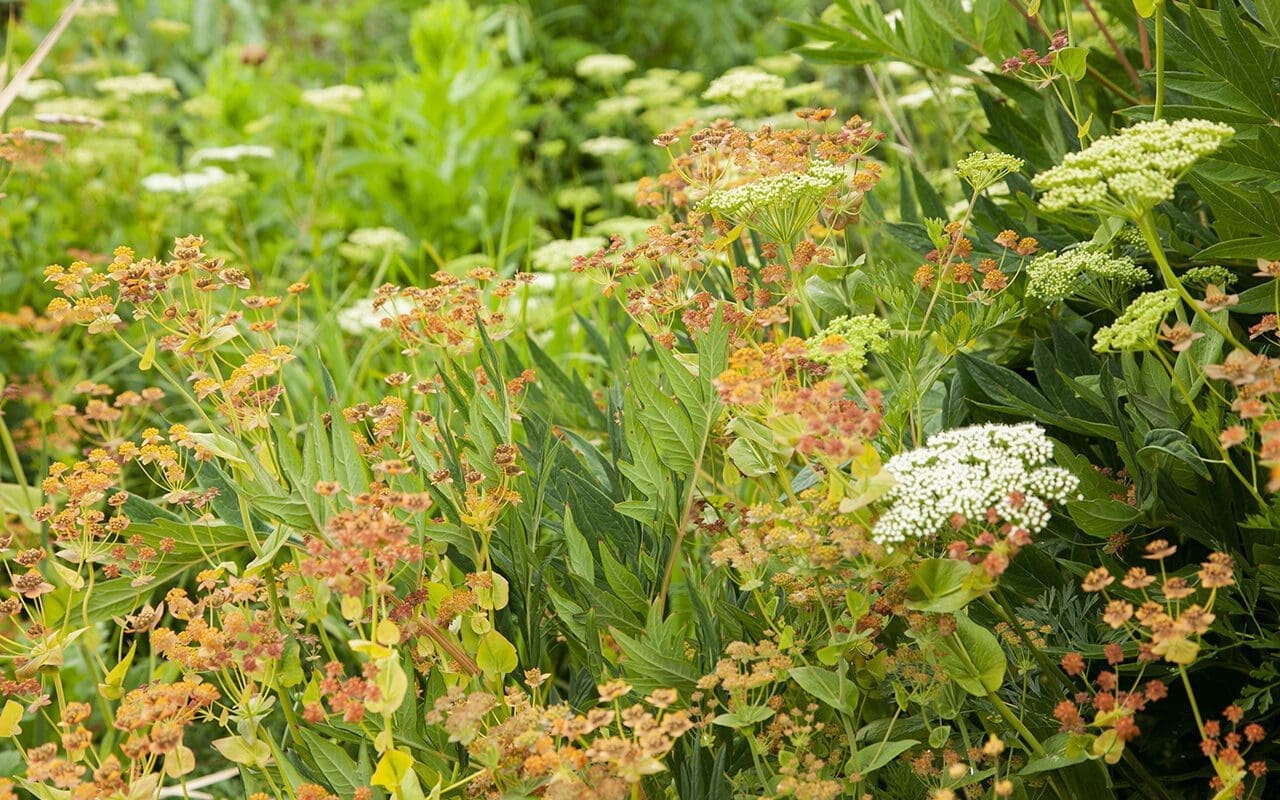
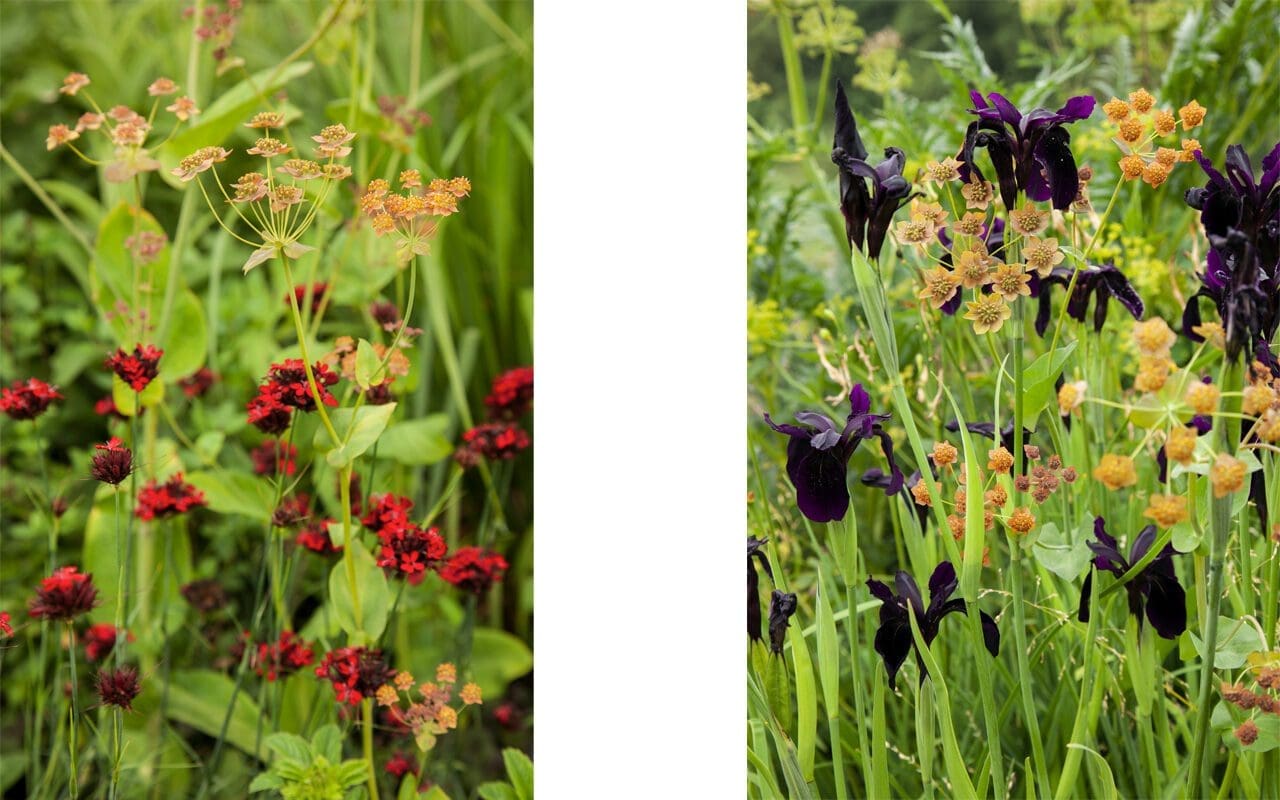
The shifting colour of ‘Bronze Beauty’, the form most commonly available, is hard to pin down ranging as it does from cinnamon to ochre to tan, but it compliments everything. I have not found a companion I do not like it with. I will determine a combination that I think will work well, but its easy nature will throw it into new territory together with something you simply hadn’t or wouldn’t have thought of. I am very particular about colour, but I rarely find it appearing anywhere that I find it jarring or out of place.
Advice if you are reading up about Bupleurum longifolium is to plant it in an open, sunny position. Yes, the low rosette enjoys light and suffers if it is overhung by neighbours, but we have found here, where we have all day sunshine, that it prefers to set seedlings on the shady side of the bed and those in full glare do less well. I think ‘open meadow’ when I plant it, so that it can rise up in company, but not so much that it feels overcrowded.
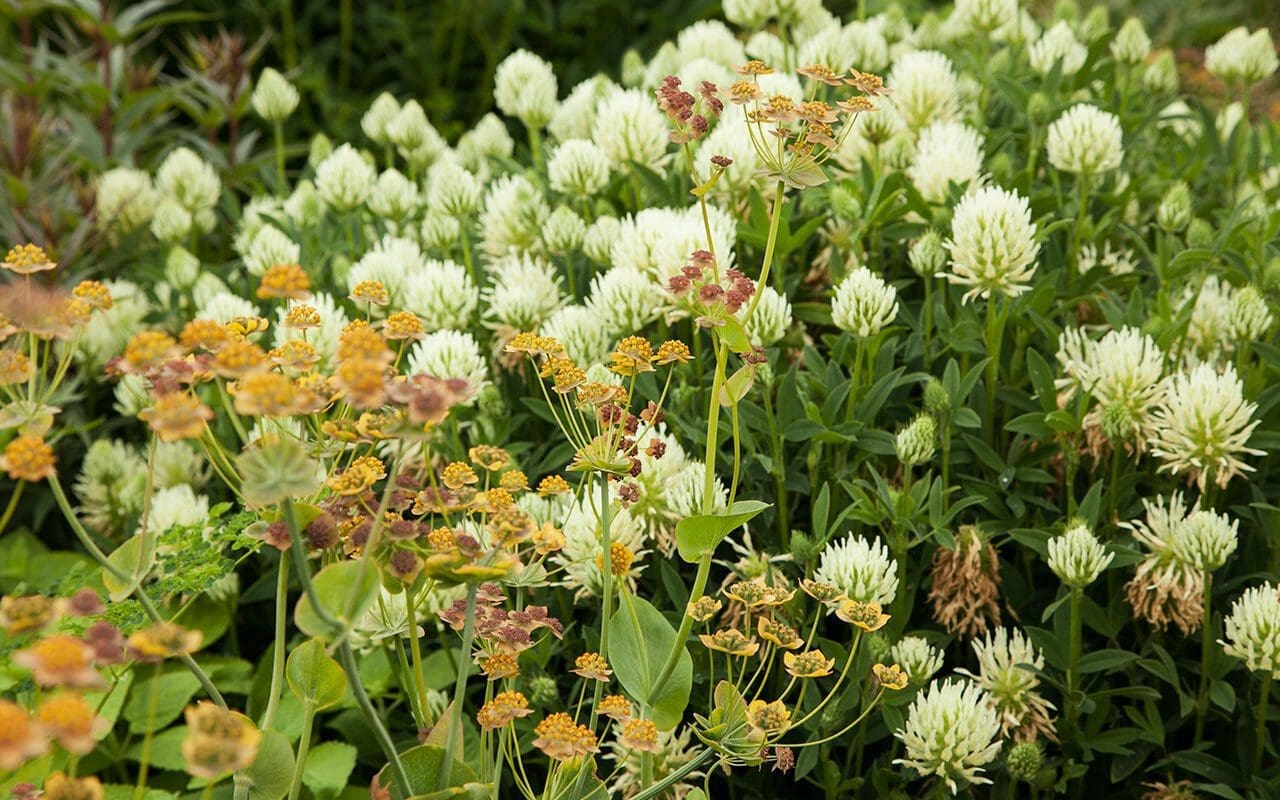
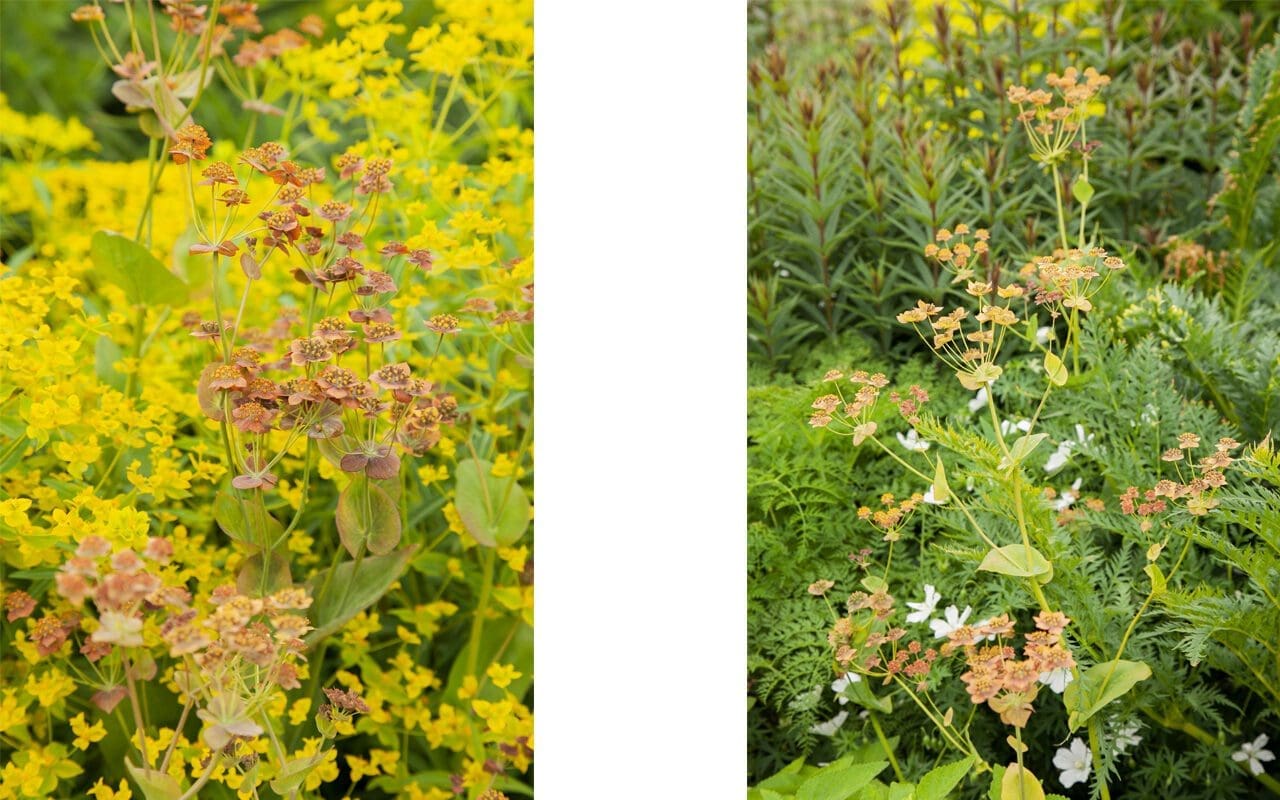
Although it is now finding its own way in the garden and is never competitive like its acid-yellow cousin, Bupleurum falcatum, which we also grow, the plants last three to five years and then hand over to the next generation. I always have a pot full of seedlings in the frame for good measure. They make easy additions where you might suddenly find yourself with a gap come spring. Always sow fresh, as all umbellifers (Apiaceae) do not last if kept and overwinter with a little protection. It was one of these pots of seedlings that found their way back to Richard and Graham a few years ago when they left Stoneacre to make their own garden at a new home on the south coast. An easy gift to return for such a treasured introduction.
Words: Dan Pearson | Photographs: Huw Morgan
Published 13 June 2020
We are sorry but the page you are looking for does not exist. You could return to the homepage