When we arrived here, we took back some of the field to make a trial garden. It was workmanlike in its layout, with dirt paths between manageably sized beds and functioned as a test ground to see what the conditions here were capable of. We grew a range of perennials to see what would feel right and do well on our south-facing slopes as well as vegetables and flowers for cutting for immediate rewards in that first exciting growing season.
The annuals were the immediate litmus, rearing out of virgin ground where they were bathed in sunshine. The response was immediate and immediately rewarding, the cabbages bulking up to a couple of feet across and letting us know exactly why this had once been a market garden and that, yes, it was right to turn field back to garden. For fun, and as a celebration of this new space, we planted a bed of five or six types of sunflower. They grew like you remember things growing as a child, the seedlings popping through the newly turned dirt and not looking back as they raced skyward. I hadn’t seen growth like it and before long they were standing literally twice as tall as me and rejoicing as we were in this wonderful new ground.
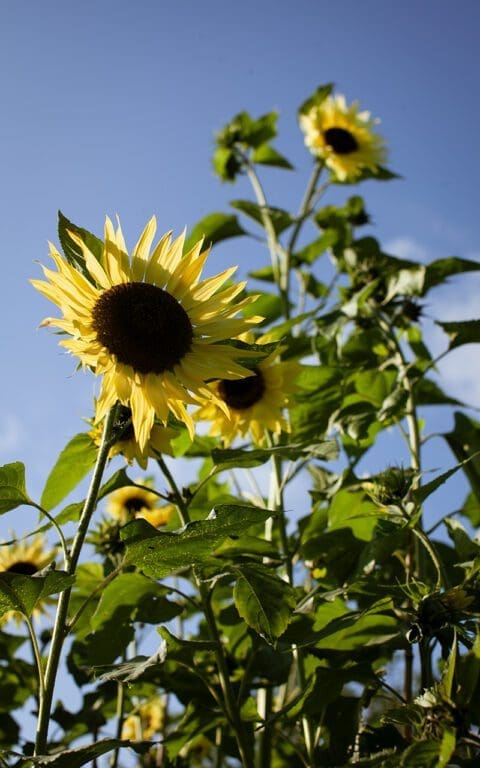
We picked them by the bucket and took vigorous bunches back to the studio in London to tide us over during the week and stop us pining for the hillside. They kept us going through July and were at their peak in August, reminding me by the end of the month of that back to school feeling. The time of the year when the summer is nearly done, but still caught in their energy.
In September we let them form seed and those that didn’t get ravaged by an October storm stood blackened by frost, the seed cases scattered at their feet where the birds had feasted. Seedlings returned in the garden and I left them where I could work around them in the following years, but when we developed the kitchen garden to the east of the house and then the perennial garden to the west, they temporarily lost their home.
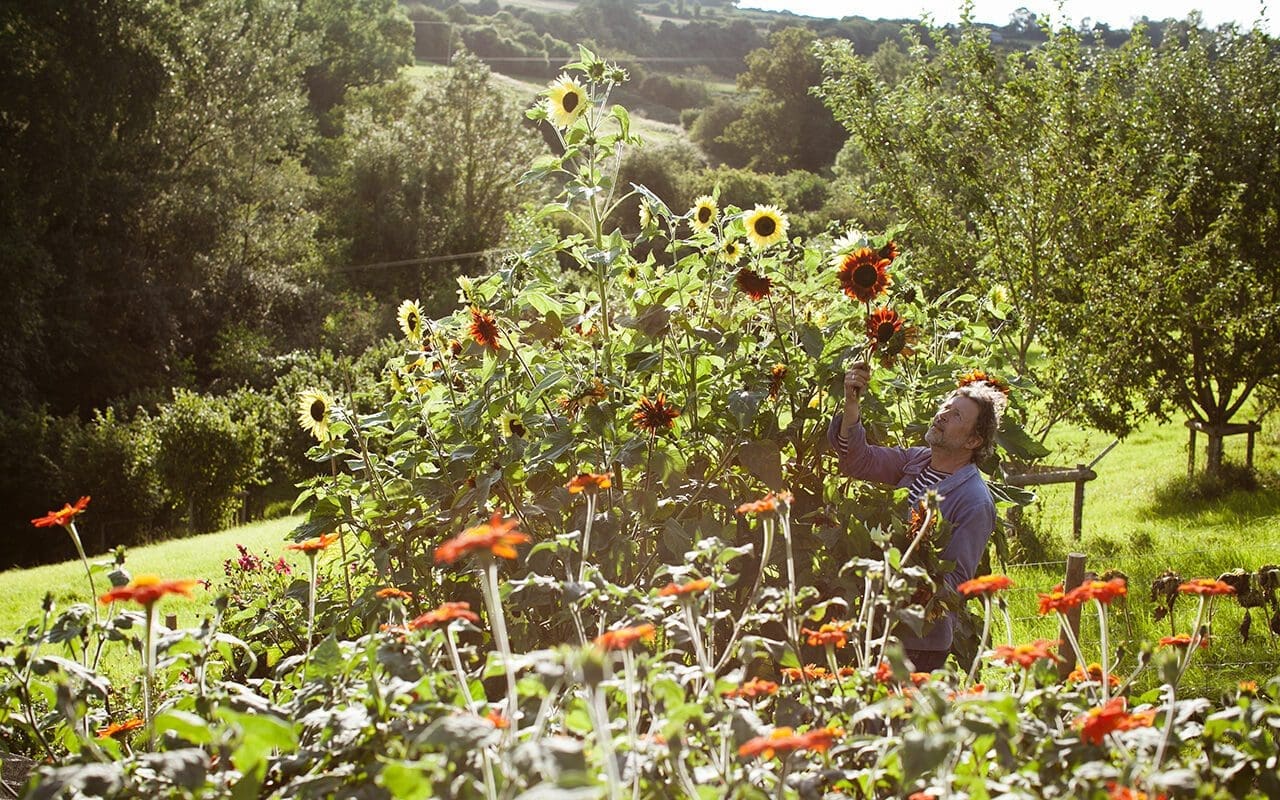
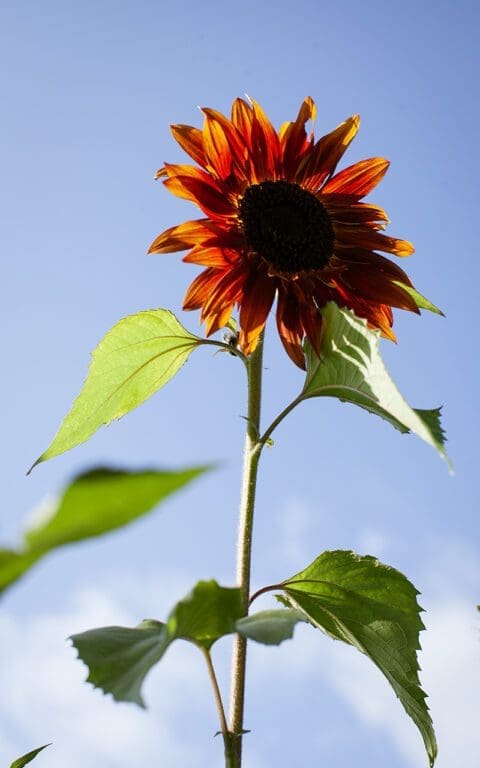
Last year’s response to the pandemic saw us putting up a polytunnel so that we could extend our season of growing to eat. This year I extended a new growing area around it to make an area for continued trials and a spill over for vegetables that need more space. Potatoes were planted to ‘clean’ the ground in this first year of transition from pasture and to repeat the experiments from our first years here we planted a new bed of dahlias, annuals for cutting and sunflowers. It has been so very good to have them back and in generous amount, once again letting us know that, yes, this is a good place for growing.
We have three varieties of Helianthus annuus that have done splendidly. ‘Lemon Queen’, ‘Velvet Queen’ and ‘Chocolate Cherry’. This will be the last year though that we grow ‘Italian White’, a more demure variety that has proven once again to be a shadow of its cousins. Perhaps it is my own experience and I have been unlucky, but every time it germinates poorly and then limps through life. Shy is appealing sometimes, but when you have such boisterous cousins that literally throw you into shade, it makes comparison difficult.
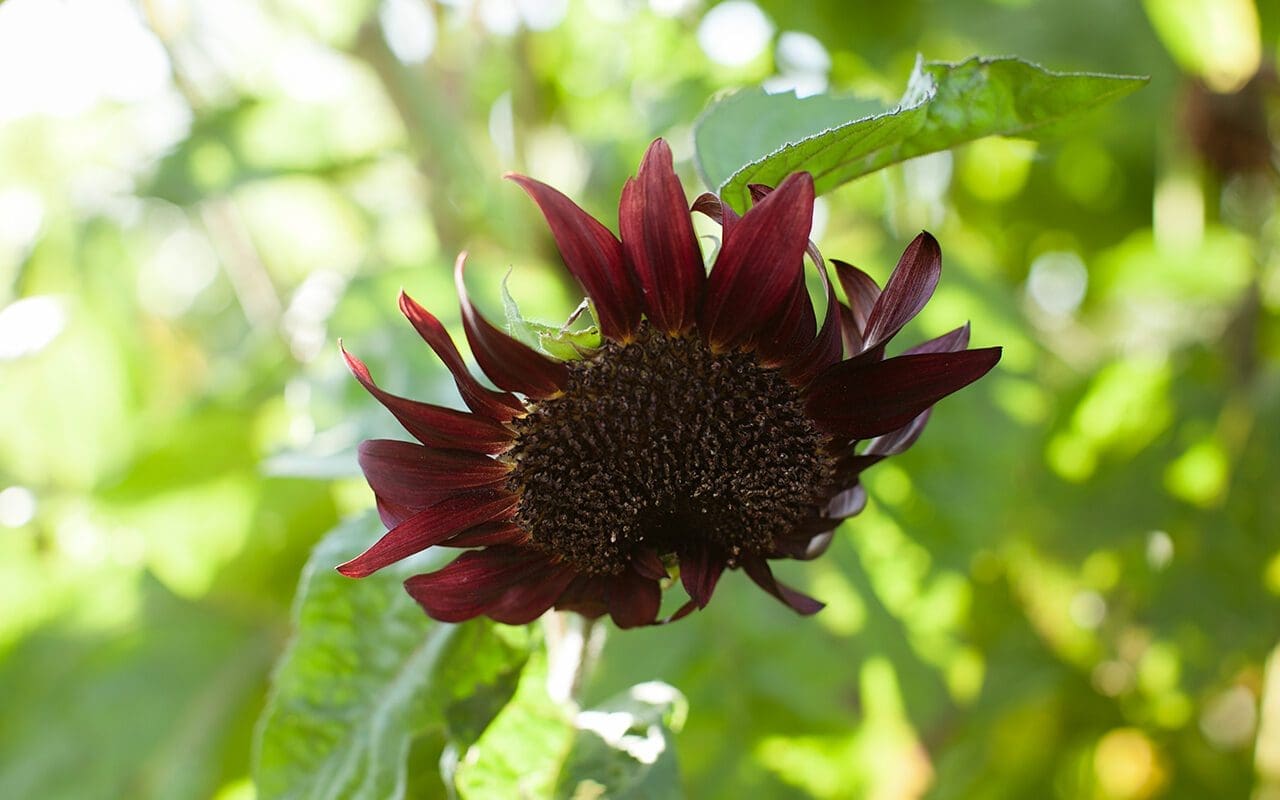
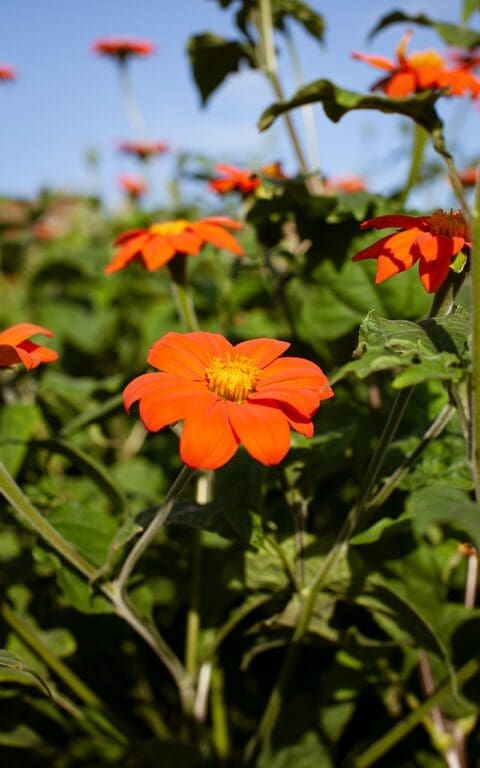
As a complement and for the saturation of pure orange, the Mexican Sunflower, Tithonia rotundifolia, has been easy and rewarding. Grown from seed sown inside and planted out after frost, we have combined it with lime green Nictotiana langsdorfii. The new ground is here to spur ideas and a few plants, the Tithonia included, have already found their way into the perennial garden to punch some late indelible colour. Annuals are good for that, taking this month as their own with no apologies and covering for anything that tends to that back to school feeling.
Words: Dan Pearson | Photographs: Huw Morgan
Published 21 August 2021
For the first three or four years here we grew row upon row of dahlias in the old vegetable garden. They soaked up the light in the first half of summer and flung it back again in a riot of colour later. We grew upwards of fifty, with rejects making way for new varieties from one year to the next to test the best and the most favoured. The dahlias were completely out of character with what I knew I wanted to do here but, like children in a sweetshop, we had the space to play and so we indulged.
Three years of experimentation left us gorged and satiated, but a handful made it through to become keepers. All singles, and delicate enough to be worked into the naturalism of the new planting, we kept Dahlia coccinea ‘Dixter’ for sheer stamina of performance, Dahlia merckii ‘Alba’, the most delicate of all, and the demurely nodding Dahlia australis. Proving to be perfectly hardy with a straw mulch as insurance against the cold they have made good garden perennials. The exception is a scarlet cactus dahlia that outshone the blaze of competition in the trial. Originally bought as ‘Hillcrest Royal’, but mis-supplied, we grew it in our old garden in Peckham and loved it enough to bring it with us and, then again, to keep it in the cutting garden. Unable to identify it correctly after many years of sleuthing we named it ‘Talfourd Red’ after the south London road we lived on and I cannot imagine an autumn now without its flaring fingers.
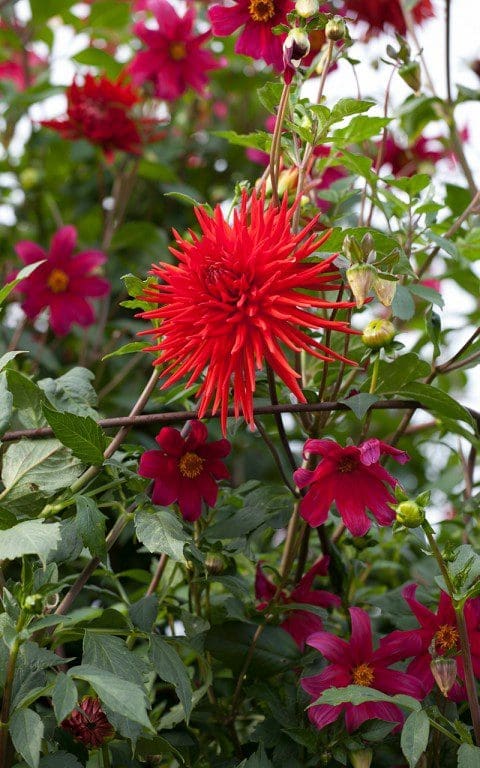 Dahlia ‘Talfourd Red’ and Dahlia coccinea ‘Dixter’
I do like a new plant, and getting to know Tithonia rotundifolia for the first time this year is enabling me to see how it might be used to inject some late summer heat into a planting. We already have a handful of favourites here that are tried and trusted and loved for their intensity of colour, which builds as the growing season wanes. In the case of the Tropaeolum majus ‘Mahogany’, they are almost at their best sprawling and vibrant in the damp cooling days and allowed to climb into their neighbours. The seed originally came from the garden of Mien Ruys at least twenty years ago. I had gone with two friends on an inspirational trip to see what was happening in naturalistic gardens in Holland and Germany and we stopped to meet her in her wonderful garden. The seed was scattered on the pavement over which it was sprawling and a few found their way, with her consent, into my pocket.
This ‘Mahogany’ is not what you will get if you look for it in the seed catalogues. Indeed, it now seems to be unavailable apart from in the United States and ‘Mahogany Gleam’ is a different thing altogether. The leaves are a brighter more luminous green than usual and the flowers a jewel-like ruby red. I have been territorial ever since I started to grow it and winkle out any that come up with a darker leaf or paler flower. It self-seeds willingly every spring, letting you know when the soil is warm enough to sow and where the warmest parts of the vegetable garden are. The seedlings exhibit the same bright foliage so it is easy to weed out the occasional rogue, which might have reverted to the darker more typical green. We currently grow ‘Mahogany’ in the kitchen garden amongst the asparagus and use the leaves and flowers to garnish salad.
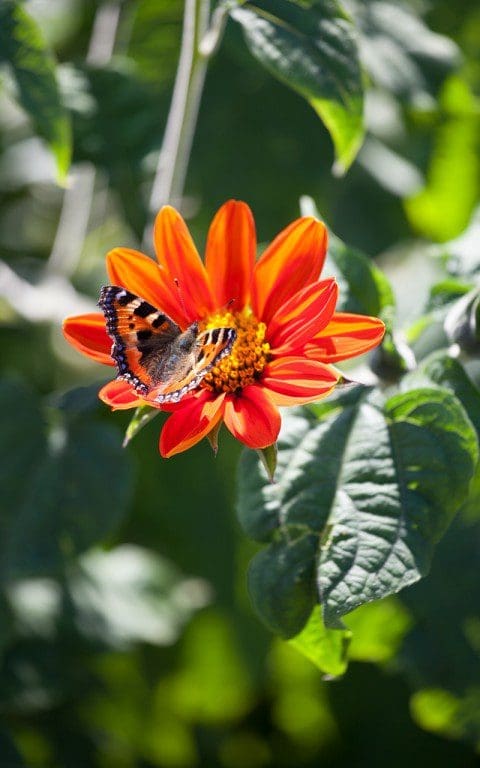 Tithonia rotundifolia ‘Torch’
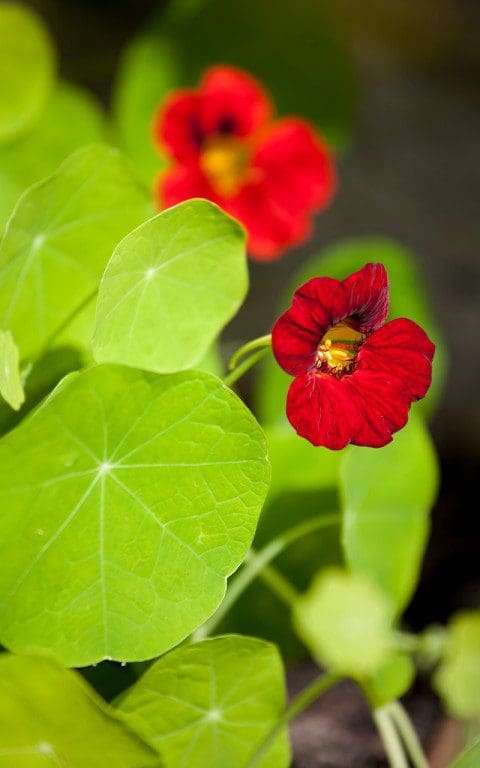 Tropaeolum majus ‘Mahogany’
Close by, and growing this year in two old stoneware water filters, is Tagetes patula. This wild form will grow up to three or four feet with a little support or something to lean on and flowers from June until it is frosted. The colour is absolutely pure and as vibrant and saturated a saffron yellow as you can find. It is easily germinated from seed under cover in spring and fast, so best to wait until mid-April to sow. I harvest my own seed and keep it apart from the dark, velvety Tagetes ‘Cinnabar’ (main image), which it will taint. Seedlings that have crossed will no longer have the deep richness that makes this latter plant so remarkable. I was disappointed to find this spring that the mice had eaten all the seed I’d left out in the tool shed and was expecting to have the first of many years without it. However, as luck would have it and quite out of the blue, they somehow found their way some distance into the new herb garden. Maybe it was mice doing me a favour with the plants I left standing in the kitchen garden last winter. Another lesson learned.
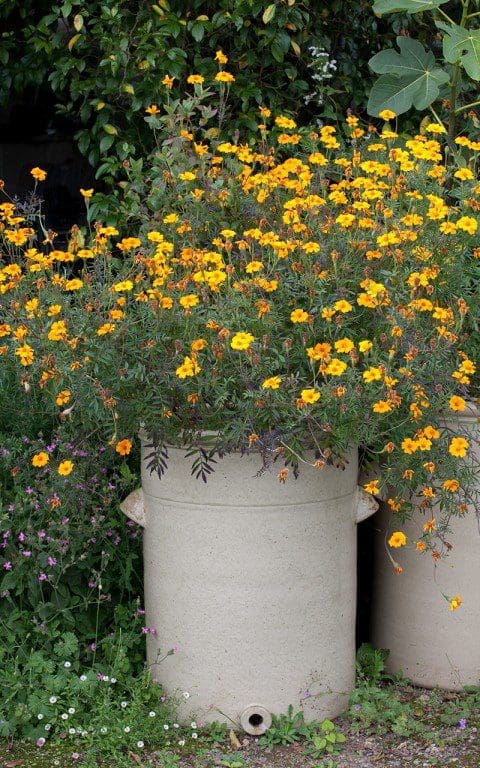
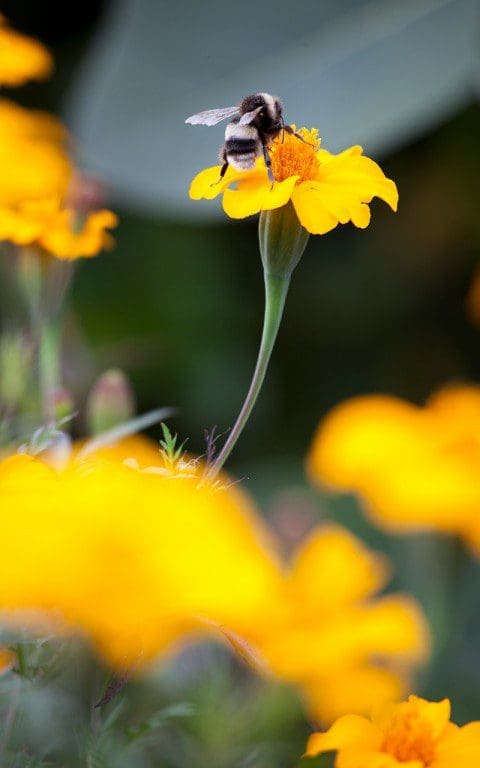 Tagetes patula
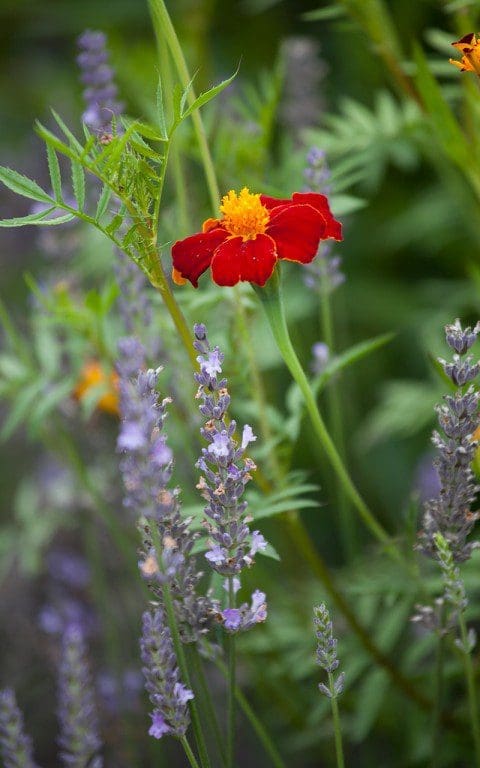 Tagetes ‘Cinnabar’
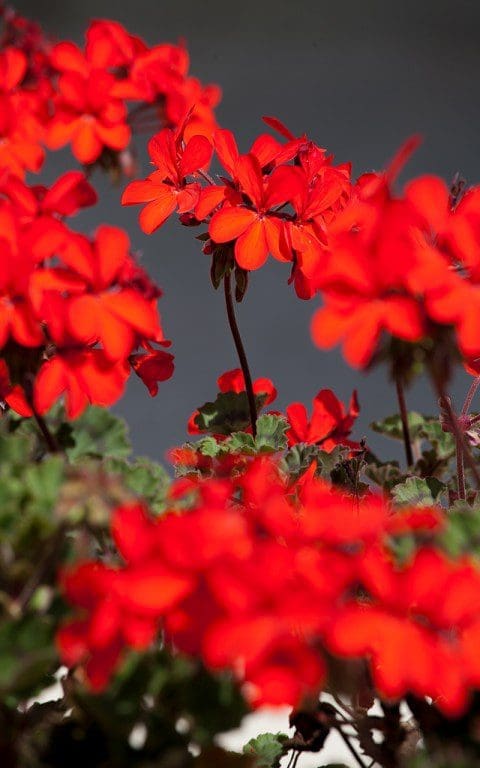 Pelargonium ‘Stadt Bern’
My father was never afraid of colour and always commented on the brilliance of Pelargonium ‘Stadt Bern’, which is the best, most brilliant red I have ever come across. Purer for the flowers being properly single, with elegant tear-shaped petals and thrown into relief against darkly zoned foliage. I bought a tray of plants from Covent Garden Market twenty five years ago for my Bonnington Square roof garden and have managed to keep them going ever since. Given how archetypal it is for a pot geranium I have no idea why it is not more freely available, but there are always a handful of cuttings in the frame which are for giving away to friends, who are given these precious things on the understanding they are part of keeping a good thing going, and that they are my insurance for any unexpected losses.
Words: Dan Pearson / Photographs: Huw Morgan
Published 23 September 2017
We are sorry but the page you are looking for does not exist. You could return to the homepage