ALREADY A PAID SUBSCRIBER? SIGN IN
ALREADY A PAID SUBSCRIBER? SIGN IN
We have now been at Hillside for six weeks during which time we have left the village just twice. Our daily lives have settled into a regular routine, which provides the reassurance of structure. The furthest we venture from the house each day is for two dog walks, one around the valley after breakfast and the other shorter one up the lane to our top fields after we finish work. Apart from our DPD delivery man (with whom we have rapidly become much more familiar) the only people we see regularly are our immediate neighbours.
Living in a tiny community the local support network kicked in very quickly here in mid-March. Josie and Rachel, sisters who live up the lane, are in their 80’s and have lived here almost all their lives and still live to the rhythm of an earlier time. When we first moved here they told us that our top fields used to be known as the ‘hospital fields’, since they were left ungrazed for the cows to be allowed in at certain times of year to self-medicate on wildflowers. When we first got a swarm of bees they arrived, unannounced and kitted up, to see if we wanted some help learning how to manage them, as they have been beekeepers for decades.
Each evening we meet them at the gate to the hospital fields as we return from our dog walk, where they feed the two beef cattle they raise each year in the neighbouring field. We have always stopped for a quick hello in the past, but there is now an enforced closeness and intimacy in our communications. Very quickly after lockdown we started talking chickens. The fenced orchard that abuts their garden is home to a large brood and their cockerel can be heard most mornings waking the upper reaches of the village. We had thought that now, unable to leave home, might be the time to get chickens of our own. While we still haven’t committed, we rely on our now weekly delivery of eggs from the ladies up the lane.
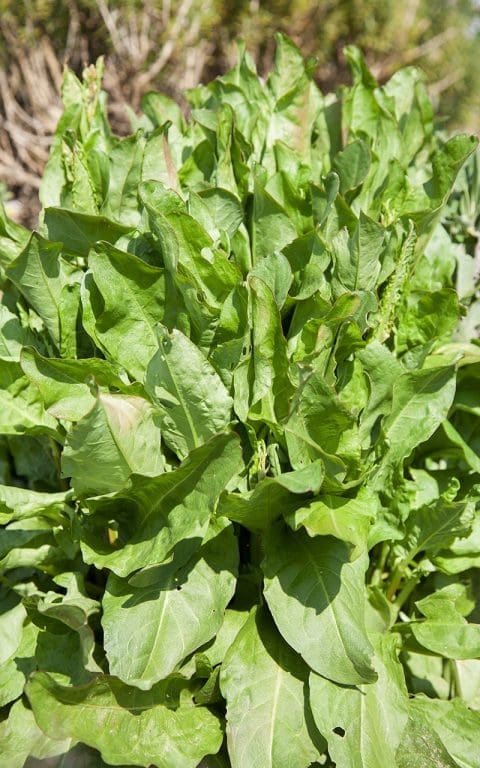
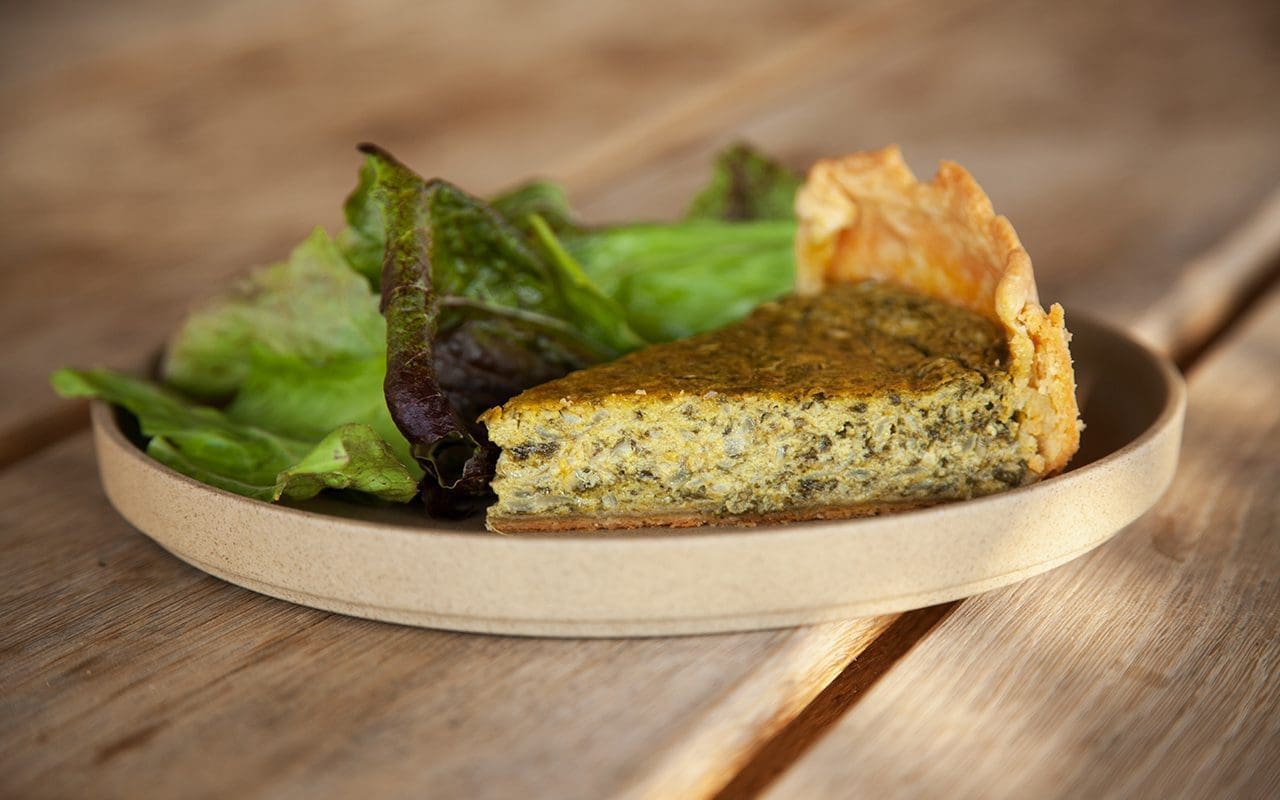
Now that we are smack in the middle of the hungry gap, everything in the vegetable garden is up for kitchen consideration and things that may once have been a passing fancy demand a treatment that will turn them into a real meal. The sorrel, which is in its prime right now, is sending out sheaves of squeaky green leaves that just invite harvest. Due to its reputation for sourness, and the fact that, like spinach, it cooks down to nothing (whilst also turning an unappetising shade of khaki) it is not the easiest of leaves to use. However, the sorrel custard filling of this tart both extends and carries the lemony flavour of the leaves beautifully, while also disguising the somewhat murky colour since, with the yellow of the eggs, it cooks to an attractive chartreuse. Since sorrel isn’t available to everyone it could be replaced by young spinach, de-stalked chard or wild foraged greens like wild sorrel and nettle. The addition of a tablespoon or two of lemon juice will add the requisite tang.
This recipe is essentially Richard Olney’s from Simple French Food. My only adjustments are the addition of a tablespoon of fine polenta to the pastry (I like the sandy crunch it brings to savoury pie crusts) and a little less double cream. However, more than that I would not be tempted to fiddle. The plain simplicity of this recipe is its secret, particularly in these times of renewed frugality. The alchemy and pleasure of turning straightforward pantry items and produce from the garden into something memorable and delicious.
Pastry
125g plain flour
125g unsalted butter, put into the freezer for 30 minutes
1 tablespoon fine polenta
A pinch of salt
5-6 tablespoons iced water
Filling
300g sorrel leaves, weight with stalks removed
2 medium onions, about 300g
60g butter
250ml double cream
3 eggs
Ground black pepper
Sea salt

First make the pastry. Put the flour into a medium sized mixing bowl and then grate the frozen butter into it. Using a sharp knife and fast cutting motions, cut the butter into the flour, until the mixture resembles sand. Add the salt and polenta and stir to combine.
Sprinkle the iced water over the flour and butter mixture two tablespoons at a time, and use the knife to incorporate it after each addition. Then when it looks as though it is damp enough, use the very tips of your fingers to quickly pull the dough together into a ball. Wrap tightly and put in the fridge for 1 hour.
While the dough is chilling boil the kettle and put the sorrel leaves into a large saucepan. Pour the boiling water over the sorrel and stir with a wooden spoon. The leaves will turn khaki. Drain immediately and thoroughly.
Gently heat half the butter in a smallish pan. Press the sorrel leaves against the side of the colander to remove as much water as possible, then stew in the melted butter over a low heat, stirring from time to time, until you have a puree with no surplus liquid. Remove from the heat and allow to cool.
While the sorrel is cooking gently heat the other 30g butter in a smallish pan. Add the onion and saute over a very low heat, with the lid on, for about 30 minutes, or until they are very soft, translucent and completely uncoloured. Allow to cool to room temperature, then add to the sorrel. Heat the oven to 180°C.
Take the pastry from the fridge and roll out very quickly on a well floured surface into a circle 28-30cm in diameter. Carefully use to line a 23cm tart or cake tin. Prick the base with a fork several times. Line with baking parchment, fill with baking beans and bake blind for 15 minutes. Remove the beans and baking parchment and return to the oven for 5 minutes or until the pastry looks dry and lightly coloured. Remove from the oven and allow to cool.
Beat the eggs and cream together in a bowl. Season with pepper and salt. Add to the sorrel and onions and mix thoroughly. Pour the mixture into the pastry case and bake for 40-50 minutes until firm in the middle and lightly coloured.
Serve warm with a green salad.
Recipe and photographs: Huw Morgan
Published 24 April 2020
Raymond Lewis, the farmer who lived here before us, was born in this house shortly after his parents moved here in the early 1930’s. Although he raised cattle, his parents had been market gardeners and it is our nearest neighbour, Glad, who has been the fount of all knowledge regarding how the land here was used before we arrived. She too was born here, in the house just above ours on the other side of the lane, and went to school with Raymond. She has a prime view over our slopes.
It was she who told us that we were planting our new orchard on the site of the Lewis’ old orchard, that the hollies by the Milking Barn were harvested each year for wreaths destined for the Christmas Market in Bath and that the extra-scented, large violets we found growing everywhere were wrapped in leaves and tied with cotton for spring posies. When we expressed amazement at finding ‘wild’ gooseberries and redcurrants in our farthest hedgerow, Glad said that it bordered the field where the soft fruit had been grown and so we realised that they had arrived through the actions of thieving birds.
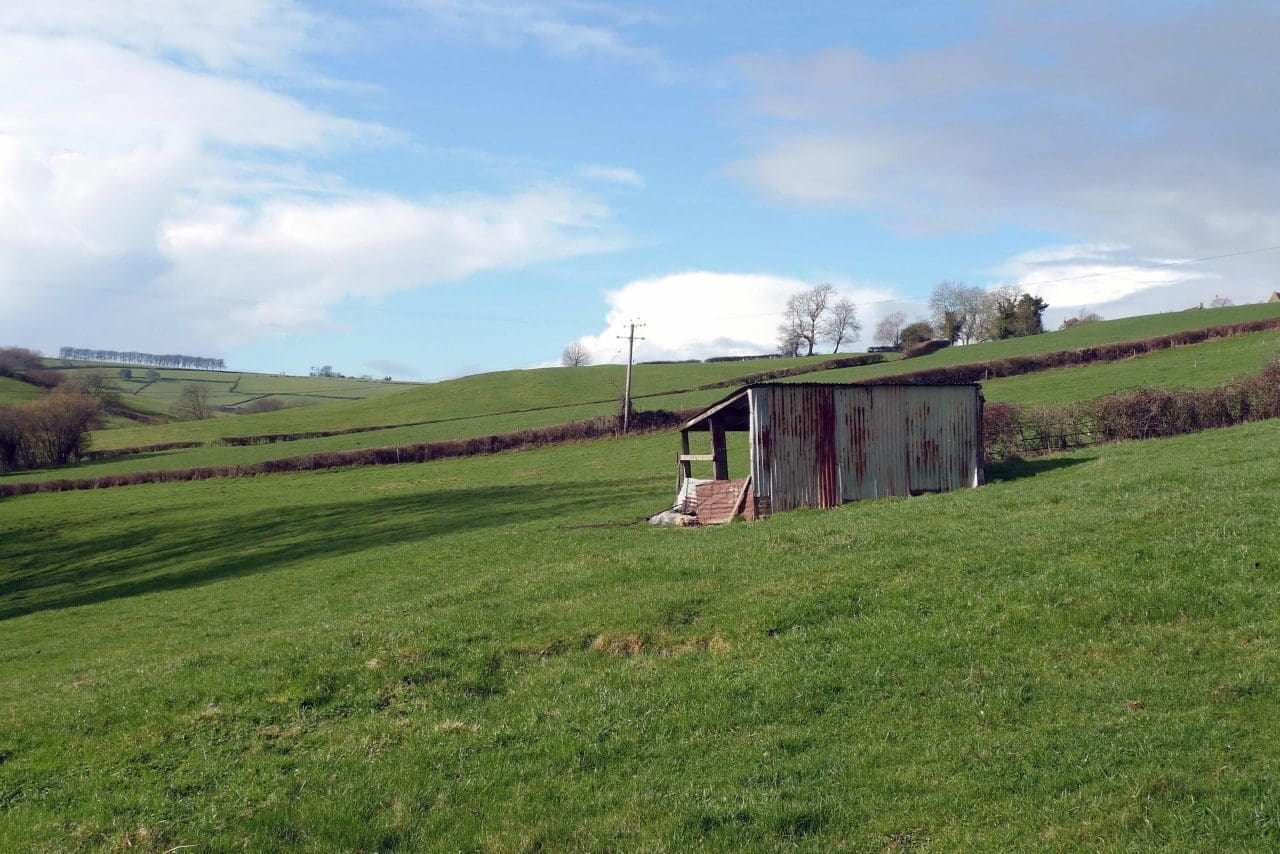
Another piece of growing history she imparted was to do with the ramshackle shed half way down the field in front of the house. We had been charmed by this little structure from the first time we saw it, but couldn’t work out what it had been used for. Made from a motley collection of wood and reclaimed corrugated tin sheeting and open on two sides it is barely high enough to stand up in. It evidently hadn’t been used by Raymond’s cattle, and it was too far from the house to have had any obvious purpose such as a vegetable or wood store. The clue to its use was revealed the winter after we arrived, when clearing the mess of bramble from the hedge that runs up behind it.
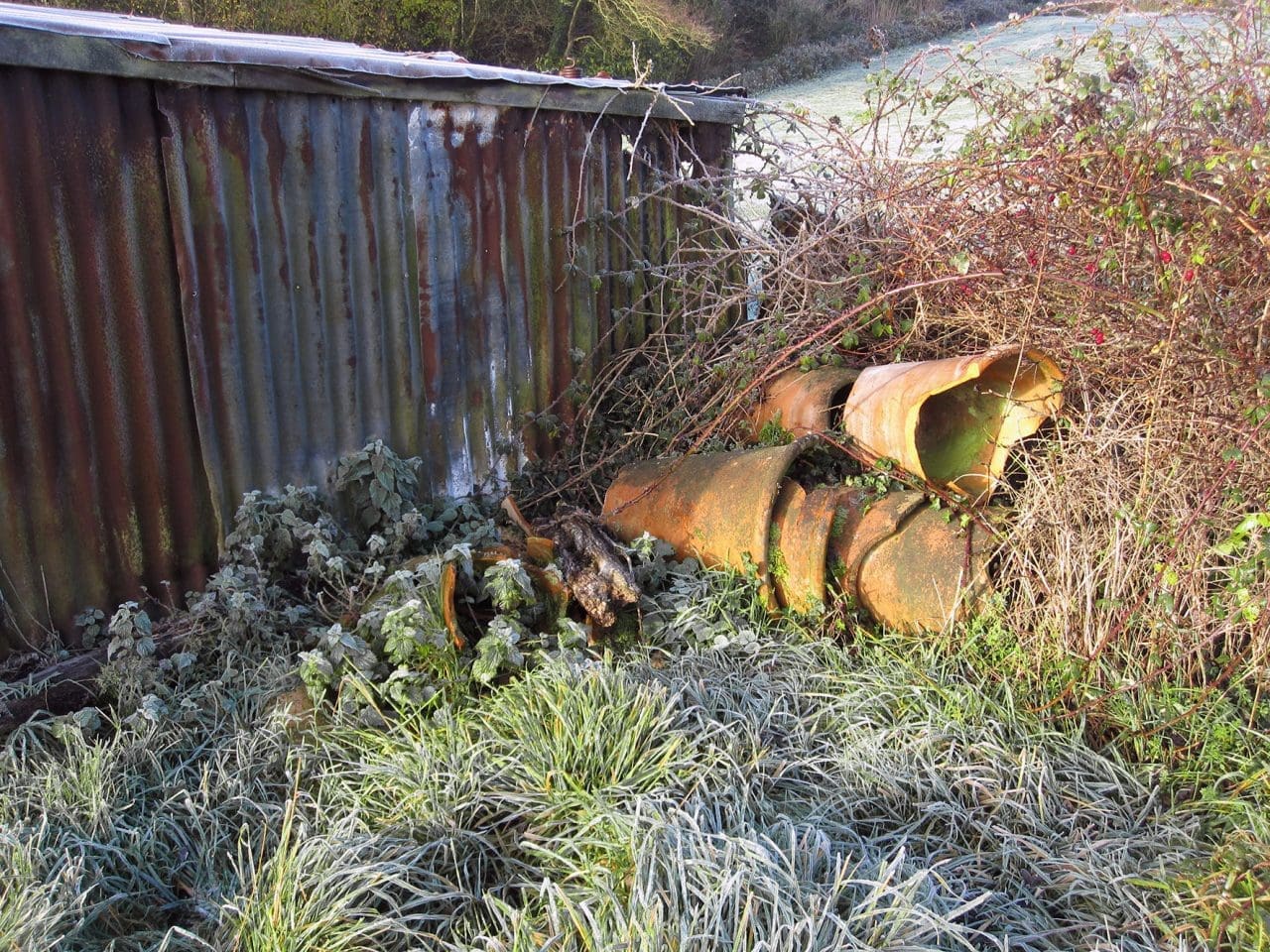
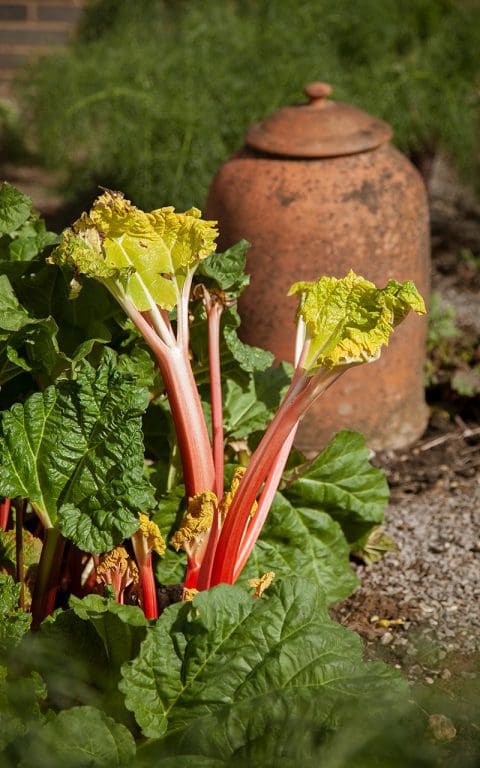
There in the undergrowth were a dozen or so terracotta rhubarb forcers. Unfortunately all but a couple were broken beyond use, but it was suddenly clear what the little shed had been used for. We asked Glad at the first opportunity and she confirmed that it had been ‘the rhubarb forcing hut’, which is how we have referred to it ever since. We have often imagined Mr. and Mrs. Lewis in there in deepest winter, inspecting the covered crowns by candlelight (as they still do in the Yorkshire rhubarb triangle to prevent the stalks colouring) and then carefully harvesting armfuls of the pale pink stems to take to market. Now it provides shelter for the sheep that graze our pastures and has sometimes protected us from sudden summer downpours when the water runs off the roof in sheets.
We have three varieties of rhubarb in the Kitchen Garden here which take us through spring and early summer; Timperley Early, Champagne and Victoria. The first is, not surprisingly, said to be the earliest, and has always been so for us. We have found it possible to force it for stems in February. The other two are later and tend to come together if left uncovered, but by forcing one of them and leaving the other – on a yearly rotation – we can have rhubarb until June. Beyond that and it can become a little long in the tooth and green to eat fresh, but is still perfectly serviceable for jam. When forcing rhubarb it is important to only cover part of the crown and, when ready to harvest, to take the slenderest stems and leave the strongest to feed that part of the plant for the future. To allow it to rebuild its reserves you should then choose a different part of the crown to force the following year.
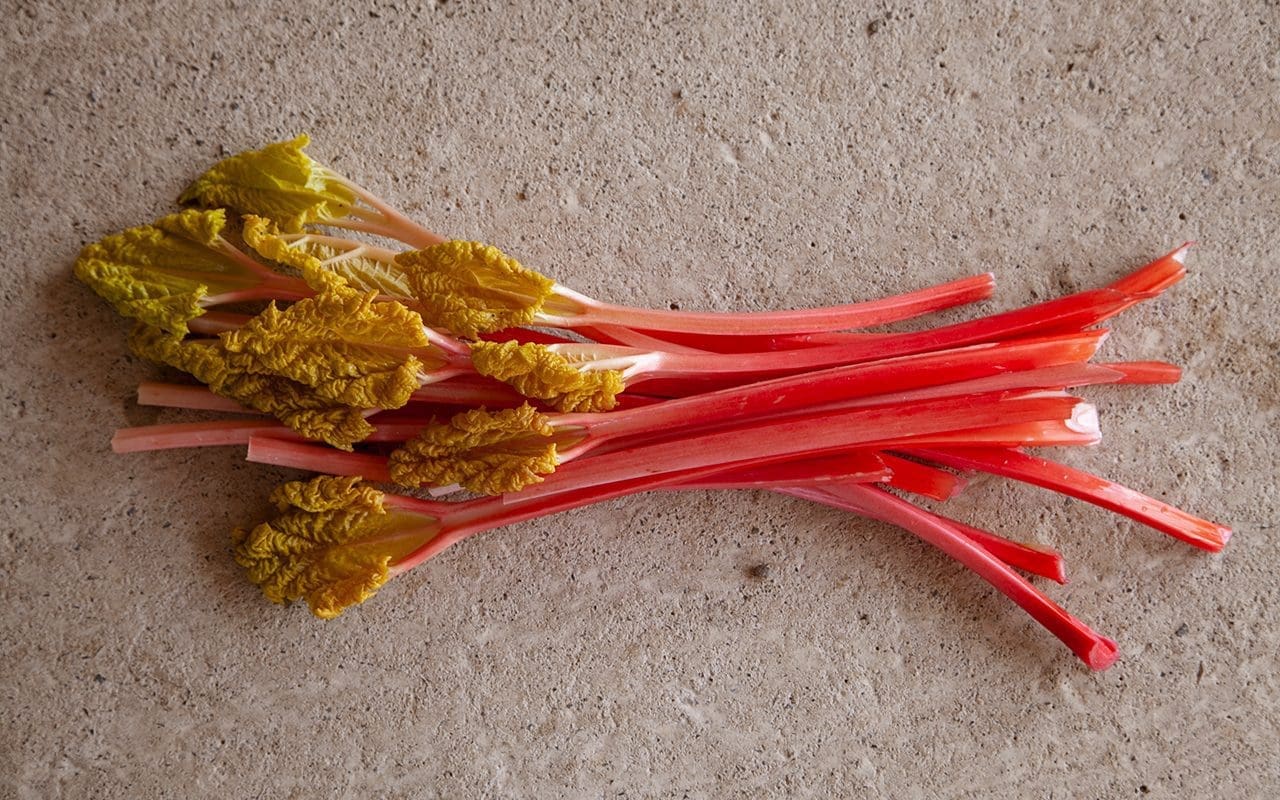
The flavour of forced rhubarb is so subtle that it needs the simplest of treatments to show it off to its best advantage. Most often I just roast it and serve with a creamy accompaniment of buttermilk pudding, pannacotta or, simplest, a mixture of whipped double cream and creme fraiche. I find orange, the customary partner of rhubarb, overwhelms this early season delicacy. However, judicious use of thyme or rosemary adds an unexpected counterpoint that suits this fruit that is actually a vegetable. It also has an affinity with the aniseed used here, but it’s not essential, so leave it out if you prefer.
The pastry is based on a recipe by Alice Waters of Chez Panisse, and is a fast and easy way to achieve a deliciously flaky result. Its success relies on using the best quality butter and flour and the very lightest of touches to ensure the pastry stays as cold as possible. If you are using open grown rather than forced rhubarb you will need to increase the quantity of sugar in the filling by at least 25g, depending on how tart you like your rhubarb.
200g plain flour, Tipo 00 preferably
150g unsalted butter
1 teaspoon icing sugar
A large pinch of fine sea salt
8 tablespoons iced water plus a couple more
500g forced rhubarb, trimmed weight
75g caster sugar
1/2 teaspoon vanilla essence
3 tablespoons ground almonds
1 teaspoon aniseed
2 teaspoons icing sugar
1 teaspoon water
2 tablespoons melted butter
Stalk trimmings from the rhubarb
5 tablespoons water
3 tablespoons caster sugar
Take the butter, still in its wrapping paper, and put it in the freezer for 20 minutes to harden.
Sift the flour into a bowl with the icing sugar. Add the salt. Remove the butter from the freezer. Unwrap about 2/3 of the block and, holding the end of the block in the paper, coarsely grate it onto the flour. To avoid grating your fingertips you may need to cut the very last of it into small pieces.
Using a sharp knife and rapid slicing and lifting movements cut the flour and butter together until the mixture resembles coarse gravel. The butter should be visible in a variety of different sizes, but few should be bigger than a pea.
Continuing to work as quickly as possible, sprinkle the iced water over the mixture 2 tablespoons at a time. Each time use the knife to mix the water into the flour and butter. When you have added all of the water the mixture should just start coming together, but there will still be dry flour visible. Use your fingertips to see it it feels like it will come together. If it seems too dry add another tablespoon or two of water – but no more – and mix through again. Then very quickly, using your fingers and not the palms of your hands, bring the dough together into a ball. Do not knead it or overhandle it. The dough should feel cold.
Lightly dust a piece of greaseproof paper about 40cm square with flour and place the dough onto it. Gently and quickly flatten the dough with the palm of your hand into a rough circle. Take a floured rolling pin and, using light, rapid movements, roll the dough out into a circle about 35cm in diameter, rotating the greaseproof paper in quarter turns after each pass. Reflour the rolling pin if it starts to stick. The pastry will be very short, so don’t worry about the edges cracking. Lift the greaseproof paper and dough onto a heavy baking sheet and put in the fridge for 20 minutes to chill.
Set the oven to 200°C (400°F, gas mark 6).
Cut the rhubarb into pieces about 8cm long. Put into a non-reactive (glass or ceramic) bowl. Sprinkle over the caster sugar and vanilla essence and toss together briefly. Leave to stand while the dough is chilling.
Remove the baking sheet from the fridge. Working quickly again, sprinkle the ground almond evenly over the pastry leaving a 5cm border. Arrange the rhubarb on top of the almond. You should have enough rhubarb for two layers. The first can be arranged somewhat haphazardly, and should use up any larger pieces. You may need to cut these in half lengthways to ensure they cook evenly. Retain the smaller stems for the top layer and arrange them more pleasingly.
Then, working around the circle, gently lift the edge of the pastry up over the rhubarb, folding, pleating and gathering as you go. Pinch it together quickly if any tears appear, since you want to keep the juices in as far as possible. Don’t worry too much about appearances though. You want to ensure that the pastry holds the rhubarb in place, but it is more important to get the chilled pastry into the oven quickly than for it to look primped and perfect.
In a small bowl put the aniseed or caraway seed, icing sugar and water. Stir until the sugar has dissolved. Add the melted butter and stir to combine. Brush this mixture generously over the pastry.
Put the tart straight into the oven and cook for about 40 minutes until the pastry is golden brown and the rhubarb bubbling.
While the tart is cooking put the rhubarb trimmings, water and sugar into a small pan. Bring to the boil, then simmer until the rhubarb has disintegrated and the liquid is syrupy. Strain the liquid off and, when the tart is cooked, gently brush this syrup over the rhubarb.
Serve warm with single cream.
Serves 8
Recipe and photographs: Huw Morgan
Published 23 March 2019
We are sorry but the page you are looking for does not exist. You could return to the homepage