ALREADY A PAID SUBSCRIBER? SIGN IN
The oriental poppies have broken the green, rearing above the rush of June foliage. They are the first true colour in the garden, save the Tulipa sprengeri that teetered neatly on the last week of spring and preceeded them. Red is a jolt this early in our verdant landscape, but we are ready for it now, the first slash of summer.
I have planted the poppies in homage to several memories. The first, a plant I remember from being about the same height, gazing into their interiors in our childhood garden. It grew with ferns and sprawled beyond the borders to offer up bristly buds, the casing breaking into two under the pressure of soon to be uncrumpled flower. I am red-green colour blind, but not completely and those poppies are an early memory of being able to see red fully, for they present it without compromise. Luminous and as red as anything can be, heightened by black-blotched bases and turquoise stamens.
The second memory, and one that I have planted into this garden, refers not to poppies at all but to meeting scarlet Amenone pavonina flaring amongst euphorbia and the march of giant fennel on the Golan Heights in Israel. I was there for a year working in the Jerusalem Botanical Gardens and the brilliant Michael Avishai, then Director of the gardens, would take me on weekend excursions to look at the flora of Israel. A fearless and terrifying driver, we would leave at 4am, to arrive at a site, spot on time for a happening in the landscape. This one came with his advice to not stray too far from the road. If you stepped over the wire marked “Land mines. Do not enter !”… The red of anemone I can see too and I shall never forget its shimmer amongst its opposite acid greens and the sun rising over an army of fennel stretching into a dangerous distance.
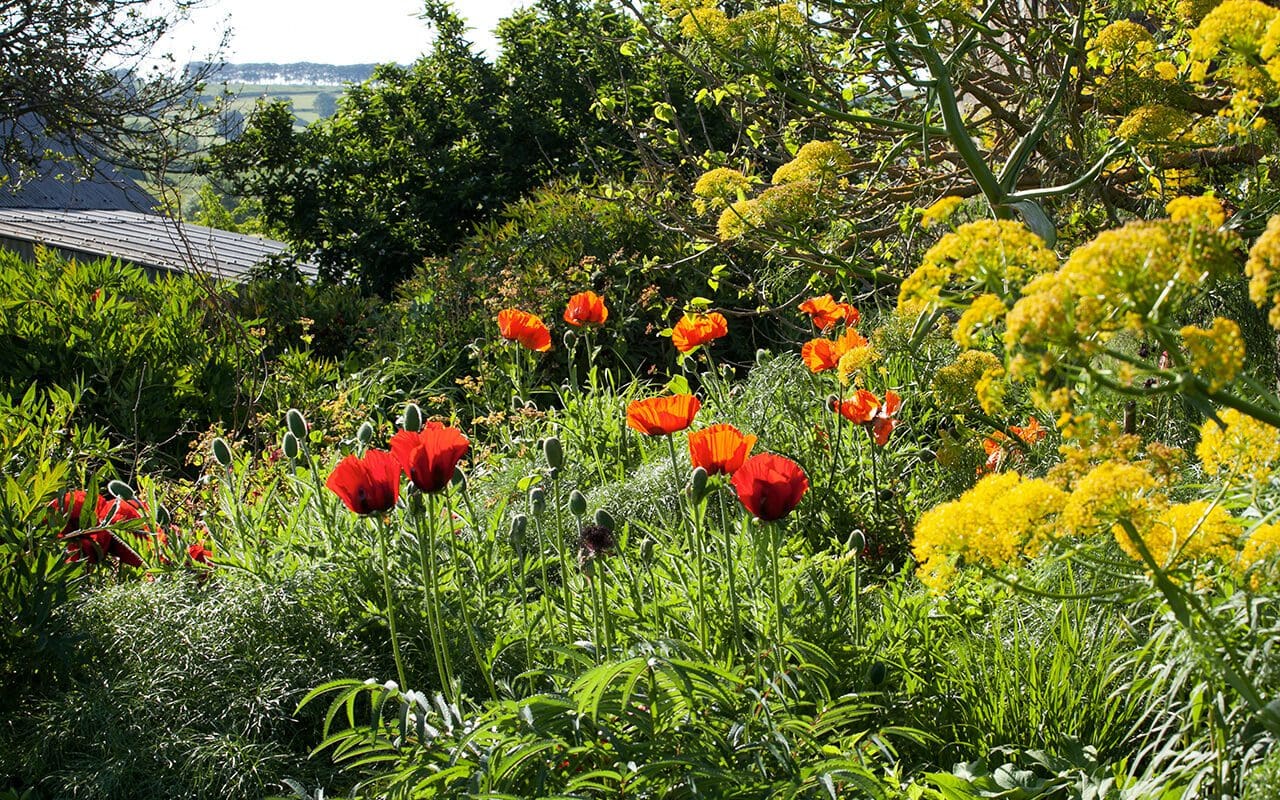
So, this particular memory comes with a charge and the oriental poppies that step through the giant fennels in the garden here take the place of the anemone. We have two varieties by default, not design. The requested ‘Beauty of Livermere’ (Goliath Group) are pillar box red, while there are three plants of a tangerine orange one that were substituted and planted without knowledge of their difference. I do not have the heart nor the desire to take out one or the other. The reds are good together and if I were to try and remove the plants to only have one, they would still likely regrow from root cuttings. This is the way to propagate oriental poppies for they do not come true from seed.
The rush into life in the spring, first with a mound of hairy, lime-green foliage and then the reach to flower is made possible by energy stored in thick, deeply searching roots. Hailing from Central Asia, their habit of disappearing once they have flowered and set seed is a survival mechanism against the drought of summer. The gap they leave will need to be negotiated by cutting the plants back to the base as soon as they begin to wane and in combining them with later-to-come perennials that will cover for the gap they leave behind. Asters and late flowering grasses make good couplings.
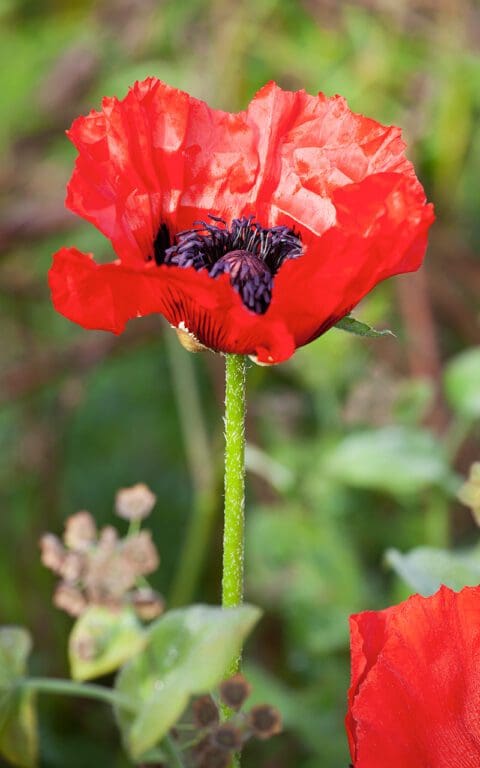
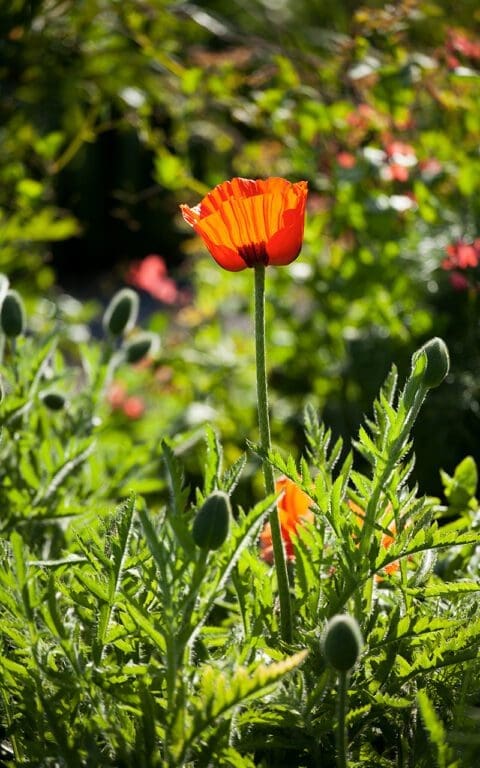
The reserve in the root can also be used to advantage in the fringe of the garden in rough grass and amongst cow parsley for the early growth will also outcompete grass in spring. The secret is to introduce them as established plants and keep them clear of competition in the first year whilst they are building their root system. Their dwindling summer growth will be disguised by the meadow and the autumn regrowth can be mowed around once it returns with summer rains.
Though I do not grow more varieties here, for the oriental poppies set an opulent tone and demand your attention whilst they are in flower, I have grown several in the past. At Home Farm I set ‘Perry’s White’, with its contrasting dark blotch, amongst gallica roses and inky bearded iris. I used the wood aster, Eurybia diviricata to cover for them later. For a while I also grew ‘Patty’s Plum’ for its thunderous bruised grey-mauve flower though it was never a keeper and dwindled for me. Then there was Saffron’, with wide open flowers of pale tangerine.
Burned into the June green, I will be there as I was aged five this coming weekend to witness their awakening. Never dimmed, always welcome.
Words: Dan Pearson | Photographs: Huw Morgan
Published 12 June 2021
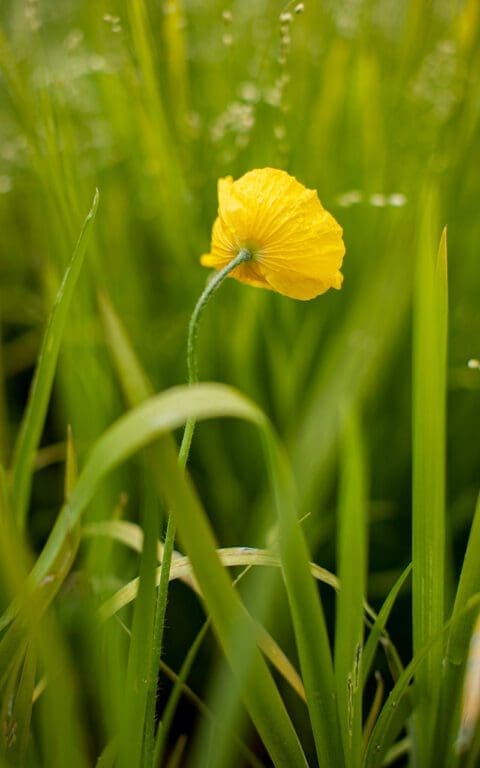
Bright as sunlight and illuminating these wet, windswept days, the Welsh poppies are dancing down the steps. This is their way, seeding into cracks and crevices and taking advantage of any window of opportunity. This is usually in bare ground but, being adaptable, it could also be in the centre of a later-to-emerge perennial. The seedlings, which are happy in cool shade, take the initiative, sending down a sturdy taproot and then bolting up unexpectedly the following year without you so much as noticing.
This is how they arrived here, as stowaways in the ark of plants that I brought with me from the Peckham garden. Probably wedged in the roots of the Molly-the-witch peonies or amongst the hellebores which, in turn, hitched a ride in the plants that I brought with me from Home Farm years before. Now that I cast my mind back, hopping and skipping from one garden to the other, I can trace them back to a trip I made to the Picos de Europa in northern Spain when I was in my early twenties. They were a highlight on the way there, growing with wild goat’s beard and Mourning Widow geranium on the cool, shaded side of the Pyrenees. Their bright, gold flowers were the reason we stopped and climbed amongst the rocks to see where they grew and with what companions. Beguiled, the seedpod I slipped into my pocket marked the beginning of their journey here.
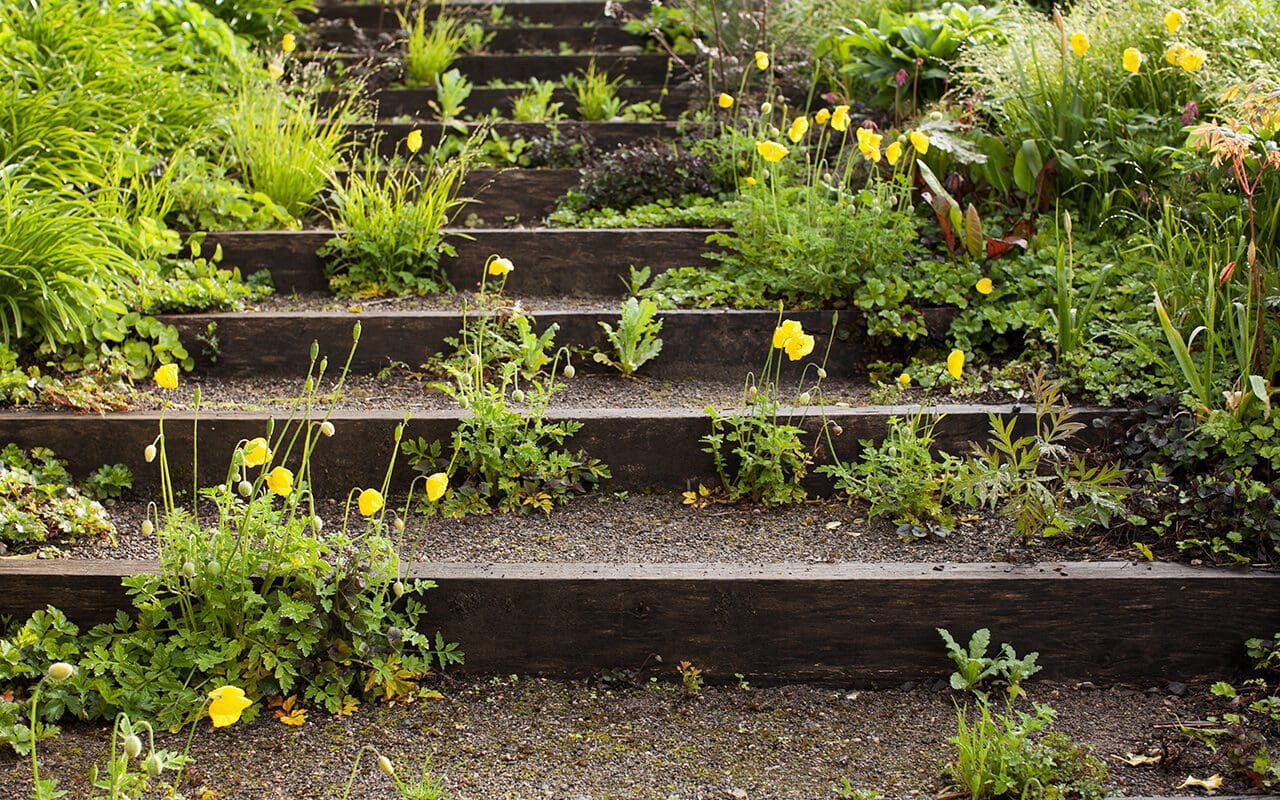
Meconopsis cambrica is wide-spread in upland areas of Western Europe and appears here in south west England, parts of Ireland and Wales, hence our common name the Welsh Poppy. Though in the wild you will find it, as I did, in the cool crevices of rocky places, a garden setting can emulate these conditions readily. So readily sometimes that you have to be careful where you let it seed. One plant that I couldn’t bring myself to remove that had found its way into a crack in the concrete in my growing area behind the barns has seeded repeatedly into the trays of seedlings and pots nearby. This is how many of our plants have found their way into the garden.
Being thoroughly perennial and happy to find a niche, their spring to early summer flower is welcome now before the garden gets into full swing. From bright green, ferny foliage the fine yet sturdy stems rise and stand free in their own space. The hairy cases are cast aside as the buds tilt upright to reveal the crinkle of bright petals. Each flower lasts just a day or two, but there is a relay of buds that will throw colour for quite some time. The secret to keeping them within bounds is to cut them back, leaves and all before they seed. A second refreshed crop of foliage and sometimes flower will return and these are usually the plants that catch you out to throw their seed when your eye is then firmly set on the summer.
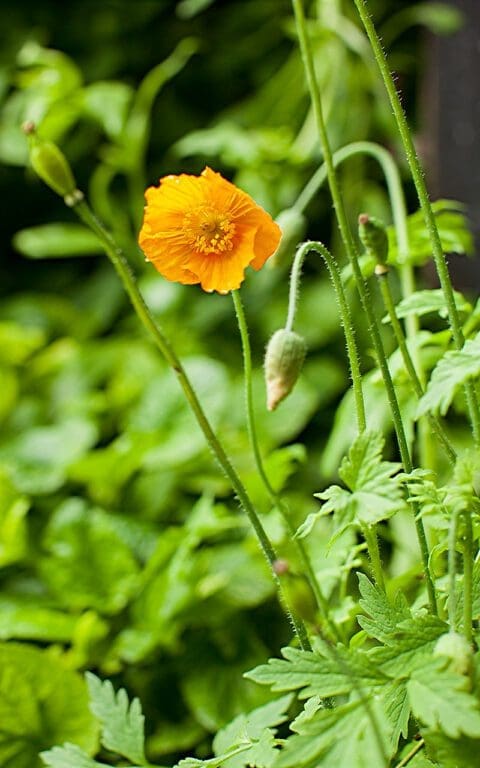
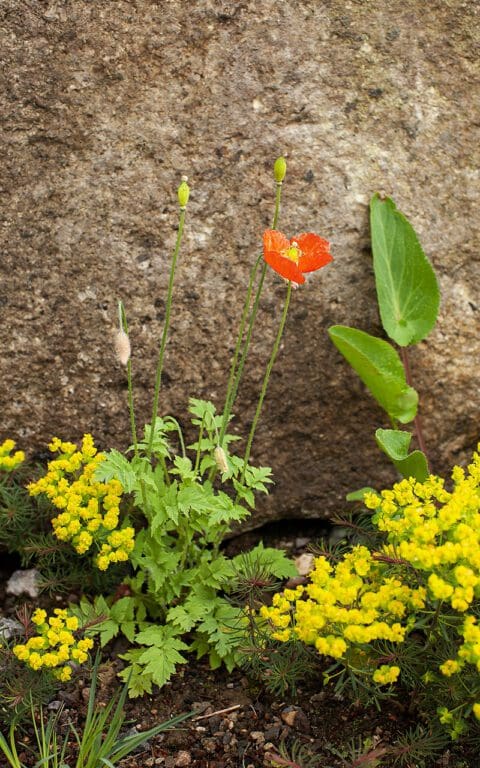
We have a naturally occurring soft orange form that I’ve let run on the other side of the barns, but I do not want it to pollute the pure chrome yellow of those that enliven the garden. Away from both, by the trough in the milking barn yard, I am building up a colony of the variety ‘Frances Perry’. Though more diminutive in stature, the dark tangerine flowers are quite my favourite thing of the moment. Flowering for a month to six weeks they coincide with the acid green of Euphorbia cyparissias ‘Fens Ruby’. Opposites on the colour wheel which vibrate one against the other.
Apparently, this form is less profligate as a self-seeder, but my pot of seedlings that were sown when ripe last summer and overwintered so they got the frost are looking like they are far from difficult. Difficult is not a word I would apply to the Welsh Poppy which, if it decides it likes you, will probably be with you for the long haul. Here and there and, if you are not a little careful, everywhere there is a cool corner and opportunity.
Words: Dan Pearson | Photographs: Huw Morgan
Published 22 May 2021
The opium poppies have been growing into the lengthening evenings, to race skyward and seize this early window of first summer. They come from nowhere it seems and typify the current feeling of the garden burgeoning.
Their seedlings are already visible in March and one of the first to germinate into open ground. Blue-green and easily distinguished, they take the disturbed places where there will be a gap to ascend into the very moment the weather warms. Being winter hardy and germinating the moment the season turns with the promise of spring, they have the advantage, hunkering down and establishing good roots and core strength. In truth there are several rounds of germination as seed is brought to the surface whilst cultivating, weeding or clearing the winter garden to expose fresh ground, but the first are the strongest, bulking up in April and muscling out anything nearby that might show a glimmer of tardiness. Their precocious behaviour extends to their siblings and you will need to thin a colony if you are after plants that are muscular and soaring.
I grow a black opium poppy here and it is my one and only. A single form and a chance find that I made when cycling to work once in my early twenties. They were standing tall alongside a black wooden bungalow in Hampshire. Black on black, fluttering against the stained shiplap. If I hadn’t been looking in the way that you do when you are under your own steam, I would have missed them completely. It was immediately clear, even at distance, that they were special so I plucked up the courage and knocked at the door to ask for seed. The owner, seeing I was smitten, took my name and address and later that summer an envelope arrived with the beginnings of a now very long association. It is one that I have nurtured annually, seeding a few every year in a new place for good measure and gifting to friends and clients that I know will keep the strain pure.
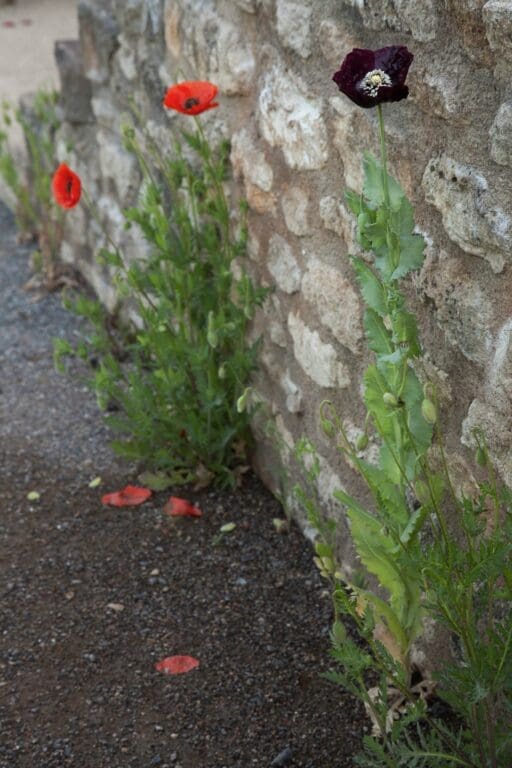
Although there are other named forms of dark opium poppy, several double blacks and the deep plum ‘Lauren’s Grape’ for instance, I’ve not seen another that is quite as dark and inky throughout. To maintain the strain, I have been territorial. I have never introduced another coloured opium poppy into a garden where I have been cultivating them and any that show the remotest sign of reverting are pulled before they can pollinate a dark one nearby. I look nervously on to neighbours up the lane who have them growing freely in their garden in every shade of mauve and pink, but breathe easy that, in the ten years we’ve been here, the bees that busy themselves there must be on another flight path.
After moving them here from Peckham, I cast the seed down into the freshly turned ground of our virgin plot. Broadcast in February, the plants were up in flower by June and providing me with a new and plentiful seedbank by the middle of July. Those seeds have now found their way into the compost heap where they are content to sit dormant until they are exposed again to light and potentially new places to conquer. We had a good colony in the asparagus bed a couple of years ago, amongst the roses and throughout the kitchen garden and I am now finding seedlings in the paths that must have been dropped whilst we were clearing the garden.
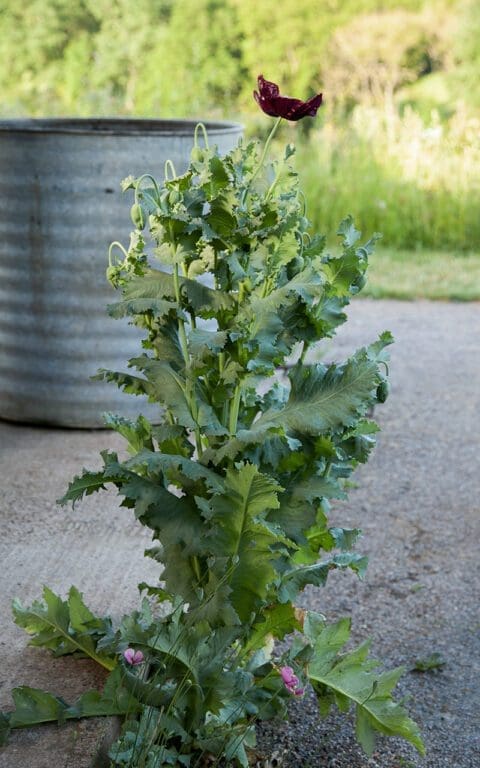
The chance happening of the pioneer seedling is always heartening and we leave a few in a new place every year for the delight in the new. The first seedling to flower this year has been living with us closely alongside our covered terrace. I saw the seedling had found a home in the late winter and wondered if it would be one that would survive our lines of desire into the garden. It has, soon growing big enough to negotiate and with the promise of this very moment that is seeing it suddenly present. A filling out of blue-green buds and then, one day, a tilt in the neck of the bud to indicate readiness.
The mornings bring the flowers, crumpled at first and then expanding like dragonfly wings do when they hatch. Dark satin petals cup pale stamens and bees soon find them, noisily working in laps, the enclosure of petals amplifying the sound of their frenzy. The flowers last two to three days at most, but there are enough to run a glorious fortnight whilst the balance shifts from buds to seedpods pods fattening and tilting skyward to show you that they have nearly reached their goal. When the leaves suddenly wither and the life force of the plant is gone you see that the pepper-pot seedpods are ripe and beginning to rupture. We leave a few standing for the joy of continuity, the mission accomplished, and scatter the rest for the pleasure of helping them extend their territory.
Words: Dan Pearson | Photographs: Huw Morgan
Published 30 May 2020
We are sorry but the page you are looking for does not exist. You could return to the homepage