It has been a good year for the hawthorn. It is foaming still up the hedge lines and cascading out of the woods above the stream at the bottom of the hill. We have gravitated there in the evening sunshine to stand at the bottom of the slope and marvel. The trees have been drawn up tall and slender and the froth of creamy flowers brightening the shadows of the newly sprung wood. At the margins of the wood, their favoured place, the branches push out wide and low, a hum of insects enticed by an uncountable sum of flower.The hawthorns saw the apples come and go and now they are starting to dim, it is summer. Why they were as weighted so heavily with flower this year I do not know, but it is the best they have been since we arrived here and I am pleased I have planted them as plentifully.
Haw, May, Quick, Quickset; hawthorn is a tree surrounded in folklore. Cut one and you will be plagued by fairies, but turn the milk with a twig before churning and you will protect the cheese from bewitchment. According to Teutonic legend, the tree originated from a bolt of lightning, which is why the wood was used on funeral pyres. The power of the sacred fire was sure to ferry your spirit to heaven.
In ancient rituals the hawthorn symbolised the renewal of nature and fertility, which often made it the choice for a maypole at Beltane. The wood itself is one of the hardest and often used for fine engraving and the young leaves are surprisingly delicious in a salad, with a fresh nutty taste.
The flowers, however, smell both sweet and stale. Some find this unpleasant, but to my nose it is just a country smell, which attracts flies and insects that lay their eggs on decaying animal matter. Crataegus is well known for the diversity of species that live within the thorny cage of its branches or on the bark or the foliage so, despite the superstition around it, it is a mainstay of the countryside.
I have relied upon it as the greater component when replanting my native mixed hedges. It is called Quick with good reason and the hedges that I planted to gap up our broken boundaries five years ago are already six feet high, thick and impenetrable. I wonder how elderly some of the thorns are in the oldest of the hedges here. It is estimated that 200,000 miles of them were planted between 1750 and 1850 as a result of the Enclosure Acts. During this time there were nurseries committed to growing the hawthorn in quantity to meet the demand, and making a small fortune from the supply.
If you leave your hedges and cut them year on, year off, the hawthorn flowers and fruits more heavily. Leave a tree free-standing and it will be reliably heavy with dark red berry in October. The berry is the way to propagate. I leave them for as long as I dare before taking my share, for the birds will suddenly strip a tree when the fruits ripen. The digestive juices of birds help to break the inbuilt dormancy of the seed, but you can simulate this by leaving the berries to ferment for a week in water before lining out in a drill in the garden. Some may germinate the following year after the action of frost has worked its magic, but two years of stratification may be required before you get a full row to germinate. Within a year of germinating you will have young plants a foot or so tall, in two whips ready to make a hedge. Or the beginnings of a maypole.
Words: Dan Pearson / Photographs: Huw Morgan
Clockwise from bottom left: Centaurea montana ‘Lady Flora Hastings’, Meconopsis cambrica, Tragopogon crocifolius, Camassia leichtlinii ‘Alba’, Amsonia orientalis, Symphytum x uplandicum ‘Moorland Heather’, Ranunculus acris & Valeriana pyrenaica
The Chelsea Flower show usually falls in a week that is suspended between spring and summer. That is one of the things that gives the show its charge, the freshness and feeling of anticipation. I was not involved this year other than as a spectator and it was a delight to return home after a busy week of looking to find that we are still in this teetering point and haven’t missed the moment.
Marking it with today’s posy brings the meadows and the garden together. Ranunculus acris, the meadow buttercup, is at it’s zenith. It is one of my favourite components in the grassland, rising up tall above it’s neighbours this early in the season. Where we have over-seeded the old pastures with meadow seed from the neighbouring valley, the buttercup is now in evidence three years on. I like the way it is so light on its feet and that there is so much air amongst the bright pinpricks of yellow.
I have brought it up close on the vegetable garden banks and used it to bring together the clumping Valeriana pyrenaica, which I am trying to naturalise in the grass. This European species has been grown in Britain since at least 1692, and was first recorded in the wild in 1782 as a supposed native, and it could easily be part of our landscape. It has been in flower for a month now and though you wouldn’t think that the brightness of the buttercup would sit well with the lilac pink of the valerian, such colour clashes are commonplace in wild plant communities.
I also have it growing alongside the Symphytum x uplandicum ‘Moorland Heather’ close to the compost heaps. This is a chance seedling of our native comfrey found at Moorland Cottage Plants in South Wales. I first saw it at the Chelsea show and was taken by its darker violet flowers which are alive with bees. It is not allowed to seed as it is a coloniser and the roots grow deep, pulling minerals up into the foliage which, when harvested, make a fine green manure or compost tea. Before the plants set seed, all the growth is cut to the ground and used as a mulch or green manure to turn into the soil. To make an evil smelling brew of compost tea, fill a large plastic bucket to the top with it, trample down and fill with water. Allow it to ferment and then skim off the pungent liquid feed rich in nitrogen, potassium, phosphorous and calcium.
I have Camassia leichtlinii ‘Alba’ growing in the grass under the crab apples. They are at their best this week as the crabs are fading, racing up their stems like sparklers almost as fast as you can enjoy them. I like the creaminess of the flowers and this single form the best. I have made the mistake of planting it in open ground amongst perennials and had a million and one seedlings to contend with. The double form is sterile and better in the beds, but I’m hoping that the singles will seed into the grass where it runs thin with yellow rattle.
I might try Centaurea montana ‘Lady Flora Hastings’, Amsonia orientalis and Tragopogon crocifolius together as they are currently disparate in the garden. This is the first time I have thought of doing so and the advantage of throwing things together in a bunch. Amsonia has a short moment of flower, but great longevity of life as a plant and the tragopogon is a delightful self-seeding biennial that adds flux to the mix. ‘Lady Flora Hastings’ is perhaps one of the best centaureas, flowering for weeks and then again if you cut it to the base when it starts to look tired. Like the comfrey its roots run deep and come easily as cuttings. Move the parent plant and it will reappear with the certainty of a perennial that will probably outlive you if you find it a place in sunshine that suits.
The Welsh poppy, Meconopsis cambrica, is at is peak in these first few weeks of the growing season. My plants were strewn as seed on bare earth a couple of years ago and are naturalising happily. They are best when emerging as an incidental in places where other plants might think twice about flourishing. Cracks between paving see them at their happiest and they are unflinching in dry shade. They also thrive in full sun, but I prefer their pure, clean yellow when it sparkles in shadow.
Words: Dan Pearson / Photographs: Huw Morgan
When we arrived here, the house sat alone on the hill. Only the hollies by the milking barn and a pair of old plums in the hedge alongside the house stood sentinel, catching the wind and the rummage of seasonal blackbirds and pigeons. As we moved here in winter it took a while to realise that bird song comes only from a distance and from the refuge of the hedges, which run along the lane and the field margins. Walking down the slope in front of the house that first spring, we soon heard that it is the wood below us that provides the haven for birds. I was brought up in woodland and so am familiar with its qualities. The sound of wood pigeons close to the bedroom windows, the constant activity of bird life in the branches, wind caught in leaves, the movement of dappled light and shade. Living in London was as intimate in its own way; the world around us so close and connected and plants pressed up against the windows. Although I love the country contrast of letting my eye travel here, I struggled initially with the degree of openness surrounding us. Not only was the space acoustically different, the feeling of exposure was unfamiliar and begged understanding. I knew early on – certainly within a couple of months – that we needed trees around us, and herein lay a conundrum. Plant indiscriminately and I was at risk of foreshortening the views that had made us fall in love with the property. But, perched on our hillside, we needed to hunker the house down, to feel as you do when settled into a high-backed sofa, with the feeling of comfort enveloping you whilst still being part of the room.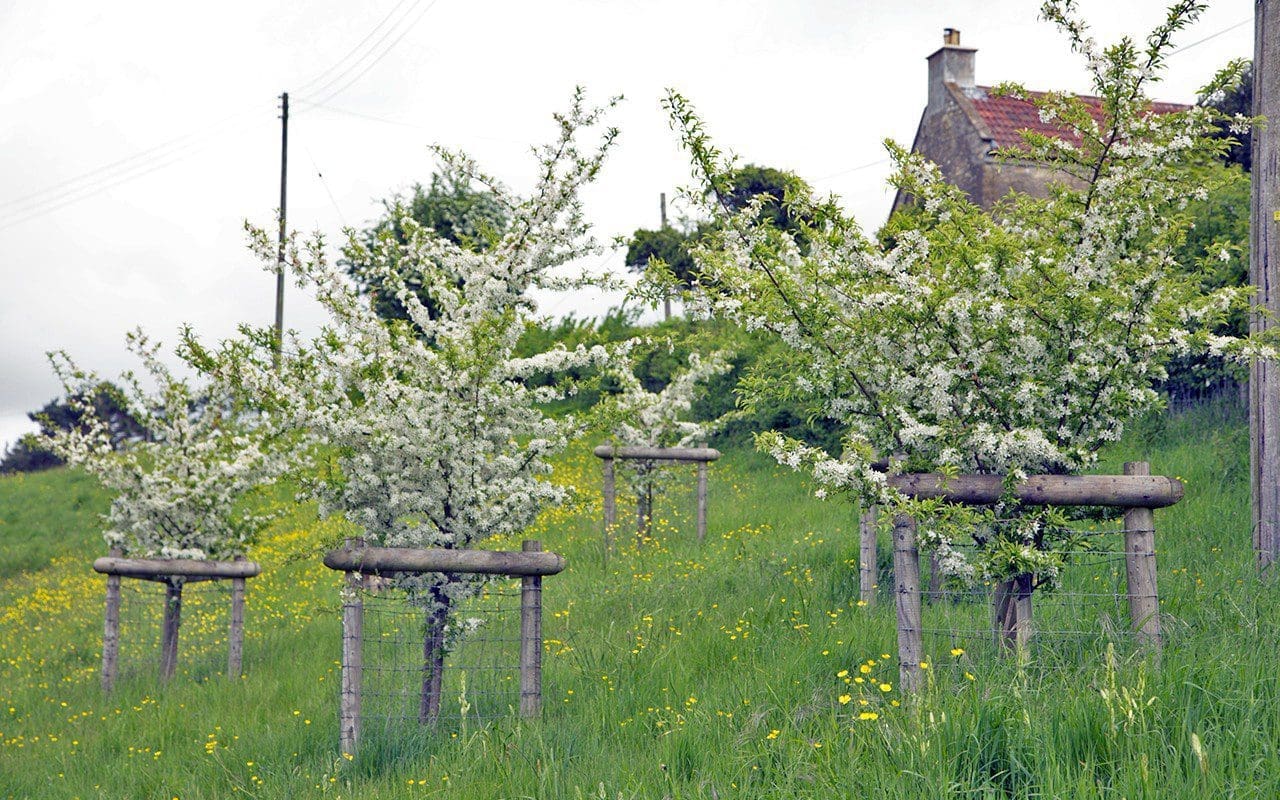 Malus transitoria on the slope behind the house
Before the first winter was out, I ordered a dozen crab apples to make a huddle of trees on the slope behind the house. It took much deliberation to decide where they should go. The track leading to the tin barns provided the anchor point between the hedge on its lower side and the open banks above it. The new trees would add an upper storey to the hedge and provide the shelter for a bat corridor. At roughly eight paces between them, they would also offer an easy hop from one to another for the birds.
As has become the way here, I staked out their positions with six-foot canes topped with hazard tape so that they are easy to see from a distance. I wanted the trees to arch over the track eventually, like the old holloways hereabouts, to provide a tunnel of blossom in spring and a shady place to emerge from into the light in summer. I didn’t want them in rows or for them to feel organised like an orchard. Over the course of a month the markers were moved about and the sight lines tested until the placement felt right. The crabs were suitable for feeling productive, but I also wanted them to have a connection with the hawthorns in the top hedgerow that we had allowed to grow out to provide shade for the livestock in summer.
Malus transitoria on the slope behind the house
Before the first winter was out, I ordered a dozen crab apples to make a huddle of trees on the slope behind the house. It took much deliberation to decide where they should go. The track leading to the tin barns provided the anchor point between the hedge on its lower side and the open banks above it. The new trees would add an upper storey to the hedge and provide the shelter for a bat corridor. At roughly eight paces between them, they would also offer an easy hop from one to another for the birds.
As has become the way here, I staked out their positions with six-foot canes topped with hazard tape so that they are easy to see from a distance. I wanted the trees to arch over the track eventually, like the old holloways hereabouts, to provide a tunnel of blossom in spring and a shady place to emerge from into the light in summer. I didn’t want them in rows or for them to feel organised like an orchard. Over the course of a month the markers were moved about and the sight lines tested until the placement felt right. The crabs were suitable for feeling productive, but I also wanted them to have a connection with the hawthorns in the top hedgerow that we had allowed to grow out to provide shade for the livestock in summer.
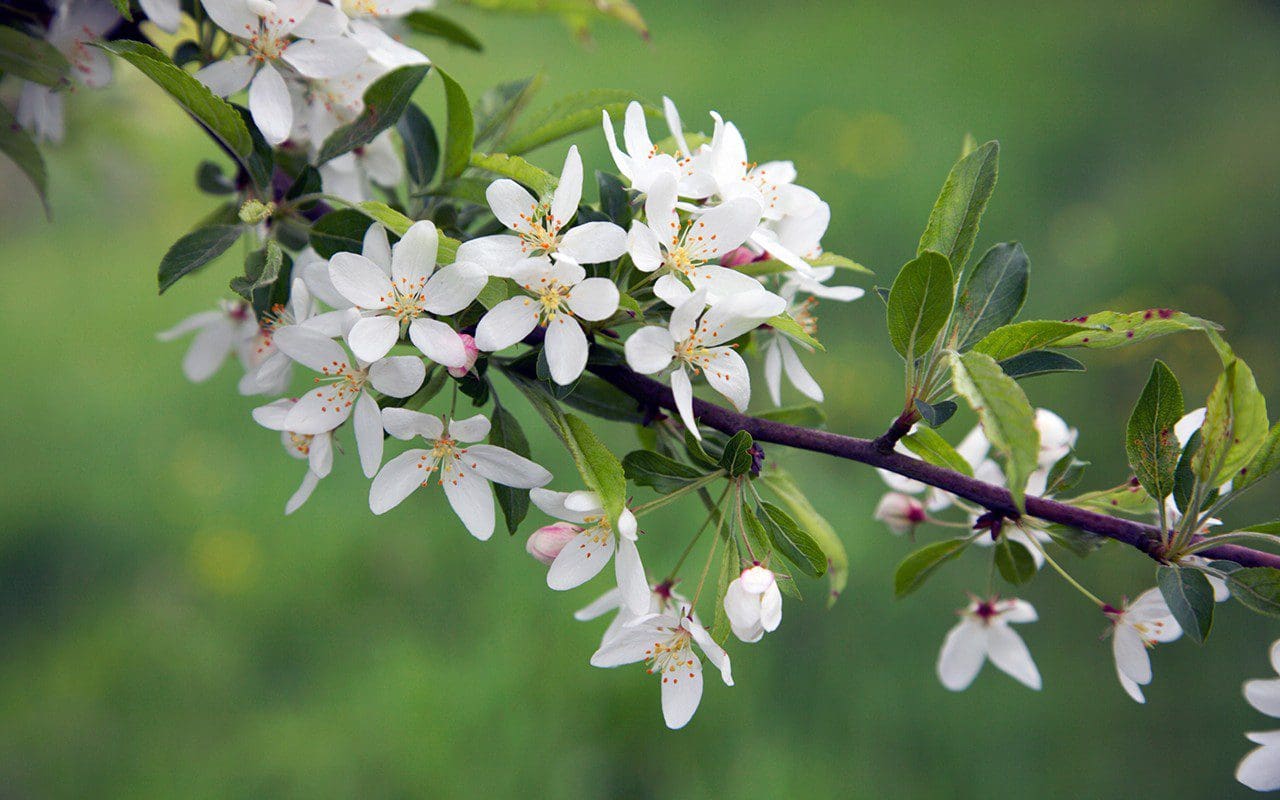 Malus transitoria
I had been looking at crab apples for quite a few years in a search of a blossom tree that was neither cherry nor amelanchier, which had become my reflex choices when planting blossom for clients. There is a wealth of crabs to choose from and, although I knew Malus ‘Evereste’, ‘John Downie’ and ‘Hornet’ from gardens I had worked at or visited, I wanted mine to be on the wild side, and so I honed my selection to what are probably the best two species.
Malus transitoria was chosen specifically for its wilding quality and, of the two species on the bank, it opens a few days earlier than its partner. Known as the cut-leaf crab apple its leaves are slim and divided, not entire like the usual apple foliage, and could easily be mistaken for hawthorn. They have a lacy quality and so the tree retains a lightness when in leaf. The flowers are pale pink in bud and, though small, completely cover the tree and open in a glorious froth to weight the branches with pure white blossom. The petals are narrow and separate, splayed around a burst of orange-tipped anthers, giving the flowers a star-like quality. After flowering you could easily think the trees were native, but the tiny fruits give them away in autumn when the amber beads pepper the yellowing branches.
Malus transitoria
I had been looking at crab apples for quite a few years in a search of a blossom tree that was neither cherry nor amelanchier, which had become my reflex choices when planting blossom for clients. There is a wealth of crabs to choose from and, although I knew Malus ‘Evereste’, ‘John Downie’ and ‘Hornet’ from gardens I had worked at or visited, I wanted mine to be on the wild side, and so I honed my selection to what are probably the best two species.
Malus transitoria was chosen specifically for its wilding quality and, of the two species on the bank, it opens a few days earlier than its partner. Known as the cut-leaf crab apple its leaves are slim and divided, not entire like the usual apple foliage, and could easily be mistaken for hawthorn. They have a lacy quality and so the tree retains a lightness when in leaf. The flowers are pale pink in bud and, though small, completely cover the tree and open in a glorious froth to weight the branches with pure white blossom. The petals are narrow and separate, splayed around a burst of orange-tipped anthers, giving the flowers a star-like quality. After flowering you could easily think the trees were native, but the tiny fruits give them away in autumn when the amber beads pepper the yellowing branches.
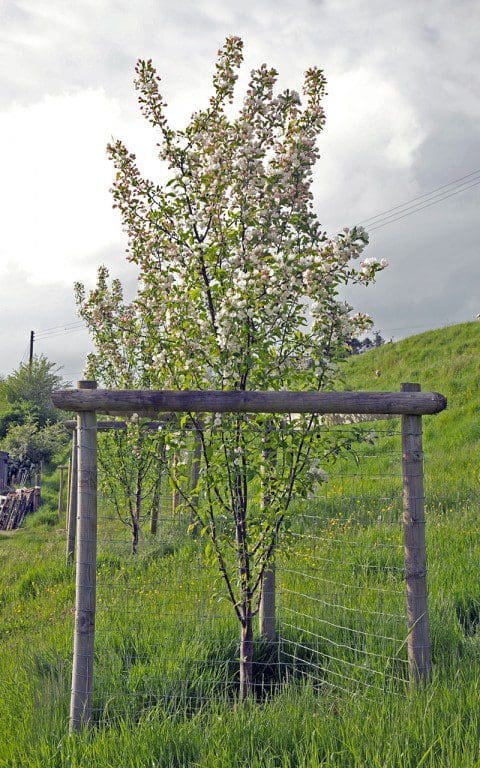 Malus hupehensis
, the Chinese tea crab, is the best crab apple according to experienced tree people and another fine discovery of the great plant hunter, Ernest Wilson. Wilson had impeccable taste and the tree, which is quite substantial in maturity, is a spectacle in flower. Once again it is pink in bud, but a stronger shade so that, from a distance, the tree appears pale pink. The flowers are altogether more flamboyant, large and bowl-shaped, hanging gracefully on long pedicels and blowing open to a pure, glistening white flushed with pink. When a tree is in bud and flower, it is a breathtaking moment. The flowers have a deliciously fresh perfume, as welcome as newly mown grass in this window between spring and summer.
Malus hupehensis
Malus hupehensis, the Chinese tea crab, is the best crab apple according to experienced tree people and another fine discovery of the great plant hunter, Ernest Wilson. Wilson had impeccable taste and the tree, which is quite substantial in maturity, is a spectacle in flower. Once again it is pink in bud, but a stronger shade so that, from a distance, the tree appears pale pink. The flowers are altogether more flamboyant, large and bowl-shaped, hanging gracefully on long pedicels and blowing open to a pure, glistening white flushed with pink. When a tree is in bud and flower, it is a breathtaking moment. The flowers have a deliciously fresh perfume, as welcome as newly mown grass in this window between spring and summer.
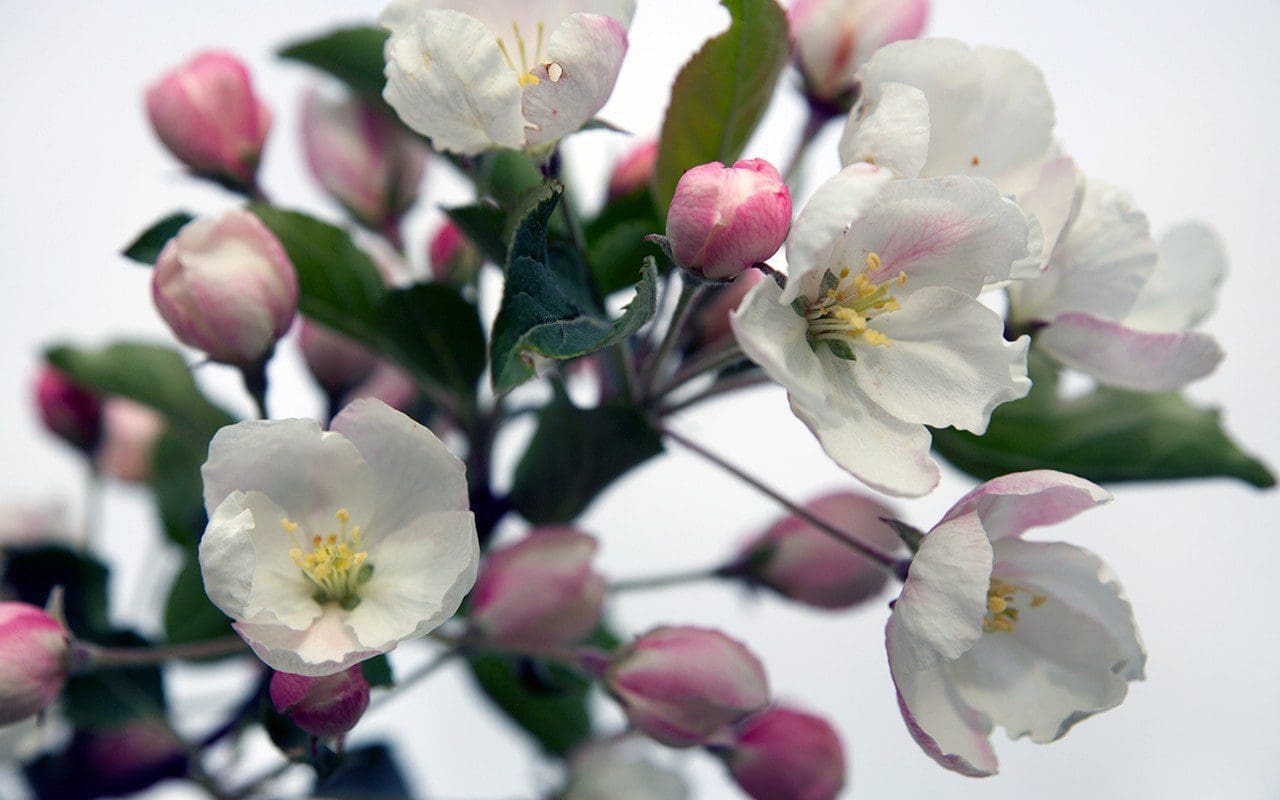 Malus hupehensis (and main image)I like to plant my trees as young feathered maidens. This is one stage further on from a whip, so the trees have their first side branches and stand about a metre twenty high. They are easy to handle at this size and with care they establish quickly to outstrip a more mature tree planted for immediate affect.
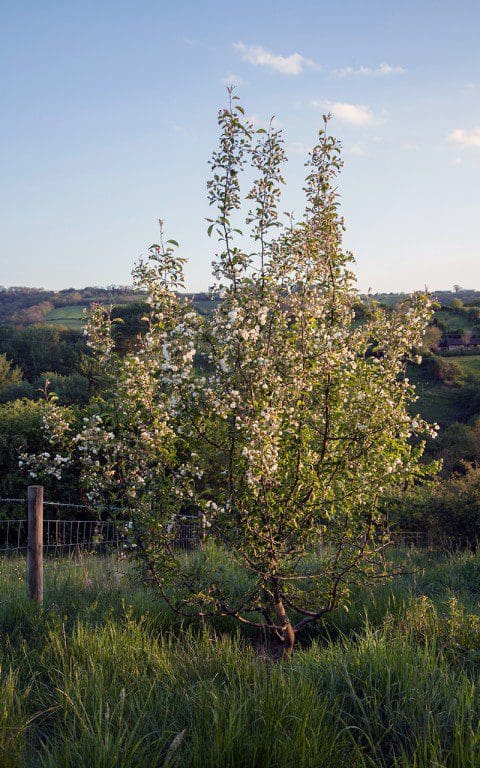 Malus hupehensis, the Great Dixter form
That first winter I planted the crabs I didn’t know that there are two forms of Malus hupehensis. It was one of Christopher Lloyd’s favourite trees and, naturally, he selected a superior form. Those that shade the car park at Great Dixter are smaller berried, with deep red fruit half the size of the marble-sized fruits on my form. At this size, they are more easily eaten by birds and, had I known, I would have preferred them for the track behind the house for the rush of bird life come the autumn.
Malus hupehensis, the Great Dixter form
That first winter I planted the crabs I didn’t know that there are two forms of Malus hupehensis. It was one of Christopher Lloyd’s favourite trees and, naturally, he selected a superior form. Those that shade the car park at Great Dixter are smaller berried, with deep red fruit half the size of the marble-sized fruits on my form. At this size, they are more easily eaten by birds and, had I known, I would have preferred them for the track behind the house for the rush of bird life come the autumn.
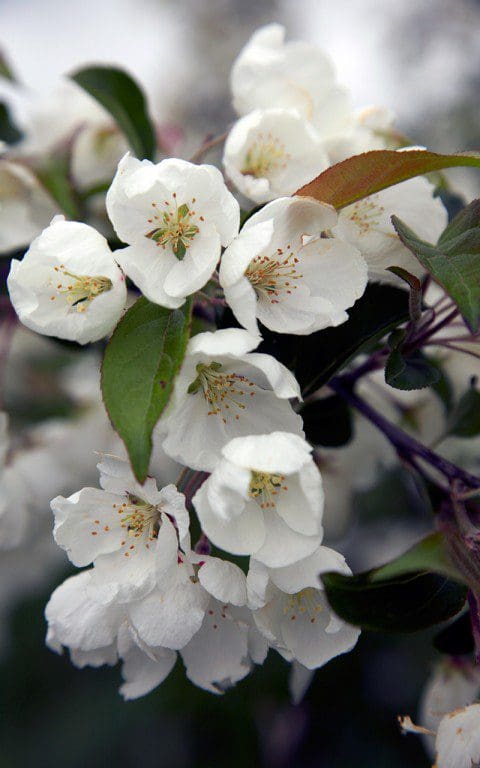 Malus hupehensis, the Great Dixter form
Look closely and you see that the Dixter trees are more elegant in all their parts; the branches are finer and the tree more open, the leaves are elongated and flushed with bronze when young, and the flowers are slightly fuller, a purer white in bud and open, and with longer pedicels that allow them to tremble exquisitely in the wind. Of course, I bought a couple from the nursery as soon as I saw them. One as an entrance tree by our front gate and the other on the edge of the blossom wood, where it is visible from the house. I already have seedlings from these trees in the cold frame, as they come easily and true from seed. Totally smitten, as time goes on I plan to extend their influence.
Malus hupehensis, the Great Dixter form
Look closely and you see that the Dixter trees are more elegant in all their parts; the branches are finer and the tree more open, the leaves are elongated and flushed with bronze when young, and the flowers are slightly fuller, a purer white in bud and open, and with longer pedicels that allow them to tremble exquisitely in the wind. Of course, I bought a couple from the nursery as soon as I saw them. One as an entrance tree by our front gate and the other on the edge of the blossom wood, where it is visible from the house. I already have seedlings from these trees in the cold frame, as they come easily and true from seed. Totally smitten, as time goes on I plan to extend their influence.
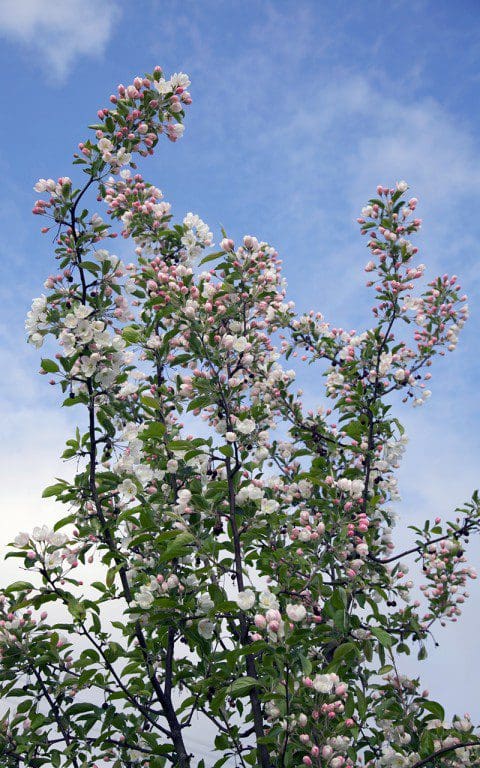
“…it is very beautiful in spring when covered with light pink flowers, and resembles at this time a flowering cherry rather than an apple tree; the effect of the flowers is heightened by the purple calyx and the purplish tints of the unfolding leaves.”
—Ernest Wilson of Malus hupehensis
Words: Dan Pearson | Photographs: Huw Morgan
The green sauce in this recipe is not the well known mediterranean salsa verde, but Grüne Sosse, a speciality of Frankfurt introduced to me by our friend Ariane, a native of the city, and a neighbour in Bonnington Square for many years. It is traditionally served with asparagus of the forced white variety, which is particularly prized in Germany, where Spargelfesten are held in its honour every spring. Although green sauce made from a variety of herbs can be found in German restaurants all year round, it is only in early spring that the truly authentic sauce can be made, when the herbs required are coming into their prime and the paper packages of them required to make it are found in farmer’s markets, together with the white asparagus which it traditionally accompanies.
Genuine Grüne Sosse requires seven specific herbs; sorrel, chervil, chives, parsley, salad burnet, cress and borage. However, it is seldom that any of us have access to all of these herbs, and so substitutions can be made. The crucial thing is to ensure a good balance of flavours, with the requisite amount of sourness, freshness, bitterness and spice. There is no hard and fast rule about how much of each herb to use, but a rule of thumb is that no one herb should make up more than 30% of the bulk. When possible I try to get a fairly even balance between all of them, but you should adjust to taste and to what is available.
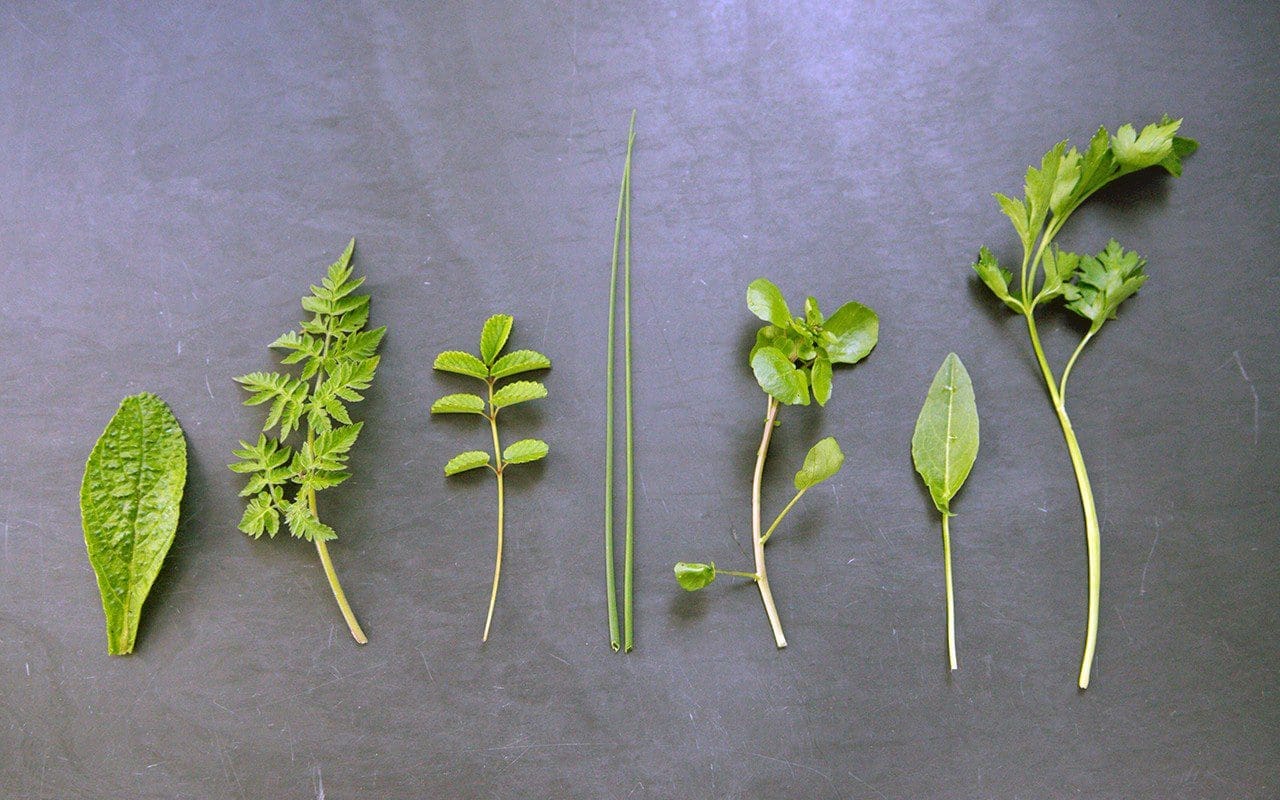
From left to right: borage, wild chervil or cow parsley, salad burnet, wild onion, watercress, sorrel, parsley
Since it is so plentiful in our fields I use wild sorrel (Rumex acetosa), which I suspect is what the authentic recipe calls for, however you can replace this with the more usually grown French or garden sorrel (Rumex scutatus). If neither of these are available you could use young chard or spinach leaves and an extra squeeze or two of lemon juice.
When it is available I use wild chervil instead of cultivated. Otherwise known as cow parsley (Anthriscus sylvestris), it is perfect to pick right now, and can be substituted for garden chervil (Anthriscus cerefolium) in salads or sauces for chicken and fish. If you are an inexperienced forager you must be extremely careful not to mistake poisonous hemlock for cow parsley. Use a good field identification guide (Miles Irving’s The Forager Handbook and Roger Phillips’ Wild Food are invaluable) and, if in doubt, do not pick it.
In place of chives I use wild onion (Allium vineale) from the fields, being careful to pick only the youngest quills, as the older ones are tough. The cress can be replaced with watercress, rocket or even nasturtium leaves, to provide the peppery note. And, from the hedgerows, I have also used the leaves of garlic mustard (Alliaria petiolata), young dandelion leaves and even nettle tops, when the other herbs are hard to come by.
The salad burnet and borage both impart a distinctive cucumber flavour which it is not possible to replicate with other herbs and which is particular to this sauce. When unavailable I have used peeled and finely grated cucumber in their place. Salt it and squeeze the juice from it before incorporating, to prevent it diluting or curdling the sauce.
It is also possible to make up the quantities with more easily available herbs such as dill, fennel, tarragon or mint but, with their pronounced flavours, these should all be used in moderation or they will overwhelm the flavour.
This sauce is also traditionally served with boiled new potatoes and halved hard boiled eggs, or as an accompaniment to boiled beef or poached fish.
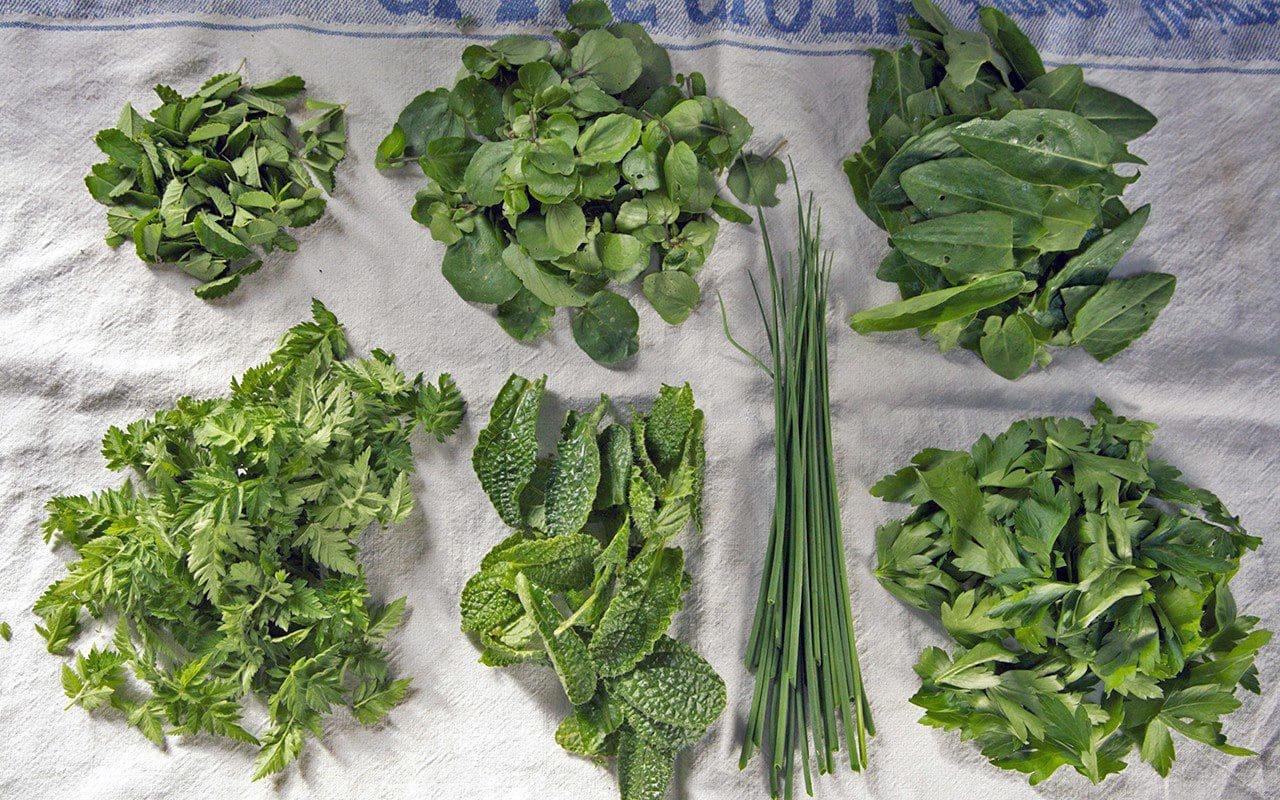
Clockwise from top left: salad burnet, watercress, sorrel, parsley, wild onion, borage, wild chervil
Ingredients
150g mixed green herbs
250g sour cream or quark
125g yogurt
2 hard-boiled eggs
3 tablespoons lemon juice
sea salt
7-8 spears of asparagus per person
Serves 4
Method
Wash the herbs. Put them in a salad spinner and then dry on a tea towel or paper towel.
Remove the leaves from the stems.
Discard the stems.
Peel the eggs and put the yolks in a mixing bowl. Coarsely chop the whites and reserve. To the egg yolks add the lemon juice, 2/3 of the herbs, 1/4 teaspoon salt and the yogurt . Liquidise using a hand blender.
Stir the sour cream into the mixture. Add the coarsely chopped egg white. Finally add the remaining finely chopped herbs.
Season with more salt and lemon juice to taste.
If possible allow the sauce to rest in the fridge for an hour or so for the flavours to combine. Allow to come back to room temperature before using.
Gently bend the asparagus spears until they snap. Trim the broken ends. If necessary finely peel the lower sections of the stalks of the outer fibrous layer.
Put water to a depth of 2cm into a lidded sauté pan that is wide enough to take the asparagus in a more or less single layer. Bring to the boil. Put in the asparagus and simmer until tender. For thicker or older spears this may take as long as 5-6 minutes. Fine spears and those just picked will take far less, 2-3 minutes at most. Take the asparagus from the water and spread out on a paper towel on a plate to drain and cool quickly.
Arrange the warm asparagus on plates. Spoon over some of the sauce. Decorate with reserved herb leaves. Eat with fingers.
Recipe and photographs: Huw Morgan
Although asparagus only became prized as a culinary vegetable in Britain in the 17th century it was grown, and indeed prized, by the ancients as a medicinal herb and vegetable. The Romans even froze it in the High Alps, with the Emperor Augustus creating the Asparagus Fleet to take the freshly pulled spears to be buried in the snow for later.
The tips, which are the sweetest part and known as the love tips or ‘points d’amour’, are always best when eaten fresh and, though we think nothing of seeing it on the supermarket shelves as an import, there is nothing like eating it in season, right there and then, when the energy of the new season is captured in young spears.
So it is a good feeling to have planted an asparagus bed, as they represent longevity and permanence. Plant one and it will take two to three years to yield, but established crowns can easily crop for a couple of decades if you give them the care they need; namely good drainage, plenty of sunshine and little competition at the root. The roots, which radiate out from a crown in spidery fashion, are shallow, and hoeing is not advisable, so an asparagus bed is also a commitment to hand weeding. You will have to work for your reward.
“…established crowns can easily crop for a couple of decades if you give them the care they need…”
Being a coastal plant, Asparagus officinalis is tolerant of salt, indeed tradition has it that the beds be salted to keep weeds at bay. However, I do not. In truth my bed is far from text book perfect. I have not raised it above the surrounding ground like the carefully drawn diagrams in the books, and the Californian poppies and Shirley poppies have seeded into the open, weed-free ground to become the, admittedly attractive, weeds in the patch.
I winkle the Eschscholzia out where they seed too close to the crowns, but leave a handful, as they like the same conditions and sit brightly beneath the fronds once the asparagus is allowed to grow out after cropping. The few plants that are female pepper themselves with scarlet, pea-sized fruits, which hang in suspension like beads caught in a net as the fronds fade to butter-yellow later in the season. It is a fine but unadvisable association, if playing things by the book is your thing.
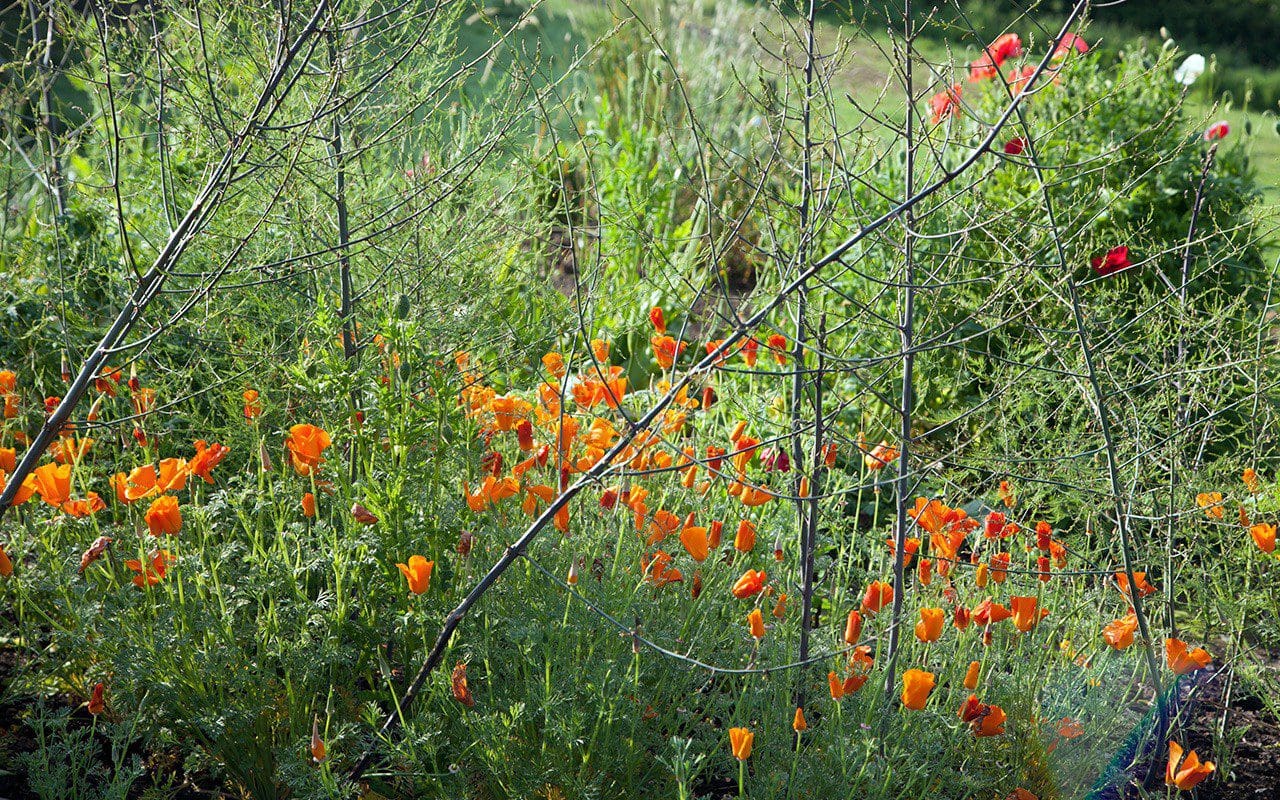 Californian poppies provide interest beneath the asparagus ferns later in the season
Our first asparagus bed was planted four years ago in the original mixed vegetable and trial garden. The crowns, which are best planted bare-root in the spring, arrived by post and were carefully planted in late April. The soil was manured the previous summer and the crowns laid out on an 18” grid. The books advise two feet between rows, but our slopes are sunny and the ground hearty, so I took the risk with a closer planting.
I opened a trench and fashioned a little mound of soil for each plant to allow the roots to radiate out, down and away from the crown. The trench was then backfilled with the crown just below ground level and marked with a cane to protect the position of the first emerging spears. Over the first year the crowns gather in strength, each frond outreaching the next so that, by the end of the first summer, they are already showing their potential. It is essential to wait before cropping to allow the plants to build up their reserves. I cropped them for the first time last year, but took only a few spears to avoid weakening them. This year, there will be no need to hold back.
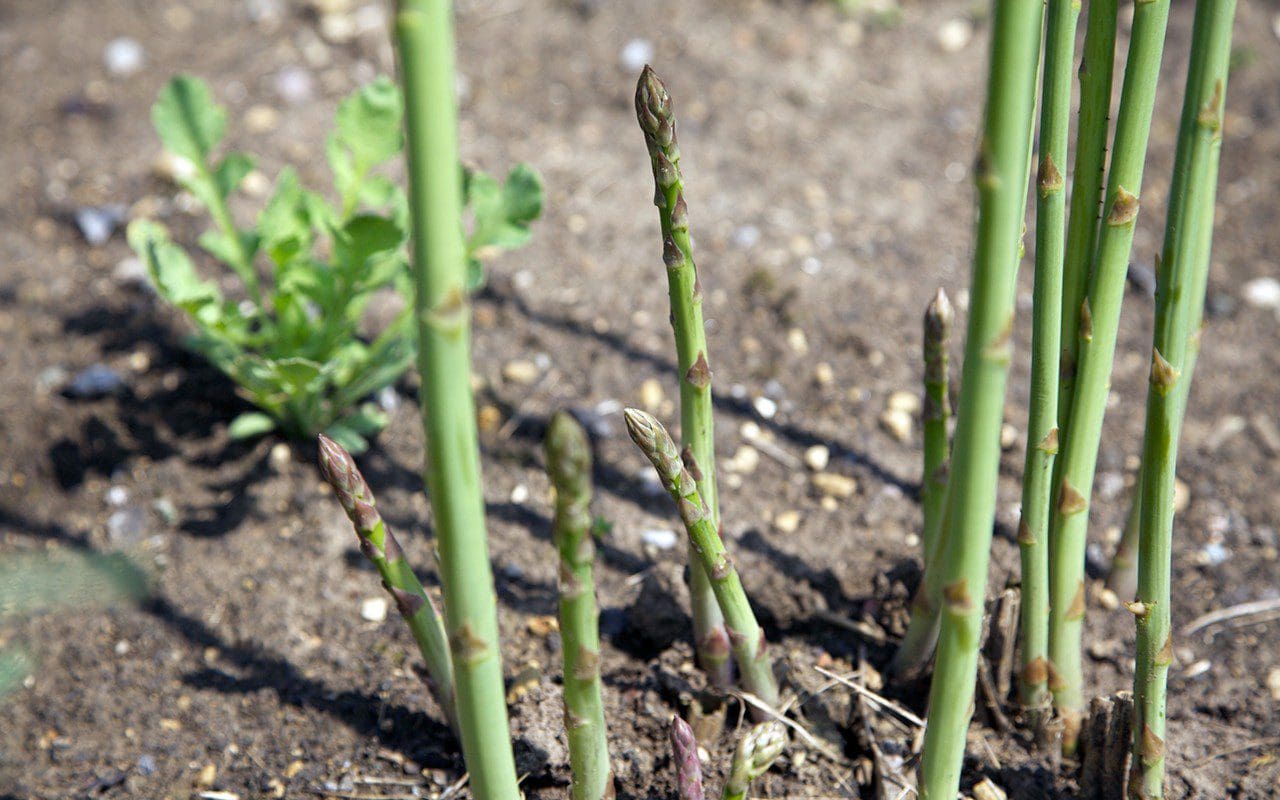 Asparagus officinalis ‘Connover’s Colossal’
I bought two varieties initially, both male, so I am not sure how I have females in the mix, but no matter. Male plants are more productive and so, according to the rules, the berrying females should be weeded out. ‘Connover’s Colossal’, an old 19th century variety, is a reliably strong cultivar, but ‘Stewart’s Purple’ has been disappointing. It is supposed to be higher yielding than many of the green varieties, but you only really know and understand what a plant’s habits are when you grow it for yourself and, for me, ‘Stewart’s Purple’ doesn’t cut the mustard.
A third of the plants have failed and, although the spears are a beautiful inky purple colour and deliciously sweet, even the plants that have survived have cropped very erratically. They require far too much space to waste on such a meagre harvest. Anthocyanins, which give vegetables and fruit their purple colouring, are valued as antioxidants, but I wouldn’t grow this variety again other than to possibly work it into the herb garden as an ornamental. Here, with moody fronds rising up prettily above chives and purple sage, occasional spears could be harvested and thinly sliced raw into salads.
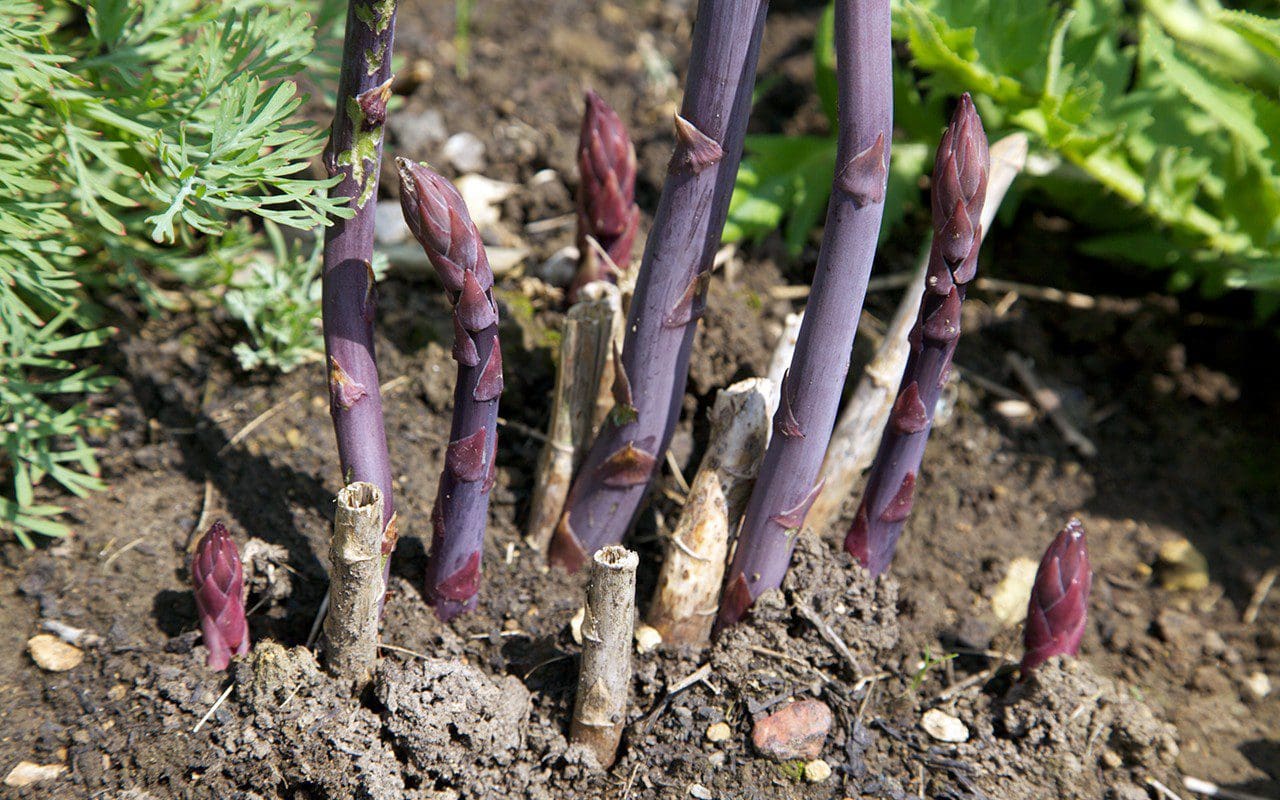 Asparagus officinalis ‘Stewart’s Purple’
There is an associated guilt attached to my original asparagus bed, which comes from the knowledge that the bed could never have been long-term. I always knew the test garden would give way to a new ornamental garden and, over the last couple of years, I have been relocating the vegetable garden to the other side of the house. The diggers are coming in shortly to shape the land for the new garden, but the asparagus bed will remain for one more year, like a boat anchored off shore.
Last spring I planted an F1 variety called ‘Gijnlim’ in the new vegetable garden to pave the way for the hand over from the old bed to the new. Having been selected for its hybrid vigour ‘Gijnlim’ is said to crop within a year, but I am still leaving it this year to build up reserves, mulching the bed with home-made compost before the spears emerge. It won’t be easy to cut my old bed adrift when I have to later in the autumn, but for now we are enjoying the luxury of eating the spears absolutely in season, when the garden is beginning to rush with energy.
“It won’t be easy to cut my old bed adrift when I have to later in the autumn….”
When a bed is up and moving in the spring, you can visit it daily for three weeks or so of harvesting. A sharp knife inserted carefully at the base of a spear and just below ground level is the best way to pick what you need, but be careful not to damage the crown. See it as a surgical exercise and, for best and sweetest results, pick just before you eat. Steam and serve al dente and every mouthful will be worth the commitment.
If you read up about asparagus yields to try and arrive at an ideal number of plants for a bed that suits your needs you get wildly differing advice. An American website says that 24 plants produce enough for a family of four. Big portions I’m guessing, but advice closer to home advises ten to twenty plants for the same number of people. We have sixteen crowns in the new bed and hope that this will be plentiful enough to pick what we need without providing a guilt-inducing glut. I’d have liked for there to be two varieties, so that we have an early cropper and a late, but we have had to draw the line somewhere. There is only so much ground that can be committed to perennial vegetables, even one as delectable as sparrow-grass.
Words: Dan Pearson / Photographs: Huw Morgan
Above from left to right; Lamium orvala, Matthiola incana alba, Dicentra ‘Stuart Boothman’, Lunaria annua ‘Corfu Blue’, Erysimum scoparia, Valeriana pyrenaica & Geranium pyrenaicum ‘Bill Wallis’
Although it is still early in the season there are enough flowers in the garden now to start making hand-picked posies for the house. This is a great way to identify new combinations for the garden as you can easily try together several flowers that may be growing in quite different locations.
The lamium, an exotic deadnettle with moody, brownish-pink flowers, came with us from Peckham and has started to self-seed in the shade of the willow trial. The original clump is now a couple of feet across when in full flower, and hums with bees.
The matthiola, a perennial stock which is highly scented of cloves, is seeding around freely in the most inhospitable rubble at the base of the barns. I have seen matthiola growing in similar conditions in Greece, so it is good to find it a home where the going is tough and it is perfectly happy.
The Valeriana pyrenaica, which came highly recommended from Fergus Garrett at Great Dixter, is early to come into leaf and looks like it might be a little too happy here, as it’s seeded about in just a couple of years. However, this needn’t be a problem if it is found the right place, and I have planted a few in grass to see if it can cope with the competition.
Words: Dan Pearson / Photographs: Huw Morgan
Before we arrived here the land had been grazed up tight to the hedges and to the farmyard, which held the cattle back from the house. That autumn, in a tiny strip of garden sandwiched between the front of the house and the concrete path to the door, blazed a clump of bright pink nerine and, the following spring, a slash of blue muscari marked what we later found to be the dog cemetery. Above the milking barn to the east a vegetable plot measuring four paces wide and double that down the slope was still in evidence. Raymond’s brother, Norman, had kept it cleared with a wonky-wheeled rotavator that coughed and spluttered black smoke and sported an arm held in place with baler twine. He tried to sell it to me with the advice that, to turn it off, it needed a thump with a broken-handled lump hammer. Needless to say I didn’t take him up on the offer.
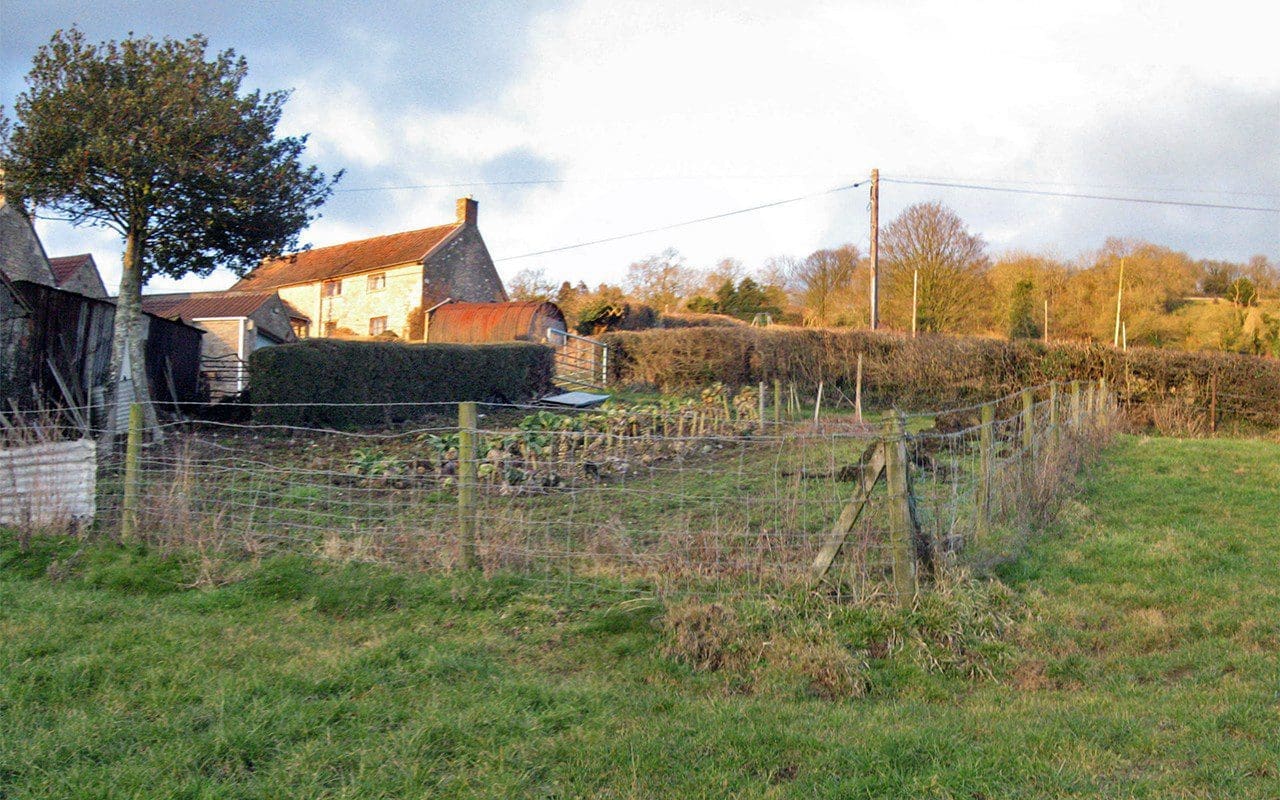 Raymond’s vegetable garden when we first arrived
When you arrive somewhere new, it is important to take the time to look. So the three loads of plants that I brought from the garden in Peckham were shoe-horned into my ration of cultivated ground. The ground, only tickled over by the rotavator, revealed a hard pan a couple of inches down and soil that had clearly not been improved for some time. But I was grateful, as it was free of weeds and provided me with the time to think.
“When you arrive somewhere new, it is important to take the time to look.”
Although it was clearly going to take time to decide how to make a garden here, I made a move in the first winter so as not to miss the planting season. It felt important to repair and reclaim boundaries so, over the Christmas holidays, we replanted a broken hedge on the west boundary, that was missing more teeth than it retained and removed the rickety barbed wire fences that stopped our eyes from seeing the stream below us sparkling in the low winter sunshine.
I walked the land daily, looking for the best location to plant a new orchard and took the lead from a dead stump in the field beyond the barns where our neighbour Glad said there had once been plums. We planted over thirty fruit trees here – apples, pears and plums – a hazel coppice at the base of the slope below them and, in the top corner of the field above, a blossom wood of natives to provide cover, shelter and food for birds. I also started the process of introducing more oaks, both as hedge trees and gate markers. The land felt in need of a new generation of trees and these were good moves to make straight away. After five years here we already have trees we can stand under, a complete and continuous hedge and the beginnings of a fruit and nut harvest.
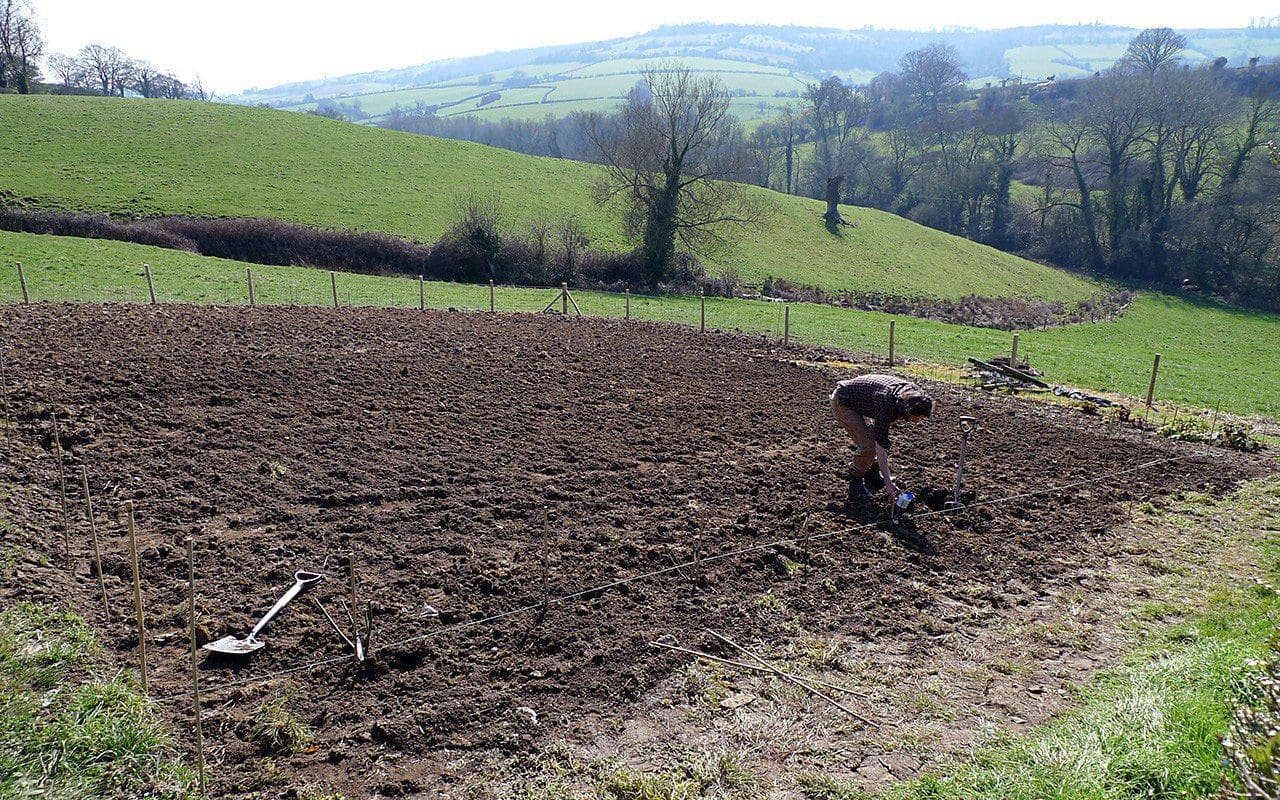 Laying out the expanded garden in 2011
The following spring I expanded the little vegetable plot, with a local farmer helping to turn in part of the field and partition the ground with a stock proof fence. I will write more on the balance between farming and gardening another time as it is a huge subject but, suffice to say, in our time here we have learned a great deal about sheep, their appetites and the importance of fences and tree-guards.
“The plot has reminded me of working on the trial beds when I was at Wisley…”
I sub-divided the plot with dirt paths into a series of beds that could be reached easily from either side with a hoe. It was a practical decision that freed me up to grow things in rows where they could be observed and easily tended. It was an easy way not to have to worry about aesthetics at this point, and to focus on identifying the best plants for the site. We were also growing vegetables and soft fruit on this same piece of ground, and so I enjoyed the discipline of the orderly rows, the unconscious reference they made to the former market gardens, and the liberation from the expectation that a garden must be a designed composition. The plot has reminded me of working on the trial beds when I was at Wisley and I have been free to observe and experiment in this laboratory.
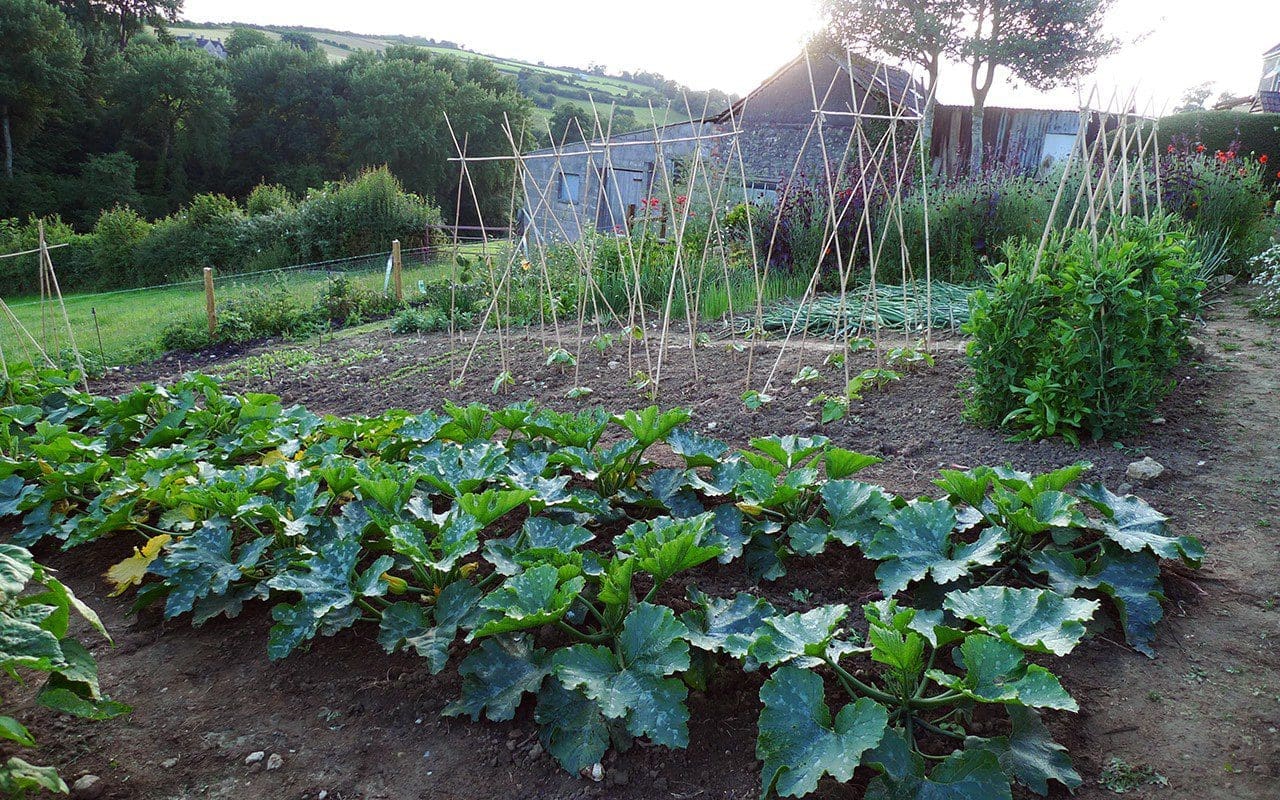 In the first year the balance of plants favoured vegetables
Compared with Raymond’s old vegetable patch digging over the new ground was like turning cake mix. Where it has been converted from pasture, the soil is deep, dark and hearty and, that first summer, I understood why there had been market gardens here. Tilted at the perfect angle to receive the south facing light and exposed to it for as long as the sun shone, my garden grew like I’d never seen anything grow before. Sunflowers threw themselves at life, towering to over ten feet by the end of the summer. I grew fifty-six dahlias, because there was the space to absorb their flamboyance, and a collection of two-dozen David Austin roses, each lined out neatly, and easy to tend. I was able to devote a whole bed to peonies, one to lavenders and another to irises. All with the intention of watching and waiting to see which were most gardenworthy.
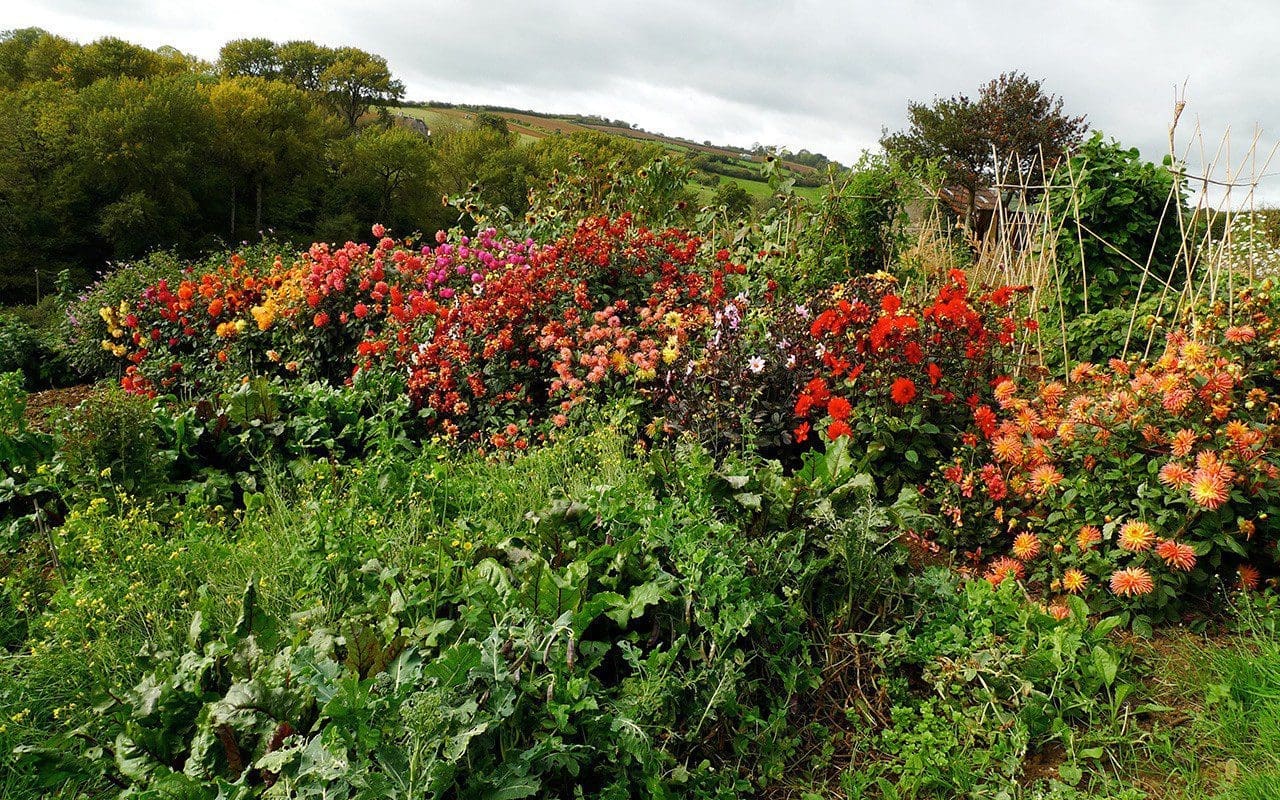 Some of the 56 varieties in the dahlia trial
That first spring I sowed three separate panels of Nigel Dunnett’s Pictorial Meadows annual mixes. I had grown them in clients’ gardens, but had never had the space to experience growing them at close quarters for myself. It was like starting all over again. One world inside the fence, revealing itself through growing, another beyond revealed through a slow and informed process of looking and steering.
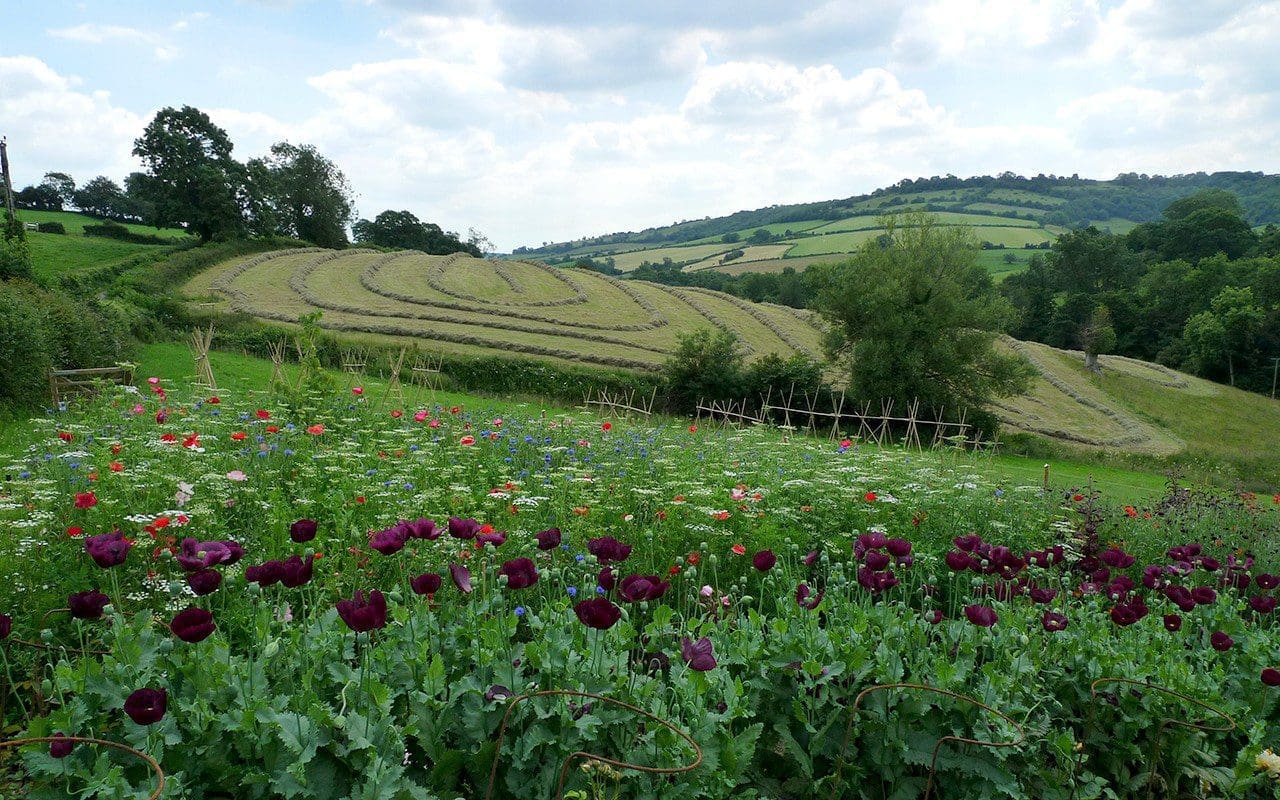 Black opium poppies and a Pictorial Meadows mix in year one
We quickly learned that gardening on a slope was hard work. Every move has to be negotiated with the incline, the push and the pull of manual labour considered very carefully. Knowing how much to fill the barrow and how to place it on the slope to avoid losing a load, which way to dig and which direction to hoe, how to place yourself to make weeding less strenuous, all were a whole new way of gardening for me, having always gardened on the flat. It is a windy site too. My daylilies from the sheltered garden in Peckham grew to half their height in the exposure of this sunlit hillside. The hellebores flagged without shelter, but everything that liked it stood solid and healthy as an athlete.
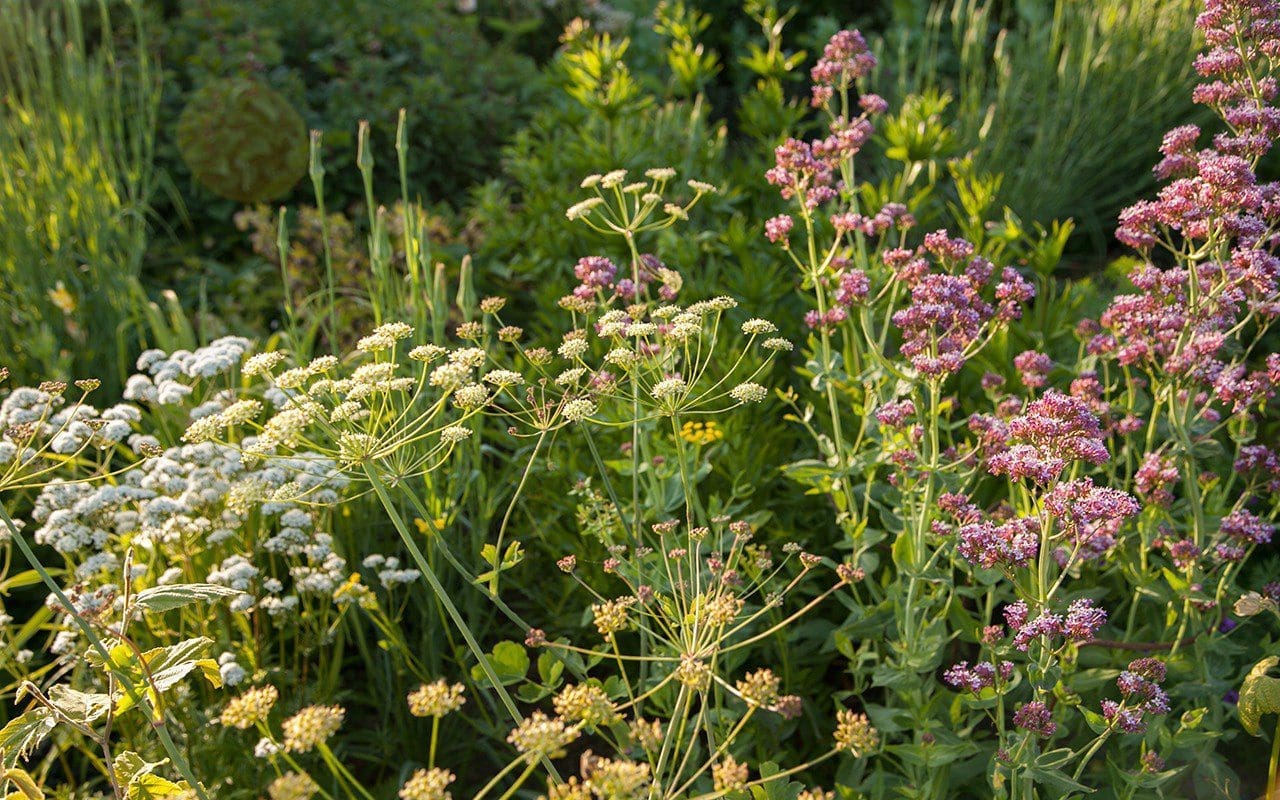
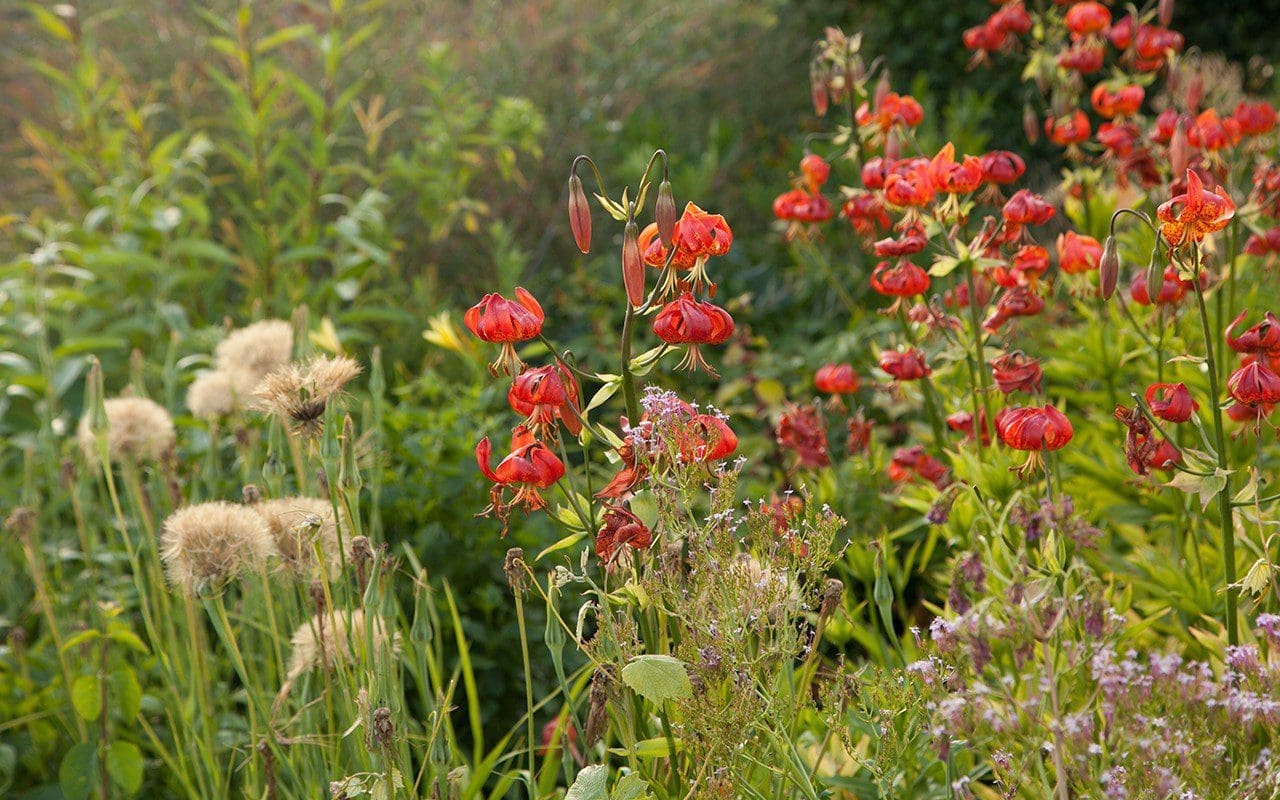
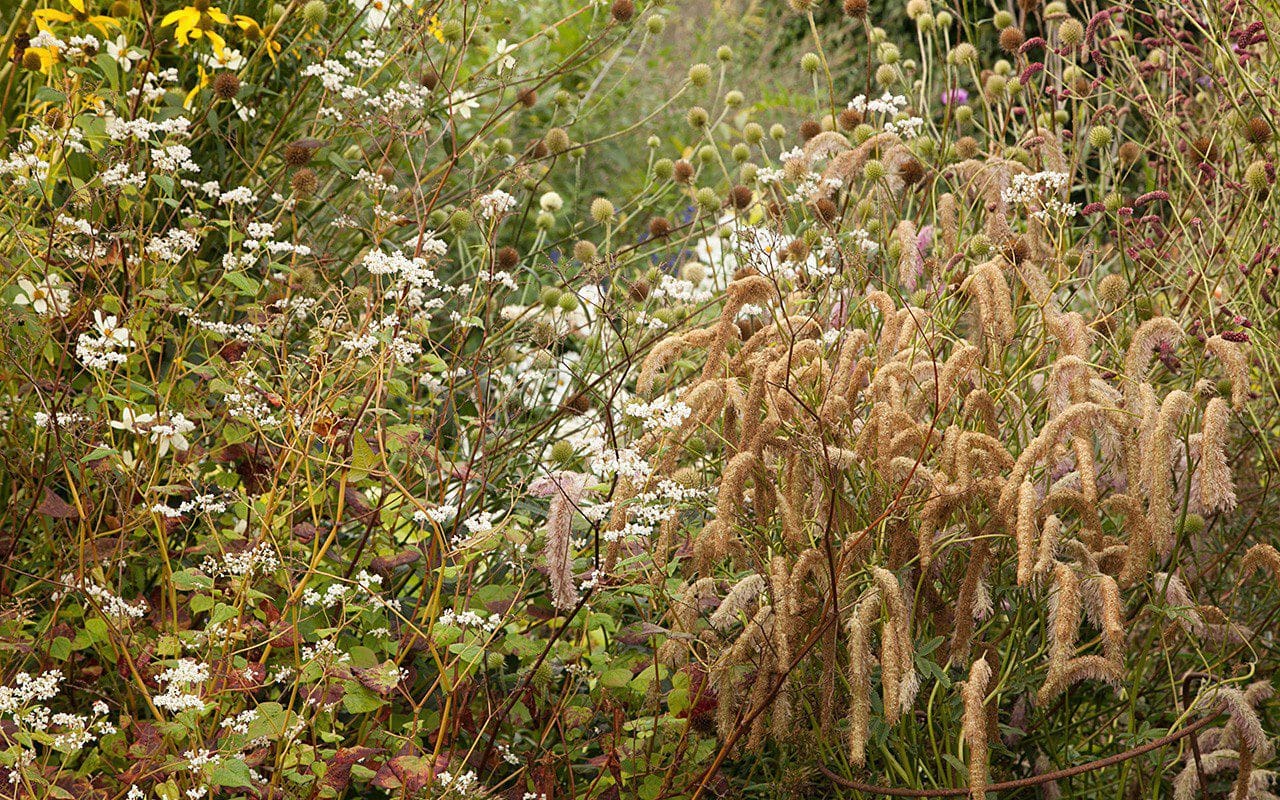 The functional arrangement of plants has produced some unexpected and exciting combinations
The garden grew, but at a price. Gradually, from nurseries, specialists, friends and plant fairs, I accumulated a collection of special martagon lilies, an assortment of asters, salvias and sanguisorbas and countless other treasures. So, rather predictably, my growing collection of herbaceous, flowering plants rapidly started to crowd out the vegetables, and I soon found myself planning a new vegetable garden with level ground and ease of access. We made a start in the third summer, forming a flat terrace to the west, extending the ridge that the buildings sit upon.
“I knew early on that I didn’t want to be able to see an ornamental garden from the house…”
In doing so, the spine of garden activity was taken out from the house, linking the practicality of vegetable and fruit growing to the barns and the newly planted orchard beyond. I knew early on that I didn’t want to be able to see an ornamental garden from the house, that looking into the complexity of a planting was something I wanted to choose to do, rather than have it demand my attention. So, with the vegetable garden positioned to the west, I am now planning to sweep the landscape up to the front door from the south and develop the gardened garden in a complementary span to the east.
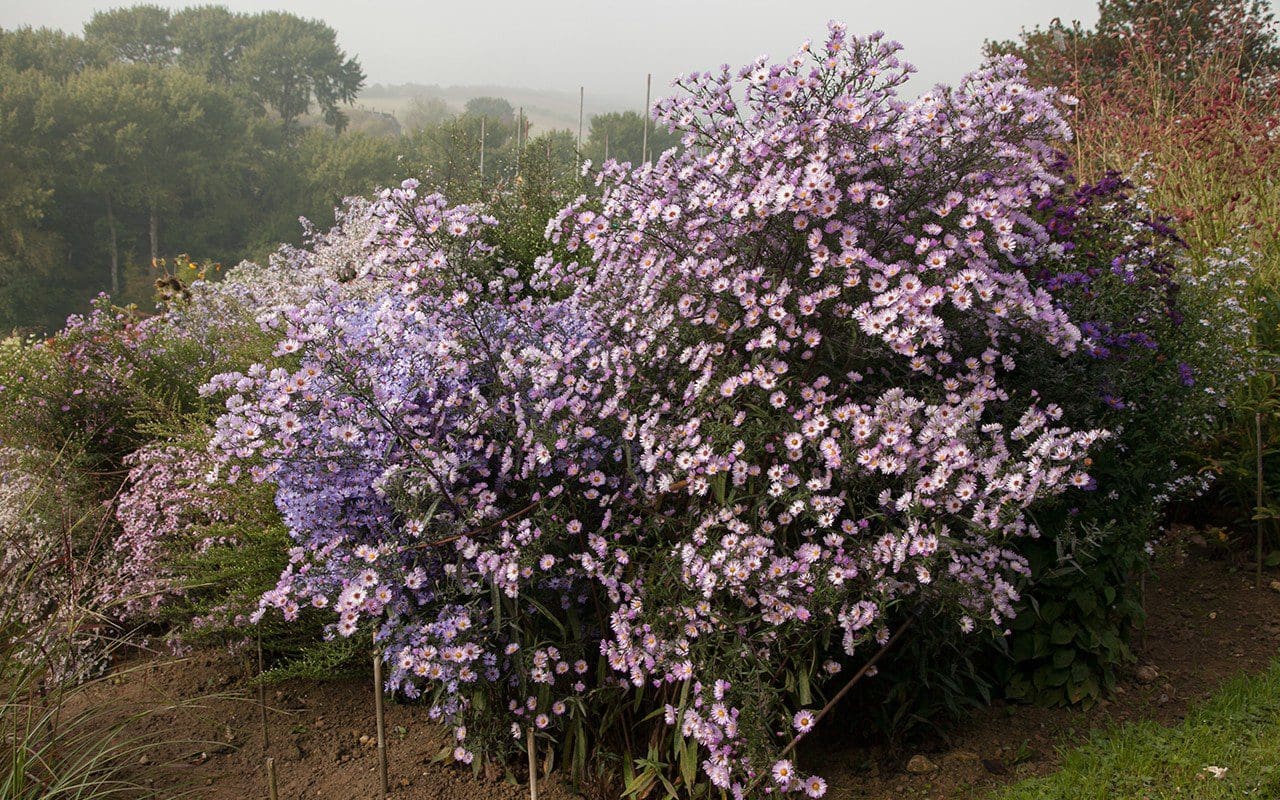 The aster trial
As I write, at the end of our fifth winter here, I am surrounded by the aftermath of building works, which have seen us modernise the house and convert the milking barn into a studio where we can work. From here we look onto the ground that was once Raymond’s vegetable patch and, now that the battleground of construction has settled, and with five years of looking behind me, I am ready to make my move. The winter has seen me rationalising the stock beds of plants and we have just turned in a green manure crop of winter rye, so that soon, when the weather is dry enough to get on the land again, I will be able to start forming the garden. The survivors from those carloads of plants that arrived here from Peckham five years ago are finally ready to be found a home.
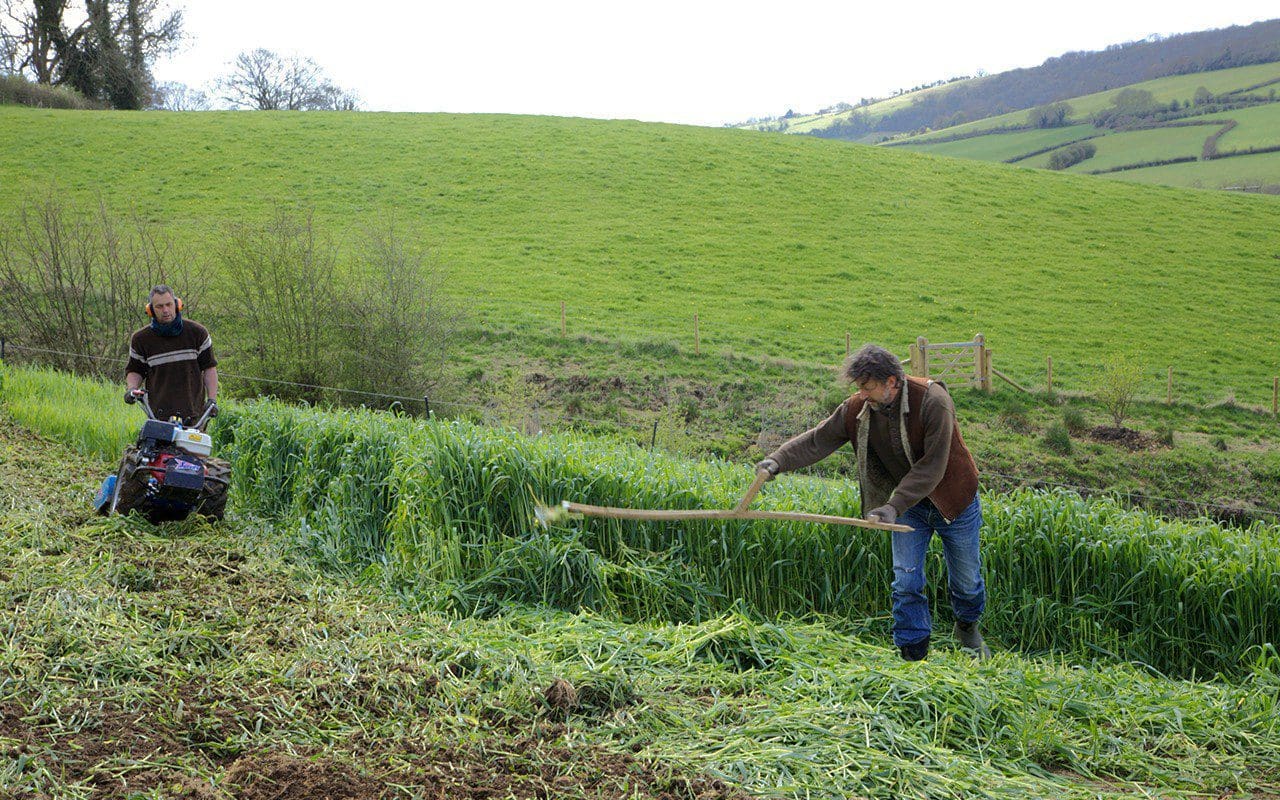 Dan and Ian turning in the winter rye
Words: Dan Pearson/Photographs: Huw Morgan
ALREADY A PAID SUBSCRIBER? SIGN IN
ALREADY A PAID SUBSCRIBER? SIGN IN