ALREADY REGISTERED OR A PAID SUBSCRIBER? SIGN IN
I have been away for work for just over a week, a week that has seen the buds on the plum orchard break into luminous clouds of flower. I was aware when we scheduled this time away that it would be a small torture knowing that this long-awaited moment was going on without me, but there is nothing like returning to change.
To add to the tension of being away, at the last minute my return plane was rerouted via Beijing for a sick passenger when we were half way across China. It was well after midnight when I pulled into the drive at home. There was a chill in the night air but there to greet me, pale and luminous at the bottom of the steps, were the poised chalices of Arum creticum. I had noted the slim green fingers and promise of flower as I’d left and the time I’d spent away was marked in their transformation.
Rolled back to open throats to the sky, the twist of their creamy sheaths would surely inspire a milliner. Fresh, primrose yellow with a darker, yolky spadix they sit well against the glossy foliage which has been good all winter, but will soon be gone as the energy is drained once the flower is pollinated. Where many arums attract flies with a foul or animal smell, Arum creticum has a sweet perfume that hangs gently in the air on a still, sunny spring day.
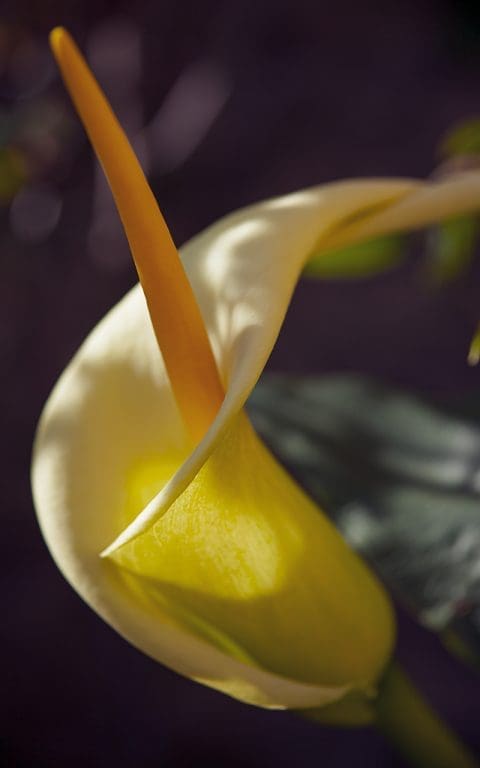
Arum creticum is a plant that has an exotic feeling about it, without making you fear for its hardiness. I have yet to see it in its native habitat in Greece, but have read that it is found in cool crevices in open, deciduous woodland. Though it is perfectly hardy here, rising early in a countermovement to flush fresh green leaf in autumn, it prefers a position where it can bask in winter sunshine and a leaf-mouldy soil that holds moisture in winter and dries out in summer once the plant is dormant.
I moved the rhizomes to Hillside a couple of years ago from a clump that we had growing in the studio garden in London at the base of a south-facing wall. They flowered well for the first couple of years, but my desire for privacy has rapidly seen this one-time hot spot become shadowy, as the limbs of Cornus ‘Gloria Birkett’ have reached up and out to dapple the garden. As the shade made itself felt, so the arums went into a holding pattern of leaf and no flower to let me know that, although in Greece life on the woodland floor might be tolerable, it was not so here where the intensity of spring light is so much less reliable.
I dug up the rhizomes just as the plants were going into dormancy and put them against an east-facing wall where they have all the light they need, but also, importantly, shelter from our prevailing westerlies. I’ve noticed that I have left some youngsters behind in London, for the rhizomes divide easily, but I will gather them up in the next couple of weeks and bring them to Somerset to extend my little colony.
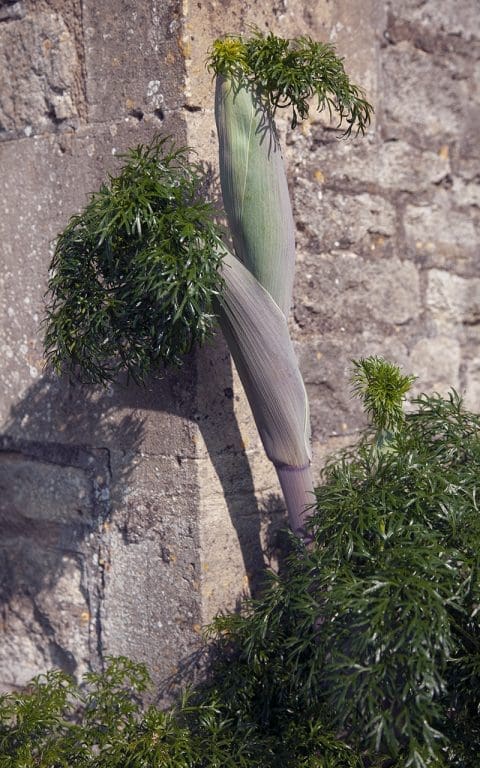
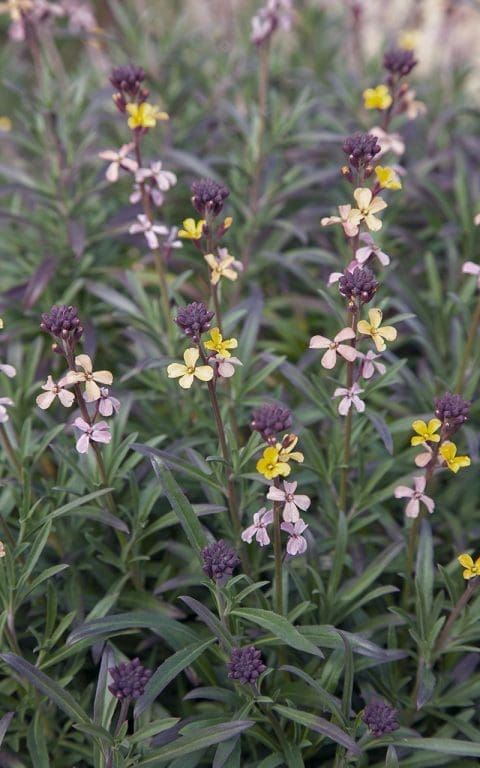
Being one of the first parts of the planted garden you meet as you approach the house, the companions to the arum are also early risers. A fellow from the same country in Ferula communis ssp. glauca, a fellow to the fennel’s featheriness in the fern-leaved Paeonia tenuifolia and the early species wallflower Erysimum scoparium, a native of the Canary Islands. The simplicity and architecture of the arum sits well against the filigree foliage and the mutual break with winter could not make a better welcome.
Words: Dan Pearson/Photographs: Huw Morgan
Published 30 March 2019
It’s not long now before we head back to Greece for our annual summer holiday. We are creatures of habit and have been going back to the same island for several years. We enjoy the routine of familiarity; the locals who now recognise us as we wander round town, the meditative walk to the black sand beach and the welcoming, energetic atmosphere of the panagyri, the numerous village festivals focussed on food and dancing. Food at the panagyri is free, and you eat what you are given, but this is no hardship as, without fail, everything is home-cooked and delicious.
One dish that always makes an appearance on the communal tables is skordalia, the thick garlic sauce that usually accompanies simple, boiled greens. These are most often beet greens, vlita (amaranthus) or horta, a mixture of foraged wild greens which can include purslane, dandelion, nettle, chicory, shepherd’s purse and sow thistle.
However, the first time we were served skordalia, it came to the table as a dip with breadsticks, and I was immediately reminded of an identical dish we used to eat every night at a beach restaurant on the Andalucian coast just on the edge of the Cabo de Gata Natural Park, the location of our last long-term holiday crush. When I asked, I was told that this garlic dip was called ajo blanco, which confused me, since I was familiar with the chilled soup of this name, sometimes called ‘white gazpacho’. It transpired that the ingredients were exactly the same – garlic, bread, almonds, oil and vinegar – it was just the proportion of ingredients that was different, and with less water added.
When I mentioned the similarity of this Spanish dish to the island locals they were really interested, and informed me that the skordalia on this island was unusual in that it was made with bread and almonds, whereas most traditional recipes are made either solely with potato, or bread and walnuts. Indeed, if you Google skordalia there is a huge range of differing recipes and, as with all such traditional dishes, although the core ingredients remain the same, every region has its own version, which also differs from family to family.
However, both the ajo blanco and skordalia of our holidays had a similarly light and creamy texture, which I knew in Spain was achieved through the addition of cold water as well as oil. So this recipe is the result of some experimentation in an attempt to match these two versions, and so may not be one for skordalia purists.
This is a great dish to foreground our recently harvested garlic and, given that skordalia is little more than a vehicle for it, the garlic you use for this should be as fresh and sweet as possible. We grew four varieties this year; Thermidrome, Germidour, Sprint and Printanor. We did a raw taste test immediately after harvesting and, of the four, we found Sprint to be the sweetest.
The quality of the bread is equally important, so use a sourdough with a good crumb, if possible. Cheap, white bread will turn to glue. Blanched almonds produce a whiter result, but the skins of unblanched almonds add an attractive, wholesome speckle to the dish.
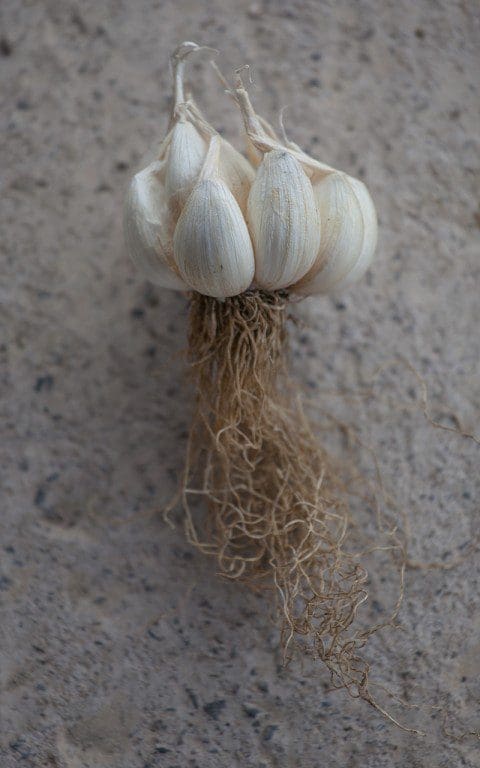 Garlic ‘Sprint’
INGREDIENTS
100g stale white bread, crusts removed
50g almonds, blanched or with skins
3 cloves garlic
1 teaspoon sea salt
1-2 tablespoons red wine vinegar
150ml olive oil, or more if required
Up to 175ml iced water
Serves 6 as an appetiser, 4 as an an accompaniment to a main course
METHOD
Soak the bread in cold water for 30 minutes then squeeze out as much water as possible.
Crush the garlic cloves with the salt in a mortar and pestle until you have a smooth paste.
Put the bread, garlic, almonds and vinegar in a food processor and blend until smooth, scraping down the bowl every now and again.
With the motor running on a high speed slowly add the oil until a smooth emulsion is formed. Then add the iced water until it reaches the consistency of fresh mayonnaise. Taste and adjust seasoning with additional salt and vinegar as required.
Transfer to a bowl. Cover with cling film and refrigerate until needed. Remove from the fridge immediately before serving and stir well. If the mixture has thickened considerably beat in a few more tablespoons of cold water.
Spoon the skordalia onto a dish and drizzle over a little more olive oil. Serve as an appetiser with breadsticks, or alongside boiled greens. Spinach, chard or young kale would be suitable replacements for the traditional beet greens or amaranthus.
Recipe & photographs: Huw Morgan
Published 5 August 2017
We are sorry but the page you are looking for does not exist. You could return to the homepage