This is the third year of my aster trial and a good point to judge how they have performed. The collection, which I set up to broaden my palette, has scratched the very tip of an iceberg, which must run to hundreds of varieties. I currently have just twenty-six and I am at the point now of wanting to reduce them to a dozen or so. Some I have grown before, but the greater number have been selected from plant fairs and on trips to see the well-known collections at Waterperry Gardens and the Picton Garden.
Asters are some of the best late-flowering perennials, the first flowers to hint at the next season in late August, and some of the very last to see the autumn out, their flowers hanging in suspension as the colour drains from everything around them. Aster borders were once celebrated in Victorian and Edwardian gardens, but they became unpopular for a period and with good reason. Many of the older varieties were prone to mildew and those that run could take a border over in the same time that I have been running my trial. I suspect this is one of the reasons that you see them naturalised along railway embankments, where they were thrown over garden fences in frustration, and where the strongest can compete with the buddleia and brambles.
Frustratingly, asters have recently been renamed; A. novae-angliae, A. novi-belgii, A. laevis, A. dumosus, A. lateriflorus, A. cordifolius and A. ericoides have become Symphyotrichum, while A. divaricatus and A. schreberi are now Eurybia. Whatever you call them, aster enthusiasts and nurserymen who are selecting and naming new varieties have honed them for their mildew resistance. This means that in the summer wait for their moment of glory, they help provide a sense of healthy expectation in the borders. They have also been selected for their clump-forming ability and the majority stay put until they need division. Depending upon the variety, this can be in four to six years. They show you when they need this by developing a monkish bald patch in the middle. Division of the strongest growth to the outer edges in the spring renews their vigour. 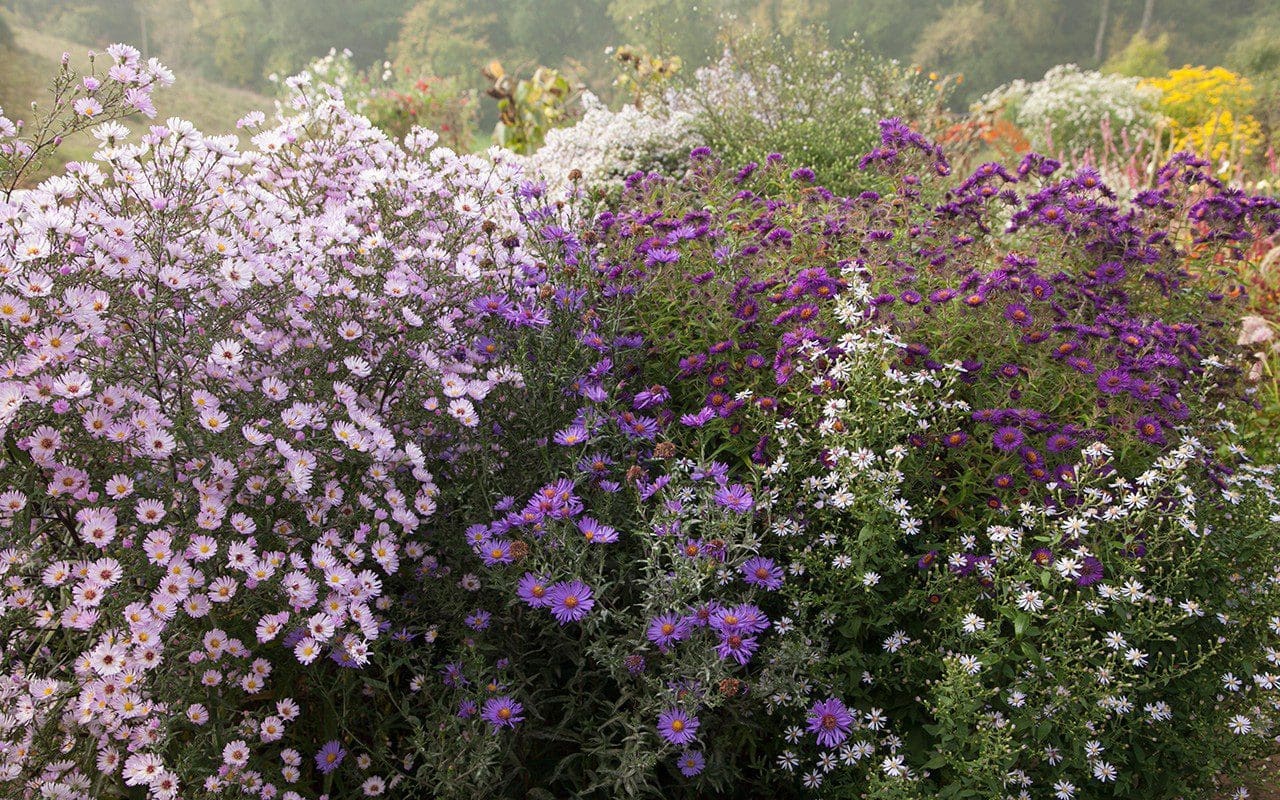 The aster trial with from left to right, A. ‘Vasterival’, A. ‘Calliope’, A. ‘Violetta’ and A. ‘Primrose Path’
As I write, the sun is streaming down the valley at an ever-decreasing angle, having burned its way through a morning mist. We had the first frost in the hollows today, so I would say this was perfect weather for looking at my collection. In the penultimate week of October they are in their prime and they look their best in the softened light with the garden waning around them. I have spent the morning amongst them, taking notes and pushing my way through the shoulder high flower to trace them from top to bottom. I want to see if they have stayed put in a clump, and which ones can do without staking, as I’m aiming for there to be as little of that here as possible.
I am smarting, however, as I have committed the ultimate sin when running a trial, for six of the labels are missing, buried within the basal foliage (I’m hoping) or – less helpfully – snapped off when weeding. Of these six I am going to keep two that have shown themselves to be special and, through a process of elimination from studying photographs and my garden diary, I will find out what they are. The others will be found a metaphorical railway embankment. In this case a rough patch of ground where the sheep won’t get them, but where they can provide some late nectar for the bees.
I have just a small number of creeping varieties which I tolerate for their informality. Although most asters prefer to be out in the open with plenty of light, the first three here are happy to live under the skirts of shrubs or in dappled shade. Aster divaricatus, a plant that Gertrude Jekyll famously used to cover for the naked patch the colchicum foliage leaves behind in summer, is one of my favourites. I have seen it in North American woodland where it lives happily amongst tree roots and spangles the dappled forest floor in autumn. Although it will not dominate here, as it does in the States, and runs slowly, it does move about, the dark, wiry stems leaning and sprawling and pushing pale, widely-spaced flowers to a foot or so from the crown. Aster schreberi is similar to look at, with single starry flowers, though it is stronger and has taken off in my hearty soil. I will put it amongst hellebores, which should be man enough to fight it out in the shade under the hamamelis. I will let you know who wins in a couple of years.
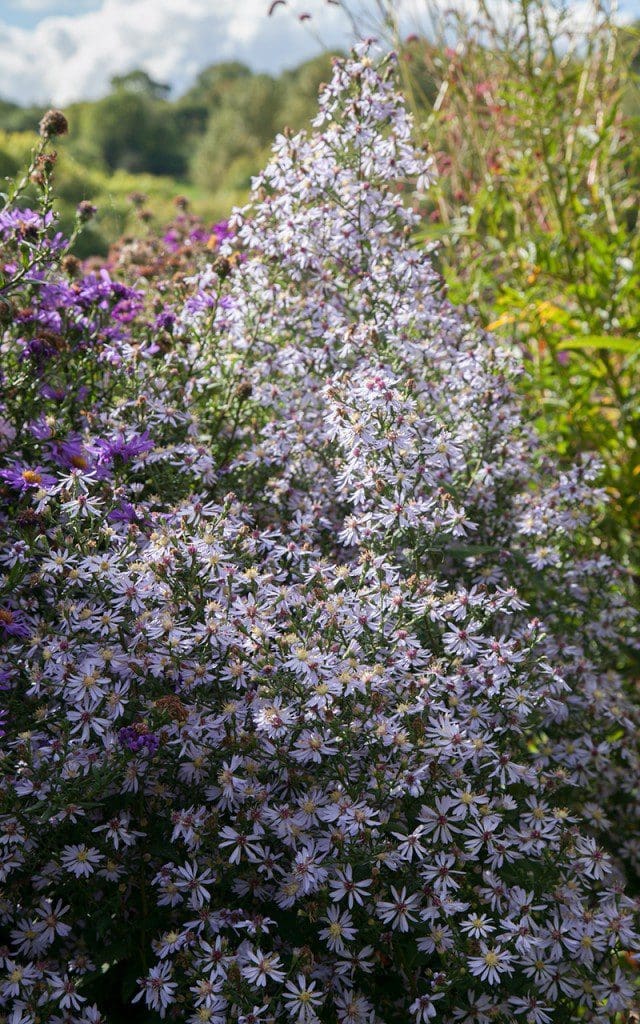 Aster ‘Primrose Path’
Strictly speaking, I should be wary of Aster ‘Primrose Path’ for not only does it double itself in size every year, it also seeds. However, it is not a hefty plant, growing to just 75cm and, as it is also happy in a little shade, I am keen to keep it and use its ability to move around in the shadier parts of my gravel plantings around the barns. The flowers, which are small, but not the smallest, are a delicate lilac, each with a lemon-yellow centre.
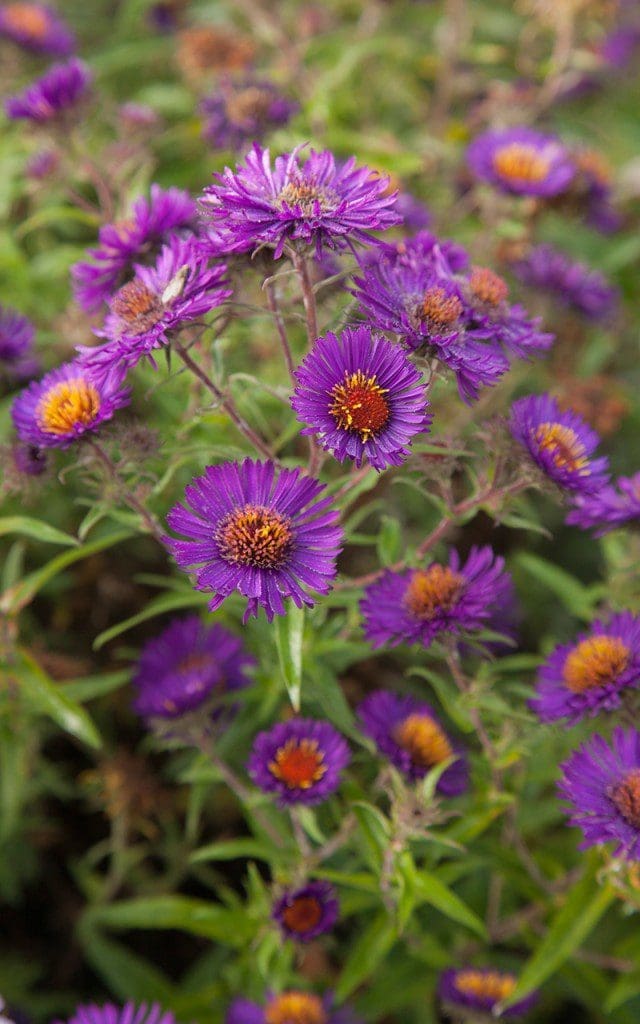 Aster ‘Violetta’
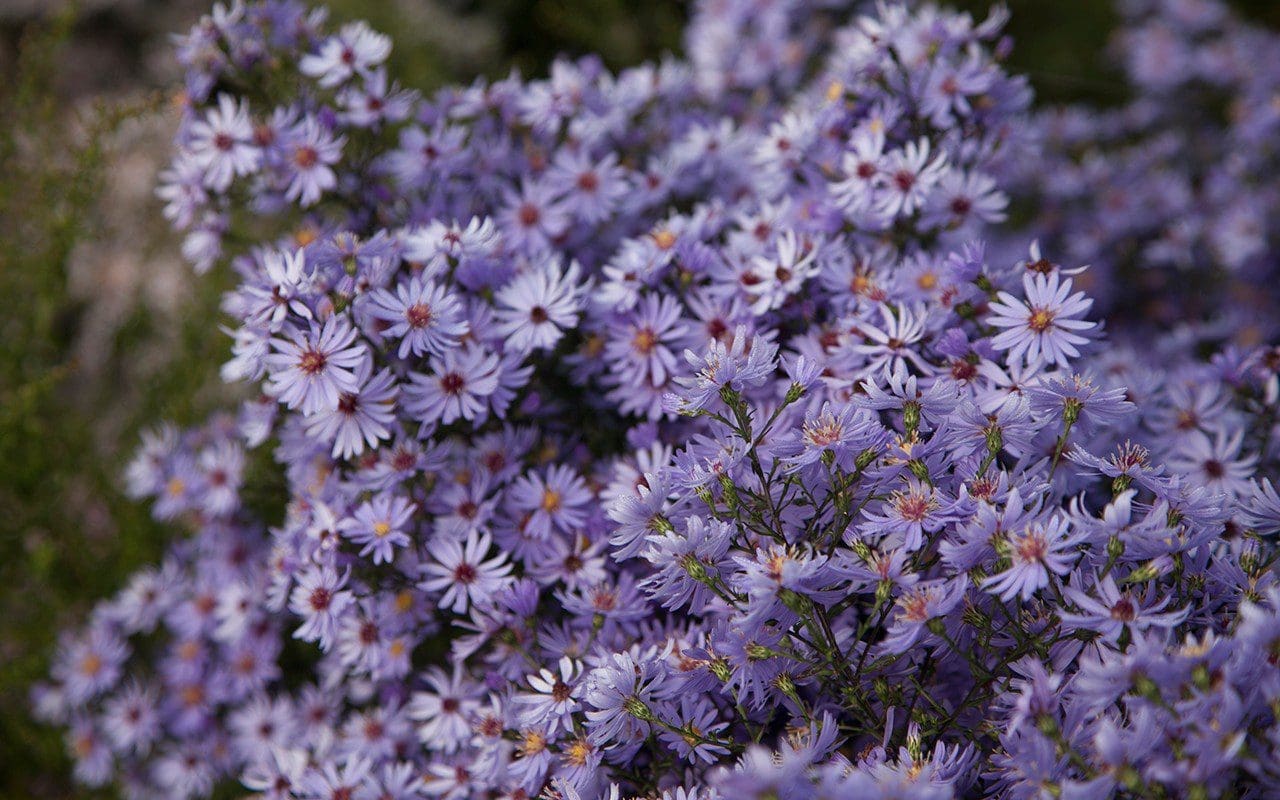 Aster ‘Little Carlow’
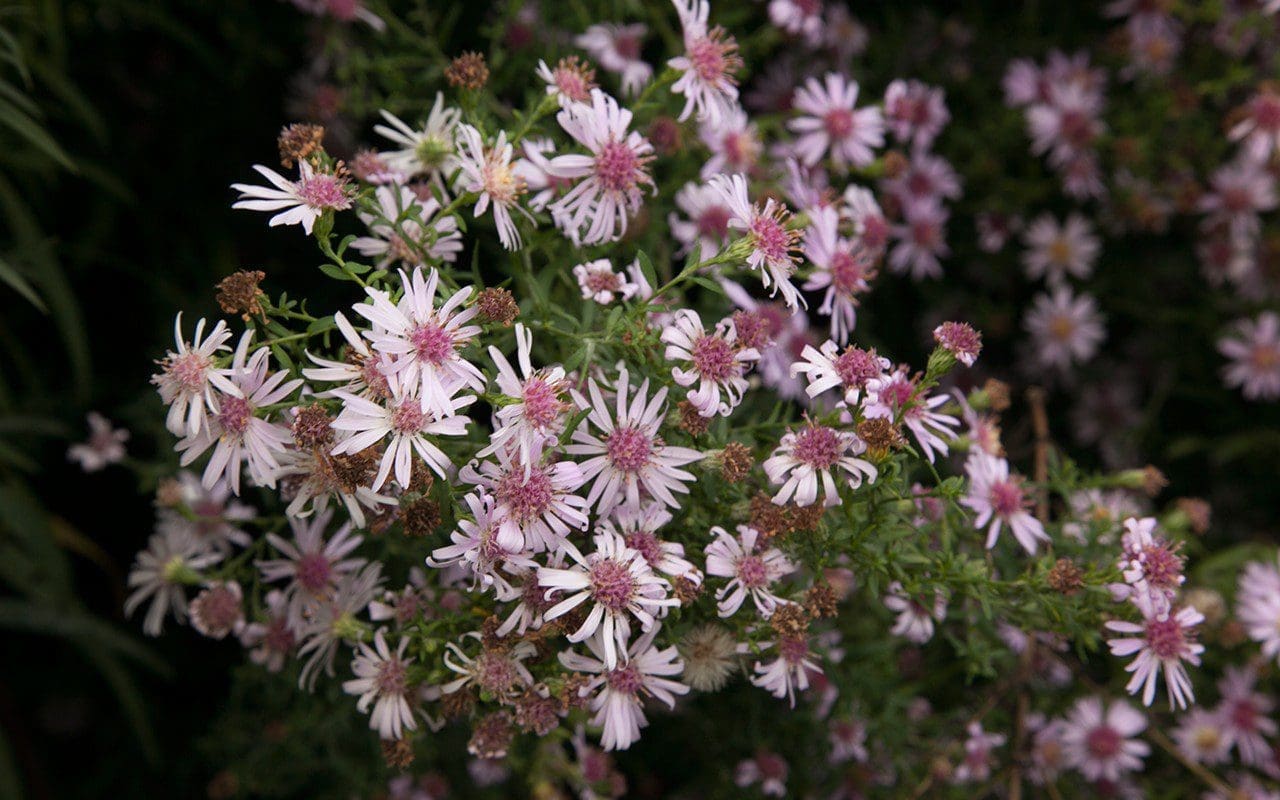 Aster ‘Coombe Fishacre’
Most of the asters for the new garden have been selected for lightness of growth and flower, as I want the plantings to be transparent, allowing views of the far landscape into the garden. All, with the exception of the semi-double ‘Violetta’, are single. I like to see the centre of the flowers and I want them to to dance or to sit like a constellation in space rather than blaze in a solid mass like ‘Little Carlow’. Growing to well over a metre for me here, this is a really good plant, needing little staking and being thoroughly reliable, but it is too floriferous for me, the flowers bunched tight with little space between them so that the weight of flower seems impenetrable. ‘Coombe Fishacre’, though also densely flowered, is certainly a keeper, the centres of the soft pink flowers age to a darker grey-pink to throw a dusky cast over the whole plant. It is good for being shrubby in appearance and self-supporting.
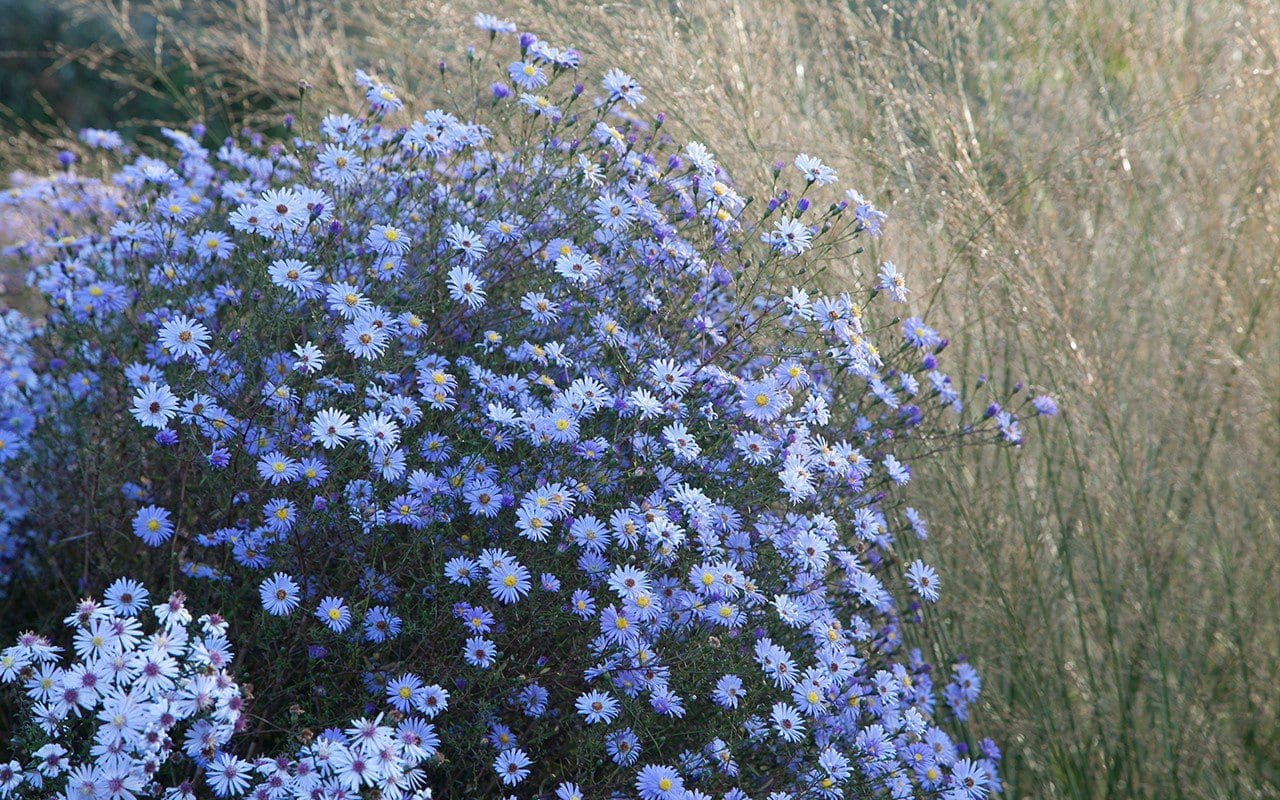 Aster turbinellus hybrid
My absolute favourite Aster turbinellus (the Prairie Aster), is one of the latest to flower, its season running from October into November if the weather holds out. It is exquisite for the air in the plant, the foliage being reduced to narrow blades and the stems wiry and widely-spaced so that it captures the wind and moves well. I’ve used it in great open sweeps in the Millennium Forest planting as the finale to the season there. The flowers, which are a bright lilac and finely rayed, have a gold button eye. I have a form simply named Aster turbinellus hybrid that has darker stems and dark buds that may be proving to be almost better than the straight species. I will keep them both for now and they may well be lovely planted together for the feeling that they are related yet different.
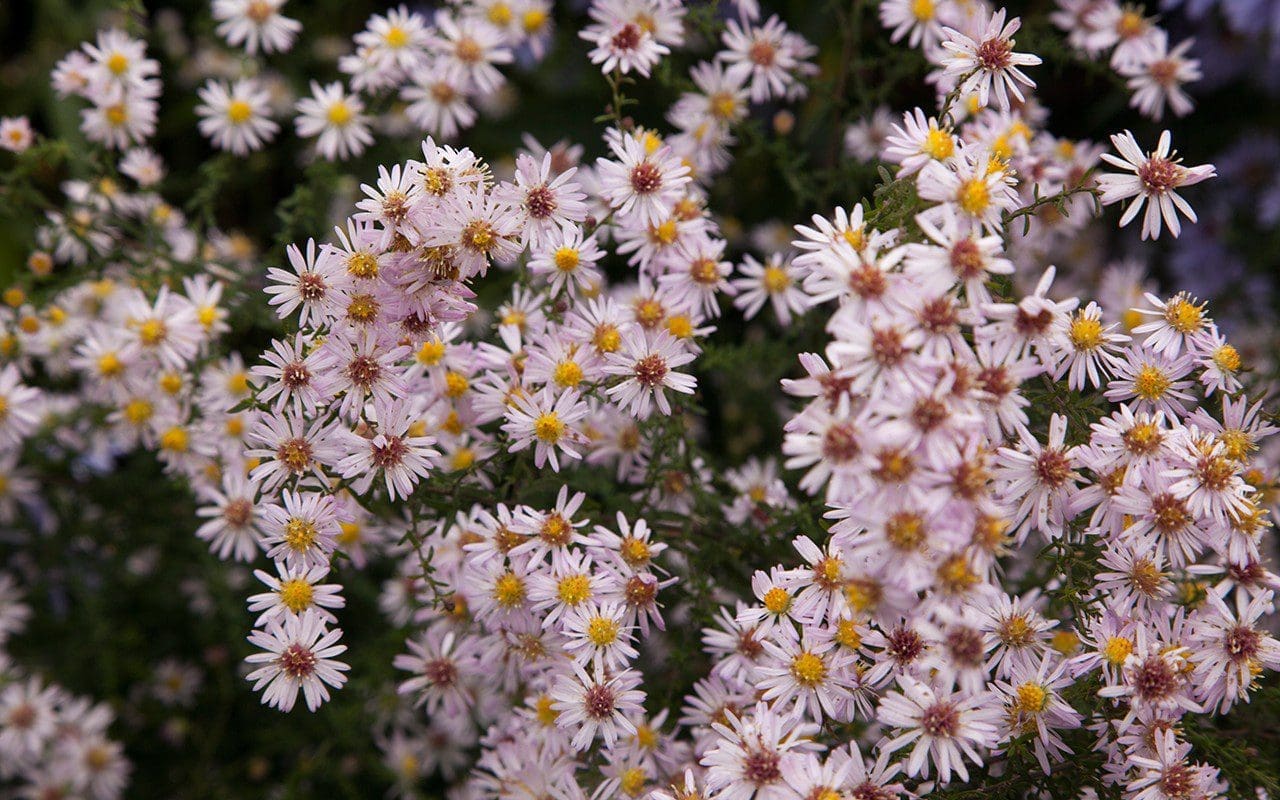 Aster ericoides ‘Pink Cloud’
Aster ericoides ‘Pink Cloud’ also has a reduced leaf, although it is altogether more dense and arching in growth. It is proving a valuable contrast for the size of the flowers, which are tiny and held thousand upon thousand in arching sprays. Palest pink, this should almost be too pretty, but I have enjoyed the scale shift when it appears with the larger-flowered forms. Together they layer and billow like clouds and I’d like to see them take the garden in a storm of their own making. Come the spring, it is all too easy to forget about including these late season performers in a planting. The notes I am taking now will remind me of their importance at this time of year and will be a useful reminder when I make the divisions for inclusion in the new plantings.
Words: Dan Pearson / Photographs: Huw Morgan
The melancholy thistle (Cirsium heterophyllum) were a late arrival at our Chelsea Flower Show garden last year. We were moving slowly and surely into the last few days of planting up the garden and Peter Clay, our plant-meister at Crocus, rolled up with a car boot full. We were in the process of studding the wildflower turf with special moments, acid yellow Zizia aurea from North America, scarlet Tulipa sprengeri, white camassias, and marsh orchids collected from Peter’s own land, to name just a few. He said it was his custom, in the last few days of the Chelsea build, to do a trawl of some of the specialist nurseries just in case there was an undiscovered prize that the garden had been waiting for.
The melancholy thistle were just that, standing strong at that point and still in textured bud at about a foot high, but you could see they were set on taller things. I didn’t want the garden to be an all-singing, all-dancing place. I wanted people to imagine they were somewhere real, where there were still things to look forward to. So I planted them under our pollarded willow and, over the course of the show, they grew tall and provided a sense of potential with their spineless, silver-felted foliage and beautiful scalloped buds.
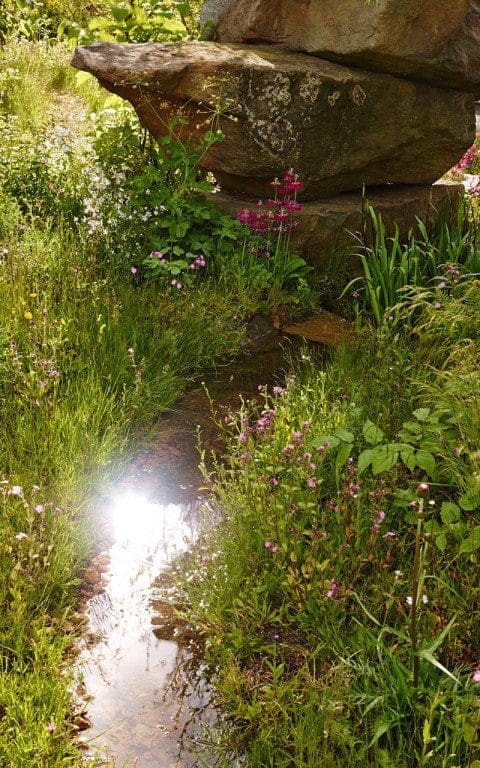 Cirsium heterophyllum (bottom right) in the Chatsworth Laurent Perrier Garden at the 2015 Chelsea Flower Show
When the garden was dismantled I took one of the thistles as a memento. They had taken on a far greater significance during the course of the show, since I was standing amongst them when one of my most loved musicians complimented me on the garden and I invited her in to have a closer look. It was a chance happening which caught me completely by surprise and, out of nervousness, I talked far too much. Suddenly the bubble was burst, she had to leave, and I missed my chance to express my admiration. I felt foolish for perhaps having overwhelmed her and, as I pondered the thistles, a little sad that I had not simply let her look. These sorts of experiences are what gardens are made of and, back home, the memory of the meeting grew with the thistle and I haven’t been able to pass the plant this year without thinking of it.
“Despite the size and resonance of its shaving-brush flowers, I have no intention of introducing it into the garden…”
A fairly rare British native, Cirsium heterophyllum can be found in wet meadows and on river banks in the uplands of Scotland, Wales and Northern Britain. So I found it a special place that I thought it might like on a bank where we have spring seepage that keeps the ground moist. It spreads rhizomatously and my solitary plant has doubled its domain this year, and, so far, is holding its own amongst the meadow grasses. Despite the size and resonance of its shaving-brush flowers, I have no intention of introducing it into the garden, as I can tell that it would be mingling with, and then choking, its neighbours in no time. However, checked by company in the meadow, it is a fine addition, glowing like a magenta beacon for a month in June and July.
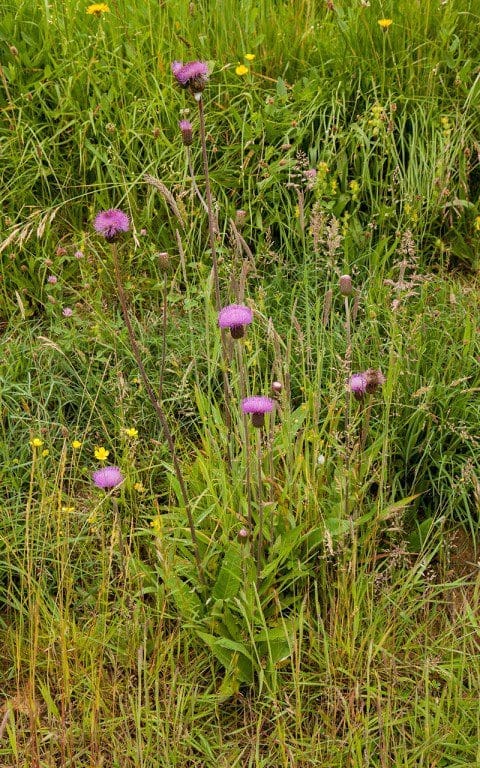 Cirsium heterophyllum in meadow grass on our damp bank
The flowers tilt ruefully to one side whilst maturing, and this is believed to be the origin of its common name. The ancient medical ‘Doctrine of Signatures’ states that plants resembling particular parts of the body can be used to treat ailments of those parts of the body. And so the thistle was was used to treat melancholy, as well as numerous respiratory ailments. In his Complete Herbal (1653) Nicholas Culpeper states, “…the decoction of the thistle in wine being drank, expels superfluous melancholy out of the body, and makes a man as merry as a cricket; …my opinion is, that it is the best remedy against all melancholy diseases that grows; they that please may use it.”
“…the decoction of the thistle in wine being drank, expels superfluous melancholy out of the body, and makes a man as merry as a cricket…”–Nicholas Culpeper, The Complete Herbal (1653)
I must admit to being more merry than melancholy that it has taken so quickly here, and I hope it will colonise the damp ground around it so that one day this part of the upper meadow will blaze. To help, I harvested a seed head picked just before the seeds were dispersed by the wind. I will sow it fresh, straight onto compost, and then top it with grit to keep off the slugs and ensure it doesn’t rot. With luck we may see seedlings this growing season. I will leave them undisturbed over winter and then prick them out to grow on next spring. I expect to be able to plant them out as the weather cools next September, for a bank full is sure to eclipse any lingering sadness.
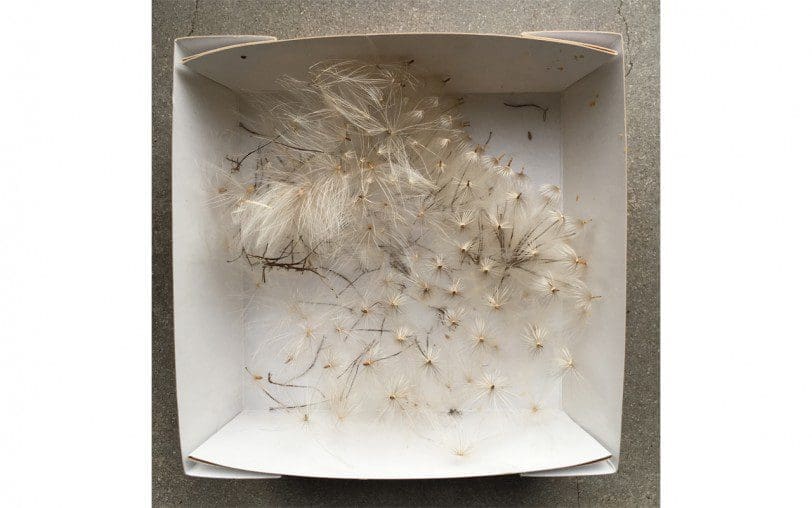
Words: Dan Pearson/Chelsea photograph: Allan Pollok-Morris/Other photographs: Huw Morgan & Dan Pearson
When my friend Anna gave me a seedling of ‘Bill Wallis’ a few years ago she said, “You may hate me for giving you that !”. I had admired it seeding about in the gravel that wrapped her house and thought it’s willingness to perform would be good in the rubbly ground at the base of the tin barns. In the early summer, we see Geranium pyrenaicum (Hedgerow or Mountain Cranesbill) clambering up into the cow parsley where it smatters the fresh June greenery with pinpricks of the brightest magenta.
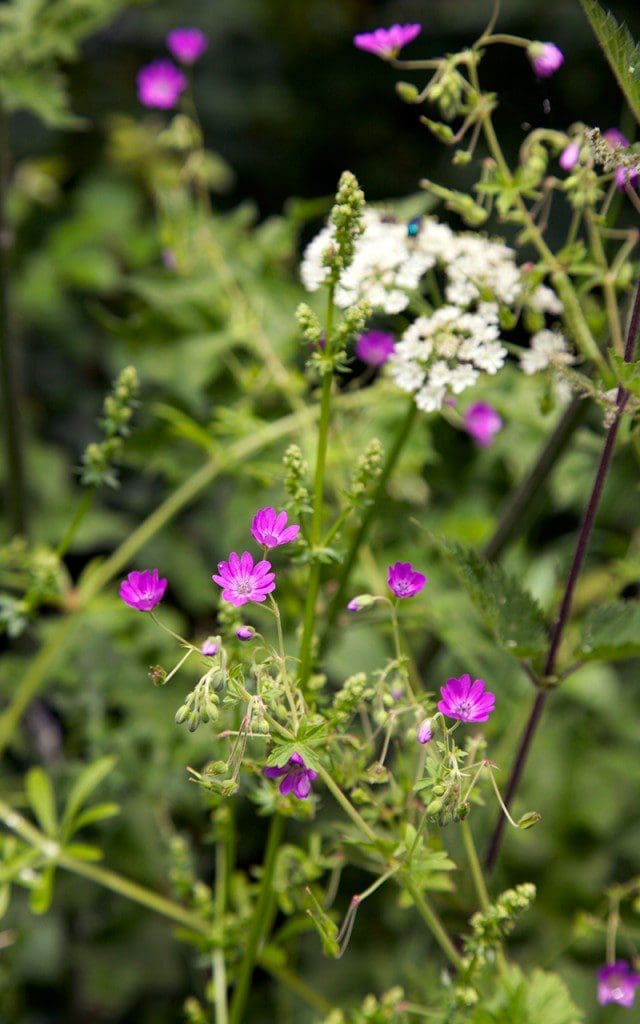 Geranium pyrenaicum
Now so common in southern England that it is considered a native, this geranium was not recorded in the wild in Britain until 1762. As the verges grow out we seem to lose sight of it, but not ‘Bill Wallis’.
Bill Wallis was a passionate plantsman who set up The Useful Plant Company after his retirement in 1979. He chanced upon the original seedling (with flowers of a more electric violet than the wildling’s pinker hue) in a neighbour’s garden, and it was named after him by Joe Sharman of Monksilver Nursery, who propagated the cultivar and launched it at the Chelsea Flower Show.
The earliest flowers, which appear in April, are only about the size of a halfpenny but, by the solstice, they have massed in number clambering through their neighbours to pepper them with colour. A low basal rosette is the origin of this energy and, some time late in June, it is wise to cut them to the base and let them start again. The plentiful seed, like that of all cranesbills, is catapulted far and wide, and it is prudent to diminish the number of volunteers if you find that it likes you. Regrowth brings with it fresh foliage and new flower for the latter half of summer and the seedlings that have got a foothold are easily weeded out when they are young.
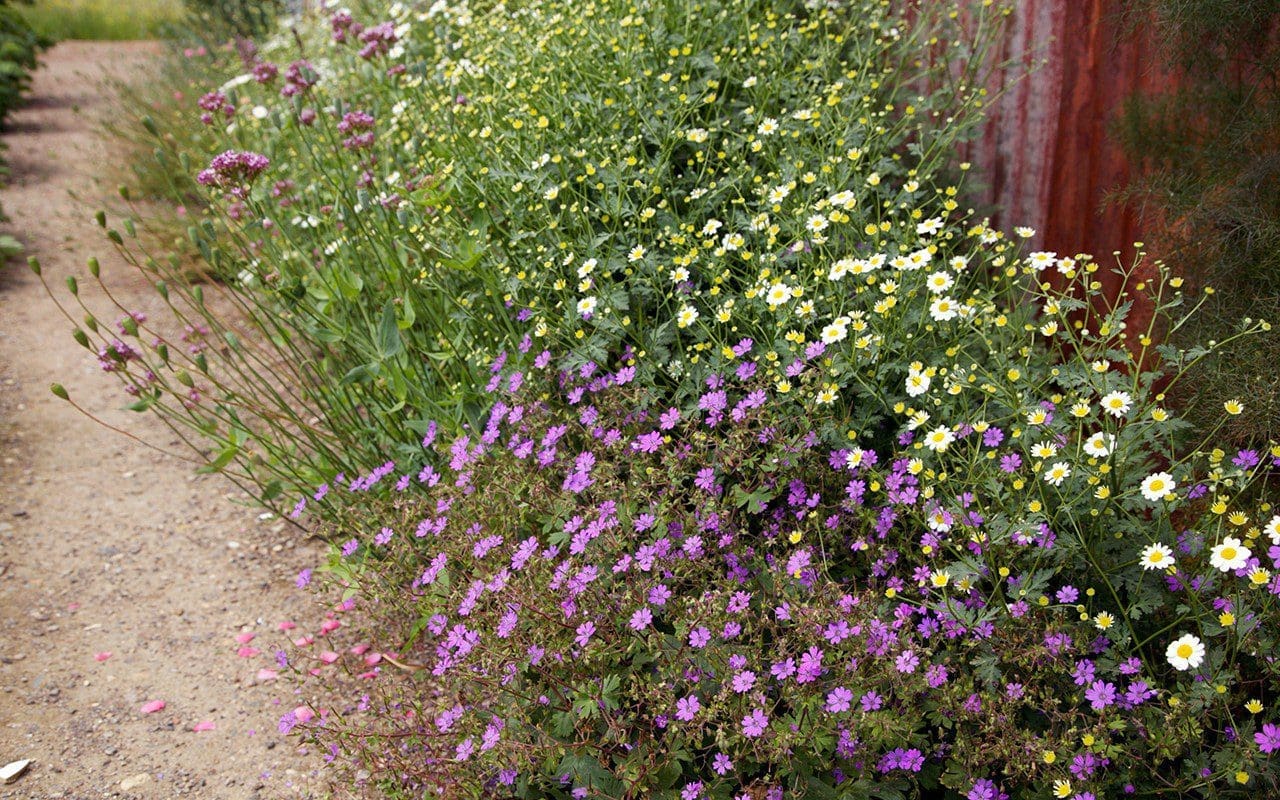
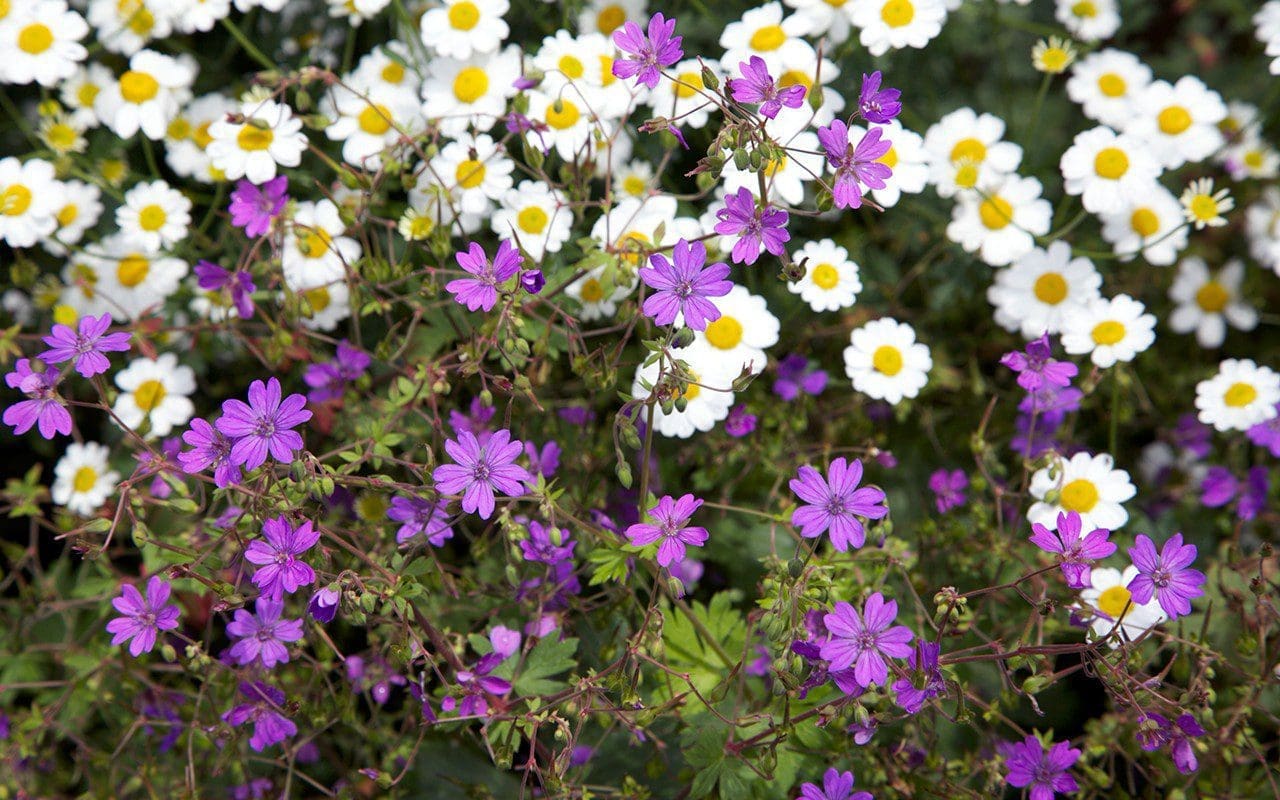 Geranium p. ‘Bill Wallis’ and Tanacetum niveum
‘Bill Wallis’ seems happy out in bright sunshine, but you get a little more out of it, and the colour is more luminous, when grown in a little shade, as if on a verge or popping out from beneath a hedge. It is not averse to dry ground, so for now I have it growing up into the limbs of white tree lupin and Tanacetum niveum, where it spills out to soften the edges of the path. Competing for the open ground with Papaver rupifragum, Erigeron karvinskianus and Matthiola perennis ‘Alba’ these self-seeding pioneers provide me with chance combinations that I can then call my own. We will see where it ends up next year.
I may find that, in time, I will concur with Anna’s warning, but for now I am prepared to manage its spontaneity. Such is the joy of a plant that has a mind of its own.
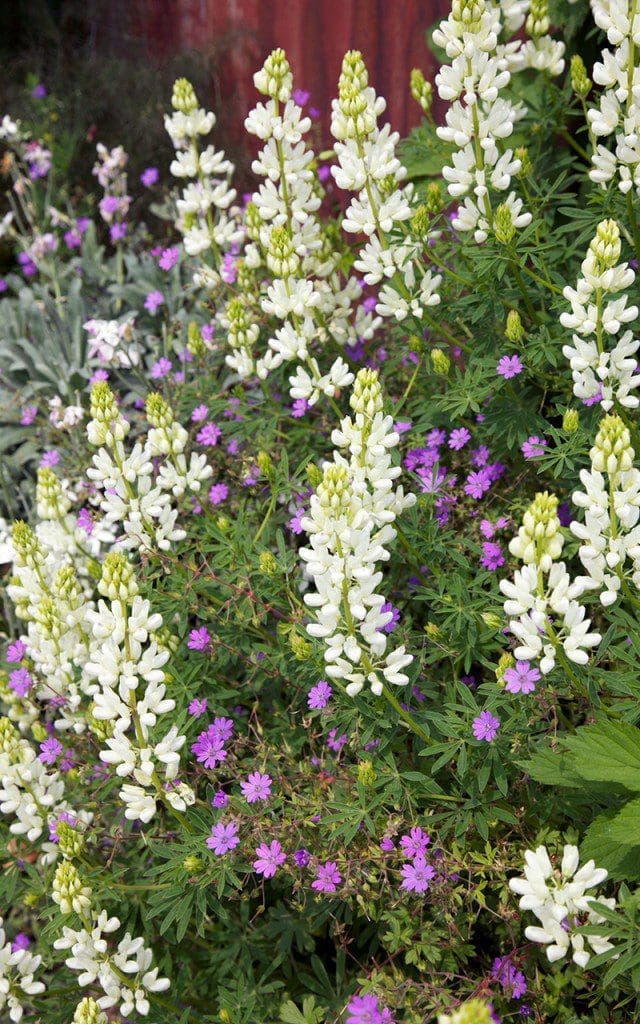 Geranium p. ‘Bill Wallis’ growing through white tree lupin
Words: Dan Pearson/Photographs: Huw Morgan
We are sorry but the page you are looking for does not exist. You could return to the homepage