ALREADY A PAID SUBSCRIBER? SIGN IN
ALREADY A PAID SUBSCRIBER? SIGN IN
ALREADY A PAID SUBSCRIBER? SIGN IN
ALREADY A PAID SUBSCRIBER? SIGN IN
ALREADY A PAID SUBSCRIBER? SIGN IN
ALREADY A PAID SUBSCRIBER? SIGN IN
Fleur Olby first came to our attention in the 1990’s with her striking abstract plant portraits which illustrated Monty Don’s gardening column in The Observer Life Magazine. Her interest in shooting in low light prompted us to invite her to photograph the winter garden. So, early this year, and just weeks before lockdown, Fleur came to spend a day and a night at Hillside. As the clocks go back we revisit her vision of the penumbral garden.
Tell me about your interest in nature. When did it begin and were there any key experiences that shaped your relationship to the natural world and plants in particular?
During childhood I became ill with double pneumonia and had to be in an oxygen tent. My Mum brought an oak leaf into the hospital as a gift to look at something beautiful and magical from a tree close to where we lived and the thought of visiting it when I was better. I remember visiting the tree later, although now it all feels dreamlike. There was something then that I still question in the shift in perception of looking at something small in isolation to seeing it in its context of growing on a tree. The enlarged gaze of a child was full of wonder, magic and intrigue, something I have tried to recreate in my still life photography.
How did you realise you wanted to become a photographer?
During my MA in Graphic Design at Central St Martins (1992), I spent a lot of time colour printing in the darkroom, my degree show became purely photographic – Images of environmental and flower still life. My thesis explored the different ways of looking at Nature from abstraction, the single image, still life, the object in its environment, the concept of the Wilderness and a Garden and their uses within the industries of Art, Design and Photography.
I wanted to be able to work within the landscape I grew up in and the magazine aesthetics of still life. At this time, I was entranced by looking at detail, but importantly when I first started making pictures in wilderness places there is an unexplainable feeling found through the camera.
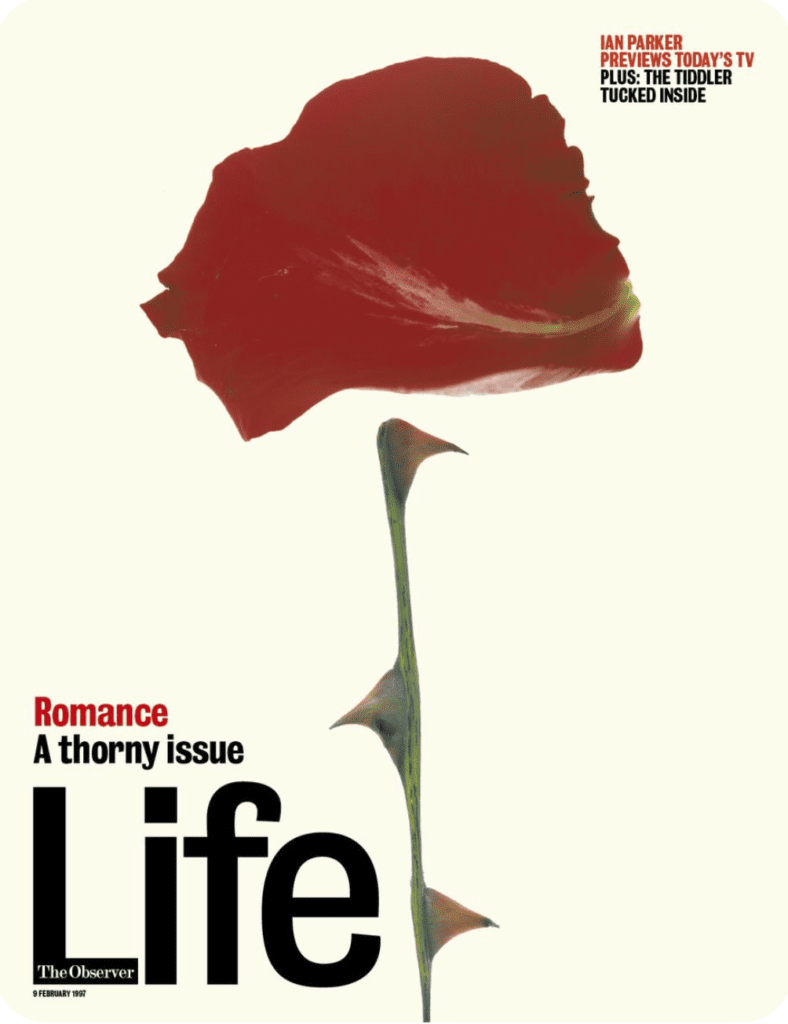
Your work for The Observer Magazine was groundbreaking at the time. Can you explain how your view of plants differed from the norm then?
I was inspired by Monty Don’s writing and both degrees were fine art graphic design – lighting and composition were always experimental. Nick Hall was my first commissioning editor at the Observer and then Jennie Ricketts. He commissioned the garden articles to be an abstraction in still life. The concept of the garden as a still life representation was different then. It was a unique time when my imagery was young and given total creative freedom. For the articles, I would regularly be at the flower market at 4 am and in the lab processing the work at midnight ready for the morning.
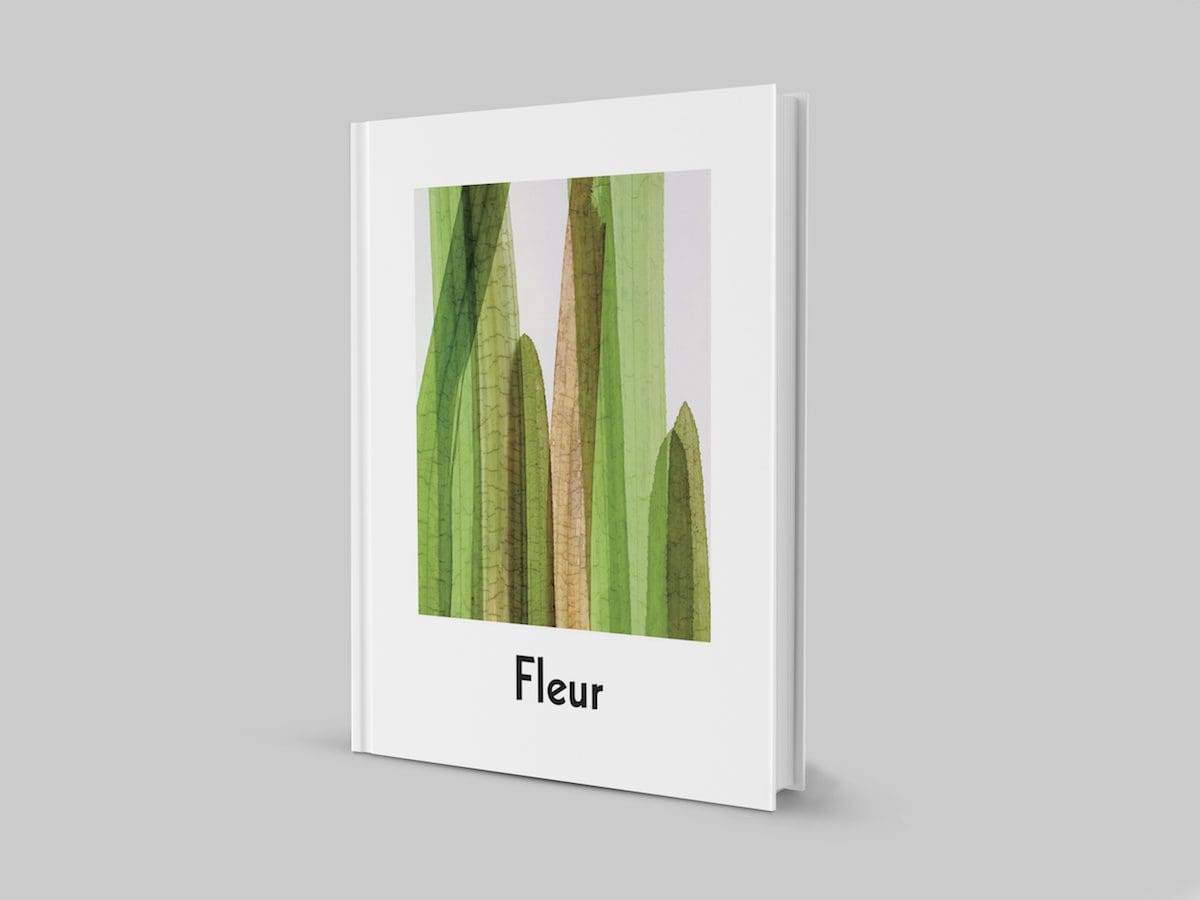
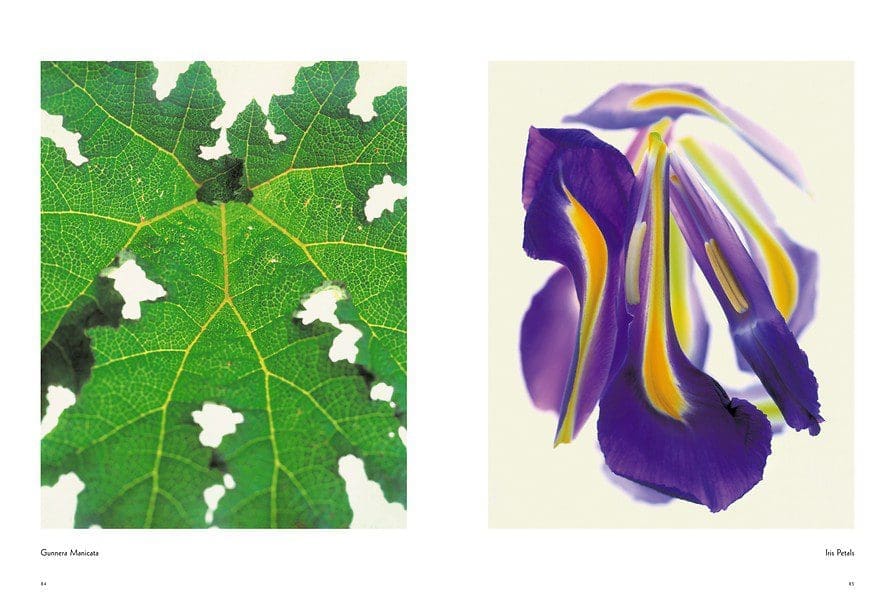
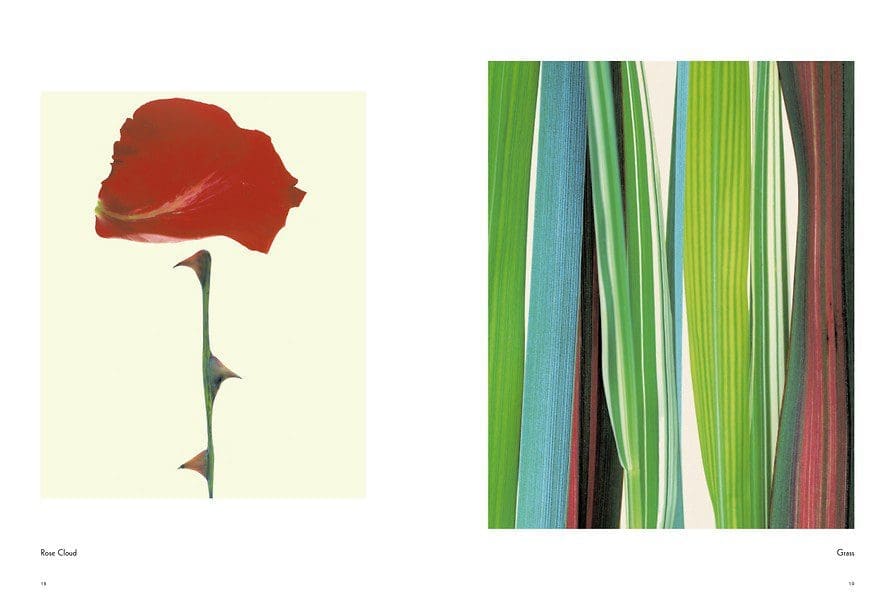
Although you were working commercially what made your photography stand out then was that it was clearly the vision of an artist. Can you describe you and your photography’s relationship with the worlds of art and commerce and do you still produce commercial work?
I had a good mix of editorial design and advertising and the two books were the fine art application of my work. After the 2008 financial crash and the evolution of digital capture still-life Photography commissions changed and lifestyle photography replaced a lot of the still life work. After 15 years of commissioned work, I had to change my practice as it became unviable to run a still life studio. I consolidated my archives and started to make personal work. The series are ongoing, but I would also like to work on plant collections again and garden stories.
How did your work develop after your time at The Observer ? I have read that some of the images were used in installations. Now you produce limited edition imprints alongside prints.
The Observer gardening editorial was amongst editorials I contributed to regularly for food and health and beauty. When I stopped shooting for the gardening articles in 2002 the food still life increased and I also worked for some fashion companies for still life and jewellery, perfume and interior still life.
My monograph Fleur: Plant Portraits by Fleur Olby with a foreword by Wayne Ford, was published by FUEL Publishing in 2005, a combination of commissioned and personal work from ten years of floral still life. It was in the Tate Modern and The Photographers’ Gallery bookshops and distributed internationally with DAP and Thames and Hudson.
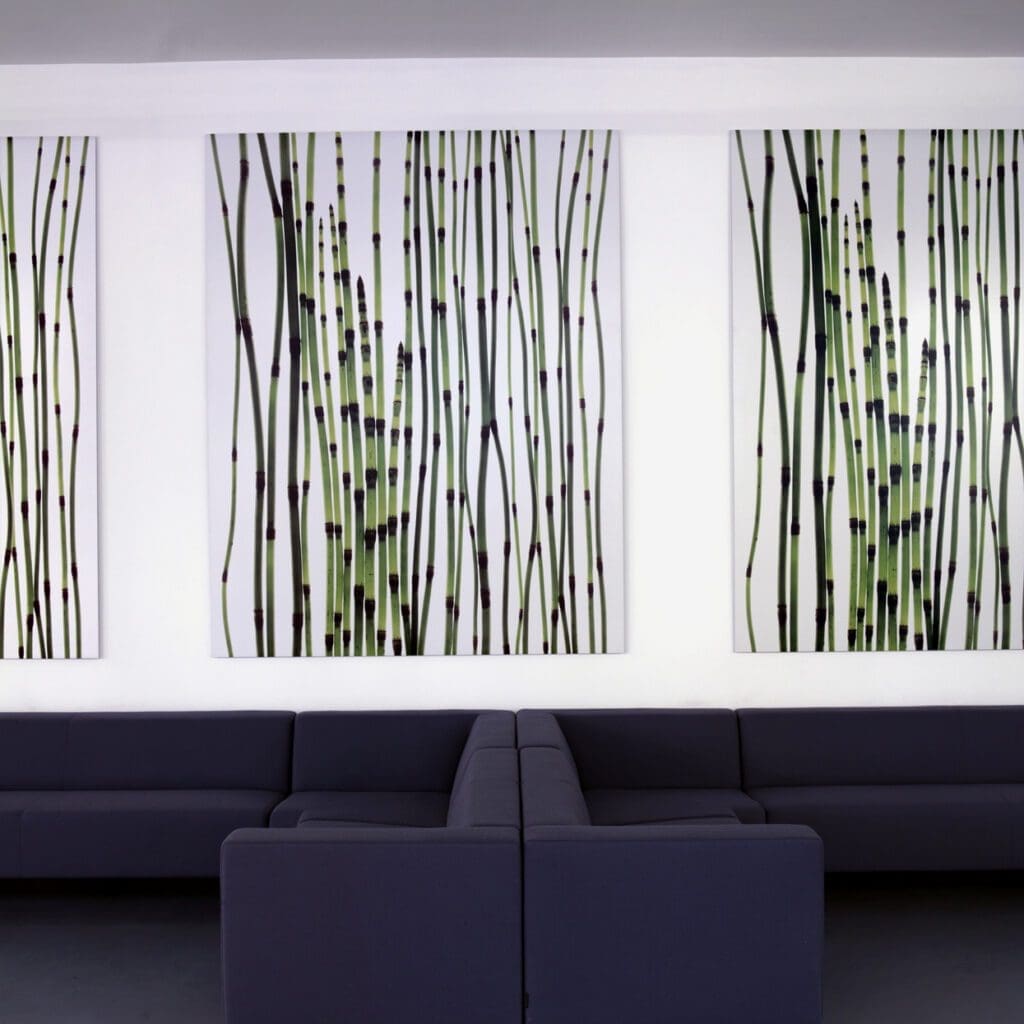
But after 2008 with two client insolvencies causing further problems after the financial crash, it took me a long time to find a way forward with my archives. The two commissions, Horsetail Equisetum for Gollifer Langston Architects and a textile collaboration with Woven Image in Australia were the archival commissions from that time that enabled me to move forward.
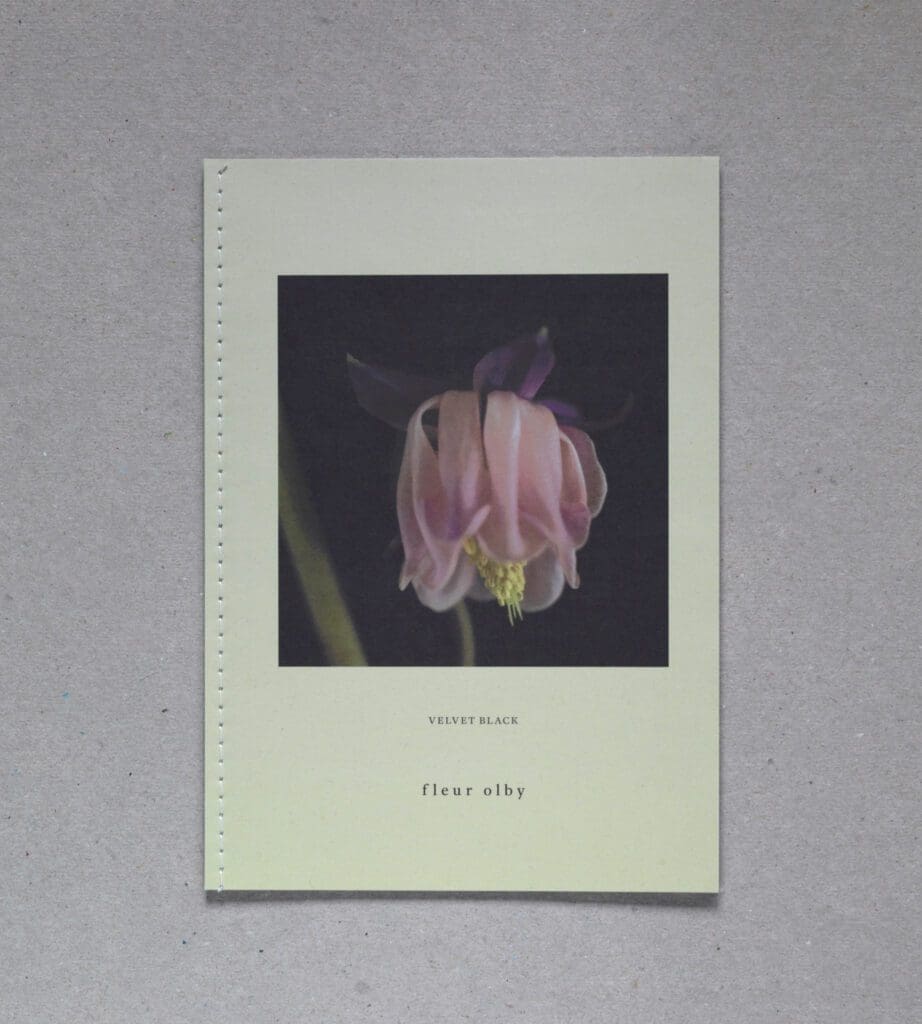
I had started a long-term project about the connection with Nature, Colour from Black. My Imprint has the first publication from these series, Velvet Black and limited edition prints that have exhibited at the Photography Gallery in the Museum of Gdansk and my solo show earlier this year at The Garden Museum, London. The A5 publication launched at Impressions Gallery Photobook Fair in Bradford and the A5 and A6 special edition are currently also at The Photographers’ Gallery bookshop in London. I aim to continue with self-publishing the series in small books and work in collaboration on the projects that evolve from them. Images from other series have also been shown in group shows in the UK and abroad.
Can you describe your process, and how your choice of film stocks, different formats and use of low light levels create the particular viewpoint you are interested in capturing?
The series artistic aim is to connect dreams and reality and through this work I have experimented with different mediums. It is less about the impact of a single image, my interest is in the pace and change of the narrative. The personal aim is to conserve plants and the elemental feeling of beauty in Nature. My commercial work was studio light, mostly shot on 5/4 Velvia and Provia film.
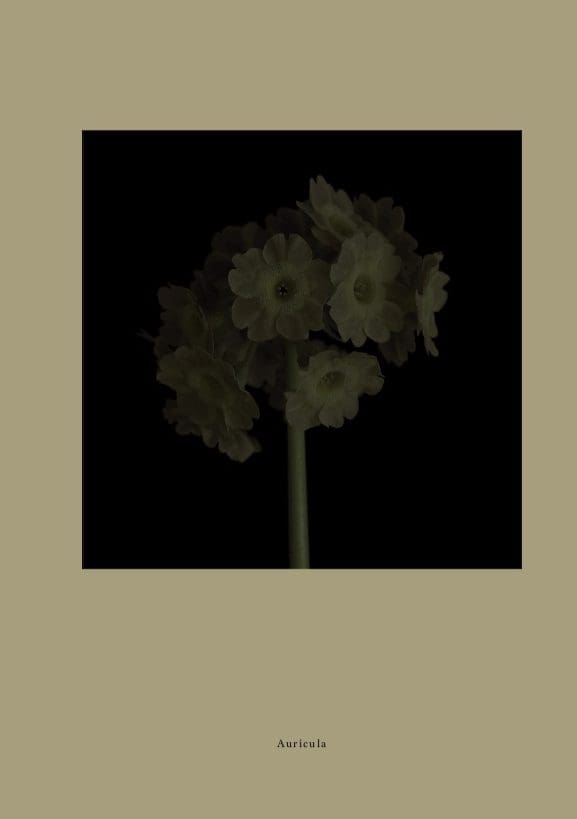
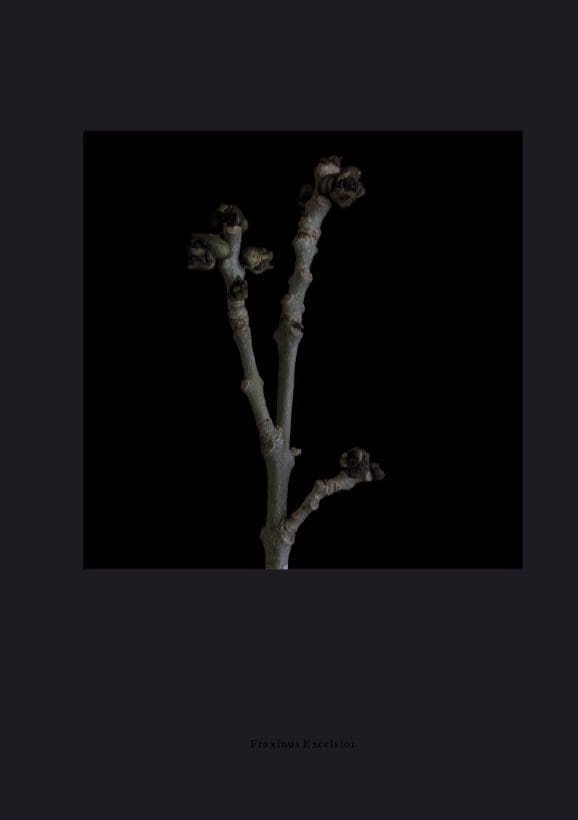
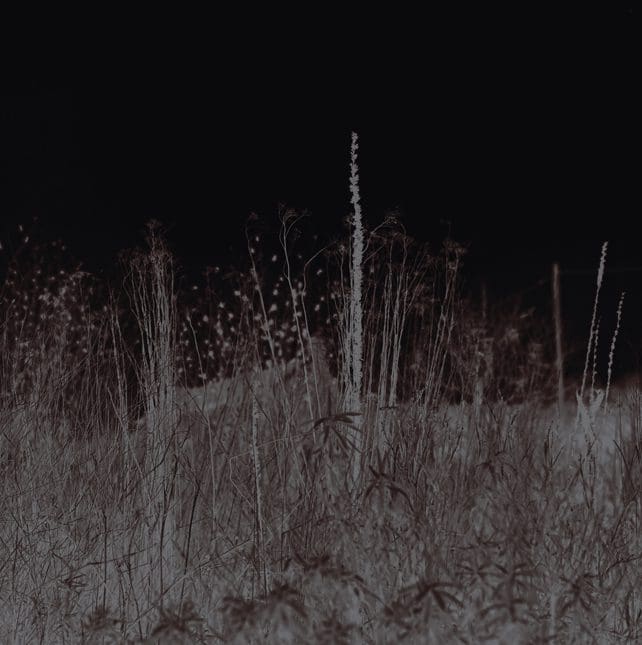
In my long-term series, the colour is subtle but fully saturated, in natural light. The low light started with the series Velvet Black as a present-day ode back to Victorian plant theatricals, collections and plants from a garden – the correlation between the transience of daylight and blooms.
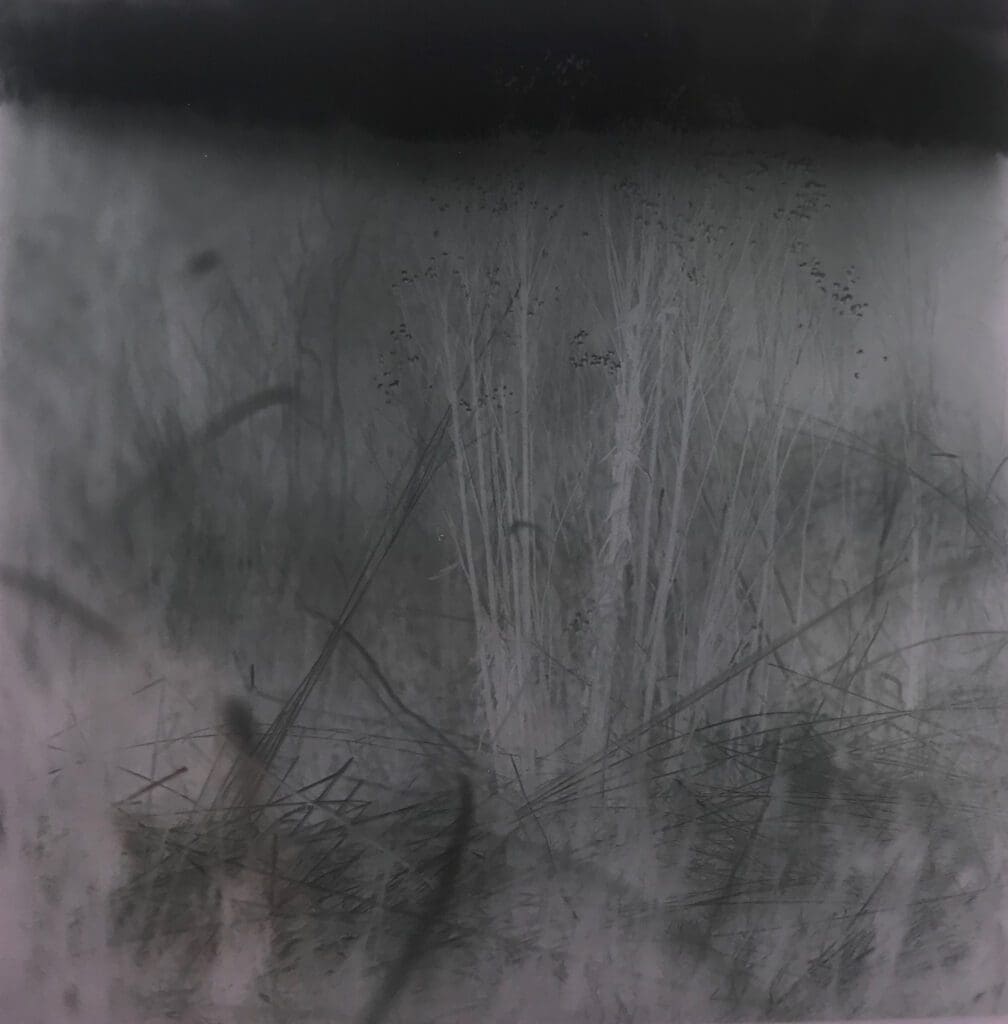
I was also experimenting with my iPhone as I was trying to capture the spontaneity of feeling from walking. My working process has evolved: It begins with walking and pictures that I revisit on medium format for a different kind of precision that allows long exposure. I am now mixing instant images and film from Black and white and colour. The series made at Hillside was the first time I combined the different mediums and shot Dusk, Dawn, Dusk in succession. I used Instax and my phone to find viewpoints from the paths. I remade some of the images on the Ipad to map out the plan.
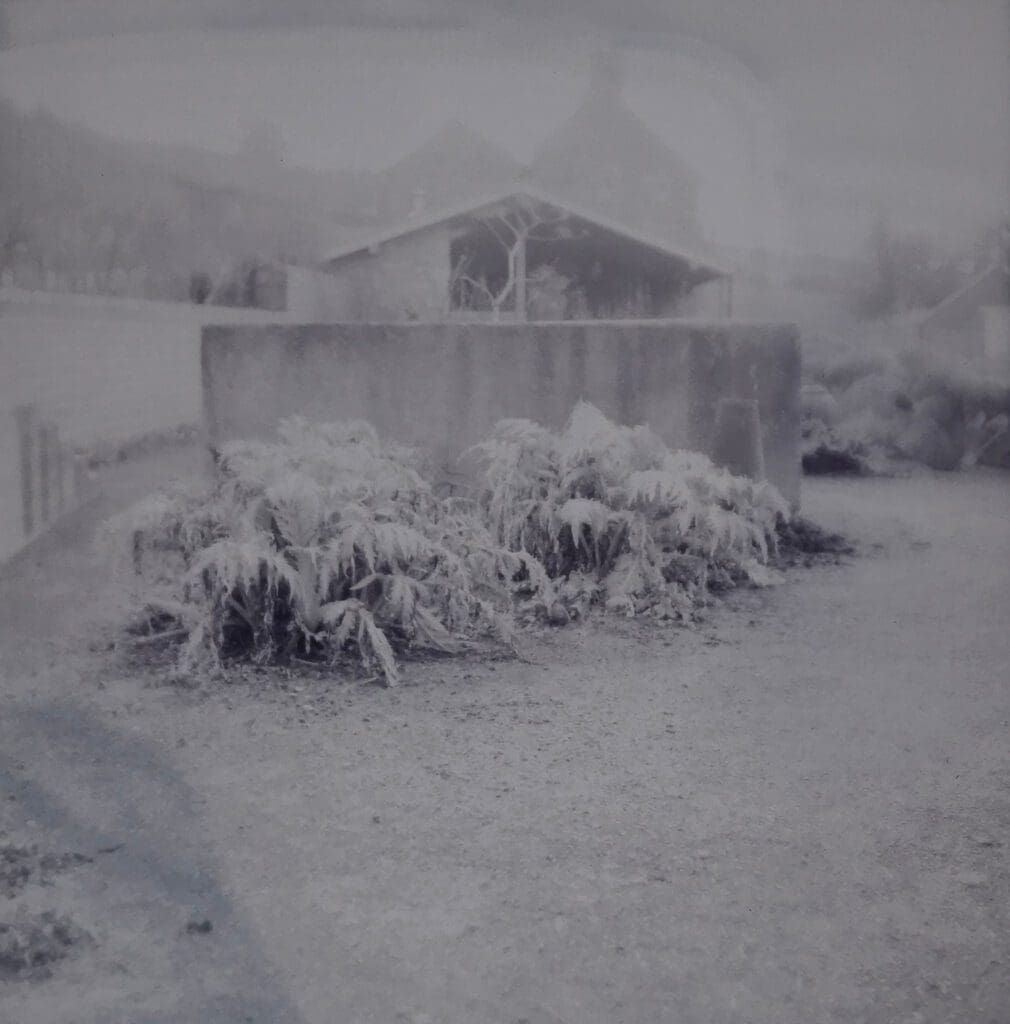
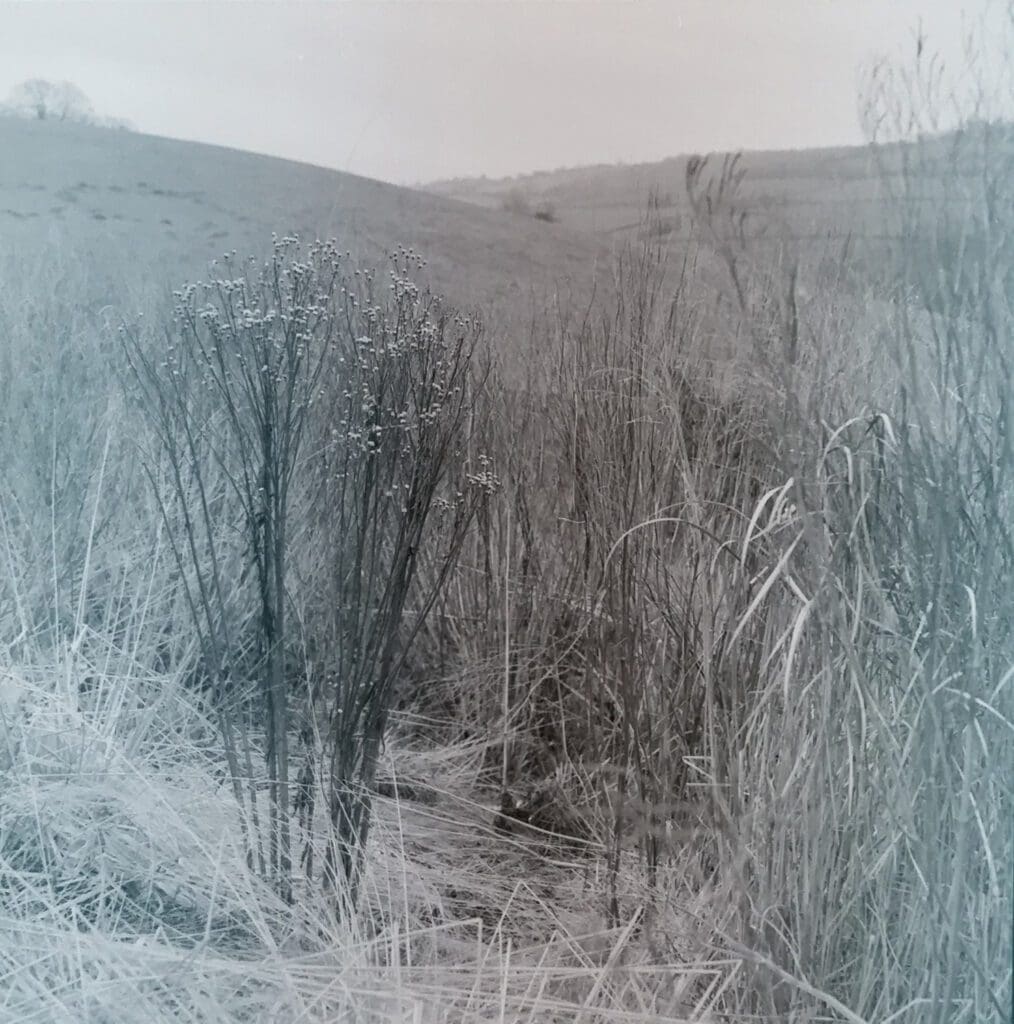
Then I shot with a Polaroid camera in reasonable light and shot film and digital on medium format at Dusk and Dawn. The film was mostly Ilford, HP5, FP4 and XP2.
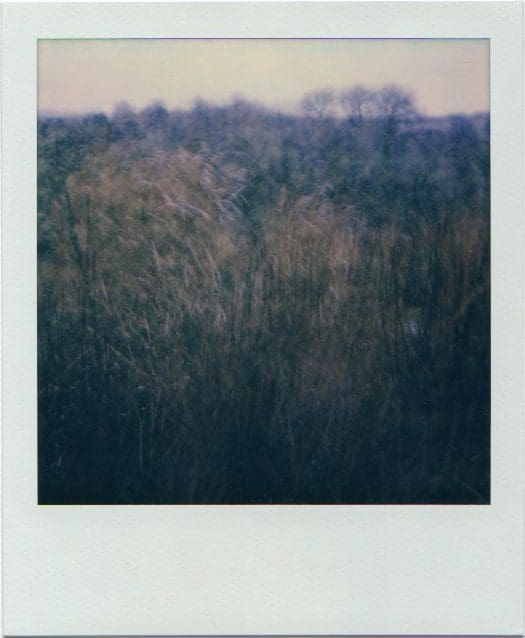
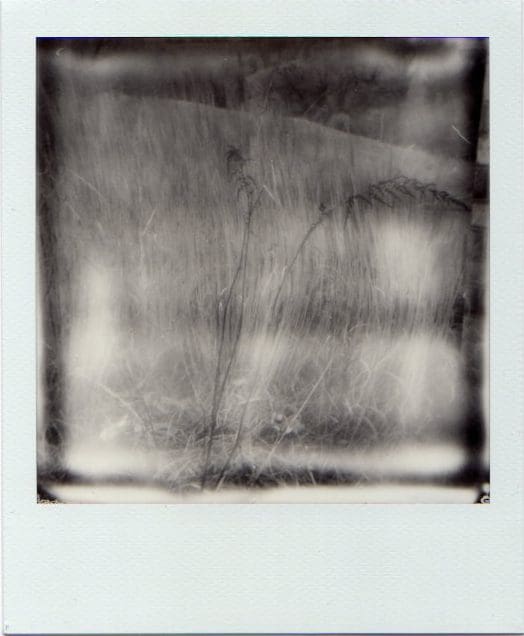
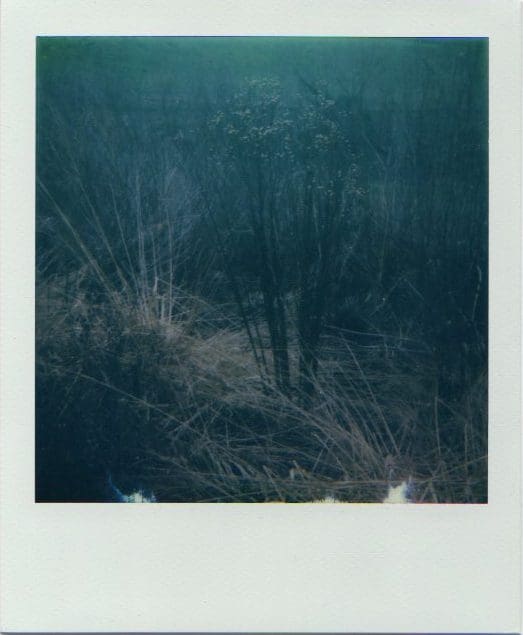
There is a quiet intensity to all of your work, a feeling of being tuned in to a different way of seeing the familiar. The fact that you work in series also gives a very strong narrative quality to your images. What would you like us to see in them?
Thank you, that means a lot to me! The quiet intensity was what I needed to reconnect with when I began to revisit childhood places that inspire me on the moors, on the hills, in the garden.
With the narratives about Nature, I wanted to slow down the viewing process and to question the feeling of Beauty through light and repetition within the series. In the book Velvet Black I use the smell of the ink, the texture of the paper and the folded pages to slow down the process in a similar way to a flower press. And the printed absorptance of the page makes the transient process of nature into a permanent object.
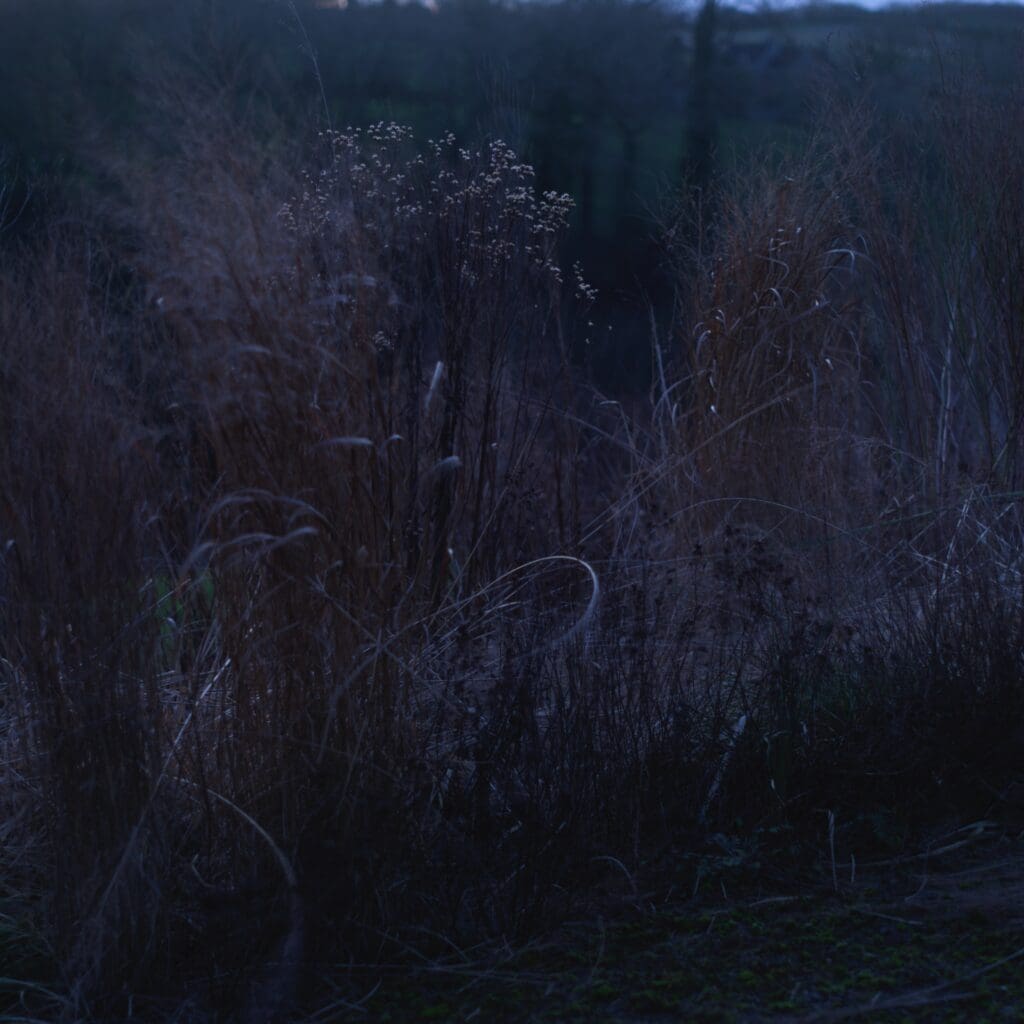
There is a distinct balance in your work between wild, elemental landscape and the intimacy and perfection of a single cut flower. What is the relationship between these two worlds for you?
I think this is the path I am trying to narrate between the perfect oak leaf from my childhood to the tree out on the hills.
When we asked you to come and take photographs at Hillside what were your first thoughts ? When you were here were there any particular observations you made about photographing a garden set in landscape?
It was great to hear from you both. I was excited about the thought of visiting Hillside. I remember our conversations about the work you were inviting artists to make and what aspects of the garden they were focusing on. But on arriving I couldn’t think how to divide it up into one particular interest and I knew I wanted to convey feeling.
I arrived between the storms of February, the quiet calm lull in the garden was breathtakingly beautiful. No-one was there until later today.
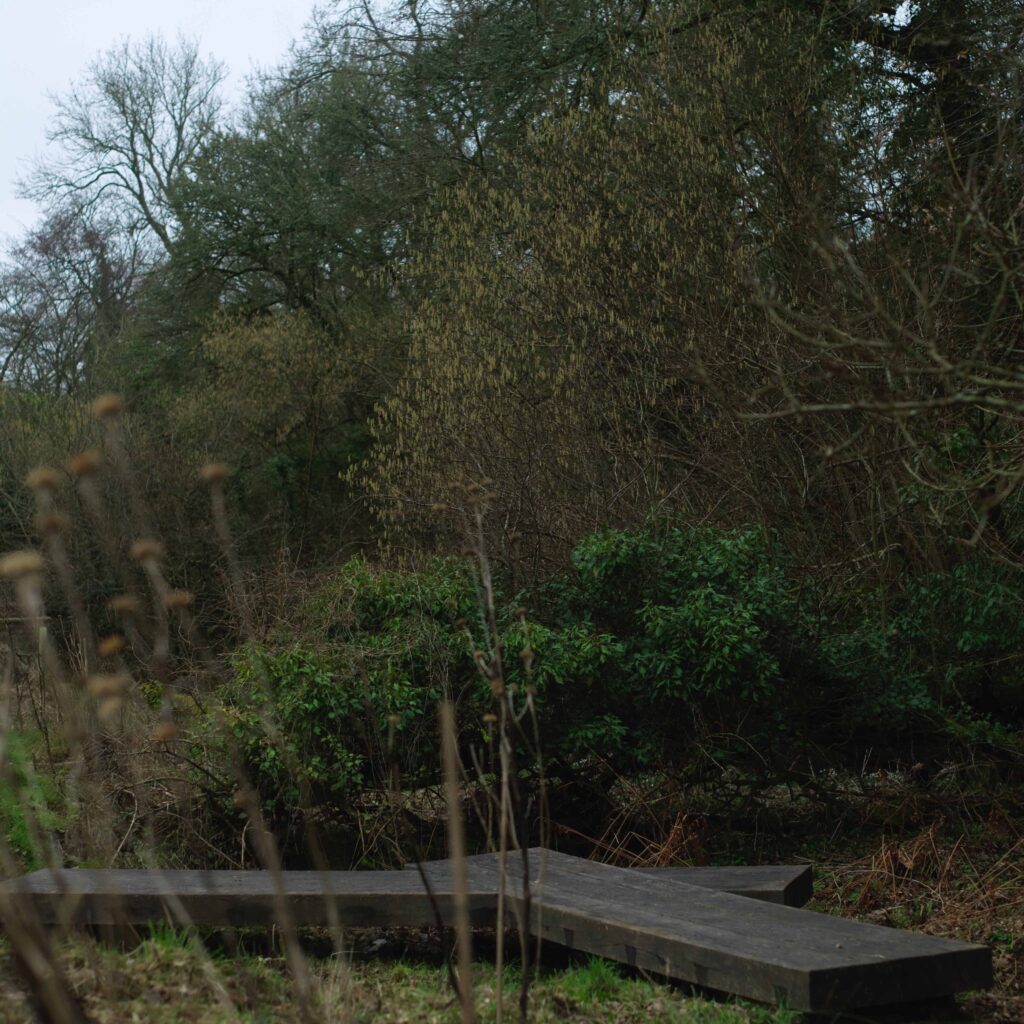
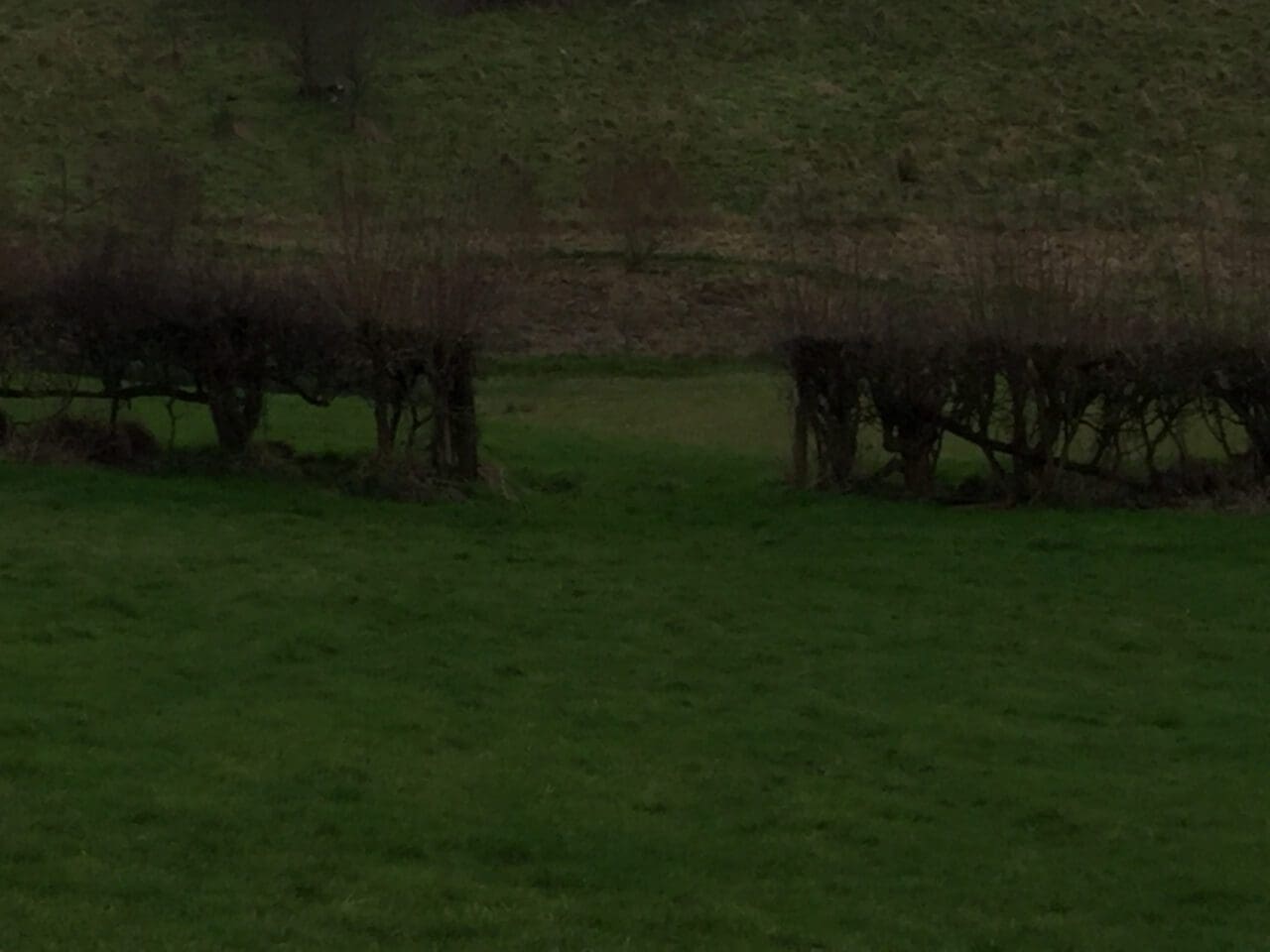
I started to walk – the paths led me everywhere. Enclosed and defined by the garden in and out of the landscape. I did not know this terrain, the feeling and scale are different, the quiet remains the same – the shape of the hill on the left is gentle and round, it stretches out into another at the front with incredible mature trees. The main garden is perched high up within the undulation of the hills. How will I capture this?
I felt I was intruding the serenity of the place, I stood amongst the plants’ skeletons taller than me and thanked them for remaining standing despite the storm – looked out at the echo of the trees beyond, walked down the hill towards them and looked back up to where I’d been standing – It is like a painting, brushstrokes of layered texture highlighted by the time of the year and the trees and hedges beyond it, darker shapes in repetition above. Light in colour as its ready to be cut for new planting and the two gates take me in and out of place and garden and into wonderment. I’m not sure I can express this.
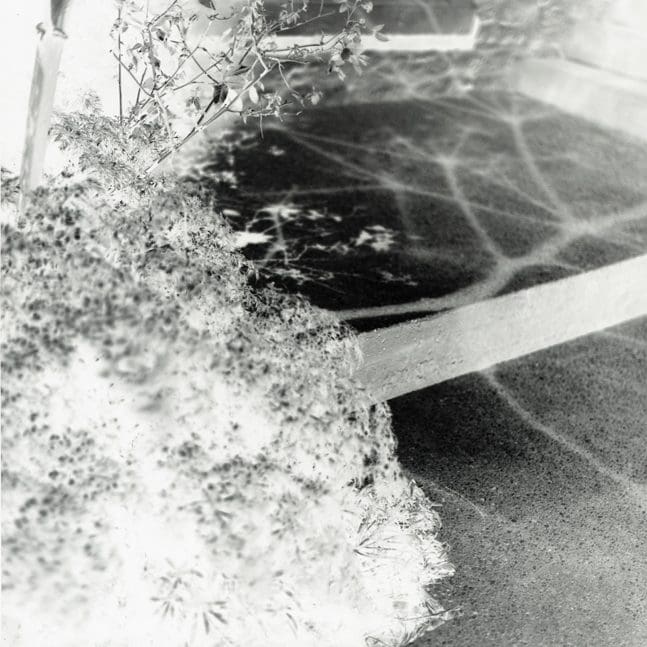
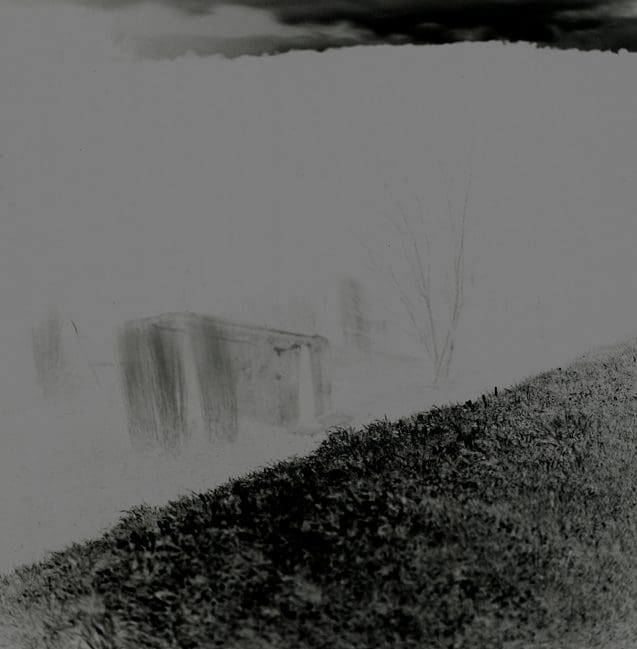
Then there’s the bridge at the bottom of the stream with wrapped up plants on the edge that I could spend all day shooting, the vegetable garden! The artichokes! The Cavolo Nero – The two architectural stone troughs define the scale of the outdoor space and feel spiritual, a verbascum ode nearby reminds me of my Dad and makes me smile, the hedges, the orchards and the young woodland at the back. Flowers resiliently here and there touched me – intricate planting inspired me. I had to process a plan and start.
I wanted to try and capture this movement, the feelings from walking this dreamworld and its reality. I worked on different cameras in repetition in positive and negative to intensify the shapes and colour and black and white to intensify the feeling and pictorially play with resonance.
Do you feel that you learnt anything new from the time you spent photographing here?
It was immensely helpful to be invited to work like this, and I enjoyed the intensity of making the work. I made a new working process shooting 3 formats and running between captures to put the instant film to process inside and continue with the film outside. I made quite a lot of work in the time and it was the first time I shot constantly connecting dusk and dawn.
It enabled me to see how my work has progressed more clearly and how I can put it together because it was the perfect balance of how the garden and landscape coexist.
How was lockdown for you creatively?
Lockdown happened during my show at The Garden Museum.
I contributed to Quarantine Herbarium’s cyanotype project and the Trace Charity Print Sale which raised money for the charities Crisis and Refuge.
I listened more to the birds, watched the animals’ paths and felt exceptionally close to them and that continues. I was also busy shielding family, and I spent more time growing vegetables which I do as much as possible.
I stopped shooting and started to edit more.
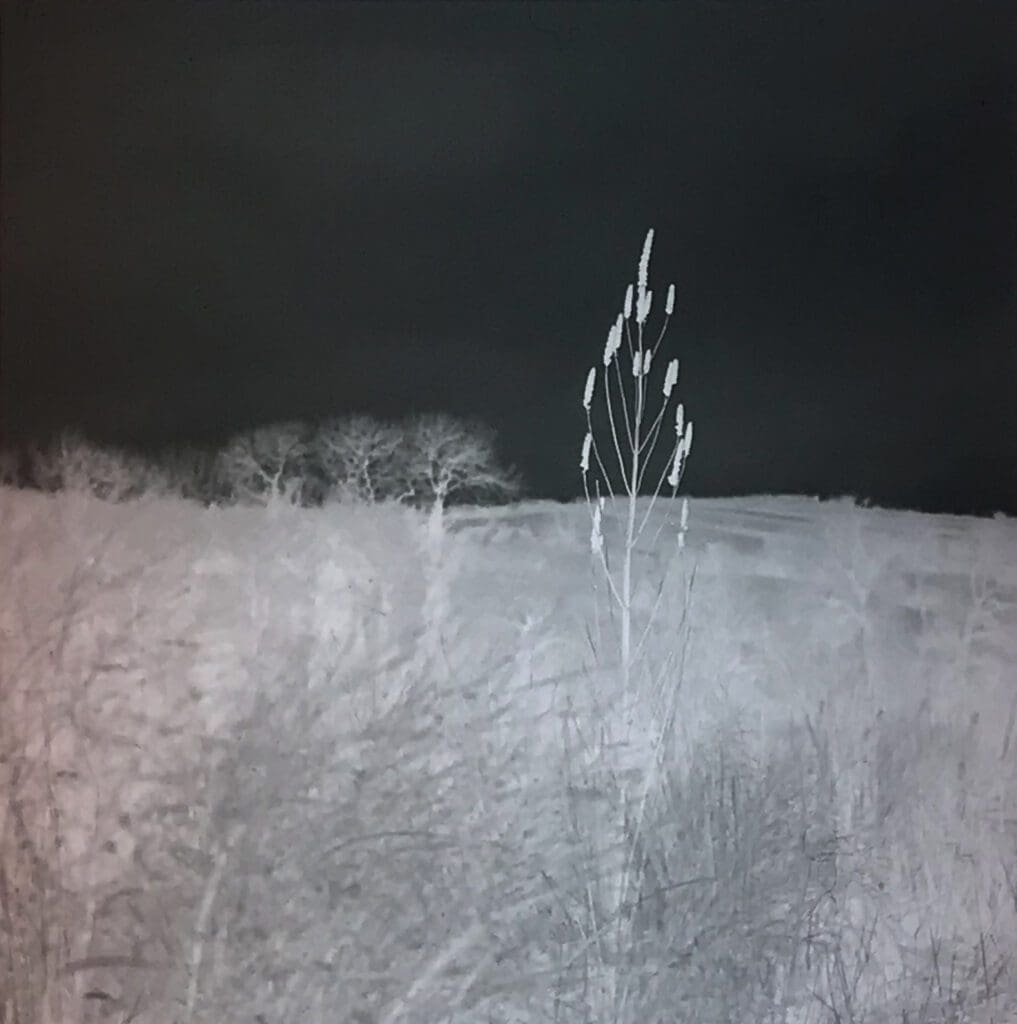
What are you working on now and can you share any ideas you have for future projects?
I have had to revise my plans for this year, events I had committed to were cancelled. I am reworking everything and plan to bring the next series out in 2021.
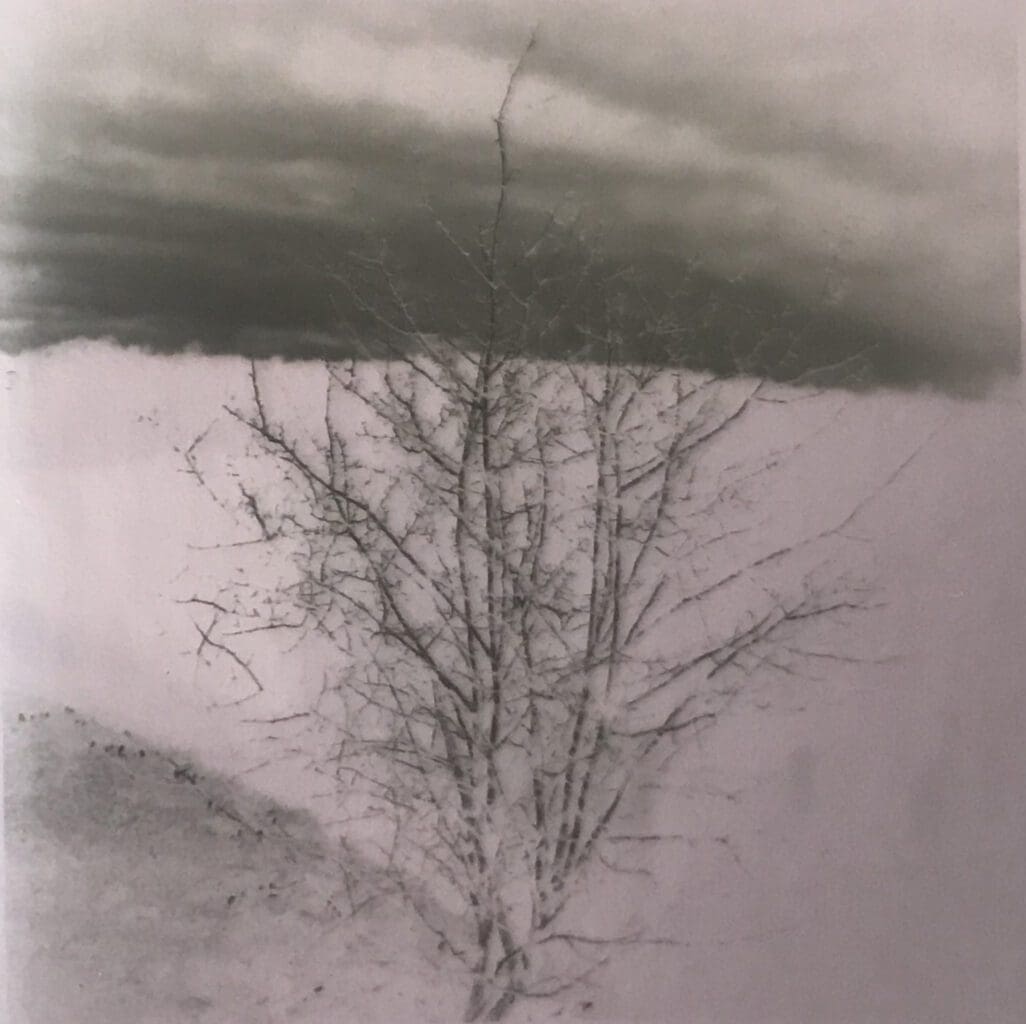
The full edit of the photographs Fleur took can be seen on her website.
Interview: Huw Morgan | Portrait: Howard Sooley
All other photographs: Fleur Olby
Published 24 October 2020
Huw Morgan | 28 February 2020
When we last saw each other in October Flora and I had planned on her returning to Hillside in the very depths of winter to see what she could create with the skeletons of last year’s growth when there was hardly a flower to be seen in the garden. We pencilled in a late January date in the diary. However, I was taken ill after Christmas and was out of action until early February. This meant that the next available date for us to meet was at the end of last week, when the season was definitely starting to tip into spring.
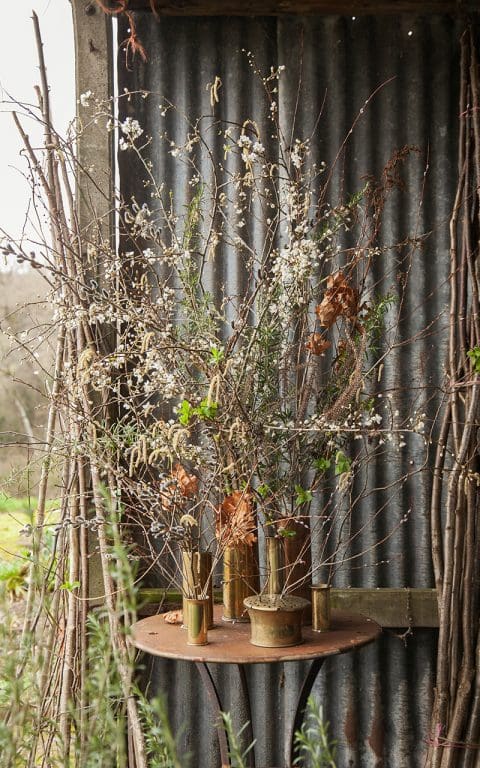
Flora arrived on Thursday evening with her good friend Paul, who gardens with her at Westhill Farm. He has assisted Flora on the last two shoots here, cutting and conditioning flowers, organising and filling containers and clearing up afterwards, not to mention the laughter and banter. We could not have done any of them without his help. We were all up early on Friday morning, wary of the weather forecast with its warnings of another approaching storm. I had gathered some woody material – hazel, willow and cherry plum – from the hedgerows, woods and garden the previous day, and there was a wide selection of dead material in the tractor barn that I had saved from the garden before Christmas. After breakfast Flora and Paul took a tour of the garden to select the things that took their fancy to bring colour and a feeling of hope to the arrangement.
With storm clouds gathering and wind gusting erratically, and despite the fact that we had decided to make the arrangement under cover, the weather conditions were challenging. On more than one occasion the entire, and nearly completed, arrangement almost blew over. Fortunately Paul was quick off the mark and managed to catch it, preventing it from needing to be entirely remade. Just moments after I had taken the last shot of the finished arrangement a great easterly gust blew into the barn and sent everything flying. We all laughed and understood that the shoot was well and truly over.
Although it was testing working and photographing in these conditions it felt like a very authentic engagement with and recording of the reality of the season.
Flora Starkey | 28 February 2020
It is winter at Hillside and there’s a new quieter beauty in the garden. Again, I’m happy to be here on the cusp of the season as spring starts to show beneath the fallen grasses and branches that are bare of leaves.
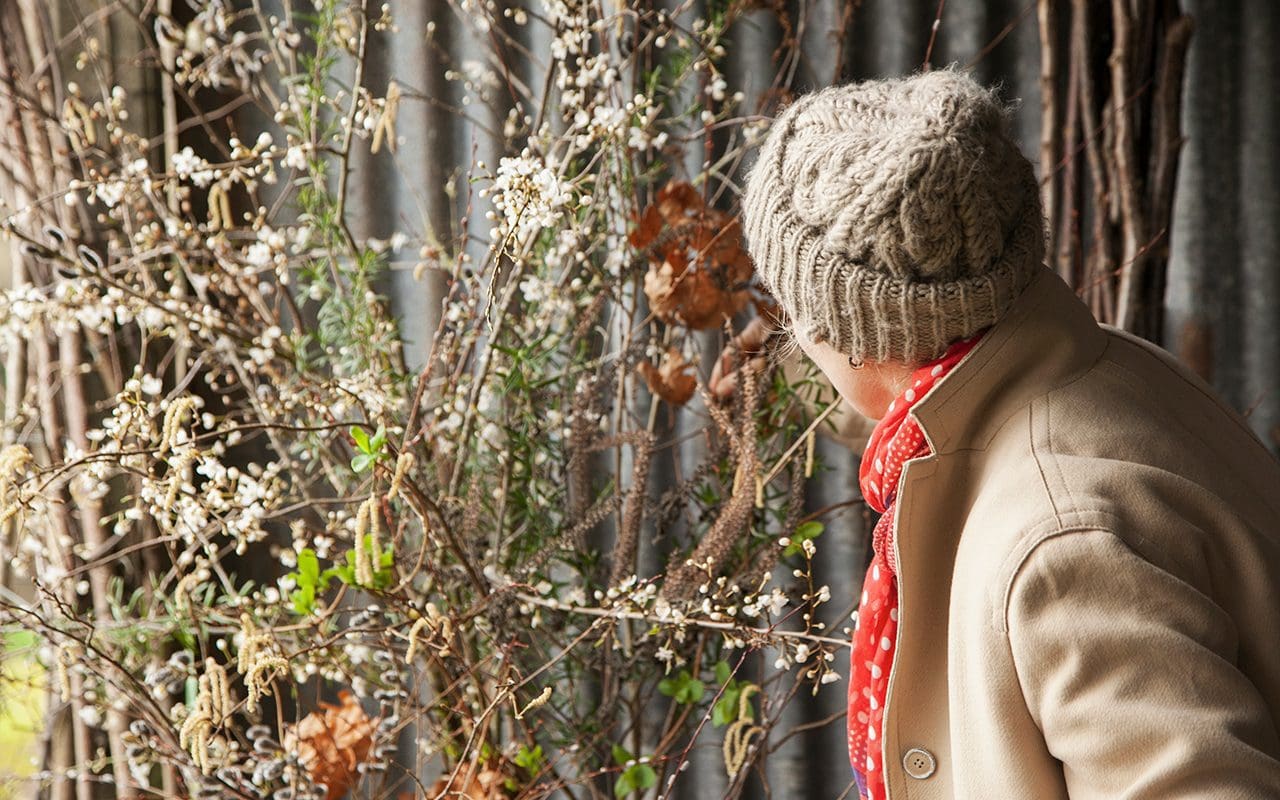
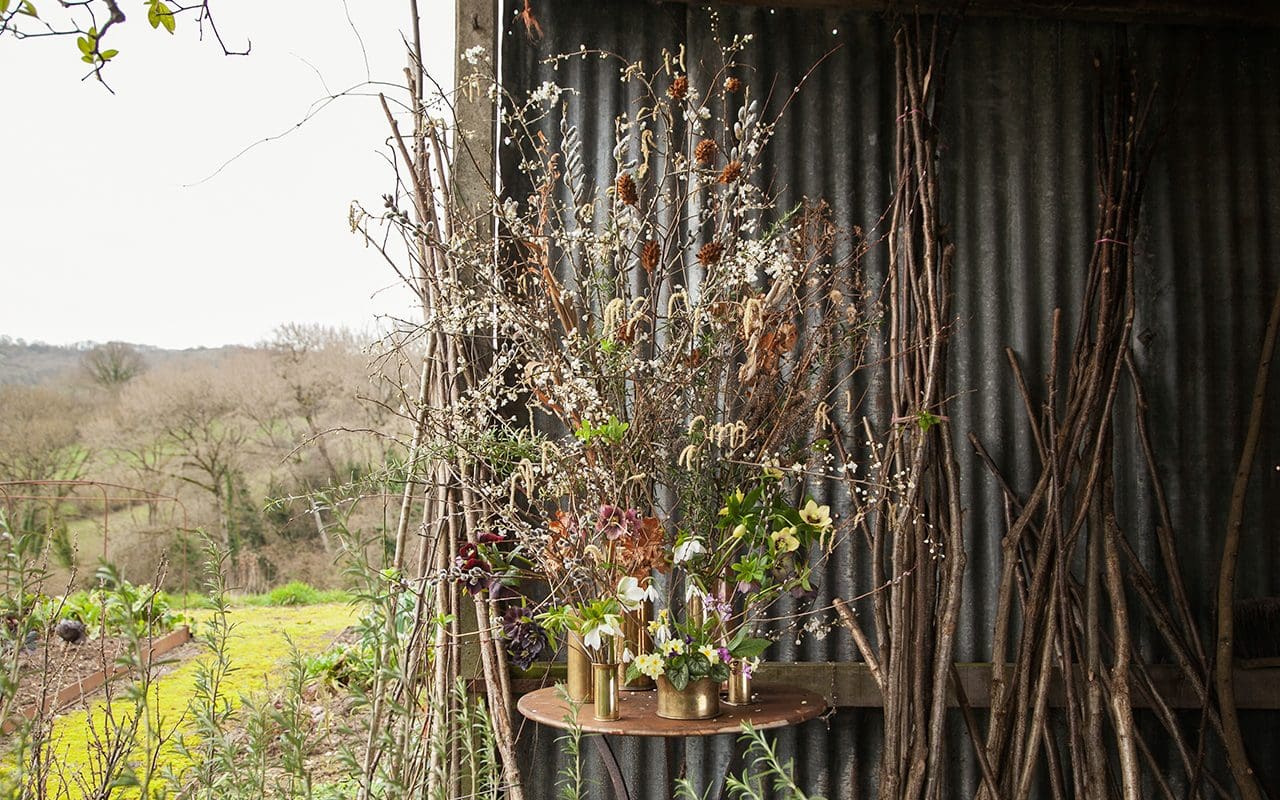
The rains held off for a few hours on Friday morning, but the winds still blew. Huw and I decided it would be impossible to try and continue our series in front of our usual rusted barn background so we moved behind and into the inside corner of the barn. We both liked the light there and hoped we’d be more sheltered from the elements, but there were still times the wind caught us from the side – all adding to the fun.
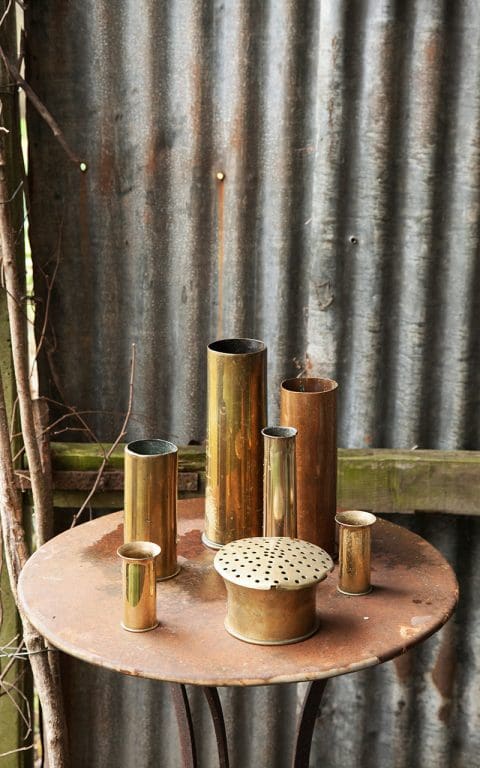
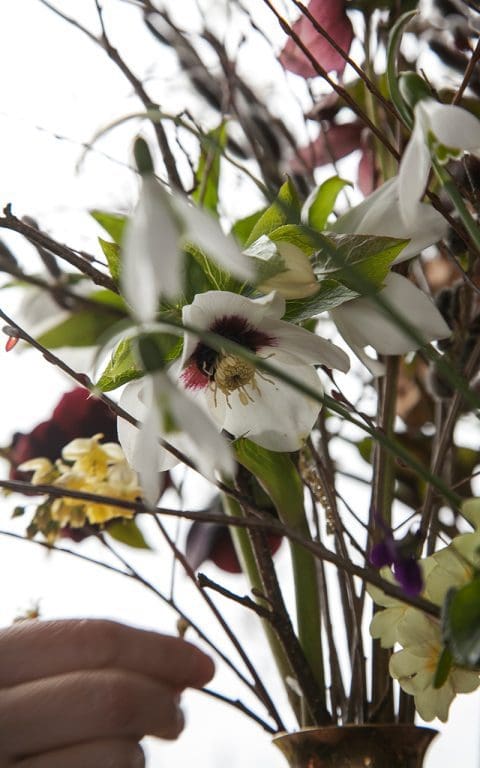
I’d used ceramic and glass vessels in the summer and autumn arrangements and so this time I was drawn to the idea of metal. Specifically vases made from old mortar shell casings. I brought a small collection with me, including a bowl with a drilled lid gifted to me by my friend Paul. A remnant of World War 1 and life in the trenches. I like the idea of using flowers to reflect, remember and bring beauty from the darkness. I guess it seemed especially fitting for the season with the violets and primroses showing up and braving the end of winter.
Despite the fact that much of the garden was dormant, Huw cut some beautiful single flowering Prunus from the border hedgerows. These, along with hanging hazel lambs’ tails and a few varieties of silvery, soft catkins formed the base of the shape. I especially loved the snowy delicacy of the Salix purpurea ‘Nancy Saunders’.
Some tall but delicate stems of rosemary and a twist of honeysuckle coming into leaf added some essential green. These were followed pretty quickly by a frame of dried beauties that Huw had saved for me last autumn – some wonderful silver stars of aster and rusty licorice seedheads. It has been interesting for me to recognise how important the dried elements from the season before have felt every time I’ve come here.
With the taller elements in place, I moved to the flowers below the canopy – a single snip from several varieties of hellebore including a double black that I was particularly taken with. With the winds picking up again, it was time to focus on my favourite low lidded vase at the front. This held a tiny carpet of primroses, snowdrops, Cyclamen coum and a violet complete with leaves.
I had wondered how much of a challenge our winter arrangement would be. It might be that it’s my favourite yet.
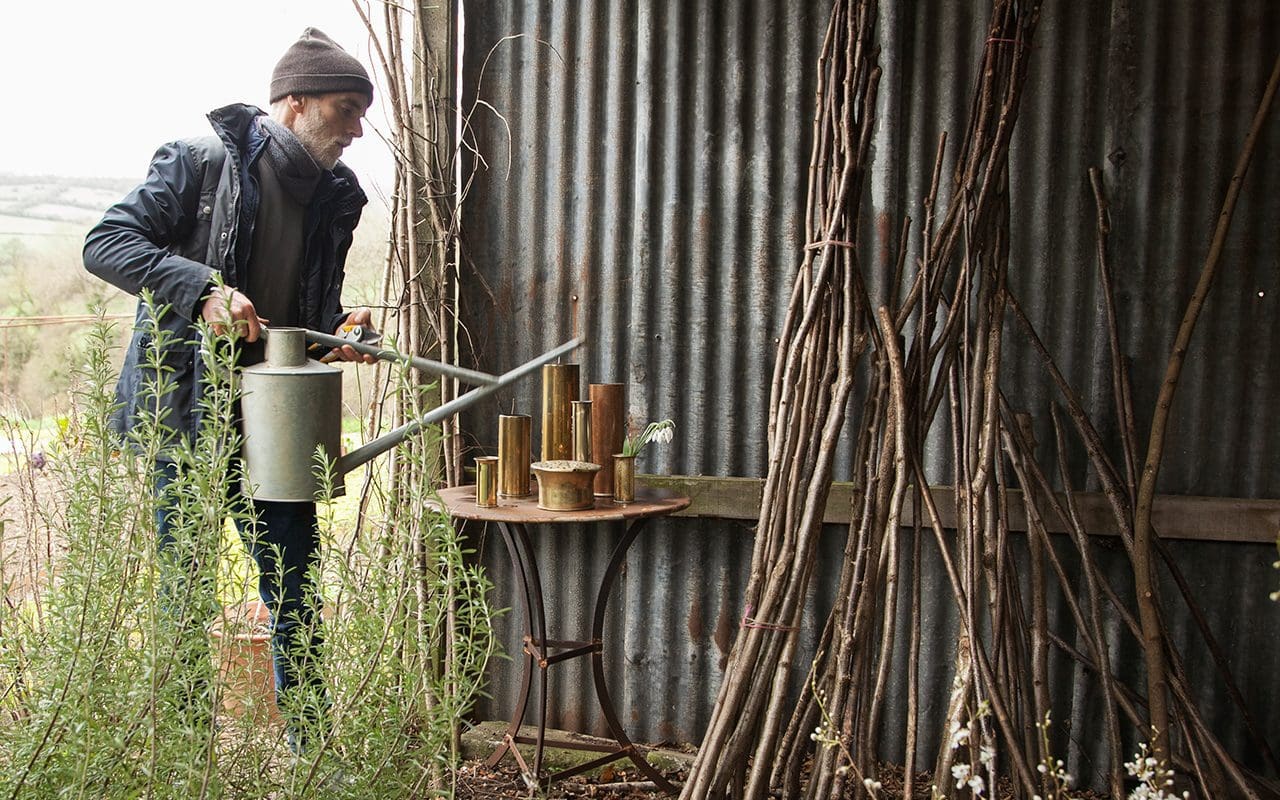

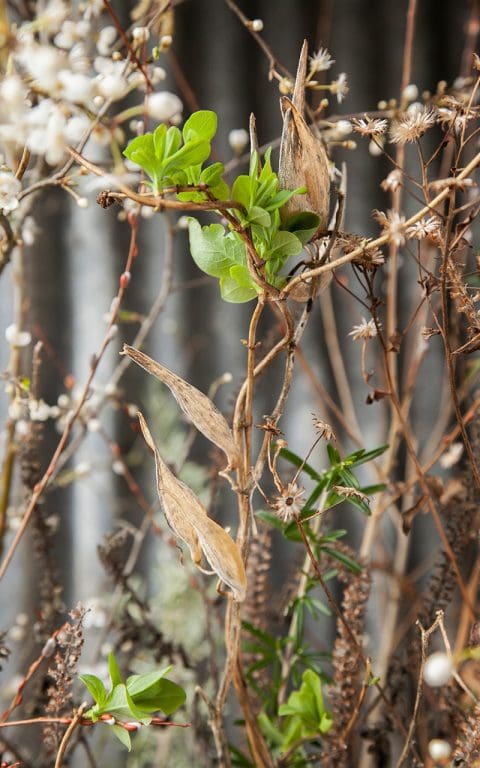
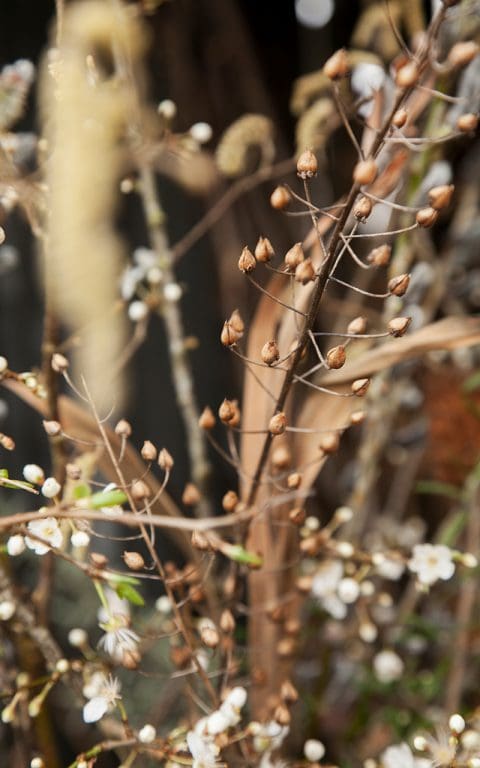
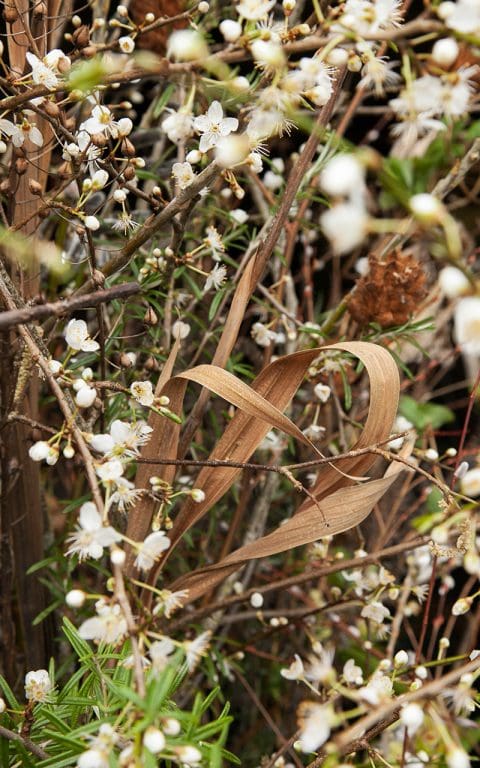
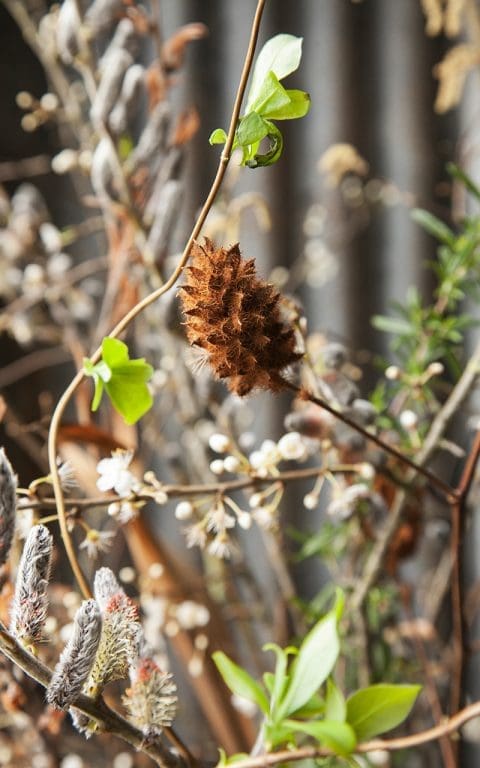
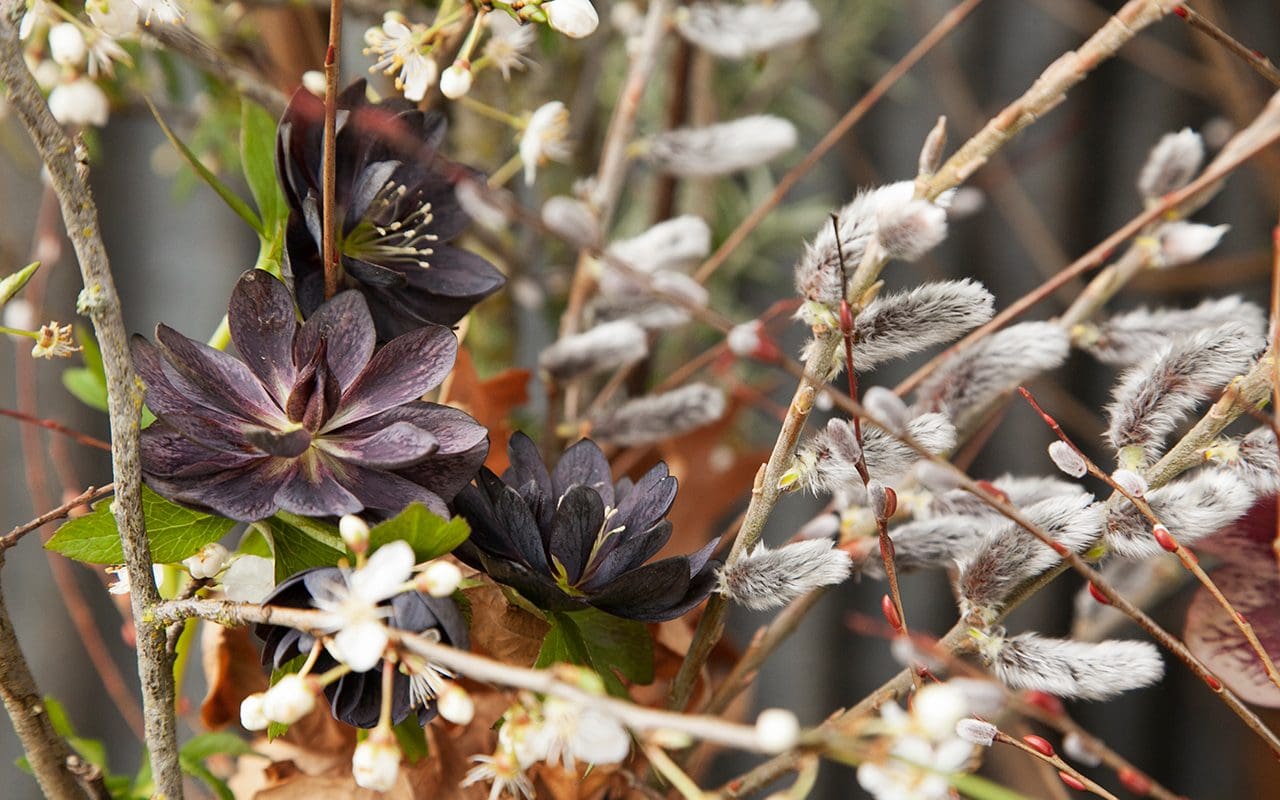
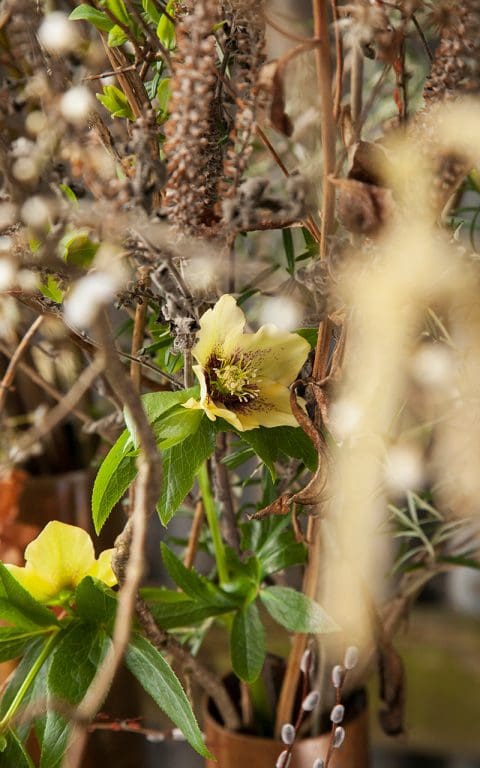
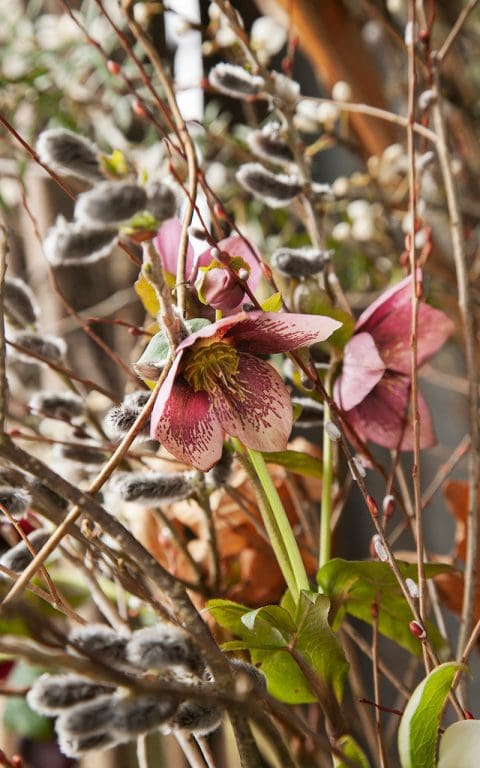
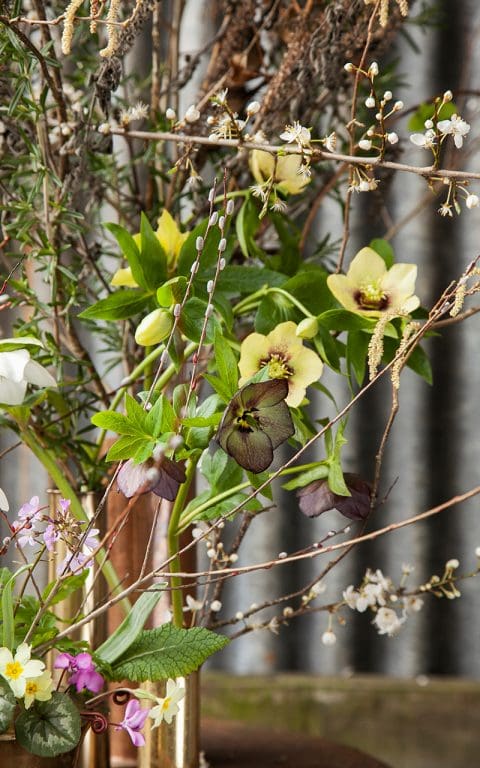
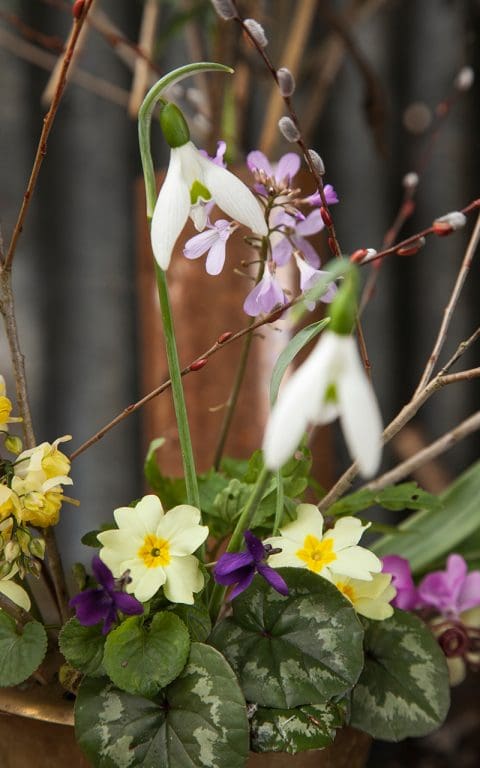
Asclepias tuberosa
Cardamine quinquefolia
Corylus avellana
Cyclamen coum
Epimedium x versicolor ‘Sulphureum’
Eurybia x herveyi
Galanthus elwesii ‘Cedric’s Prolific’
Gladiolus papilio ‘Ruby’
Glycyrrhiza yunnanensis
Helleborus hybridus Double black
Helleborus hybridus Single black
Helleborus hybridus Single Dark Pink Spotted
Helleborus hybridus Single Green Picotee Shades Dark Nectaries
Helleborus hybridus Single white dark nectaries
Helleborus hybridus Single yellow spotted dark nectaries
Lonicera periclymenum ‘Graham Thomas’
Primula vulgaris
Prunus cerasifera
Quercus robur
Rosmarinus officinalis
Salix gracilistyla
Salix purpurea ‘Nancy Saunders’
Teucrium hircanicum ‘Paradise Delight’
Verbascum phoenicium ‘Violetta’
Viola odorata
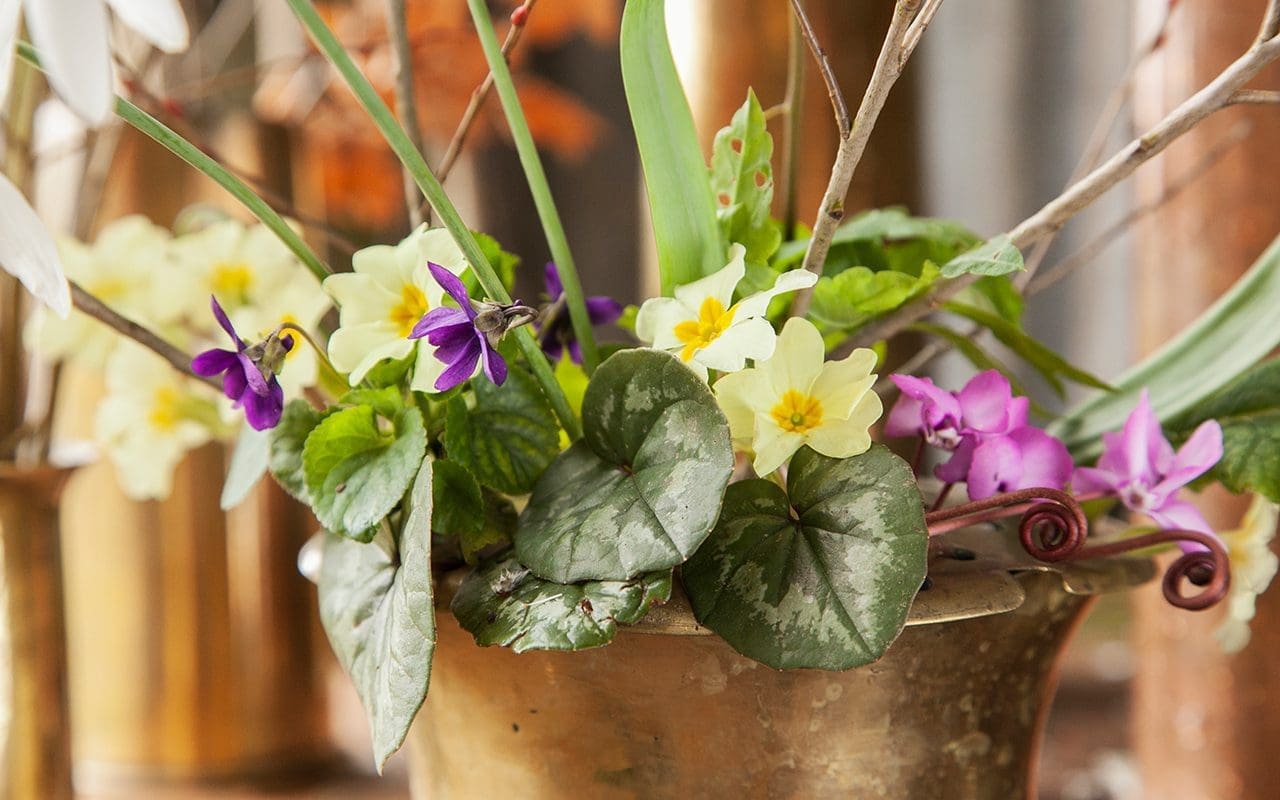
Photographs | Huw Morgan
Published 28 February 2020
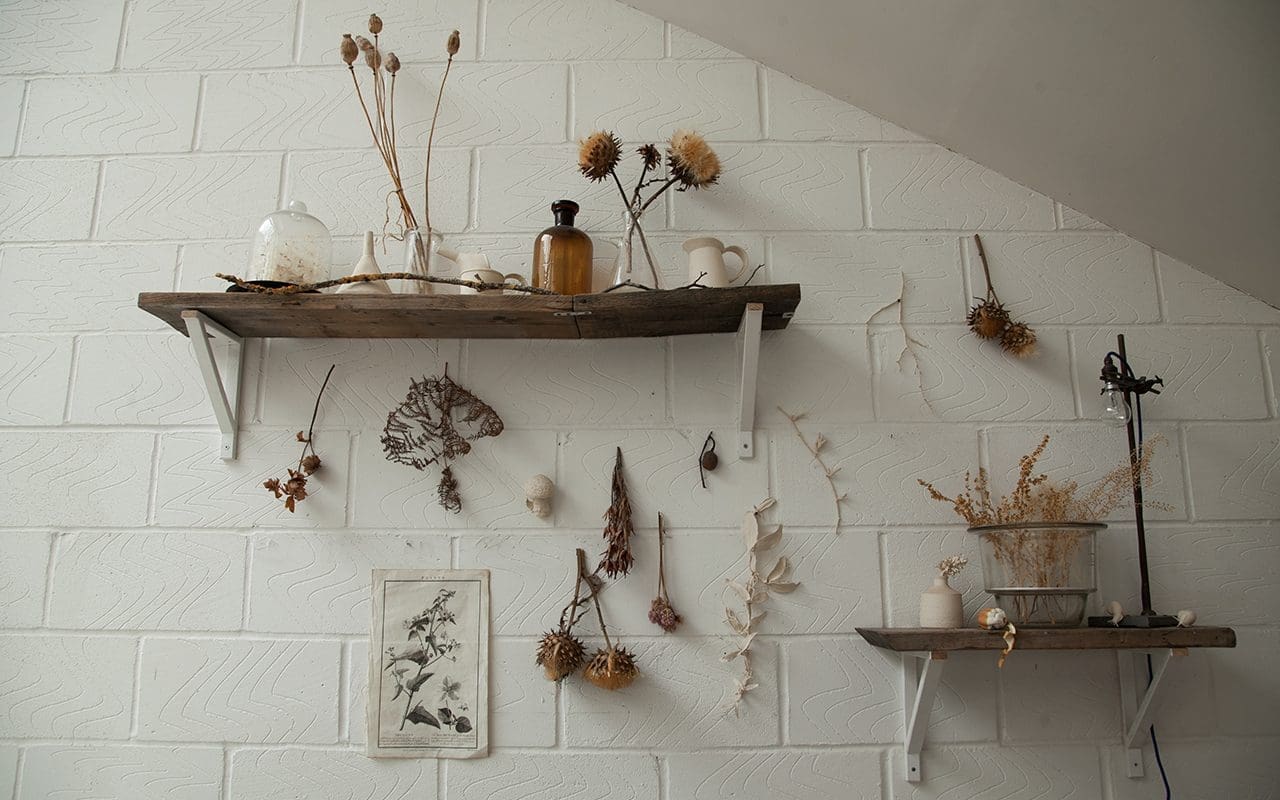
Kaori Tatebayashi is a Japanese ceramicist living and working in London. She comes from a family of ceramics traders, and was surrounded by traditional Japanese ceramics from an early age. After gaining an MA in Ceramics from Kyoto City University of Art, in 1995 she came to London on an exchange programme to study at the Royal College of Art. Kaori makes both sculpture and tableware, but it is her sculptural pieces, which are inspired by plants and nature, which I was interested to find out more about.
Kaori, you have a longstanding family relationship with ceramics. Can you tell me about this and how it influenced your development as a ceramicist ?
I was born in Arita in Japan, a little village renowned for Arita porcelain, which in Europe is known as Old Imari. My grandfather was an Arita-ware merchant and took orders from hotels and restaurants from all over Japan. The scene of my family gathering together to pack tableware commissioned from various potteries in the village in navy blue paper with our family company logo remain vividly in my memory as a fun event.
Each May, we participated in a pottery festival in Arita. My cousins and I were allowed to sell little porcelain figurines next to adults selling tableware and, when we sold the figurines, we were treated with too many ice creams by visiting relatives. In 2016 Arita celebrated 400 years of porcelain production. Although I don’t work in porcelain, ceramic is definitely in my blood.
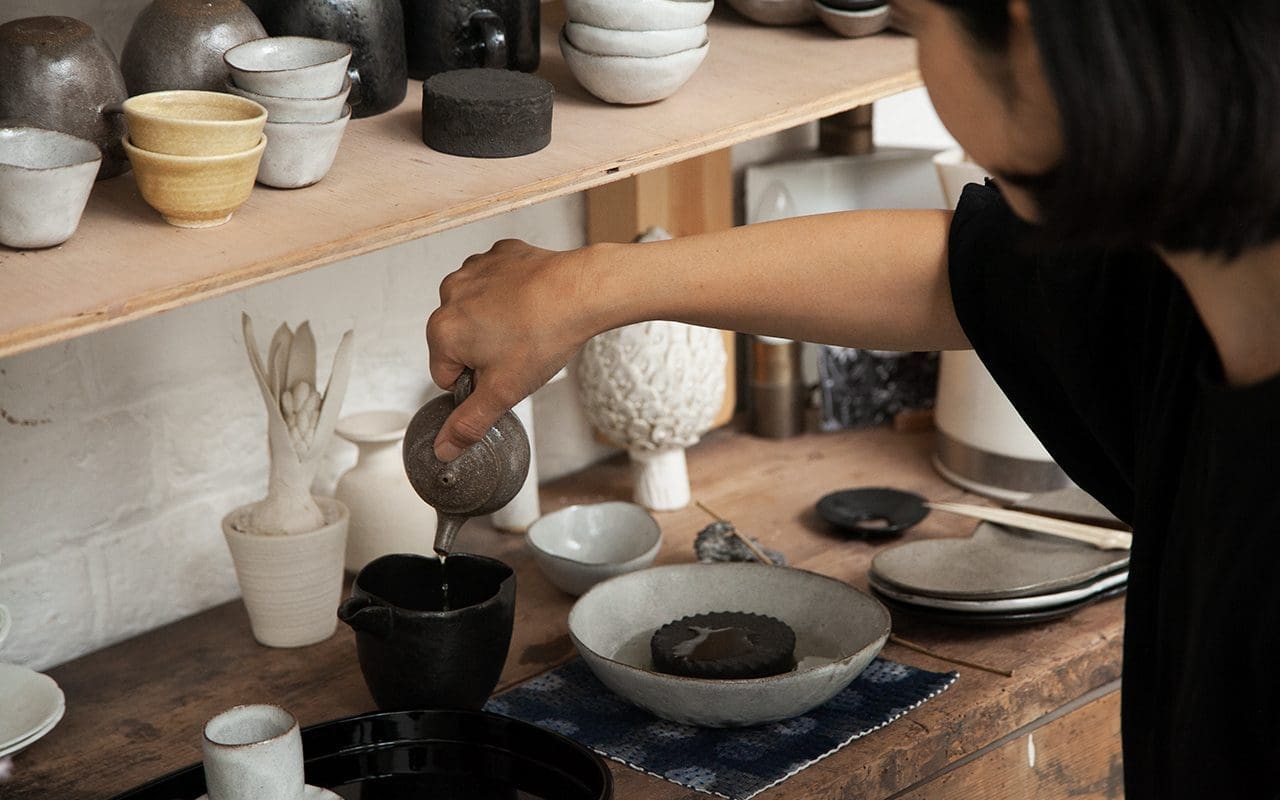
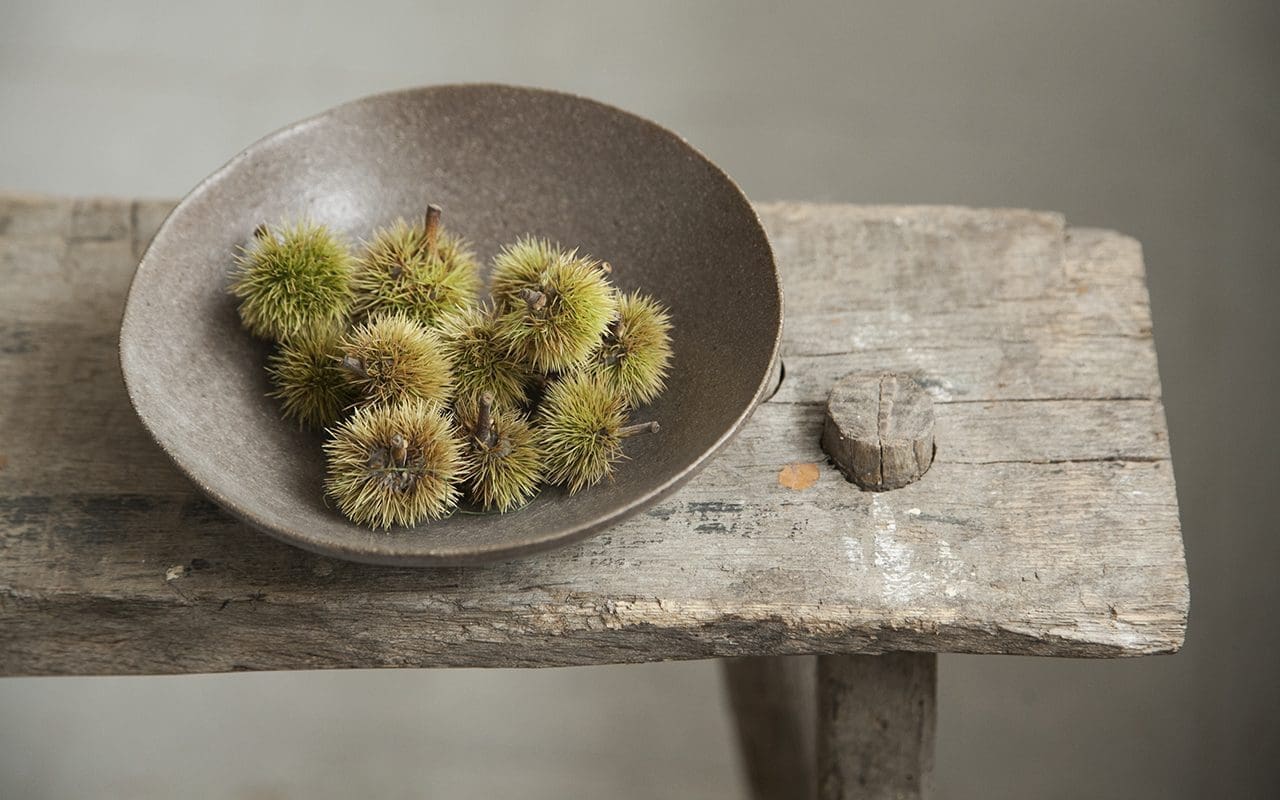
You studied ceramics both in Japan and then in London. Can you tell me about the key things that you learnt in each place ?
In Japan, we were taught as if you were apprenticed to a master potter, learning everything from traditional spiral wedging, which they say will take 3 years to master, to throwing and hand-building techniques to firing electric, oil, gas and wood fired kilns. By the time you graduate from university, you have learnt everything you need to know to run your own ceramic workshop. It was about skill-based making at BA level then, for the MA, you focussed on how to express yourself in clay and with the range of ceramic material.
During my exchange at the Royal College of Art and a short residency in Denmark, I was liberated from all of the rules and restrictions and the traditional approaches towards clay and glazes I had blindly been studying in Japan and my work changed dramatically, especially the finish.
In order to make what I do now, I needed all the skills I gained from the training I had in my university years in Japan as well as the freeing of my mind which I got from studying in the U.K.
Why did you decide to stay in London to continue your ceramic practice after finishing your studies ? What did the city offer you that Kyoto didn’t ?
After my exchange at the RCA, I went back to Kyoto to finish my MA then lived in Tokyo for over 4 years mainly teaching, but I didn’t enjoy my life there. I missed being close to nature and couldn’t find my place in Tokyo which was too fast, too vast, and I felt the life there had no sense of the seasons. I moved back to the U.K. in 2001 and have stayed here ever since. People are surprised when I say London is full of green and that life here is much calmer than in Tokyo, but it’s true. I don’t feel the urge to be near nature in London as I did in Tokyo.
Also I choose to live and work in the U.K. because my sculptural work was better received here than in Japan, which was still very much stuck in tradition then.
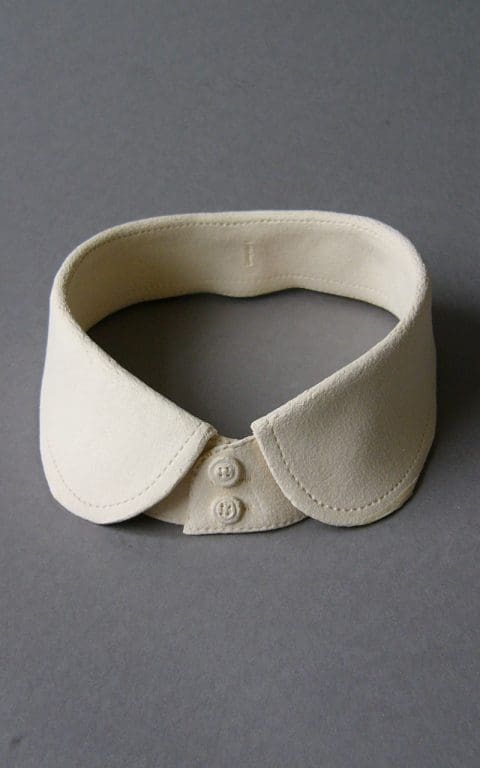
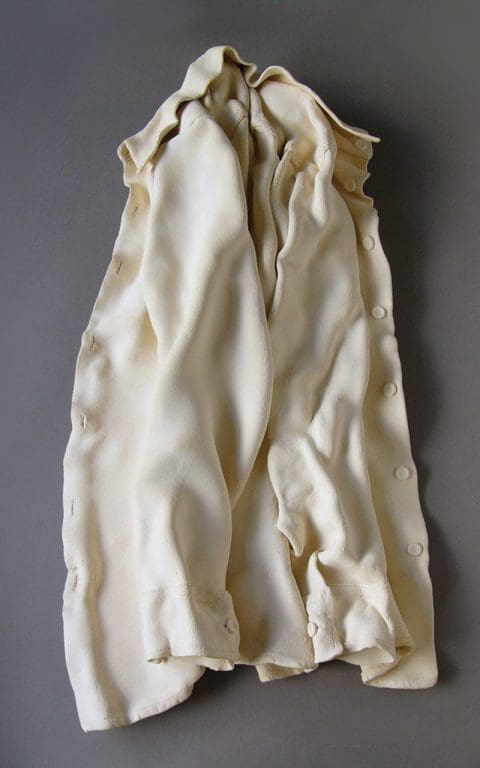
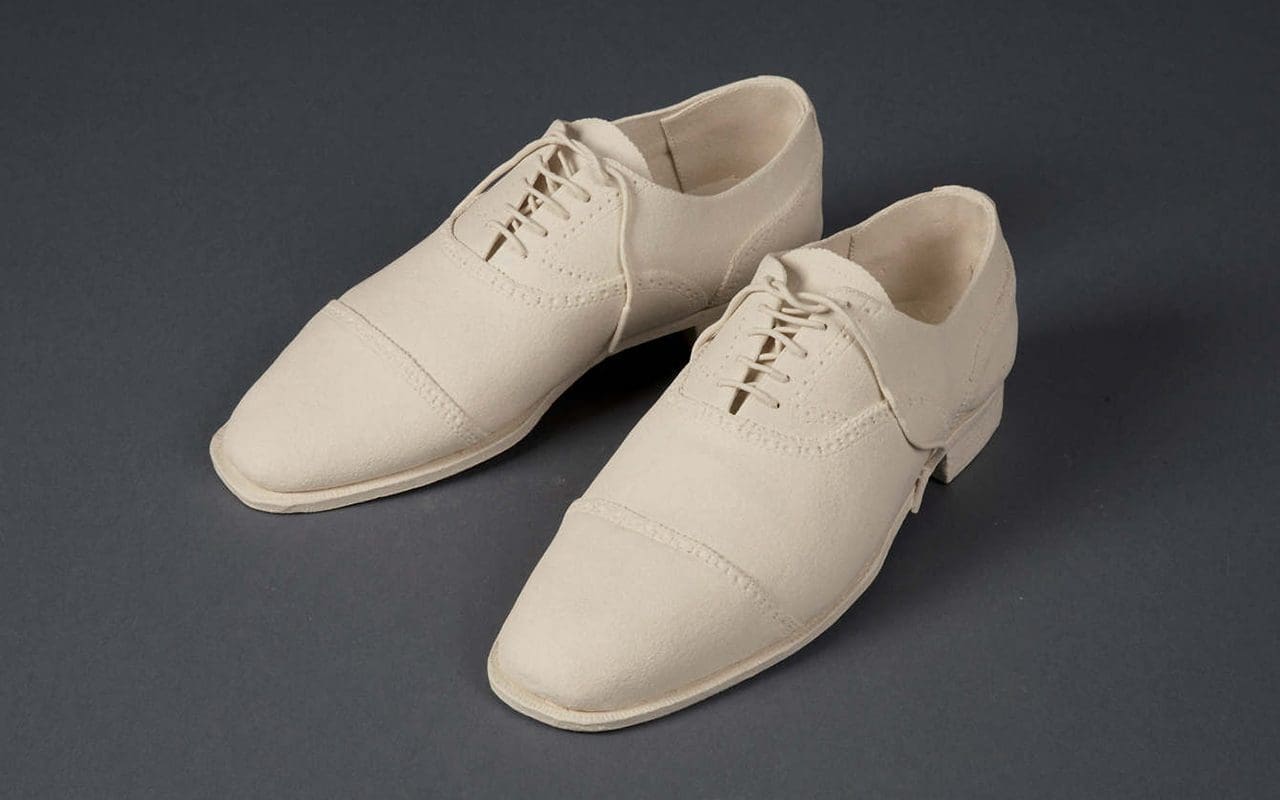
You started making ceramic sculptures of inanimate objects, especially clothing. What was your impetus for making these pieces ?
Individual objects were my early pieces. At that stage, I was curious about how far I could push the material and challenge my skill. Also, my focus was on memory. The clay’s ability to capture time and its elusive existence, simultaneously having both fragility and permanence, overlapped with my ideas about memory. I was making old-fashioned, everyday objects which encouraged people’s memories and played with the sense of time being stopped.
I started making sculpture in my university days, and it was the reason I came to study at the RCA. Ceramic sculpture didn’t have a place in the world of traditional Japanese ceramics. Making tableware came after graduating with my MA, when I was teaching full time. My short periods of free time only allowed me to make small, repetitive pieces and so was most suitable for making tableware, which also came naturally to me due to my family background.
Can you explain the development of your work from the replicas of single items of clothing to the more formal tableau installations of multiple pieces which included a wide range of different subjects ?
My focus was on the challenge of replicating each item. In a way, I was training myself, developing my skills further. You could see them as my studies. Once I had mastered the required skills, I started to create still life series, much as you would do with drawings.
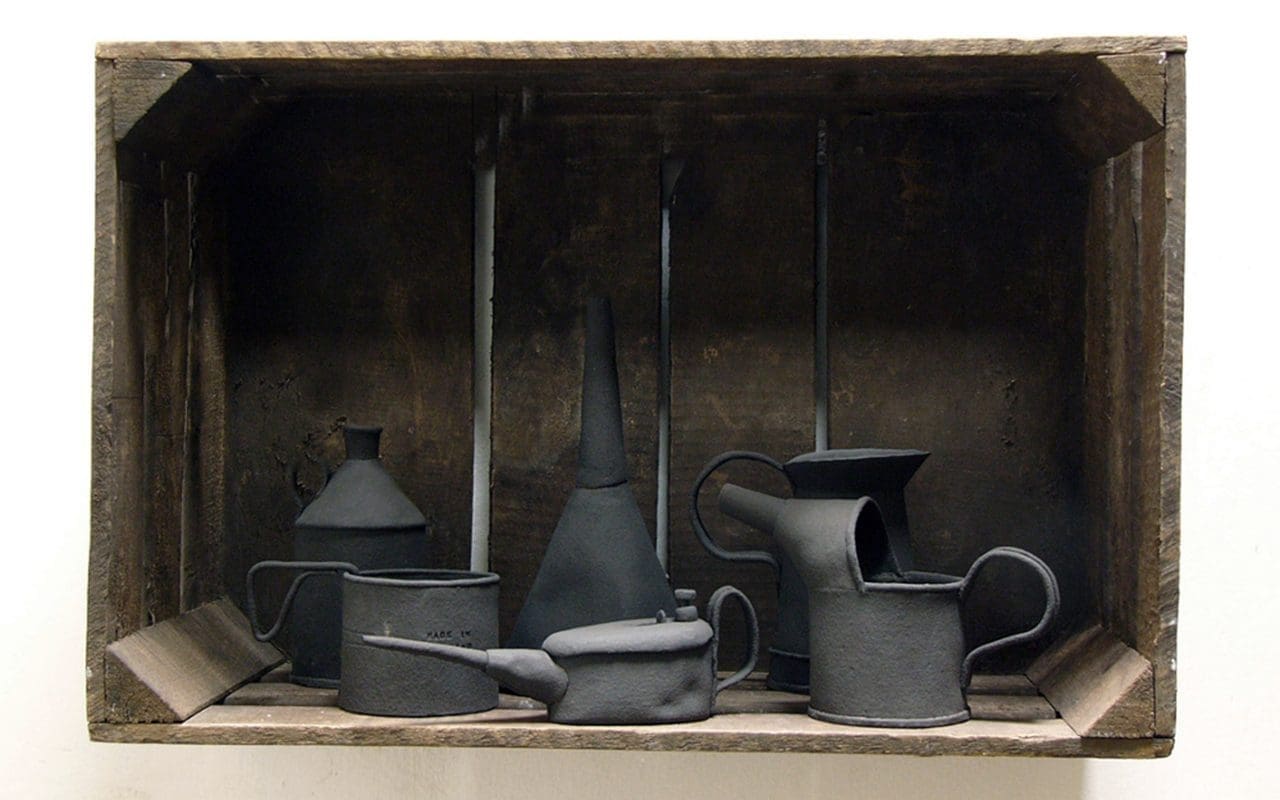
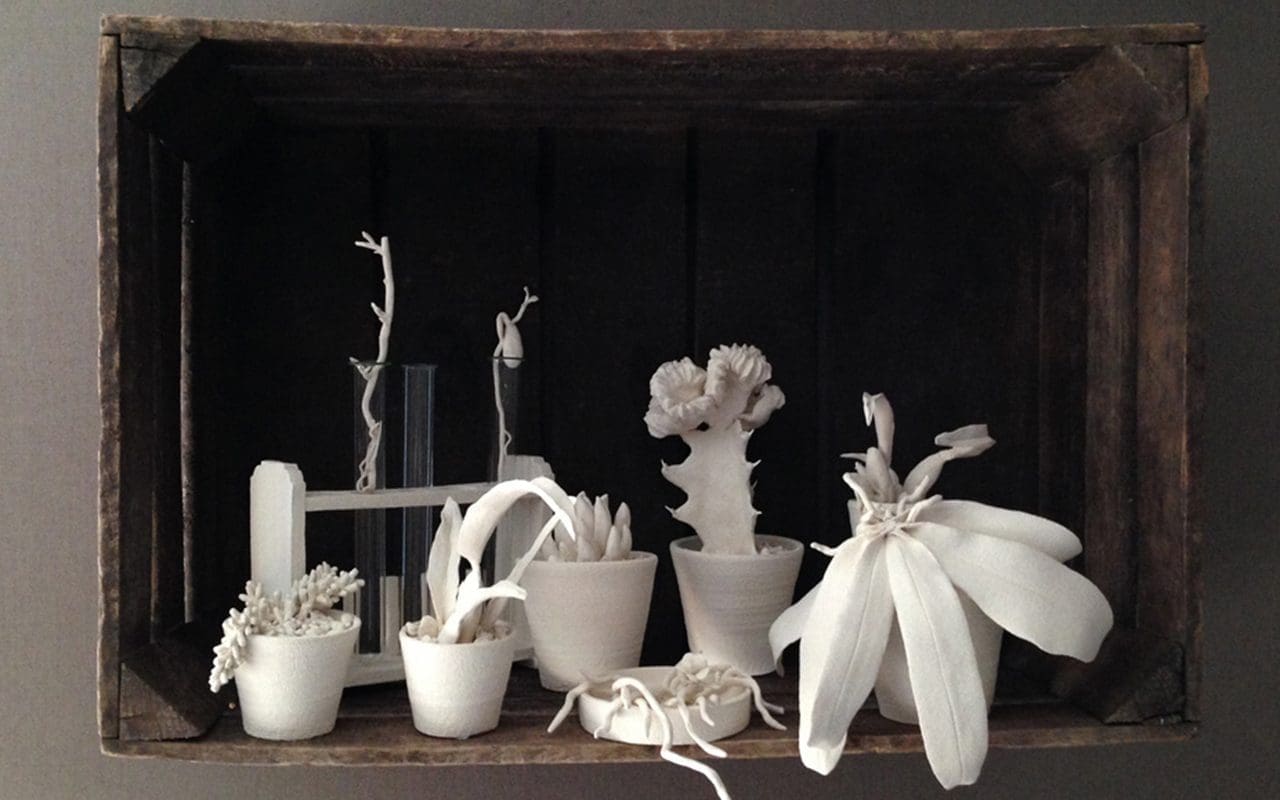
Where did your most recent and current interest in plants, flowers, fruits and vegetables (and insects and animals) originate and what is the link between these pieces and your earlier work ?
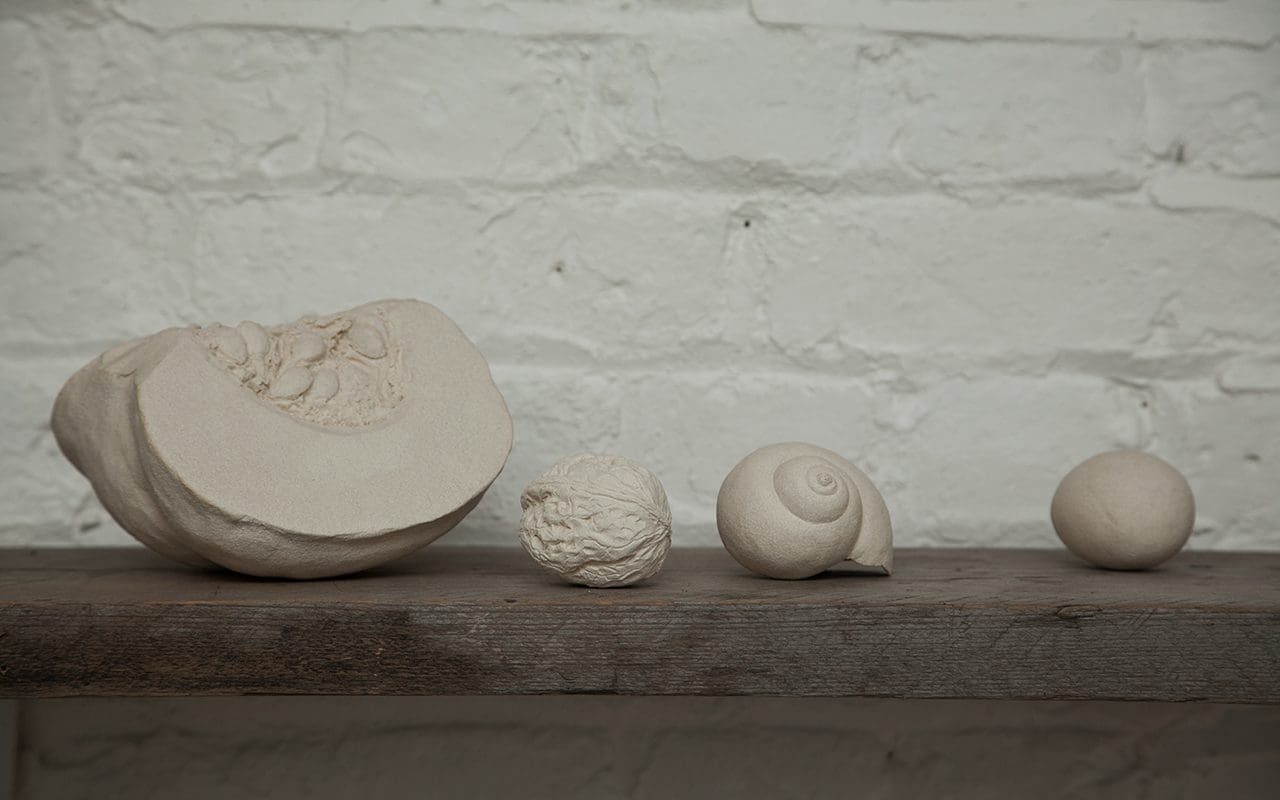
My passion for gardening started influencing my work gradually, but even in a much earlier stage of my life, my grandfather who collected and named some wild orchids from his local mountain, must have seeded something in me as well. My very first flower piece appeared in 2005, which I made for Ceramic Art London held at the RCA (it has now moved to Central St. Martin’s). It was a single rose stem, forgotten and dying in a vase. A moment preserved in ceramic, which later became my main theme. In the true sense, I am not trying to preserve plants, but time itself. By preserving plants, which have a very short life, you get the sense of time being captured and permanently frozen. I often add insects and other creatures, especially snails which, although they have movement, it is very slow, in order to enhance this sense of time being stopped.
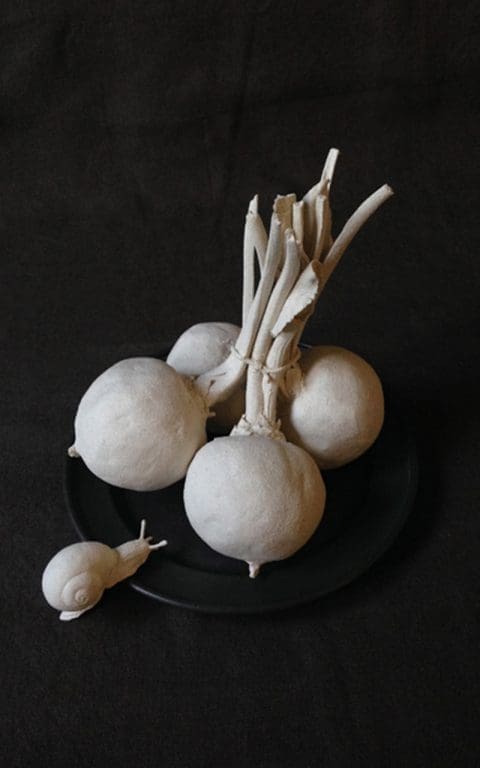
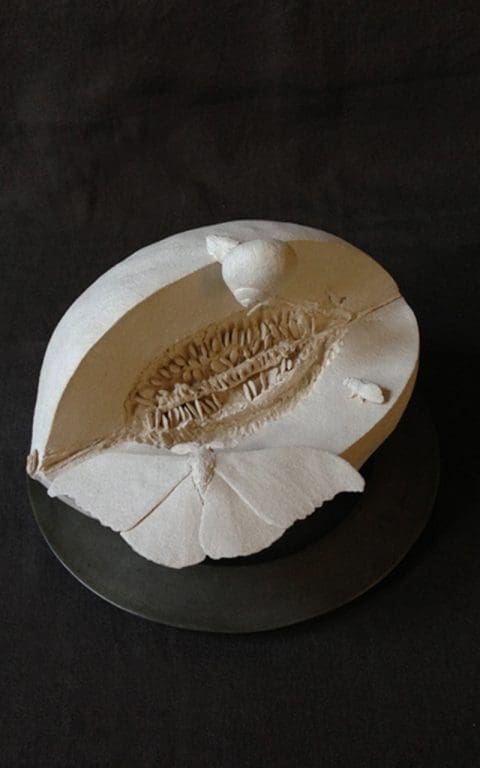
Can you tell me about your working process ? How do you make your flower pieces ?
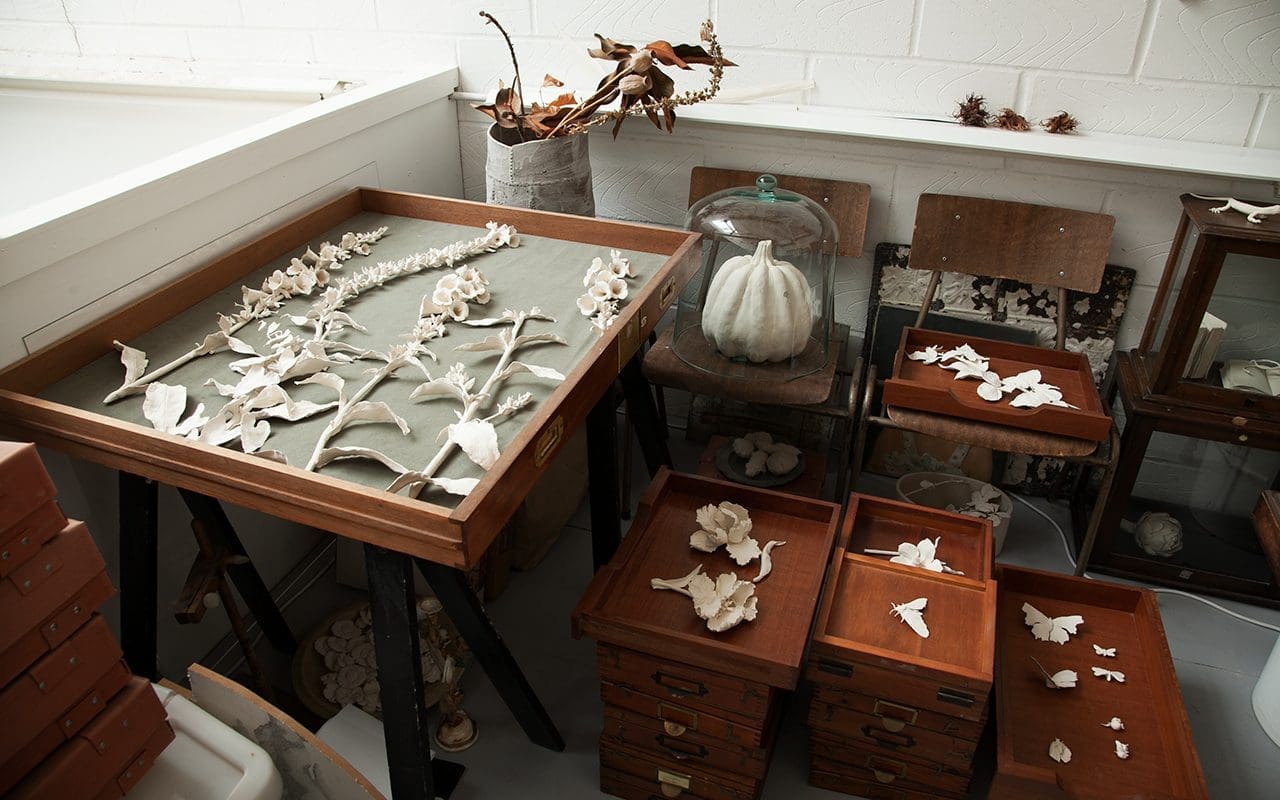
I usually work by going straight into modelling in stoneware clay, observing real flowers and plants from 360 degrees. I quickly calculate what method is most suitable to use, which part I should make first, the drying time and which is the best forming technique to use. I have been working in clay for nearly 30 years now. By looking at object, I can immediately tell if the object is at all possible to make and how to achieve the form.
The tools I use are very simple, my hands and a knife which I made myself. If it is a flower, I make it petal by petal, no secret or magic involved!
The pieces must be dried slowly, then fired straight to 1250°C without a bisque firing.
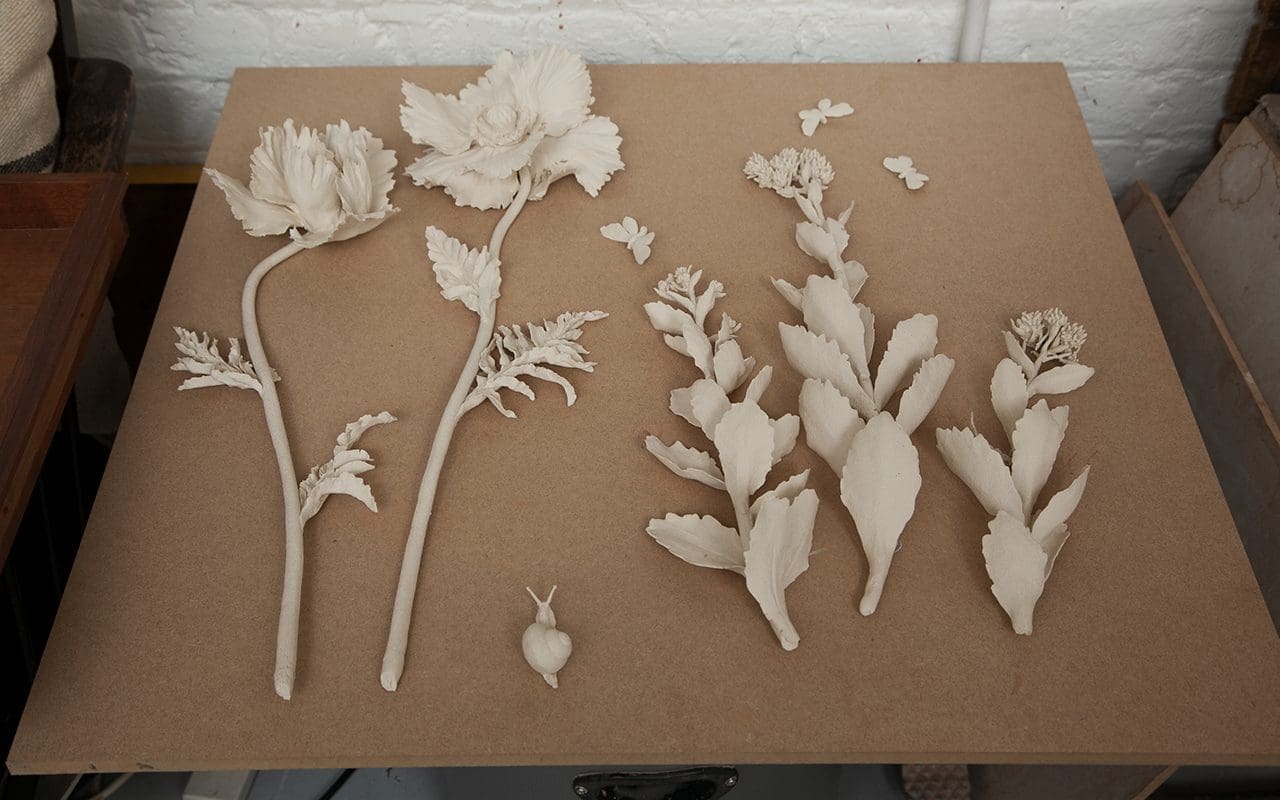
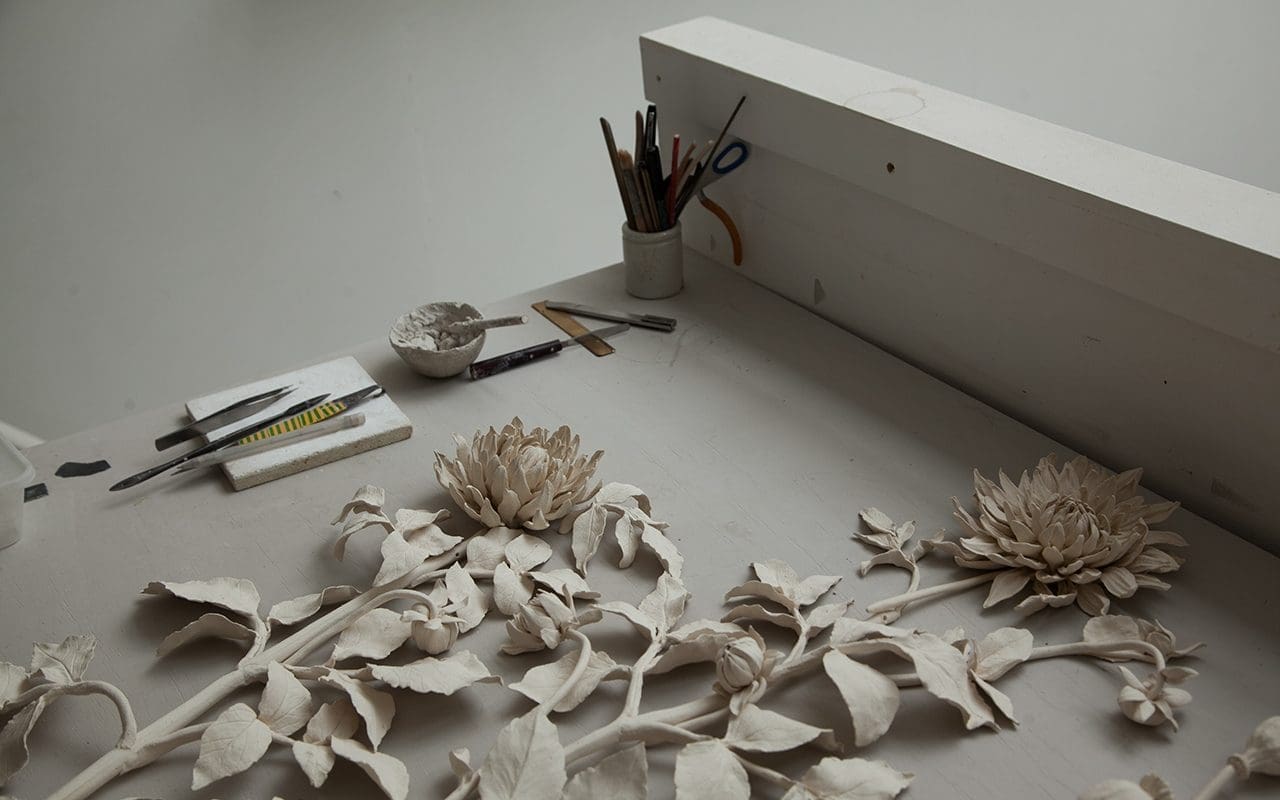
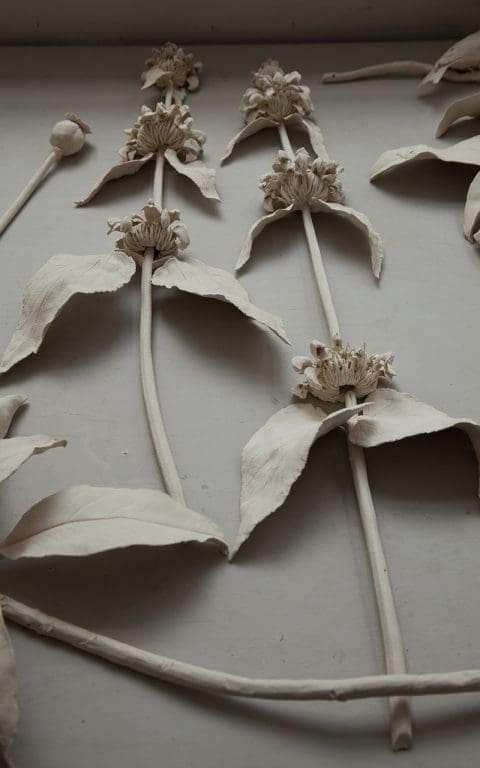
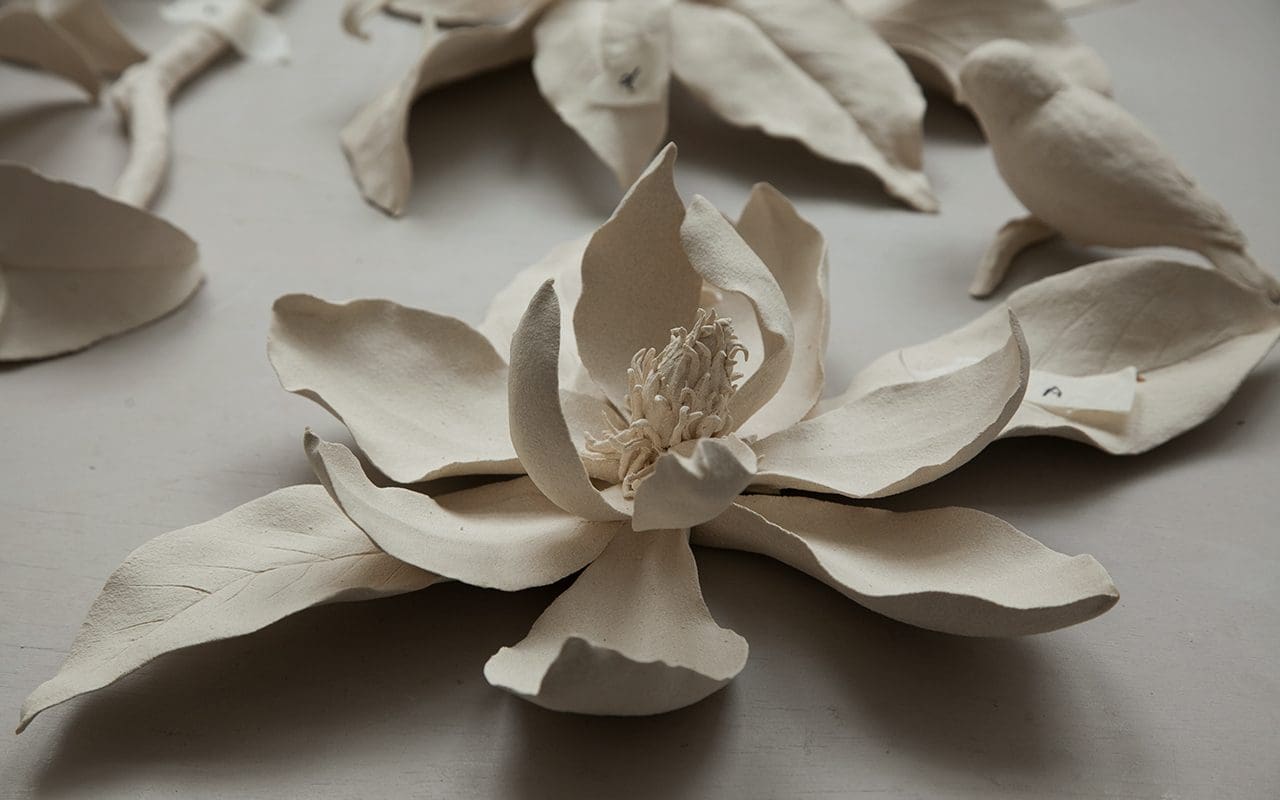
Can you tell me about the Banquet pieces and the work that you created for your exhibition at Forde Abbey ?
The Banquet is one of my largest installations. It was developed from my small still life series and I wanted to create a large flamboyant scenery based on the feel of the Dutch Old Master painting.
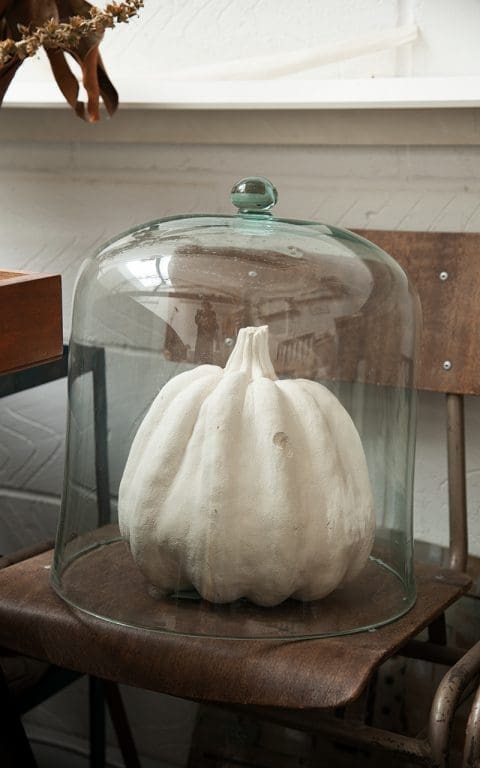
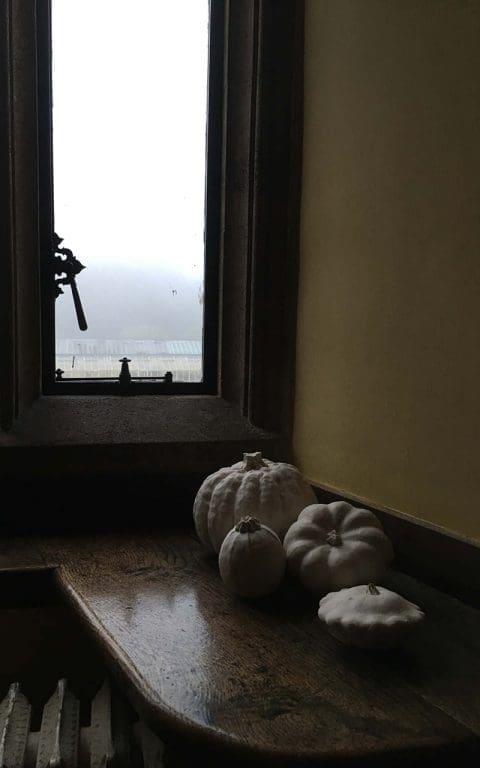
The work exhibited at Forde Abbey was my first site specific installation, which I created in my studio after a week’s residency there. To correspond to the feeling of the 900 year old library and the beautiful gardens and nature there, and because the exhibition was held in September, I created dahlias which I scattered down the central table, pumpkins (the originals of which had been grown in their kitchen garden) peeping from between the old books and swallows nesting in front of the book shelves. I wanted a fairy tale aspect and a slight spookiness, but not too conceptual so that visitors could really enjoy the experience.
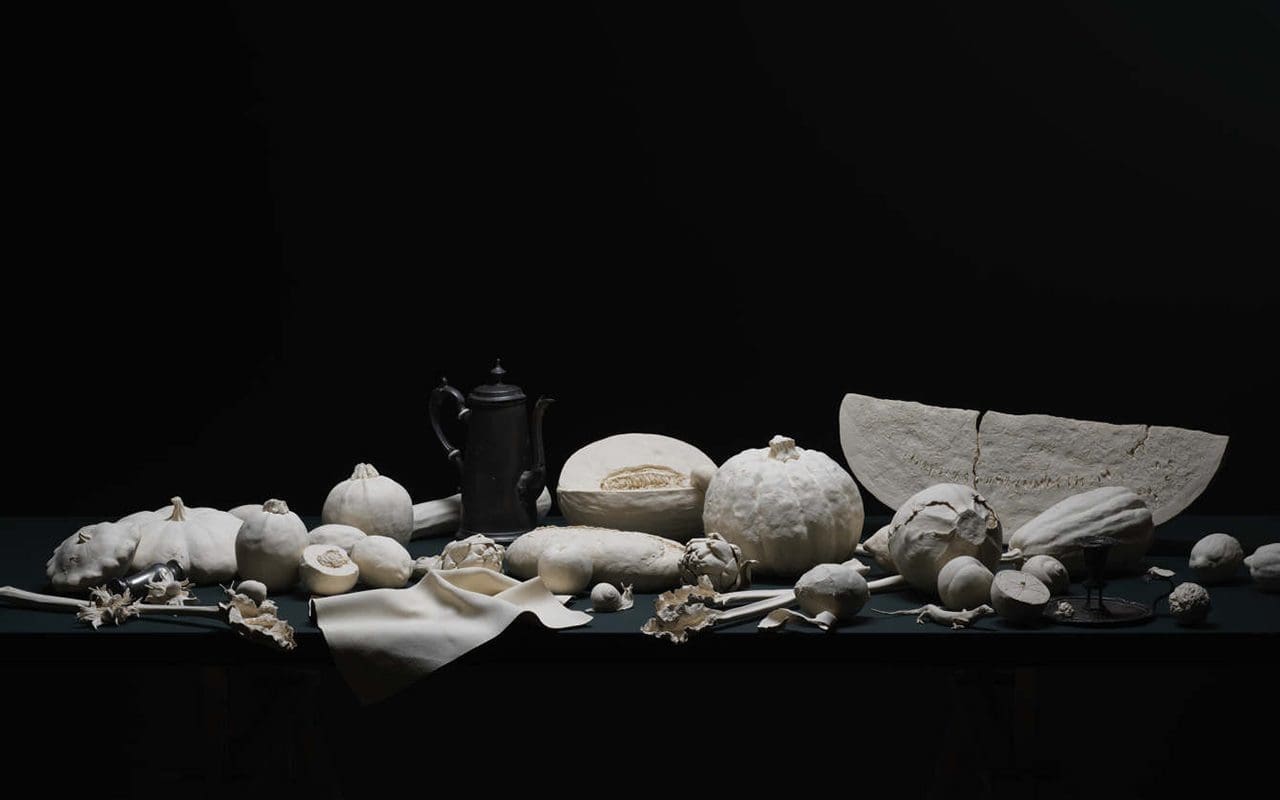
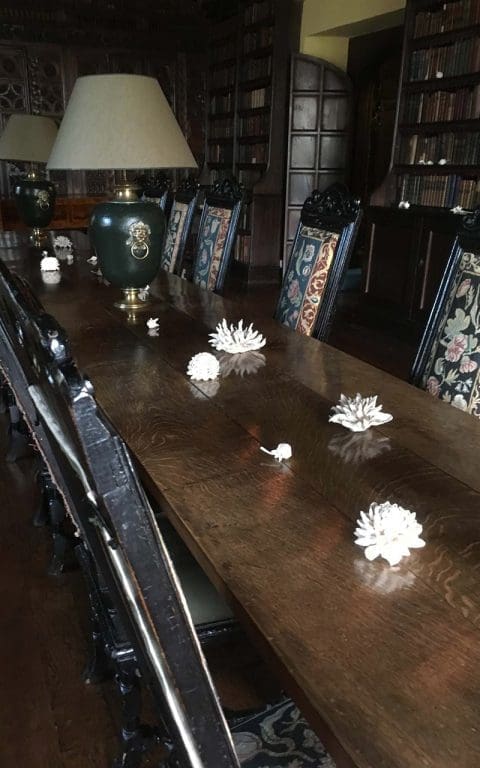
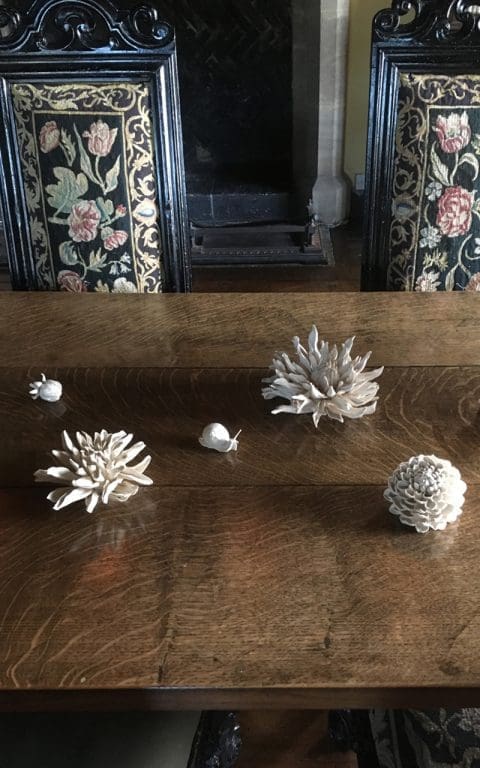
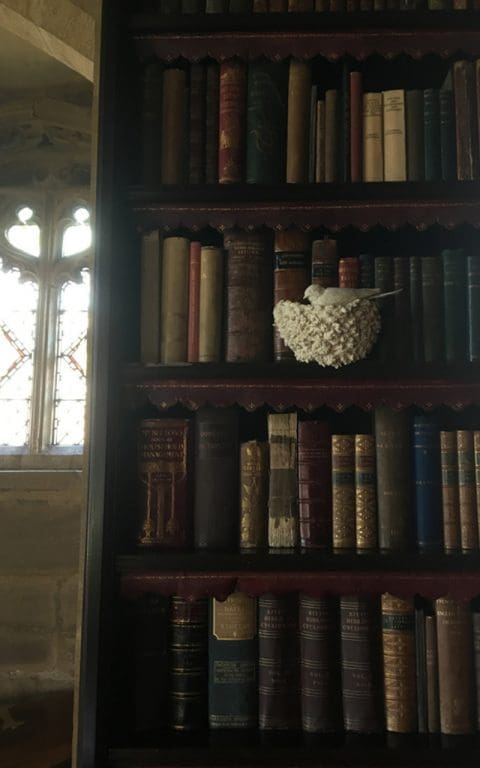
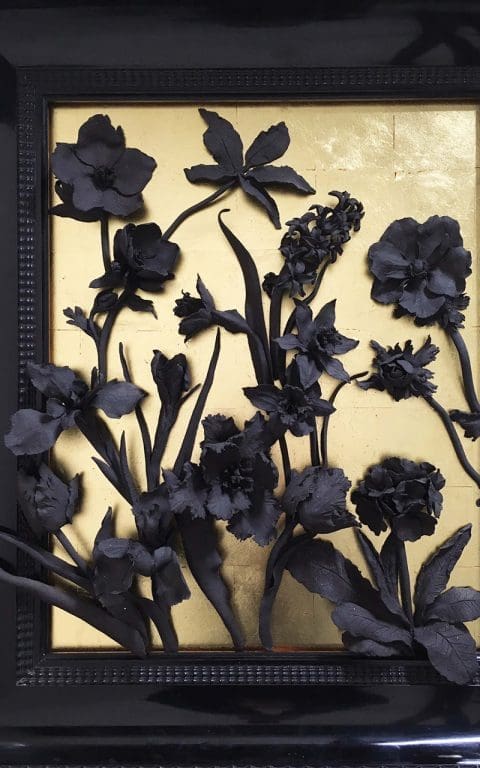
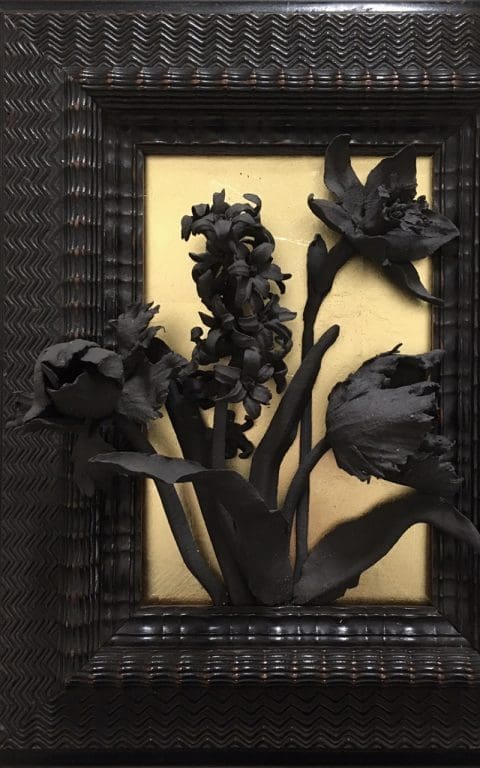
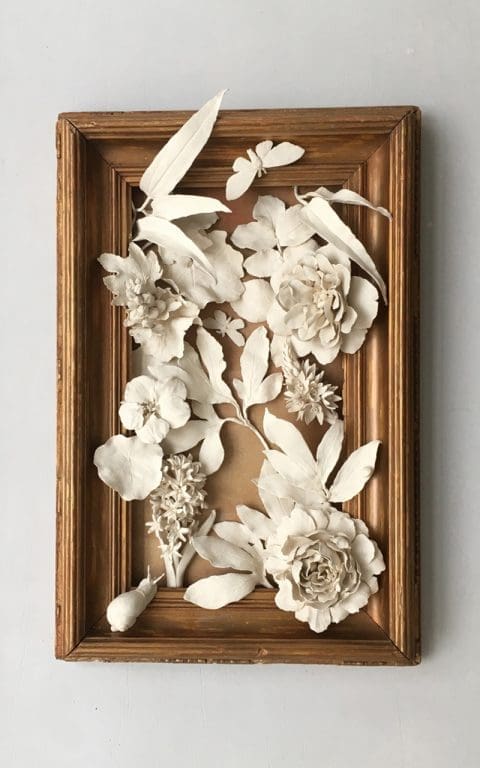
What was the inspiration for the black stoneware pieces, Lunar Eclipse and Night Garden, Delft and the pale stoneware Paradiso di Flora?
Again, I was inspired by Dutch Master paintings.
At Ceramic Art London, I designed my stand to show the pieces, one side in black and the other side in white clay, the mirror image of the same object in black and white.
Black clay has a totally different feel to the white. Mysterious, dark and somewhat more intriguing. I want to experiment more with black clay in the future.
What are you working on the moment and are there any plants that you are particularly interested in working with and why ?
I am working on the pieces for my solo show in Tokyo happening at the same time as the Olympics next year. And from Spring onwards, I will be working on botanical pieces for my solo show at Tristan Hoare Gallery in London in November 2020.
I have been studying the school of Japanese old masters known as Rimpa which started developing from 15th century onwards, reaching a peak in the 17th century. Japanese paintings in general are very seasonal and plants and flowers are often the most significant subject of their paintings. I am interested in creating a British version of them with wild flowers and plants native to this country or popular cultivars from that particular era, perhaps.
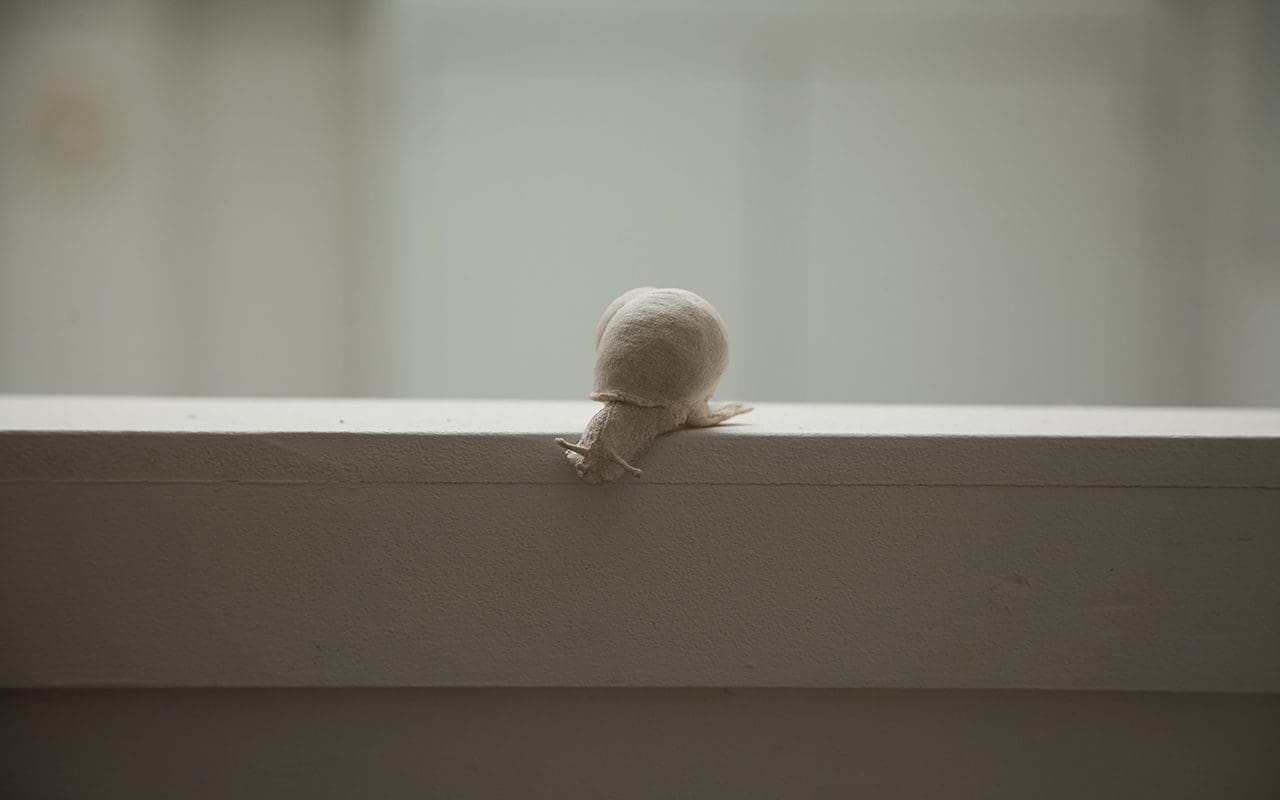
Interview: Huw Morgan | Studio photographs: Huw Morgan | All other photographs: Kaori Tatebayashi
Published 14 December 2019
Huw Morgan | 31 October 2019
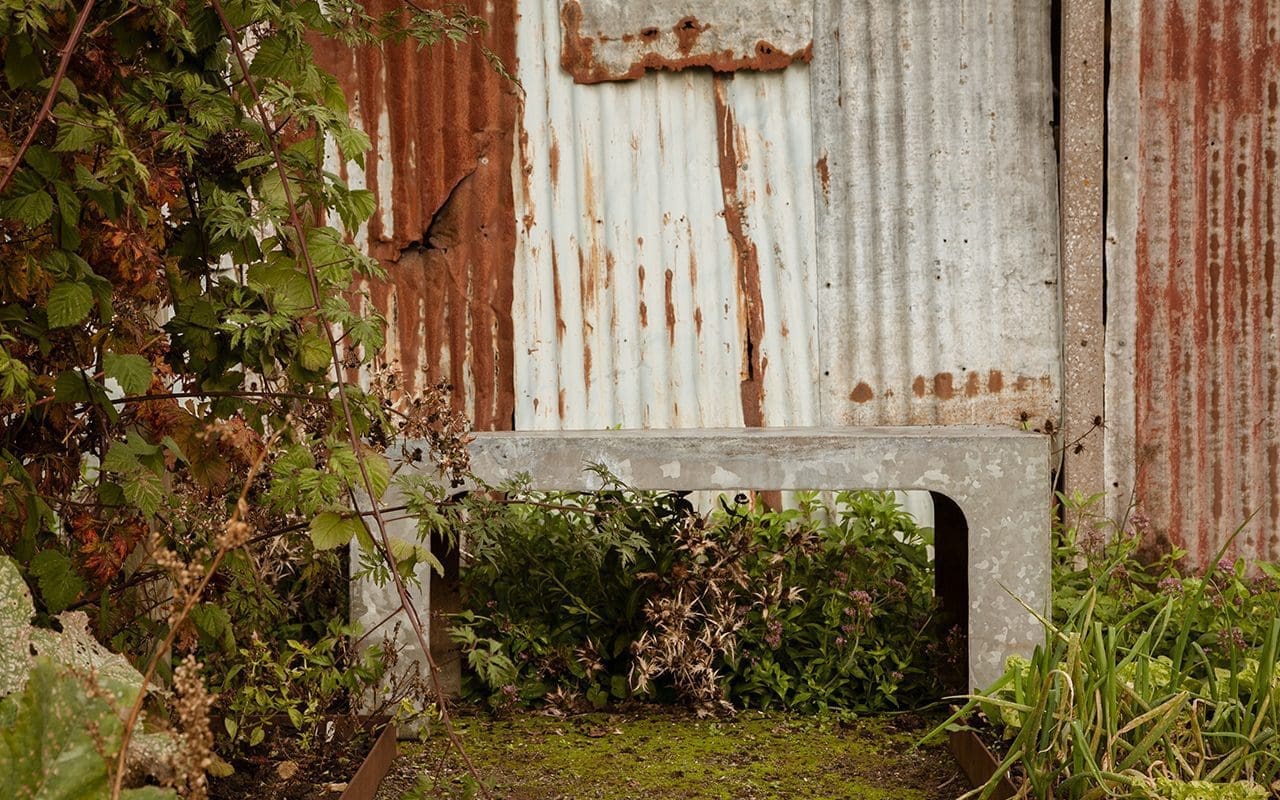
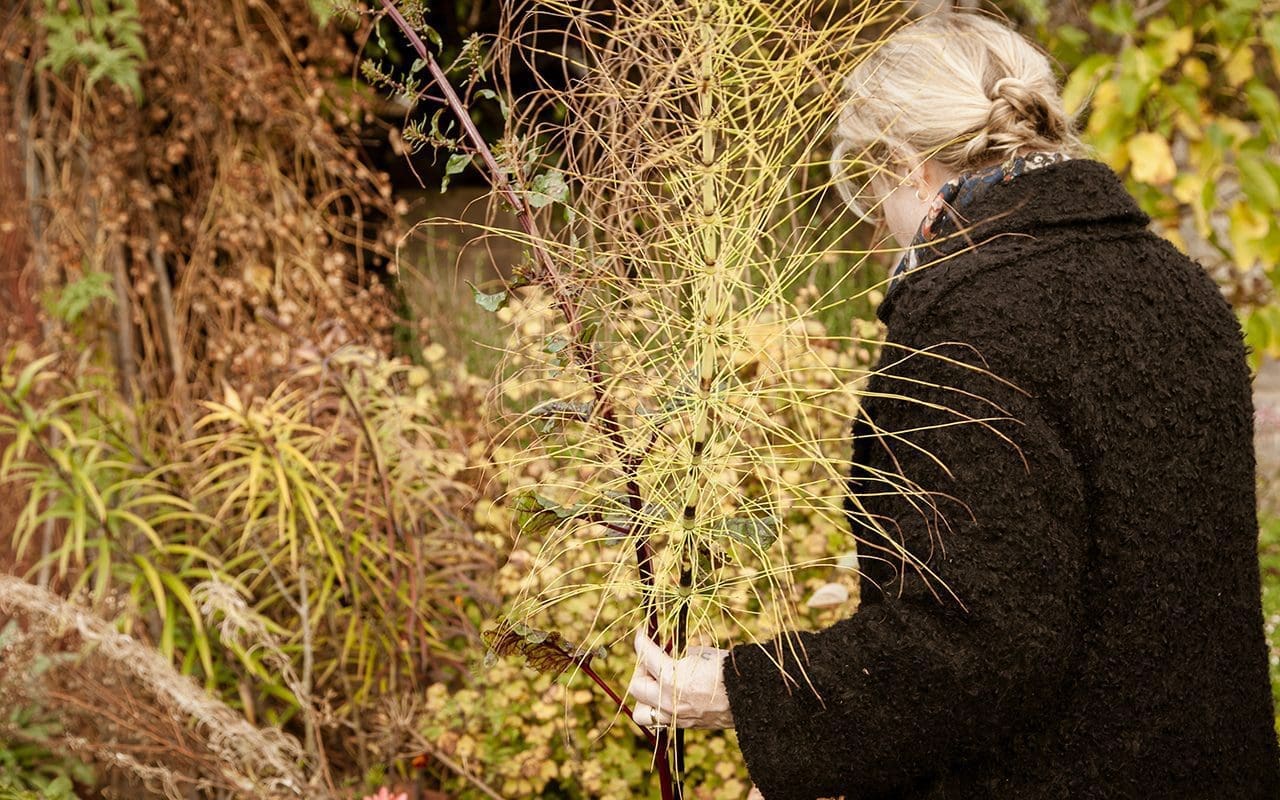
It is almost three months since Flora first came to Hillside to work with material taken from the garden here. That summer visit was an introductory and learning experience for us both. Flora’s first time in the garden here, time needed to get to know the garden, time to find a setting to shoot in, the challenges of working outside and to be photographed in process when she is usually unseen, off stage. For me there was the self-imposed pressure to do Flora’s art justice in my photographs and to capture those moments of consideration, reflection, decisiveness, choice, care, which I was witness to as she worked.
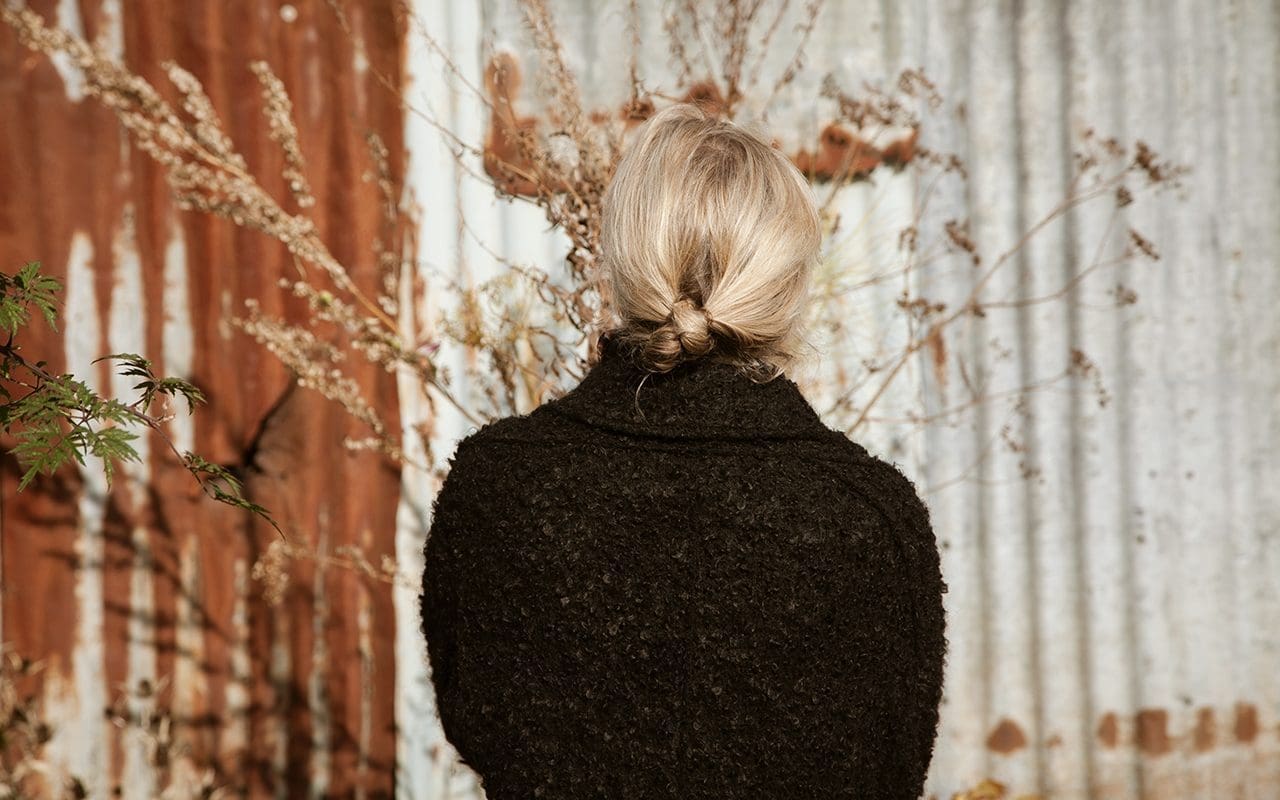
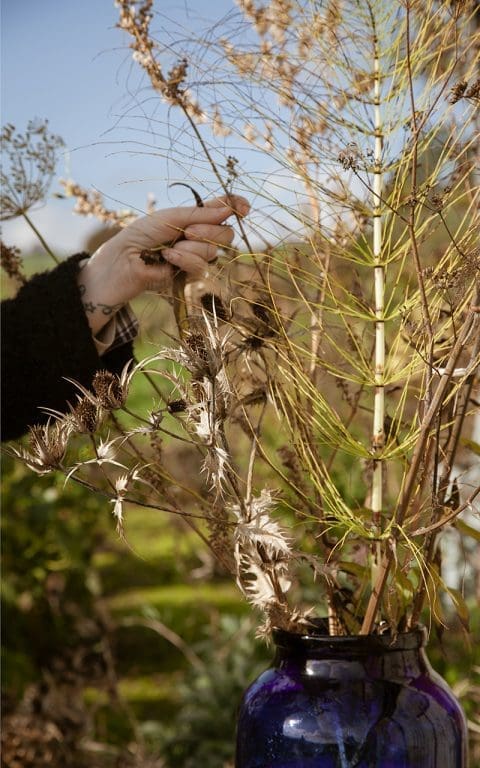
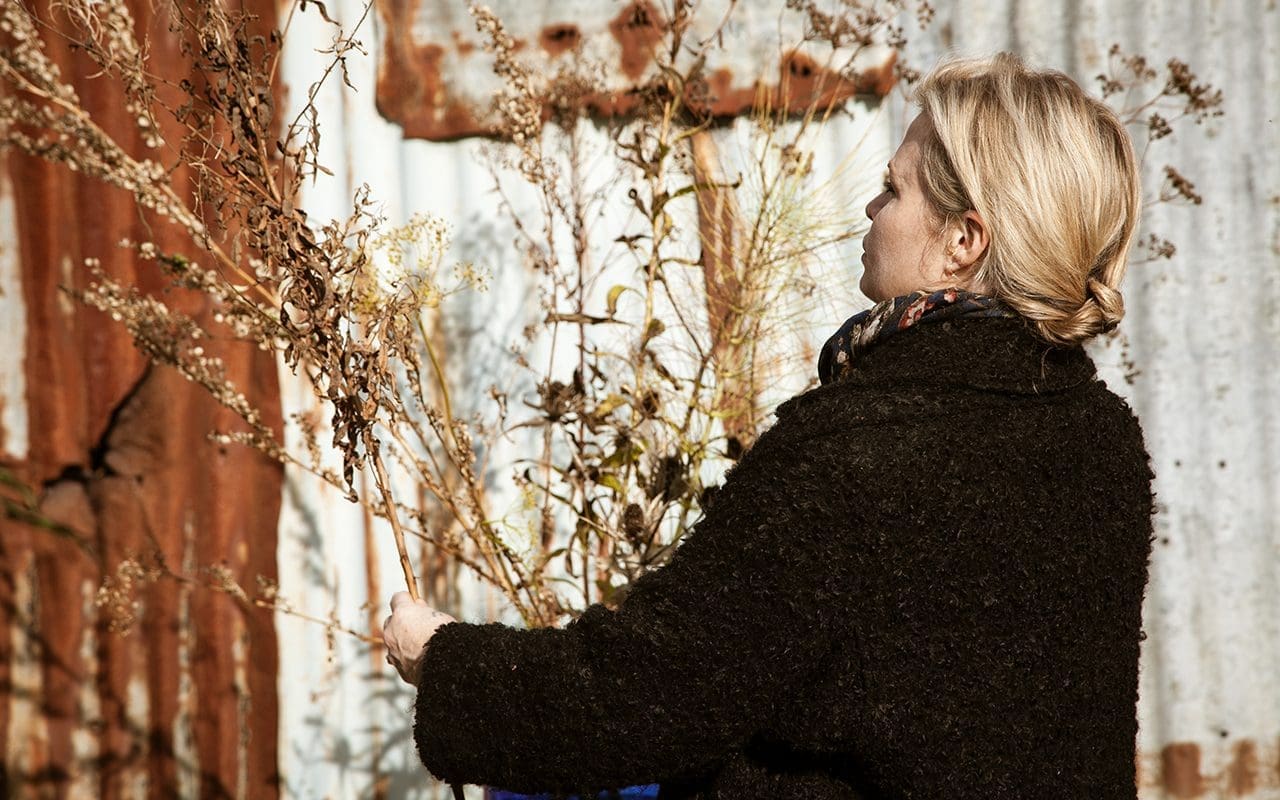
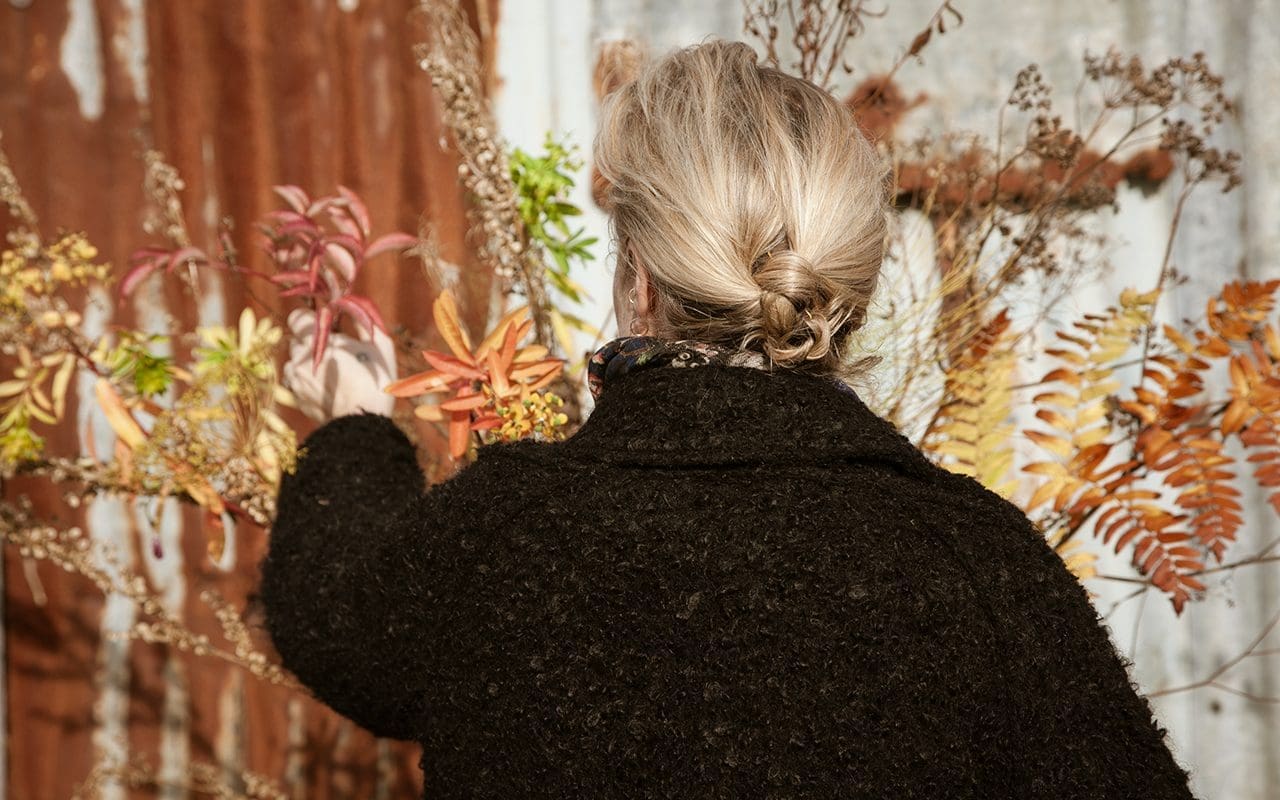
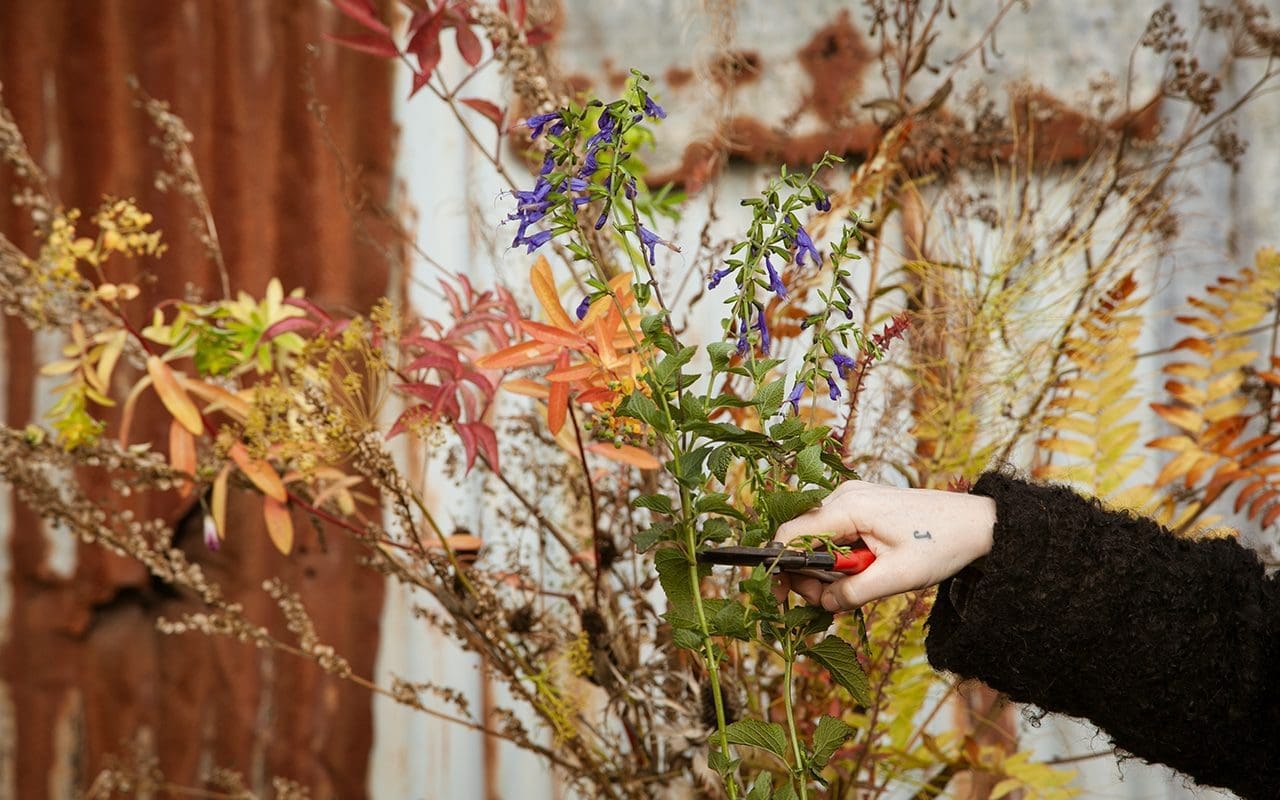
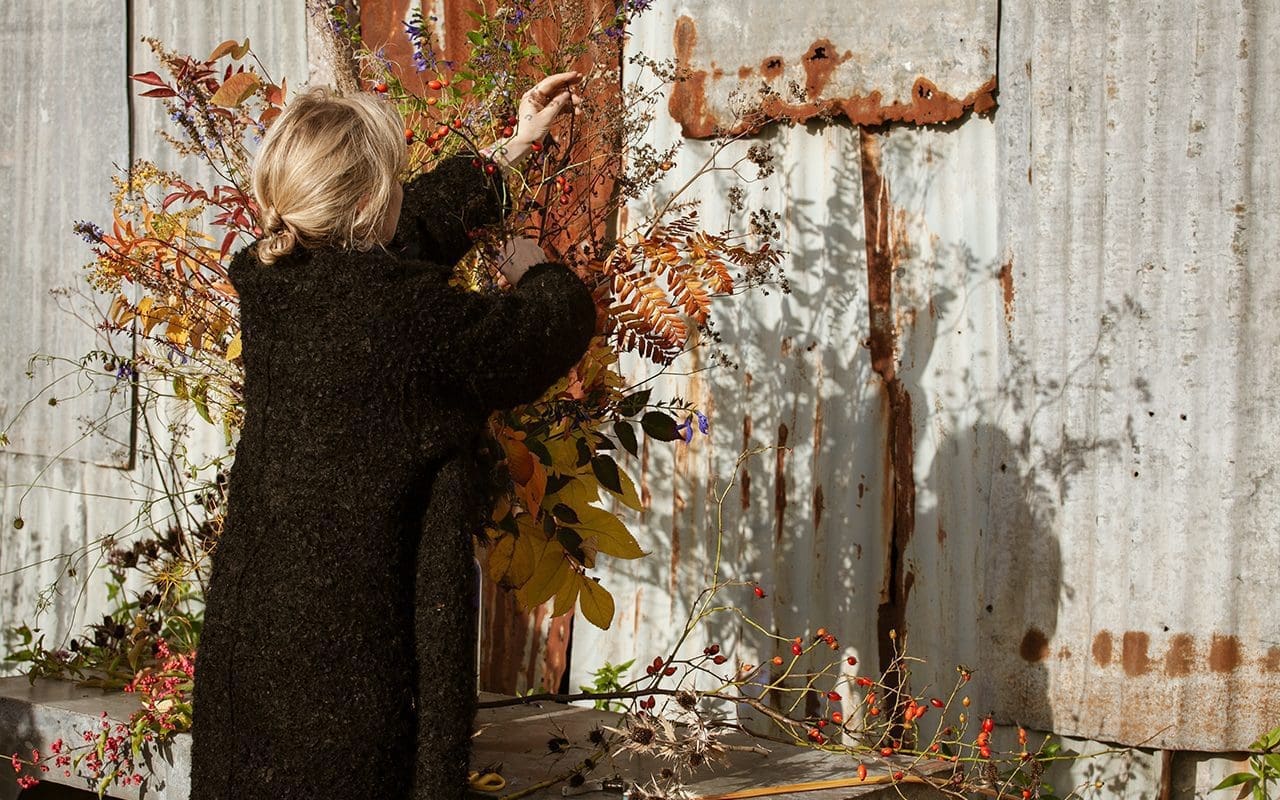
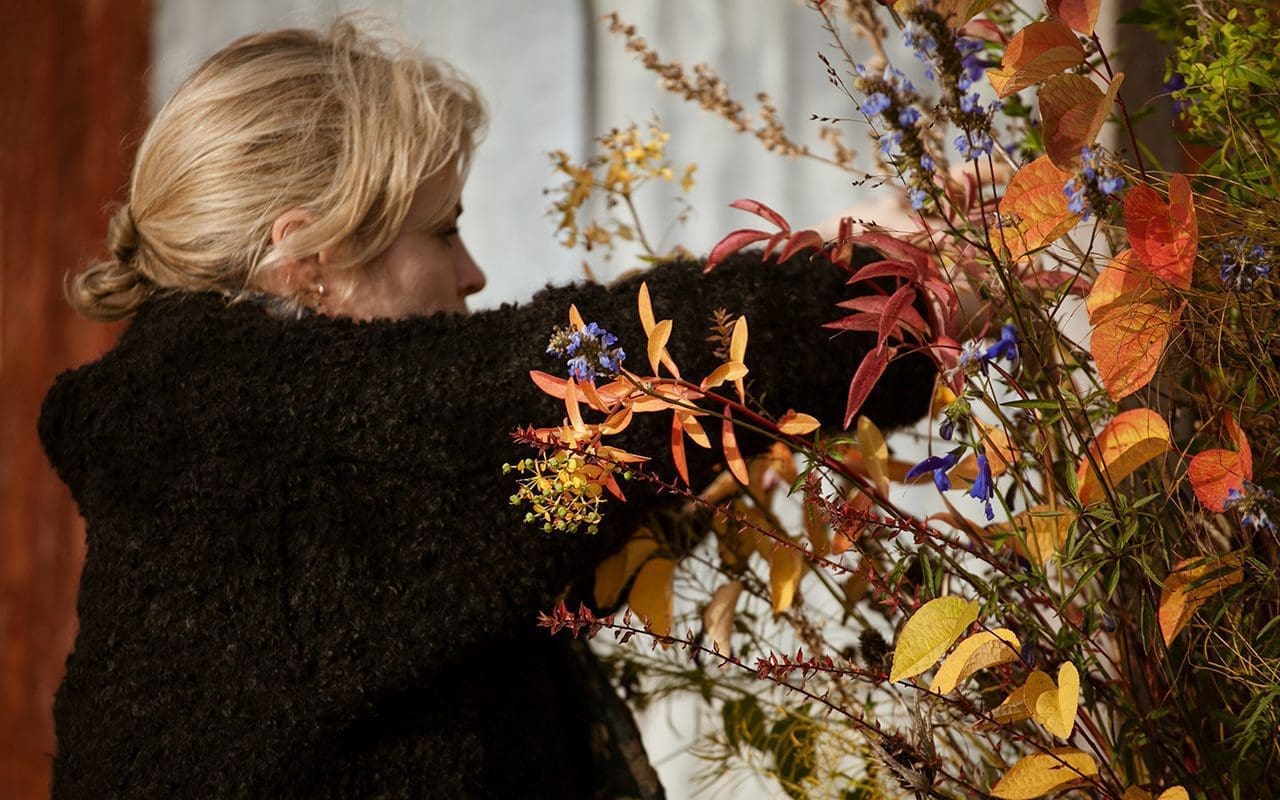
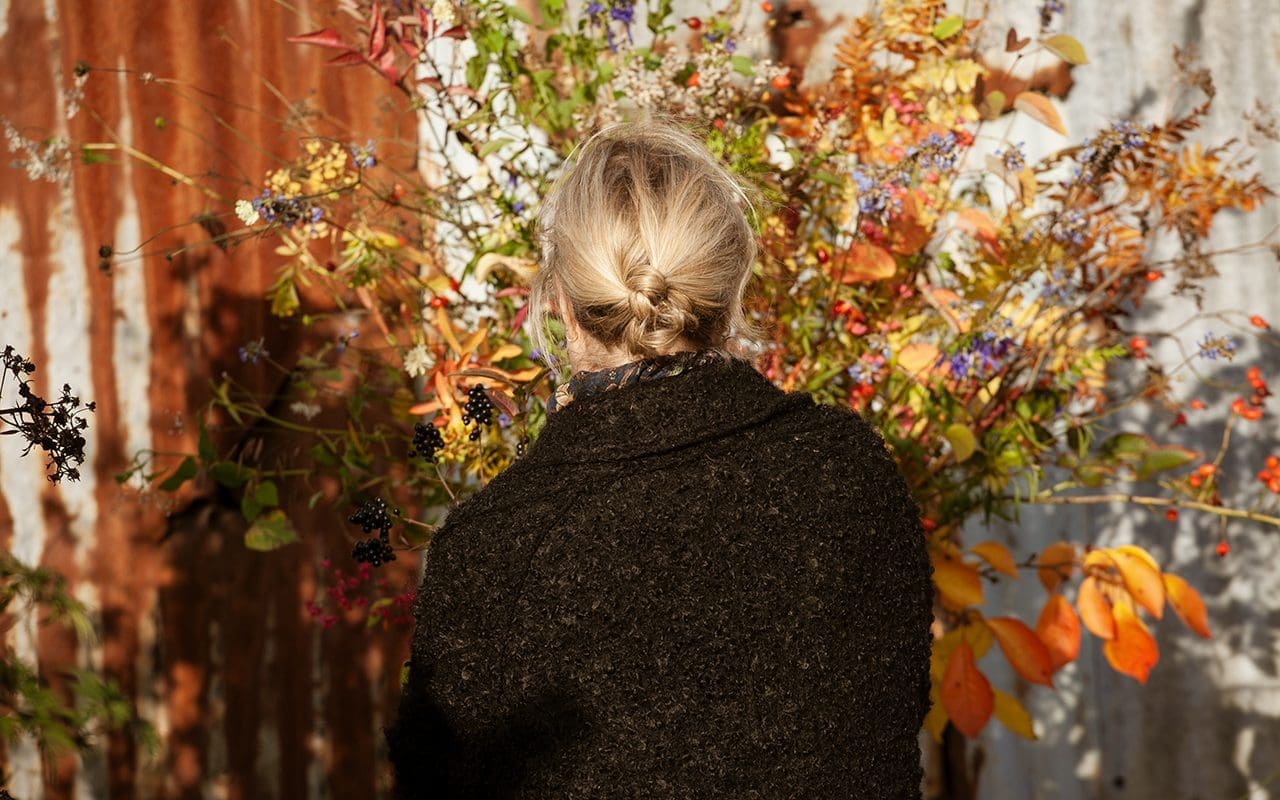
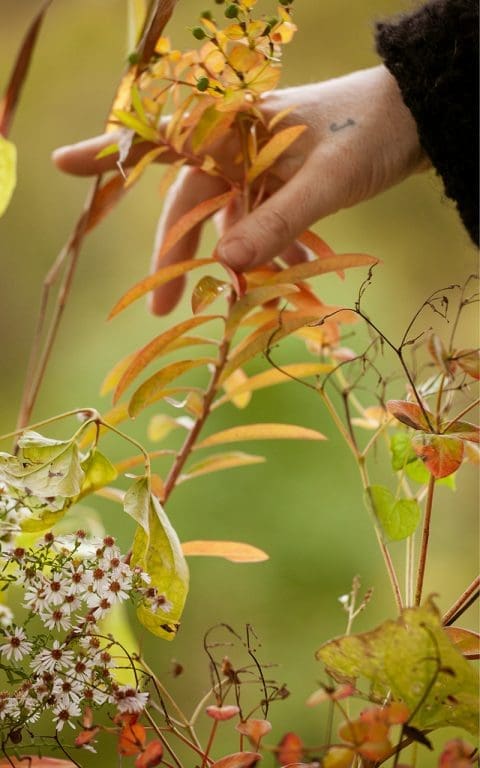
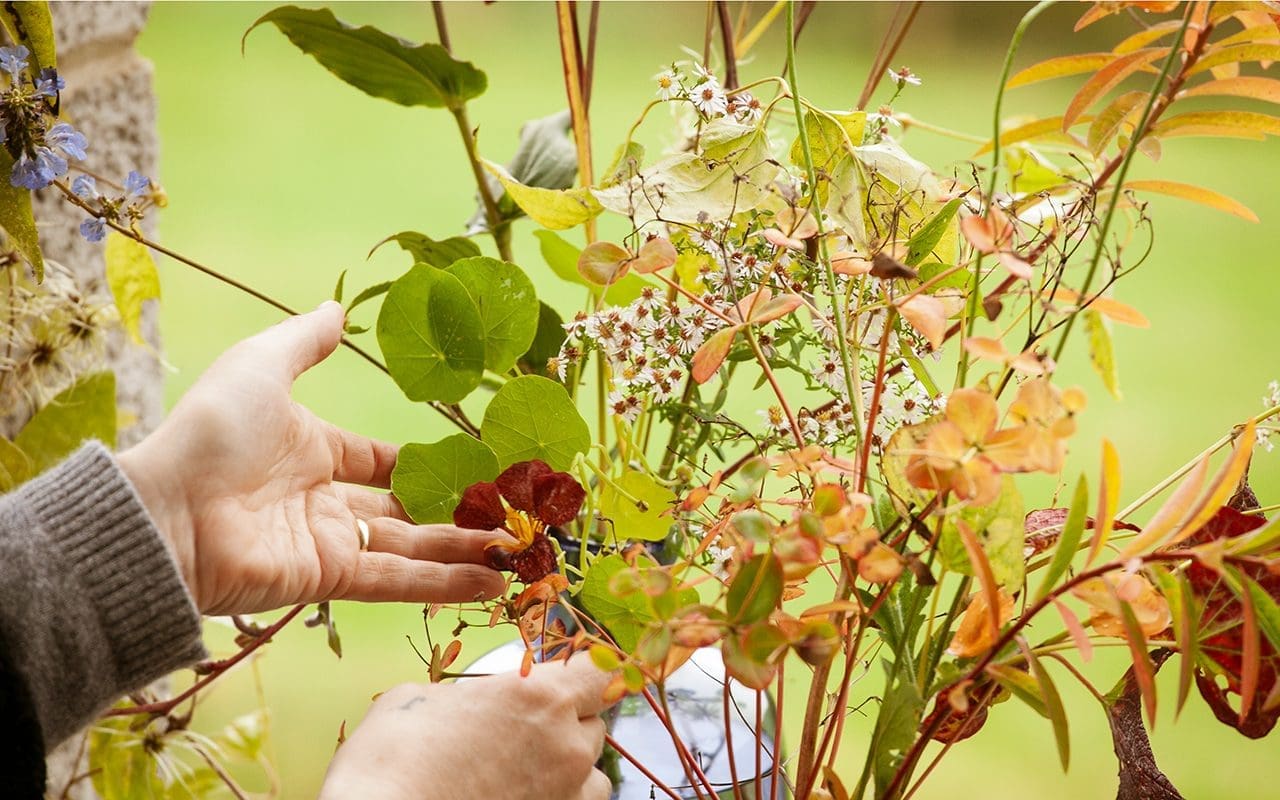
As she worked this time I started to notice the ways in which Flora relates physically to the space in which the flower arrangement was being made. Standing with her back to me I could tell that she was judging, evaluating, balancing, deciding, framing, all of which could be read from the set of her jaw or the angle of a shoulder. The delicacy with which she would select a stem, find a location for it, and then gently and firmly aid and guide it into position. The final stroking of the plant to allow it to fall naturally and also the sensual pleasure of engaging with plants this intimately.
It reminded me of something Midori, the head gardener at Tokachi Millennium Forest said to us when she was staying here early last autumn, which is that the last flower arrangements of the year should be relished as they are the last opportunity for ‘touching green’ before the winter comes.
Flora Starkey | 1 November 2019
The last time I came to Hillside, Summer was making way for Autumn. This visit Autumn is peaking and the gardens are more subdued, but no less splendid.
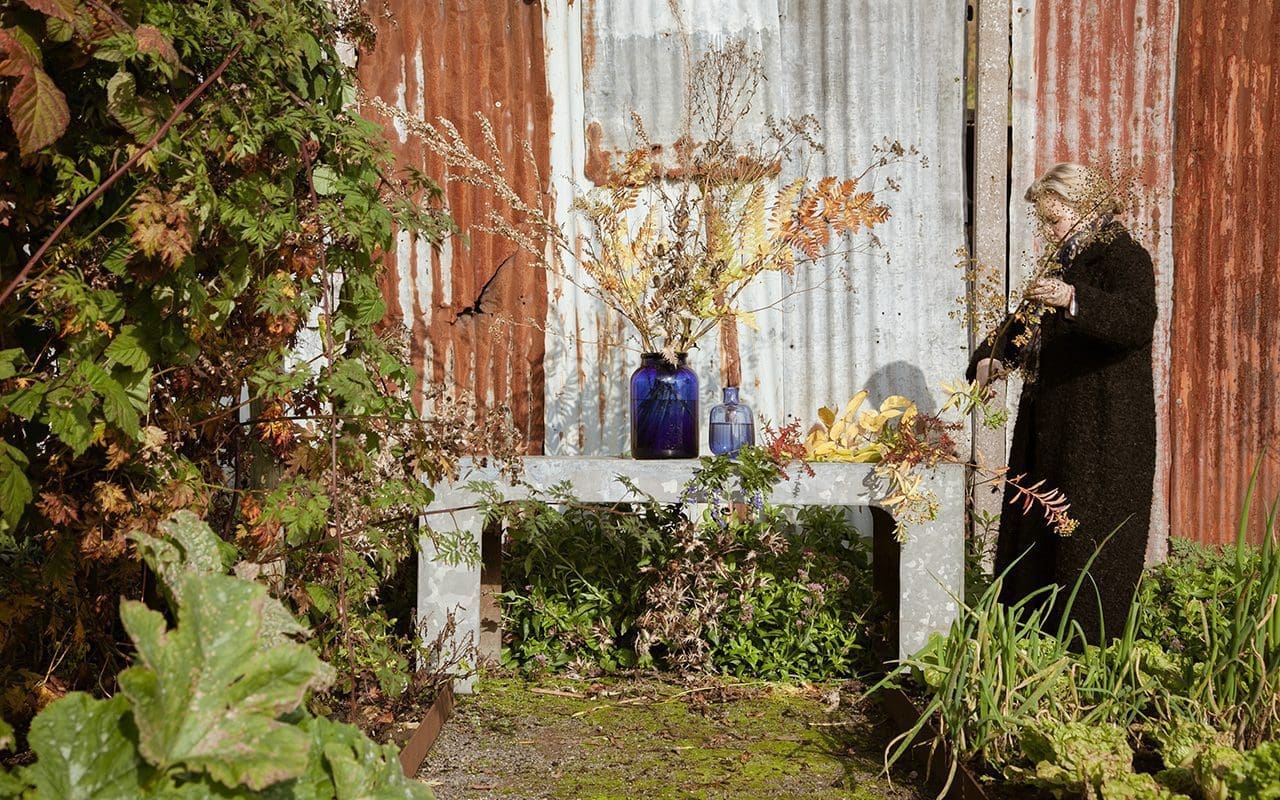
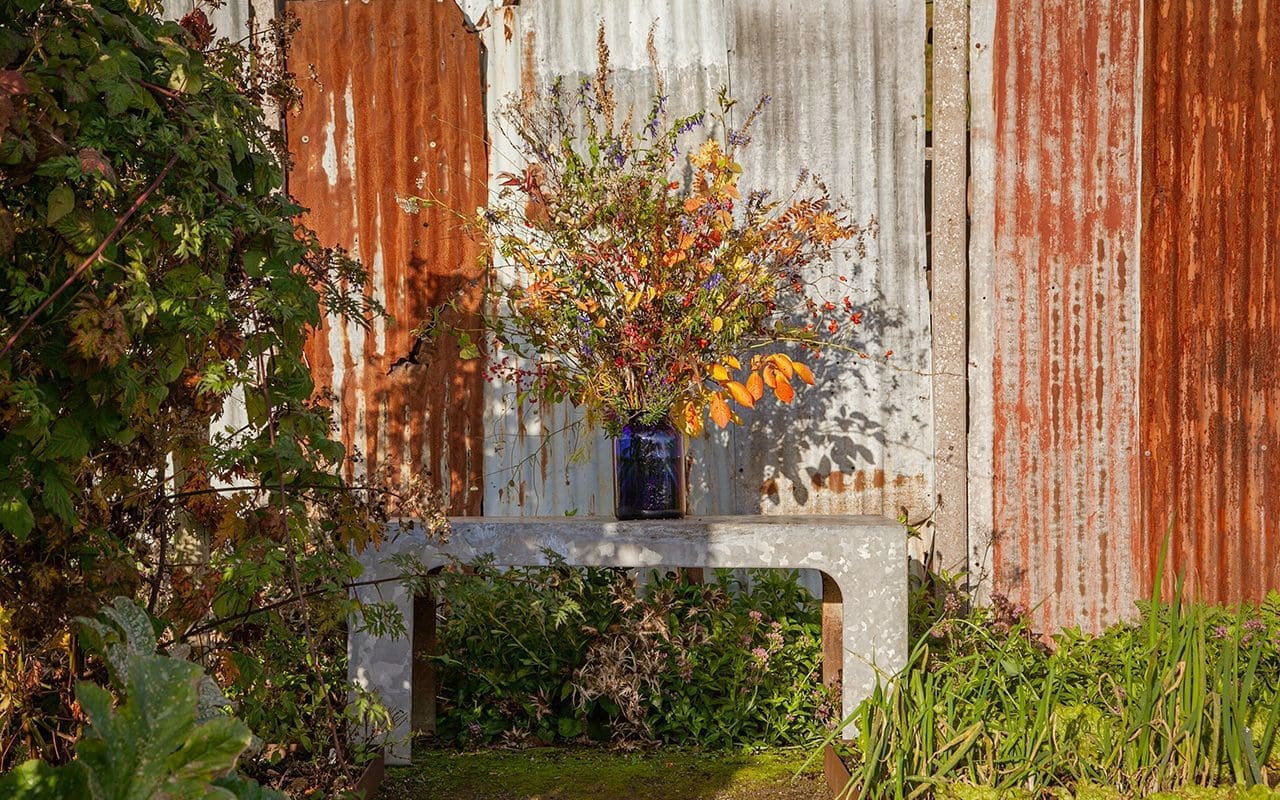
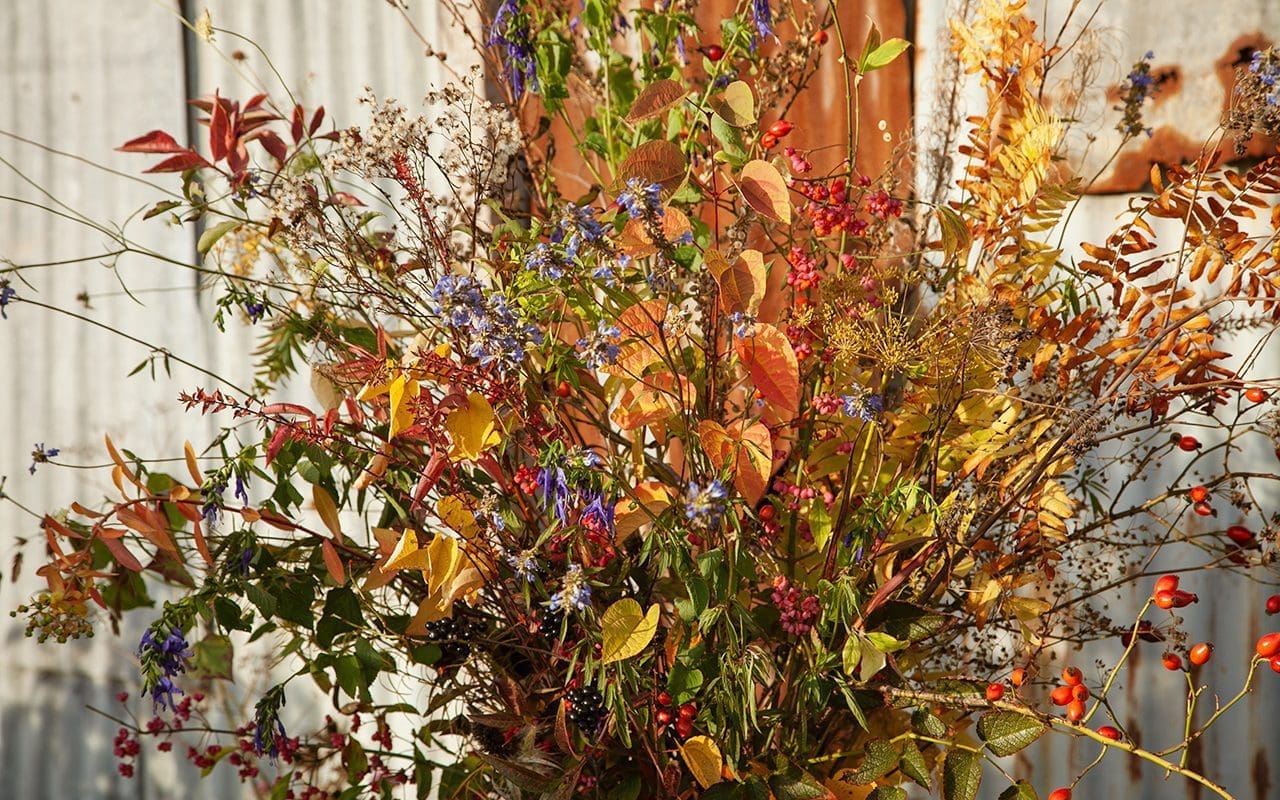
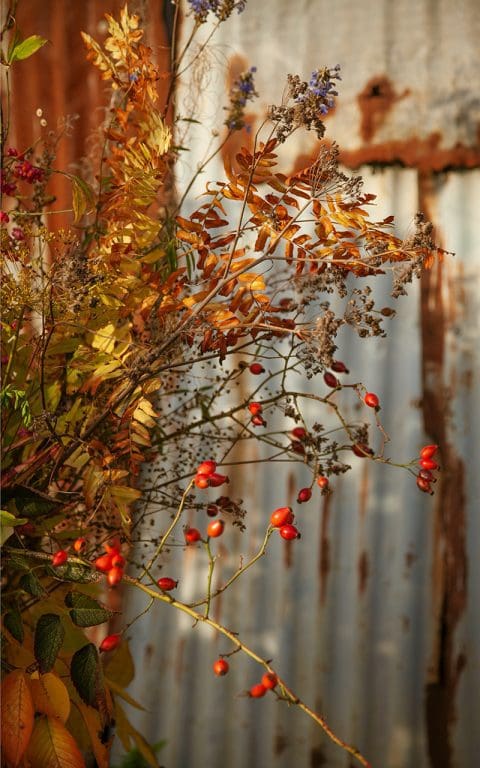
We decided to shoot in the same location as before, in front of the beautifully rusted corrugated iron barn. I’m interested to see how the four images will sit together by the end of the year and like the idea of them being in the same place.
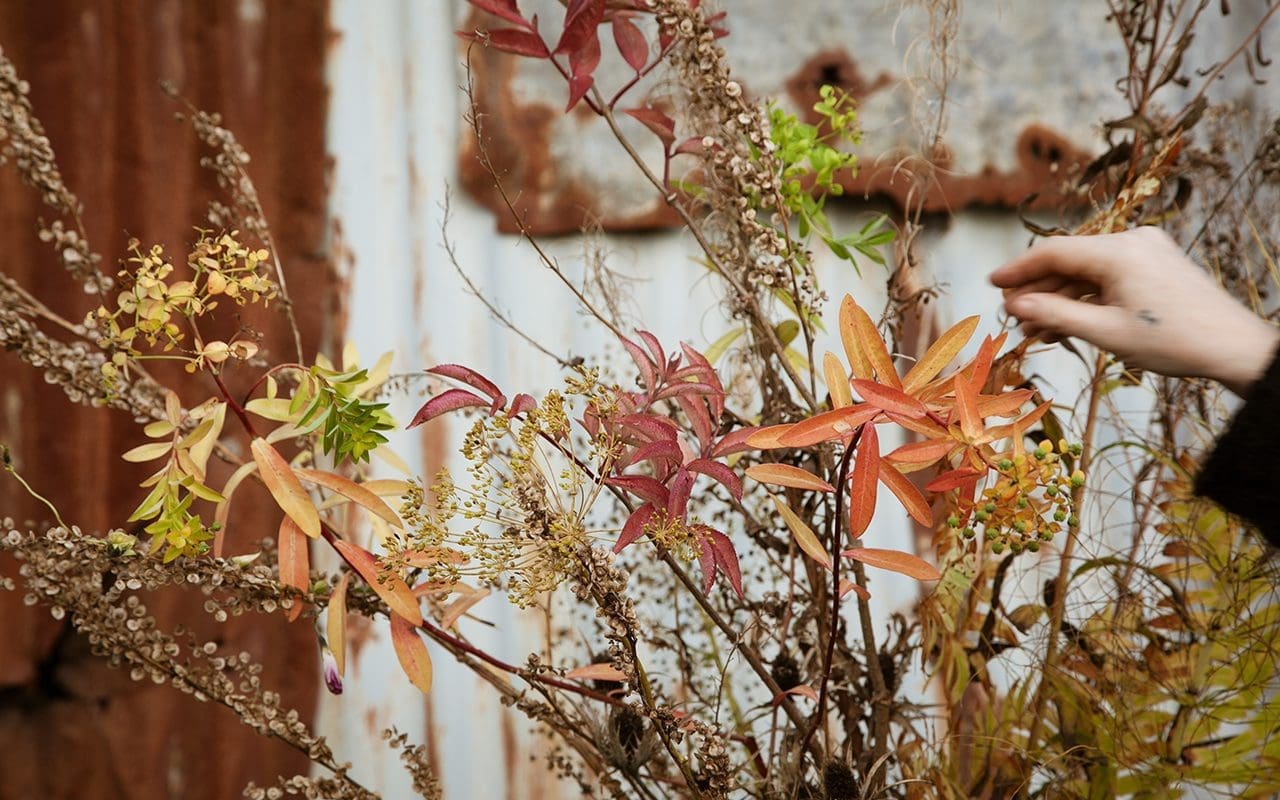
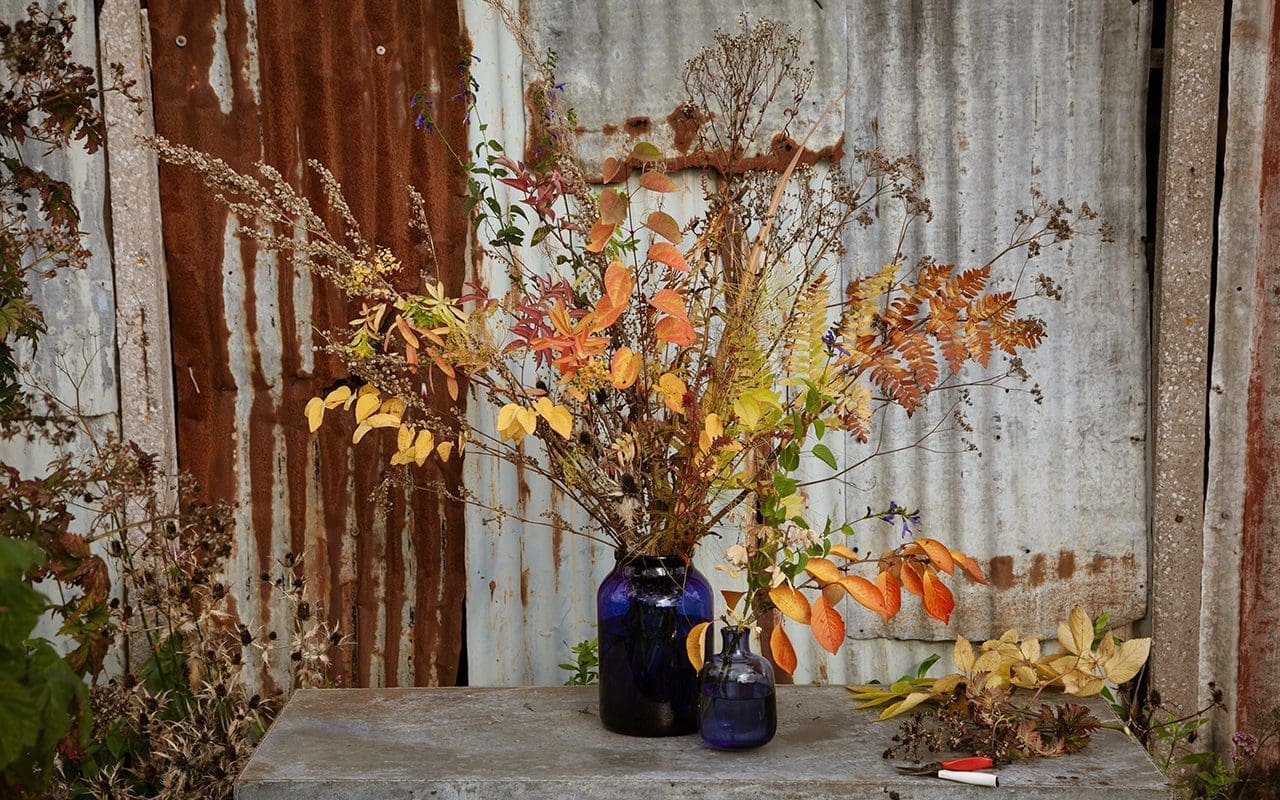
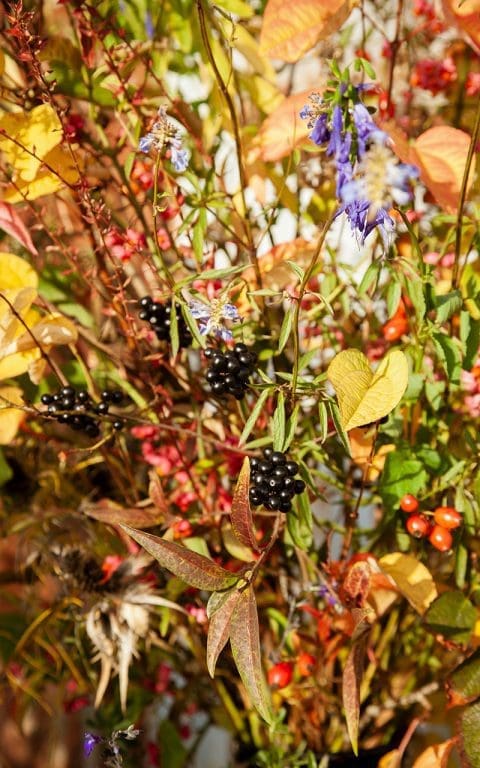
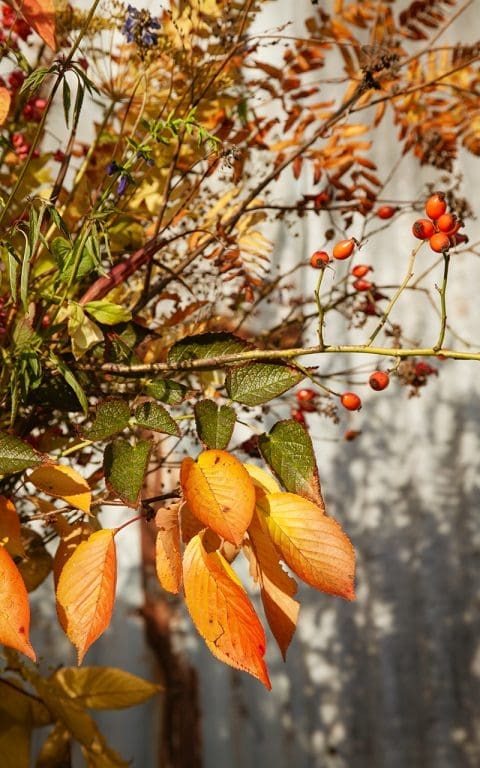
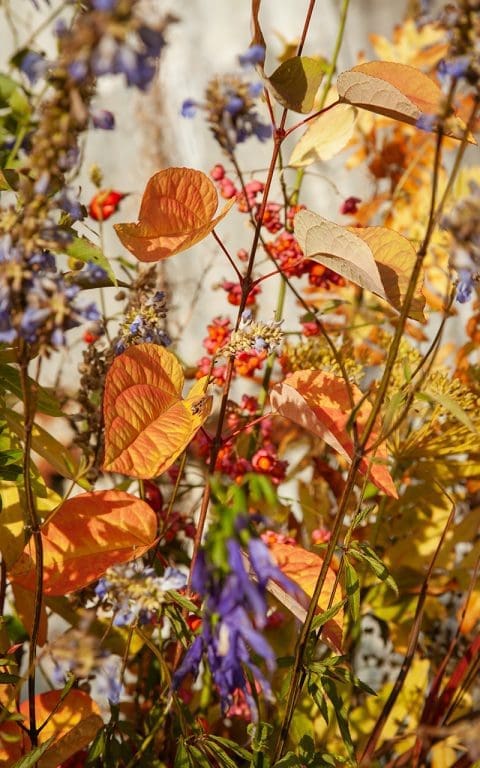
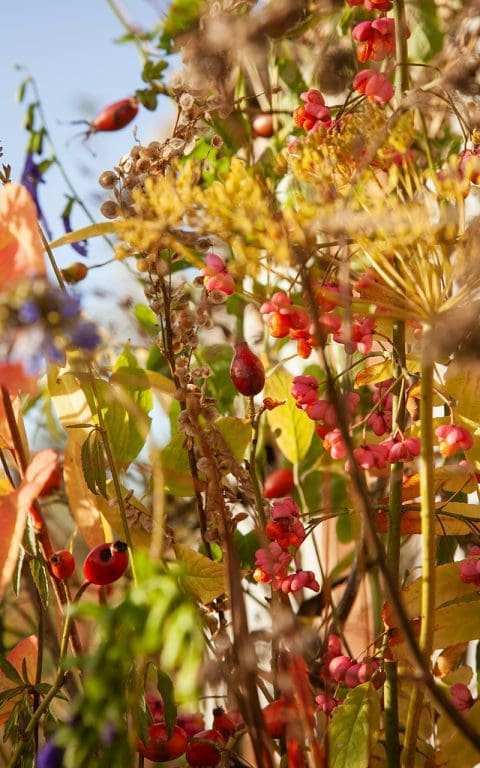
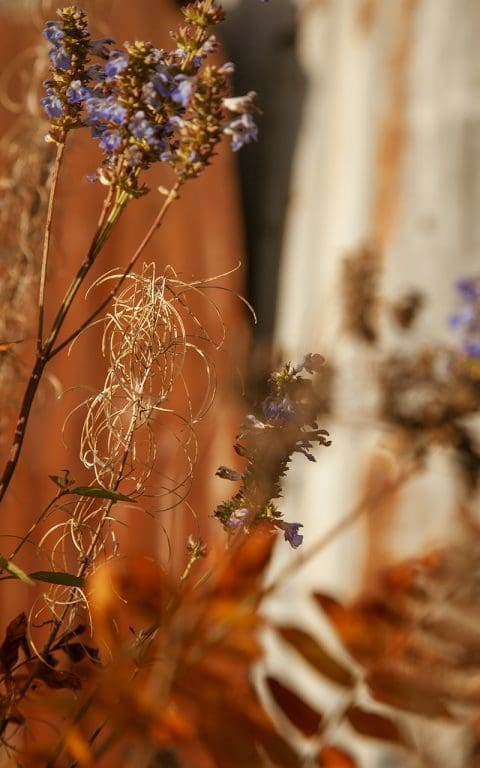
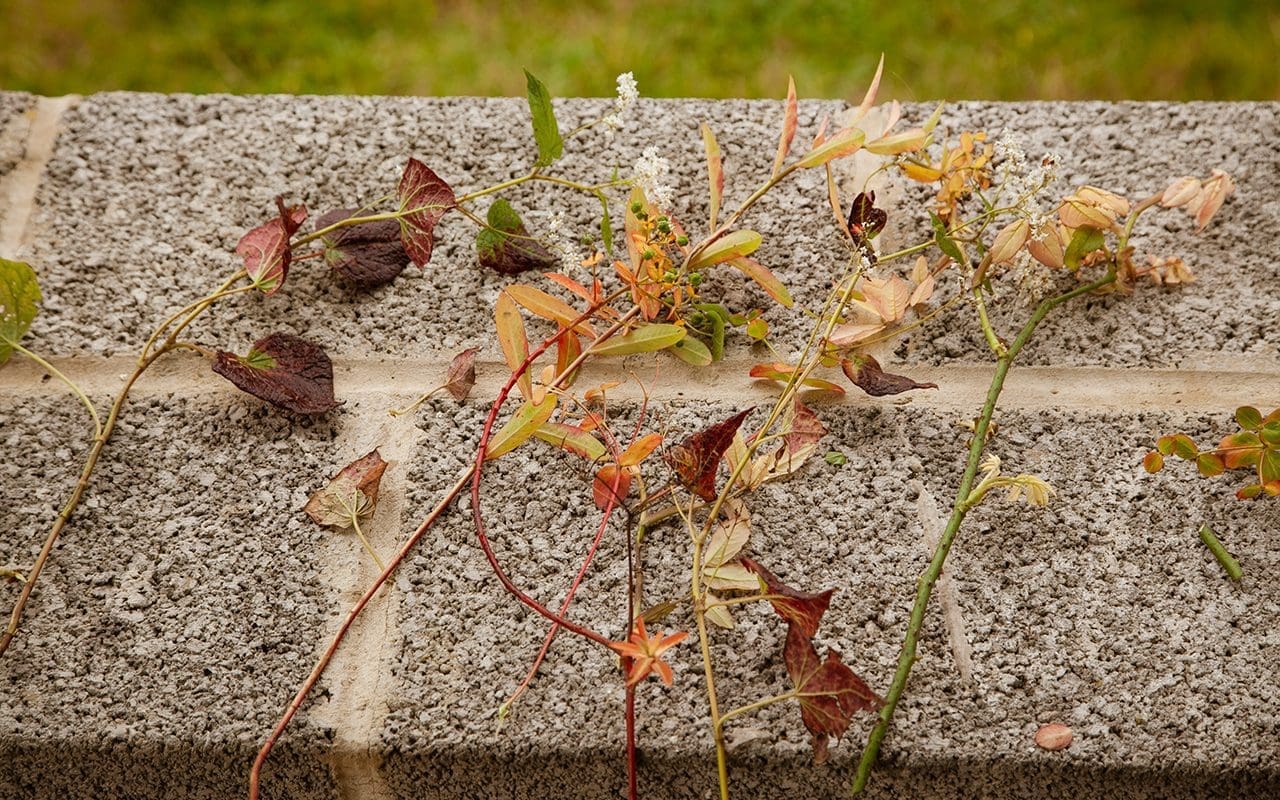
As before, we cut sparingly – no more than a few stems from each plant. This time I chose a lot of dried structure – dill, red orache, fluffy willow herb and a stem of Thalictrum ‘White Splendide’ with its delicate mottled yellow leaves. And of course, some essential autumnal colour in the form of Euphorbia cornigera and a snipping from the fiery Prunus x yedoensis.
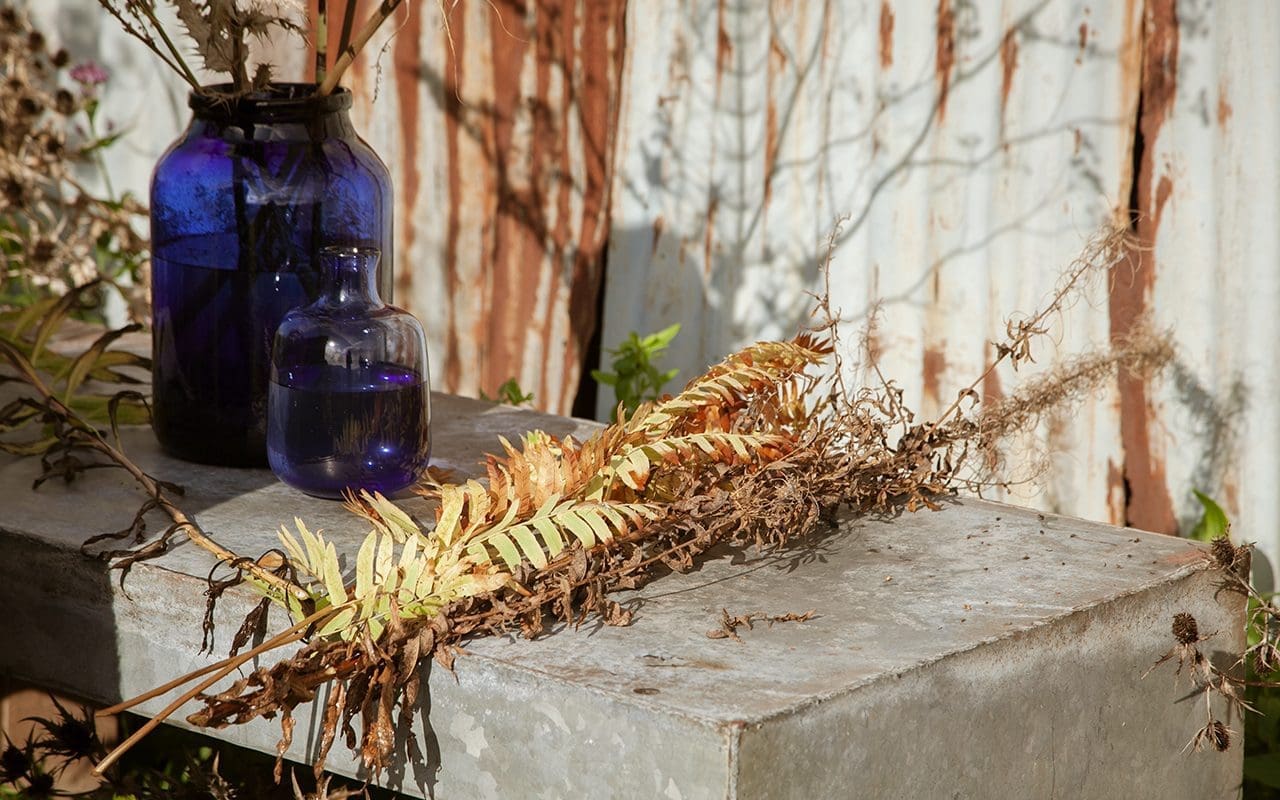
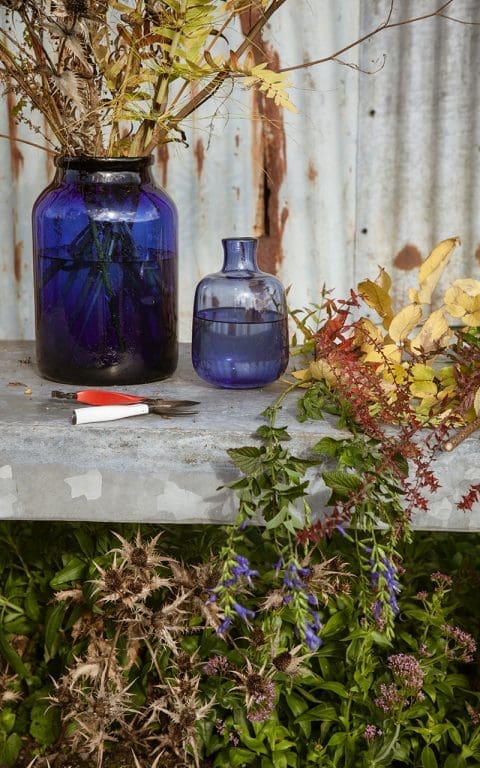
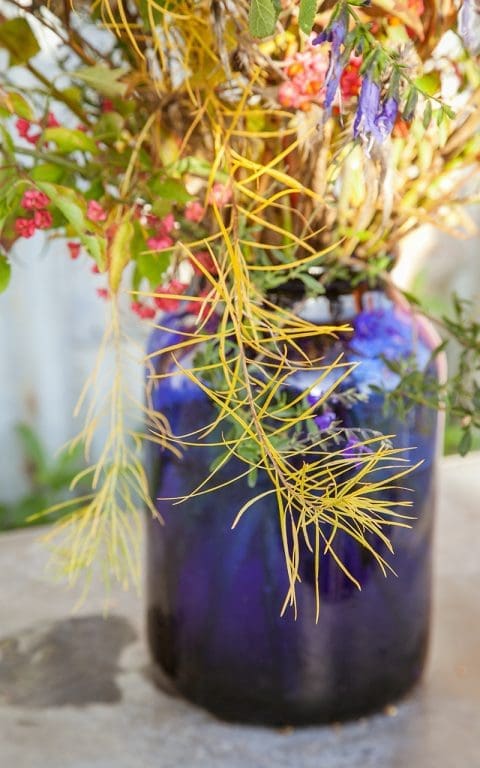
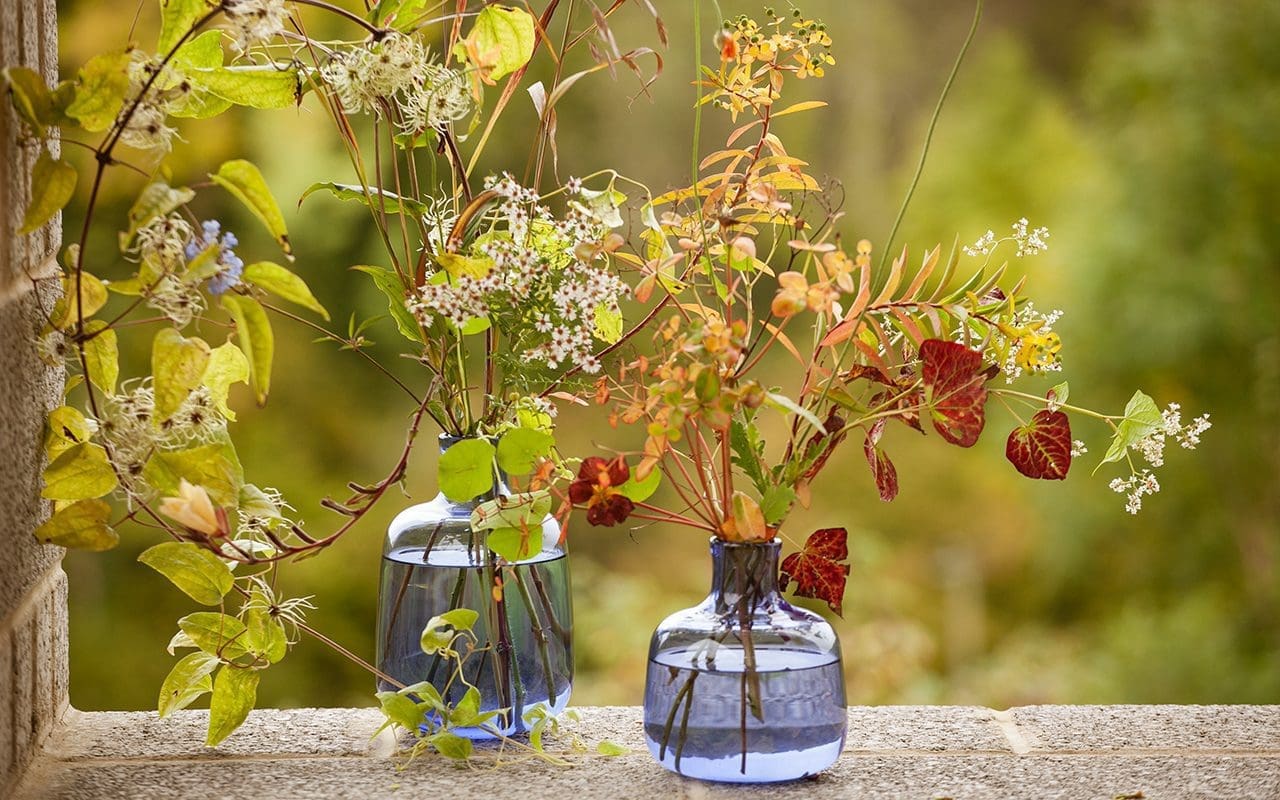
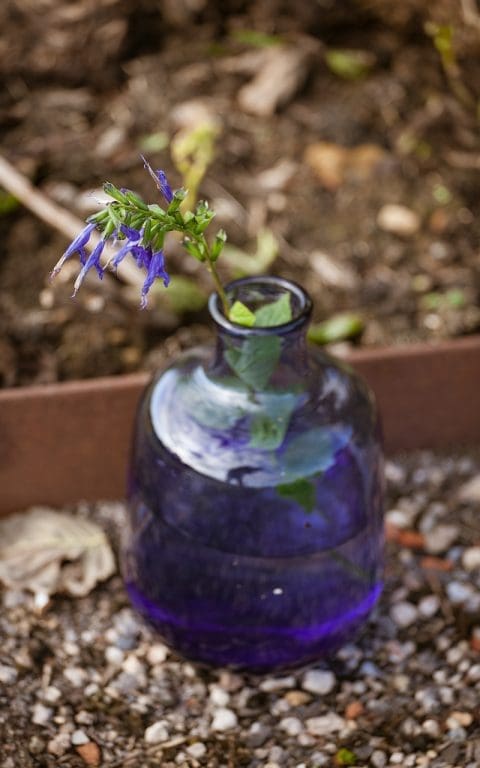
Moving back to the barn, we pick some blue glass jars from the house & get to work. The space will always dictate the arrangement in terms of scale and the zinc table outside calls for size, not least because of the October wind.
The tall dried pieces were placed first creating the framework, a beautiful Aster umbellatus towering over the others. A few leaves of royal fern quickly followed, adding a myriad of colours in each stem. I carried on building the colour with warm tones before offsetting with the deep blues and violets of a few varieties of salvia.
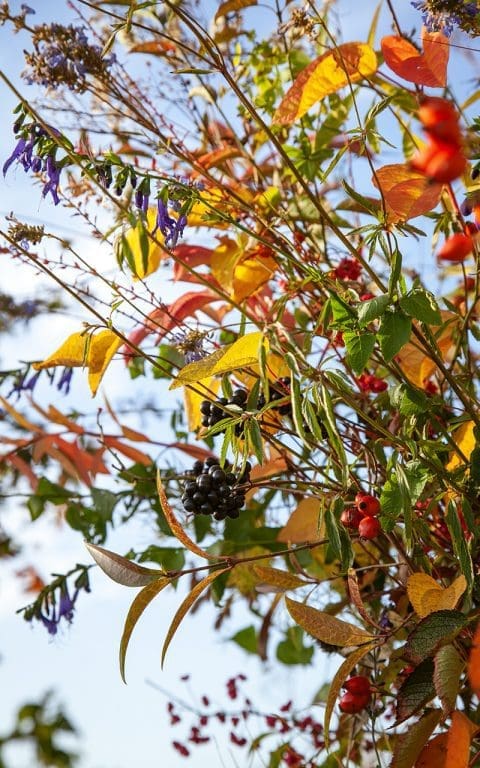
Even though the stems keep get buffeted by the wind and moving around, I like this way of working. It’s spontaneous & can’t be too precious. After a while, I feel like we’re missing some pops of brighter colour and go foraging for rosehips, finding some spindleberry on the way.
As these are more structural branches, I end up taking the arrangement apart & starting again, adding these elements earlier. Some of the salvia had also started to wilt by the time we got back so we cut a little more. If I were to use this again, I’d try & sear it to make it last longer. I finish with a curling tail of yellow amsonia, a shock of pale yellow scabious and some shiny black berries of wild privet.
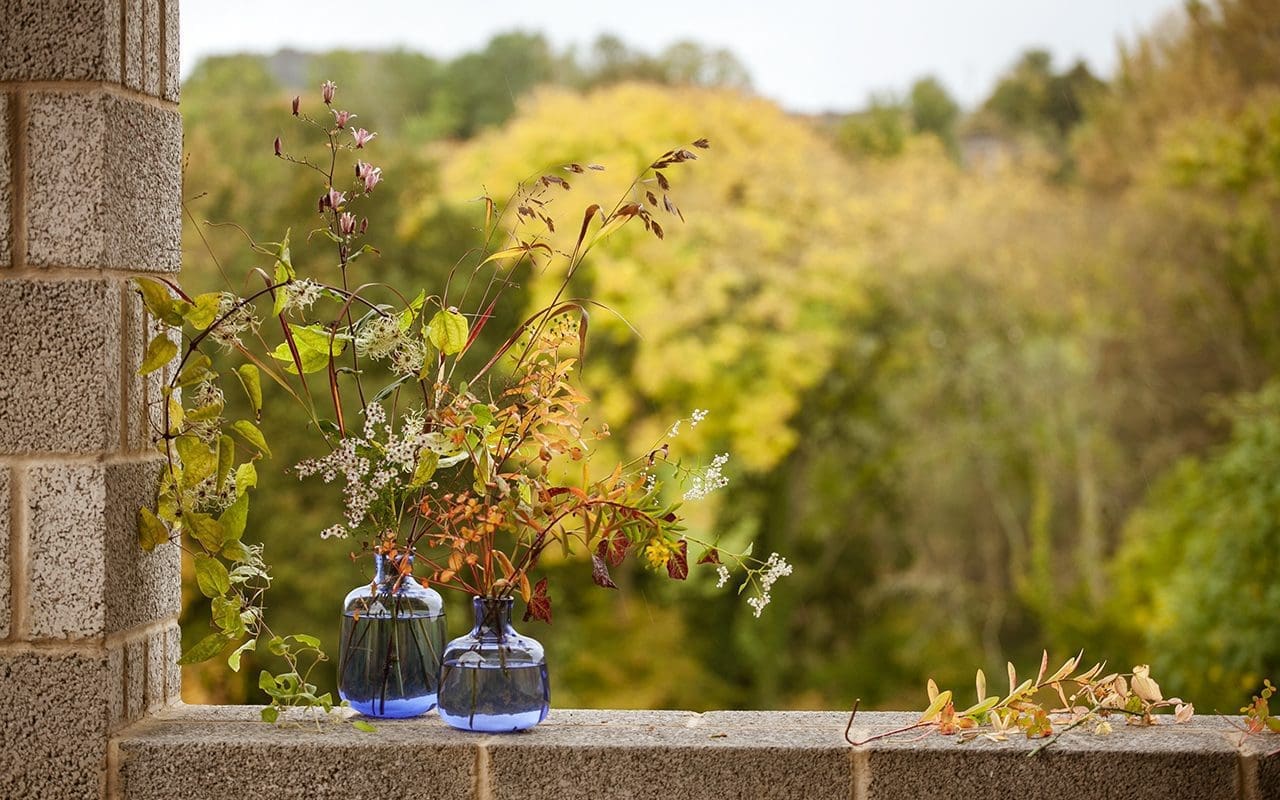
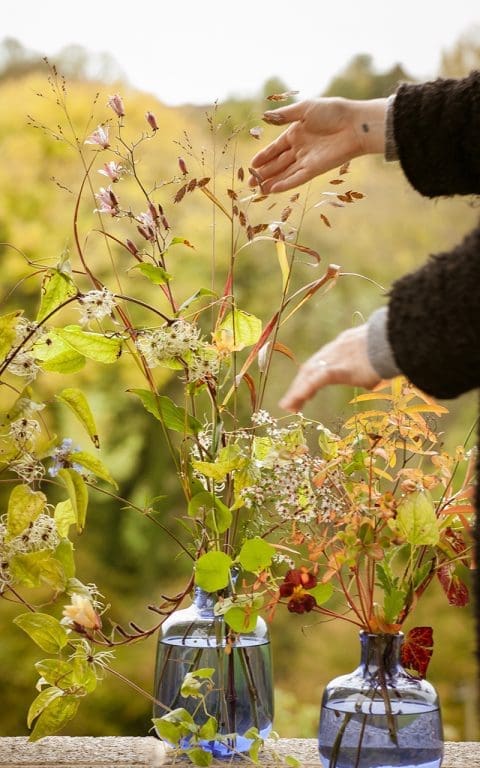
As well as wanting to represent the garden in all her autumnal glory, I was also keen to make a smaller and simpler arrangement – something quieter that allows the stems their space to shine. It’s probably how I’m happiest working.
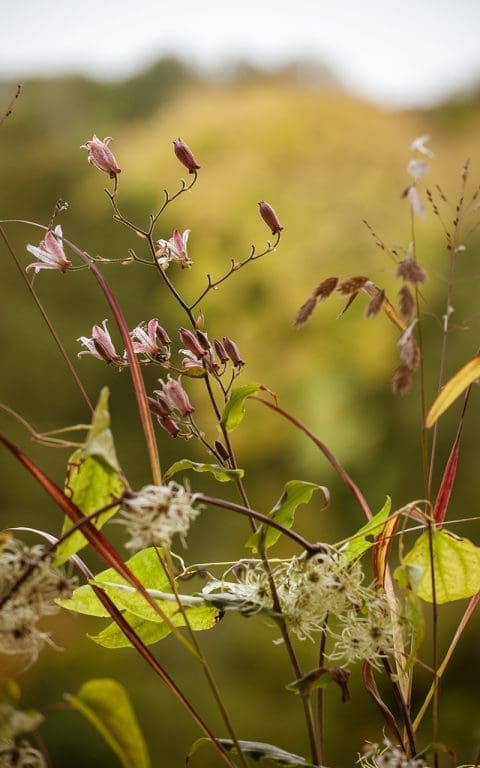
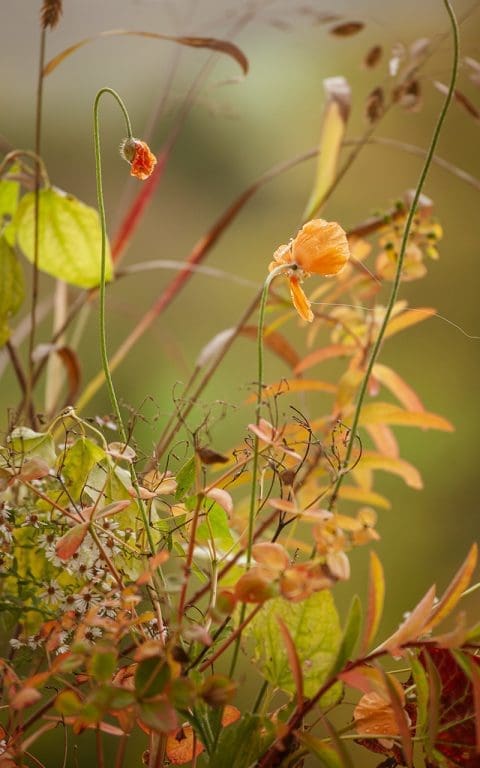
The picture window outside the milking barn provides the setting and frames the vases with the changing landscape behind. I start with a length of old man’s beard and some more euphorbia. A few stems of panicum & chasmanthium add height along with a speckled toad lily. A sprinkling of dainty white asters were added lower down and some oxblood red leaves of fagopyrum trail off to the side, slightly broken but more beautiful for it.
Back in the garden & you can see the silhouettes of winter beginning to appear. Huw & I spent a little time looking at the plants that we’d like to dry and preserve for our next shoot. I’m looking forward to the change of the season already
Anethum graveolens
Aster umbellatus
Astilbe rivularis
Atriplex hortensis
Cercidiphyllum japonicum
Chamaenerion angustifolium ‘Album’
Chasmanthium latifolium
Euonymus europaeus
Euphorbia cornigera
Ligustrum vulgare
Lythrum virgatum ‘Dropmore Purple’
Osmunda regalis
Prunus x yedoensis
Rosa eglanteria
Salvia ‘Blue Enigma’
Salvia ‘Blue Note’
Salvia uliginosa
Sambucus nigra
Scabiosa ochroleuca
Thalictrum ‘White Splendide’
Thalictrum ‘
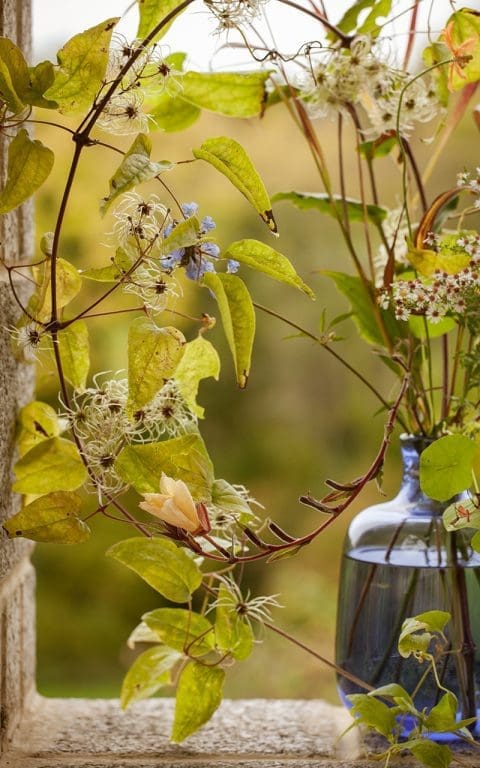
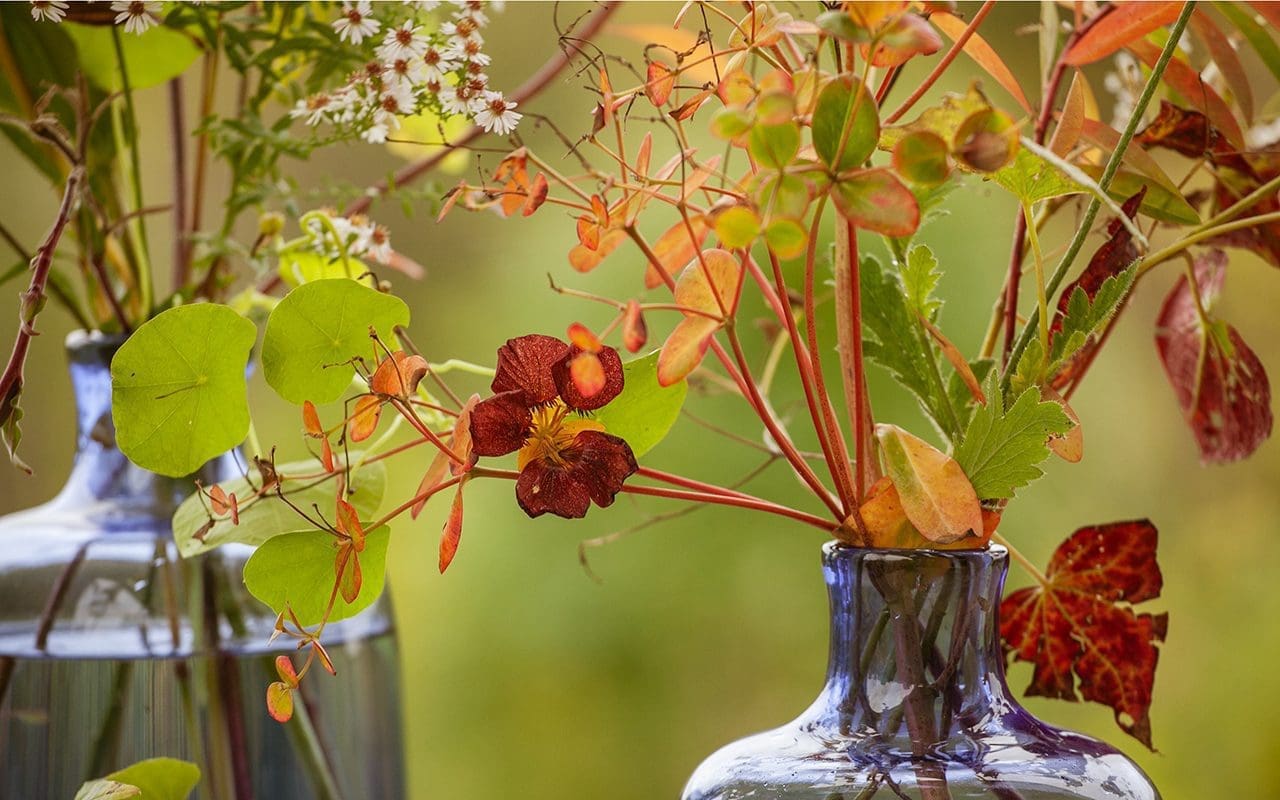
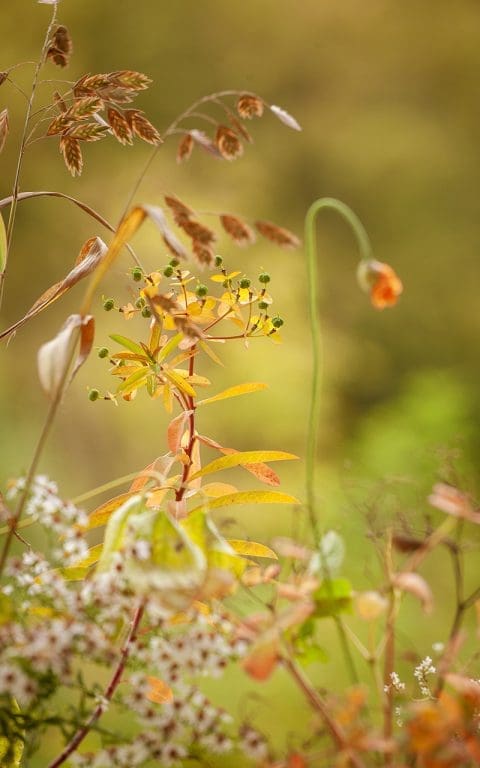
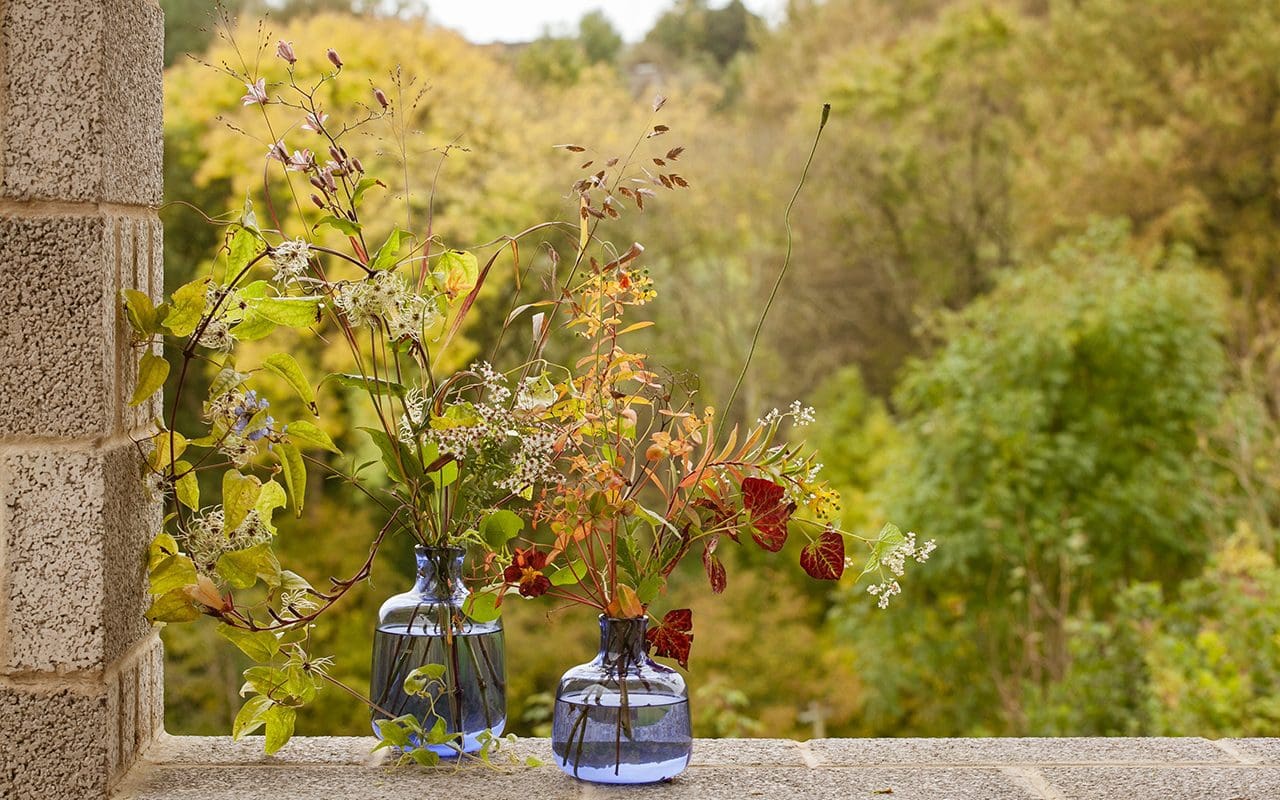
Aster unnamed white
Chasmanthium latifolium
Clematis vitalba
Euphorbia cornigera
Fagopyrum dibotrys
Oenothera stricta ‘Sulphurea’
Panicum virgatum ‘Heiliger Hain’
Papaver rupifragum
Rosa ‘The Lady of Shallot’
Salvia uliginosa
Tricyrtis formosana ‘Dark Beauty’
Tropaeolum majus ‘Mahogany’
Photographs | Huw Morgan
Published 3 November 2019
We are sorry but the page you are looking for does not exist. You could return to the homepage