The winter form of last season’s skeletons has been easily as interesting as the first summer in the new garden. Though their muted presence is not the thing you plan for first, it is an aspect that is worth considering for the ghosts that are left behind. Some, the daylilies for instance, leave nothing more than the space they took in their fleshy growth period, but those that endure are arguably as good as they were in life. Without the distraction of a growing season, its pull of colour and the steer of upkeep, you are free to look at the dead, left-behind forms anew. Blacks and browns, sepia, cinnamon and parchment whites are far from monochrome and their structures and seedheads are worth planning for in combination.
Snow flurries and rain laden winds began the topple in January, but the garden endured and weekly we have observed it falling away, shifting, dropping back and thinning. The vernonia, with their biscuit seedheads, stood tall amongst the pale spent verticals of panicum and I welcomed the repeat of the finely tapered Verbena macdougalii ‘Lavender Spires’ together with the bottle-brushes of Agastache ‘Blackadder’. The birds loved them too and some days the garden has been alive with activity with the foraging for seed and overwintering insects looking for shelter. The black stems of the veronicastrum were good amongst the molinia stems, but their seeds were stripped by mice early on. The grasses have been key for their foil, their pale colouring bright on dry days, warm in the wet, and their plumage acting as light catchers when the sun has broken through.
The clearance required to make way for the new season has been carefully judged. There comes a point, some time when the bulbs are showing you that new life is on its way, that the skeletons begin to feel tired. We have also had to pace ourselves, for it has taken five man days to work through the areas that were planted almost a year ago and, this time next year, it will take another three when the areas of the garden that were planted last autumn are grown up.
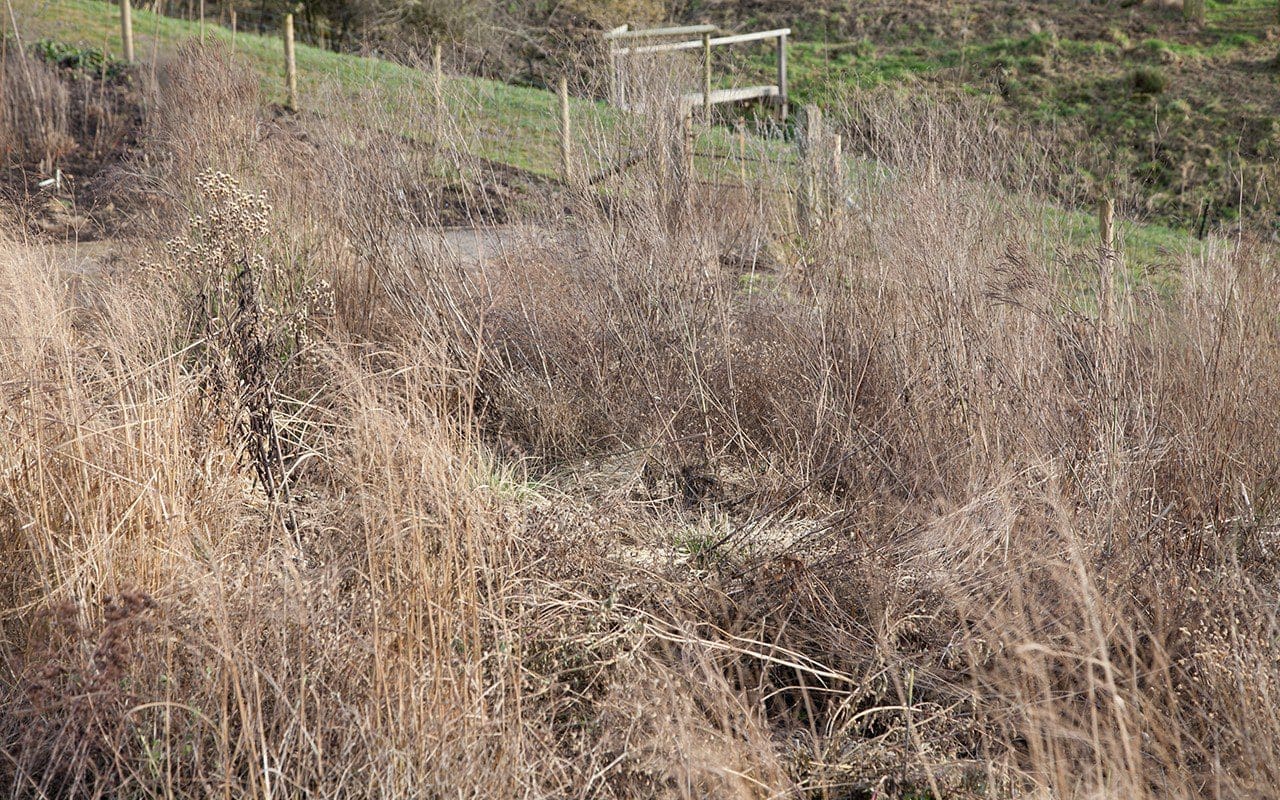 The lower bed before being cut back
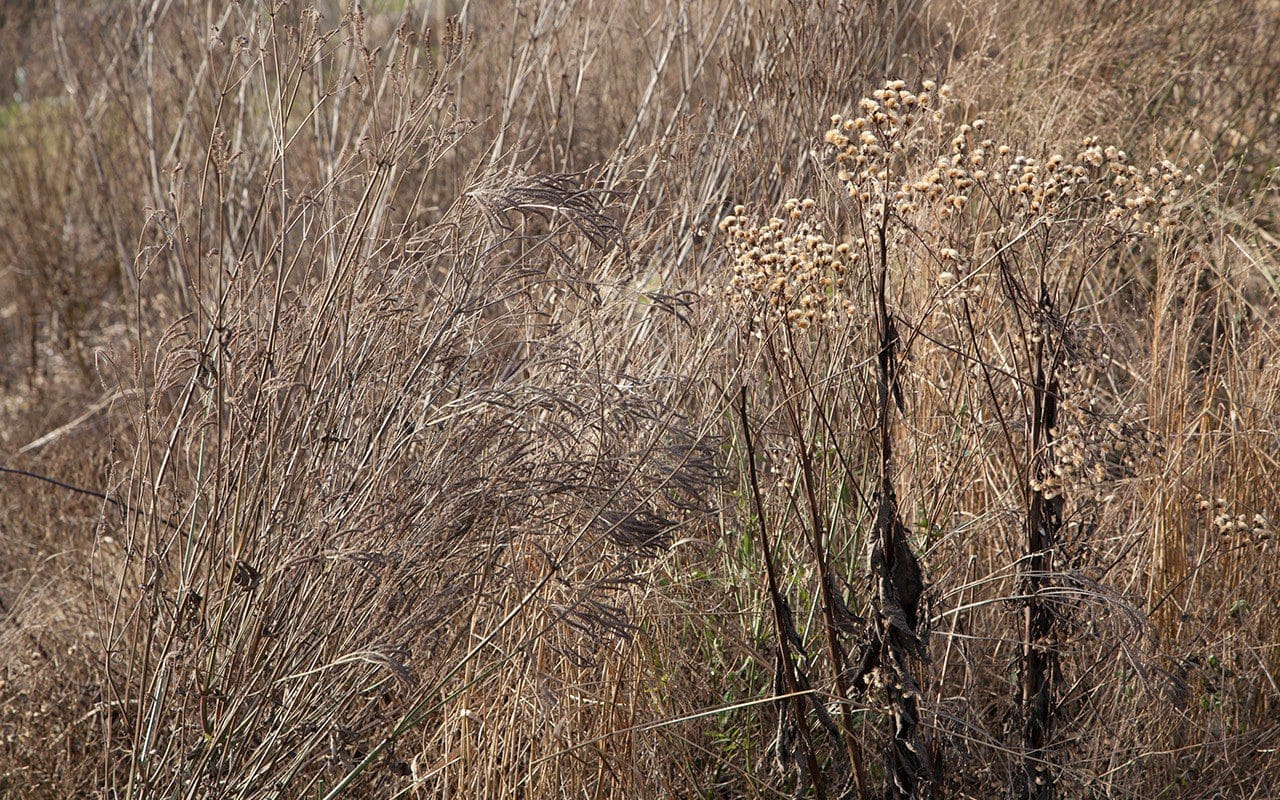 From left to right skeletons of Sanguisorba ‘Blackthorn’, Verbena macdougalii ‘Lavender Spires’ and Vernonia arkansana ‘Mammuth’
We made a start in early February, working from the high ground that drained most freely and sweeping round to the heavier low bed by the field in a second session a fortnight later. In just two weeks buds that had been thoroughly dormant were already showing at the base of the euphorbias and the first new shoots on the grasses signalled the shift and the need to move things forward.
Before we started, I waded into the beds and marked the plants that I knew I wanted to change, for there are always adjustments that need to be made in a new planting. The densely-flowered Lythrum salicaria ‘Swirl’ will be exchanged for the more finely tapered L. virgatum ‘Dropmore Purple’, while the Artemisia lactiflora ‘Elfenbein’ that read too strongly as a group once their pale flowers caught the eye were left standing so that I could find them again easily and redistribute them so that their presence is lighter this summer. The changes will be different every year, but it is good to have time in hand to make them whilst the plants are more or less dormant.
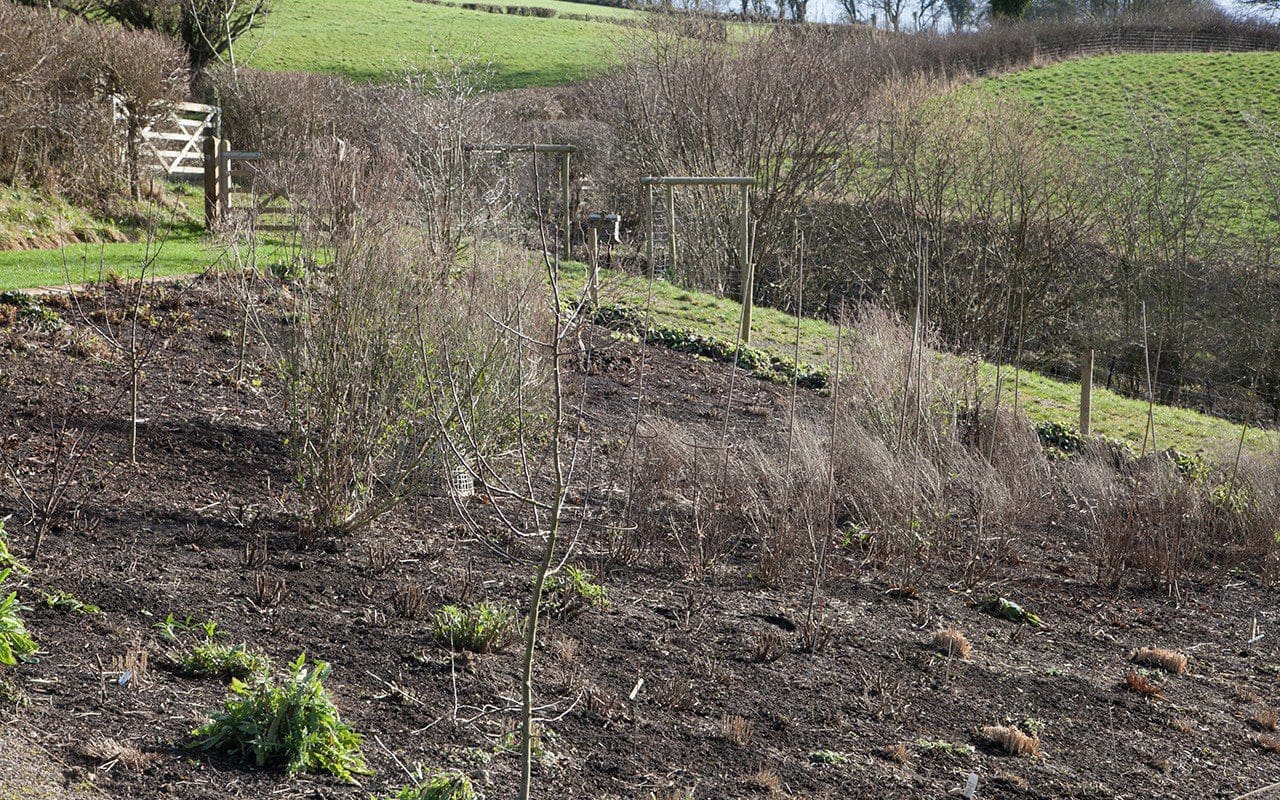 After clearance bamboo canes mark the remains of Lythrum salicaria ‘Swirl’ in the top bed
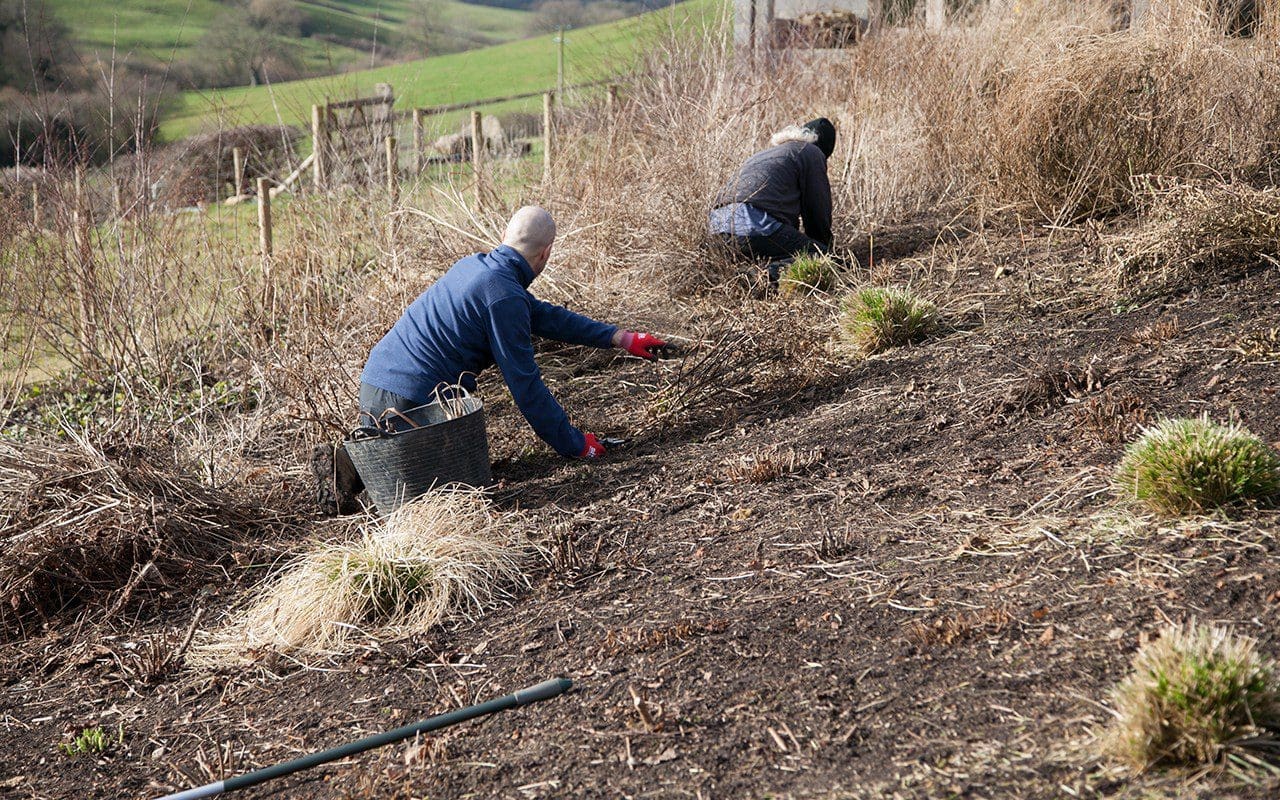 Ray and Jacky work their way through the lower bed
The feeling of working through and stripping away is always a mixed one. I would leave some plants standing for longer, indeed, I have with the liquorice and the fennel, but the spring clean is good. Underneath the tussocks of deschampsia we unearthed the nesting places of voles, which had already tunnelled out and made a winter feast of my inulas on the banks. We only found one, which scurried to safety and I was relieved to find that their damage hadn’t been greater. Last year when lifting the molinias from the stockbeds to split them in readiness for the new planting, I found them almost completely hollowed out, roots and crown all but gone under the protective thatch of winter cover. There are pros and cons to leaving the garden standing and, although I prefer to do so, it is a good feeling to see the clean sweep reveal the planting again in new nakedness. Tight clumps, indicating quite clearly now that they have broadened, how the combinations were set out on the spring solstice almost a year ago.
The dry, cut material was piled high on the compost heap where it will be topped by some of last year’s compost to help in rotting it back for the future. And at the end of the day, as light was dimming, we carefully raked between the plants so as not to disturb last year’s mulch. A couple of weeks later I combed through the beds again to winkle out any seedlings that we’d missed in the first pass. Dandelions already in evidence and ready to take hold in the crowns of the grasses and buttercups and nettles that been secretly travelling in shade under the cover of summer growth. The beds that were planted and mulched last year will only be topped up this year where they have been disturbed where I’ve made alterations. Hopefully growth will be sufficient to suppress all but the strongest of the interlopers. Although we are still waiting for the planting that went in during the autumn to show itself enough before mulching these new areas, it won’t be long now until the need to move will be upon us and the garden once again dictates the pace.
Words: Dan Pearson / Photographs: Huw Morgan
Published 24 February 2018
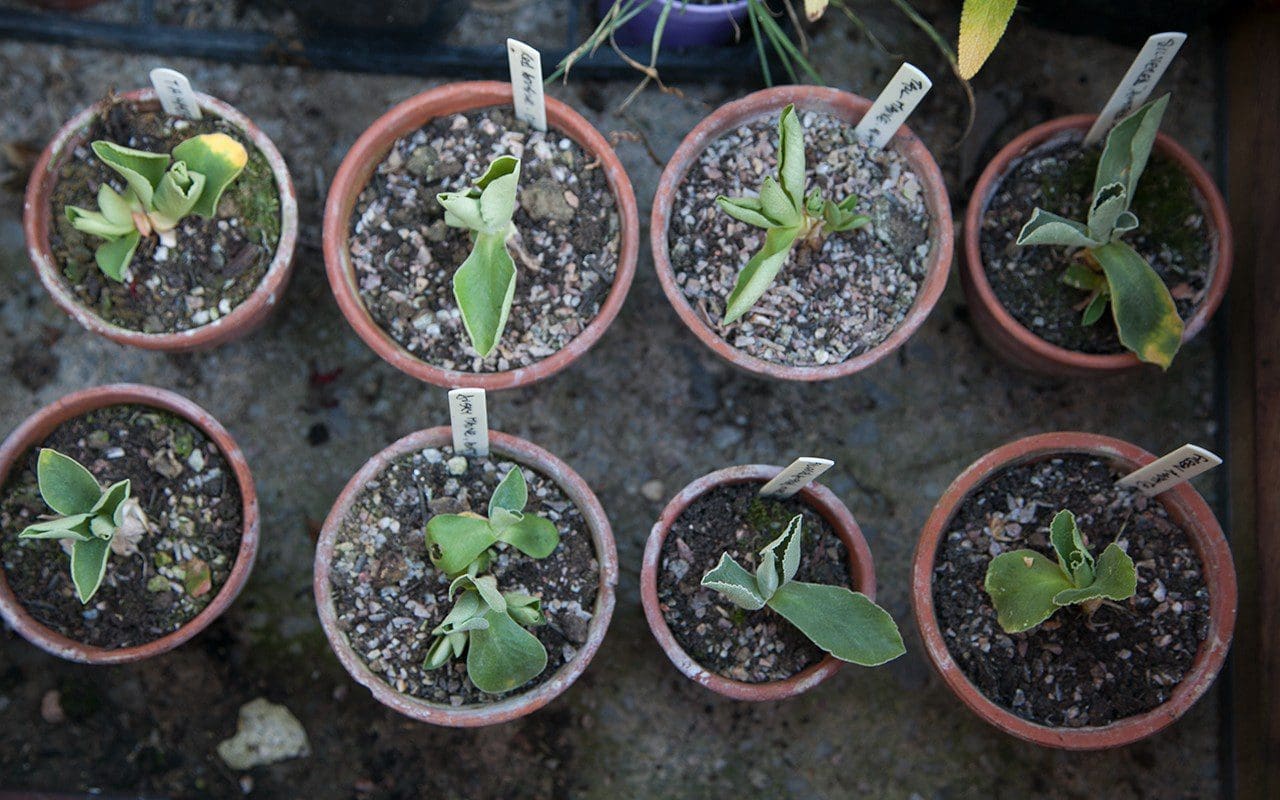
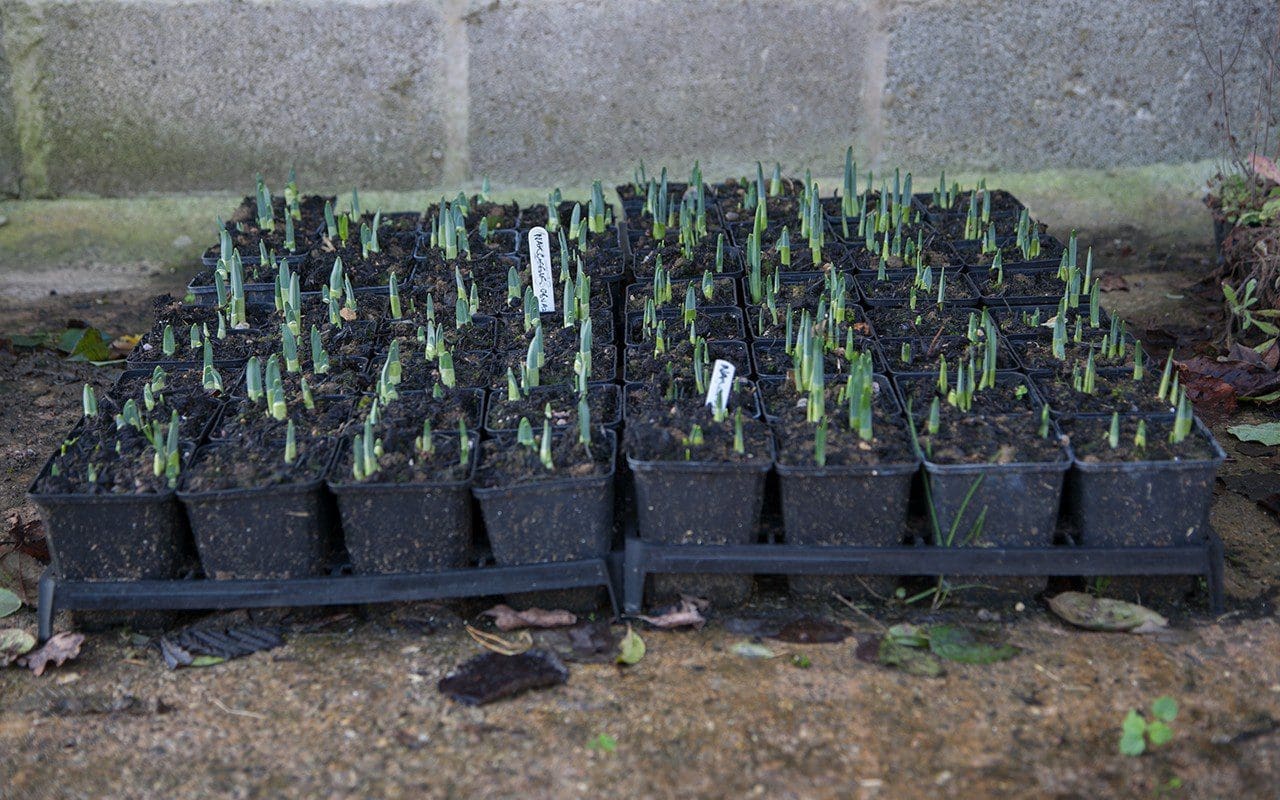
The hush and the breathing space that comes, now that the leaves are down and the grass has finally slowed, is palpable. In the mild spells between freezes I take this opportunity to square up the holding area by the barns. This is where one day I plan for a greenhouse, but for now it is where I propagate and look after the plants that are waiting for a home. The cold frames which reared the spring seedlings are now packed to the gunnels with plants that need protection from the lethal combination of winter wet and freeze. Auriculas and the Mediterranean herbs are kept on the dry side and the autumn seedlings and cuttings will make a surprising leap forward with this little extra shelter. Out in the open and hunkered together for protection are bulbs to go out in the spring, once I can see exactly where they need to be and that they are the correct varieties, as well as youngsters that are ready and waiting for areas that are not quite prepared in which to set them loose. This backlog is a perpetual conundrum, but I have a three-year rule so that the holding ground avoids becoming a corner of shame. If they cannot be found a place, they will be put out on the lane with a sign saying, “Please help yourself”. Very few are left unclaimed and I trust they find good and unplanned for new homes.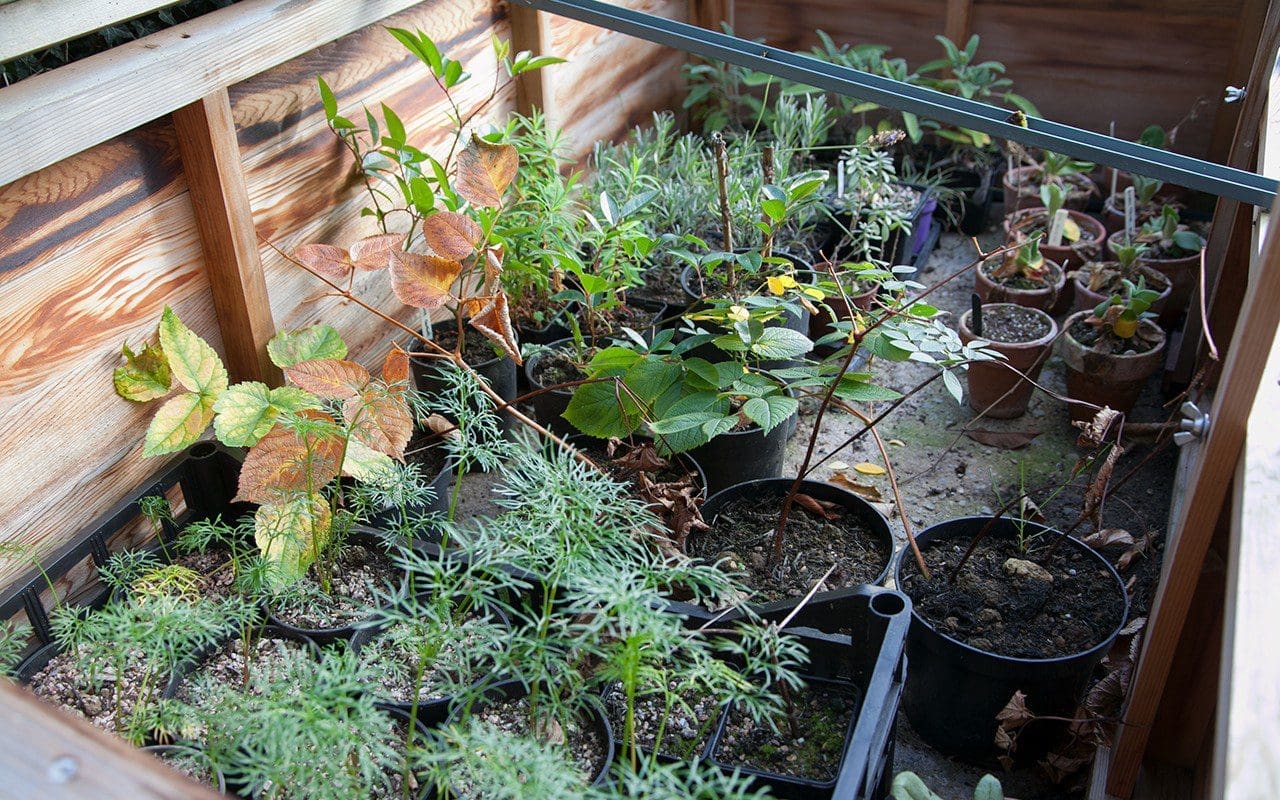 One of the cold frames
 Auriculas
 Narcissus
It is always good to start the year by planting trees and I am happy to use this window in the season to liberate the chosen few so that by the end of the holidays I am organised and ready for a new year. If they have been potted on annually, the woody seedlings are just about perfect at the end of a three-year period. This year, the first to be liberated will be the small-fruited form of Malus hupehensis, which were grown from the fruit of the single plant I have up in the blossom wood and are ready now to make the leap into open ground.
The seedlings are part of the learning curve that is illustrated in the trees they are going to join and in part replace. Destined for our highest ridge above the house, I plan for a huddle of berrying trees that will burst a cloud of blossom against the skyline in the spring. Three plants will join the hawthorn that were frayed out into the field from the Blossom Wood and the fourth will replace an ailing Malus transitoria. I have staggered this small, amber-fruited crab up the slope to meet the Blossom Wood on the high ground, but I have obviously pushed this Chinese species to the limit, for the higher up the slope they go the weaker they become, despite the fact that it is reputed to be resistant to drought and cold. With barely a finger’s worth of growth in the five summers they have been there, compared to several feet on those lower down the slope, they have demonstrated exactly what they require in the time they have been there.
I have dutifully mulched and watered and fed, but five years is quite long enough to know if a plant doesn’t like you, and so I feel justified in making the change. As I mature as a gardener, the question of time becomes more acute. I want to spend it wisely and use my energy well which, when you are investing years in trees, is important. That said, I am happy to plant young and though the saplings are barely up to my knee, they have the vigour of youth and will jump away with the below-ground growing time of winter ahead of them. The Malus hupehensis further up the slope has shown me that it has the stamina its cousin doesn’t and it is a good maxim that if you fail with one species, try another before giving up entirely.
Narcissus
It is always good to start the year by planting trees and I am happy to use this window in the season to liberate the chosen few so that by the end of the holidays I am organised and ready for a new year. If they have been potted on annually, the woody seedlings are just about perfect at the end of a three-year period. This year, the first to be liberated will be the small-fruited form of Malus hupehensis, which were grown from the fruit of the single plant I have up in the blossom wood and are ready now to make the leap into open ground.
The seedlings are part of the learning curve that is illustrated in the trees they are going to join and in part replace. Destined for our highest ridge above the house, I plan for a huddle of berrying trees that will burst a cloud of blossom against the skyline in the spring. Three plants will join the hawthorn that were frayed out into the field from the Blossom Wood and the fourth will replace an ailing Malus transitoria. I have staggered this small, amber-fruited crab up the slope to meet the Blossom Wood on the high ground, but I have obviously pushed this Chinese species to the limit, for the higher up the slope they go the weaker they become, despite the fact that it is reputed to be resistant to drought and cold. With barely a finger’s worth of growth in the five summers they have been there, compared to several feet on those lower down the slope, they have demonstrated exactly what they require in the time they have been there.
I have dutifully mulched and watered and fed, but five years is quite long enough to know if a plant doesn’t like you, and so I feel justified in making the change. As I mature as a gardener, the question of time becomes more acute. I want to spend it wisely and use my energy well which, when you are investing years in trees, is important. That said, I am happy to plant young and though the saplings are barely up to my knee, they have the vigour of youth and will jump away with the below-ground growing time of winter ahead of them. The Malus hupehensis further up the slope has shown me that it has the stamina its cousin doesn’t and it is a good maxim that if you fail with one species, try another before giving up entirely.
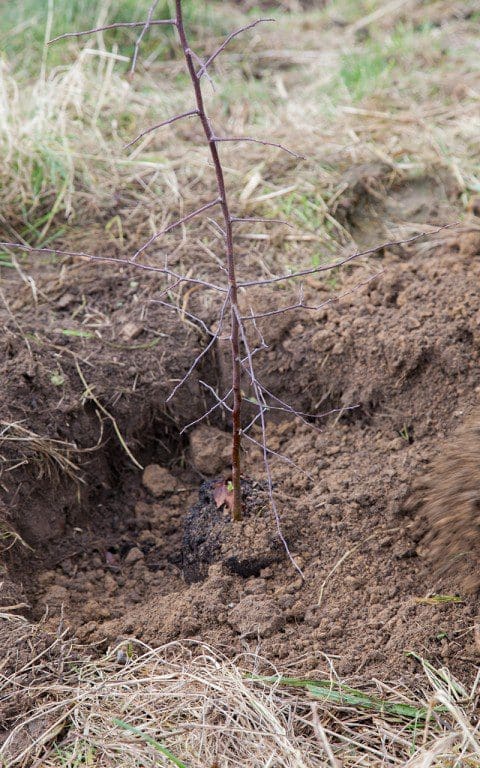
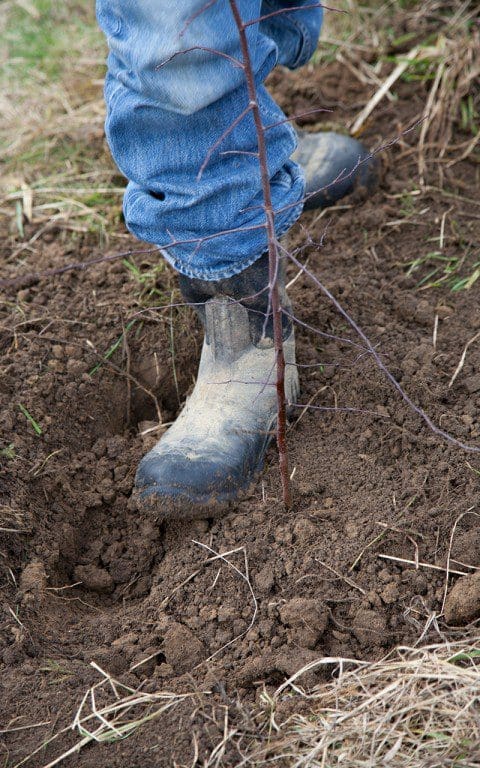 Planting a seedling Malus hupehensis
When planting woody material, and trees in particular, I prefer not to include organic matter to avoid an enriched planting hole from which the young tree prefers not to venture. Instead, the top sod, where the best soil lies, is upturned into the bottom of the hole where, by spring, it will have rotted down to provide the young roots with a good layer of loam. The roots of the young trees are given a sprinkling of mycchorhizal fungi to help in their establishment and from here they can make an easy way out into the surrounding ground. If I am to add compost, it will be as a mulch to keep the moisture in and the weeds down, and, in time, the worms will pull it to ground. Three years of clear ground around the base of a new tree is usually enough to give it the chance to get the upper hand and for the competition not to stunt growth. Growth which, in the case of my young Malus, and now that they have been liberated from the holding ground, will have nothing to hold it back come spring.
Words: Dan Pearson / Photographs: Huw Morgan
Published 6 January 2018
Planting a seedling Malus hupehensis
When planting woody material, and trees in particular, I prefer not to include organic matter to avoid an enriched planting hole from which the young tree prefers not to venture. Instead, the top sod, where the best soil lies, is upturned into the bottom of the hole where, by spring, it will have rotted down to provide the young roots with a good layer of loam. The roots of the young trees are given a sprinkling of mycchorhizal fungi to help in their establishment and from here they can make an easy way out into the surrounding ground. If I am to add compost, it will be as a mulch to keep the moisture in and the weeds down, and, in time, the worms will pull it to ground. Three years of clear ground around the base of a new tree is usually enough to give it the chance to get the upper hand and for the competition not to stunt growth. Growth which, in the case of my young Malus, and now that they have been liberated from the holding ground, will have nothing to hold it back come spring.
Words: Dan Pearson / Photographs: Huw Morgan
Published 6 January 2018 The self-sown sunflowers from the previous incarnation of the garden were the reminder that, just a year ago, we were growing the last of the vegetables here. I had allowed them the territory in the knowledge that this would be the end of their era, for they were in the bed that I now need back to complete the planting of the garden.
Felling them before they were finished was a relief, for suddenly, once they were gone, there was breathing space and the room to imagine the new planting. I’d also left the aster trial bed until the very last minute, eking out the weeks and then the days of its final fling. On the bright October day before we were due to lift, the bed was alive with honeybees, making the final selection of those that were to be kept for the garden that much more difficult. It was time to liberate the last of the stock beds, though, and to prepare the ground they occupied for a new planting.
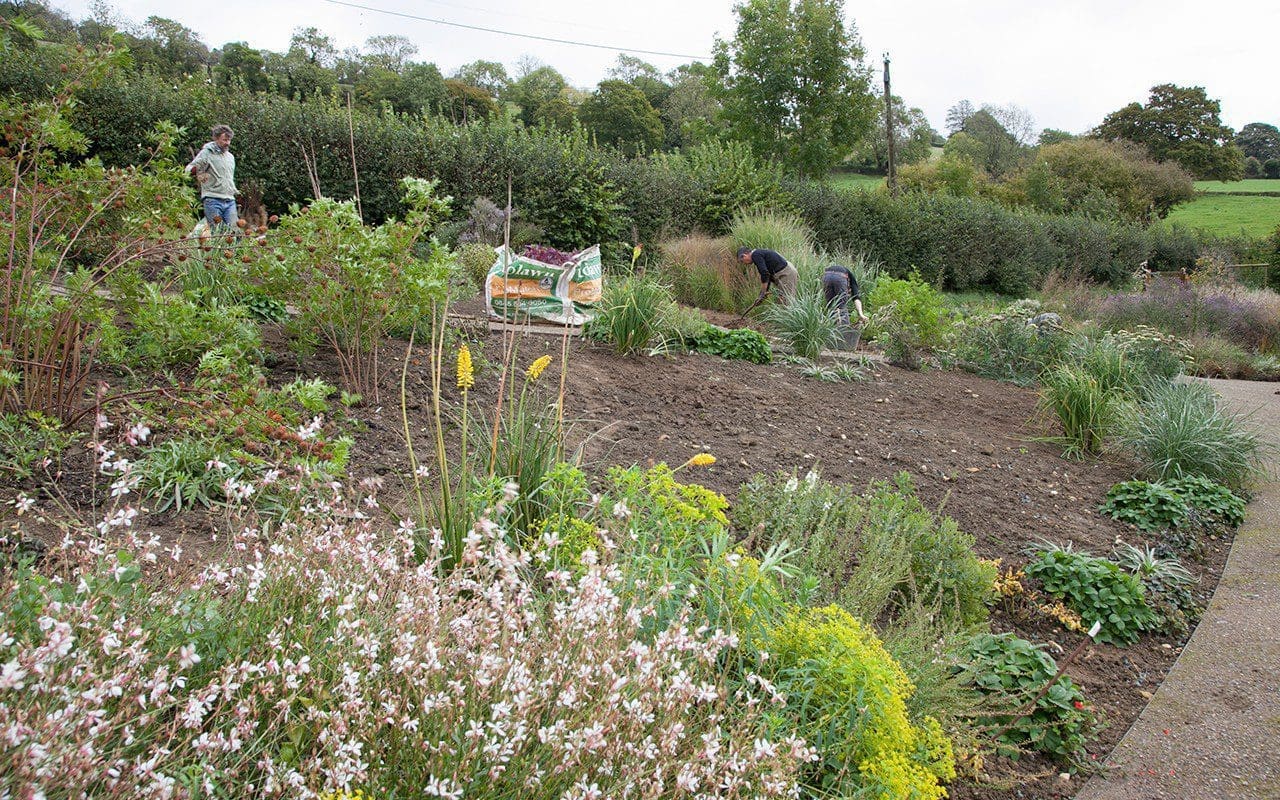 The central bed cleared of sunflowers and ready for planting. The edge planting went in in April
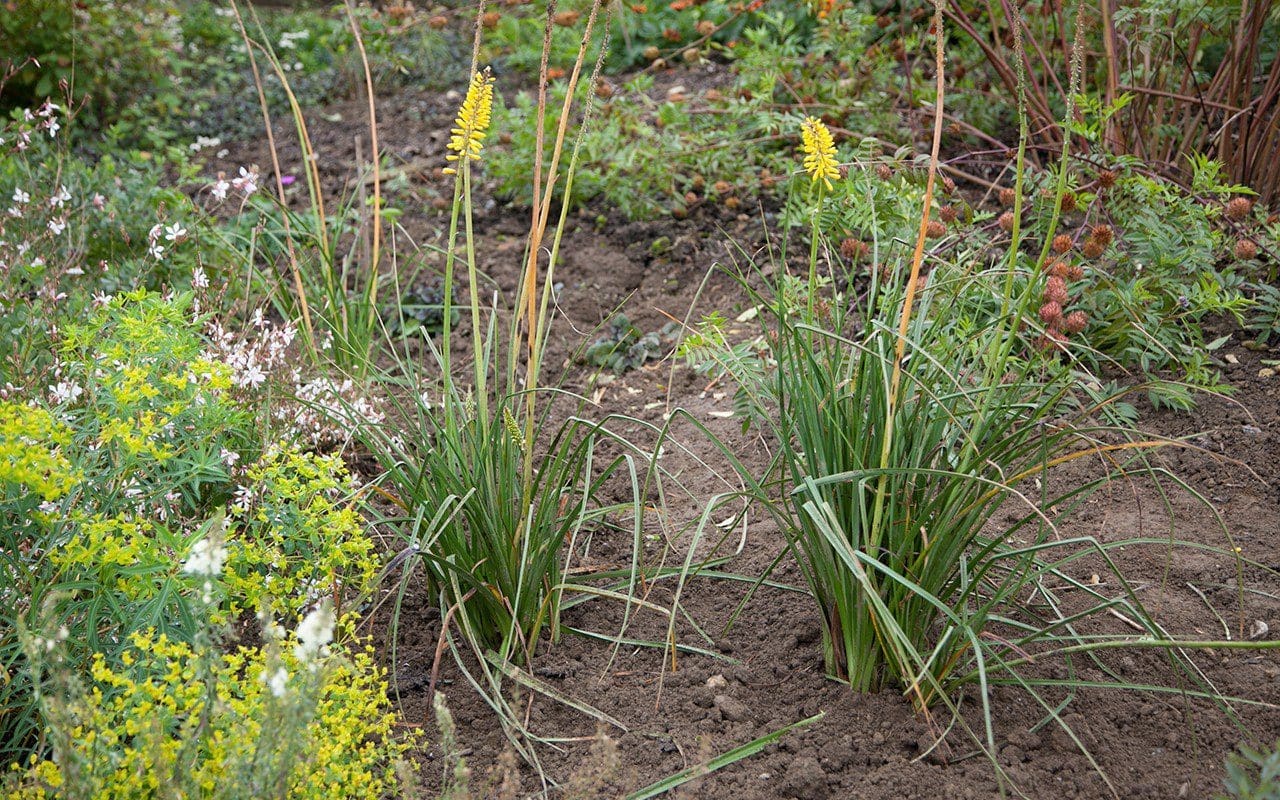 Newly planted divisions of Kniphofia ‘Minister Verschuur’ in the cleared central bed
Planning what to keep and what to part with is difficult until the moment you make the first move. Over the last three years we have been keeping a close eye on the asters that will make it into the new planting. Keeping the best is the only option, for we do not have the space elsewhere and the overall composition is dependent upon every choice being right for the mood and the feeling that we are trying to create here. So gone are the Symphyotrichum ‘Little Carlow’ which, although a brilliant performer, needing no staking and being reliable and clump-forming, are altogether too dominant in volume and colour. Aster novae-angliae ‘Violetta’ is gone too. Despite my loving the richness of its colour, having got to know it in the trial bed I find it rather stiff and heavy and I want the asters here to dance and mingle and not weight the planting down.
The Aster turbinellus, for instance, has been retained for the space and the air between the flowers, as has Symphyotrichum ericoides ‘Pink Cloud’ for its sprays of tiny, shell-pink flowers. I have also kept the late-flowering Aster trifoliatus subsp. ageratoides ‘Ezo Murasaki’ for its modest habit and almost iridescent violet stars held on dark, wiry stems. I have always known that Aster umbellatus would feature in the planting, and so I lifted and split my three year old trial plant last autumn and divided it into six to bulk up this summer. There were many more that didn’t make the grade though, and I was torn about losing them, my self-discipline wavering at times. However, Jacky and Ian who help us in the garden eased my conscience by taking a number of the rejects home with them, and the space left behind, now that they are gone and I have finally committed, is ultimately more inspiring.
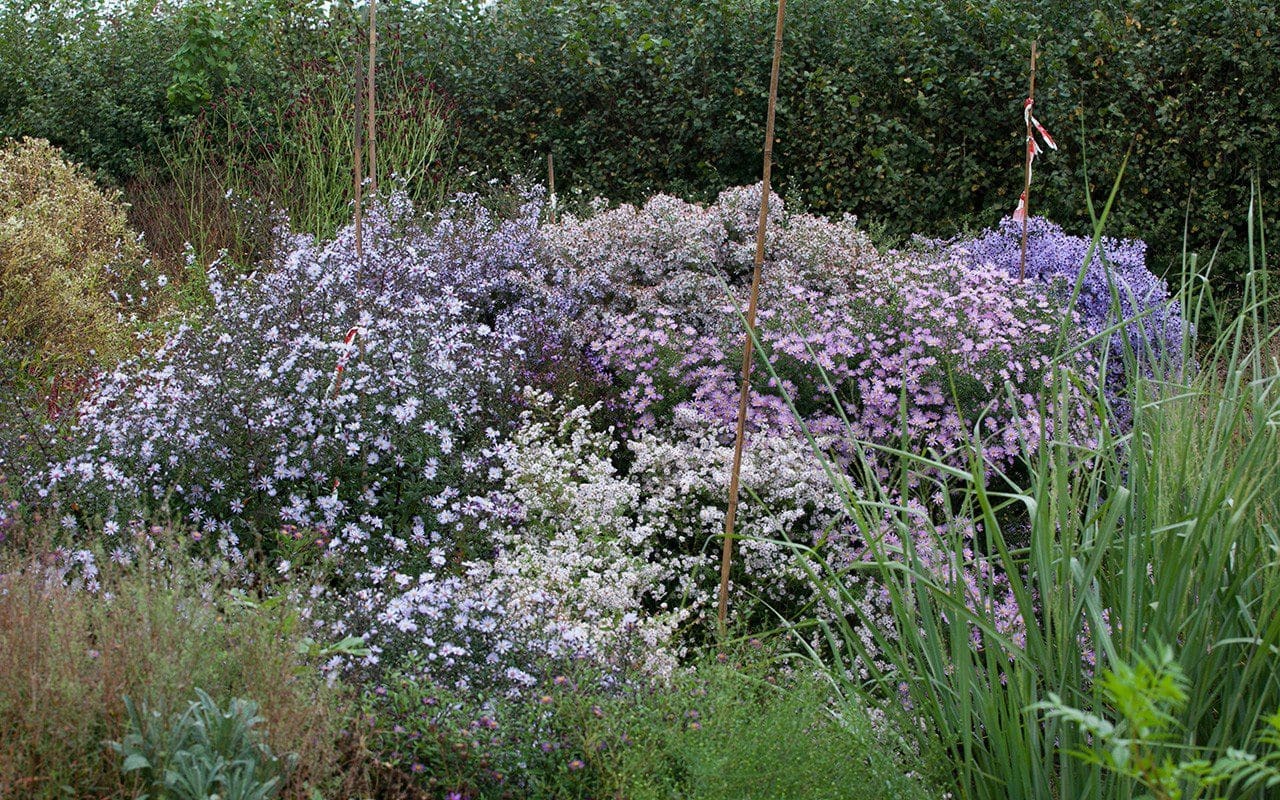 Asters to be kept were marked with canes
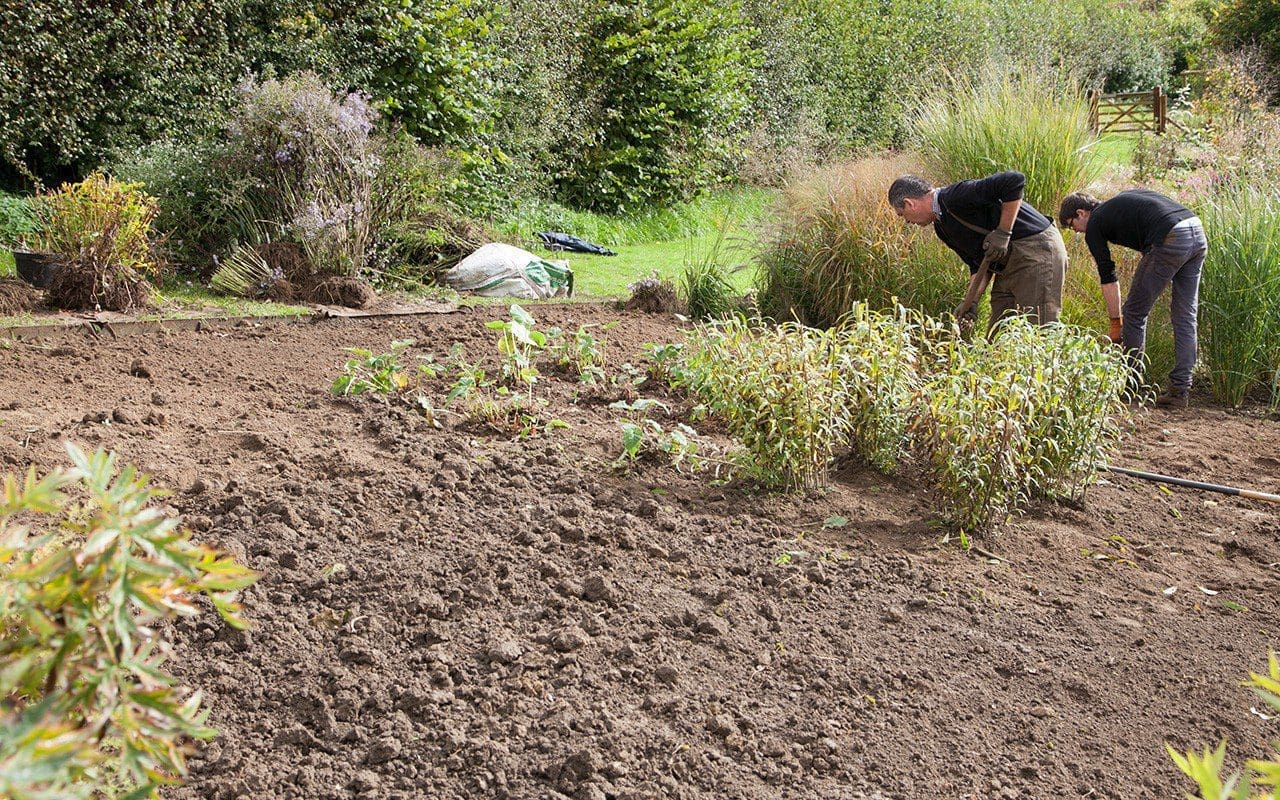 Ian and Sam digging over the upper bed after removal of the asters. The Aster umbellatus divisions and Sanguisorba ‘Blackfield’ stock plants in the middle of the bed await replanting
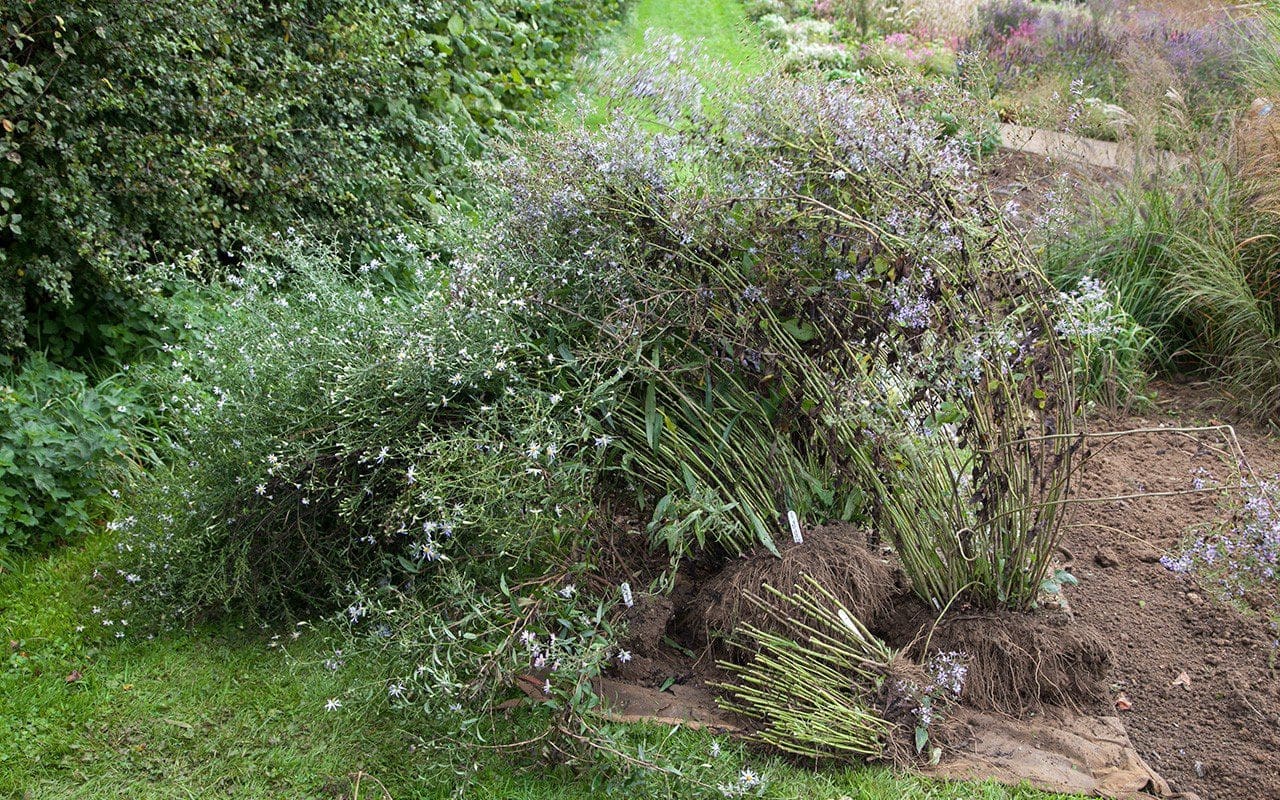 The reject asters
This is the second phase of rationalising the stock beds. In the spring, and to enable the preparation of the central bed, I split and divided the plants that I knew I would need more of come autumn, and lined these out in the top bed to bulk up; the lofty Hemerocallis altissima, brought with me from Peckham and prized for its delicate, night-scented flowers, the refined Hemerocallis citrina x ochroleuca, and the true form of Hemerocallis ‘Stafford’, originally divisions from plants in the Barn Garden at Home Farm which I planted in 1992.
I have not found a red day-lily I like more for its rustiness and elegance, and some of the ‘Stafford’ I have been supplied with more recently have notably less refined flowers and a brasher tone. I have planned for it to go amongst molinias so that the flowers are suspended amongst the grasses. Hemerocallis are easily divided and in the spring the stock plants were big enough to split into ten or so; the numbers I needed for their long-awaited integration into the planting. In readiness for setting out, and with the asters gone, we have now reduced the foliage of the daylilies by half, lifted them and then left them heeled in for ease of lifting and replanting.
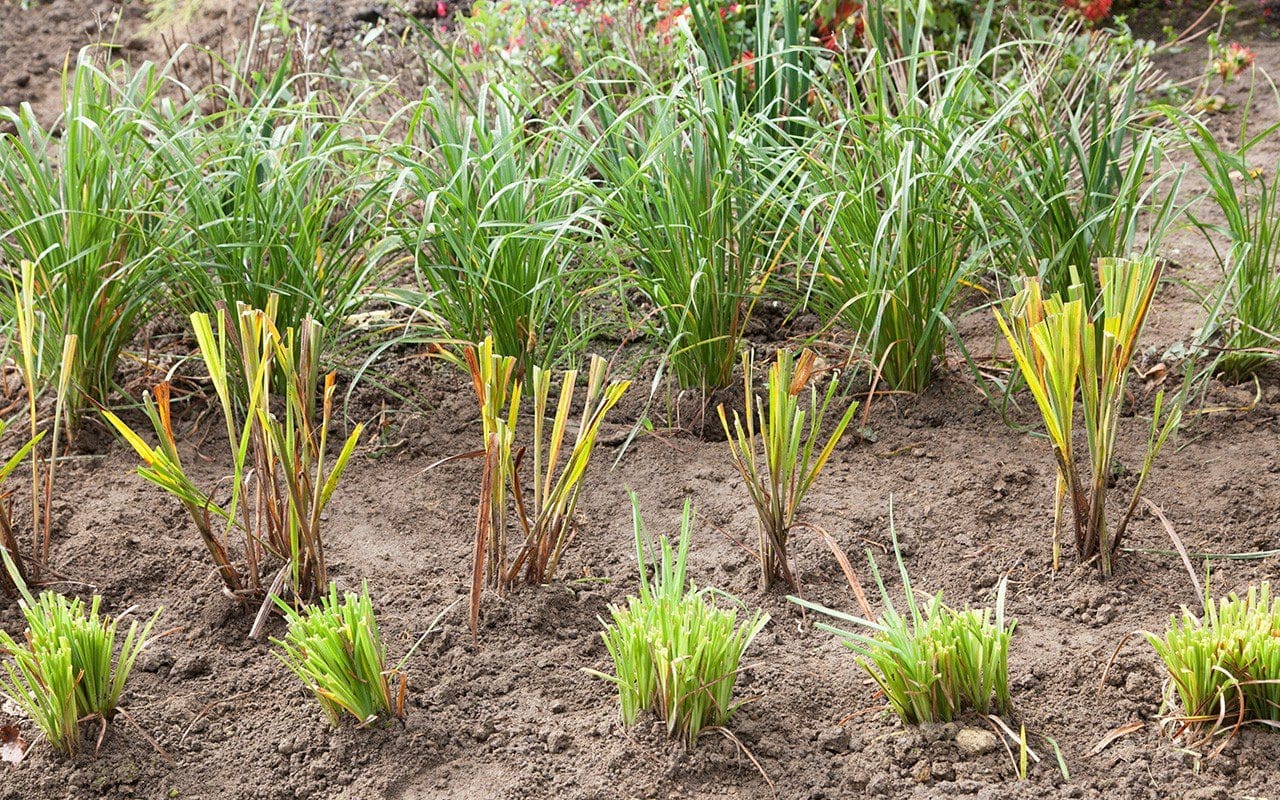 Hemerocallis, crocosmia and kniphofia stock plants cut back, heeled in and ready for replanting
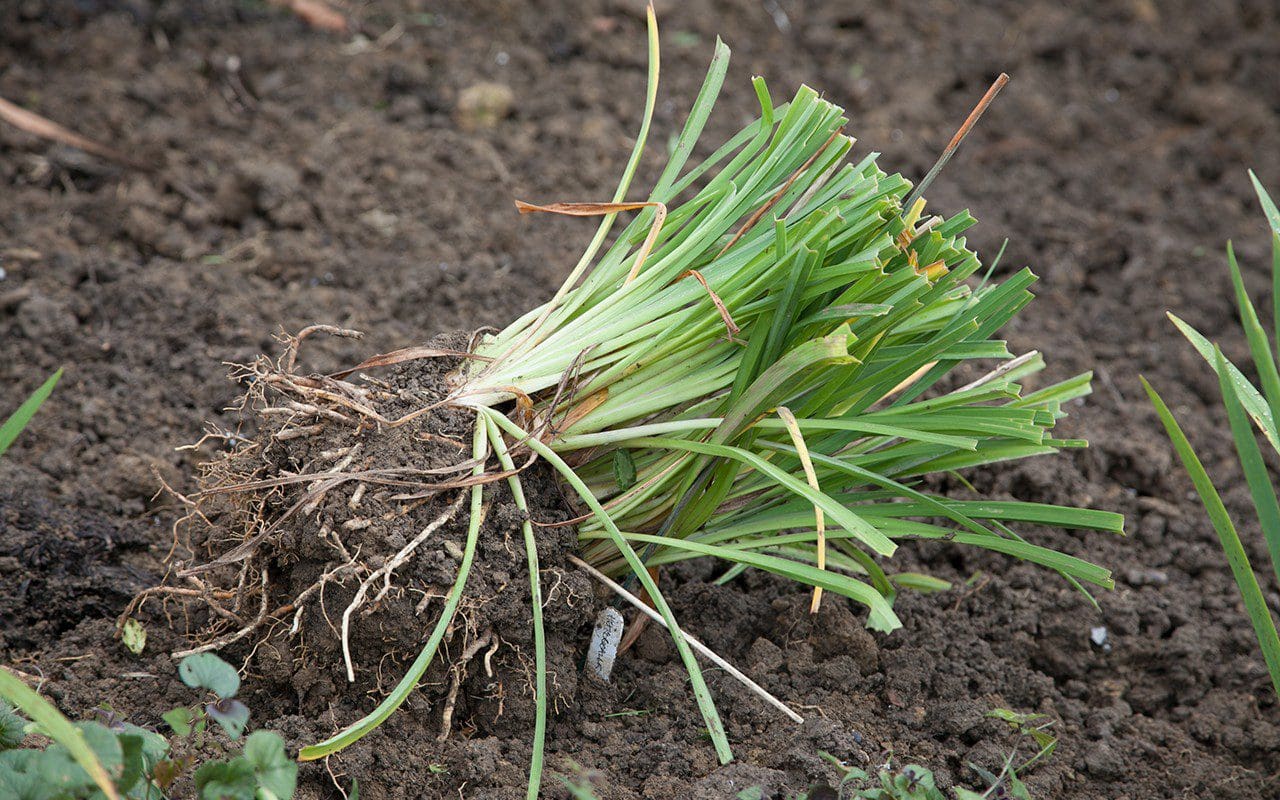 A division of Hemerocallis ‘Stafford’ laid out for planting
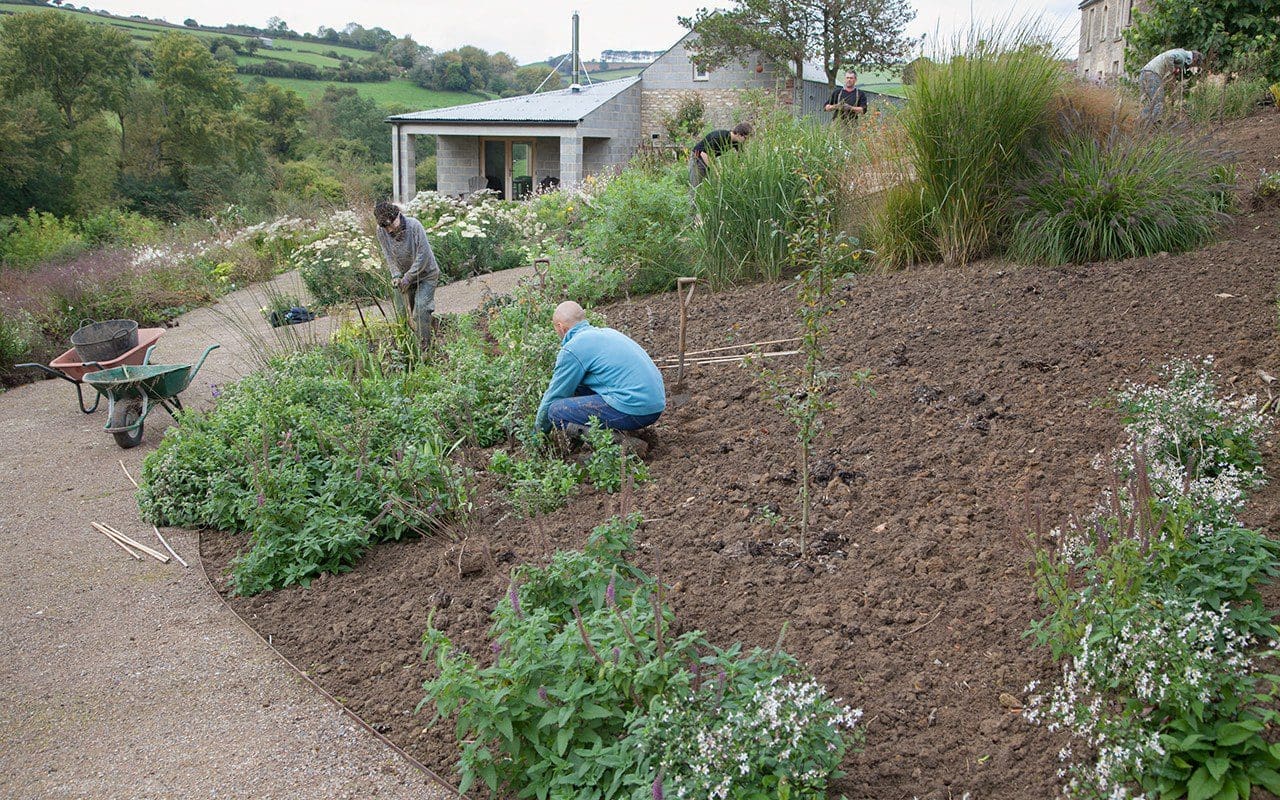 Jacky and Ray clearing and preparing the end of the upper bed
The kniphofia and iris I had decided to keep went through the same process in March, and so the Kniphofia ‘Minister Verschuur’ and Iris magnifica were moved directly into their new positions where, just a week before, the sunflowers had towered. Similarly, the Gladiolus papilio ‘Ruby’ and Crocosmia ‘Hellfire’, which have both increased impressively, were lifted and moved into their new and final positions. This was in order to clear the old stock beds to make way for the autumn splits and keep the canvas as empty as possible so that I can see the space without unnecessary clutter when setting out.
The remaining trial rows – some Persicaria amplexicaulis ‘Blackfield that I want in number and two white sanguisorba that will provide height and sparkle in the centre of the garden – were cut back to knee height, lifted and then split in text-book fashion with two border forks back to back to prise the clumps apart. Where the plants were not big enough I was careful not to be too greedy with my splits, dividing them into thirds or quarters at most.
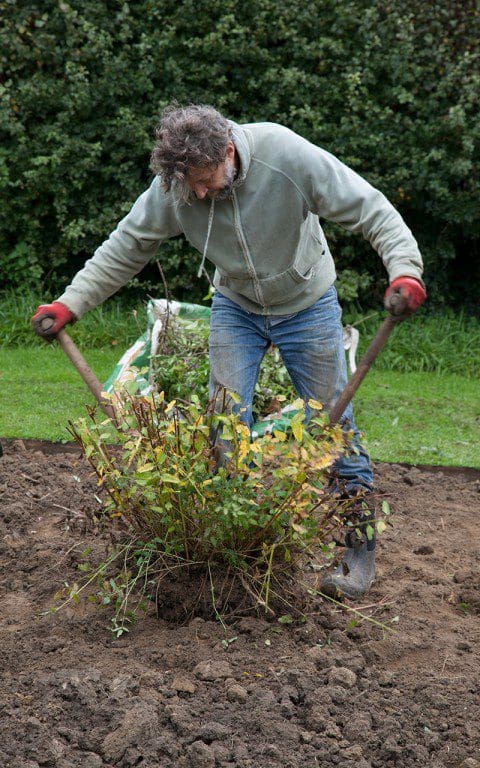 Dan splitting a stock plant of sanguisorba with two border forks
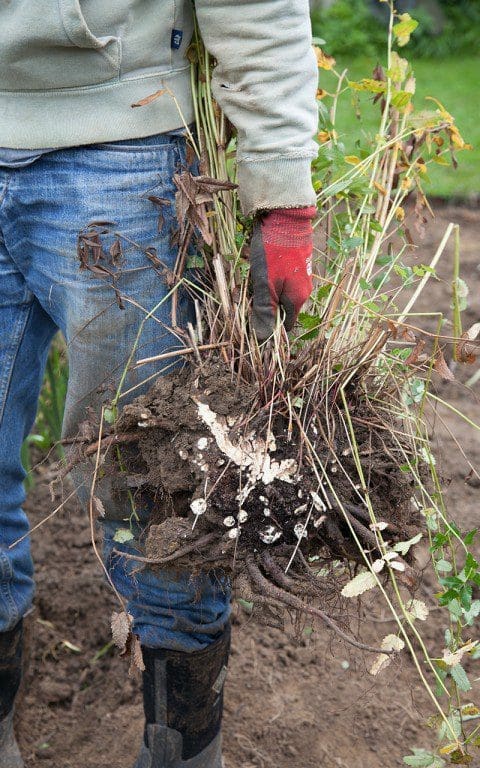 A sanguisorba division ready for heeling in
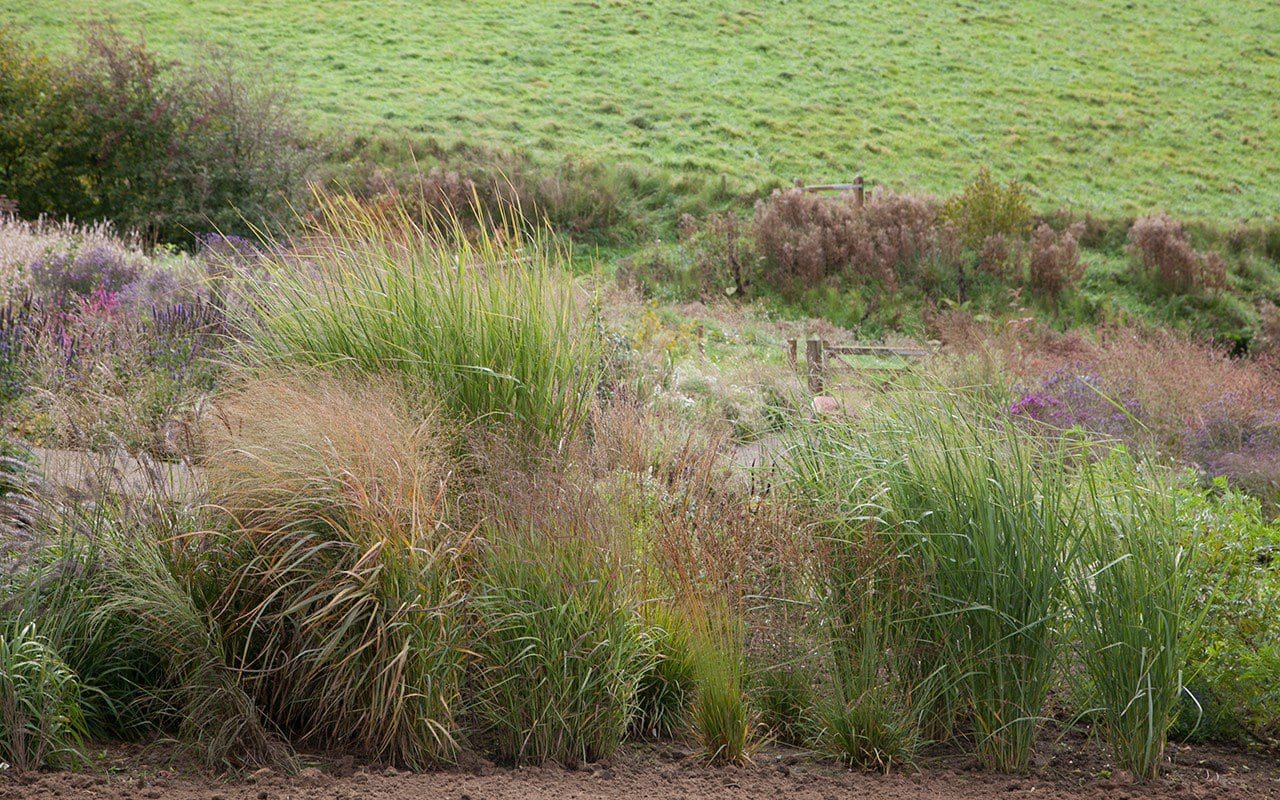 The grasses to be reused from the trial bed will be divided and planted out next spring
Although October is the perfect month for planting, with warmth still in the ground to help in establishing new roots before winter, I have had to work around the trial bed of grasses and they now stand alone in the newly empty bed. Although I will be planting out pot-grown grasses next week, autumn is not a good time to lift and divide grasses as their roots tend to sit and not regenerate as they do with a spring split.
The plants I put in around the Milking Barn this time last year are already twice the size of the same plants I had to wait to put in where the ground wasn’t ready until the spring. I hope that the same will be true of this next round of planting, which will sweep the garden up to the east of the house and complete this long-awaited chapter.
Words: Dan Pearson / Photographs: Huw Morgan
Published 21 October 2017
Not long after moving here I planted a trial of bearded iris. I’d been inspired to do so by our hot, south-facing slopes and the possibilities that came with having space. At the time I was also in the process of replanting a Lutyens and Jekyll Arts and Crafts garden for a client. The iris felt right for the period when the garden had been in its heyday, so I made a research trip to Woottens of Wenhaston to see their famed collection. Their extensive fields fluttered with hundreds of varieties, which were thrown together as far as the eye could see. It was an unforgettable moment. Even with the exercise of some restraint, I still came away with a list of fifty-six that I wanted to trial. Of those divisions that arrived bare-root in their period of summer rest that July, three plants were of Benton heritage. I did not know it then, but the Bentons have refocussed and refined my iris eye. It is only when you grow plants for yourself that you get to know the best for your purpose and your true favourites. The trial revealed varieties that I had been seduced by in the field, but that in truth were easy to part with. And I did part with a lot. I was interested to find that of all the colours trialled it was the dark blues and purples, the colours with which bearded iris are perhaps most commonly associated, that looked most out of place in the landscape. I also dispensed with all those that felt overbred, with too much flounce, frill or rigidity to give the flowers real grace. However, once our focus fell upon the sophistication of the Bentons and we started to seek out more, the trial grew as quickly as it shrank.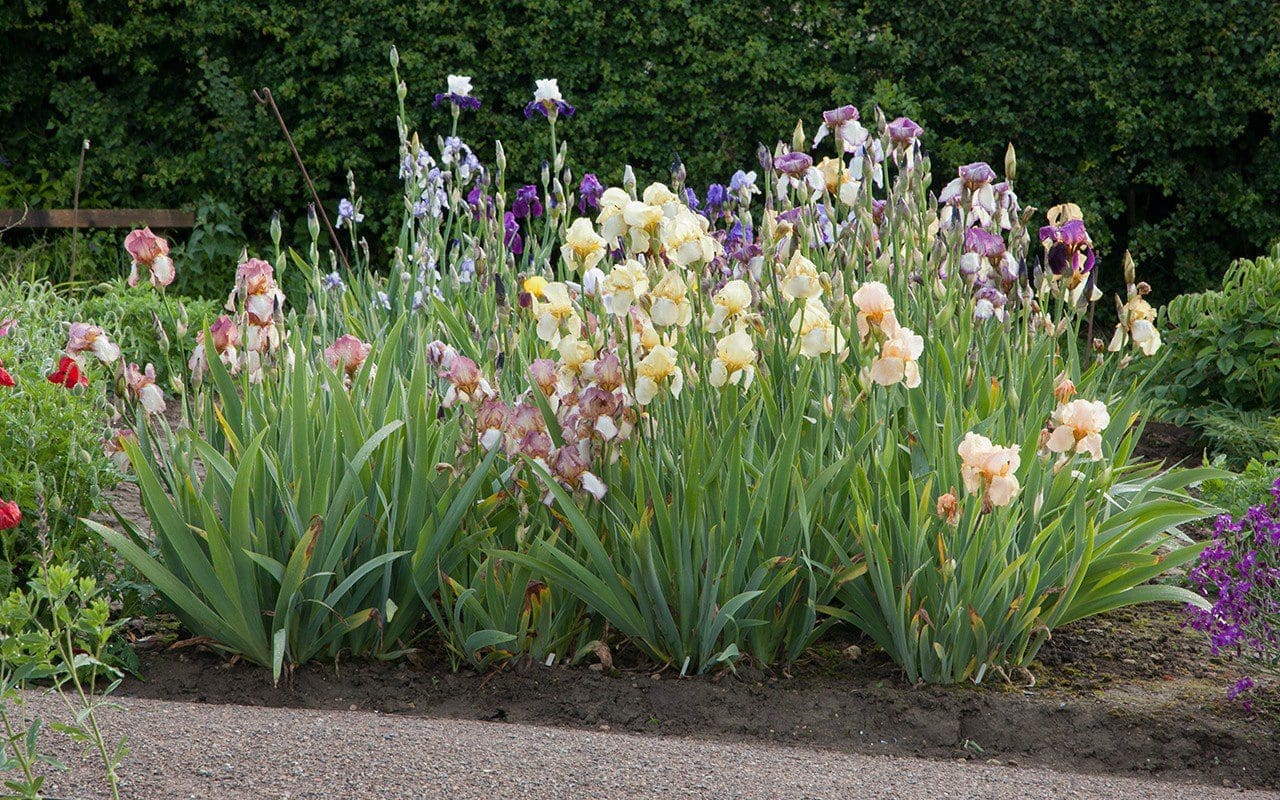 The iris trial bed in full flower in early June with the Bentons in the front
The Benton iris were bred by the artist and plantsman Cedric Morris at his home Benton End in Suffolk. Between 1934 and 1960 he raised thousands of bearded iris from seed, selecting some of the first pink, peach and yellow varieties that were widely acclaimed at The Chelsea Flower Show. Regularly growing as many as a thousand seedlings a year he named around 90 varieties, the greater majority of which have been lost to time as they went out of fashion or were left behind and then, as gardens changed hands, overwhelmed or their provenance forgotten. As timing would have it, Sarah Cook, the previous head gardener at Sissinghurst, had also fallen under their spell and had made it her mission to pull the lost collection together. She teamed up with Howards Nurseries and together they mounted one of the best stands in the Great Pavilion at the 2015 Chelsea Flower Show. Thanks to Sarah and her tireless hunt and research, twenty five or so are now available again and her quest to find still more is ongoing.
The iris trial bed in full flower in early June with the Bentons in the front
The Benton iris were bred by the artist and plantsman Cedric Morris at his home Benton End in Suffolk. Between 1934 and 1960 he raised thousands of bearded iris from seed, selecting some of the first pink, peach and yellow varieties that were widely acclaimed at The Chelsea Flower Show. Regularly growing as many as a thousand seedlings a year he named around 90 varieties, the greater majority of which have been lost to time as they went out of fashion or were left behind and then, as gardens changed hands, overwhelmed or their provenance forgotten. As timing would have it, Sarah Cook, the previous head gardener at Sissinghurst, had also fallen under their spell and had made it her mission to pull the lost collection together. She teamed up with Howards Nurseries and together they mounted one of the best stands in the Great Pavilion at the 2015 Chelsea Flower Show. Thanks to Sarah and her tireless hunt and research, twenty five or so are now available again and her quest to find still more is ongoing.
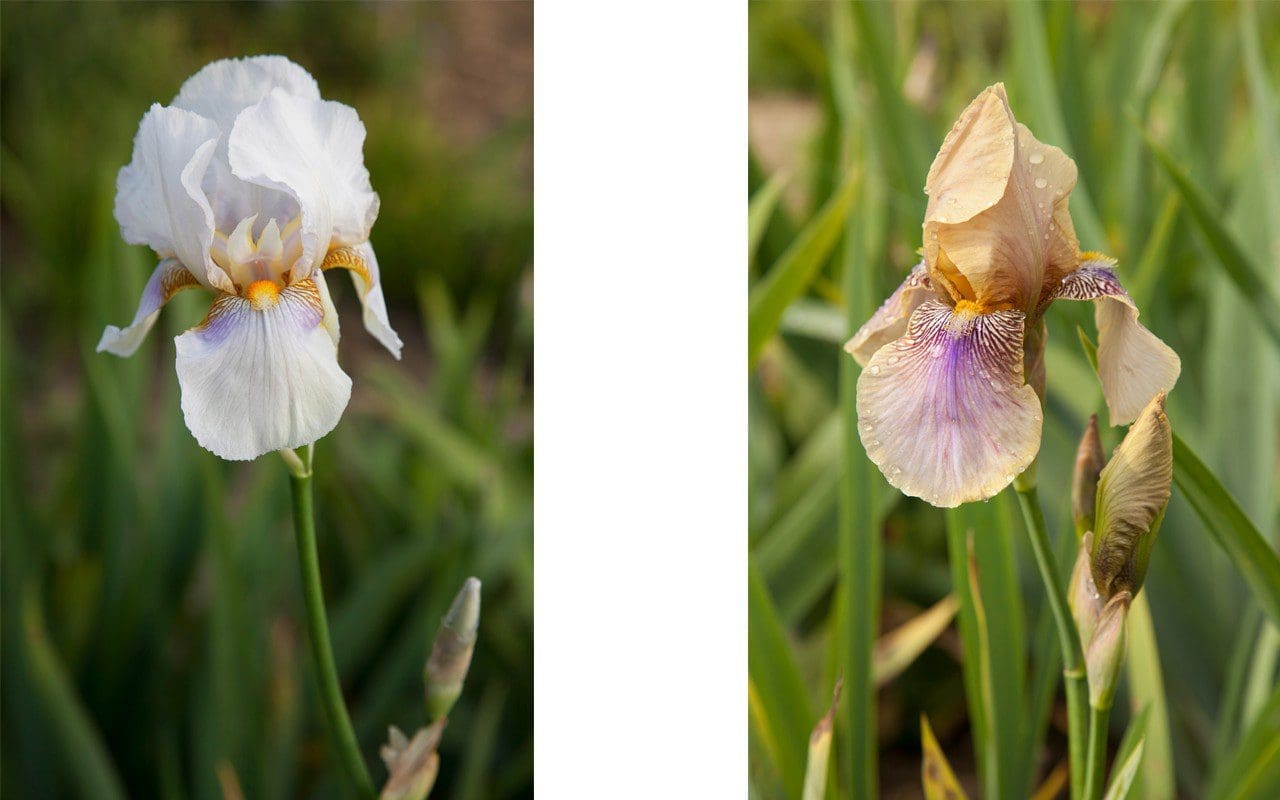 Iris ‘Benton Pearl’ and Iris ‘Benton Olive’
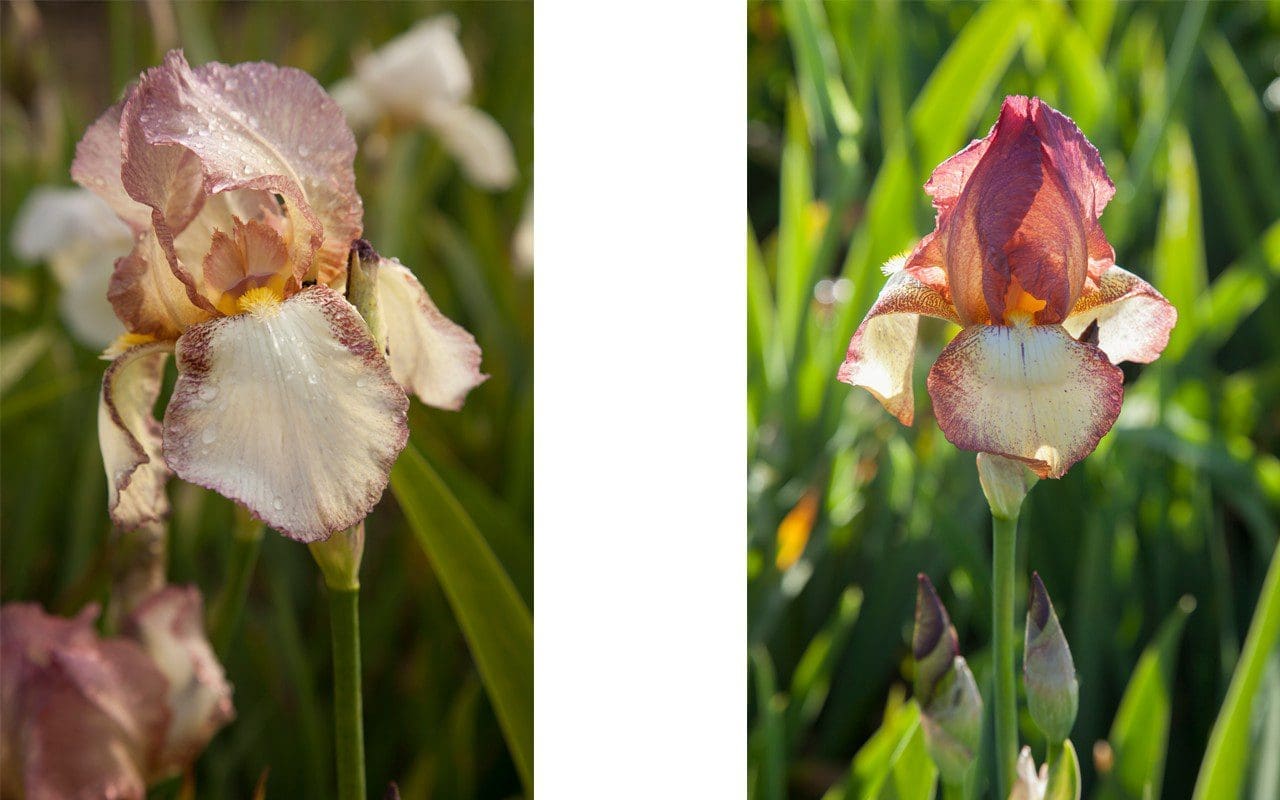 Iris ‘Benton Deidre’ and Iris ‘Benton Arundel’
I would love to have met Morris, for he obviously had an incredible eye and nose for a flower with poise, grace and perfect balance, despite its complexity. Thanks to his eye, I have now been able to strip the trial back to my true favourites, which include 20 of his selections and just a handful of others that feel right alongside them; chestnut brown ‘Kent Pride’ was bred in the ’50’s and has the same period feel, while the straw yellow ‘Glen Ellen’ is as graceful in form and unusual in its colouring. The only blues I have kept are pale and refined; the small-flowered picotee, ‘Madame Chereau’ and the ice-blue and white ‘Nassak’. Of the purples ‘Demi-deuil’ almost looks like a species iris with small, dark-veined flowers, while the truly almost-black ‘Anvil of Darkness’ was always a keeper, because to my eye no other iris has such depth of colour combined with such a light and refined flower form.
Iris ‘Benton Deidre’ and Iris ‘Benton Arundel’
I would love to have met Morris, for he obviously had an incredible eye and nose for a flower with poise, grace and perfect balance, despite its complexity. Thanks to his eye, I have now been able to strip the trial back to my true favourites, which include 20 of his selections and just a handful of others that feel right alongside them; chestnut brown ‘Kent Pride’ was bred in the ’50’s and has the same period feel, while the straw yellow ‘Glen Ellen’ is as graceful in form and unusual in its colouring. The only blues I have kept are pale and refined; the small-flowered picotee, ‘Madame Chereau’ and the ice-blue and white ‘Nassak’. Of the purples ‘Demi-deuil’ almost looks like a species iris with small, dark-veined flowers, while the truly almost-black ‘Anvil of Darkness’ was always a keeper, because to my eye no other iris has such depth of colour combined with such a light and refined flower form.
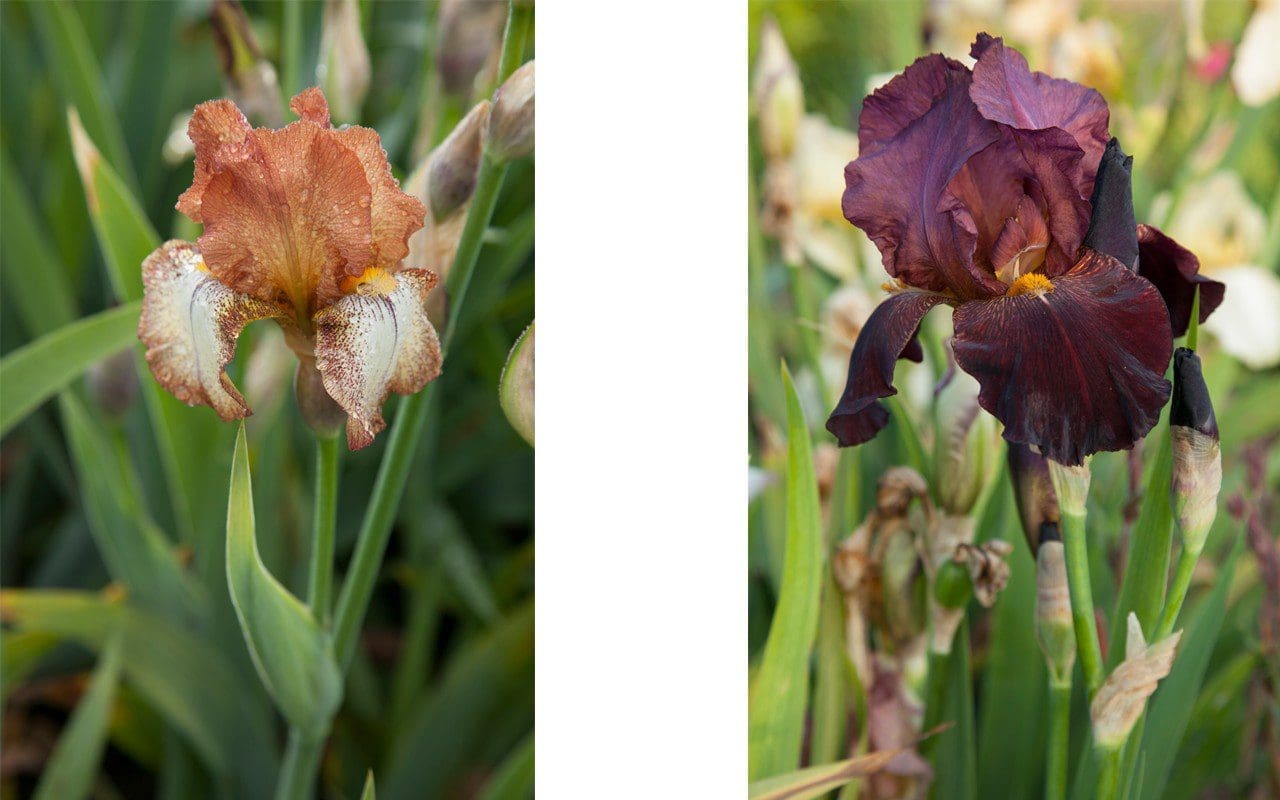 Iris ‘Benton Nutkin’ and Iris ‘Benton Caramel’
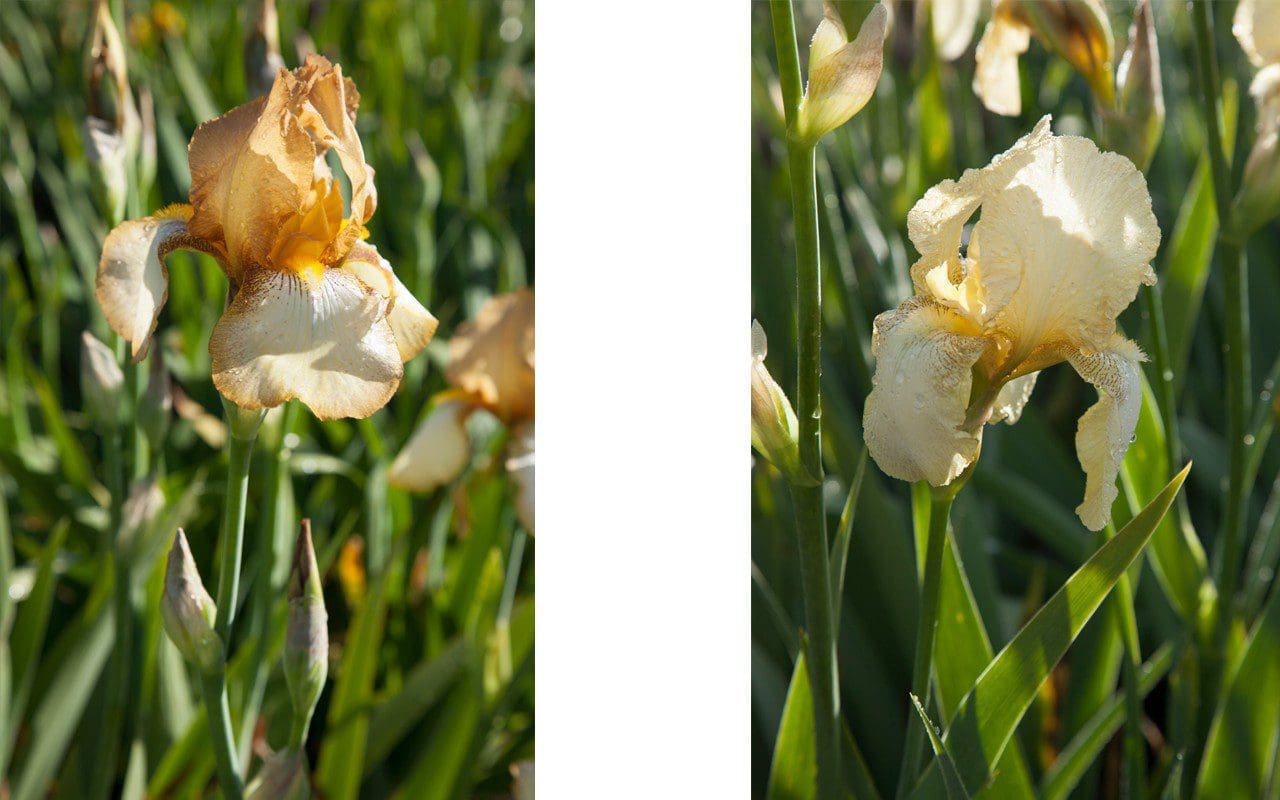 Iris ‘Benton Susan’ and Iris ‘Benton Duff’
The Bentons have their own particular beauty which is hard to put your finger on, but you know it when you see it. With more elongated flowers and space between the falls they have an ethereal, stately quality. There is a bruised, sophisticated complexity of colour, which conjures another period and you can see is the result of an artist’s eye; picotees in shades of plum, mauve and pink, silver grey, mother-of-pearl white, primrose yellow, true apricot, rich chocolate brown and papal purple. You completely trust in Morris’s eye when you see them and his choices were so particular that you can almost feel what it might have been like to know the man himself.
Iris ‘Benton Susan’ and Iris ‘Benton Duff’
The Bentons have their own particular beauty which is hard to put your finger on, but you know it when you see it. With more elongated flowers and space between the falls they have an ethereal, stately quality. There is a bruised, sophisticated complexity of colour, which conjures another period and you can see is the result of an artist’s eye; picotees in shades of plum, mauve and pink, silver grey, mother-of-pearl white, primrose yellow, true apricot, rich chocolate brown and papal purple. You completely trust in Morris’s eye when you see them and his choices were so particular that you can almost feel what it might have been like to know the man himself.
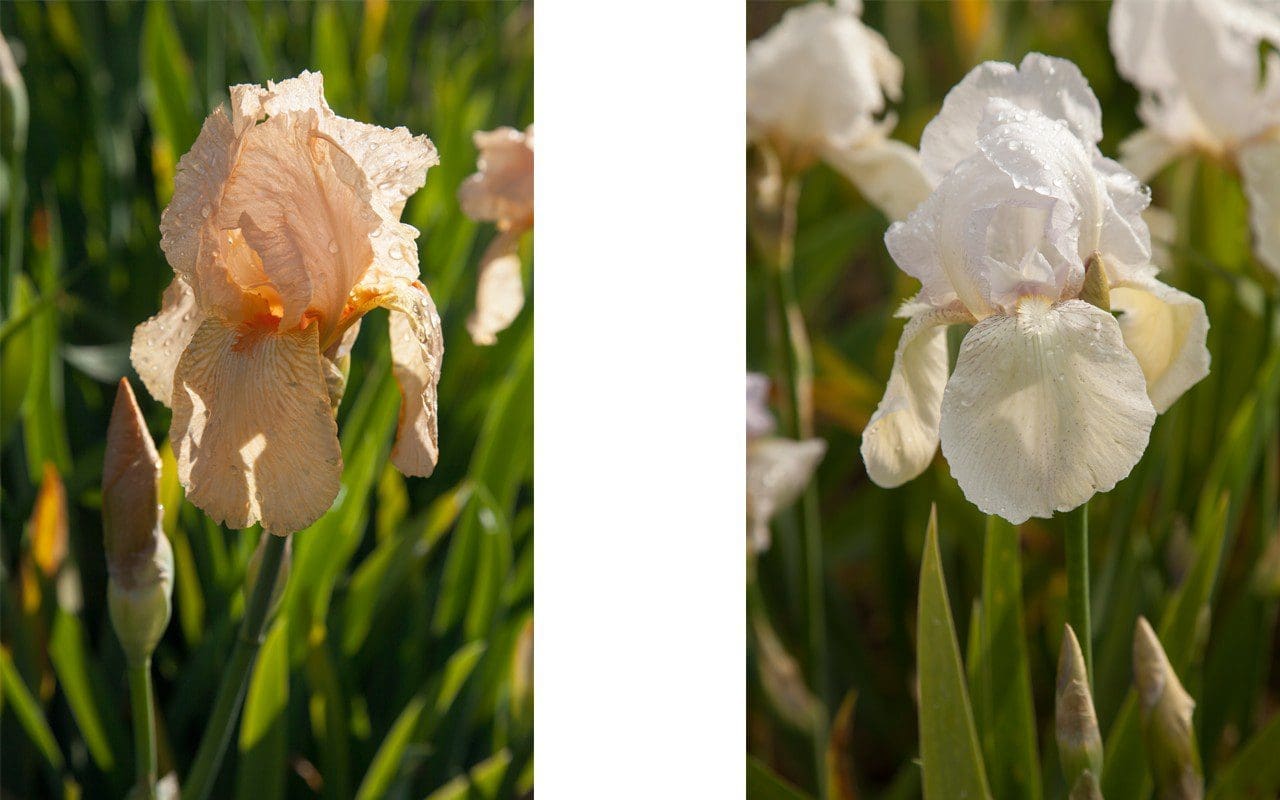 Iris ‘Benton Strathmore’ and Iris ‘Benton Opal’
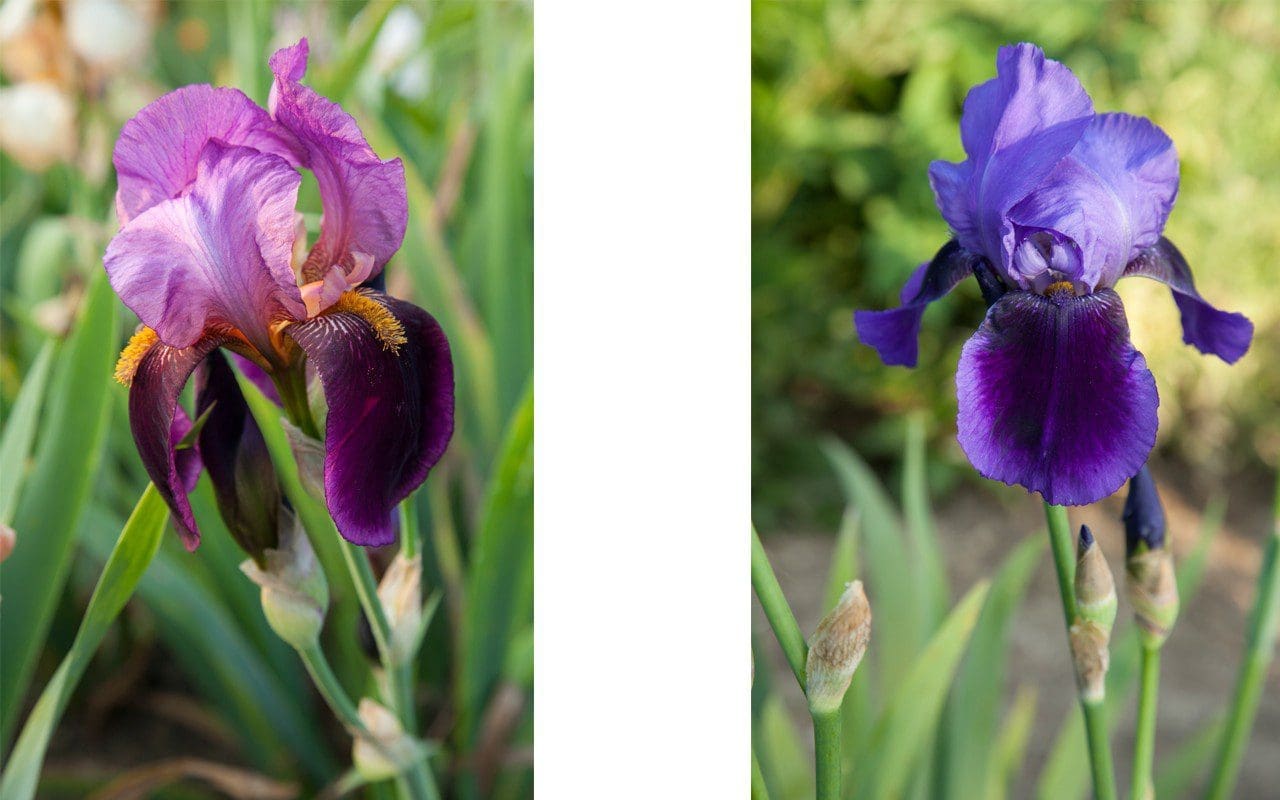 Iris ‘Benton Storrington’ and Iris ‘Benton Nigel’
I have been planning for this moment for several years, as the trial garden is now in the process of being liberated to make way for the remainder of the new garden. I have deliberately not included the bearded iris in the new plantings, partly because they are very hard to use in combination, needing full sun at the base and no competition, plus they are altogether too captivating and attention-grabbing when they are in flower in June. The chosen few have been found a special place against the hot wall behind the herb garden, where they can have all the attention they want. All being well, they will thrive there with the radiated heat from the blockwork and I plan for there to be no companions for this is the way that the germanica iris usually fail, as they are lost to competition.
Iris ‘Benton Storrington’ and Iris ‘Benton Nigel’
I have been planning for this moment for several years, as the trial garden is now in the process of being liberated to make way for the remainder of the new garden. I have deliberately not included the bearded iris in the new plantings, partly because they are very hard to use in combination, needing full sun at the base and no competition, plus they are altogether too captivating and attention-grabbing when they are in flower in June. The chosen few have been found a special place against the hot wall behind the herb garden, where they can have all the attention they want. All being well, they will thrive there with the radiated heat from the blockwork and I plan for there to be no companions for this is the way that the germanica iris usually fail, as they are lost to competition.
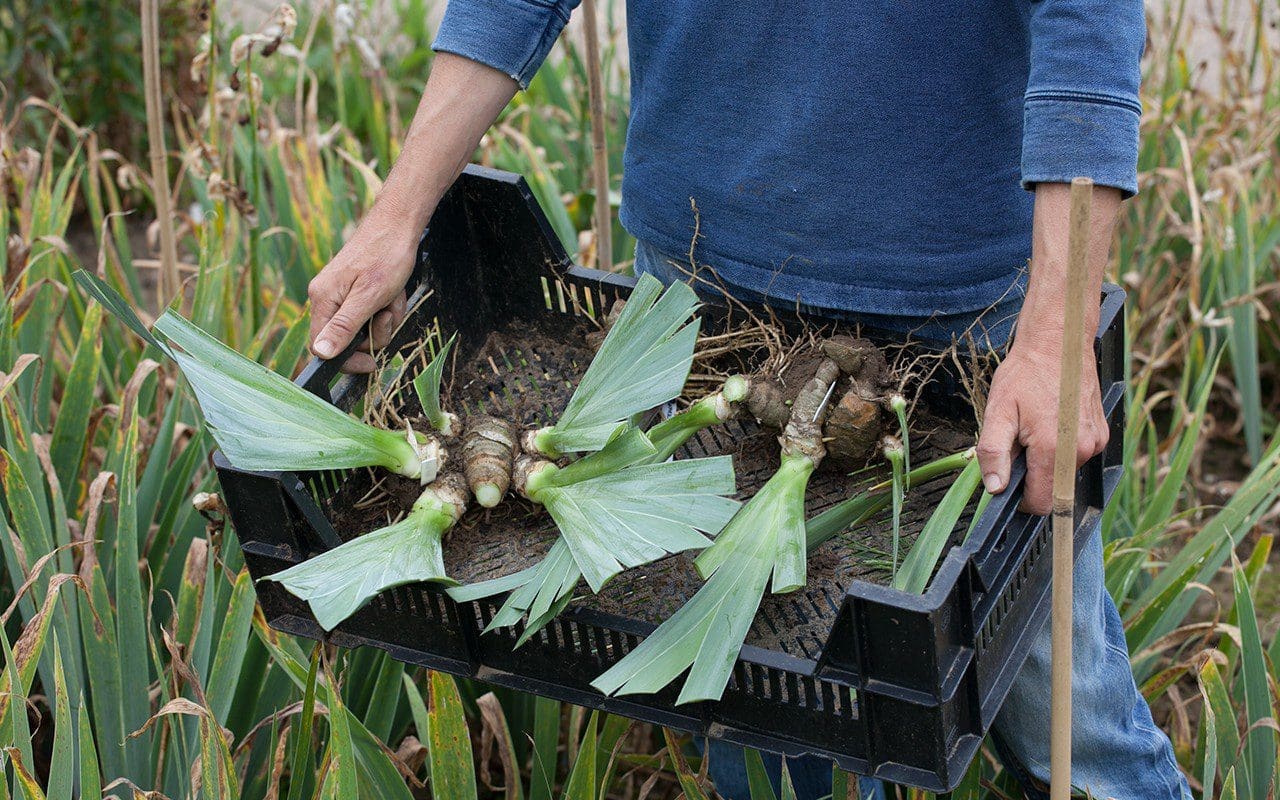 Iris rhizomes after lifting, splitting and trimming
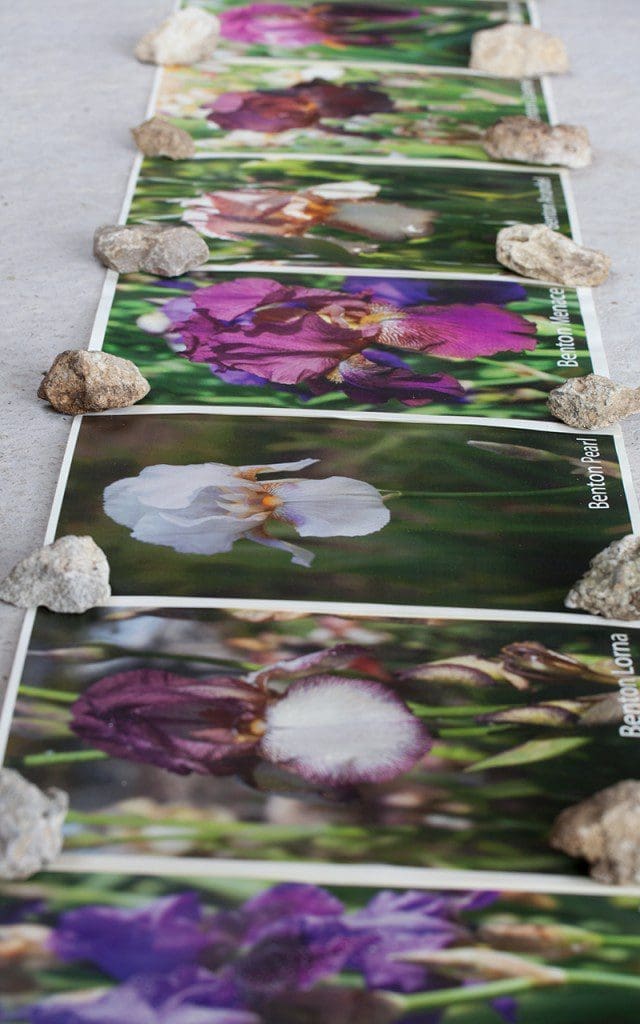 Print outs helped fine-tune the colour combinations of the Benton iris before planting
I lifted them in early July, as soon as they started to show signs of going into their period of summer dormancy. Splits were separated from the main clump with a carefully aimed border fork separating a healthy rhizome, with two fans of foliage and the energy in it to make good growth as soon as they start back into life later in the summer. The leaves were cut back into a fan in text-book fashion to reduce transpiration and to clean up any diseased foliage. The Bentons are well known for their health, but all the germanicas go into their scruffiest period in the middle of summer and the clean up feels good. The plants were replanted, the rhizomes facing south with the fan of foliage behind, like holidaymakers sunning themselves in deckchairs, to harvest all the light there is going. Our ground being damp in winter, I drew the limestone chippings from the path around their collars to help with free drainage and give them the best start at the beginning of this new and refined chapter.
Words: Dan Pearson / Photographs: Huw Morgan
Published 22 July 2017 Winter is a productive season here in Britain. The weather rarely closes in to stop us for more than a few days and, with the garden in stasis, there is room to think and plan and do. The few truly dormant weeks saw us clearing another fallen tree in January, logging the wood for the winter and stacking the brush into piles (main image) that will become home to the creatures, lichens and fungi that like the protection and decay. If we have snow the tracks to and from the stacks advertise their occupancy but, where the surrounding grass gives way to the shelter within, there are already signs of the annual cleavers that climb into their cages and clothe them in summer.
Before the hedges were cut we harvested a few bundles of hazel to provide twiggy support for broad beans and sturdy poles for the sweet peas and climbing beans. They are a welcome bounty and the result of cutting the hedges every other year to allow them time to flower and berry. Two years is just enough time for the oldest and strongest hazel in the hedge to push out a good length of twiggery. Next year, whilst the hedges are growing back, I will coppice a couple of our freestanding hazel. It is hugely gratifying to be self-sufficient for plant supports for the garden. Whilst they are regenerating the hazel stumps are protected from the nibbling of deer with woven cages of offcuts.
Print outs helped fine-tune the colour combinations of the Benton iris before planting
I lifted them in early July, as soon as they started to show signs of going into their period of summer dormancy. Splits were separated from the main clump with a carefully aimed border fork separating a healthy rhizome, with two fans of foliage and the energy in it to make good growth as soon as they start back into life later in the summer. The leaves were cut back into a fan in text-book fashion to reduce transpiration and to clean up any diseased foliage. The Bentons are well known for their health, but all the germanicas go into their scruffiest period in the middle of summer and the clean up feels good. The plants were replanted, the rhizomes facing south with the fan of foliage behind, like holidaymakers sunning themselves in deckchairs, to harvest all the light there is going. Our ground being damp in winter, I drew the limestone chippings from the path around their collars to help with free drainage and give them the best start at the beginning of this new and refined chapter.
Words: Dan Pearson / Photographs: Huw Morgan
Published 22 July 2017 Winter is a productive season here in Britain. The weather rarely closes in to stop us for more than a few days and, with the garden in stasis, there is room to think and plan and do. The few truly dormant weeks saw us clearing another fallen tree in January, logging the wood for the winter and stacking the brush into piles (main image) that will become home to the creatures, lichens and fungi that like the protection and decay. If we have snow the tracks to and from the stacks advertise their occupancy but, where the surrounding grass gives way to the shelter within, there are already signs of the annual cleavers that climb into their cages and clothe them in summer.
Before the hedges were cut we harvested a few bundles of hazel to provide twiggy support for broad beans and sturdy poles for the sweet peas and climbing beans. They are a welcome bounty and the result of cutting the hedges every other year to allow them time to flower and berry. Two years is just enough time for the oldest and strongest hazel in the hedge to push out a good length of twiggery. Next year, whilst the hedges are growing back, I will coppice a couple of our freestanding hazel. It is hugely gratifying to be self-sufficient for plant supports for the garden. Whilst they are regenerating the hazel stumps are protected from the nibbling of deer with woven cages of offcuts.
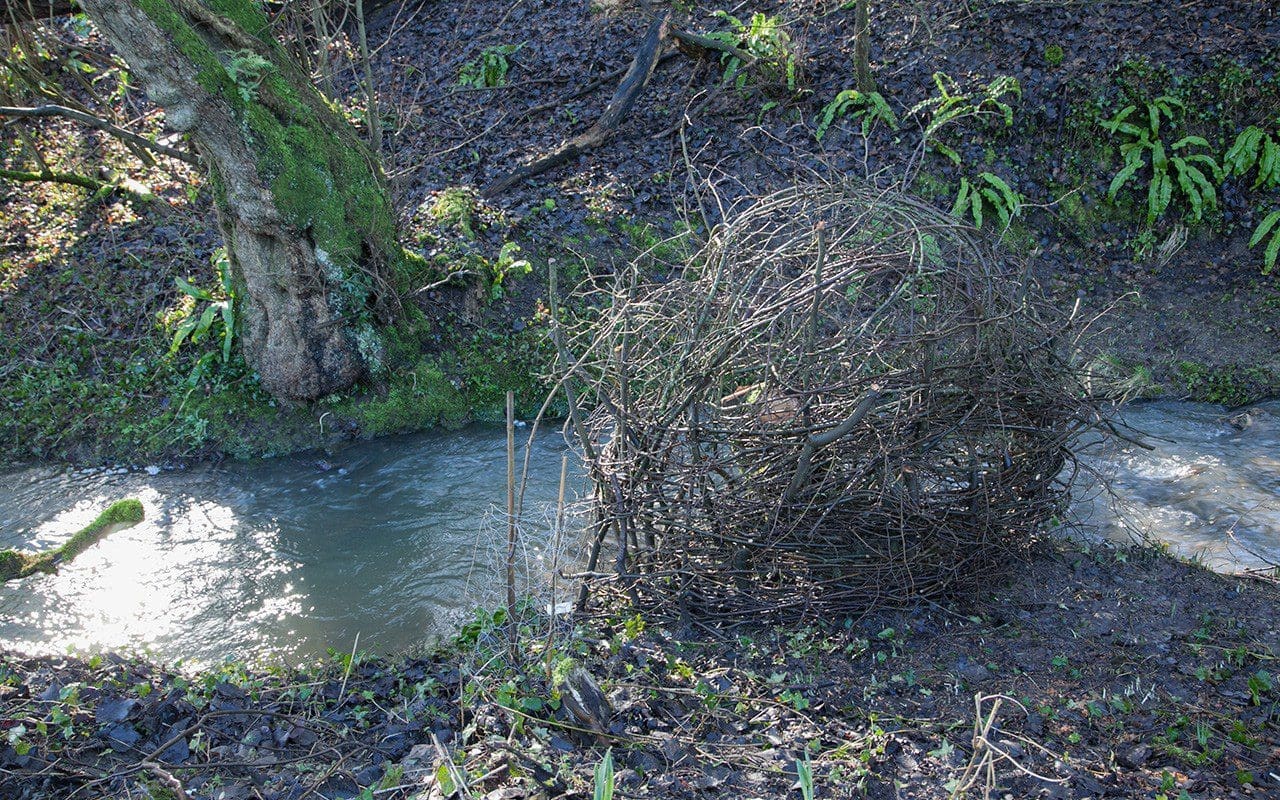 A coppiced hazel protected from deer by a cage of offcuts
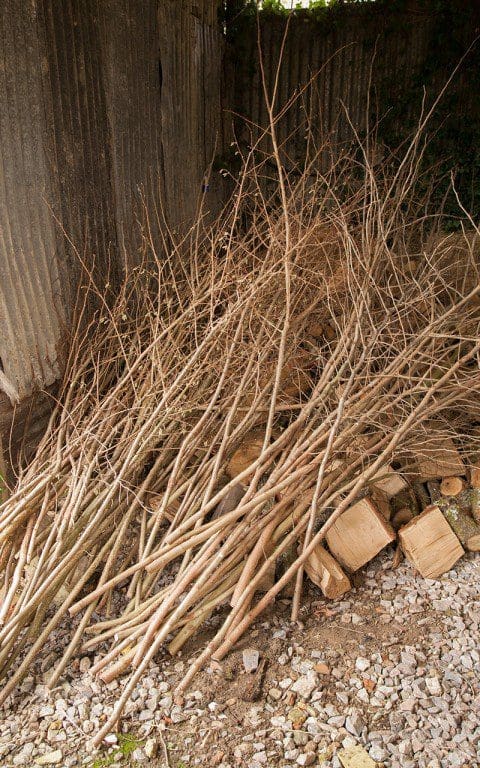 Hazel poles harvested from the hedgerows
Though we complain here about the winter’s duration, I cannot help but compare these few fairly benign months to the harsh conditions at my project in Hokkaido. There the gardeners have to leave the frozen landscape in search of work whilst the garden lies beneath deep snow until late April. The rush of tasks to either side – in preparation for the slumber and then the great surge of activity in spring – is palpable in head gardener Midori’s communications. Meanwhile, here we are free to dig and prune and plant. What luxury it is to get things in order with these few weeks of down time on our hands.
Hazel poles harvested from the hedgerows
Though we complain here about the winter’s duration, I cannot help but compare these few fairly benign months to the harsh conditions at my project in Hokkaido. There the gardeners have to leave the frozen landscape in search of work whilst the garden lies beneath deep snow until late April. The rush of tasks to either side – in preparation for the slumber and then the great surge of activity in spring – is palpable in head gardener Midori’s communications. Meanwhile, here we are free to dig and prune and plant. What luxury it is to get things in order with these few weeks of down time on our hands.
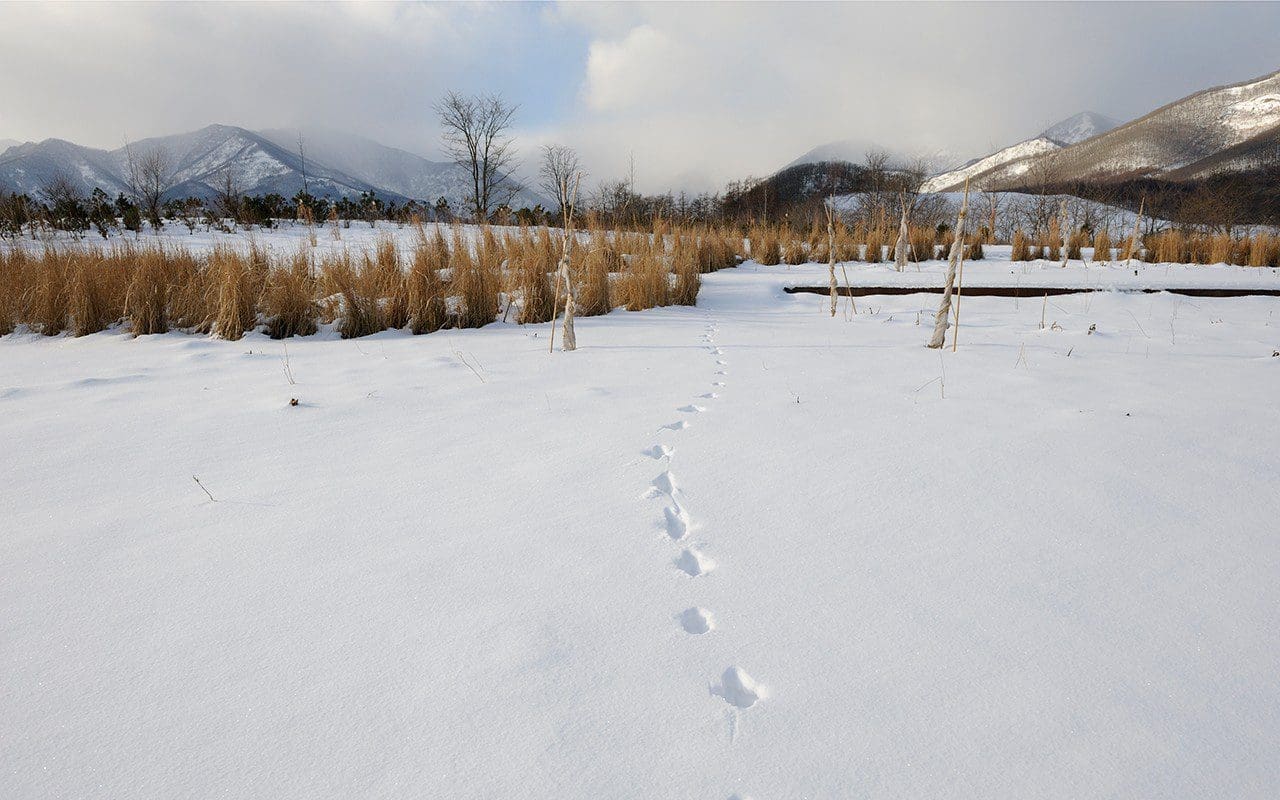 The Meadow Garden at the Tokachi Millennium Forest in Hokkaido is under snow until late April. Photograph: Syogo Oizumi
It has been a busy winter for I am readying myself to plant up the first sections of the new garden that was landscaped last summer. This time last year the same ground lay fallow with a green manure crop protecting it from the leaching effect of rain and to keep it ‘clean’ from the cold season weeds that colonise whenever there is a window of growing opportunity. The winter rye grew thick and lush, except where the diggers had tracked over the ground during the previous summer’s building works, where it grew sickly and thinly, indicating that something needed addressing before going any further.
When we started the winter dig, the problem that the rye had mapped became clear. Not far beneath the surface the soil had become anaerobic, starved of air by the compaction and with the tell-tale foetid smell as you turned it. The organic matter in the soil had turned grey where the bacteria were unable to function without oxygen and the water ran off and not through as it should. Turned roughly at the front end of winter, like a ploughed field, the frost has since teased and broken this layer down and the air has made its way back into the topsoil to keep it alive and functioning. Though it is still too wet to walk across, you can see that the winter freeze and thaw has worked its magic and that, as soon as we have a dry spell, it will knock out nicely like a good crumble mix, in readiness for planting.
The Meadow Garden at the Tokachi Millennium Forest in Hokkaido is under snow until late April. Photograph: Syogo Oizumi
It has been a busy winter for I am readying myself to plant up the first sections of the new garden that was landscaped last summer. This time last year the same ground lay fallow with a green manure crop protecting it from the leaching effect of rain and to keep it ‘clean’ from the cold season weeds that colonise whenever there is a window of growing opportunity. The winter rye grew thick and lush, except where the diggers had tracked over the ground during the previous summer’s building works, where it grew sickly and thinly, indicating that something needed addressing before going any further.
When we started the winter dig, the problem that the rye had mapped became clear. Not far beneath the surface the soil had become anaerobic, starved of air by the compaction and with the tell-tale foetid smell as you turned it. The organic matter in the soil had turned grey where the bacteria were unable to function without oxygen and the water ran off and not through as it should. Turned roughly at the front end of winter, like a ploughed field, the frost has since teased and broken this layer down and the air has made its way back into the topsoil to keep it alive and functioning. Though it is still too wet to walk across, you can see that the winter freeze and thaw has worked its magic and that, as soon as we have a dry spell, it will knock out nicely like a good crumble mix, in readiness for planting.
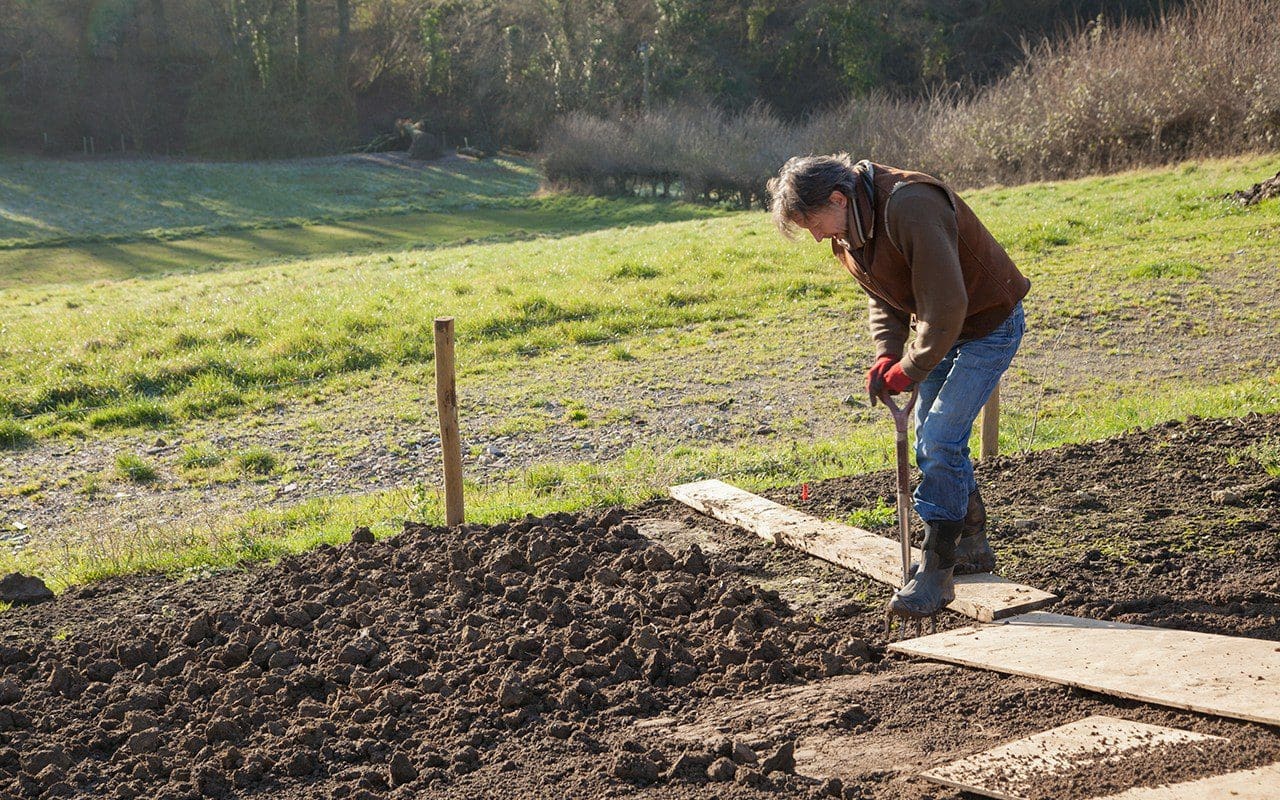 Digging over the compacted soil, working from boards to prevent further compaction
Time taken in preparation is never time wasted and it is a good feeling to give new plants the best possible start in their new positions. As the soil was previously pasture and we have the advantage of heartiness, the organic content is already good enough, so we will not be digging in compost this year. I want the plants to grow lean and strong so that they can cope with the openness and exposure of the site rather than be overly cosseted or encouraged to grow too fast and fleshy. Organic matter will slowly be introduced after planting in the form of a weed-free compost mulch to keep the germinating weeds down and to protect the soil from desiccation. The earthworms, which are now free to travel through the previously compacted ground, will pull the mulch into the soil and do the work for me.
Digging over the compacted soil, working from boards to prevent further compaction
Time taken in preparation is never time wasted and it is a good feeling to give new plants the best possible start in their new positions. As the soil was previously pasture and we have the advantage of heartiness, the organic content is already good enough, so we will not be digging in compost this year. I want the plants to grow lean and strong so that they can cope with the openness and exposure of the site rather than be overly cosseted or encouraged to grow too fast and fleshy. Organic matter will slowly be introduced after planting in the form of a weed-free compost mulch to keep the germinating weeds down and to protect the soil from desiccation. The earthworms, which are now free to travel through the previously compacted ground, will pull the mulch into the soil and do the work for me.
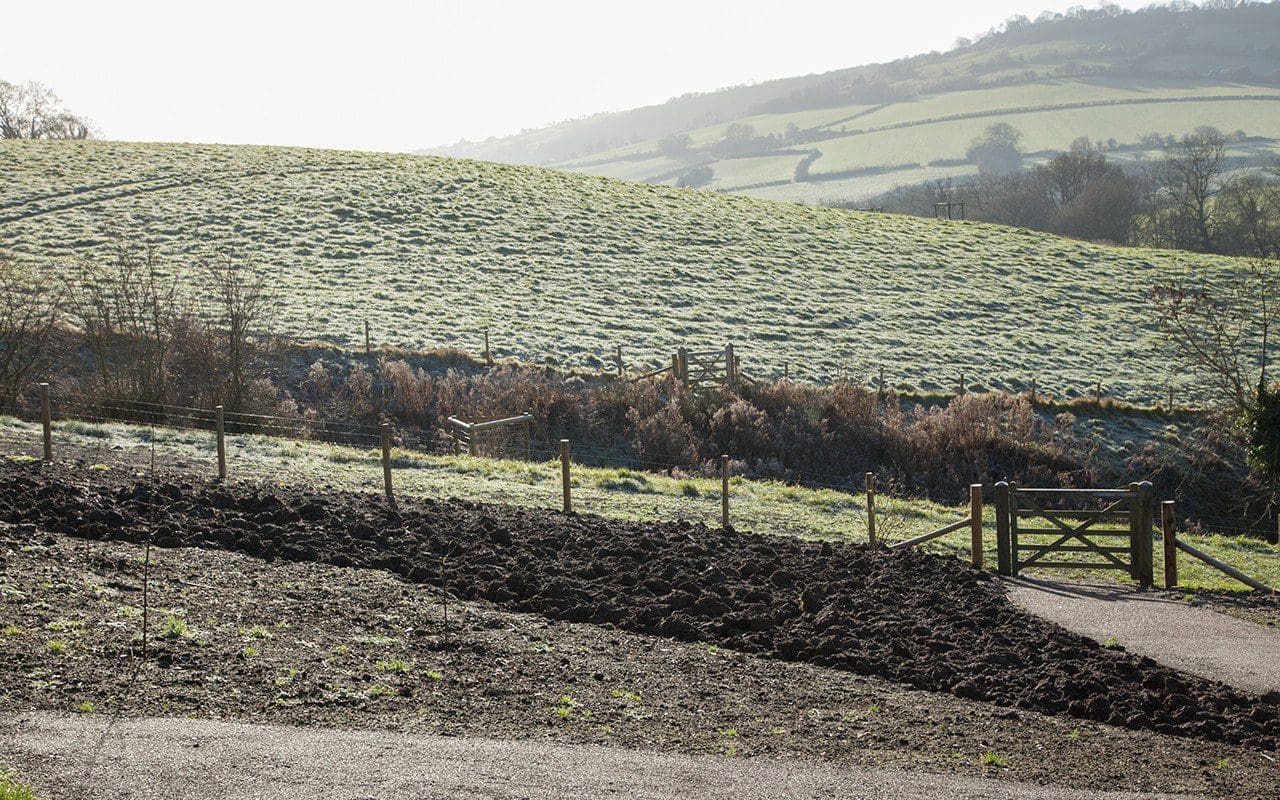 One of the planting beds in the new garden half dug over to allow the frost to do its work
In the vegetable beds, where we have been working the soil and demanding more from it, the organic matter is replenished annually to keep the fertility levels up. Our own home made compost is dug in now that the heaps are up and running. The compost is left a whole year to break down so that one bay is quietly rotting whilst the other is being filled. If I had more time, or a forklift to turn it, I would have a better, more friable compost in just six months. Turning allows air into the heap and the uncomposted material moved to the centre heats the heap more efficiently to help to kill weed seeds.
One of the planting beds in the new garden half dug over to allow the frost to do its work
In the vegetable beds, where we have been working the soil and demanding more from it, the organic matter is replenished annually to keep the fertility levels up. Our own home made compost is dug in now that the heaps are up and running. The compost is left a whole year to break down so that one bay is quietly rotting whilst the other is being filled. If I had more time, or a forklift to turn it, I would have a better, more friable compost in just six months. Turning allows air into the heap and the uncomposted material moved to the centre heats the heap more efficiently to help to kill weed seeds.
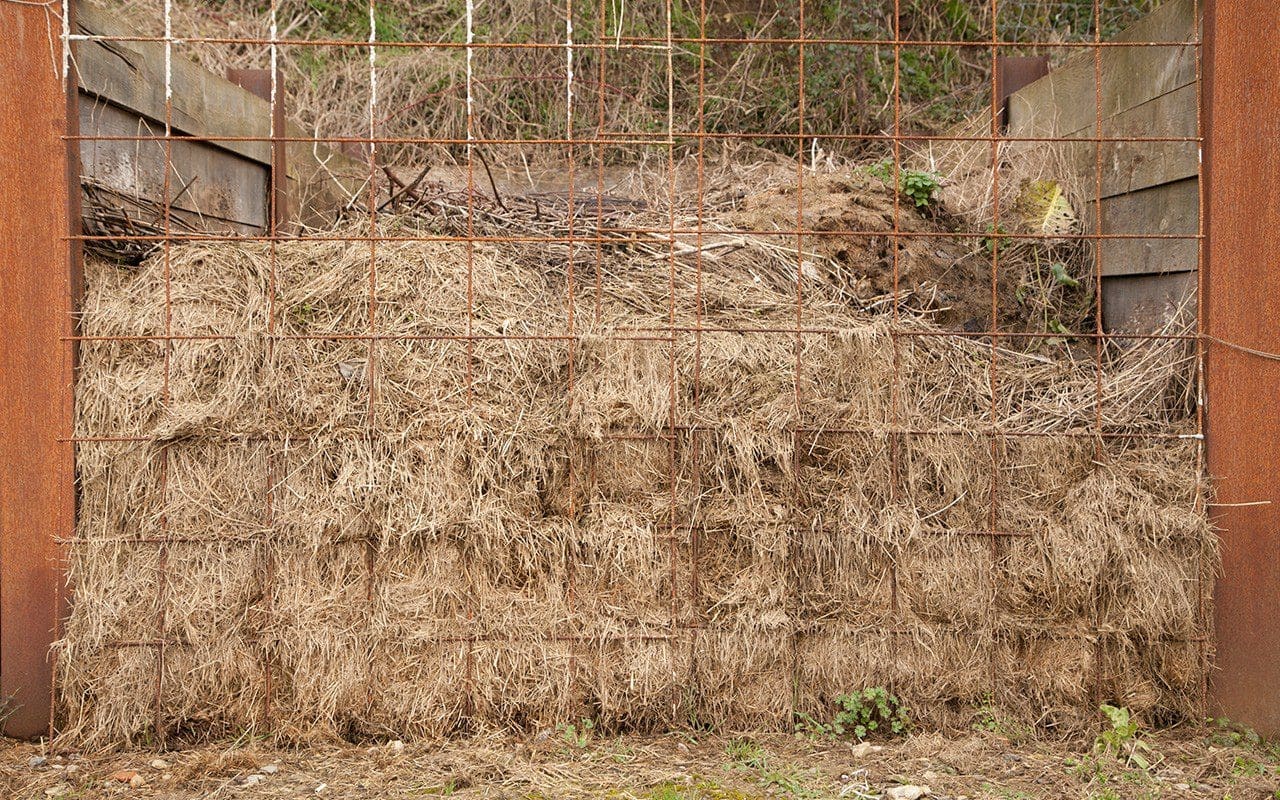 One of the compost bays
My year old compost is only really good for turning in as it springs a fine crop of seedlings from the hay we rake off the banks in the summer. There are also rashes of garden plants; euphorbias that were thrown on the heap after their heads were cut in seed, bronze fennel, Shirley poppies, phacelia and a host of other plants that have lain dormant. No matter. Since the heaps sit directly on the earth the compost is full of worms, and this can only be good for the soil and its future aeration. You can see the soil in the garden getting better and darker, more friable and more retentive with every year that passes. A reward for the hard work and payback for the bounty that we take from it.
Words: Dan Pearson / Photographs: Huw Morgan We have had a remarkable fortnight. August at its best with heat in the sun and long cloudless days. Cracks have opened up in the ground that are large enough to slide my fingers into and the garden has responded accordingly with fruit ripening and plants racing to set seed.
It has been the perfect time to gather, with a daily vigil to check on ripening and harvesting just as the seed is ready to disperse. It is a yearly ritual, which I can trace back over thirty years to my black opium poppies. I may have missed a year or two of scattering them onto new ground to ensure that I have them the following year, but I have always had their seed in store, just in case. The seed is a currency of sorts and I can always depend upon the next generation if I have some in my pocket.
Saving and sowing seed is rewarding on many levels. First, it is free, and mostly plentiful. A pinch goes a long way, but sometimes you need more than a pinch to make an impression. Secondly, raising plants from seed gives you a full and rounded understanding of how a plant develops and what it needs at each of its stages of life to thrive. A seed-raised plant has a different value, for you have not skipped a step. It will have been in your care from the get-go and may also come with associated stories that trace directly back to its provenance; what it grew with and where, or who passed the seed on and why.
One of the compost bays
My year old compost is only really good for turning in as it springs a fine crop of seedlings from the hay we rake off the banks in the summer. There are also rashes of garden plants; euphorbias that were thrown on the heap after their heads were cut in seed, bronze fennel, Shirley poppies, phacelia and a host of other plants that have lain dormant. No matter. Since the heaps sit directly on the earth the compost is full of worms, and this can only be good for the soil and its future aeration. You can see the soil in the garden getting better and darker, more friable and more retentive with every year that passes. A reward for the hard work and payback for the bounty that we take from it.
Words: Dan Pearson / Photographs: Huw Morgan We have had a remarkable fortnight. August at its best with heat in the sun and long cloudless days. Cracks have opened up in the ground that are large enough to slide my fingers into and the garden has responded accordingly with fruit ripening and plants racing to set seed.
It has been the perfect time to gather, with a daily vigil to check on ripening and harvesting just as the seed is ready to disperse. It is a yearly ritual, which I can trace back over thirty years to my black opium poppies. I may have missed a year or two of scattering them onto new ground to ensure that I have them the following year, but I have always had their seed in store, just in case. The seed is a currency of sorts and I can always depend upon the next generation if I have some in my pocket.
Saving and sowing seed is rewarding on many levels. First, it is free, and mostly plentiful. A pinch goes a long way, but sometimes you need more than a pinch to make an impression. Secondly, raising plants from seed gives you a full and rounded understanding of how a plant develops and what it needs at each of its stages of life to thrive. A seed-raised plant has a different value, for you have not skipped a step. It will have been in your care from the get-go and may also come with associated stories that trace directly back to its provenance; what it grew with and where, or who passed the seed on and why.
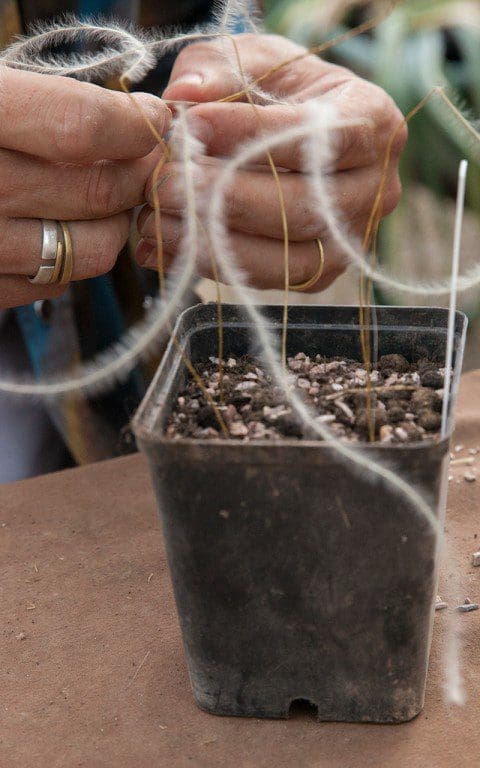 The seed of Stipa barbata is like the point of a dart and drills itself into the soil vertically when the long, silvery awn twists and contracts above it
Seed-raised plants are prone to variability and just occasionally you might find that a form has something superior to its parent: more vigour, a difference in flower colour or the potential of resistance to disease. Ash-dieback is an issue that we are all dreading as it works its way across the country, but there is surely hope in the fact that ash are such prolific seeders, that maybe there will be a seedling, or a percentage of seedlings, that are naturally resistant.
Not all seed comes true and this has its advantages as well as its disappointments. I keep my Tagetes patula and Tagetes ‘Cinnabar’ at opposite ends of the kitchen garden, as they are notoriously promiscuous. If they cross-pollinate the deep, velvet-red of the ‘Cinnabar’ will be tainted, its crosses in the next generation slashed with yellow, with neither the electric tangerine colour of the pure species nor the richness of the named hybrid. It is good to keep them pure.
The seed of Stipa barbata is like the point of a dart and drills itself into the soil vertically when the long, silvery awn twists and contracts above it
Seed-raised plants are prone to variability and just occasionally you might find that a form has something superior to its parent: more vigour, a difference in flower colour or the potential of resistance to disease. Ash-dieback is an issue that we are all dreading as it works its way across the country, but there is surely hope in the fact that ash are such prolific seeders, that maybe there will be a seedling, or a percentage of seedlings, that are naturally resistant.
Not all seed comes true and this has its advantages as well as its disappointments. I keep my Tagetes patula and Tagetes ‘Cinnabar’ at opposite ends of the kitchen garden, as they are notoriously promiscuous. If they cross-pollinate the deep, velvet-red of the ‘Cinnabar’ will be tainted, its crosses in the next generation slashed with yellow, with neither the electric tangerine colour of the pure species nor the richness of the named hybrid. It is good to keep them pure.
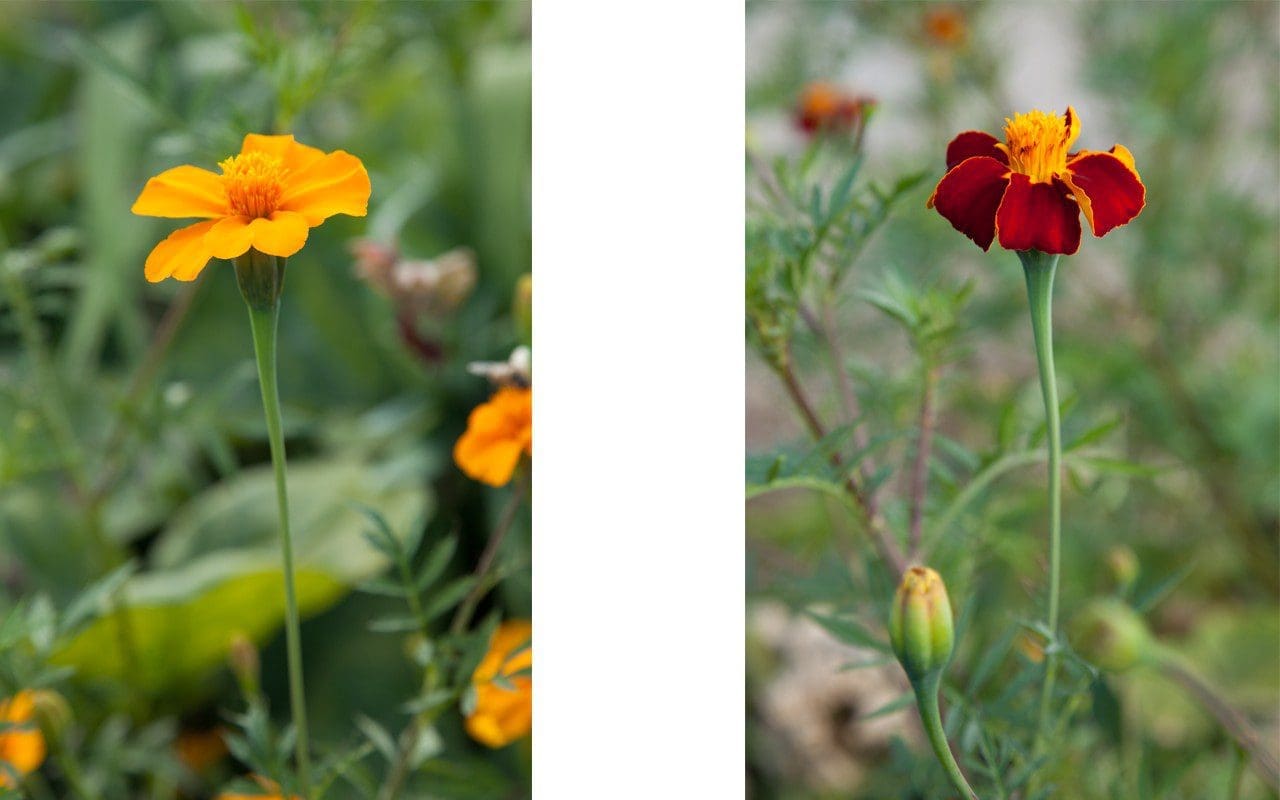 Tagetes patula (left) and Tagetes ‘Cinnabar’ (right)
In contrast the range of amethyst colours found in Camassia leichtlinii ‘Avon’s Stellar Hybrids’ are the delightful result of natural variance, coming in the darkest blue-purple and fading through grey-lilac and pink to off-white. For the last couple of years I have been harvesting seed from mine to build up stocks. The seed is prolific and I have broadcast some on the wildflower banks below the kitchen garden in the hope that they will find a window and establish in the sward. I have also sown a pot full of seed for a more controlled result. When sown fresh they come easily the following spring. A pot sown each year should provide me with the quantities that I need to make an impression. After sowing they should take three to four years to flower and it will be exciting to see the natural variability in the seedlings.
Tagetes patula (left) and Tagetes ‘Cinnabar’ (right)
In contrast the range of amethyst colours found in Camassia leichtlinii ‘Avon’s Stellar Hybrids’ are the delightful result of natural variance, coming in the darkest blue-purple and fading through grey-lilac and pink to off-white. For the last couple of years I have been harvesting seed from mine to build up stocks. The seed is prolific and I have broadcast some on the wildflower banks below the kitchen garden in the hope that they will find a window and establish in the sward. I have also sown a pot full of seed for a more controlled result. When sown fresh they come easily the following spring. A pot sown each year should provide me with the quantities that I need to make an impression. After sowing they should take three to four years to flower and it will be exciting to see the natural variability in the seedlings.
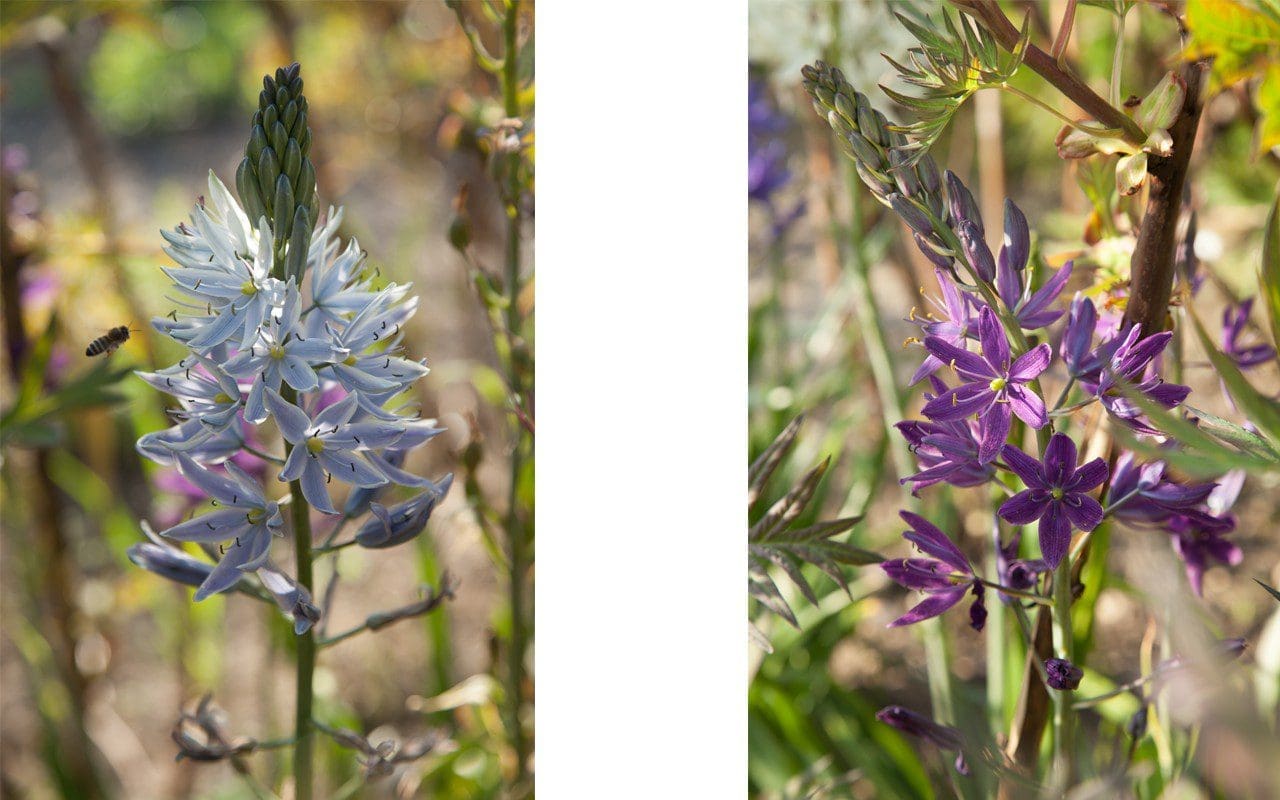 Camassia leichtlinii ‘Avon’s Stellar Hybrids’ showing the natural colour variation in the flowers
Self-sown seedlings are an indicator that you have found a place that suits a plant. This is my ultimate goal in the garden here: to work with the conditions and what the plants favour and for self-seeding to create a ‘blur’ in some of the plantings that allows them to take on their own direction.
Camassia leichtlinii ‘Avon’s Stellar Hybrids’ showing the natural colour variation in the flowers
Self-sown seedlings are an indicator that you have found a place that suits a plant. This is my ultimate goal in the garden here: to work with the conditions and what the plants favour and for self-seeding to create a ‘blur’ in some of the plantings that allows them to take on their own direction.
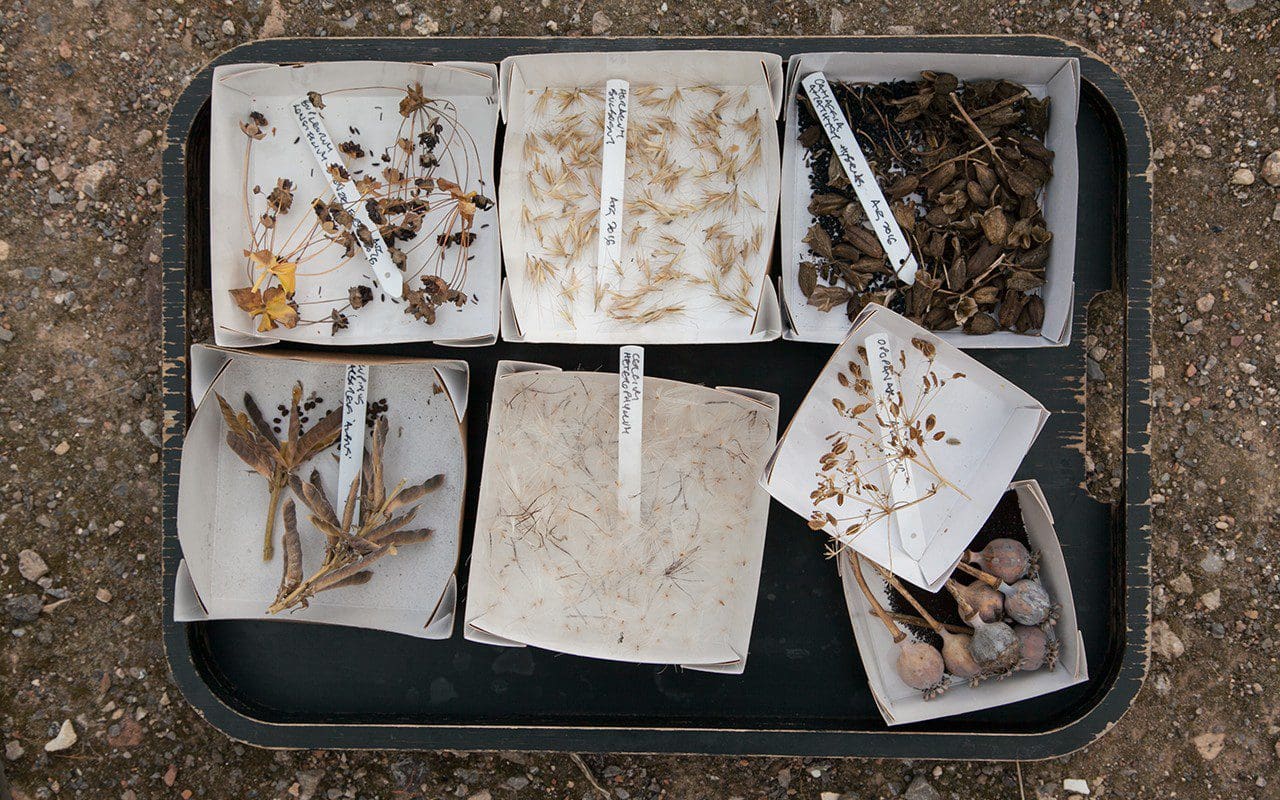 Seed collected this summer
The seed gathering started last month, each new collection stored in a reserve of pie boxes which make the perfect receptacles. The boxes are left open on a sunny windowsill until the seed is thoroughly dry and then labelled for clarity. Not all seed is for keeping. Umbellifers, for instance, and plants from the family Ranunculaceae are best sown fresh as the seed degrades rapidly. Sown now, and depending upon the species, they will sit in their pots until spring and have their dormancy broken by the stratification of frost. Peonies may take up to two years to germinate. The first year will see roots forming and nothing above ground, the second spring will give you the first leaves, so sometimes patience is important. Other seed such as scabious and Succisa come up almost immediately, so that they are past the seedling stage in order to overwinter as youngsters and get away quickly in the spring.
Seed collected this summer
The seed gathering started last month, each new collection stored in a reserve of pie boxes which make the perfect receptacles. The boxes are left open on a sunny windowsill until the seed is thoroughly dry and then labelled for clarity. Not all seed is for keeping. Umbellifers, for instance, and plants from the family Ranunculaceae are best sown fresh as the seed degrades rapidly. Sown now, and depending upon the species, they will sit in their pots until spring and have their dormancy broken by the stratification of frost. Peonies may take up to two years to germinate. The first year will see roots forming and nothing above ground, the second spring will give you the first leaves, so sometimes patience is important. Other seed such as scabious and Succisa come up almost immediately, so that they are past the seedling stage in order to overwinter as youngsters and get away quickly in the spring.
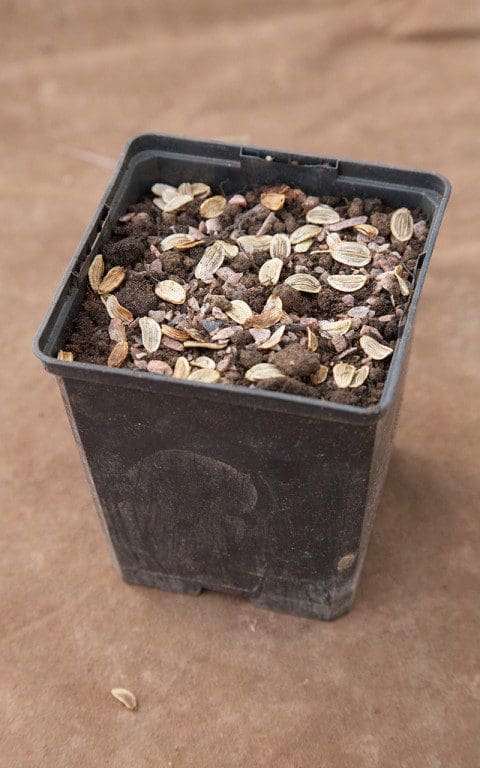 Seed of umbellifers, such as Opopanax chironium, must be sown fresh
I like to sow in a gritty mix for maximum drainage and find that if the seedlings have to search for moisture they develop a better root system. Seed is scattered as lightly as possible across the surface so that the seedlings have room to develop their first true leaves before transplanting. I like to top-dress the seed with horticultural grit, again for drainage and also the advantage of protecting the seedlings from the soft underbellies of slugs and snails. The pots are stored in the controlled environment of the cold-frame where I can keep an eye on watering, and so that they do not lie wet in winter. Seed for keeping, such as the annual tagetes, will be kept dry in Tupperware in the back of the fridge to slow their degradation and brought to life again next spring with the summer stretching ahead of them.
Seed of umbellifers, such as Opopanax chironium, must be sown fresh
I like to sow in a gritty mix for maximum drainage and find that if the seedlings have to search for moisture they develop a better root system. Seed is scattered as lightly as possible across the surface so that the seedlings have room to develop their first true leaves before transplanting. I like to top-dress the seed with horticultural grit, again for drainage and also the advantage of protecting the seedlings from the soft underbellies of slugs and snails. The pots are stored in the controlled environment of the cold-frame where I can keep an eye on watering, and so that they do not lie wet in winter. Seed for keeping, such as the annual tagetes, will be kept dry in Tupperware in the back of the fridge to slow their degradation and brought to life again next spring with the summer stretching ahead of them.
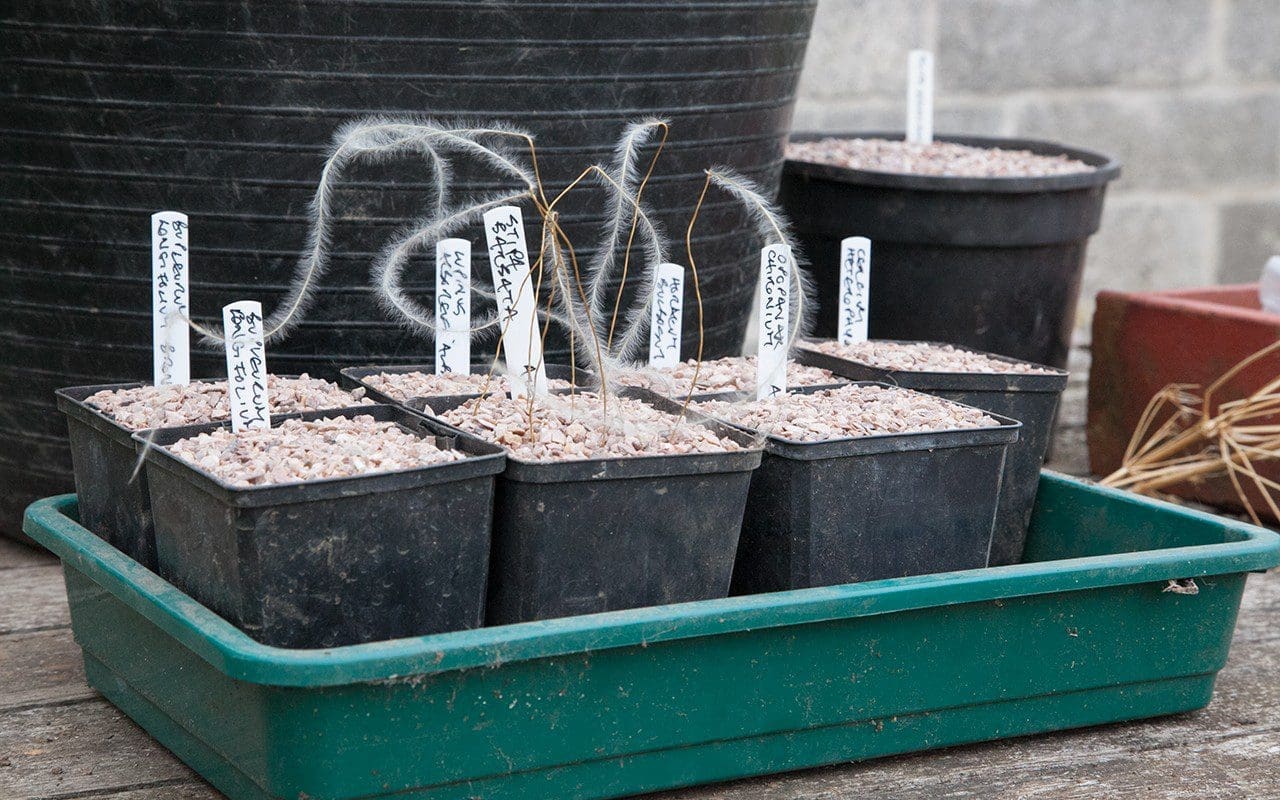 The first of this year’s sowings ready for the cold-frame
Words: Dan Pearson / Photographs: Huw Morgan We are sorry but the page you are looking
for does not exist.
You could return to the homepage
The first of this year’s sowings ready for the cold-frame
Words: Dan Pearson / Photographs: Huw Morgan We are sorry but the page you are looking
for does not exist.
You could return to the homepage
