When we arrived here the smallholding aesthetic, with its ad hoc manner of making-do, ran right up to the buildings to keep anything growing at bay. A brutal concrete slab sloping down and away from the lane surrounded the end of the house, diving steeply between it and the little barn below, where the cows were once milked, to form a yard. From there more concrete ran along the field before climbing steeply again towards the big barns, where the troughs now screen the kitchen garden from the house.
The track had been made in sections, as and when materials were available and potholes needed filling, so your first experience as you arrived off the lane was dominated by negotiating this necessary evil. You either had to park your car at an angle that spilled the contents when you opened the doors or prepare yourself for a vertiginous descent if you drove down into the yard. You certainly weren’t getting back up easily if the weather turned in the winter.
We muddled on for the first five years of being here and partly liked the authentic feeling of it, but I knew that it would eventually have to go so that the house could be cushioned in green again and not divided from it. After we renovated in 2016, we removed the concrete and reoriented the track behind the buildings and built a level platform at the end of the house. Flat ground is limited here, but even the smallest amount helps you to feel grounded enough to lift up your eyes and take in the view.
I wanted this pull-in from the high-hedged lane to be a little breathing space, to not give too much away of what was to come and to welcome you into an eddy, a pause with a feeling of rightness. I planted black-catkinned willow to form a semi-permeable boundary, so that you only got glimpses of the garden beyond and encouraged Erigeron karvinskianus, Centranthus lecoqii and white linaria to self-seed in the gravel. Viola odorata, which doesn’t mind the exposed position because it has company, reappears when the Mexican daisy is dormant in winter and when the sun shines in February they liberate their perfume to catch you unawares .
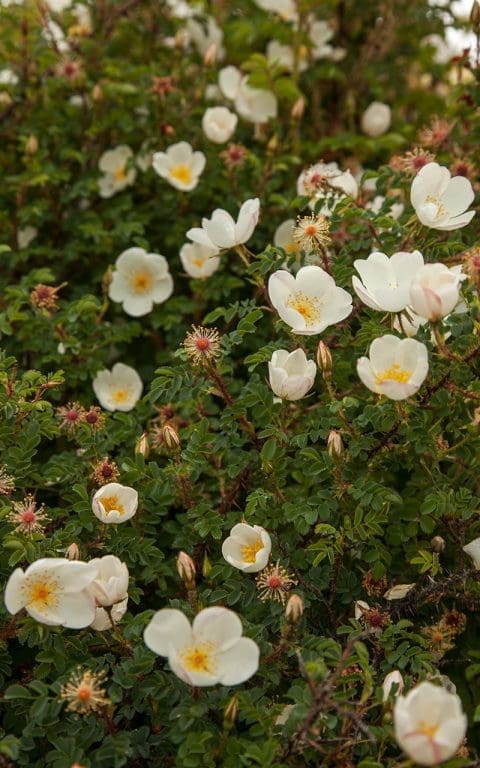
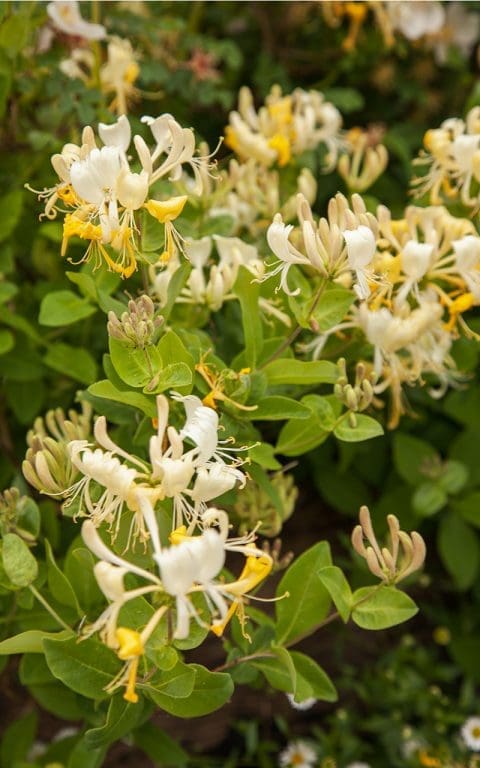
Perfume was an important consideration for this first impression and a scented ambush shoulders your descent down the steps to the front of the house. A seed-raised Rosa spinosissima, which we collected from Oxwich Bay on the Gower peninsula, sits to one side and hunkers down to form a little thicket. The first flowers opened in the last week of April this year and, although the perfume is delicate, it is delicious when you catch it for the month the bush is in flower. I’ve been training a honeysuckle along a log we’ve used to define the edge of the entrance platform, but now the briar is large enough I’m letting the two intertwine. The honeysuckle is a selection of our native Lonicera periclymenum called ‘Scentsation’. It’s not the best of names, but I have not seen a form that flowers as freely or grows as compactly. And it does live up to its name, perfuming the air sweetly and causing you to stop and linger when the wind stills in the evenings.
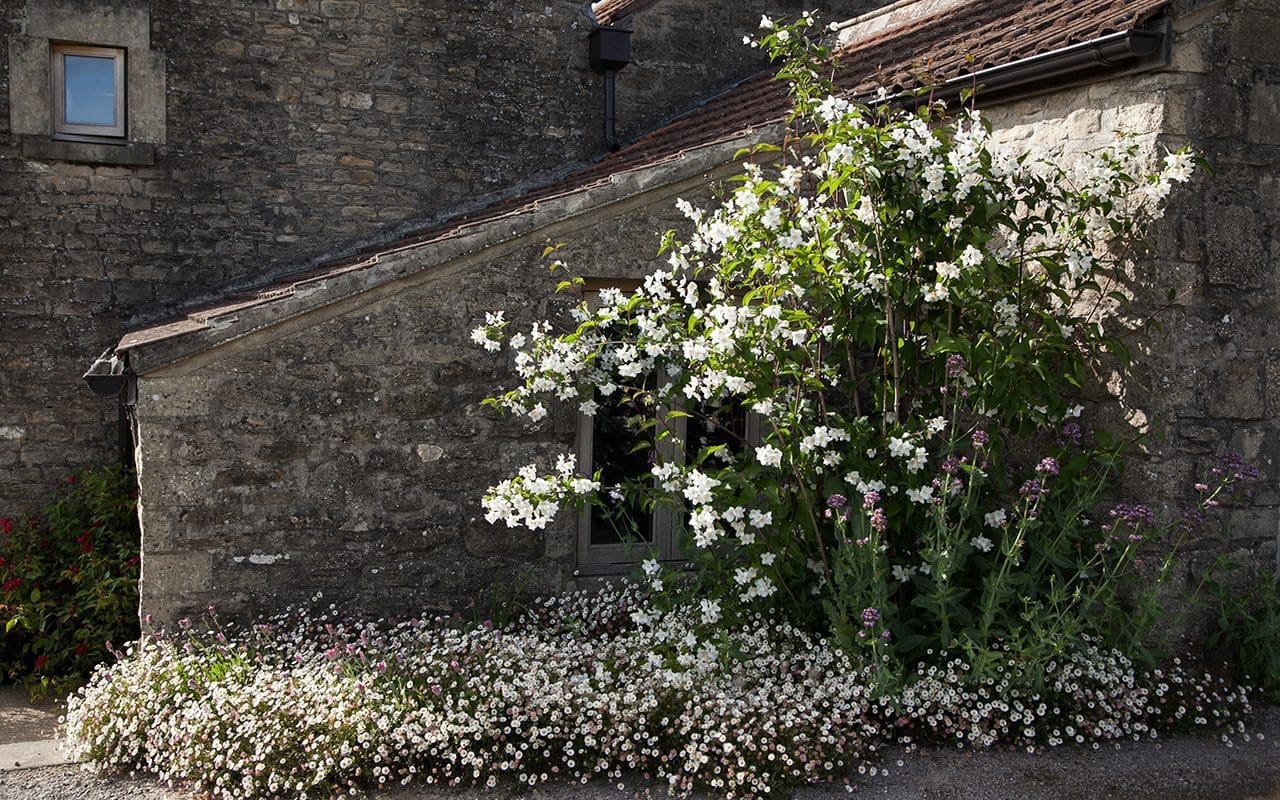
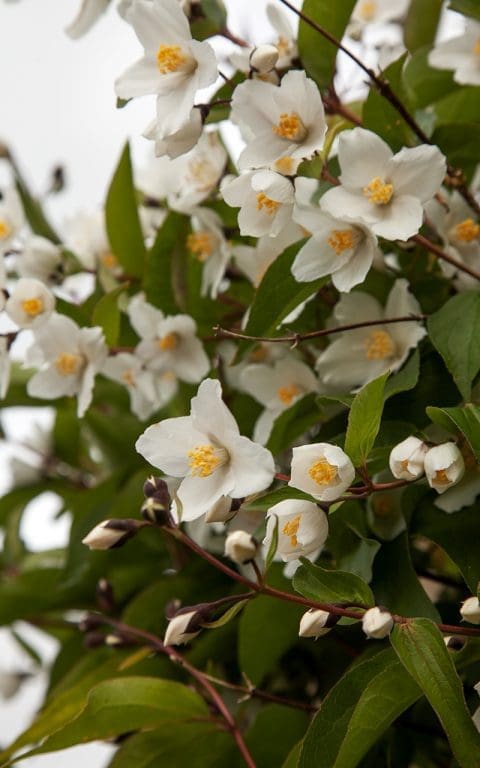
The second perfumed shoulder by the steps, held in the angle of the building to the other side is Philadephus ‘Starbright’. In its third year and beginning to have enough impact to create a presence here, we now have enough flower to perfume the breeze. In terms of scent, mock orange is a perfect description and is placed for best effect so that the wind blows it towards you. I don’t expect it to get much taller than it is now, topping out at about eight feet and six or so across for this P. delavayi x lewisii cross is modestly sized. The larger growing Philadelphus coronarius is beautiful in June with clouds of fugitive blossom but, for the remainder of the year, they are not the most interesting of shrubs.
‘Starbright’ has an open habit, never heavy, is upright but not stiff and remains open. Though it also settles into a quiet shrub for the rest of the summer, it is good in the lead up to flower, pushing plum coloured growth and first foliage. The dark staining travels into the calyces of the flowers which, against their brilliant, pure white, appear as dark as if they had been charred. Now that our ‘shoulders’ are large enough to spare some for the house, this week we have been picking combined bedside posies of mock orange and honeysuckle. Both have a fresh, zesty perfume, but the philadelphus is easily distinguished in a posy. It is evenly scented both day and night, while the honeysuckle is strongest after dusk and through into early morning. It has been waking me throughout the night, breaking my sleep with waves and pulses of perfume. I like the thought of it seeking the attention of night time pollinators and am happy that we now have enough to bring into the house to feel the full benefit ourselves.
Words: Dan Pearson | Photographs: Huw Morgan
Published 23 May 2020
The dry spring has been good for the bearded iris, their growth starting early and rapidly converting the energy stored in their knuckly rhizomes. We have them growing against the warm walls here and in splendid isolation so that they can bask in the sunshine and out of our wind to spare them from tatters. Light caught in their flattened foliage, designed like sails to harvest every ray, you need to be there to watch from the moment they stir. The leaves are full of promise well before you spot the first flowering stems, sheathed still and backlit then suddenly visible, spearing free into the air. Racing to bud they are the epitome of expectation. Papery sheaths encase a tease of tightly wrapped colour, the growth slows as they ready. Then, one morning, the first miraculous flower and then daily more over the three weeks or so until their peak.
When we moved here I set up a trial of bearded iris on our south-facing slopes in order to get to know the plants that I thought would do well here and that I would like to get to know better. You need to have room to grow bearded iris or to commit to letting them bake once their flowering season is over. Until moving here I had gardened with them tentatively, giving over a small area of precious sunshine here or there, but always pining for the room to grow them freely and en masse, with one against the other.
In the spirit of research, I spent a glorious day in the iris fields of Woottens of Wenhaston with the late owner and iris collector Michael Loftus. I was looking for good form, nothing that felt too overbred and debilitated by ruffles, and I was hunting down good colour. Some deep and saturated, others less definable or with the complexity of veining and picotee. I kept an open mind within this remit with the aim of honing a palette and came away with an extensive list of 56 that spoke to me whilst I was there.
We observed the trial closely over the next five years, each season revisiting those that came to the surface as interesting and repeating the editing exercise to select the keepers. In the sixth year I made the final selection and so, after flowering and as the plants were going into their summer dormancy, I invited gardening friends to come and collect the divisions and liberated spares. It was a Saturday morning free-for-all, every bit as good as a jumble sale and uplifting for having whittled out the favourites and having sent the rejects to appreciative homes.
Twenty or so Benton iris, bred by the great plantsman Cedric Morris, which had very quickly come to the surface as right for the mood here, were planted against the hot, south-facing wall that backs the herb garden. His selections had a natural cohesion and I wanted to keep them together to see what he had seen, unadulterated. There were another dozen or so that we found impossible to part with. The hot flanks of the granite troughs became home to a handful of blues, a black and a thunderous purple, whilst the misfits went up to the barn wall where we grow those plants that don’t feel right in the garden, but make for good cutting; peonies, roses, sweet peas, dahlias and sunflowers.
The jarful you see here is a selection of the blues. Blue is not a colour that feels right in the main garden. Perhaps because the light is so bright all day on the open slopes. Blue is best in the gloaming or in shadow when it glows and hovers. It is lost, fugitive and hard to claim in bright light. Visited early in the morning or picked and brought inside where the dim brings out their luminosity, they come into their own.
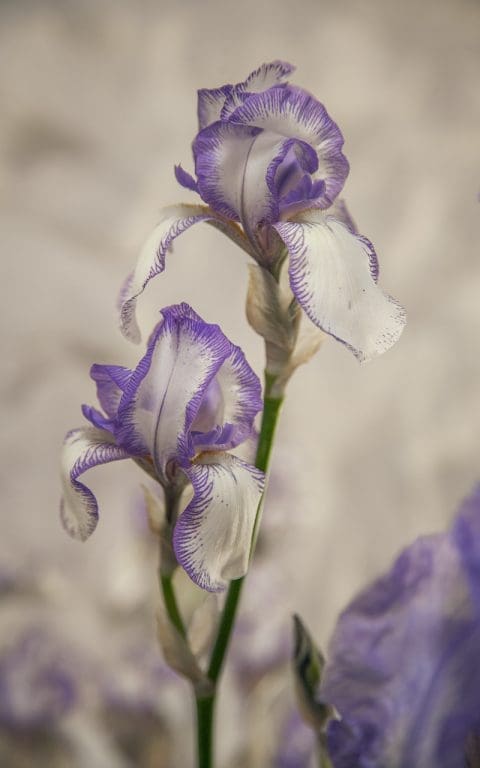
‘Mme. Chereau’ is the first to bloom here and though the flower is small and delicate, it stands easily as tall as the majority at about 90cm. Bred in 1844, it was one of the most sought after iris of the 19th century. Described as ‘Hortense violet over creamy, ruffled falls’ in early iris manuals, it registers as pale from a distance. Though prized for the undulations in its standards and falls, the ruffling never overwhelms the flower which is small and perfectly proportioned. I love this iris and keep it close to the herb beds, where the green cushions of lavender are mingled this early in the season with denim blue flax. ‘Mme. Chereau’ is also delicately scented.
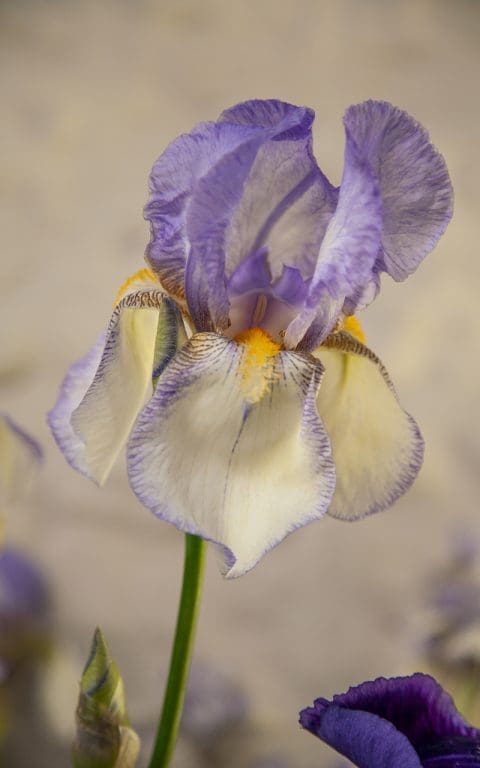
‘Nassak’ is planted close to ‘Mme. Chereau’ for its similar mood and colouring, and for the joy of the scale change. Bred in 1938 marbled sky-blue standards hover above white falls with exquisite blue stitching. The flowers are large and need the shelter the trough affords them from the Westerlies. Of all this bunch this is the most heavily scented. Zesty and opulent in equal measure and perfuming the whole of the boot room.
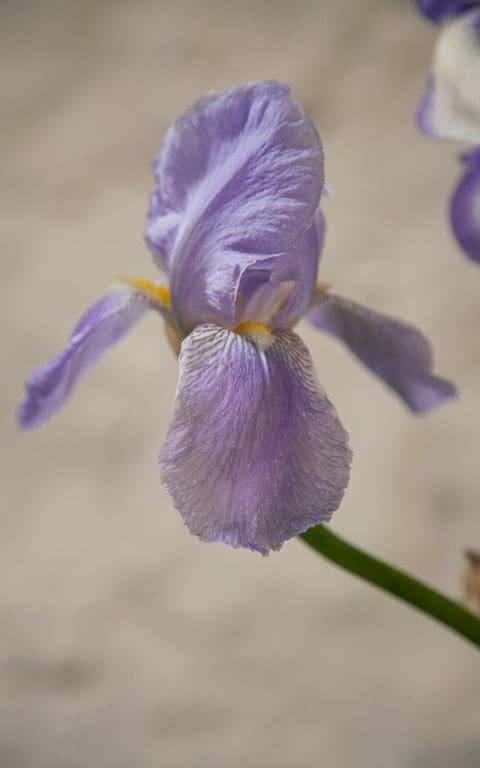
We kept ‘Tishomingo’ as it stood out for its simplicity. Bred in 1942 and described as a ‘Wisteria blue self’, it is blue throughout with the exception of a pale veined throat and golden beard. I liked it because I could see it in a silver and grey planting and quite simply didn’t want to overlook it for being so simply itself. An elegant plant with ease, poise and stamina when the wind blows. Pick it and you immediately notice its citrus perfume.
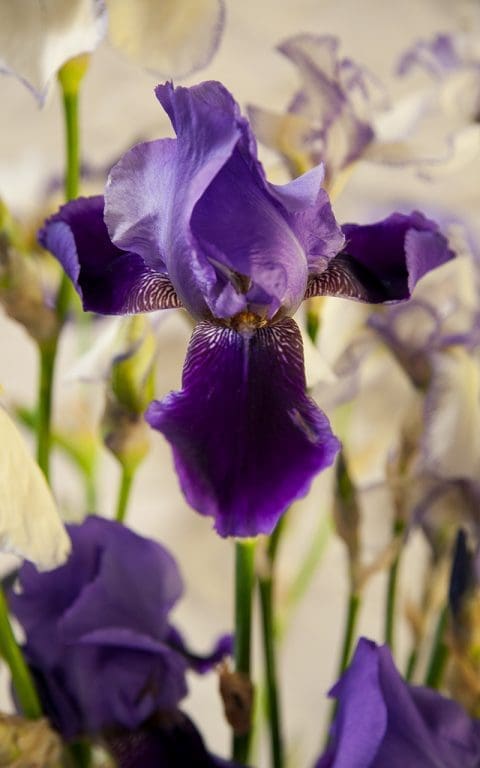
‘Benton Nigel’ was bred by Morris in 1956 or thereabouts and, of the Bentons we have here, makes an exception amongst its siblings for its saturated colour. Dark violet standards are underpinned by the richness of the inky purple falls, which glow more deeply for their paler, light catching margins, as if the petals were lit from beneath. This is an impeccable iris, well-behaved and clean in appearance.
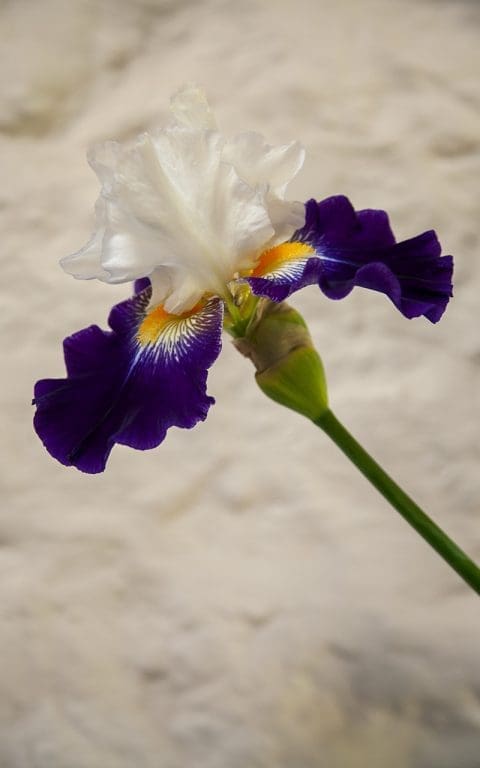
‘Noctambule’ is the misfit amongst the misfits. A Cayeux iris bred in 2007 (the name means Night Owl in French), it feels decidedly different from the rest, with white satin standards and inky ruffled falls thrown out almost horizontally. At just over a metre in height it also has a stature that puts the others in the shade. Far too glamorous and exotic for this country hillside, I have been in two minds about keeping it since it first flowered here over 8 years ago. Somehow, however, it has always had a stay of execution. Various friends who have seen it have said, “You can’t let that one go, it’s incredible!”. My mother, who is staying with us during lockdown, was drawn to it too and we cut a stem for her bedroom. And so now its fate is sealed as a keeper and, as you can see, the contrast in the bunch is enlivening. The nearest to a black and white iris bred so far, squint in sunshine or see it at dusk and you get the impression, but the falls are really the richest, most velvety purple ands there’s no denying, it’s quite the distraction.
Words: Dan Pearson | Photographs: Huw Morgan
Published 16 May 2020
The Ferula communis came to fruition last year after two seasons in the ground readying themselves. They bolted skyward like Roman candles and we stood in their shadow to wonder at the enormous surge of energy, summoned from the deep and tracking the awakening spring. The expenditure of those that flowered last year sees them resting now, hunkering down to nothing but foliage to build their reserves. It is too early to say how many cycles they can sustain here before they give up and make way for a new generation, but for now I am pleased that they have staggered themselves and will ensure I do not go without a spring in their company.
As if the group in the herb garden had been in silent conversation, this year’s flowering plants have distributed themselves rather nicely, throwing four fresh spikes to articulate an easy distribution. New leaves were already pushing from dormancy in November and they sailed through the wet winter with our slopes draining easily. Mounding slowly through the cold season and pushing against the stillness elsewhere, the netted foliage remained untouched, easily coping with wind and bowing gently but recovering after the frost. They kept their fine structure, the snowless winter sparing them its potentially damaging weight. So, by late February, we were already parting the growth to check for the fattened, flowering stems which were already preparing to move with the lengthening days.
It is easy to spend time with the giant fennels, for their rapidly moving architecture has an animalistic quality. Armature and sheath unfolding, tendoned limbs extending as they move always upwards, the day they peak is the day you see the beginning of summer. Buttercups rising above the grass. The first poppies and leaves flushed on the trees. We are lucky to have the room here for several colonies to test different varieties and in differing situations. We are bathed throughout the day in sunshine, for they would not do well without it.
The Tangier fennel, Ferula tingitana ‘Cedric Morris’, is the first into flower and grows against the espalier wall that it shares with the pears. They are taking a fallow year this year after flowering plentifully last, but their distinctive, shiny foliage is good even when they are taking some downtime. Although the giant fennels are said to be short-lived as a tribe, they are proving to be reliable here where they are never overshadowed in a planting and this seems to be a general rule for their well-being. The ‘Cedric Morris’ came with me as seed from the Peckham garden and establishing seedlings when they are young is the best way to ensure happiness. I keep a few generations on the go in the cold frame so as to always have a spare or two to keep an age-range but, as with most umbellifers, their roots dive deep to provide the foundations for their great bolt of flower, so they should never be allowed to become pot-bound before planting out.
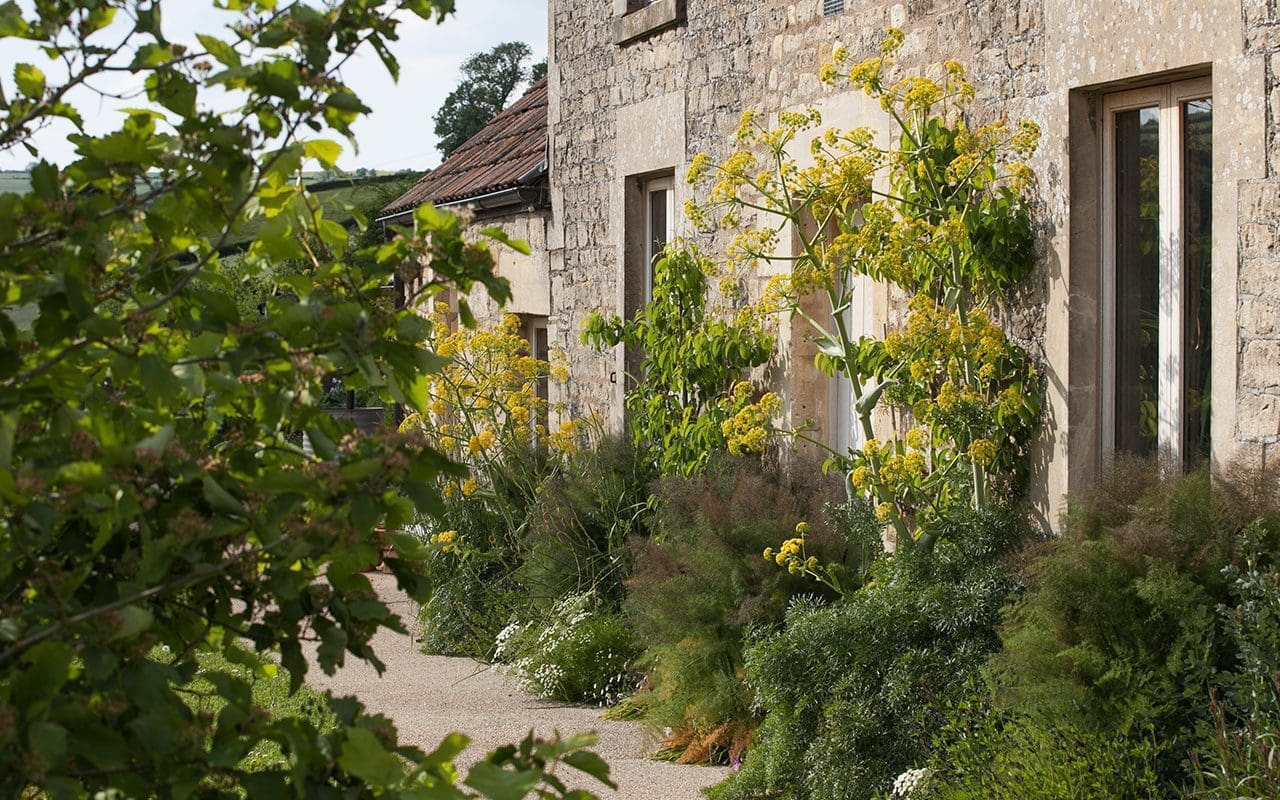
I have several forms of Ferula communis, the larger-growing cousin and close relative to the Tangier fennel, all of which were given to me by Fergus Garrett at Great Dixter. Immediately in front of the house and in the yard below it we have Ferula communis subsp. glauca. This is the most elegant of all, in my opinion, for its slender limbs and burnished dark green leaf. I have planted it amongst the rockscape of the re-imagined Delos Garden I recently designed at Sissinghurst. We sourced the plants from Olivier Filippi in southern France and, although young when we planted them in the autumn, I could immediately see that his form of F. c. subsp. glauca was distinct from the Dixter form. Finer, more wiry and exhibiting a variable trait, which is common in a plant that has such a wide distribution across southern Europe and into Eurasia.
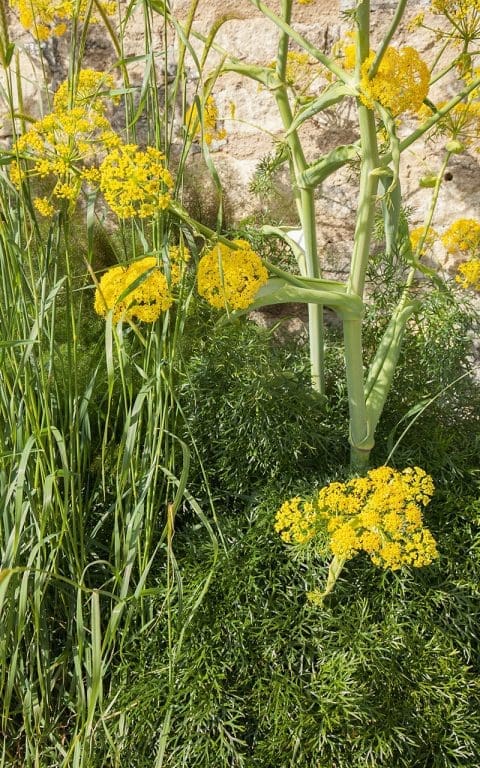
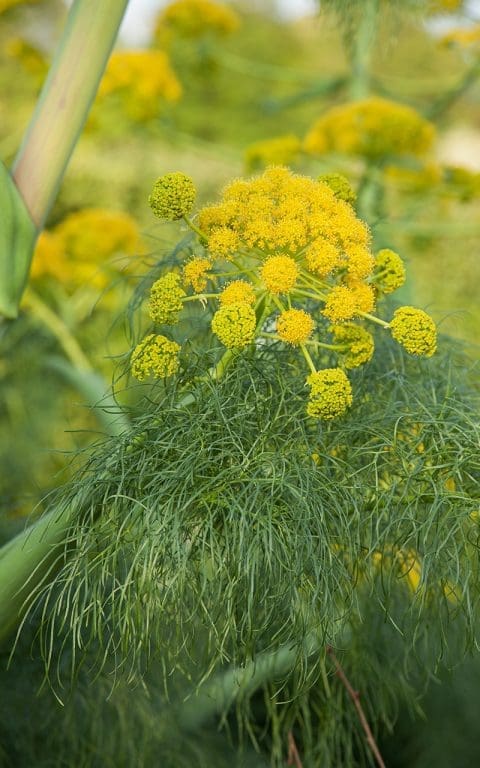
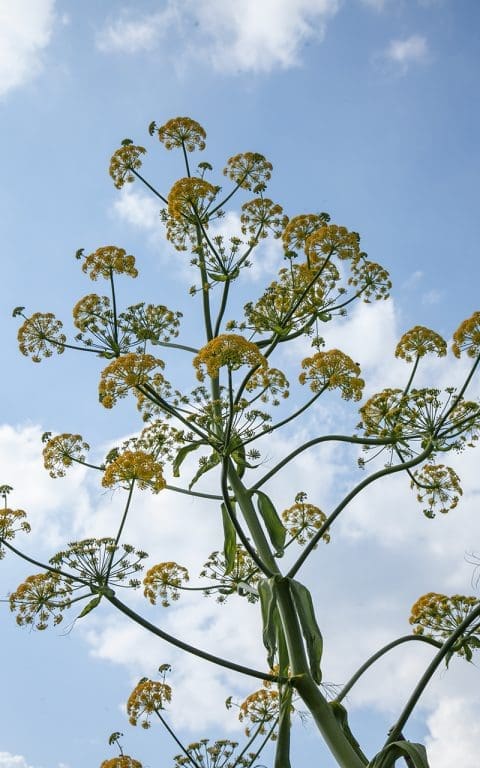
The straight Ferula communis we have growing in the herb garden (main image) has paler, more netted foliage. It is the largest growing, the flowering stems being as thick as my wrist and rising to three metres tall over the course of a month. Despite their open position here on our hillside, they still search for the light and the stems each chart the sun’s movement due south to show you their desire. After a heavy West Country drizzle last week we woke to find the tallest two having toppled. Grown too fast and furious on our fertile ground, they have probably just been a little spoiled and lacked the stamina of the plants that find their way into crevices on the rocky slopes of their homelands. We spent an hour before breakfast carefully staking and hope that, as the acid-yellow flowers go on to produce the weight of paddle-shaped seed, our endeavours will not be further challenged.
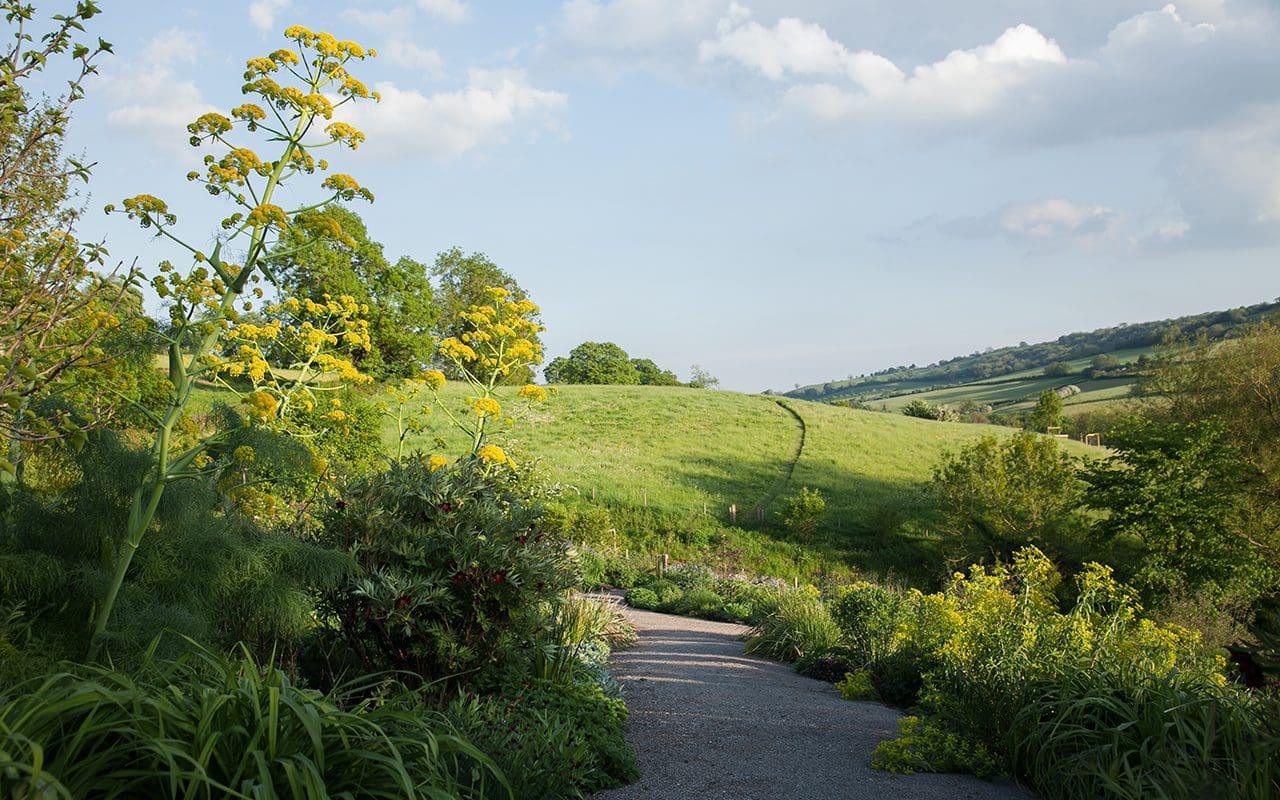
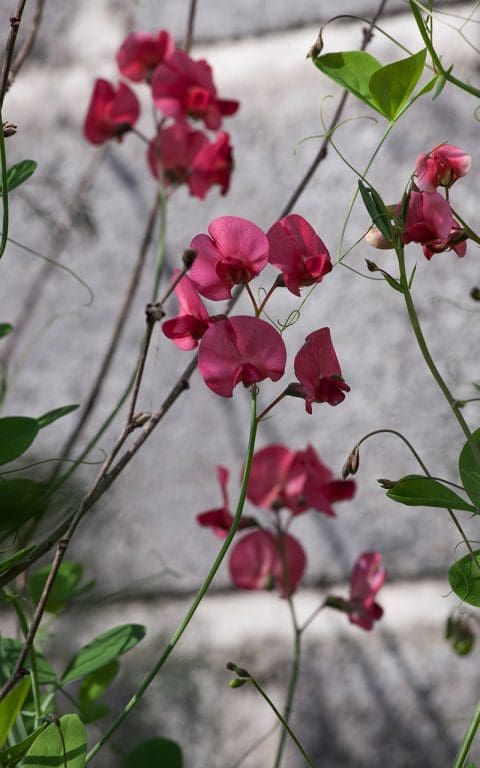
In the main garden we have a possible cross between Ferula communis and F. tingitana. Passed to me in a brown paper bag by Michael Wachter, one of the Great Dixter gardeners, with words on the bag stating “From Fergus. F. communis. Tingitana blood”. It has risen to flower this year for the first time. The foliage is more feathery again that F. communis and consistently so across all the seedlings. I have planted it with scarlet oriental poppies pushing up through the foliage to remind me of the first time I ever saw giant fennel in the Golan Heights with scarlet Anemone pavonina. Planted on the south side of the fennel foliage so that they do not get overshadowed too early in the season, I have added an early flowering pea, Lathyrus rotundifolia. With Turkish origins (which means that it is also an early riser) I plan for the pea to rise up into the net of the fennel foliage and then go on to scale the lofty tower of flower. The pea, I am hoping, will climb tall enough for the soft, carmine flower to mingle with the sharp brilliance of the fennel in flower during May and June. Both the pea and the fennel will be over and gone to seed by the time the rest of the garden has taken over in July. The pea rupturing its drying pods on a hot day with a distinctive crack and patter of far flung seed. The fennel foliage withered, to leave nothing but the architecture of the flowering stem and seed held high to be caught in late summer by wind and distributed. You have to be ready for the hole when this happens and plan for it not being a gaping one. We have Salvia ‘Jezebel’ planted in front to make late cover for the small inconvenience of bare ankles.
Words: Dan Pearson | Photographs: Huw Morgan
Published 9 May 2020
The spring this year has been a remarkable one. An intimacy provided by lockdown and, for the first time I can remember since childhood, the opportunity of really touching base with the shifting and sure unravelling.
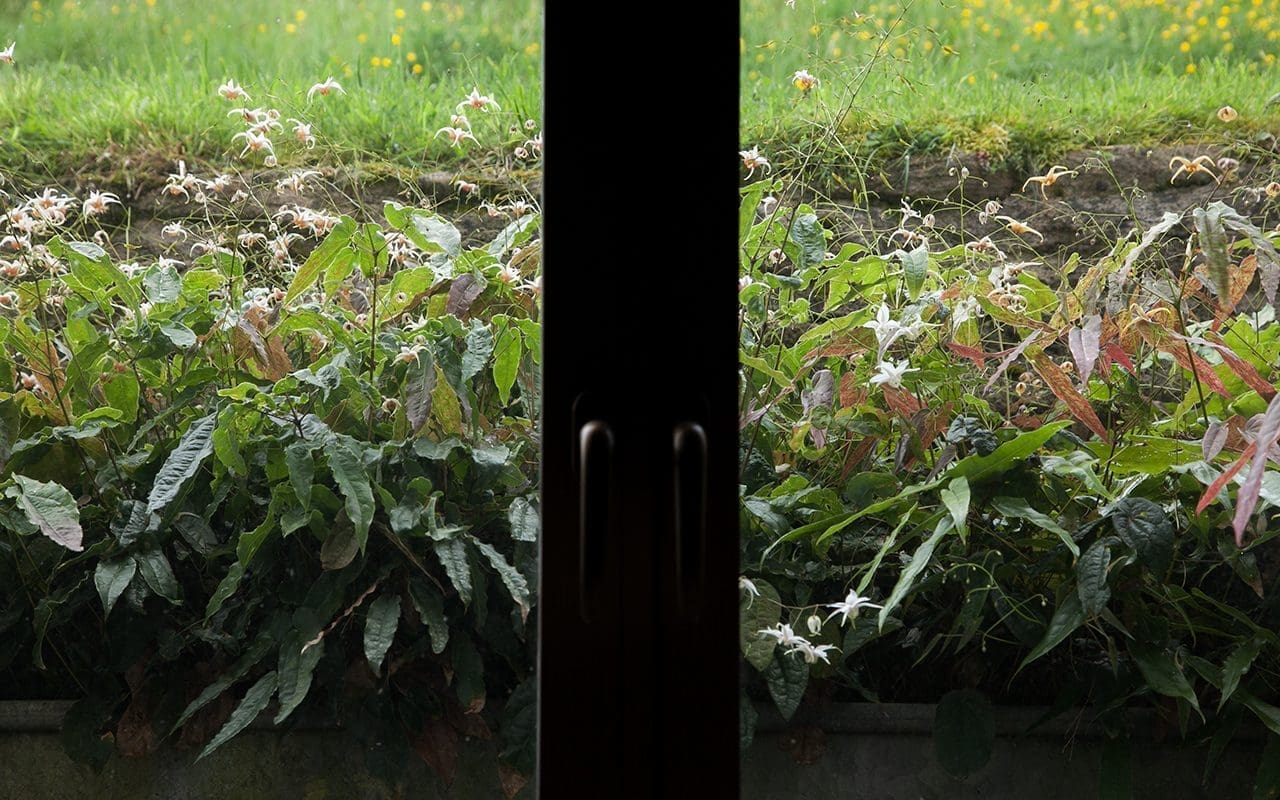
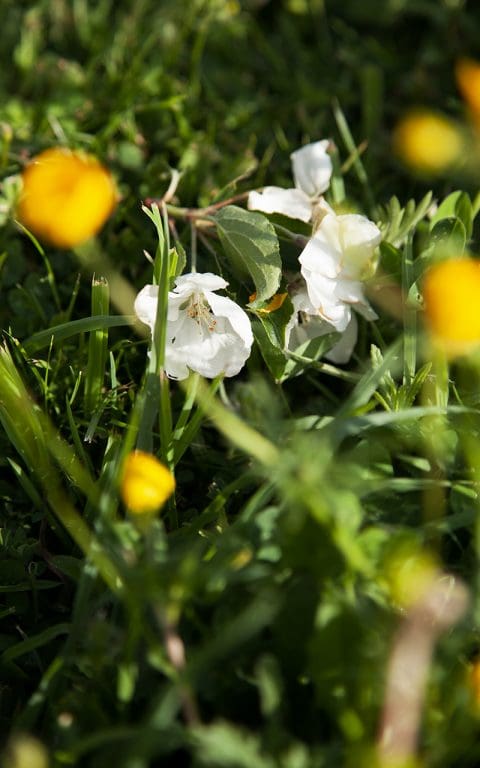
We have been working hard to keep our studio team cohesive. Looking inward, to a virtual world, where it is sometimes hard to read quite what’s happening. But, in pausing between video calls, I have looked out of the study window to watch my collection of epimedium unfurl and then unveil their delicate constellations. I have witnessed their complete flowering season. One that I usually just snatch a glimpse of, if I am lucky, amidst all the back and forth and the juggling. We have been so fortunate to be here, in the place we made to be part of. A walk to see the crab apples (main image) coming to life on the steep slopes behind us in the evenings. Bud break from bare limbs and then, in the glorious days of sunshine, the sugary pink of bud giving way to branches incandescent with the light of blossom. In the time it took them to fill their branches, the meadow beneath them came to life too, long enough suddenly to mow a path and now as the blossom is torn from the branches by sharp spring bluster, shiny with wind whipped buttercup.
Interestingly, time has not slowed as I thought it might for being confined here. It has simply intensified as we have looked closer and in real time. Spring has provided an unstoppable momentum and the last few days of rain has seen an explosion of growth. We needed rain to welcome the new life and the softness of fresh foliage. Despite the bright uplifting days, I was beginning to see a caution in growth, a tailoring for the moisture available. Sown rows remained dormant in the kitchen garden and the sheep were beginning to get on top of the grass in the paddocks below us. Then suddenly, relaxed by the last few days of rain, there are now weeds where there was clean ground and growth rearing up exponentially. Ankle then boot deep in the meadows in what seemed a measure of hours, not days.
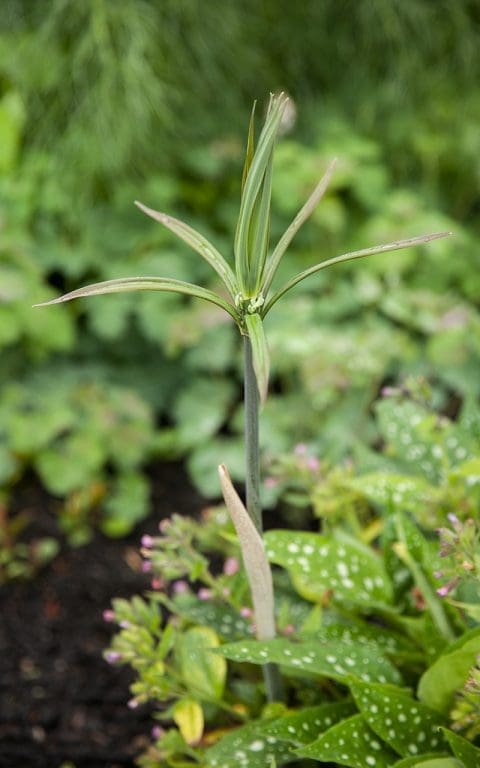
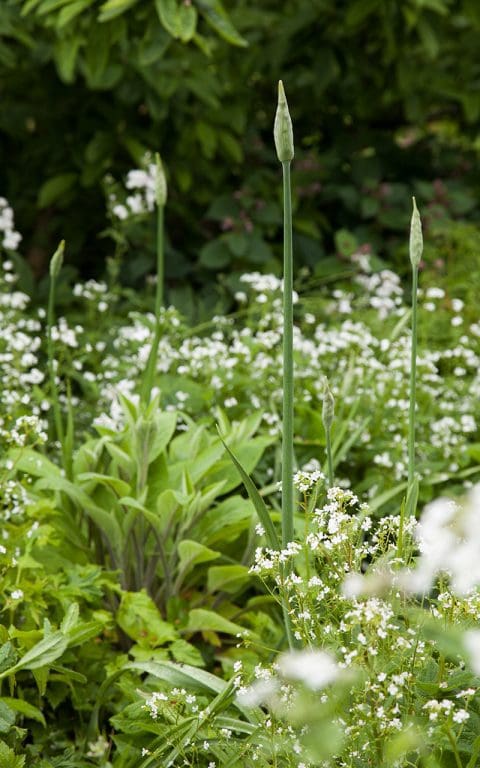
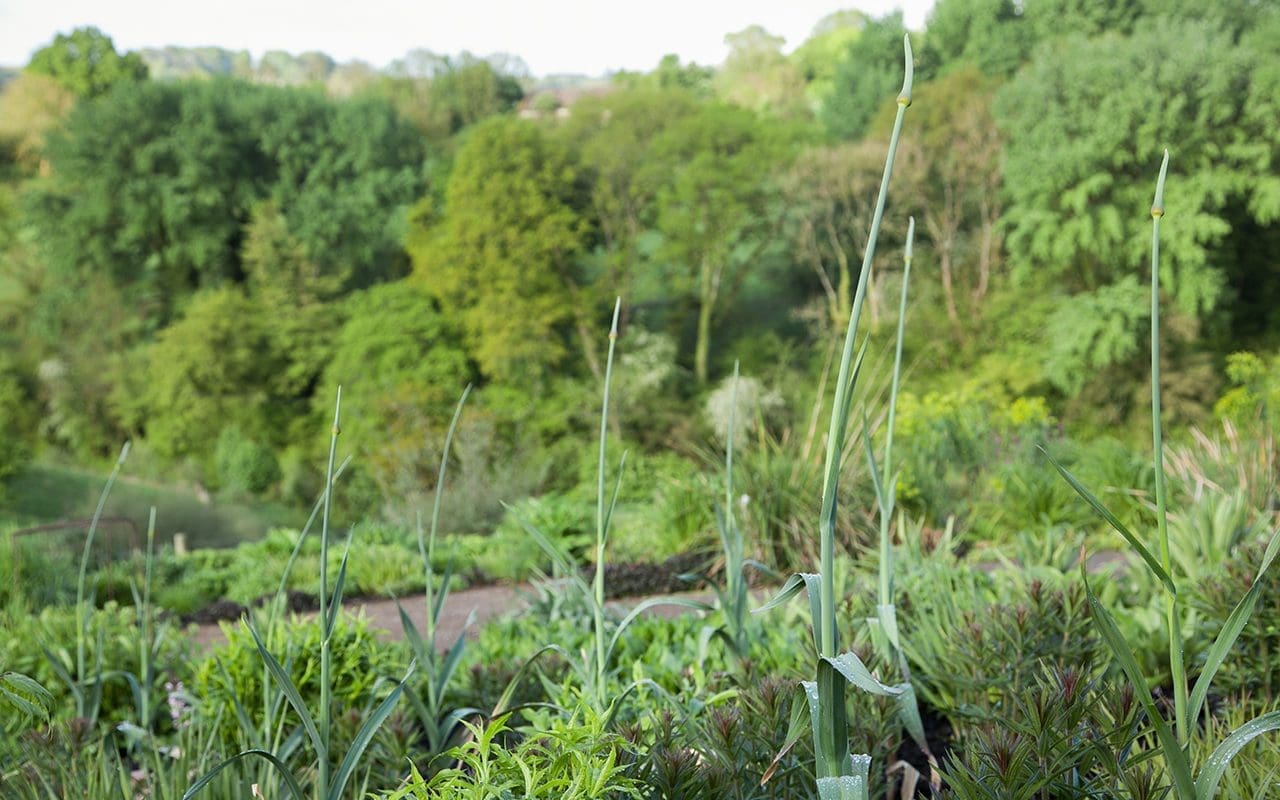
It is a particular time, this weight of green and the energy that comes behind it. Last weekend the ground was bare and the Polygonatum verticillatum just a memory, but here they are, spearing through mulch, almost audible in their ascent. A rush that typifies the break for light and space and their own particular window of opportunity. I crouch for a moment beside the emerging shoots, which are twice as many as last year and try to focus. It is difficult, for there is promise everywhere. The bolt of giant fennel already towering twice my height, with trunks for stems and the feeling they have drawn upon reserves that must have come from the deep. Their verticals are repeated again and again throughout the garden to feel this joy in the early rise. Nectaroscordum siculum spearing through foaming Brunnera ‘Betty Bowring’ and Allium ‘Summer Drummer’, new this year and already scoring lines that I’m pleased to have drawn where the growth is still low amongst the panicum.
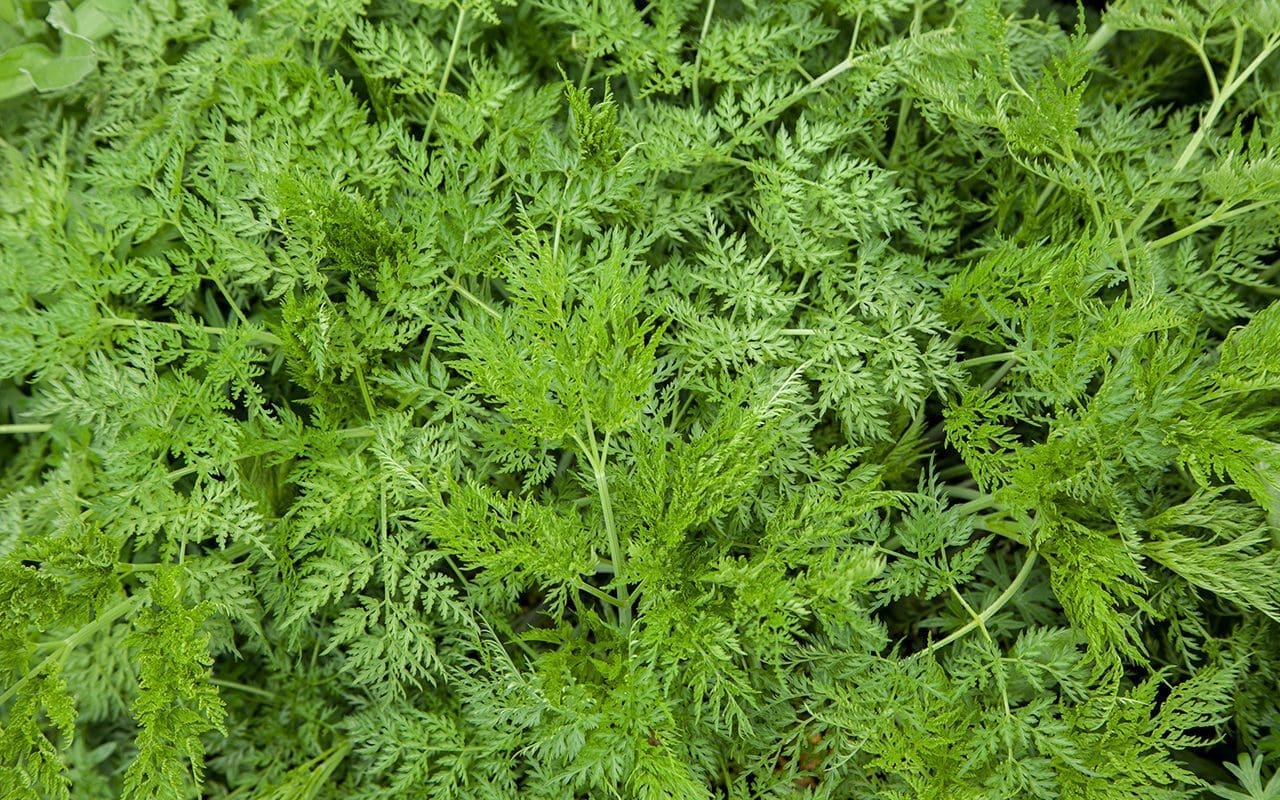
There is a delicacy that is particular to this moment. Earth still visible, but not for long, where Astilbe rivularis unfurl their limbs. I am aiming for cover, no bare earth, and the delicate balance of layering has already begun. Cardamine that were visible just days ago already submerged in the laciness of astilbe and fastly rising Anthriscus sylvestris ‘Ravenswing’. The bell-hung spires of Tellima grandiflora ‘Purpurteppich’, establishing happily now where there’s a microclimate of company. Just a year ago, with space in the new planting, they were burning in spring sunshine to reveal their woodland origins, but now the layering is working. Taller Sanguisorba, later to emerge, will provide them shadow. Taller still buckwheat and the reliable shade of the Heptacodium miconioides in the heat of the summer.
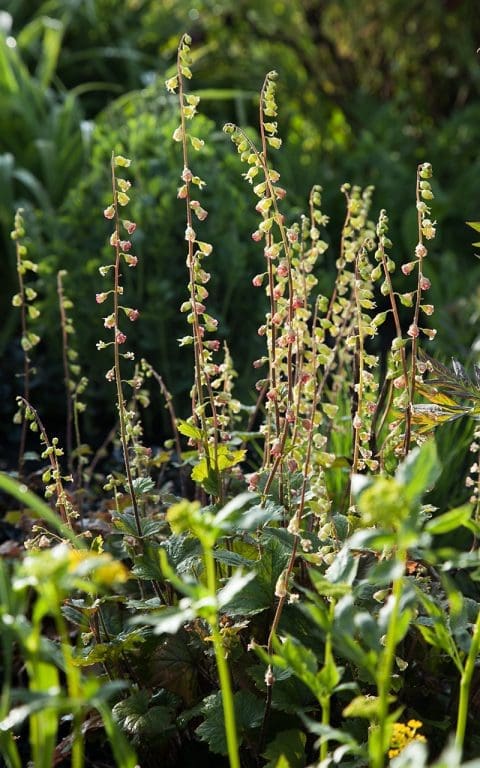
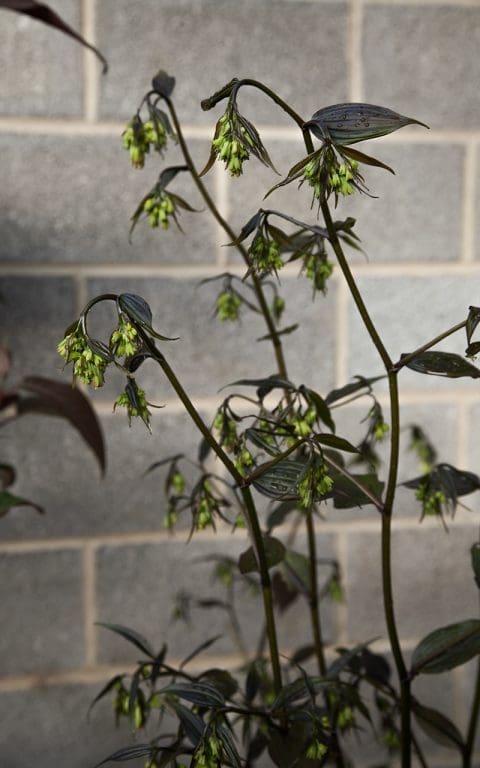
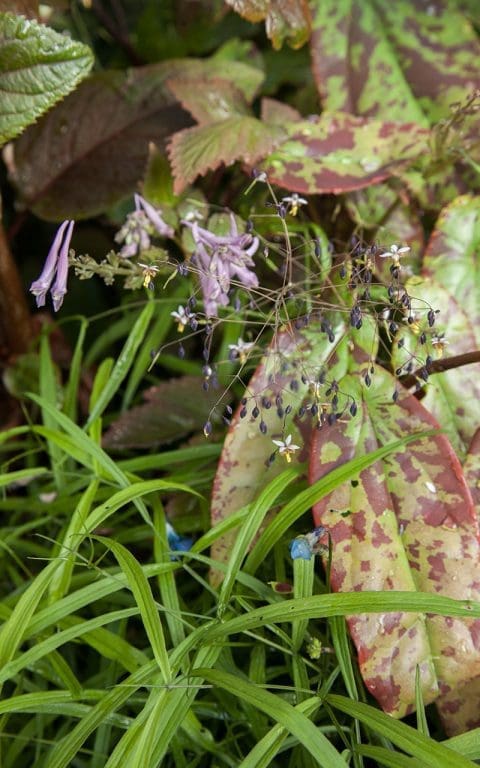
The early risers are such an important part of a spring garden, because this newness will quickly tarnish as we hurtle towards first summer. Never better than now are the Disporum longistylum ‘Night Heron’, rising fast and dark as licorice. Sometimes they seem more animal than vegetable. Chris and Toby Marchant of Orchard Dene Nurseries gave me my first plant when we were still in Peckham and I would never want to be without it. Another impeccable collection from the great plantsman Dan Hinkley, it needs a sheltered corner out of the wind to do well. I have given it one of my most treasured places in the lee of the studio where it gets morning light to colour its foliage well and then shade in the heat of the day. It rises here above the dappled spring foliage of Epimedium myrianthemum and Corydalis temulifolia ‘Chocolate Stars’.
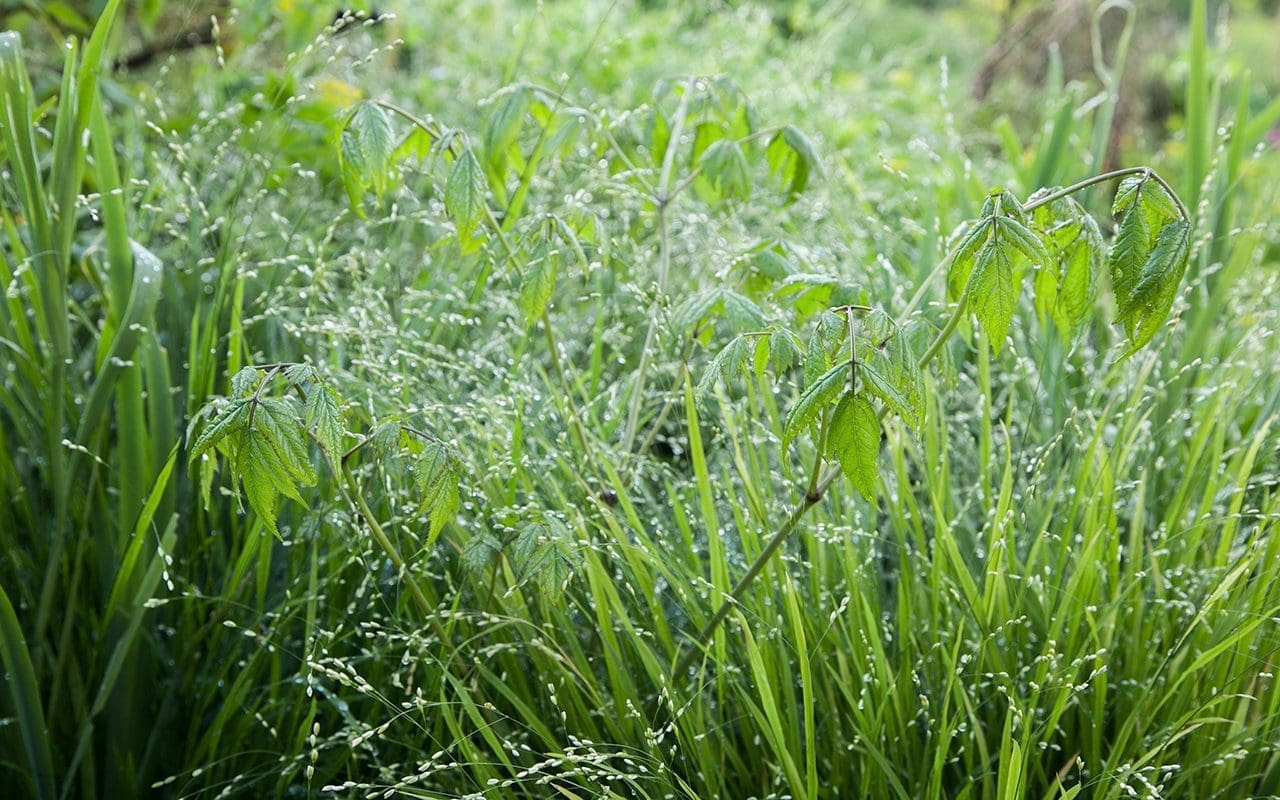
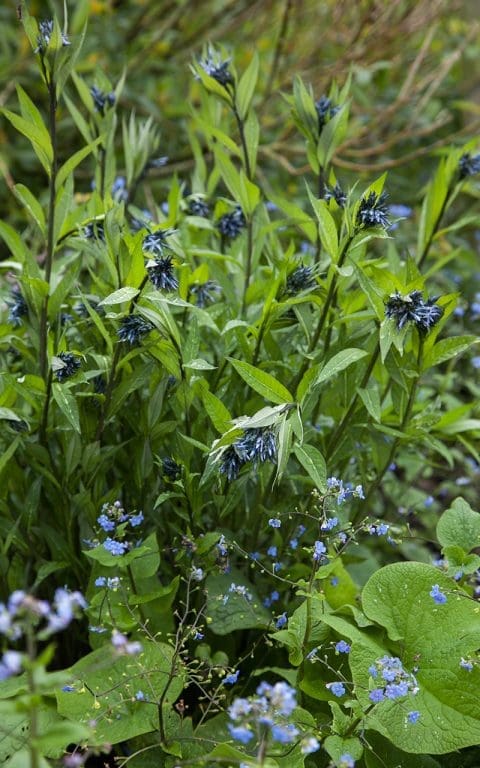
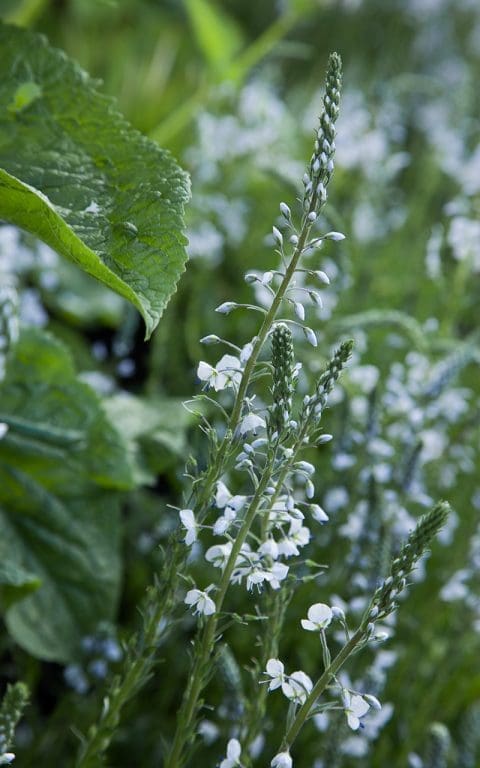
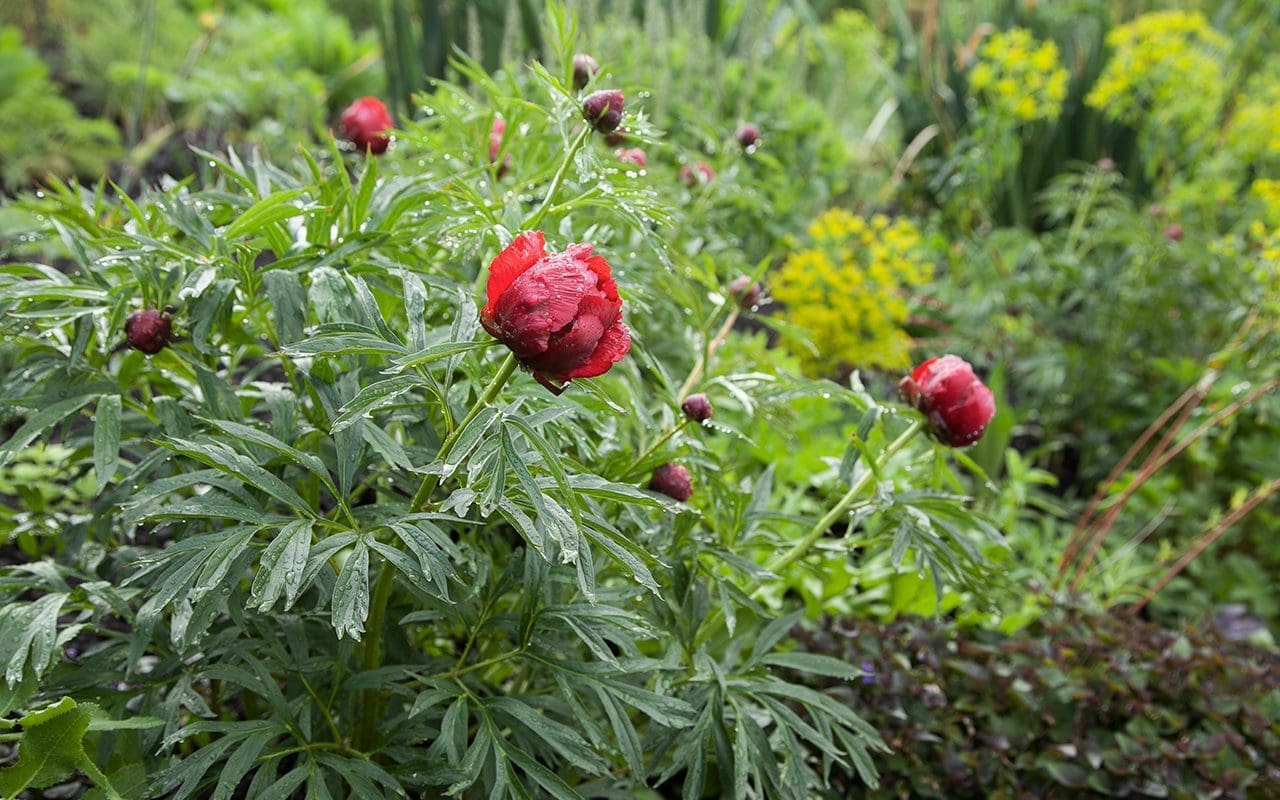
Early flower is not yet my focus and I like the early green and its variations whilst growth is still young. Bronze in the Actaea foliage, made light for the shimmer of Melica altissima ‘Alba’ and the filigree froth of Selinum wallichianum, arguably as good as it is for late summer flower. But the first flowers are made special for being able to see them without too much competition. Metallic blue Amsonia orientalis rising above the pure, sky blue of brunnera and the pale, ascending spires of Veronica gentianoides. Good amongst the played down pink of Valeriana pyrenaica and neatly taking over after the pulmonaria. It is a moment of teetering and the anticipation of bud is there already in the iris and some of the peonies are already cupped and flaring. Turn away and it will be different. The reward of time is to be able to look harder.
Words: Dan Pearson | Photographs: Huw Morgan
Published 2 May 2020
We have now been at Hillside for six weeks during which time we have left the village just twice. Our daily lives have settled into a regular routine, which provides the reassurance of structure. The furthest we venture from the house each day is for two dog walks, one around the valley after breakfast and the other shorter one up the lane to our top fields after we finish work. Apart from our DPD delivery man (with whom we have rapidly become much more familiar) the only people we see regularly are our immediate neighbours.
Living in a tiny community the local support network kicked in very quickly here in mid-March. Josie and Rachel, sisters who live up the lane, are in their 80’s and have lived here almost all their lives and still live to the rhythm of an earlier time. When we first moved here they told us that our top fields used to be known as the ‘hospital fields’, since they were left ungrazed for the cows to be allowed in at certain times of year to self-medicate on wildflowers. When we first got a swarm of bees they arrived, unannounced and kitted up, to see if we wanted some help learning how to manage them, as they have been beekeepers for decades.
Each evening we meet them at the gate to the hospital fields as we return from our dog walk, where they feed the two beef cattle they raise each year in the neighbouring field. We have always stopped for a quick hello in the past, but there is now an enforced closeness and intimacy in our communications. Very quickly after lockdown we started talking chickens. The fenced orchard that abuts their garden is home to a large brood and their cockerel can be heard most mornings waking the upper reaches of the village. We had thought that now, unable to leave home, might be the time to get chickens of our own. While we still haven’t committed, we rely on our now weekly delivery of eggs from the ladies up the lane.
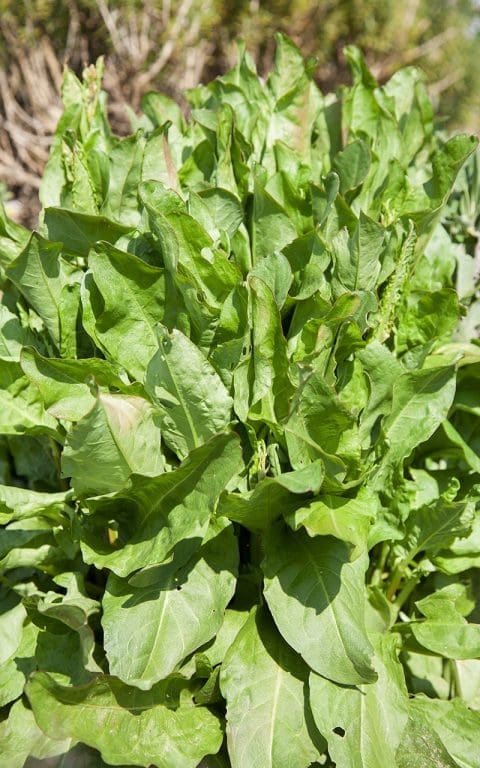
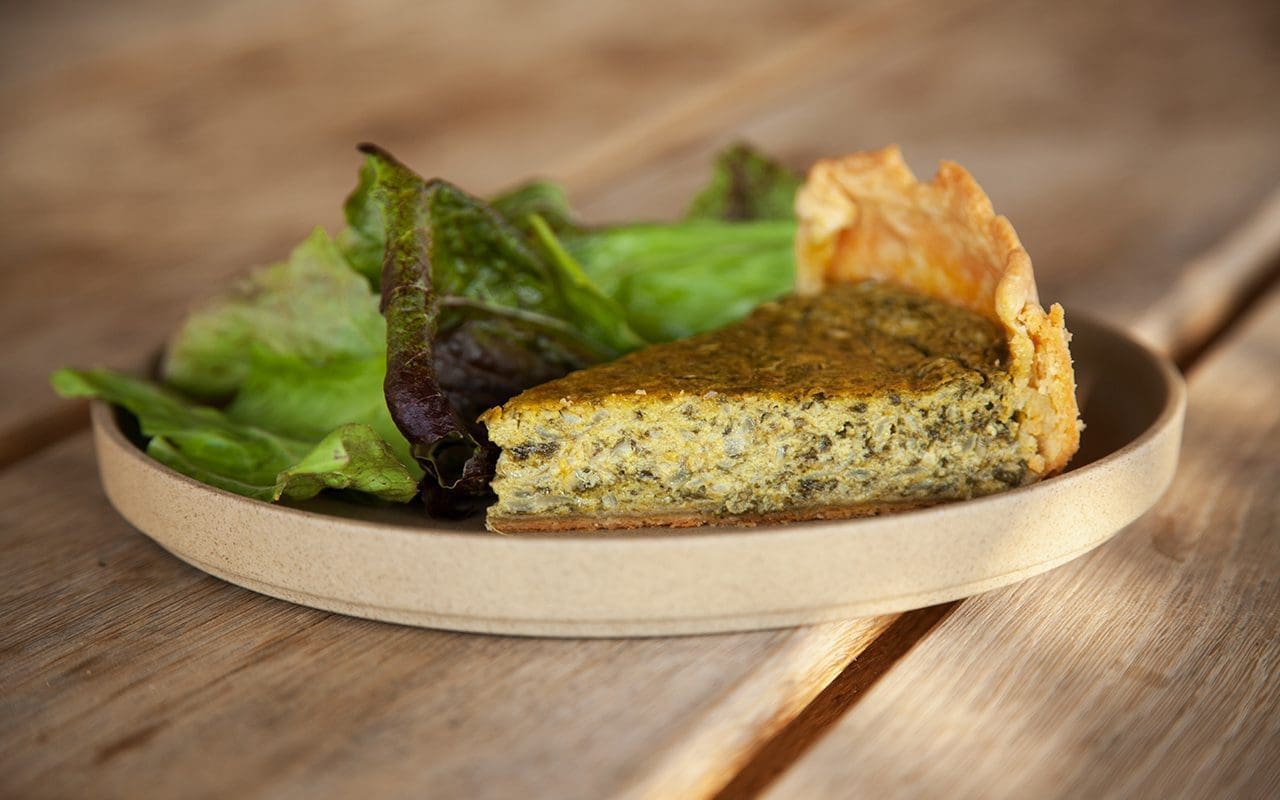
Now that we are smack in the middle of the hungry gap, everything in the vegetable garden is up for kitchen consideration and things that may once have been a passing fancy demand a treatment that will turn them into a real meal. The sorrel, which is in its prime right now, is sending out sheaves of squeaky green leaves that just invite harvest. Due to its reputation for sourness, and the fact that, like spinach, it cooks down to nothing (whilst also turning an unappetising shade of khaki) it is not the easiest of leaves to use. However, the sorrel custard filling of this tart both extends and carries the lemony flavour of the leaves beautifully, while also disguising the somewhat murky colour since, with the yellow of the eggs, it cooks to an attractive chartreuse. Since sorrel isn’t available to everyone it could be replaced by young spinach, de-stalked chard or wild foraged greens like wild sorrel and nettle. The addition of a tablespoon or two of lemon juice will add the requisite tang.
This recipe is essentially Richard Olney’s from Simple French Food. My only adjustments are the addition of a tablespoon of fine polenta to the pastry (I like the sandy crunch it brings to savoury pie crusts) and a little less double cream. However, more than that I would not be tempted to fiddle. The plain simplicity of this recipe is its secret, particularly in these times of renewed frugality. The alchemy and pleasure of turning straightforward pantry items and produce from the garden into something memorable and delicious.
Pastry
125g plain flour
125g unsalted butter, put into the freezer for 30 minutes
1 tablespoon fine polenta
A pinch of salt
5-6 tablespoons iced water
Filling
300g sorrel leaves, weight with stalks removed
2 medium onions, about 300g
60g butter
250ml double cream
3 eggs
Ground black pepper
Sea salt

First make the pastry. Put the flour into a medium sized mixing bowl and then grate the frozen butter into it. Using a sharp knife and fast cutting motions, cut the butter into the flour, until the mixture resembles sand. Add the salt and polenta and stir to combine.
Sprinkle the iced water over the flour and butter mixture two tablespoons at a time, and use the knife to incorporate it after each addition. Then when it looks as though it is damp enough, use the very tips of your fingers to quickly pull the dough together into a ball. Wrap tightly and put in the fridge for 1 hour.
While the dough is chilling boil the kettle and put the sorrel leaves into a large saucepan. Pour the boiling water over the sorrel and stir with a wooden spoon. The leaves will turn khaki. Drain immediately and thoroughly.
Gently heat half the butter in a smallish pan. Press the sorrel leaves against the side of the colander to remove as much water as possible, then stew in the melted butter over a low heat, stirring from time to time, until you have a puree with no surplus liquid. Remove from the heat and allow to cool.
While the sorrel is cooking gently heat the other 30g butter in a smallish pan. Add the onion and saute over a very low heat, with the lid on, for about 30 minutes, or until they are very soft, translucent and completely uncoloured. Allow to cool to room temperature, then add to the sorrel. Heat the oven to 180°C.
Take the pastry from the fridge and roll out very quickly on a well floured surface into a circle 28-30cm in diameter. Carefully use to line a 23cm tart or cake tin. Prick the base with a fork several times. Line with baking parchment, fill with baking beans and bake blind for 15 minutes. Remove the beans and baking parchment and return to the oven for 5 minutes or until the pastry looks dry and lightly coloured. Remove from the oven and allow to cool.
Beat the eggs and cream together in a bowl. Season with pepper and salt. Add to the sorrel and onions and mix thoroughly. Pour the mixture into the pastry case and bake for 40-50 minutes until firm in the middle and lightly coloured.
Serve warm with a green salad.
Recipe and photographs: Huw Morgan
Published 24 April 2020
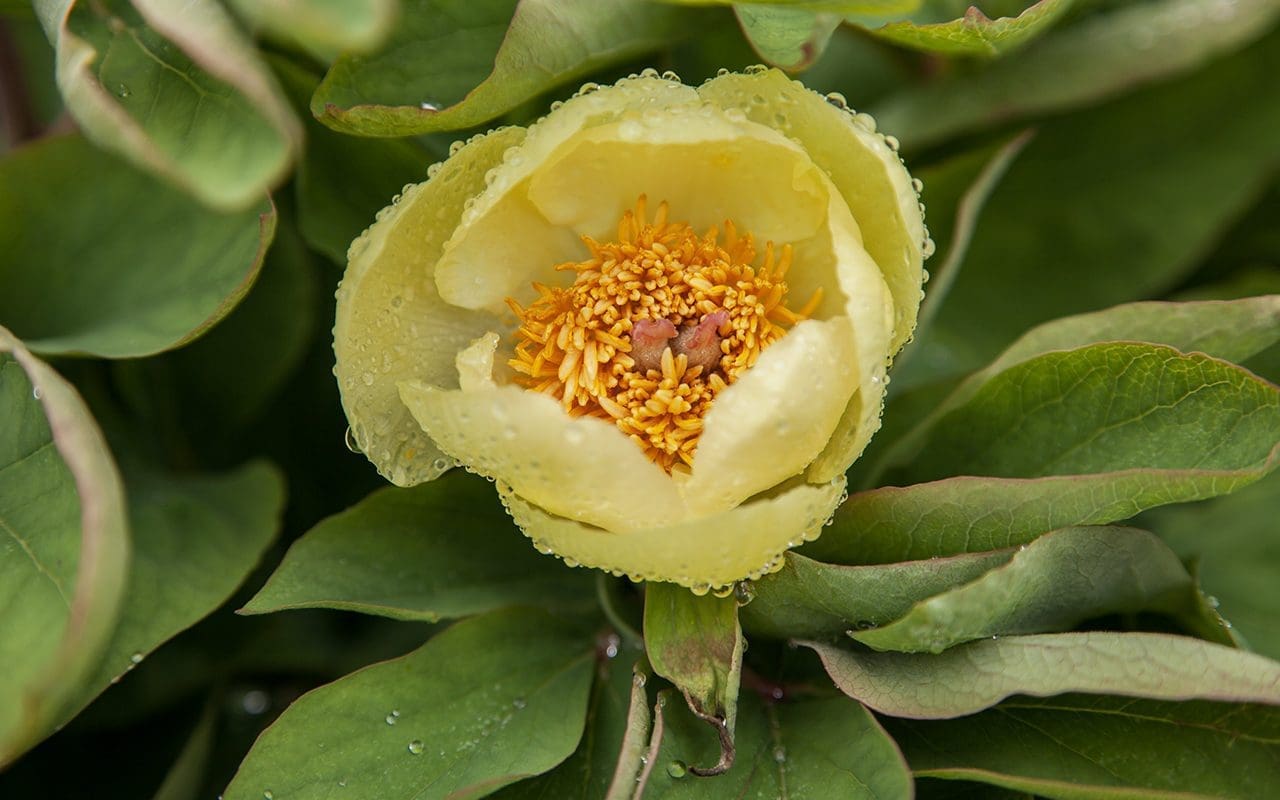
Molly is having a moment. One that has been building in anticipation since the shoots rudely broke ground at the end of winter. Lipstick-pink sheaths, bright as forced rhubarb, then smoky growth with its downy bloom like plums. Fists clenched and reaching fast in March letting you know that they are on the move, then expanding to take the early sunshine. As the buds become visible, the foliage, now apple green and glaucous, fills to form a ruff around fattening buds. Another fortnight, which tracks the plum blossom coming and going, hedgerows flushing green and the cow parsley rising to first flower, sees the buds plumping and expanding to the first glimpse of yellow. You watch daily at this point, returning again and again in the vigil for first flower. A journey that has marked the progress of spring.
This year, they came at the end of a glorious ten days of sunshine that has seen our slopes crisp with frost in the morning, then baking, the ground opening up and cracking, so that we worried for lack of rain. It is typical of April, this changeable month, but the Paeonia mlokosewitchii are dependable timekeepers. Setting their path towards a glorious week of flower – ten days if you are lucky – then gone as the garden rises around them and your attention is drawn elsewhere.
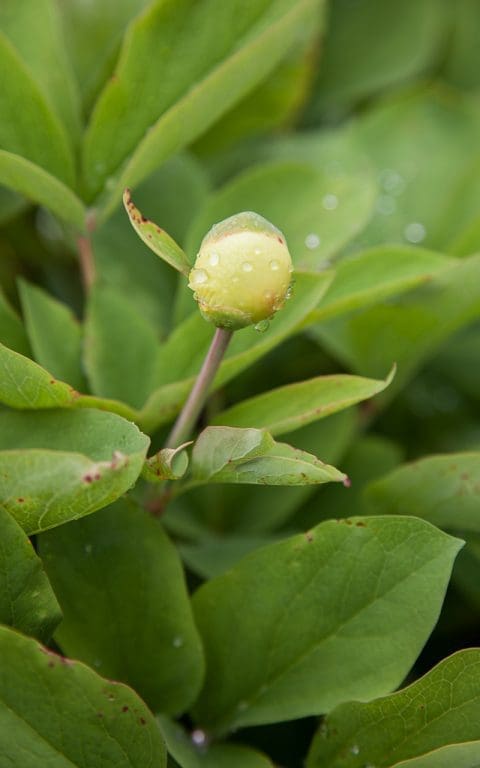
It takes time to build a good plant, for ‘Molly the Witch’ is slow and measured in her progress. Fortunately she is reliable if you find the right position and will survive for decades with no fuss. Growing in the wild in the Caucasus between the Black and the Caspian Seas, Paeonia mlokosewitchii favours rocky slopes in woods of oak and hornbeam, sometimes beech. I’d love to see them there and imagine that they must find the glades where early light penetrates and where they occupy the good ground away from too much root competition.
My eldest plants here are now about twenty years old and represent a long-held desire to grow them. I fell under their spell as a student at Wisley, but until I had my own garden had never had a place, and consequently the time, to invest in growing them for myself. When I finally did get a large enough garden in Peckham I bought five year-old seedlings from a trusted supplier and planted them in the garden where they flowered and thrived amongst the coyote willow. I layered them with scarlet Tulipa sprengeri, clumping grasses, Crocosmia ‘Lucifer’ and evening primrose for later. I left a parent plant there when we moved in 2010, but they were the most treasured of the Ark that I brought with us to start the making of a garden here. I lifted them in autumn – when peonies should be moved, as they make their root growth when going into dormancy above ground and ahead of the fast spring emergence – the parent plants were put into a holding bed on the shady side of taller perennials whist I was planning the future garden. It is important to plant peonies at just the right depth, never too deep as this will cause a plant to be blind and not flower. For this reason I keep the mulch away from their crowns, though they do love an eiderdown of goodness to protect their tuberous roots from desiccation.
Although they probably have more sun than they would like on our south-facing slopes, our heavy ground suits them as it retains moisture. They also have the summer shade of taller perennials that grow up around them to emulate their natural woodland habitat. Right now they sit amonst shimmery Melica altissima ‘Alba’, Zizia aurea and Lunaria annua ‘Chedglow’, the lustrous, dark foliage of the Honesty throwing the luminous flowers of Molly into prominence. Veronicastrum, white willow herb and late aster will cast shadow and keep them nestled once the summer gets underway.
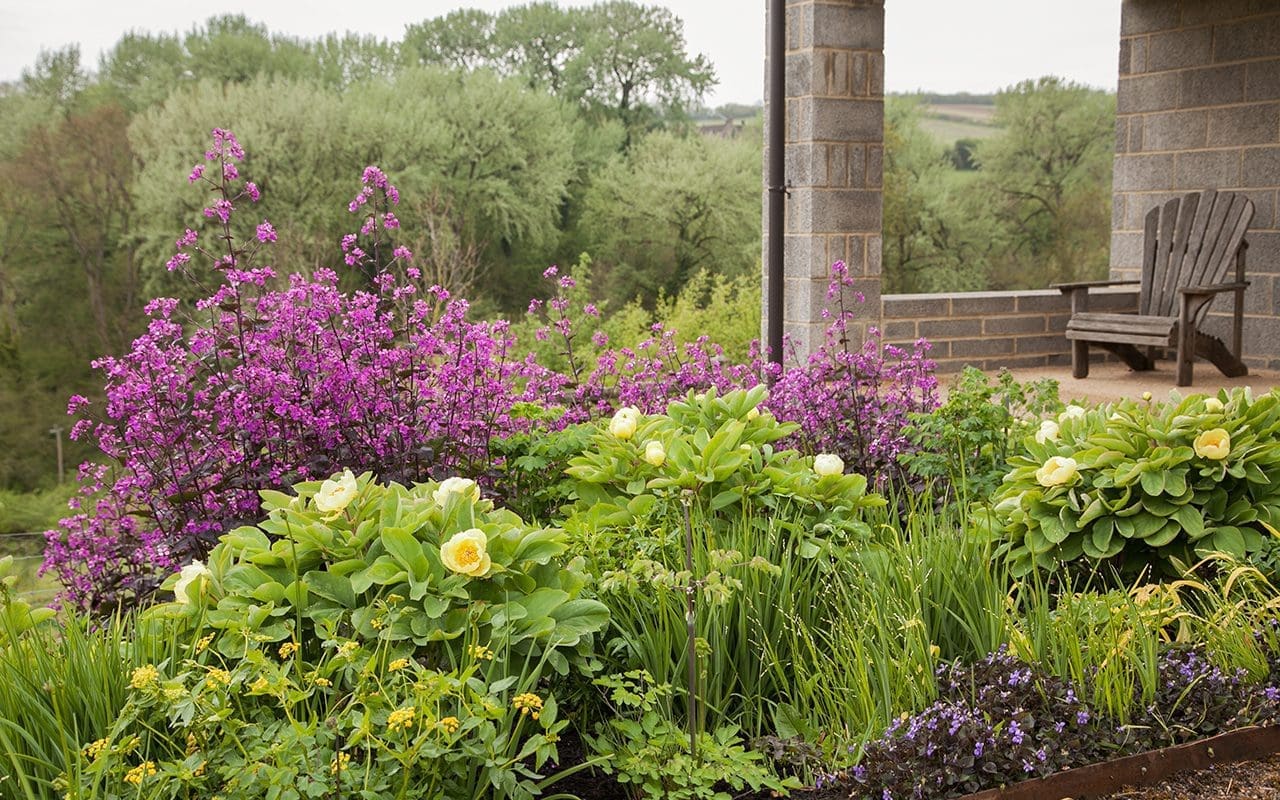
Collectively, my Mollies make a sizable group, the twenty year olds filling out to at least two feet across and bearing up to a dozen flowers each. I cannot help counting as each year brings more. One plant would have just as much magic, but an intergenerational mix with youngsters gives the impression that they are a colony that has increased over time. I am doing this more and more in the garden, dividing perennials but leaving some in the group to hint to the succession you’d find in the wild.
The plants that set seed remind you to revisit in the autumn to find the fat pods rupturing to reveal satin pink interiors and inky black seed, the size of peas. The seed must be sown fresh otherwise it goes into an enforced dormancy that is hard to break. The reserves in the seed are needed for the two years they take to germinate above ground The root develops in the first year to find its feet, waiting another before sending up a distinctive pinkish leaf. You have a wait ahead of you if you start from seed, but I can assure you that the prospect of building my family of plants has never felt like an uncomfortable wait. It has been one with a reward that never dims.
Words: Dan Pearson | Photographs: Huw Morgan
Published 18 April 2020
Flowers & photograph: Huw Morgan
Published 11 April 2020
In silence, flowers
make their cacophony. This
world. A wakening.
Words and photograph: Huw Morgan
Published 4 April 2020
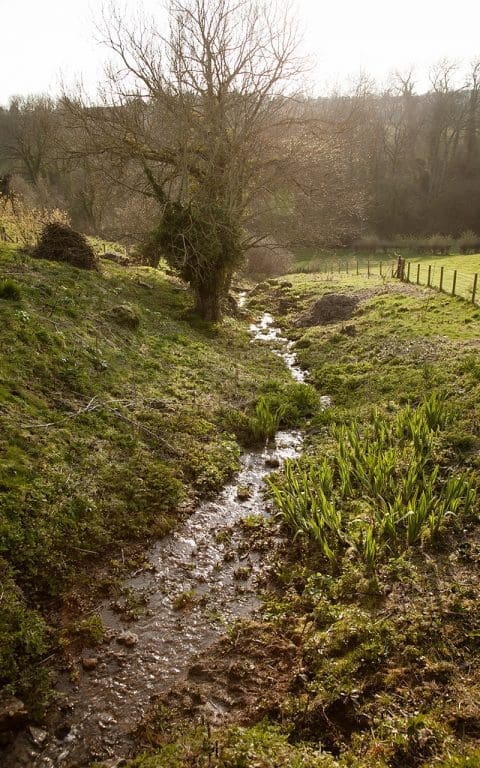
So everything is different. And changing daily. We have been here in isolation for just over two weeks, having set up the studio to work remotely and feeling very fortunate to be regaining balance from our perch on the hill. We know, more than ever, that we are blessed with this access to landscape and fresh air and to be able to witness spring unfurling around us. A spring that is oblivious to the change in the worldwide order. A welcome tide that carries on regardless, providing a sense of continuity and solace in its inevitability.
We have been in two minds about doing this piece today. The world is on the brink of a big change and we know that we are in a position of privilege. We are all experiencing multiple wake up calls. I have been using Instagram more than usual in the last couple of weeks trying to maintain a connection to normality. We have become acutely aware of the people who do not have access to what we have access to and, by sharing it, we have found the pleasure it gives those who are in real isolation. In flats, in cities, with no outside space and suddenly without liberty. So, in the spirit of sharing, this is the beginning of our new world.
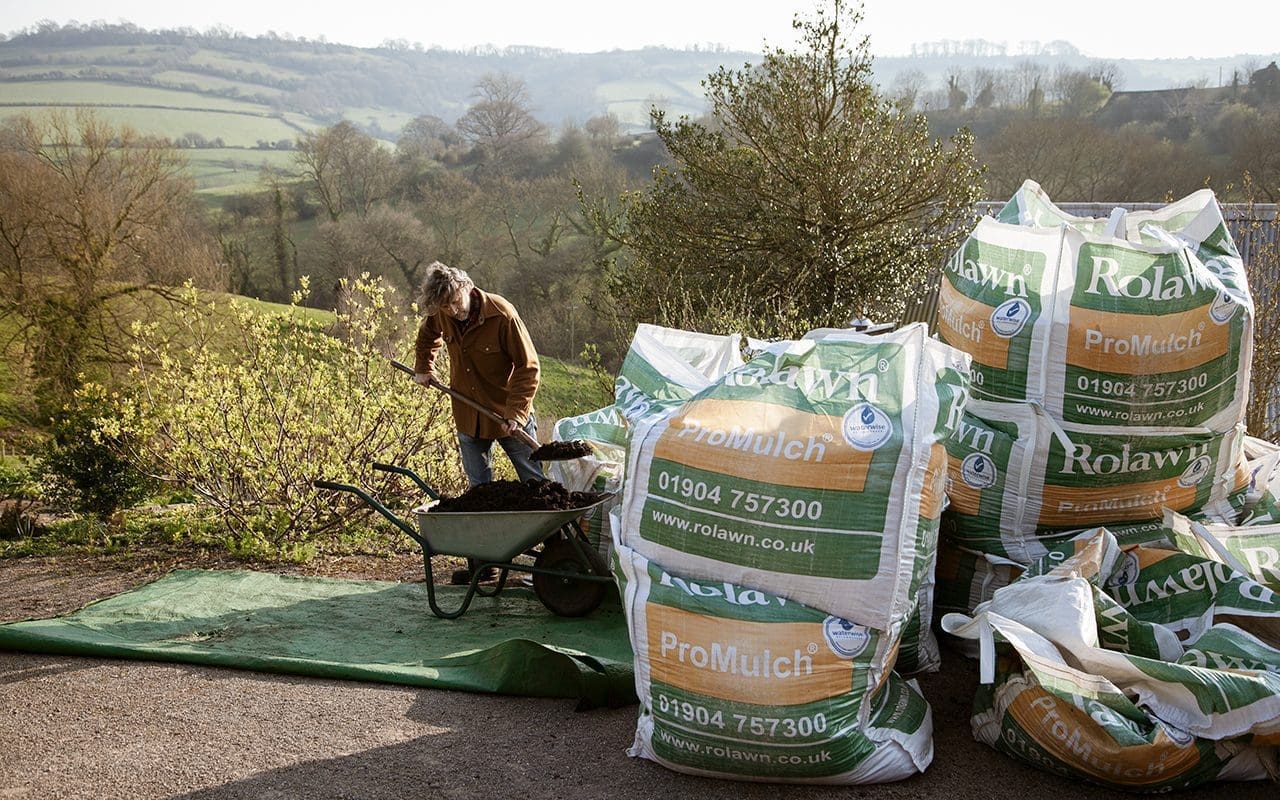
Last weekend already feels another lifetime away. Jacky and Ian were here to try and get the mulching done before lock down. There was a palpable tension in the air, because they had ventured away from their own home sanctuary to help us, but it was a good day going about the usual tasks, despite the social distancing. We got half the mulching done. Ten of twenty tonne bags and half the garden smartened, fresh growth green against the new eiderdown of darkness. Ten tonnes remains in the drive to mark the fact that we are now on our own. For how long we do not know.
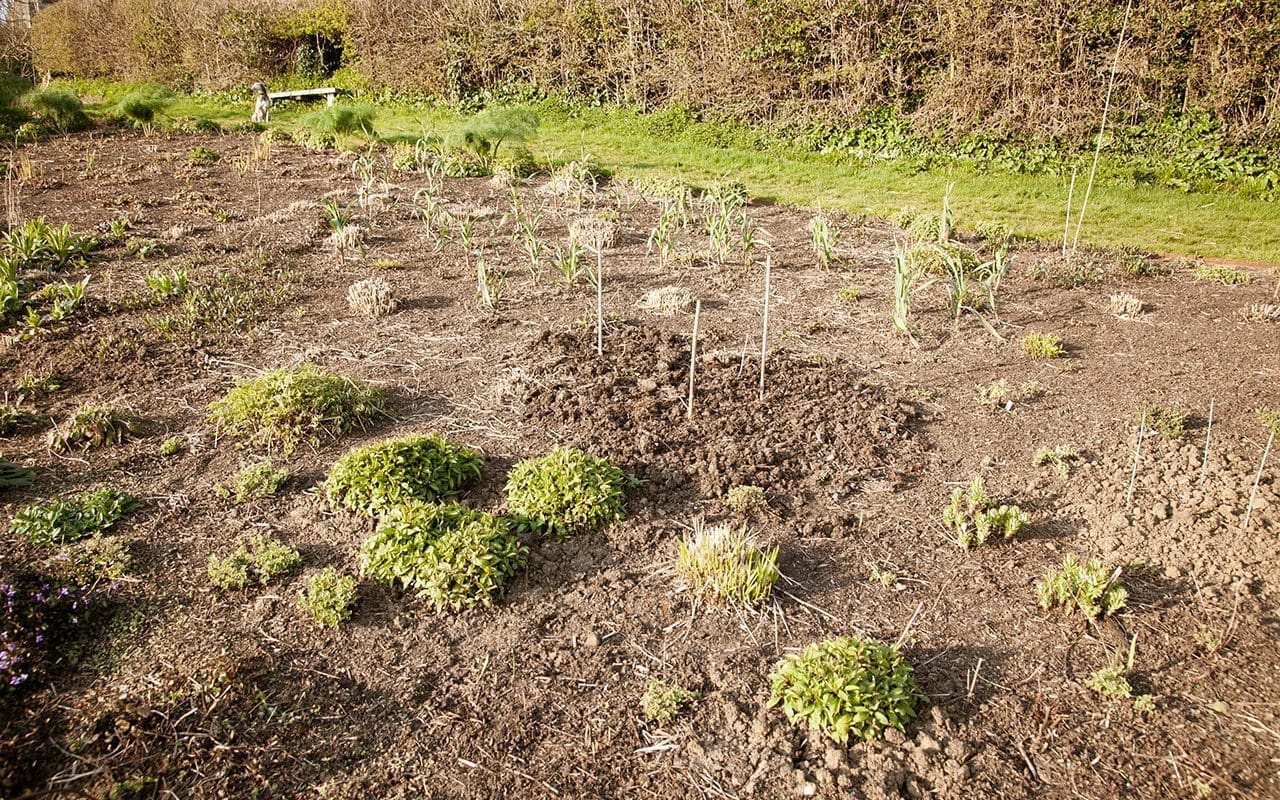
The fear of how we will look after everything has been rolling round my mind. Jacky and Ian supply an invaluable day each on Saturdays. Jacky providing detail and Ian strength and stamina in the areas beyond the garden that we keep on the wild side. When we work together we get more done as a team. Without their input, we are having to quickly re-evaluate to establish a new regime and look at how we approach this undefined period.
What we are doing here probably amounts to about five man days per week. I run a tight ship with that time too, with lists to hit targets and an eye on the near and far future to keep things moving in the right direction. There is very little slack and we are ambitious for this place; for the garden to be evolving and experimental and for the kitchen garden to provide food for us to eat. We are also steering the ecologies towards greater biodiversity and this is where we will probably have to let go of the reins and let nature really do its thing. There will be no paths mown into the lush growth of early summer. Instead, we will push our way through to make our desire lines. But as much as possible, I’d like not to go backwards. So, simply put, we will have to find two days from somewhere. Two days of our time that is currently devoted to the new challenges of running a virtual studio, finishing a book and keeping up with friends and family at distance.
I was talking about the dilemma, or indeed the opportunity, of this change with my mother who is now isolated in Hampshire and needing more regular calls. Being a practical and sensible woman she put three things forward. Firstly, that we simply won’t be able to do everything. Second, that a garden can be reclaimed from a period of wooliness. And third, that we should chart the changes in Dig Delve to communicate the impact a world in flux is having upon our ground at home and our relationship with it.
A few sleepless nights have already been eased by the prospect of having to apply ourselves differently and the garden is helping to tilt the balance of anxiety in the right direction. Without needing to travel for work I will reclaim that time to garden. Up early now and putting an hour or so in before our business-not-as-usual kicks in, I have been able to take in the spring more intimately. Seedlings are already benefitting from a daily vigil in the frames. A meditative hour pottering before breakfast is a purposeful way to greet the day and helps to clarify the mind. As the evenings lengthen there will be more time freed up to engage with day to day tasks and so we will be able to see like we’ve never had the time to do before.
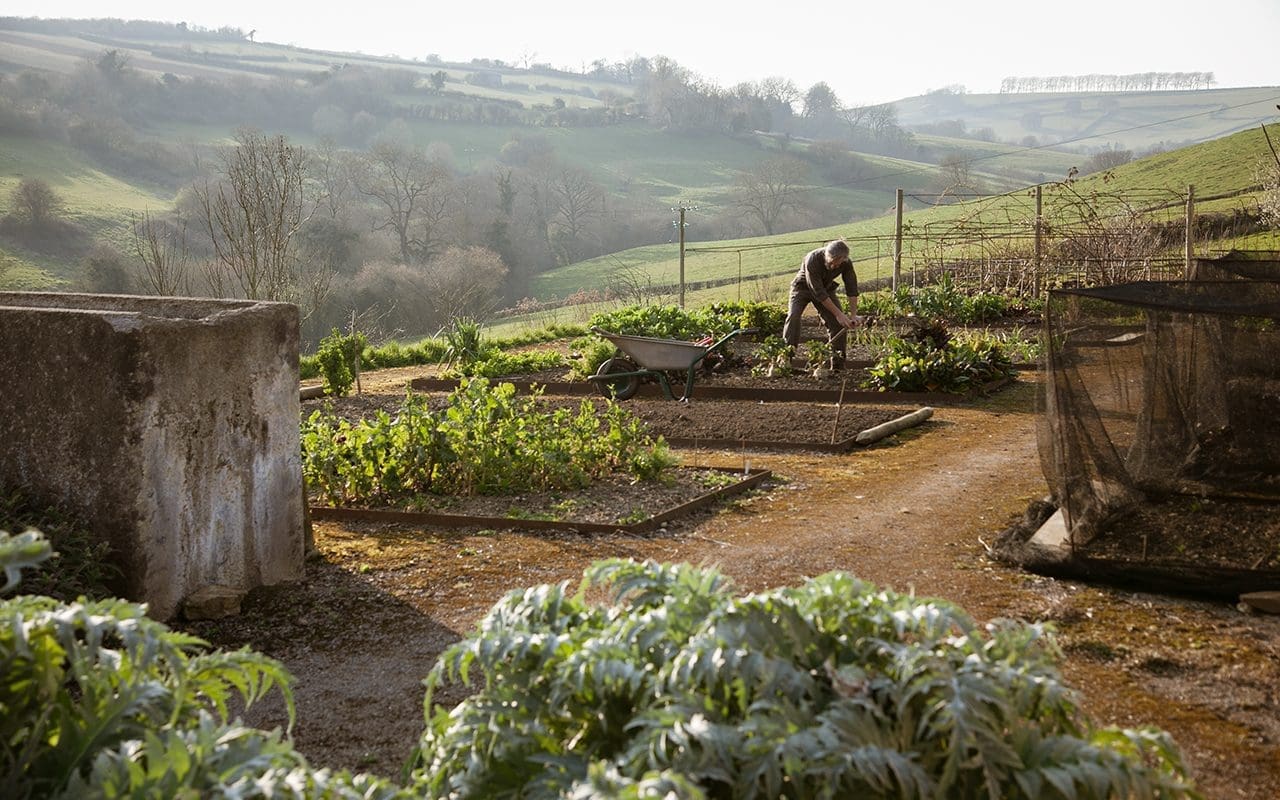
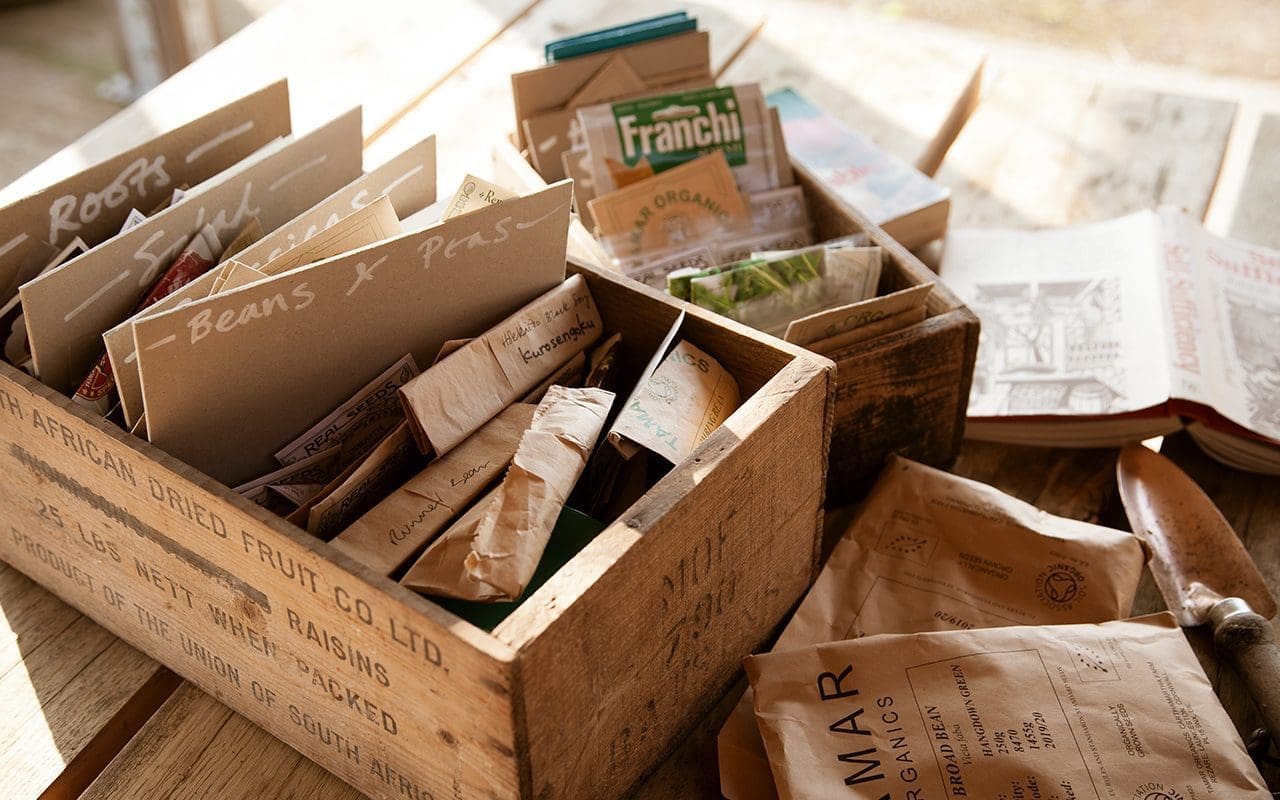
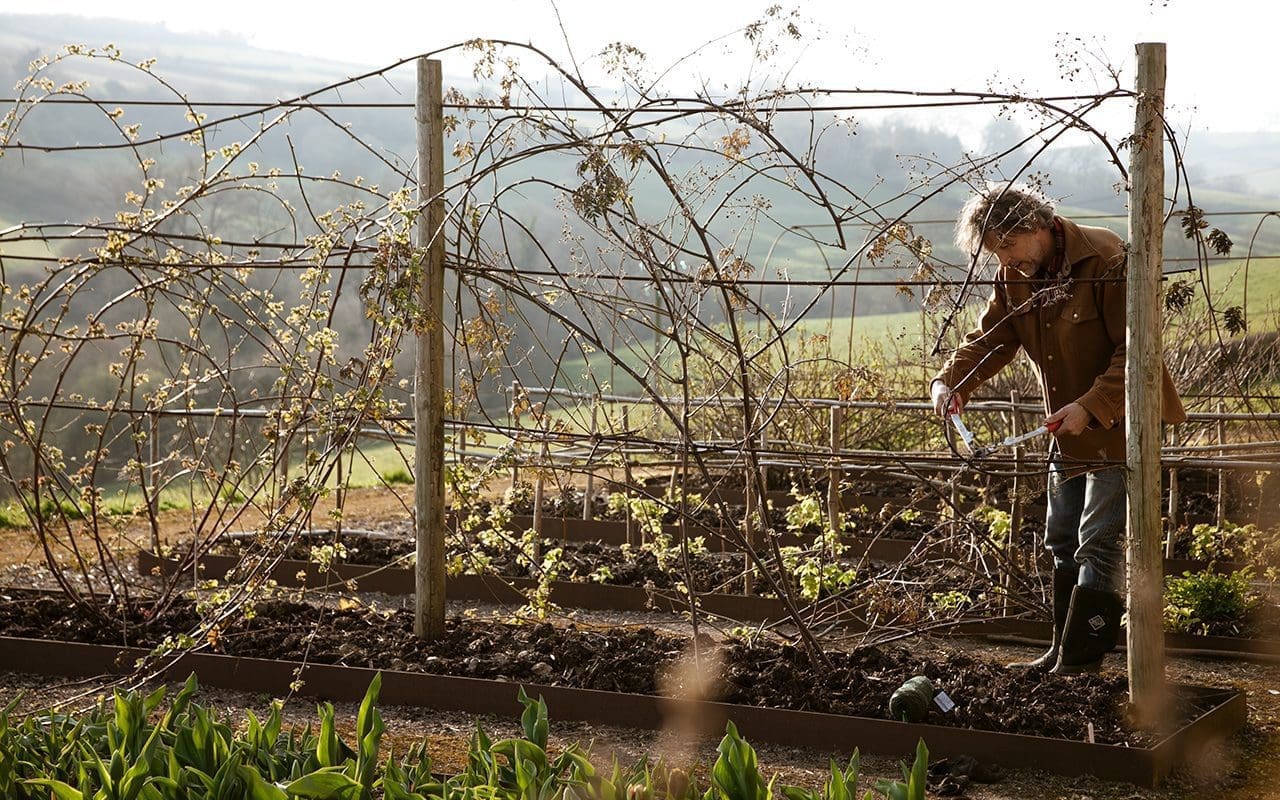
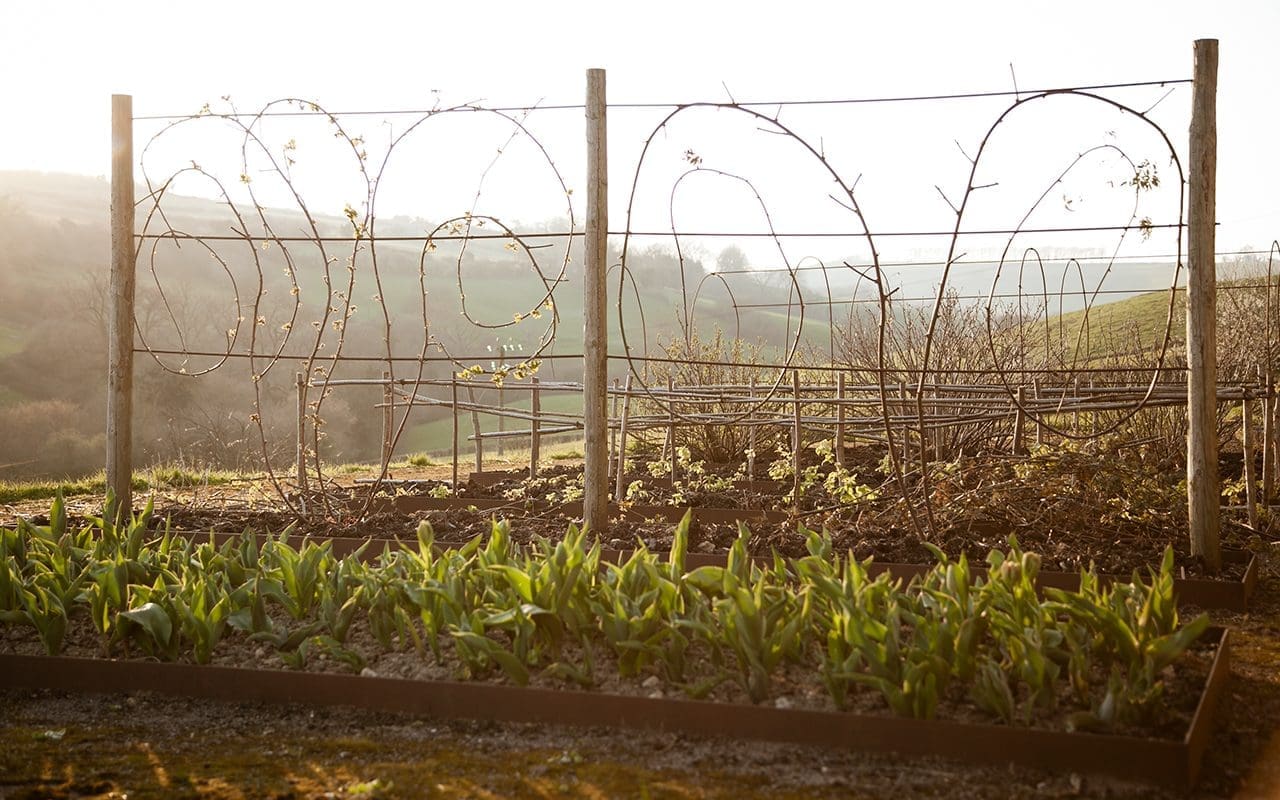
Together, the two of us will make sure that over the next fortnight we get the remaining mulch onto the beds. My job list for this month (always with the caveat ‘weather dependent’) had us all doing it together. Four bodies and one day to complete the task. We will balance the hard graft over a longer period, with the detail of setting the kitchen garden up for the season. Until now, growing to eat has been a choice. To eat seasonally and organically and with the pleasure of being able to say it’s all from the garden and never fresher. Our perspective on sustaining ourselves here is suddenly heightened and the ability to grow our own food thrown into sharp relief. Choice has now become necessity. Where there is a surfeit, we will be harvesting more keenly. Bottling, freezing and learning how to ferment and pickle so that the harvest carries our efforts further. Where we struggled to keep up with successional sowing in previous years, we will apply a sharper eye to make sure that the beds are used as efficiently as possible. I am not saying it will be easy, but we will feel the difference for a life lived in real time.
So how will we all cope ? Gardens that we have been planning and building for years are suddenly without their gardeners this summer. Our project to re-imagine Delos at Sissinghurst is freshly planted and designed to feel like a wild place. The new reality of only a skeleton staff to look after it may find us returning to a wildness accelerated. At Lowther Castle, where the new Rose Garden – 10 years in the planning – is planted but not quite finished, will now have just two gardeners at a time looking after the acres of grounds in their entirety. The garden was due to be opened to the public this June, but now it seems the roses will come into their first life together as if in a secret garden, with the lawns grown long and the stillness of a garden unpeopled. These are extraordinary times. A period of rare reflection for most of us. A time to go deeper. What do we really need ? What are the real priorities ? How can we better our world and be kinder to it and each other when the dust settles differently ?
Words: Dan Pearson | Photographs: Huw Morgan & Dan Pearson
Published 28 March 2020
I will make this brief. We are all preoccupied right now. The world has changed in the blink of an eye and we begin to understand the true meaning of survival. Adjusting to this new order has been stressful. New behaviours that contradict our human instincts and impulses to be together must be curbed. The fear of illness can stop us from functioning properly so we must ensure, now more than ever, that we are feeding our bodies with nutritious and simple food.
As I surveyed the kitchen garden early this week I made a mental note of how many meals there still remain in the beds. The last three celeriac roots and a handful of parsnips, the purple sprouting has come on stream, and our autumn sown salad of winter purslane, lamb’s lettuce and radicchio will provide for some time to come, but the remaining beds appeared to offer slim pickings. A clutch of wormy carrots, beetroot the size of swedes, cavolo nero running to flower with moth-eaten leaves and chard sown last summer which, although valiantly sending out some new growth, is looking past its best.
In the course of our previous life I might have consigned the shabbiest veg to the compost heap, preferring to eat the best and freshest looking. That has all changed. Now, with the need to make things last and avoiding going out more than necessary, anything that is still green is potentially valuable and edible.
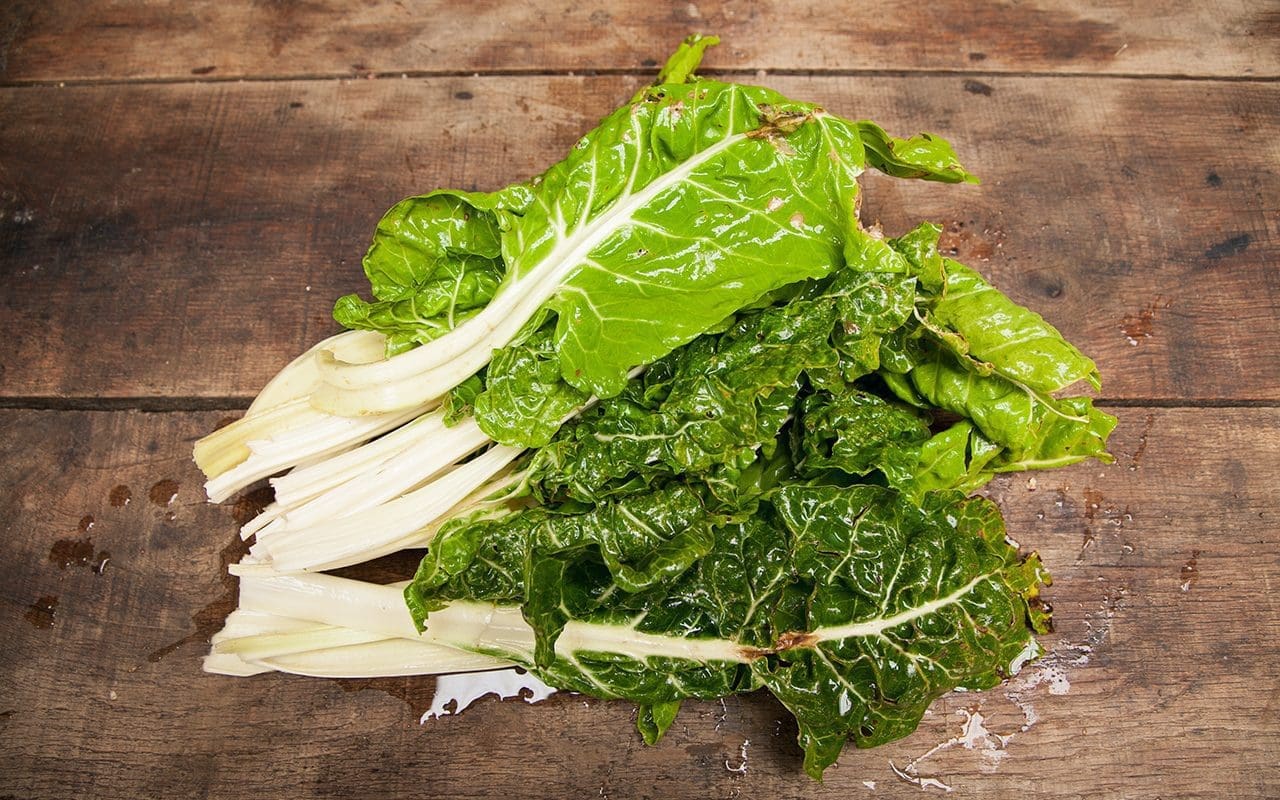
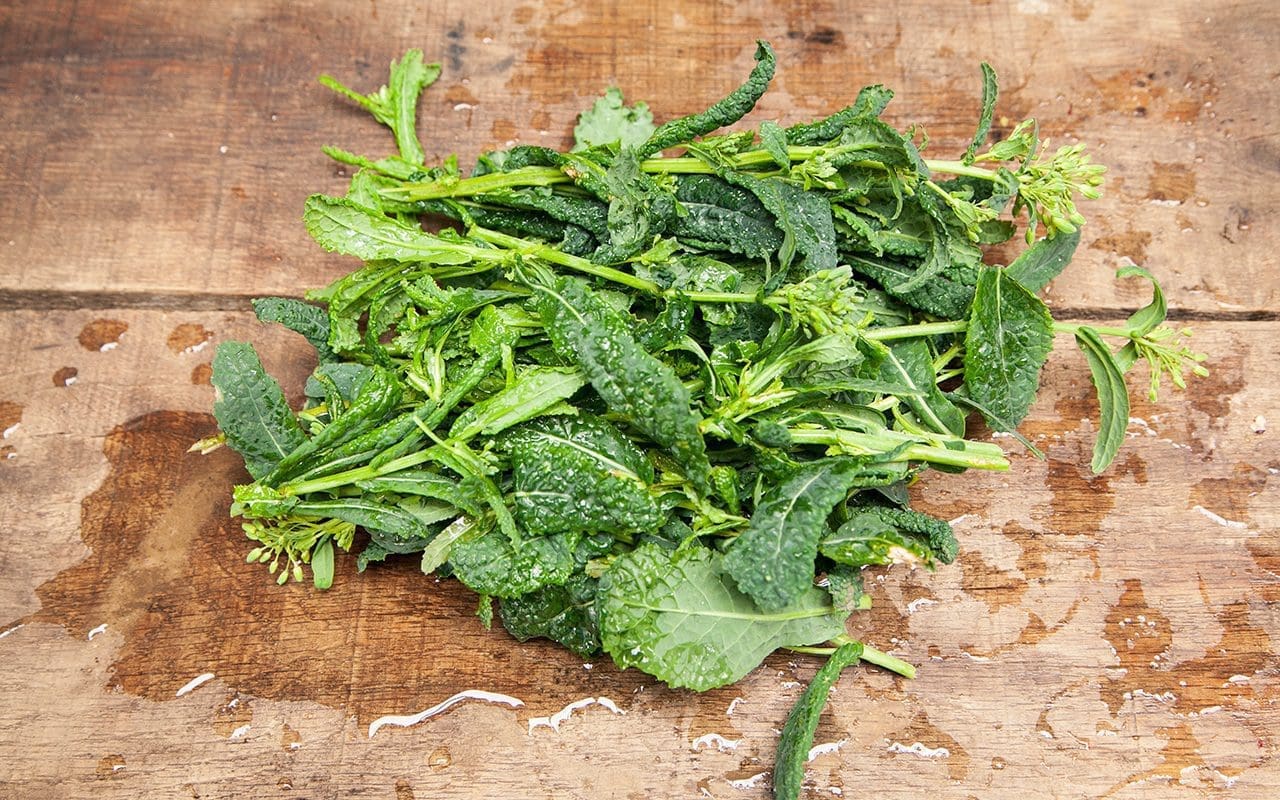
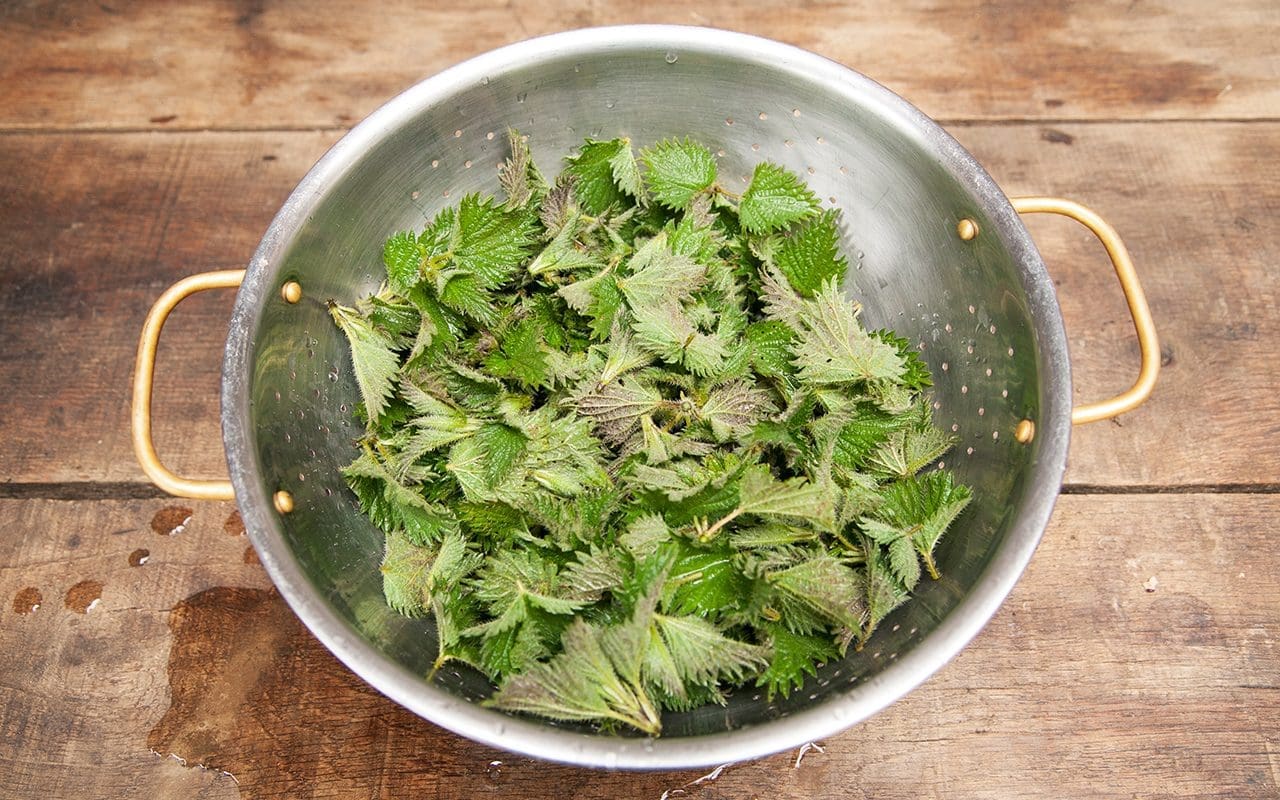
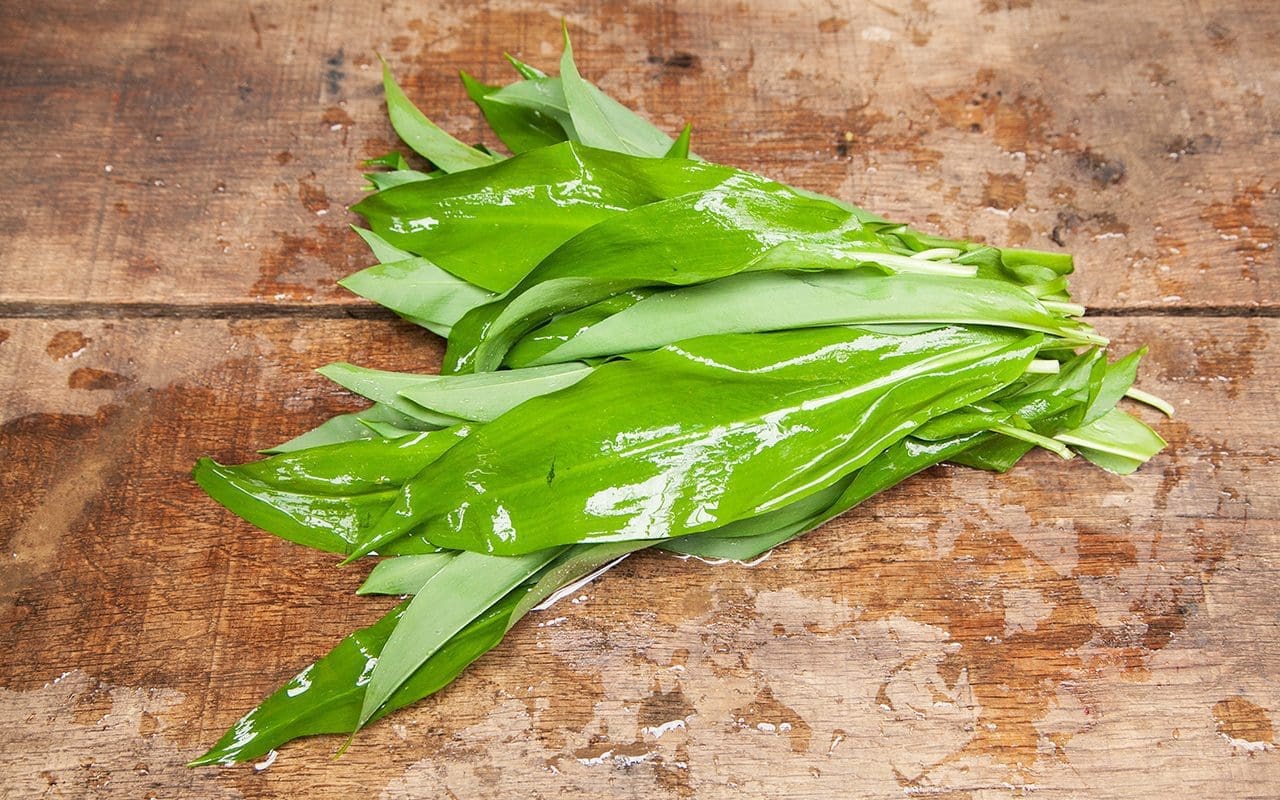
Although the kitchen garden is on the very brink of the hungry gap, there is plenty shooting in the landscape around us, and there is a surfeit of nettles and wild garlic. The former is one of the most nutrient-rich herbs available containing calcium, chromium, iron, magnesium, potassium, selenium, trace minerals and vitamins A, B and C. When picked at their peak, right now, they have a protein content of 25%. Pick only the tops, as the stalks, once used to make a linen-like fibre and cloth, are tough and inedible. Wild garlic is well known for it’s antibacterial and antibiotic properties, and also contains vitamins A and C, calcium, copper, iron, phosphorus and sodium.
In these times when we must be more mindful of resources, more frugal in what we use and what we discard, and more determined to only eat food that really feeds our bodies and its natural defence systems, this is a soup that will be seeing us through until the veg garden is up and running. This weekend I plan to harvest as much nettle and wild garlic as I can and either blanch and freeze (nettles) or preserve them under oil (wild garlic), so that we are able to keep eating nourishing greens until our own veg starts to produce more.
Older vegetables, particularly the brassica flower shoots, celeriac tops and chard stalks can be fibrous and stringy by this point in the season, but in the spirit of ‘waste not, want not’ I used everything in this soup and then put it through the finest screen of a Mouli-legumes. You could also liquidise it and then pass it through a sieve.
This is not so much a strict recipe, rather a guide to use whatever you might have to hand whether it be a carrot from the salad drawer that has seen better days, a few of the last winter-stored potatoes just starting to shoot or a slightly mouldering cabbage. This is also a good way to use up any vegetable peelings which would otherwise be heading for the compost heap. Use any green herbs you can lay your hands on. Last year’s parsley and chervil are all in fresh leaf now, as are other hedgerow herbs such as Alexanders (go easy on these, they are strongly flavoured), Jack-in-the-Hedge, Fat Hen and dandelions.
Serves 8-10
12 large chard leaves
150g wild garlic leaves
180g brassica flower shoots
200g nettle tops
2 medium onions
180g celery or celeriac tops
2 litres water or vegetable stock
Olive oil
Sea salt and ground black pepper
Grated nutmeg
Coarsely chop the onion and celery or celeriac tops.
Heat 3 tablespoons of olive oil in a large pan.
Saute the onion and celery with the lid on until they become translucent.
Remove the green leaf from the chard stalks and chop the stalks coarsely. Add them to the onions and celery and continue to cook with the lid on until almost tender.
Add the water or stock to the pan and bring to a simmer.
Coarsely chop the brassica flower shoots and add to the pan. Grate in some nutmeg and season with salt and pepper. Simmer for about 15 minutes until the brassica shoots are cooked.
Take the soup off the heat and add the wild garlic. Stir well, put the lid back on the pan and allow to stand for a minute or two until the garlic has wilted.
Liquidise the soup and then, if necessary, pass it through a mouli-legumes or sieve. Check the seasoning.
If you have it a spoonful of cream, creme fraiche, or homemade yogurt can be added before serving.
Recipe & photographs: Huw Morgan
21 March 2020
We are sorry but the page you are looking for does not exist. You could return to the homepage