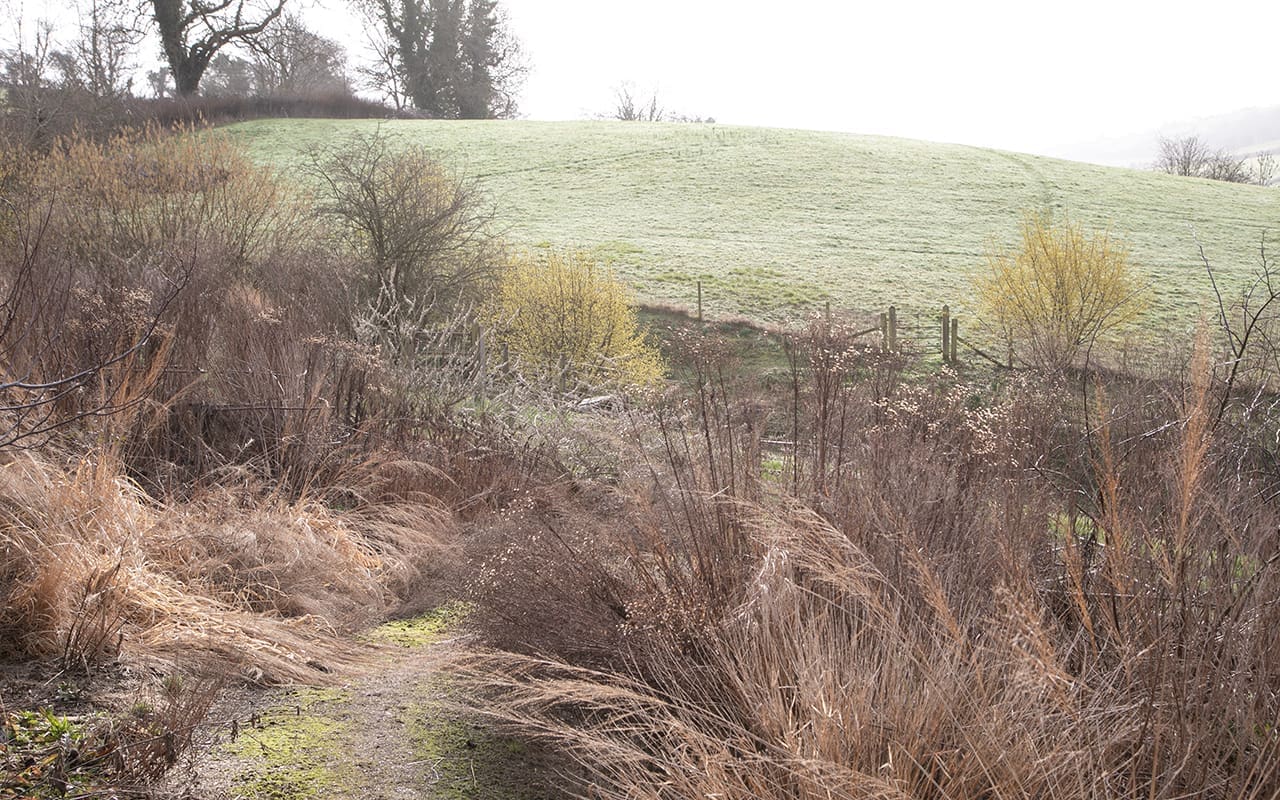
This last week the winter eased its grip. Snowdrops waning in the hedgerows and their energy suddenly dimmed. Nettles flushing and those fierce first stings which let you know that snowdrop splitting season is nearing its end for us in the hedgerows. There are bright primroses to replace them and, in perfect handover, the first of the wild daffodils. Wild garlic already green in the woods, joining the green hellebores. Splays of bee orchid foliage in the top meadow. The sun lighting up the flowering poplars. Frogs spawning in the pond and the song of blackbirds at six in the evening. Still light then for the first time, darkness waning and the just warmth on the brief appearance of the sun.
The next season within seasons has started. The tip into growth which you can see manifest everywhere, in the gloss of new grass and buds swelling on the trees. The Prunus cerasifera is already in flower, tiny pinpricks of clearest white and swiftly then a cloud of blossom. We are so pleased to have planted trees as soon as we got here for you can already walk amongst them and look up into canopies already so full of life. When the rain stops – for it is hard to remember more than two days in sequence without it since new year – the bees are out. Foraging in first flowers on the pulmonaria and the bright studwork of golden celandine on the sunny banks. In the wet ground under the crack willow, where we inserted a split of the parasitic Lathraea clandestina onto a cut made in the the willow roots, the strangeness of this interloper has already begun. Glowing ultraviolet in dim, rain-laden days. Below, the gunneras starting to stir and emerge from their winter chrysalis.


We are behind in the garden, for it has been too wet to get onto the ground, but this week the winter work has been drawn to a close. We have finished planting and mulching new trees, the hedges were cut before the end of the month and nesting season, and the hazel stakes are made as the garden calls. The trays of leucojum I potted up last autumn need to go out now that I can see where they might fit into the matrix of camassia shoots that have appeared on the banks to the ditch. And in the garden, the new growth already pushing on the peonies suddenly makes the spent skeletons feel like it is time to begin the cut back and to make way for the new.
The herbaceous clematis have been racing away in the mild weather and should have already been pruned. They will be first port of call and we will work from boards whatever the weather throws at us now to not fall behind. I have learned how to pace the work now that I’ve got to know the patterns in the garden and to a degree the garden leads the way, if you watch daily and respond accordingly.


Room was made with a localised cut back in December to allow for the Cardamine quinquefolia to flush early, but the standing seedheads of the Astilbe rivularis were left tall, like a forest with its understory. This is exactly how this little area of planting is working. First the green tipped Galanthus ‘Trymlet’ followed quickly by the ephemeral cardamine, seizing early light just like the wild garlic in the woodland. By the time the hellebores are fading, the new growth of the astilbe will push through to provide summer shade. The cardamine will go dormant, the hellebores get the cool they need to live out the summer and the layering in the planting protects the soil in an association that is in balance, for now.
The rush is upon us and rather than panic, it is good to embrace the mounting feeling of urgency with awareness and close observation. A little and often vigil, now that the sap is rising and the pace is gathering, and seedlings are already beginning to strain on the windowsills. Still caught between two seasons for, yes, it is howling a rain-laden gale outside as I am writing, but we are firmly moving forward now. With joy and determination and a willingness to be swept along with it all.


Words: Dan Pearson | Photographs: Huw Morgan
Published 28 February 2026