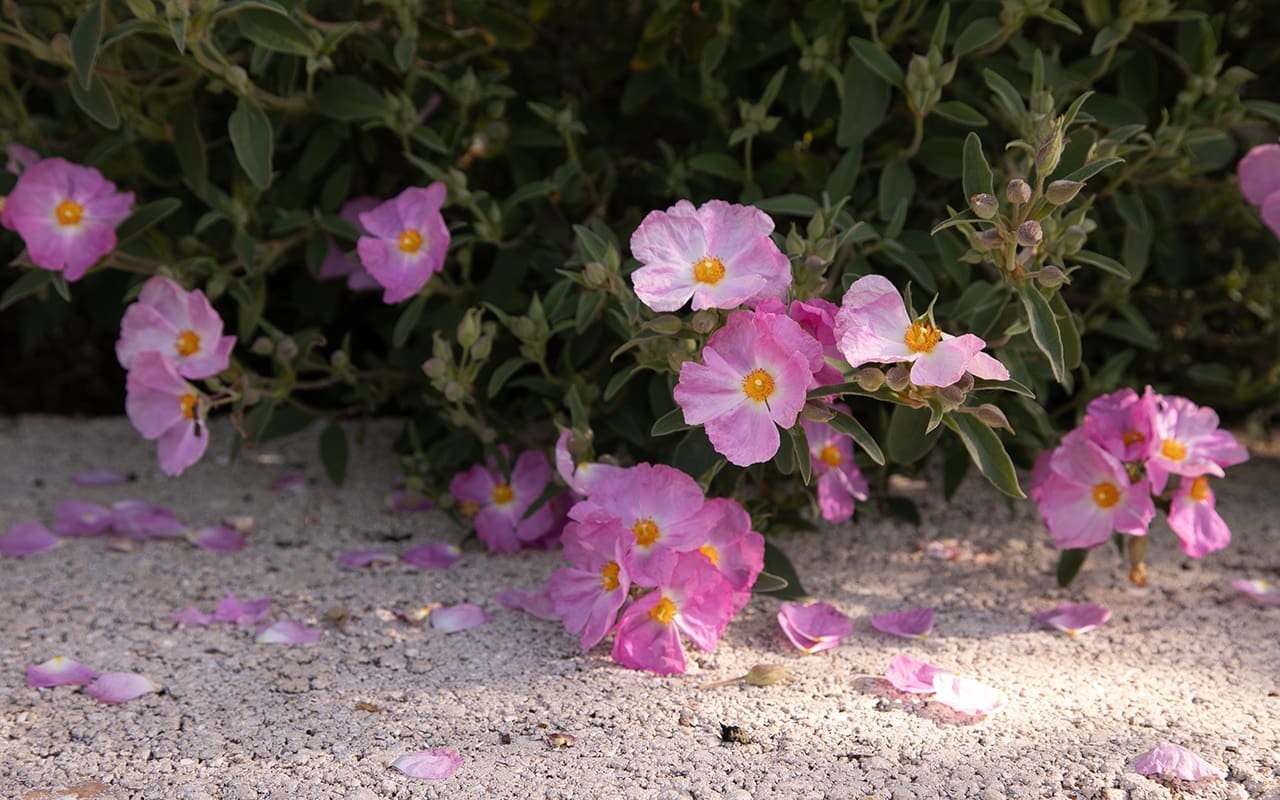
The rock roses sense the onset of summer. The first of a myriad flowers responding to the early warmth and the promise of more. Each papery flower lasts just a day with their golden boss of stamens seeing a flurry of bees when they are out. They cast their petals in the evening, but refresh again for the best part of a month in their brief but memorable season. We’ve known them through our annual pilgrimage to Greece where Cistus creticus is common on the mountainsides and seeds into the most inhospitable cracks and crevices, making their common name clear in their preference for a baking and free drainage.
In March their bright, purple-pink flowers blink brightly amongst lavenders and thorn bushes in the bristling phrygana scrub. Return in the autumn and the very same plants are withered almost to a crisp by the summer, the leaves browned or reduced to tinder dry skeletons to conserve moisture. In November, with the onset of the winter rains, the bushes reclothe, a soft, downy foliage, grey-green and spicily aromatic. When flushed with leaf in the winter the Greeks harvest the foliage and air dry it to make a perfumed tea that is rich in antioxidants and when drunk illuminates the memory of their bright and fugitive flowering.
THIS POST IS FOR PAID SUBSCRIBERS
ALREADY A PAID SUBSCRIBER? SIGN IN