September arrived in mood and spirit on the first day of the month. Cool nights and shortening days have made their impact. The pumpkins suddenly exposed and glowing orange under withering foliage, which just days before had August vigour. Rosehips reddened in the hedgerows, arching out under their own weight and marking where I have introduced the Eglantines.
We have been readying ourselves for a return to Greece to chase last heat. The best of the blackberries, the last of the raspberries and the un-ripened tomatoes have been shoehorned into the freezer and the beans that have not been eaten have been left on the vines so we can collect the seed upon our return.
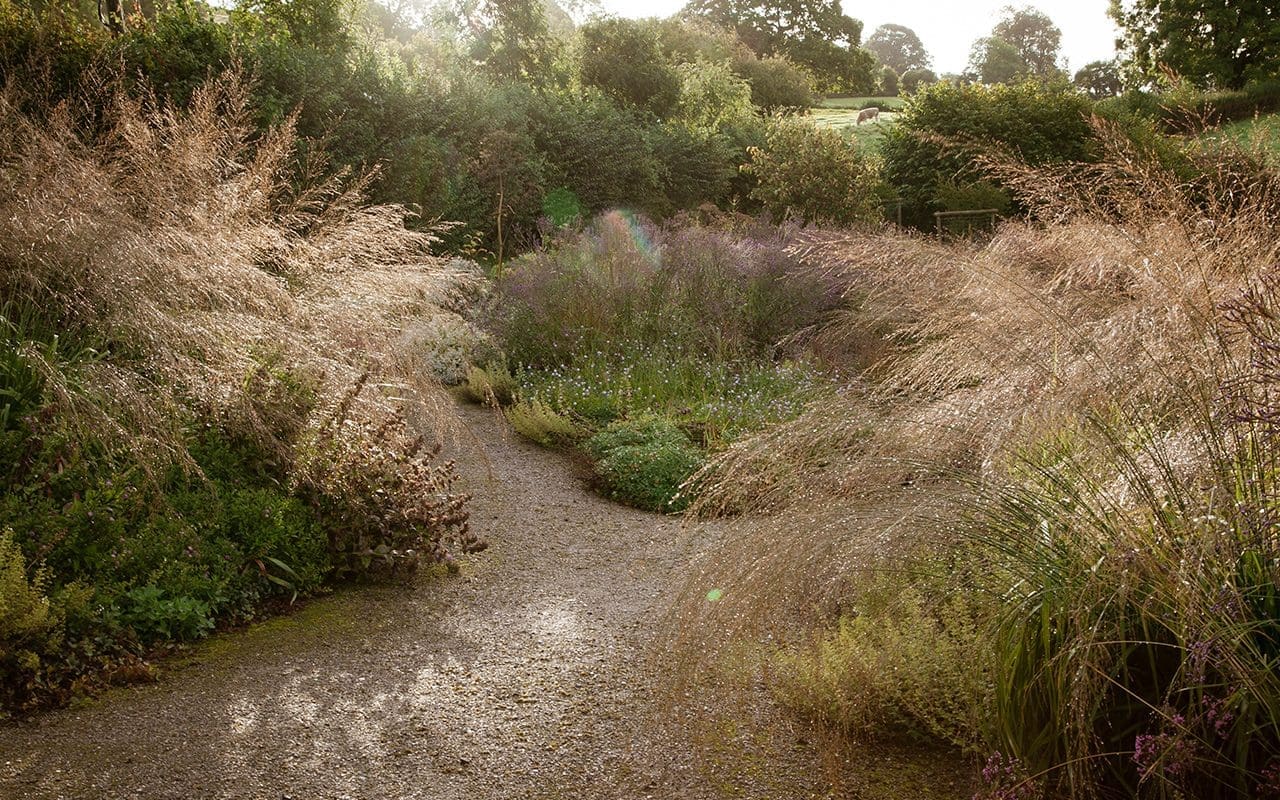
It is a good time to leave the garden, now that the season has tipped the balance. Laid back and relaxed by September, the seed heads are already setting the tone. Chamerion angustifolium ‘Album’ run up like sparklers and now extinguished but for their silvery seed. On the bright, dry days the breeze is full of it and always makes me thankful that the white form of the Rosebay Willow Herb is sterile. The tails on the Pennisetum, which have harvested the light in the centre of the garden for weeks, are losing their seed. The pulse is gone now, and suddenly, from the Persicarias, where just a fortnight ago they were blazing and humming with bees. These last few days has seen them tapering and on the wane.
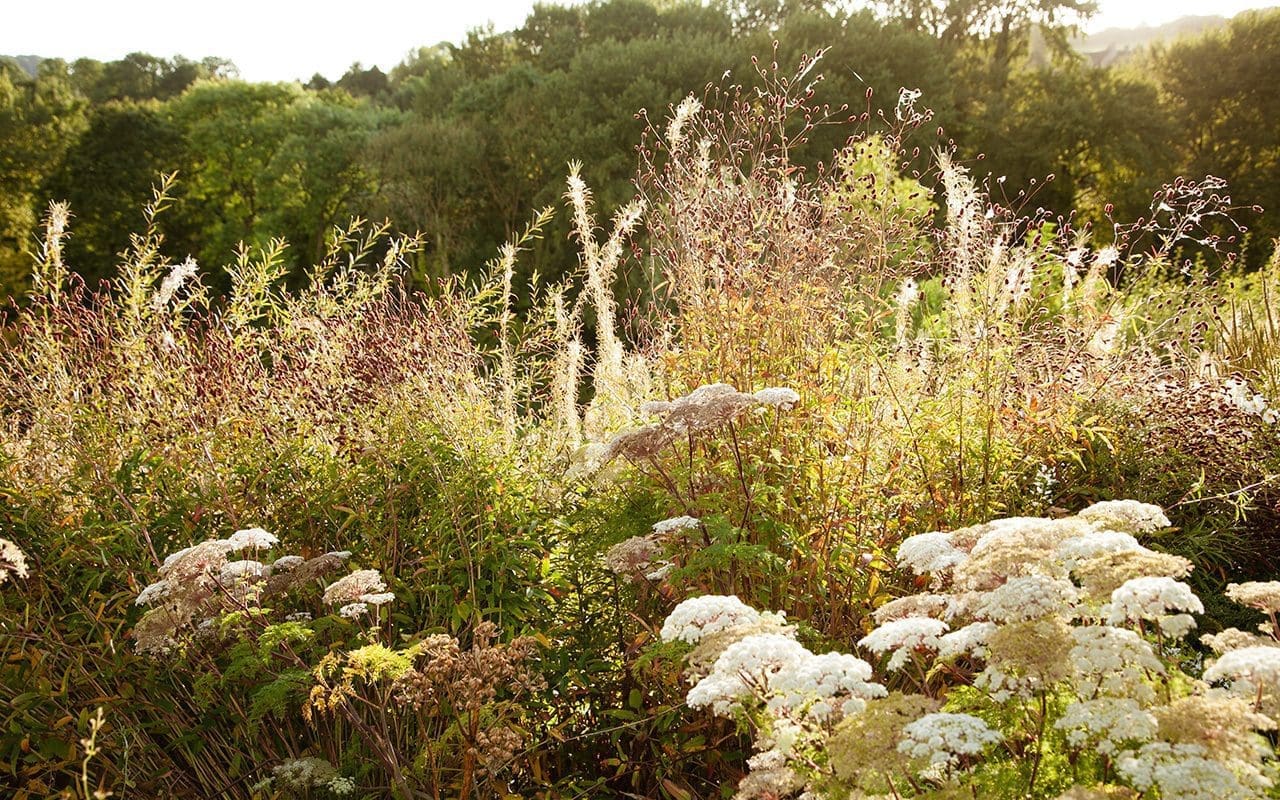
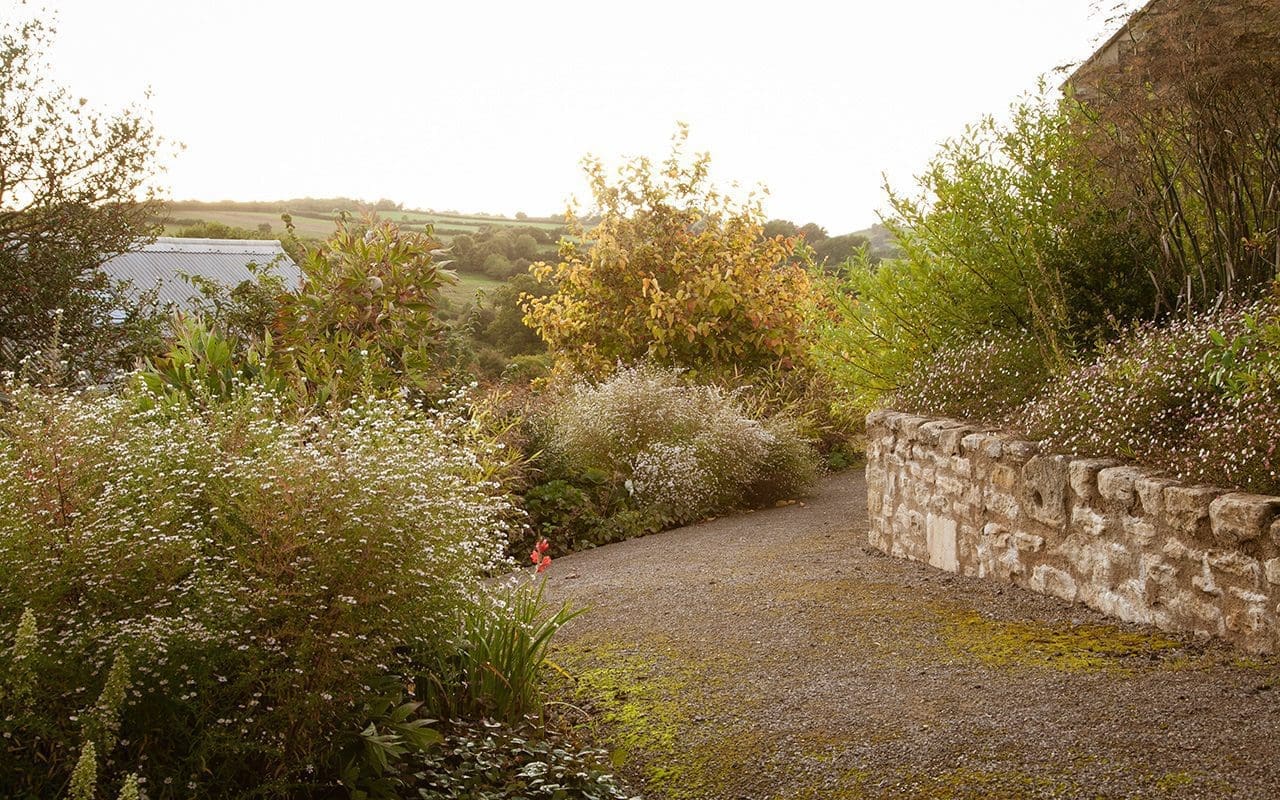
As if by clockwork, and sending us off in the knowledge that we will miss the best of them, the Colchicum speciosum ‘Album’ broke ground last weekend. We are bound to miss something in the next fortnight, but it was good to find their pristine goblets amongst the Asters. Pushed clean out of the bare earth as the air begun to cool and rain opened up their window, the freshness of flower and then the lustre of their winter foliage forge quite a counterpoint to the pulling back of autumn. It has taken a while to find them a place that they like, but here in openings amongst the Chasmanthium and pushing through a mat of Viola riviniana ‘Purpurea’, they are covered for during their period of summer dormancy.
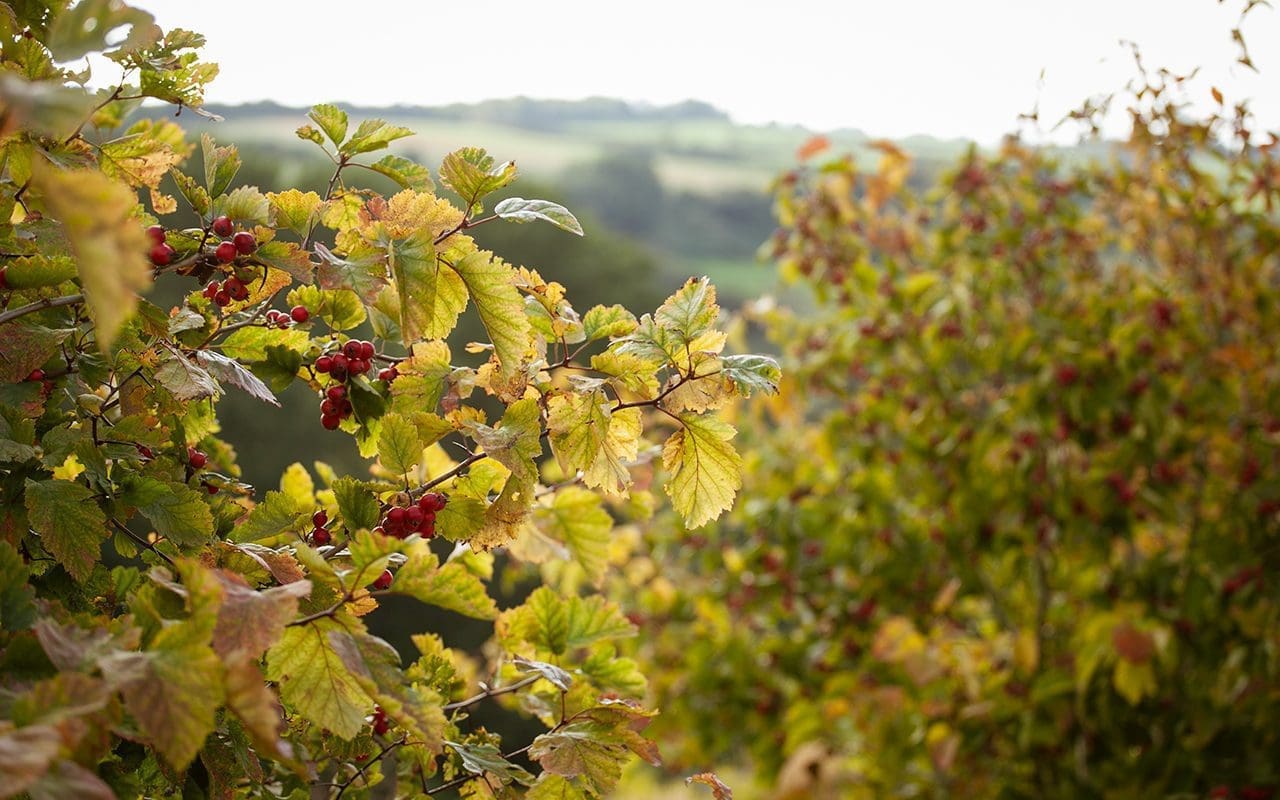
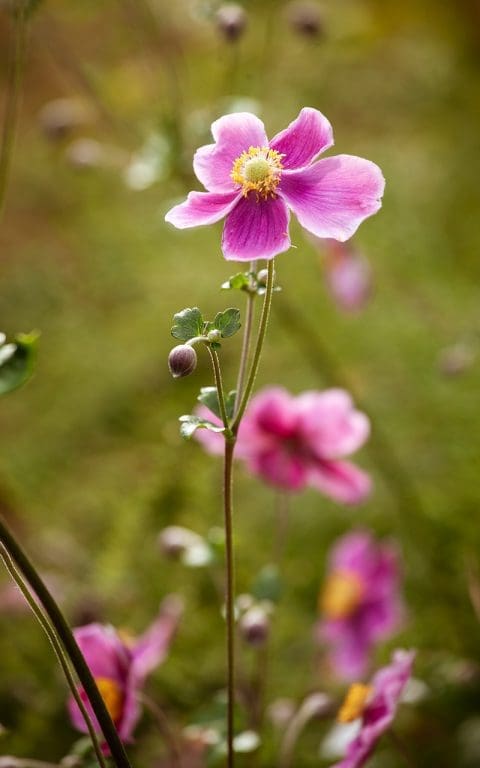
It is hard to stop using the term Aster for the recently renamed Eurybia and Symphyotrichon. The re-naming of the tribe has none of the magic or the reference to starriness and the Asters add exactly that as they begin to make their autumnal presence. The Colchicum sit amongst Symphyotrichum ericoides ‘Pink Cloud’. I have it above the tool shed where it billows over the path beside the Crataegus coccinea. It is a delicate plant, fine in all its parts and mid-season as Asters go. The Anemone hupehensis ‘Splendens’ with its offset, asymmetrical petals has been out for August already and make a fine bedfellow for the Aster and the Colchicums. I have jumped the mix into the garden beyond to make a celebratory entrance. It is good to ensure that summer is not missed for the anticipation and then reward of the autumn performers.
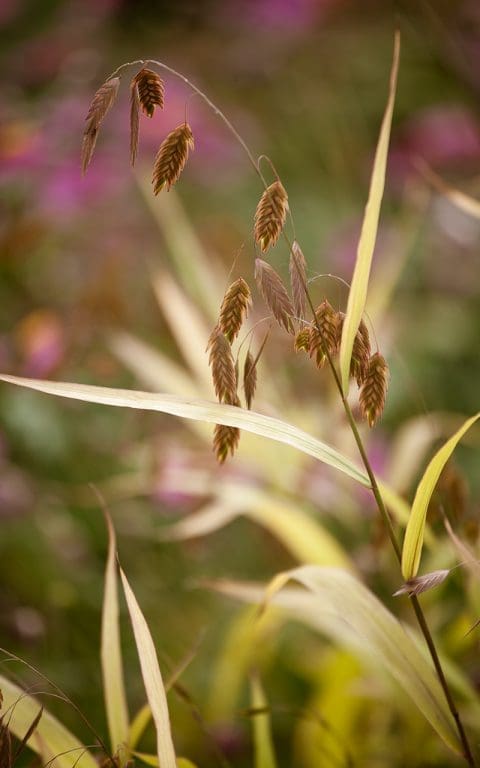
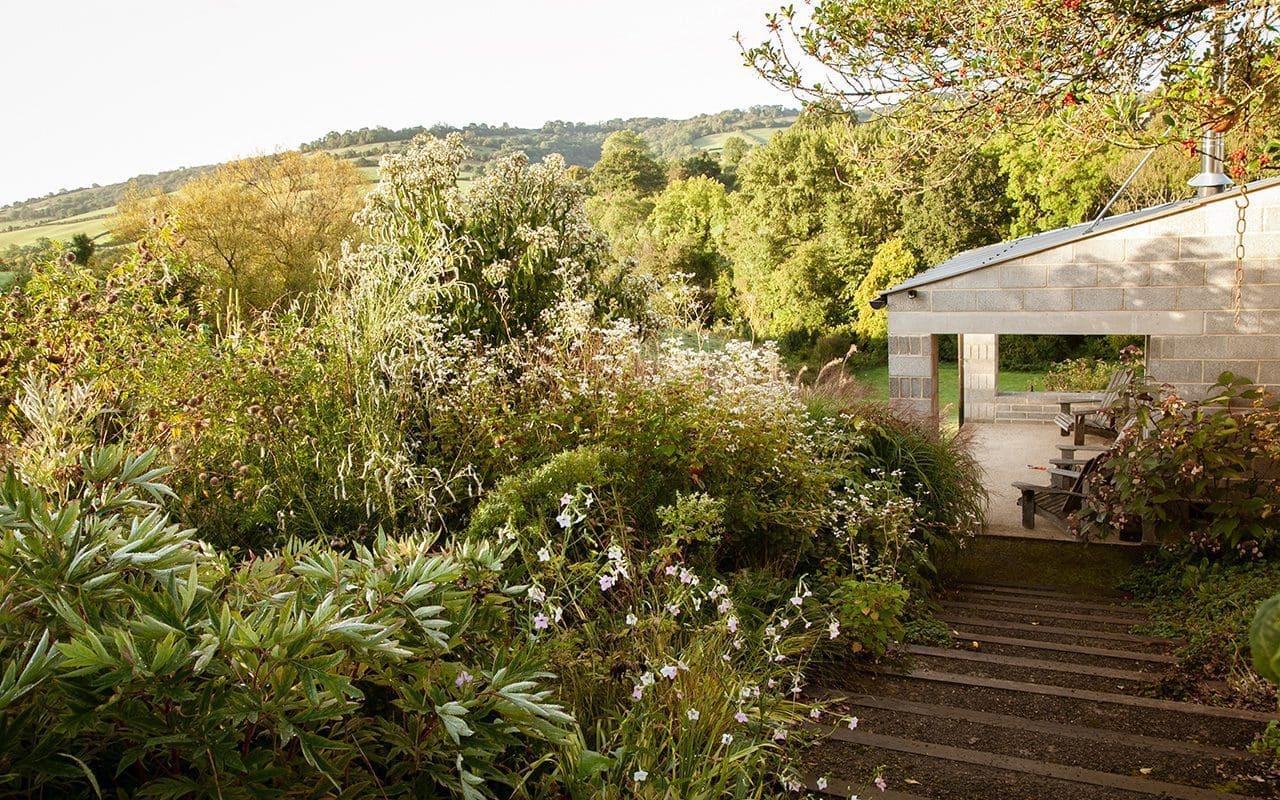
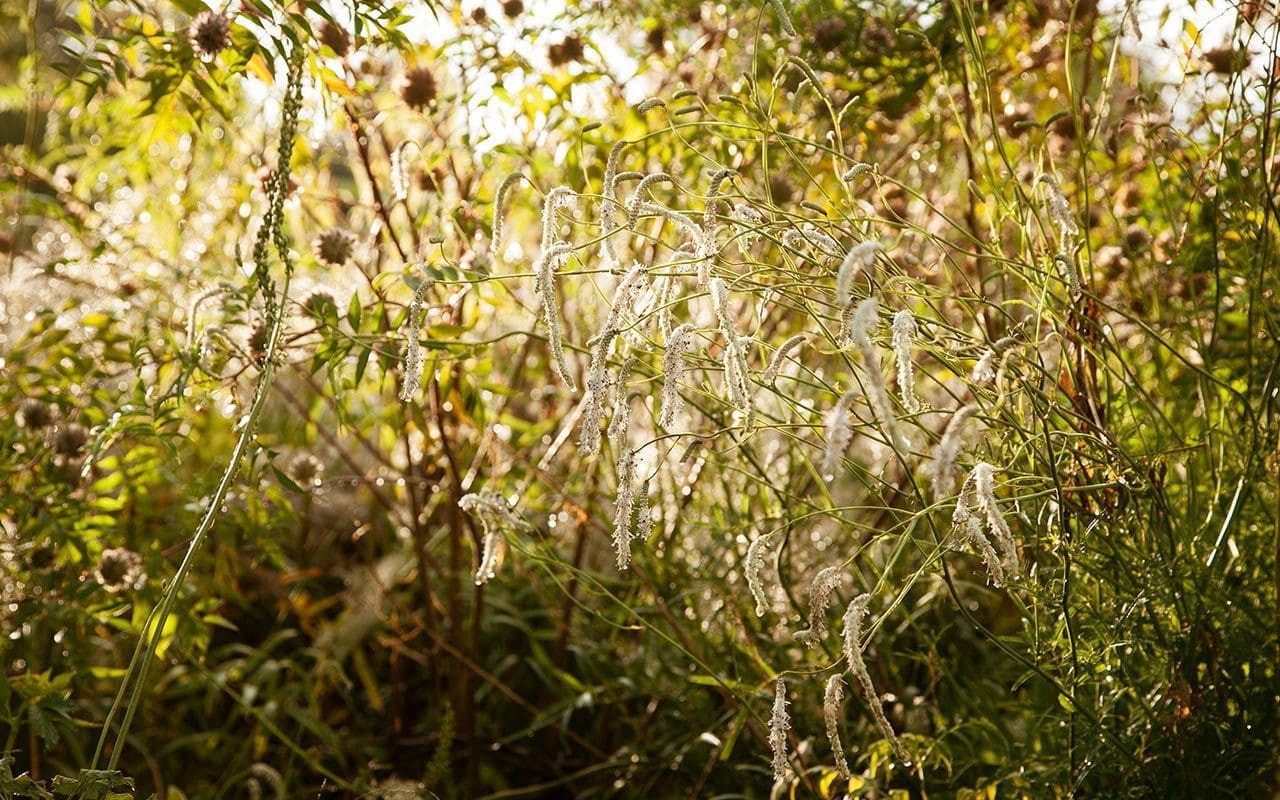
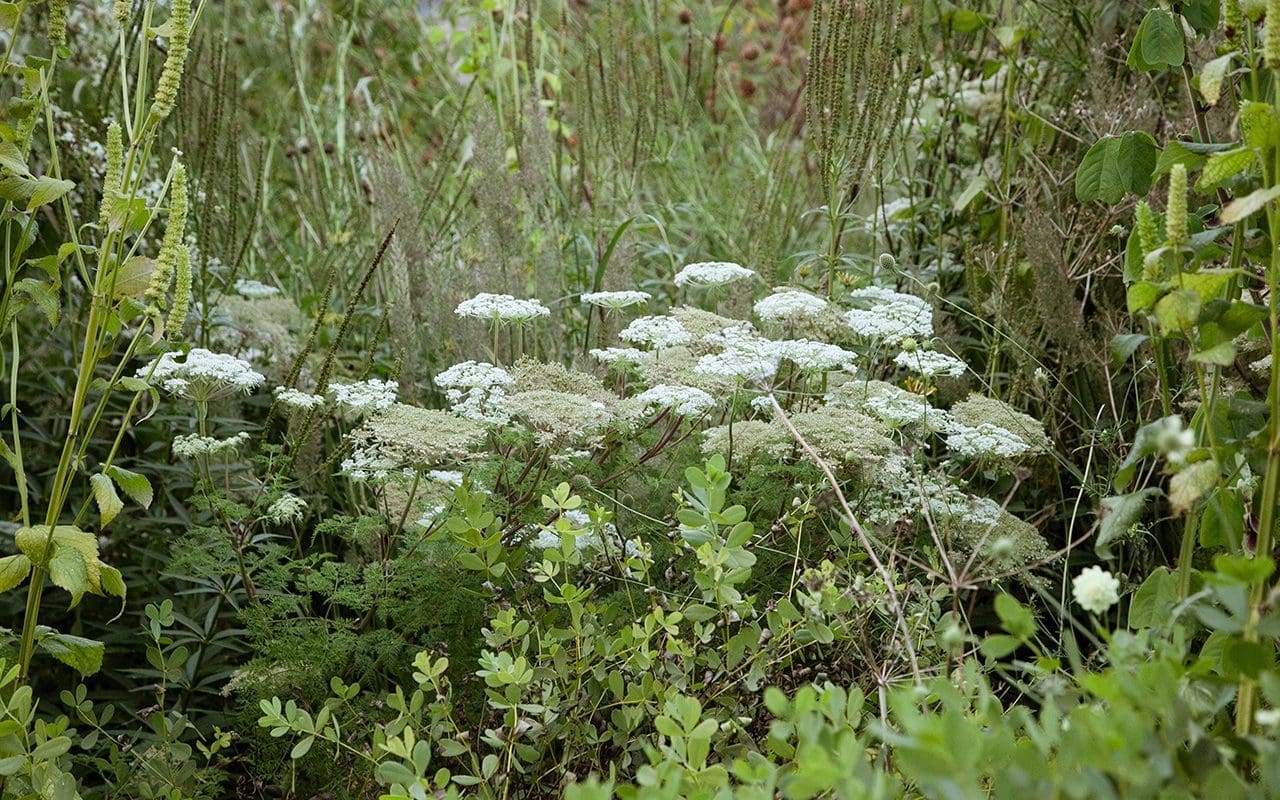
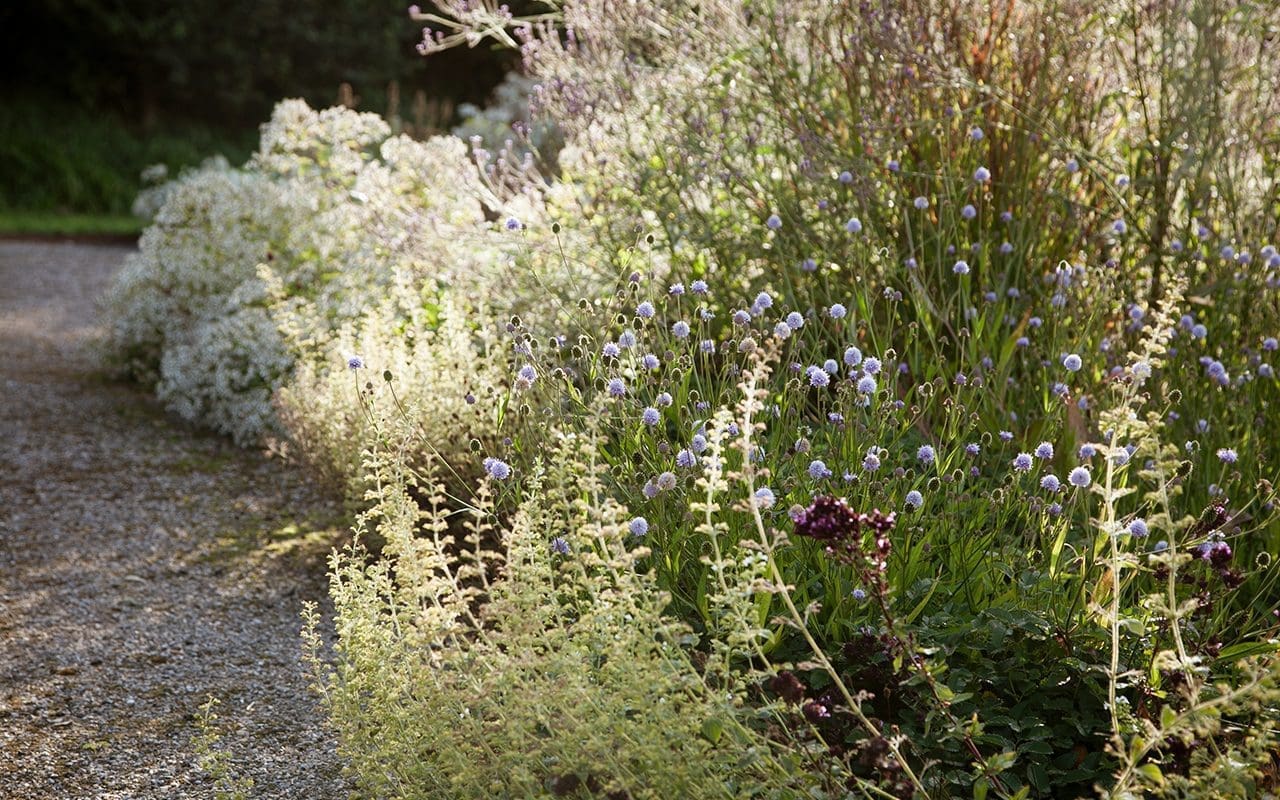
The third season in the garden has settled the planting and there is a richness that comes once the mingling is complete in the autumn. The Heptacodium micanoides that will eventually shadow the steps down to the studio is in full and perfumed flower. This small Chinese tree does not really have a down time. Pale bark in winter keeps you from missing foliage when it is in its deciduous state and sickle-shaped leaves provide a good hearty green whilst the flowers gather for autumn. For now, because it will be bound to change once this shrub grows to become a small tree, I have given it a number of pale companions. Sanguisorba ‘Korean Snow’ towering to nearly three metres and Selinium wallichianum to score the horizontal in late umbels. It is good to have found a sheltered spot for the perennial buckwheat which smashed and shattered when it was just a few metres away, but has found its spot in the lea of the building and is seeding about to add further informality.
When we return things will be different. The smoky cloud of Molinia caerulea subsp. arundinacea ‘Transparent’ will have lost its thundery tones and will be turning biscuity. For now they provide a moody suspension for the bolt of bright Vernonia that push strong and stout amongst them. The Molinia are planted in a group where the paths intersect, Being amongst them is immersive and have made a talking point for friends and family who have also been drawn to their stillness or the breeze made visible.
Taking it all in before leaving, we have had to look carefully and commit this moment to memory. Drinking in the palest blue of the aptly named Succisella inflexa ‘Frosted Pearls’, for it will be gone when we return, it feels as if the garden is almost at its best for being relaxed and for no longer striving. Teetering before falling, flashing the last colour before dimming and giving still as it ripens and readies for a penultimate chapter.
Words: Dan Pearson | Photographs: Huw Morgan
Published 29 September 2019
We have just returned from the Climate Strike march in Bath City centre.
Like many of us this year I have been inspired by the school children’s and young students’ worldwide strikes in the name of Fridays for Future, initiated by the example of Greta Thunberg.
Like many of us I have also felt guilt and shame at the fact that we, the older generation, have left it to the young to draw international attention to something that we have been aware of since before these young people were born.
Well, now there is no turning away. There can be no more heads buried in the sand.
During 7 minutes of seated silence this morning I looked around me at all of the people. I thought about how all these like minds and their kind around the globe will have all been trying to make small differences to counteract what we know are the causes of climate change, global pollution and environmental pillage.
I thought about the corporations, businesses and individuals that have benefitted from the destruction of our environment fully aware of the cost to the planet, and reflected on the kind of person who knowingly robs future generations of their future for short term financial profit.
I berated myself; for not engaging, for not doing enough, for consuming too much, for judging others for their apparent profligacy.
I considered how we can have an effect. What can we all do that will make the biggest change ?
The word that entered my head was simplicity. No more than you need.
I intend to make changes. I plan to be stricter with myself. I am sure I will lapse. I know there will be challenges.
It is also essential to enjoy what life offers. To know that it is not only our responsibility to effect change. We must force those that are able to create the biggest and most meaningful changes – governments, manufacturers, agriculture, industry – to face up to their responsibilities to ensure there is a future world that humans can inhabit.
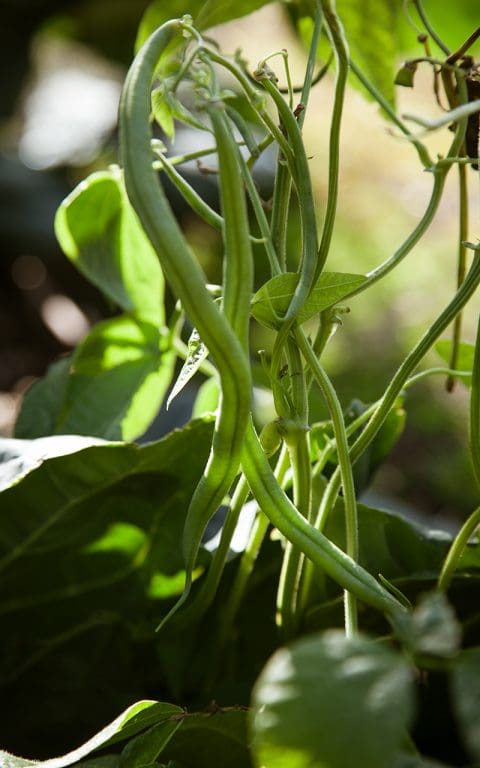
The main ingredients in this dish are from the garden, prepared simply and just enough for one
100g fine green beans
1 pear, about 100g
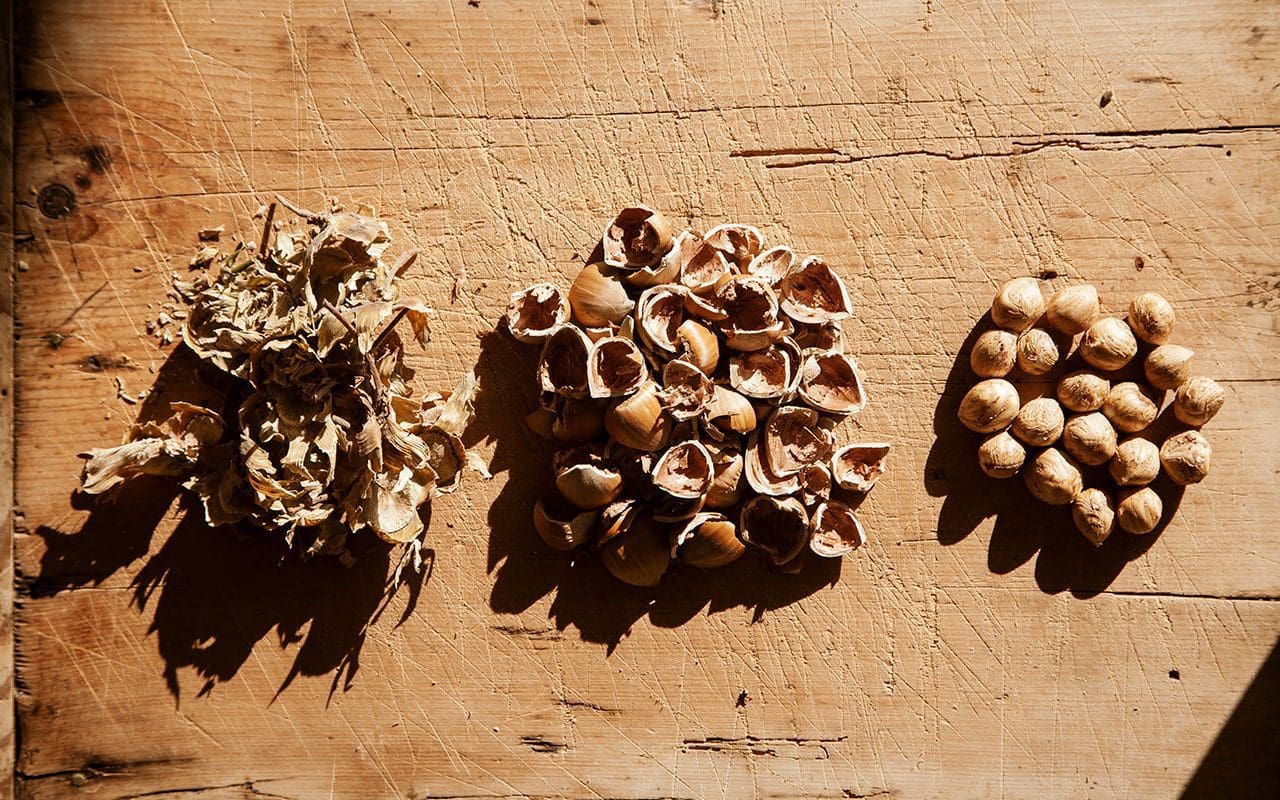
10 cobnuts, about 20g
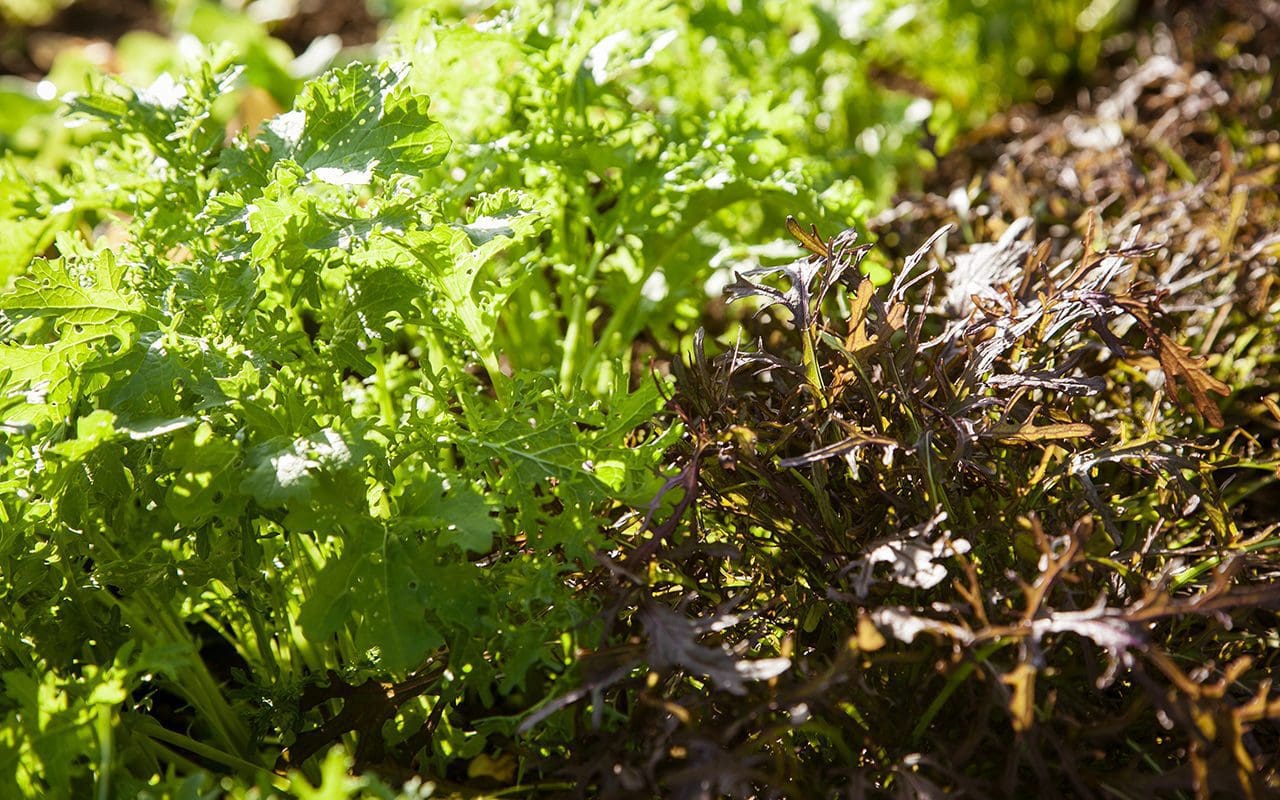
A small handful of young salad leaves – lettuce, mizuna, mustard greens, rocket, spinach
1 tablespoon lemon juice
1 tablespoon hazelnut oil
Salt
Put a saucepan of water on to boil.
Remove the tops from the beans and boil for 3 minutes. Drain and refresh in cold water.
Shell the cobnuts and slice coarsely.
Wash and dry the salad leaves.
Put the lemon juice into a large bowl.
Quarter the pear and core. Cut each quarter lengthways into 3 pieces. Put them immediately into the bowl with the lemon juice and toss to coat.
Add the beans, salad leaves and cobnuts.
Drizzle over hazelnut oil.
Season with salt and toss everything together.
Serve.
Recipe & photographs | Huw Morgan
Published 21 September 2019
The garden has taken a distinct and irreversible turn. It is not a sad thing, just the beginning of another season. A slowness in the Morning Glories, that just a fortnight ago were still racing skyward and now stay open well into the afternoon in defiance of their name. Kaffir lilies flaring hot colour and the first spears already pushing on the Nerine.
A gentle countermovement happens alongside the feeling that most things have reached their peak and are now ready to begin standing down. When we lived in London it was the Datura which went for its best and most intoxicating September fling. Primed by the cooling weather and definitely responding to the onset of autumn, it had been readying itself for such a finale, which, in the shelter of our Peckham garden, would run through to November and test my resolve in leaving the plant out just for one more night. I have an offspring of the very same plant here, treasured but never thriving on our windy hillside. Though I have moved the pot around to try and find it the shelter it needs, this hothouse flower knows its limits and taunts me here rather than rewarding.
Not so the Nicotiana suaveolens which right now is having a moment. This is another plant that I have grown continually for what must be at least twenty years. I first knew it as Nicotiana noctiflora, in reference to its night-flowering habit, and have a niggling half-memory of where it originally came from, which is surprising considering my devotion. Derry Watkins of Special Plants was here recently and said that it was one of her all-time favourites too, but that she never saw it any more. She used to grow it for sale, but the plants were seldom bought. When I asked her why, she said that she thought it was too subtle for most people. Its quiet elegance is exactly why I love it.
I have explored the tobacco plants over the years. Towering Nicotiana mutabilis, with a confetti of tiny flowers, suspended in a cage of branching stems, which age from white through palest pink to deep rose. Where there has been a need for an exotic moment, Nicotiana sylvestris has provided lush foliage, a bolt of white drama and heady perfume. The tiny, green bells of Nicotiana langsdorfii have been mingled amongst perennials to extend the season in the borders and I currently have a little trial of dark-coloured varieties, which I imagine must have some N. langsdorfii in their blood. ‘Tinkerbell’ has lime green trumpets with a rust-ruby face and unexpected blue pollen. ‘Hot Chocolate’ is similar, but a velvety brown-red. Subtle beauties that need to be placed carefully if their colour is not to be lost.
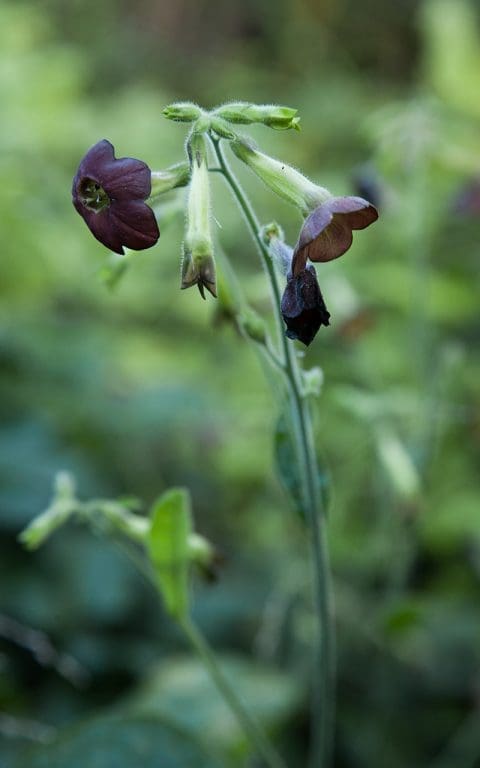
In Peckham we suffered from the dreaded tobacco mosaic virus, which is carried on tomatoes and affects their solanaceous cousins when in full swing. When it hits, the Nicotiana leaves firstly develop the distinctive mosaic patterning, then they begin to twist and melt, leaving the plants failing in high season with a wide open autumn ahead of them and the associated disappointment. Interestingly, the Australian Nicotiana suaveolens was never affected and, even when growing alongside others that did succumb, it soldiered on until the frosts. I brought it here as seed, which is produced in plenty and is easily reared from a March sowing under glass. Where it has seeded into pots that spend their winter in the frames, I’ve found it to germinate spontaneously in April as the weather warms. The seedlings that make their own way without transplanting catch up with those that are pricked out and cossetted.
In London our plants would return for a second and sometimes even a third year if their spring regrowth wasn’t decimated by slugs. Though I plant out a dozen or so as gap fillers close to the paths, we have too much winter here, but our most splendid plant is growing just under the eaves of the open barn. I presume the ground is dry enough in winter to afford it enough protection to have returned a second year and at twice the size from the reserves of a decent set of roots. I noted the frosted rosette looked green in March when winter turned and looked after it accordingly to guard it from slugs.
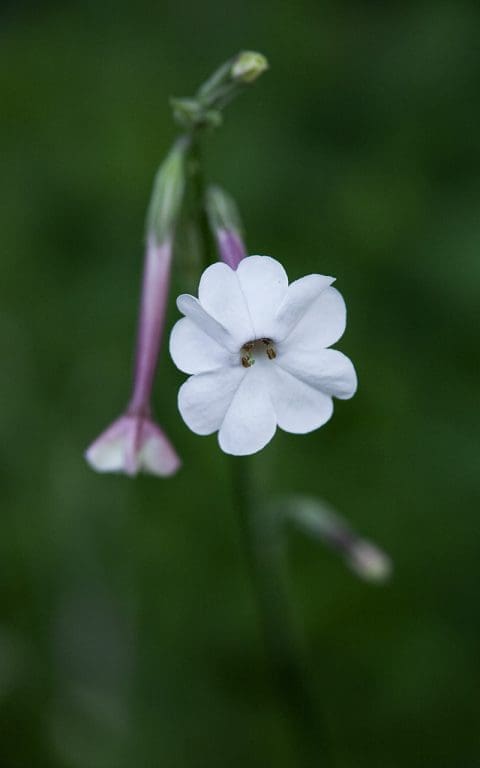
Our barnside plant has been gathering in strength over the summer, pushing out flower since July. The wiry stems set the long trumpets free of the basal foliage and the flowers appear with room between them to hover. During the day, from mid-morning onwards, they hang in repose so that you hardly notice them, but as evening descends they awaken. Part of their nocturnal glory lies in their paleness, which is luminous in darkness and this is when they throw out their lure, pulsing perfume to attract moths and other night time pollinators. When we returned from London on Thursday night, the misty air was still and the open barn had captured this heady, exotic perfume. A smell reminiscent of cloves and jasmine that conjures somewhere very different from our cool, dampening autumn.
Words: Dan Pearson | Photographs: Huw Morgan
Published 14 September 2019
We have been inundated. A vegetable garden with courgettes running to marrows and tripods of beans hanging heavy and outwitting our best made plans to stagger the crop with three weeks between sowings. The beetroots have ballooned to the size of cricket balls and the chard is straining over the path as if to say “eat me”. Wet weather and warmth in August has put a surge of aromatic growth on the basil and, now that September is cooling, there is pesto to be made if we are to reap the benefits.
Harvesting in August could easily take two days a week and the same again in preparing the pickings for pickling, jam, bottling and freezing. These are good times and in the past we would have pulled together and made an event of it to make light of the workload. Next year we plan to do exactly this at the time of critical mass and set up an industrious production line with friends who are good at picking and friends who are good at preserving. A weekend or two spread over the month will help to manage the glut and people will go home with something to mark their efforts and a memory of the times of plenty for the winter.
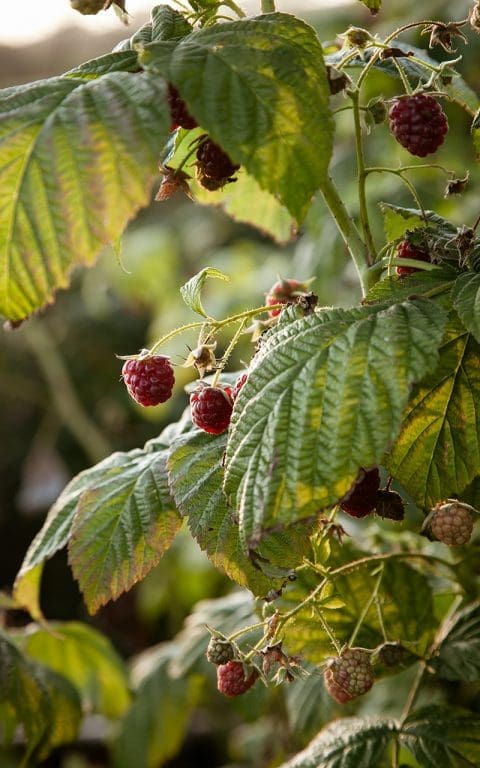
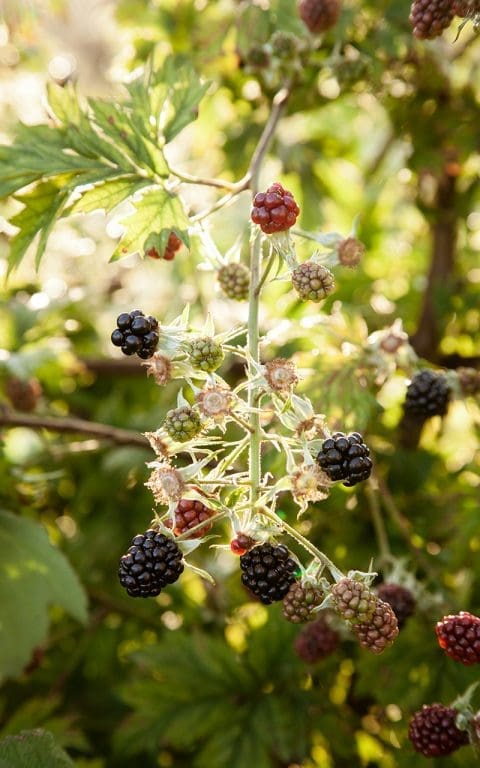
Beyond the kitchen garden (and the distraction of beckoning autumn raspberries) and through the gates to the slopes that lie beyond, is the orchard. Planting these trees was my first move after arriving here and they are now in their eighth summer and weighed down with fruit. The apples are yet to come, but the plums have been demanding to keep up with and we find it impossible not to be bothered by the inevitable waste. Yes, of course the excess never goes to waste, the evidence of rodent nibbling and flurries of birds that rise from the windfalls beneath the trees are proof. Working from the ladder up amongst the branches and you find the wasps also gorging and beating you to it if you are not fast enough. The plums ripen over the course of a week, each tree at a slightly different time and with some overlapping.
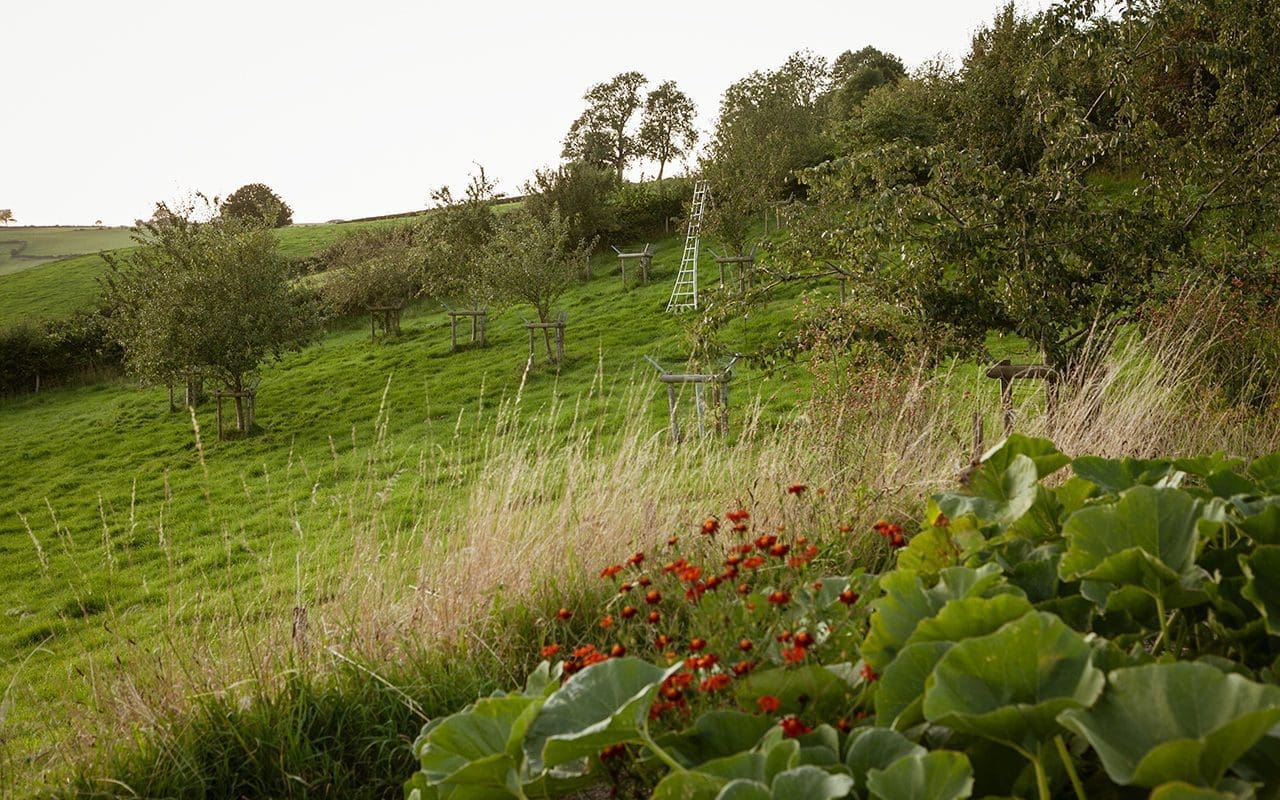
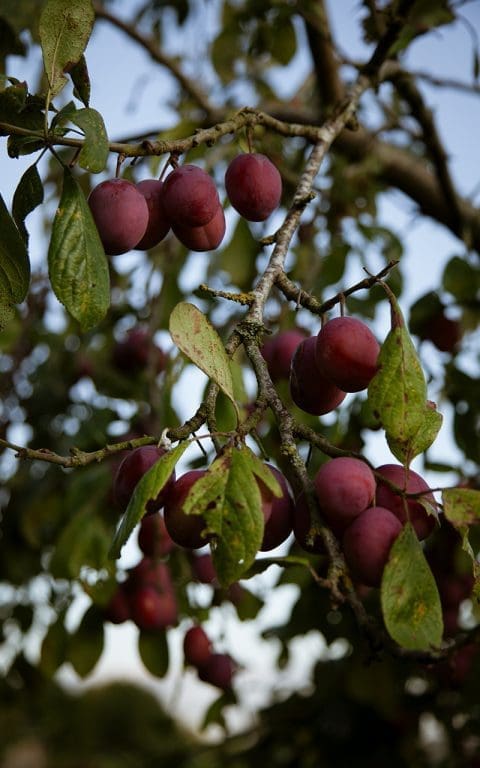
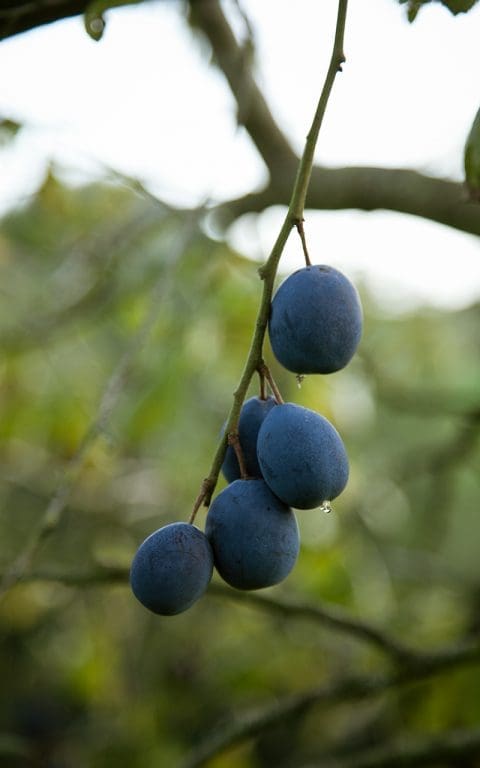
The gages came first this year and I can say now that I would be happy having nothing but gages. We have four in the plum orchard. This year ‘Bryanston Gage’, ‘Cambridge Gage’ and ‘Early Transparent’ were all productive. They are all superior to the other plums for being aromatic and naturally sweet but ‘Bryanston Gage’ is perhaps the most delicious. As good as apricots and, with the sun in the fruit, warm in your mouth. Morning and evening are the best times to pick. You will be ahead of the wasps when the fruit is still cool with dew, but just before sundown is also a good moment for the fruits are sun warmed and the wasps are early to bed.
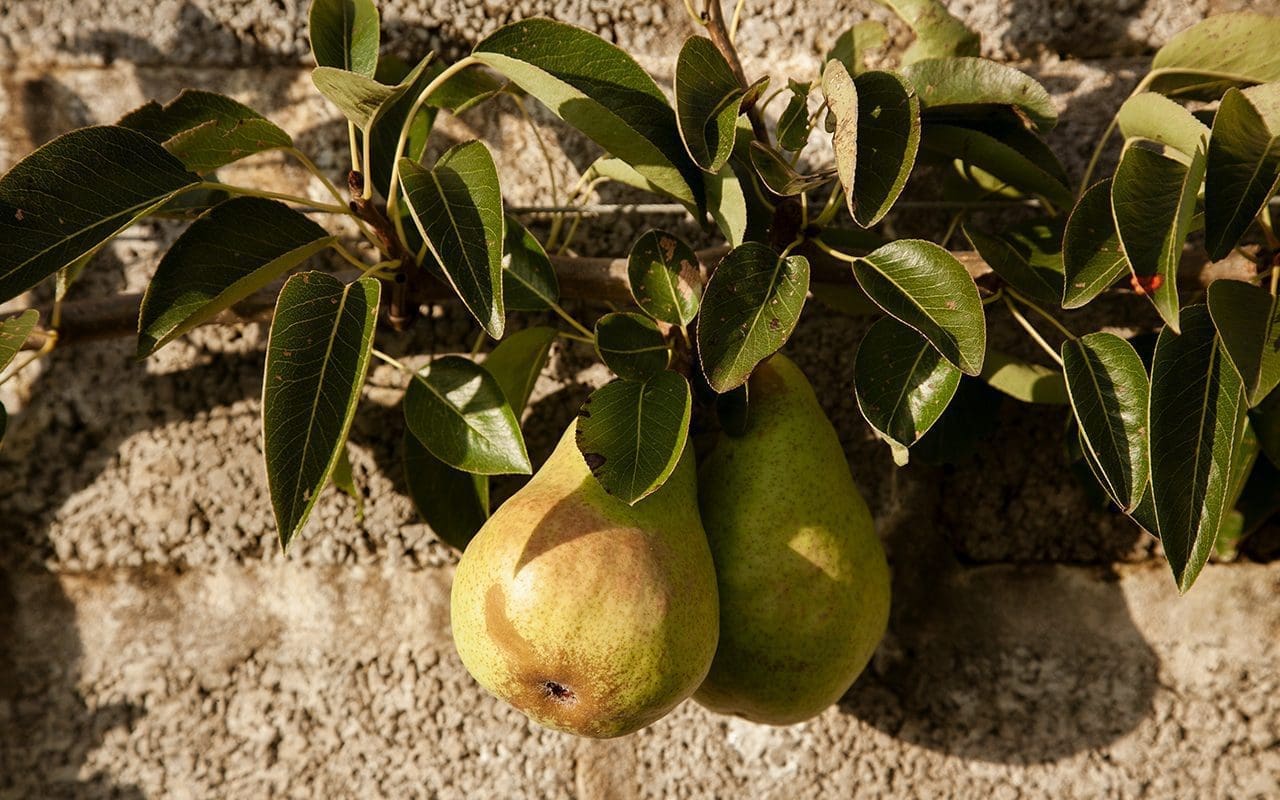
I am beginning to doubt whether it was a good idea to have planted pears in the orchard. There are five trees and I can see they will make a good-looking contribution, but the fruits of pears are notorious for dropping just before they ripen and then bruising by the time they are ready to eat. In the kitchen garden we have five cordons grown against the south-facing wall that backdrops the garden and, in terms of convenience, they have proven themselves. The espaliers make picking easy and, as the pears tend to come all at once or over the course of a week, the amount of fruit you have is manageable compared to the orchard trees.
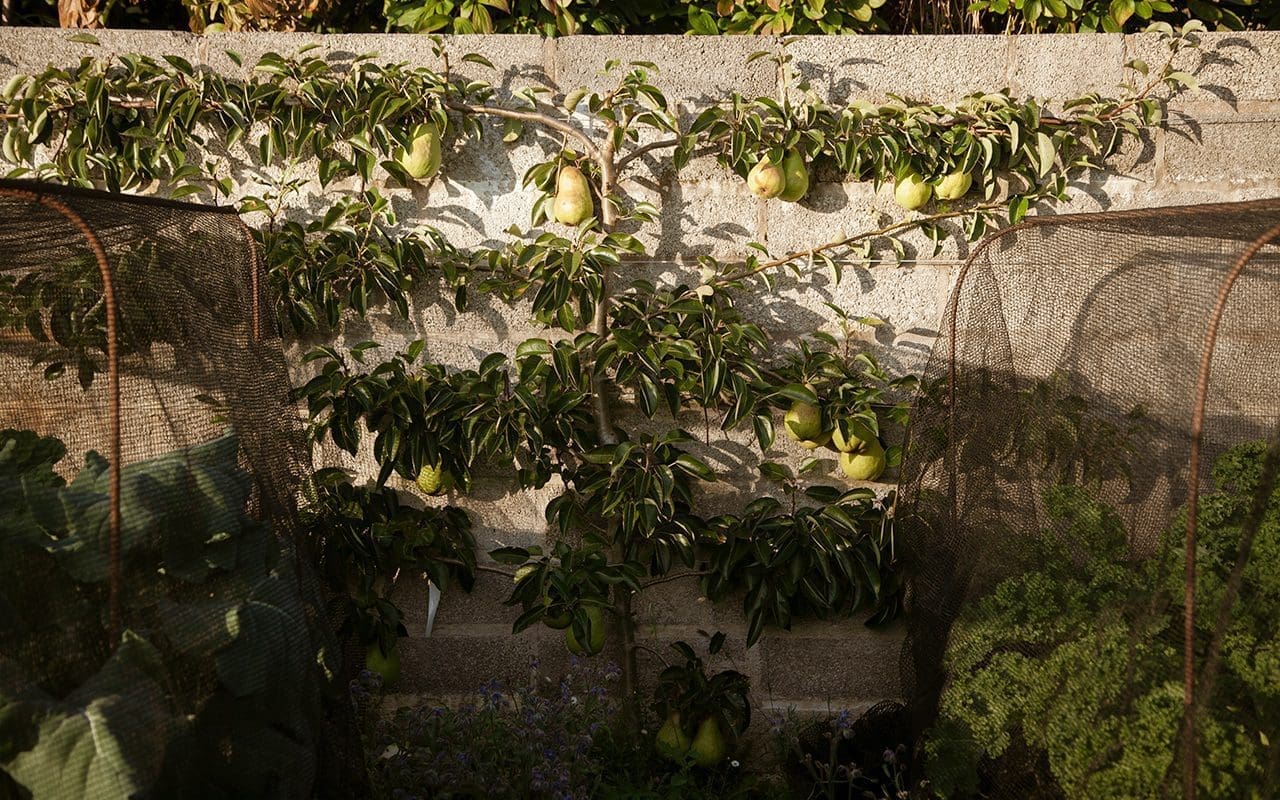
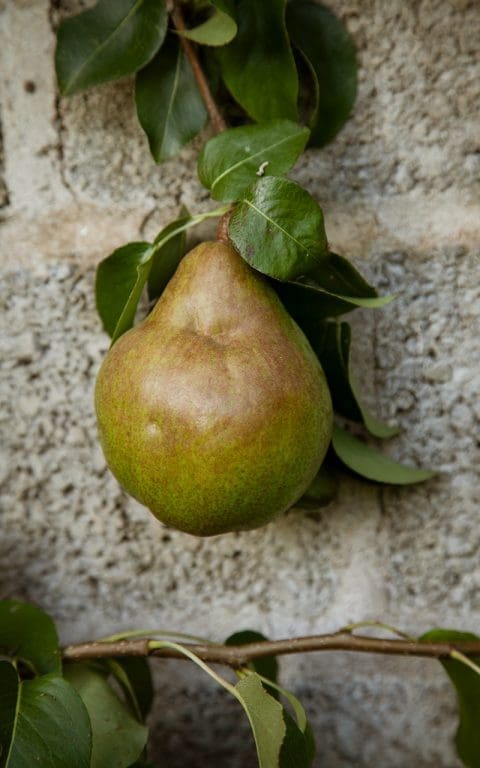
We have five varieties that stagger the cropping over the course of six weeks or so to keep us in pears for the autumn. ‘Beth’ is our first to drop, although we have just eaten the last. I now grow a soft bed of Erigeron under each cordon to act as a cushion for the fruit but, once they start to fall, you need to get out there daily if the mice – and possibly larger rodents – are not to get there first. Although I like the crunch of a nearly ripe pear, two to three days on a shelf sees ‘Beth’ colour to a soft yellow and the fruit ripen to sweet and melting perfection.
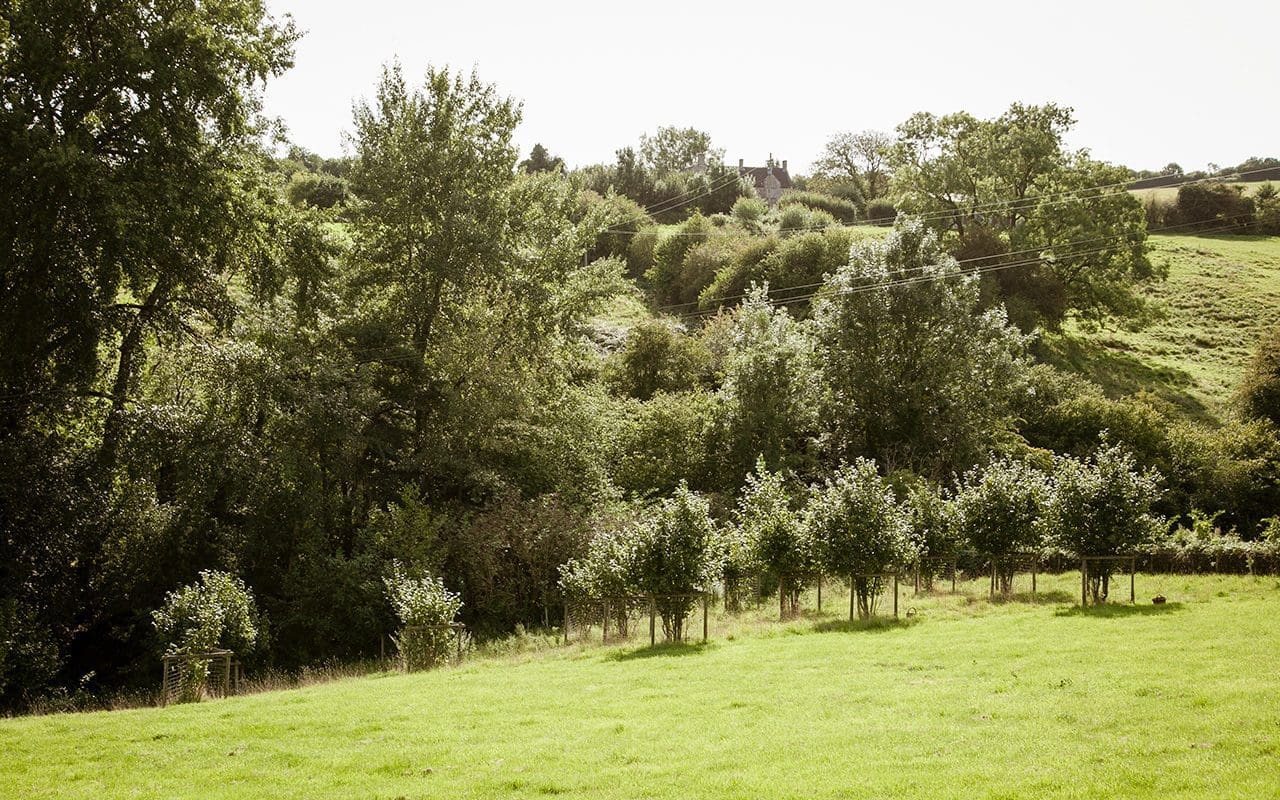
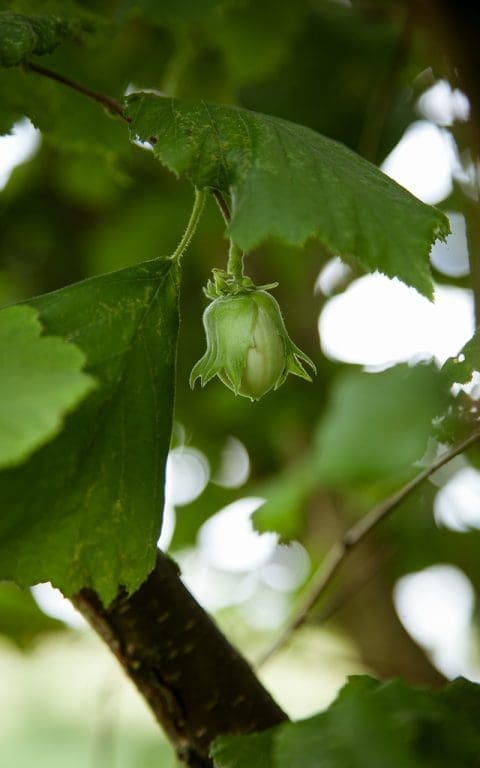
Down by the stream we have seven varieties of cobs and filberts; ‘Webb’s Prize’, ‘Gunslebert’, ‘Kentish Cob’, ‘Cosford Cob’, ‘White Filbert’, ‘Pearson’s Prolific’ and ‘Butler’. The trees are in their seventh year and cropping heavily now. This year we have beaten the squirrels who discovered them a couple of years after they started fruiting. St. Philibert of Jumièges, after whom filberts are named, has a feast day on August 20th and from about that time you have to be vigilant. We have learned to pick them early if we are not to lose the entire crop whilst we’re not looking. We put them in a single layer in perforated plant trays to allow plenty of air to circulate and ripen them up in the open barn out of reach of the mice. Sharing what you must leave behind due to the sheer volume of the harvest is one thing, but sharing your hard earned fruits is quite another.
Words: Dan Pearson | Photographs: Huw Morgan
Published 7 September 2019
We are taking a short break to enjoy the garden in the sunshine.
See you next week.
Huw Morgan | 15 August 2019
Although I already knew of her by name, reputation and Instagram it was at the 2015 Port Eliot Festival, where we were both judges for the Flower Show, that I first met Flora Starkey. We hit it off instantly, finding that we gravitated towards the same entries in each of the show classes; those where the immediacy, spirit and freedom of the arrangement was more important than technical proficiency, complexity or sophistication.
These are some of the very qualities that set Flora’s work apart and she is rightly feted for her lightness of touch, very particular use of colour and sensitivity to decay and the use of the ephemeral in her arrangements, which have a melancholy beauty and Late Romantic sensibility. Amongst the new generation of floral artists hers is a completely distinctive vision.
I knew immediately that it would be exciting to give Flora the opportunity to come to Hillside and see what she made of our selection of plants and flowers. Although it has taken several years to come to fruition, finally last week Flora came.
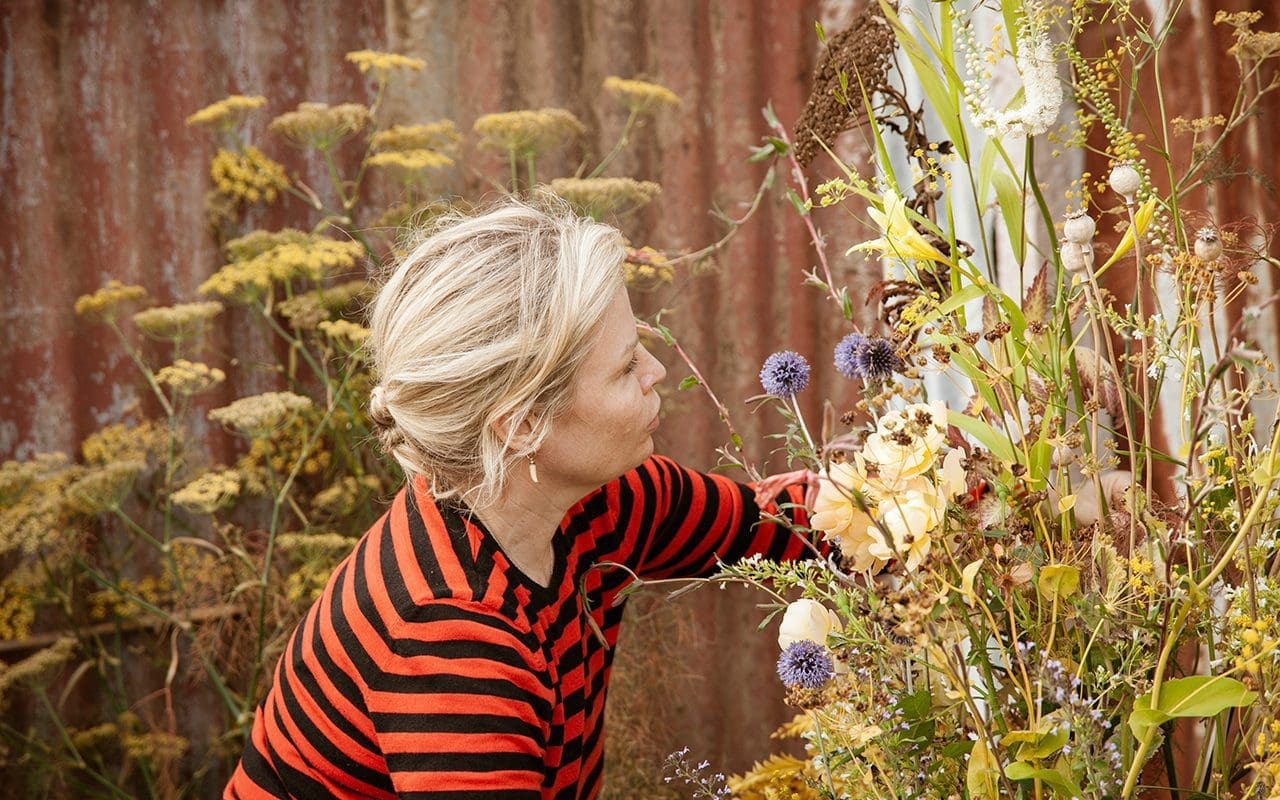
After a walk around the garden taking everything in (and impressing me with her plant knowledge) Flora identified the things she most wanted to use. It was wonderful to see her working with such intent focus and speed. The instinctive way in which she both selected plants from the garden and then placed them together in the arrangements was both very down to earth and practical, but also full of the mystery of intuitive artistic expression.
Over a glass of wine after an adrenalin charged afternoon, I asked Flora if she would like to come back to see the garden in another season. ‘Of course !’, she said. And so, schedules allowing, we are planning for Flora to return to make further floral portraits of the garden here in autumn, winter and spring.
Flora Starkey | 8 August 2019
On arriving at Hillside, it is immediately apparent how the land holds the house & outbuildings central amongst the different areas of garden, the fields and valley beyond. Sitting outside, while Huw made a pot of tea, I had a strong sense of the patchwork of history of the place and the different stories that have been woven there over time. There is magic in somewhere so loved.
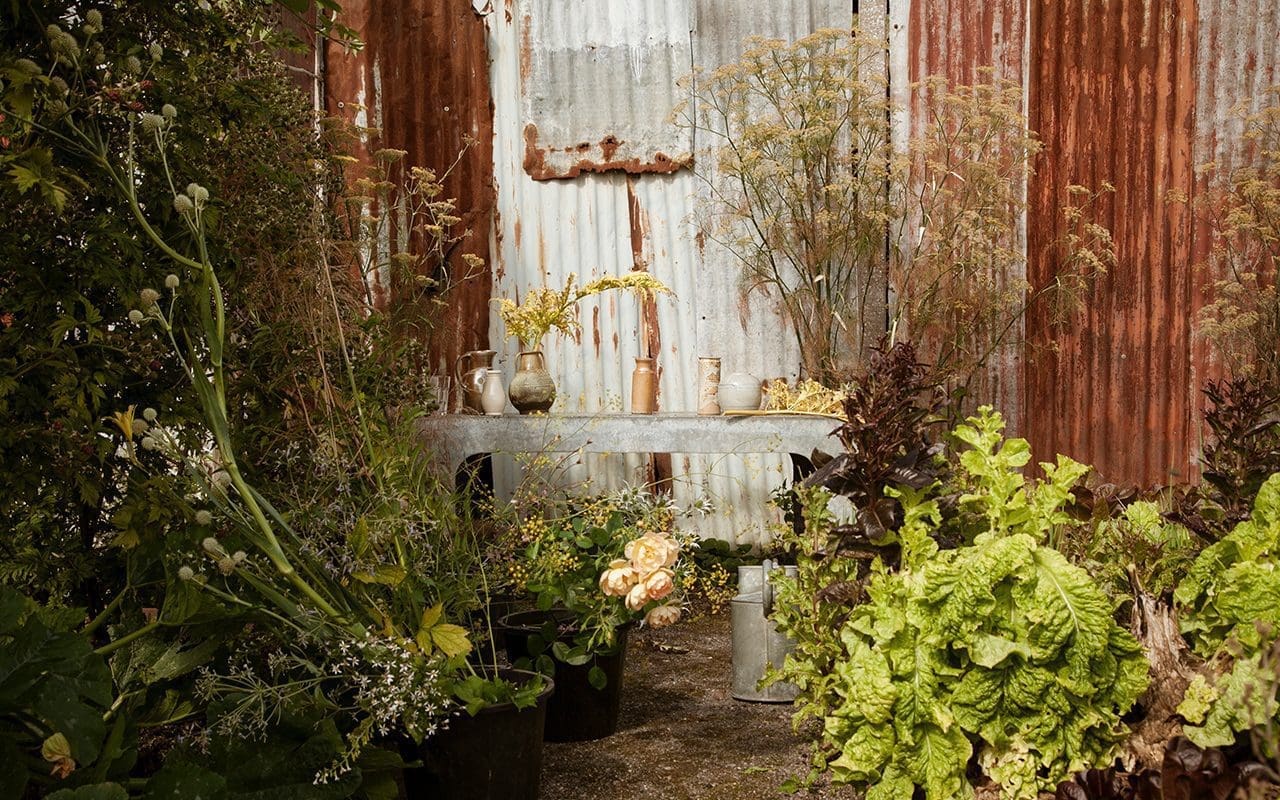
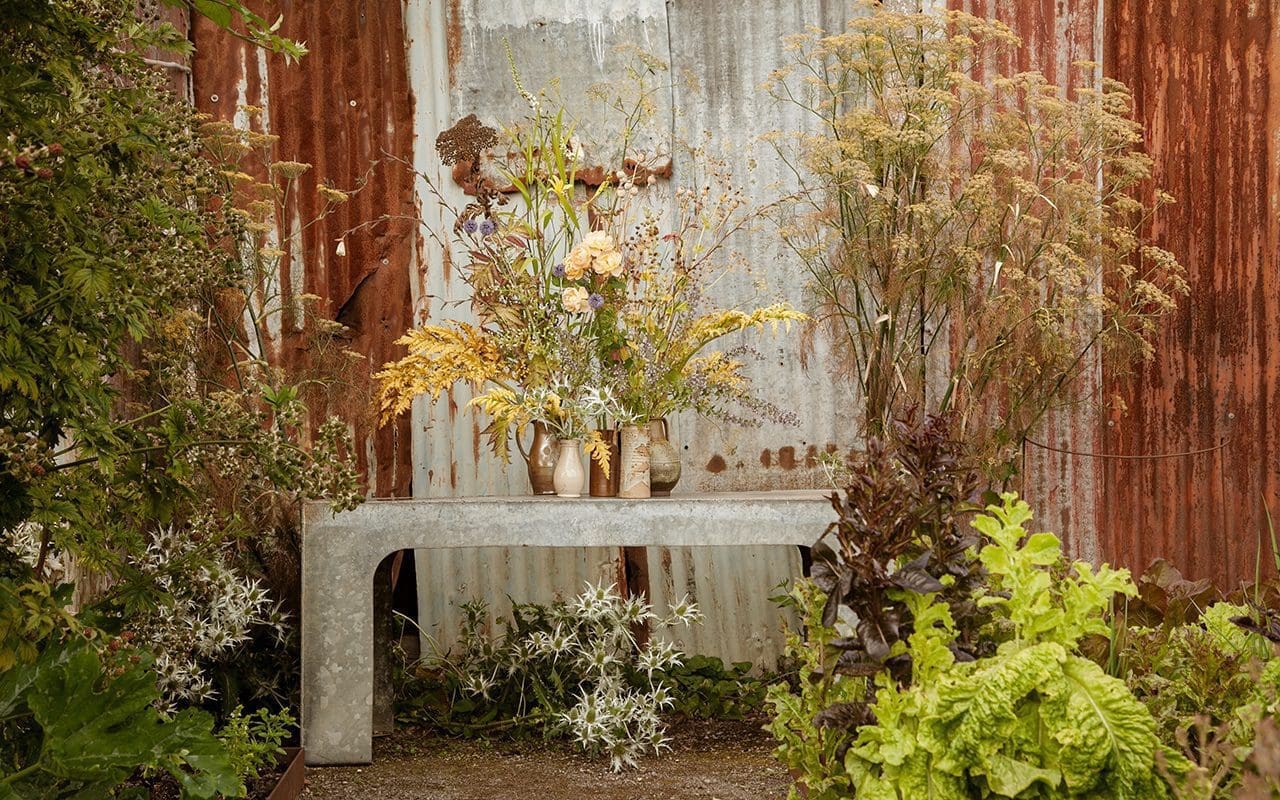
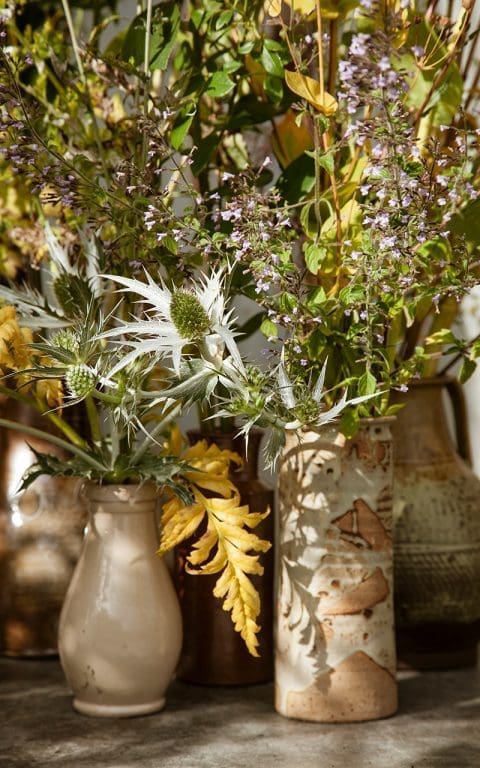
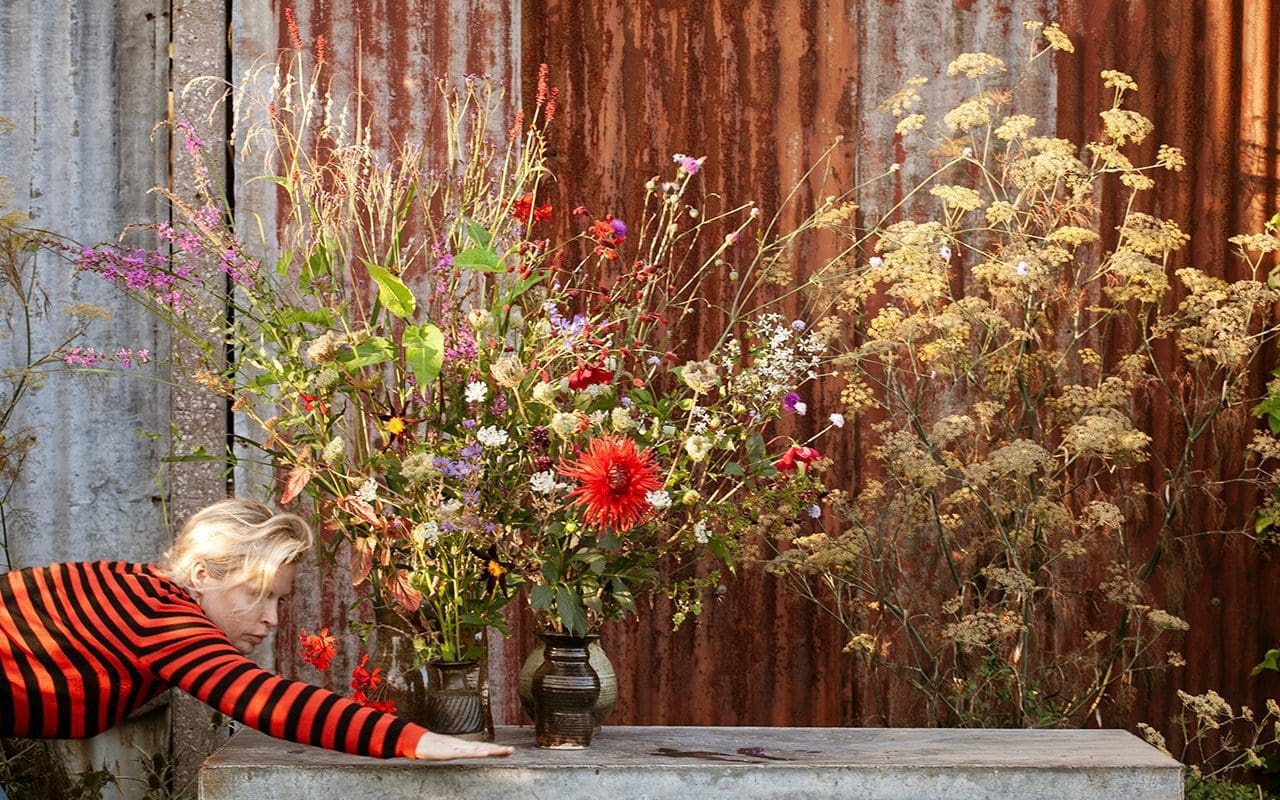
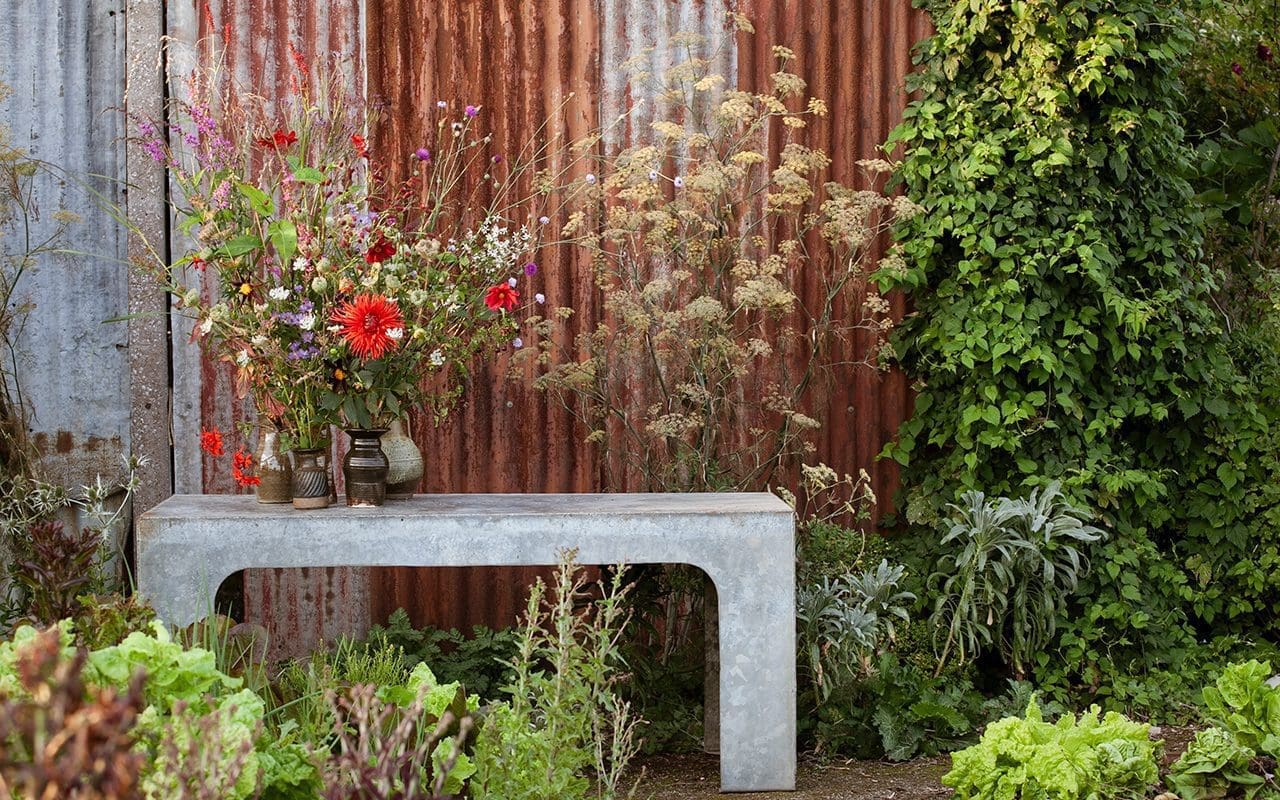
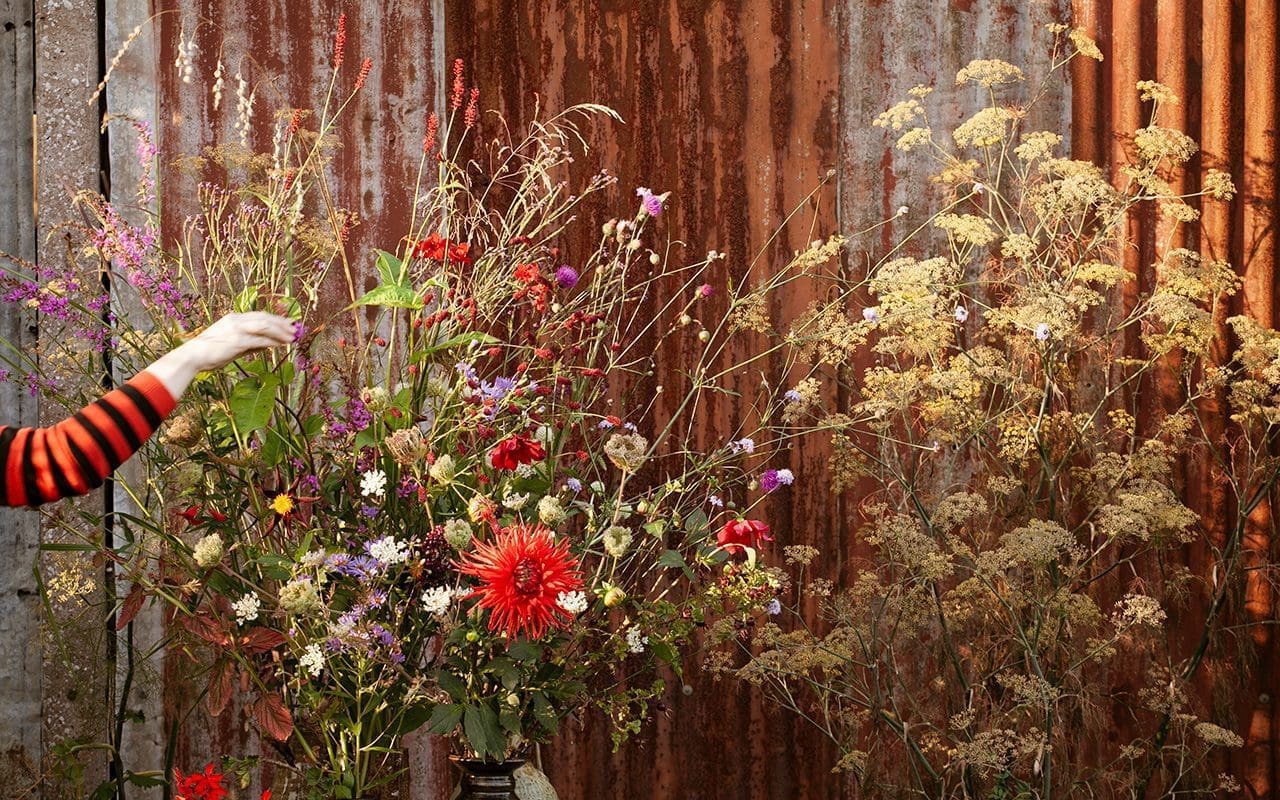
We chose the location for the shots outside one of the original barns surrounded by the kitchen garden – a place of old & new. For me, the space is always the starting point of any arrangement and the corrugated metal backdrop with its patches of rust led to Huw’s collection of stoneware vases.
Then to the garden. I wanted to create an arrangement from this setting while impacting on it as little as possible, so we cut sparingly – one or two stems from each plant – some of which had already been blown over in the wind. I chose what I felt captured the feel of this time of year, high summer with autumnal undertones. I’m always drawn to the changing colour of the leaves as they move through the seasons, the most beautiful stems in my opinion are the ones in transition or decline.
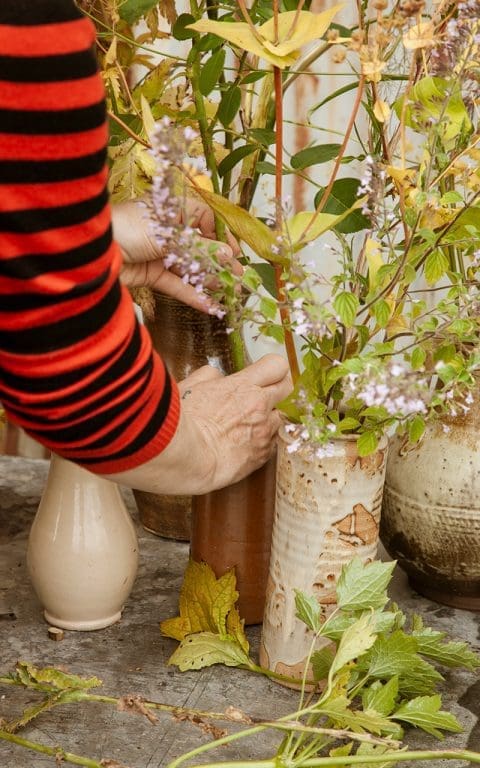
I felt there were two stories in the flowers at Hillside in early August: firstly the creams and buttery yellows with the odd splash of blue & lavender, and then the drama and heat of the reds, dark purples and browns. So we decided on two arrangements. I wanted to show the flowers for what they are: wild and changing, not too ‘arranged’, and of their place. Using a collection of mixed sized vases to make one piece is a way that I often like to work as it allows for a fairly large arrangement whilst giving more space in between the stems.
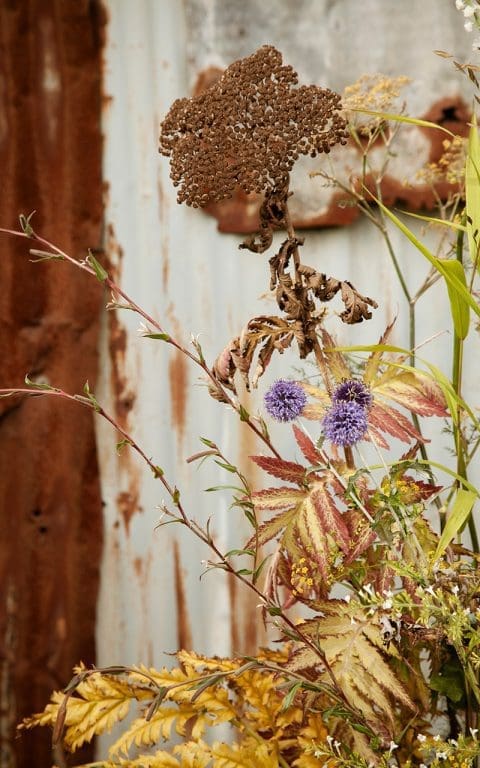
The molopospermum led the first with its sculptural leaves of bright yellow turning rust brown, and then a tall stem of Achillea chrysocoma ‘Grandiflora’, dried and curled at the top. Further down the stem, the leaves became a rainbow mix of pale green fused with yellow and wine red.
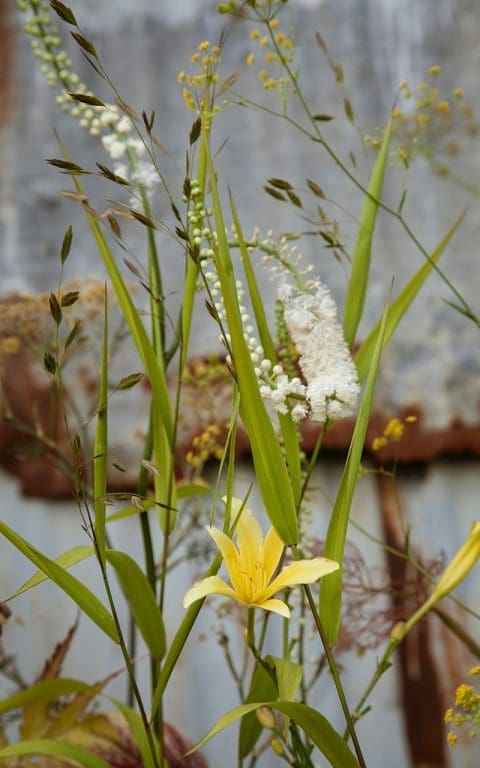
Evening primrose, fennel, actaea and Bupleurum longifolium ‘Bronze Beauty’ followed to give height and structure and all in different stages between flower & seed. This is where I find the true beauty, in the changes through which every plant evolves. Then a single stem of Rose ‘The Lark Ascending’, to add a touch of glamour, quickly offset with some bone coloured poppy heads. A hemerocallis lily was softened by some chasmanthium and two varieties of Calamintha in cream and lavender to visually draw the stems together. Finally some echinops and a sprig of Eryngium giganteum snipped from under the table to finish.
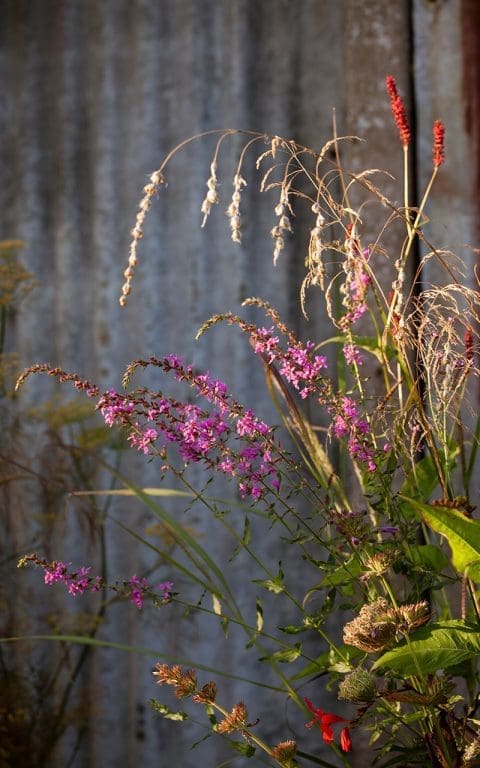
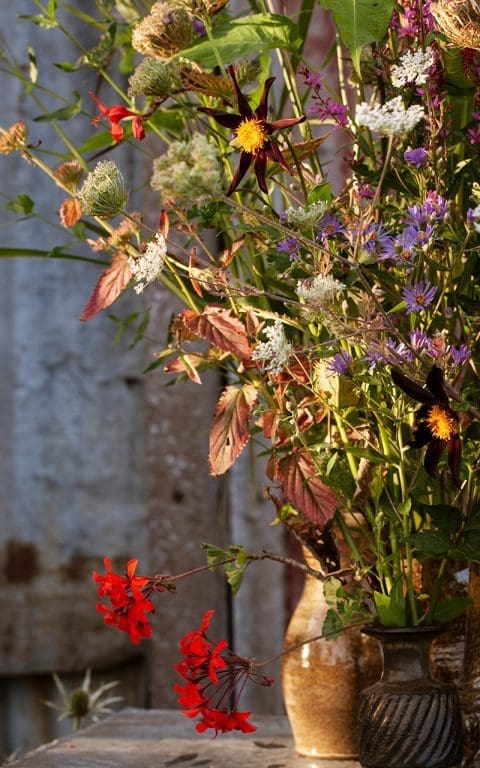
The second arrangement featured pops of bright red in the dahlias, crocosmia and geranium against a tangled backdrop of daucus, verbena, sanguisorba, persicaria and asters with a single arching stem of dierama in seed swinging above. Again, it was the mottled & turning leaves of the Nepeta ‘Blue Dragon’ with its dried flower heads that brought the most joy.
This really must be the most satisfying kind of creativity: working with flowers in your direct locality & the opportunity to use so-called imperfect stems, the beauty in which is so often strangely overlooked.
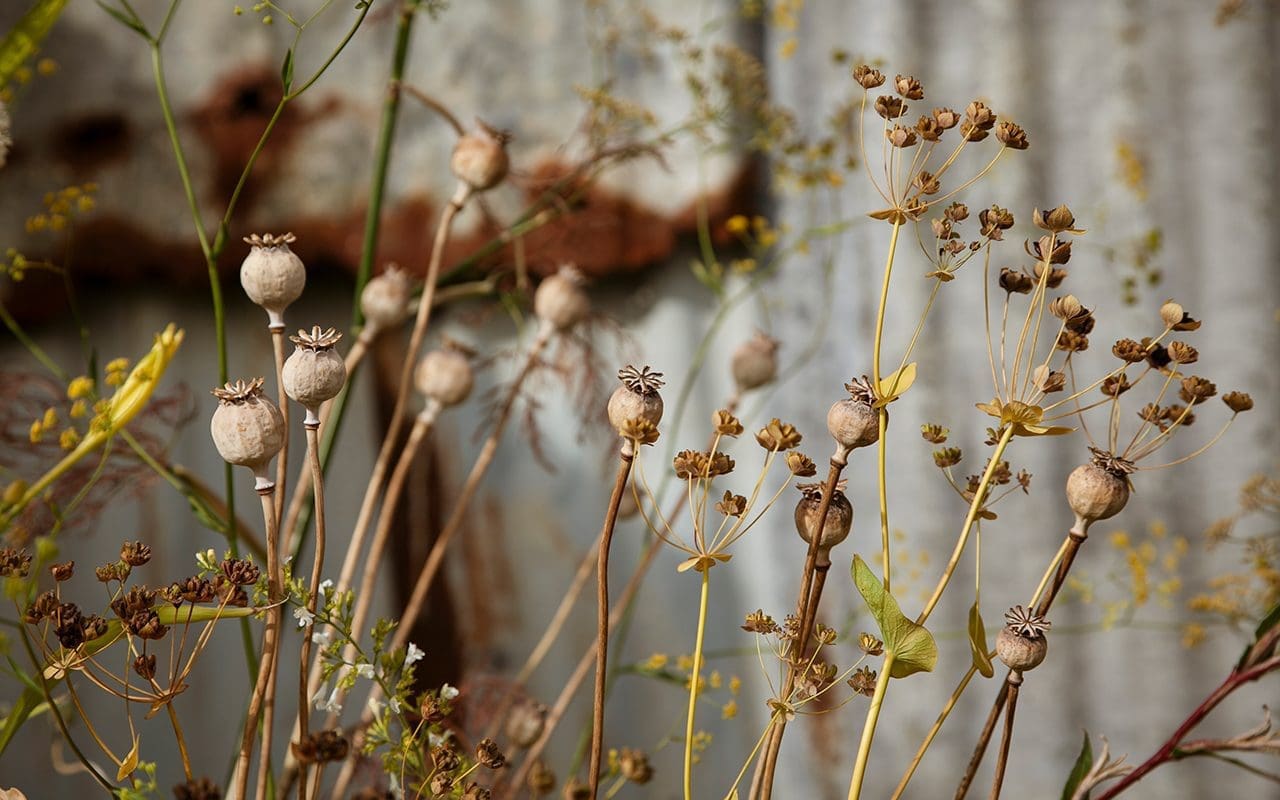
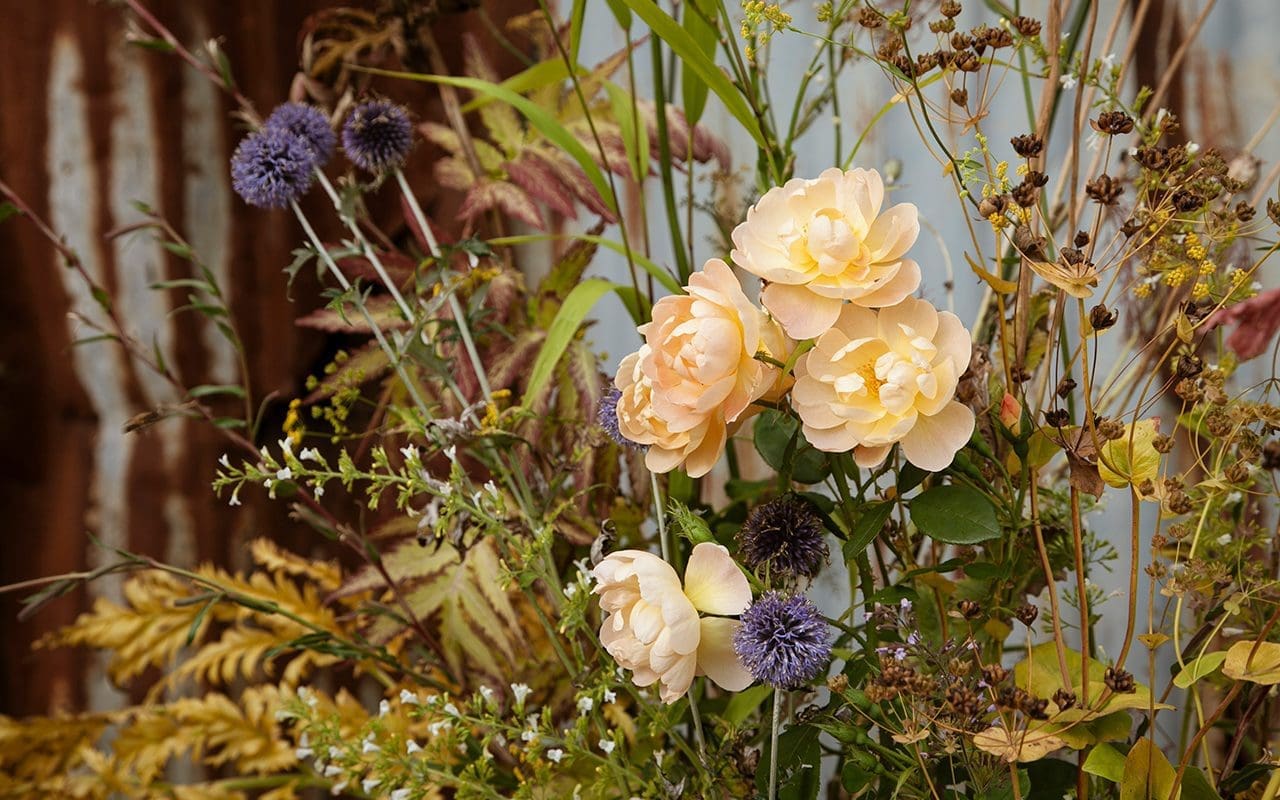
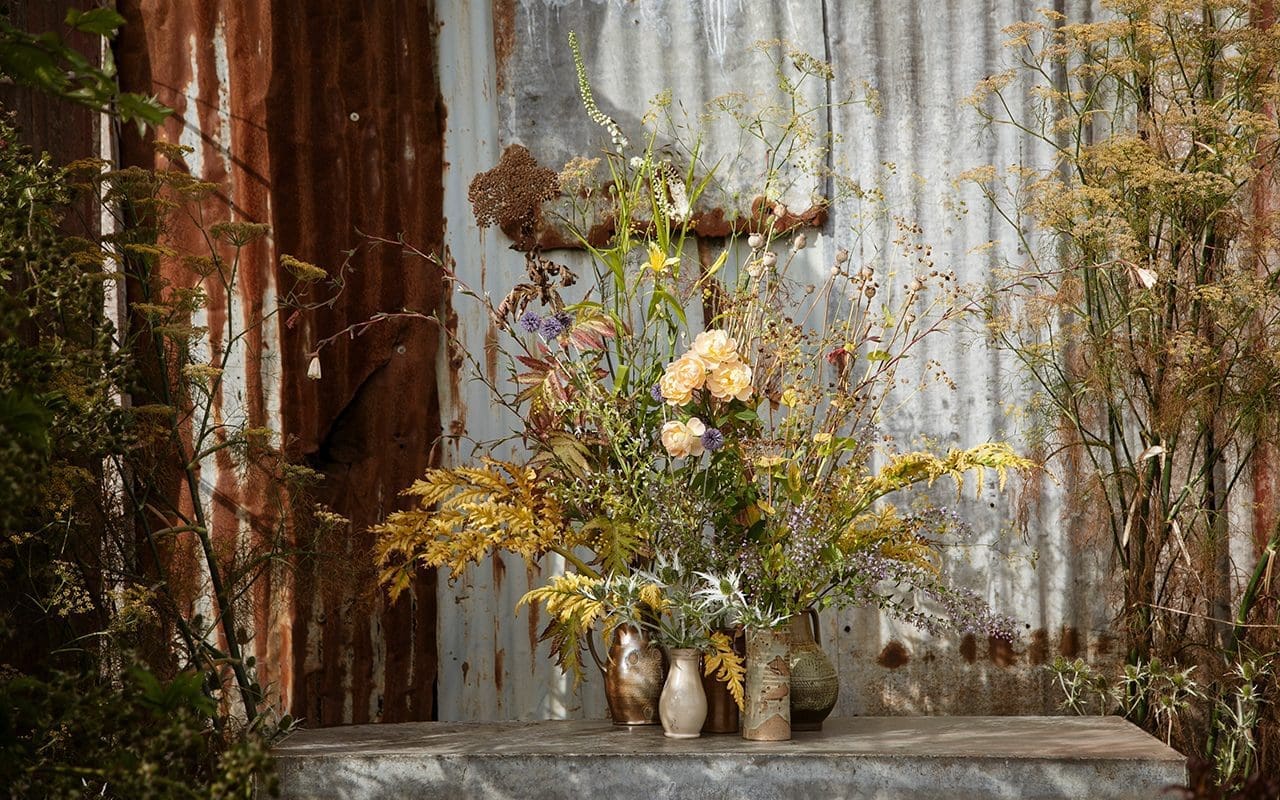
Achillea chrysocoma ‘Grandiflora’
Actaea racemosa
Bupleurum falcatum
Bupleurum longifolium ‘Bronze Beauty’
Calamintha nepeta ssp. nepeta ‘Blue Cloud’
Calamintha sylvatica ‘Menthe’
Chasmanthium latifolium
Echinops bannaticus ‘Veitch’s Blue’
Eryngium giganteum
Foeniculum vulgare ‘Purpureum’
Hemerocallis citrina x ochroleuca
Molopospermum peloponnesiacum
Oenothera stricta ‘Sulphurea’
Papaver somniferum ‘Single Black’
Rosa ‘The Lark Ascending’
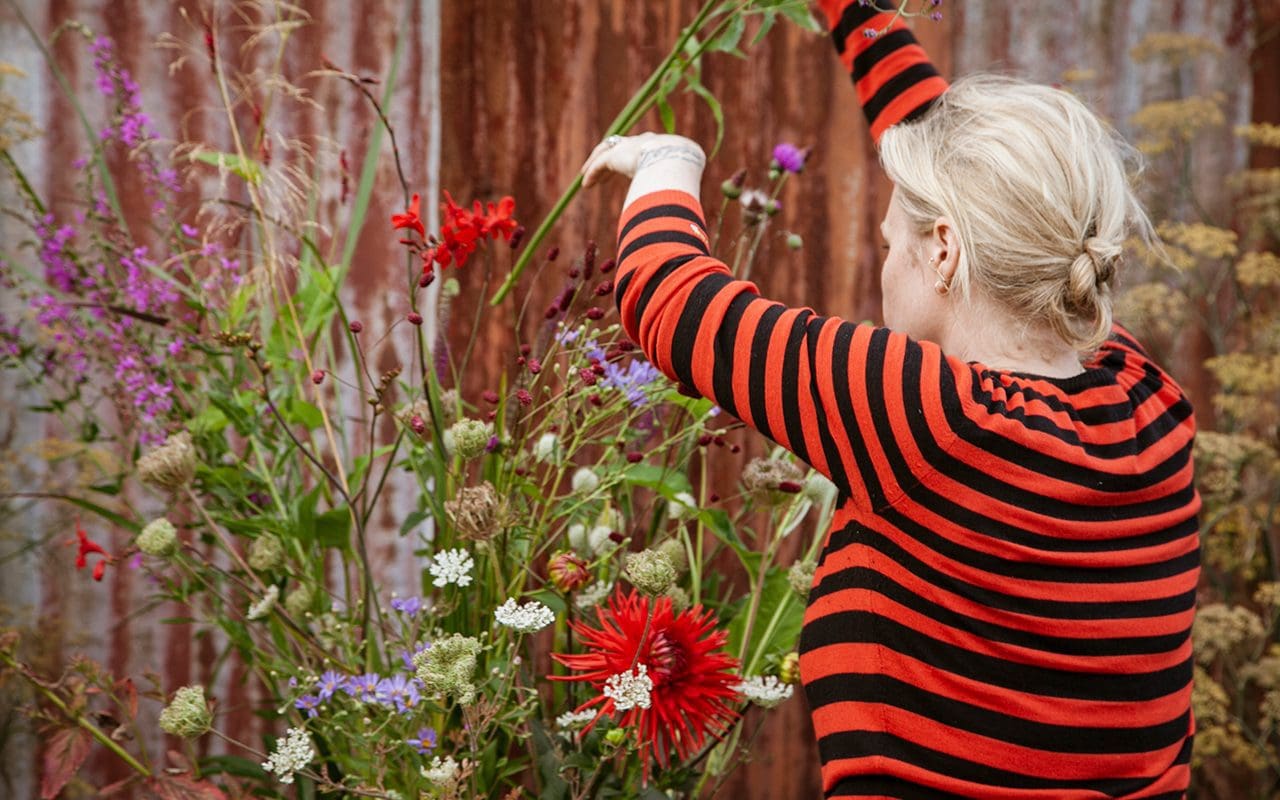
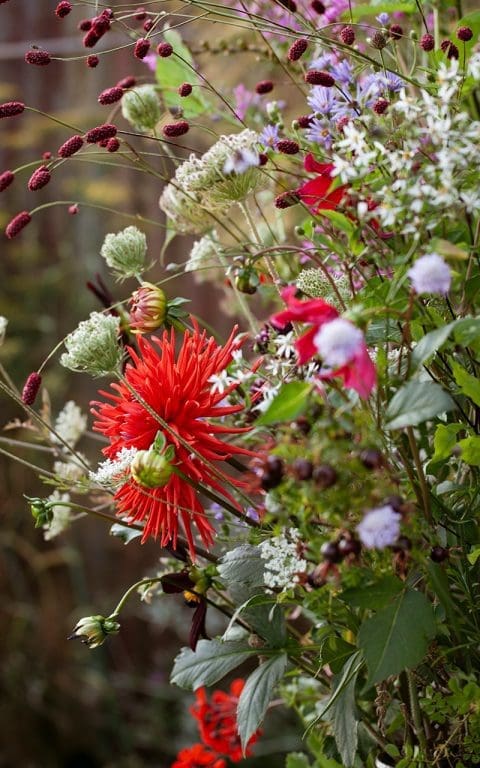
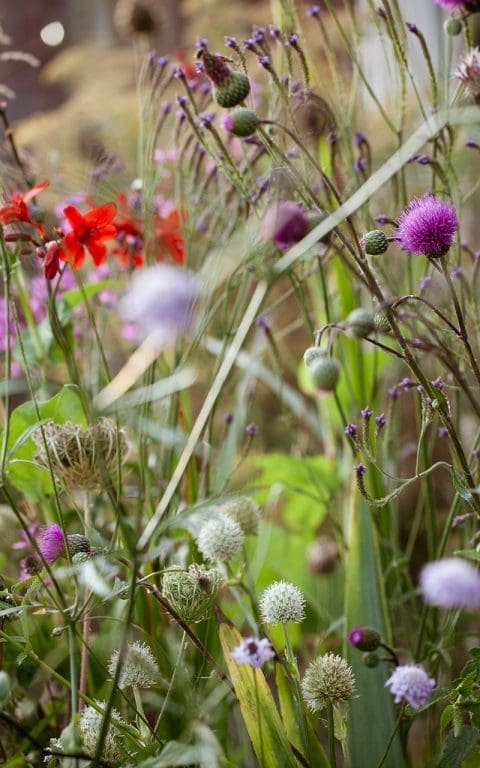
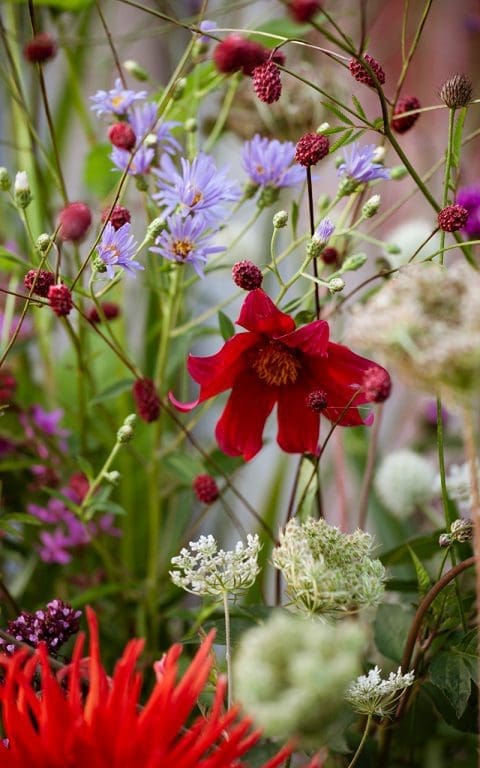
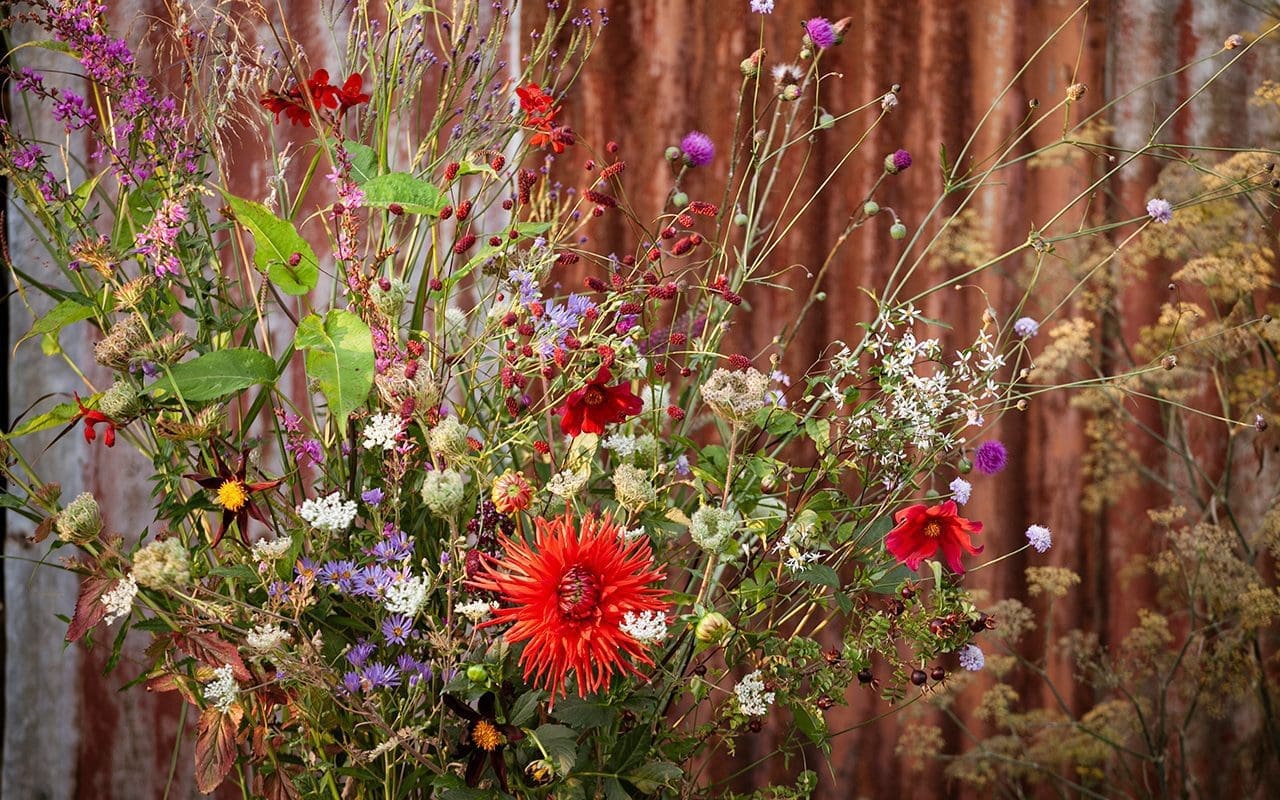
Cephalaria transylvanica
Cirsium canum
Crocosmia ‘Hellfire’
Dahlia ‘Verrone’s Obsidian’
Dahlia coccinea ‘Dixter Strain’
Dahlia species (‘Talfourd Red’)
Daucus carota
Deschampsia cespitosa ‘Schottland’
Dierama pulcherrimum ‘Blackbird’
Eurybia divaricata ‘Beth’
Eurybia x herveyi
Lythrum virgatum ‘Dropmore Purple’
Nepeta ‘Blue Dragon’
Origanum laevigatum ‘Herrenhausen’
Pelargonium ‘Stadt Bern’
Persicaria amplexicaulis ‘Blackfield’
Rosa spinosissima
Sanguisorba officinalis ‘Red Thunder’
Verbena macdougalii ‘Lavender Spires’
Photographs | Huw Morgan
Published 17 August 2019
The fields around us are pale and yet to green up after the hay cut. The trees and hedges are fuller and darker than they ever will be – an August green that has lost its earlier vibrancy. Seeds are setting and hips forming in this final month of summer and there, already showing and earlier than I am ever ready to see them, are the Cyclamen hederifolium.
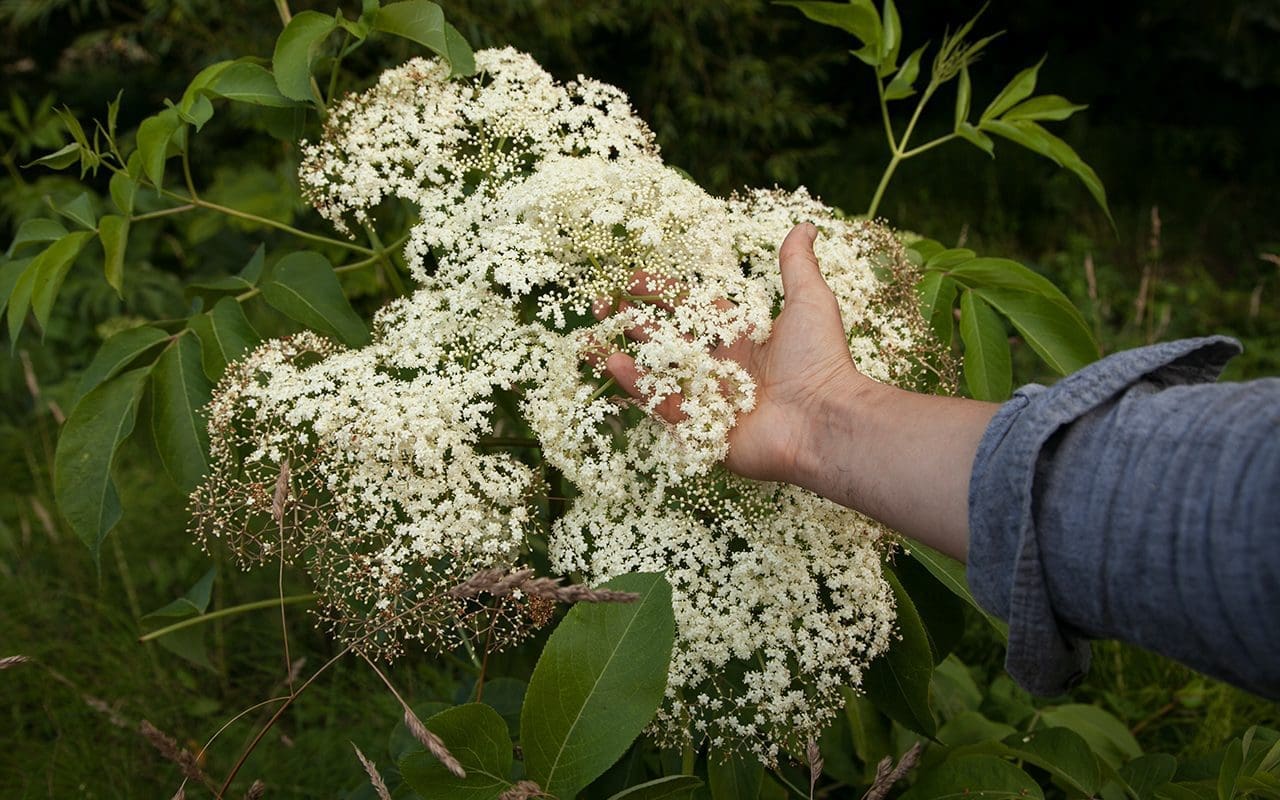
The garden in August can all too easily fall foul of the feeling that summer is ebbing away, but Sambucus nigra subsp. canadensis ‘Maxima’ makes a sure and decisive move against the tide. Where our native elder is already a June memory and hung heavily now with berries, there is a vigour and freshness exuding from this north American which, true to its country of origin, is larger in all its parts. A gently suckering shrub, the growth is still fresh and lush with a push of herculean effort to summon the flowers. These are borne on this year’s wood, which is why, if you choose to do so, you can pollard the plant to encourage a response in growth that is larger flowered and altogether lusher.
It was such a plant that I first encountered at Greatham Mill in Hampshire. Frances Pumphrey, a fine plantswoman and gardener, opened her garden to the public and her cornucopia was meticulously tended. Where she had reached as far as she dared for fear of not being able to manage more, she had extended her garden into a little field alongside the stream where she had planted a modest arboretum. She had the Sambucus growing there and it billowed out from where it had been reduced in winter, the flower heads the size of bicycle wheels. I can see them now as clearly as if it were yesterday, tiered and light-reflectingly creamy amongst the shade of the trees. A scale changing spectacle.
From the age of 10 I had a Saturday gardening job there for the seven years before leaving home and I would willingly spend every penny of my wages in her nursery of treasures. Mrs P. would always give me something to offset the fact that I left with plants and not money. A good haul would not be negotiable on my bicycle and my father would have to come to collect me on days like the one I was given an offset of the Sambucus. Running gently, but not dangerously, it is easily propagated from a rooted sucker. On our thin, acidic sand at the top of the hill though, my plant never did as well as those in the heavy soil of Greatham Mill and, until recently, it remained a mythical memory from my teenage years.
‘Maxima’ is a most suitable name and you need enough space to stand back and look when it is in full sail. I have recently planted a small handful where I am adding tough perennials to the lush growth along the ditch. The likes of Inula magnifica, Persicaria alpina (formerly P. polymorpha) and Aralia cordata are proving themselves by coexisting alongside the native meadowsweet and rampaging equisetum in this heavy, damp ground. Mulched heavily for a couple of years to curb nearby growth in spring, the plants are able to build up the reserves they need to hold their own. The Sambucus have done this for the first time this year and, though they are not yet old enough to coppice, the flowers have youthful vigour and are easily the size of serving platters. If I were to leave them as shrubs, they would rise to three or so metres, but I will probably prune them hard, like buddleia, in late winter. A strong framework will allow the plants to hold their heads above the competition and the regrowth will stimulate the lushness I am after.
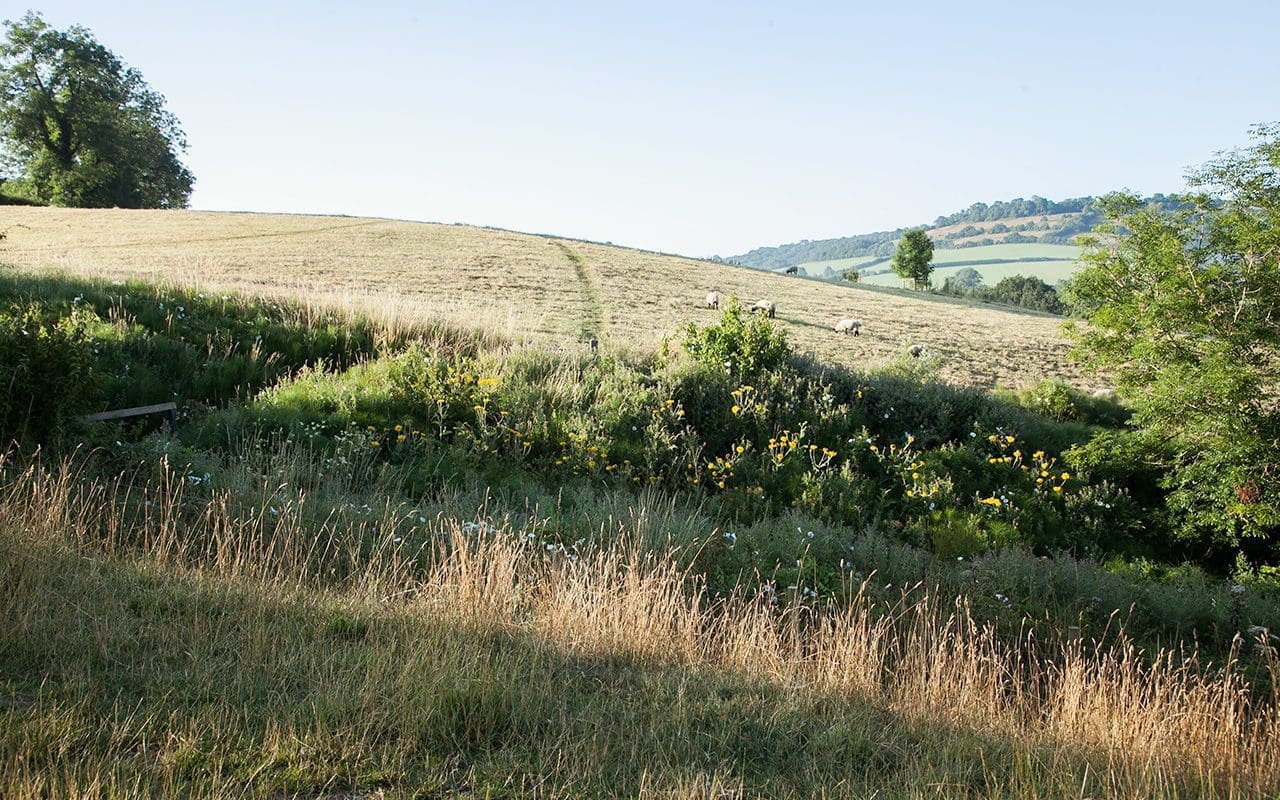
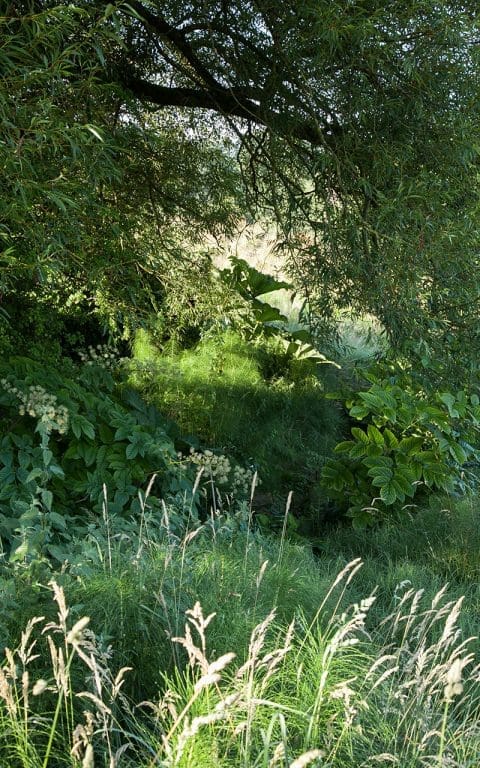
Though I have not yet committed the flowers to make cordial, I imagine a few would go a long way if we ever had a wet June and couldn’t harvest our native. They have the same delicious perfume and hang huge and lacy with the Gunnera as their backdrop under the willow. The drama here plunges you into a world that makes you feel smaller and smaller the deeper you venture into it. Stepping from the open field, where the dry tawniness of August grassland sets the tone, into the damp lushness beneath the willow, my ‘Maximas’ are easily as wondrous as the first time I made their acquaintance
Words: Dan Pearson | Photographs: Huw Morgan
Published 10 August 2019
The buzzing and the
fluttering. Caught in your cage.
Butterfly magnet.
Words and photograph | Huw Morgan
Published 3 August 2019
It has been too hot to cook. Too hot to do much at all. And yet the Kitchen Garden has been demanding attention. If we take our eye off the ball right now we will find that currants and berries will rot on the bush, in late summer there will be no more salad and, come autumn, there will no turnips, swedes or winter lettuce. Harvesting has become a twice daily occurrence and beds must be cleared to make room for the last of the summer sown crops.
A couple of weekends ago, just as we were preparing to head off to Hokkaido, we spent two mornings picking gooseberries and blackcurrants for the freezer. If you have a hat and water bottle and keep in the shade of the bushes, this can be a very pleasant way to pass a hot, sunny morning with friends; picking, chatting, eating and laughing. The resulting Tupperwares full of berries are their own reward. Whenever I am squatting on my milking stool picking blackcurrants I remember – always too late – Sarah Raven’s method, which is to cut out the oldest canes when laden with fruit and then take these to a comfortable, shady spot to pick the berries off at leisure. Needless to say this is never the way it happens.
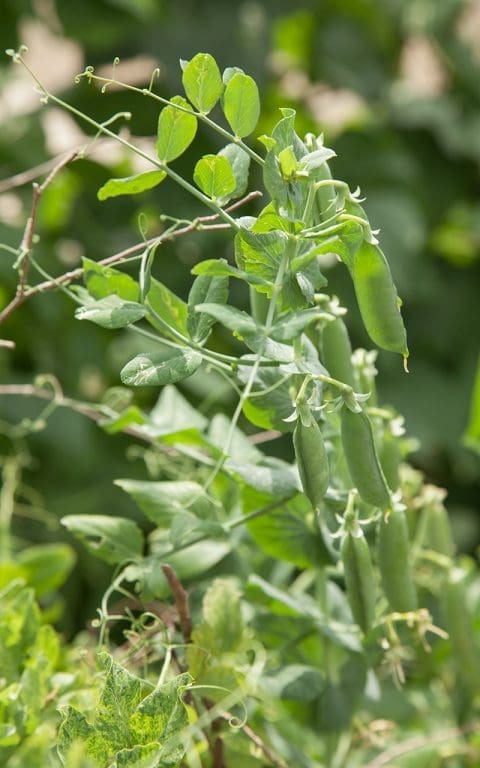
We returned from Japan to find that both sowings of peas – one late winter, another mid spring – had caught up with each other and we had a pea glut comparable with the currant glut. Here it was a much more straightforward decision to simply take out the plants – leaving their nitrogen-fixing roots in the soil – and pick off the pods in the shade of the open barn by the house. Nothing can compare to the satisfaction of podding peas into a bowl and I have a particular fondness for shelling them into a red enamel metal bowl, which reverberates like a gong as the peas hit the sides, its colour vibrating against the green of the peas.
The peas are no longer in their prime, but freshly picked and quickly cooked, they are still quite delicious. We most often eat peas cold in summer. Thrown into a pan of boiling water for a few minutes, drained and then refreshed in cold water I will throw a couple of handfuls into salads, or puree them with mint, stock and cream to make both a green hummus-like dip or a thinner, refreshing chilled soup. Peas and white cheeses of all sorts go together beautifully, both the salty – feta, halloumi, pecorino – and creamy – Vignotte, goat curd, ricotta – providing different types of contrast to peas’ natural sweetness.
Here burrata – a type of mozzarella filled with cheese ‘rags’ and cream – provides a decadent richness which, mixing with the basil oil dressing, creates a delicious sauce. It is customary to serve burrata at room temperature but, when it’s as hot as it has been, I prefer the cheese to be lightly chilled, and so take it out of the fridge around 20 minutes before it is needed. If you can’t get hold of burrata then substitute with a good quality, fresh buffalo mozzarella or a piece of ripe Vignotte.
Per person
100g shelled peas
A small handful of young leaves; lettuce, pea shoots, watercress, rocket
1 burrata or burratina, 100g weight
4 large Genovese basil leaves
3 tablespoons olive oil
½ small clove garlic
Zest and juice of ¼ lemon
¼ teaspoon salt
Small-leaved basil or torn Genovese basil to serve
Wash and dry the salad leaves.
Put a pan of water on to boil.
Put the salt, garlic and basil leaves into a mortar and crush into a coarse green paste. Add the olive oil, lemon zest and juice. Stir to combine.
Cook the peas in the boiling water for 2 to 3 minutes. Drain and quickly refresh under a cold running tap. Drain off excess water.
Arrange the salad leaves on a plate. Spoon the peas over the leaves. Place the burrata in the centre. Spoon the basil dressing over everything. Strew over some basil and serve immediately with some oiled and grilled sourdough bread.
Recipe & photographs: Huw Morgan
Published 27 July 2019
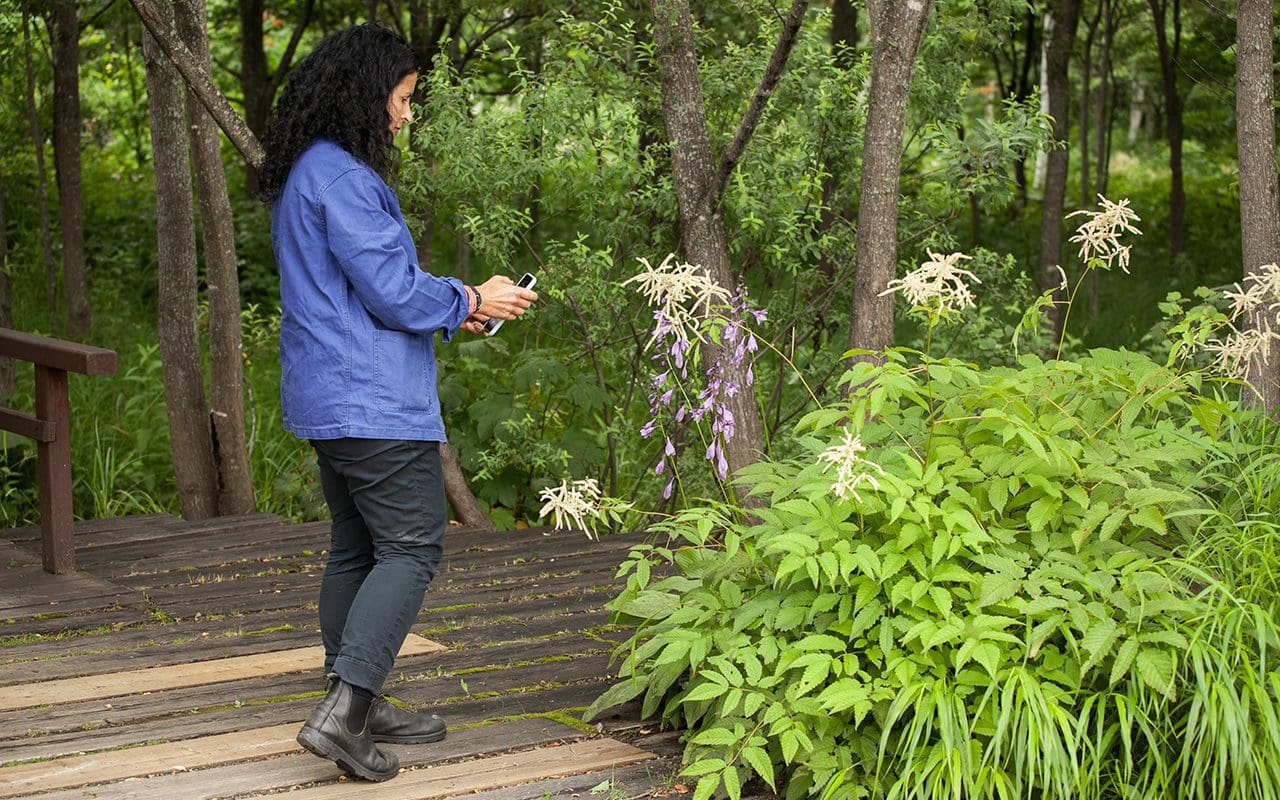
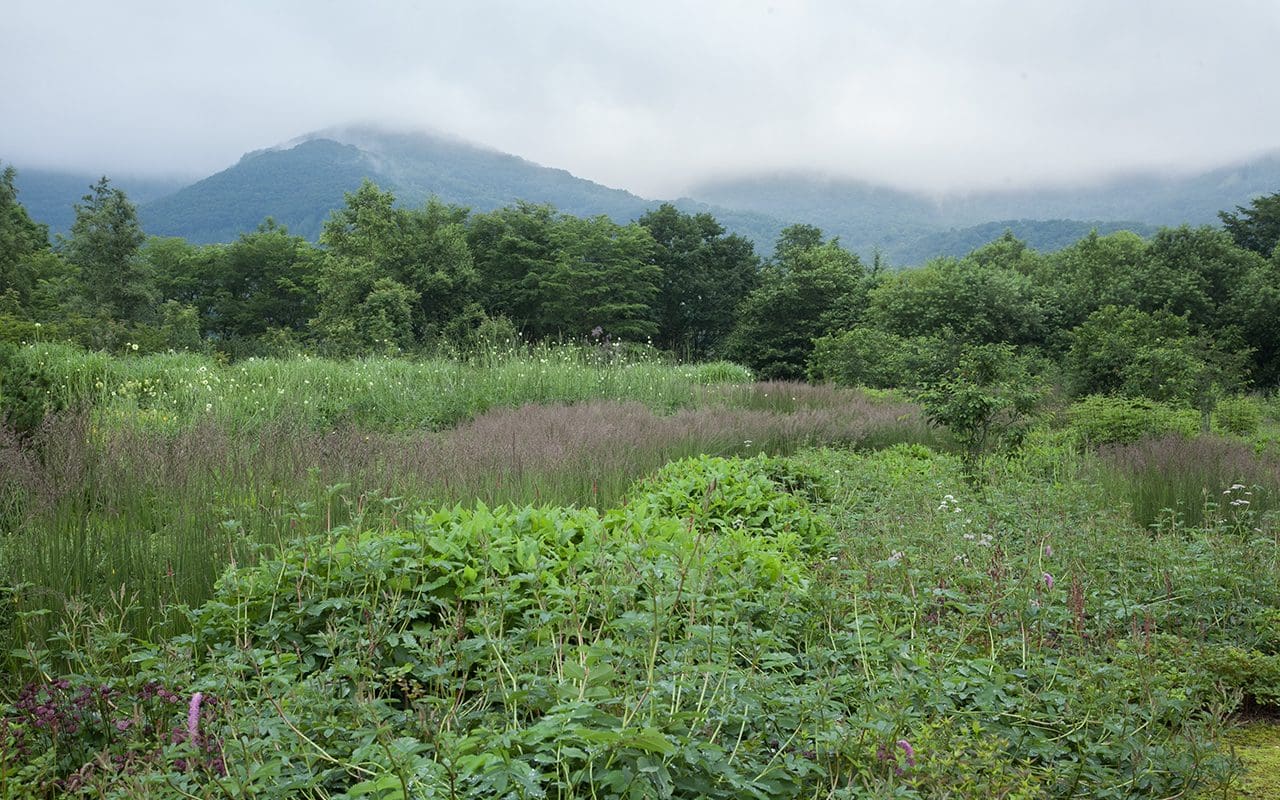
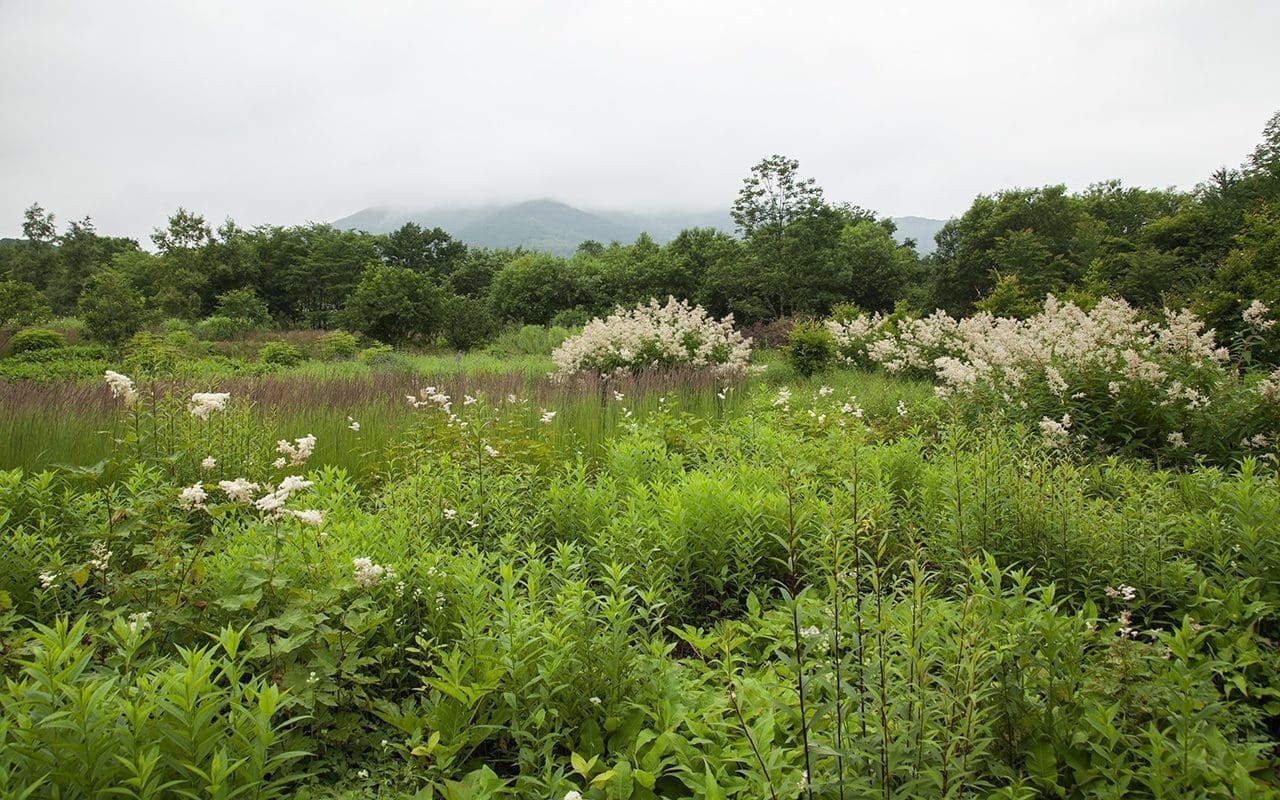
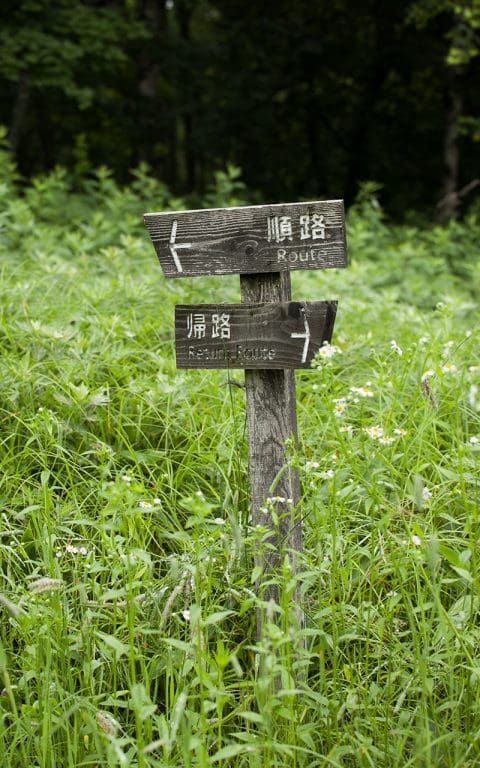
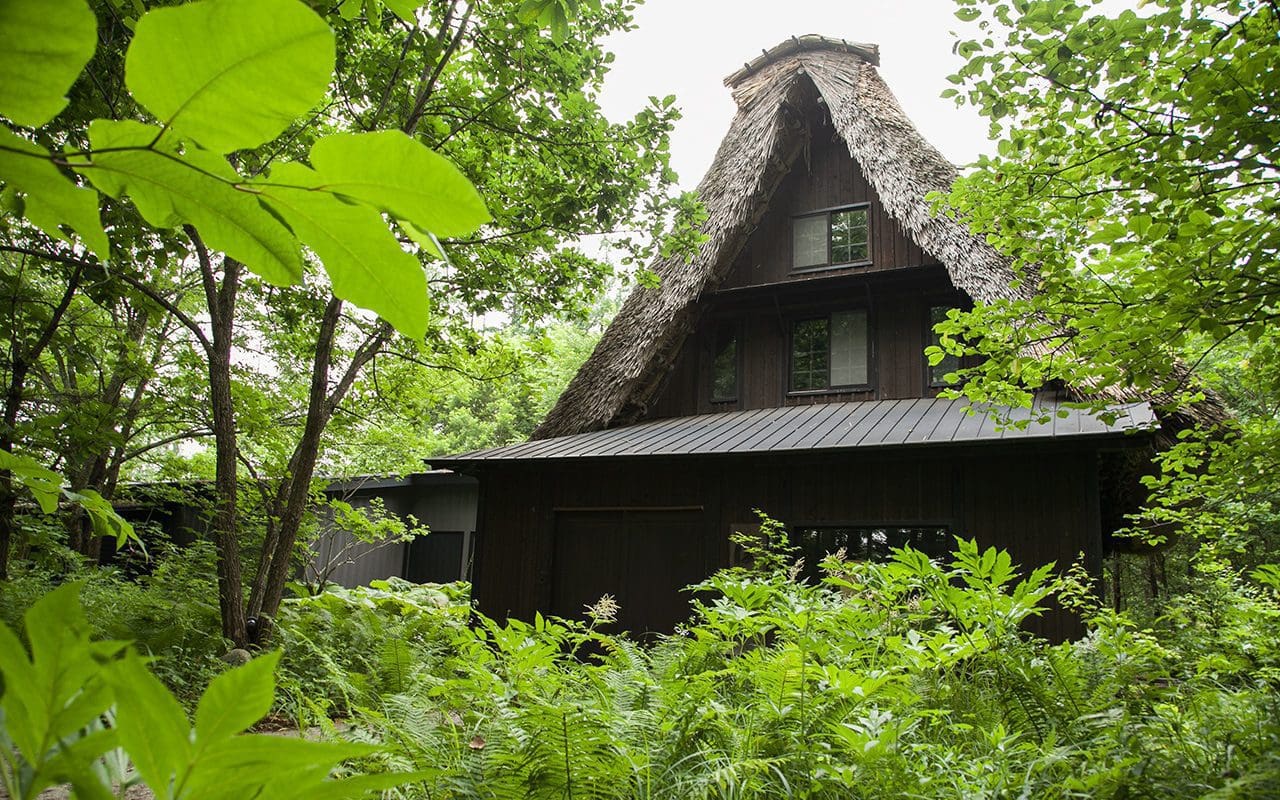
We have been visiting the Tokachi Millennium Forest in Hokkaido this last week. It was my annual visit to meet with Midori Shintani, the head gardener, to gauge the past year’s developments and help move the garden gently forward. Gardens are never static and the elemental nature of the surrounding forest and the backdrop of the Hidaka Mountains has a strong influence here. In 2016 a typhoon hit the forest, swelling the braided streams and charging them with boulders that swept away the footbridges. Miraculously the waters parted around the garden, but we have only just recovered from the influence. This past winter the eiderdown of snow was not as deep enough in parts to insulate all of the plants effectively and so the minus twenty degree winter has taken its toll in some areas.
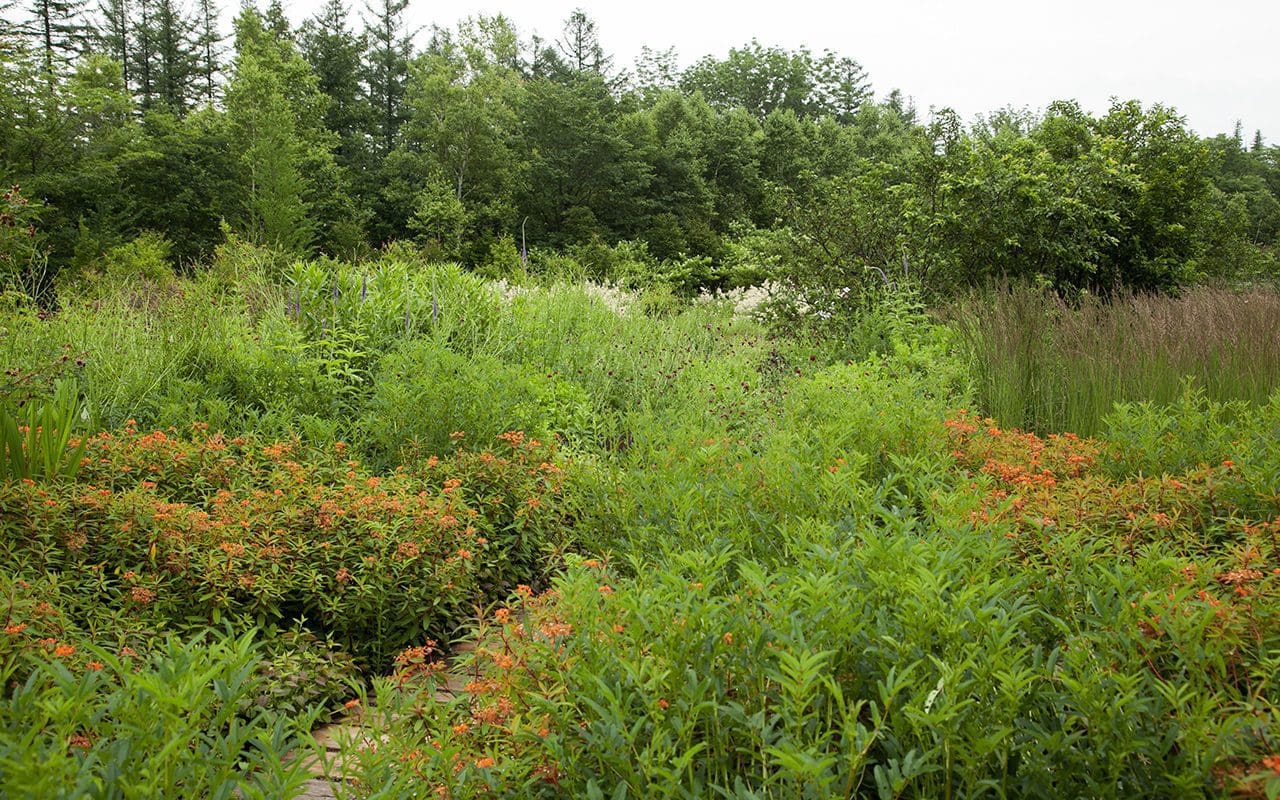
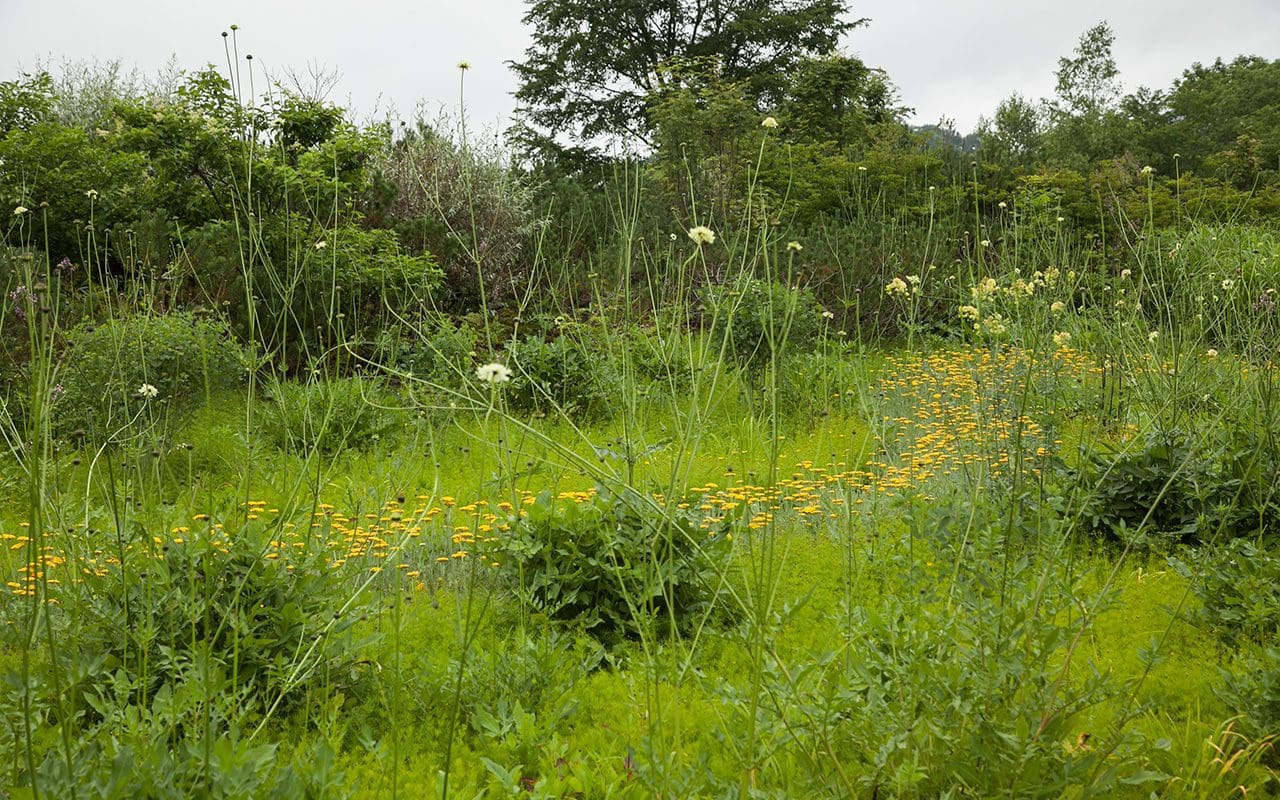
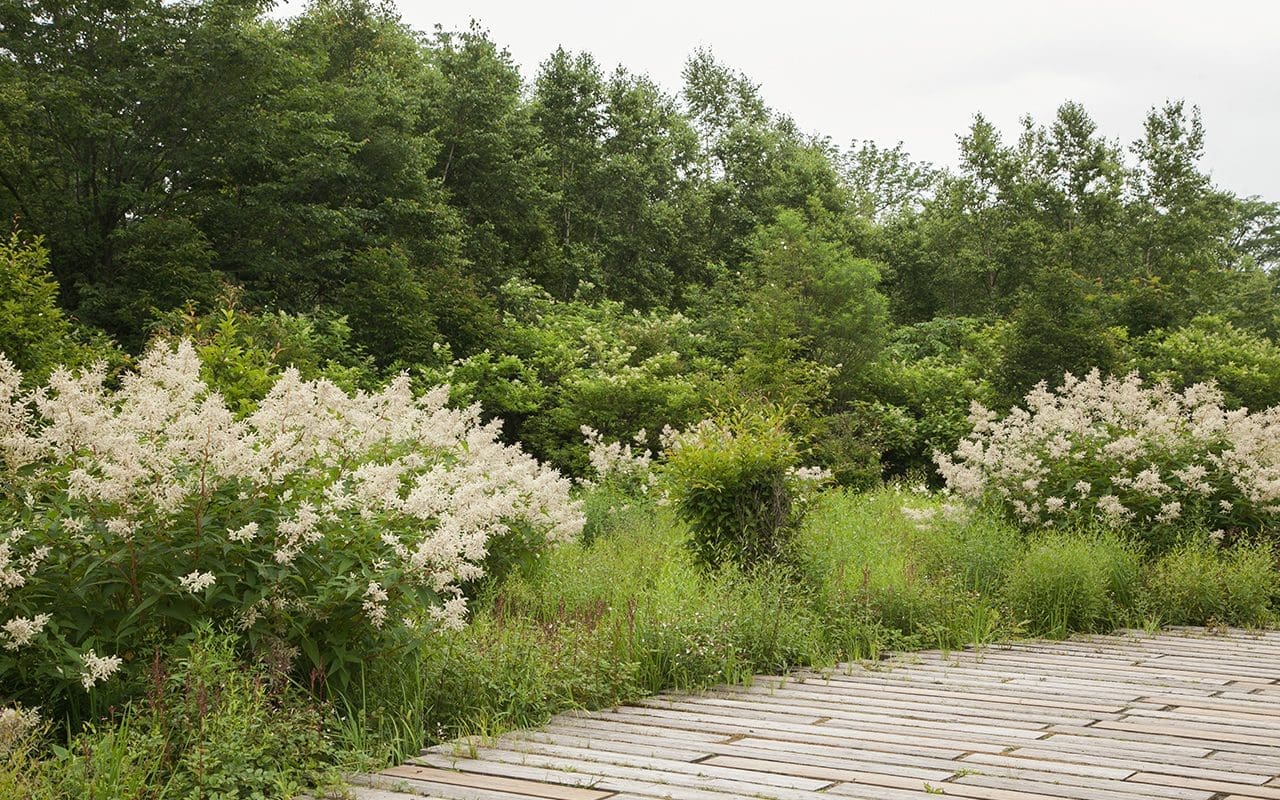
Such are the challenges faced by Midori and her assistant head gardener, Shintaro Sasagawa, and when I arrived they were already well advanced on replanting the areas that had been worst affected. This year – for with contrary mountain weather every year is different – we found the garden in a cool, damp week. The cloud hung heavy to shroud the mountains and the Hokkaido drizzle bowed the perennials in the garden to the ground. The northern climate here compresses the summer so that it rushes fast in the growing season and, though the garden was pausing between the first flush of early summer and the coming wave of high summer colour, we saw significant change in the five days that we were there. Persicaria amplexicaulis ‘Firetail’ starting to open its flame-red tapers and Cephalaria gigantea reaching ever taller over a river of Achillea ‘Coronation Gold’.
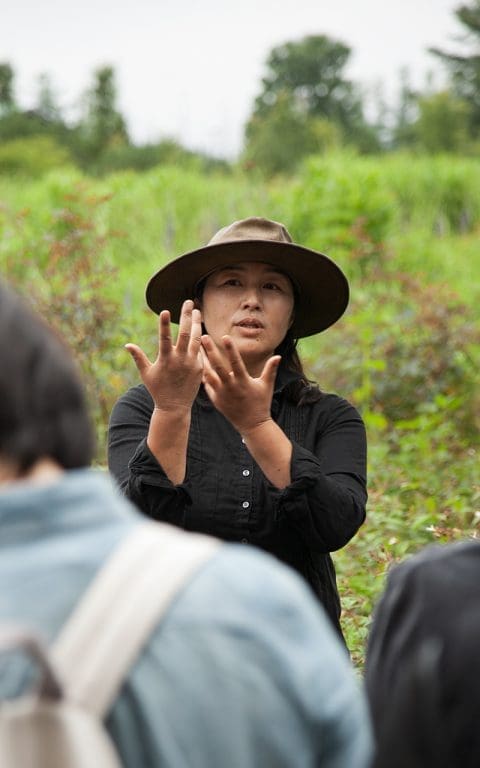
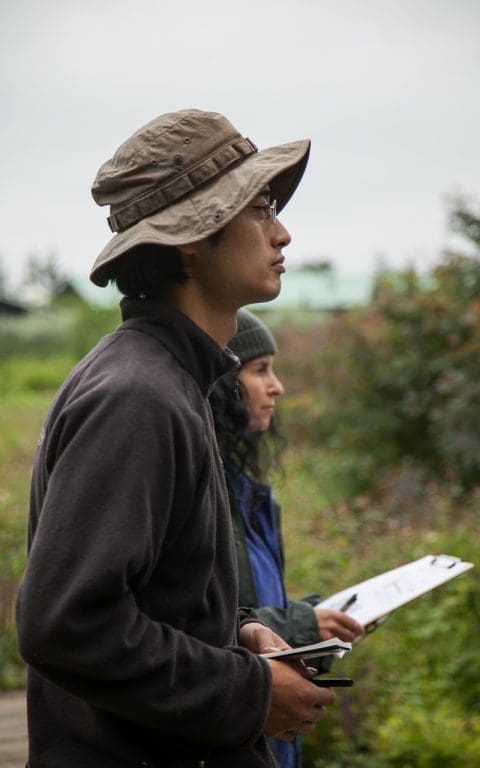
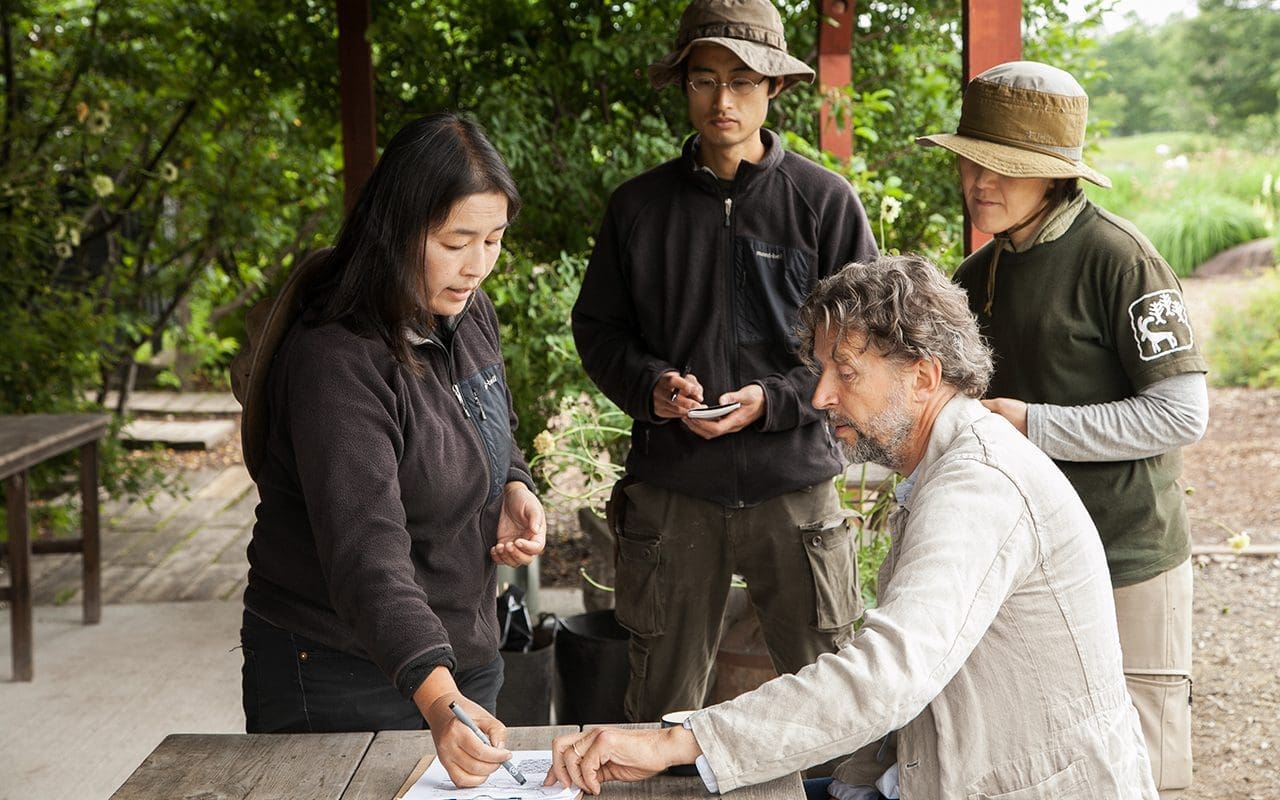
Huw accompanied me this year because we were also meeting to discuss the book I am currently writing to be published by Anna Mumford of Filbert Press next autumn. The richness of the Tokachi Millennium Forest and the way that it is being tended has a growing following and so the book feels timely. Midori is contributing to the book and one of the most important themes she will write about is the ancient Japanese tradition of satoyama – the practice of living in close harmony with and showing reverence for the land. A renewal of this approach, where the people make the place and the place makes the people, has been a central component in the genesis of the gardens.
We met with Kiichi Noro, a highly respected landscape photographer in Japan, and a man of great humility who has been recording the forest and gardens for the last 5 years. He has delivered around 40,000 images, which need to be distilled to ensure that we capture the gardens and all the nuance of the forest influence throughout a working year. Huw has been working on the picture selection and look of the book with Julie Weiss who is designing it, and who also joined us in Hokkaido. Julie used to be an art director at Vanity Fair magazine before changing direction three years ago, since when she has immersed herself in the world of horticulture, working as a trainee gardener at Great Dixter and travelling to see and learn as much as she can.

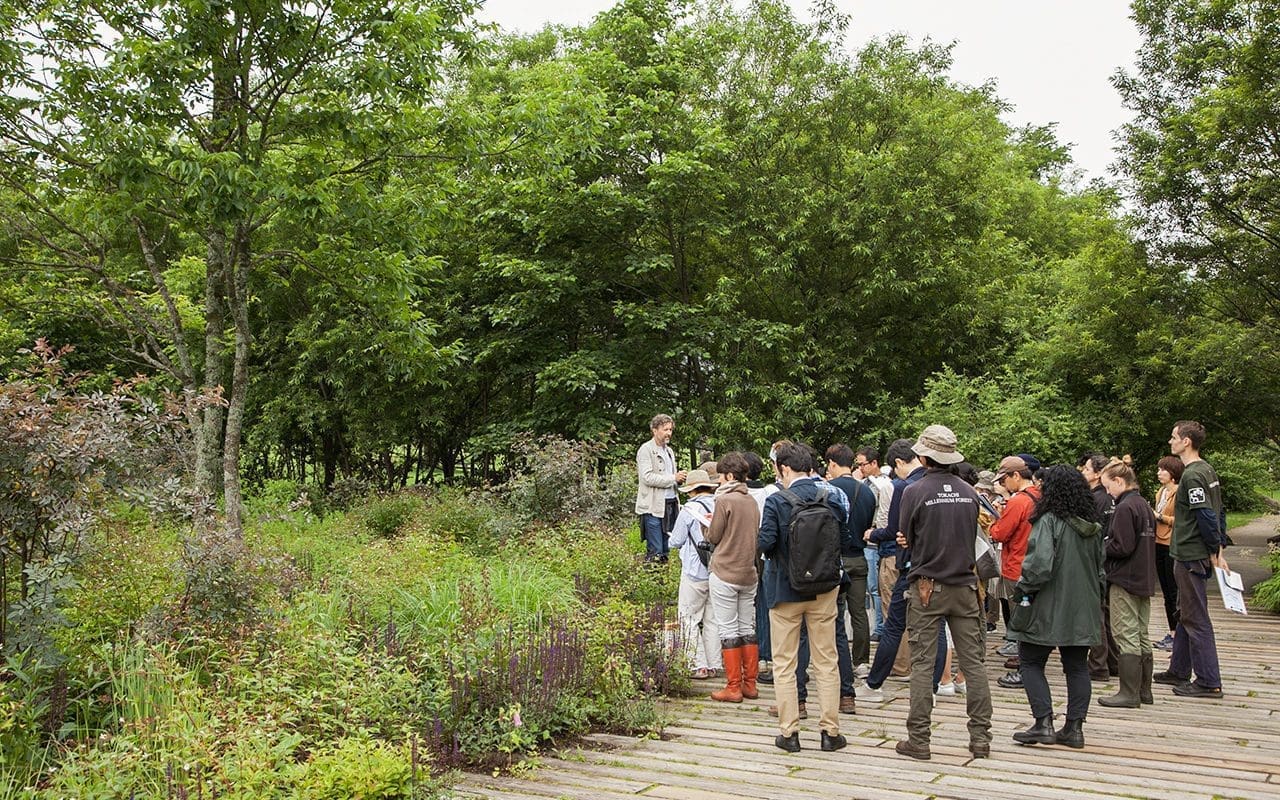
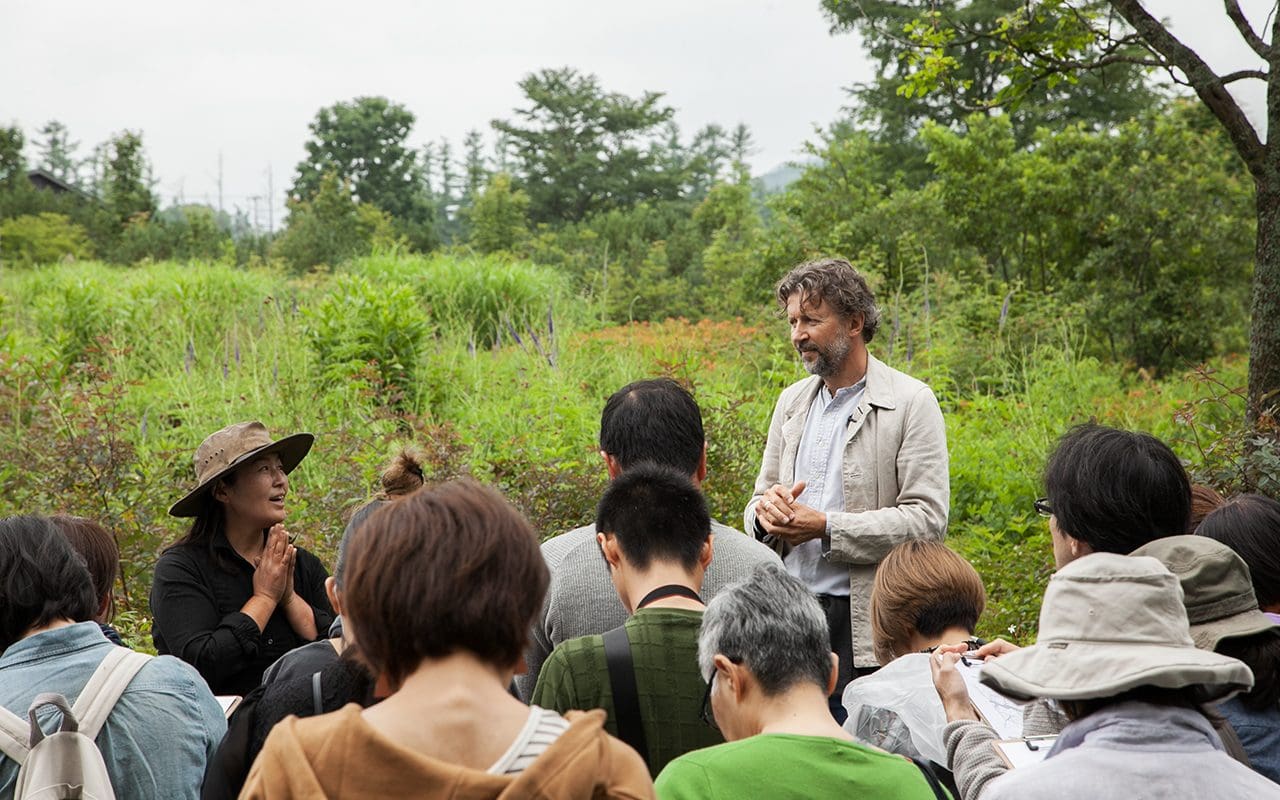
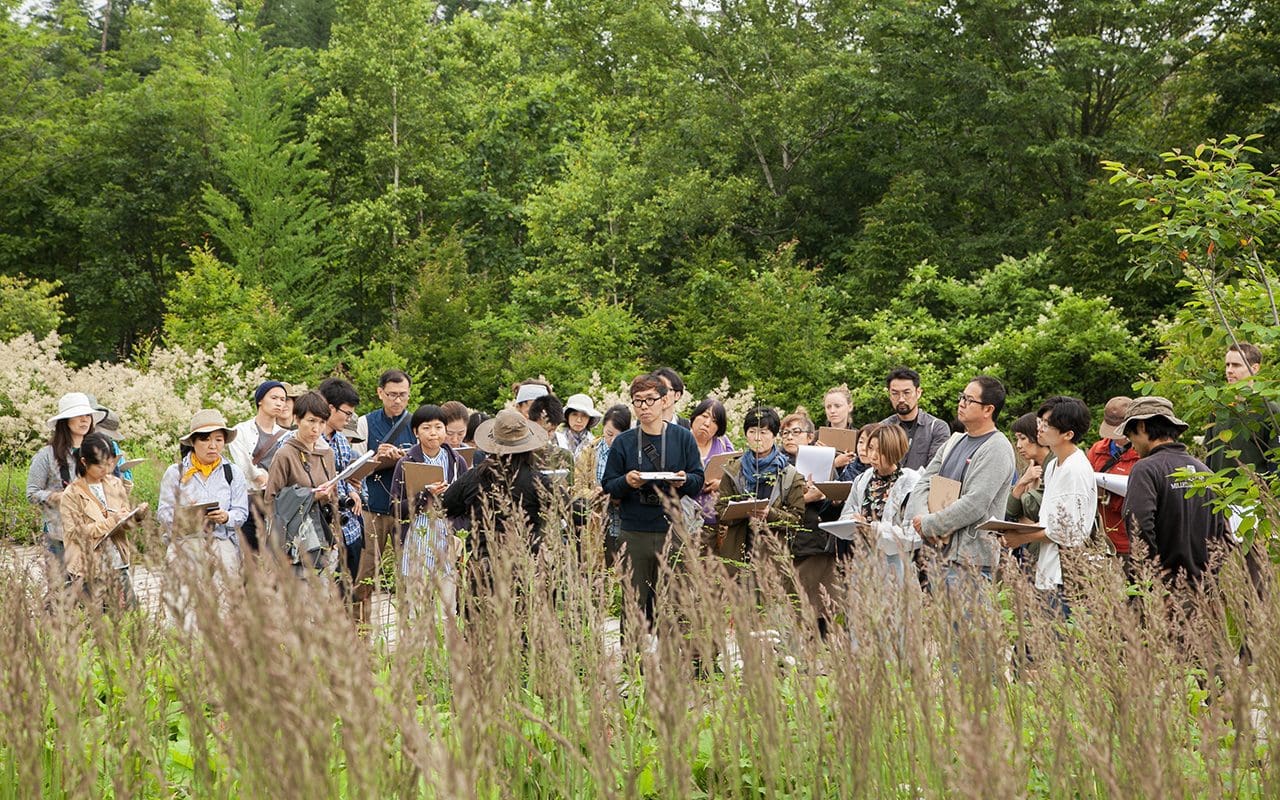
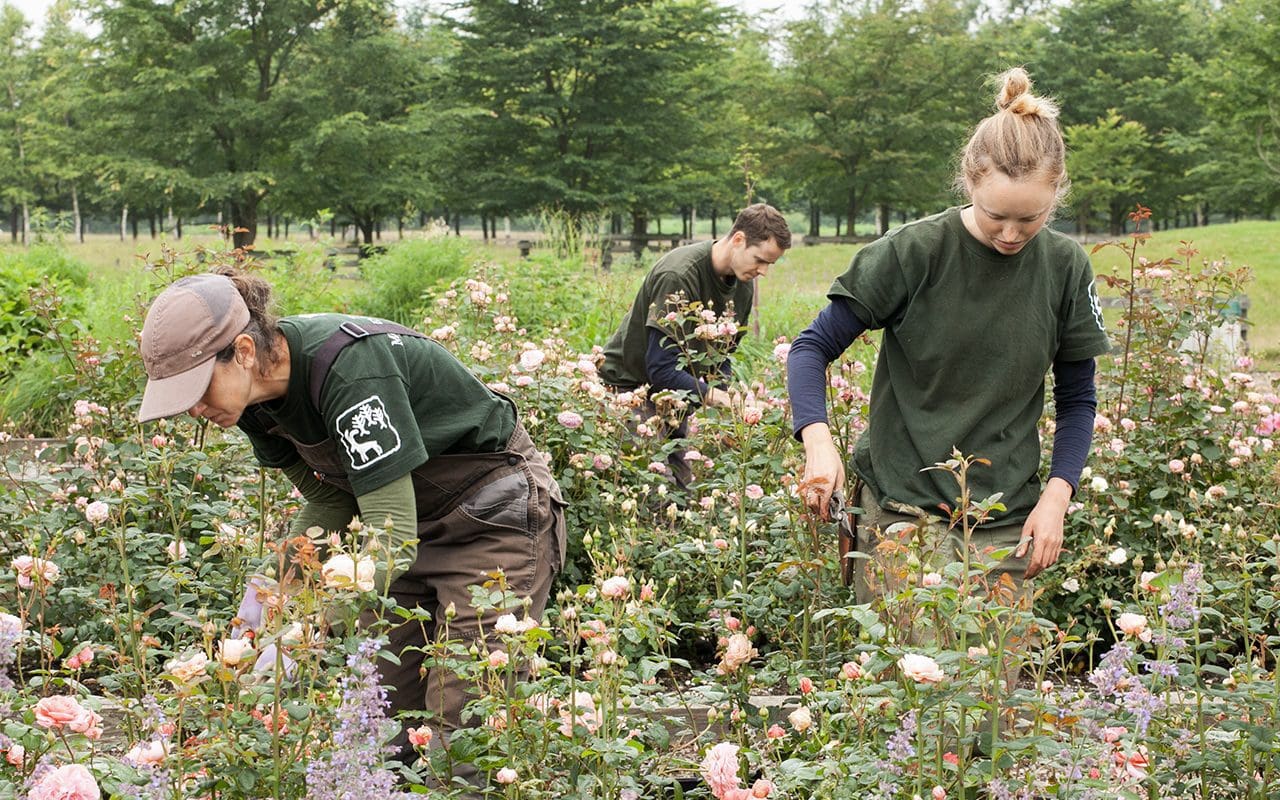
We are also doing what we can to provide educational opportunities. Midori and I led a Garden Academy this week, spending an afternoon talking 40 attendees – many of whom had travelled from other cities in Japan, and one very keen group from Korea – through the principles of the Meadow Garden and how its sits alongside the gently tended forest that inspired the planting. Midori has also taken gardeners from Great Dixter on an exchange basis as well as student gardeners from around the world who have taken it upon themselves to write to her. This year there are three volunteer gardeners from overseas working in the garden to gain a deeper experience and understanding of Japanese gardening practice and culture in general. Two young English designers, Charlie Hawkes and Alice Fane, who are staying this year from snow melt to snow fall and Elizabeth Kuhn, a horticulturist and nurserywoman from America with a particular interest in the native flora.
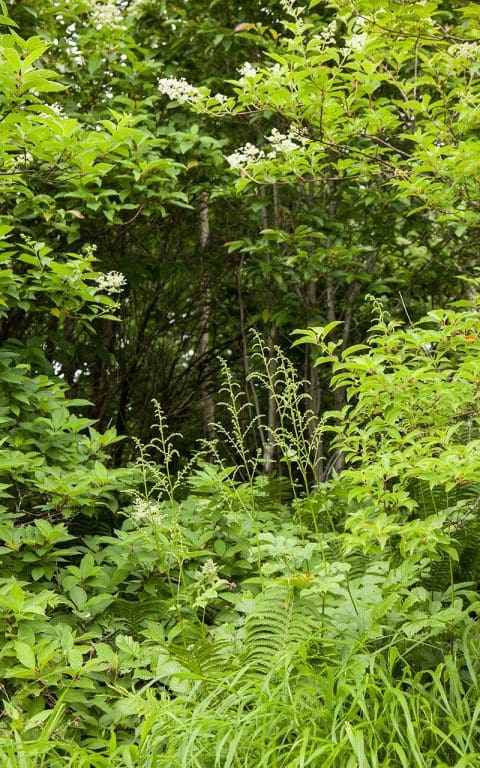
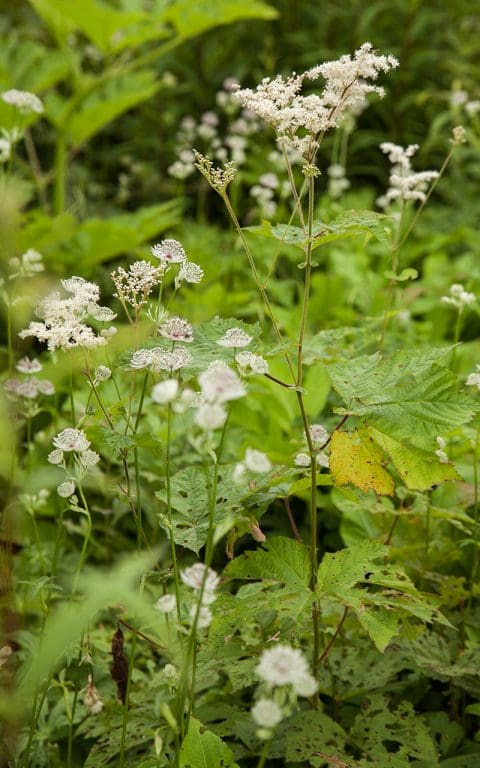
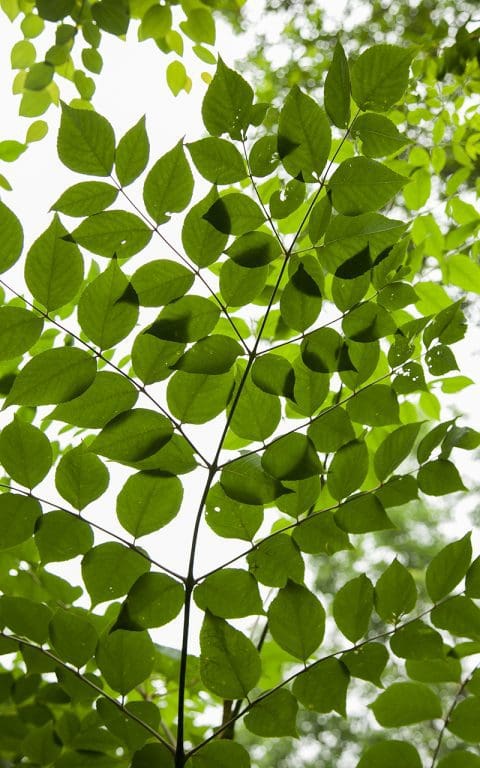
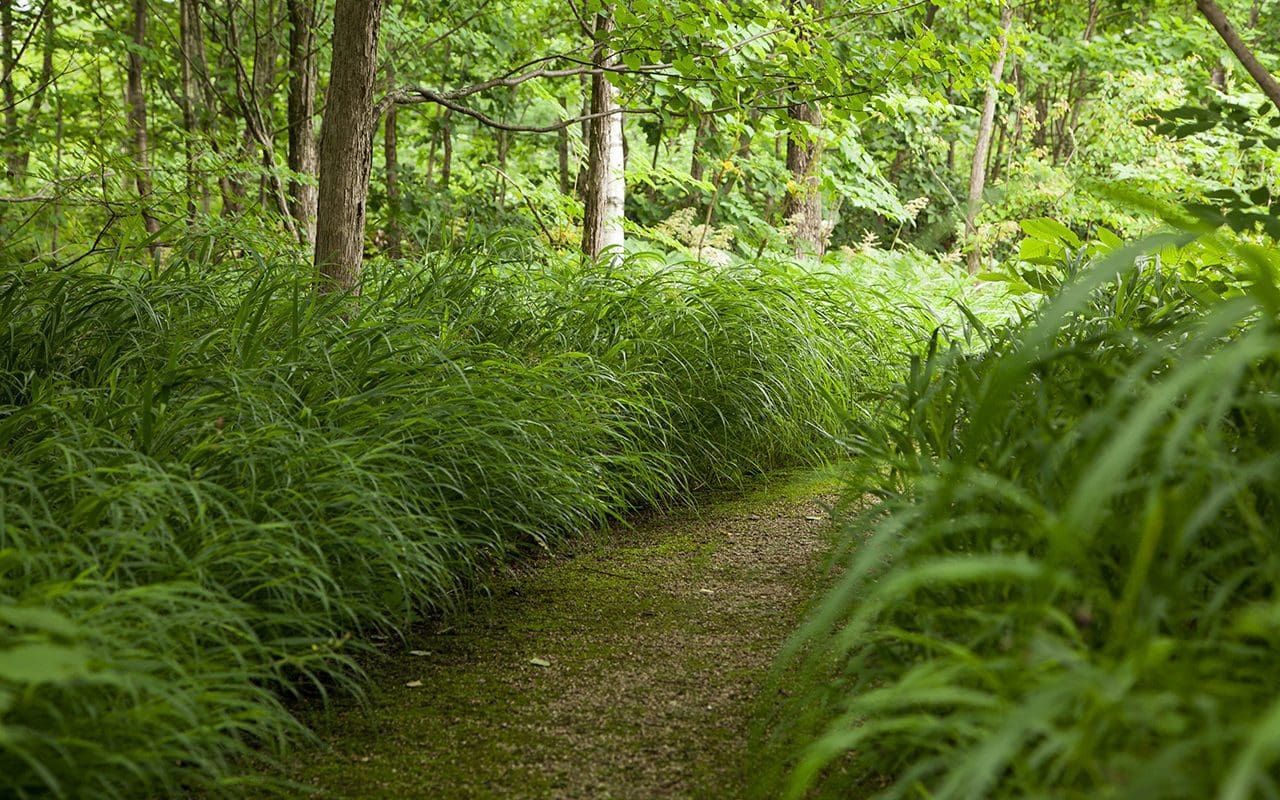
The woodland is the ultimate inspiration for the way that everything is done here and I return to it constantly to provide me with focus. In the week we were there we watched it moving through its final peak before dimming now that the canopy of magnolia and oak has closed over. Stands of Cardiocrinum cordatum var. glehnni stood tall and luminous to scent the pathways. The glowing purple spires of Veronicastrum sibiricum var. yezoense stood sentry at the forest edge. The vestiges of Trillium and earlier flowering Anemone and Glaucidium are already in the shadow of the Angelica ursina which were pushing up in a last great bolt of energy to flower. Most had not yet reached their full height, but those that had broken into flower stood twelve feet high with the parasols of Petasites japonicus ssp. giganteus at their feet.
Walking through the forest was as spellbinding as ever and you cannot help but feel charged by the experience of being there. Now all we have to do is try to capture that on the page so that the forest reaches beyond its boundaries, as it should.

Words: Dan Pearson | Photographs: Huw Morgan
Published 20 July 2019
We are sorry but the page you are looking for does not exist. You could return to the homepage