The great cut back this year happened over three weekends, starting at the end of February as soon as I saw new life, and finishing with time to assess the garden before mulching. It is a very good feeling when you finally decide to let go of what came before and embrace the change. A time you have been waiting and planning for and one that, this year, feels particularly good to embrace with the uncertainties that lie ahead of us.
The growth feels early now after the mild winter and, by the time we cleared the last bed, many of the perennials had already pushed into last year’s growth. Some, like the baptisia were a dream to pull away. New shoots in a perfect arrangement of expectation, the colour of red cabbage, the old stems toppled and splayed and waiting to be lifted. The sense of urgency was expressed in the delicate lime green of fresh hemerocallis foliage, which I wished I’d cleared around earlier but, standing back at the end of the day and with the volume of last year gone, it was good to see the established rosettes, each with their own character and story to tell so clearly mapping their territories. The new ruby foliage of peonies marching along the path, and the bright buzz cut of the deschampsia already re-growing from their shearing. Yet to emerge, the late season panicum are making it very clear that they are lying in wait and it is only at this time of year that you are able to make these observations. Put them on the wrong side of an early to rise sanguisorba and they will be thrown into shadow and not make it off the starting blocks.
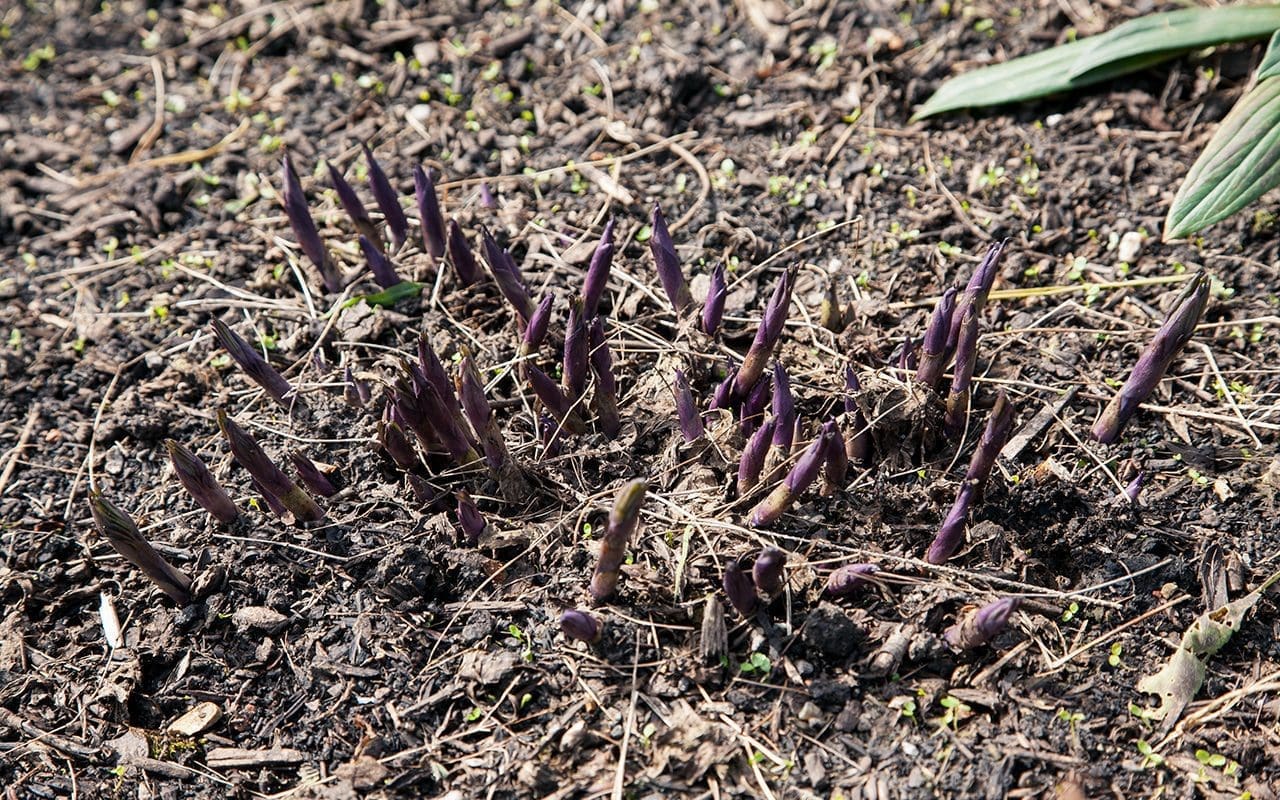
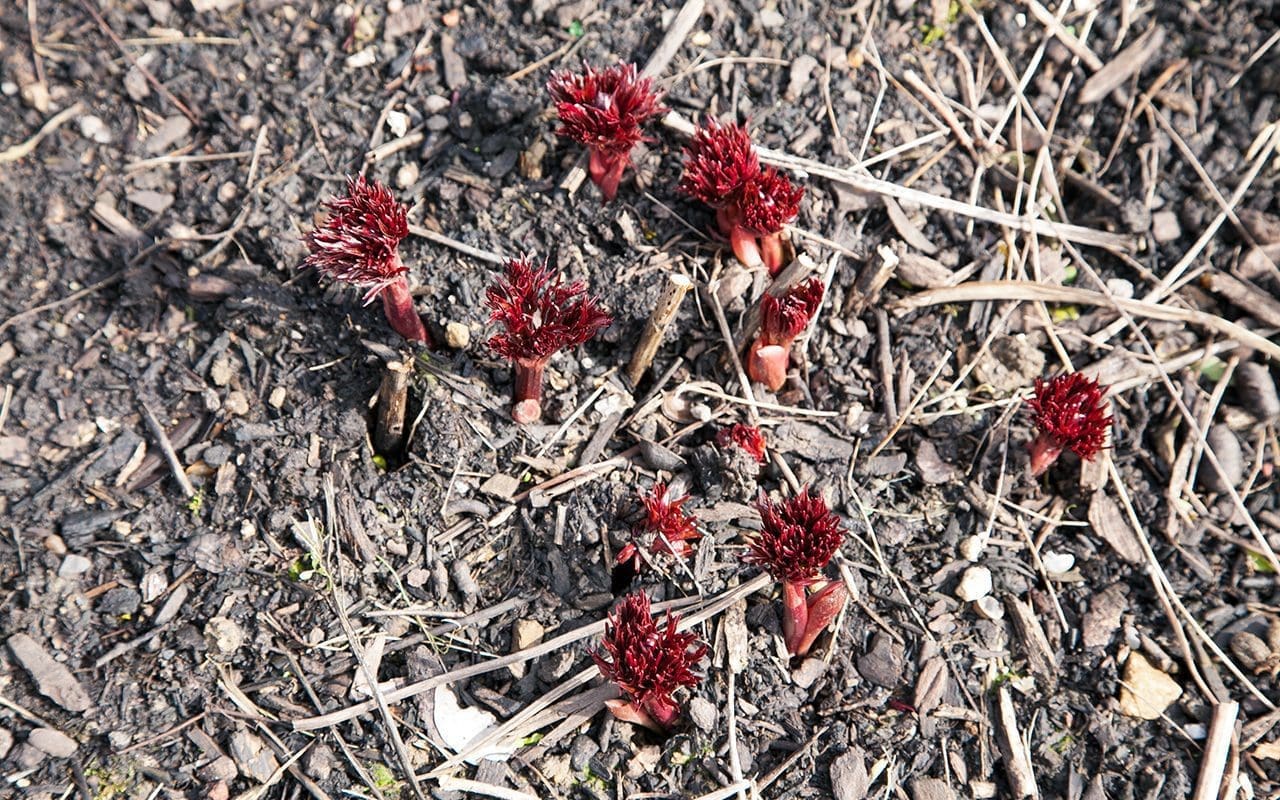
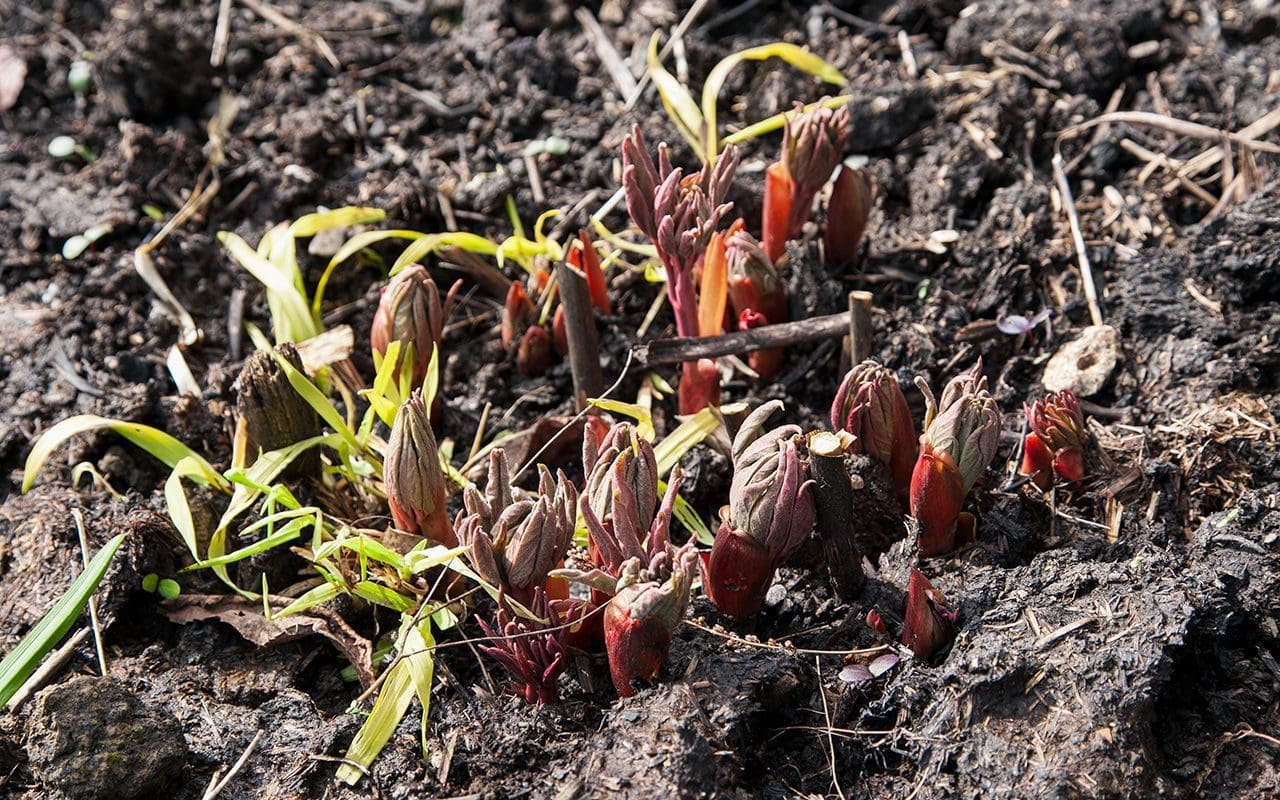
The window between cut back and mulching is a good time to look and I like to take a day or maybe two combing the garden to see where actions might be needed. The long-lived clump formers like the peonies and baptisia will go years before they need any attention. All I have to do there is give them their domain and restrict an unruly, faster-growing neighbour. Stooped and looking close to retrace the ground-map of rosettes, I make mental notes of what needs doing now and what can wait for another year. When all is laid bare is when you see the life cycles, when the runners give away their secret behaviours and the clumpers either make you feel at ease, because they do not yet need division and have life in them yet.
Those that will dwindle in the coming year and need re-vitalising exhibit this with a monkish bald patch in the middle of the plant where the new growth is moving towards fresh ground. I have deliberately steered away from perennials that live on a short cycle and have taken time, for instance, to choose asters that are clump-forming and need division less regularly than those that run or burn out fast if they don’t. But there are favourites that do take a little more time. When I put aside a whole morning to carefully retrace the runners from the Pennisetum macrourum I think about the Hemerocallis altissima that won’t need my attention. With plants you haven’t grown before or don’t know as well, you need to build in this time to become familiar with their habits and weigh up whether something is going to become an problem. The pennisetum comes close to being problematic but, when it captures the wind in its limbs in midsummer, the balance is fairly tipped.
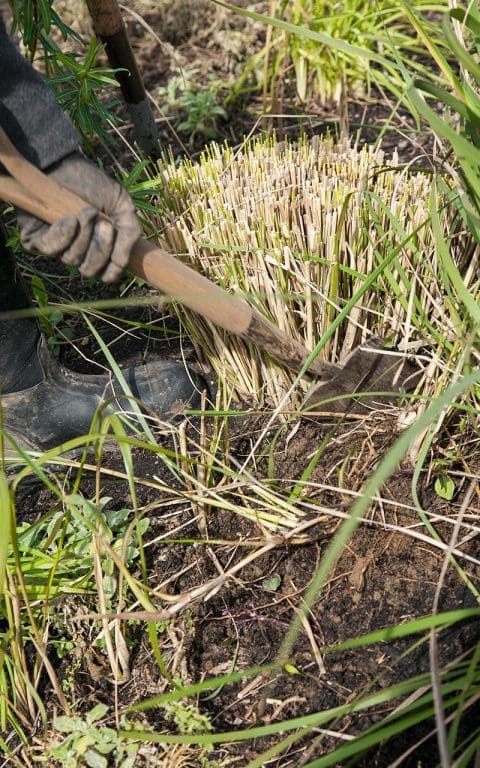
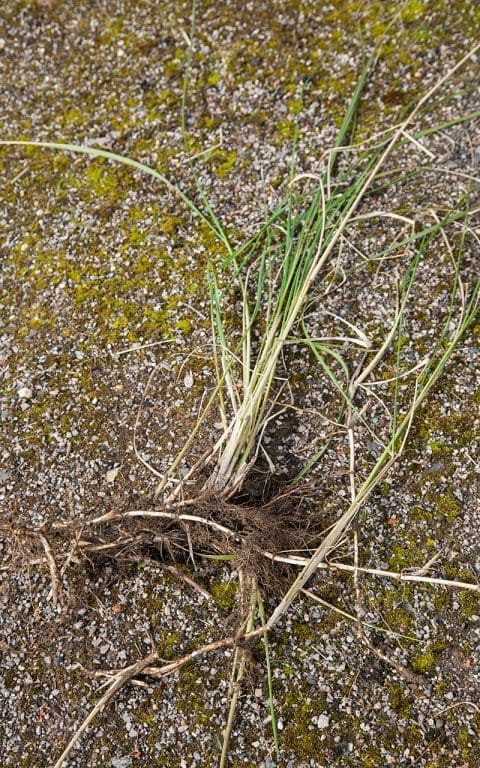
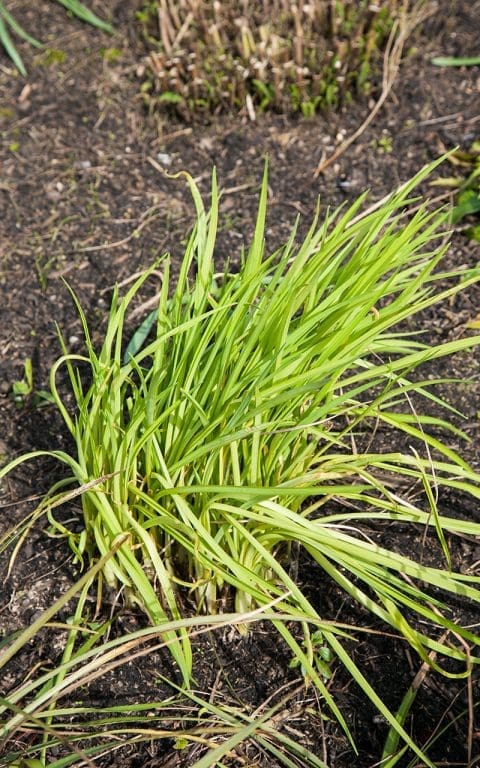
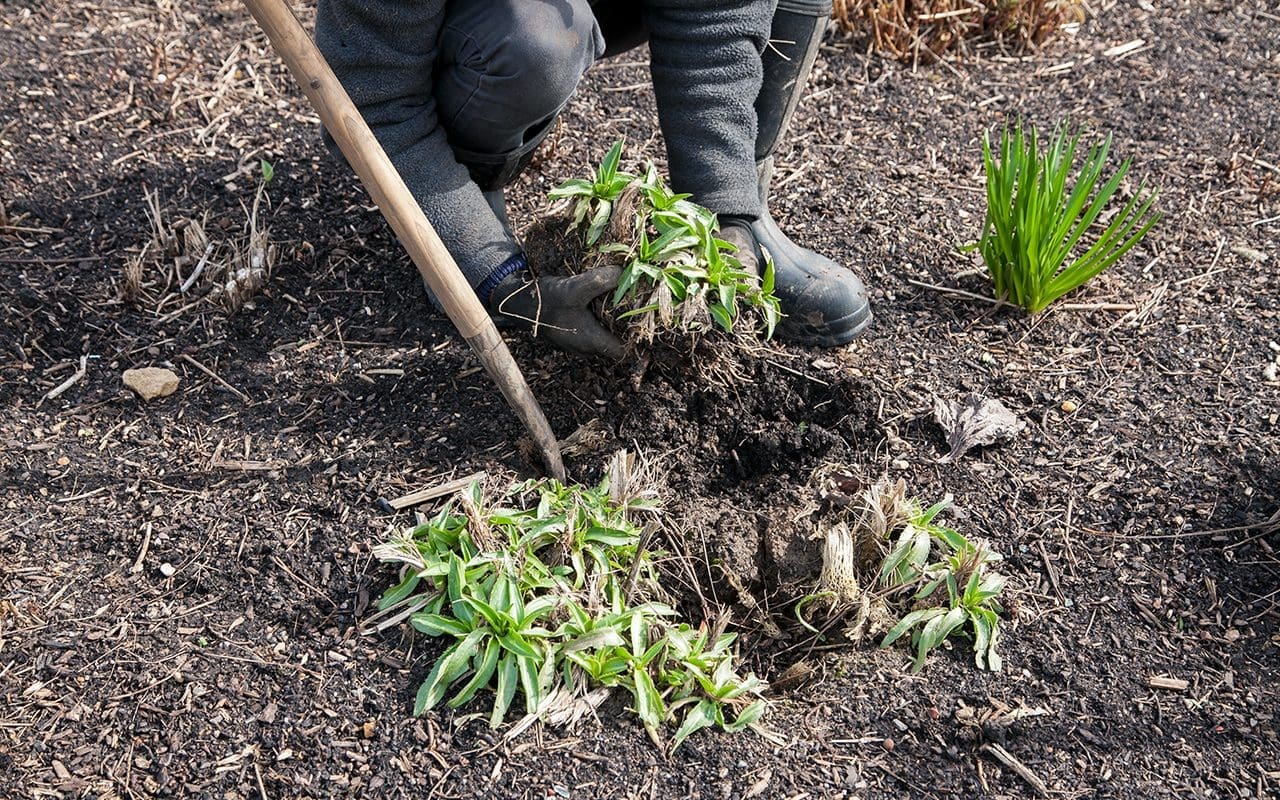
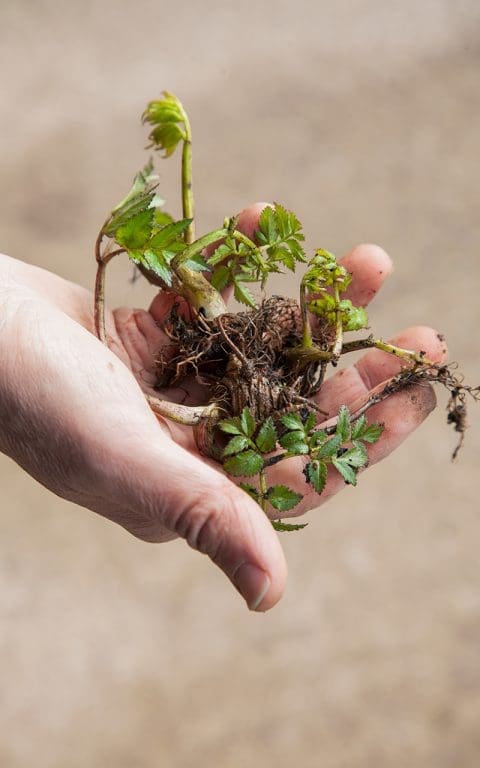
Singling out the bald patches has not taken much time for there are just a few plants that are showing their age in this young garden. As it ages I expect there will be more and I will need to pace myself and anticipate action before it is needed, singling out a few plants each year that look like they need refreshing and doing so before the season is upon me. This year the perennial Angelica anomala and the hearty Cirsium canum have both required splitting. They have been fast to make an impression in the new garden, but are doing so at the expense of reliable longevity. I do not begrudge this quick turn-around, for their presence in the planting is strong and certain. In its early awakening I can see that the dark limbed angelica has moved away from the original crown with small offsets offering me plenty of material to pot up and grow on for the autumn. The most robust sections, with good roots, storage rhizomes and potential have been replaced in the same position with the ground regenerated gently by forking in compost.
The cirsium were divided into three, the best part replanted in improved ground and the remainder discarded. This is hard to do, but it is a gentle giant and there is only room for a small number. Standing seven feet tall, glossy and without prickles but looking like it should, it is a plant with attitude which, like the pennisetum and the angelica, make up for needing a little more attention than the crowd.
Words: Dan Pearson | Photographs: Huw Morgan
Published 14 March 2020
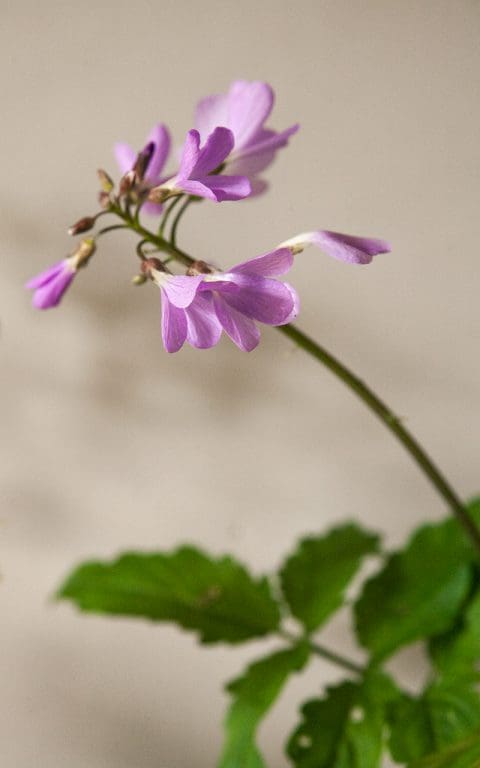
Finally, it seems, it is officially spring and we hope to move on from dodging the storms at last. Sailing through unscathed since they first showed colour in early January, the Cardamine quinquefolia is a plant that I would like much more of. It has taken a while to establish, but now it has the shade cover it likes, it is moving amongst the hellebores and the lavender-blue Iris lazica. An early woodland ephemeral, this cardamine has come and gone by the time the trees leaf up in May. It is a plant that takes all your attention for being so willing when most other things are dormant and it is good company for going into dormancy when they come to life. For this reason, it is worth making a note of where you need more of it and then moving it as soon as it breaks ground in January if you are not to miss the moment. It has fine surface roots like wood anemone, so I find it best to lift a square sod once the clumps are large enough to divide with a border spade.
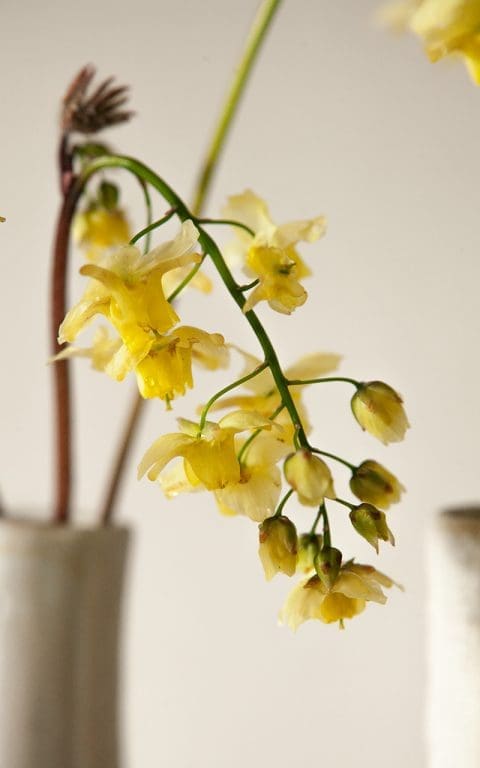
This is the first year I have cut back the Epimedium sulphureum, shearing the foliage as soon as I saw flower buds in the crowns in mid-January. ‘Best practice’ dictates this is the most effective way to appreciate the coppery, new growth and emerging flowers, but leaving this easy epimedium for the past few winters has created a wonderful micro-climate whilst I’ve been establishing the hellebores. I have them pooled in its pillowy foliage so that their leaves are protected from the easterlies, but the flowers can rise above them.
Shearing last year’s growth in January felt bold, but the delicate flowers are now dancing in the breeze and quite capable of dealing with a storm. They are as delicate as fairies, despite being tough enough to deal with those difficult places between shrubs and beneath trees. It holds the slope behind the tool shed where there is shadow, but it is just as happy in open ground as long as it retains moisture. This would not be the case at all for its Asian relatives, but this reliable European epimedium is made for easy gardening.
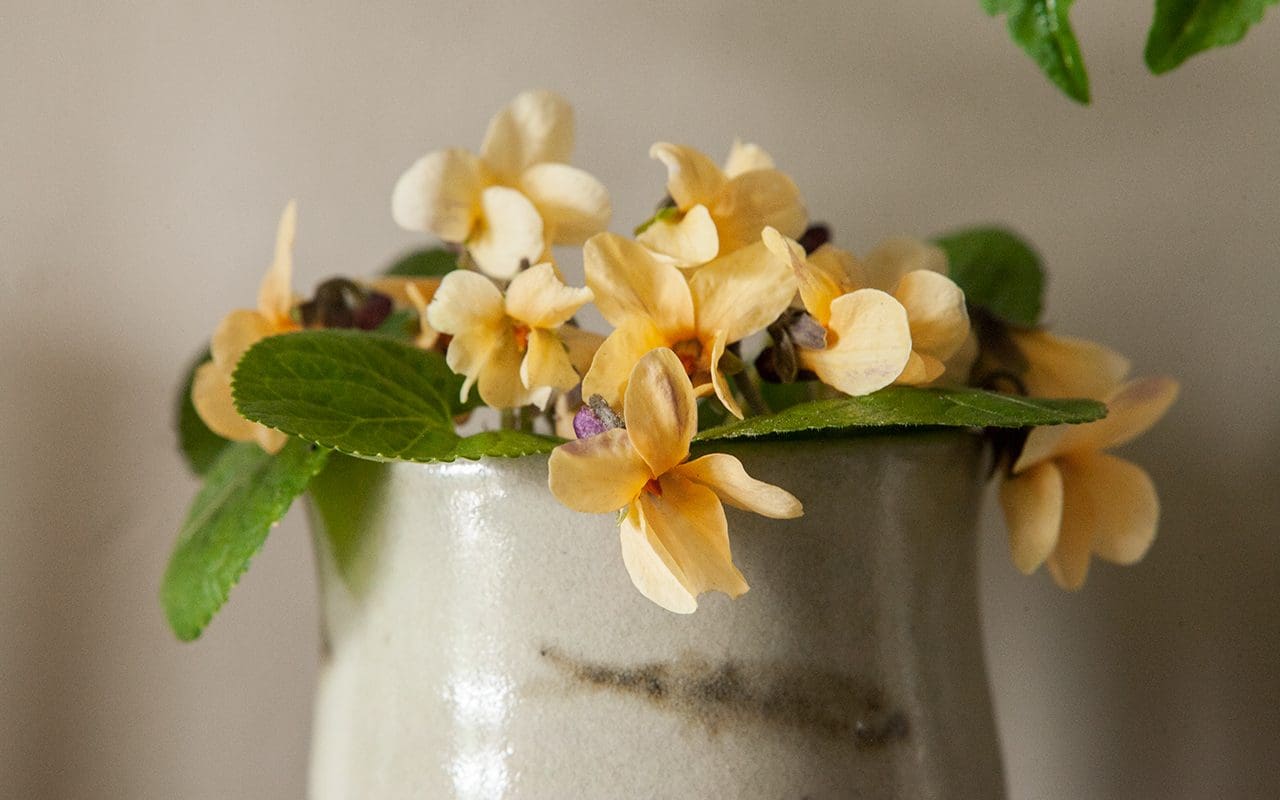
Out of necessity I have been experimenting with planting woodlanders in sunshine on our exposed hillside. As long as they have the canopy of later-to-emerge perennials, the primroses actively seem to prefer spring sun. The same can be said of spring violets, which I am planting wherever there seems to be a suitable niche close to the paths. I first saw the unusual, soft apricot Viola odorata ‘Sulphurea’ a few years ago in the nuttery at Sissinghust, when I was visiting Troy Scott-Smith. He promised me a division but, as is the way, spring happened and the business surrounding it meant that it was autumn before Troy re-visited the spot to follow through on the offer. By then the violets seemed to have moved on so, smitten, I ordered seed from Chiltern Seeds and sowed it ahead of winter. Being another mild year and without the chill they need to germinate, they took two years to appear and then another one to flower, but now here they are. The wait seems suddenly nothing and I’m delighted to have them for myself. Though not as strongly perfumed as their purple cousins, I’ve also used them along path edges, combined with this creamy epimedium, so that not an inch of ground goes without cover.
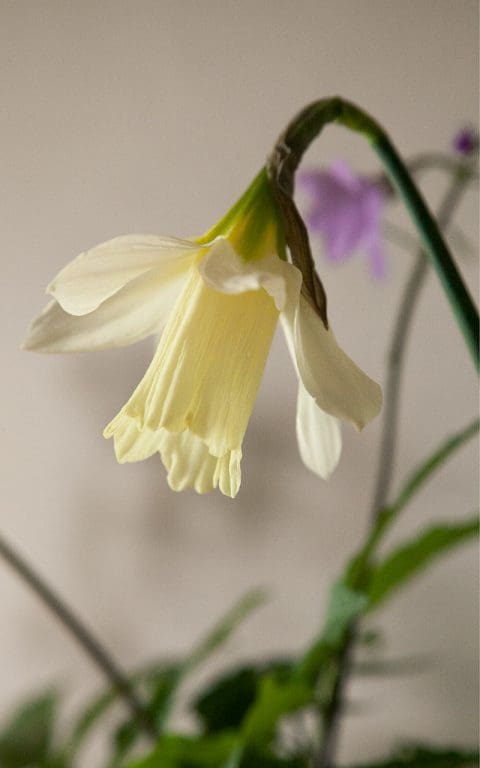
I never fail to be delighted by Narcissus moschatus, which is possibly my favourite of all for its poise and delicacy. Closely related to our native N. pseudonarcissus, but only occurring naturally in the Pyrenees, it has taken a while to build up a nice colony, for the bulbs are hard to find. I have it growing under a five year old sweet chestnut that was planted in memory of my Dad. Opening a pale yet sharp buttercream yellow, they soon fade to ivory white. Heads tilted downward (they are also known as the swan-necked narcissus) the flowers have an air of modesty and melancholy.
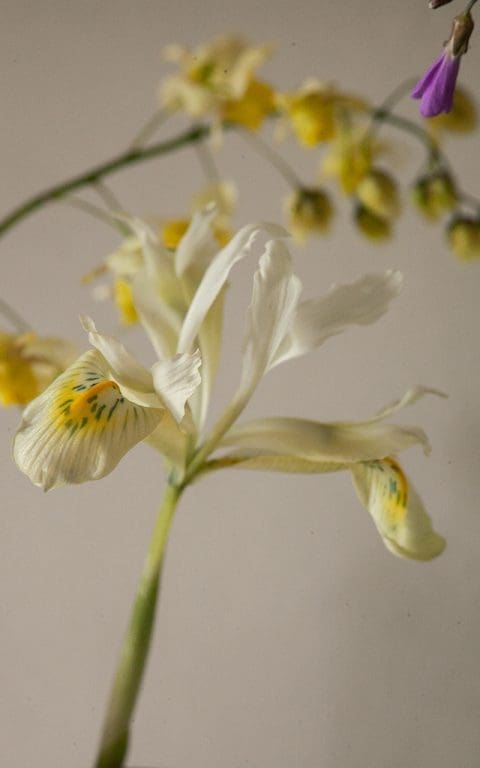
Though some plants are good to revisit every year (and in the case of the narcissus, I am never disappointed) it is the first time that we have grown Iris ‘Katharine’s Gold’. It is always nice to discover a potential new favourite, and is one of the reasons we trial some new varieties of bulbs every year. This is the last of this year’s reticulate iris to appear, a good three to four weeks later than the first ones that came in late January. Reputedly a sport of I. ‘Katharine Hodgkin’, we prefer it as it is taller and stands more elegantly with more air between the standards and falls. Pale yellow suits this moment too. One we hope can now be depended upon to get brighter.
Words: Dan Pearson | Flowers & Photographs: Huw Morgan
Published 7 March 2020
Huw Morgan | 28 February 2020
When we last saw each other in October Flora and I had planned on her returning to Hillside in the very depths of winter to see what she could create with the skeletons of last year’s growth when there was hardly a flower to be seen in the garden. We pencilled in a late January date in the diary. However, I was taken ill after Christmas and was out of action until early February. This meant that the next available date for us to meet was at the end of last week, when the season was definitely starting to tip into spring.
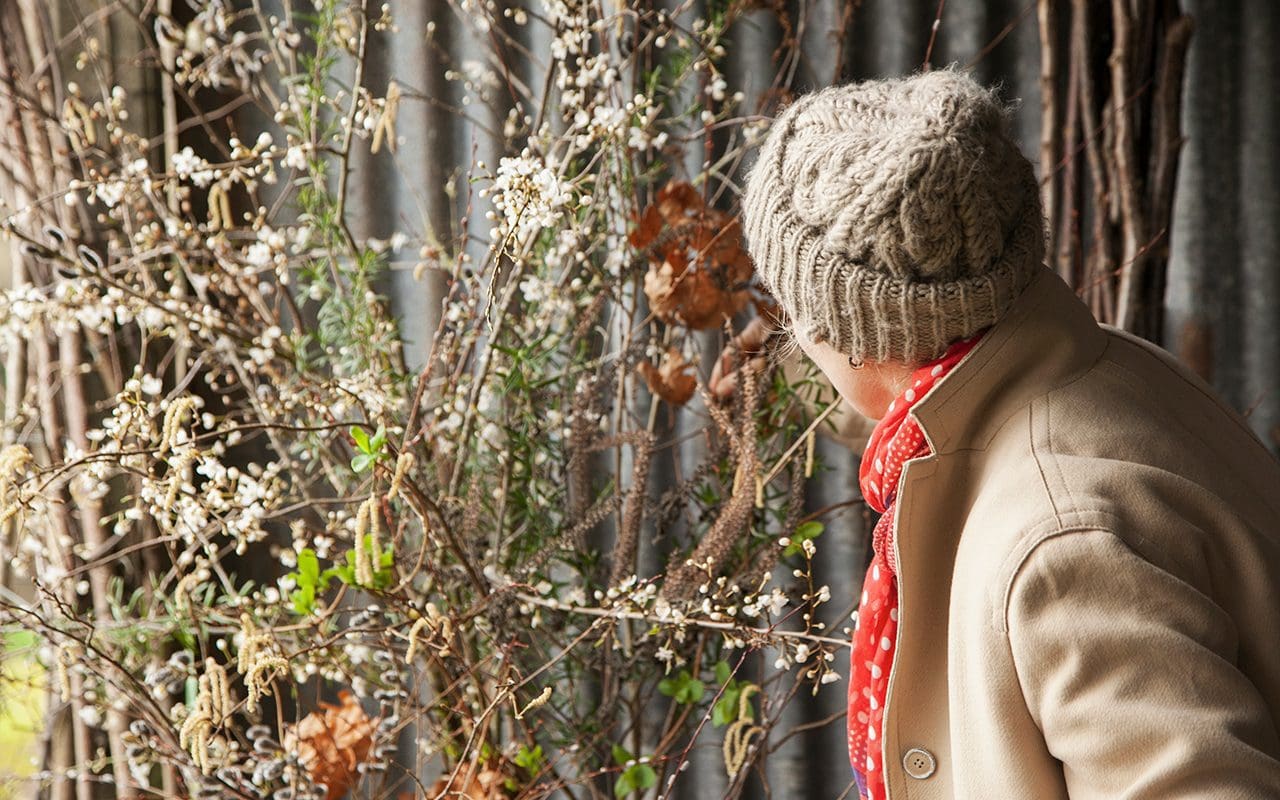
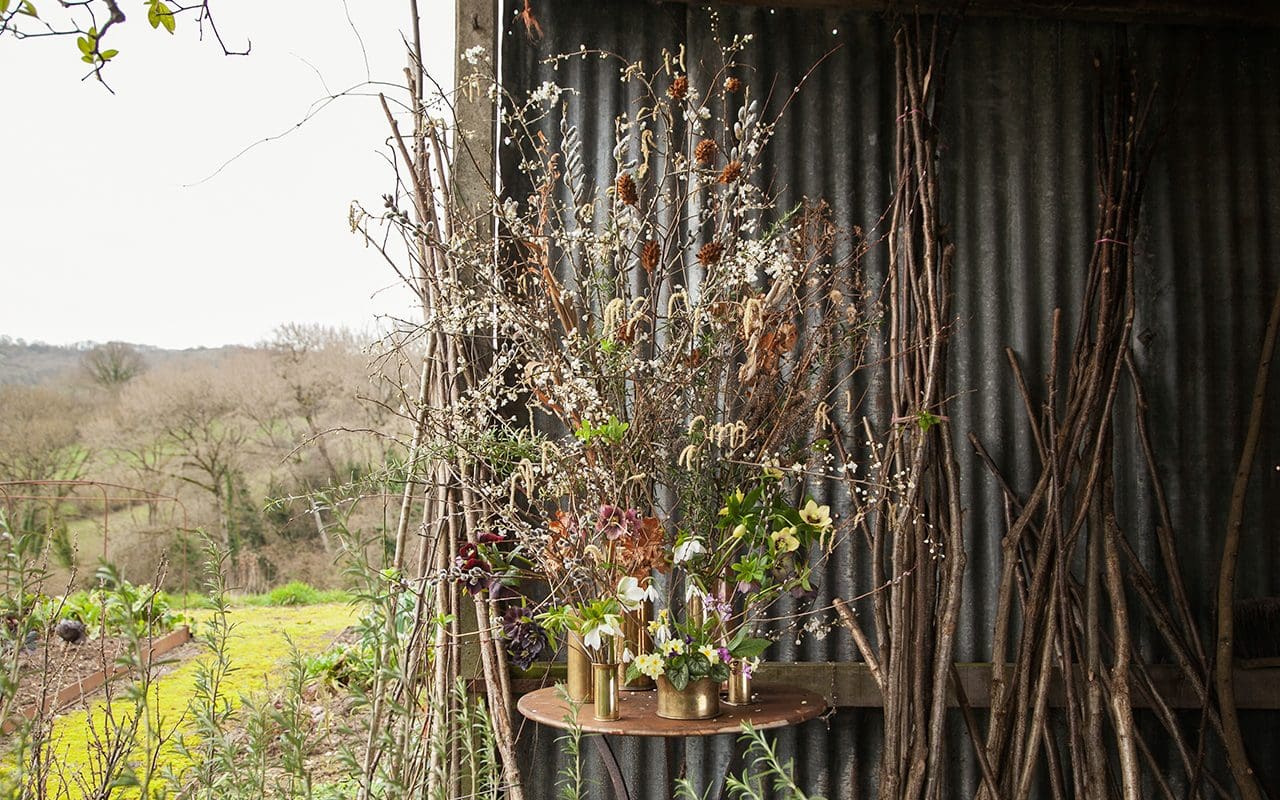
Flora arrived on Thursday evening with her good friend Paul, who gardens with her at Westhill Farm. He has assisted Flora on the last two shoots here, cutting and conditioning flowers, organising and filling containers and clearing up afterwards, not to mention the laughter and banter. We could not have done any of them without his help. We were all up early on Friday morning, wary of the weather forecast with its warnings of another approaching storm. I had gathered some woody material – hazel, willow and cherry plum – from the hedgerows, woods and garden the previous day, and there was a wide selection of dead material in the tractor barn that I had saved from the garden before Christmas. After breakfast Flora and Paul took a tour of the garden to select the things that took their fancy to bring colour and a feeling of hope to the arrangement.
With storm clouds gathering and wind gusting erratically, and despite the fact that we had decided to make the arrangement under cover, the weather conditions were challenging. On more than one occasion the entire, and nearly completed, arrangement almost blew over. Fortunately Paul was quick off the mark and managed to catch it, preventing it from needing to be entirely remade. Just moments after I had taken the last shot of the finished arrangement a great easterly gust blew into the barn and sent everything flying. We all laughed and understood that the shoot was well and truly over.
Although it was testing working and photographing in these conditions it felt like a very authentic engagement with and recording of the reality of the season.
Flora Starkey | 28 February 2020
It is winter at Hillside and there’s a new quieter beauty in the garden. Again, I’m happy to be here on the cusp of the season as spring starts to show beneath the fallen grasses and branches that are bare of leaves.
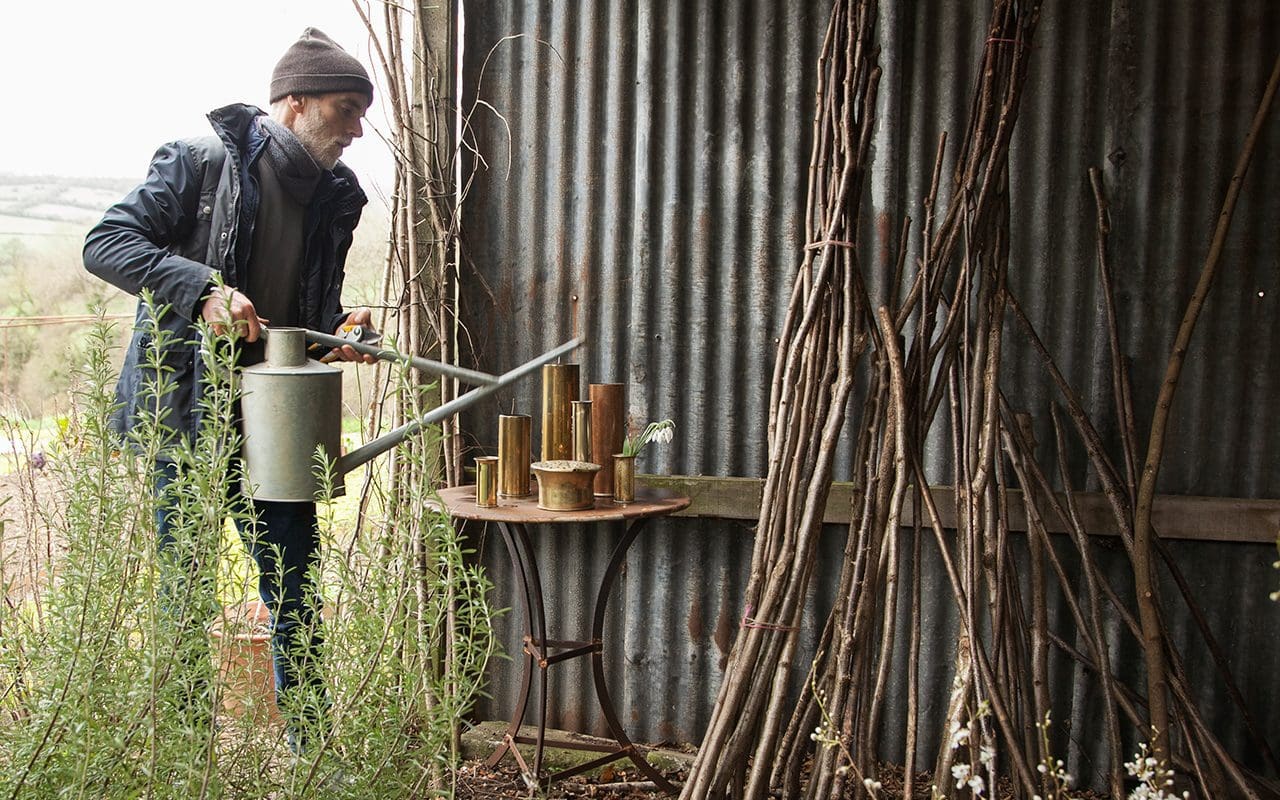
The rains held off for a few hours on Friday morning, but the winds still blew. Huw and I decided it would be impossible to try and continue our series in front of our usual rusted barn background so we moved behind and into the inside corner of the barn. We both liked the light there and hoped we’d be more sheltered from the elements, but there were still times the wind caught us from the side – all adding to the fun.
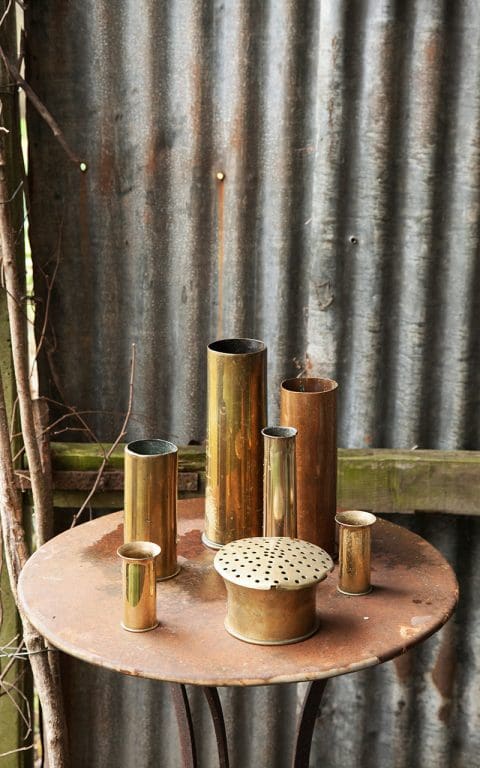
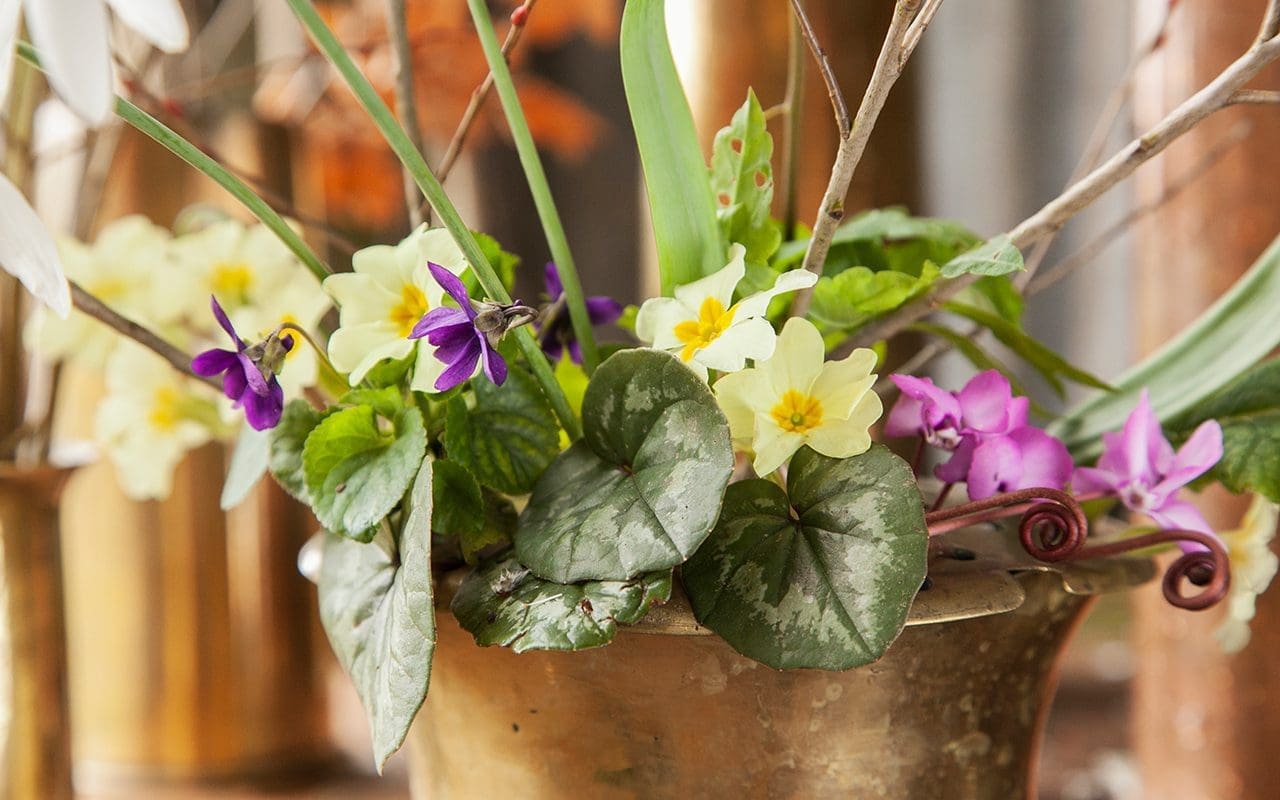
I’d used ceramic and glass vessels in the summer and autumn arrangements and so this time I was drawn to the idea of metal. Specifically vases made from old mortar shell casings. I brought a small collection with me, including a bowl with a drilled lid gifted to me by my friend Paul. A remnant of World War 1 and life in the trenches. I like the idea of using flowers to reflect, remember and bring beauty from the darkness. I guess it seemed especially fitting for the season with the violets and primroses showing up and braving the end of winter.
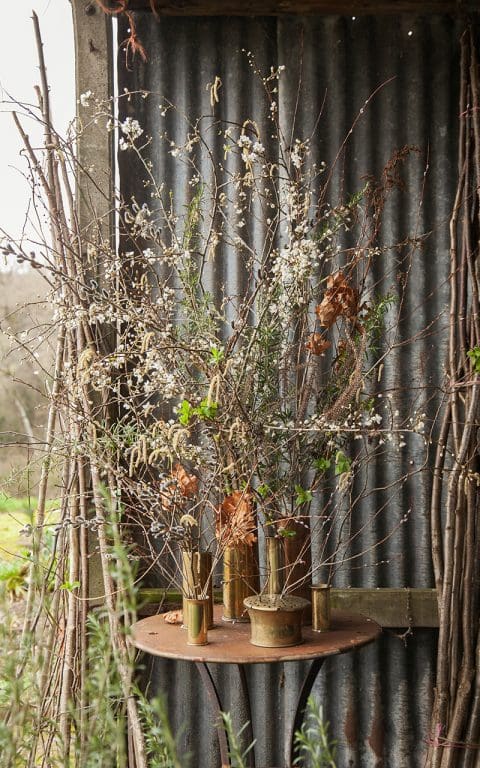
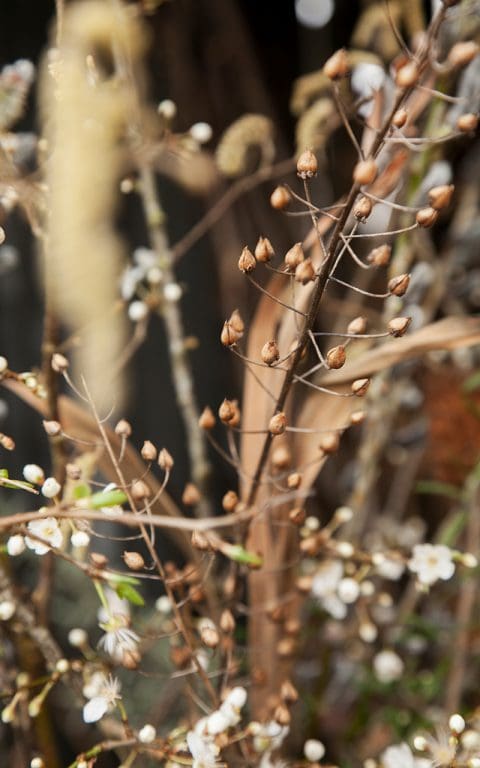
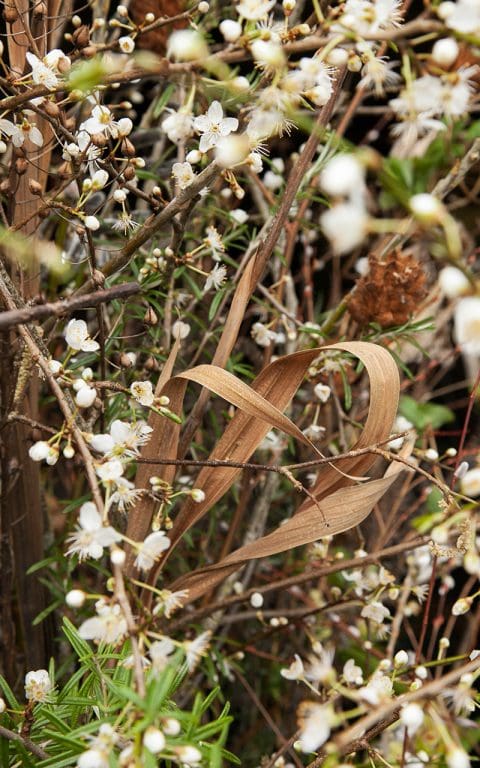
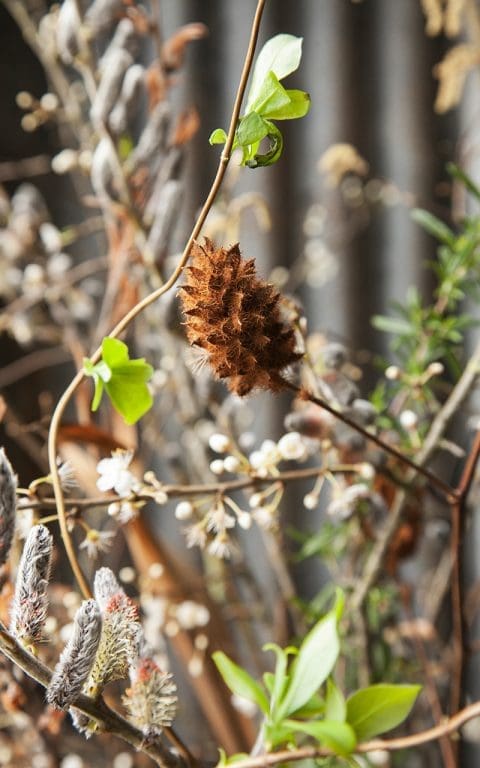
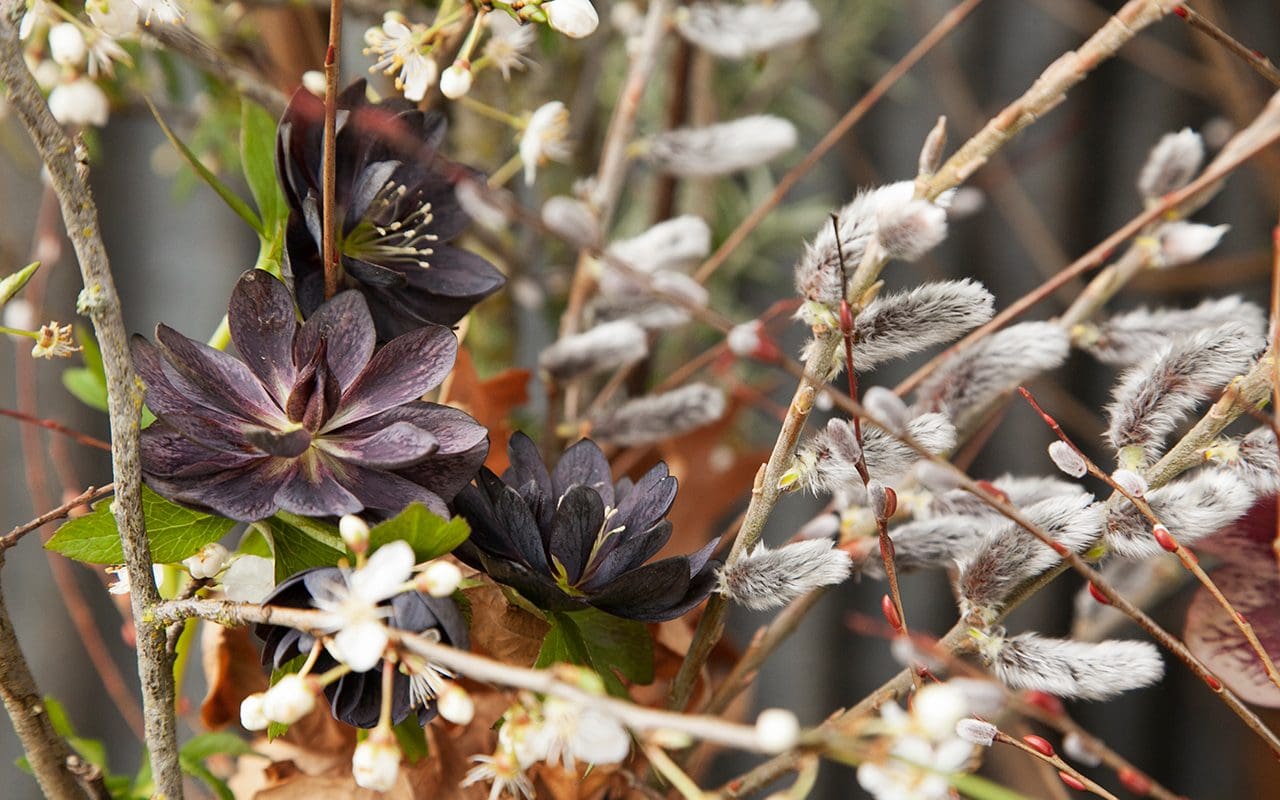
Despite the fact that much of the garden was dormant, Huw cut some beautiful single flowering Prunus from the border hedgerows. These, along with hanging hazel lambs’ tails and a few varieties of silvery, soft catkins formed the base of the shape. I especially loved the snowy delicacy of the Salix purpurea ‘Nancy Saunders’.
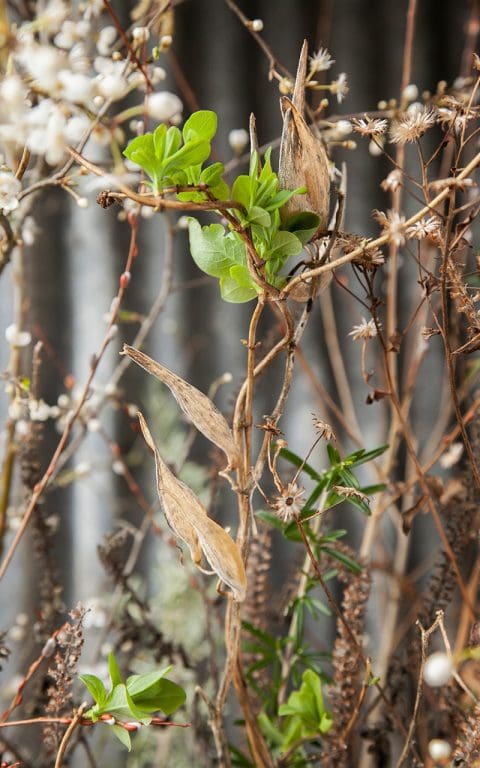
Some tall but delicate stems of rosemary and a twist of honeysuckle coming into leaf added some essential green. These were followed pretty quickly by a frame of dried beauties that Huw had saved for me last autumn – some wonderful silver stars of aster and rusty licorice seedheads. It has been interesting for me to recognise how important the dried elements from the season before have felt every time I’ve come here.
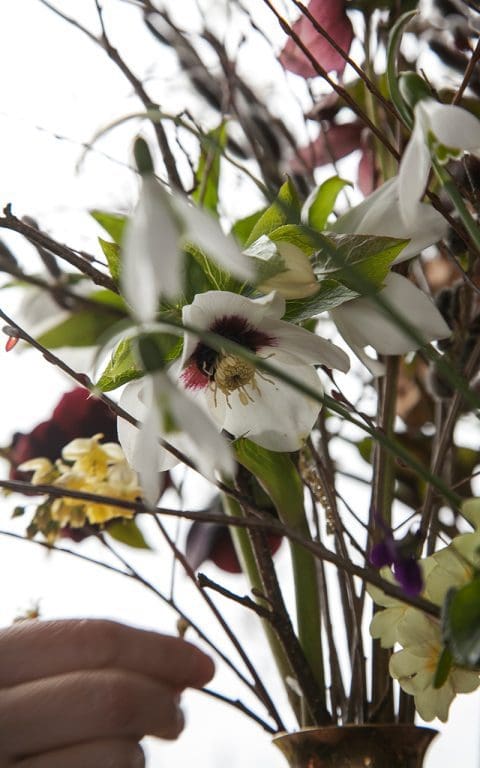
With the taller elements in place, I moved to the flowers below the canopy – a single snip from several varieties of hellebore including a double black that I was particularly taken with. With the winds picking up again, it was time to focus on my favourite low lidded vase at the front. This held a tiny carpet of primroses, snowdrops, Cyclamen coum and a violet complete with leaves.
I had wondered how much of a challenge our winter arrangement would be. It might be that it’s my favourite yet.

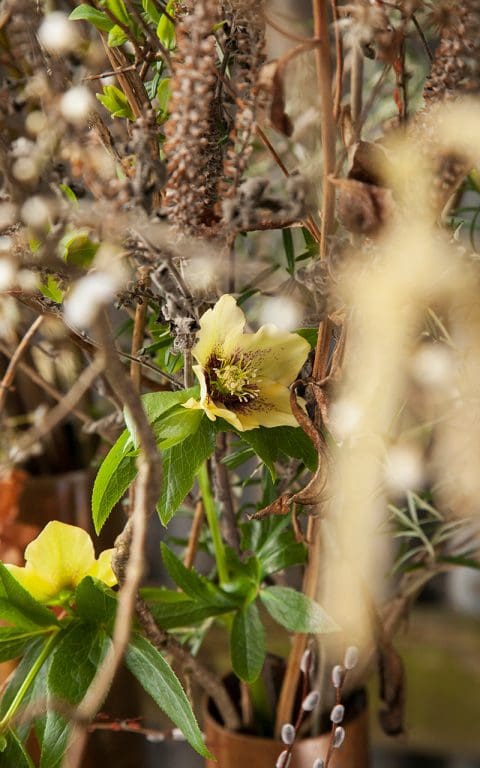
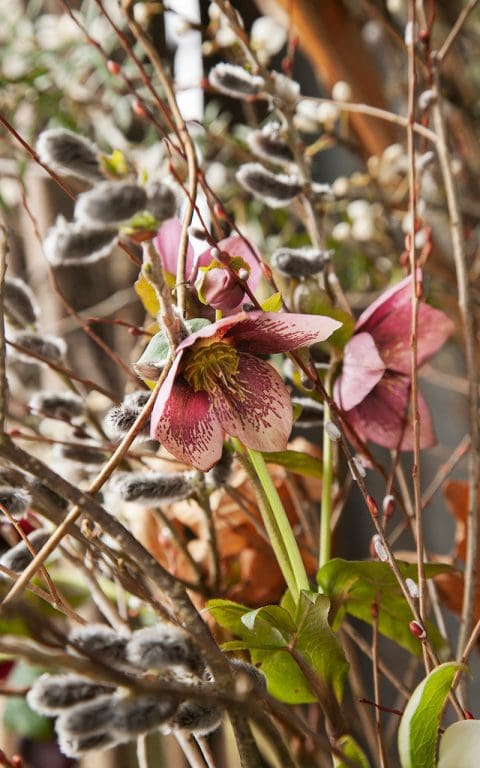
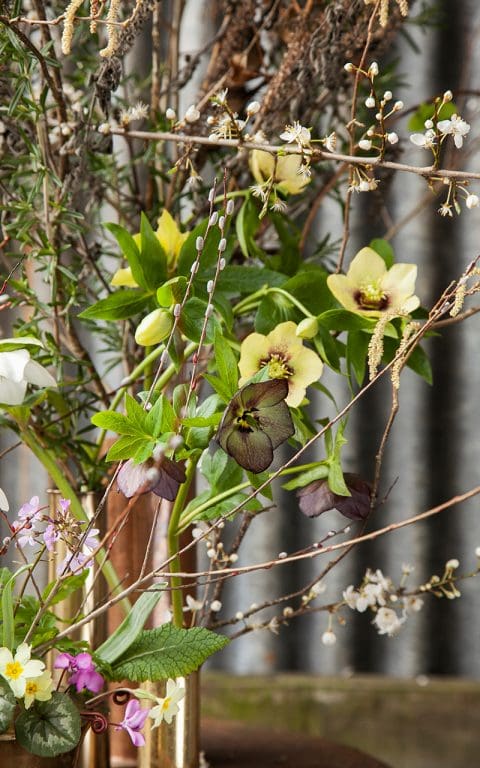
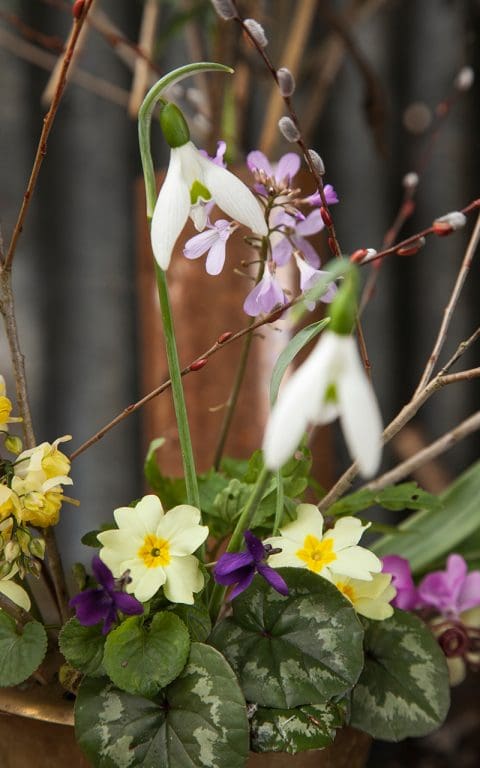
Asclepias tuberosa
Cardamine quinquefolia
Corylus avellana
Cyclamen coum
Epimedium x versicolor ‘Sulphureum’
Eurybia x herveyi
Galanthus elwesii ‘Cedric’s Prolific’
Gladiolus papilio ‘Ruby’
Glycyrrhiza yunnanensis
Helleborus hybridus Double black
Helleborus hybridus Single black
Helleborus hybridus Single Dark Pink Spotted
Helleborus hybridus Single Green Picotee Shades Dark Nectaries
Helleborus hybridus Single white dark nectaries
Helleborus hybridus Single yellow spotted dark nectaries
Lonicera periclymenum ‘Graham Thomas’
Primula vulgaris
Prunus cerasifera
Quercus robur
Rosmarinus officinalis
Salix gracilistyla
Salix purpurea ‘Nancy Saunders’
Teucrium hircanicum ‘Paradise Delight’
Verbascum phoenicium ‘Violetta’
Viola odorata
Photographs | Huw Morgan
Published 28 February 2020
This article is dedicated to Susan Sheehan, a longstanding American client of Dan’s, who writes the most wonderful emails that frequently have us doubled up in tears. One of these sent last year started (all Susan’s capitals), “I always read DIG DELVE…naturally, it is my absolute fantasy life blog. I imagine myself calm and RELAXED looking at the row of trees you have on the horizon, at your enchanting house and garden, and whipping up a batch of ELDERFLOWER AND ROSE cordial and a RHUBARB GALETTE…all sounds so romantic, and utterly doable. Then I just have to slap myself in the face and out of the TRANCE your blog, Instagram posts and new website induce…it is all just lovely. I want to be just like you when I grow up.”
So Susan, here is a picture of my RELAXED life this week. Dan has been away for 10 days. I am working on the picture edit of the book he has written about the Tokachi Millennium Forest. There have been, and I kid you not, around 40,000 images to go through, which has required an insane amount of focus, concentration and organisation. At around 4pm each day I Facetime Julie, our American friend who is designing the book. She lives in Portland, Oregon. It is usually around 8pm before we finish looking at layouts, discussing the design and swapping images around. Then a walk for the long-suffering dog, dinner (or more likely cheese and biscuits) and then bed. Then repeat. Yesterday, I had the florist Flora Starkey here, squeezing in a winter photoshoot en route to Bristol airport, while an old university friend also arrived to stay for the weekend. Fortunately Sophie is an excellent cook since, on Saturday, I have also invited good friends and godchildren for lunch.
Trying to shoehorn cooking, writing and photographing a recipe for Dig Delve into that schedule is, unfortunately Susan, the very opposite of RELAXING and, although not every week is this extreme, it is closer to the usual state of affairs than the idyll you describe. It doesn’t always feel very doable or very grown up. Sometimes we have to cut corners and speed things up to fit everything in, so this extremely easy recipe was directly inspired by a starter we were served at our Waterloo local, The Anchor & Hope, just last week.
I used to love the crispy ‘seaweed’ that my dad would order from our local Chinese restaurant when I was a kid. I thought I was eating something very exotic, of course, when the mundane truth was that it was just shredded, deep-fried cabbage. When this plate was brought to our table last week it took me straight back to those foil takeaway containers, with the same crisp texture and delicious savoury taste. The bright and smoky harissa was the perfect foil to the dark leaves, while the cool contrast of crème fraiche, made the whole plate sing. I immediately knew that I wanted to reproduce it at home.
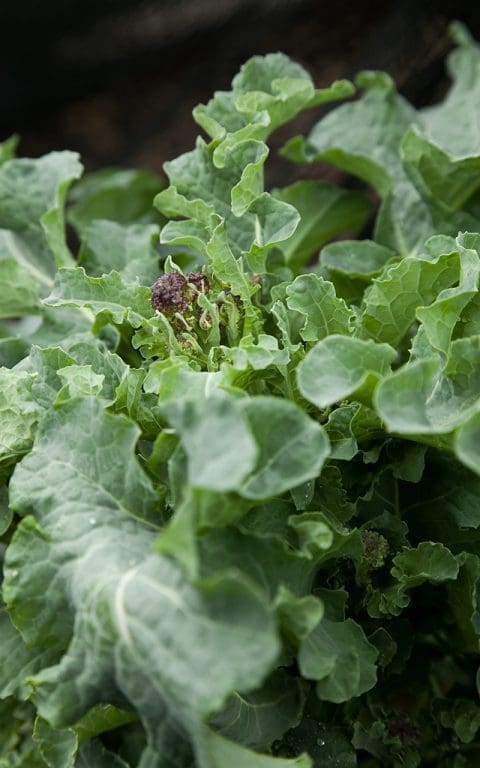
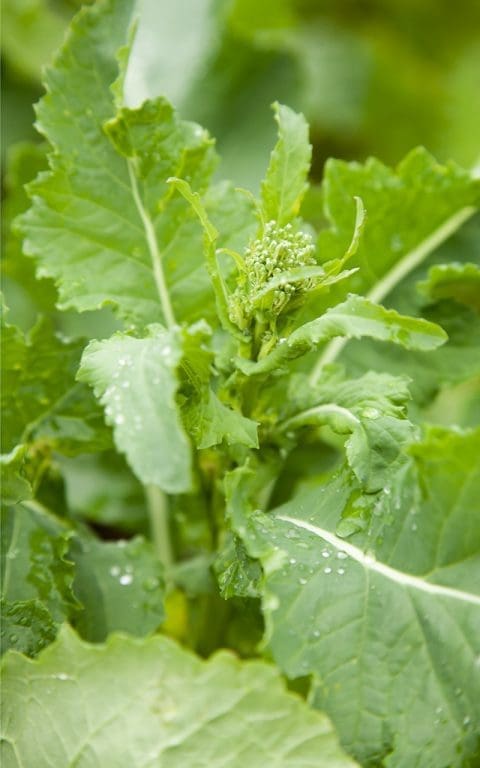
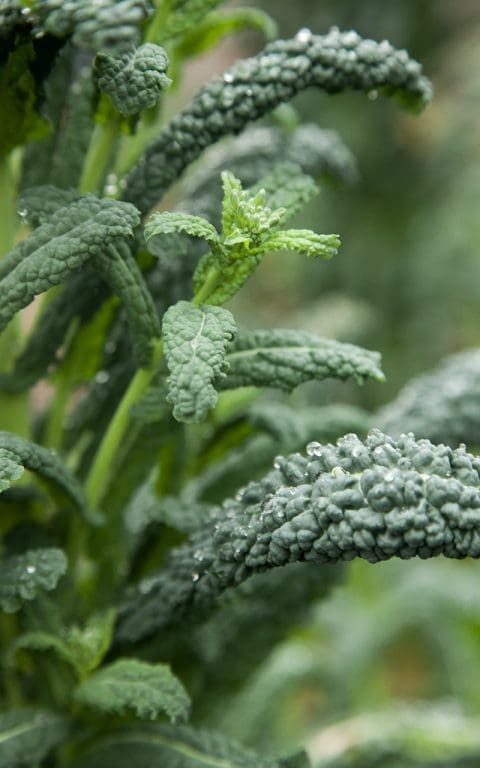
We have 5 beds of brassicas that keep us going through the winter, and are now close to having only two still producing. Many of the red cabbages, which were our most successful germinator last year, are still standing, as are the second sowing of curly kale. The Cavolo nero are producing less leaf, but have started to send out flower spikes in step with the Early Purple Sprouting broccoli. A new winter crop for us, which I will definitely be sowing a lot more of next September, is the turnip green Rapa Senza Testa from Real Seeds, which has stood fresh and green all winter. From one row we have only had a handful of servings of the delicious buttery greens, but they are still producing and now also going to flower.
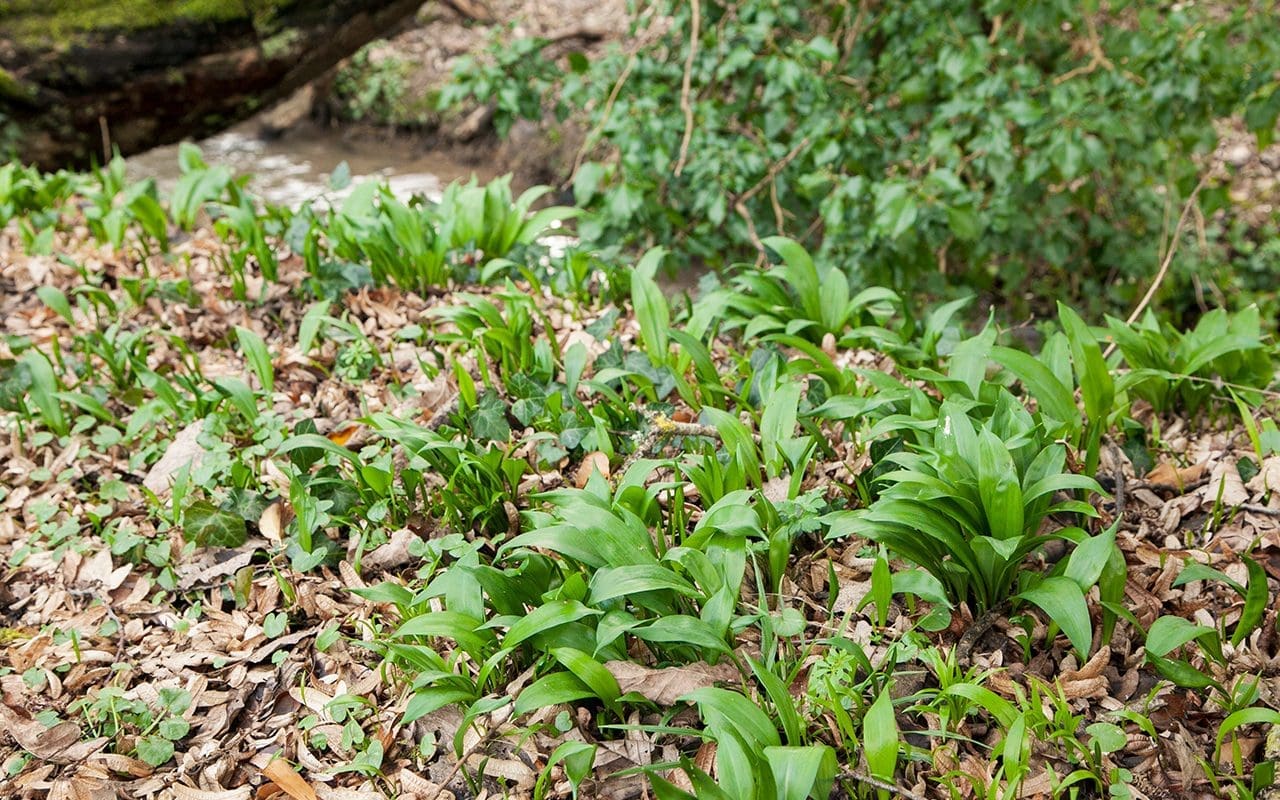
Two weekends ago in the woods I was a little perturbed to see the tiny emergent leaves of the wild garlic, which seemed far too early and too young and few to harvest. However, already they are here in number, and so yesterday I picked a handful to flavour the harissa. I made the harissa with a variety of smoky, medium and hot dried chilies from the pantry together with some fresh red chilies from the greengrocer. Unless you like it very hot avoid the bird’s eye and scotch bonnet types. The recipe below makes more than you require. It keeps well in the fridge covered with olive oil.
To make this into more of meal it is delicious topped with a poached or fried egg.
Serves 2
200g mixed brassica flower sprouts, tender stems only
2 litres rapeseed oil
HARISSA
25g mixed dried chilies
25g fresh red chilies
1 tablespoon cumin seeds
1 tablespoon coriander seed
1 tablespoon fennel seed
A small handful of young wild garlic leaves
1 teaspoon smoked paprika
1 tablespoon tomato puree
1 teaspoon sea salt
2 tablespoons lemon juice
1 tablespoon red wine vinegar
100ml olive oil
Crème fraiche, to serve
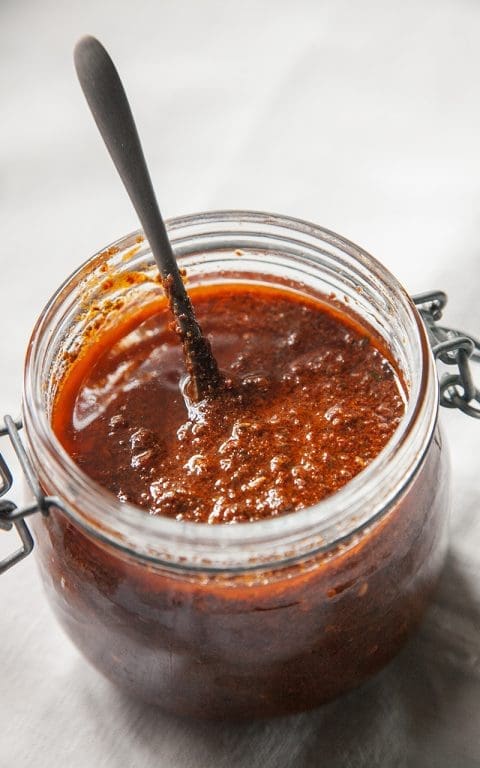
First make the harissa.
Put the dried chilies in a heatproof bowl and pour over enough freshly boiled water to cover. Leave to soak for 30 minutes.
Toast the seeds in a small dry frying pan over a high heat until they become fragrant. Tip into a mortar and grind to a fine powder.
Remove the seeds and stalks from the fresh chilies and do the same with the soaked dried chilies. Put them all into a small blender with the other ingredients. Blend until a fairly rough paste is achieved.
Transfer to a small Kilner type jar.
Heat the oil in a large deep pan until smoking. Fry the flower sprouts in batches for a minute or two at the most. Be very careful as you put them into the oil as they will splutter. Keep a close eye on them, as they can take differing lengths of time to cook. When done, lift them from the oil with a slotted spoon and put into an ovenproof dish lined with kitchen paper. Put the dish in a low oven while you cook the remaining flower sprouts, transferring them each time to the oven to keep warm.
When the sprouts are all done transfer them to a hot serving plate. Toss over a couple of pinches of sea salt. Spoon over some of the harissa. Put some crème fraiche on the side of the plate. Eat immediately.
Recipe & photographs: Huw Morgan
22 February 2020
A storm approaches.
We wait for your black coals to
flame red. Then yellow.
Words & photograph: Huw Morgan
Published 15 February 2020
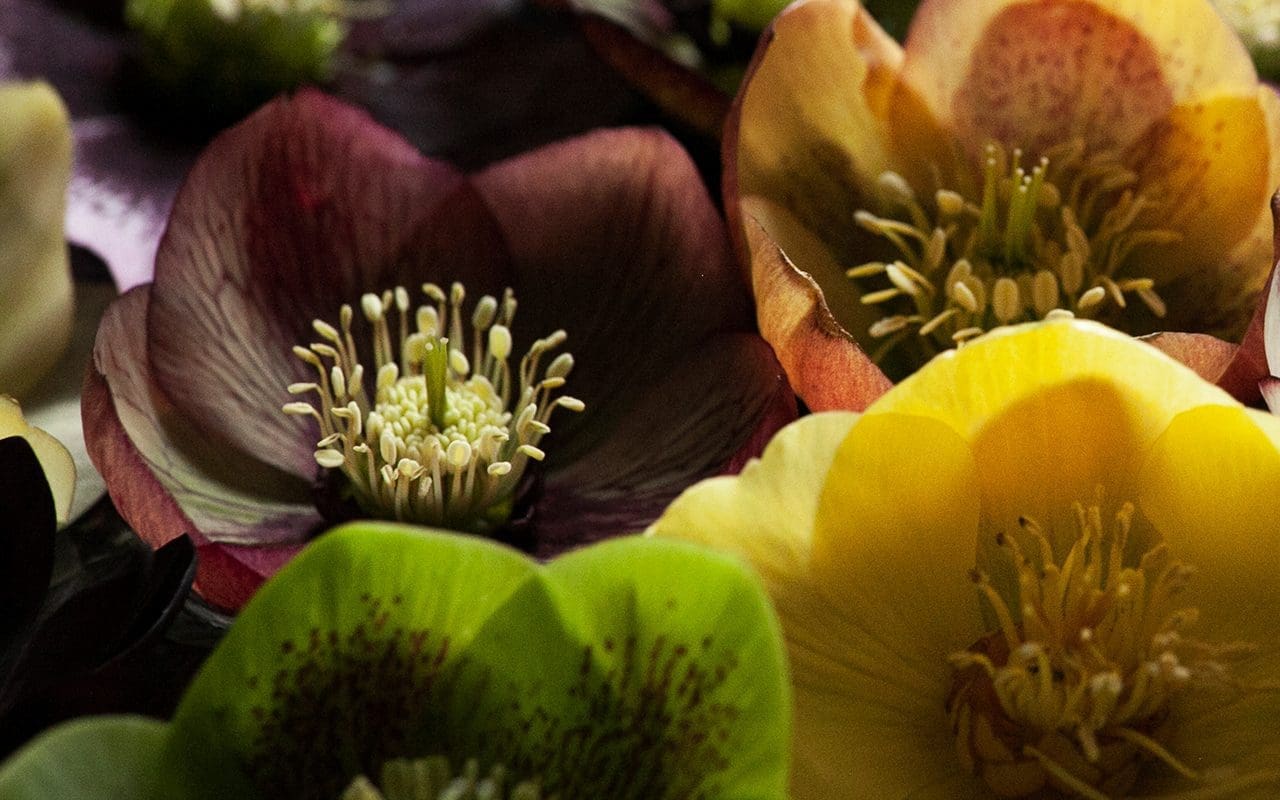
The Lenten roses were early, showing their buds prematurely at the new year as a mark of the mild winter. They have been gathering pace in these damp weeks since to arrive on cue where they should rightly be to brighten February. This is their month and their new life is my trigger to make a start clearing around them.
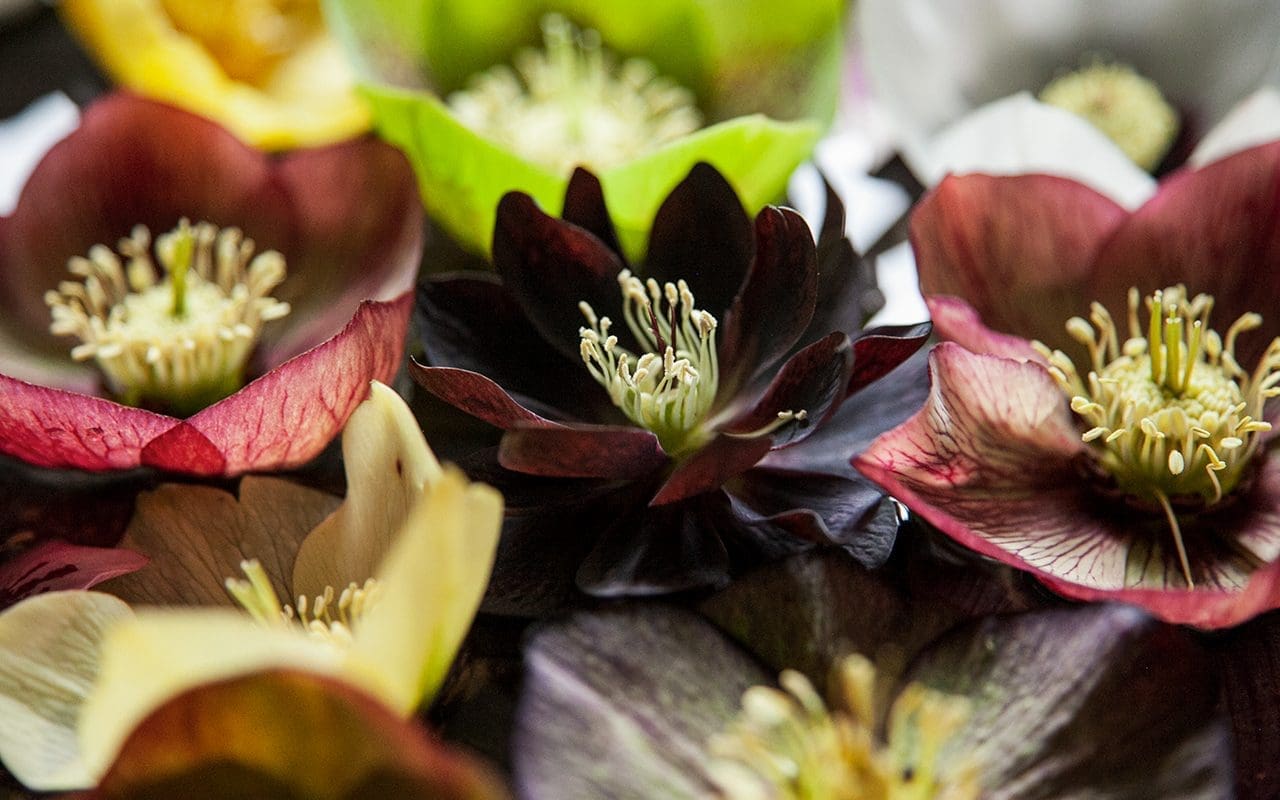
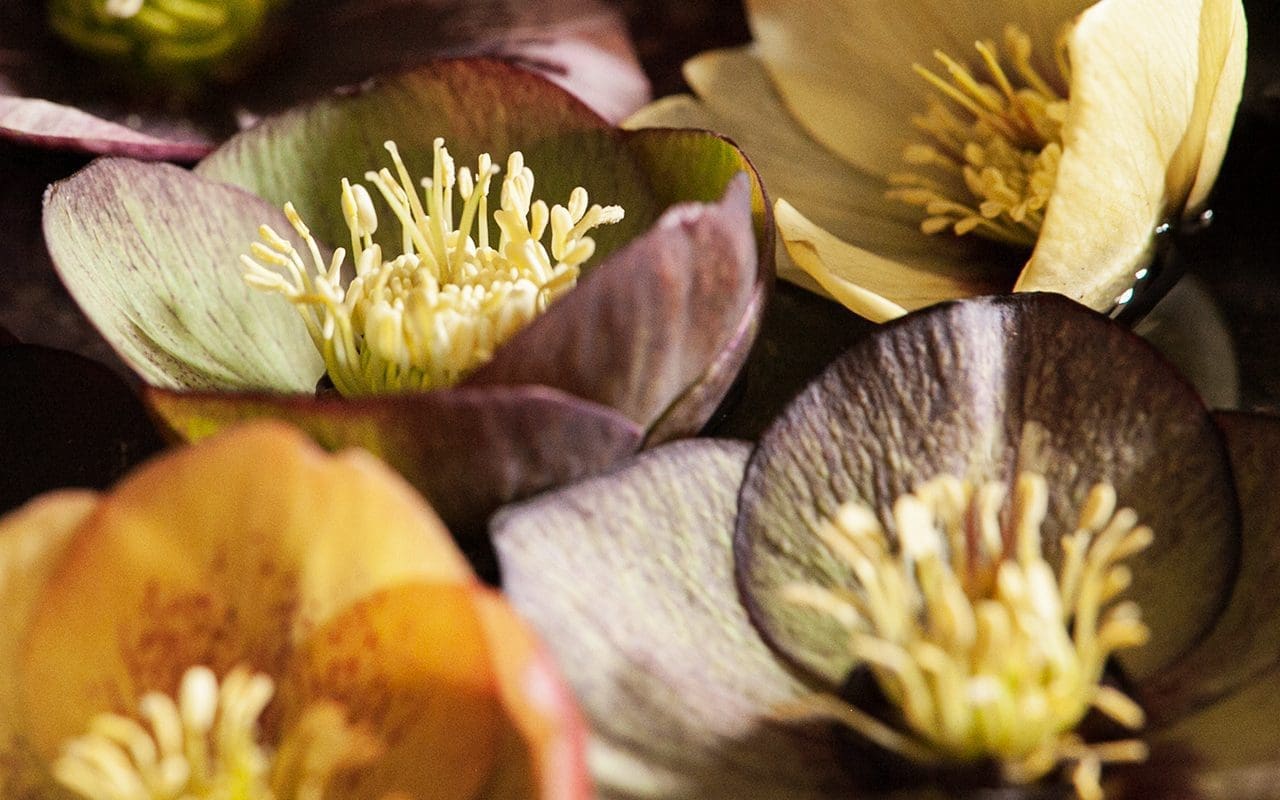
Revealed again, free of last year’s debris, they rise to their full potential to stand elegantly poised on slender stems. Their flowers, bowed and hooded against the elements, give little away and remain mysterious until you upturn them in your hand to glimpse the complexity of their interiors. We group them in shadowy places alongside the steps and are lucky here with our slopes, which allow you a glimpse from the underside into their secret interiors.
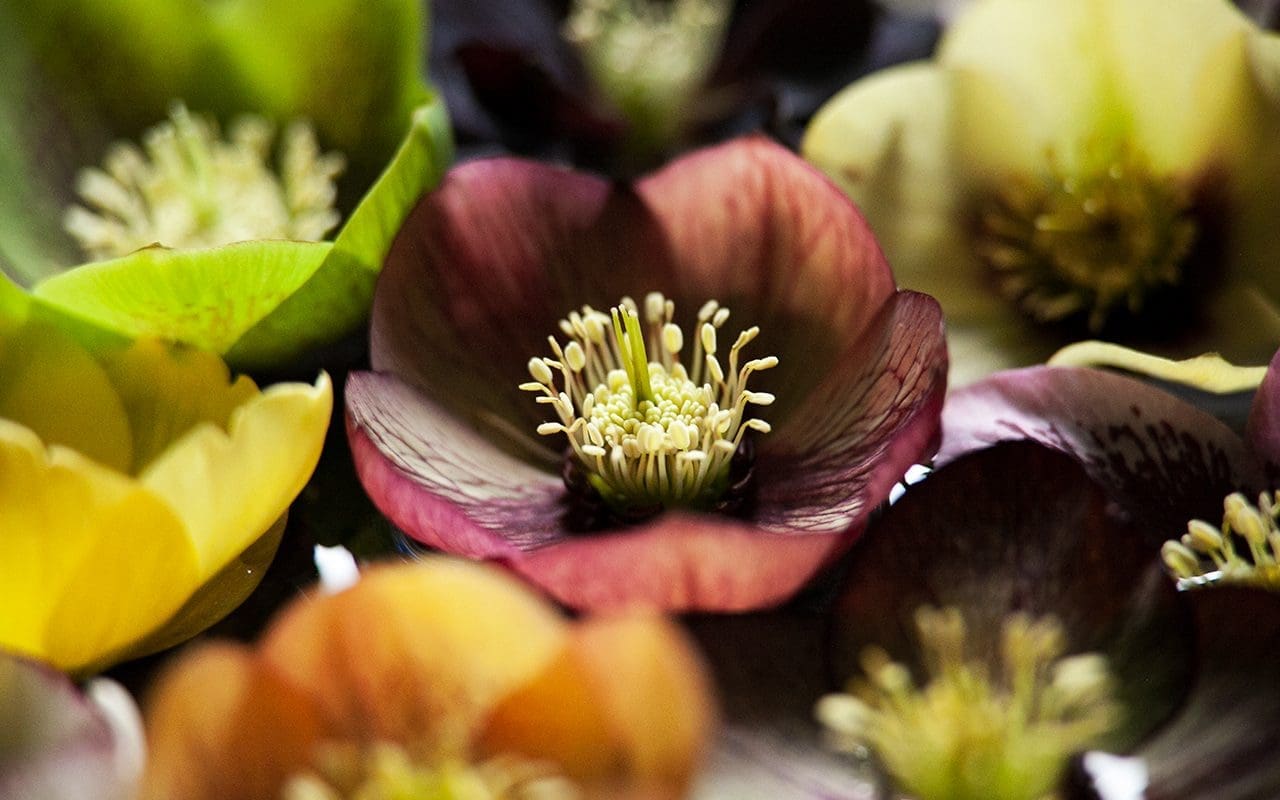
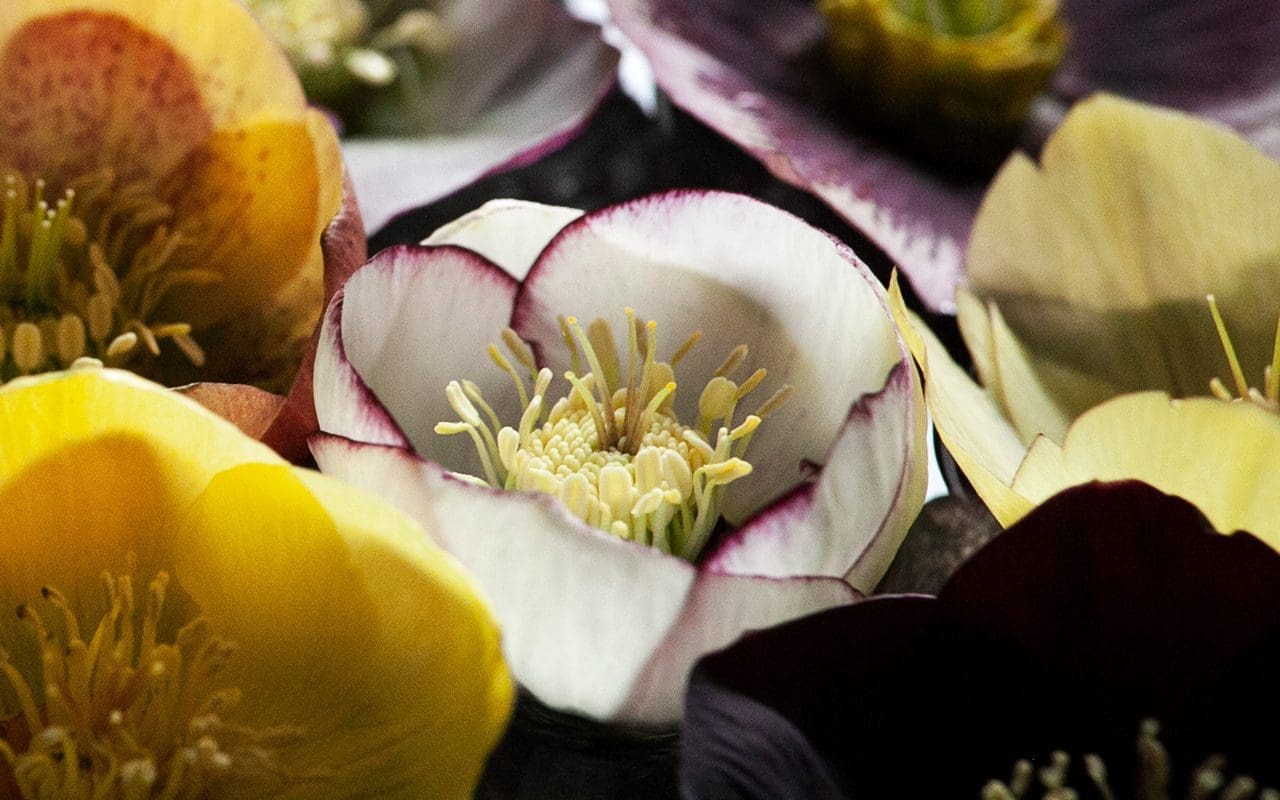
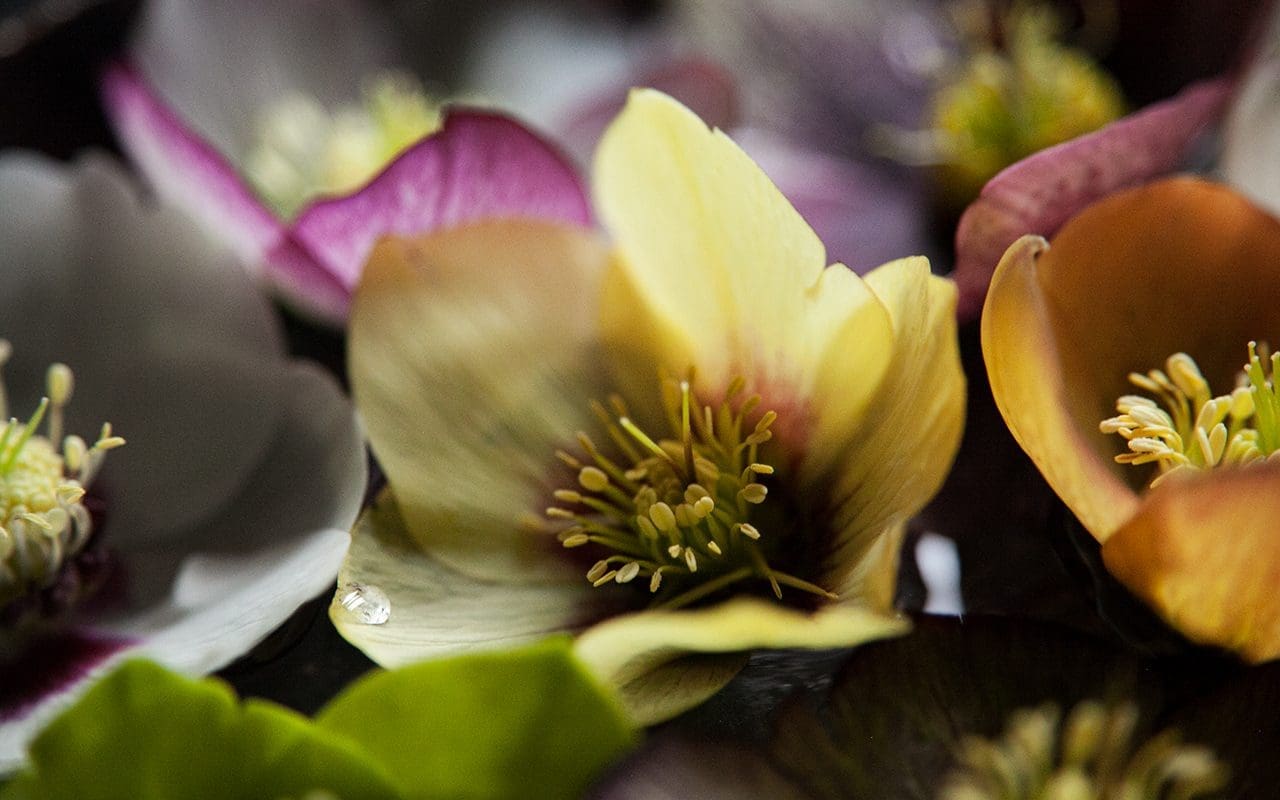
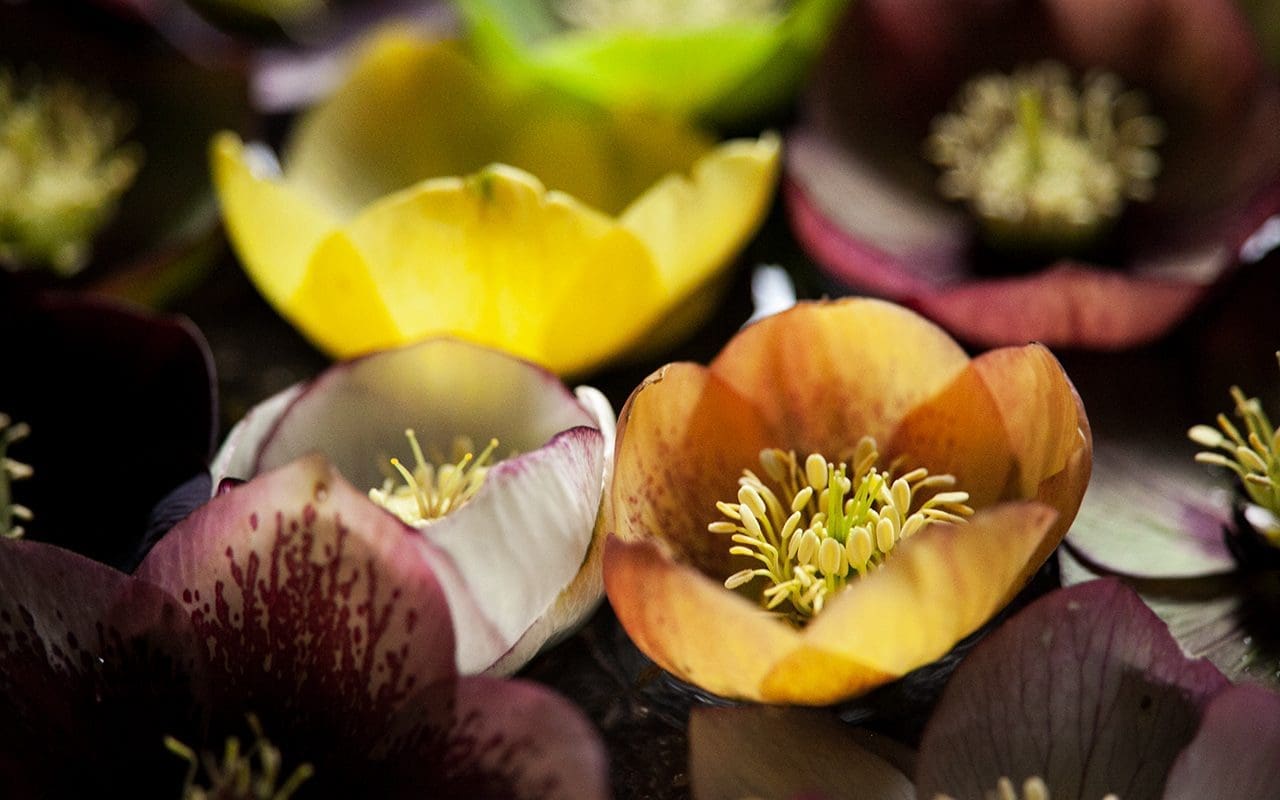
My childhood gardening mentor and friend, Geraldine, always had a bowlful on her kitchen table at this time of year. She had learned that, since the stems do not cut well, this is the best way to enjoy them up close, floating on water like offerings. Back when I was a child and Geraldine and I were swapping seedlings, we were quite content with what I would now see as murky pinks and impure whites. We had no idea then that Elizabeth Strangman and Helen Ballard were already selecting and refining the beginnings of the first good forms, many of which led to the choice we have today. Ashwood Nurseries have made an art of selection and are my go-to nursery for hellebores, but I am always on the look out at this time of year, because there is nothing like finding a new favourite.
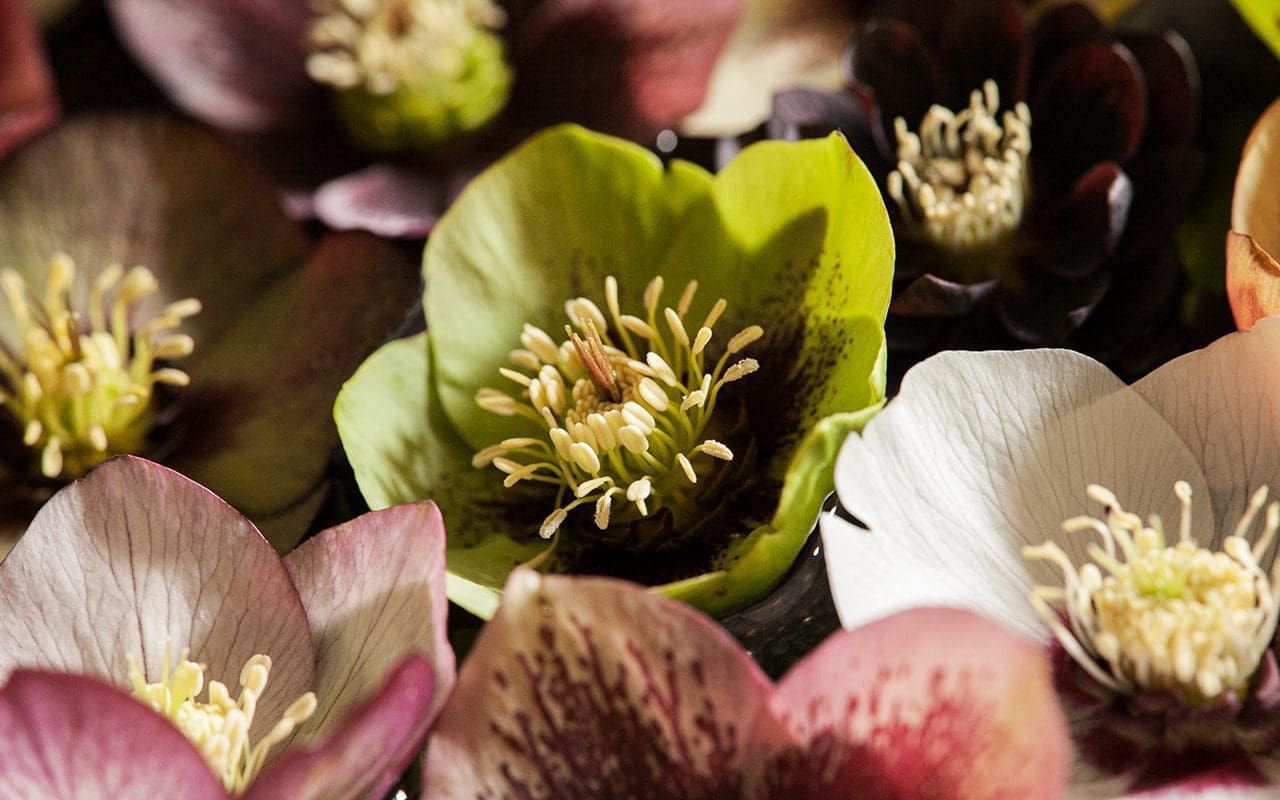
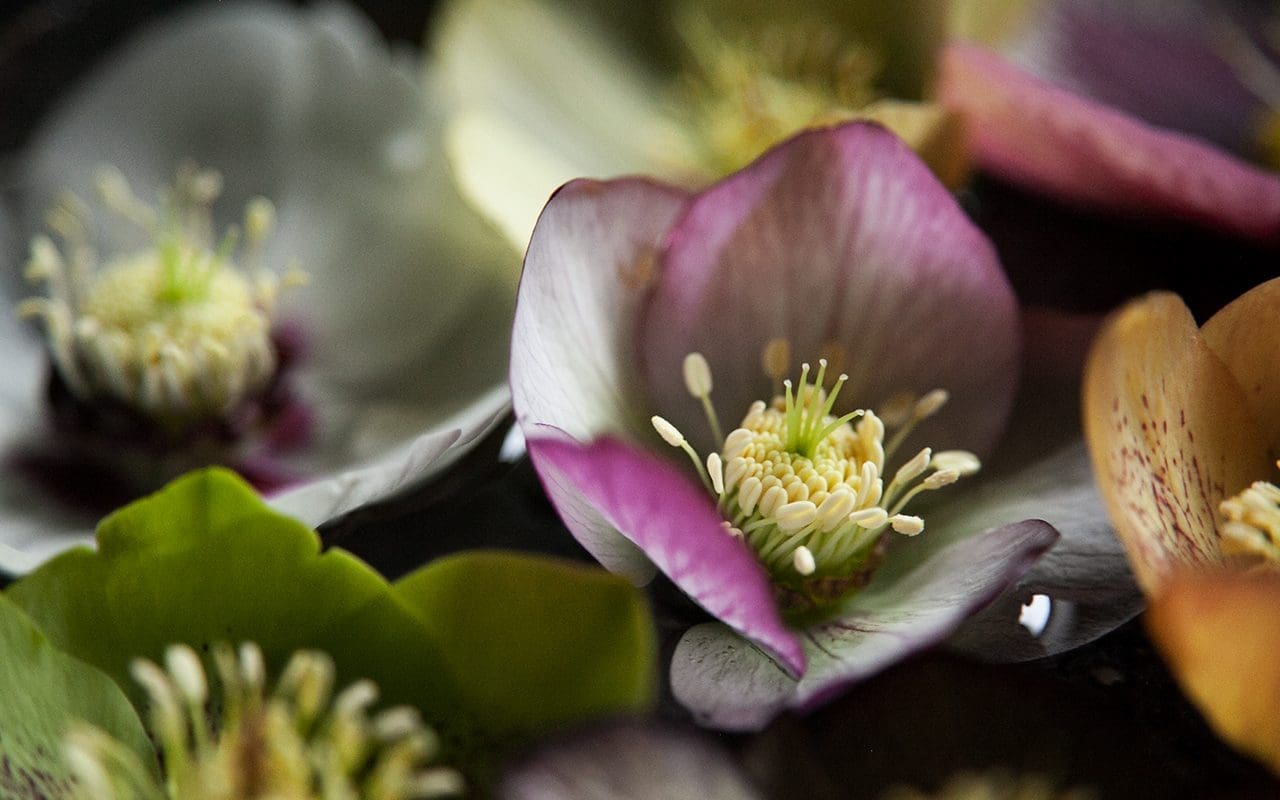
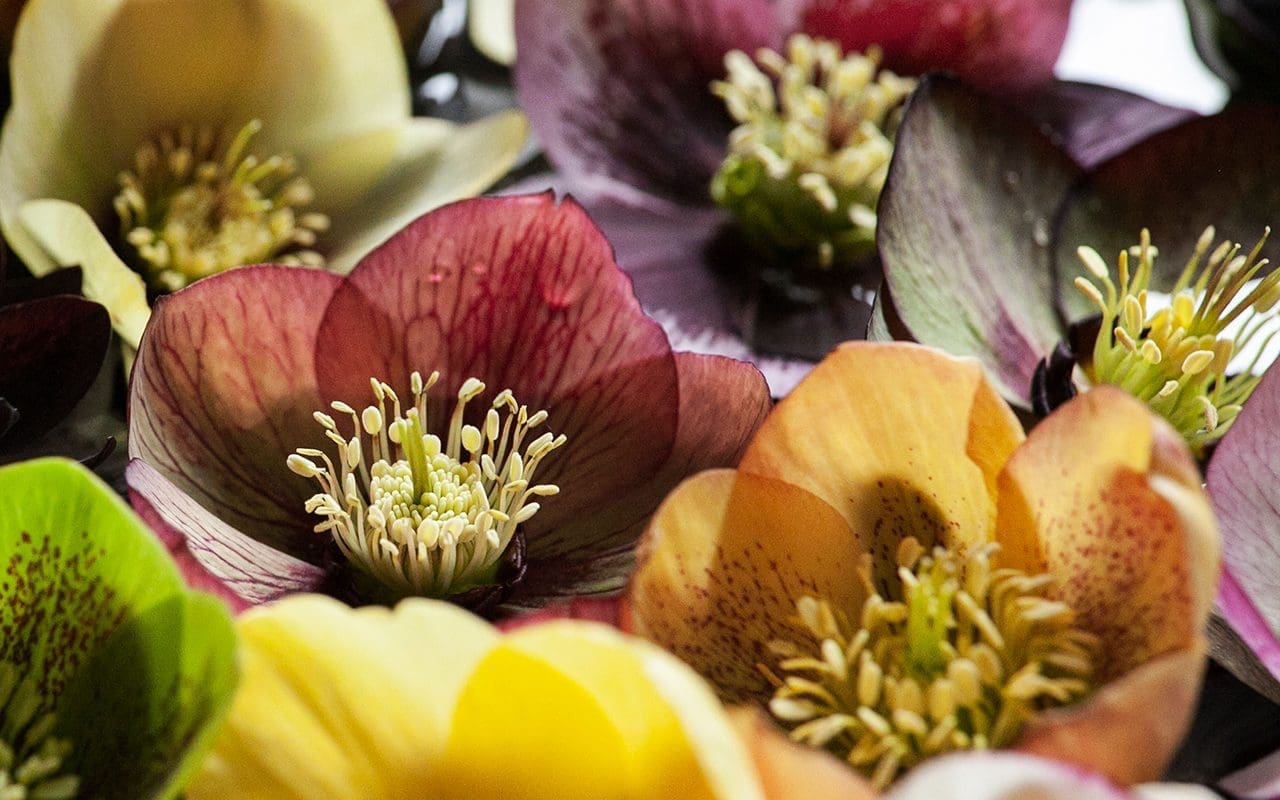
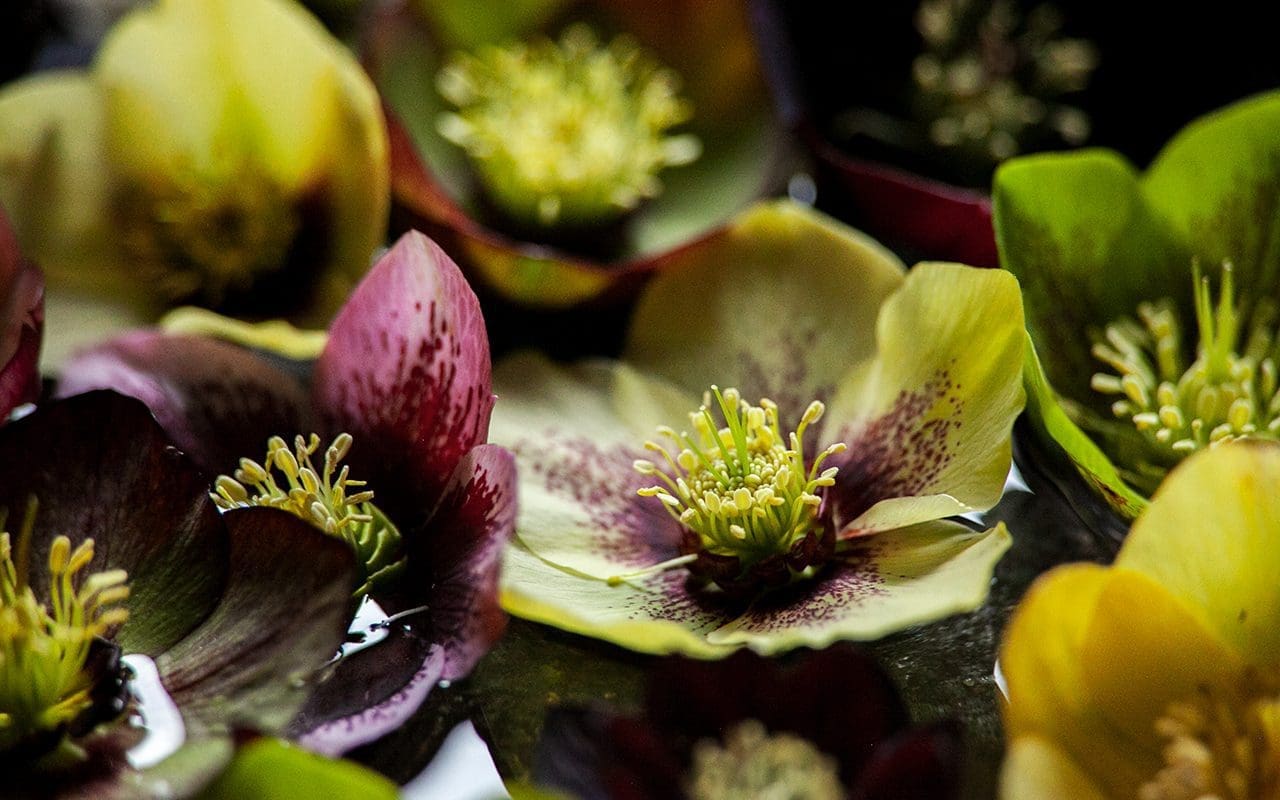
As with any infatuation, I have become very particular about the forms I grow here. I favour the singles, which sit better with the naturalistic mood of the garden and look for good poise and well-proportioned flower. You know when you see it once you get your eye in.
The cool conditions that the hellebores need in summer are rare on our slopes and the pools of shadow that I am nurturing under the trees have to be rationed. The hellebores come high on the list of shade-lovers I provide for and I have grouped them according to colour, moving from tree to tree and changing the mood accordingly. Lime-green selections to throw the black forms into relief under the Hamamelis x intermedia ‘Gingerbread’, meaty reds and plums together with the bronze foliage of Viola riviniana var. purpurea beneath the medlar. Yellows completely on their own or with the green of ferns, so that their brightness shines out in the way that primroses do on a shady bank.
The whites get their own place too as they project a clean mood and are good with snowdrops and I like to see the picotee selections together so that the fineness of their markings is not lost in a crowd. Although I am not an admirer of the double forms, particularly the pastels, which feel overbred and out of place at this time of year, I do treasure a dark plum double of good form. We have it growing on its own under the wintersweet and I like it for its ancient, medieval feeling. When afloat it looks like an exotic waterlily.
Once the hellebores begin to go to seed, I remove all but an occasional stem in each group to curb their offspring. The parent plants can live many years, decades even, and are best without the competition of juveniles, but I am keen to see, by grouping my plants carefully, if they will spawn the odd treasure. Most will be inferior to their hand-selected parents, but some may have a special something. The seedlings retain a certain charge of expectation. The excitement of a possible new addition to the spectrum.
Words: Dan Pearson | Flowers & Photographs: Huw Morgan
Published 8 February 2020
Every autumn, with late September sun on my back and the prospect of this very moment in mind, I spend an afternoon potting up the winter-flowering iris. A winter without them would be a winter without this particular prospect. A spear of optimism that pushes life regardless, into the dark months.
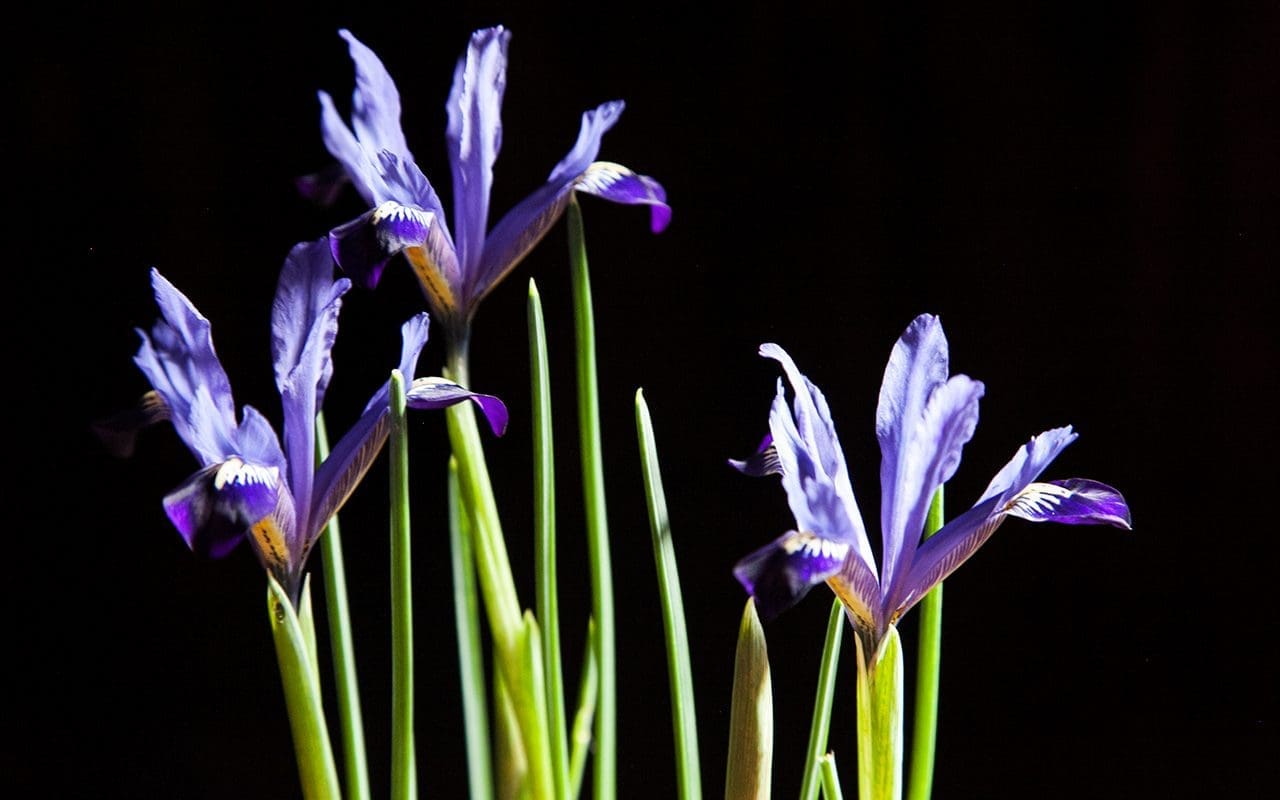
Here I save my hottest, driest spots for autumn-flowering Galanthus reginae-olgae, Amaryllis belladonna, Sternbergia lutea and the perennial, strappy-leaved Algerian Iris and so keep to the habit of growing the bulbous winter iris in pots. We are now spoiled for choice as there are so many named forms. The earliest to flower is Iris histriodes, which is distinct for having slightly shorter growth and wider flowers than Iris reticulata. There are also crosses between them and the yellow-flowered Iris winogradowii. Of them all I prefer the elegance of the Iris reticulata, which draw a more finely-penned line, but they are all worth exploring and every year we trial two or three new varieties and return to a favourite or two to reacquaint ourselves.
I have learned over the years that growing them in pots is the best way to grow them here. Hailing from Turkey, where they have a summer bake ahead of them, they make the most of the winter rains and the short and furious growing season. A winter which is all about readying for spring and where rest is not an option. They bring all of that energy with them and are more than happy to do their best in our benign climate in Britain, but our summer is their downfall. Like tulips, they need the bake and the dry come the summer and you have to find them a free-draining site which emulates their homeland if you are to be successful in keeping them long-term in open ground. The damp of the West Country, in combination with our heavy soil, means that I have the tiniest slivers of such ground at the base of south-facing walls that would see them doing well. This is not to say that it is not worth trying, but if you do have the right position, plant them deep at 15 to 20cm so that they are below the runs of mice and voles.
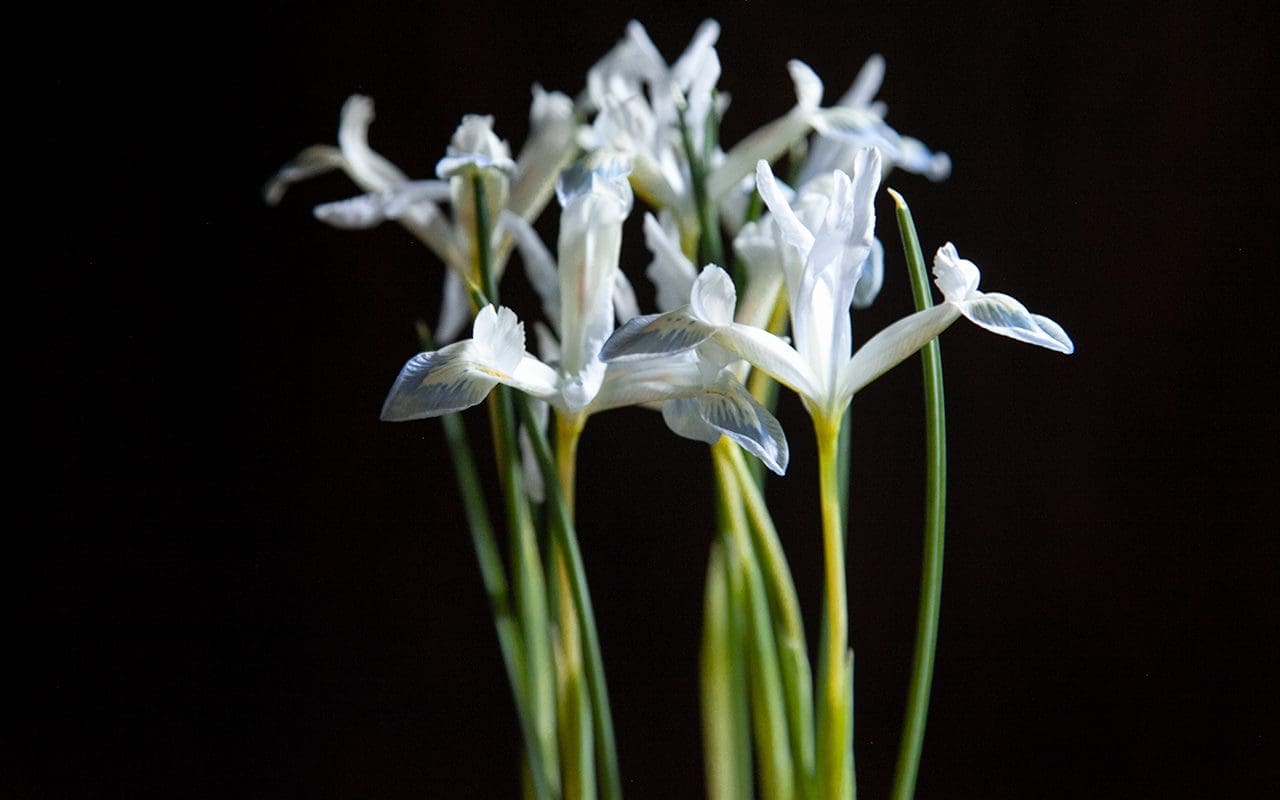
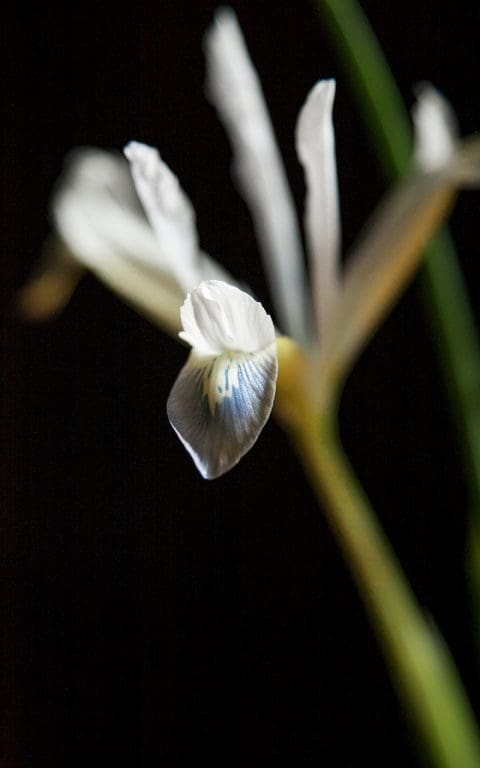
The bulbs are small and you need no more than five to a pot. Any more, or plant them too densely, and the elegance of the flowers is lost in the crowd. The bulbs are planted deep in the pot and put in the frame to keep them on the dry side and with just that little bit of extra protection to steal a week or perhaps a couple on the winter. The first spears of foliage were visible at new year this year. These early signs draw you back regularly to check on the shift which takes place rapidly as soon as you see the papery, translucent sheath that protects the flower buds. If you wait until this moment and bring them into a cool room in the house, the pointed buds will rise fast and silently in a day. If you are prepared to cheat again and bring them into slightly more warmth you can witness the petals unfurling like a Chinese fortune fish that curls in your hand.
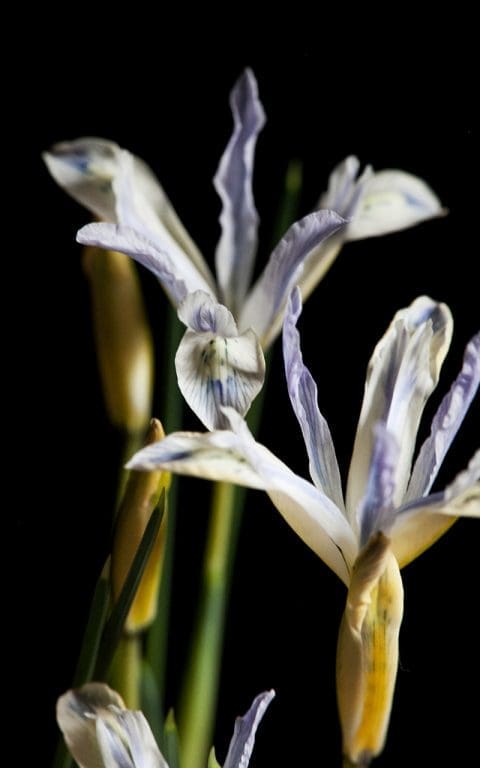
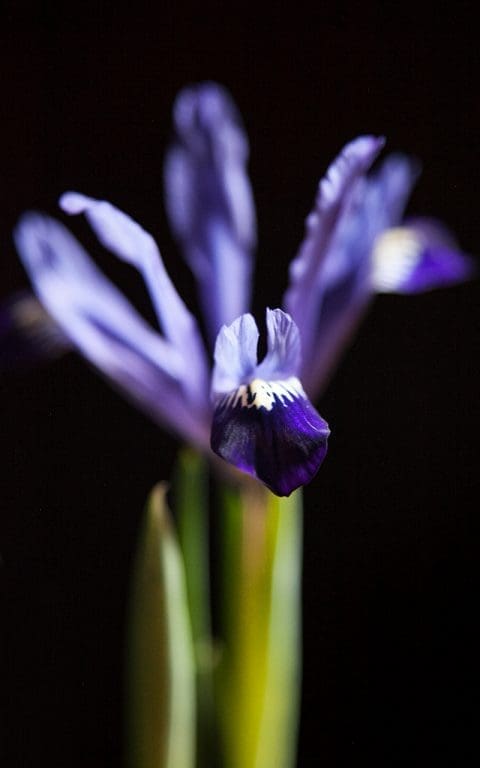
Inside the flowers last for no more than a weekend, but you do get to witness them up close and intimately as I am doing now as they sit in front of me on my desk. Then you will also be able to take in their fine but certain perfume, like a cross between primroses and distant violets. This year, the tallest of the three that have come together this weekend is ‘Painted Lady’ (main image), the first to flower. Yellow, speckled buds open palest lavender, the blue leopard spots staining the tips of the petals as if they were bleeding. Next to flower was ‘Frozen Planet’, again pale but well-named for the ice-blue cast that intensifies to colour the whole of the falls. Last of the three is ‘Fabiola’, a substitute made by the nursery. Although my “no substitutes” rule is usually hard and fast, I am pleased to have this one. It is always good to have a dark form in the group, so as to have the gold flare in the throat set off by rich royal purple velvety falls.
We love them all, but I do not have the heart to keep them inside for long, since they last a fortnight outside in the shelter of the house and we return to them daily to enjoy their every moment.
Words: Dan Pearson | Photographs: Huw Morgan
Published 1 February 2020
When I returned to London in 1988 after four years at Manchester University, my first job was as a Wardrobe Assistant for the English National Opera at The Coliseum. I was responsible for half of the male chorus, laundering, pressing, mending and preparing their costumes for every performance, during which I and the team of other Wardrobe Assistants were on standby for intervals, quick changes and emergencies. Hours were irregular with late nights and early starts when there were matinees and, with a 4 day on, 3 day off shift, weekends were not always at the weekend. This meant that I was frequently in the West End at meal times and in the company of others, so very quickly I was introduced to, or discovered for myself, a number of eateries that were dependable, affordable and had an edge of West End dirty glamour to seduce this city returnee.
Many of these were institutions, but although some of them are still there, many are now sadly gone due to development. Gaby’s Deli on Charing Cross Road, famed for falafel and kofta, the New World Dim Sum restaurant on Gerrard Place (only recently closed), where it was easy to get seriously stuffed on the trolleys that kept passing with delicious new dishes. Pollo Bar, with its greasy vinyl booths upstairs and smoky beatnik vibe in the basement, where huge bowls of pasta and endless carafes of red wine were cheap as chips, and Jimmy’s Greek restaurant on Frith Street, where the clattery basement and copious retsina was conducive to increasingly raucous evenings. If you wanted something more traditional there was New Piccadilly, the classic greasy spoon or The Stockpot, where tomato soup, Shepherd’s Pie and apple crumble and custard were the order of the day.
Another much-loved restaurant, although far from Soho, was Daquise, the Polish in South Kensington, which was my habitual destination after a visit to the V & A. The smell of the restaurant was very particular, a combination of boiled cabbage and meat overlaid with home-baked cakes that instantly transported you to eastern Europe. Favourites were the cheese and onion dumplings, boiled beef or schnitzel followed by their superlative cheesecake. However, no matter what else I ordered I would always order borscht.
This borscht was the first I had ever eaten and it became the benchmark by which I have measured all others. Clear, rich, jewel-bright stock, with enough vegetables to fill you up, but leaving just enough room for a plate of cheese pancakes with apple. Since then I have made any number of ‘borschts’, many of which I am sure would infuriate purists, but nothing comforts on a chill winter’s day like beetroot soup. I came up with the version below as I had a hunch that the comparable earthy flavours of beetroot and wild mushrooms would work well together. When researching this piece, however, it came as no surprise, although some little disappointment, to find that the Polish had had this bright idea a long, long time ago. In particular an age-old borscht traditionally served on Christmas Eve is a clear beetroot broth with wild mushroom pierogi floating in it. Now on my list to try.
Here at Hillside we grow up to four crops of beetroot in a season, starting with an early sowing as soon as the weather warms in April and resowing every month or so. The last sowing is made in early August and these are the ones we leave in the ground to overwinter. One day, when we have a frost-free root store, we will lift them before the frosts in November and cover them in just damp sand. Until then, the roots take their chances with the weather and the slugs, but most make it to the table.
This year we have grown our standard favoured varieties. The flattened, dark ‘Egitto Migliorata’ which we tend to harvest young, the saffron ‘Burpees Golden’ and the long-rooted ‘Cylindra’, which is favoured in eastern Europe for pickling, as the long roots create many identical slices rather than the fewer central slices from a spherical root. Their upright shape means you get more plants to a row and, although they can reach up to 500g in weight, they remain sweet and not woody. It stands very well for us in the ground over winter.

Serves 6
2 medium onions, coarsely chopped
2 sticks celery, coarsely chopped
1 large carrot, diced
500g beetroot, peeled and coarsely grated
30g dried porcini or other wild mushrooms
1 large bay leaf
3 allspice berries
8 juniper berries
1.7 litres water or vegetable stock
2 tablespoons sunflower or rapeseed oil
Apple cider vinegar
Salt
Finely ground black pepper
Soured cream or sauerkraut
Bring 750ml of the water or stock to the boil in a pan. Remove from the heat, add the dried mushrooms and cover. Leave to stand while you prepare the vegetables.
Heat the oil in a large thick-bottomed pan. Add the onion, celery and carrot and fry, stirring frequently, until the vegetables start to brown and caramelise.
Finely crush the juniper and allspice in a mortar and add to the vegetables. Continue to cook over a low heat for a minute or two until fragrant.
Drain the soaked mushrooms and retain the soaking water. You should have around 700ml. Make up the total amount of liquid required with water or stock. Coarsely chop the mushrooms, add to the pan of vegetables and cook for another minute or two. Add the grated beetroot.
Pour the mushroom stock into the pan through a sieve. Bring to the boil and then reduce the heat and simmer with the lid on for 45 minutes until all the vegetables are soft and the flavours have combined.
Season with salt, pepper and brighten the flavour with vinegar to taste. I like my borscht to be well seasoned.
Ladle the soup into warm bowls. Spoon on some soured cream or sauerkraut. The golden turmeric sauerkraut from Bath Culture House I have used makes a nice contrast to the rich, ruby soup.
Recipe & Photographs | Huw Morgan
Published 25 January 2020
O Pioneers! Bank-
binding roots, violet suede shoots,
catkins aquiver.
Words and photograph: Huw Morgan
Published 18 January 2020
The January garden rarely sleeps. It continues to draw itself back, the skeletons that do not have the stamina already toppled, the fallen foliage and fleshy limbs pulled back to earth by the worms. It is an endlessly fascinating watch, observing this cycle and it changes weekly. Today it is the Sanguisorba officinalis ‘Tanna’ which caught my eye, collapsed and whorled against the dirt like monochrome Catherine wheels. Close by the silvery-grey willow leaves are strewn under branches that are already plump with catkin. The old and the new starkly side by side.
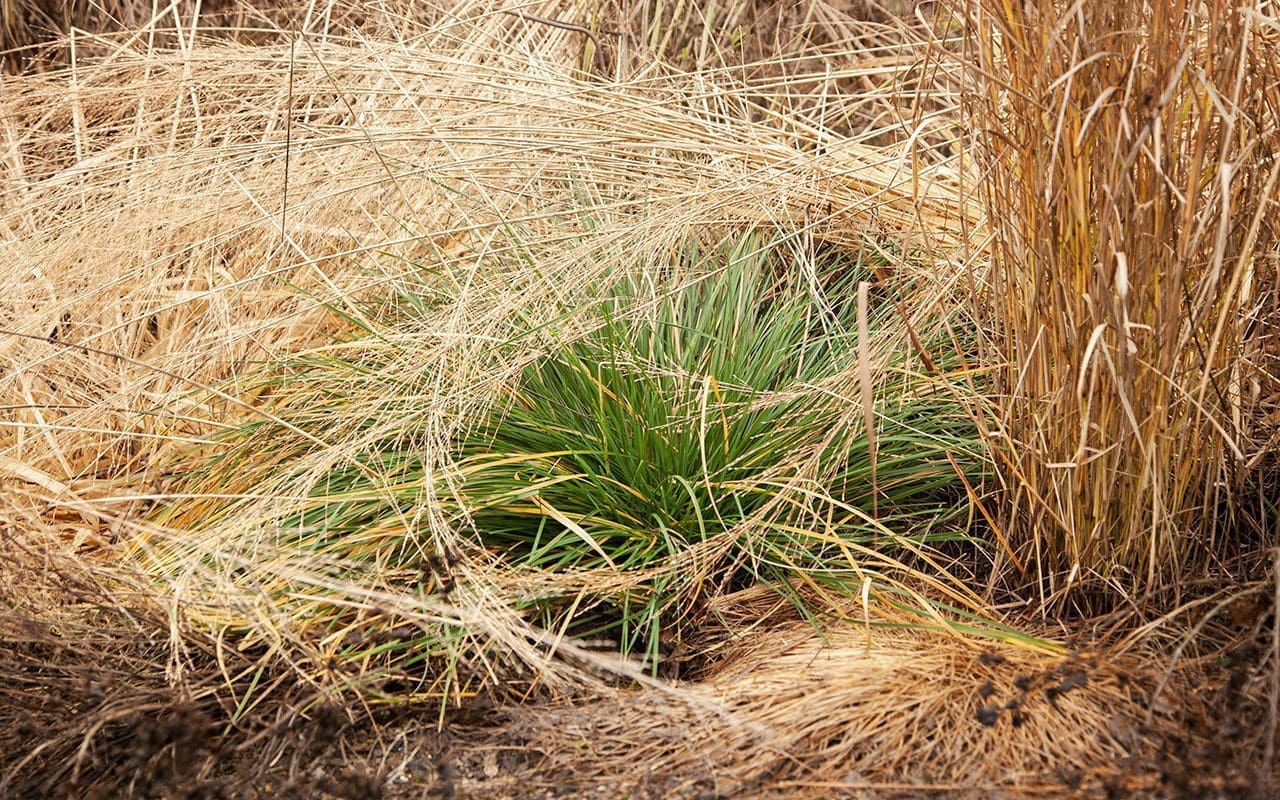
Every day there is more transparency, the ground plane becoming visible again where just a month ago your eye was held still in the remains of the last growing season. The glossy tussocks of deschampsia reveal their winter green, marching amongst their now naked companions. Vernonia and thalictrum towering overhead and standing tall and well as skeletons, but better for an undercurrent of foliage. The plants that remain wintergreen are clear to see. Waldstenia ternata proving its worth as it shimmies amongst buff miscanthus and flows down the steps by the Milking Barn. Its evergreen carpet is broken by cyclamen with a push of marbled foliage and the first of the Ranunculus ficaria ‘Brazen Hussey’ and the Bergenia purpurascens ‘Irish Crimson’ which have now coloured, their ox-blood leaves burnished and light reflecting.

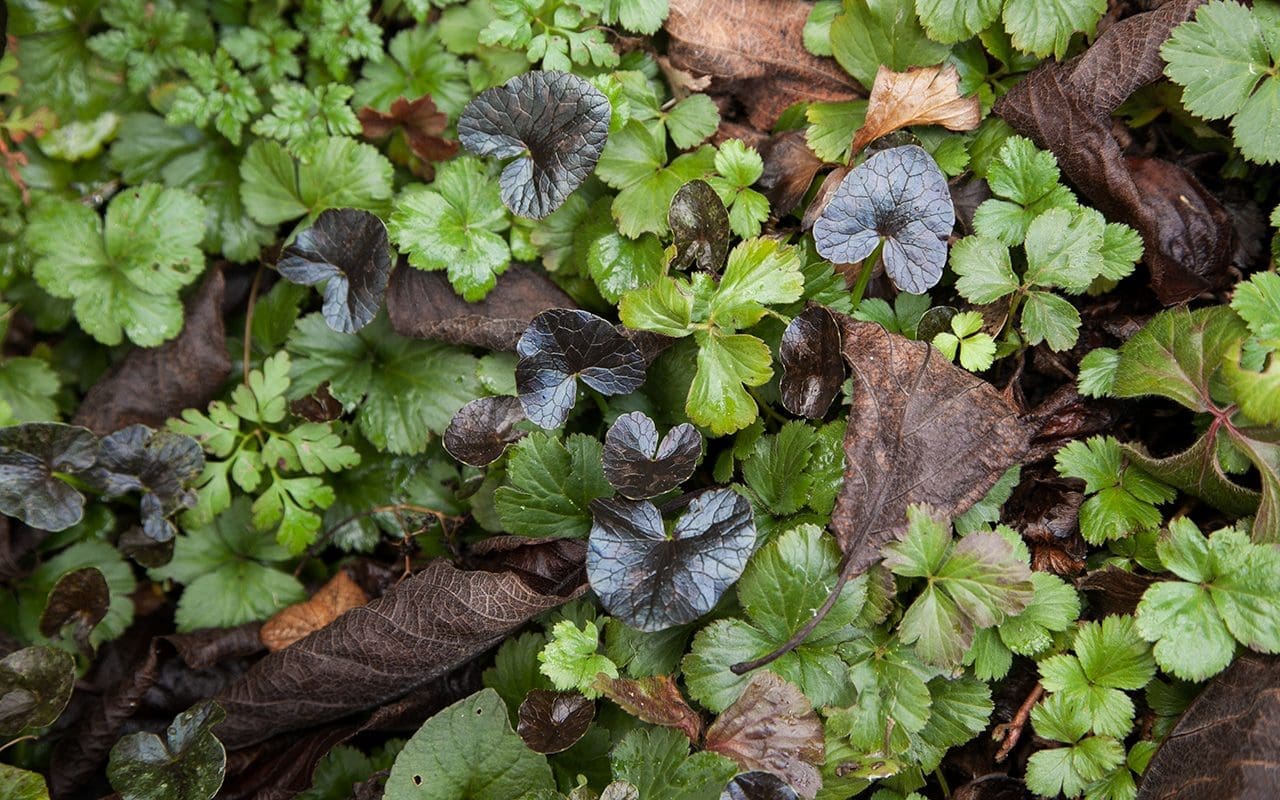
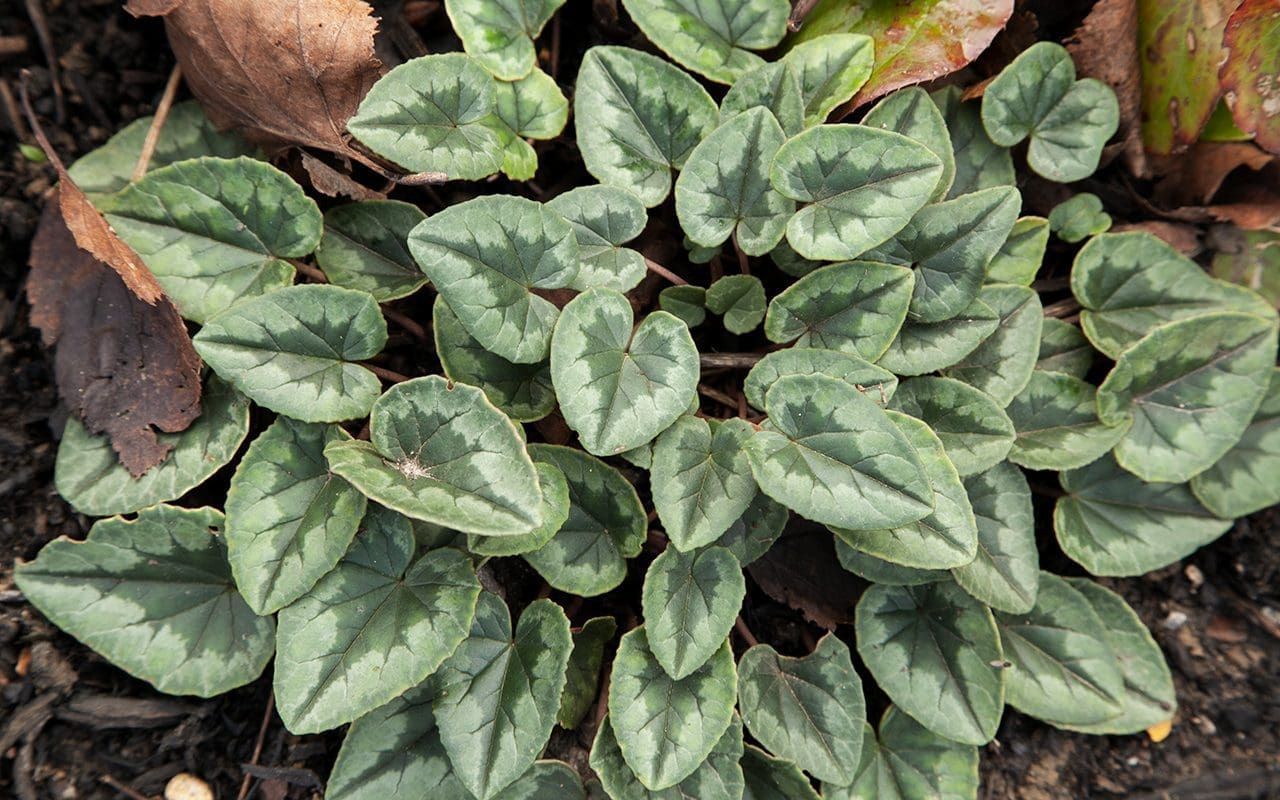
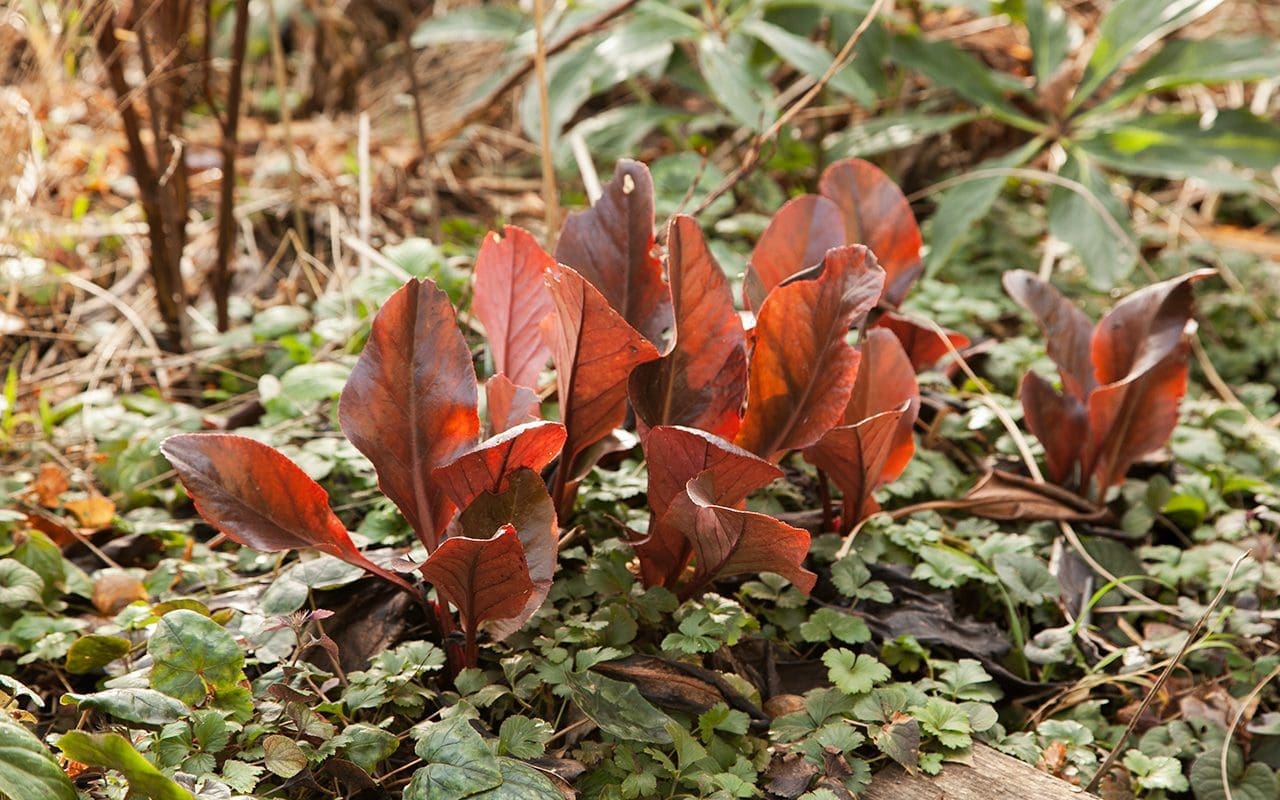
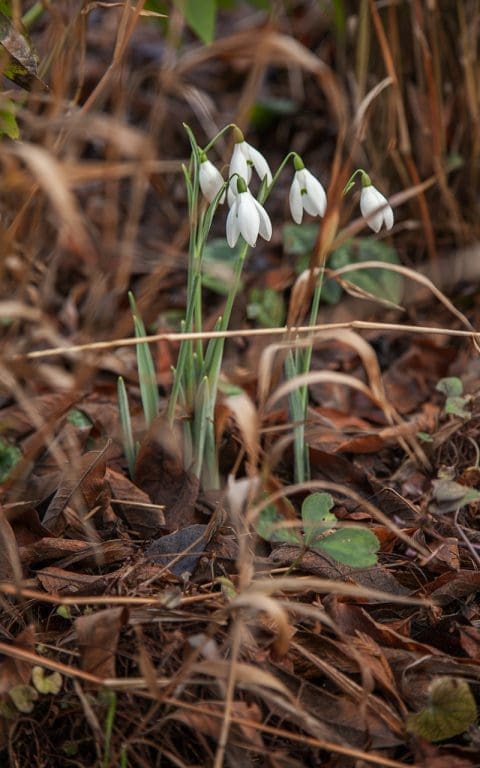
The layering in a perennial garden and under deciduous shrubs is more important than ever in the winter and where the soil is left open to the elements you can see that it is looking exposed and battered. My aim in time is for the greater majority of the garden to be cushioned throughout with plants that are happy to live in the understorey, much as the primroses and violets do in the shadow of the hedgerows. I have taken their lead and brought them into the garden. The violets are more than happy to disappear amongst the summer froth of Erigeron, but as soon as winter hits they come into their own again with evergreen foliage and the perfume of flower as soon as the weather warms. These shade-loving groundcovers also make a stable environment for groupings of bulbs which you can leave there undisturbed and safe from cultivation.
The reveal of plants that you haven’t seen since the cover of summer becomes a new point of interest. Epimedium sulphureum, so wonderfully reliable in the shadows and Heuchera villosa var macrorhiza with its emerald, light-absorbing leaves. I have started to group erythronium amongst the heuchera for the sanctuary of its long-lived cover, in the hope that the shadow of summer perennials that rise in turn above them will be enough to cool the Dog’s Tooth Violets on our sunny slopes. I have done much the same under the mulberry, where the pool of spotted Pulmonaria saccharata ‘The Leopard’ is somewhere I look onto and enjoy for now, but also for the prospect that is held there for the spring.
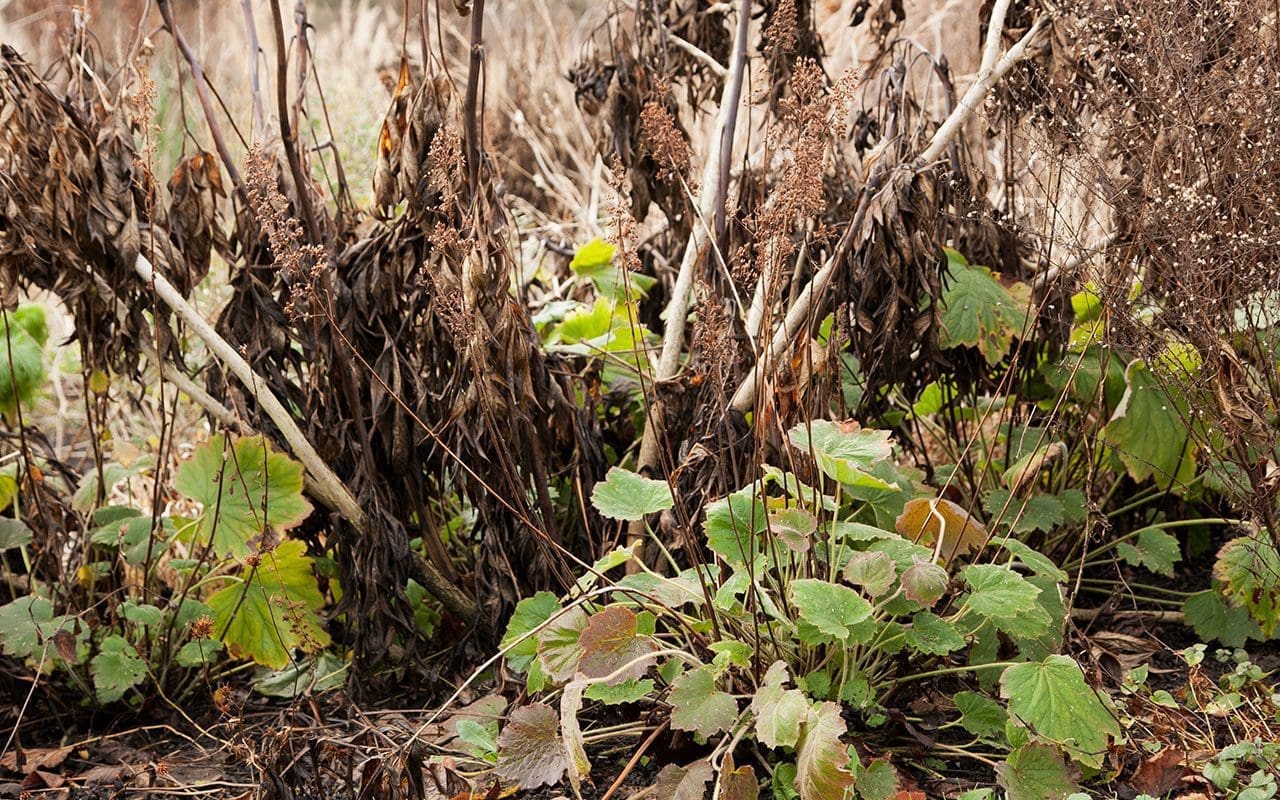
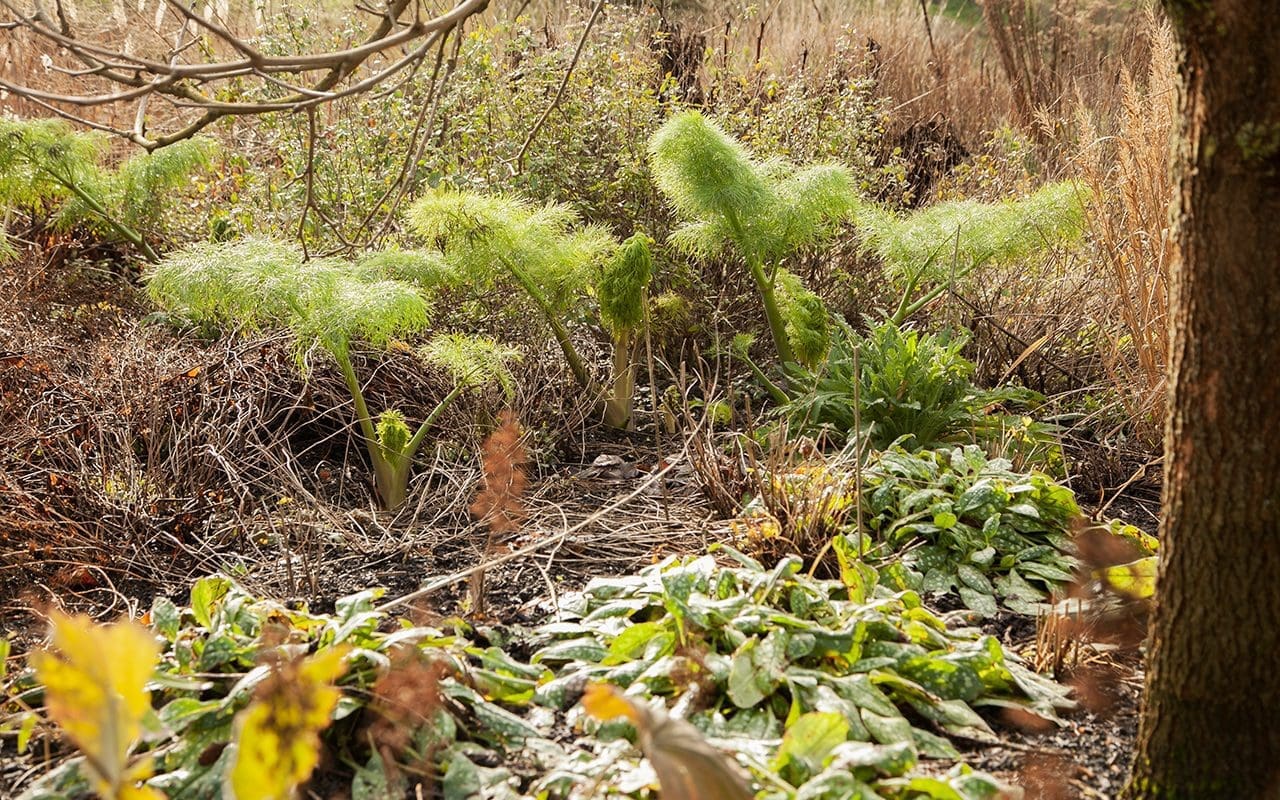
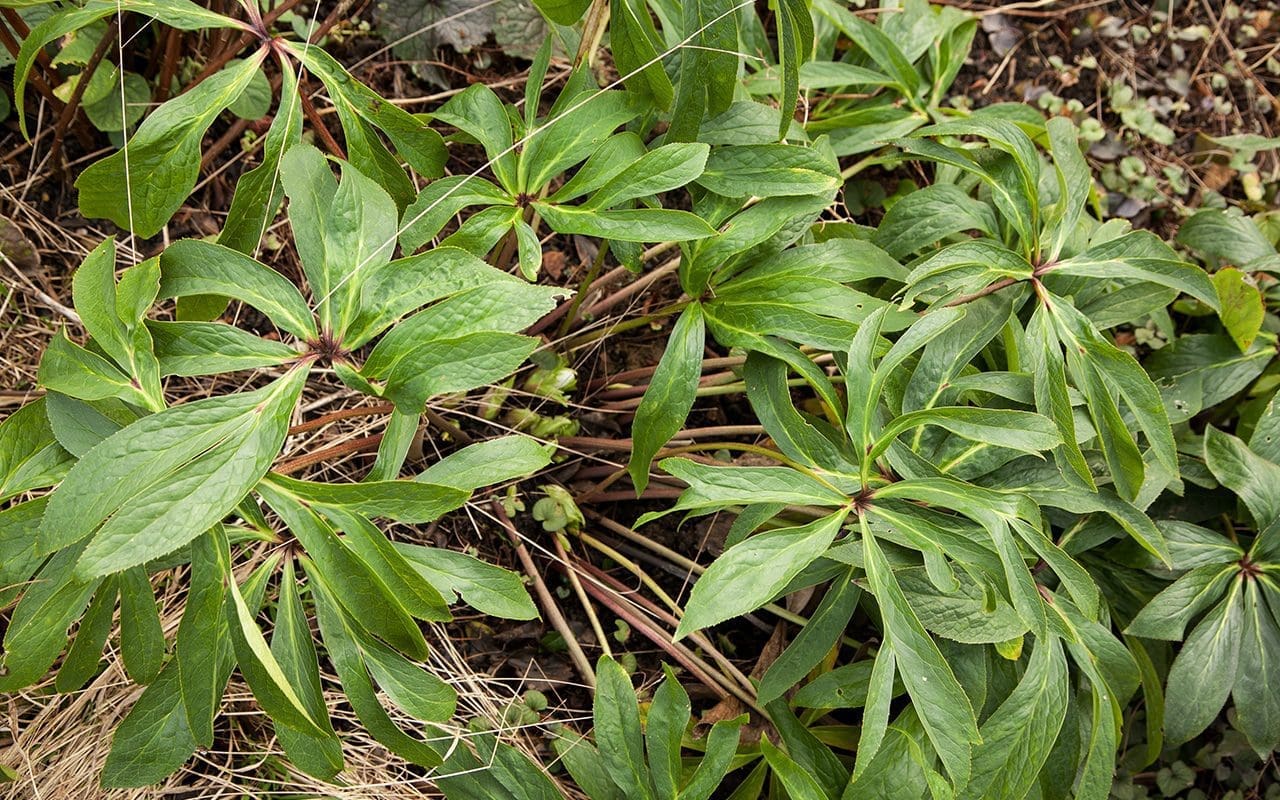
I leave the whorls of hellebore foliage until the very last minute before cutting back, enjoying their leatheriness and the hunkered-down feeling the Lenten Roses bring to a garden. Though I know it is ‘good practice’ and easier to cut away old foliage before the flowers start to rise, the sense of loss is greater than the inconvenience of removing the leaves once the flowers push and have momentum. I am pairing the Hellebores with Corydalis ochroleuca in the shade and Viola riviniana ‘Purpurea’ where there is the winter sunshine the violet needs to keep the foliage coloured strongly purple.
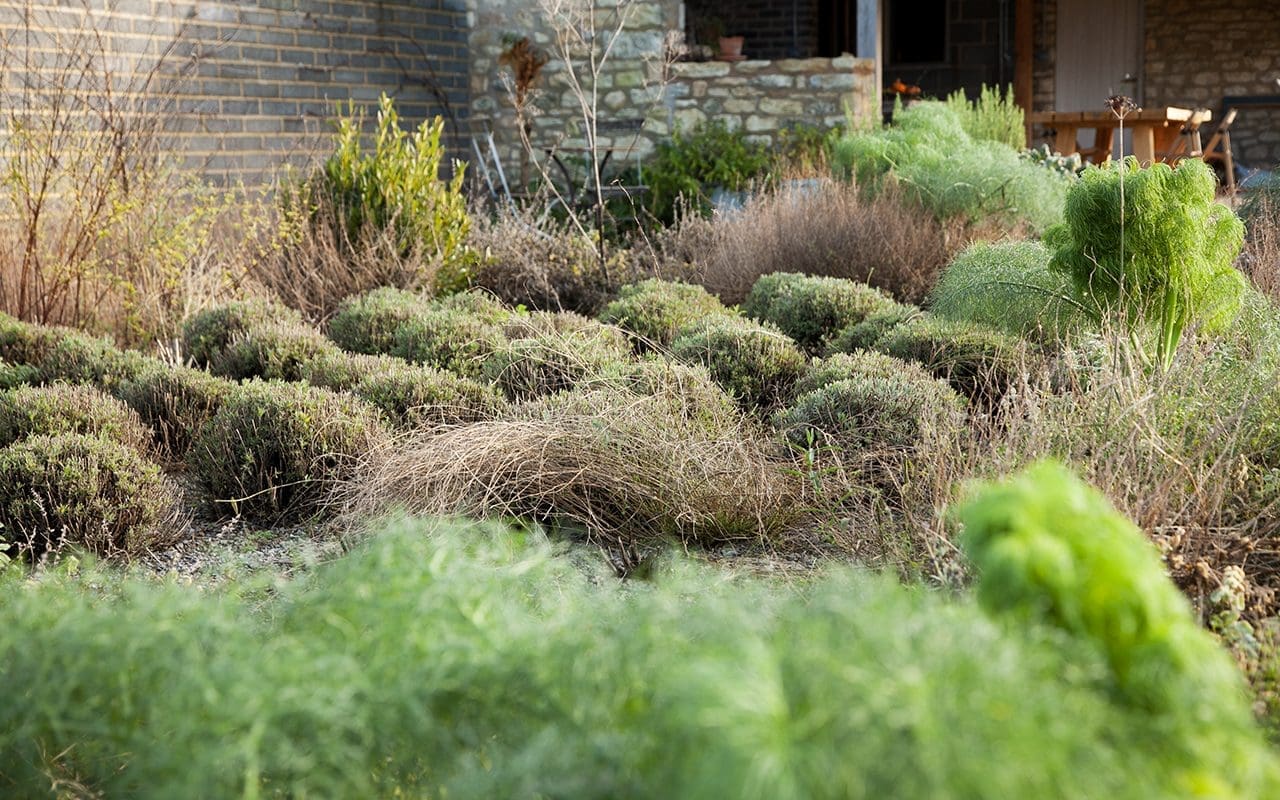
The sun is important to some winter greens and, where the planting is not layered to such a degree, they play an equally important role. The felted silver of Ballota pseudodictamnus and neatly pruned cushions of lavender are the making of the herb garden in the winter. On the damp days, when there is moisture in the air, the Salvia candelabrum hunkered against the trough (main image) shimmers with an outline marked by a million droplets of water.
The giant fennels take this winter season to make their growth, pushing dangerously yet fearlessly against the tide it seems. Last February snow took its toll, crushing and blackening their finely-spun nets and making me wince when I looked at them until they regrew. For now, however, their fresh verdance is welcome. Life in the green and a good feeling with it.
Words: Dan Pearson | Photographs: Huw Morgan
Published 11 January 2020
We are sorry but the page you are looking for does not exist. You could return to the homepage