In early July I sit down and think of winter. With my boxes of vegetable seed and Joy Larkcom on the table before me this is when I start to plan what to sow from the end of the month and into August and September. Although it takes some discipline at midsummer to cast my mind into a dark, cold future these are the crops that are starting to provide for us now, so it is time well spent, ensuring that we are not simply dependent on a diet of roots and brassicas through the cold months.
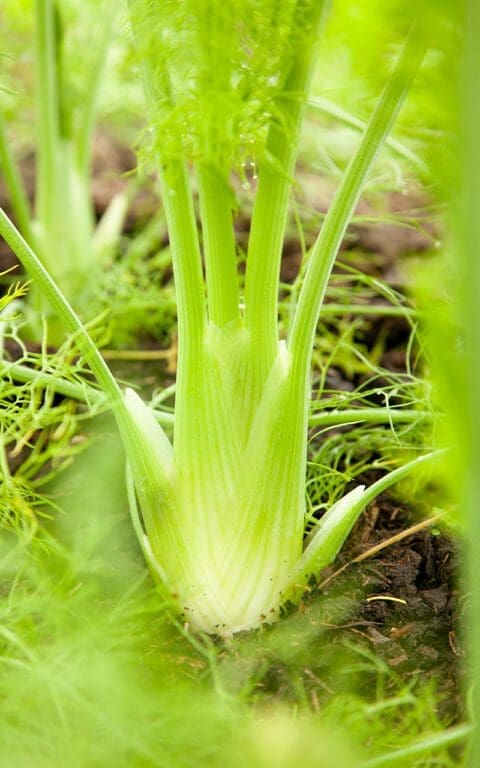
Fennel – also known as bulb or Florence fennel, to differentiate it from the soft herb – is one of my favourite of these midsummer sowings. Despite having a reputation for being tricky, for us it has so far proven to be easy to germinate, trouble-free to grow on, easy to transplant and productive. In early August I sowed 24 modules with two seeds to each to allow for failures. Once germinated I removed the weakest seedling from each module.
Like all umbellifers fennel produces long tap roots, so I use root trainer modules of the sort you might use for sweet peas or broad beans. These ensure that the roots have space to grow down and don’t become tangled and congested, which prevents them from growing away when they are transplanted. Ideally fennel prefers to be sown in situ, but these summer sowings are destined for the polytunnel, and in August we are in the middle of prime tomato production, so the modules were put into the cold frame to germinate and grown on for about a month before being planted out in mid-September.
Fennel is a Mediterranean marsh plant, which needs rich soil and constant moisture to do well. Cold and drought will cause it to bolt in record time, sending up a tough flower spike which quickly makes the whole plant stringy and inedible in a matter of days. Even with very regular watering I have found it impossible to grow the huge, swollen white bulbs you see at the greengrocer or supermarket, but the flavour is good – some would say better – from the smaller ones. You often see these sold as ‘baby fennel’. I have read that lining the trenches you plant the fennel in with perforated plastic sheet retains more moisture and replicates the marsh-like conditions they favour and so I plan to try this method next year to see if it produces larger plants.
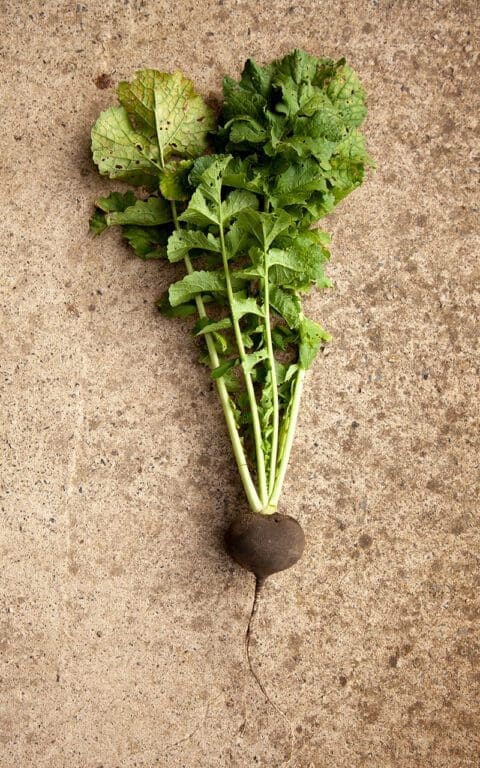
On the same day that I sowed the fennel I also made sowings of a new crop for us, ‘Black Spanish Round’ radishes. These were sown direct in the Kitchen Garden, in two rows 30cm apart with plants thinned to 15cm apart after germination. We have very bad flea beetle here which eat the emerging seedlings of all the brassicas we grow, but particularly turnips, swedes, Japanese mustard greens and radishes so all of these are covered with a layer of horticultural fleece or micromesh to protect them until the seedlings can grow away fast enough to leave the ravages of the beetles behind. A regular, careful check beneath the fleece is also needed to keep an eye on the ground slugs which can decimate a young crop. At this end of the season, you rapidly run out of re-sowing time if the first sowing is lost.
The radishes are now the size of tennis balls and have a rough dark skin, unlike the red-blushed breakfast radishes we are more familiar with. Beneath the skin the flesh is pure white, crisp and with the familiar radish pepperiness. They can be eaten raw when young or cooked in any recipe that calls for turnips, to which they bear a strong resemblance in flavour. Hardy up to -10°C they can be left in the ground all winter, but you will avoid slug damage or the predations of mice and voles if you lift them around now and store them somewhere cool and dark.
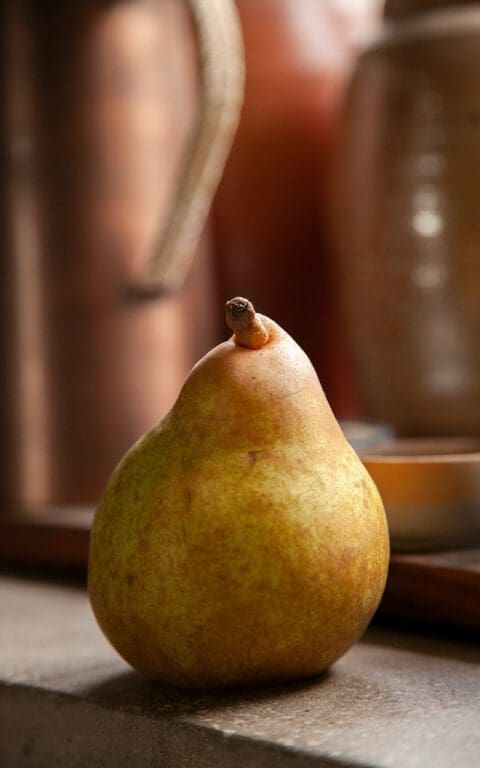
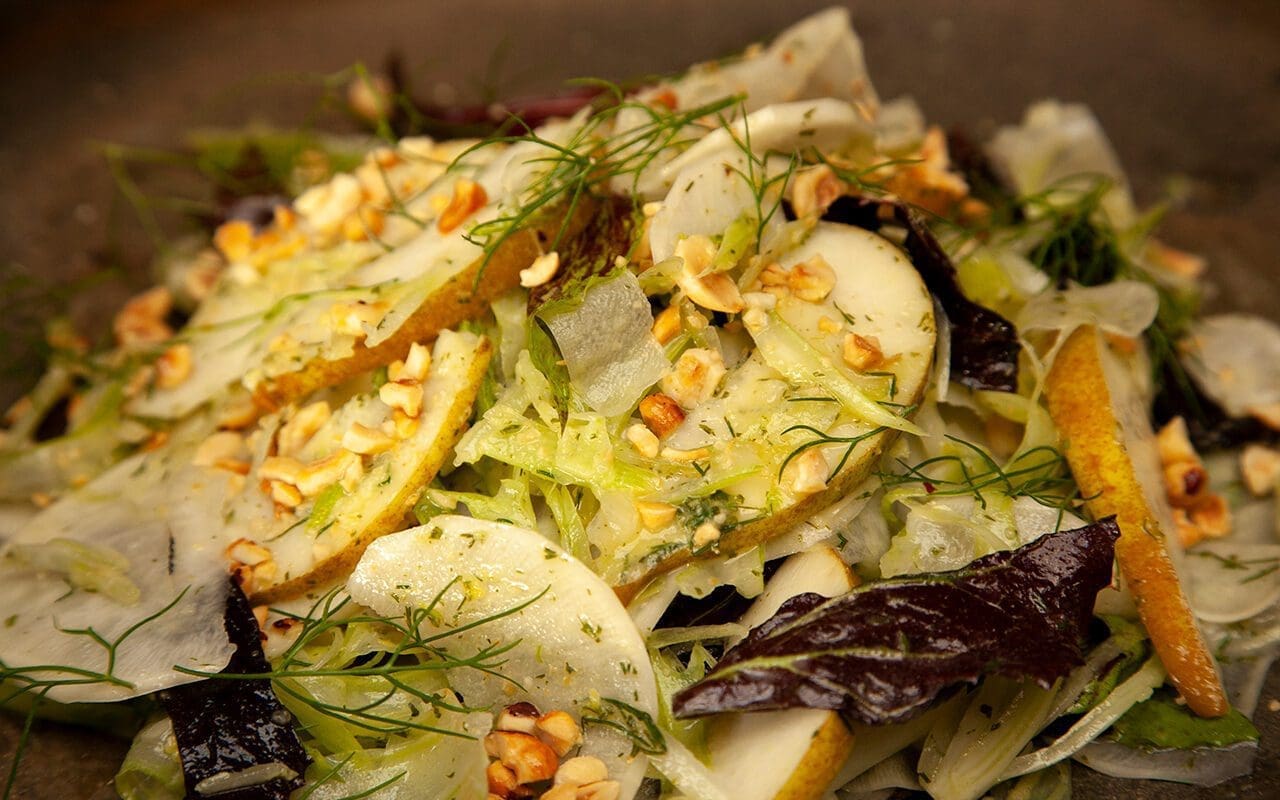
A fine, chilled sharply dressed fennel salad is one of the most uplifting of dishes for the winter table. The mild aniseed flavour and succulent crispness are invigorating and refreshing. While they are still young and tender enough I thought that these new radishes would pair well with the fennel and slices of succulent ‘Doyenné du Comice’ pear, harvested last month and which we are bringing into the house one at a time to ripen on the window sill.
Both the fennel and radish should be as finely sliced as possible using a mandolin or a very sharp knife. It is essential to put them both into iced water as this crisps them up and causes the radish to curl, which adds to the attractiveness of the plate.
If you are not able to get black radish then a small turnip will be a better substitute than breakfast radishes, which in any case are hard to come by at this time of year and too small to have the right kind of textural impact here. Alternatively, and perhaps easier to find, are the long Japanese radishes known as mooli.
This is a good companion to rich meat dishes, oily fish or a cheeseboard.
200g fennel
200g black radish, turnip or mooli
1 large, perfectly ripe pear
6 leaves of red or variegated chicory. e.g. Palla Rossa or Castelfranco
40g hazelnuts
1 lemon, juiced
Dressing
1 lemon, juice and zest
1 tbsp crème fraiche or Greek yogurt
1 tsp Dijon mustard
1 tsp honey or maple syrup
3 tbsp hazelnut oil
3 tbsp rapeseed oil
A small bunch of mint, leaves removed
A small handful of fennel fronds, removed from the stalks
Sea salt
Serves 4
Set the oven to 180°C. Put the hazelnuts into a baking dish in the oven and allow to toast for 10 minutes, checking regularly to prevent burning. Alternatively heat a small frying pan and toast the nuts until fragrant and lightly scorched. Allow to cool, rub off the skins and crush coarsely in a mortar.
Put all of the dressing ingredients, except the herbs, into a bowl and whisk to combine. Chop the mint and fennel very finely and add to the dressing.
Fill a large bowl with cold water and either add ice cubes or put into the freezer for 20 minutes to thoroughly chill.
Peel the radish and slice as thinly as possible using a mandolin or very sharp knife. Put the slices into the iced water. Do the same with the fennel.
In a medium sized bowl put the juice of the first lemon and a cup of cold water.
Carefully cut the pear into quarters, core and cut each quarter lengthwise into 6 slices. Immediately put the slices into the lemon water as you go to prevent browning.
Tear the radicchio into pieces.
Drain the radish and fennel. Put into a salad spinner or clean tea towel to get as dry as possible. Return to the bowl with the torn radicchio. Pour over about two thirds of the dressing and mix with together your hands to combine and coat everything.
Remove the pears from the lemon water and dry on a clean tea towel. Add to the salad and very carefully combine so as not to break the pear pieces.
Using your hands, carefully arrange the salad on the serving plate. Pour over the remainder of the dressing. Scatter a few reserved fennel fronds. Toss over the hazelnuts and serve.
Recipe and photographs | Huw Morgan
Published 13 November 2021
I first became aware of James Golden in 2009 when Huw showed me his short online review of my book Spirit: Garden Inspiration published on his blog The View from Federal Twist. From time to time Huw would direct me to James’ blog posts as he felt we had a shared perspective on gardens and I was always struck by the thoughtfulness and care in his writing, his philosophical and questioning approach to the matter of gardening and the undeniable beauty of the naturalistic plantings in his woodland garden. It was fascinating to see a garden being steered so apparently lightly and his low interventionist approach to working in his environment.
The following year James came to hear me speak about the Spirit book in New York and expressed an interest in my work on his blog, which is when Huw and I started an intermittent correspondence with him. It took a while before the stars aligned, but in 2015 James travelled to the UK and asked to visit the garden I had made at The Old Rectory in the Cotswolds. We made the arrangements, and I was very much looking forward to meeting him there, but then I was called away to Japan. James’ online account of his Old Rectory visit and his views of the Chelsea Flower Show garden I designed for Chatsworth and Laurent Perrier appeared shortly afterwards. It was clear he was a kindred spirit.
And then, last year, after we had finally published Tokachi Millennium Forest, Huw asked our publisher, Anna Mumford, what she was working on next. “Do you know James Golden?” she asked. “He’s writing a book about his garden at Federal Twist.” Huw told Anna about our tentative friendship and admiration of the spirit of his garden and suggested that I would be happy to support the publication of the book in any way I could. And so, last Sunday, James visited Hillside. It was a beautiful, mild autumnal day. The garden was at its pre-collapse peak and we walked the fields and gardens for several hours.
Then, on Tuesday evening, we sat together at The Garden Museum and had a conversation about the how, why and wherefore of his garden.
Below is a transcript of the beginning of that conversation, followed by an extract from James’ book, The View from Federal Twist: A New Way of Thinking about Gardens, Nature and Ourselves.
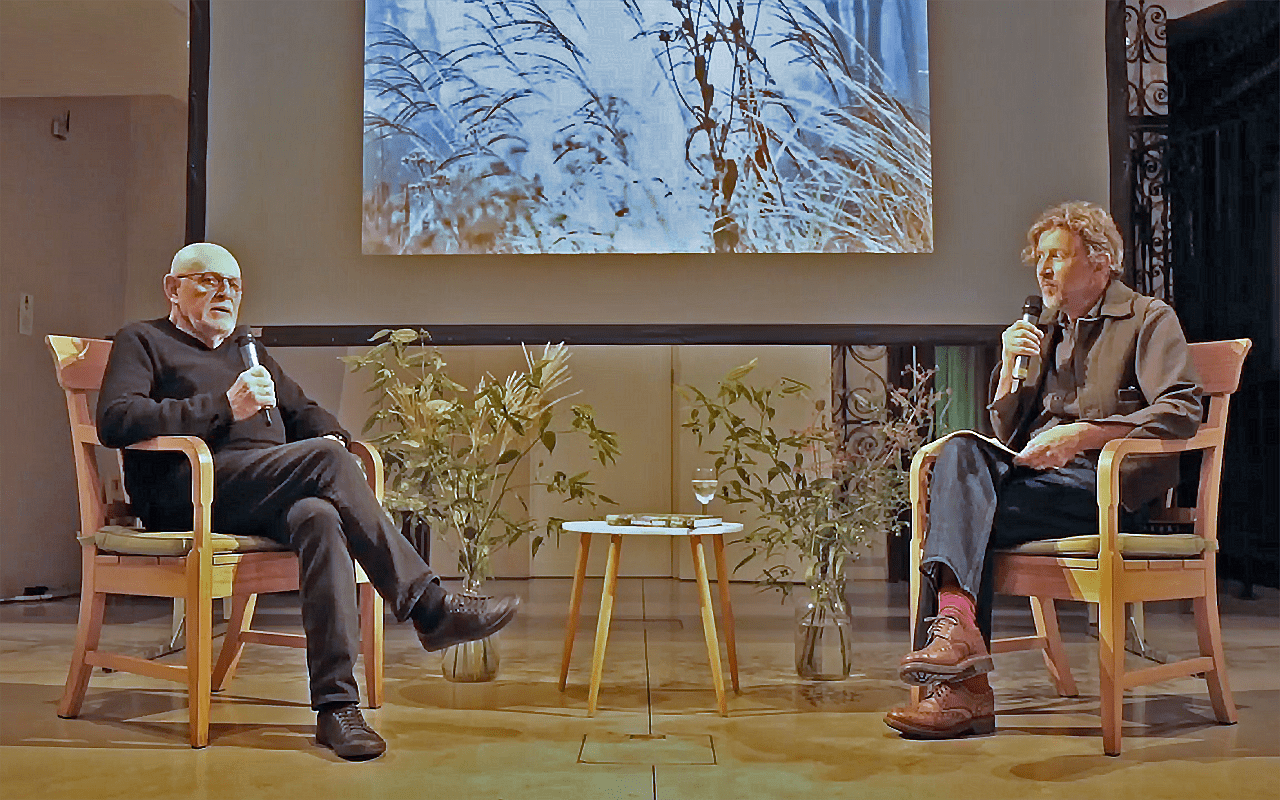
Dan: James, I wanted to open the conversation about this evocative place with you talking to us about your journey. How did you get to the point of being drawn to the clearing in the woods?
James: I usually say that I’m a latecomer to gardening, because I made my first substantial garden late in life. I grew up in the American south, in Mississippi, and almost unconsciously I fell in love with plants. I remember driving out of our small town over a wetland with my family and there’s this shrub blooming in the wetlands covered in white, flossy flowers and I asked my father what its name was and he didn’t know. That was the usual response I got when I asked about a plant. He knew how to grow potatoes and tomatoes, but he didn’t know this plant, which I learned probably fifteen years ago was called Baccharis halimifolia. At my grandmother’s house I saw an American beauty bush (Callicarpa americana), which has beautiful purple fruit, very notable in the landscape. Nobody knew what it was. I admired these things, but I never felt the urge to garden or to do anything with them.
I remember Cercis canadensis blooming in the spring. We call it redbud. You know, I think Cercis siliquastrum, which is a relative. It blooms in small purple, almost like buttons, just groups of little buds emerging from the dark bark. A beautiful, beautiful tree. But I think I felt, perhaps, that I was a boy so I shouldn’t appreciate things for their beauty. I’m not sure. Much later in life, actually after moving to New York, and my partner, now husband and I bought a house, a brownstone in Brooklyn and I started a small vest pocket garden. Only fifteen years ago we got a place in New Jersey and I started the gardening with a real passion and it became a really meaningful part of my life.
Dan: James, you say in the book that you entered the realm of garden making through reading.
James: I did. The first book on plants I read I think was The Well-Tempered Garden by Christopher Lloyd, which didn’t have a terrific meaning to me, being from America many of the plants weren’t known to me. Later I stumbled on a group of books that were coming out as Piet Oudolf was becoming more and more popular. Many of the books were by Noel Kingsbury and Piet Oudolf or by Henk Gerritsen and Piet Oudolf. They were large books with beautiful photographs and I fell in love with that kind of gardening. Subsequently I have read all of Dan’s books and learned gardening from books, not from actually gardening. I have done gardening and I do gardening, but I don’t particularly care for the labour of gardening.
Dan: I think through reading the book one of things that’s rather wonderful about the journey of the book is your obvious ability to observe very closely. It feels like you’ve really found your way into that place through that close observation and thinking time. Could you tell us what Federal Twist was like when you first found it and what drew you to decide that was the right place to be?
James: Federal Twist is in an area of several thousand acres of preserved forest on a ridge above the Delaware River. It’s still quite a wild-feeling place. We were looking for a new house. I also wanted to make a garden, but we found this mid-century house built in 1965, with many floor to ceiling glass windows, views out in all directions, and we fell in love with the house. It was described as vaguely Frank Lloyd Wright-like. It’s not Frank Lloyd Wright at all, but there are similarities it even had a few Japanese influences. I know the architect went through several designs in designing the house and at one point he had an entrance with a shoji screen, so he was thinking Asian and Japanese when he designed it.
We fell in love with the house and outside was an absolute ugly, derelict woodland. There was no open space. The soil was very moist. It was heavy clay. Behind the house was a monoculture of junipers, but we fell in love with the house. I had my doubts, but I had this stubborn feeling that I was going to make a garden here. I would find in books how to do it.
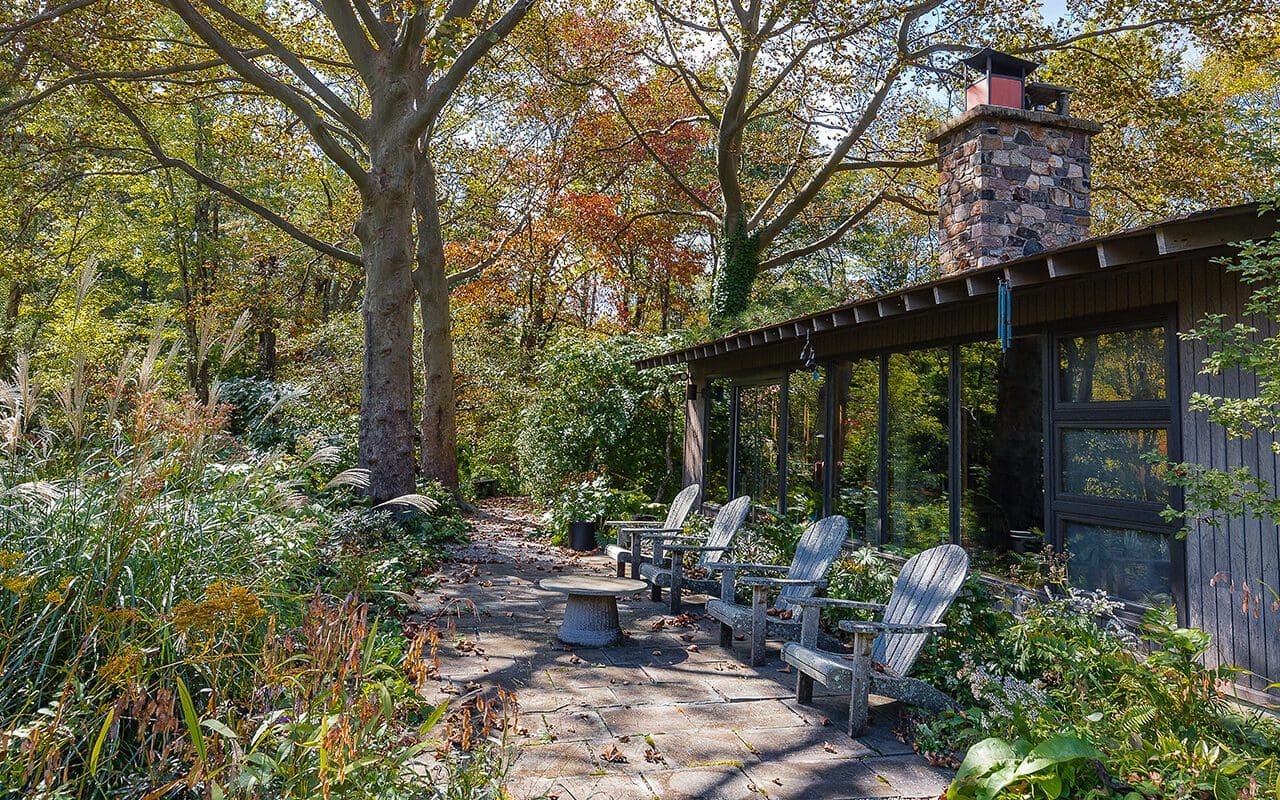
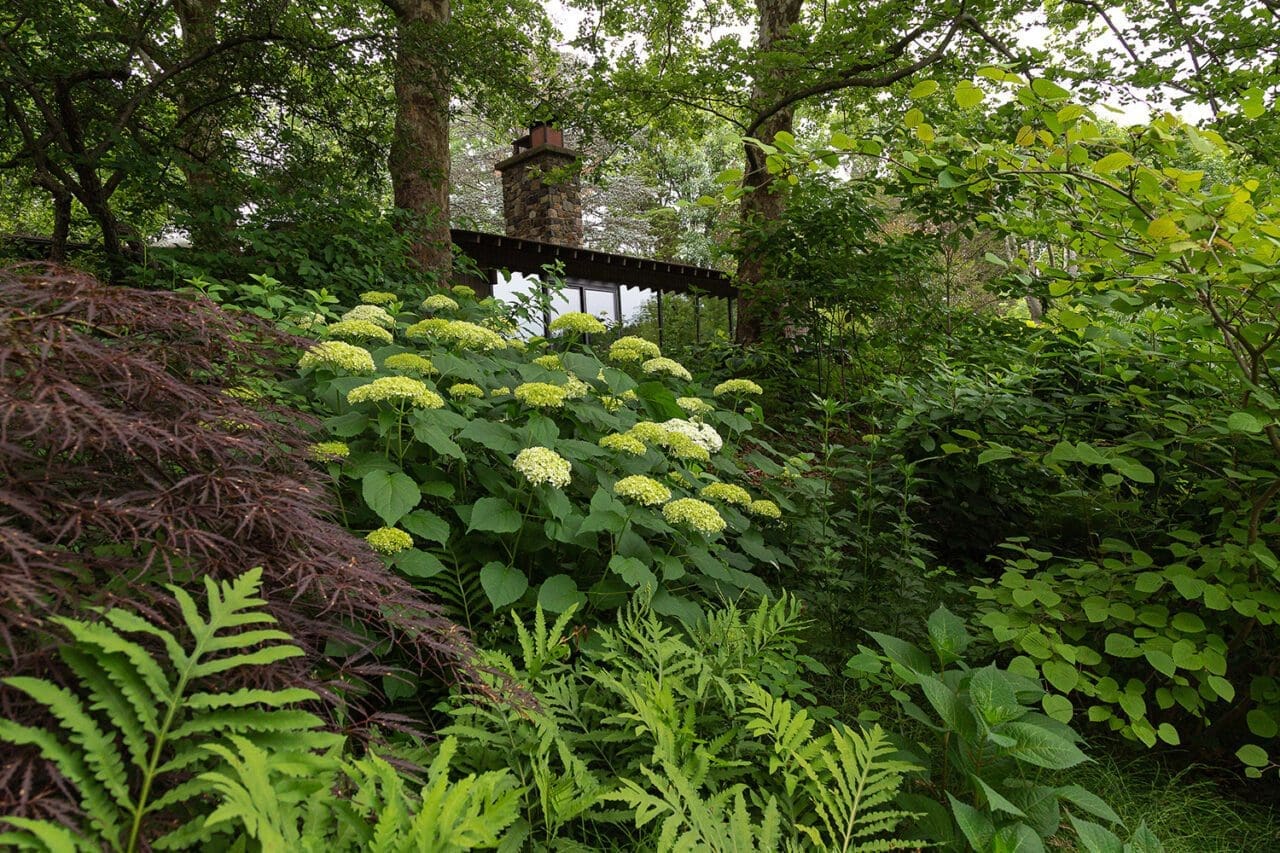
Dan: I was really taken by your relationship with the garden and felt that there were these wonderful parallels between how I feel about my place too. One of the things that I found really moving – there are two pieces that I’m pulling together, they appear at slightly different places early in the book – you say, ‘Federal Twist exists only because I create it from day to day. When I die it will cease to exist. We are one.’ And then you say, ‘I wanted to live in a garden, live a garden, in fact, to be a garden.’ And I think those are amazingly resonant things to read in a book. I wonder if you can talk to us a little more about that synergy.
James: Well, one aspect of gardening in the woods is that the woods is constantly trying to re-take the garden. This is so in America, especially, where there are so many woods. So there’s that constant give and take of the wood trying to move in. Trees pop up in the middle of the garden and you have to decide what to do about them. I was also very conscious that I was starting a garden quite late in life, so I was conscious of what my future might be. How many years I might have to work on this garden and what would happen to it when my life comes to an end. Not in an overly melancholic way. Having this garden is a very joyful thing, but I do think of where it belongs, ultimately, in the universe and I think it has to end when I end. Though I don’t do all the physical gardening, I am the person who knows how to take care of it and I don’t think anyone else could do that. Certainly, they could do that, but it would be a different garden.
Dan: I remember someone saying to me once, ‘The garden is the gardener.’ And I think there is so much truth in that.
James: I love that.
Dan: I wanted you to talk to me about the idea of prospect and refuge and the house in the clearing and the woods beyond. How does that play into how this place feels?
James: Well, when we bought the house there was no space, there was no clearing in the woods, so we removed seventy or eighty trees and created a clearing in the woods. It’s an archetypical American landscape type, because it goes back to the beginnings of our history and a land where white people moved in and probably really didn’t belong. They had to build houses with open spaces around them so they could see danger at a distance. The clearing in the woods, that concept, carries with it all of those, some of those emotions from the past, the idea of danger, of threat. Being in our house in the middle of the night or being in the garden in the night can be frightening.
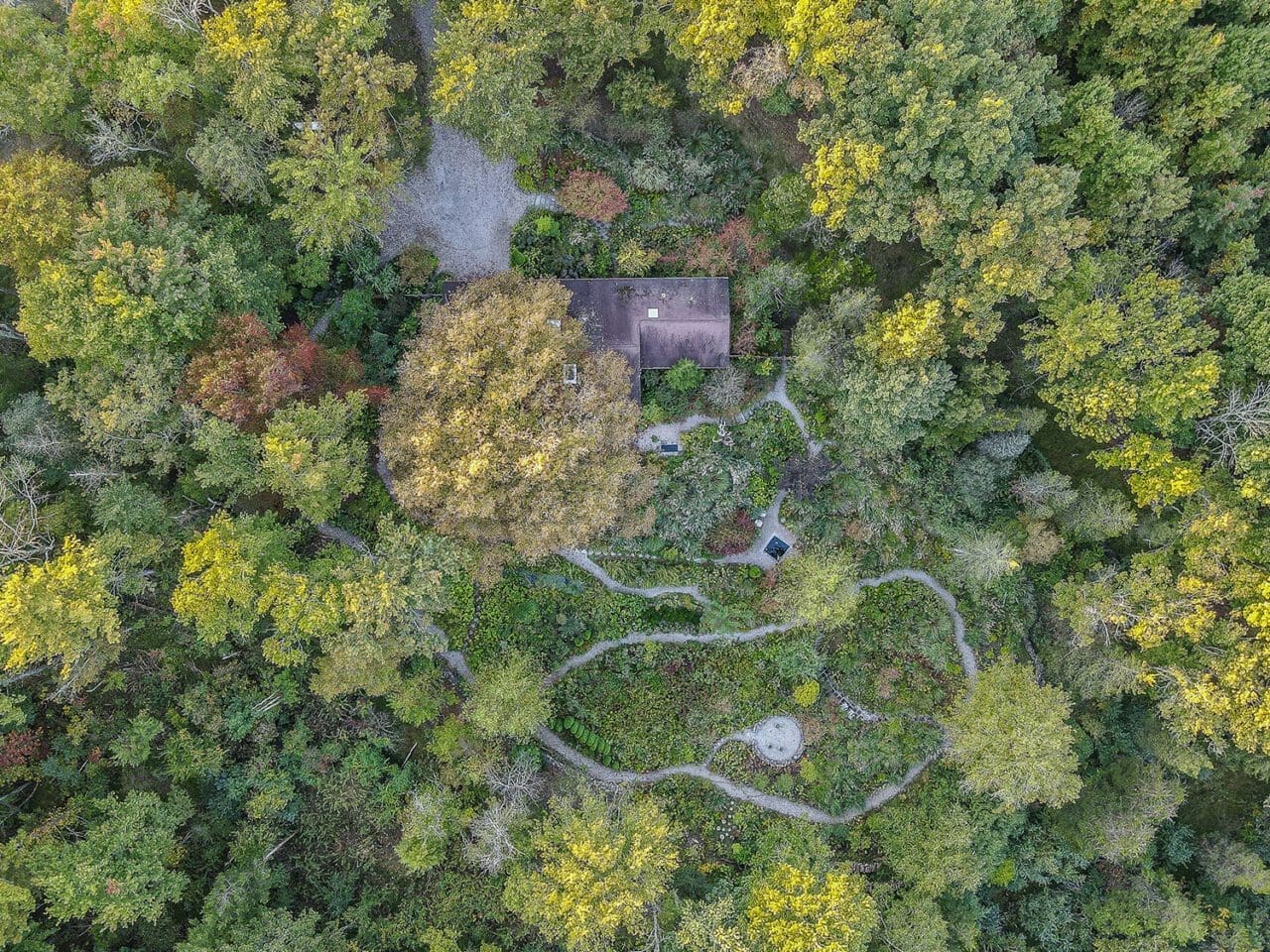
Dan: I remember being a child growing up in a wood and I used to run along the lane at this time of year from the school bus and the exhilaration I felt as well, so it wasn’t entirely bad.
James: No, and then in the daytime it is entirely different, because most of the light comes from this oculus above created by the tops of the trees around the clearing, but in the morning and in the late afternoon the sunlight will break through the trees even when they are heavy with leaves and spotlight individual parts of the garden, which creates very bright spots and next to them very dark spots, so you can see this kind of beautiful chiaroscuro developing. It’s very transient, changes in light like that. That is one of the beautiful aspects of the clearing in this place.
Dan: You punched that hole in to see the sky, didn’t you? So you removed those trees to make that light pour in.
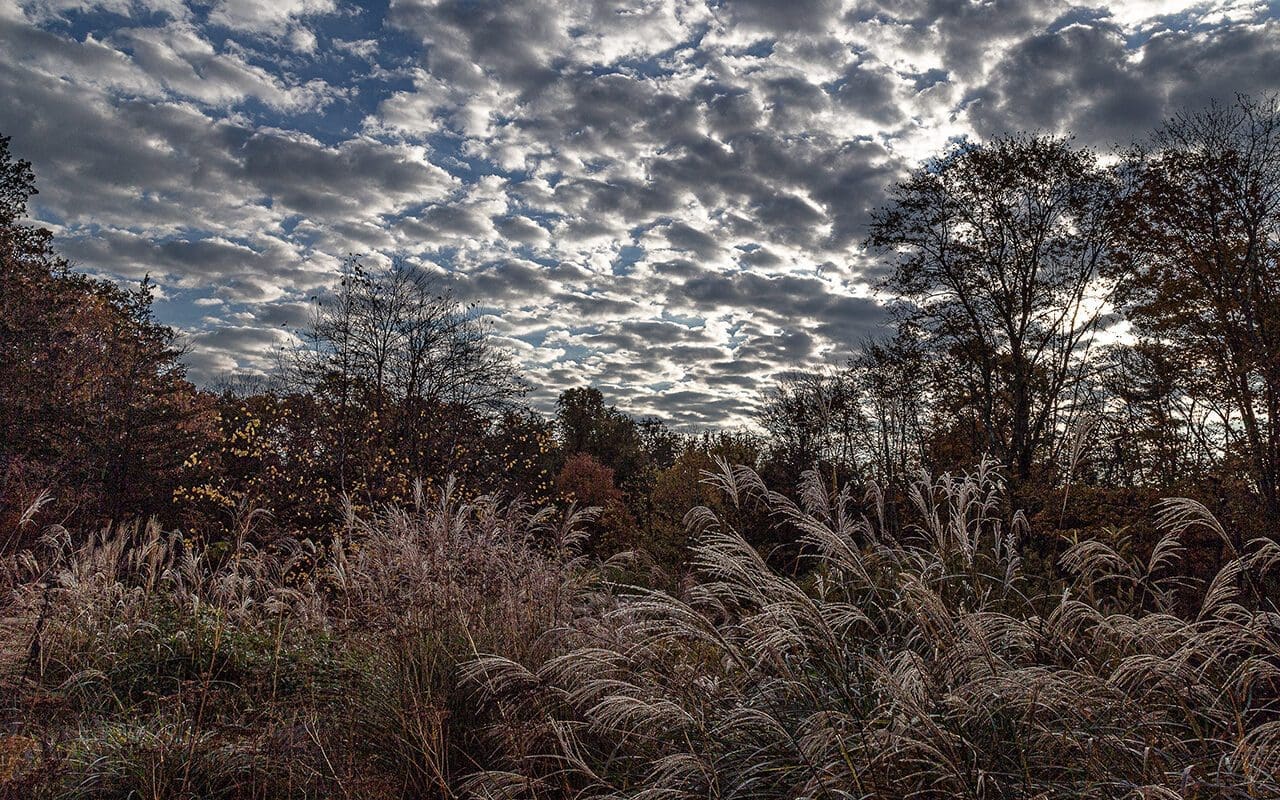
James: Yes, and the light’s important, because in this constricted space you’re conscious of the movement of the sun, and with the tall trees the shadows, hour by hour, change direction and change angle. Also, the sky opens up a vision of all kinds of weather. Beautiful cloud formations, snow. I have some wonderful photographs of cloud formations in the sky. It becomes sort of an observatory.
Dan: Beautiful. You say here – I’m just going to quote you again, as your writing’s so good – ‘I designed the garden to encourage exploration and attention to detail – to put you in a relationship with the garden. The experience is like giving over control, being open to feeling the garden push back a bit, and allowing the garden to take charge.’ If you could just tell us a little bit about that.
James: I actually came to experience this when I started opening the garden to other people. Though the garden is only one and a half acres in size, on a day when the American Garden Conservancy people come there might be over a hundred people visiting and quite a few of them would come to me and tell me they were lost and I thought, ‘How silly. It’s only an acre and a half.’ But in fact I garden on wet clay, I grow highly competitive plants which get very large – by midsummer much of the vegetation is above head height – so when you’re walking on a path you don’t see other paths and it is quite easy to get lost and become disoriented. I don’t, because I’m used to the space.
There are parts of the garden – I call it a prairie garden – prairies are naturally planted very thickly, so there are parts of the garden you can’t enter. The only way to move through the garden is along pathways that circulate through the planted areas and as you get lost or start wandering you do begin to feel that maybe there are places where you don’t belong, that maybe the garden is pushing back a little bit. The thought is that the garden is reminding you that many things are going on in it. Insects are reproducing, insects are pollinating, gathering pollen, bees are gathering pollen, the frogs are doing whatever they do. There are all sorts of life forms and processes going on in the garden and when you enter the garden you are not the centre of the garden suddenly. You are simply one of many different processes going on in the garden. I think having that perspective is a very important one in the world today.
A film of the talk will be available to watch on The Garden Museum website from next week.
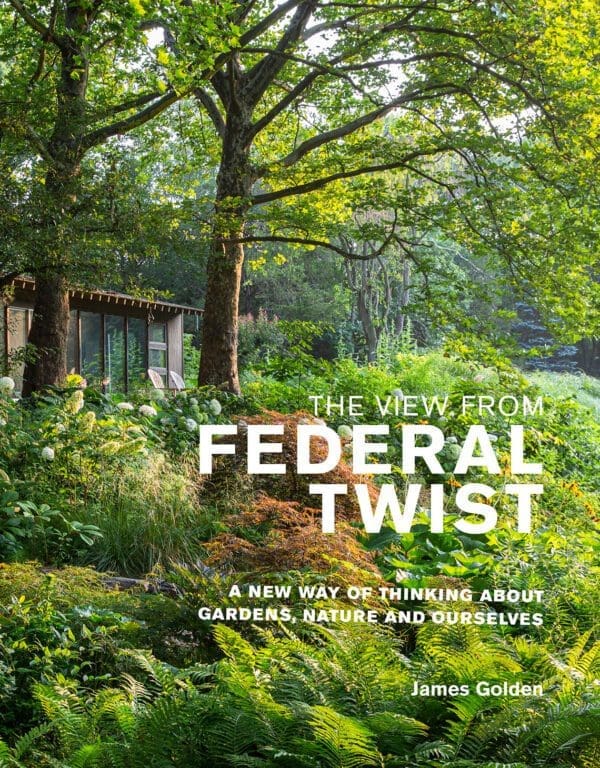
Federal Twist is a landscape garden, not a traditional garden. It has no lawns, no flower beds, as such, only a naturally shaped landscape, a surface layered by perennials, grasses, shrubs, and a few understory trees. You move about on a series of paths that, all told, are far longer than you might expect in a relatively small garden. You are immersed in vegetation. Along the way are stone walls, reflecting pools, several small areas for lingering, and a small pond teeming with dragonflies, frogs, and other aquatic life. The purpose of the garden is reflection and pleasure—the simple pleasure of sitting out on the terrace overlooking the garden, feeling the inconstant breeze, listening to sycamore (Platanus occidentalis) leaves rustling above, to birdsong in the forest and to frogs croaking and splashing in the water below; exploring the pathways, many hidden by the abundant growth of midsummer, catching the light and shadow as they cross the land, glimpsing moments of intimacy—and for experiencing the marvels of memory, nostalgia, and feeling. The garden has no utilitarian purpose whatsoever, unless you allow for a human utility, a place to experience the atmosphere and the mood of the day, to think, to talk, to muse, to remember, to be.
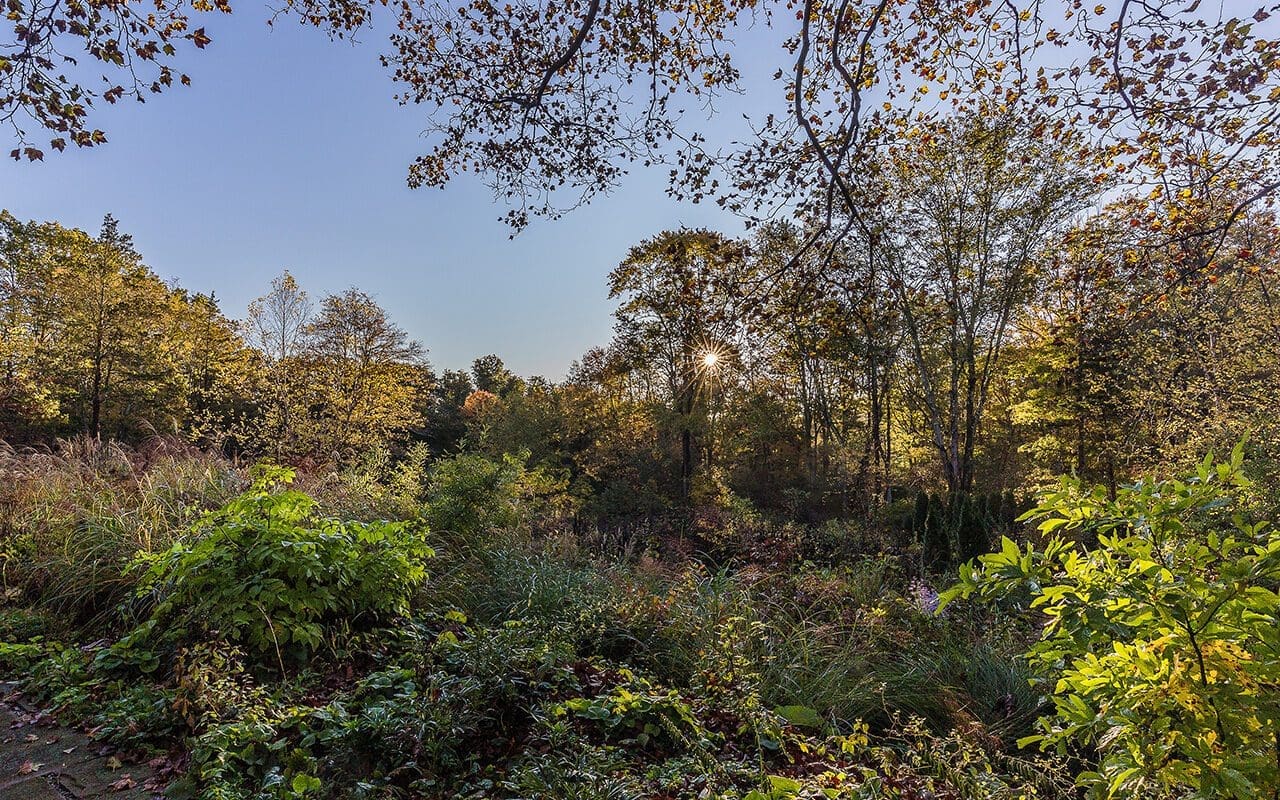
Why do I call Federal Twist a landscape garden, not just a naturalistic garden? It violates many expectations of a landscape garden, certainly those of the 18th-century English landscape garden with its broad sweep of Picturesque landforms, water, forest, sky, classical follies and ruins so prominent in the paintings of artists, such as Claude Lorraine, who were the impetus for that style. I twist the concept a bit—quite a bit. One main reason is evident if you look at the image (below) of the sun rising behind the wall of trees on the far side of the garden, opposite the house, or the second image showing the long view of the garden with immense trees in the distance. These images make it dramatically clear that important elements of the garden are ‘capabilities’ of the landscape, not part of the garden at all. I didn’t make them; I simply recognized them and their value.
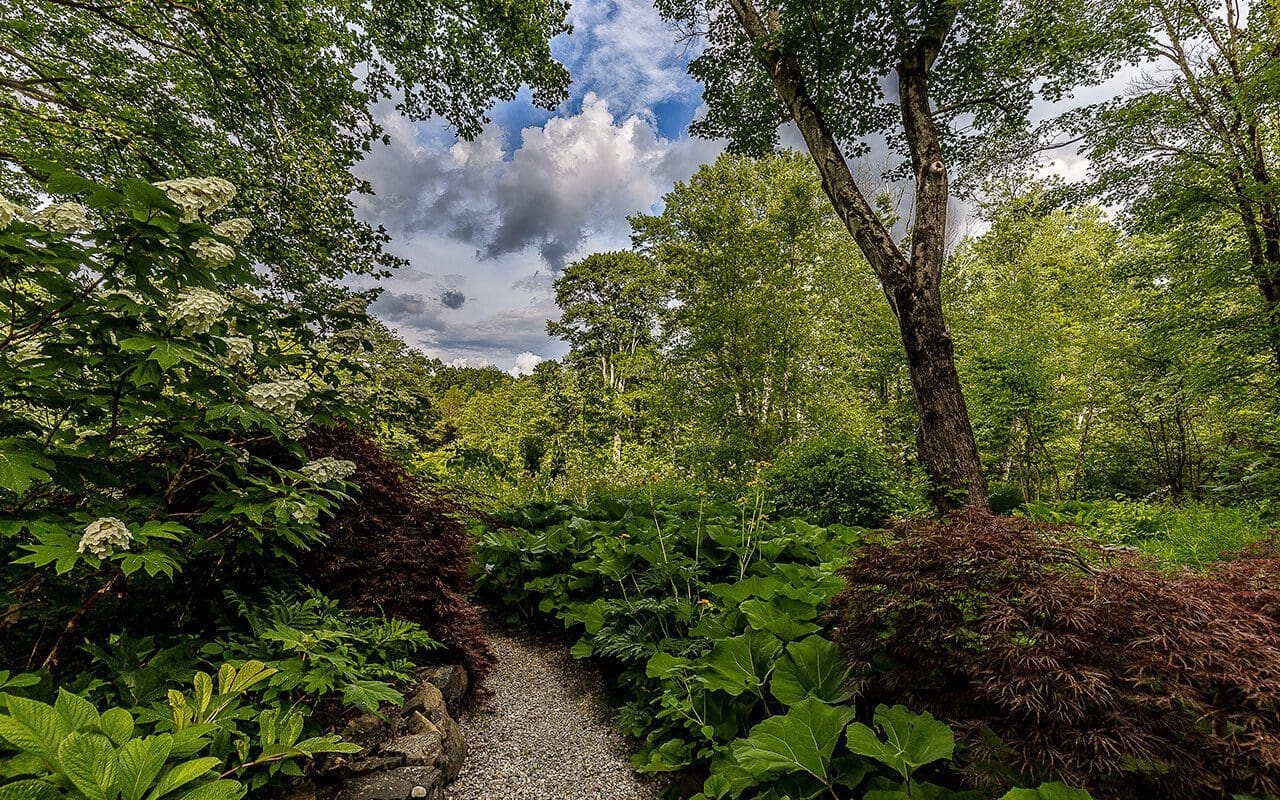
Back at the beginning, when I started the garden, I already recognized the landscape had a characterful identity and atmosphere. Any garden I might make would have to work with that landscape. Making the landscape part of the garden and the garden part of the landscape was my aim from the start. I wanted to anchor the garden in the landscape so there would be no visible boundary between one and the other. I wanted the garden and landscape to feel they were one. To do this required exaggerating views, manipulating scale, using simple, appropriate materials such as the local stone, amplifying it a bit by making it into walls and simple structures, adding an abundance of paths, using plants with a wildish quality, keeping dead tree snags—all toward the end of making the landscape garden appear effortless and at ease with itself.
Balancing the idea of the visual ‘landscape garden’ was my decision to make Federal Twist park-like. It is a garden of paths, and has as its primary purpose walking and exploring the landscape. Though you can stop and see the details, the focus is on the idea of landscape—the clearing in the woods, an American landscape, but one that faintly recalls its precedents in another time, across an ocean. If it were possible, I’d have the garden open for anyone to visit at any time, just as you might a public park.
Although Federal Twist is in a historical lineage that descends from other garden traditions, it makes no pretense to be what it isn’t. It is a distinctively American landscape type—a clearing in the woods—rather common here because of our extensive woodlands and history of living in them. America does not have the centuries of cultural history found in Europe and many other parts of the world—nothing like the layers of history you find in the UK, for example, where structures and artefacts perhaps several thousand years old may be uncovered in a field of cabbages. In contrast, Federal Twist feels rather recent, even transient—as if it might just disappear, be absorbed back into the woods.
It is an American landscape garden, but I do not mean it is representative of American gardens; it has no lawn, it is ‘untidy’, it is rough, and its boundaries are not obvious at all because they blend with the surrounding woods. It is the antithesis of most gardens and yards of suburbia where utility reigns, where foundation plantings closely hug houses and the use of trees and perennial plantings is stinted so they will not be impediments to mowing, where there is little room left for imagination, inspiration, contemplation.
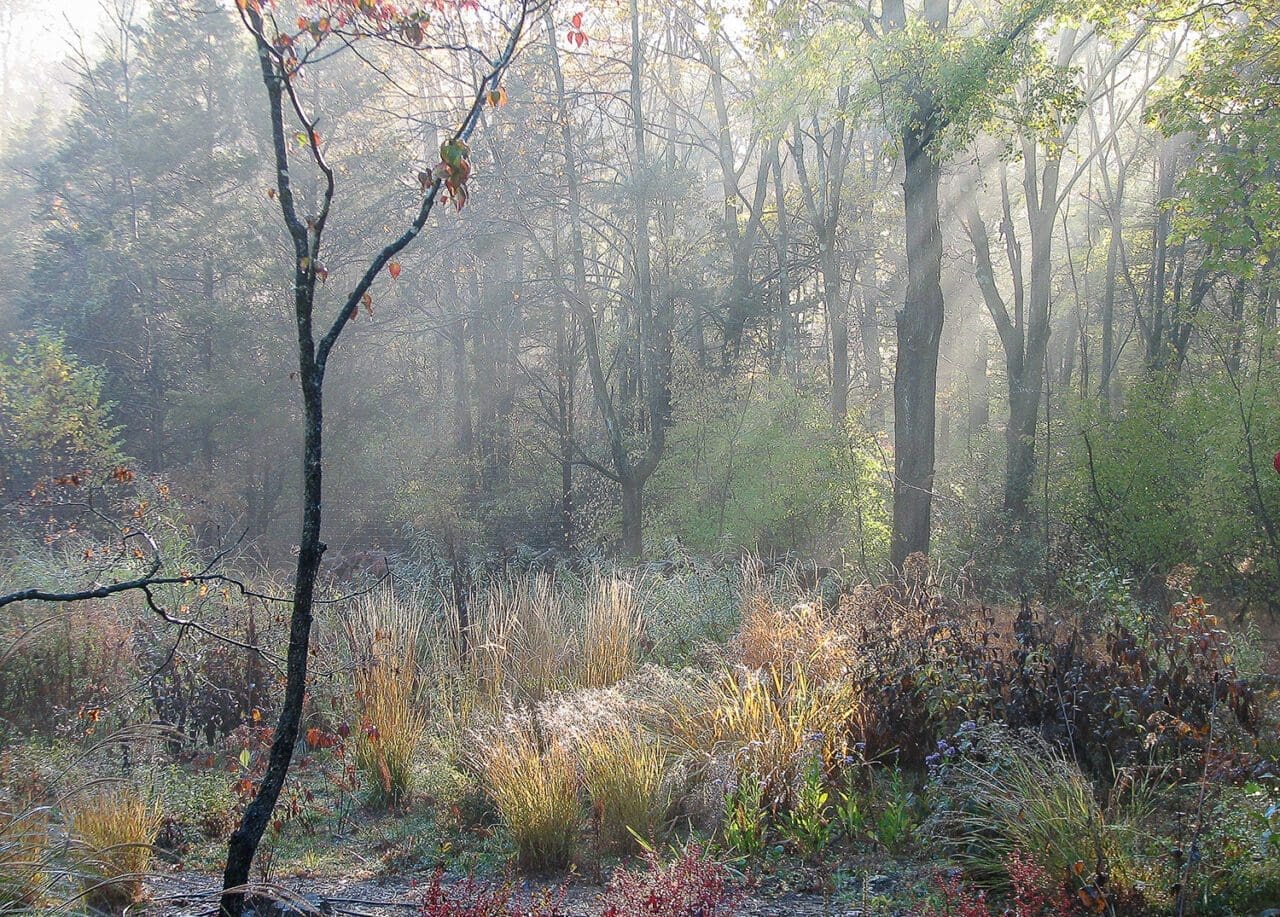
Its design also is influenced by the idea of wilderness, of the forest and forest life, of the vast Midwestern prairies and meadow-like settings in the East, and by the strivings of some aspects of the American psyche, such as the vague desire to escape urban life for the country. Federal Twist resonates with the voices of such early American idealists as Henry David Thoreau and Ralph Waldo Emerson, leaders of the Transcendentalist movement in the period of early intellectual awakening on this continent, in a time when forest was a far more pervasive landscape than today. In Nature, Emerson wrote:
In the woods, we return to reason and faith . . . Standing on the bare ground,—my head bathed by the blithe air, and uplifted into infinite space,—all mean egotism vanishes. I become a transparent eye-ball; I am nothing; I see all; the currents of the Universal Being circulate through me; I am part or particle of God.
These words are classic in the American literary canon (and surprisingly reflect both German Romanticism and Asian religious precepts), but from the perspective of today, they sound distant and faint, even quaint.
Can a garden still be redemptive, transformative? Can it bring place and meaning together? It is very difficult even to raise those questions in the American culture of today.
Transcript of James Golden & Dan Pearson’s talk and photograph of them both courtesy The Garden Museum.
Extract from The View from Federal Twist: A New Way of Thinking about Gardens, Nature and Ourselves and James Golden’s photographs courtesy Filbert Press.
Published 6th November 2021
Eleven years ago in this last weekend of October we arrived here on the hillside. It was a different place then. The house was damp, with a pink 1980’s bathroom, vinyl floral wallpaper and swirly carpets that hid a whole ecology of rot. It was a farmer’s house, so there were enough practical comforts. An old oil range, so we were warm once it was up and running and uPVC windows which kept out the weather, so we were happy. The house would be fine for a while, the real reason we were here lay beyond its walls and the land beckoned.
Grazed to the buildings by beef cattle, the trees had been cut back hard and the broken hedges were neatly flailed so as not to shade the grass. There were no concessions to anything but utility, but the views rolled on splendidly and without interruption. With the prospect also came exposure and, though we have become used to it now, when the wind blew that first winter, we woke to the house shuddering as if we were on the prow of a ship.
I knew immediately it would be wrong to plant out the view to provide shelter, but alongside the dream of finding this place came the long-term ambition to plant my own orchard. By the time the leaves were off the trees in the hedgerows, it was clear where it might be. Hunkered into the hill beyond the barns and stepping down the slopes in three parts to frame the landscape. I planted that first winter; a plum orchard on the higher ground where the earliest flowering trees would be least likely to catch the frost, West Country apples further down the slope and a group of pears to the west of the barns, where they would bask in sunshine and be afforded shelter from the easterlies.
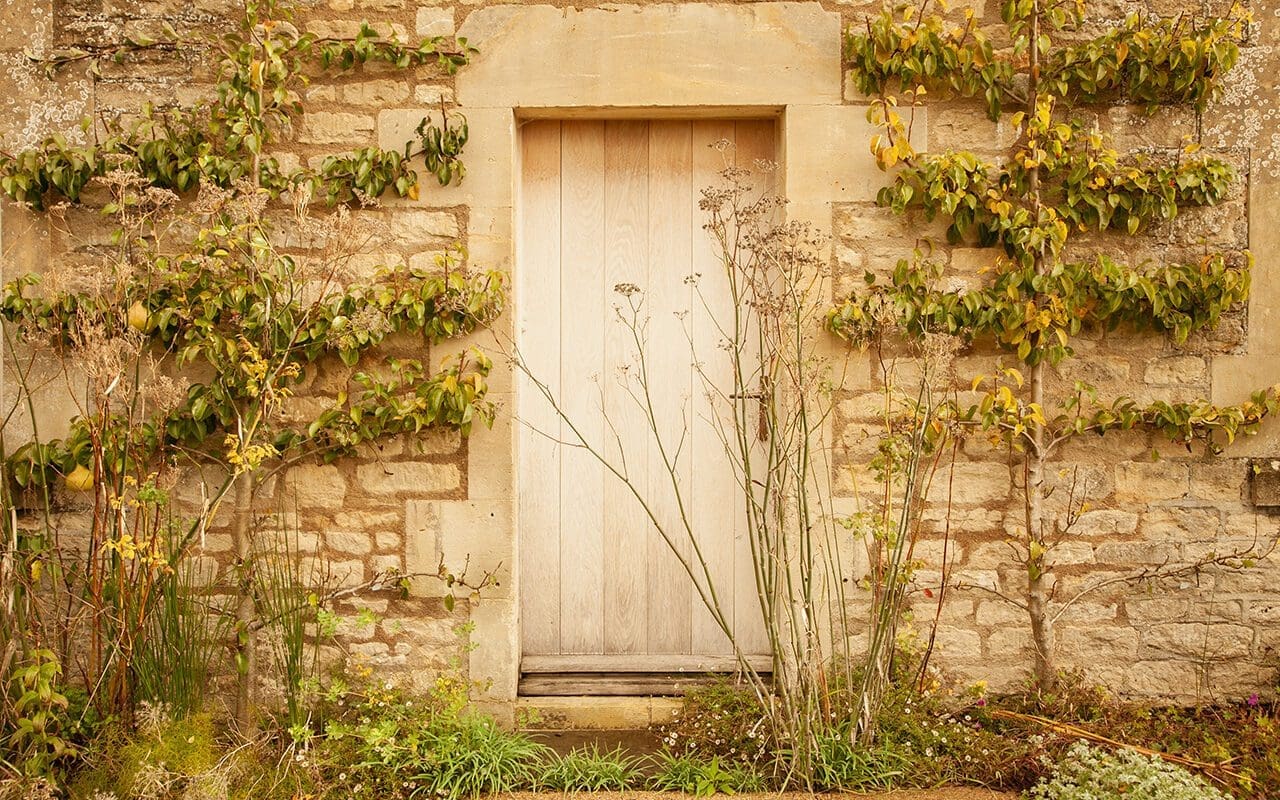
The old adage goes, “You plant a pear for your grandchildren” and I’m pleased we moved quickly to get the trees in. A decade on and it is interesting to see what we have not had to wait that long to have learned. The pears that have done well in their huddle of shelter have grown into fine young trees, but their fruit is erratic, one year off and maybe another year on. On the fruiting years their habit of dropping all in one go over the course of a week when they are ripe has also proved problematic. The windfalls bruise and ripening is inconsistent in the branches, though the fruit still drops.
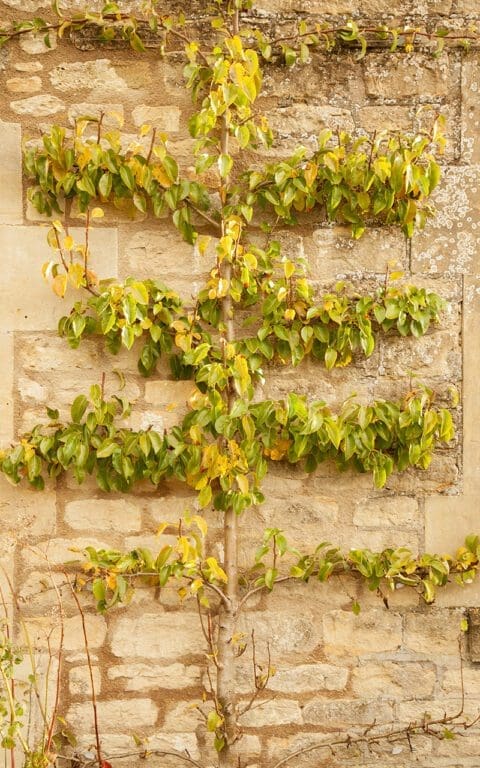
The pear trees we trained as espaliers on the south-facing walls of the kitchen garden have proven their worthiness in half the time. A half day applied training the limbs into position in combination with a late summer prune has given us reliable yields and an orderly backdrop. Pears that are ‘on display’ as it were and hanging neatly along branches to bask in sunshine also make better fruit. The fruit is restricted in number by the management of limbs where an unmanaged tree will, more often than not, be burdened with the flux of feast or famine. This year, we had a week of frost when the pears were flowering in April which saw all the blossom in the orchard trees lost, but we were able to fleece the trees on the protected walls.
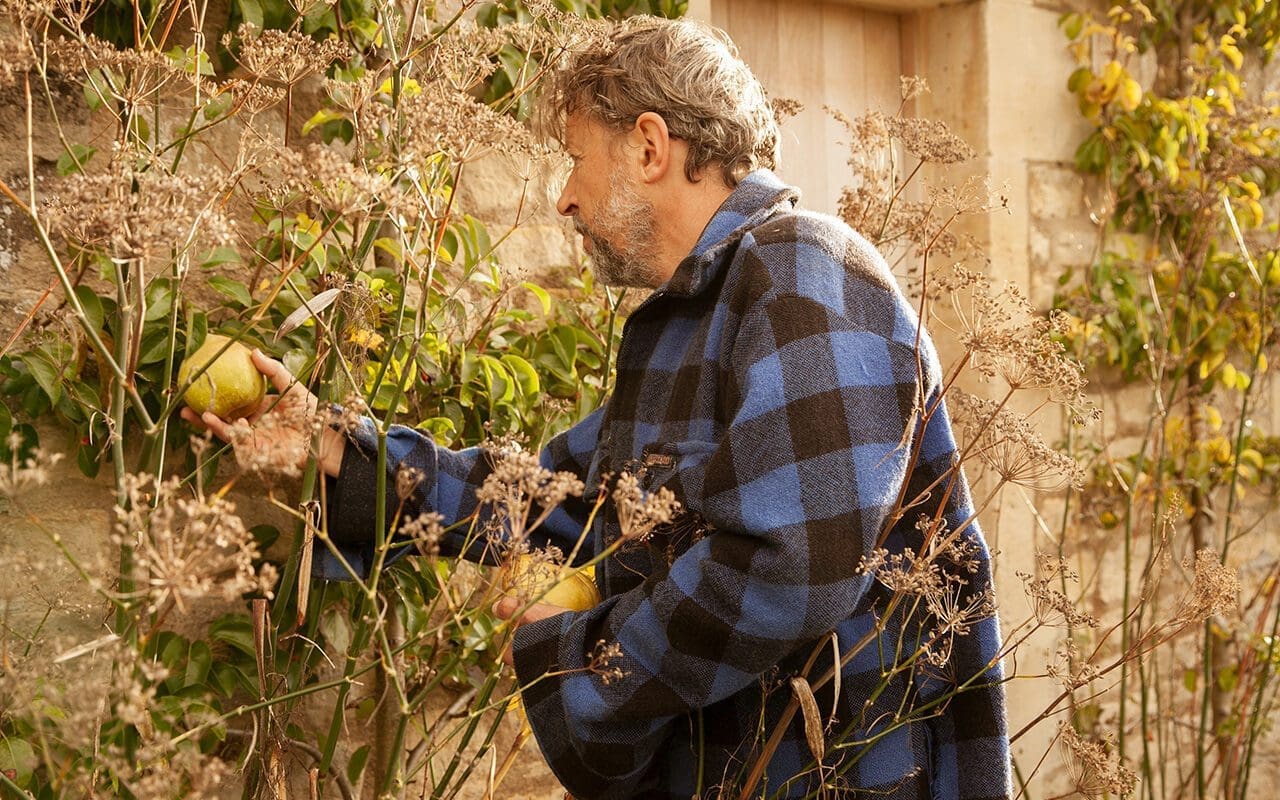
We have four varieties, starting with ‘Beth’ in early August and they neatly hand over one to the other, ‘Beurré Hardy’, ‘Williams’ and the last and the best of them all, the delectable ‘Doyenné du Comice’. Doyenné (meaning ‘flavoured one’) was a mark of distinction when the first pear bearing the name, ‘Doyenné Blanc’ emerged in 1652. Several were to follow, but ‘Doyenné du Comice’ (1852) or the Comice Pear has been the most enduring. And with good reason, for the pear is of superlative flavour. In Joan Morgan’s excellent ‘The Book of Pears; The Definitive History and Guide to over 500 varieties’, she describes them thus: ‘Handsome, generous appearance with rich, luscious, very buttery, exquisitely textured, juicy pale cream flesh; sugary sweet yet intense lemony undertones, developing hints of vanilla and almonds’.
Of the four varieties on the kitchen garden wall ‘Doyenné du Comice’ is the lightest cropper, a four-tier cordon produces 15 to 20 fruit a year. You might think this would be enough, but they are so very good that, to mark our marriage five years ago, we planted two more cordons on the front of the house, where each new set of limbs marks time and increases our harvest.
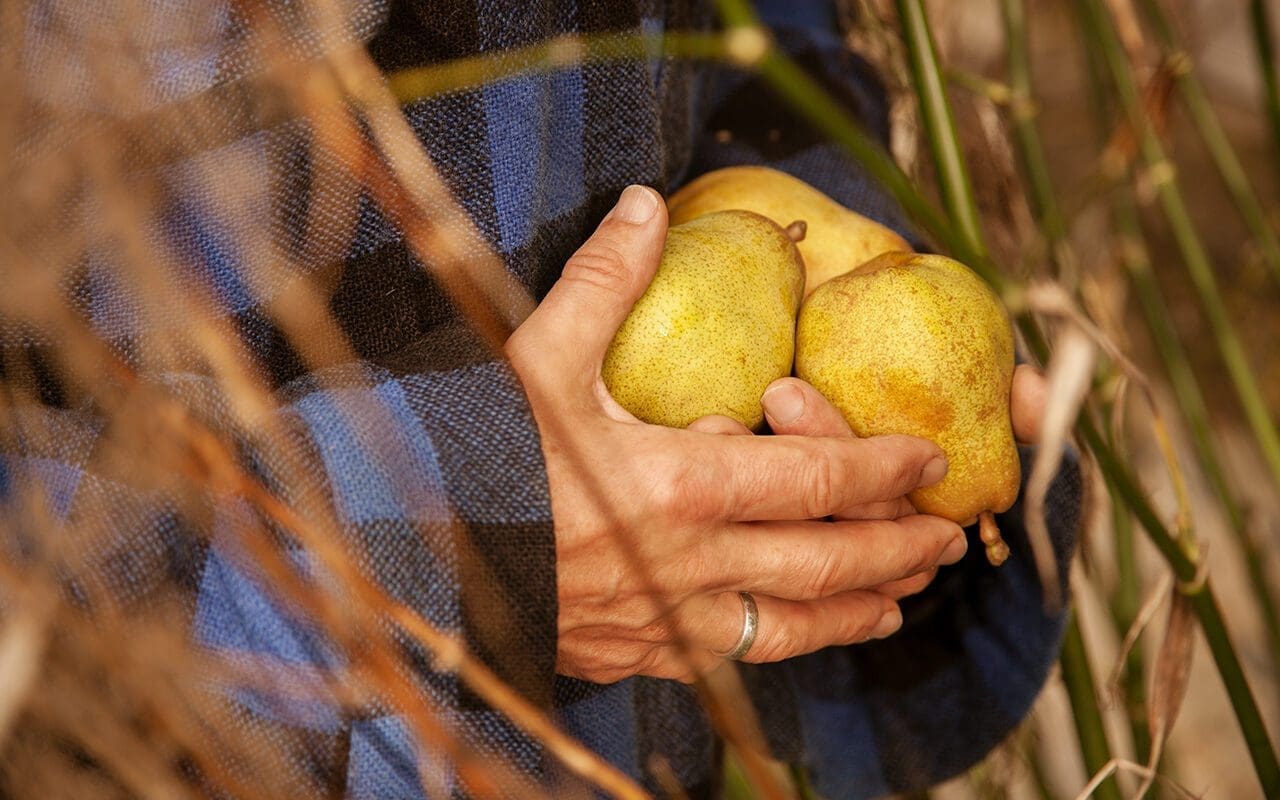
During the last couple of weeks we have been watching keenly, but the last week of October, our moving-in week, seems to be the perfect time to harvest. Pears should be picked and ripened inside on a cool shelf for the best results. Cup the fruit gently in your hand, lift and gently twist a quarter turn. The stalk yields to the turn when it is ready and the fruit can be left in-situ if not. Make sure to check daily, because a fallen fruit will be nibbled and ruined overnight by mice. They also know of their charms, but do not wait for the fruit to fully ripen.
Jane Grigson writes beautifully about pears and, most notably that ‘the old legend that towards the end it may be necessary to get up at 3 a.m. to find absolute perfection is not a great exaggeration.’ Test for ripeness by applying gentle pressure at the neck with your thumb. If it is hard still, be patient, but as soon as the flesh begins to give, the fruit should be eaten, preferably with the skin so that the melt has some structure as contrast. Either alone or with cheese, a fine combination. A perfect fruit will be as good as a warm fig picked fresh off the tree in Greece. A delectable reward with the sun and summer goodness melting in your mouth as we slide into the dark weeks ahead.
Words: Dan Pearson | Photographs: Huw Morgan
Published 30 October 2021
A chill is in the air. Mist in the valley. The wood tawny and bronzing. This is one of the most beautiful moments in the garden, standing still and voluminous, but beginning the decline. A decline suggests something lost, but the turn from the growing season is anything but. Colour in the grasses, the tail ends of the Verbena ‘Lavender Spires’ smattering violet.
Running in an undercurrent much like the cool air that sits in the hollows, the asters claim this moment. Softly spoken as flowers but enduring, they have been mustering quietly. The feeling of potential they provide is valuable as the summer plants fade around them in August, a month that often feels suspended between two seasons. Energy yet to be spent is good then and this is when the first of the asters begin their relay, one handing over to the next until frost finally does for them in November.
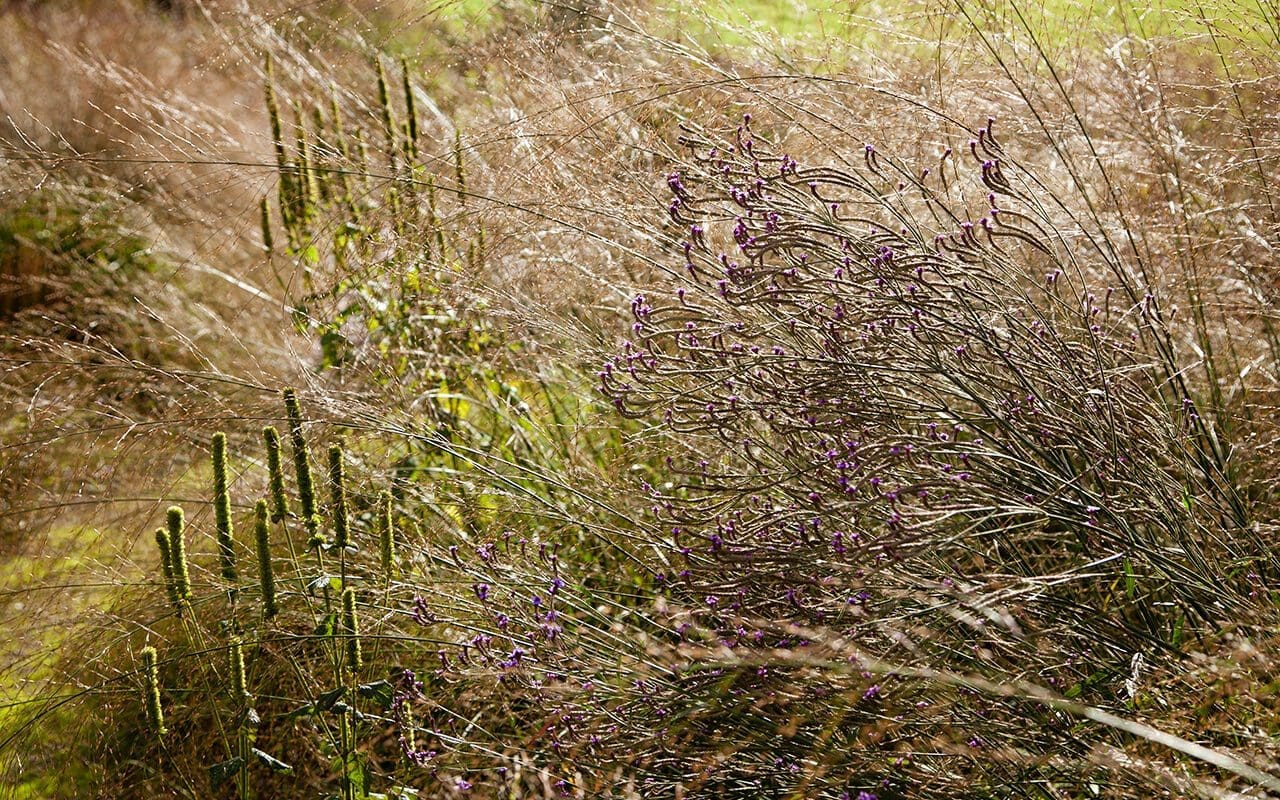
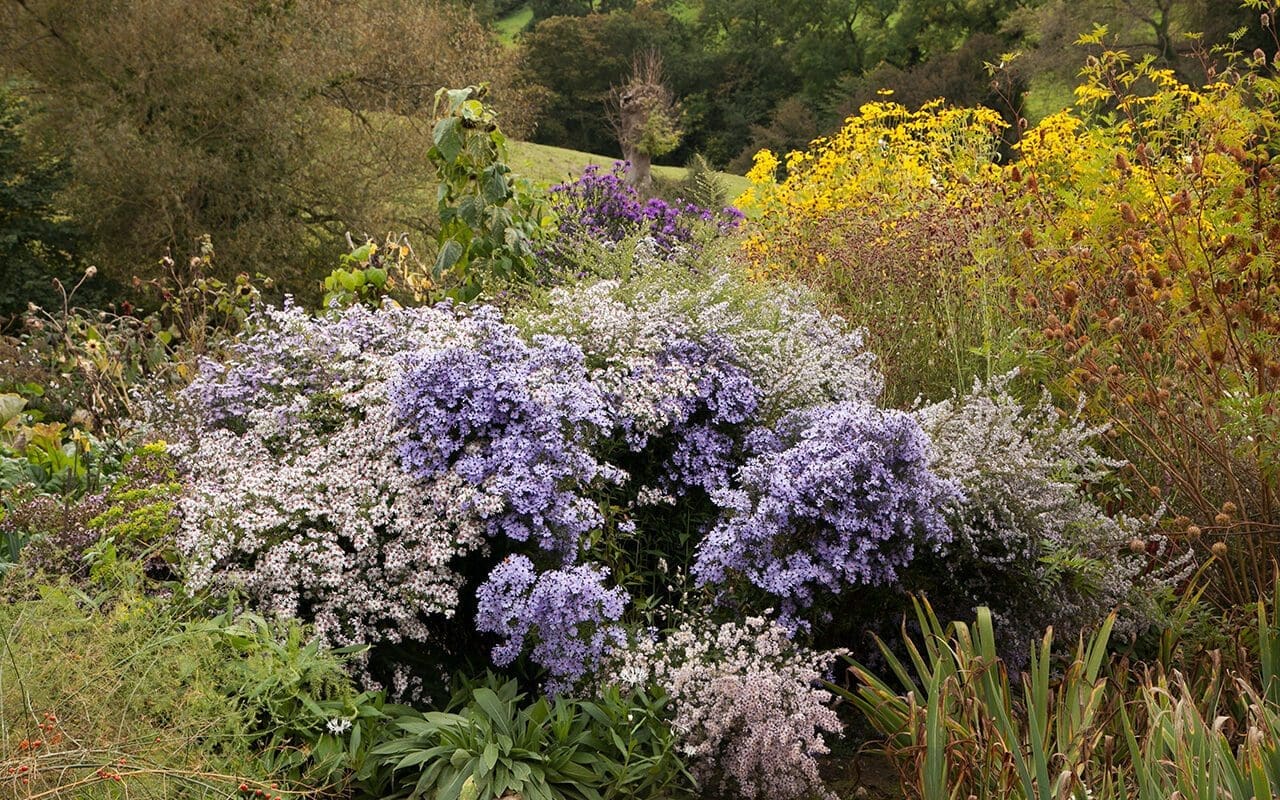
I made a trial of asters before making the garden here, testing a couple of dozen varieties to find the ones that felt ‘wild’ enough in the planting. I was looking for forms that were light on their feet, with air in the sprays and not too heavy with flower. It was also important that they were reliably clump-forming and without the tendency to run so prevalent in many, though I have been prepared to make the exception for Eurybia x herveyi ‘Twilight’. This is one of the earliest to flower here in late July and I always forget then the time I have to spend in March keeping them within bounds. I am probably going to move them to a corner where they can have a space amongst other plants that can deal with their wandering habits. Somewhere that feels akin to their home in Eastern North America, on the edge of woodland and reaching through grasses and scrub towards the light.
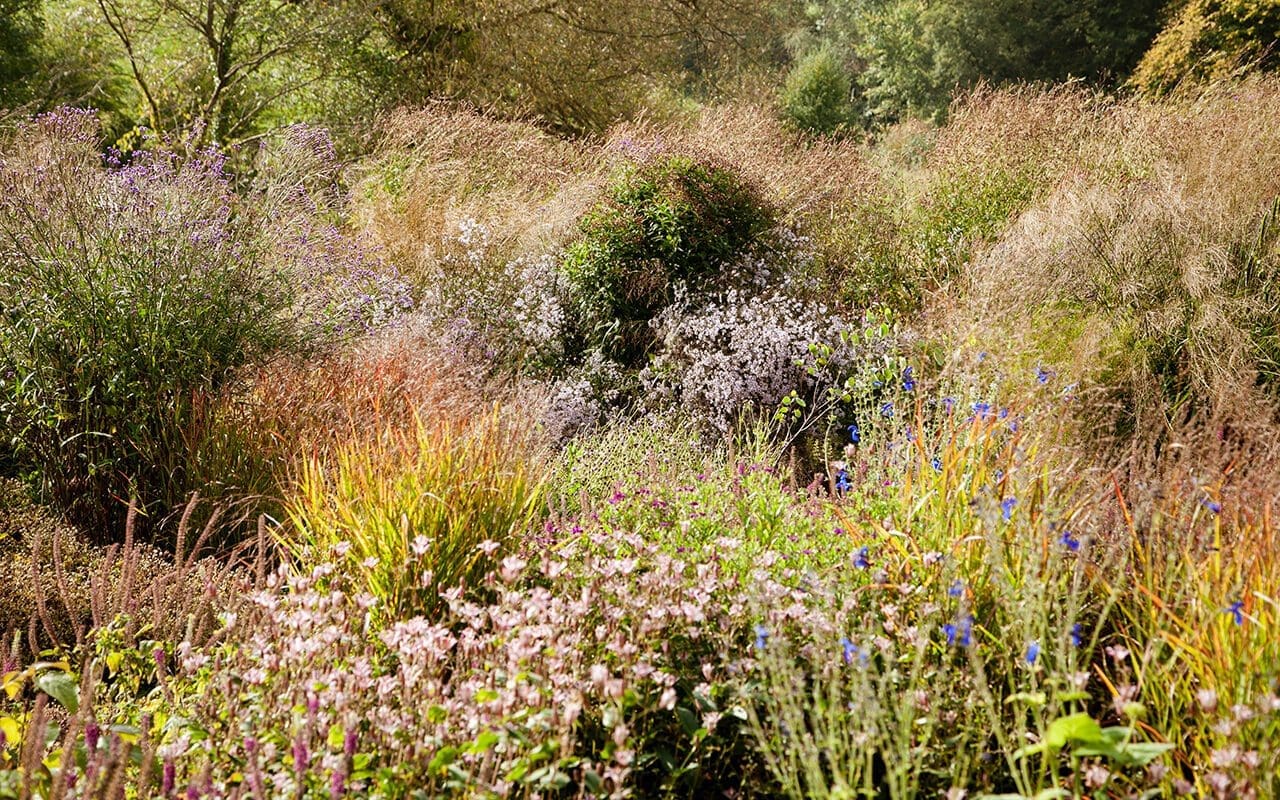
Symphyotrichum ‘Photograph’ was moved back into the garden last year from the stock beds, where I had kept the best of those from the original trial not used in the garden to further get to know them. A stock bed is a wonderful luxury. It is a practical place where one of each plant sits cheek by jowl with an unlikely neighbour and can be observed more closely than in the mind’s eye. It was this time last year when we felt we needed a lift amongst the Molinia ‘Transparent’ in the lower part of the garden. We picked a number of sprays from the stock plant and set them there to see how they felt. Then four canes were pushed into the beds with a label to remind me on the other side of winter what they were for. In March, after the garden was cleared, the original stock plant was split into four in text-book fashion with two forks placed back to back and levered apart to quarter the clump.
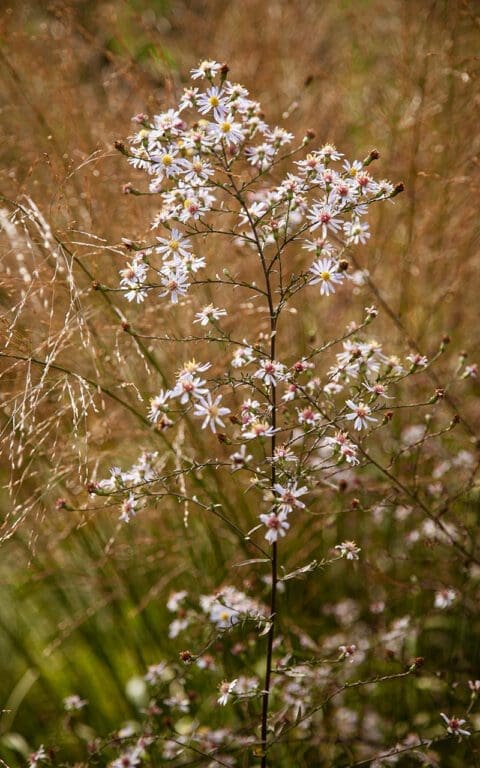
Symphyotrichum cordifolium, the Heartleaf Aster or Common Blue Wood Aster, is the parent of several good plants; ‘Chieftain’, ‘Little Carlow’ and ‘Primrose Path’ to name three in my original trial. The first two were rejected because they were too dense in flower and too showy. ‘Primrose Path’, which is lighter in feeling, made it briefly into the garden, until the fact that it was a seeder looked like it might become a problem.
‘Photograph’, a 1920’s S. cordifolium hybrid raised by Ernest Ballard, is tall at 1.2 m and needs a little staking if you do not have the room to let it sprawl. A Chelsea Chop in mid-May to reduce it to knee height encourages branching and curbs the tendency to lean. We have found it the room is has been waiting for, the benefit of patience and observation allowing it the opportunity to light up the molinia at this tail end of the season. Arching with the sweep of the grasses, the constellations of just-violet flower are alive with pollinators and capture the low October light to illuminate a garden that is on the wane. Falling away yes, but far from yet spent.
Post Script:
Asters, lamentably, have been reclassified and renamed in recent years. Retain the original name in your mind and forgive the awkwardness of the new names – Symphyotrichum, Eurybia, Doellingeria – which capture (to the non-botanist’s mind) nothing of the magic and rightness of Aster, which means ‘star’.
Words: Dan Pearson | Photographs: Huw Morgan
Published 23 October 2021
Almost without fail, every meal I cook begins with an onion. Despite the fact that I use so many and that they are both cheap and plentiful at the greengrocer, every year we grow our own. They are a straightforward crop, needing very little attention after planting, apart from weeding, and they always produce in bulk and without pests or problems. Given the frequency with which I use them, every meal time provides a sense of satisfaction and proof of a successful growing season.
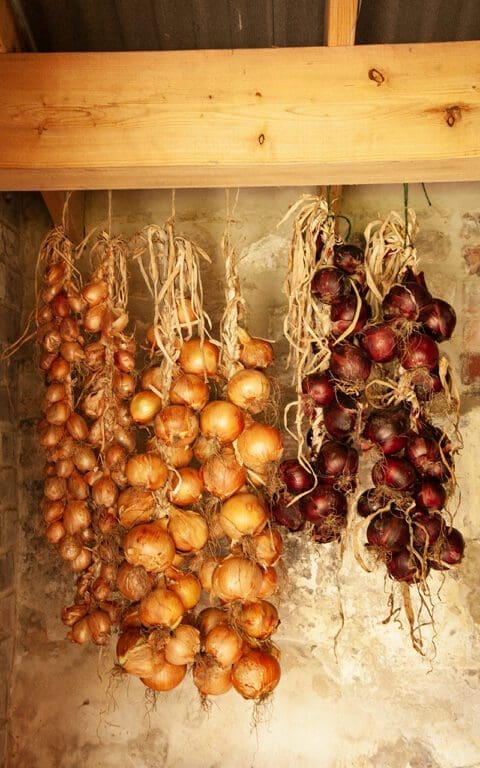
We grow a number of onion and shallot varieties, and have settled on our favourites over the years; ‘Sturon’, a large white onion for everyday cooking, which has an RHS Award of Garden Merit due to its reliability and storage quality, ‘Red Baron’, a red onion, also with an RHS AGM, which is another good keeper and with a stronger flavour than most red onions and ‘Keravel Pink’, also known as ‘Rose de Roscoff’, a pretty pale pink onion with coppery skin, which is said to have the best flavour of all, sweet enough to eat raw and deliciously fruity when cooked. An old variety from Brittany this is the variety that my mother remembered beret-wearing Frenchmen – Onion Johnnies – selling from their bicycles on the streets when she was a child in Wales.
Over the years we have learned that onions do best in the sunniest beds of the kitchen garden, unshaded by other crops, do not like growing in beds that have been recently manured, benefit from heavy watering as they approach maturity and that, contrary to traditional growing advice to bend the tops over when the bulbs are fully grown and before lifting, that this is not good practice in reality, since it damages the base of the leaf shaft, which results in the bulbs being more susceptible to rot.
We grew only one variety of shallot this year, ‘Longor’, a large, yellow banana type shallot, which produces reliably high yields. We usually also grow ‘Red Sun’, but these had sold out last year before we could place our orders. All of our onions and shallots come from The Organic Gardening Catalogue as sets – small onions ready to be planted out in spring for a midsummer harvest – but I am tempted this year to try growing some from seed, as this is a lot cheaper and reportedly very easy. Unlike onions shallot sets can b e planted in autumn to produce an earlier crop, and I have recently received an order of ‘Échalote Grise’, an old variety, the gourmet French shallot also known as the ‘true shallot’, which I will plant before teh end of November. Every year we harvest around 100 mature, large onions and 10kg of shallots which, after they have been left out in the sun to ripen and dry out, are plaited together by Dan who is a dab hand, having done it for many years as a child with his mother.
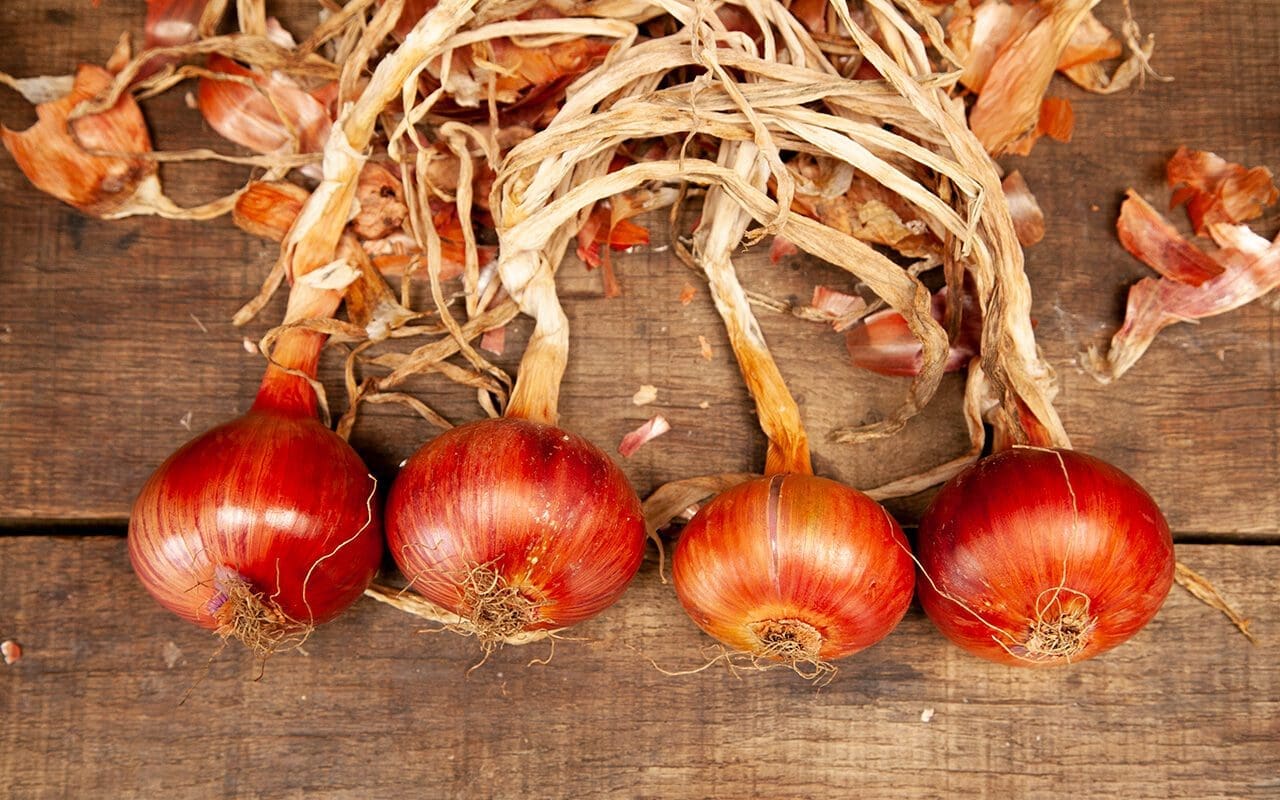
Although the majority of our onions end up invisibly in soups, stews, casseroles, dhals and curries, sometimes you really want to taste the flavour of a home-grown onion, and this recipe makes them the focus of a meal. Many stuffed onion recipes have a lot of ingredients which compete with the subtle sweetness of the vegetable itself. Here onions’ well-known partner, sage, and just a little bread, nut and cheese ensure that the onion is what you really taste.
4 medium onions – around 250g each
1 stalk of celery– about 50g
40g butter
50g walnuts
40g white breadcrumbs
50g cheddar cheese, finely grated, plus extra for garnish
12 tender, young sage leaves, finely chopped
Nutmeg, freshly grated
4 cloves of garlic, finely chopped
Serves 4
Set the oven to 180°C and bring a large pan of water to the boil.
Remove any loose papery skins from the onions, retaining one complete layer of dried skin. Remove the root with a sharp knife being careful not to cut through the skin, then cut through the top of the onion to remove about 1cm, so that you all of the layers are visible.
Simmer the onions in the pan of hot water with a lid on for about 30 minutes until soft to the point of a knife. Remove with a slotted spoon and allow to drain and cool in a colander.
When cool enough to handle carefully remove the centre of each onion with a teaspoon, leaving a shell 2 to 3 layers thick. Put the onion shells into a buttered ovenproof dish.
Toast the walnuts in the oven for about 3 minutes until lightly coloured and fragrant. Chop finely.
Finely chop the celery and garlic and the centres from the onions. Melt the butter in a small pan over a high heat until foaming and smelling toasty. Turn the heat down and sauté the celery and garlic for about 3 minutes until translucent. Then add the onion and cook over a low heat for 10 minutes until the flavours have combined.
Remove from the heat and add the chopped walnuts, sage, the grated cheddar cheese and breadcrumbs. Season generously with salt, black pepper and grated nutmeg. Stir well and then spoon the mixture into the onion shells. Press the stuffing down well so that there are no air pockets and mound it up on the top so as to use all of the mixture.
Grate a little more cheese over the top of each onion and then put into the oven for 30-40 minutes until brown and bubbling.
Serve as a main course with a green salad and boiled potatoes or as a side vegetable with other dishes.
These can be made in advance and then, before roasting, kept covered in the fridge for up to three days until needed or wrapped in foil and frozen. Once defrosted you should add 10 to 15 minutes to the cooking time from cold.
Recipe & photographs: Huw Morgan
Published 16 October 2021
The houses in the valley sit on the spring line and in turn the ditches that run alongside every downward moving hedgerow each channel the spring water to the stream that runs below us. We are lucky to have water here, but it is always on the move, descending, passing through and never still. The silvery lines that trace the creases in the winter are all but eclipsed by foliage in the growing season, but we are aware of it always, sounding when the stream is in spate from way below us and babbling in the ditch that lies in the fold of land beyond the garden.
Making a still body of water has always been something we have planned for and over our time here we have found the place for it in the hollow, where the water might collect and you could imagine a stillness beyond the garden. A place where the flow is interrupted and paused before it continues its journey. Somewhere for the sky to come to earth and for reflections to be held and the world quietly magnified.
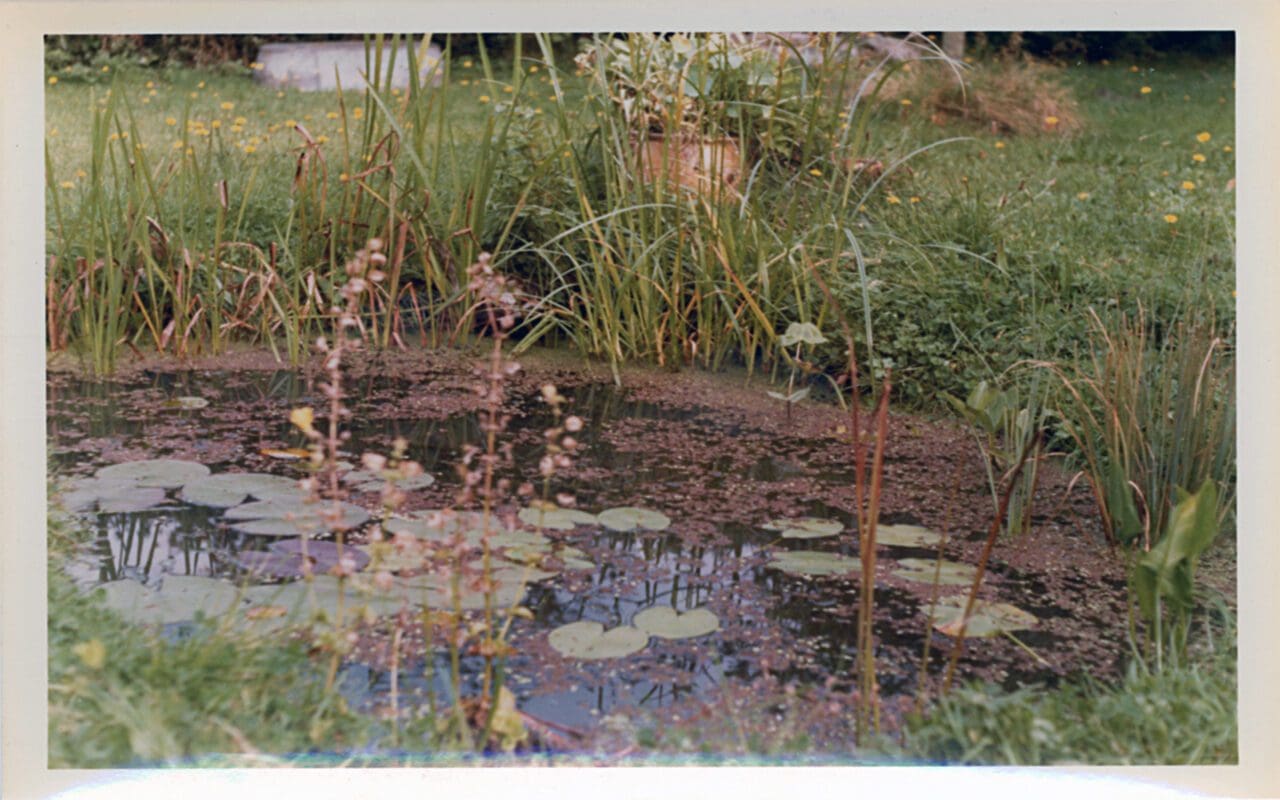
My father made a pond when I was about five and it was lying on the turf banks with my face hovering over the watery lens that I first encountered alchemy. The coming to life from a handful of raw materials and the energy of transformation. It was about five feet by four with a marginal shelf on three sides and the turf of the surrounding orchard folded over the edges to hide the blue plastic liner. I remember the smell of the pond plants pressed into the mud and the clear water soon eclipsing them entirely as it became opaque and green and began its evolution. After a couple of weeks of peering into the gloom, the pond skaters and water boatmen arrived apparently from nowhere and the water suddenly cleared. The muddy-mintiness of the Mentha aquatica was soon travelling into the banks and, like a hand unfolding, the water lilies slipped over the surface with their perfect flatness. Looking underneath and the gelatinous eggs of pond snails we’d added were already proof that the pond was becoming a home.
I have made several ponds since and witnessed the heart they bring to a place, so this year we decided to act on our ambitions at Hillside. I worked up a measured drawing to test the levels, but we laid it out by eye on the day so that it responded to the place. Ponds should always be bigger than you might think because the marginal growth can diminish the scale of the clear water by as much as a third. A pond should also be deep enough to retain the cool temperatures you need to minimise evaporation and discourage algal bloom. We were aiming for two metres of depth, but we had to stay above the level of the stream that runs below the pond so we managed about 1.5 metres. Deep enough to swim on a hot day and we hope to keep the water stable and the balance in place for the ecology.
We wanted the pond to not only feel like a natural culmination of the hollow, but for it to also retain the water with a ‘natural’ liner. By digging a test pit three years ago we’d found the clay there was not consistent enough to puddle the pond. Puddling is an old process of breaking down the clay structure by driving animals over it to pummel the base so that it holds water, but in order for it to work you have to have clay without impurities. Our clay, we found, had gravel seams running through it that would make puddling impossible.
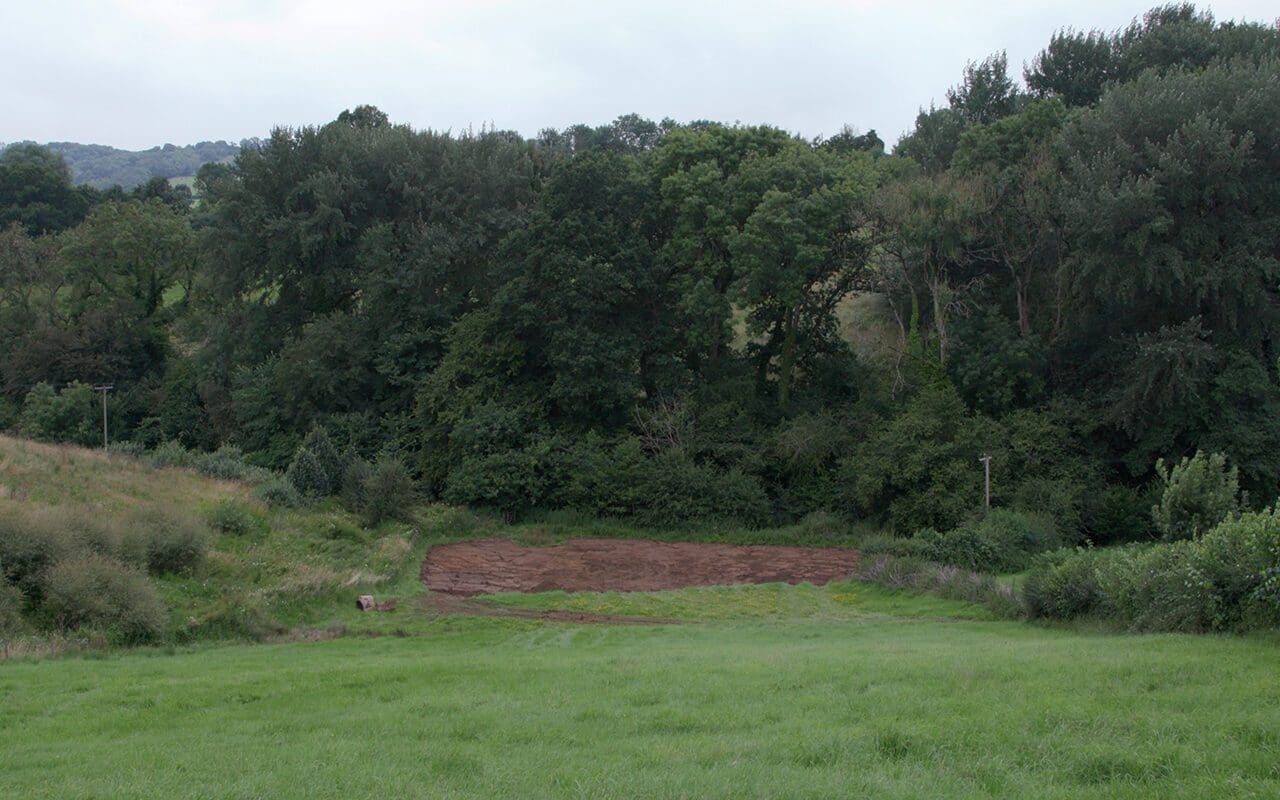
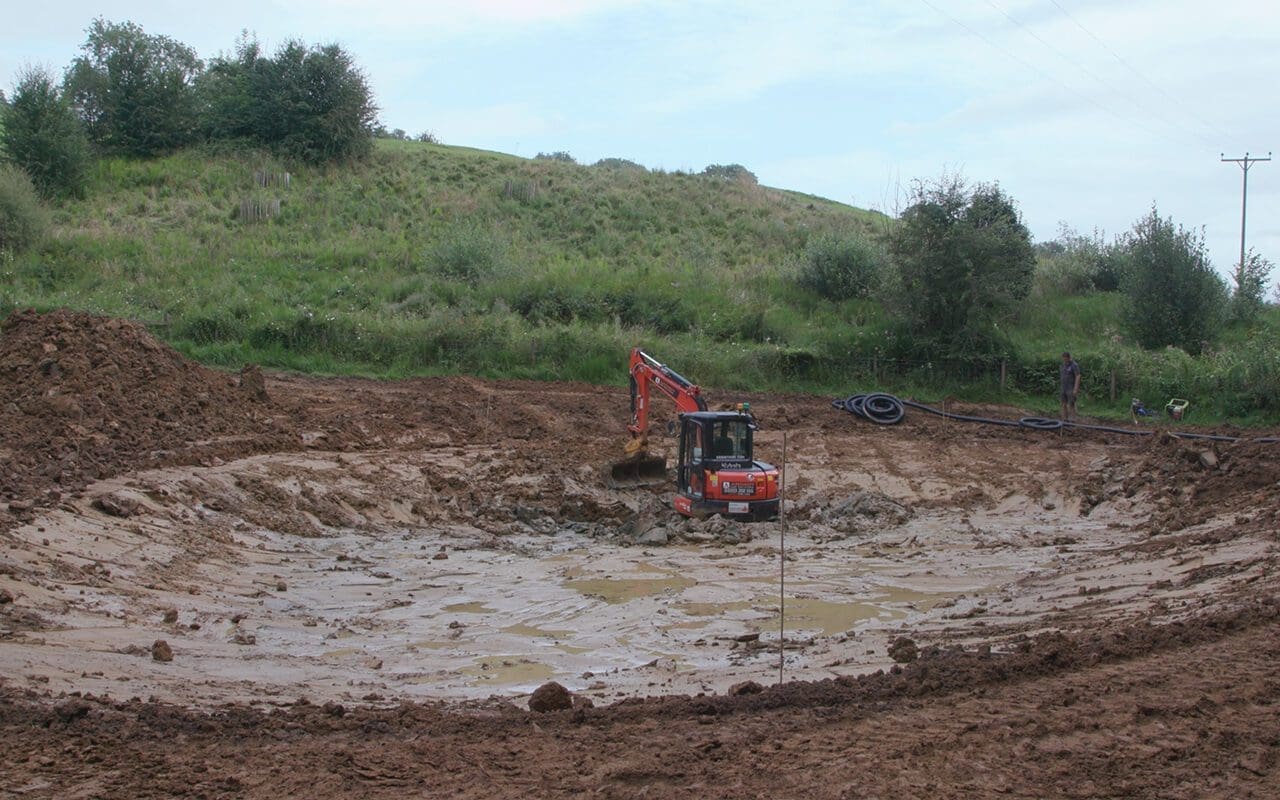
In sites where there has been the right access and clay nearby, I have imported clay to avoid using butyl liners, but it was impossible here with our narrow access and steep slopes so we opted to use a bentonite liner. This is a manufactured fabric that suspends dry bentonite clay particles within a geotextile sandwich which is laid out like a carpet over the base of the pond. When hydrated, the bentonite expands and seals to form a waterproof lining.
We had to wait for the weather to be dry enough to have a clear run at the excavations. The topsoil was stripped over the area of the excavation and moved up the hill where we will eventually extend the barn garden. The next layer of subsoil, which we found to be ‘clean’ and free of stones was put to one side so that it could be spread in a 300mm layer over the liner to protect it from damage. The excavations ran for longer than we’d hoped with our slopes and rain making access impossible for a few days in August, but the rough shape was in place within a fortnight. We made steeper sides into the water on the long sides to discourage marginal growth and open up views of the water, with shallow shelves about 300 mm below the water surface where marginal plants would be allowed to colonise at either end.

A trench was dug along the bottom of the pond for a land drain which will take away any spring water that might put pressure on the liner from beneath and then a layer of sand was spread over the pond base to cushion the liner and prevent any stones potentially puncturing the seal. The liner, which came on 4 metre wide rolls, was immensely heavy and took some manoeuvring with a fork-lift and four men to heave it into position. It was then folded into a trench around the perimeter to hold it in place. A spill, where the water runs over a depression in the margin, takes any excess water away in a little swale into the stream so that the course of the water is continued.
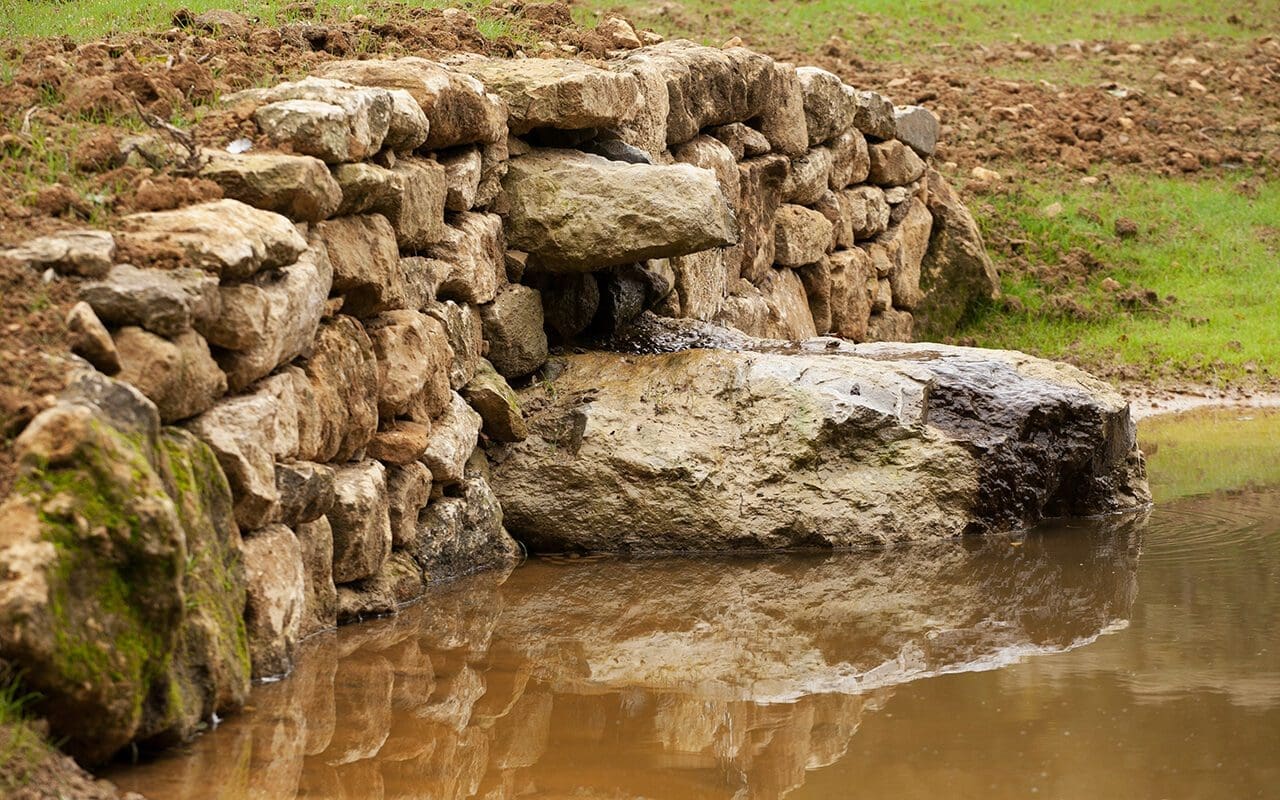
Over the years of watching the springs that run in the ditches by the hedges, it became clear that the spring that runs from underneath the old milking barn on the hill above would be enough to charge the pond. We used salvaged stone that I’ve been saving over the years to build a head wall on the rim of the pond from which the spring water would issue onto a splash stone. A simple stone chute channels the spring water into a depression in the splash stone which gives the water an acoustic value rather than it moving through silently. The puddle in the splash stone has quickly become a washing place for the birds.
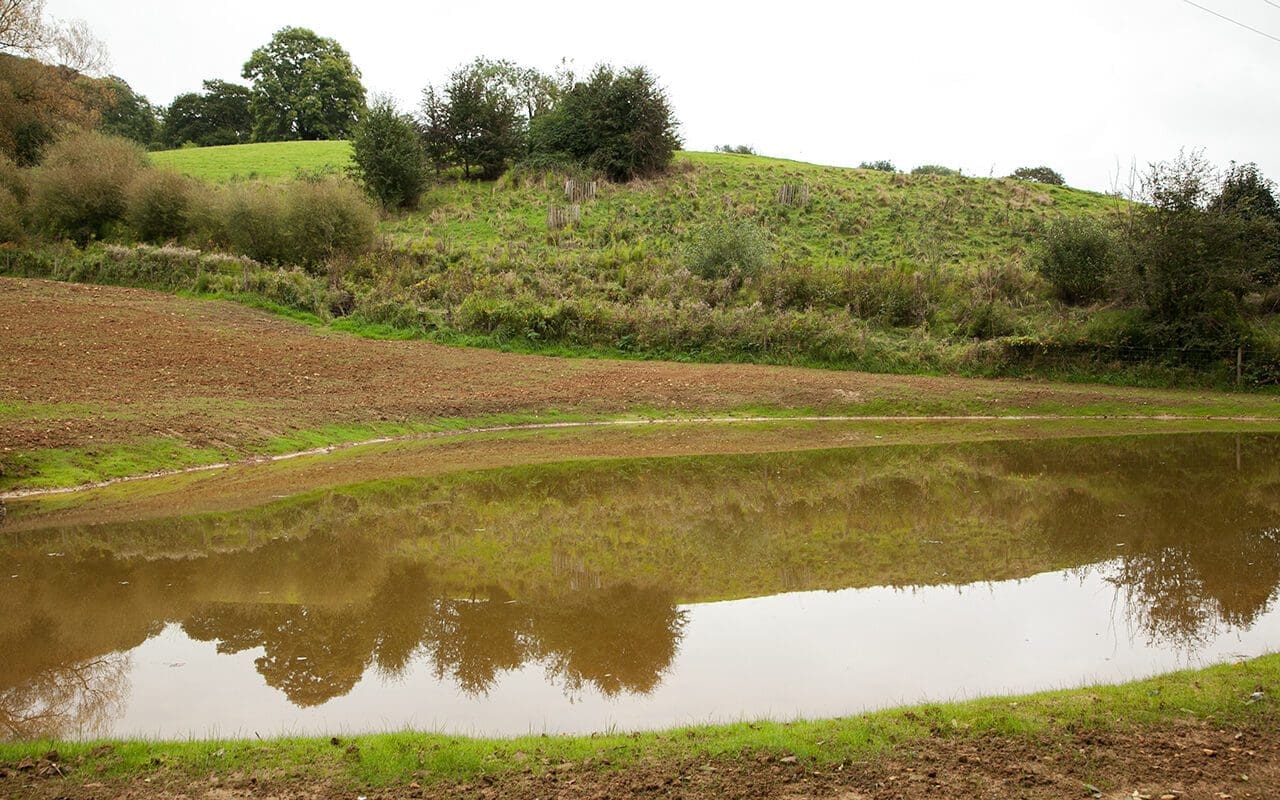
To fill the pond once the groundworks were complete, we tapped the fast running flow in the ditch that runs to the other side of the pond. It filled over the course of three days, with reflections we’d previously only imagined being caught and held there; the roll of The Tump as you look up towards the east, glimpsed views of the buildings on the hill as you look west and, in reverse, the trees of the woods which are now caught in colour that we have only ever seen in shadows on the slopes.
If the pond could have been bigger we would have made it so, I know that already, but it sits well in the hollow with the banks that rise to cushion it. It is said that the defining factor between a pond and a lake is that a lake is big enough for a swan to land and take off. We imagine that this will be a pond and that feels right here, held in the land form and with nowhere else to go.
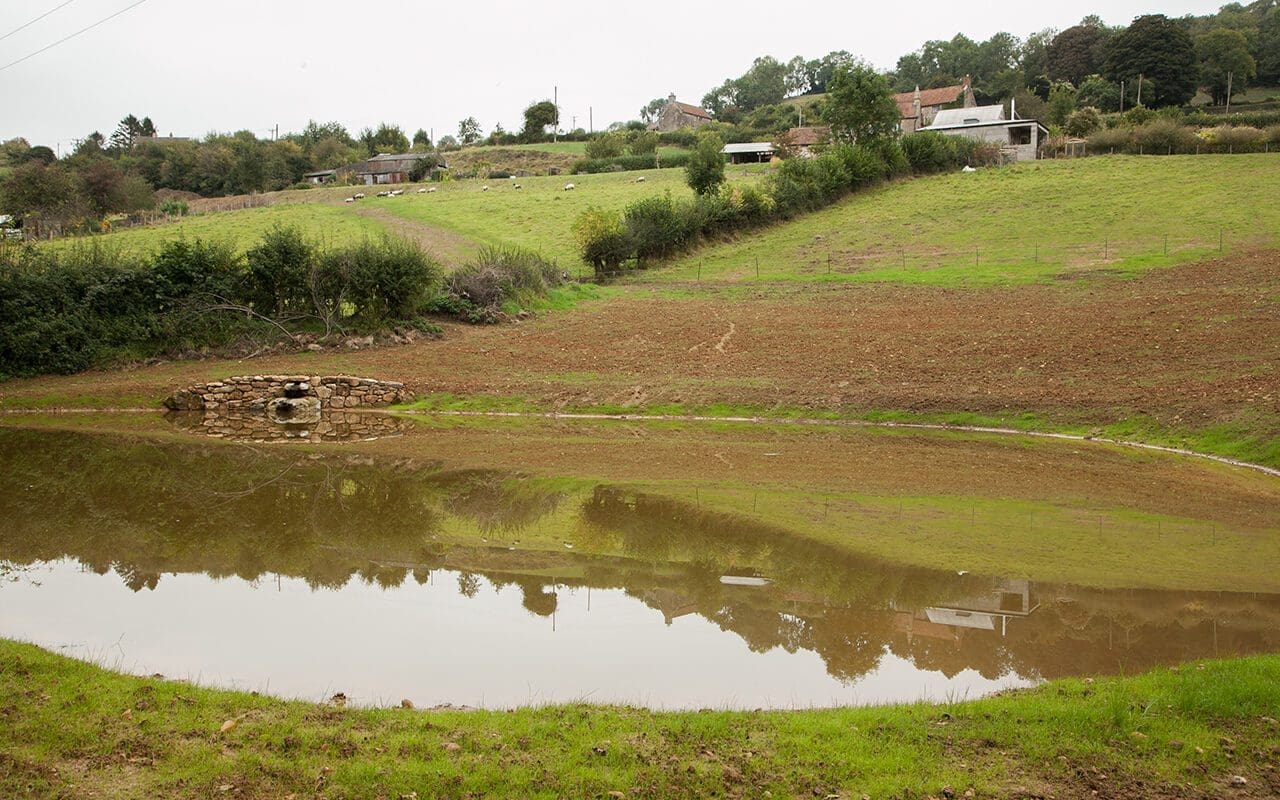
We will not stock the pond with fish, preferring to see what arrives on its own from the ditch water and the existing ecology nearby. I do not plan on planting the pond until the growing season opens again next year, as aquatics need to grow into a season to take a hold rather than sitting cold as the season wanes. The aquatics are important though and they will help to balance the ecology in the pond so, on the 4th of September, a week after the water brimmed and wicked the margins, I sowed the land that had been disturbed in the making to heal the scar. A marginal mix of wetland natives from Emorsgate Seeds and, where we know the ground will sit damper, the Cricklade North Meadow Mix (hopefully with Snake’s Head Fritillaries and Meadow Rue), from the SSSI water meadows near Cricklade.
Whilst I was sowing the seed and with my head in an entirely different future that morning, Huw took our beautiful dog Woody to the vet as he’d been under the weather in the days the pond was filling. Neither of us knew on that Saturday morning that he wouldn’t return and that he had had his allotted time, but within a week that seed was showing green and we’d had the magical visitation of a never-before-seen kingfisher. New, unstoppable life and an alchemy we are lucky enough to be part of and nurtured by.

Words: Dan Pearson | Photographs: Huw Morgan
Published 9 October 2021
A week ago, suddenly and unexpectedly, we lost our dear canine companion.
We buried him in the top field above the house, where he used to go to be more dog.
He would sit here with a view over our land and the length of the valley. With his nose raised to the sky, he would close his eyes and take in the scents on the air.
This arrangement was gathered from the nearby hedgerow and field banks. A collection of wild things for an almost wild boy.
We are now going to take a little time off, to recuperate and gather ourselves for the approaching winter
We are thankful to all of you who have written and will be back with you in mid-October.

Published 11 September 2021
When the pandemic took hold last year we decided very quickly that we would no longer split our time between here and running the studio in London. The enforced remote working proved that what we’d thought not possible was possible and the grip of the city quickly lost its hold. This was something we’d been planning for, but the enforced decision presented another layer of engagement. To be here daily has been profoundly different and we have gone deeper in the process of living our lives here more fully.
The polytunnel was a direct response to being able to tend the place daily and to get more out of the land by extending the growing season. Arriving late, because the steel for the frames was being used to make hospital beds at the beginning of the lockdown, it eventually arrived at the end of May. It was erected for the beginning of June, running down our steep slope in a north / south orientation as it should be, the sun hitting either side equally as it arcs over the course of the day from east to west.
The tomatoes by that point were straining in the cold frames so we planted them up in growbags as there wasn’t time to make in-ground beds. It was late to plant them out, a good six weeks, but they made up for lost time in the glorious summer. At the end of the season we inherited a second cultivation pause whilst we constructed the beds so that we could grow our plants in the ground. Our hearty soil was not so long ago market garden and it seemed entirely wrong to be using growbags.
The Mypex mulch which we’d laid directly over the pasture to keep the ground in the polytunnel clean in the first season had done its job. The soil was now ‘clean’, the rough turf having been starved of light so, once the beds were constructed, we mulched again with compost and put down the first winter crops in early November. We felt the knock-on delays, one bumping into another and the winter crops sat there without light and didn’t move again until spring.
We have both been part of this learning curve, but the polytunnel is very much Huw’s domain and he has claimed the daily running and tending because he is the man behind the vegetable growing. This year we have learned once again. The beds have been so much easier to water than in containers and, in general, the plants have been able to delve deep into good soil and be less reliant upon us. By spring we were back on track and the tomato plants were planted out in mid-May whilst they still had energy in them and hadn’t outgrown their pots.
We got the spacing between rows correct at 60cm, but fear we have been greedy in putting four and not three plants to a row in the beds, so that they are only 45cm apart. The plants have shaded each other and made tending less easy and now, at the end of the season, we have finally got the tomato blight that we were surprised hadn’t hit sooner with the prolonged cool, wet summer. That said the crops to date have been good and the cold season has not had the same impact it would have done had we not made the commitment to this protected growing environment.
Huw’s selection of tomatoes is working towards a perfect balance of varieties that each offer something different, so I will hand over to him now to run you through this year’s choices.
Dan Pearson
///
I got my tomato seed order in early last year in mid-September. The reasons were twofold. Firstly, I wanted to place the order while the shortcomings of last year’s varieties were fresh in my mind and secondly, I did not want to risk the varieties I wanted being already sold out due to last year’s extraordinary demand for vegetable seed.
Almost all of this year’s varieties came from The Real Seed Company, whose seed and growing advice I have come to trust over the years. It is a small, ethically run company and, contrary to what you might expect, they give guidance on seed collecting for oneself very freely.
I always like to grow a good variety of different kinds of tomato, both for their appearance on the plate and the range of things you can do with them. This year’s selection includes a number of culinary types or those that can be eaten raw and cooked, some with striped skins or unusual colours and ranging from tiny cherry tomatoes to huge, ribbed beefsteaks. I was also interested to try a number of Eastern European varieties, which start cropping faster, are not as susceptible to cold and some of which are reputed to still produce fruit at Christmas under cover.
Although our harvests this year have been respectable we lost our second trusses during the extreme heat at the end of July when, even with all the doors open, the temperature in the polytunnel reached 42° Centigrade. With the blight that has just arrived in the last 36 hours on the back of last week’s damp, cold weather it now looks as though that may be our lot for this year. I have just arrived back from a couple of days in London but, first thing tomorrow morning, I will be heading down to the polytunnel for a thorough inspection before starting the necessary but slightly disheartening business of removing the lot. However, the silver lining is that I can get a late sowing of French beans in the ground before we go on holiday for a couple of weeks.
Huw Morgan
This year’s selection listed as seen from left to right in the main image. For scale, the largest tomato (the beefsteak Feo de Rio Gordo) is 11cm in diameter and 8cm high.
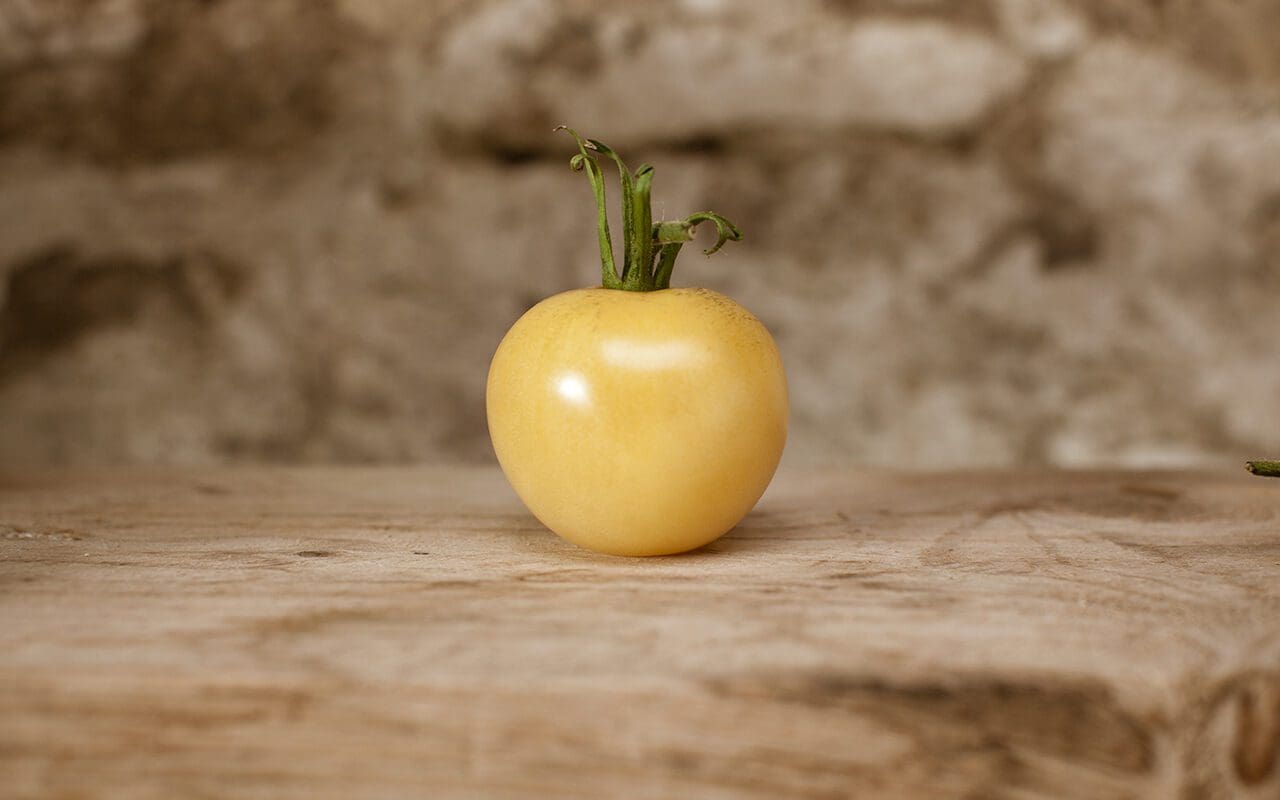
An unusual pale yellow variety from the Ukraine, which produces fruit in a variety of sizes up to medium beefsteak. It can look insipid on the plant, but makes a very elegant sliced tomato salad, particularly with purple leaved basil. The flesh is juicy and fresh tasting with a hint of lemon. Reputed to fruit until December with protection.
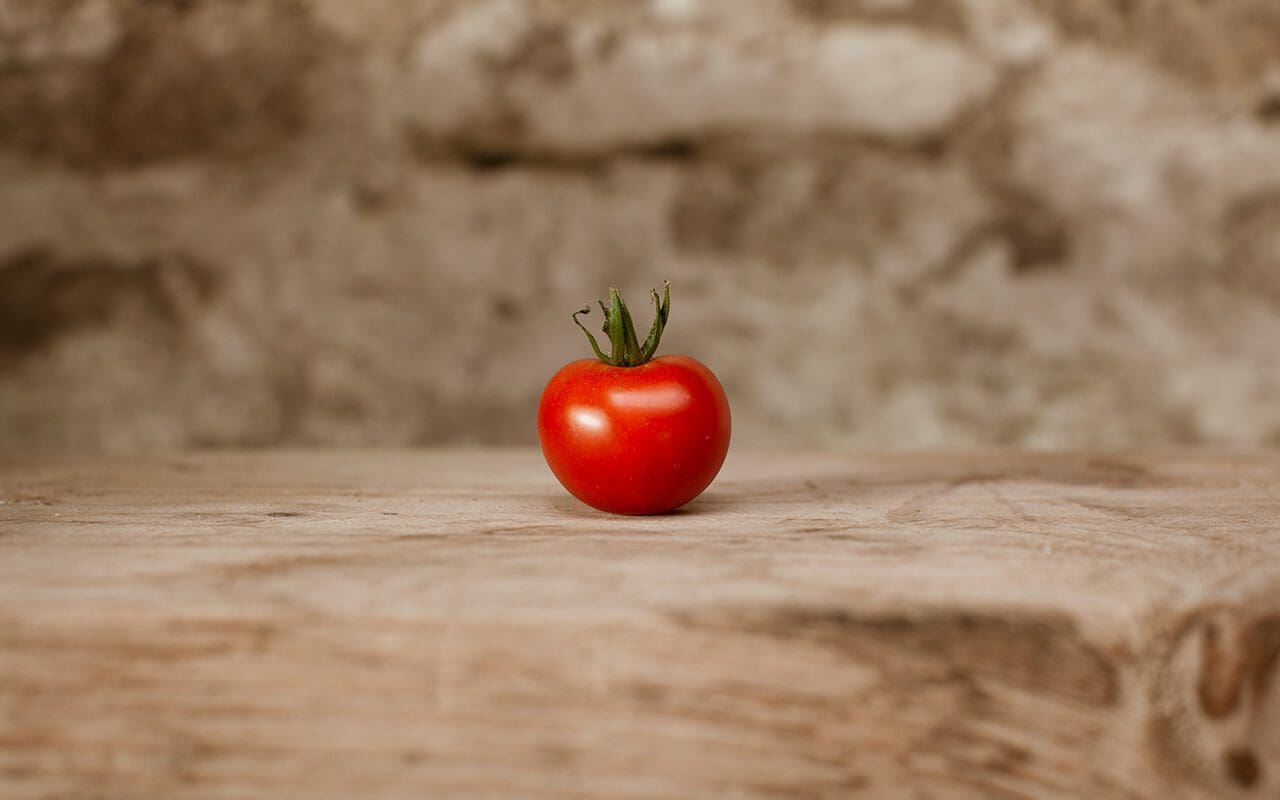
This old favourite is well named. Reliable, heavy crops of delicious, sweet red cherry tomatoes.
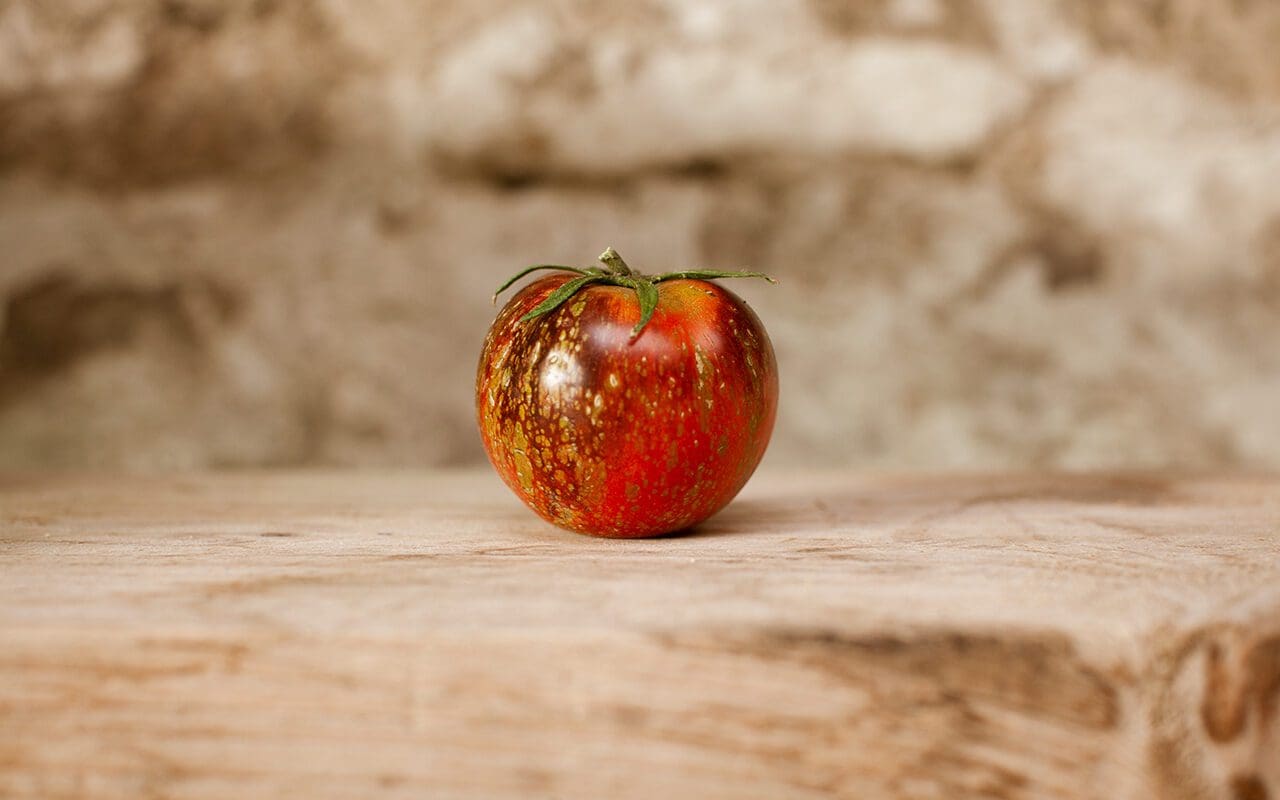
Perhaps the most beautiful tomato you can grow. It starts off green with deep purple streaks, ripening to red blushed dark brown with metallic golden splashes. Unfortunately, however, it is watery and flavourless, although the Real Seed Company recognise this and are working on developing its flavour.
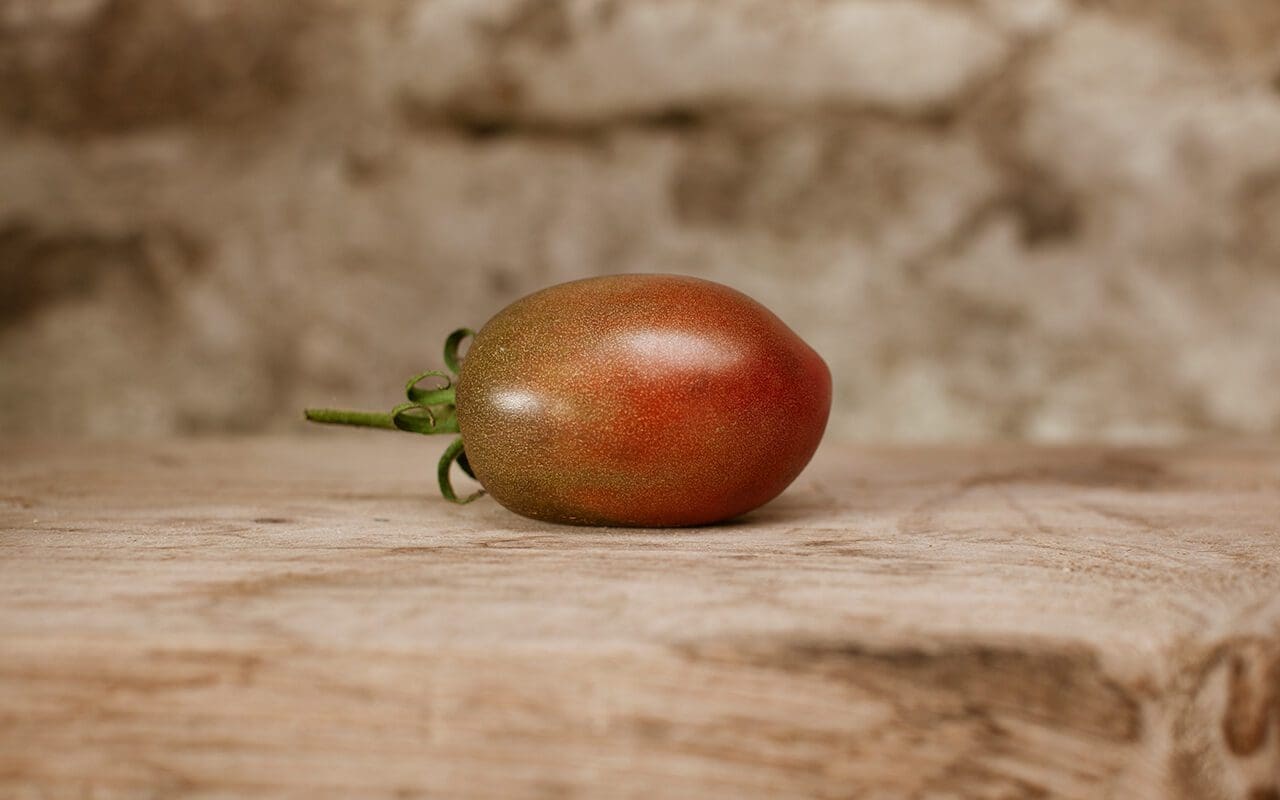
Not purple, but a dark, bruised plum tomato with brown shoulders. One of the earliest to get away and to crop, with an elegant habit and lacinated foliage. Very heavy cropper for us and, due to its provenance, reputed to have a long season. With Black Russian and Amish Paste, this has been the basis of all of the passata I have made this year.
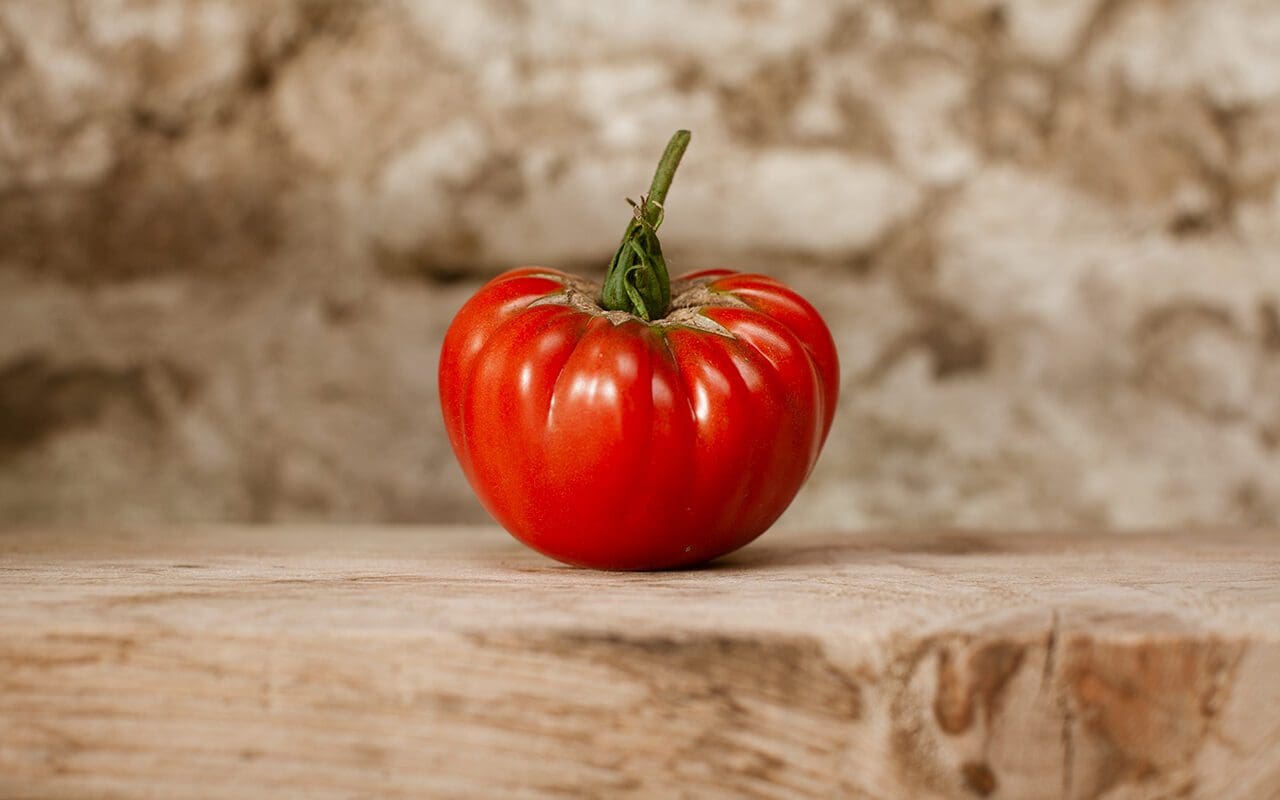
A monster beef tomato from Spain which has produced a steady stream of fruits weighing in at 400-500g each. Surprisingly early given its size and provenance. Delicious thickly sliced with olive oil and shallots.
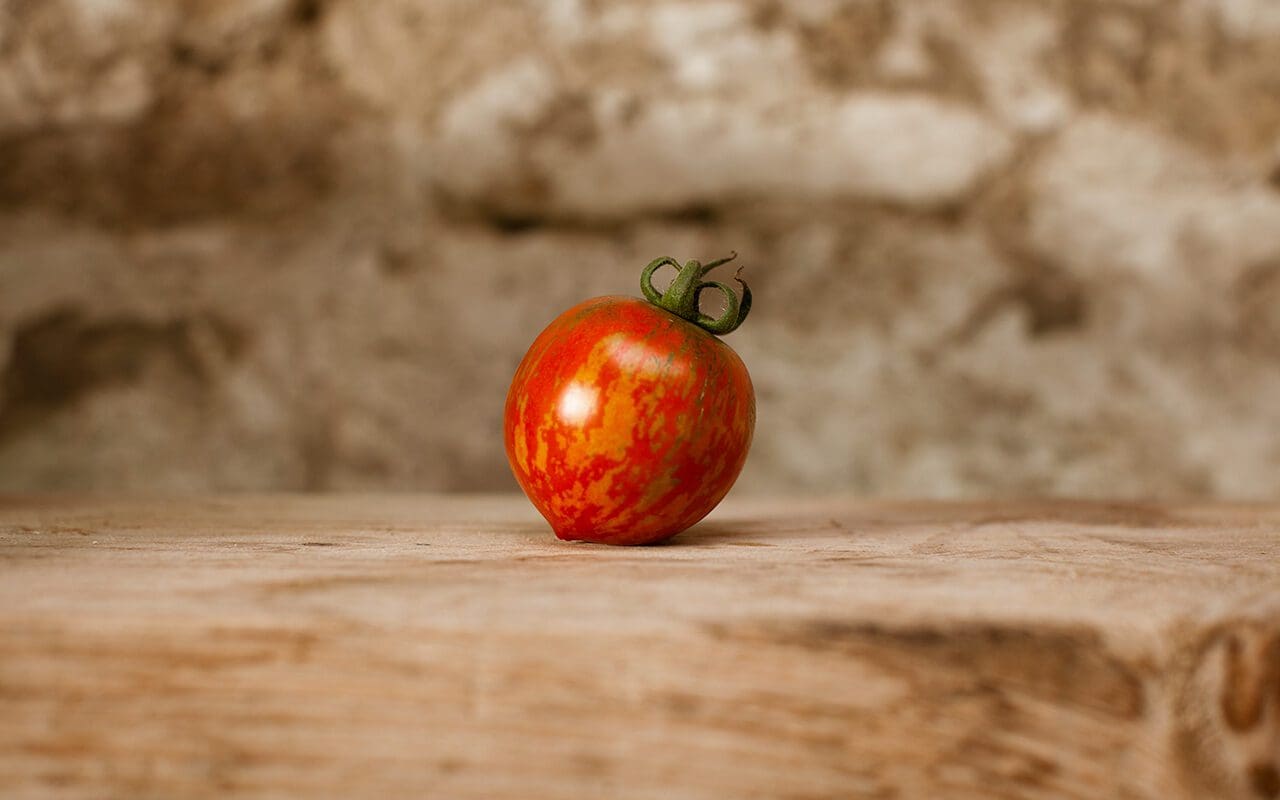
A sport of Green Zebra with beautiful gold and green splashed skin and really good flavour. Produces a variety of sizes on each truss from cherry to golf ball to tennis ball. Will be growing again.
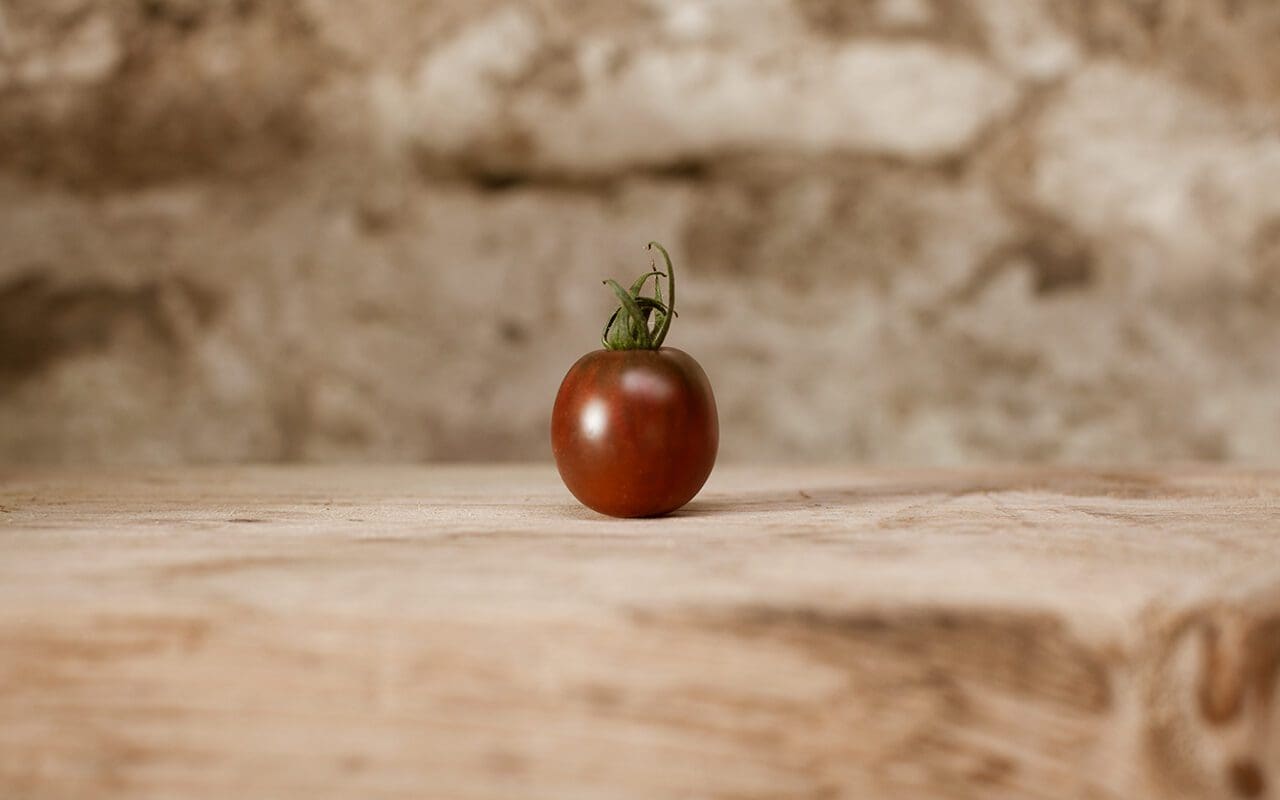
Last year’s discovery and a new confirmed favourite. One of the heaviest croppers of all with some trusses having forty or more fruits. Delicious spicy scent and flavour.
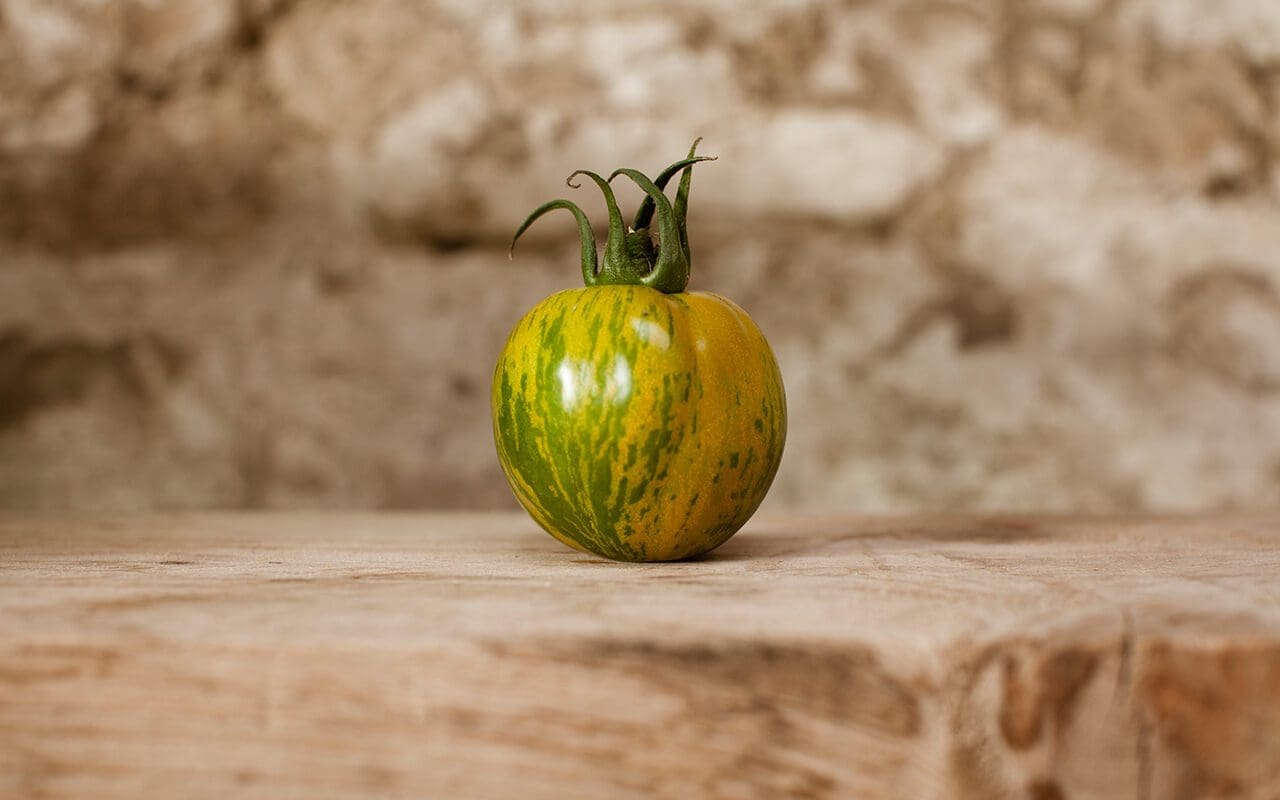
This year’s revelation. Large green striped fruits, which ripen very slowly to amber. They retain their firmness on the vine and have been the best keepers, even out of the fridge. The succulent flesh is pale green, which makes a lovely contrast with red tomatoes on the plate and, contrary to expectation, is exceptionally well flavoured. Our new favourite.
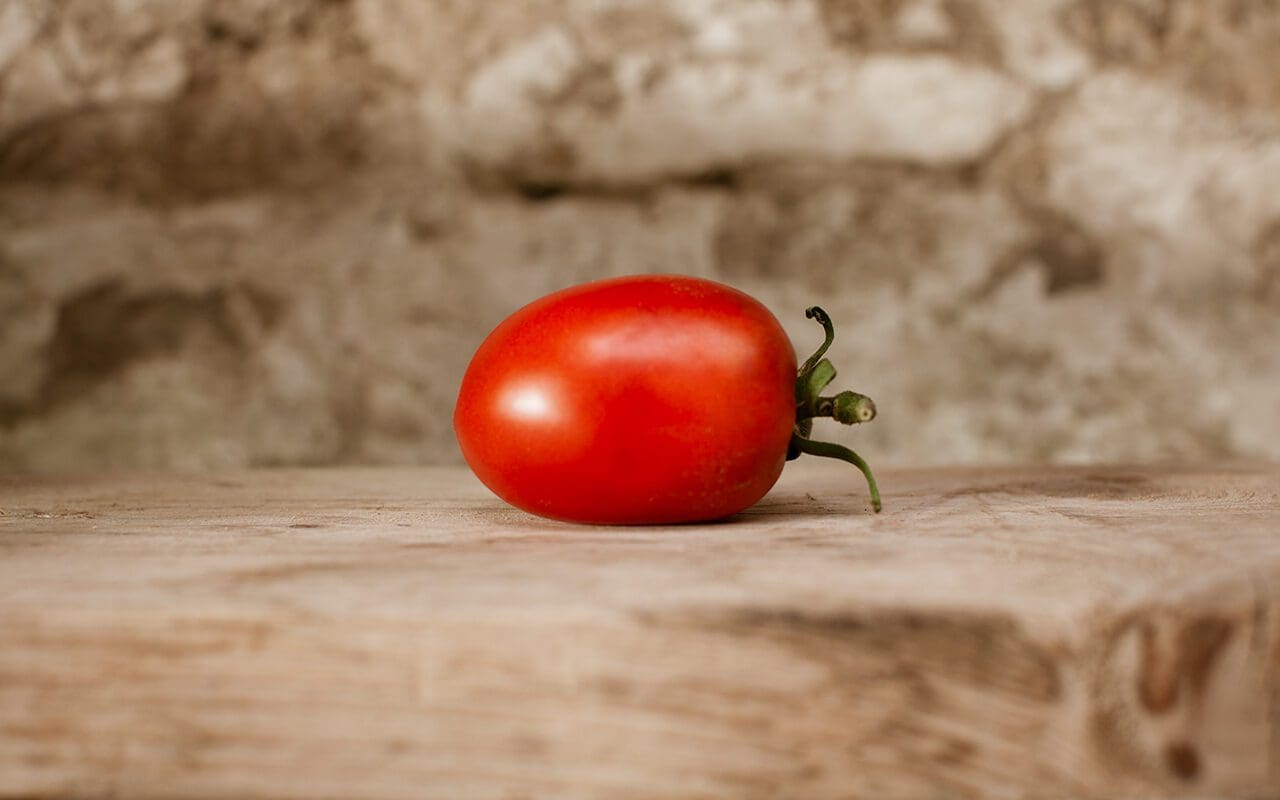
An heirloom American variety which produces very large, firm plum tomatoes (the one illustrated is of smaller than average size) with a low water content. Perfect for roasting and grilling, bottling or making into pasta or puree. Not as productive for us as Purple Ukraine.
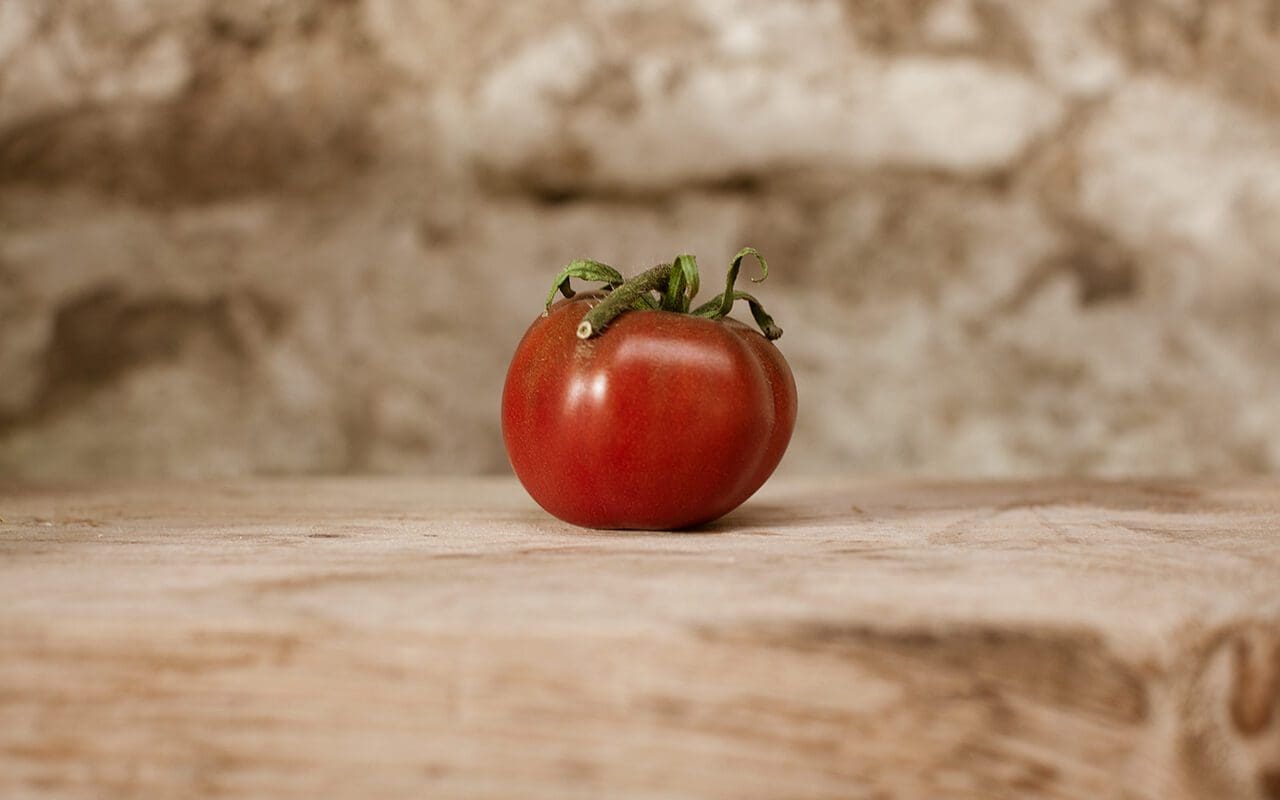
Another tomato that isn’t really black, but a dark mahogany red. The fruit in the image is small for the variety, which typically produces medium beefsteaks of excellent texture and flavour. Equally good raw and cooked.
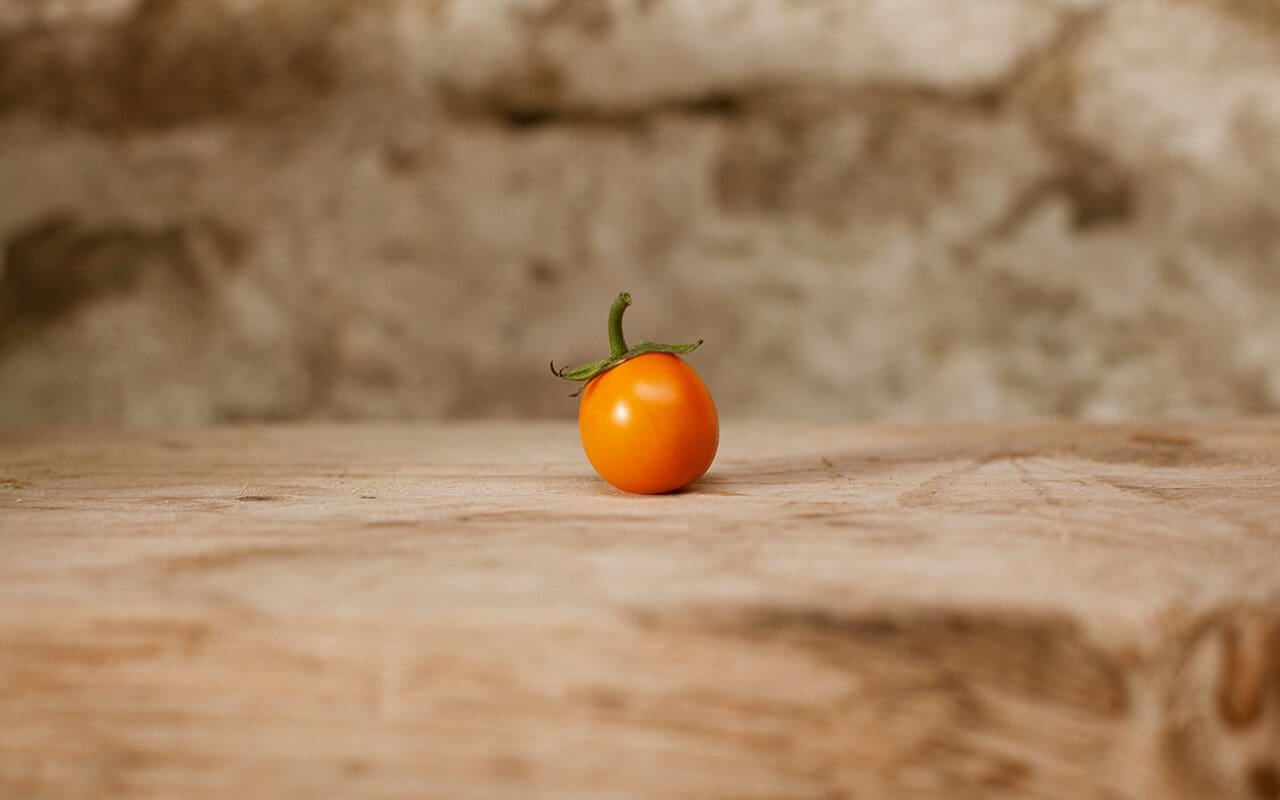
We have always grown this and always will. Totally reliable and heavy cropping. The very sweetest tomato of them all and the one that mostly gets eaten either in the polytunnel or between meals.
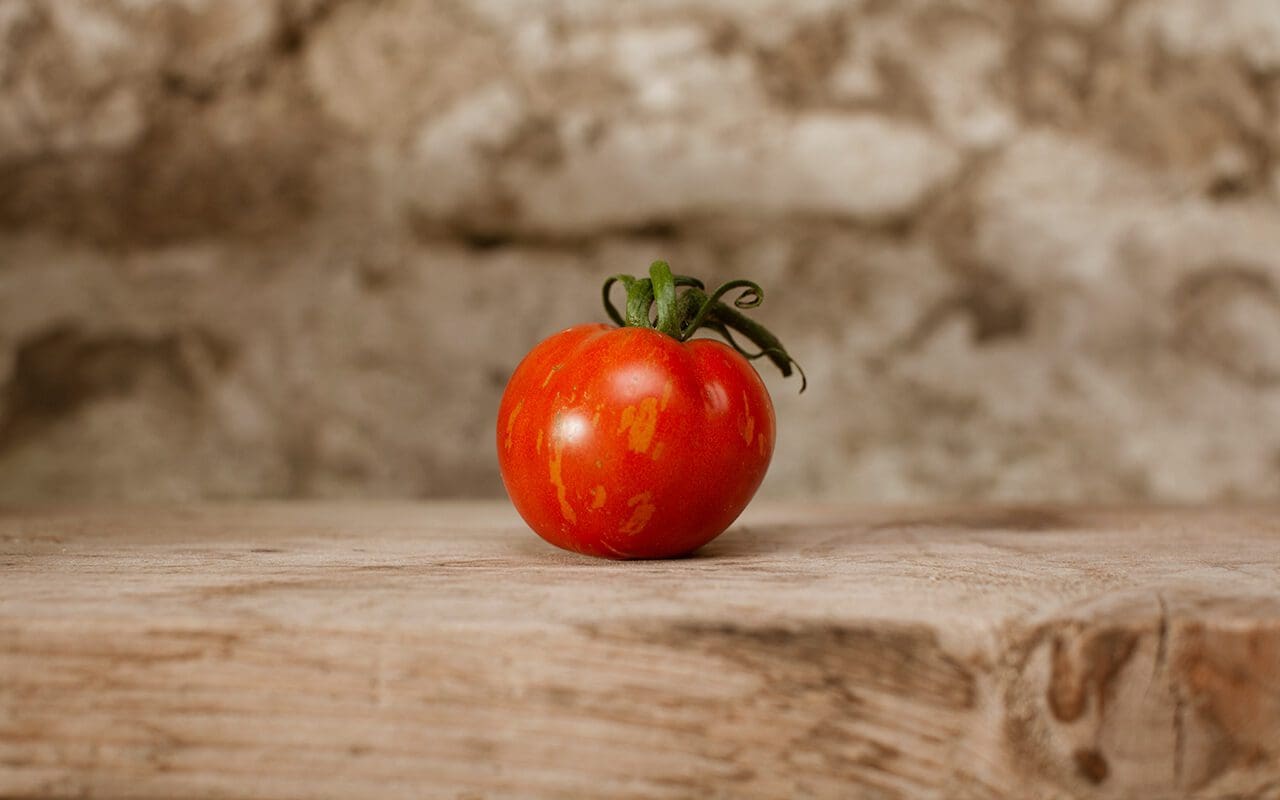
A variety I grew last year, with lightly striped skin and adequate but not distinctive flavour. Surpassed this year in all departments by Red Zebra. Sorry, but it’s goodbye.
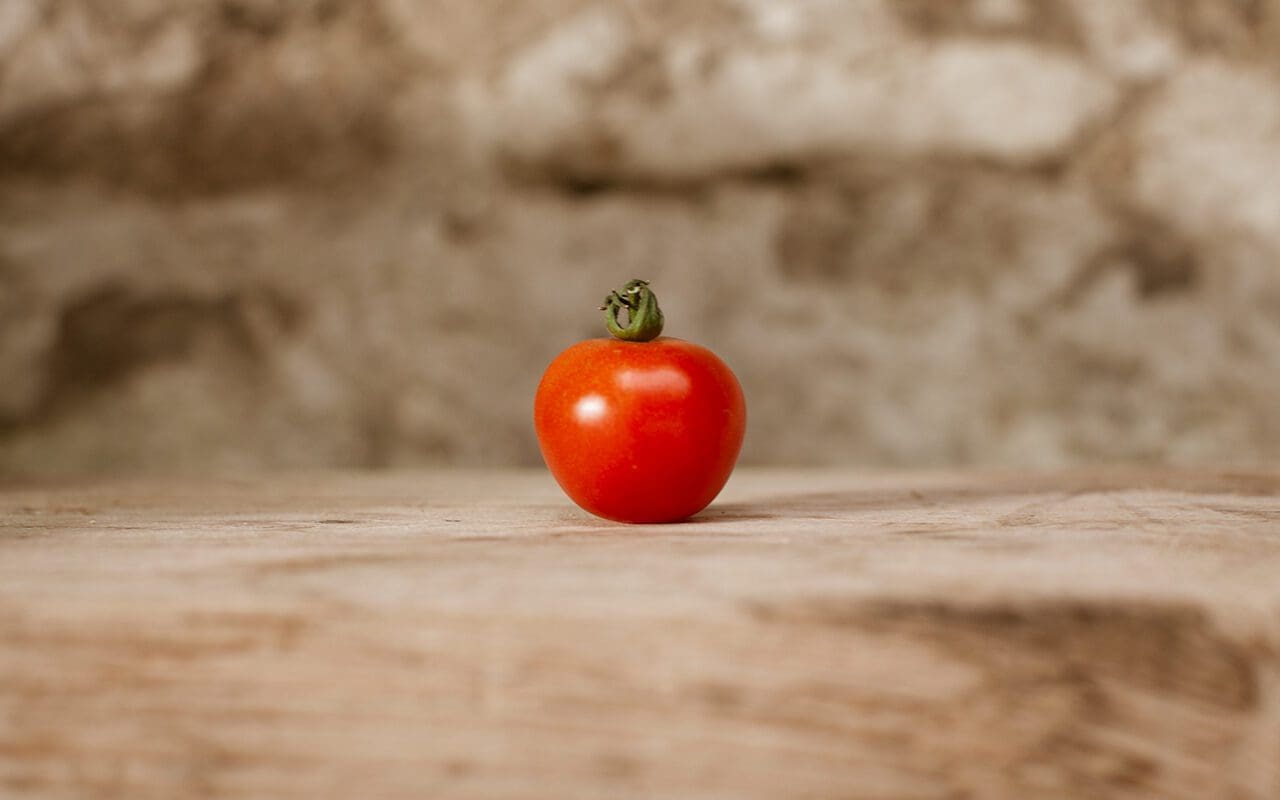
A slightly larger, squarer version of Gardener’s Delight. Firmer and with a thicker skin, so better for packed lunches and picnics. Gardener’s Delight is a much heavier cropper though, so if you are only going to grow one red cherry that would be our choice.
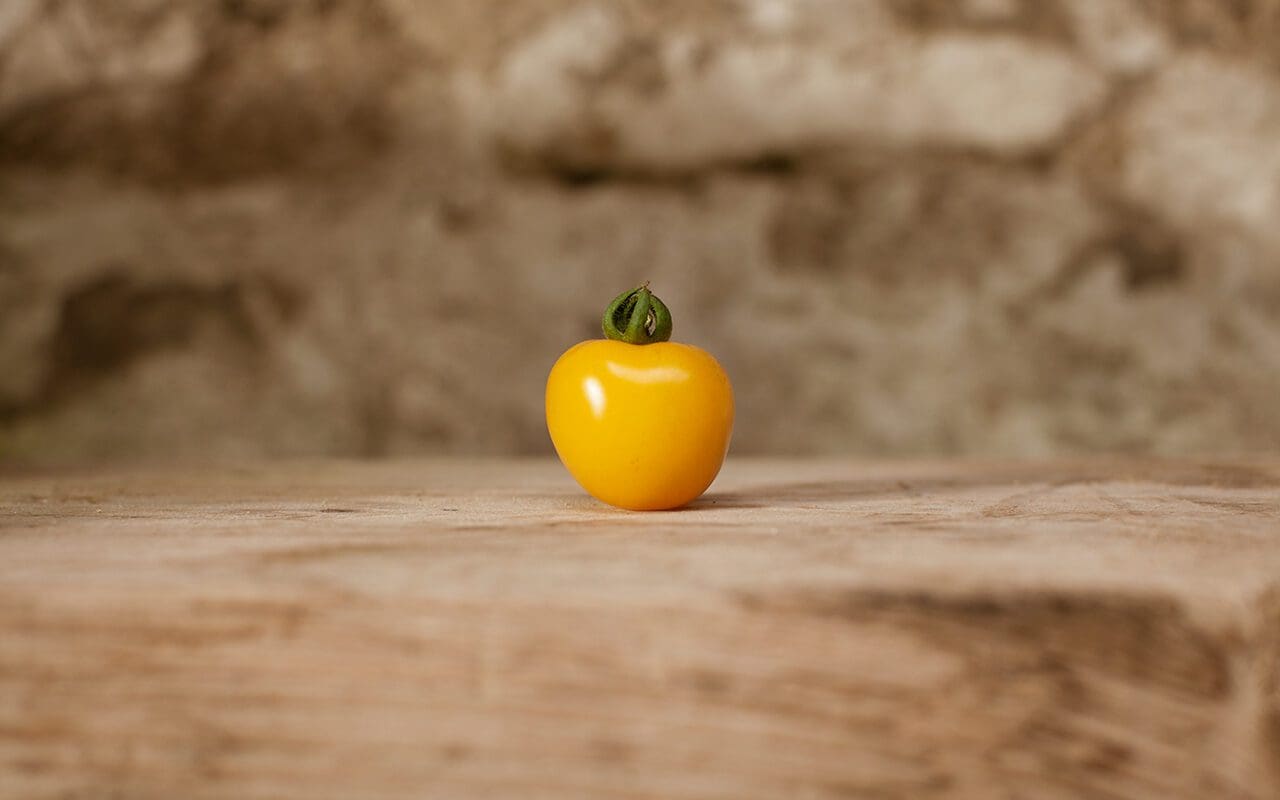
A firm, shiny, bright yellow cherry tomato from Siberia with good flavour. Contrary to the Real Seed Company’s write up, this has been one of our lightest croppers. Will try it again next year.
Words: Dan Pearson & Huw Morgan | Photographs: Huw Morgan
Published 4 September 2021
August is the month when every meal comes straight out of the kitchen garden. Our local village greengrocer, who is also a market gardener, is now used to my prolonged summer absences, and when I do eventually visit we compare notes on what has done well for us this year and what hasn’t. He knows that I will only buy those things that I can’t or don’t grow myself; plump Italian aubergines, lemons, limes and oranges, root ginger, flat peaches and British strawberries. We used to grow our own, but strawberry virus is rife in our valley and we had a mass crop failure two years ago and so it is the only soft fruit that we now buy. My eyes pass over everything else like so much convenience food, knowing that I am returning to a well-stocked garden of courgettes, summer squash, French beans, peppers, runner beans, cucumbers, salad greens, beetroot, carrots, turnips and sweetcorn.
Such choice and variety can make menu-planning a challenge, as the demands of those things that need to be harvested fight the desires of our mouths and bellies. We don’t fancy runner beans this evening, but they threaten to break the tripods if left unpicked. A tiny courgette left on the plant this evening is sure to be a marrow requiring coring and stuffing two days’ hence. And do I have time to dig, wash, roast and peel beetroot, when a tomato salad will take just moments to prepare?
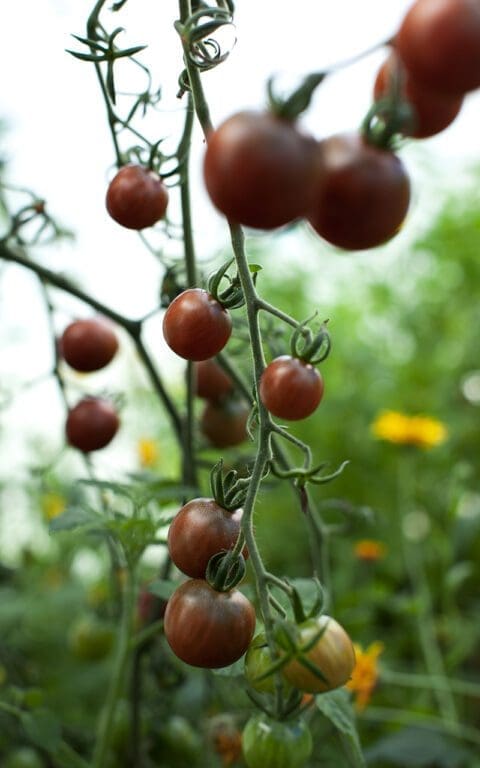
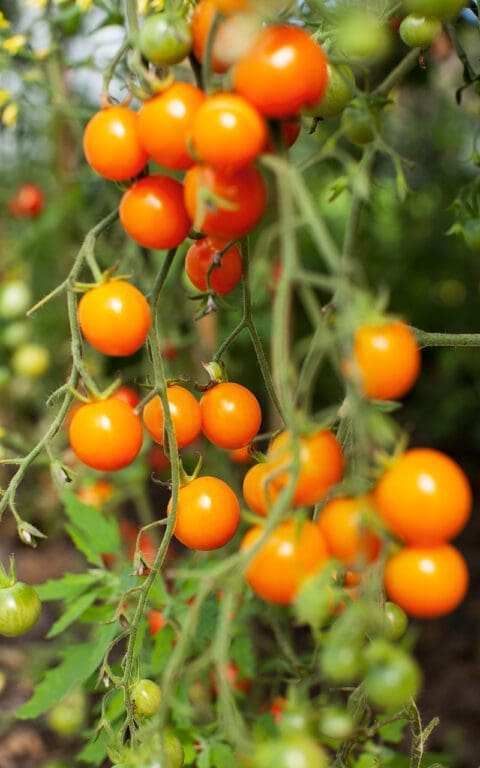
And have we eaten tomato salads in the past few weeks. Almost every day for days and days. Nothing fancy, just thickly sliced tomatoes – beefy ‘Feo de Rio Gordo’ and ‘Black Russian’, striped ‘Red Zebra’ and ‘Green Zebra’ and pale yellow ‘Lotos’ – simply dressed with olive oil, homemade vinegar and sea salt, a scattering of fresh basil or oregano and perhaps some finely sliced shallots. The most productive of all are the cherry tomatoes which, when they’re not just popped whole into your mouth like sweeties, have gone into pans of braised vegetables – courgettes and beans – sauces and soups, or I have slow cooked them in the oven before bottling them in jars for the pantry. This is a change from bottling them whole and uncooked as I did last year. As they are cooked you can pack them in and get far more tomatoes to a jar, so saving space in the pantry for other preserves. I will use their concentrated flavour to bring a taste of summer to winter dishes or delicious, unseasonal luxury to a slice of toast.
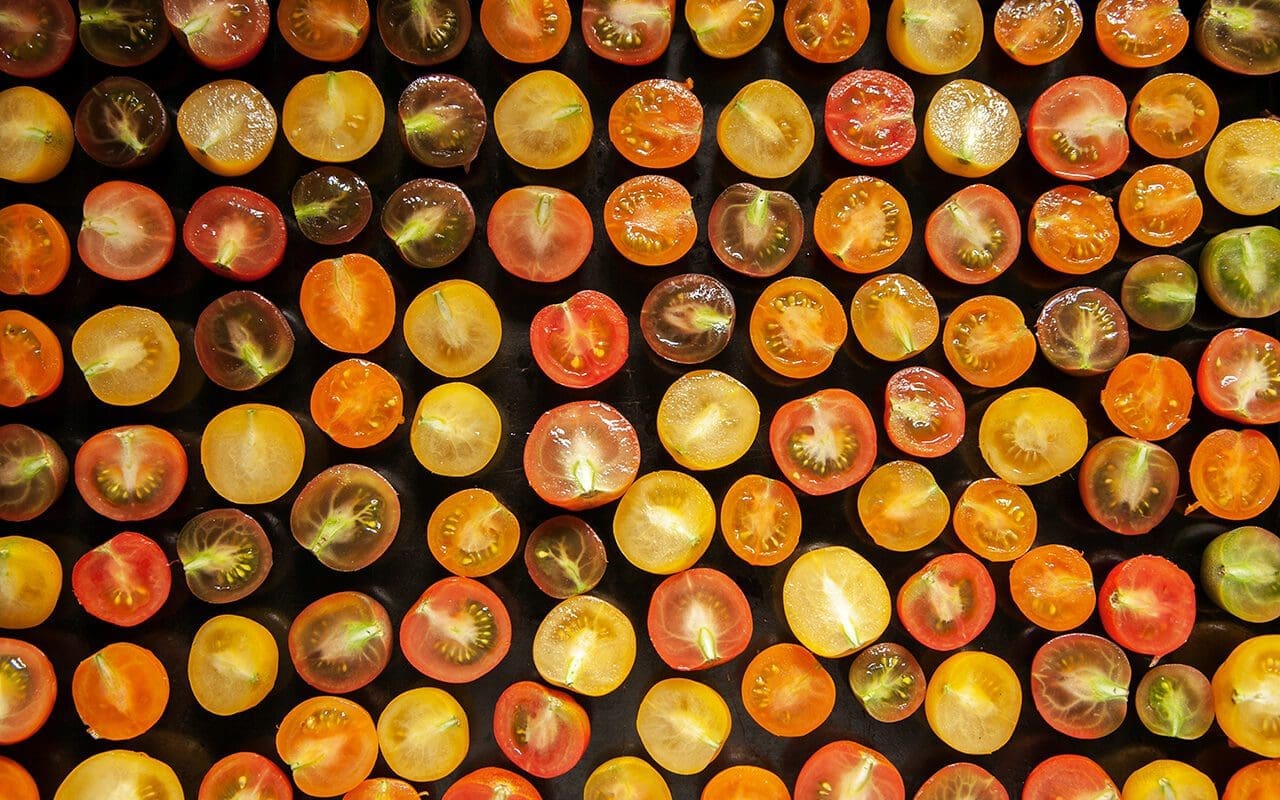
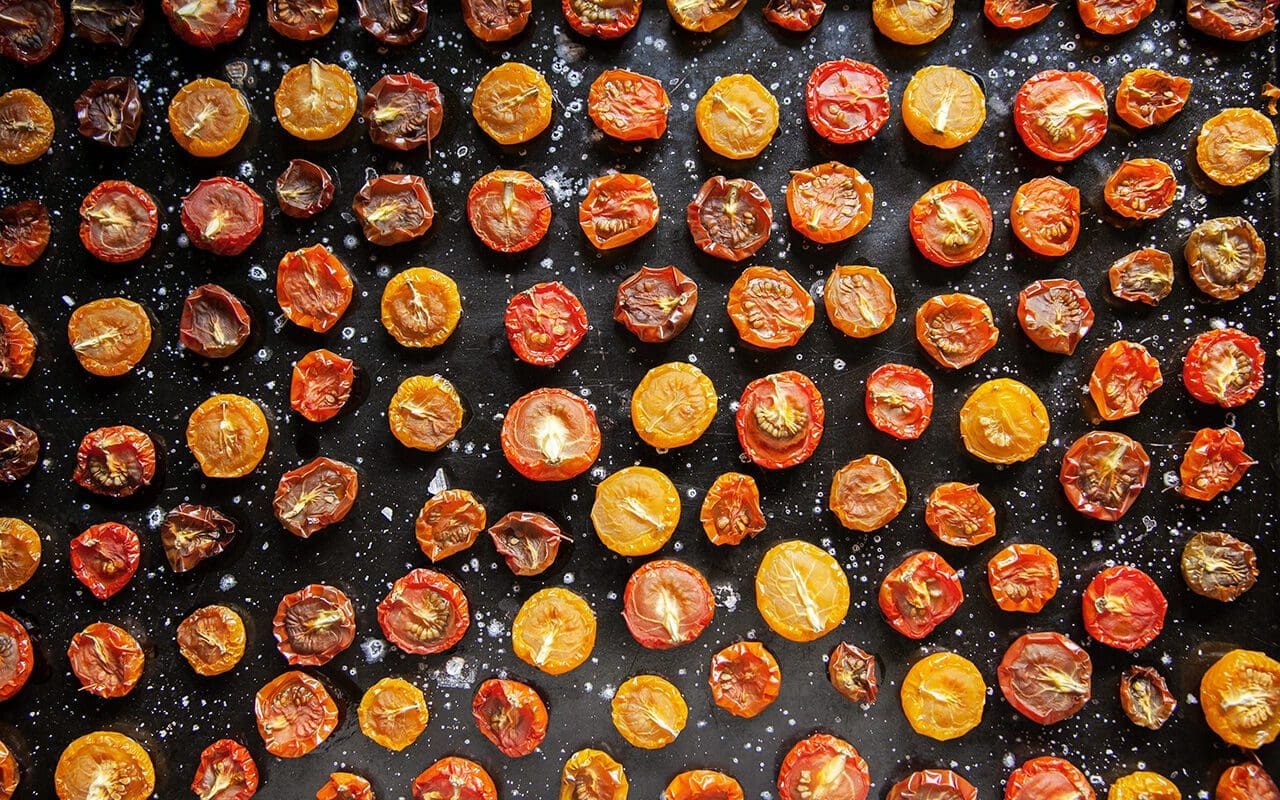
Last week I was left with half a tray of these mi-cuit (half-cooked) tomatoes, which wouldn’t fit into the jar. Pondering what to do with them, my eye caught sight of the Genovese basil in the herb bed, and so I made this quick and easy recipe for an impromptu summer lunch. If you don’t have the time or inclination to make your own pastry, this is even quicker and easier with a pack of shop bought puff pastry or some sheets of oiled filo. Replace the basil with any fresh herb that complements tomatoes like tarragon, chervil, oregano or thyme. The sharper flavour of authentic sheep milk feta and sheep curd works very well with the sweetness of the tomatoes but, if these aren’t easy to get hold of, substitute cow’s milk feta and ricotta.
270g plain flour
10g fine polenta
140g, chilled butter, cubed
1 egg, beaten
Ice cold water
Salt
250g sheep feta
125g sheep curd or ricotta
125ml double cream or mascarpone
A large handful of fresh basil leaves
2 large eggs, beaten
About 500g cherry tomatoes, halved, sprinkled with salt and slow-cooked for 2 hours at 125°C, then allowed to cool
You will need a 20 x 30 cm rectangular or 28 cm round metal tart tin.
Set the oven to 180°C.
Make the pastry by putting the flour, polenta, salt and butter into the bowl of a food processor. Process until the mixture resembles fine breadcrumbs. With the motor running slowly add the beaten egg. Then add chilled water a couple of teaspoons at a time until the dough comes together. When it does, immediately switch off the machine, remove the dough and form into a ball.
On a floured surface quickly roll out the dough and line the tart tin. Trim off the overhanging pastry, prick the base all over with a fork, line with baking parchment and baking beans and bake for 15 minutes. Remove the baking beans and parchment and return to the oven for 5-8 minutes, until golden brown and looking dry. Remove from the oven and allow to cool.
Put the feta, sheep curd and cream into the food processor and process until well combined. Add the basil and process again until the mixture is completely flecked with green. With the motor running add the beaten eggs. Pour the filling into the pastry case. Arrange the cherry tomatoes on top of the basil cream, fitting in as many as you can. Return to the oven for a further 25-30 minutes, until the tomatoes are lightly browned and the basil cream is golden in places and puffy.
Serve warm with a green salad.
Recipe & photographs: Huw Morgan
Published 28 August 2021
When we arrived here, we took back some of the field to make a trial garden. It was workmanlike in its layout, with dirt paths between manageably sized beds and functioned as a test ground to see what the conditions here were capable of. We grew a range of perennials to see what would feel right and do well on our south-facing slopes as well as vegetables and flowers for cutting for immediate rewards in that first exciting growing season.
The annuals were the immediate litmus, rearing out of virgin ground where they were bathed in sunshine. The response was immediate and immediately rewarding, the cabbages bulking up to a couple of feet across and letting us know exactly why this had once been a market garden and that, yes, it was right to turn field back to garden. For fun, and as a celebration of this new space, we planted a bed of five or six types of sunflower. They grew like you remember things growing as a child, the seedlings popping through the newly turned dirt and not looking back as they raced skyward. I hadn’t seen growth like it and before long they were standing literally twice as tall as me and rejoicing as we were in this wonderful new ground.

We picked them by the bucket and took vigorous bunches back to the studio in London to tide us over during the week and stop us pining for the hillside. They kept us going through July and were at their peak in August, reminding me by the end of the month of that back to school feeling. The time of the year when the summer is nearly done, but still caught in their energy.
In September we let them form seed and those that didn’t get ravaged by an October storm stood blackened by frost, the seed cases scattered at their feet where the birds had feasted. Seedlings returned in the garden and I left them where I could work around them in the following years, but when we developed the kitchen garden to the east of the house and then the perennial garden to the west, they temporarily lost their home.
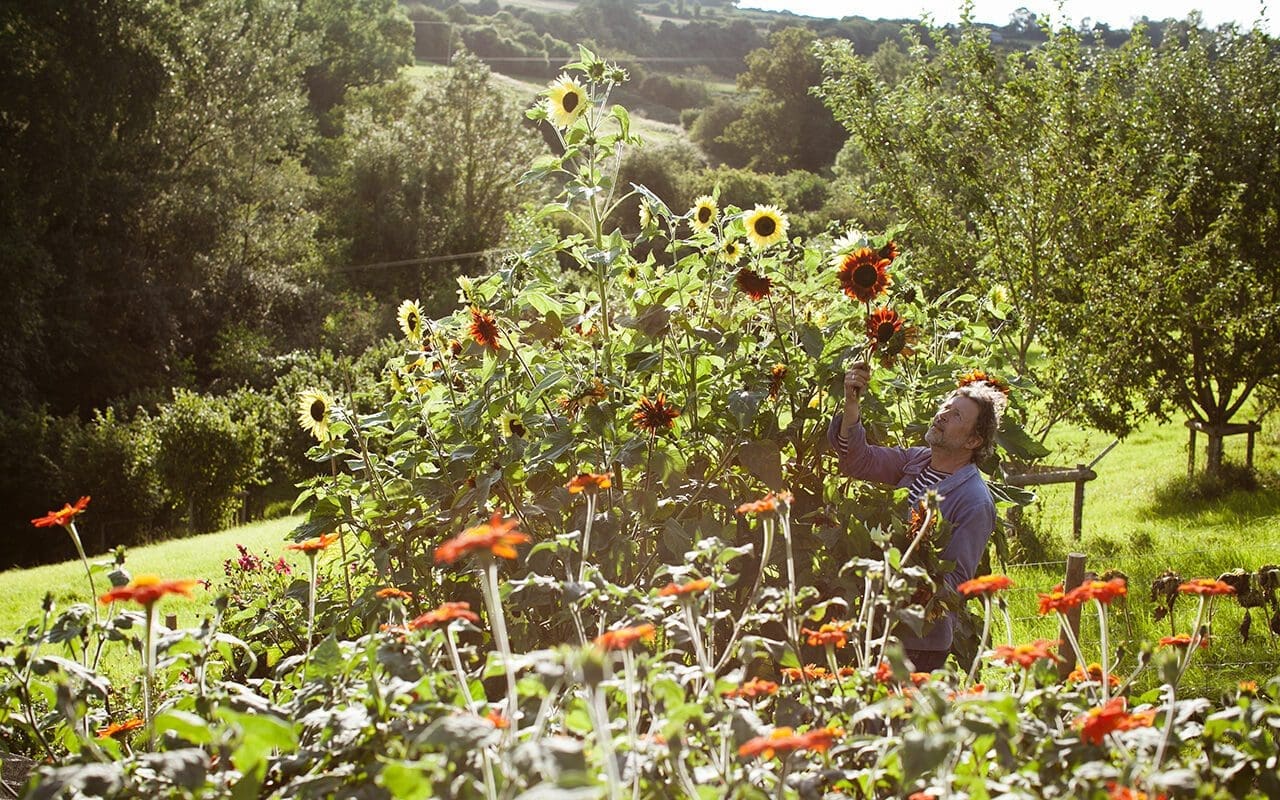
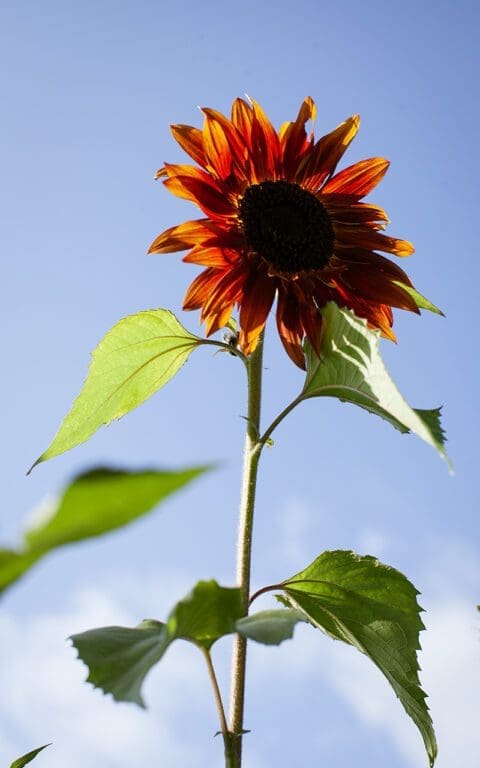
Last year’s response to the pandemic saw us putting up a polytunnel so that we could extend our season of growing to eat. This year I extended a new growing area around it to make an area for continued trials and a spill over for vegetables that need more space. Potatoes were planted to ‘clean’ the ground in this first year of transition from pasture and to repeat the experiments from our first years here we planted a new bed of dahlias, annuals for cutting and sunflowers. It has been so very good to have them back and in generous amount, once again letting us know that, yes, this is a good place for growing.
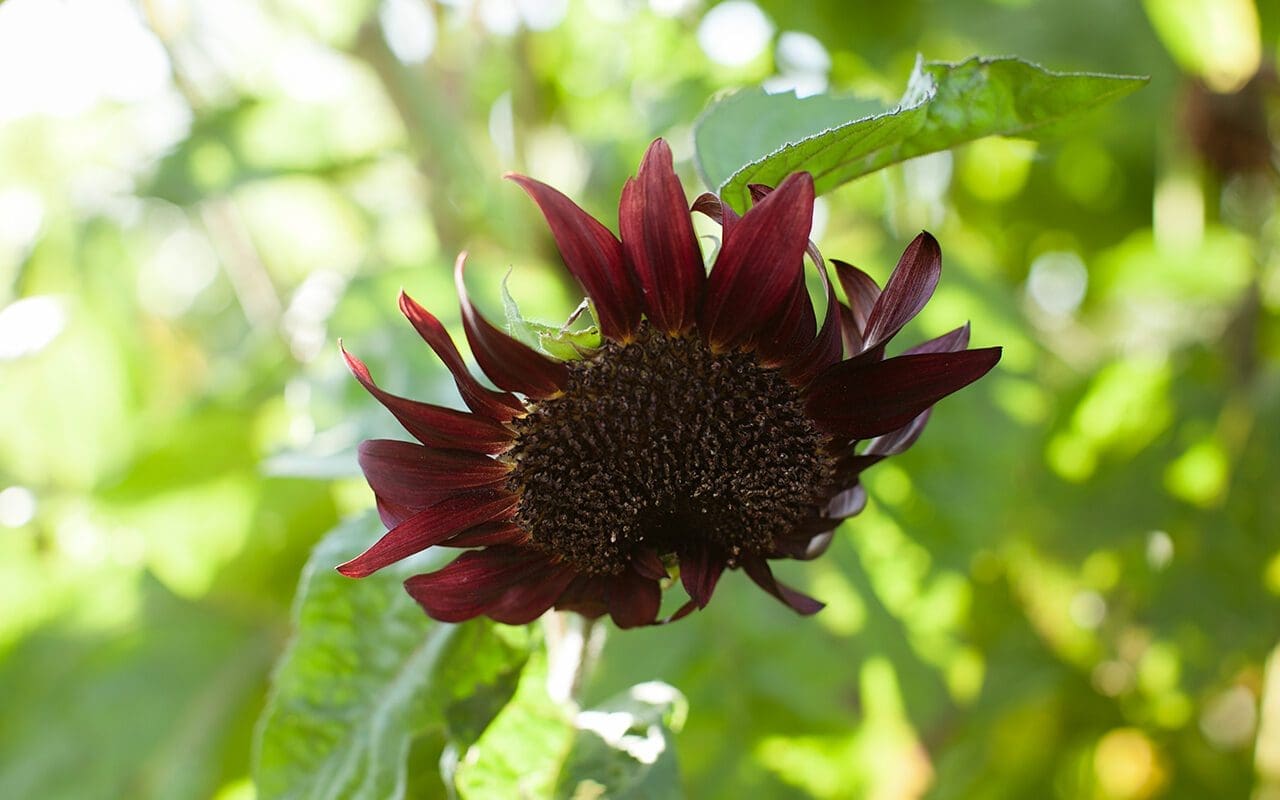
We have three varieties of Helianthus annuus that have done splendidly. ‘Lemon Queen’, ‘Velvet Queen’ and ‘Chocolate Cherry’. This will be the last year though that we grow ‘Italian White’, a more demure variety that has proven once again to be a shadow of its cousins. Perhaps it is my own experience and I have been unlucky, but every time it germinates poorly and then limps through life. Shy is appealing sometimes, but when you have such boisterous cousins that literally throw you into shade, it makes comparison difficult.
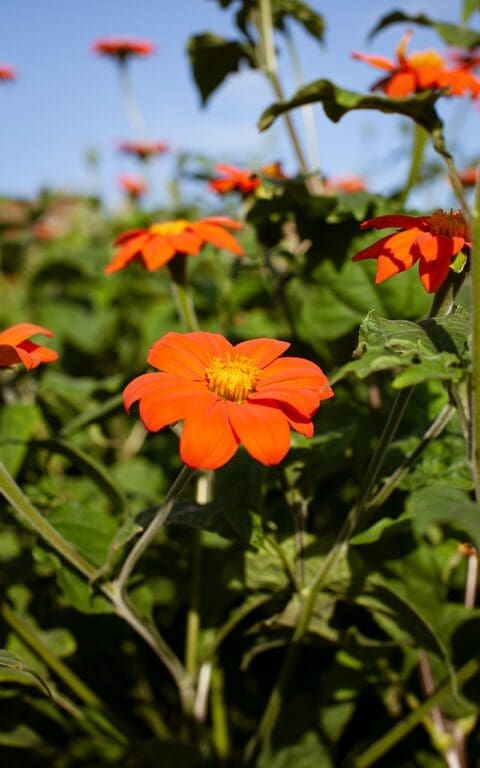
As a complement and for the saturation of pure orange, the Mexican Sunflower, Tithonia rotundifolia, has been easy and rewarding. Grown from seed sown inside and planted out after frost, we have combined it with lime green Nictotiana langsdorfii. The new ground is here to spur ideas and a few plants, the Tithonia included, have already found their way into the perennial garden to punch some late indelible colour. Annuals are good for that, taking this month as their own with no apologies and covering for anything that tends to that back to school feeling.
Words: Dan Pearson | Photographs: Huw Morgan
Published 21 August 2021
We are sorry but the page you are looking for does not exist. You could return to the homepage