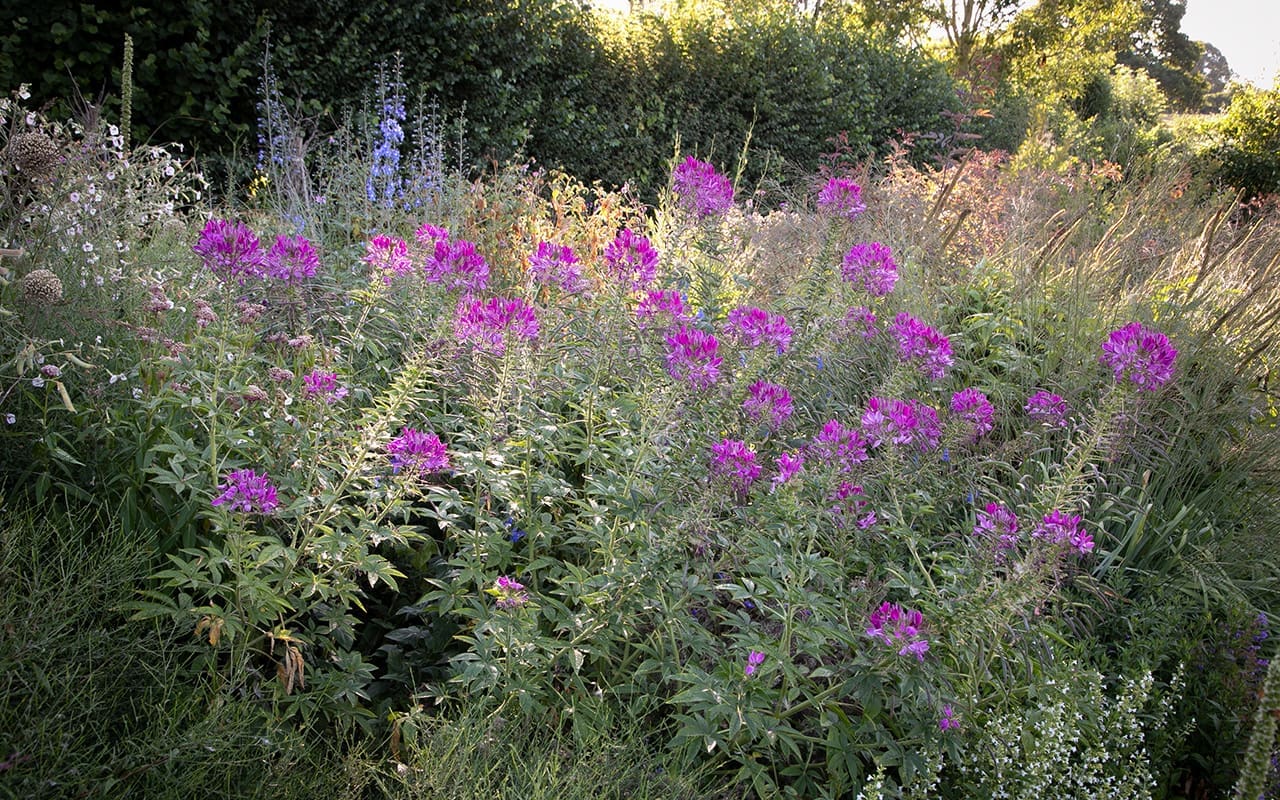
Last week I spent a day at Sissinghurst for the annual visit in my godparenting role, where I provide another pair of eyes with the advantage of seeing things afresh as an outsider. The days consist of a walk and talk with the garden team and the intense heat, and weeks without rain quickly surfaced as a topic. The National Trust, in collaboration with head gardener, Troy Scott-Smith, have made the decision not to water, which is a radical move for one of the Trust’s most important gardens. The thinking being that watering is no longer a sustainable option and that, in the face of the climate changing, we must learn to adapt. To look at what plants fall away, which plants endure and how a new palette might help to negotiate a different way of gardening the garden into the future.
Vita and Harold had never envisaged Sissinghurst being a garden that was singing and dancing everywhere all at once and at every point in the year. They would turn their back on the Lime Walk when the bulbs were over and enjoy the White Garden for its glorious solstice moment. Once the roses were done – for most were once blooming – the Rose Garden would be allowed to quieten and settle into the second half of the summer. They had the luxury of moving around the garden’s many rooms as they lit and faded, but once Sissinghurst was taken on by the National Trust in 1967 and had to open for the public and deliver, certain expectations weighted change. In the hands of Pam Schwerdt and Sibylle Kreutzberger, the head gardeners who started working at Sissinghurst in 1959 and continued the garden after Vita died, the standard of horticulture rose to meet the challenge. There were no restrictions upon horticultural excellence, bar the amount of energy the team had to put into gardening, and so the borders sang and they danced.
THIS POST IS FOR PAID SUBSCRIBERS
ALREADY A PAID SUBSCRIBER? SIGN IN