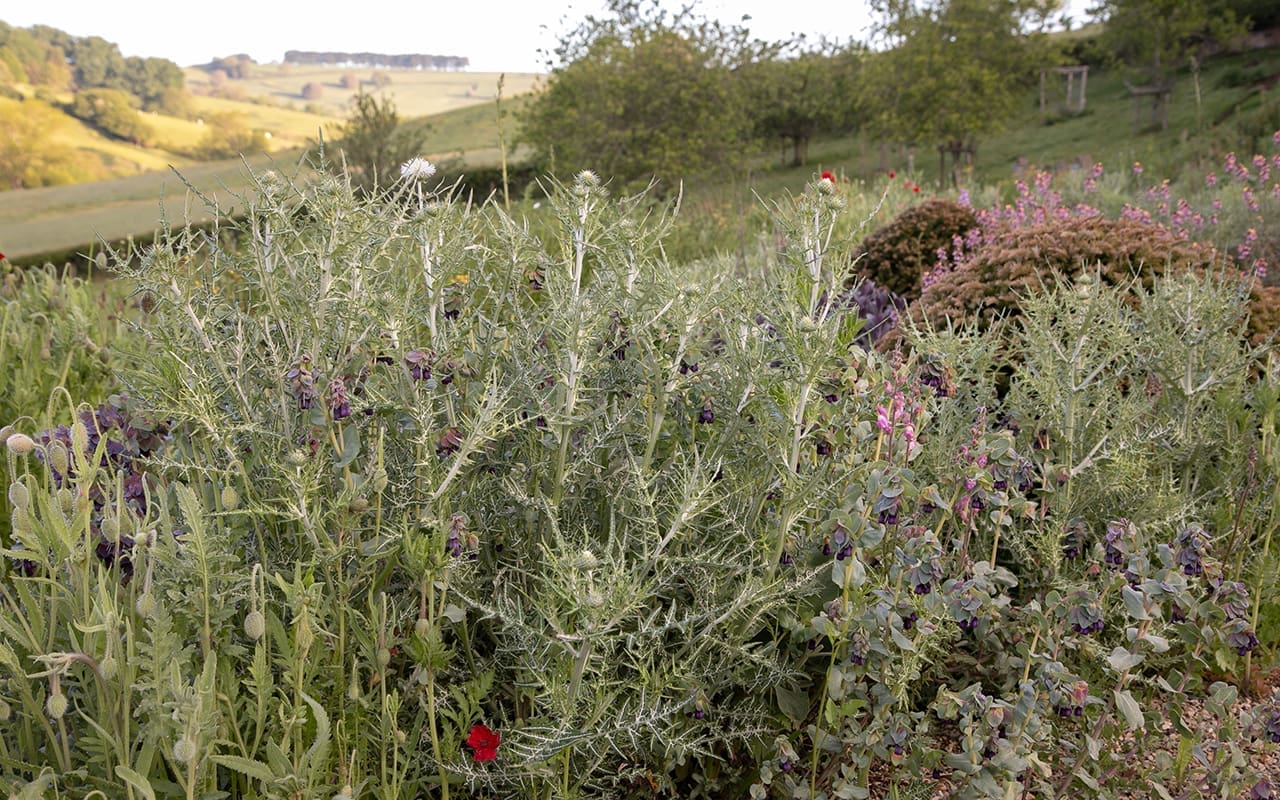
The sand garden moves fast in this last fortnight of spring with the rise of the opportunists. The short-lived Mediterraneans are the protagonists of this fast awakening. Triggered by September rains, they stirred early and used residual warmth in the soil and our mild winter to muster strength for now. Their habits are hard-wired in their makeup and, though we cannot guarantee them a home that will promise what they have evolved to be part of, they are happy to ride a swinging pendulum of climatic uncertainty.
This is the third growing season in this latest chapter of the garden, and the self-seeders we do allow in are beginning to show us their habits and natural life patterns. The Cerinthe major ‘Purpurascens’, which grows wild in open rubbly ground, has shown us exactly what its natural rhythms are, now we have found it a place it can live out and repeat its life cycle. Spring sown seed will produce a flowering plant the same summer. But let it do what it is accustomed to and germinate into a cool autumn with the promise of rain and a mild winter and you are rewarded with twice the plant and earlier flowering. Without a hard winter freeze this year, our plants here have been in flower since March and its common name, Honeywort, identifies why early bees are so attracted to its plentiful nectar.
THIS POST IS FOR PAID SUBSCRIBERS
ALREADY A PAID SUBSCRIBER? SIGN IN