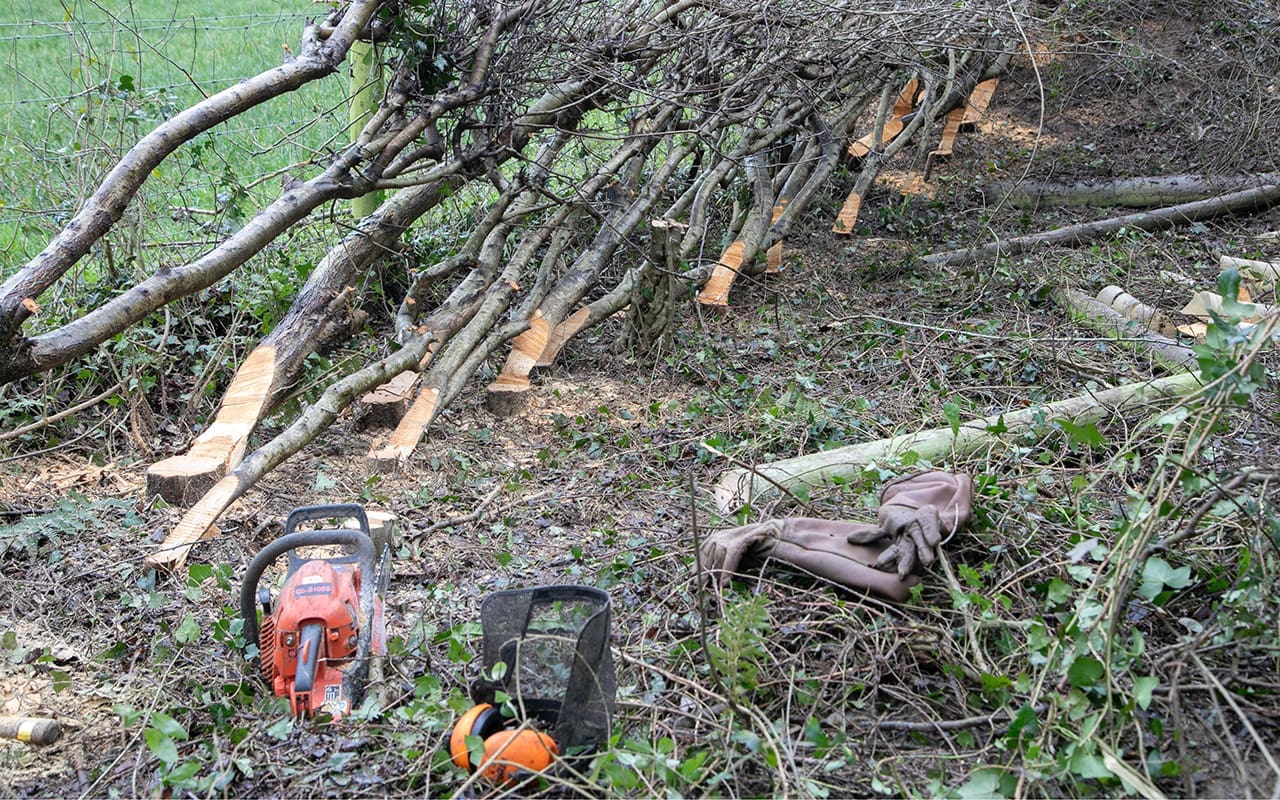
It is a good feeling to be starting the cycle of working the trees and hedges which we planted in the first few winters after moving here. It has now been fifteen growing seasons and the hard-grazed fields that stood still and empty are now boundaried with hedges that have had their gaps replanted and run plump and continuously into the distance. We look proudly onto the young orchards which are hunkered into the slope and provide shade for the sheep and fruit that litters the ground in the autumn. The pockets of woodland, which we planted as knee high whips to provide habitat, are grown enough to need thinning and down in the shelter by the stream, the young hazels in the coppice are ready to live up to the name we have given this area of productive woodland and begin their rotation of cut and renewal.
In a decade and a half, we have had enough time to get to know the land by observing what we have planted and in turn to make educated decisions about where to go next. The perplexing failure of one of the medlar trees in the garden was monitored for the last four years as progressively the branches yellowed and then declined. I wondered if the roots had hit something under the new ground we had laid over the site of the old farm track. Or whether our ground might be too alkaline. Or perhaps it had fallen foul of a fungal infection. I foliar fed and applied sulphur pellets to acidify the ground with little effect and the tree continued to decline, showing no improvement.
THIS POST IS FOR PAID SUBSCRIBERS
ALREADY A PAID SUBSCRIBER? SIGN IN