I first met Chilean landscape architect Teresa Moller in 2004, when I was invited to speak at a landscape conference in which she was also taking part in her hometown of Santiago. Her talk was topped, tailed and interspersed with photographs of jet trails, their fine, fugitive lines slowly becoming part of how you viewed her work. Placemaking with such lightness of touch, yet also purity, strength and conviction. A poetic and elegant connection with place which, at that point, I had only encountered in Japan and have not seen rivalled since.
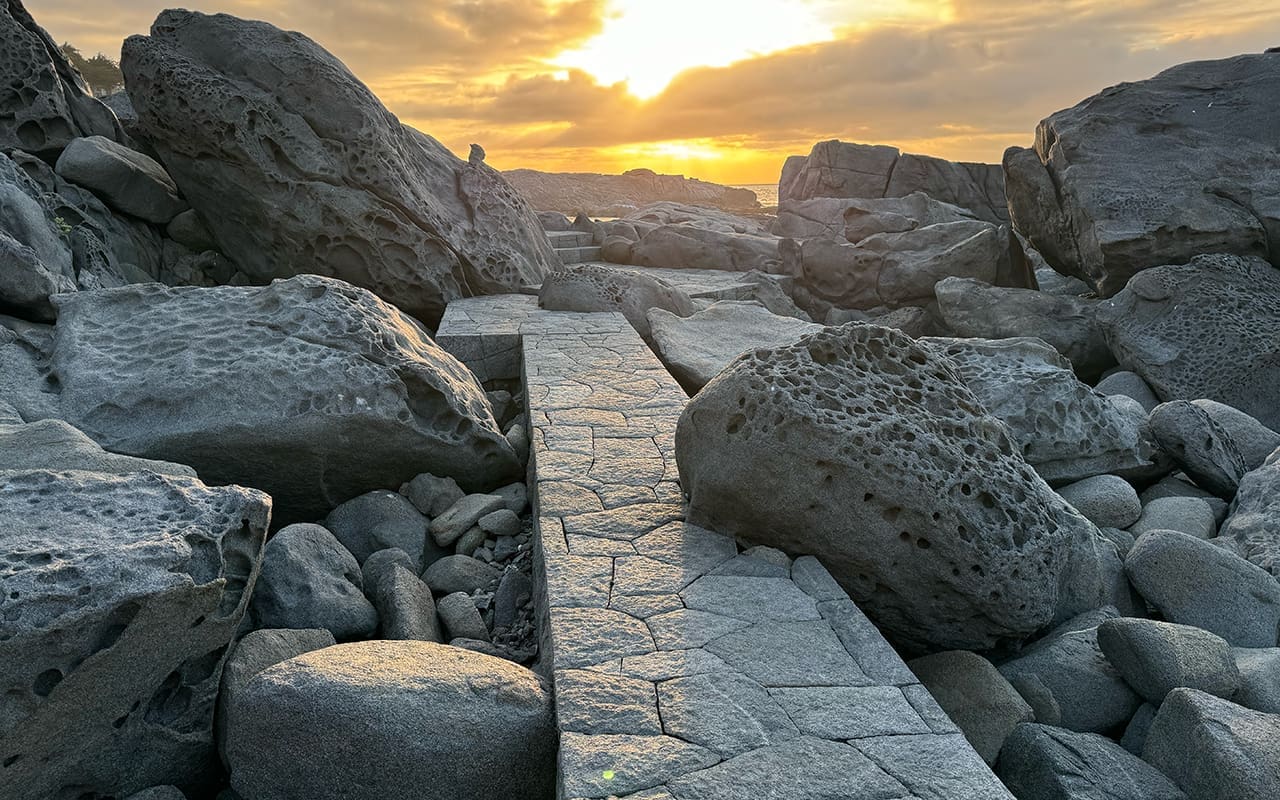
She came to me at the end of the day, with a great compliment about my planting, but equally a challenge, proclaiming, “You can do what I cannot do and I can do what you cannot. Let me take you on a trip. I will show you my work and we can spend some time together to talk about how we see the world.” I grasped the nettle, changed my flights and, over the next three days, we talked and talked as Tere took me off the beaten track to places I would never have found and to works that she’d made but had never been published. Towards the end of the road trip we visited a future project and one that she had yet to design, but had clearly drawn in her mind’s eye. The site of Punta Pite, a rugged coastline of elemental nature, with the wild, foaming Pacific and rounded granite rocks that the sea had spent millennia eroding. Tere told me about her plans for a walkway through the rocks that allowed a conversation between land and sea. With the jet trails in my mind I vowed to return when she had made it.
REGISTER FOR FREE TO READ THIS POST
ALREADY REGISTERED OR A PAID SUBSCRIBER? SIGN IN